
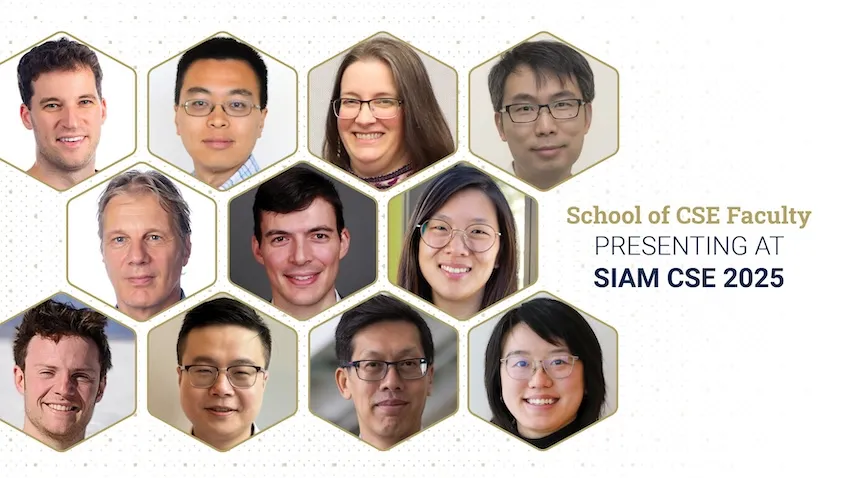
Many communities rely on insights from computer-based models and simulations. This week, a nest of Georgia Tech experts are swarming an international conference to present their latest advancements in these tools, which offer solutions to pressing challenges in science and engineering.
Students and faculty from the School of Computational Science and Engineering (CSE) are leading the Georgia Tech contingent at the SIAM Conference on Computational Science and Engineering (CSE25). The Society of Industrial and Applied Mathematics (SIAM) organizes CSE25, occurring March 3-7 in Fort Worth, Texas.
At CSE25, the School of CSE researchers are presenting papers that apply computing approaches to varying fields, including:
- Experiment designs to accelerate the discovery of material properties
- Machine learning approaches to model and predict weather forecasting and coastal flooding
- Virtual models that replicate subsurface geological formations used to store captured carbon dioxide
- Optimizing systems for imaging and optical chemistry
- Plasma physics during nuclear fusion reactions
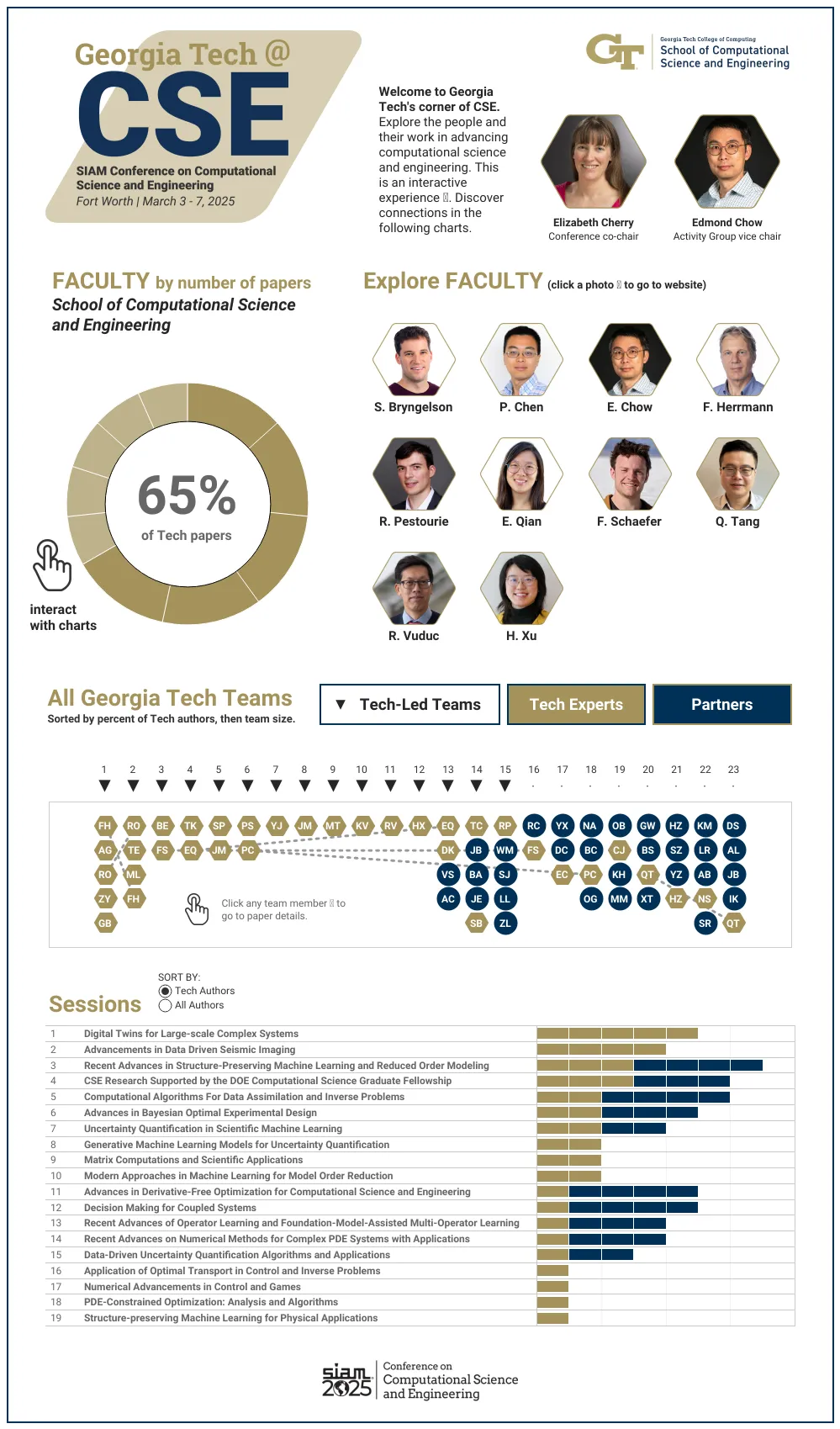
[Related: GT CSE at SIAM CSE25 Interactive Graphic]
“In CSE, researchers from different disciplines work together to develop new computational methods that we could not have developed alone,” said School of CSE Professor Edmond Chow.
“These methods enable new science and engineering to be performed using computation.”
CSE is a discipline dedicated to advancing computational techniques to study and analyze scientific and engineering systems. CSE complements theory and experimentation as modes of scientific discovery.
Held every other year, CSE25 is the primary conference for the SIAM Activity Group on Computational Science and Engineering (SIAG CSE). School of CSE faculty serve in key roles in leading the group and preparing for the conference.
In December, SIAG CSE members elected Chow to a two-year term as the group’s vice chair. This election comes after Chow completed a term as the SIAG CSE program director.
School of CSE Associate Professor Elizabeth Cherry has co-chaired the CSE25 organizing committee since the last conference in 2023. Later that year, SIAM members reelected Cherry to a second, three-year term as a council member at large.
At Georgia Tech, Chow serves as the associate chair of the School of CSE. Cherry, who recently became the associate dean for graduate education of the College of Computing, continues as the director of CSE programs.
“With our strong emphasis on developing and applying computational tools and techniques to solve real-world problems, researchers in the School of CSE are well positioned to serve as leaders in computational science and engineering both within Georgia Tech and in the broader professional community,” Cherry said.
Georgia Tech’s School of CSE was first organized as a division in 2005, becoming one of the world’s first academic departments devoted to the discipline. The division reorganized as a school in 2010 after establishing the flagship CSE Ph.D. and M.S. programs, hiring nine faculty members, and attaining substantial research funding.
Ten School of CSE faculty members are presenting research at CSE25, representing one-third of the School’s faculty body. Of the 23 accepted papers written by Georgia Tech researchers, 15 originate from School of CSE authors.
The list of School of CSE researchers, paper titles, and abstracts includes:
Bayesian Optimal Design Accelerates Discovery of Material Properties from Bubble Dynamics
Postdoctoral Fellow Tianyi Chu, Joseph Beckett, Bachir Abeid, and Jonathan Estrada (University of Michigan), Assistant Professor Spencer Bryngelson
[Abstract]
Latent-EnSF: A Latent Ensemble Score Filter for High-Dimensional Data Assimilation with Sparse Observation Data
Ph.D. student Phillip Si, Assistant Professor Peng Chen
[Abstract]
A Goal-Oriented Quadratic Latent Dynamic Network Surrogate Model for Parameterized Systems
Yuhang Li, Stefan Henneking, Omar Ghattas (University of Texas at Austin), Assistant Professor Peng Chen
[Abstract]
Posterior Covariance Structures in Gaussian Processes
Yuanzhe Xi (Emory University), Difeng Cai (Southern Methodist University), Professor Edmond Chow
[Abstract]
Robust Digital Twin for Geological Carbon Storage
Professor Felix Herrmann, Ph.D. student Abhinav Gahlot, alumnus Rafael Orozco (Ph.D. CSE-CSE 2024), alumnus Ziyi (Francis) Yin (Ph.D. CSE-CSE 2024), and Ph.D. candidate Grant Bruer
[Abstract]
Industry-Scale Uncertainty-Aware Full Waveform Inference with Generative Models
Rafael Orozco, Ph.D. student Tuna Erdinc, alumnus Mathias Louboutin (Ph.D. CS-CSE 2020), and Professor Felix Herrmann
[Abstract]
Optimizing Coupled Systems: Insights from Co-Design Imaging and Optical Chemistry
Assistant Professor Raphaël Pestourie, Wenchao Ma and Steven Johnson (MIT), Lu Lu (Yale University), Zin Lin (Virginia Tech)
[Abstract]
Multifidelity Linear Regression for Scientific Machine Learning from Scarce Data
Assistant Professor Elizabeth Qian, Ph.D. student Dayoung Kang, Vignesh Sella, Anirban Chaudhuri and Anirban Chaudhuri (University of Texas at Austin)
[Abstract]
LyapInf: Data-Driven Estimation of Stability Guarantees for Nonlinear Dynamical Systems
Ph.D. candidate Tomoki Koike and Assistant Professor Elizabeth Qian
[Abstract]
The Information Geometric Regularization of the Euler Equation
Alumnus Ruijia Cao (B.S. CS 2024), Assistant Professor Florian Schäfer
[Abstract]
Maximum Likelihood Discretization of the Transport Equation
Ph.D. student Brook Eyob, Assistant Professor Florian Schäfer
[Abstract]
Intelligent Attractors for Singularly Perturbed Dynamical Systems
Daniel A. Serino (Los Alamos National Laboratory), Allen Alvarez Loya (University of Colorado Boulder), Joshua W. Burby, Ioannis G. Kevrekidis (Johns Hopkins University), Assistant Professor Qi Tang (Session Co-Organizer)
[Abstract]
Accurate Discretizations and Efficient AMG Solvers for Extremely Anisotropic Diffusion Via Hyperbolic Operators
Golo Wimmer, Ben Southworth, Xianzhu Tang (LANL), Assistant Professor Qi Tang
[Abstract]
Randomized Linear Algebra for Problems in Graph Analytics
Professor Rich Vuduc
[Abstract]
Improving Spgemm Performance Through Reordering and Cluster-Wise Computation
Assistant Professor Helen Xu
[Abstract]
News Contact
Bryant Wine, Communications Officer
bryant.wine@cc.gatech.edu
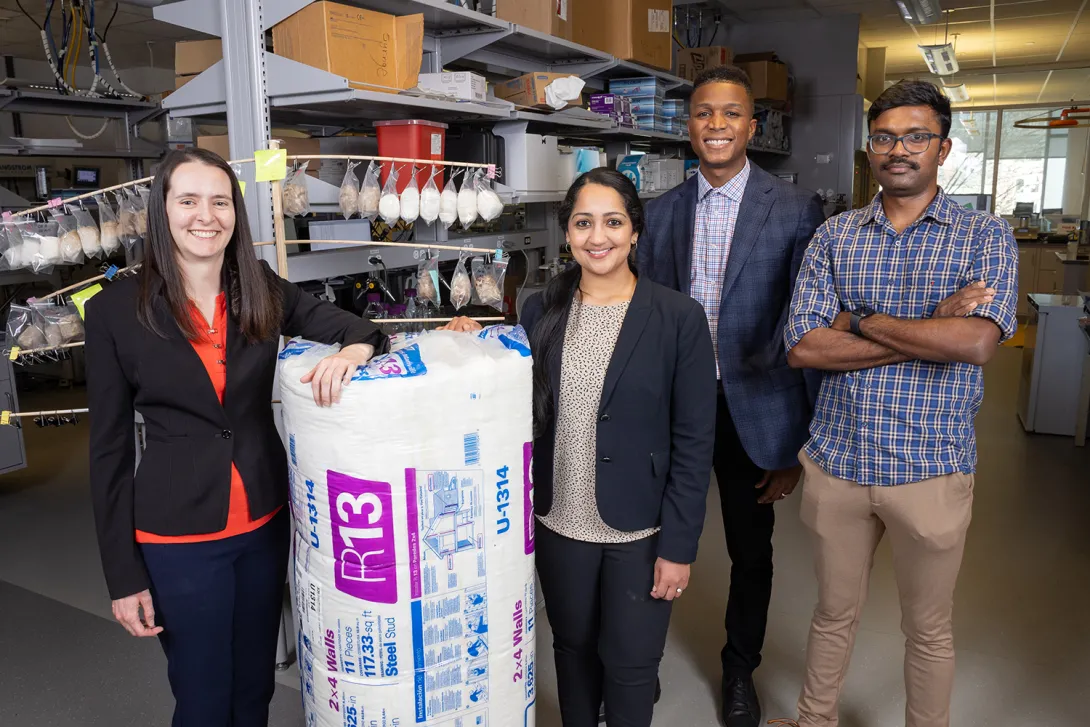
From left, Kelly Farmer, Akanksha Menon, Joe Bozeman, and Arjun Ramshankar with a package of traditional fiberglass insulation and a rack holding samples of potential hemp-based insulation materials created by graduate student Elyssa Ferguson in Menon's lab. The team has published an analysis outlining a path toward a viable hemp-based building insulation market in the U.S. Hemp insulation can be used in place of traditional fiberglass batt insulation and reduce the carbon footprint of buildings, but hemp materials currently cost twice as much. (Photo: Candler Hobbs)
It’s a fairly niche product now, but a new study from Georgia Tech engineers suggests insulation made from hemp fibers could be a viable industry in the U.S., creating jobs, a manufacturing base, and greener homes and buildings at the same time.
Making the switch could slash the impact of one of the biggest sources of greenhouse gas emissions: Buildings account for roughly 1/5 of emissions globally. By some estimates, using hemp-based products would reduce the environmental impact of insulation by 90% or more.
The Georgia Tech researchers’ work, reported this month in the Journal of Cleaner Production, is one of the first studies to evaluate the potential for scaling up U.S. production and availability of hemp-based insulation products.
Read about their findings on the College of Engineering website.
News Contact
Joshua Stewart
College of Engineering
Tim Lieuwen, Executive Vice President for Research
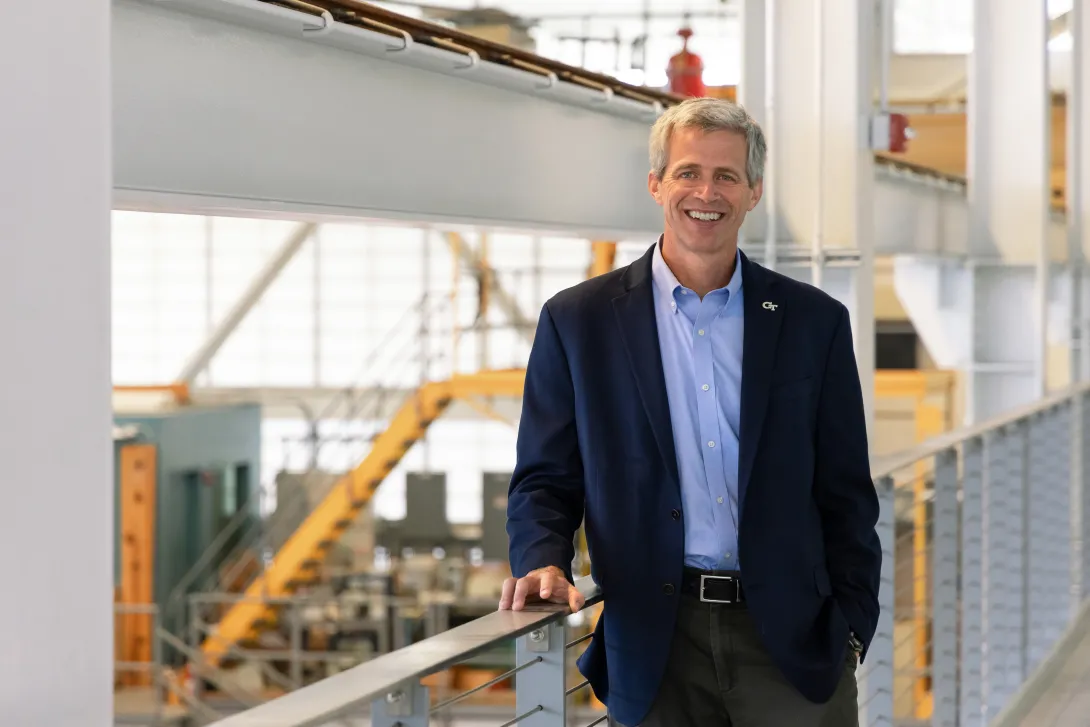
Following a nationwide search, Georgia Tech President Ángel Cabrera has named Timothy Lieuwen the Executive Vice President for Research (EVPR). Lieuwen has served as interim EVPR since September 10, 2024.
“Tim’s ability to bridge academia, industry, and government has been instrumental in driving innovation and positioning Georgia Tech as a critical partner in tackling complex global challenges,” said Cabrera. “With his leadership, I am confident Georgia Tech will continue to expand its impact, strengthen its strategic collaborations, and further solidify its reputation as a world leader in research and innovation.”
A proud Georgia Tech alumnus (M.S. ME 1997, Ph.D. ME 1999), Lieuwen has spent more than 25 years at the Institute. He is a Regents’ Professor and holds the David S. Lewis, Jr. Chair in the Daniel Guggenheim School of Aerospace Engineering. Prior to the interim EVPR role, Lieuwen served as executive director of the Strategic Energy Institute for 12 years. His expertise spans energy, propulsion, energy policy, and national security, and he has worked closely with industry and government to develop new knowledge and see its implementation in the field.
Lieuwen has been widely recognized for his contributions to research and innovation. He is a member of the National Academy of Engineering, as well as a fellow of multiple other professional organizations. Recently, he was elected an International Fellow of the U.K.’s Royal Academy of Engineering, one of only three U.S. engineers in 2024 to receive this prestigious commendation. The honor acknowledges Lieuwen’s contributions to engineering and his efforts to advance research, education initiatives, and industry collaborations.
He has authored or edited four books, published over 400 scientific articles, and holds nine patents — several of which are licensed to industry. He also founded TurbineLogic, an analytics firm working in the energy industry. Additionally, Lieuwen serves on governing and advisory boards for three Department of Energy national labs and was appointed by the U.S. Secretary of Energy to the National Petroleum Council.
The EVPR is the Institute’s chief research officer and directs Georgia Tech’s $1.37 billion portfolio of research, development, and sponsored activities. This includes leadership of the Georgia Tech Research Institute, the Enterprise Innovation Institute, nine Interdisciplinary Research Institutes and numerous associated research centers, and related research administrative support units: commercialization, corporate engagement, research development and operations, and research administration.
“I am honored to step into this role at a time when research and innovation have never been more critical,” Lieuwen said. “Georgia Tech’s research enterprise is built on collaboration — across disciplines, across industries, and across communities. Our strength lies not just in the breakthroughs we achieve, but in how we translate them into real-world impact.
“My priority is to put people first — empowering our researchers, students, and partners to push boundaries, scale our efforts, and deepen our engagement across Georgia and beyond. Together, we will expand our reach, accelerate discovery, and ensure that Georgia Tech remains a driving force for progress and service.”
News Contact
Shelley Wunder-Smith | Director of Research Communications
shelley.wunder-smith@research.gatech.edu

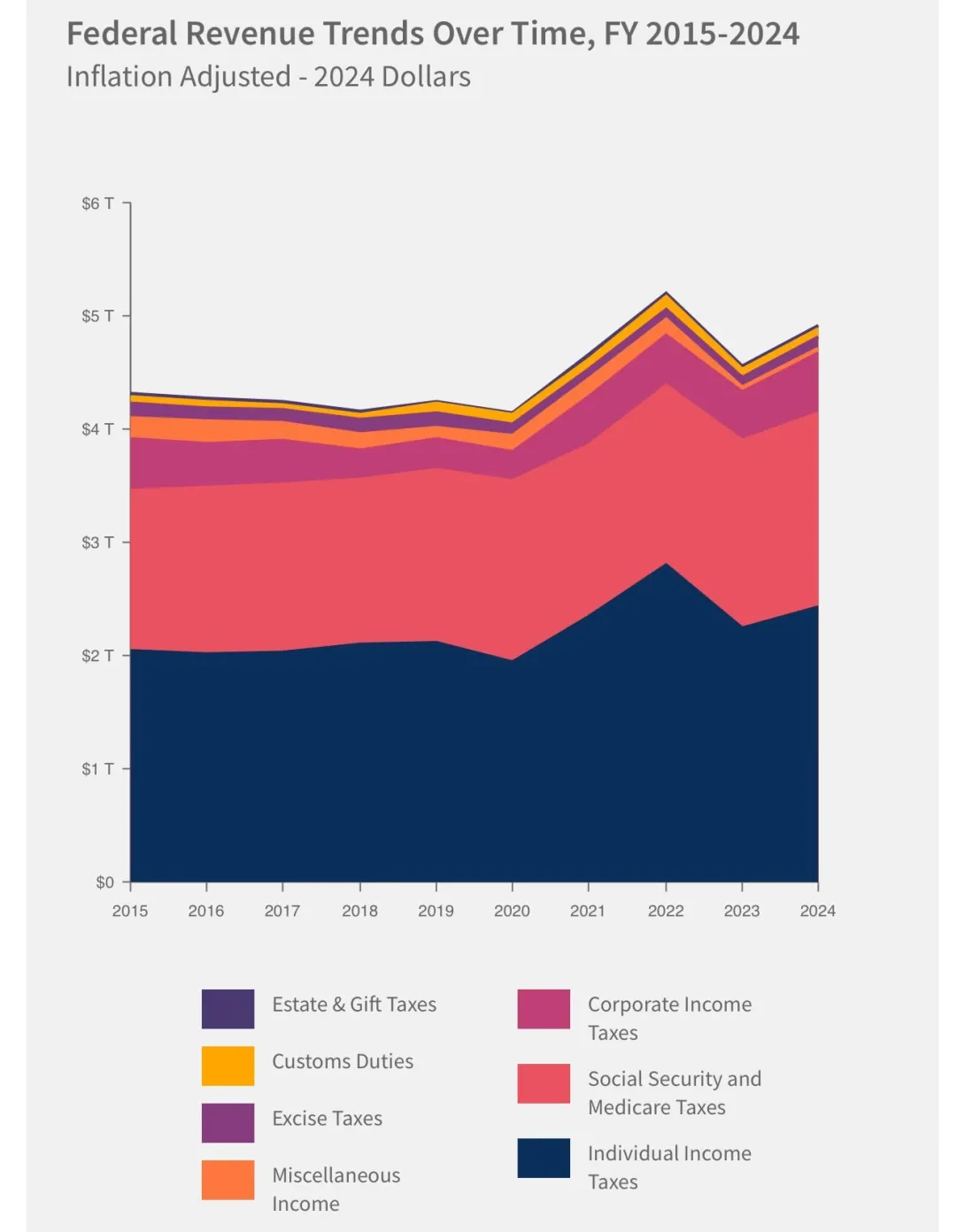
Federal Revenue Trends Over Time 2015-2024
Years ago, I wrote a short and very simplistic post that can help explain why a country (or for that matter, any group of people) can run a trade deficit with another country (or again, any other group of people) and still grow their welfare (economy, wealth, etc.) faster than the other country. You can find it here. The post makes a number of basic points using a simple example. I’ll also repeat here that, these years later, I’m still not an economist and I’m not otherwise an expert on certain aspects of international trade. However, I am someone who thinks quite a bit about supply chains and thus, given the configuration of the modern global economy, I do think about international trade and transportation and the potential impact of various import tariffs on supply chains.
First, here is an update on the scale of international trade and its role within the US economy. I’ll use official trade statistics provided by the US Census Bureau. If we look at the trade of physical goods which is the first thing that most people think about when it comes to trade, the US imported US$3.112 trillion worth of goods in FY2023. That is simply a lot of stuff. Note that imported goods can be finished products that are distributed (eventually) through various retail channels to end consumers. But they can also be various inputs to production: supplies, components, or work-in-progress inventory that feeds US manufacturing enterprises. A very good example along these lines is Canadian heavy crude oil, shipped to US petroleum refineries as the key input to the production of refined petrochemicals like gasoline, jet fuel, and other products. You can read elsewhere why the US currently imports heavy crude from Canada when it (already) produces more crude oil than it consumes each year and is thus (already) a net exporter.
Most US consumers understand that large parts of our economy rely on imported goods. Fewer might think about the sheer scale of the US goods export economy. Looking again at FY2023, the US exported US$2.051 trillion worth of goods (includng some of that aforementioned US-drilled crude oil). Wow, again, that is a lot of stuff. But it is true that the balance of trade here currently favors imports over exports. Since we import more goods value than we export, we ran a goods trade deficit with the rest of the world of US$1.061 trillion in FY2023.
A large part of the US economy today is the provision of services and not goods. There are all sorts of services: food service, financial services, educational services, transportation services, consulting services, and so on. And the US does trade in services as well, both importing services from foreign providers while exporting services to foreign customers. In fact, the US ran a trade surplus in services of US$288 billion which reduced the overall net trade deficit to US$773 billion in FY2023.
Now let’s discuss tariffs for a bit, and let’s consider duties on imported goods. If the US places a 10% tariff on a bundle of goods (perhaps a specific category of goods from a specific set of countries), then importers of those goods must pay a customs duty on the declared goods before they can be moved into the US (so-called customs-clearing). As many have noted already, these importers-of-record are firms doing business in the US (or individuals) that have arranged for the importation. Examples of such importers include retailers like Walmart and producers like Ford and ExxonMobil. Customs duties collected go into the US Treasury, similar to personal income taxes, social security and Medicare taxes, and corporate income taxes. However, the fraction of US government revenue raised by tariffs has been very small for a long period of time. In FY2023, the total collected customs duties by the US Treasury was about US$80 billion. In fact, FY2023 trade was down a bit from FY2022 when total goods imports were US$3.35 trillion and total collected duties were US$112 billion, or an average duty of about 3.3%.
So, how much revenue could be raised by new tariffs? Let’s imagine a strange world where new US import duties did not distort the economy in any way: the same value of goods is assumed to be imported even though both demand for those goods would likely adjust and the purchasing power of each US$ might increase. If the average duty were increased to 10%, the total revenue produced to the US Treasury in FY2023 would have been US$311 billion. How about a 25% average tariff? Well, of course, US$778 billion. For comparison, the US Treasury received US$2.43 trillion in personal and US$530 billion in corporate income taxes in FY2023, an amount nearly equivalent to a universal 100% tariff on the imported goods value basis for all imported goods. The tiny yellow sliver in the figure below shows how little total customs duty revenue has been collected over time and how little changed it has been compared to other revenue sources.
Like any other tax, a tariff can be useful to governments as they seek to design mechanisms to fund (important) government activities while distorting economic activity to favor or disfavor various groups of people, businesses, investors, industries, nations, regions etc. It’s also safe to say that, like any other tax, it can be difficult to determine how economic activity will be specifically distorted by any specific tariffs. In fact, it may be more difficult with tariffs for a few reasons. The first is that unlike a sales tax, a tariff on imported goods occurs upstream of the point-of-sale. Instead, tariffs create increases in supply chain costs for importers, and the impact of tariffs on consumers depends on what happens as a result of these cost increases.
First, it should be noted that some supply chain cost increases cannot be borne at all and can lead to the elimination of some products in the marketplace. Why? A cost increase can lead a producer to decide that a product cannot be profitably produced and marketed, and this is true even if a replacement supply source with a lower (tariff-inclusive) cost of supply can be identified. A retailer may make a similar decision for an imported product. If producers or retailers continue to keep a product in the market, they could decide to lower its quality in some way or to pass on portions of the cost increase directly to its customers. But the supply chain cost persists; perhaps a different supplier could be identified not subject to the tariff, but if that supplier were already providing the same input at the same quality for a lower price they would be used already. Since profitability is likely to be impacted, owners and investors as well as employees of the importer will also likely to be impacted. These interactions are all naturally somewhat complex and the outcome is difficult to predict.
I’ll finish with a thought. If a government wishes to use new tariffs to yield a political outcome beyond simply raising revenue, they will likely need to be designed to produce a significant (and noticeable) distortion to some portion of the economy. If the distortion is mild, no change of behavior seems likely to occur. It seems as if the US is about to attempt some new experimentation with tariffs to both influence the behavior of trade partner nations and to create a significant government revenue source. We will likely get to see firsthand what kind of economic distortion they induce.
News Contact
Men and women in California put their lives on the line when battling wildfires every year, but there is a future where machines powered by artificial intelligence are on the front lines, not firefighters.
However, this new generation of self-thinking robots would need security protocols to ensure they aren’t susceptible to hackers. To integrate such robots into society, they must come with assurances that they will behave safely around humans.
It begs the question: can you guarantee the safety of something that doesn’t exist yet? It’s something Assistant Professor Glen Chou hopes to accomplish by developing algorithms that will enable autonomous systems to learn and adapt while acting with safety and security assurances.
He plans to launch research initiatives, in collaboration with the School of Cybersecurity and Privacy and the Daniel Guggenheim School of Aerospace Engineering, to secure this new technological frontier as it develops.
“To operate in uncertain real-world environments, robots and other autonomous systems need to leverage and adapt a complex network of perception and control algorithms to turn sensor data into actions,” he said. “To obtain realistic assurances, we must do a joint safety and security analysis on these sensors and algorithms simultaneously, rather than one at a time.”
This end-to-end method would proactively look for flaws in the robot’s systems rather than wait for them to be exploited. This would lead to intrinsically robust robotic systems that can recover from failures.
Chou said this research will be useful in other domains, including advanced space exploration. If a space rover is sent to one of Saturn’s moons, for example, it needs to be able to act and think independently of scientists on Earth.
Aside from fighting fires and exploring space, this technology could perform maintenance in nuclear reactors, automatically maintain the power grid, and make autonomous surgery safer. It could also bring assistive robots into the home, enabling higher standards of care.
This is a challenging domain where safety, security, and privacy concerns are paramount due to frequent, close contact with humans.
This will start in the newly established Trustworthy Robotics Lab at Georgia Tech, which Chou directs. He and his Ph.D. students will design principled algorithms that enable general-purpose robots and autonomous systems to operate capably, safely, and securely with humans while remaining resilient to real-world failures and uncertainty.
Chou earned dual bachelor’s degrees in electrical engineering and computer sciences as well as mechanical engineering from University of California Berkeley in 2017, a master’s and Ph.D. in electrical and computer engineering from the University of Michigan in 2019 and 2022, respectively. He was a postdoc at MIT Computer Science & Artificial Intelligence Laboratory prior to joining Georgia Tech in November 2024. He is a recipient of the National Defense Science and Engineering Graduate fellowship program, NSF Graduate Research fellowships, and was named a Robotics: Science and Systems Pioneer in 2022.
News Contact
John (JP) Popham
Communications Officer II
College of Computing | School of Cybersecurity and Privacy
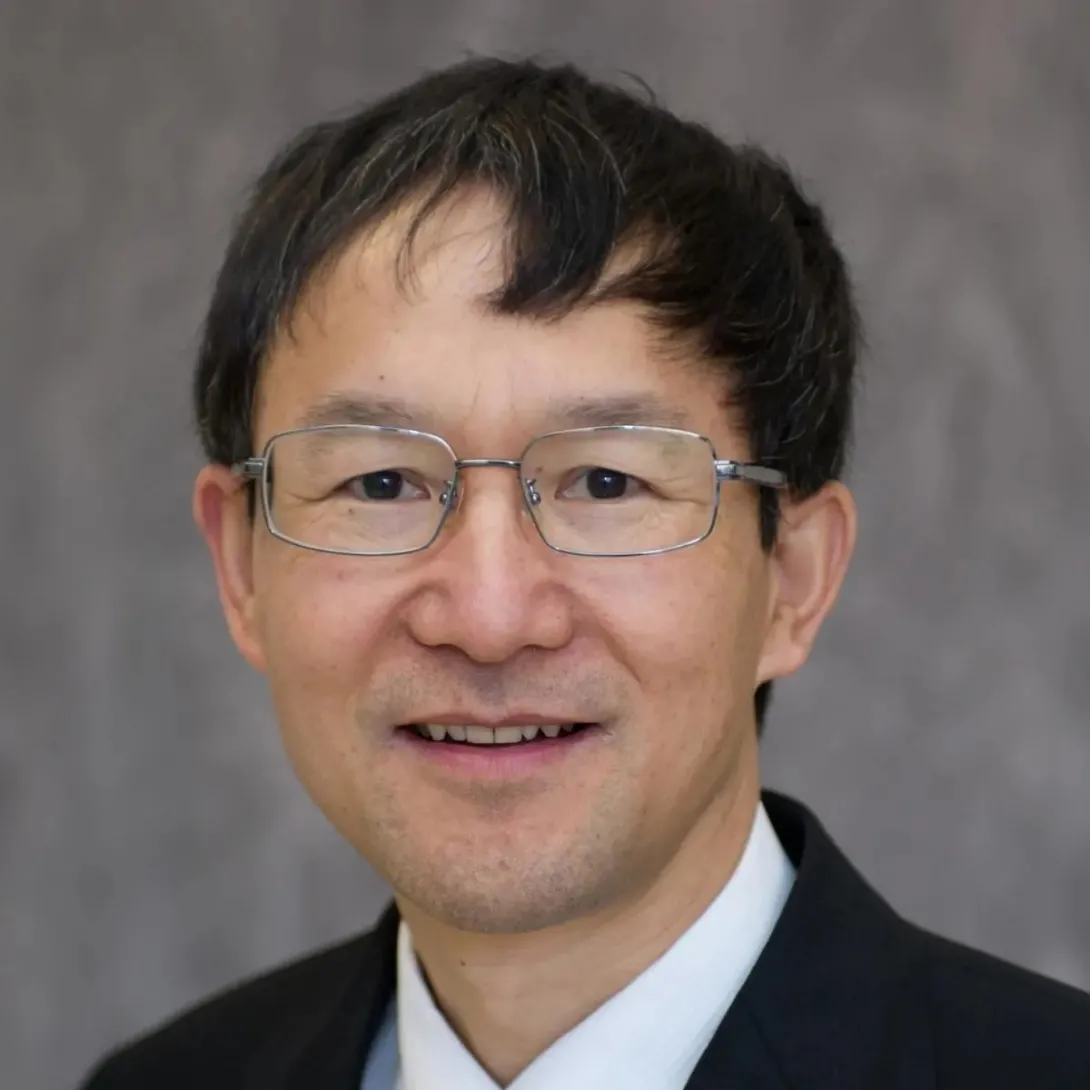
Yongsheng Chen, Bonnie W. and Charles W. Moorman IV Professor in environmental engineering at Georgia Tech
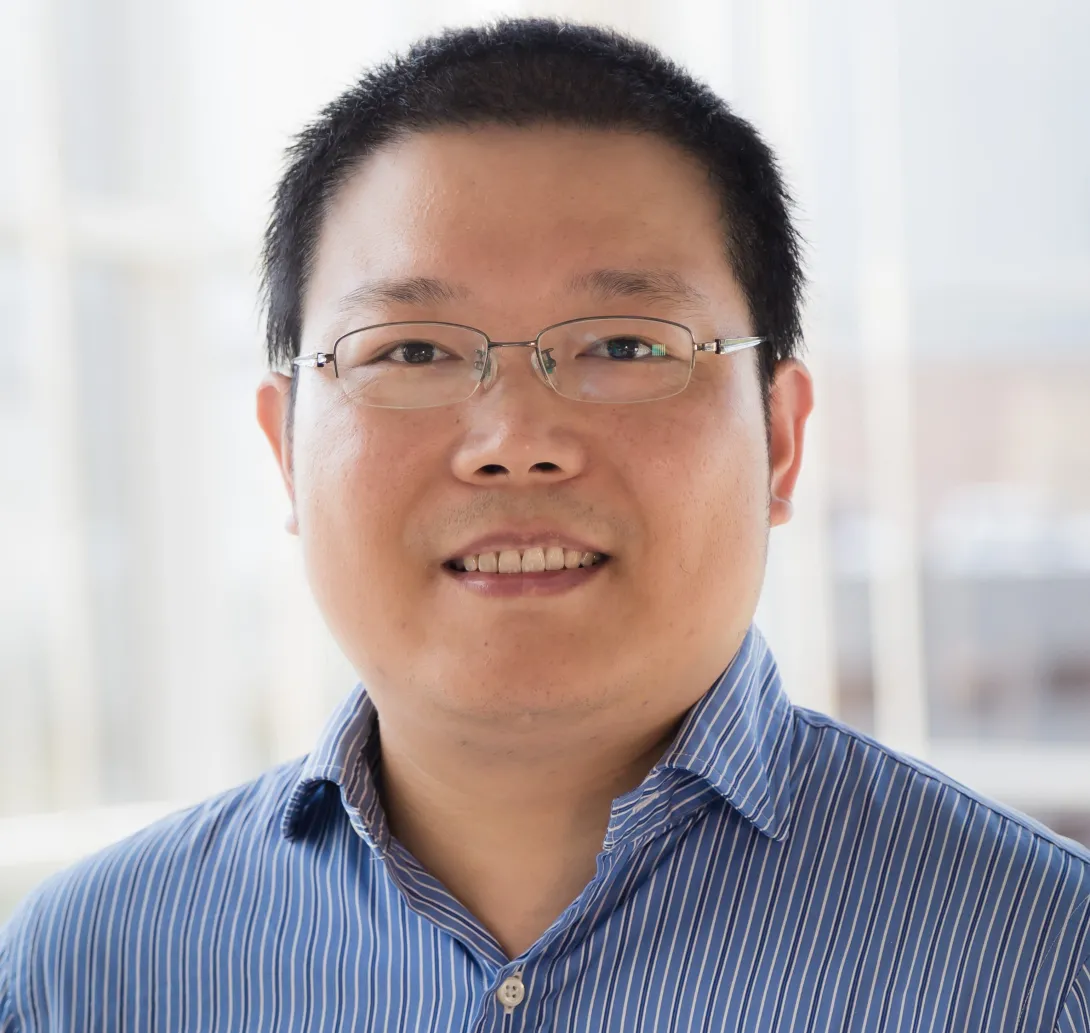
Ying Li, associate professor of mechanical engineering at University of Wisconsin-Madison
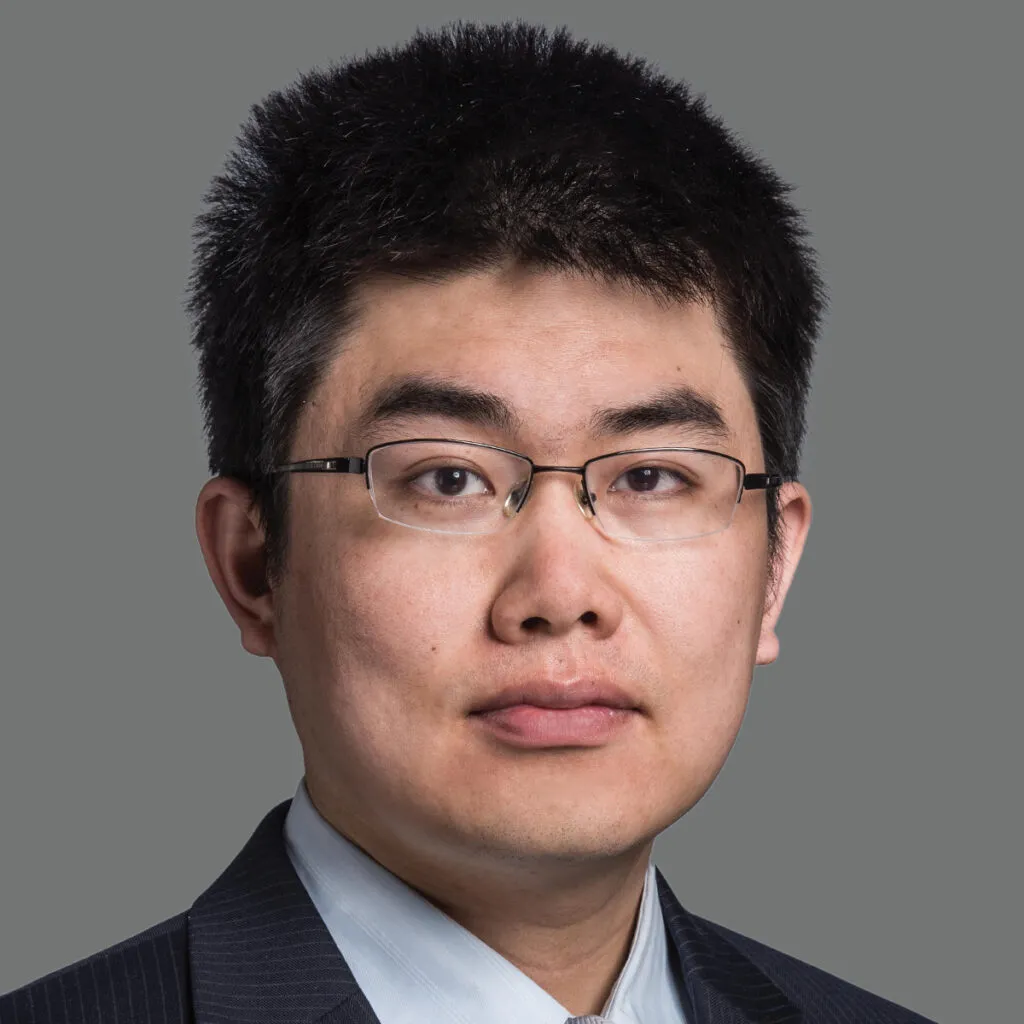
Tiezheng Tong, associate professor of environmental engineering at Arizona State University
Someday, your drinking water could be completely free of toxic “forever chemicals.”
These chemicals, called PFAS (per- and polyfluoroalkyl substances), are found in common household items like makeup, nonstick cookware, dental floss, batteries, and food packaging. PFAS permeate the soil, water, food, and air, and they can remain in the environment for millennia. Once inside the human body, PFAS can persist for years, suppressing the immune system and increasing cancer risk.
Georgia Tech researchers, armed with a cutting-edge machine learning (ML) model, are spearheading a multi-university initiative. Their goal? To design a better membrane that efficiently removes PFAS from drinking water, a significant source of human exposure.
“More than 200 million Americans in all 50 states are affected by PFAS in drinking water, with 1,400 communities having levels above health experts’ safety thresholds,” noted the study’s principal investigator Yongsheng Chen, Bonnie W. and Charles W. Moorman IV Professor in Georgia Tech’s School of Civil and Environmental Engineering. Chen also directs the Nutrients, Energy, and Water Center for Agriculture Technology, or NEW Center. “Our research aims to provide a scalable, efficient, and sustainable solution for mitigating these toxic chemicals’ impact on human health and the environment.”
The resulting work, funded with over $10 million in multiyear grants from the U.S. Department of Agriculture (USDA), the National Science Foundation, and the Environmental Protection Agency (EPA), was recently published in Nature Communications.
Sewage Treatment Limitations
Conventional water treatment processes are ineffective at removing PFAS. Too often, traditional cleansing methods, such as using chlorine to kill pathogens in water, create harmful byproducts.
“Solving one problem creates another problem,” said Chen.
He has already used ML and artificial intelligence in precision agriculture to monitor nutrient levels in plants and insists that tackling PFAS removal similarly requires new approaches. Rather than treating an entire body of water, Chen’s team first separated PFAS from the water stream. Success depended on finding the right membrane material to isolate the chemicals in the water.
Chen relied on a team of 10 Ph.D. students and nine research scientists to perform the ML modeling. In addition to Georgia Tech, two other schools contributed people and laboratory expertise. The University of Wisconsin-Madison (UWM) validated the model with molecular simulations, while Arizona State University (ASU) trained it using data from scientific literature and their lab.
“Applying machine learning to membrane separation represents an exciting frontier for environmental engineering,” said Tiezheng Tong, an associate professor of environmental engineering in ASU’s School of Sustainable Engineering and the Built Environment.
This is another step in tackling PFAS pollution, a widespread problem that has recently received significant public attention due to PFAS’ toxic nature and the recent EPA ruling on PFAS in drinking water, he said.
“By integrating with molecular simulation tools, we can better understand PFAS transport across nanofiltration and reverse osmosis membranes, pushing the boundary of fundamental science relating to membrane separation,” Tong said.
ML Accelerates Membrane-Material Discoveries
Using ML modeling significantly sped up the discovery process. For instance, one Ph.D. student in Chen’s lab used trial and error over two years to pinpoint one promising membrane. Machine learning modeling allowed the team to find eight membrane candidates 10 to 20 times faster, reducing discovery time from years to a few months.
“Our molecular dynamics simulations reveal that electrostatic interactions, size exclusion, and dehydration play critical roles in governing the transport of PFAS molecules across polyamide membranes,” Ying Li explained. Li is an associate professor of mechanical engineering at UWM. “These calculations indicate that electrostatic interactions dominate PFAS rejection, with charged functional groups significantly influencing transport behavior. The simulation results provide fundamental insights that align with ML predictions, highlighting the key molecular determinants of PFAS removal efficiency.”
Addressing PFAS Exposure in Agriculture
By addressing PFAS contamination, this research could also benefit the agriculture industry, which depends on fertilizer sourced from water treatment plants. Wastewater biosolids are processed into fertilizer, offering farmers and ranchers a cheaper alternative to chemical fertilizers. Unfortunately, PFAS-tainted fertilizers from sewage sludge have contaminated significant amounts of land and livestock. Industry groups estimate that almost 70 million acres of U.S. farmland could be contaminated by these forever chemicals.
By funding this research, the USDA hopes that an effective membrane will help the United States reclaim this crucial resource.
“Synthesizing a very smart membrane to get rid of PFAS also allows us to recover the fertilizer from municipal wastewater treatment plants,” Chen said. “Such a membrane could enable us to get rid of things we don’t want and keep the things we need, so we can keep the water for irrigation or other applications.”
Eliminating PFAS in fertilizers also could help address the mismatch of food and water demand in urban versus rural areas since 80% of the demand resides in cities. PFAS removal could directly support urban area resource recovery and food production.
“Our goal is achieving a circular economy where materials never become waste, and nature is regenerated,” Chen said.
What’s Next
The team will fine-tune the model and add more data to improve its training features. Chen will synthesize membranes in his lab to further test the model's PFAS removal predictions.
Today, scientists have found ways to remove long chains of PFAS, but the shorter chains of these chemicals persist, explained Chen.
“If we can better understand the mechanism, we’ll be able to design a good material membrane to get rid of all PFAS. That could be game-changing.”
— By Anne Wainscott-Sargent
Funding
This work is partially supported by the NSF (Award Nos. 2112533, 2427299, 2345543, Y.C.; 2448130, T.T.; and 2345542, Y.L.).
Y.C. acknowledges the financial support by the USDA (Award No.2018−68011-28371), NSF-USDA (Award No. 2020-67021-31526), and EPA (Award No. 840080010).
T.T. acknowledges the support of the USDA National Institute of Food and Agriculture (Hatch Project COL00799, accession 1022591).
Y.L. acknowledges the financial support by the National Alliance for Water Innovation (NAWI), funded by the US DOE, Office of Energy Efficiency and Renewable Energy (EERE), Advanced Manufacturing Office, under Funding Opportunity announcement Number DE-FOA-0001905, through a subcontract to the University of Wisconsin-Madison.
News Contact
Shelley Wunder-Smith | Director of Research Communications
shelley.wunder-smith@research.gatech.edu
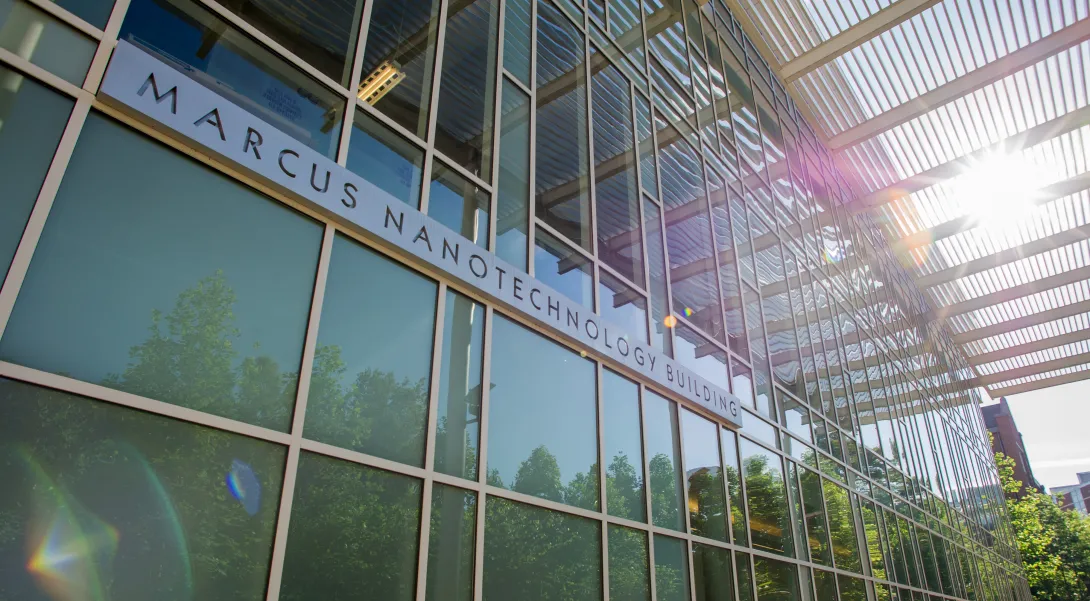
Georgia Institute of Technology is set to play a crucial role in a strategic effort funded by the Defense Advanced Research Project Agency (DARPA) to help bolster America’s national security and global military leadership.
The project, led by the Texas Institute for Electronics (TIE) at The University of Texas at Austin, represents a total investment of $1.4 billion. The $840 million award from DARPA, announced by TIE in 2024, aims to develop the next generation of high-performing semiconductor microsystems for the Department of Defense (DoD).
“We are honored to collaborate with TIE and its broader team on this far reaching and strategic program to enable best in class 3D heterogeneous integration (3DHI) processes and technologies in the United States,” said Muhannad S. Bakir, the Dan Fielder Professor in the School of Electrical and Computer Engineering and director of the 3D Systems Packaging Research Center, who is heading the project for Georgia Tech.
3DHI is a semiconductor manufacturing process that incorporates different materials and components into microsystems with precision assembly. The use of 3DHI allows for the creation of high-performance, compact, and energy-efficient systems.
The investment is part of DARPA’s Next Generation Microelectronics Manufacturing (NGMM) Program comprised of 32 defense electronics and leading commercial semiconductor companies and 18 nationally recognized academic institutions.
Under the agreement, TIE will establish a national open access R&D and prototyping fabrication facility. The facility will enable the DoD to create higher performance, lower power, lightweight, and compact defense systems. The advancements are expected to have wide-ranging applications, including radar, satellite imaging, and unmanned aerial vehicles.
Georgia Tech will provide a wide range of expertise in 3DHI including design, fabrication and assembly processes, and characterization to support the NGMM national open-access R&D and prototyping facility at TIE.
Regents' Professor and Morris M. Bryan, Jr. Professor Suresh K. Sitaraman in the George W. Woodruff School of Mechanical Engineering will be a key contributor to Georgia Tech’s efforts on the project.
“We are delighted to be partnering with UT/TIE on the establishment of a 3D Heterogeneous Integration Microsystem prototyping facility,” said Sitaraman. “In addition to advancing fundamental science, this project is a great opportunity for Georgia Tech to demonstrate and integrate our ground-breaking and innovative 3DHI research approaches and technology solutions into TIE’s prototyping facility, and understand the challenges involved when translating lab-scale research work to a large industry-strength fabrication facility.”
ECE Professors Saibal Mukhopadhyay, Arijit Raychowdhury, Visvesh Sathe, and Shimeng Yu will be working alongside Bakir and Sitaraman.
A significant portion of the research will be conducted at the Institute for Matter and Systems (IMS), which operates Georgia Tech’s state-of-the-art electronics and nanotechnology core facilities.
Read the press release from TIE and view the project’s team and partners.
News Contact
Dan Watson

The unstoppable rise of artificial intelligence (AI) continues to demand a vast and growing amount of power resources. Power has become increasingly expensive and taxing on current AI infrastructure, while also contributing to climate change.
Georgia Tech School of Electrical and Computer Engineering (ECE) Ph.D. graduate and current Stanford University research fellow Fabia Farlin Athena has made it her goal to make AI computing more efficient, while addressing financial accessibility.
Forbes honored her efforts by naming her to its annual North American 30 Under 30 Energy and Green Tech list. She was included alongside tech entrepreneurs, scientists, and public servants, all working to power a more sustainable future.
“I would like to extend my heartfelt thanks to my advisors, Prof. Eric M. Vogel and Prof. H.-S. Philip Wong, for their unwavering support and guidance,” Athena said. “I would also like to thank my mentors and collaborators at Precourt Institute for Energy at Stanford, IBM Research, and TSMC Corporate Research. Finally, I would like to thank Georgia Tech ECE for providing the platform to learn and grow during my Ph.D,”
Athena’s research focuses on developing emerging memory and logic technologies using oxide semiconductors and low dimensional materials for energy-efficient AI. Her current research focuses on high bandwidth oxide semiconductor gaincell memories.
She is in the midst of a prestigious three-year Stanford Energy Postdoctoral Fellowship sponsored by Stanford’s Precourt Institute for Energy and Doerr School of Sustainability, where she is working with electrical engineering professor H.-S. Philip Wong and materials science and engineering professor Alberto Salleo.
The fellowship aims to identify, develop, and connect the next generation of energy leaders — from science and engineering to policy and economics — to translate theoretical climate change solutions into tangible realities.
Athena is one of 14 Georgia Tech alumni, students, and faculty members named to the list, spanning nine categories.
News Contact
Zachary Winiecki
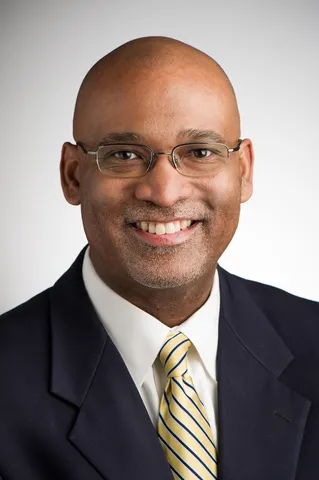
Johney Green
Johney Green Jr., M.S. ME 1993, Ph.D. ME 2000, has been chosen to serve as the new laboratory director for Savannah River National Laboratory (SRNL). A proud Yellow Jacket, Green received both his master’s and doctoral degrees in mechanical engineering from Georgia Tech and currently serves on the Strategic Energy Institute’s (SEI) External Advisory Board. He also served on the board of the George W. Woodruff School of Mechanical Engineering from 2017 to 2022.
“SRNL has truly found an exceptional leader in Johney. His vision and dedication are inspiring, and I am genuinely excited to see the remarkable contributions he will make in advancing SRNL,” said Christine Conwell, SEI interim executive director. “We look forward to his continued partnership with SEI and the positive impact he will bring to the energy community in 2025 and beyond.”
The Battelle Savannah River Alliance (SRNL’s parent organization) selected Green for this role, describing him as “a dynamic leader who brings deep, wide-ranging scientific expertise to this new position.”
With an annual operating budget of about $400 million, SRNL is a multiprogram national lab leading research and development for the Department of Energy’s (DOE) Offices of Environmental Management and Legacy Management and the National Nuclear Security Administration’s weapons and nonproliferation programs.
Green currently serves as associate laboratory director for mechanical and thermal engineering sciences at the National Renewable Energy Laboratory (NREL). In this position, he oversees a diverse portfolio of research programs including transportation, buildings, wind, water, geothermal, advanced manufacturing, concentrating solar power, and Arctic research. His leadership impacts a workforce of about 750 and involves managing a budget of more than $300 million.
At NREL, Green transformed the lab’s wind site into the innovative Flatirons Campus and transitioned the campus from a single-program wind research site to a multiprogram research campus that serves as the foundational experimental platform for the DOE’s Advanced Research on Integrated Energy Systems (ARIES) initiative.
"We are immensely proud to call Johney a Woodruff School alumnus. His achievements and service to Tech through advisory board engagement inspires us, and we are excited to see him step into this prestigious role at SRNL. We look forward to deepening our collaboration with him as he continues to make a powerful impact,” said Devesh Ranjan, Eugene C. Gwaltney, Jr. School Chair and professor in the Woodruff School.
Prior to his role at NREL, Green held several key leadership roles at Oak Ridge National Laboratory (ORNL). As director of the Energy and Transportation Science Division and group leader for fuels, engines, and emissions research, he managed a broad science and technology portfolio and user facilities that made significant science and engineering advances in building technologies; sustainable industrial and manufacturing processes; fuels, engines, emissions, and transportation analysis; and vehicle systems integration. While Green was the division director, ORNL developed the Additive Manufacturing Integrated Energy (AMIE) demonstration project, a model of innovative vehicle-to-grid integration technologies and next-generation manufacturing processes.
Early in his career, Green conducted combustion research to stabilize gasoline engine operation under extreme conditions. During the course of that research, he joined a team working with Ford Motor Co., seeking ways to simultaneously extend exhaust gas recirculation limits in diesel engines and reduce nitrogen oxide and particulate matter emissions. He continued this collaboration as a visiting scientist at Ford's Scientific Research Laboratory, conducting modeling and experimental research for advanced diesel engines designed for light-duty vehicles. On assignment to the DOE’s Vehicle Technologies Office, Green also served as technical coordinator for the 21st Century Truck Partnership. He also contributed to a dozen of ORNL's 150-plus top scientific discoveries.
Green was the recipient of a National GEM Consortium Master’s Fellowhip sponsored by Georgia Tech and ORNL, and he served as the National GEM Consortium chairperson from 2022-2024. He is a Fellow of the American Association for the Advancement of Science and an SAE International Fellow. He has received several awards during his career and holds two U.S. patents in combustion science.
News Contact
Priya Devarajan || SEI Communications Program Manager
Cybersecurity researchers have discovered new vulnerabilities that could provide criminals with wireless access to the computer systems in automobiles, aircraft, factories, and other cyber-physical systems.
The computers used in vehicles and other cyber-physical systems rely on a specialized internal network to communicate commands between electronics. Because it took place internally, it was traditionally assumed that attackers could only influence this network through physical access.
In collaboration with Hyundai, researchers from Georgia Tech’s Cyber-Physical Systems Security Research Lab (CPSec) observed that threat models used to evaluate the security of these technologies were outdated.
The team, led by Ph.D. student Zhaozhou Tang, found that vehicle technology advancements allowed attackers to launch new attacks, improve existing attacks, and circumvent current defense systems.
For example, Tang’s findings included the possibility for attackers to remotely compromise the computers used in cars and aircraft through Wi-Fi, cellular, Bluetooth, and other wireless channels.
“Our job was to thoroughly review existing information and find ways to protect against these attacks,” he said. “We found new threats and proposed a defense system that can protect against the new and old attacks.”
In response to their findings, the team developed ERACAN, the first comprehensive defense system against this new generation of attackers. Designed to detect new and old attacks, ERACAN can deploy defenses when necessary.
The system also classifies the attacks it reacts to, providing security experts with the tools for detailed analysis. It has a detection rate of 100% for all attacks launched by conventional methods and detects enhanced threat models 99.7% of the time.
The project received a distinguished paper award at the 2024 ACM Conference on Computer and Communications Security (CCS 24) held in Salt Lake City. Tang presented the paper at the October conference.
“This was Zhaozhou’s first paper in his Ph.D. program, and he deserves recognition for his groundbreaking work on automotive cybersecurity,” said Saman Zonouz, associate professor in the School of Cybersecurity and Privacy and the School of Electrical and Computer Engineering.
The U.S. Department of Homeland Security has designated the transportation sector as one of the nation’s 16 critical infrastructure sectors. Ensuring its security is vital to national security and public safety.
“Modern vehicles, which rely heavily on controller area networks for essential operations, are integral components of this infrastructure,” said Zonouz. “With the increasing sophistication of cyberthreats, safeguarding these systems has become critical to ensuring the resilience and security of transportation networks.”
This paper introduced to the scientific community the first comprehensive defense system to address advanced threats targeting vehicular controller area networks.
The CPSec team is putting the technology it has developed into practice in collaboration with Hyundai America Technical Center, Inc., which sponsors the work. Tang hopes ERACAN’s success will raise awareness of these new threats in the research community and industry.
“It will help them build future defenses,” he said. “We have demonstrated the best practice to defend against these attacks.”
Tang received his bachelor’s degree at Georgia Tech, where he first performed security-related work for the automobile industry. While working with Zonouz on his master’s degree, he decided to change course and pursue research initiatives like vehicle security in a Ph.D. program.
“It is interesting how it came full circle,” he said. “I will continue on this path of automobile security throughout my Ph.D.”
ERACAN: Defending Against an Emerging CAN Threat Model, was written by Zhaozhou Tang, Khaled Serag from the Qatar Computing Research Institute, Saman Zonouz, Berkay Celik and Dongyan Xu from Purdue University, and Raheem Beyah, professor and dean of the College of Engineering. The CPSec Lab is a collaboration between the School of Cybersecurity and Privacy and the School of Electrical and Computer Engineering.
News Contact
John Popham
Communications Officer II
School of Cybersecurity and Privacy