
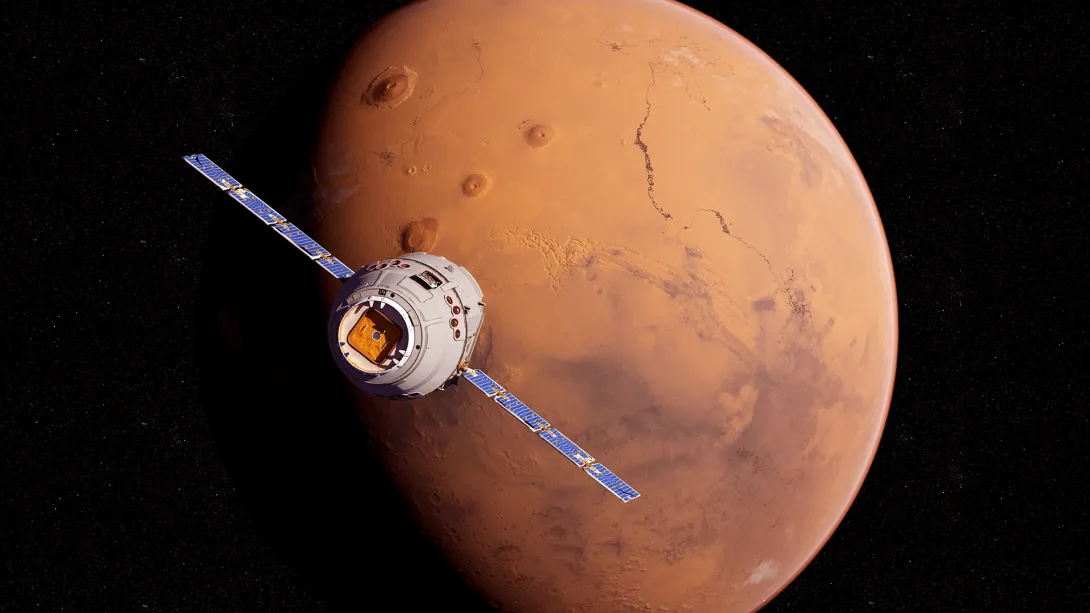
More than half a century after the United States won the race to the moon, the White House is setting its sights on a new frontier: Mars. In a move reminiscent of the Apollo era, the administration has proposed landing Americans on the red planet by the end of 2026 — a bold initiative that has reignited national ambition and drawn comparisons to the space race of the 20th century.
At Georgia Tech, researchers are already considering the mission’s implications, from engineering challenges to international diplomacy. While the White House has framed the mission as a demonstration of American leadership, experts say its success will depend on collaboration — across disciplines, sectors, and borders.
“This is more than a space race,” said Christos Athanasiou, an assistant professor in the Daniel Guggenheim School of Aerospace Engineering. “Mars isn’t just the next step for space exploration — it’s a stress test for everything we’ve learned about sustainability, resilience, and engineering under uncertainty.”
Engineering for the Red Planet
For Athanasiou, the Mars mission is a test of human ingenuity, creativity, and endurance. Unlike the moon, Mars is months away by spacecraft, with no quick return option. That distance introduces a host of engineering challenges that must be solved before a single boot touches Martian soil.
“Ensuring astronaut safety on such a long-duration mission requires us to understand how the Earth materials we will be using in our mission behave in extraterrestrial conditions,” he said.
In his recent TEDx talk, Athanasiou emphasized that the mission must also consider its environmental impact. Mars may be barren, but it is not immune to contamination. Athanasiou believes that strategies used for environmental remediation on Earth — such as waste recycling, habitat sustainability, and pollution control — can be adapted to protect the Martian environment.
“If we can build structures that survive Mars using recycled materials, AI, and Earth-born ingenuity, we’ll unlock entirely new ways to live — both out there and back here,” he said.
Reading the Martian Landscape
James Wray, a professor in the School of Earth and Atmospheric Sciences, has spent years analyzing Mars’ surface using data from orbiters and rovers. He sees the planet as both a scientific treasure trove and a logistical puzzle.
“Mars has vast lava plains, dust storms, and steep canyons that pose real risks to human settlement,” Wray said.
But beneath the challenges lies opportunity. Mars is home to significant deposits of water ice, especially near the poles and just below the surface in some mid-latitude regions. That water could be used not only for drinking but also for producing oxygen and rocket fuel — critical resources for long-term habitation and return missions.
“The presence of water ice near the surface is a game changer. It could support life, and more importantly, it could support us,” Wray said.
He also noted that Mars’ thin atmosphere — just 1% the density of Earth’s — complicates everything from landing spacecraft to shielding astronauts from cosmic radiation. “We’ve learned a lot from robotic missions. Now it’s time to apply that knowledge to human exploration.”
Diplomacy Beyond Earth
Lincoln Hines, an assistant professor in the Sam Nunn School of International Affairs, says that the Mars mission could have significant diplomatic implications. “The Mars mission has little to no bearing on space security; it has no military value,” he said. However, he noted that international cooperation could still play a valuable role in reducing the financial burden of such a costly endeavor.
Hines warned that shifting U.S. priorities from the moon to Mars could strain the international partnerships built through the Artemis program. He explained that some countries may view the Mars initiative as a distraction from the more immediate and economically promising lunar goals. Political instability in the U.S., he added, could further erode trust in its long-term commitments. “Countries may lose faith that the United States is a reliable partner to cooperate with for its lunar program if Mars seems to be the new priority,” he said.
He also pointed to existing legal frameworks like the Outer Space Treaty, which prohibits sovereign claims on celestial bodies, and the Rescue Agreement, which obliges nations to assist astronauts in distress. While these agreements provide a foundation, Hines emphasized that they don’t fully address the complexities of future Mars missions.
Establishing international norms for Mars exploration, he said, will be challenging. “Norms are really hard to develop,” Hines explained, noting that countries often hesitate to commit to rules without assurance that others will do the same. Still, he suggested that Mars — with its limited material value — might offer a rare opportunity for cooperation, if nations are willing to engage in good faith.
News Contact
Siobhan Rodriguez
Senior Media Relations Representative
Institute Communications
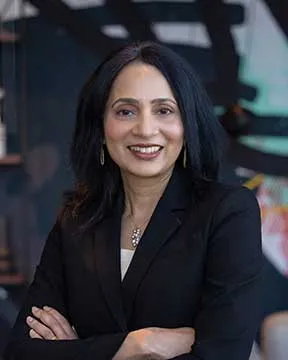
Sowmya Ananthachary is Vice President of Software for the Americas region at Dematic. In this role, Sowmya leads Dematic’s software strategy, overseeing the development, implementation, and optimization of software solutions. Working closely with cross-functional teams and key partners, Sowmya ensures Dematic’s software strategy aligns with business objectives, market demands, and customer needs.
Ms. Ananthachary brings a wealth of experience in enterprise software and cloud technologies to the SCL Advisory Board. She has a proven track record of building and mentoring high-performing global engineering teams and driving large-scale strategic initiatives. Her leadership has played a key role in delivering transformative, cloud-based enterprise applications and advancing digital solutions in the supply chain space.
“I’m honored to join Georgia Tech’s SCL Industry Advisory Board,” said Ms. Ananthachary. “As someone deeply passionate about the future of supply chains, I’m inspired by the SCL team’s commitment to innovation, education, and impact. I look forward to learning, contributing, and collaborating with this exceptional community.”
Ms. Ananthachary holds an MBA from Georgia State University and a Bachelor of Science from the National Institute of Technology Jamshedpur. She brings both technical expertise and a strategic business perspective to her advisory role.
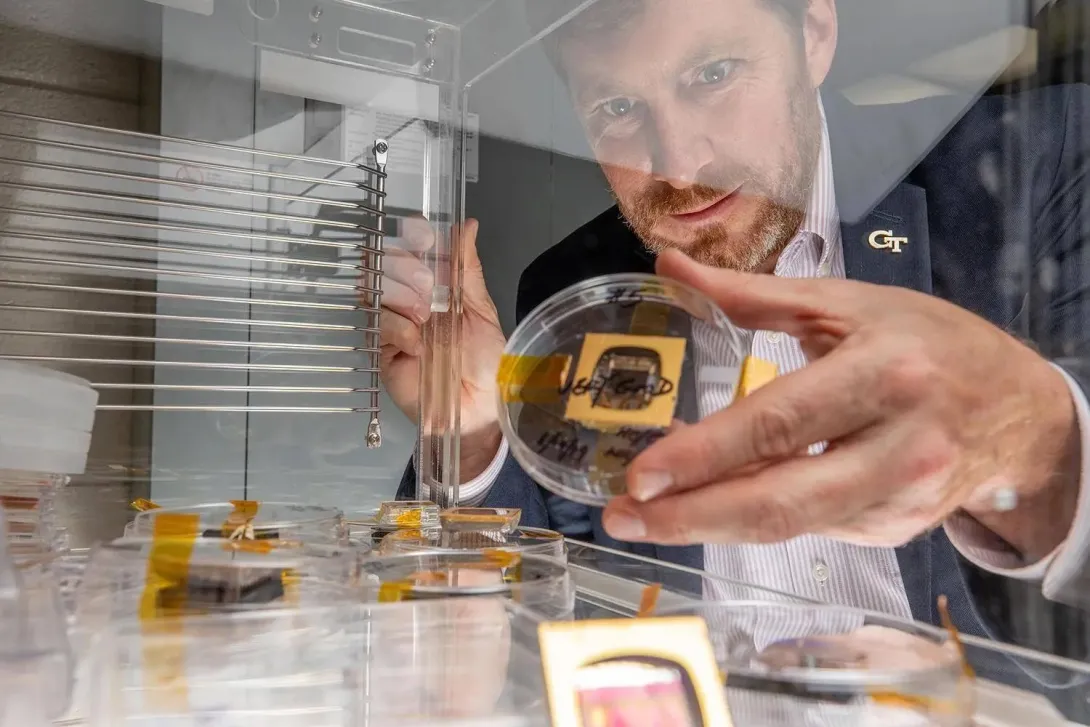
Jud Ready holds a sample of a perovskite solar cell, along with other samples similar to those launched to the International Space Station. (Photo: Branden Camp)
Space researcher. Materials scientist. Entrepreneur. And Yellow Jacket. The only thing missing on Jud Ready’s resume is “astronaut.” Not for lack of trying, though. Ready had hoped earning his bachelor’s, master’s, and doctoral degrees in materials science and engineering at Georgia Tech would lead him to a spot in NASA’s Astronaut Corps. Instead, it’s led him to the Georgia Tech Research Institute (GTRI), where his passion for space is alive and well.
1. What about space fascinates you?
It all goes back to my dad being interested in space. In first grade, we went to a how-to-use-the-library class, and I came across a book about the Mercury and Apollo astronauts. I checked it out and renewed it over and over again. I eventually finished it in second grade. So, I’ve had a lifelong commitment since then to space.
2. What drew you to engineering?
I grew up in Chapel Hill. In that same first grade class, we went to the University of North Carolina chemistry department. My mom is really into roses, and they froze a rose in liquid nitrogen then smashed it on the table. It broke into a million bits, and I was like, “What?!” The ability of science to solve the unknown grabbed me. And I had a series of very good science teachers — Mr. Parker in fifth grade, in particular. Then I took a soldering class in high school. We built a multimeter that I still have and still use, and various other things. And I suddenly discovered and started exploring engineering. Plus, I just like making things.
3. How did your career change from hoping to be an astronaut to being an accomplished materials engineer?
When I started looking at colleges, that was my primary interest: What school would help me become an astronaut the quickest. I applied to Georgia Tech as an aerospace engineer, but was admitted as an undecided engineering candidate instead. It was the best thing that could have happened. Later, I got hired as an undergrad by a professor who was doing space-grown gallium arsenide on the Space Shuttle. Ultimately, they offered me a graduate position. I accepted, because I knew you needed an advanced degree to be an astronaut — and for a civilian, a Ph.D. in a relevant career such as materials science.
I applied so many times to be an astronaut — every time they opened a call from 1999 until just a few years ago. Never got in. But I was successful at writing proposals and teaching. So I started doing space vicariously through my students, writing research proposals on energy capture, such as solar cells; energy storage, such as super capacitors; and energy delivery like electron emission. They’re all enabled by engineered materials.
4. What makes Georgia Tech and GTRI a key contributor to the future of humans and science in space?
Georgia Tech offers us so many unfair advantages over our competition. The equipment we’ve got. The students. You’ve got the curiosity-driven basic research coupled with the GTRI applied research model. We’ve had VentureLab and CREATE-X. Now we’ve got Quadrant-i to foster spinout companies from research.
5. One of your solar cell technologies is headed to the Smithsonian National Air & Space Museum. What is it?
Early in my career, we developed a way to texture thin film photovoltaics to allow for light trapping. Inverted pyramids are etched into silicon wafer-type solar cells so a photon of light has a chance to hit different surfaces and get absorbed. But thin film solar cells typically don’t etch well. I thought we could use carbon nanotubes to form a scaffolding, a structure like rebar. It’s mechanically reinforcing, but also electrically conductive. We coat the thin film solar cell material over the carbon nanotube arrays. You’ve got these towers, and you get this photon pinballing effect. Most solar cells perform best when perpendicular to the sun, but with mine, off angles are preferred. That’s great for orbital uses, because the faces and solar panels of spacecraft are frequently off-angle to the sun. And then you don’t have the complexity of mechanical systems adjusting the solar arrays. So, we got funding to demonstrate these solar cells on the International Space Station three times, and those are some of the cells we provided to the Smithsonian.
News Contact
Joshua Stewart (jstewart@gatech.edu)
Assistant Director of Communications,
College of Engineering, Georgia Tech
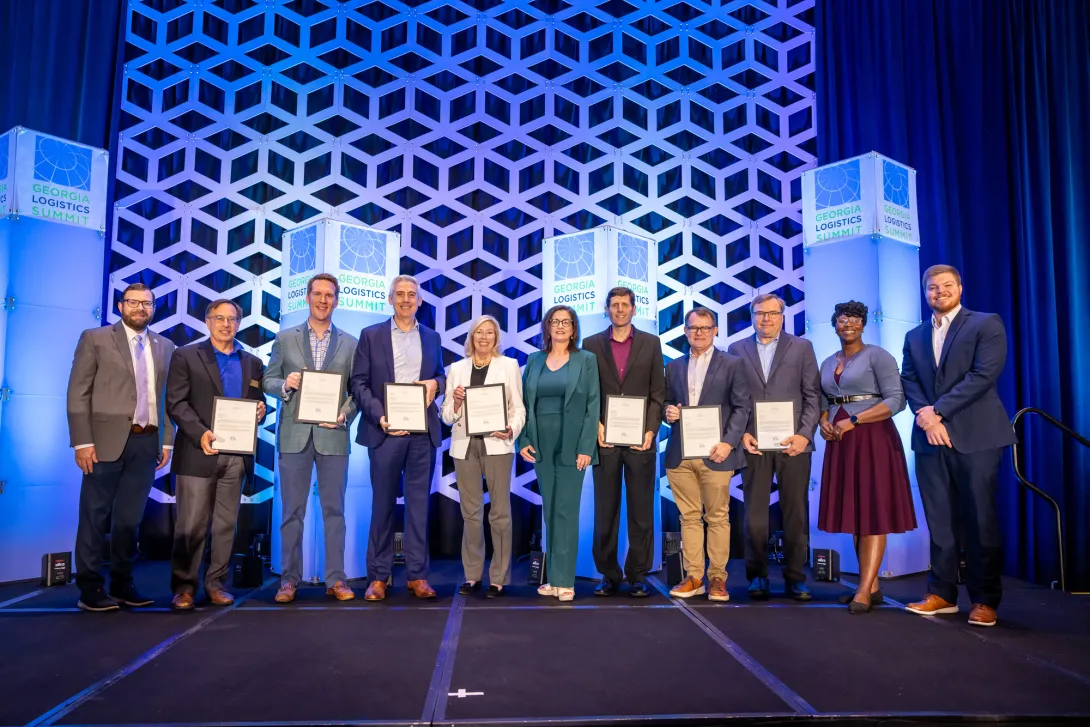
Members of the Georgia Center of Innovation – Logistics Advisory Board gathered at the 2025 Georgia Logistics Summit, where each received a personal note of recognition from Governor Brian Kemp for three years of dedicated service. Their collective efforts have advanced freight and logistics across Georgia—strengthening collaboration between industry, government, and academia to drive the state’s economic growth.
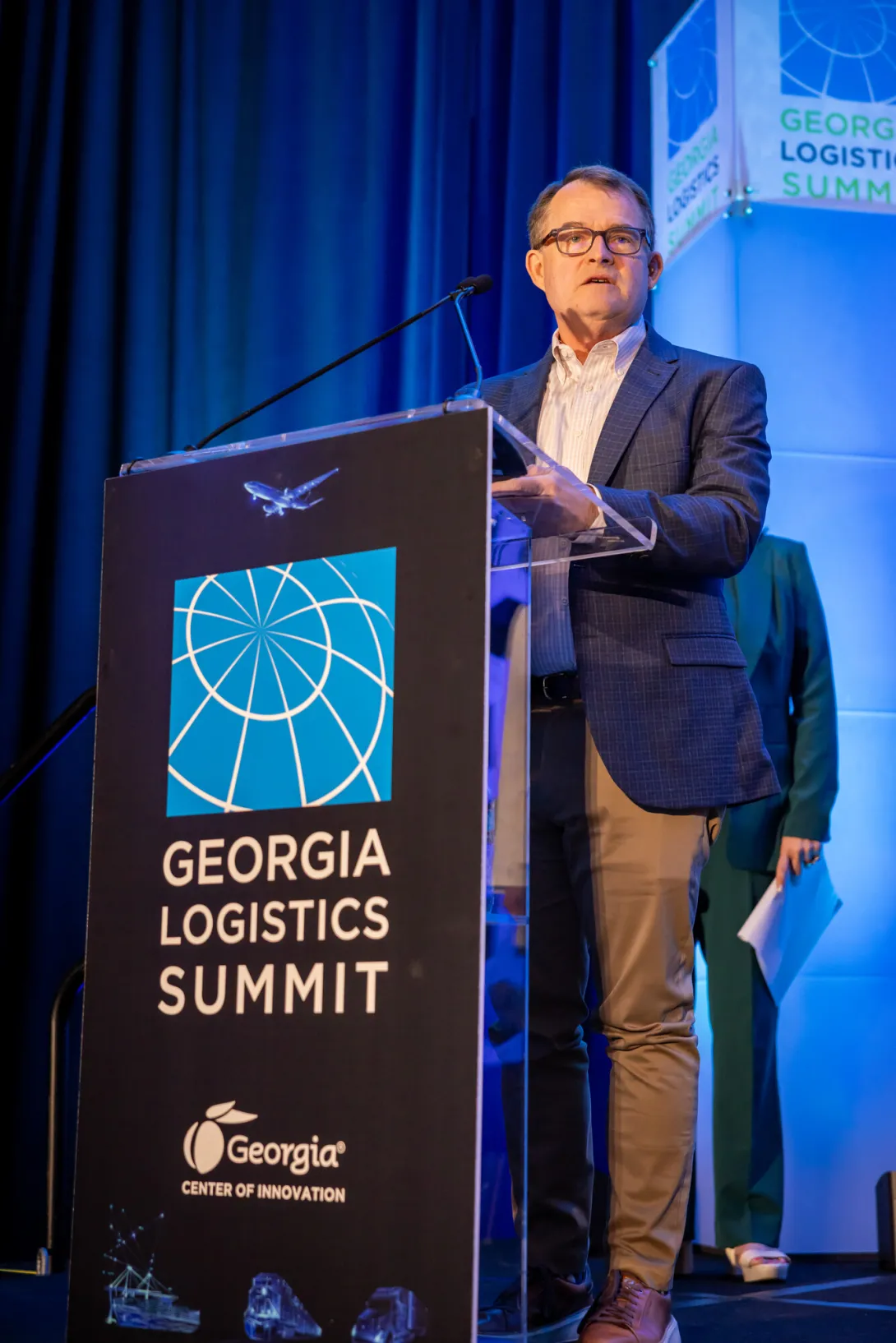
Chris Gaffney of Georgia Tech’s Supply Chain and Logistics Institute addresses the Georgia Logistics Summit, reflecting on the power of public-private collaboration. “It’s that bridge between dialogue and execution that makes this group so valuable. Together, we’re building the capabilities that help Georgia’s communities and businesses grow, thrive, and lead.”
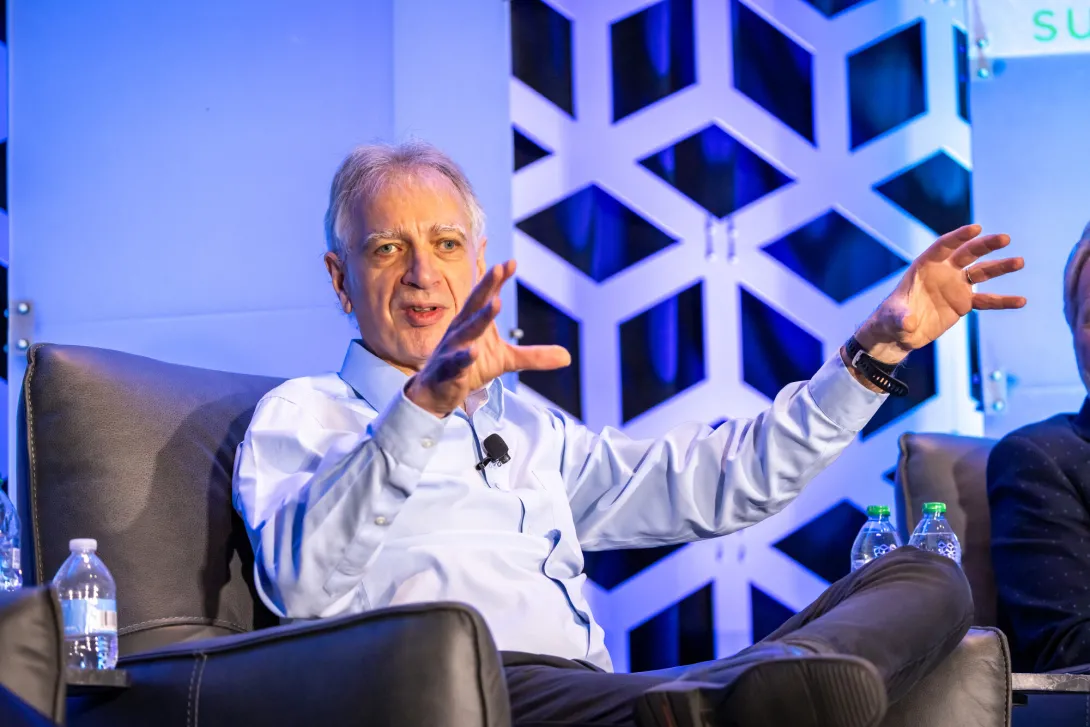
Pascal Van Hentenryck participated in a panel discussion of how AI and digital technologies are reshaping supply chains, including future predictions and real-world examples of their impact on logistics.
The Georgia Center of Innovation, a strategic arm of the Georgia Department of Economic Development (GDEcD), hosted hundreds of attendees at the 2025 Georgia Logistics Summit, where experts offered insights on the intersection of technology and logistics, updates on infrastructure investments, and how the state is preparing the future workforce to support growth. Established in 2009 as the first state-led event of its kind, the Georgia Logistics Summit is one of the Southeast’s key logistics and supply chain events, connecting industry professionals for networking and knowledge-sharing.
The economic impact of Georgia’s transportation and logistics industry was $107 billion in 2023, according to an economic impact study by the University of Georgia’s Selig Center for Economic Growth. These industries supported more than 578,000 Georgia jobs, or one in nine jobs in the state. From 2010 to 2023, transportation and logistics jobs in Georgia grew by 68%, outpacing the national growth rate of 52%. Additionally, in 2023 and 2024 alone, new logistics and distribution sector investments, including cold storage and ecommerce fulfillment centers, totaled $3.8 billion and created over 9,000 new jobs.
“Georgia’s unmatched global connectivity is one of the driving forces behind our economic success. Decades of strategic investment in our logistics and supply chain infrastructure – from our ports and rail lines to our highways and air cargo capabilities – have led to record-breaking economic investments and trade,” said Georgia Department of Economic Development Commissioner Pat Wilson. “The Logistics Summit brings together private sector, government, and education leaders to learn from experts, exchange best practices, and explore opportunities in the rapidly evolving logistics landscape to maximize opportunities. Events like this strengthen collaboration and spark new ideas that keep Georgia businesses competitive on a global scale.”
Georgia Department of Transportation Commissioner Russell R. McMurry highlighted Georgia’s strategic investments and how the Georgia Department of Transportation (GDOT) is leveraging technology to improve freight flow. He cited the leadership of Governor Brian P. Kemp and support from the General Assembly to allocate $1 billion to the newly created Georgia Freight Program over the past two years. Additional investments in transportation infrastructure are advancing the timing for key planned transportation projects that will maintain and improve Georgia’s interstate highway system, roads, and bridges. Georgia’s multimodal transportation network carried nearly half a billion tons of freight in 2019, valued at $673 trillion. Projections show that freight volume is expected to nearly double to 900 million in tonnage and freight value to more than double today’s value by 2050. Working with partners that include the Center of Innovation and the Georgia Institute of Technology, GDOT is focusing on enhancing safety and efficiency, including projects to add 50% more truck parking and installing fiber internet on Georgia interstates.
Georgia Ports Authority Vice President of Operations Susan Gardner provided updates on strategic investments to expand capacity at the ports, and how Georgia Ports Authority (GPA) is leveraging live data to improve safety, track vessel productivity and containers, and eliminate congestion. Gardner emphasized building a technological culture and prioritizing hiring creative employees, as well as harnessing data insights to boost efficiency. GPA is investing in $4.5 billion in improvements over the next decade as part of its port master plan to expand cargo handling capabilities and support future supply chain requirements.
This year’s feature panel, “AI and Beyond: Embracing Digital Transformation in Logistics,” included leadership from The Home Depot, Havertys Furniture, and TOTO USA, as well as research perspectives from the Georgia Institute of Technology. Panelists highlighted the ways digital technologies are reshaping supply chains, including a three- to five-year outlook for the industry, and provided insights attendees can use to shape their strategies to move more efficiently as AI and automation transform the industry.
“Digital technologies are reshaping supply chains in various ways, and Georgia is working to stay ahead of the curve,” said Center of Innovation Executive Director David Nuckolls. “The Center of Innovation and our specialized logistics team work alongside this dynamic industry, helping to position businesses for growth. The annual Georgia Logistics Summit is a powerful opportunity to build connections and equip businesses with crucial knowledge and resources.”
Educating the needed talent was the focus of the event’s final panel, with University System of Georgia Chancellor Sonny Perdue and Technical College System of Georgia Commissioner Greg Dozier providing updates on how the state’s post-secondary institutions are developing a globally competitive workforce. Discussion focused on how these institutions are ensuring the skills they are teaching match the jobs logistics companies are looking for, including creative problem-solving and effective use of new AI and automation tools. The breadth of Georgia’s technical college programs was also discussed, including the High Demand Career Initiatives program and a pilot program called “Dual Achievement” that enrolls students who withdrew from high school in a technical college program, enabling them to earn a high school diploma alongside a technical college certificate, diploma, or degree. Panelists focused on the importance of helping students get where they want to go faster, upskilling the existing workforce, and how connections between industry leaders and educators can help foster greater outcomes.
The Center of Innovation’s Logistics Industry Advisory Board also recognized the winners of the inaugural Future Innovators in Supply Chain competition. The competition invited college students to create videos about supply chain careers, reflecting the Center’s commitment to developing future logistics leaders. Led by professor Parisa Pooyan, student team “The Masters of Logistinomics” from Kennesaw State University won first prize and a $3,000 grant for the university. Eli Hampton, Angeline Harris, Joe Johnson, and Dana Pazhouhesh created the winning video, which can be viewed here.
For additional information on the 2025 Georgia Logistics Summit and to stay up-to-date on next year’s plans, visit galogisticssummit.com.
Participants in the 2025 Georgia Logistics Summit also included leaders from S&P Global Market Intelligence, Boost Phase Ventures, and M.D. Livingstone Consulting.
About the Georgia Center of Innovation
Exclusive to Georgia, the Center of Innovation helps Georgia businesses of all types and sizes find inspired solutions to challenges and opportunities. The Center connects new and expanding businesses with a team of experts, external partners, and independent mentors to tap into the technical expertise and guidance they need. By encouraging collaboration across six key industries: Aerospace, AgTech, Energy Technology, Information Technology, Logistics, and Manufacturing, the Center helps Georgia prepare for growth in strategic industry ecosystems.
About GDEcD
The Georgia Department of Economic Development (GDEcD) is the state’s sales and marketing arm. It is Georgia’s lead agency for attracting new business investment, encouraging the expansion of existing industry and small businesses, and locating new markets for Georgia products. As the state’s official destination marketing organization, it drives traveler visitation and promotes the state as a location for film and digital entertainment projects. GDEcD is responsible for planning and mobilizing state resources for economic development, fostering innovation and the arts to drive opportunity from the mountains to the coast.
News Contact
Allie Dean, Communications Manager, Georgia Department of Economic Development | adean@georgia.org
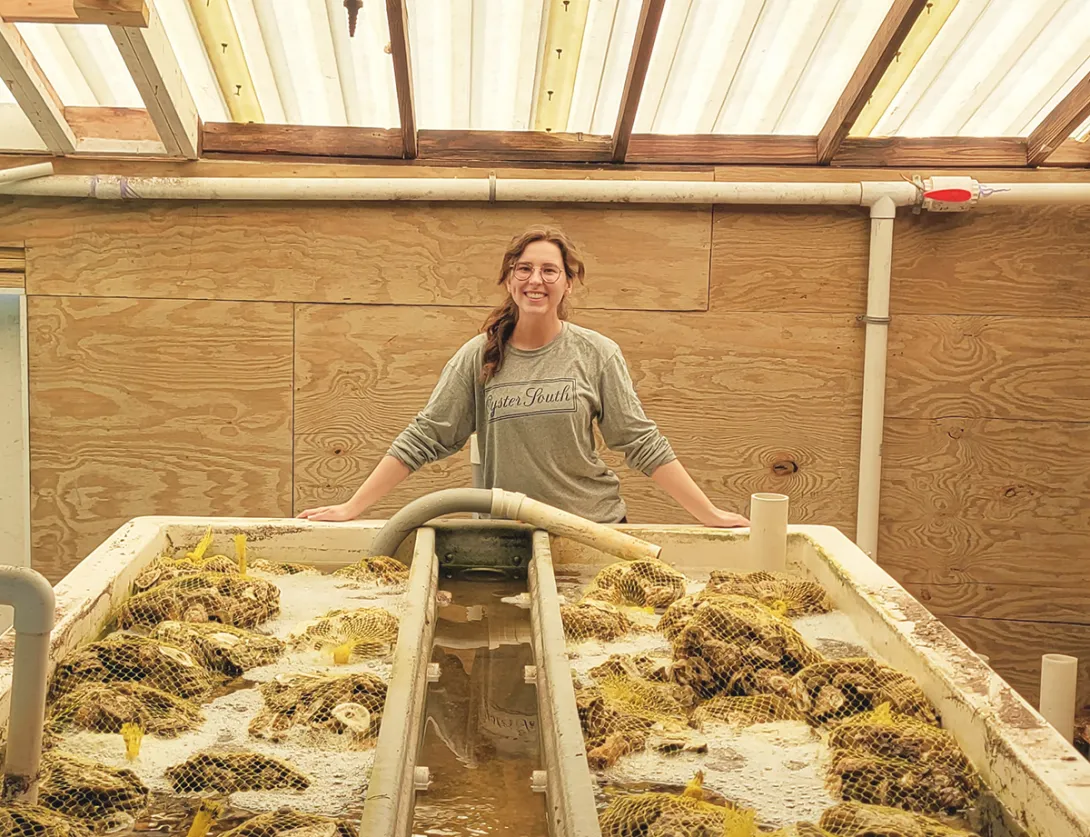
Sarah Roney oversees nursery troughs in the UGA Shellfish Research Lab filled with young oysters growing on shells recycled from restaurants all over Georgia.
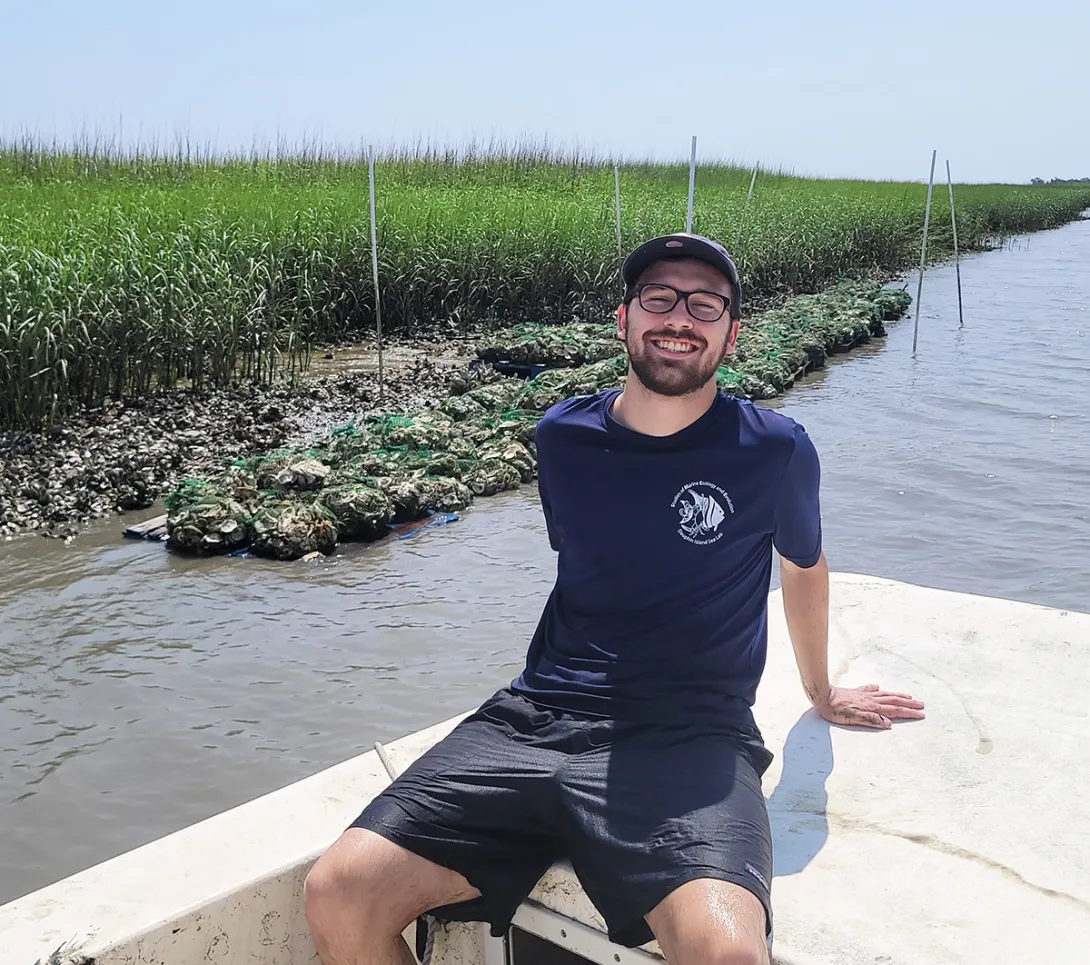
Tanner Lee (Georgia Tech, BS Biology '23) helped construct the oyster reef he observes from a boat as part of an undergraduate research project.
Sarah Roney studies oysters — and coastline restoration, wave energy, erosion, blue crabs, and predator chemical cues. A Ph.D. candidate in Georgia Tech’s Ocean Science and Engineering program and a Brook Byers Graduate Fellow, Roney has spent the past four years studying how strategically placing oyster reefs along Georgia’s coast could yield significant benefits.
Georgia’s coastal ecology is being degraded by several threats. Erosion caused by a combination of traffic from water vessels, sea-level rise, increased storm intensity and frequency, and property development, are negatively impacting both coastal living systems and the state’s economy. Tourism, agriculture, recreation, fisheries, property development, and trade (through the Port of Savannah) all rely on healthy coastlines.
Roney’s interest in coastal ecology and oysters drew her to focus her doctoral thesis on this problem. She divided her project into two parts. The first involved understanding how much oyster reefs reduce the erosion caused by wave energy (ship wake) from water traffic. The second part demonstrated a method for making young oysters resistant to predation — increasing their survival rates and that of the reef colonies they call home. Roney focused her research on two major waterways in the Savannah area. The Intracoastal Waterway and the South Channel of the Savannah River, which leads to the Port of Savannah, are both subject to heavy ship and boat traffic. According to Roney’s collaborators at Georgia Tech, 65% of the wave energy lashing the South Channel’s shores is generated by cargo vessels navigating to and from the Port of Savannah. Because traffic along the Intracoastal Waterway is subject to very few speed restrictions, there is plenty of erosive wave energy there also, even though the vessels are almost exclusively small.
Roney chose one site in each waterway to place her reef structures. Mesh bags of oyster shells were seeded with young oysters by personnel working at a University of Georgia Shellfish Research Lab. Roney created her reef structures by placing these bags in a row 15 to 20 meters long and a meter wide. Once established, Roney found that constructed reefs dissipate 40% of the wave energy before it reaches the marsh edge. “This is an experimental pilot study, so the reefs are on the smaller side,” Roney explained. “Reefs as large as 100 meters long may be necessary to protect certain areas — which sounds like a big investment. But because these are living shorelines, they are self-sustaining, and will keep growing and building on themselves.”
Establishing oyster reefs can be challenging, however, because predators feast on young oysters. Blue crabs are among the most voracious. The second part of Roney’s research was to develop a method that improves adolescent oysters’ chances of surviving to adulthood — when they infrequently succumb to predation. Roney and her collaborators at Georgia Tech identified two compounds found in blue crab urine, called trigonelline and homarine, that induce young oysters to devote more energy toward growing their shells, which become 25-60% stronger than normal. Roney found that after four to eight weeks of exposure to these compounds in hatchery conditions, their overall survival rate improved by 30% once placed in a reef. Her method not only helps constructed reefs to become established, but can also help existing oyster reefs become more resilient by slowing, or reversing, their decline.
While coastal restoration projects are not new in Georgia, the techniques Roney developed are relatively novel. Conventional shoreline restoration projects involve excavation, placing gravel beds, and extensive plantings, mostly with sea grasses. Roney has shown that using living shoreline strategies are less intensive and less expensive to establish and are also effective in reducing wave energy in waterways vulnerable to erosion. Perhaps most significantly, these techniques also restore the foundational functions of the ecosystems in which they are placed. The reefs become nurseries, incubating fish, bird, plant, and crustacean species.
Roney engaged several partners over the four years of her project, many in the communities along Georgia’s coast. Over 35 coastal residents, business owners, citizen scientists, and students volunteered their time and resources to help Roney’s project succeed. Roney said, “I think the most rewarding part of the project has been seeing how many people are truly invested in our coastal resources and want oyster reefs to thrive.”
This project isn’t likely to end once Roney earns her PhD. For living shoreline restoration practices to catch on, several other problems require investigation. Roney wants to devise a way to slowly release predator cue compounds into the water near oyster reefs, so baby oysters won’t need to spend as much time in a hatchery before being placed in the wild. Perfecting such a time-release mechanism could also help rejuvenate naturally occurring oyster reefs under threat from erosion and predation.
Roney also wants to try combining constructed oyster reefs with oyster farms, integrating one of the most sustainable ways that protein can be raised with living shoreline restoration. “As the mariculture industry in Georgia grows, there will be lots of opportunities to investigate the possible intersections between the ecological benefits, engineering benefits, and cultural benefits of oyster farming,” Roney said. “Food might be a continuous byproduct of shoreline restoration projects.”
Roney’s research shows that economic development and preserving, or even regenerating, diverse and productive coastal habitats for future generations don’t have to be mutually exclusive propositions.
Roney’s thesis advisor is Marc Weissburg, Brook Byers Professor in the School of Biological Sciences. Kevin Haas, professor in the School of Civil and Environmental Engineering, helped Roney map and measure the hydrodynamic forces in her study zones. The Coastal Resources Division of the Georgia Department of Natural Resources, the National Parks Service, and the University of Georgia Marine Extension and Georgia Sea Grant program provided access, permitting, funding, and resources.
News Contact
Brent Verrill, Research Communications Program Manager, BBISS
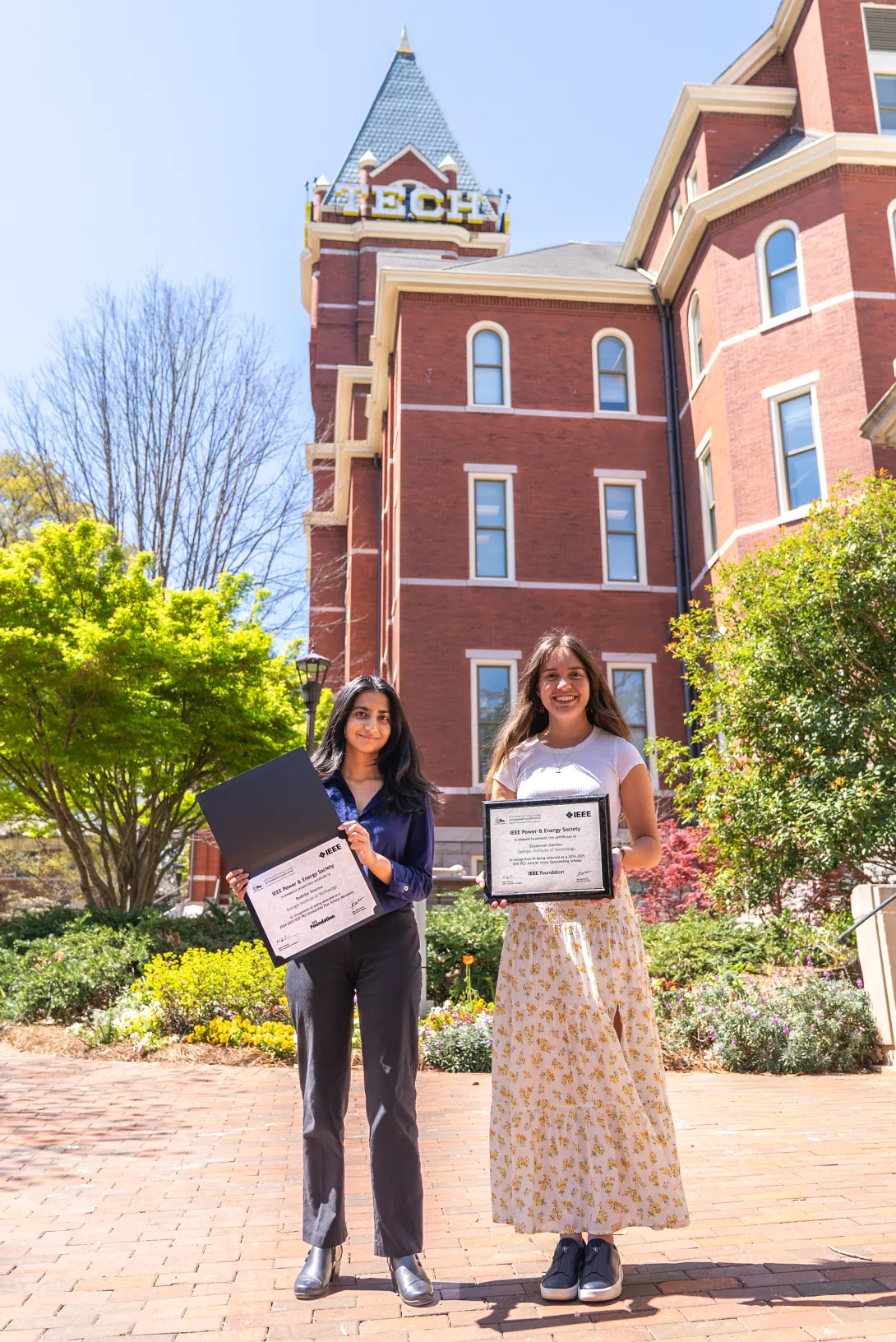
A pair of Georgia Tech School of Electrical and Computer Engineering (ECE) students were awarded a 2024-25 IEEE Power and Energy Society (PES) Scholarship.
Fourth-year electrical engineering major Susannah Gordon and third-year electrical engineering major Radhika Sharma became the latest ECE students to win the selective award, joining Denitsa Dimitrova who won it last year.
The PES Scholarship Plus Initiative provides scholarships and real-world experience to undergraduates majoring in electrical engineering, who are high achievers with strong GPAs, distinctive extracurricular involvement, and are committed to pursuing careers in power and energy engineering.
Gordon and Sharma were two of just 84 winners from around North America.
On top of the PES Scholarship, Gordon won the John W. Estey Outstanding Scholar Award, which goes to the top PES student in each of the organization’s seven regions. She was chosen as the winner for Region 3.
Gordon’s academic path follows the Electric Energy Systems and Robotics curriculum threads. She has been interested in renewable energy and power engineering since her first year when she joined the Gaming for Electric Power Grids Vertically Integrated Project.
She’s conducted research with ECE associate professor Daniel Molzahn, focusing on generating a synthetic distribution system model for the State of Georgia based on public available information.
On campus, she is involved in ECE Ambassadors, Ramblin’ Reck Club, and Tau Beta Pi.
Upon graduating in May, she will join Kimley-Horn full time as an electrical analyst and hopes to pursue of a master’s degree in electrical engineering part-time at Georgia Tech.
Sharma has been involved in a number of campus organizations, including the Energy Club at Georgia Tech since her first semester at Georgia Tech, where she plans Energy Chats and networking events, along with helping to organize the Southeastern Energy Conference every year.
She’s also on the officer board of Women in ECE (WECE) and is a peer instructor at the Interdisciplinary Design Commons (also known as the Hive Makerspace).
Outside of Georgia Tech she’s completed two internships in power systems. One in power delivery at Florida Power & Light and another in substation design at Burns & McDonnell.
Her main research interest is in scaling the electric power grid. She also conducts research in power reliability with renewable energy sources.
Sharma plans to use the scholarship to finish the fourth year of her degree and use the PES resources that come with it to learn more about the different fields of power systems.
Applications for the 2025 cycle PES Scholarship are open and close on April 30.
News Contact
Zachary Winiecki
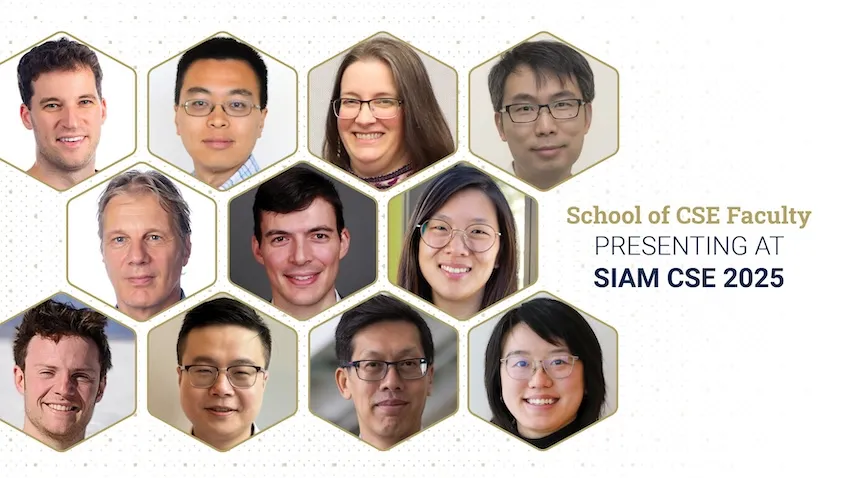
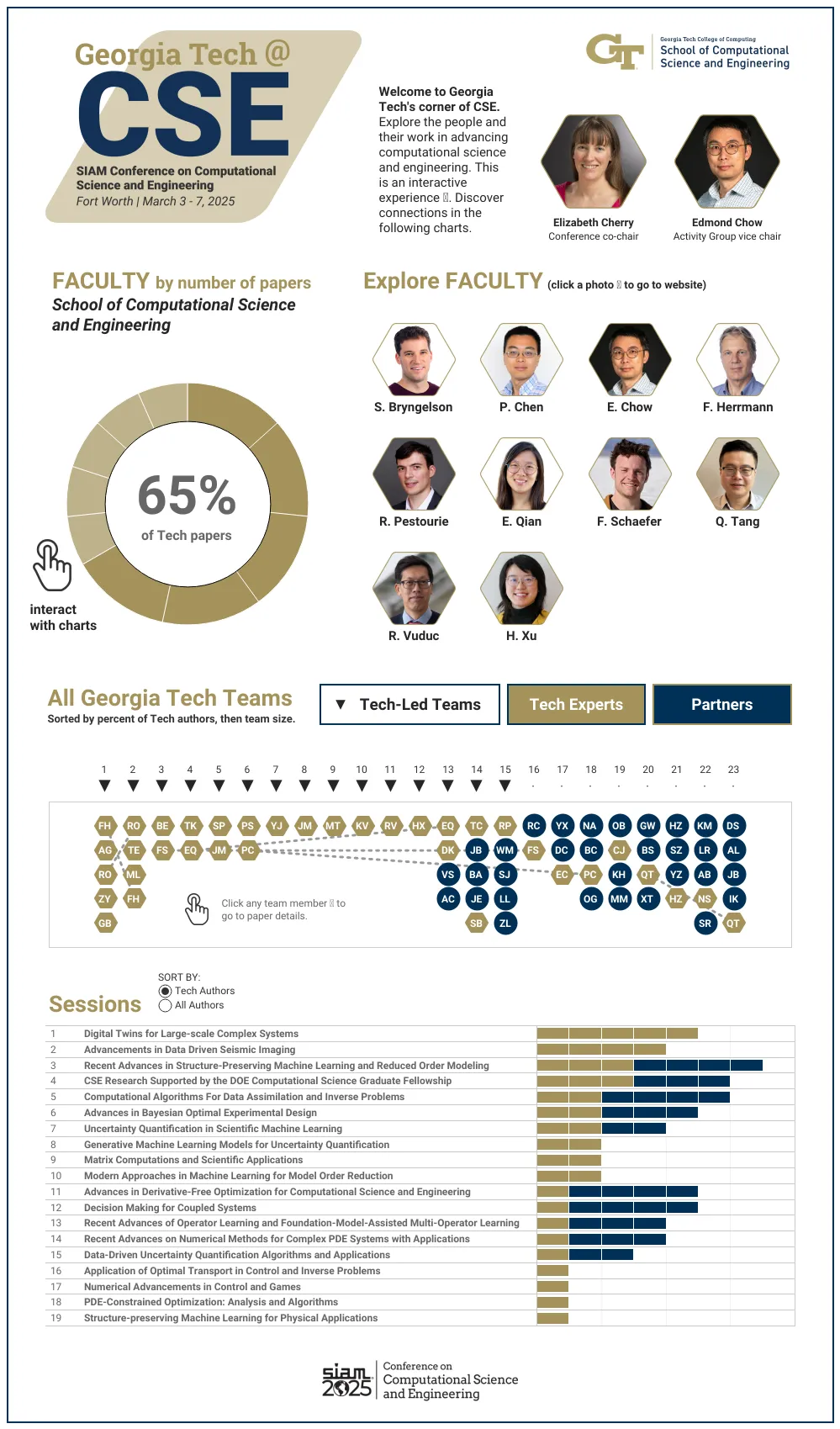
Many communities rely on insights from computer-based models and simulations. This week, a nest of Georgia Tech experts are swarming an international conference to present their latest advancements in these tools, which offer solutions to pressing challenges in science and engineering.
Students and faculty from the School of Computational Science and Engineering (CSE) are leading the Georgia Tech contingent at the SIAM Conference on Computational Science and Engineering (CSE25). The Society of Industrial and Applied Mathematics (SIAM) organizes CSE25, occurring March 3-7 in Fort Worth, Texas.
At CSE25, the School of CSE researchers are presenting papers that apply computing approaches to varying fields, including:
- Experiment designs to accelerate the discovery of material properties
- Machine learning approaches to model and predict weather forecasting and coastal flooding
- Virtual models that replicate subsurface geological formations used to store captured carbon dioxide
- Optimizing systems for imaging and optical chemistry
- Plasma physics during nuclear fusion reactions
[Related: GT CSE at SIAM CSE25 Interactive Graphic]
“In CSE, researchers from different disciplines work together to develop new computational methods that we could not have developed alone,” said School of CSE Professor Edmond Chow.
“These methods enable new science and engineering to be performed using computation.”
CSE is a discipline dedicated to advancing computational techniques to study and analyze scientific and engineering systems. CSE complements theory and experimentation as modes of scientific discovery.
Held every other year, CSE25 is the primary conference for the SIAM Activity Group on Computational Science and Engineering (SIAG CSE). School of CSE faculty serve in key roles in leading the group and preparing for the conference.
In December, SIAG CSE members elected Chow to a two-year term as the group’s vice chair. This election comes after Chow completed a term as the SIAG CSE program director.
School of CSE Associate Professor Elizabeth Cherry has co-chaired the CSE25 organizing committee since the last conference in 2023. Later that year, SIAM members reelected Cherry to a second, three-year term as a council member at large.
At Georgia Tech, Chow serves as the associate chair of the School of CSE. Cherry, who recently became the associate dean for graduate education of the College of Computing, continues as the director of CSE programs.
“With our strong emphasis on developing and applying computational tools and techniques to solve real-world problems, researchers in the School of CSE are well positioned to serve as leaders in computational science and engineering both within Georgia Tech and in the broader professional community,” Cherry said.
Georgia Tech’s School of CSE was first organized as a division in 2005, becoming one of the world’s first academic departments devoted to the discipline. The division reorganized as a school in 2010 after establishing the flagship CSE Ph.D. and M.S. programs, hiring nine faculty members, and attaining substantial research funding.
Ten School of CSE faculty members are presenting research at CSE25, representing one-third of the School’s faculty body. Of the 23 accepted papers written by Georgia Tech researchers, 15 originate from School of CSE authors.
The list of School of CSE researchers, paper titles, and abstracts includes:
Bayesian Optimal Design Accelerates Discovery of Material Properties from Bubble Dynamics
Postdoctoral Fellow Tianyi Chu, Joseph Beckett, Bachir Abeid, and Jonathan Estrada (University of Michigan), Assistant Professor Spencer Bryngelson
[Abstract]
Latent-EnSF: A Latent Ensemble Score Filter for High-Dimensional Data Assimilation with Sparse Observation Data
Ph.D. student Phillip Si, Assistant Professor Peng Chen
[Abstract]
A Goal-Oriented Quadratic Latent Dynamic Network Surrogate Model for Parameterized Systems
Yuhang Li, Stefan Henneking, Omar Ghattas (University of Texas at Austin), Assistant Professor Peng Chen
[Abstract]
Posterior Covariance Structures in Gaussian Processes
Yuanzhe Xi (Emory University), Difeng Cai (Southern Methodist University), Professor Edmond Chow
[Abstract]
Robust Digital Twin for Geological Carbon Storage
Professor Felix Herrmann, Ph.D. student Abhinav Gahlot, alumnus Rafael Orozco (Ph.D. CSE-CSE 2024), alumnus Ziyi (Francis) Yin (Ph.D. CSE-CSE 2024), and Ph.D. candidate Grant Bruer
[Abstract]
Industry-Scale Uncertainty-Aware Full Waveform Inference with Generative Models
Rafael Orozco, Ph.D. student Tuna Erdinc, alumnus Mathias Louboutin (Ph.D. CS-CSE 2020), and Professor Felix Herrmann
[Abstract]
Optimizing Coupled Systems: Insights from Co-Design Imaging and Optical Chemistry
Assistant Professor Raphaël Pestourie, Wenchao Ma and Steven Johnson (MIT), Lu Lu (Yale University), Zin Lin (Virginia Tech)
[Abstract]
Multifidelity Linear Regression for Scientific Machine Learning from Scarce Data
Assistant Professor Elizabeth Qian, Ph.D. student Dayoung Kang, Vignesh Sella, Anirban Chaudhuri and Anirban Chaudhuri (University of Texas at Austin)
[Abstract]
LyapInf: Data-Driven Estimation of Stability Guarantees for Nonlinear Dynamical Systems
Ph.D. candidate Tomoki Koike and Assistant Professor Elizabeth Qian
[Abstract]
The Information Geometric Regularization of the Euler Equation
Alumnus Ruijia Cao (B.S. CS 2024), Assistant Professor Florian Schäfer
[Abstract]
Maximum Likelihood Discretization of the Transport Equation
Ph.D. student Brook Eyob, Assistant Professor Florian Schäfer
[Abstract]
Intelligent Attractors for Singularly Perturbed Dynamical Systems
Daniel A. Serino (Los Alamos National Laboratory), Allen Alvarez Loya (University of Colorado Boulder), Joshua W. Burby, Ioannis G. Kevrekidis (Johns Hopkins University), Assistant Professor Qi Tang (Session Co-Organizer)
[Abstract]
Accurate Discretizations and Efficient AMG Solvers for Extremely Anisotropic Diffusion Via Hyperbolic Operators
Golo Wimmer, Ben Southworth, Xianzhu Tang (LANL), Assistant Professor Qi Tang
[Abstract]
Randomized Linear Algebra for Problems in Graph Analytics
Professor Rich Vuduc
[Abstract]
Improving Spgemm Performance Through Reordering and Cluster-Wise Computation
Assistant Professor Helen Xu
[Abstract]
News Contact
Bryant Wine, Communications Officer
bryant.wine@cc.gatech.edu
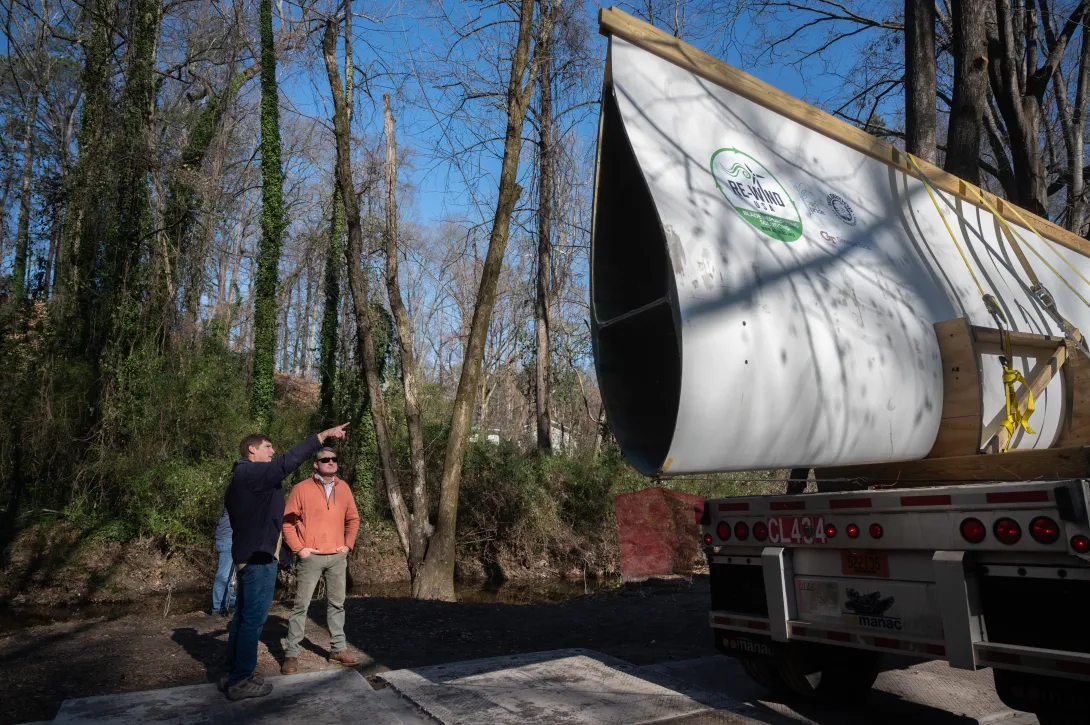
Photo by Allison Carter
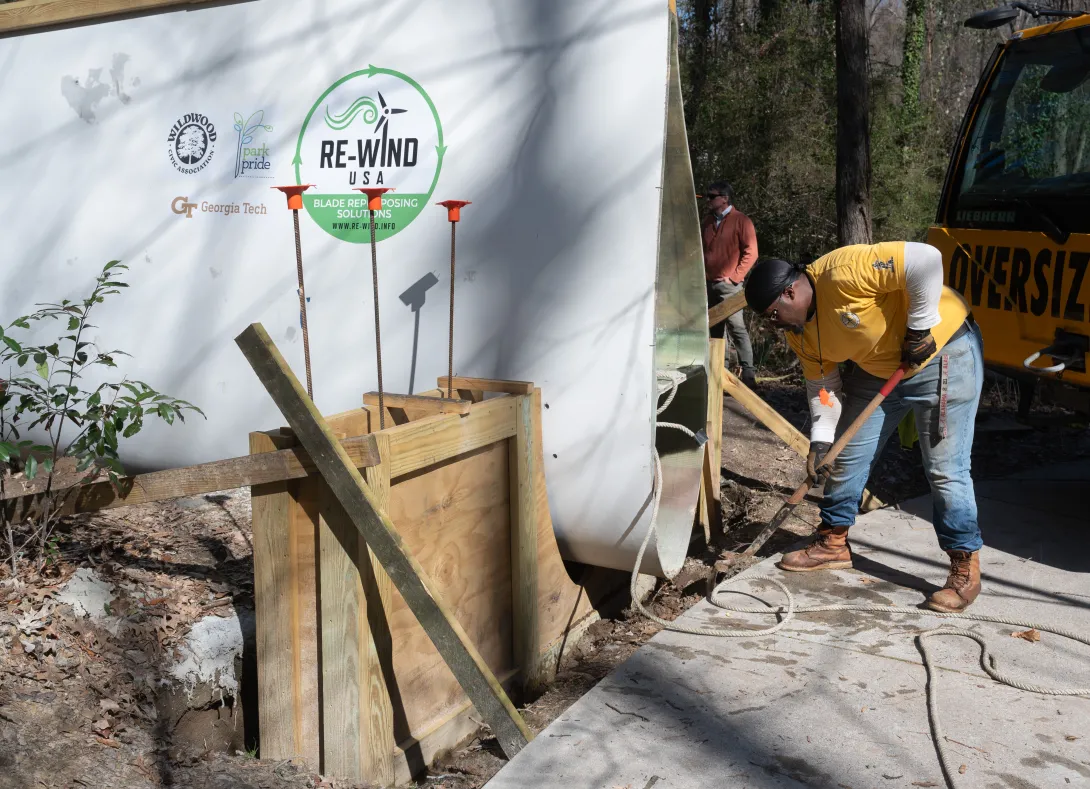
Photo by Allison Carter
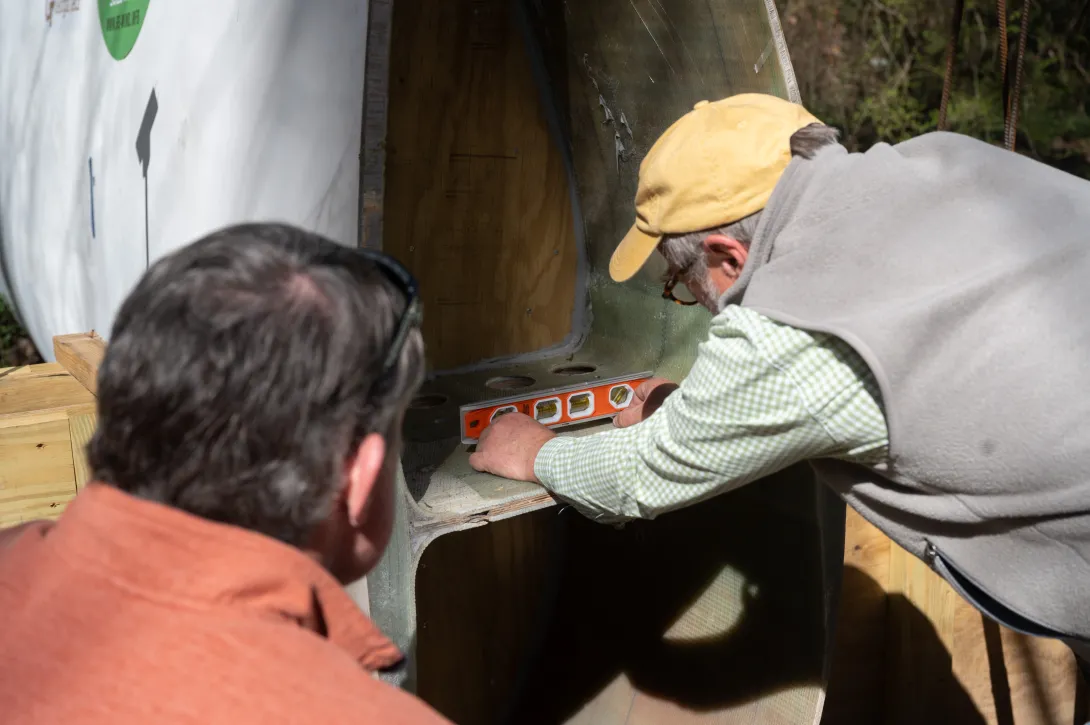
Photo by Allison Carter
Jud Ready first visited Beaverbrook Park for an adopt-a-stream event as a graduate student. When he moved to the northwest Atlanta neighborhood, he got involved with improvement efforts at the park.
“It was a muddy mess back then. Over time, we added an exercise trail, playgrounds, a gazebo, and ball fields, but we didn't have a place where you could just walk through the woods,” Ready said. The problem? A creek prevented easy passage, and the park lacked a bridge to cross it.
Despite receiving a grant from Park Pride, a nonprofit that helps residents improve their parks, Ready realized it wasn’t nearly enough money to build a bridge over the rushing waters. Then Ready, a principal research engineer at the Georgia Tech Research Institute with a joint appointment in the School of Materials Science and Engineering, learned that one of his colleagues was using decommissioned wind turbine blades for bridges.
For eight years, Russell Gentry, a professor in the School of Architecture and a member of the Re-Wind Network, has explored how to upcycle wind turbine blades into functional infrastructure. Re-Wind, an international organization, has constructed two bridges in Ireland, where wind energy is more prevalent. The Beaverbrook bridge is the first in the U.S., but building it hasn’t been a simple copy-and-paste process from across the Atlantic Ocean.
“It's not recycling because we're not taking the material back to its original state; it's really adaptive reuse,” explained Gentry. “Think of it as the difference between wood and paper. You can take a tree and grind it up finely for paper, but if you leave it in its original form, you have wood. It’s a much more capable material from a structural perspective.”
Like almost everything in America, the blades are bigger than their European counterparts. The 15-meter blade weighs around 7,000 pounds, so moving it from its first home in a Colorado wind farm to a Georgia public park was no easy feat. With funding from the National Science Foundation, the Department of Energy, and wind turbine manufacturer Siemens Gamesa, Ready and Gentry established a team of a dozen Georgia Tech students, researchers, and alumni to bring the blade to Beaverbrook Park.
Cayleigh Nicholson (architecture), Sakshi Kakkad (computing and architecture), who both graduated in 2024, and fourth-year civil engineering student Gabriel Ackall made sure the bridge was engineered well and that it complied with city regulations. Nicholson spent a semester surveying Beaverbrook to determine the best path and placement of the bridge. Kakkad developed software to better understand the geometry of the blade and position it in the bridge. Ackall was involved in the design process, working with the foundation contractor, Cantsink, to calculate stresses and deflections in the BladeBridges.
“We’ve essentially had to design the entire structural system of the bridge from scratch, as existing building and bridge codes do not have much information about either the composite materials used in wind turbine blades or in adaptive reuse for new construction,” Ackall noted. “We used advanced modeling software combined with the knowledge we’ve gained from over a half dozen years of wind turbine blade testing and prototyping to make the bridge a reality and ensure their safety.”
Even alumnus Tierson Boutte, CE 2002, who owns the tree company Boutte Tree, helped make the installation possible. “We’re grateful to be able to give back to the community by pruning the trees for the crane to be able to lift the turbine blades,” he said.
On a sunny day in mid-March, the bridge was installed with a combined crew of 16 from Chappell Construction, led by alumnus Wade Chappell, IE 2000; Williams Erection Company, owned by alumnus Art Williams, CE 1983; and ironworkers from Local 387. Finally, with a little help from an unusual source, a neighborhood can fully enjoy its park.
Video by Maxwell Guberman
Photos by Allison Carter
News Contact
Tess Malone, Senior Research Writer/Editor
tess.malone@gatech.edu
Successful test results of a new machine learning (ML) technique developed at Georgia Tech could help communities prepare for extreme weather and coastal flooding. The approach could also be applied to other models that predict how natural systems impact society.
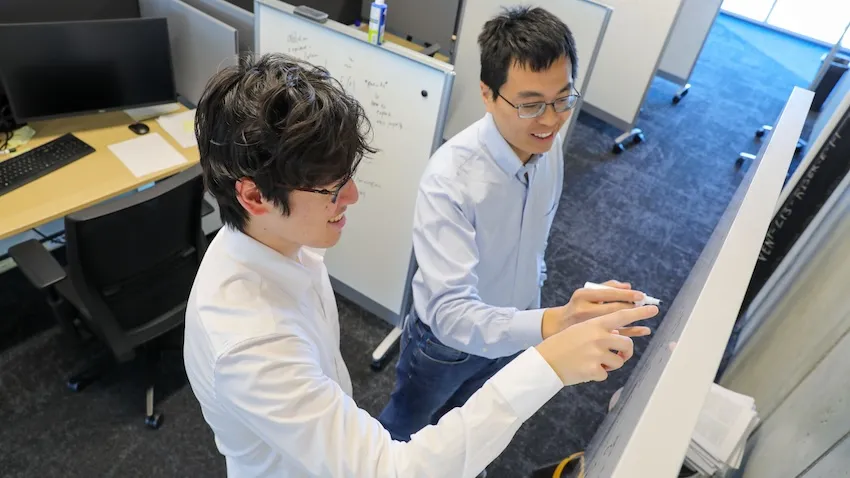
Ph.D. student Phillip Si and Assistant Professor Peng Chen developed Latent-EnSF, a technique that improves how ML models assimilate data to make predictions.
In experiments predicting medium-range weather forecasting and shallow water wave propagation, Latent-EnSF demonstrated higher accuracy, faster convergence, and greater efficiency than existing methods for sparse data assimilation.
“We are currently involved in an NSF-funded project aimed at providing real-time information on extreme flooding events in Pinellas County, Florida,” said Si, who studies computational science and engineering (CSE).
“We're actively working on integrating Latent-EnSF into the system, which will facilitate accurate and synchronized modeling of natural disasters. This initiative aims to enhance community preparedness and safety measures in response to flooding risks.”
Latent-EnSF outperformed three comparable models in assimilation speed, accuracy, and efficiency in shallow water wave propagation experiments. These tests show models can make better and faster predictions of coastal flood waves, tides, and tsunamis.
In experiments on medium-range weather forecasting, Latent-EnSF surpassed the same three control models in accuracy, convergence, and time. Additionally, this test demonstrated Latent-EnSF's scalability compared to other methods.
These promising results support using ML models to simulate climate, weather, and other complex systems.
Traditionally, such studies require employment of large, energy-intensive supercomputers. However, advances like Latent-EnSF are making smaller, more efficient ML models feasible for these purposes.
The Georgia Tech team mentioned this comparison in its paper. It takes hours for the European Center for Medium-Range Weather Forecasts computer to run its simulations. Conversely, the ML model FourCastNet calculated the same forecast in seconds.
“Resolution, complexity, and data-diversity will continue to increase into the future,” said Chen, an assistant professor in the School of CSE.
“To keep pace with this trend, we believe that ML models and ML-based data assimilation methods will become indispensable for studying large-scale complex systems.”
Data assimilation is the process by which models continuously ingest new, real-world data to update predictions. This data is often sparse, meaning it is limited, incomplete, or unevenly distributed over time.
Latent-EnSF builds on the Ensemble Filter Scores (EnSF) model developed by Florida State University and Oak Ridge National Laboratory researchers.
EnSF’s strength is that it assimilates data with many features and unpredictable relationships between data points. However, integrating sparse data leads to lost information and knowledge gaps in the model. Also, such large models may stop learning entirely from small amounts of sparse data.
The Georgia Tech researchers employ two variational autoencoders (VAEs) in Latent-EnSF to help ML models integrate and use real-world data. The VAEs encode sparse data and predictive models together in the same space to assimilate data more accurately and efficiently.
Integrating models with new methods, like Latent-EnSF, accelerates data assimilation. Producing accurate predictions more quickly during real-world crises could save lives and property for communities.
To share Latent-EnSF to the broader research community, Chen and Si presented their paper at the SIAM Conference on Computational Science and Engineering (CSE25). The Society of Industrial and Applied Mathematics (SIAM) organized CSE25, held March 3-7 in Fort Worth, Texas.
Chen was one of ten School of CSE faculty members who presented research at CSE25, representing one-third of the School’s faculty body. Latent-EnSF was one of 15 papers by School of CSE authors and one of 23 Georgia Tech papers presented at the conference.
The pair will also present Latent-EnSF at the upcoming International Conference on Learning Representations (ICLR 2025). Occurring April 24-28 in Singapore, ICLR is one of the world’s most prestigious conferences dedicated to artificial intelligence research.
“We hope to bring attention to experts and domain scientists the exciting area of ML-based data assimilation by presenting our paper,” Chen said. “Our work offers a new solution to address some of the key shortcomings in the area for broader applications.”
News Contact
Bryant Wine, Communications Officer
bryant.wine@cc.gatech.edu
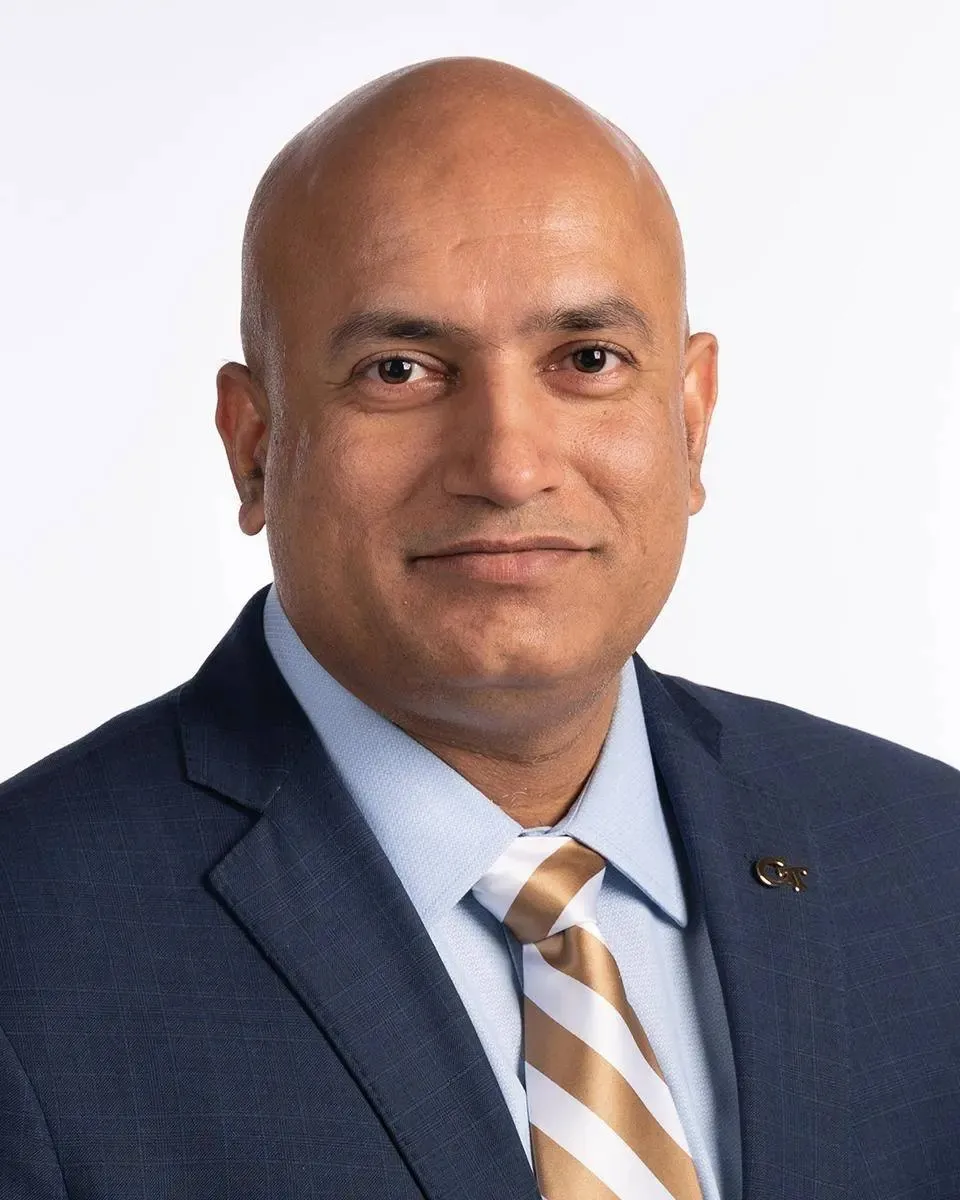
Devesh Ranjan
Devesh Ranjan, the Eugene C. Gwaltney, Jr. School Chair of the George W. Woodruff School of Mechanical Engineering, has been named dean of the College of Engineering at the University of Wisconsin-Madison (UW).
Ranjan graduated from UW and has been at Georgia Tech since 2014. He was selected as dean by UW Provost Charles Isbell, a Georgia Tech graduate and former dean of the College of Computing.
Ranjan will lead the Woodruff School through the spring semester. He will join UW in June.
“Devesh is a visionary leader who has created numerous programs to strengthen the Woodruff School community,” said Raheem Beyah, dean of the College of Engineering and Southern Company Chair. “Georgia Tech is my alma mater, and I know there’s nothing like going home. Devesh’s deep commitment and determination will undoubtedly lead to his continued success as he returns to UW to innovate and lead the university’s college of engineering. I’m grateful for his commitment to Tech and the Woodruff School, as well as his valuable guidance and partnership.”
News Contact
Jason Maderer (maderer@gatech.edu)