
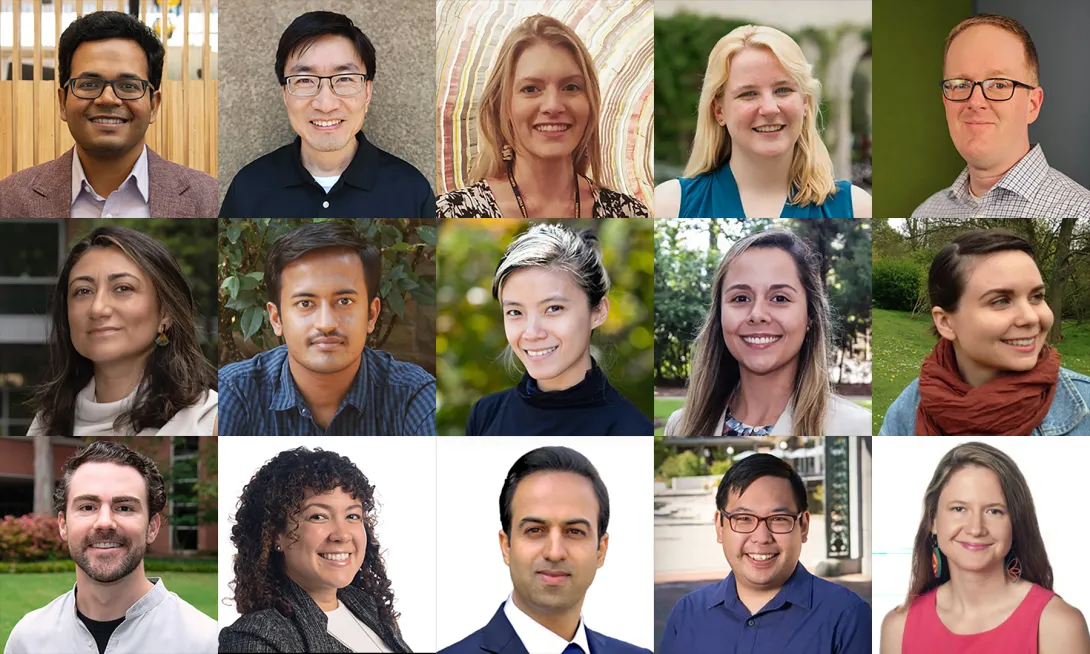
2026 Sustainability Next Seed Grant Principal Investigators: (R to L, Top to Bottom) Rounaq Basu, Sheng Dai, Anna Doll, Lilian Dove, Scott Duncan, Paula Gomez, Suhas S. Jain, Cindy Kaiying Lin, Sofía Pérez Guzmán, Caitlin Petro, Gregory Randolph, Rosemarie Santa Gonzalez, Ali Sarhadi, Richmond Wong, and Ruth C. Yow.
The most recent round of Sustainability Next Research Seed Grants has been awarded to 15 transdisciplinary teams featuring 36 collaborators from across Georgia Tech and beyond. The teams span 21 units from six of Georgia Tech’s seven Colleges, including Schools, research centers, and Interdisciplinary Research Institutes, as well as organizations external to Georgia Tech.
The seed grant program, administered by the Brook Byers Institute for Sustainable Systems (BBISS), reaches faculty members from a diverse array of disciplines due to the generous support provided by broad-based partnerships in addition to the funds provided by the Sustainability Next committee. This year’s partners are the School of Civil and Environmental Engineering, the College of Design, BBISS, the Renewable Bioproducts Institute, the Georgia Tech Research Institute, and the Institute for Data Engineering and Science.
The goal of the program is to nurture promising research areas for future large-scale collaborative sustainability research, research translation, and/or high-impact outreach; to provide mid-career faculty with leadership and community-building opportunities; and to broaden and strengthen the Georgia Tech sustainability community as a whole. The call for proposals was modeled after the Office of the Executive Vice President for Research’s Moving Teams Forward and Forming Teams programs.
This year’s seed grant awards align with the four main thematic areas in which BBISS aims to enhance Georgia Tech’s research to address some of our most pressing sustainability challenges:
- AI and Sustainability, and the Sustainability of AI Infrastructure.
- Climate Science, Technology, and Solutions.
- Healthy Environments and Sustainable Resource Use.
- Resilience and Regeneration.
The 2026 Sustainability Next Seed Grant awards are:
Forming Teams:
- Actualize Shallow Geothermal Systems for Decentralized Heating. Principal Investigator (PI): Sheng Dai.
- Building Community University Research Capacity for PFAS Testing and Treatment. PI: Ruth C. Yow. Co-Principal Investigators (Co-PIs): Joe Bozeman, Yongsheng Chen, and Ahmed Ibrahim Yunus.
- A Global Sustainability Analysis of Places “Urbanizing from Within.” PI: Gregory Randolph. Co‑PIs: Sabina Dewan, Yiyi He, John Taylor, and Celine Vacchiani‑Marcuzzo.
- Creating a Refusal Taxonomy to Explore Alternate Computing Practices. PI: Richmond Wong. Co‑PIs: Heidi Biggs and Carl DiSalvo.
- Demystifying Data Centers: Examining Georgia Tech’s Coda HPCC in the Context of Sustainability and Resilience. PI: Scott Duncan. Co-PIs: Jung-Ho Lewe and David Solano Sarmiento.
- Physical Transport of Sunlight‑Exposed Dissolved Organic Carbon in the New Arctic. PI: Lilian Dove. Co‑PI: Jennifer Bowen.
Moving Teams Forward:
- Agentic AI Digital Twins for Hurricane Resilience in Coastal Georgia. PI: Ali Sarhadi.
- CLEAR‑SE: Co‑Creating a Center‑Scale Network for Advancing Collaborative, Long‑Term Action Research on Community‑Led Resilience and Disaster Risk Reduction in the Southeast. PI: Sofía Pérez‑Guzmán. Co‑PI: Jennifer Hirsch.
- Data Center Effects on Communities in Georgia’s Black Belt. PI: Cindy Kaiying Lin. Co‑PIs: Joe Bozeman, Anthony Harding, Allen Hyde, Nicole Kennard, Jung-Ho Lewe, and Ahmed Saeed.
- Reimagining Southern Forests: Enabling Cost‑Effective Sustainable Production of High‑Value Climate‑Ready Southern Pines. PI: Caitlin Petro. Co‑PIs: Lucas Clay, Ulrika Egertsdotter, and Joel Kostka.
- Human‑Technology Collaborations: Towards Sustainable and Inclusive Food Systems. PI: Rosemarie Santa Gonzalez. Co‑PIs: Ashutosh Dhekne, Sylivia Janicki, Nicole Kennard, Yaman Sangar, and Abigale Stangl.
- Guiding Transportation with Community Action through Research, Education, and Service (GT‑CARES). PI: Rounaq Basu. Co-PIs: Sofía Pérez‑Guzmán, Jennifer Hirsch, and Scott Moffat.
- Instability‑Resolved Ocean Mixing for Climate Prediction and Climate Solutions. PI: Suhas S. Jain. Co‑PIs: Mohammad Mohaghar, and Donald Webster.
- Buildings Next: Forming a Transdisciplinary Consortium for Sustainable Building Innovation. PI: Paula Gomez. Co‑PI: Allison Bridges.
- Paper and Natural Dye Living Exhibition. PI: Anna Doll. Co‑PI: Virginia Howell.
News Contact
Brent Verrill, Research Communications Program Manager, BBISS
- written by Seungho Lee
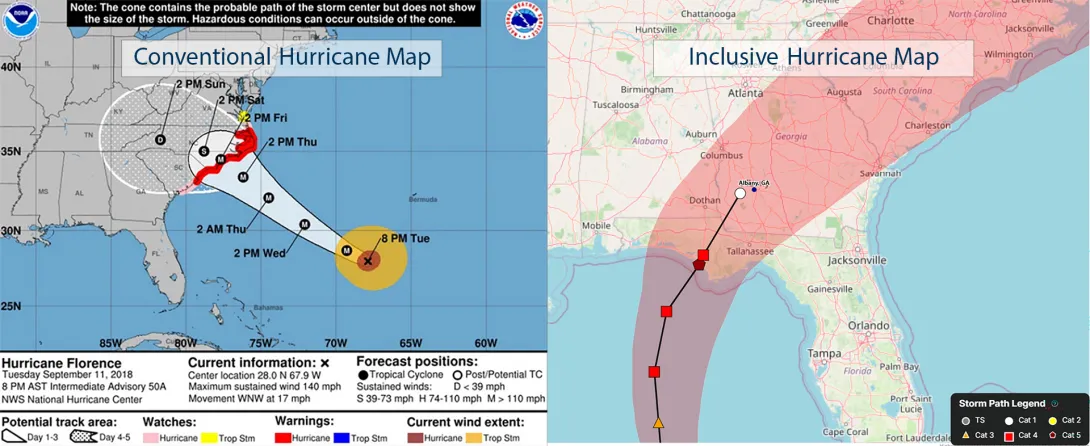
The North American hurricane season is, for many on the East Coast and Gulf Coast, six months of vigilance, and among the resources most likely to be consulted during this time are storm tracking maps. If you learn that your home might be in the path of a storm, you probably actively search for the most current version of one of these maps. Bruce Walker, a professor in the schools of Psychology and Interactive Computing at Georgia Tech, wants to ensure that storm-tracking maps and other emergency and environmental communication tools convey the most important information in the most understandable manner to the largest number of people possible. “Weather and climate affect every single person on Earth,” he said, “so no one can be left behind when it comes to these critical communications.”
Walker is director of the Center for Inclusive Climate Communication (CICC) at Georgia Tech. CICC is a new and growing consortium of researchers, organizations, agencies, and companies whose goal is to ensure that climate information of all types is widely accessible. The center is housed in the School of Psychology but has affiliated faculty from all around campus, and several universities around the U.S. CICC is expanding internationally as well, developing sub-networks in Europe, Africa, and Australia.
As part of its efforts, the CICC is working with the coastal city of Brunswick, Georgia. Situated about 65 miles northeast of Jacksonville, Florida, Brunswick is no stranger to hurricanes and tropical storms. The city is working to develop a comprehensive Community-Based Emergency Warning System, which will include maps and other emergency communications that ensure language, culture, level of education, or other differences in lived experience are not barriers to residents understanding critical safety information. This work is supported by the Brook Byers Institute for Sustainable Systems (BBISS) and the Center for Sustainable Communities Research and Education (SCoRE) through the Sustainability Next Seed Grant Program.
Hurricane maps and related information can come from many sources. Government agencies, municipal emergency management agencies, media outlets, and meteorological organizations all may have their own versions, which vary in how they visually display data. The information used to generate the maps is collected and distributed to the public domain by the National Oceanic and Atmospheric Administration (NOAA) every few hours. The maps that the public sees show the important information that one would expect, but they may not do so with an eye for how different people might interpret, or misinterpret, that info.
“Once we determine the best way to present hurricane data to the most people, we will work with content providers to standardize the way they generate these resources,” says Walker. “Reliable data and what we call inclusive communications lead to better decisions by the public.”
The CICC investigators’ process aspires to the philosophy of Universal Design, but since no design can be 100% universal, they refer to what they create as “inclusive designs.” Inclusive design means adapting to the diverse needs of the broadest possible audience. Since the language skills, education, lived experience, and physical ability of the person in the storm’s path can vary, these maps must present information in many alternative ways.
For those who can see the map, for example, improving the visual design (e.g., a better use of symbols and a clearer visual layout) can help. For those with vision impairment, adding audio layers (called “sonification”) to the map can help. For many people, simply comprehending a map can itself be a challenge. In that case, adding more explanations about how to interpret a map, what different terms mean, and what the storm is likely to do can make it more understandable.
All of these strategies provide multiple means of accessing, understanding, and acting on the data represented by the map. When studying how to design inclusive maps, soliciting input and suggestions from as many different potential users as possible helps the CICC team ensure that vital information is understandable and useful to the most people.
One of CICC’s primary goals is to take lessons from their research projects, such as the inclusive hurricane map, and derive general principles for the effective design of emergency communications tools of all types. While every disaster, from floods and wildfires to tsunamis, tornadoes, and ice storms, will require the distribution of unique pieces of data, the CICC researchers and their community partners are identifying design strategies that will make these communications understandable and actionable to everyone.
Walker and other CICC researchers engage students in this work. Isabella Martincic, a Ph.D. student in engineering psychology, shepherds many of the center’s research and design efforts, including AccessCORPS, a team that makes educational materials more inclusive and accessible. Jessica Herring and Ishan Vepa, students in the M.S. program in human-computer interaction, have led the hurricane map project, including overhauling existing maps from recent storms by applying CICC design guidelines to them. And undergraduate student Cal Price has been the lead researcher on the Brunswick collaboration, engaging with both community members and civic officials.
These efforts — adding more features, revamping existing maps, and consulting with weather experts and end users — demonstrate how seemingly simple changes can lead to significantly better interpretations of the data by the target audience. The research behind the inclusive hurricane maps will be presented at the 23rd International Web for All Conference, which takes place later this year.
CICC researchers are also engaging in partnerships with companies that see the potential benefits of this approach. Data visualization company Highcharts, for example, is a supporter and collaborator. Since their business models revolve around distributing such information, they have a keen interest in the lessons learned from CICC research. CICC does not regard its findings as intellectual property; they prefer that good design guidelines proliferate.
“Ultimately, our goal is for anyone to be able to look at a communication tool, quickly grasp critical pieces of information that may impact their lives and well-being, and take appropriate actions,” Walker said, “whether that be for the daily weather or for an impending natural disaster.”
News Contact
Brent Verrill, Research Communications Program Manager, BBISS
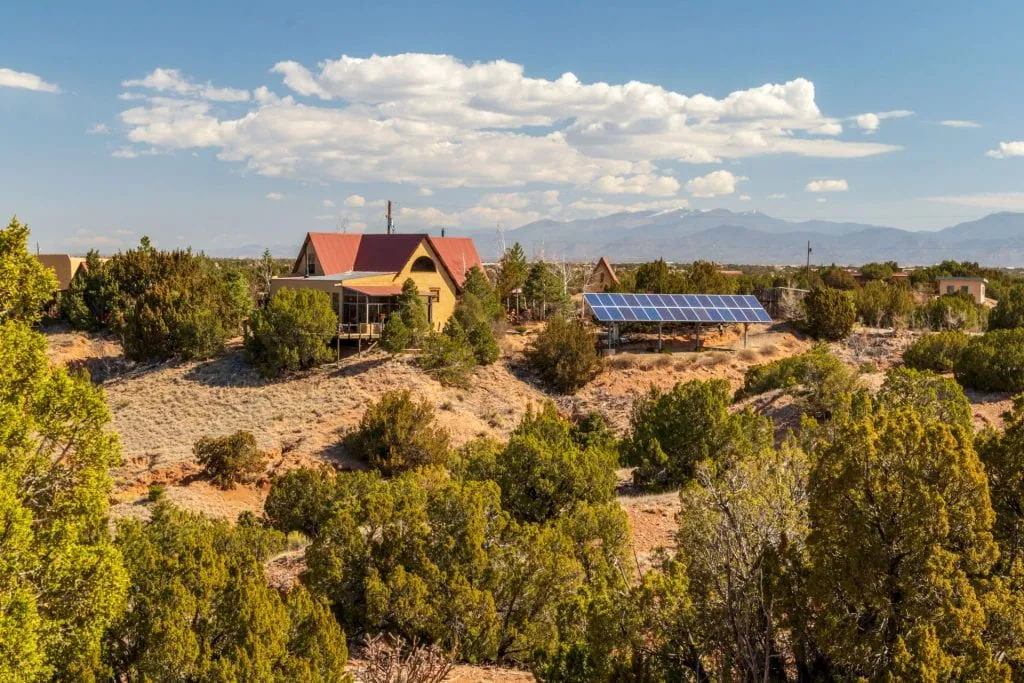
A new study by EPIcenter affiliate Jamal Mamkhezri examines how public preferences for solar‑energy policy have shifted over a six‑year period in New Mexico, offering one of the first long‑term repeated cross‑section analyses of willingness to pay (WTP) for renewable‑energy attributes. Using identical discrete choice experiment (DCE) tasks from surveys conducted in 2017 and 2023, Professor Mamkhezri evaluates how households value increases in Renewable Portfolio Standards (RPS), changes in rooftop versus utility‑scale solar shares, monthly credit‑banking rules, water usage in electricity generation, and smart‑meter information delivery options.
Across more than 1,100 combined respondents, the study uncovers selective temporal stability in energy preferences. Some attributes—such as support for higher RPS targets, reductions in water use, and preferences for online smart‑meter information—remain relatively stable over time. In contrast, others shift considerably: WTP for increasing the rooftop solar share declines by more than 40%, while WTP to protect monthly credit banking rises more than 200%, reflecting heightened awareness of net‑metering debates and rapid growth in rooftop solar adoption.
Importantly, the study reveals that environmental attitudes, measured through New Ecological Paradigm (NEP) scores, once strongly predicted preferences for rooftop solar and smart‑meter technologies in 2017, but these relationships fade or even reverse by 2023—signaling a shift as these technologies transition from niche, identity‑driven goods to mainstream infrastructure. Meanwhile, environmental attitudes continue to robustly shape preferences for RPS increases and water‑use reductions in both survey waves.
News Contact
Gil Gonzalez, EPIcenter.
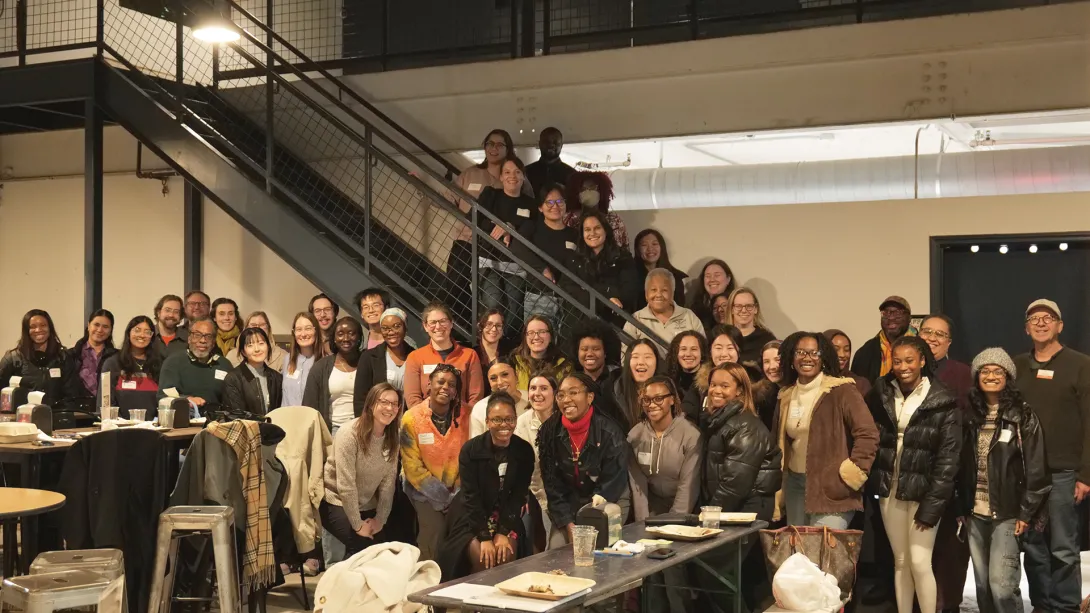
The Atlanta Community-Engaged Research Student Network launched this semester. The program is co-led by Nicole Kennard, assistant director for Community-Engaged Research with the Brook Byers Institute for Sustainable Systems (BBISS), along with Associate Professor Richard Milligan and Associate Professor Sarah Ledford from Georgia State University, Associate Professor Emily Burchfield and Associate Teaching Professor Carolyn Keogh from Emory University, and Iesha Baldwin from Spelman College. The program also partners with several community-based organizations to co-develop strategic direction and provide training. They are Science for Georgia, Historic Westside Gardens, HBCU Green Fund, South River Watershed Alliance, and Food Well Alliance.
The primary aim of the Atlanta Student Community-Engaged Research (CER) Network is to use a peer learning approach to train graduate students with the skills to co-lead community-engaged and locally focused research, while at the same time building relationships with local community organizations. This approach will help address local sustainability and societal challenges, lay the foundation for community-engaged research programs, and enable young researchers interested in this work to thrive in the Atlanta area. Initial funding for the pilot program was provided by the Atlanta Global Studies Center and the Georgia Tech Provost's Excellence in Graduate Studies fund.
The program received a total of 41 applications from graduate students from Georgia Tech, Georgia State University, and Emory University. Thirty-five master’s and Ph.D. students were accepted into the cohort, spanning a wide range of disciplines, from the humanities, sciences, design, public health, engineering, and computing. The program has additionally engaged eight senior-level undergraduates from Spelman College to learn about graduate school tracks with community-engaged research opportunities.
This program provides a unique opportunity to learn engagement and leadership skills not typically taught in graduate programs. Students are attending one training a month over the course of the Spring 2026 semester. Here, they learn about the diversity of sustainability-focused, community-based organizations in the area, develop skills to engage meaningfully with community partners in research projects, and improve the ways they communicate to the public about research.
The Georgia Tech Provost's Excellence in Graduate Studies fund will provide a $2,500 stipend to five Georgia Tech students who will work on a research project with a community partner organization. These projects will take place over the spring and summer semesters this year, providing opportunities for graduate students to apply their newly acquired community-engagement skills to on-the-ground research, while also opening a new pathway for Georgia Tech’s engagement with community partners.
Fellows and projects include:
- Irene Jacob, M.S., city and regional planning, will work with the Food Well Alliance to update the implementation strategy for their 10-year community garden survey.
- Ethan Zhao, M.S., human-computer interaction, will work with Historic Westside Gardens to integrate new technologies into their community garden spaces and assess the benefits to the communities they serve.
- Virginia Cason, M.S., sustainable energy and environmental management, will work with Science for Georgia to translate data gathering and analysis into community-centered narratives.
- Sharon Rachel, Ph.D., history and sociology of technology and science, will work with the HBCU Green Fund to examine the environmental and community impacts of data center projects in Atlanta.
- Ella Neumann, Ph.D., interactive computing, will work with the South River Watershed Alliance to document and communicate the history and impact of the City of Atlanta's combined sewer consent decree, and assess if the intended results of the decree have been met.
Applicants expressed their passion for community-engaged research projects and working directly with local community members and organizations:
“Lived experience is just as valuable as academic expertise, and meaningful change only occurs when both work together. I think that this takes approaching problems with a lot of humility, care, and a genuine desire to listen to communities and their needs.” -Virginia Cason, M.S., sustainable energy and environmental management
“I want to do research that stems from a theoretical question, but is feasible in reality and benefits the community. One of the most efficient ways to achieve this goal is through doing research WITH the community.” -Keke Li, M.S., analytics
“Community-engaged research is not only a methodology, but a commitment to partnership, humility, and shared power.” -Grace Fraser, M.S., city and regional planning
“To me, community-engaged research means working with people, not just for them. CER is not only a method but also a mindset. True impact comes when research and community experience grow together.” -Bingjie Lu, Ph.D., civil engineering
The community partners involved in the program are equally enthusiastic about community-engaged research. As Fred Conrad of Food Well Alliance put it, “Food Well has been intentional about engaging our constituents since we began, and this is not only a continuation of that effort, but a significant refinement of how we accomplish that. I think all of us have deepened our understanding of the CER process since we began this journey.”
News Contact
Brent Verrill, Research Communications Program Manager, BBISS
Efficiently transitioning from fossil fuels to renewable energy means looking at so much more than just the technology we use.
Reliable energy is required to keep safe in cold winters and hot summers, making it a matter of national security. There are also vying economic policies to consider, political and financial incentives to navigate, and questions of social and economic inequality.
Experts in Georgia Tech’s Ivan Allen College of Liberal Arts examine the challenges we face with the U.S. energy transition, and work to help make it safe, fair, and effective for all.
- Challenge No. 1: Managing National Security — with Adam N. Stulberg, professor and chair of the Sam Nunn School of International Affairs.
- Challenge No. 2: Confronting Inequality — with Bijesh Mishra, a postdoctoral scholar in the Jimmy and Rosalynn Carter School of Public Policy.
- Challenge No. 3: Choosing the Right Economic Policies — with Bobby Harris, an assistant professor in the School of Economics.
- Challenge No. 4: Navigating Financial and Political Incentives — with Kate Pride Brown, a sociologist in the School of History and Sociology.
News Contact
Di Minardi — Ivan Allen College of Liberal Arts
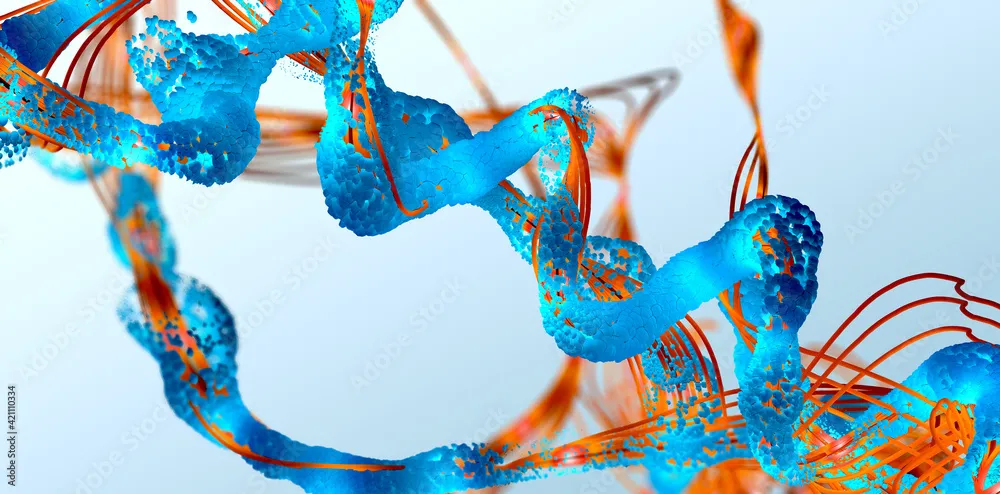
An illustration of a chain of amino acids forming a protein (Credit: Adobe Stock)
The building blocks of proteins, amino acids are essential for all living things. Twenty different amino acids build the thousands of proteins that carry out biological tasks. While some are made naturally in our bodies, others are absorbed through the food we eat.
Amino acids also play a critical role commercially where they are manufactured and added to pharmaceuticals, dietary supplements, cosmetics, animal feeds, and industrial chemicals — an energy-intensive process leading to greenhouse gas emissions, resource consumption, and pollution.
A landmark new system developed at Georgia Tech could lead to an alternative: a commercially scalable, environmentally sustainable method for amino acid production that is carbon negative, using more carbon than it emits.
The breakthrough builds on a method that the team pioneered in 2024 and solves a key issue – increasing efficiency to an unprecedented 97% and reducing the bioprocess cost by over 40%. It’s the highest reported conversion of CO2 equivalents into amino acids using any synthetic biology system to date.
Published in the journal ACS Synthetic Biology, the study, “Cell-Free-Based Thermophilic Biocatalyst for the Synthesis of Amino Acids From One-Carbon Feedstocks,” was led by Bioengineering Ph.D. student Ray Westenberg and Professor Pamela Peralta-Yahya, who holds joint appointments in the School of Chemistry and Biochemistry and School of Chemical and Biomolecular Engineering. The team also included Shaafique Chowdhury (Ph.D. ChBE 25) and Kimberly Wennerholm (ChBE 23); alongside University of Washington collaborators Ryan Cardiff, then a Ph.D. student and now a Chain Reaction Innovations Fellow at Argonne National Laboratory, and Charles W. H. Matthaei Endowed Professor in Chemical Engineering James M. Carothers; in addition to Pacific Northwest National Laboratory Synthetic Biology Team Leader Alexander S. Beliaev.
"This work shifts the narrative from simply reducing carbon emissions to actually consuming them to create value,” says Peralta-Yahya. “We are taking low-cost carbon sources and building essential ingredients in a truly carbon-negative process that is efficient, effective, and scalable.”
Heat-Loving Organisms
The work builds on the cell-free technology the team used in their earlier study. “Previously, we discovered that a system that uses the machinery of cells, without using actual living cells, could be used to create amino acids from carbon dioxide,” Peralta-Yahya explains. “But to create a commercially viable system, we needed to increase the system’s efficiency and reduce the cost.”
The team discovered that bits of leftover cells were consuming starting materials, and — like a machine with unnecessary gears or parts — this limited the system’s efficiency. To optimize their “machine,” the team would need to remove the extra background machinery.
"Leftover cell parts were using key resources without helping produce the amino acids we were looking for,” says Peralta-Yahya. “We knew that heating the system could be one way to purify it because heat can denature these components.”
The challenge was in how to protect the essential system components from the high temperatures, she adds. “We wondered if introducing enzymes produced by a heat-loving bacterium, Moorella thermoacetica, might protect our system, while still allowing us to denature and remove that inefficient background machinery.”
The results were astounding: after introducing the enzymes, heating and “cleaning” the system, and letting it cool to room temperature, synthesis of the amino acids serine and glycine leaped to 97% yield — nearly three times that of the team’s previous system.
Scaling for Sustainability
To make the system viable for large-scale use, the team also needed to reduce costs. “One of the most costly components in this system is the cofactor tetrahydrofolate (THF),” Peralta-Yahya shares. “Reducing the amount of THF needed to start the process was one way to make the system more inexpensive and ultimately more commercially viable.”
By linking reaction steps so waste from one step fueled the next, the team devised a method to recycle THF within the system that reduces the amount of THF needed by five-fold — lowering bioprocessing costs by 42%.
“This decrease in cost and increase in yield is a critical step forward in creating a method with real potential for use in industry and manufacturing,” Peralta-Yahya says. “This system could pave the way for moving this carbon-negative technology out of the lab and onto the continuous, industrial scale."
Funding: The Advanced Research Project Agency-Energy (ARPA-E); U.S. Department of Energy; and the U.S. Department of Energy, Office of Science, Biological and Environmental Research Program.
News Contact
Written by:
Selena Langner
College of Sciences
Georgia Institute of Technology
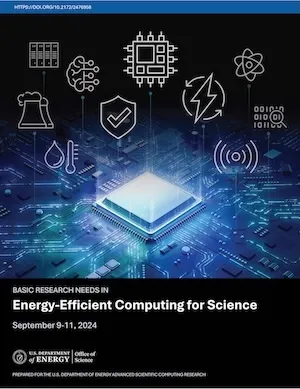
Georgia Tech researchers applied their expertise to a national research program that will shape the future of computing. Their work may yield more energy-efficient computers and better predictions for environmental challenges like carbon storage, tsunamis, wildfires, and sustainable energy.
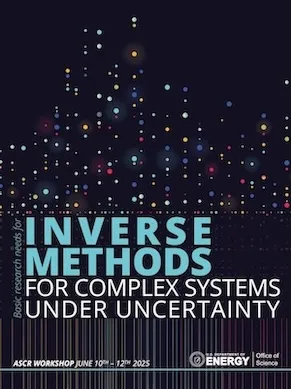
The Department of Energy Office of Science recently released two reports through its Advanced Scientific Computing Research (ASCR) program. The reports were produced by workshops that brought together researchers from universities, national labs, government, and industry to set priorities for scientific computing.
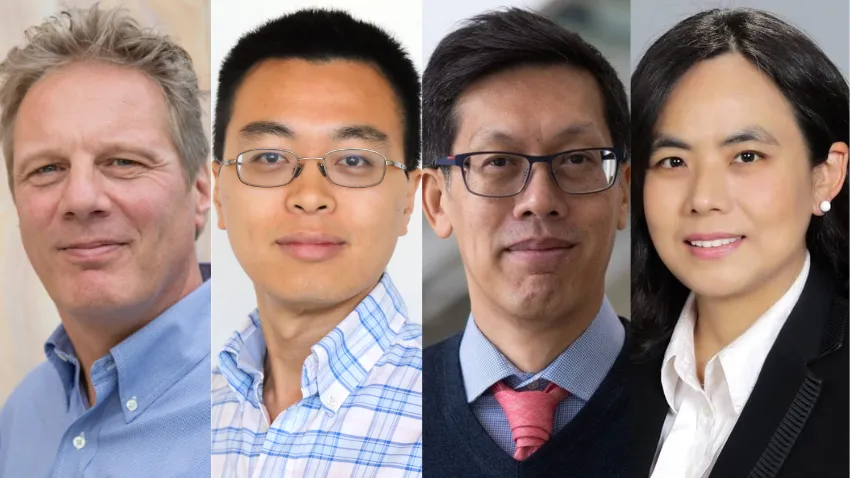
Professor Felix Herrmann served on the organizing committee for the Workshop on Inverse Methods for Complex Systems under Uncertainty. Assistant Professor Peng Chen joined Herrmann as a workshop participant, contributing expertise in data science and machine learning.
Inverse methods work backward from outcomes to find their causes. Scientists use these tools to study complex systems, like designing new materials with targeted properties and using past wildfires to map vulnerable areas and behavior of future fires.
The ASCR report highlighted Herrmann’s work on seismic exploration and monitoring through digital twins. Founded on inverse methods, digital twins upgrade from static models to virtual systems that accurately mirror their physical counterparts.
Digital twins integrate real-time data sources, including fluid flows, monitoring and control systems, risk assessments, and human decisions. These models also account for uncertainty and address data gaps or limitations.
The DOE organized the workshop to support the growing role of inverse modeling. The group identified four priority research directions (PRDs) to guide future work. The PRDs are:
- PRD 1: Discovering, exploiting, and preserving structure
- PRD 2: Identifying and overcoming model limitations
- PRD 3: Integrating disparate multimodal and/or dynamic data
- PRD 4: Solving goal-oriented inverse problems for downstream tasks
“A digital twin is a system you can control, like to optimize operations or to minimize risk,” said Herrmann, who holds joint appointments in the Schools of Earth and Atmospheric Sciences, Electrical and Computer Engineering, and Computational Science and Engineering.
“Digital twins give you a principled way to consider uncertainties, which there are a lot in subsurface monitoring. If you inject carbon dioxide too fast, you will will increase the pressure and may fracture the rock. If you inject too slow, then the process may become too costly. Digital twins help us make balanced decisions under uncertainty.”
Supercomputers, algorithms, and artificial intelligence now power modern science. However, these tools consume enormous amounts of energy. This raises concerns about how to sustain computing and scientific research as we know them in the decades ahead.
Professors Rich Vuduc and Hyesoon Kim co-authored the report from the Workshop on Energy-Efficient Computing for Science. At the three-day ASCR workshop, participants identified five key research directions:
- PRD 1: Co-design energy-efficient hardware devices and architectures for important workloads
- PRD 2: Define the algorithmic foundations of energy-efficient scientific computing
- PRD 3: Reconceptualize software ecosystems for energy efficiency
- PRD 4: Enable energy-efficient data management for data centers, instruments, and users
- PRD 5: Develop integrated, scalable energy measurement and modeling capabilities for next-generation computing systems
“I’m cautiously optimistic about the future of energy-efficient computing. The ASCR report says, from a technological point of view, there are things we can do,” said Vuduc.
“The report lays out paths for how we might design better apps, hardware systems, and algorithms that will use less energy. This is recognition that we should think about how architectures and software work together to drive down energy usage for systems.”
News Contact
Bryant Wine, Communications Officer
bryant.wine@cc.gatech.edu
Written by: Anne Wainscott-Sargent
As artificial intelligence (AI) drives explosive growth in data centers, communities across the U.S. are facing rising electricity costs, new industrial development, and mounting strain on an aging power grid.
At Georgia Tech, several faculty members are approaching these sustainability challenges from different but complementary angles: examining how data center policy affects local communities, modeling how AI-driven demand reshapes regional energy systems, and building tools that help the public understand the tradeoffs embedded in grid planning. Together, their work highlights how better data, thoughtful policy, and public engagement can guide more resilient and equitable decisions in an AI-powered future.
AI’s Hidden Footprint: How Data Centers Reshape Communities
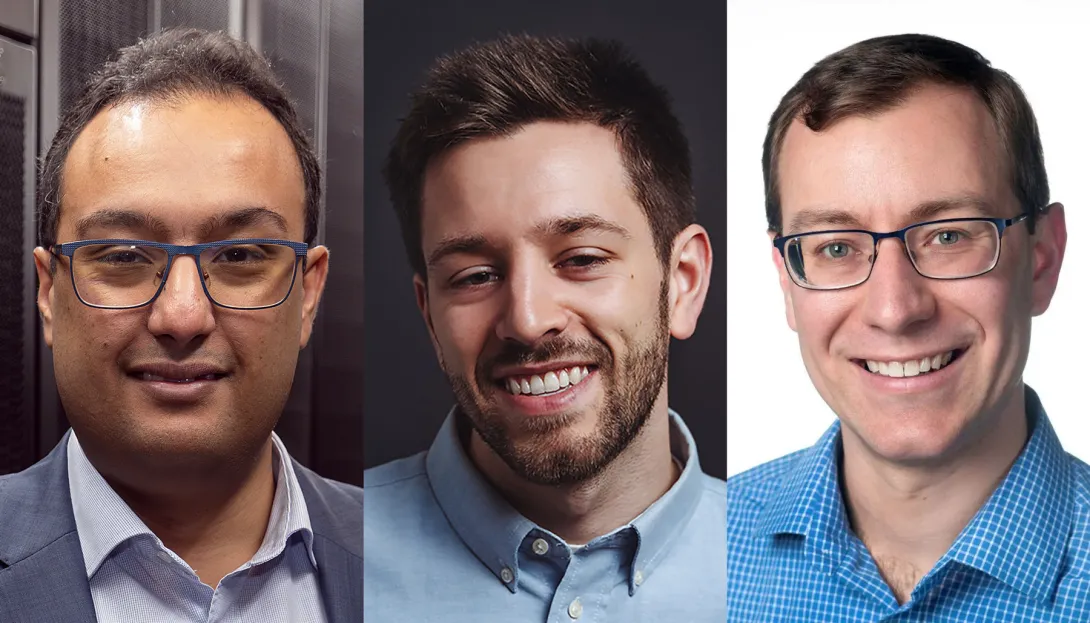
Ahmed Saeed studies the infrastructure most people never see. An assistant professor in the School of Computer Science and a Brook Byers Institute for Sustainable Systems (BBISS) Faculty Fellow, Saeed focuses on how data centers — the backbone of modern AI — are built, operated, and regulated, and what their growth means for host communities.
“Data centers are the infrastructure for our digital life, so more of them are necessary to keep doing what we’re doing,” he said.
Data center energy consumption could double or triple by 2028, accounting for up to 12% of U.S. electricity use, according to a report by Lawrence Berkeley National Laboratory. U.S. spending on data center construction jumped nearly 70% between May 2023 and May 2024, according to the American Edge Project.
Georgia is an AI data center hub, ranked fourth globally, with $4.6 billion in AI-related venture capital invested across 368 deals, the American Edge Project reported. At a recent town hall in DeKalb County, Georgia, Saeed helped residents connect AI’s promise to its local consequences. Training large AI models can require tens of thousands of graphics processing units (GPUs) running for days or weeks, driving an unprecedented wave of data center construction. AI-focused chips, he noted, can consume 10 to 14 times more power than traditional processors.
That demand often shows up as pressure on local infrastructure. Communities are increasingly concerned about electricity and water use, grid upgrades, and who ultimately pays. In Virginia, Saeed pointed to a legal dispute in which consumer advocates warned that data centers could raise electricity bills by 5% in the short term and up to 50% over time, while utilities argued those investments were inevitable and could benefit customers in the long run.
Environmental concerns add another layer. Saeed cited controversies over water use and backup diesel generators in states, including Georgia and Tennessee, alongside a recent Environmental Protection Agency (EPA) ruling that tightened generator regulations. While diesel generators are clearly harmful, he cautioned that long-term, rigorous evidence linking data centers to regional health impacts remains limited.
Saeed’s research aims to reduce those impacts directly. By optimizing how workloads are scheduled across large server fleets, his team has demonstrated power savings of 4 – 12%, a meaningful gain if U.S. data centers approach projected levels of up to 12% of national electricity use by 2028.
For Saeed, data centers are akin to highways: essential to modern life, disruptive to nearby communities, and shaped by policy choices. The question, he argues, is not whether AI infrastructure should exist, but how transparently and fairly it is built.
Economist Probes the Energy Costs of the AI Boom
While headlines often frame AI as an energy crisis, Georgia Tech environmental and energy economist and BBISS Faculty Fellow Tony Harding is focused on measuring its real — and uneven — impacts. Harding, an assistant professor in the Jimmy and Rosalynn Carter School of Public Policy, uses economic modeling to examine how AI adoption affects energy use, emissions, and local communities.
In recent work published in Environmental Research Letters, Harding and his co-author analyzed how productivity gains from AI could influence national energy demand. Their findings suggest that, at a macro level, AI-related activity may increase annual U.S. energy use by about 0.03% and CO₂ emissions by roughly 0.02%.
“Those numbers are small in the context of the overall economy,” Harding said. “But the impacts are highly uneven.”
That unevenness is evident in where data centers are built. While Northern Virginia remains the country’s top data center hub, with 343 operational data centers, states like Georgia, which currently has 94 operational data centers, are rapidly attracting facilities due to reliable power and favorable tax policies.
Harding’s latest research focuses on local effects, asking why data centers cluster in urban areas, how they influence housing markets, what happens to electricity prices, and whether they exacerbate water stress. Early evidence suggests large facilities can increase local electricity rates, contributing to public backlash and regulatory response. In Georgia, the Public Service Commission has begun requiring new, high power draw customers (like data centers) to cover more of the costs associated with grid expansion.
Harding’s goal is to give policymakers better evidence to design incentives and guardrails. “To manage these technologies responsibly,” he said, “we need a clear picture of their intended and unintended consequences.”
Gamifying a Strained and Aging Power Grid
Daniel Molzahn is tackling another side of the problem: how to modernize an aging power grid under growing demand. Electricity demand is expected to rise about 25% by 2030, driven by data centers, electric vehicles, and broadscale electrification. At the same time, much of the U.S. electricity grid is nearing the end of its lifespan, with many transformers being decades old.
To make these challenges tangible, Molzahn, an associate professor in the School of Electrical and Computer Engineering, developed a browser-based game with a group of students through Georgia Tech’s Vertically Integrated Projects program called Current Crisis. Players take on the role of a utility decision-maker, balancing reliability, wildfire risk, renewable integration, and affordability.
The game grew out of Molzahn’s National Science Foundation CAREER award and reflects his belief that complex systems are best understood experientially. Its initial focus is wildfire resilience, modeling how grid infrastructure can both spark and suffer damage from fires.
But resilience comes at a cost. Burying power lines, for example, reduces wildfire risk but dramatically increases expenses. Players must confront the same tradeoffs utilities face: improve reliability or keep rates low.
Molzahn hopes the game will help students and the public grapple with the realities of planning future power systems. “These choices aren’t abstract,” he said. “They shape affordability, resilience, and our path toward a cleaner grid.”
The project now involves nearly 40 students from across campus, supported by Sustainability NEXT funding and a collaboration with Jessica Roberts, former BBISS Faculty Fellow and director of the Technology-Integrated Learning Environments (TILES) Lab in the School of Interactive Computing.
“As a learning scientist, I look at how to engage people with science and scientific data and get people having conversations they might not otherwise have,” says Roberts, who hopes the seed grant helps the team determine first that they are going in the right direction and, second, how to broaden the impact.
One student, Stella Quinto Lima, a graduate research assistant in Human-Centered Computing, has made the game the focus of her doctoral thesis. Through the game, she wants players to notice their misconceptions about the power grid, energy use, and AI, and to use critical thinking to identify, question, and possibly undo those misconceptions.
“I hope that we can really engage adults and help them see it’s not black and white. The game is not only about power grids, but how AI affects the grid, how it affects our lives, and how it will impact our future.”
The team plans to expand the game’s features, use it in outreach programs, and analyze player decisions as a source of data to study energy-system decision-making.
“We want to change the conversation about power and power grid stability, reliability, and sustainability, Roberts said, “and find a way to get this message to a larger public.”
News Contact
Brent Verrill, Research Communications Program Manager, BBISS
Written by: Shweta Ram and Seungho Lee
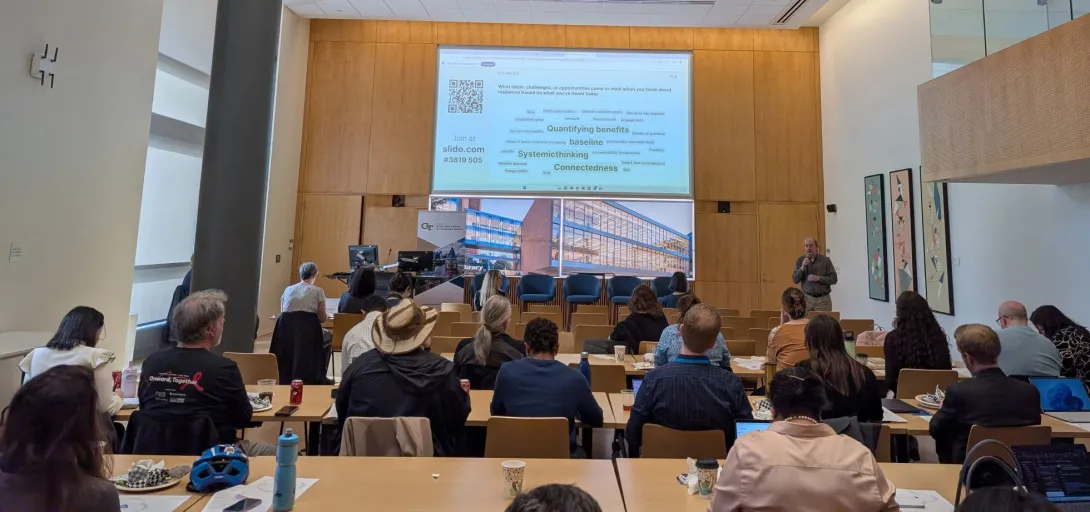
What does it mean to design systems that endure even after major disruptions? This question framed the 2026 Brook Byers Institute for Sustainable Systems (BBISS) Sustainability Showcase, where conversations over two days spanned the Georgia coast, wildfire modeling, AI data centers, infrastructure, community engagement, and the joy of working for a more sustainable and resilient world. Across disciplines and scales, a unifying theme emerged: resilience is not a single solution. It is a systems-level challenge requiring integration across science and technology, policy, communities, and human experience.
From Coastlines to Communities
The showcase opened with a keynote from President Emeritus G. Wayne Clough on wildlife management and resiliency along Georgia’s coast. The conversation that followed between Clough and BBISS Executive Director Beril Toktay highlighted the interconnection between public policy, wilderness conservation, community leadership, and scientific research. The session highlighted not only the urgency of protecting fragile ecosystems, but also that resilience works best when it is community-focused and community-driven.
Subsequent panels continued this systemic perspective. Sessions on community engagement, biotechnology-derived, climate-resilient plants, the flood resilience of Georgia coastal communities, wildfire prediction and prevention, and infrastructure resilience analytics all emphasized that resilience depends on the synthesis of many disciplines.
Across sessions, researchers emphasized that infrastructure resilience must include governance frameworks informed by good science, community engagement based on trust, and sustained collaboration that seeks to constantly improve the science, policy, and stakeholder relationships. The researchers demonstrated that they understand their role to be greater than merely modeling risk, but as collaborators who translate research into practical solutions that communities can adopt, maintain, and trust.
AI Data Centers: A New Resilience Frontier
Day two shifted attention to data centers, which are emerging as a critical resilience frontier. As artificial intelligence systems scale rapidly, so does the infrastructure that powers them, as well as the growing realization that digital systems are physical systems. Conversations examined the feedback loops that play a significant role in determining environmental impacts, such as chip architecture, AI workloads, data center sustainability, appropriate AI usage, and who makes the decisions on data center infrastructure development.
One of the most fascinating sessions came from Alexandria Smith, assistant professor in the School of Music at Georgia Tech. She presented an artistic yet algorithmic composition that sonified data from AI data centers. Through translating kilowatt-hour usage and interconnection data into immersive soundscapes, she reframed data centers not as static input-output machines, but as adaptive, living systems. Drawing inspiration from Physarum polycephalum, a slime mold without a brain or nervous system known for its innate problem-solving abilities, she invites the listener to imagine infrastructure that senses, adapts, and self-optimizes.
Campus as a Living Laboratory
In her session, Professor Jennifer Chirico, associate vice president of Sustainability, highlighted Georgia Tech’s 2024 Climate Action Plan, focusing on building energy efficiency, renewable integration, materials management, and mobility transitions. The plan frames the Georgia Tech campus as a test bed for resilience strategies — an ecosystem where research, operations, and policy intersect. Chirico highlighted several examples where the alignment between research and implementation was essential in moving projects from modeling to pilot projects to sustained institutional change.
Finding Joy in Climate Action
Rebecca Watts Hull, Matthew Realff, and Christie Stewart led an interactive discussion inspired by Ayana Elizabeth Johnson’s framework for accelerating long-term climate action. Participants were asked three simple questions: What are you good at? What work needs doing? What brings you joy? Sustainability and climate research are fields often defined by serious urgency, crisis narratives, and burnout. This session offered a personal framework for resilience where emotional sustainability, professional fulfillment, and joy matter just as much as the motivation to drive a mission ever forward.
Building a Shared Vision
The Sustainability Showcase concluded with a facilitated visioning session led by Kristin Janacek, associate director for Interdisciplinary Research Impact, and Beril Toktay. In small groups, leaders, researchers, and community members worked to define what resilience looks like for them.
After the conversations, several themes emerged:
- Resilience must move from research to practical and community-based solutions to sustained action.
- Networks create opportunity but require long-term stewardship to endure.
- Choosing the right metrics to measure resilience will galvanize efforts to strengthen it.
- Community capacity is at least as important as built infrastructure.
Over two days, it became clear that Georgia Tech is not approaching resilience as a narrow technical problem. It is approaching it as a systems challenge — one that spans coastlines, campuses, disciplines, data centers, the Appalachian Mountains, data models, the arts, and human relationships. Designing systems that endure requires more than innovation. It requires collaboration, stewardship, and a shared commitment to long-term impact. The conversations launched at this year’s BBISS Sustainability Showcase laid the foundation for continued coordination and ambitious action in the months ahead.
News Contact
Brent Verrill, Research Communications Program Manager, BBISS
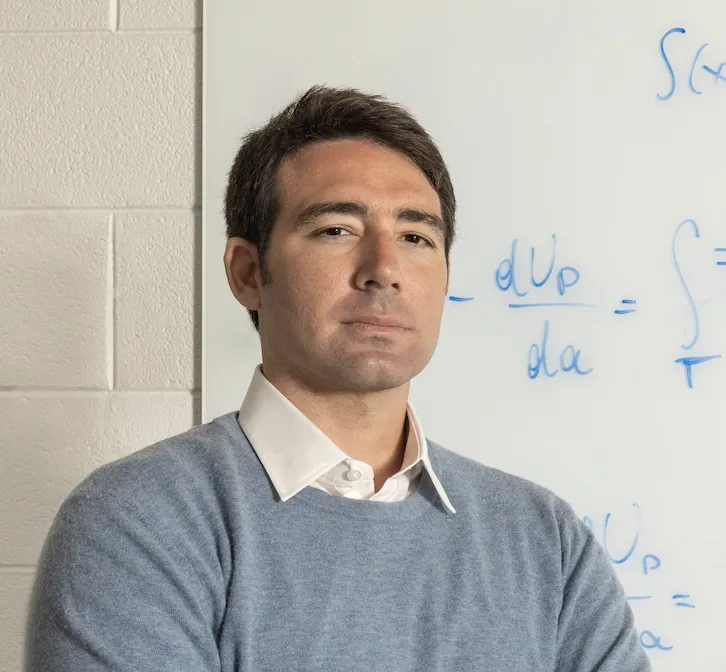
Christos Athanasiou, assistant professor in the Daniel Guggenheim School of Aerospace Engineering, has been selected to receive the 2025 Eshelby Mechanics Award for Young Faculty. Presented annually by the American Society of Mechanical Engineers (ASME), the award recognizes rapidly emerging junior faculty who exemplify originality, depth, and impact in the development and application of mechanics.
The Eshelby Mechanics Award was established in 2012 in memory of Professor John Douglas Eshelby to promote the field of mechanics, among young researchers. The award will be formally presented at the 2026 Applied Mechanics Division Awards Banquet during the ASME International Mechanical Engineering Congress and Exposition in November.
Athanasiou and his team advance the fundamental mechanics and physics of materials and translates these insights into systems-level design strategies that address global challenges in resource efficiency and sustainable development. His research integrates advanced experimental methods capable of capturing material behavior under realistic operational conditions, mechanics-based design principles, and tailored AI- and physics-informed modeling frameworks.
Together, these efforts enable the development of life-cycle-efficient, cost-effective materials and structures for applications ranging from sustainable packaging to aerospace systems and space construction. His recent work published in Proceedings of the National Academy of Sciences (PNAS) introduced a bioinspired framework to improve plastic recycling while addressing a foundational mechanics question: how can we build reliable structures from inherently variable materials?
Athanasiou is also the recipient of the 2024 NSF CAREER Award and the ASME Orr Early Career Award, and is a Climate Tech Fellow at the New York Climate Exchange.
News Contact
Monique Waddell