


Valerie Thomas, Anderson-Interface Chair of Natural Systems and Professor in the H. Milton School of Industrial and Systems Engineering, was recently asked to speak as part of Sustainability Research + Innovation (SRI) Congress 2023. The event was hosted online and at the Panama Convention Center by the National Secretariat of Science, Technology, and Innovation of the Republic of Panama (SENACYT) and the Inter-American Institute for Global Change Research (IAI).
Sustainability Research + Innovation Congress 2023 is the world's largest gathering for the global sustainability community, and for the first time, the event took place in the Latin American and Caribbean Region. SRI unites more than 2000 global sustainability research leaders, government and civil society experts, funders and innovators to inspire action and promote a sustainability transformation. The global and annual event elevates diverse knowledge on sustainability, provides an inspiring platform to share innovative ideas, and creates an inclusive space for collaboration and action. SRI is a joint initiative of Future Earth and the Belmont Forum.
As part of the Fri Jun 30 panel session "Reducing Emissions from Logistics", Thomas discussed "Life-cycle Approaches to Assessing Emissions from Logistics." To help provide the academic perspective, she was joined by Marilyn Brown, Regents' and Brook Byers Professor of Sustainable Systems in the School of Public Policy, who spoke on "Three trends challenging U.S. and global emissions reductions from logistics." The private sector perspective was provided by Alex Rodriguez, Regional Head of Energy Transition Execution - LAM with A.P. Moller - Maersk. Rodriquez provided a broad and interesting discussion of air-water-land logistics, its impact on the environment, and possible future solutions. The session was organized by Jorge Barnett Lawton, Managing Director of the Georgia Tech Panama Logistics Innovation & Research Center, who also moderated the session from Panama City.
To learn more about the annual event and view available recordings, please visit https://sricongress.org/.

The sparkling shoreline along Deception Pass State Park in Oak Harbor, Washington (Photo: Jess Hunt-Ralston)
This story was first published in the Georgia Tech Research Newsroom. Read the full feature here.
The entire ocean is connected. Species like coral can be similar in entirely different parts of the ocean because those waters share characteristics like salinity, temperature, and nutrients. But how did this shared DNA travel in the first place? Currents connect ecosystems, and understanding their flow could help to rebuild other ecosystems. That’s the focus of the research from School of Earth and Atmospheric Sciences Professor Annalisa Bracco.
“Corals spread through larvae, which are transported by ocean currents. This is something that naturally happens and is, in the case of corals, definitely quite beneficial,” Bracco said. “If the coral gets bleached and dies, other coral DNA can come in the form of larvae and recolonize the territory.”
Bracco’s research is about more than just following these currents. She also determines how they could be used to rejuvenate weakened or destroyed ecosystems. Marine protected areas in the Gulf of Mexico could be expanded to deliver more flora and fauna larvae to repopulate stressed or damaged areas.
“We need to preserve ecosystems that are diverse, but also well connected, so they can transfer that diversity if something happens in another place,” Bracco said. Read more.
Modeling the Future of Glaciers and Ice Sheets
Retreating glaciers and the animals who live on them have become highly visible symbols of climate change. They are also a key to predicting its future. Alex Robel, an assistant professor in the School of Earth and Atmospheric Sciences, uses computational modeling to better understand how ice reacts to climate change and how, in turn, that causes global sea level to rise. His research group creates equations to explain how ice not only responds to climate change, but also how it flows, fractures, and melts.
“Unlike other fields, we don't have the standard set of equations that describe how ice sheets and glaciers work,” Robel said. “We use high-performance computing to simulate real glaciers on Antarctica and Greenland and try to understand how they have changed in the past and predict how they will change in the future.”
Not all ice is created the same. While sea ice freezes over a few feet of the top of the ocean in wintertime, glaciers are formed by the accumulation and compression of snow on land over long periods of time to depths of hundreds, even thousands, of feet. When enough accumulates, ice can start to flow like honey under its own weight and then is considered an ice sheet.
Developing these equations must account for how glaciers and ice sheets are exposed to the volatile climate system — and measuring conditions at the bottom of a glacier is no easy task. The field comes with a lot of inherent uncertainty that Robel’s group must plan for. Read more.
News Contact
Writer and Media Contact:
Tess Malone | tess.malone@gatech.edu

Earth (Credit NASA/Joshua Stevens)
Georgia Tech’s newest interdisciplinary degree program, the Environmental Science B.S. degree (ENVS), developed jointly by faculty of the School of Earth and Atmospheric Sciences and the School of Biological Sciences, has launched and is now enrolling students.
The ENVS degree will provide a strong foundation in the basic sciences, requiring core content in mathematics, physics, chemistry, biology, earth sciences, and environmental policy. Flexible electives in upper-level coursework will allow students to customize their program of study to their interest and career goals.
A launch event for the degree program will take place at the Kendeda Building on the afternoon of Friday, August 25, 2023.
“The new degree will prepare students to be future leaders who are well-versed on how the Earth's systems can be influenced by human activity and contribute to human well-being,” says Greg Huey, professor and chair of the School of Earth and Atmospheric Sciences. “Graduates will be positioned to be leaders in industry, academia, education, and communication to create innovative solutions to the most significant environmental challenges of our time.”
Two faculty members in the School of Earth and Atmospheric Sciences (EAS) and a faculty member in the School of Biological Sciences will serve as inaugural leadership: Jennifer Glass, associate professor, is program director; Samantha Wilson, academic professional, is director of Undergraduate Studies; and Linda Green, senior academic professional in the School of Biological Sciences, is director of Experiential Learning.
The foundational science classes in this new degree will be complemented by courses in Public Policy and City Planning, including Geographical Information Systems (GIS) and Environmental Policy and Politics, before opening up and providing students with flexibility in course options to better fit their career paths and interests.
“Past EAS students have been interested in careers related to environmental consulting, environmental law, and continuing their studies in graduate school,” Wilson says. “The variety of environmental career paths was the driver behind allowing students to diversify their options within the degree.”
“This degree will give Georgia Tech students a unique opportunity to customize their environmental science program of study to their interests and career goals in science, policy, public service, non-profit, government, industry, academia, or beyond,” adds Glass. “We are committed to building an academic community in ENVS that values student leadership, ethics, justice, accessibility, and belonging.”
Hands-on learning opportunities will include field station experiences and field trip excursions, study abroad programs, and internships, Green says. “This major sustains the Institute’s strategic plan to lead by example, champion innovation, and connect globally — particularly in an area so critical as addressing Earth’s environmental issues.”
Glass added that the Schools of Chemistry, Biological Sciences, and Earth and Atmospheric Sciences are currently revamping several classes to meet United Nations Sustainable Development Goals (SDGs). Students will advance to be global leaders of environmental solutions that draw upon the U.N. Sustainable Development Goals and incorporate awareness of cultural relevance.
“We can’t wait for August to celebrate the ENVS launch with our incoming and current students,” Glass says.
More information on the Environment Science (ENVS) degree:
General information: jennifer.glass@eas.gatech.edu
Curriculum and enrollment: samantha.wilson@eas.gatech.edu
Co-curricular initiatives: linda.green@gatech.edu
Learn more: Three new EAS undergraduate degrees
Beginning Summer 2023, prospective and current Georgia Tech students will have three new Bachelor of Science degrees to choose from in the School of Earth and Atmospheric Sciences. The expanded undergraduate offerings target a wider range of job and research opportunities — from academia to analytics, NASA to NOAA, meteorology to marine science, climate and earth science, to policy, law, consulting, sustainability, and beyond.
The Board of Regents of the University System of Georgia has approved two new specific degrees within the School: Atmospheric and Ocean Sciences (AOS) and Solid Earth and Planetary Sciences (SEP). Regents also approved Environmental Science (ENVS) as an interdisciplinary College of Sciences degree between the School of Earth and Atmospheric Sciences and the School of Biological Sciences. The existing Earth and Atmospheric Sciences B.S. degree will sunset in two years for new students. Learn more.
News Contact
Writer: Renay San Miguel
Communications Officer II/Science Writer
College of Sciences
404-894-5209
Editor: Jess Hunt-Ralston
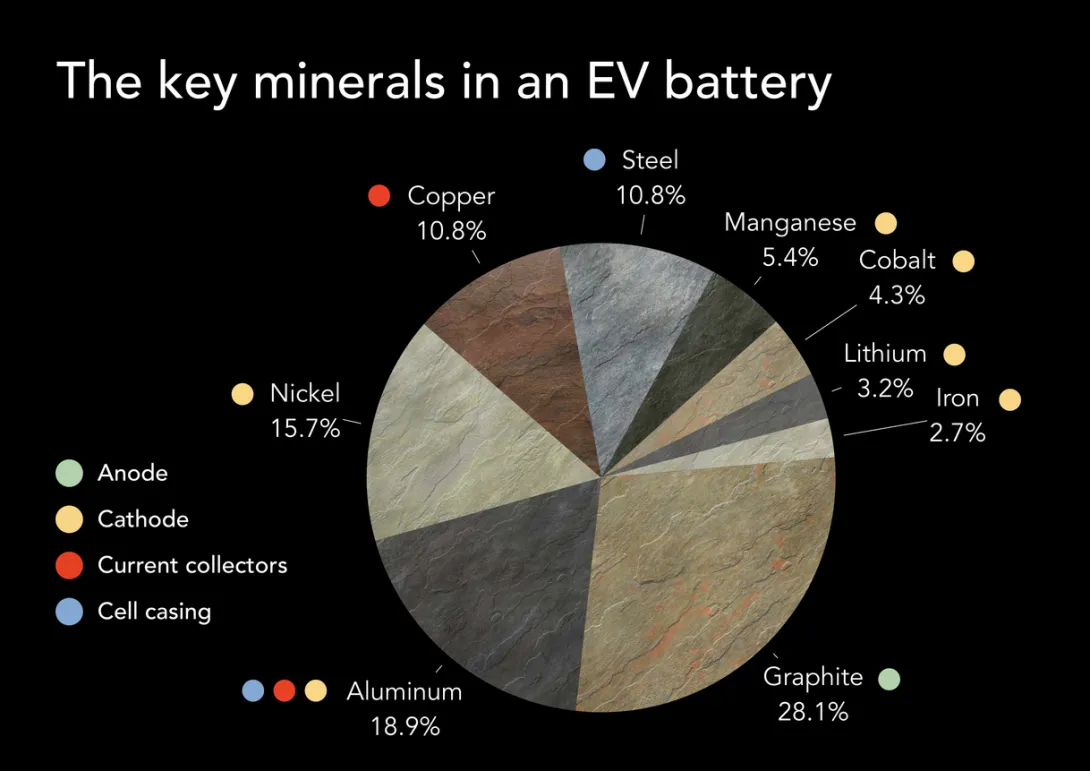
GTRI's EV battery recycling efforts are crucial because many of the key minerals found in lithium-ion batteries are sourced from geopolitically sensitive regions across the globe (Photo Credit: iStock).
Amid the surge in demand for lithium-ion batteries, which power everything from smartphones to electric vehicles (EVs), there is a greater need to properly recycle them. The Georgia Tech Research Institute (GTRI) is working to optimize Georgia’s EV battery supply chain by developing cost- and energy-efficient methods to recover materials from spent batteries so that more of them can be reused – and pose fewer environmental risks.
Georgia is quickly emerging as a hub for the electronic transportation industry. According to data from the Georgia Department of Economic Development, since 2018, 35 EV-related projects have contributed $23 billion in investments in the state.
South Korea-based Hyundai Motor Group recently broke ground on its first fully dedicated EV manufacturing facility in Savannah’s Bryan County. The company has also teamed up with LG Energy Solution to invest $4.3 billion in building an EV battery cell manufacturing plant at the same location.
EV manufacturer and automotive technology company Rivian, which is based on Irvine, Calif., has announced a $5 billion investment in its second U.S. plant located east of Atlanta in Morgan and Walton Counties.
Hyundai’s new facility is expected to reach full production capacity at the end of 2025, with 30 gigawatt hours (GWh) of energy anticipated to support the production of 300,000 EVs. Rivian, meanwhile, anticipates its Georgia plant will employ over 7,500 workers while producing up to 400,000 vehicles each year.
“This level of industry engagement in Georgia is unprecedented,” said Kevin Caravati, a GTRI principal research scientist, who is supporting this project. “The Hyundai plant, for example, could create tens of thousands of jobs in a very rural part of Georgia, which would be a step in the right direction for the entire state.”
The lithium-ion batteries that power EVs are seen as desirable over other battery technologies because of their high energy density, which allows electric cars to travel longer distances on a single charge. These types of batteries also have a low self-discharge rate, which means that the stored energy remains available for an extended period of time even when the vehicle is not in use.
However, these batteries can easily turn into fire hazards – especially at the end of their life cycle. Very few batteries ever end up being recycled and those that do get recycled are often mishandled.
“Currently, there are no recycling standards in place, which poses challenges for the entire supply chain,” said Milad Navaei, a GTRI senior research engineer, who is leading this project. “Our goal is to create circular economy for batteries in Georgia where we can reduce our dependence on raw materials that often come from overseas and can be very expensive.”
Lithium-ion batteries use metals including lithium, nickel, manganese, and cobalt that are mined in locations such as Africa’s Democratic Republic of the Congo, Chile and Argentina. During the production process, the metals are combined with other materials to form the two key components of a battery cell – the cathode and the anode. Inside a battery, the cathode, which has a negative charge, and anode, which has a positive charge, interact to generate electrons that power the electronic device. Most lithium-ion batteries are currently made in China.
Navaei noted that geopolitical sensitivities and lingering supply chain challenges in many of these regions makes GTRI’s work all the more crucial.
GTRI’s research consists of two parts: One, develop more advanced analytics capabilities for fleet management companies to monitor the health and performance of EV batteries, and two, optimize the recovery of raw materials from batteries at the end of their useful life.
“The battery is the most important part of an EV, and it’s critical to know the battery’s state of health (SoH), which is the ratio of the present capacity to the initial capacity,” said Navaei. “Our goal is to utilize technologies such as the Internet of Things (IoT) to monitor the SoH of these batteries and estimate the life cycle, which heavily depends on the usage and the type of battery for its safe and reliable implementation in the next life application.”
GTRI aims to integrate these technologies into companies’ existing inventory management systems to streamline process management and reporting.
For the second part of the research, GTRI is utilizing a statistical technique known as parametric modeling to aggregate data about known behaviors and characteristics of EV batteries to help companies make more informed decisions about properly depowering them and repurposing their raw materials with minimal environmental impact.
“Developing a robust system-modeling approach to support our energy research is a primary focus of ours,” said GTRI Principal Research Scientist Ilan Stern, who is also supporting the project. “Since our ultimate goal is to utilize domestic sources in our supply chain, really the only way to do that is by building out strong recycling models to account for the fact that these companies are working with finite materials and many of them are coming from conflict zones.”
GTRI is working with a number of industry partners on this project, including many companies that participated in Georgia Tech Battery Day earlier this year. At the event, over 230 energy researchers and industry participants convened to discuss emerging opportunities in energy storage research. Some of the companies represented at the event included Hyundai Kia, Delta Airlines, Cox Automotive and Panasonic.
Writer: Anna Akins
Photo Credit: iStock
GTRI Communications
Georgia Tech Research Institute
Atlanta, Georgia
The Georgia Tech Research Institute (GTRI) is the nonprofit, applied research division of the Georgia Institute of Technology (Georgia Tech). Founded in 1934 as the Engineering Experiment Station, GTRI has grown to more than 2,900 employees, supporting eight laboratories in over 20 locations around the country and performing more than $800 million of problem-solving research annually for government and industry. GTRI's renowned researchers combine science, engineering, economics, policy, and technical expertise to solve complex problems for the U.S. federal government, state, and industry.
News Contact
(Interim) Director of Communications
Michelle Gowdy
Michelle.Gowdy@gtri.gatech.edu
404-407-8060
One of the primary drivers of climate change is excess greenhouse gases like carbon dioxide in the atmosphere. Mitigating climate change in the coming century will require both decarbonization — electrifying the power grid or reducing fossil fuel-guzzling transportation — and removing already existing carbon dioxide from the atmosphere, a process called carbon dioxide removal.
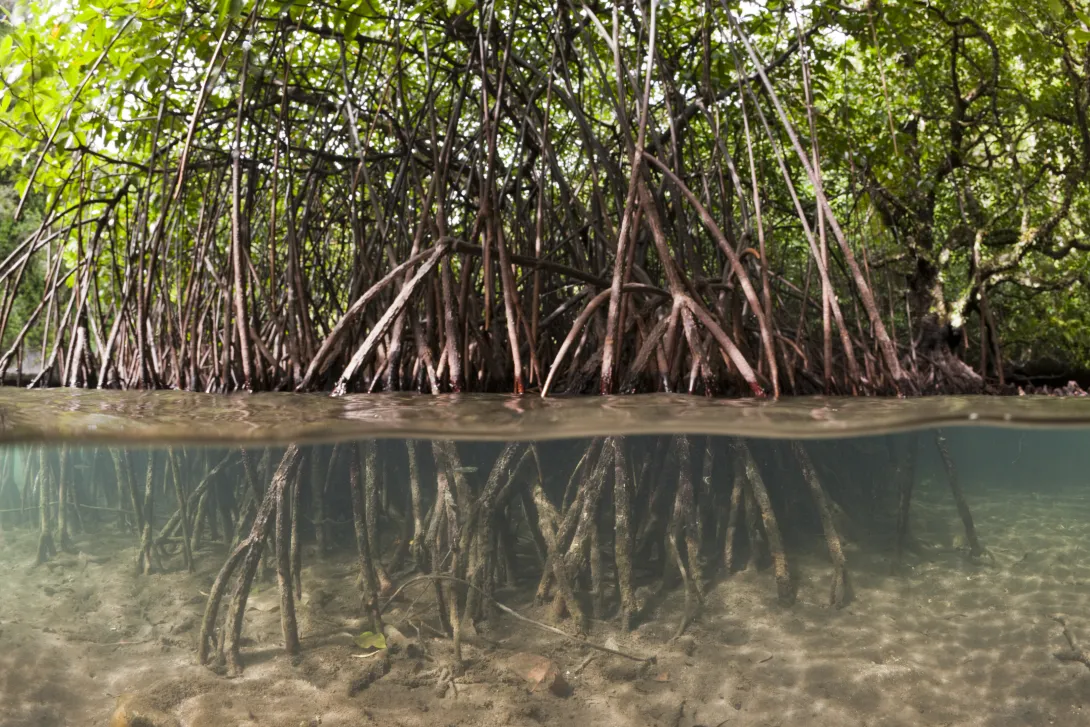
Researchers at the Georgia Institute of Technology and Yale University are proposing a novel pathway through which coastal ecosystem restoration can permanently capture carbon dioxide from the atmosphere. Seagrass and mangroves — known as blue carbon ecosystems — naturally capture carbon through photosynthesis, which converts carbon dioxide into living tissue.
“Mangroves and seagrasses extract carbon dioxide from the atmosphere all day long and turn it into biomass,” said Chris Reinhard, an associate professor in the School of Earth and Atmospheric Sciences (EAS). “Some of this biomass can get buried in sediments, and if it stays there, then you’ve basically just removed carbon dioxide from the atmosphere.”
Restoring these ecosystems could potentially benefit local flora and fauna and help to energize coastal economies. But Reinhard and colleagues now suggest that restoring them could also remove additional carbon through a novel pathway while combating increasing acidity in the ocean.
In May, they presented their research in “Ocean Alkalinity Enhancement Through Restoration of Blue Carbon Ecosystems” in Nature Sustainability.
Carbon 101
There are two major types of carbon that cycle through the Earth system: organic carbon and inorganic carbon. Organic carbon is contained in living matter, such as algae, plants, animals, and even humans. This form of carbon can remove carbon dioxide from the atmosphere temporarily, but if it becomes buried in sediments at the seafloor, it can lead to permanent carbon dioxide removal. Inorganic carbon can also be found in many forms, including rocks and minerals, but is present as a significant dissolved component of ocean water. Roughly 30% of the carbon emitted by human activities since the industrial revolution is now stored as dissolved inorganic carbon in the ocean. Although carbon dioxide stored as organic carbon can be disrupted, effectively redistributing carbon dioxide back into the atmosphere, carbon dioxide removal by inorganic carbon is potentially much more durable.
“Even if you change the way a coastal ecosystem restoration project is operating, potentially remobilizing previously stored organic carbon, inorganic carbon capture is largely a one-way street,” said Mojtaba Fakhraee, lead author of the study and former postdoctoral researcher in EAS. “So even if a massive ecosystem disruption in the future undoes organic carbon storage, the inorganic carbon that has been captured will still be in the ocean permanently.”
Capturing Carbon, Counteracting Acidity
Coastal ecosystems naturally remove carbon from the atmosphere and provide a range of environmental and economic benefits to coastal communities, but many human interventions have caused extensive degradation or destruction of natural coastal environments. Planting more mangroves and seagrasses, maintaining them, and protecting the overall ecosystem can restore their functioning and lead to additional carbon removal from the atmosphere. Reinvigorating coastal ecosystems as a technique for mitigating carbon emissions is not a new idea, but past research has focused on carbon removal through organic carbon burial and has not explored the potential for carbon removal through the formation of inorganic carbon.
Another major result of human fossil fuel use beyond climate change is ocean acidification from carbon dioxide in the atmosphere dissolving in the water and driving down the pH of the ocean, which can have severe, negative impacts on many organisms like corals. Storing carbon dioxide as inorganic carbon in the ocean could help mitigate this, because the chemical processes that lead to carbon capture as inorganic carbon involves alkalinizing ocean waters.
“The basic idea here is that you are shifting the acid-base balance of the ocean to drive conversion of carbon dioxide in the atmosphere to inorganic carbon in the ocean,” Reinhard said. “This means that the process can help to partially offset the negative ecological consequences of ocean acidification.”
Modeling Carbon Capture
To explore how effective restoring coastal ecosystems could be for inorganic carbon capture, the researchers built a numerical model to represent the chemistry and physics of sedimentary systems — the complex mixture of solid particles, living organisms, and seawater that accumulates at the seafloor. A key advance of the model is that it specifically tracks the potential benefits of restored mangrove or seagrass ecosystems and their impacts on organic and inorganic carbon cycling. It also calculates the effects of other greenhouse gases, such as methane, that can sometimes be created in the process of restoring mangrove and seagrass ecosystems.
“This model comes up with representations for the rates of carbon transformation in the sediment based on how much mangrove is growing above the sediment,” said Noah Planavsky, senior author on the study and professor of Earth and planetary sciences at Yale. “We found that across an extremely large range of scenarios, restoration of blue carbon ecosystems leads to durable carbon dioxide removal as dissolved inorganic carbon.”
The team hopes this research could provide an impetus to protect current coastal ecosystems and economically incentivize restoration of degraded ecosystems, potentially as a new form of carbon offset.
“Companies that are trying to offset their own emissions could potentially purchase carbon removal through funding restoration of coastal ecosystems,” Reinhard said. “This could help rebuild these ecosystems and all of the environmental benefits they provide, while leading to durable carbon dioxide removal from the atmosphere.”
CITATION: Fakhraee, M., Planavsky, N.J. & Reinhard, C.T. Ocean alkalinity enhancement through restoration of blue carbon ecosystems. Nat Sustain (2023). https://doi.org/10.1038/s41893-023-01128-2
News Contact
Tess Malone, Senior Research Writer/Editor
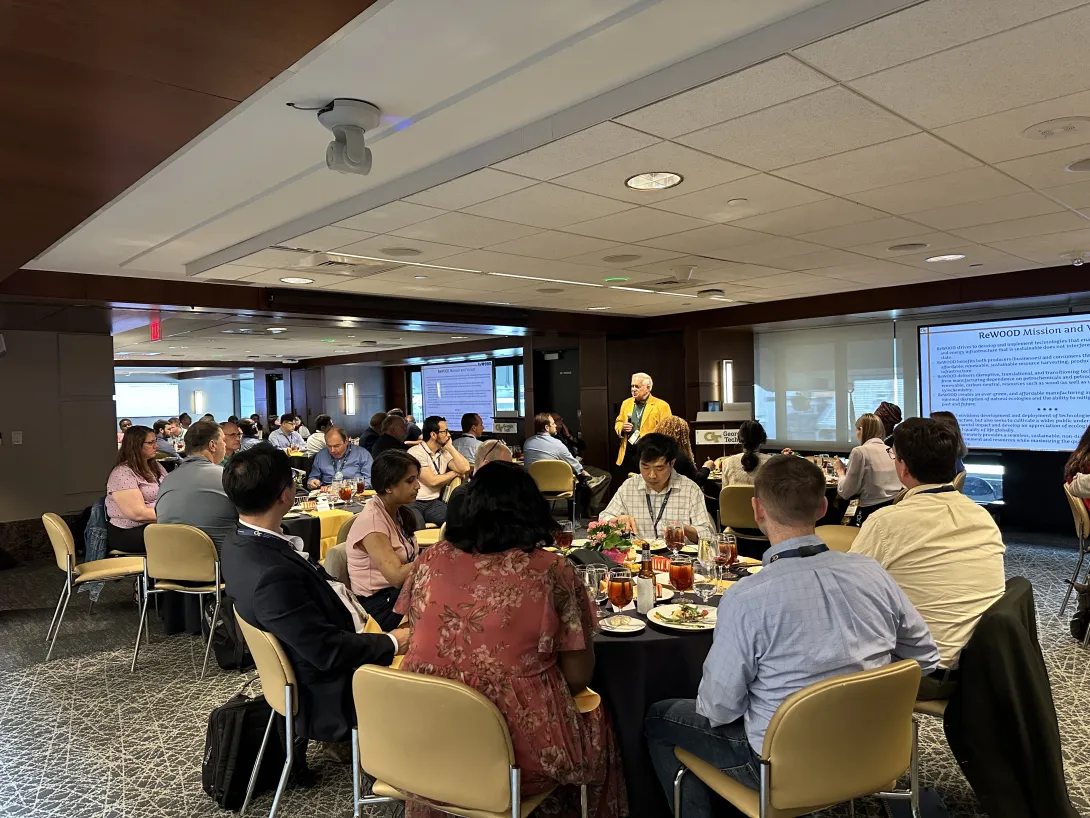
Keynote Presentation during the Spring2023 RBI Workshop on Packaging Innovation and the Circular Economy
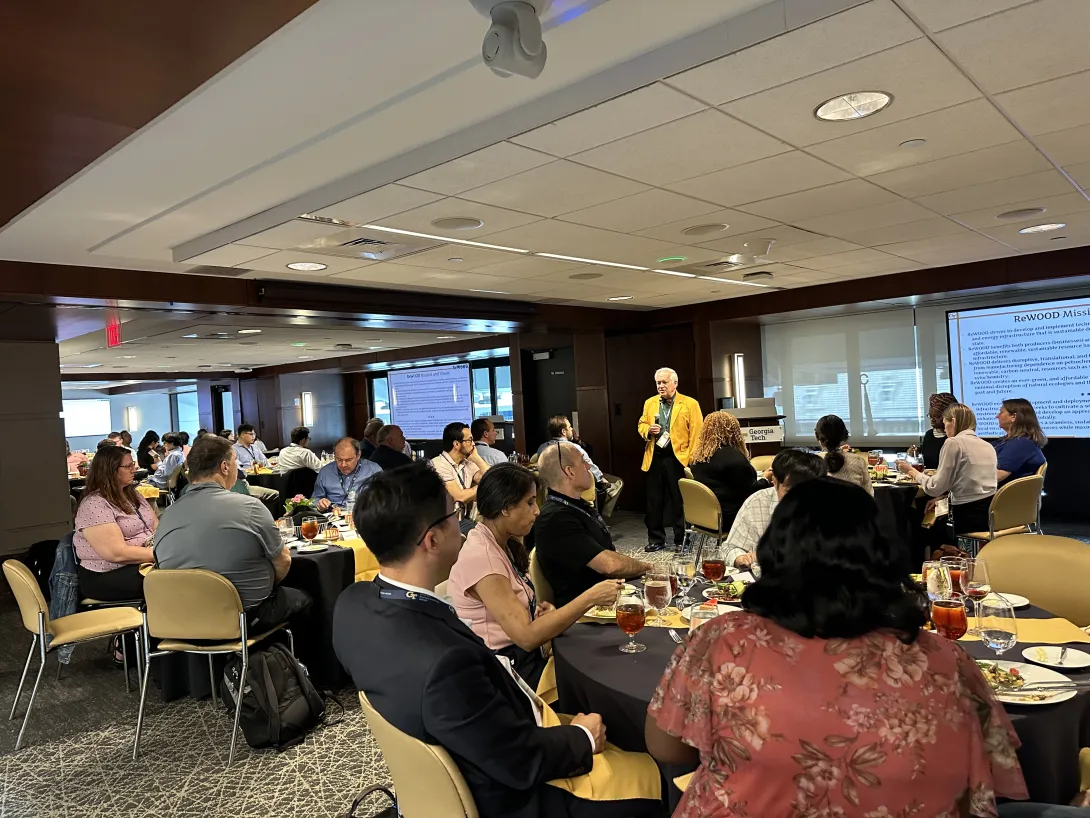
On Thursday, May 11, the Renewable Bioproducts Institute (RBI) of Georgia Tech hosted a workshop on “Packaging Innovation and the Circular Economy” at the Bill Moore Student Success Center on the Georgia Tech campus. More than 90 attendees from academia, national labs, and industry convened and discussed the cutting-edge research and industry developments happening across the world and got an opportunity to network with leading researchers and peers. This unique workshop featured speakers from the USDA Forest Products Laboratory, WestRock, Stora Enso, Georgia Tech, University of Maine, and many others.
The workshop started off with an introduction by Carson Meredith, executive director of RBI, who gave a perspective on the institute’s goals in promoting bioeconomy technology and innovation. Dr. Meredith emphasized RBI’s role in “catalyzing a community of researchers who focus on solving challenges in packaging by investing in team building across interdisciplinary boundaries.”
Research talks began with a presentation from Tequila Harris, professor in the George W. Woodruff School of Mechanical Engineering. Harris shared her team’s research on a continuous coating process of cellulose- and chitin-derived materials to create enhanced packaging barrier films. Meisha Shofner, associate professor and Faculty Fellow in the School of Material Science and Engineering shared her work on mechanical and thermal properties of single use packaging materials and paths to improving circularity.
Carson Meredith, professor in the School of Chemical & Biomolecular Engineering and executive director of RBI informed on renewable barriers from carbohydrates as viable alternatives to plastics and the research methods involved to get more promising results for circular functional barrier packaging materials. Joe Bozeman, assistant professor in the School of Civil and Environmental Engineering at Georgia Tech presented the Systemic Equity framework as it relates to circularity.
Mehdi Tajvidi, professor from the University of Maine, discussed his team’s research to produce particle board and other packaging materials using nanocellulose and the audience got an opportunity to look and get a feel for his research team’s samples.
Discussions from industry experts included material innovations to replace plastics, packaging requirements in the European Union and the United States and how brands drive innovation more than regulations, methods to optimize package size and packing speed for sustainability, paper-based packaging equipment and systems to replace plastics including plastic water bottles, dye choices and the influence of defect detection in waterborne barrier coated papers, and innovations in fiber-based cold chain packaging.
Ken Zwick from the U.S. Forest Products Laboratory discussed managing forests using methods like forest thinning such that the biomass prevents wildfires and what success looks like for his team – less plastic in packaging and less burning of wood. Their Madison building also houses the largest wood library in Wisconsin.
Participants had a chance to interact with Georgia Tech students and get to know their research at the student poster presentation. The dinner keynote was presented by researchers Bo Arduengo and Stefan France from the School of Chemistry and Biochemistry at Georgia Tech. The keynote provided an overview of RBI’s newly created ReWOOD research center. Abbreviated from “Renewables-based Economy from WOOD,” research at the center focuses on using sustainable plant-based raw materials to develop industrial products ranging from jet fuel to solvents to generic pharmaceutical additives and more. The presentation provided a glimpse on the expansion of ReWOOD since its launch through research affiliations from universities across the world. ReWOOD’s partnership list continues to grow as the center focuses on targeted research areas and funding proposals to develop technology and commercial opportunities.
“The workshop turned out to be a huge success with a highly engaged audience of faculty, students, national lab, and industry experts,“ said Carson Meredith, executive director of the Renewable Bioproducts Institute. “RBI will continue to host such events as we are committed to providing thought leadership and be a catalyst of cutting-edge research in the areas of circular materials; bioindustrial manufacturing; and paper, packaging, and tissue.”
News Contact
Priya Devarajan || RBI Communications Manager
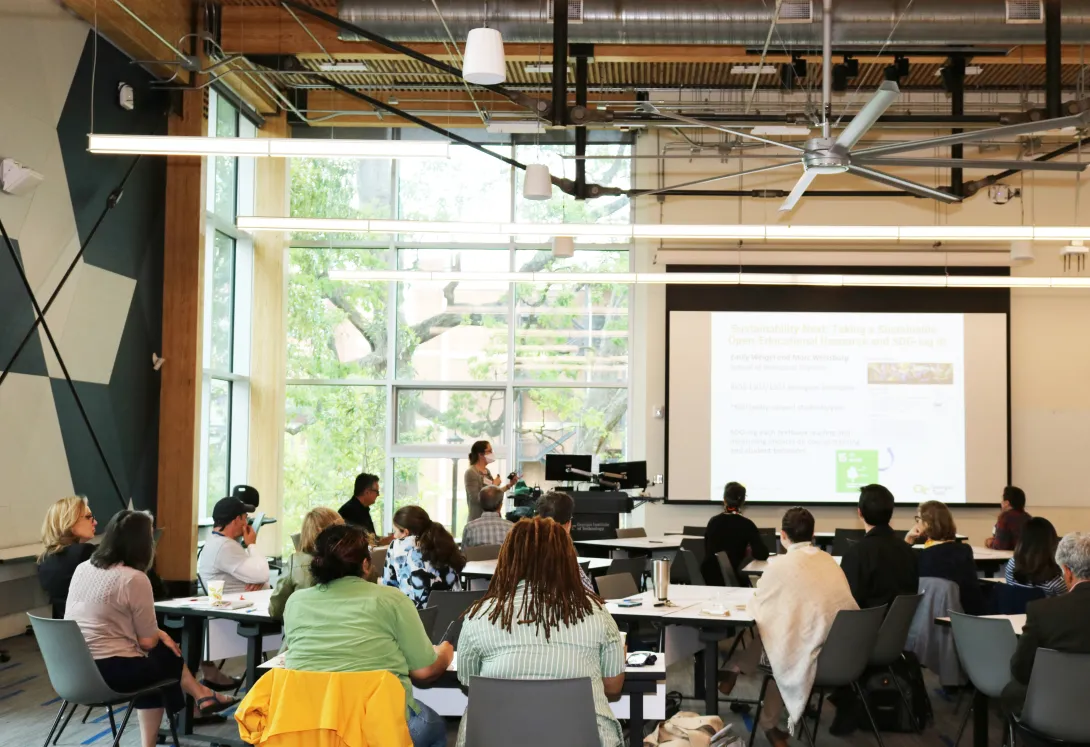
Georgia Tech researchers give presentations on their Undergraduate Sustainability Education Innovation Grants during a recent "Jamboree" in the Kendeda Building. (Photo Jess Hunt-Ralston)
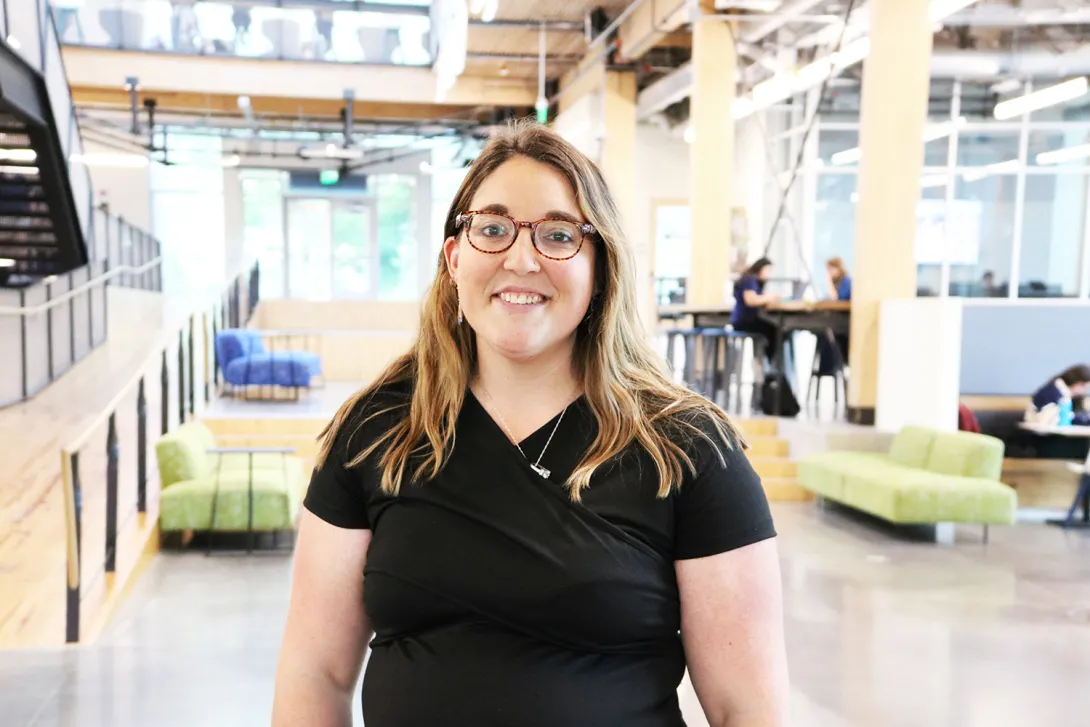
Six proposals from the College of Sciences will redesign existing courses and begin new ones to help students contribute to a sustainable world have been approved for Undergraduate Sustainability Education Innovation Grants. The proposals tie into the United Nations’ 17 Sustainable Development Goals (UN SDGs).
A total of 21 projects from all six Georgia Tech colleges will reach an estimated 22,500 students. The collaborative effort is focused on a key goal of the Institute’s Sustainability Next Task Force: to produce graduates who are committed to making a positive difference in their communities, their organizations, and the world.
“The overall goal is that all of our students understand the societal context for their work, as well as the scientific, environmental, economic, and social aspects of sustainability,” says Jennifer Leavey, assistant dean for Faculty Mentoring for the College of Sciences and co-chair of Sustainability Next.
Leavey and Rebecca Watts-Hull, assistant director of Faculty Development for Sustainability Education in the Center for Teaching and Learning, served as liaisons for the Undergraduate Sustainability Education Committee, which judged the proposals.
Leavey also coordinates College of Sciences educational programs related to science and sustainability, including the Georgia Tech Urban Honey Bee Project and the Living Building Science Vertically Integrated Project Team.
Leavey said the UN SDGs — which ask world citizens and their governments to consider ambitious solutions to longstanding problems such as hunger, poverty, climate damage, inequality, and lack of quality healthcare — are clear and compelling. “These are things we want for a better world,” she shared. “Every field has some connection to them. And it's just a very easy framework to get behind and understand. I would love it if all Georgia Tech graduates could leave feeling well versed in that understanding, and how their work connects to it.”
The Sustainable Education Committee chose projects that impacted the greatest number of students, including classes that are required for all Georgia Tech undergraduates.
Learn more about the College of Sciences’ six selected proposals:
Laboratory-Based Project on the Chemistry of Alternative Energy Sources
- CHEM 1211L, Chemical Principles I, Laboratory
- Deborah Santos, academic professional, School of Chemistry and Biochemistry
- 1000+ students impacted (majority first-year)
- “I hope that the students would have a better understanding of why they hear about these technologies as possible alternatives, and what obstacles there are to actual widespread implementation,” Santos said. “Maybe students will consider how they might play a role in overcoming those obstacles.”
Sustainability Next: Taking a Sustainable Open-Educational Resource And SDG-ing It
- Bios 1107/1207, Biological Principles
- Emily Weigel, senior academic professional, and Marc Weissburg, professor, School of Biological Sciences
- Approximately 650 early career students per year
- “I will take the textbook and each day link it to an SDG, so that when they come into class, we'll talk about the topics in the context of SDGs,” Weigel said. “By being a little bit more explicit about it, it's our goal that when they go from this intro course to later courses in their curriculum, they're primed to think about SDGs, and then they recognize the connections that are there.”
Georgia Climate Project
- EAS 4813 — This is a new course within the School of Earth and Atmospheric Sciences’ new interdisciplinary Environmental Science (ENVS) undergraduate degree program with the School of Biological Sciences, and part of a partnership with the Georgia Climate Project, a state-wide consortium of universities, colleges and partners working to improve understanding of climate impacts and solutions in Georgia.
- Zachary Handlos, senior academic professional, School of Earth and Atmospheric Sciences
- 10-20 students impacted per year
- “This course would provide students an opportunity to participate in hands-on learning within the context of ‘real-world’ sustainability-related projects in partnership with the Georgia Climate Project, complementing topics and coursework covered in Samantha Wilson’s EAS 4803: EAS & Policy course,” Handlos said. “Work includes participation in climate change, sustainability, and climate equity and justice research, as well as the creation and dissemination of tools and resources.”
Urban Atlanta’s Water and Atmospheric Signatures
- EAS 1600: Introduction to Environmental Science (EAS Majors) Laboratory: Urban Atlanta Atmospheric Measurements, combined with another Lab course, Urban Water Quality Measurements and Microbial Ecology Exploration using Proctor Creek Watershed
- Jennifer Glass, associate professor, and Shelby Ellis, lecturer, School of Earth and Atmospheric Sciences
- 20-40 students per year, EAS majors only
- “Through field trips, students will investigate current climate change-induced conditions in urban Atlanta, with students collecting real time weather and watershed data-measurements to learn more about SDGs surrounding urban sustainable cities and clean water,” Ellis said. “In this reconfigured learning environment, we hope to foster student momentum on becoming educational leaders in their local community on climate justice, while gaining an understanding that there are attainable climate actions that can be taken now to combat climate change.” ”
Developing and Enhancing Experiential Learning in a New EAS Course
- EAS 4803: EAS & Policy, offered in new Environmental Science (ENVS), Solid Earth & Planetary Science (SEP), and Atmospheric and Oceanic Science (AOS) undergraduate degree programs in College of Sciences
- Samantha Wilson, academic professional, School of Earth and Atmospheric Sciences
- 25 students during spring semesters in even-numbered years
- “The course is designed to introduce students to the scientific background of topics such as water, hydrocarbons, air, and earthquakes before discussing related policies and persistent issues,” Wilson said. “Through discussions on each topic that involve science and policy, students can work towards understanding why current policies exist the way they do and how they can be improved.” The course will also involve guest speakers, and is meant to be taken before Handlos’ EAS 4813 course.
Course Redesign to Implement Project-Based Learning for Social Change
- APPH 1040, Foundations of Health
- Teresa Snow, senior academic professional, School of Biological Sciences
- Approximately 200 students per year
- “It is my hope that working towards solutions to complex societal health issues will create a sense of empowerment for our students that counteracts feelings of helplessness,” Snow said. “A cross-disciplinary approach, which is the focus of this project, will provide a better understanding of the process of large-scale social change, a critical requirement for achieving the third SDG, which is to ensure healthy lives and promote well-being for all ages. Breaking down the social barriers to good health will benefit everyone.”
On April 27, the Undergraduate Sustainability Education Committee hosted a Jamboree, which featured faculty from each Georgia Tech college that won grants — making brief presentations, and engaging in networking discussions.
“For the College of Sciences, it's really exciting to see the connection between different disciplines,” Leavey said. “We’ve been doing work on climate and the environment for a long time, but to see the connection with sustainability work at other colleges at Georgia Tech is very gratifying.”
News Contact
Writer: Renay San Miguel
Communications Officer II/Science Writer
College of Sciences
404-894-5209
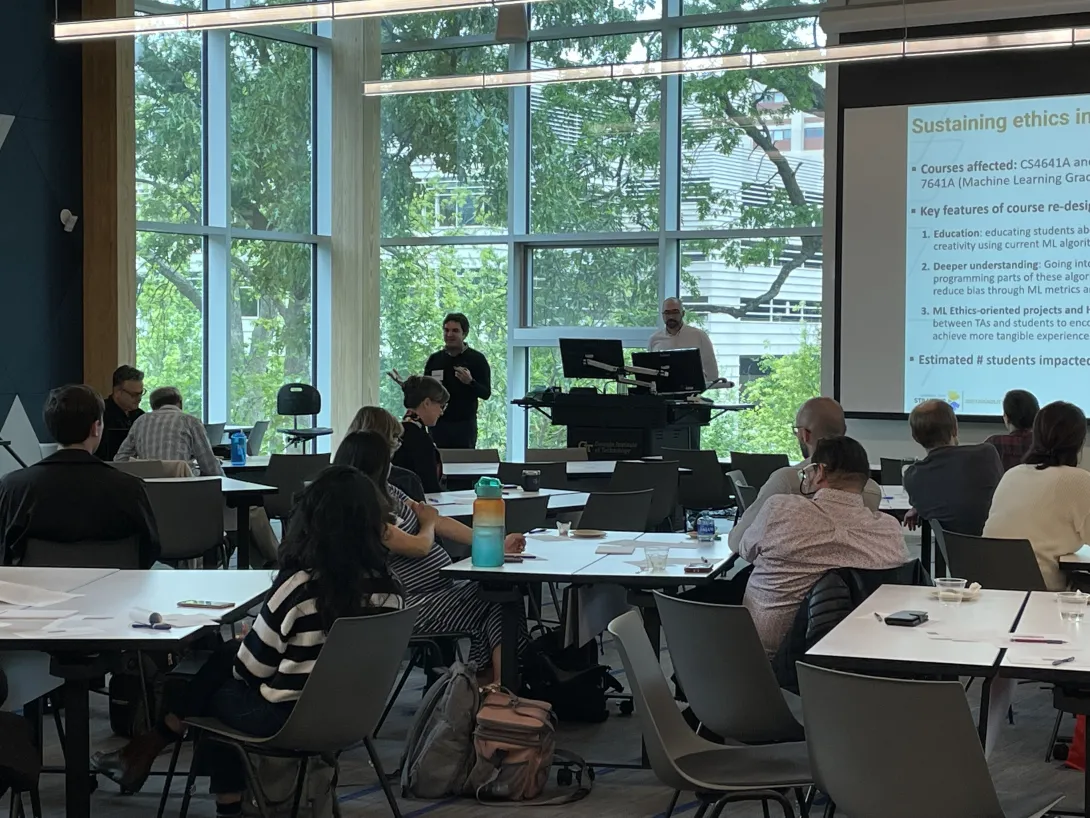
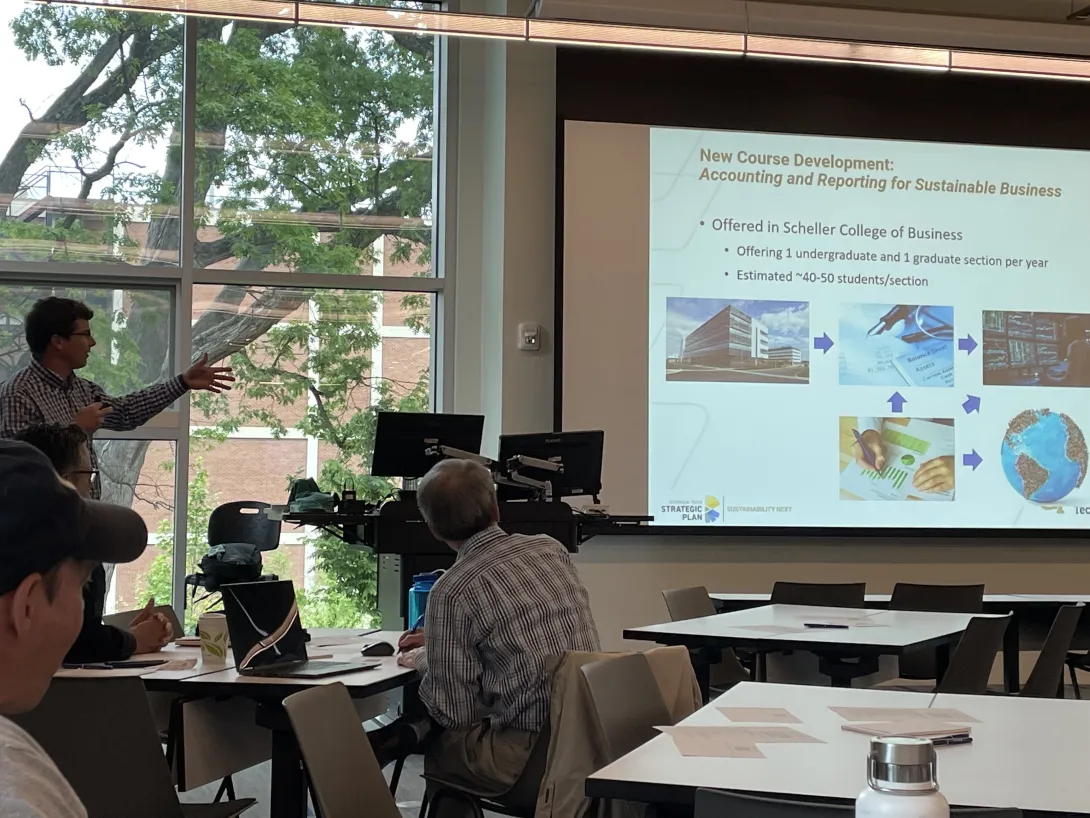
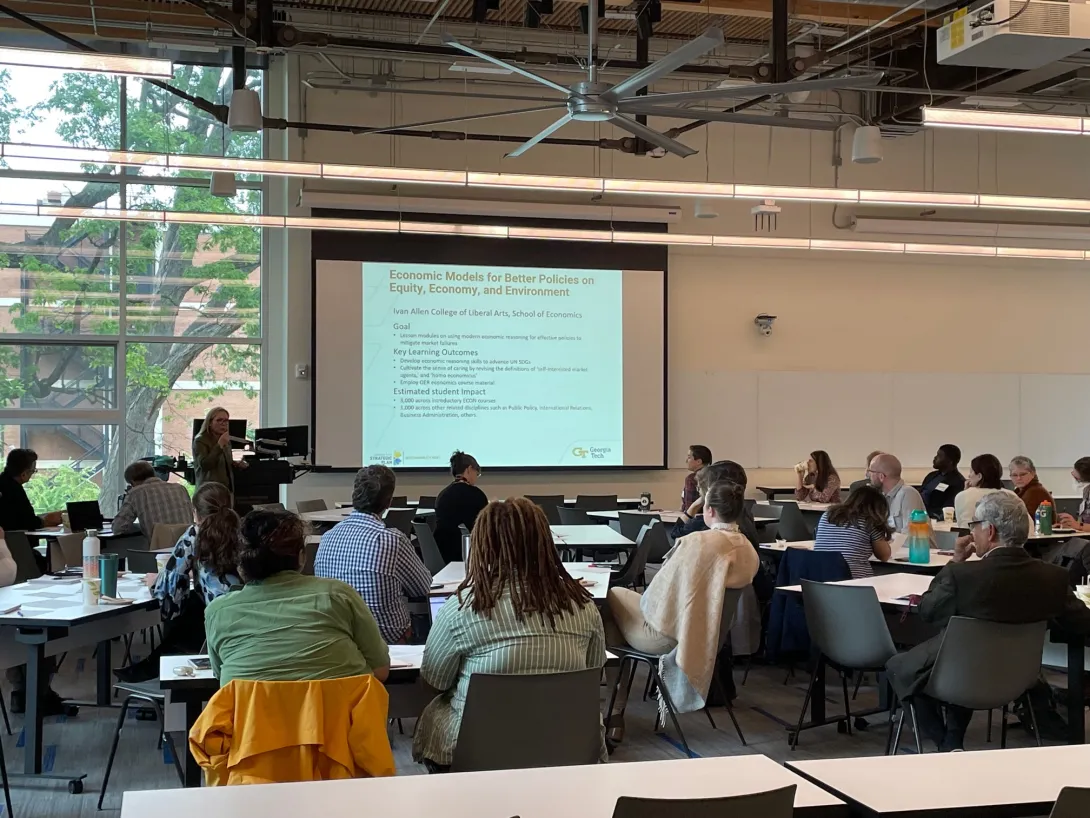
One of the Institute Strategic Plan (ISP) goals is to connect globally and amplify impact by contributing “to global collaborative efforts that advance the U.N. Sustainable Development Goals (SDGs) through our education, research, and service.” In response, Sustainability Next developed a plan to expand SDG concept and skill integration across the undergraduate curriculum. In support of the plan, 21 projects representing all six colleges and 15 schools were presented at the Undergraduate Sustainability Education Jamboree, held on April 26 in the Kendeda Building auditorium. With many winning projects featuring high enrollment and core courses, this first round of sustainability education “seed grants” will significantly expand the reach of Georgia Tech’s sustainability-across-the-curriculum initiatives.
“Our Strategic Plan commitment to bring the United Nations Sustainable Development Goals (SDGs) into our teaching is part of our vision for transformative teaching and learning more broadly,” explains Larry Jacobs, Senior Vice Provost for Education and Learning. “Helping students identify connections between disciplinary concepts and skills and complex societal challenges enhances learning and supports Georgia Tech’s mission to equip students to improve the human condition.”
The Jamboree featured lightning presentations from the award winners, as well as presentations about related initiatives at Georgia Tech to help instructors, students, and staff better understand the landscape of sustainability education innovation on campus. Instructors engaged in course design or re-design through the awards will have opportunities to collaborate with and learn from their peers through a Community of Practice on Transformative Teaching with the SDGs and a SoTL (Scholarship of Teaching and Learning) research group. Many began identifying potential collaborators at the event, as they heard from other award winners. “The afternoon of lightning presentations by fellow faculty was exhilarating,” Sabir Khan, Associate Professor, Schools of Industrial Design and Architecture, shared. “I came away impressed and excited at the range of projects and have already invited a few instructors to join my class in the fall to discuss their approaches to tackling the UN SDGs."
Presenter Kate Williams, Interim Director, Transformative Teaching and Learning, Faculty Initiatives, shared connections between the Sustainability Innovation Awards and Georgia Tech’s Transformative Teaching and Learning (TTL) strategic initiative. “The success of the first round of Sustainability Education Innovation Grants demonstrates our faculty's commitment to creating innovative experiential learning opportunities for students,” Dr. Williams noted.
For more information about future award opportunities or the communities of practice described above, please contact Jennifer Leavey (Assistant Dean for Faculty Mentoring, College of Sciences) or Rebecca Watts Hull (Assistant Director, Faculty Development for Sustainability Education Initiatives, Center for Teaching and Learning).
Review all 21 awarded Undergraduate Sustainability Education Innovation projects.
The 2022-23 Micro-Grants Community-Based Research awardees presented their findings at the second annual symposium, held on April 18, 2023, in the auditorium of the Kendeda Building for Innovative Sustainable Design, which is the region’s first Living Building. Ten teams presented to faculty, staff, students, and student family members. The topics were wide ranging, and dealt with both practical and theoretical issues. The work surpassed all expectations for quality and quantity.
Devised by the Kendeda Building Advisory Board and sponsored by the Brook Byers Institute for Sustainable Systems and the Kendeda Building, the Micro-Grants Research Program solicits proposals for very small scale ($50 to $500), short term, sustainability related, research studies to be conducted by members of the Georgia Tech community. Community investigators are encouraged to explore ways in which the Georgia Tech campus can continue to innovate, demonstrate, prove, and promote the adoption of best and next practices in regenerative design and operations. Researchers were also encouraged to use the United Nations Sustainable Development Goals as a framework for research design. All members of the Georgia Tech community were encouraged to apply. The program especially sought proposals from students and staff that had little or no prior research experience.
The program has four objectives:
- to expand scientific thinking and the understanding of the research process amongst those not (yet) directly involved in scientific research;
- to bolster the use of the campus as a living laboratory;
- to give voice to people and communities outside of research that have culturally novel perspectives on problems and their possible solutions, and to create new pathways for partnering with them; and
- to seed novel ideas and nurture nascent investigators.
The 2022-23 awardees and the titles of their projects are:
- Alex Lomis, Devi Patel, and Dr. Jung-Ho Lewe, "Design and Development of a Low-Cost and Highly-Scaleable Occupancy Counter to Optimize the Utilization of HVAC Resources"
- Kaitlyn Tran, Shivani Potdar, and Amanda Janusz, "Bird Safe Campus"
- Ricardo Martinez, "Chiropterans at Georgia Tech"
- Elizabeth Umanah, "Reimagining Eco-Friendly Parking Lot Design Through Simulations"
- Lujain Diab, Ally Kimpling, Jenna Sitta, Marcus Morris, Skylar Ryan, Dr. Jennifer Leavey, and Steve Place, "A Greener Grey: “Ironing” Out Issues in Greywater Systems"
- Jun Wang and Yilun Zha, "Kendeda’s Educational Role in Waste Management and Recycling"
- Siddharth Sivakumarun, "Investigating Capacity for Regenerative Energy through Foot Traffic"
- Alexandra Rodriguez Dalmau and John Fortner, "Recognition of Insect Species in the Georgia Tech campus with Machine Learning"
- Gray Simmons, Kevin Leach, and Dr. Jung-Ho Lewe, "IOT Climate Sensor Development for HVAC Efficiency Analysis"
- Kaylin Cross, Pranav Jothi, Maanas Kumar, Brian Wu, Savannah Howard, and Sheng Dai, "Prototyping Bio-inspired Geothermal Energy Recovery for Space Heating and Cooling"
More details and links to all the presentations are available at this web page.
News Contact
Brent Verrill, Research Communications Program Manager, BBISS


On April 26, 2023, the School of Physics and College of Sciences at Georgia Tech will welcome Stanford University physicist Steven Chu to speak on climate change and innovative paths towards a more sustainable future. Chu is the 1997 co-recipient of the Nobel Prize in Physics, and in his former role as U.S. Secretary of Energy, became the first scientist to hold a U.S. Cabinet position.
About the Talk
The event is part of the School of Physics “Inquiring Minds” public lecture series, and will be held at the Ferst Center for the Arts. The talk is free and open to campus and the Atlanta community, and no RSVP is required. Refreshments begin at 4:30, and the lecture will start at 5 p.m. ET.
“The multiple industrial and agricultural revolutions have transformed the world,” Chu recently shared in an abstract for the lecture. “However, an unintended consequence of this progress is that we are changing the climate of our planet. In addition to the climate risks, we will need to provide enough clean energy, water, and food for a more prosperous world that may grow to 11 billion by 2100.”
The talk will discuss the significant technical challenges and potential solutions that could provide better paths to a more sustainable future. “How we transition from where we are now to where we need to be within 50 years is arguably the most pressing set of issues that science, innovation, and public policy have to address,” Chu added.
The event’s faculty host is Daniel Goldman, Dunn Family Professor in the School of Physics at Georgia Tech.
About Steven Chu
Steven Chu is the William R. Kenan, Jr. Professor of Physics and a professor of Molecular and Cellular Physiology in the Medical School at Stanford University.
Chu served as the 12th U.S. Secretary of Energy from January 2009 until the end of April 2013. As the first scientist to hold a U.S. Cabinet position and the longest serving Energy Secretary, Chu led several initiatives including ARPA-E (Advanced Research Projects Agency – Energy), the Energy Innovation Hubs, and was personally tasked by President Obama to assist in the Deepwater Horizon oil leak.
In the spring of 2010, Chu was the keynote speaker for the Georgia Tech Ph.D. and Master's Commencement Ceremony.
Prior to his cabinet post, Chu was director of the Lawrence Berkeley National Laboratory, where he was active in pursuit of alternative and renewable energy technologies, and a professor of Physics and Applied Physics at Stanford, where he helped launch Bio-X, a multi-disciplinary institute combining the physical and biological sciences with medicine and engineering. Previously he also served as head of the Quantum Electronics Research Department at AT&T Bell Laboratories.
He is the co-recipient of the 1997 Nobel Prize in Physics for his contributions to laser cooling and atom trapping. He is a member of the National Academy of Sciences, the American Philosophical Society, the American Academy of Arts and Sciences, the Pontifical Academy Sciences, and of seven foreign academies. He formerly served as president, and then chair of the American Association for the Advancement of Science.
Chu earned an A.B. degree in mathematics and a B.S. degree in physics from the University of Rochester, and a Ph.D. in physics from the University of California, Berkeley, as well as 35 honorary degrees.
He has published over 280 papers in atomic and polymer physics, biophysics, biology, bio-imaging, batteries, and other energy technologies. He holds 15 patents, and an additional 15 patent disclosures or filings since 2015.
News Contact
Jess Hunt-Ralston
Director of Communications
College of Sciences at Georgia Tech