

Christos Athanasiou, assistant professor in the Daniel Guggenheim School of Aerospace Engineering, has been selected to receive the 2025 Eshelby Mechanics Award for Young Faculty. Presented annually by the American Society of Mechanical Engineers (ASME), the award recognizes rapidly emerging junior faculty who exemplify originality, depth, and impact in the development and application of mechanics.
The Eshelby Mechanics Award was established in 2012 in memory of Professor John Douglas Eshelby to promote the field of mechanics, among young researchers. The award will be formally presented at the 2026 Applied Mechanics Division Awards Banquet during the ASME International Mechanical Engineering Congress and Exposition in November.
Athanasiou and his team advance the fundamental mechanics and physics of materials and translates these insights into systems-level design strategies that address global challenges in resource efficiency and sustainable development. His research integrates advanced experimental methods capable of capturing material behavior under realistic operational conditions, mechanics-based design principles, and tailored AI- and physics-informed modeling frameworks.
Together, these efforts enable the development of life-cycle-efficient, cost-effective materials and structures for applications ranging from sustainable packaging to aerospace systems and space construction. His recent work published in Proceedings of the National Academy of Sciences (PNAS) introduced a bioinspired framework to improve plastic recycling while addressing a foundational mechanics question: how can we build reliable structures from inherently variable materials?
Athanasiou is also the recipient of the 2024 NSF CAREER Award and the ASME Orr Early Career Award, and is a Climate Tech Fellow at the New York Climate Exchange.
News Contact
Monique Waddell

The study underscores the potential of NMR and other powerful technologies as outreach opportunities – from engaging the public, to better teaching undergraduate students.

New work from Georgia Tech is showing how a simple glass of wine can serve as a powerful gateway for understanding advanced research and technologies.
The project, inspired by an Atlanta Science Festival event hosted by School of Chemistry and Biochemistry Assistant Professor Andrew McShan, develops an innovative outreach and teaching module around nuclear magnetic resonance (NMR) techniques, and is designed for easy adoption in introductory chemistry and biochemistry courses.
Published earlier this year in the Journal of Chemical Education, the study, “Automated Chemical Profiling of Wine by Solution NMR Spectroscopy: A Demonstration for Outreach and Education” was led by a team from the School of Chemistry and Biochemistry including lead author McShan, Ph.D. students Lily Capeci, Elizabeth A. Corbin, Ruoqing Jia, Miriam K. Simma, and F. N. U. Vidya, Academic Professional Mary E. Peek, and Georgia Tech NMR Center Co-Directors Johannes E. Leisen and Hongwei Wu.
“NMR is one of the most widely used analytical tools in chemistry and the life sciences, and Georgia Tech hosts one of the most cutting-edge NMR centers in the world,” McShan says. “Our study shows that you don’t need advanced training to appreciate how powerful tools like NMR work and how those tools are used in research.”
All materials, tutorials, and data are freely available via online tutorials and a YouTube video, enabling educators to replicate or adapt the activity even in settings with limited access to NMR facilities.
Wine sleuthing at the Atlanta Science Festival
From families with K-12 students to undergraduates to adults with no prior chemistry experience, nearly 130 visitors explored wine chemistry at the Georgia Tech NMR Center during the Atlanta Science Festival event. With McShan’s guidance, they identified and quantified more than 70 chemical components that influence wine taste, aroma, and quality by analyzing the chemical composition, structure, and dynamics of molecules.
Taking on the role of wine investigators (a real-world application of NMR), the group investigated examples of wine fraud, learning to identify harmful additives like methanol, antifreeze, and lead acetate – additives that played roles in both historical and modern wine scandals.
“By connecting the science to something familiar like wine, we were able to spark curiosity and excitement across age groups,” says McShan. “This a framework for how complex analytical techniques can be made inclusive, interactive, and inspiring whether in the classroom or at a science festival.”
Science for all
The study underscores the potential of NMR and other powerful technologies as outreach opportunities – from engaging the public to better teaching undergraduate students.
“After the event, adults said they learned how chemical composition affects wine characteristics and how NMR is used in research and industry,” McShan says. “Younger participants learned key concepts about wine composition and found benefits from the sensory elements, like watching the spectrometer in action.”
They aim to use these takeaways to continue developing outreach tools. “My end goal is to develop NMR into a practical teaching tool by grounding the technique in real-world examples,” adds McShan. “Using this approach is a clear avenue to introducing the general public to the world-class instruments used by researchers at Georgia Tech and exposing undergraduate students to the powerful analytical techniques they are likely to encounter throughout their careers.”
Funding: National Science Foundation
News Contact
Written by Selena Langner
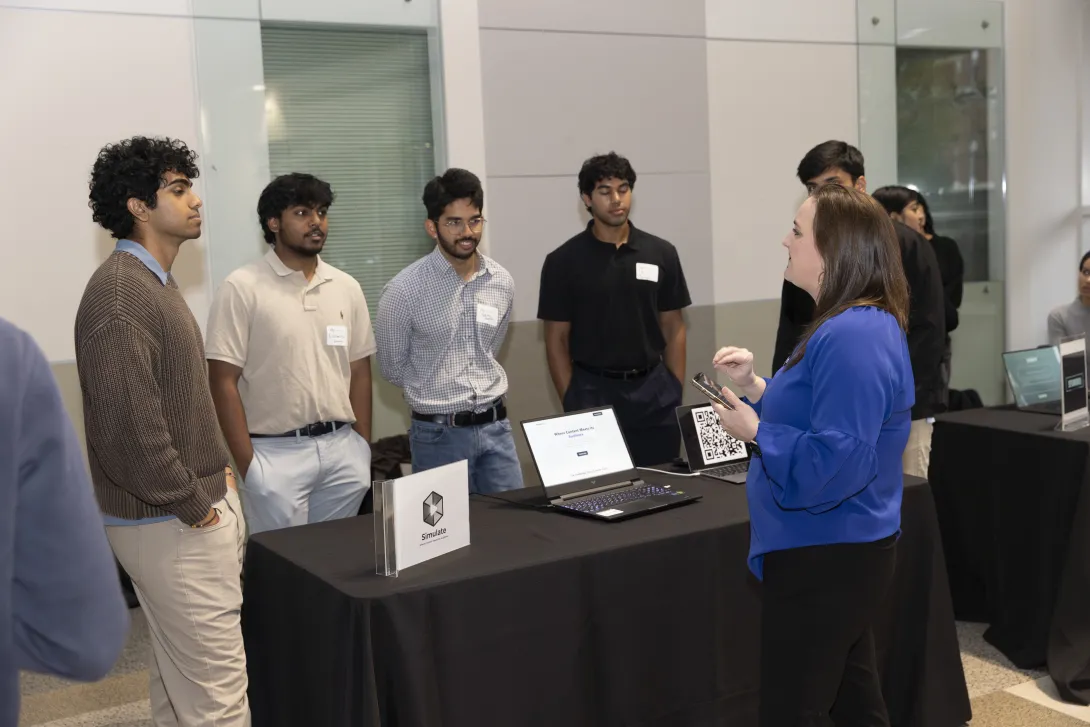
SCI's Jennifer Whitlow speaks with a team presenting at the new entrepreneur section of Junior Design Capstone. Photos by Terence Rushin/ College of Computing.
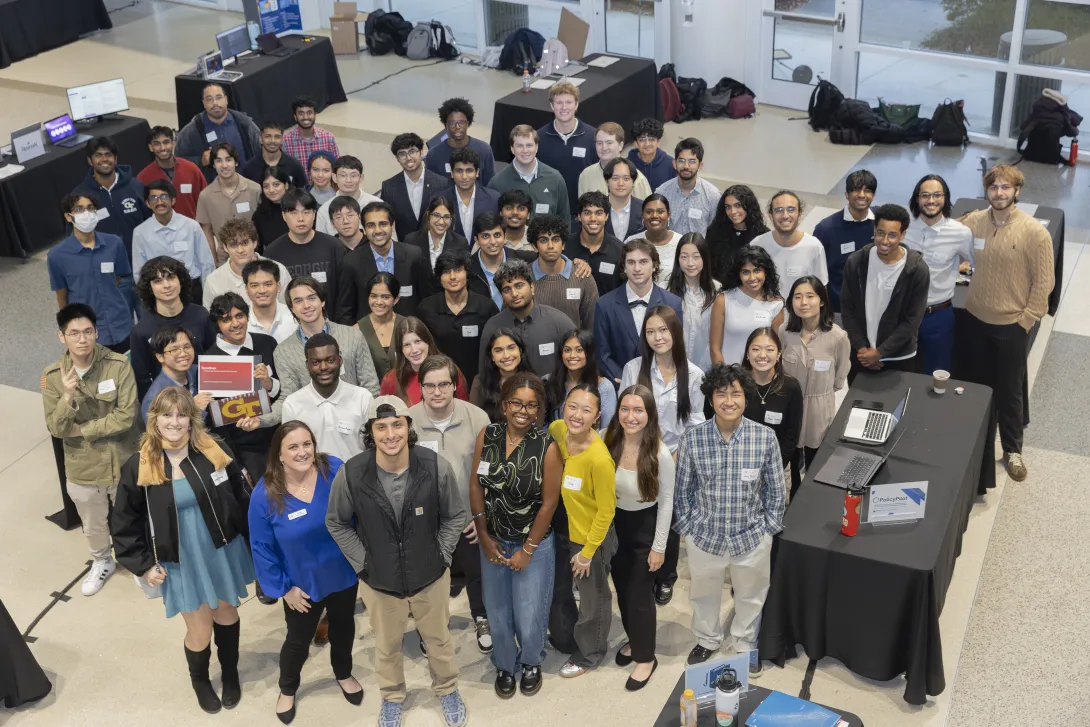
Students present at the expo
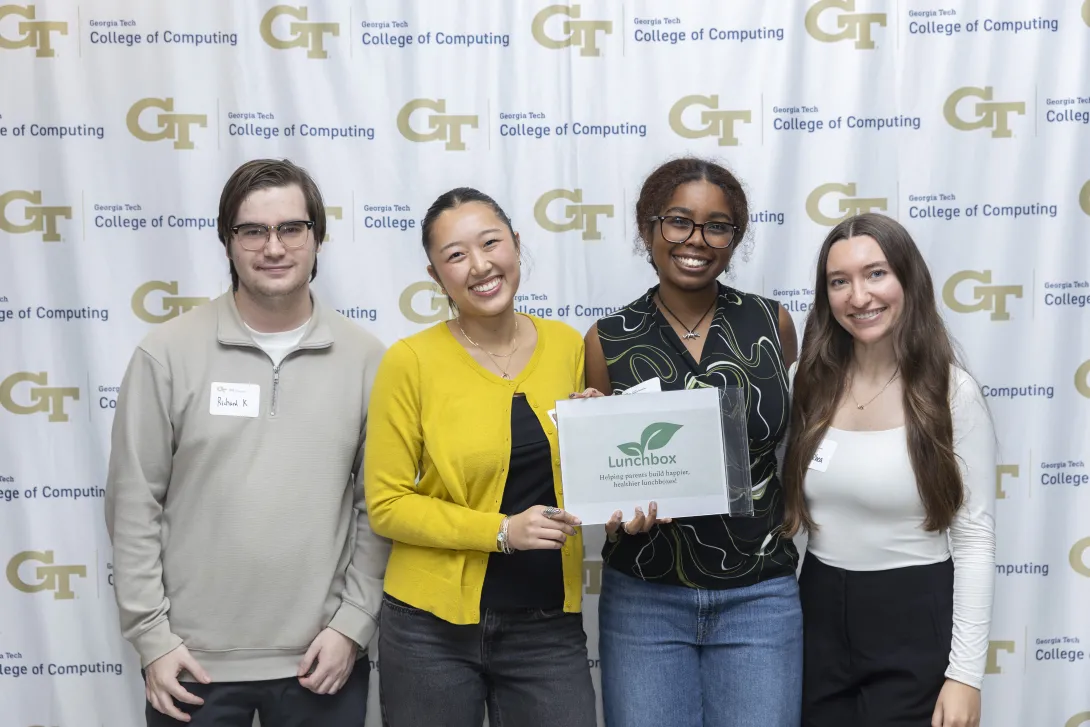
Team Lunchbox created a prototype to help parents of neurodivergent children with safe foods. Photo by Terence Rushin/ College of Computing.
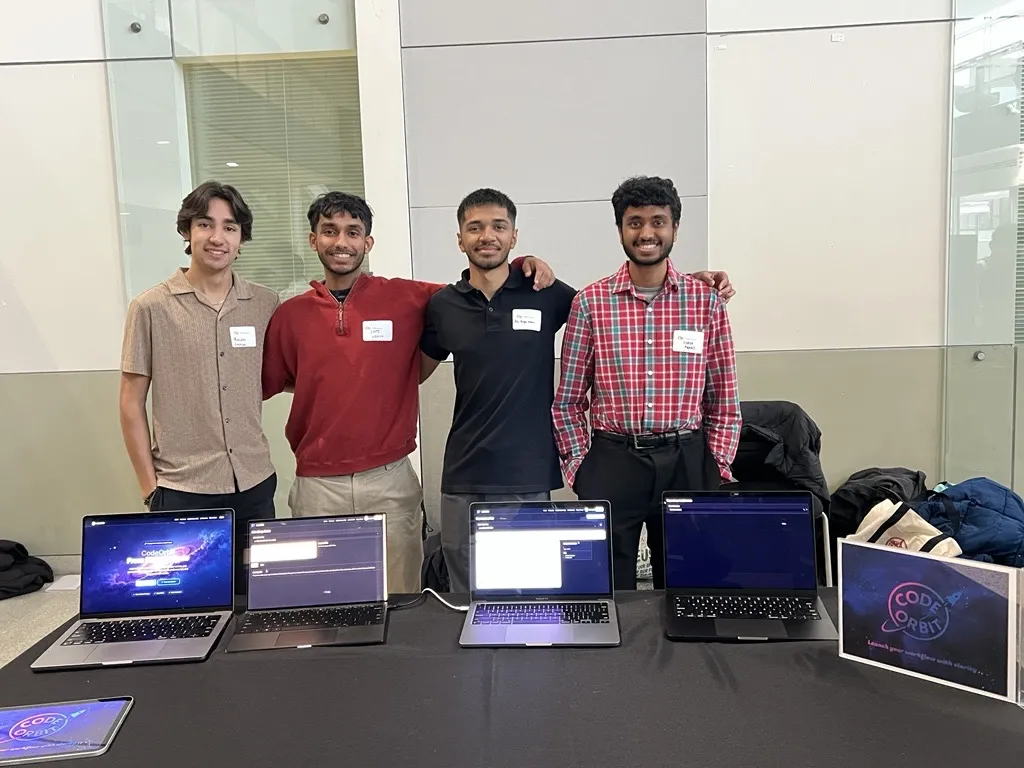
Team CodeOrbit took first place at the Expo. Photo by Jennifer Whitlow.
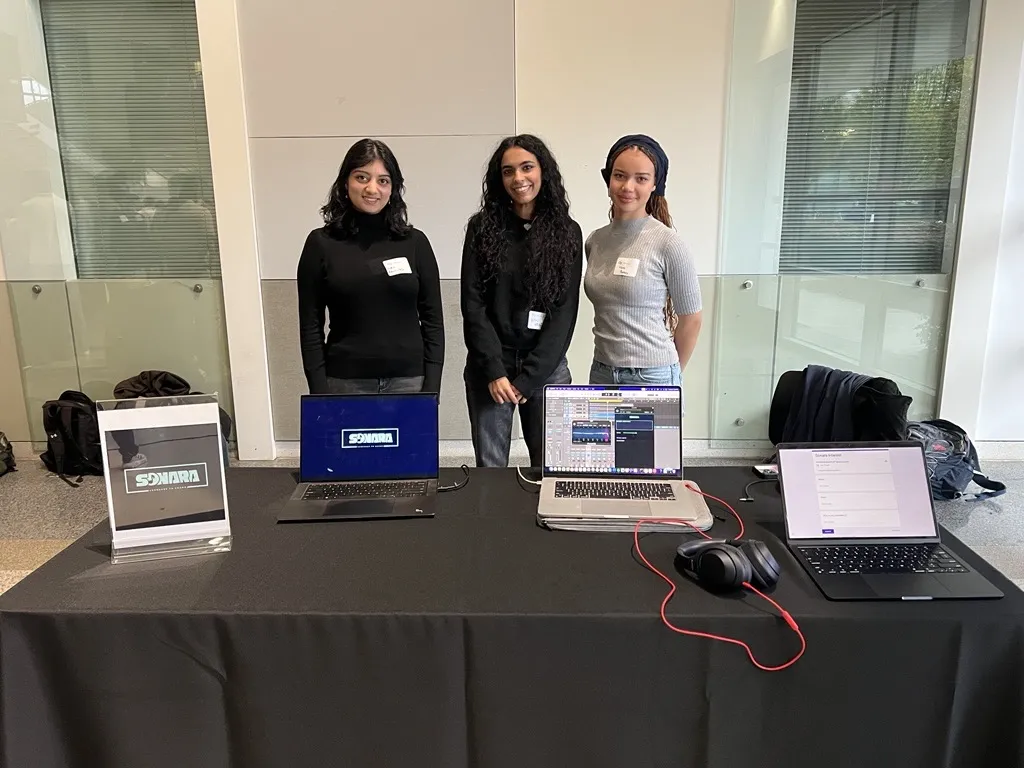
Team Sonara took second place at the Expo. Photo by Jennifer Whitlow.
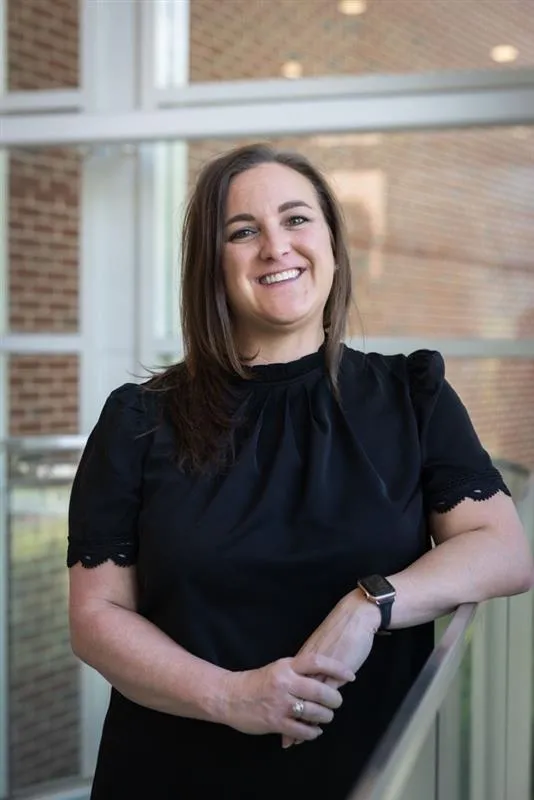
Whitlow, who has years of experience working with startups, leads the new section of Junior Design Capstone. Photo by Kevin Beasley/ College of Computing.
From zero to working prototype in just four months, students in the College of Computing’s new entrepreneurial Junior Design Capstone tackle real-world problems with guidance from startup mentors.
Led by School of Computing Instruction faculty member and Georgia Tech alumna Jennifer Whitlow, the course gives students a founder’s perspective on building technology that meets real user needs.
A Startup Approach to Junior Design
Unlike the traditional CS Junior Design course where teams work with sponsors, students in the entrepreneurial track act as their own clients. They begin the semester with no predetermined problem and follow a structured process, which is anchored by deliverables that reflect professional expectations.
“Students come in with nothing,” Whitlow said. “They identify a problem, conduct customer discovery, realize which assumptions were wrong, refine their direction, figure out what to build and then build it. And they own it 100 percent.”
Customer-discovery interviews ensure every idea is grounded in real user needs, and the semester culminates in a fully functioning prototype paired with a written justification of the decisions behind it. This combination of development and reflection gives students a framework that mirrors startup practices.
Expert Alumni Coached and AI-Driven Development
To further simulate a startup environment, Whitlow recruited alumni coaches with startup or executive experience. Coaches were paired with teams based on their areas of expertise, advising anywhere from one to four groups. The roster includes a former chief technology officer and longtime startup advisor, along with alumni startup founders.
Students also incorporate AI tools into development, accelerating early prototype work while still making critical decisions themselves.
“AI can accelerate the early stages,” Whitlow said. “But students have to understand their design well enough to guide it. AI doesn’t replace their decision-making.”
Top Teams Earn CREATE-X Acceptance
Sixteen teams completed the entrepreneurial capstone this fall.
The top two scoring projects earned automatic acceptance into CREATE-X Launch, Georgia Tech’s startup accelerator:
- CodeOrbit
- Sonara
These teams showcase the program’s ability to quickly bring student ideas to a level that’s ready for real-world startup incubation.
Putting the Process into Action: Lunchbox
One team that exemplifies how the capstone’s structure supports innovation is LunchBox. Created by computational media major Abigail Rhea and her teammates, LunchBox helps parents and caregivers of neurodivergent children navigate limited safe-food options.
The idea evolved after early customer discovery revealed that the original concept had too much competition, so the team narrowed its focus.
“During research, one of our teammates came across a testimonial from the mother of an autistic child,” Rhea said. “It spoke to all of us and helped us shift toward a truly underserved demographic.”
The team conducted more than 20 interviews with caregivers and special education teachers, reshaping its approach. “We realized families didn’t need another daily task,” Rhea said. “They needed personalized guidance that runs in the background. Everything we built came directly from those conversations.”
The team's biggest technical challenge was engineering a dynamic, emotionally supportive roadmap for food-exposure therapy. While AI accelerated development of SwiftUI code, all core decisions remained human-driven.
At the Capstone Expo, attendees connected strongly with the project. “So many people told us how applicable LunchBox is to their lives,” Rhea said. “Most joined the waitlist. We couldn’t be more excited for what’s next.”
Looking Ahead
Whitlow sees the pilot already fulfilling its purpose: giving students the tools and confidence to turn ideas into real ventures. Teams can continue work by applying to CREATE-X programs or building on their prototypes after the semester.
“This course shows students they can create something real,” Whitlow said. “That’s the goal: empowering them to innovate.”
A Startup Approach to Junior DA Startup Approach to Junior DesiUnlike the traditional CS Junior Design course where teams work with sponsors, students in the entrepreneurial track act as their own clients. They begin the semester with no predetermined problem and follow a structured process, which is anchored by deliverables that reflect professional expectatio
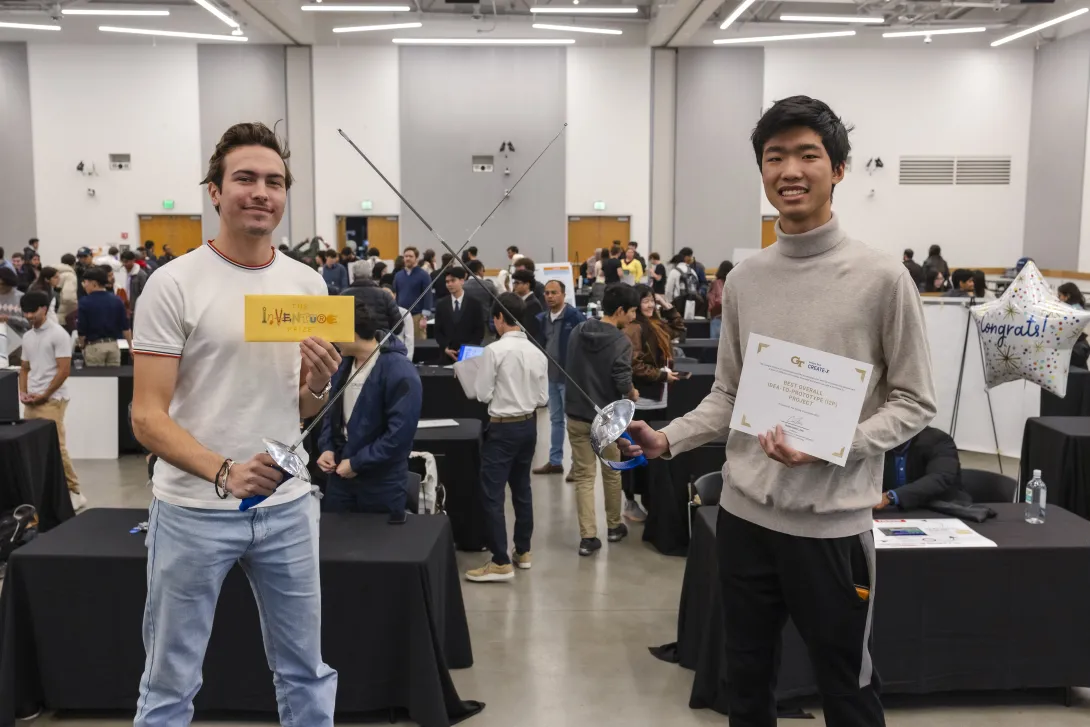
Founders of Allez Go: Adam Kulikowski and Jason Mo
Cricket powder-based protein brownies. A visualization system for fencing blades. A personalized AI application for analyzing blood work. All I2P Showcase prototypes. See what Georgia Tech students have been developing this semester at the Fall 2025 Idea to Prototype (I2P) Showcase on Tuesday, Dec. 2, at 5 p.m. in the Marcus Nanotechnology Building. This year, attendees will have even more original inventions to view, with over 60 teams displaying prototypes.
The event marks the culmination of the semester-long I2P course, where undergraduate students develop functional prototypes aimed at solving real-world problems. Prototypes this semester include a smart military drone, a gentler device for cervical cancer screening, a rotating espresso station, tools to keep AI safe, compact data centers, systems that simulate cyberattacks to help companies strengthen their defenses, and many more.
The showcase is free and open to students, faculty, staff, and members of the local community.
Winning teams will receive prizes and a “golden ticket” into CREATE-X’s Startup Launch, a summer accelerator that provides optional seed funding, accounting and legal service credits, mentorship, and more to help students turn their prototypes into viable startups.
This is a free event, and refreshments will be provided. Register for the Fall 2025 I2P Showcase today!
News Contact
Breanna Durham
Marketing Strategist
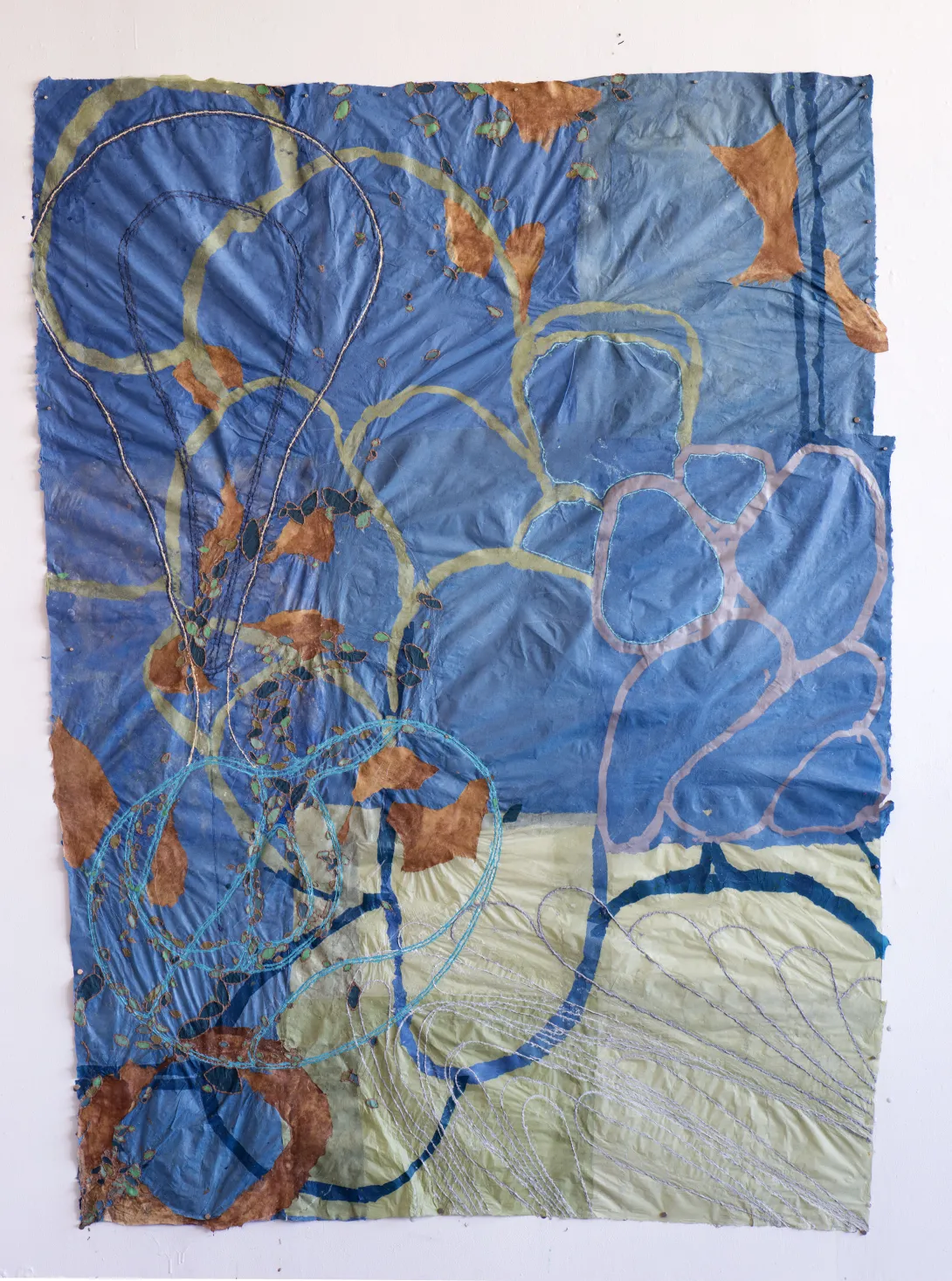
Fire Balloon by Nancy Cohen
New Exhibition Series Honors Decades of Creative Exploration
ATLANTA, Georgia (August 25, 2025) -- Legacies in Paper: Nancy Cohen, Sara Garden Armstrong, & Helen Hiebert is on view at the Robert C. Williams Museum of Papermaking, September 4, 2025, through January 30, 2026. The exhibit brings together the work of three artists who have incorporated hand papermaking into their artistic practices for years. Nancy Cohen, Sara Garden Armstrong, and Helen Hiebert each describe a formative period of searching for versatile materials with the ability to take on the qualities required for two and three-dimensional work; could mimic textures of nature and the body; and could facilitate installation work of various scales. Individually, each artist found that the unique medium of hand papermaking could be transformed to encompass their visions, and it quickly became integral to their artwork.
Armstrong, Cohen, and Hiebert build on the legacy of a community of artists pushing the craft of papermaking forward into contemporary forms. They bring unique voices to the medium: Hiebert’s luminous constructions explore the interplay of light and structure; Cohen’s sculptural works reflect ecological fragility and resilience; and Armstrong’s immersive environments blur the boundaries between the organic and the engineered. Together, their works speak to the transformative potential of paper—not only as a surface for expression but as a sculptural, spatial, and conceptual force. Through their hands, paper becomes a language of memory, a vessel of emotion, and a bridge between past and present.
Join the museum staff and featured artists for a reception, 4-7 pm, Thursday, September 4, 2025 at 500 Tenth St. NW, Atlanta, GA 30332. This event is free and open to the public.
A full listing of associated programs can be found at https://paper.gatech.edu/program-listing
Sara Garden Armstrong received her Master of Fine Arts from the University of Alabama and a Master of Art Education from UAB. A past recipient of the Joan Mitchell Foundation CALL (Creating a Living Legacy) project, Armstrong’s national and international exhibition record extends over a period of more than 40 years. Her artist’s books can be found in the collections of the Museum of Modern Art, New York, and the Victoria and Albert Museum, London, among others. Atrium commissions have focused on scientific phenomena and their interactions with the human condition. Armstrong currently lives and works in Birmingham, Alabama.
Nancy Cohen has an M.F.A. from Columbia University and a B.F.A from Rochester Institute of Technology. Awards include a Pollock Krasner Foundation Grant, The Murry Reich Distinguished Artist Award and six fellowships from the New Jersey State Council on the Arts. Museum collections include the Asheville Art Museum, Memphis Brooks Museum, Montclair Museum, NJ State Museum, Smith College Museum, Tang Teaching Museum, Weatherspoon Art Gallery, Yale University Art Gallery and the Zimmerli Museum. Cohen has completed large scale paper installations for the Noyes Museum, the Katonah Museum, the Power Point Gallery at Duke University and New Jersey City University, The CODA Museum in the Netherlands and the NTCRI Museum of Craft Design in Taiwan. She lives in Jersey City, New Jersey.
Helen Hiebert is a Colorado artist who constructs installations, sculptures, films, artists’ books and works in paper using handmade paper as her primary medium. She teaches, lectures and exhibits her work internationally and online, and is the author of several how-to books about papermaking and papercrafts. Helen has an extensive network of paper colleagues around the world and her interest in how things are made (from paper) keeps her up-to-date on current paper trends, which she writes about in her weekly blog called The Sunday Paper. She interviews papermakers and paper artists on her podcast Paper Talk, and she holds an annual paper retreat and papermaking master classes in her Red Cliff studio.
News Contact
Demo Day 2025, Aug. 28, Exhibition Hall, +250 Startup Founders Launching New Ventures
What does the future look like? On Aug. 28, from 5 – 7 p.m., more than 1,500 attendees will gather at Georgia Tech’s Exhibition Hall to find out at Demo Day, where CREATE-X will showcase over 100 startups coming out of Georgia Tech. Tickets are free but limited — early registration is strongly encouraged.
At Demo Day, founders bring solutions that tackle some of today’s most urgent challenges across industries. Expect to see startups tackling global challenges with bold new solutions, such as: providing mRNA therapies that could transform vaccine access, using ultra-efficient AI chips that run on a fraction of the power, and building innovative inspection tools that are already helping companies like Tesla catch defects in seconds. Demo Day provides attendees an opportunity to gain hands-on experience with new products, meet the founders behind them, and experience the momentum of a startup ecosystem in full swing.
Donnie Beamer, the City of Atlanta’s senior technology advisor, attended the last Demo Day and spoke about moments that impressed him most.
“The founders of NeuroChamp had a headband that reads brainwaves. It makes me call into question what I was doing in college!” Beamer said.
Founders showcasing at Demo Day have spent 12 weeks working on their startups during the CREATE-X accelerator, Startup Launch.
“Every founder in that room will have spent the summer chasing the right problem and building a solution to solve it,” Rahul Saxena, director of CREATE-X, said. “Demo Day is proof that entrepreneurship can be taught and developed, from ideation to customer discovery.”
Beamer said that the program pushes people to be creative.
“Georgia Tech is a safe place to try and fail and innovate, which is invaluable. Instead of just telling students to do X and expecting them to execute on it, CREATE-X allows for creativity and discovery,” Beamer said. “That can be transformative for students, the Institute, and the city of Atlanta.”
Unlike other startup exhibitions, there are no on-stage pitches — just direct connection in a casual, interactive format. Attendees and investors can test the tech out themselves. Past Demo Days have led to venture funding, strategic partnerships, media coverage, and more. It’s an energetic atmosphere with the exchange of ideas, an opening of doors, and a community building the future together.
“There are a few kinds of naysayers; for example, some who think Atlanta doesn’t have much entrepreneurial activity and others who feel isolated from communities like this one,” Beamer said. “Demo Day lets them look behind the curtain and see the vibrant, innovative ecosystem that they can be a part of in our city as we look to become a top-five tech hub in the nation. Georgia Tech is a huge part of that.”
Register for Demo Day today! The future is waiting for you to discover it.
News Contact
Breanna Durham
Marketing Strategist
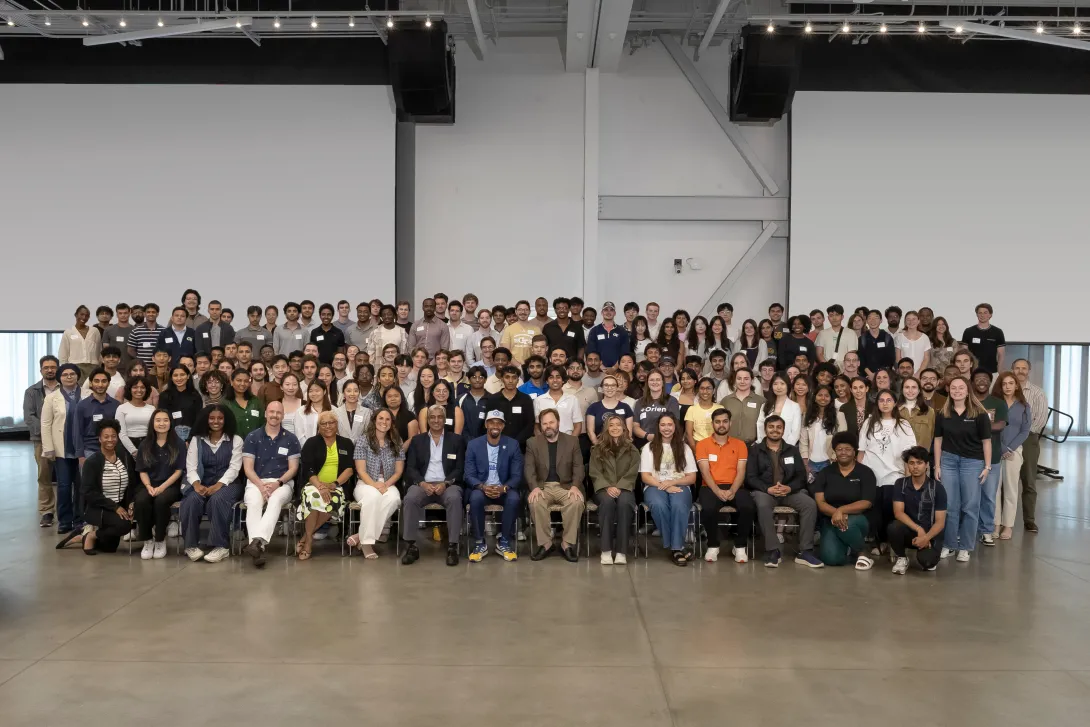
CREATE-X’s 12th cohort of Startup Launch with CREATE-X staff members and Atlanta leadership.
CREATE-X, Georgia Tech’s premier entrepreneurship program, kicked off its 12th Startup Launch cohort this month with a record-breaking 137 student teams and 25 faculty and research teams — totaling 318 founders. The summer-long accelerator, known for turning ideas into real-world ventures, is once again positioning Georgia Tech as a national leader in invention and startup creation.
This year’s cohort spans a wide range of industries, including artificial intelligence, defense, healthcare, gaming, sustainability, media management, agriculture tech, fashion tech, education, and more.
“These founders are in the messy middle and that's a beautiful place to be. There’s a lot of freedom in that,” said Margaret Weniger, director of Startup Launch. “We’re all going to be in this together. It's a safe space to try new things. It’s OK if it doesn't work out because what we want founders to learn is an entrepreneurial mindset and entrepreneurial spirit — something you take with you no matter what you do after this.”
Over the next 12 weeks, teams will validate ideas, build products, and acquire customers with the help of dedicated coaches, a robust founder community, and a network of mentors and alumni.
Raghupathy "Siva" Sivakumar, Georgia Tech’s inaugural vice president of Commercialization and the faculty founder of CREATE-X, spoke about the core of CREATE-X and what it would take for founders to succeed.
“Startup Launch is not about Georgia Tech gaining from your success. We are here just for one reason, which is to make you successful,” he said. “You need to hold yourself accountable. You need to be ambitious in terms of how big a problem you solve. You need to be emphatic that the customer matters. The successful teams are 100% behind what's going to make the lives of customers easier and better.”
In 2014, CREATE-X was co-founded by Sivakumar, Steve McLaughlin(who is now the president of The Cooper Union for the Advancement of Science and Art), and other Georgia Tech faculty, including Ray Vito, Craig Forest, and Ravi Bellamkonda (who is now the executive vice president and provost of The Ohio State University). The program received its initial major philanthropic support from Chris Klaus, a Georgia Tech alumnus and tech entrepreneur, whose gift helped launch the initiative, and , played a key role in building out the program's maker courses. Over the years, CREATE-X has continued to grow, thanks largely to the philanthropic support of alumni and foundations who believe in its mission.
In the last decade, the program has produced over 650 startups, $2.4 billion in portfolio valuation, and had eight founders named to Forbes’ 30 Under 30. Wagner shared stories of past teams who pivoted dramatically — from a glucose-monitoring pillow to a sobriety app now valued at over $350 million, and from a camping gear delivery service to a billion-dollar logistics platform.
“We don’t know which ideas will become the next unicorns,” Weniger said. “But we’re betting on you.”
At the kickoff event, McLaughlin and Klaus were honored for their contributions to Georgia Tech’s entrepreneurial ecosystem. McLaughlin encouraged the founders through the story of CREATE-X.
“From the very beginning, we challenged CREATE-X to be a startup as well. To this day, CREATE-X has raised its own money to do this. It's a reminder of what it takes to make this happen,” he said. “This is the most difficult challenge you have ever taken. I think at the time, we were probably skeptical about whether students could do it. Now we know that you can.”
Georgia Tech President Ángel Cabrera reflected on the impact of McLaughlin, Klaus, and others who saw the vision of Georgia Tech being an entrepreneurial campus.
“Ten years ago, this was a crazy, absurd idea,” he said. “Now, 150 teams are working on their own crazy ideas. Even though sometimes there's this idea of the entrepreneur as a loner, what you learn very quickly is entrepreneurship is a team sport.”
Klaus spoke about people collaborating and helping solve problems together.
“I'm especially inspired by Georgia with its complex history,” he said. “It continues to be a place where peace can be envisioned and pursued. I think this recognition strengthens my commitment to building bridges, resolving conflict, and lifting up voices that seek unity. As you build your businesses, you'll be building collaborations and partnerships, and hopefully make the world a better place.”
As the summer progresses, founders will be guided by CREATE-X’s core values: experiential education, entrepreneurial confidence, and real-world impact. Weniger encouraged teams to “show up uncomfortable” and “leverage every single resource” available.
The journey will culminate at Demo Day, where teams will showcase their startups to investors, industry leaders, and the broader community. The event is free, open to the public, and promises a front-row seat to the next wave of Georgia Tech-born innovation.
Demo Day 2025 will take place on Thursday, Aug. 28, at 5 p.m., in the Exhibition Hall. For more information and to RSVP, visit the CREATE-X Demo Day Eventbrite.
News Contact
Breanna Durham
Marketing Strategist
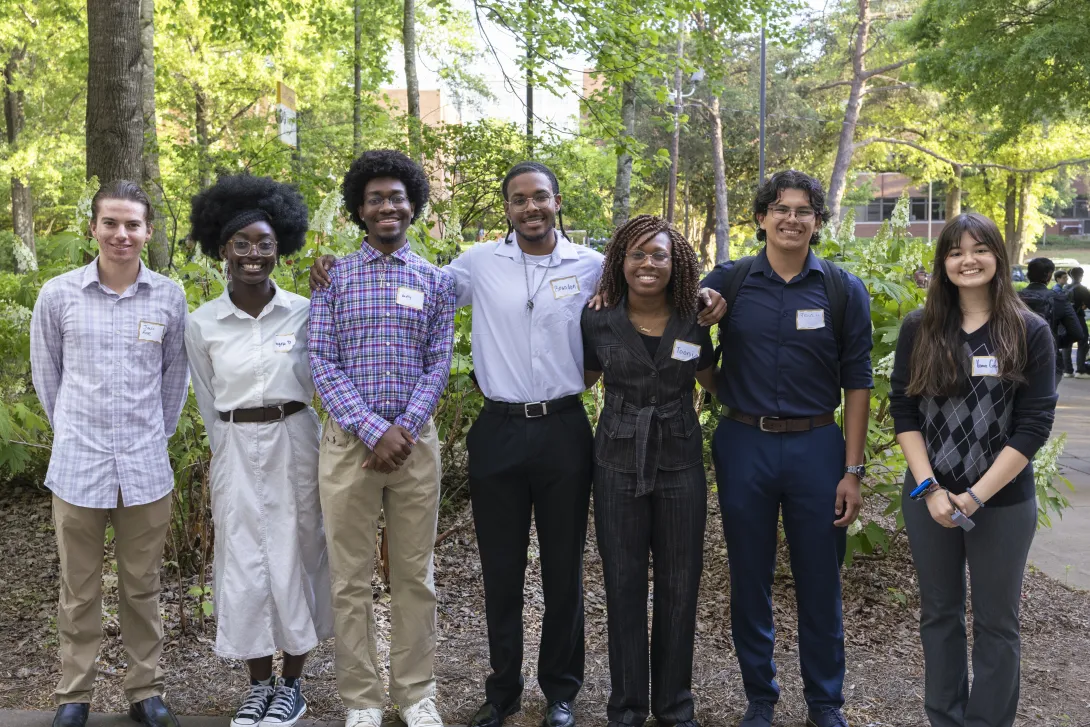
The winners of the 2025 Spring I2P Showcase, from left to right, Jack Rose, Team Carchive; Angela Duodu, Hadley Williams, Brandon Parker, Oluwatooni Alade , and Jesus Sierra Jr., Team Sensible; and Yasmine Green, Team Onyc.
At the Spring 2025 Idea to Prototype (I2P) Showcase, a prototype helping car enthusiasts find niche vehicles and their histories came out on top. Jack Rose, a junior in computer science, took home first place, a golden ticket to CREATE-X’s summer accelerator, Startup Launch, and advancement into the semifinal round of the InVenture Prize, a faculty-led innovation competition for undergraduate students and recent Tech bachelor’s graduates.
Second place was awarded to Team Sensible, made up of juniors Oluwatooni Alade, computer science; Brandon Parker, computer science; Angela Duodu, computer science; Jesus Sierra Jr., computer science; and Hadley Williams, computer engineering. Sensible is a browser extension that rates the sustainability of products users find online and offers alternative products for items that score low.
Third place went to Team Onyc, which includes Yasmine Green, a first-year mechanical engineering student. Onyc replaces the computer mouse with a wearable alternative that allows users to control computer navigation with the movement of their fingertips and fingernails.
Dozens of teams competed at the showcase, which is the culmination of I2P, a CREATE-X course focused on supporting students in creating solutions. The course offers research credit (for undergraduates only), up to $500 in reimbursements for physical material expenses, the opportunity to work collaboratively across majors, and faculty mentorship. It is held in the spring, summer, and fall, and it’s open to undergraduate and graduate students from all majors.
Read our Q&A with the winner and stay tuned for our interviews with the other winning teams.
Team Carchive
Jack Rose, Junior, Computer Science
Why did you pursue your startup?
Rose: I’ve been into cars my whole life. Trying to track cars is my hobby. There are always edge cases, and how are you planning to attack them? Because I spent so much time, especially working with other people, getting this data, and trying to figure this out, I became very adept at understanding the data. The dealers, collectors especially, were trying to understand the whole story, so they would come to me. But the way I had to do it was spreadsheets all over the place, and I was trying to find a solution to keep it all in one spot. I couldn’t find a way to do it, so I said, “Well, I’ll build it.” And then I got into I2P.
What was challenging about building your prototype over the semester?
Rose: This semester, it was mainly trying to come up with the schema and how to physically account for the edge cases. It’s not easy; it took a lot of deep thought, discussions with other people who are into these niche cars, and understanding what details we needed. I’m still trying to add more things and figure it out. It’s not perfect, but it’s enough.
What was your favorite part about I2P?
Rose: Adding features that I was looking for. For example, let’s say I was looking for a car. Filter all the cars over 25 years old and imported to the U.S. — I can easily search my database.
What would you say to students who are interested in entrepreneurship?
Rose: It’s always, “You should have started sooner.” I’ve always thought about it. My biggest advice is to just start doing it, even if it’s a little bit here, a little bit there. If it doesn’t work out, at least you’ve tried.
A photo gallery from the Spring 2025 I2P Showcase can be viewed on the CREATE-X Flickr page.
Students interested in the I2P program can register for the upcoming summer and fall semesters. The deadline for Summer 2025 is May 14, and the deadline for Fall 2025 is May 16.
CREATE-X's next event, Demo Day, will take place on Aug. 28 at Exhibition Hall, where more than 100 startups will be on display. Attendees can experience the newest batch of founders leveraging the latest technology to solve pressing challenges. The event offers an opportunity to network with entrepreneurs, industry leaders, and passionate enthusiasts, and supports the next generation of innovators. Register for Demo Day today and be a part of these founders’ journeys!
News Contact
Breanna Durham
Marketing Strategist
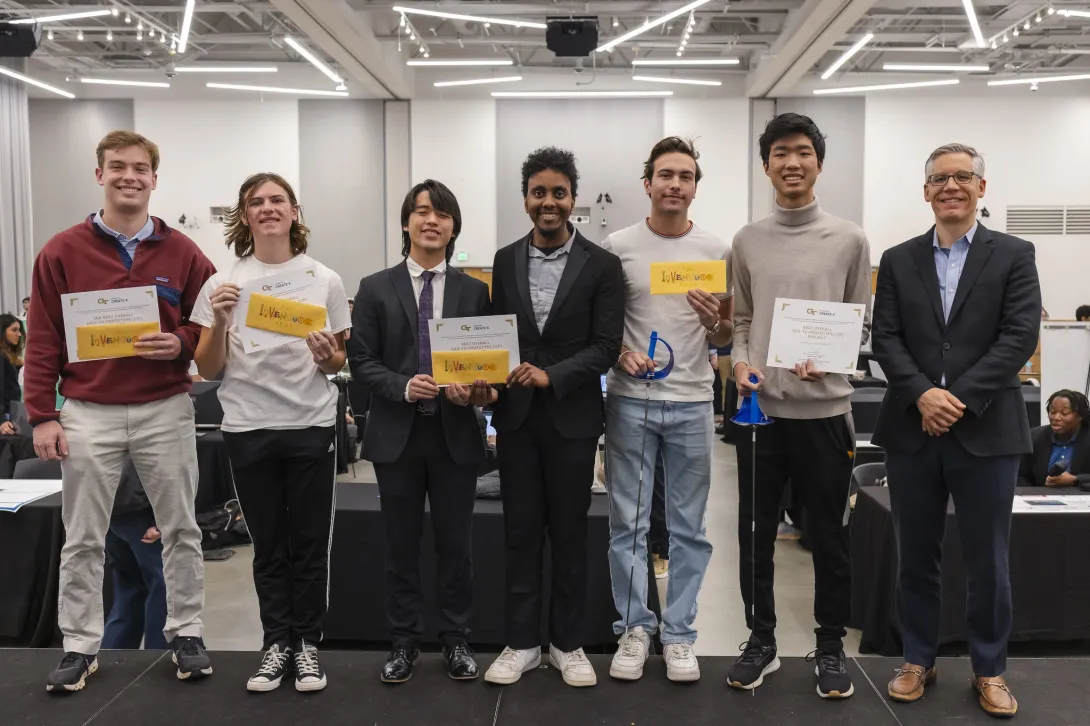
The winners of the Fall 2024 I2P Showcase stand together in Exhibition Hall.
- SuperStream: John-Wright Stanly
- Convexity Electronics: Calla Scotch, Levi Bloch, Phi Cai
- Soul: Ashraf Mansour, Benjamin Wilson, Michal Gregus
- Allez Go: Adam Kulikowski, Jason Mo
- Craig Forest, Associate Director of Make
Two teams tied for Best Overall projects of the Fall 2024 I2P Showcase. Over two hours, 49 teams displayed prototypes that they developed over the semester to hundreds of attendees, while judges circulated the room. The showcase is the last event of their Idea-to-Prototype (I2P) course, where Georgia Tech students earn research credit (for undergraduate students only), receive up to $500 in reimbursement for physical material expenses, and build a working product with faculty mentorship. The course is held in the spring, summer, and fall. Graduate students can also take the course, and student can take it up two times.
As a part of the showcase, the winning team, or teams in this case, also receive a golden ticket into the CREATE-X summer startup accelerator, Startup Launch. This program provides founders with $5,000 in optional seed funding, $150,000 in in-kind services like accounting and legal services, mentorship, and entrepreneurial education, among other benefits. At the end of that experience, startup teams can present their products to investors and industry partners at Demo Day, which attracts over a thousand attendees each year.
Additionally, winners of the showcase advance directly to the semifinal round of the InVenture Prize, a faculty-led innovation competition for undergraduate students and recent BS graduates of Georgia Tech.
This semester, the first place teams were Allez Go and Soul. Team Allez Go’s founders, Adam Kulikowski and Jason Mo, created a real-time visualization system for fencing blades using infrared light and reflectors to accurately track positions during a bout. Team Soul, made up of Ashraf Mansour, Benjamin Wilson, and Michal Gregus, developed fitness-tracking soles and shoes, combining the functions of a smart scale, a workout tracker, and a diet tracker into a singular device.
Second place was awarded to Team Convexity Electronics, consisting of Calla Scotch, Levi Bloch, and Phi Cai. Convexity Electronics produces 3D-printed circuit boards that aim to be smaller, faster, and cheaper than lithography-based circuitry.
Team SuperStream, made up of solo-preneur John-Wright Stanly, took home third place. SuperStream adds video previews to URLs to increase engagement.
Read our Q&A with Team Allez Go and Soul below, and stay tuned for our interviews with the other winning teams!
Q&As
Team AllezGo
Adam Kulikowski, Sophomores, Computer Science
Jason Mo, Sophomores, Computer Science
Why did you pursue your startup?
Kulikowski: We're both fencers. I've been fencing for 10 years, and Jason's been fencing close to 10 as well. So, fencing as a sport is really hard to view for non-fencers, and so the idea that we wanted to do is use visualizations, animations, and replays in a similar way that other kinds of sport visualization companies did.
What was the I2P course like for you all?
Mo: So, this prototype actually started over the summer. I was in Startup Lab and just did a study abroad program. During that class, they mentioned that I2P is a great opportunity, and I had this prototype already in the works.
What surprised you about I2P?
Mo: I2P was very generous with funding; we never had any issues with using up our $500. It was just really helpful because our prototype was pretty heavy hardware.
What was your favorite part about I2P?
Mo: Our weekly meetings with Aaron Hillegass, our mentor, were always very, very insightful. I just shot him an email for I2P, hoping that we could work together on this. Sometimes we would talk about prototypes or updates. He had some really good insights, but our mentor also has a lot of industry experience and a lot of experience with his own startups. It was really fun to just ask him general questions and career advice. He was always very responsive, very supportive for us.
Kulikowski: In addition, I really liked seeing the iterations each week. I think the weekly updates kept us accountable to do at least one small thing every week. So, it was cool to see how the ideas slowly started to formulate each week, small steps and small progresses.
What was challenging about building your prototype over the semester?
Mo: There's a lot of technical challenges. One of the things we did this semester is we changed from a 30 frames per second (FPS) camera to a camera that shoots at 120 FPS. And with that, we could detect a lot more processing power. The camera that we're using is only limited to Windows. I've been using a very old laptop, and that's sort of been a bit problematic when we're trying to do very compute intensive tasks.
What would you say to students that are interested in entrepreneurship?
Kulikowski: There are a lot of people that came by our booth, and a lot of them were freshmen students. Every one of them we told, “If you have an idea, if you're really passionate about something, I2P is a fantastic opportunity.” This semester, with the hands-off approach, really felt like you could just work on this idea, and everything was there to support you working on it. That was fantastic because it's we could take full advantage of the time, the resources, and truly flesh out this idea. I really love the support we had and how we had the bonding with the other students.
Team Soul
Ashraf Mansour, Senior, Computer Science
Benjamin Wilson, Junior, Computer Science
Michal Gregus, Junior, Physics and Electrical Engineering
What’s the thought behind the name?
Mansour: We're kind of bringing life through our electronics, back into the shoe, and building a better fitness tracker and a more holistic picture of human health.
What was the showcase like for your team?
Wilson: It was a little nerve wracking. I have full faith in our ideas and concepts, but I feel personally like we still have a long way to go for our project. I’m still satisfied with where we are now, but we never really anticipated that we we're going to win anything.
Mansour: The showcase made me realize how much faster all this moves, even compared to my expectations. We came in with a very basic prototype that we wanted to improve on, but I think the potential was enough to sell the judges in this case. Now we have a big responsibility to deliver on that potential.
What was your favorite thing about I2P Showcase?
Mansour: It really reminds you how much of a tech hub Georgia Tech really is. Seeing how entrepreneurship boosts in real time, especially at the early stages, is something that’s really awe inspiring.
What was challenging about building your prototype over the semester?
Mansour: There are a lot of unique engineering challenges with the product that we’re building, some we anticipated and others we didn’t, but I think that speaks to the true soul of engineering. That adaptability and sense of problem solving is really important.
Wilson: I’m very grateful to have the other people that were involved in this project for brainstorming and making the design better.
What would you say to students that are interested in entrepreneurship?
Wilson: I definitely would encourage anyone that wants to pursue their own startup or has a new idea to just start. It’s far more efficient and far more rewarding to put your ideas out there and try. You’ll learn a lot more through that process of failing than you will contemplating.
A photo gallery from the Fall 2024 I2P Showcase can be viewed on the CREATE-X Flickr page.
CREATE-X is now accepting applications for the summer and fall semesters of the I2P course, and applications for their summer accelerator, Startup Launch. The deadline for I2P applications for Summer 2025 is May 12. The deadline for Startup Launch applications is March 19, 2025. For questions, please email create-x@groups.gatech.edu.
News Contact
Breanna Durham
Marketing Strategist
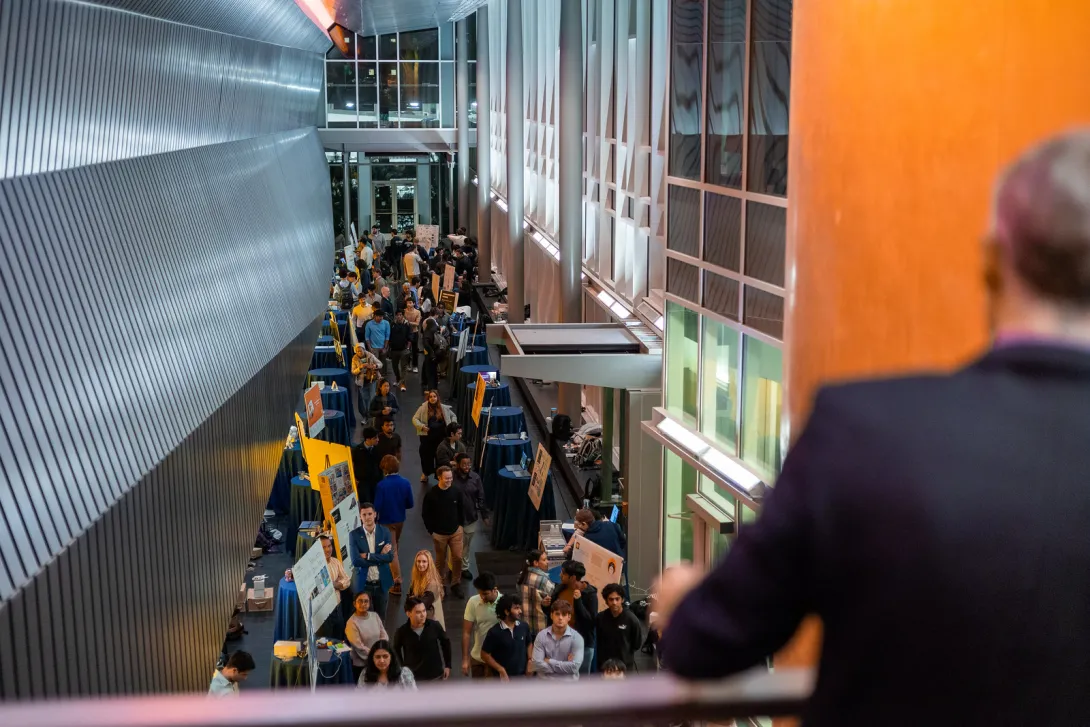
Craig Forest Overlooks I2P Showcase Fall 2023
Georgia Tech is days away from the Fall 2024 Idea to Prototype (I2P) Showcase, set to take place on Dec. 3 at 5 p.m. in the Exhibition Hall. This event offers students a platform to present solutions built over the semester to tackle real-world problems and compete for rewards, including a golden ticket into the CREATE-X summer startup accelerator, Startup Launch. The program offers optional seed funding, workspace, entrepreneurial education, and continued mentorship to help students turn their prototypes into viable startups. Over 50 teams will present their prototypes at the showcase.
The event is open to all Georgia Tech students, faculty, staff, and the local community. Tickets are available now but are limited, so register for the I2P Showcase today.
Each semester, students in the Idea-to-Prototype course take time out of their schedules, similar to undergraduate research, to build prototypes. Teams accepted into I2P receive a reimbursement of up to $500 for physical expenses, course credit (undergraduate students only), and mentorship from a Georgia Tech faculty member.
During the showcase, participants and judges interact with the projects and give feedback. The criteria for judging are centered on innovation and overall market and impact potential. Judges can include industry professionals, faculty members, and alumni.
Throughout I2P Showcase history, many winning projects have gone on to achieve significant success. One is CaseDocker, which provides an end-to-end workflow management system. The startup now has a user base of over 400 global clients, including Fortune 500 companies. Other winners of the showcase include a blockchain-based music application, Radiochain, a personal financial management platform, Dolfin Solutions, and an EEG monitoring device for pediatric seizure detection, NeuroChamp.
This semester, the I2P cohort includes a digital twin using individual data and AI for health screenings and early detection, an active shooter detection and tracking tool, an AR tool that turns walls into interactive canvases, a device that detects overdosages, 3D-printed circuit boards, an AI detector for digital media, and more.
Whether you're a student with a passion for entrepreneurship, a faculty member interested in the latest student innovations, or a community member looking to support local talent, the I2P Showcase is a perfect opportunity to explore student innovations, mingle, and enjoy refreshments. Register for the I2P Showcase today and join us at the Exhibition Hall for an evening of creativity and community.
Students interested in participating in I2P can do so in the spring, summer, or fall semesters. The registration process involves providing a brief description of the project, the team members involved, and the current stage of development. The deadline for applications is Jan. 6 for Spring 2025 and May 12 for Summer 2025.
News Contact
Breanna Durham
Marketing Strategist