
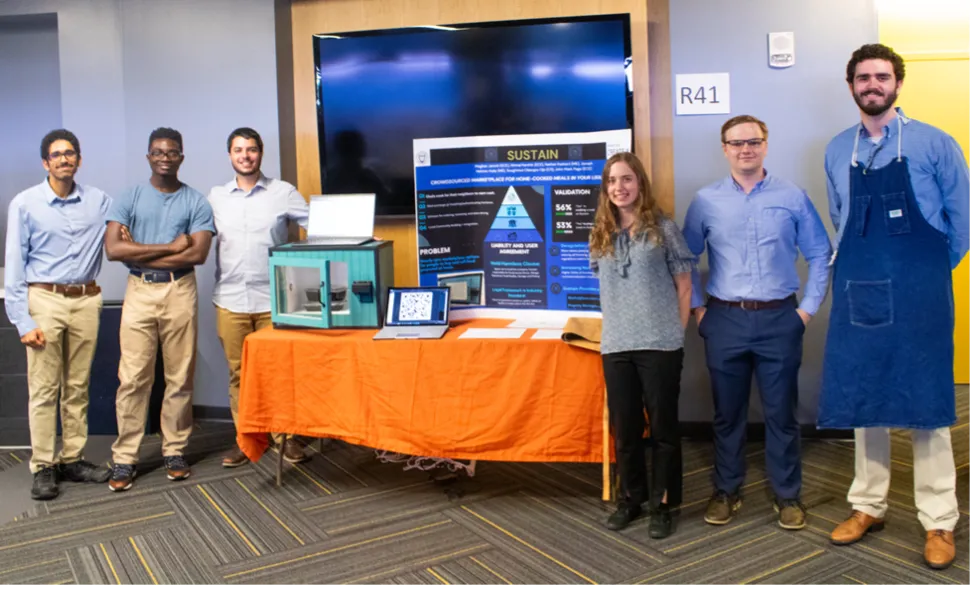
Team Sustain poses with their lock box for home cooked meals at the 2024 Spring Capstone Expo.
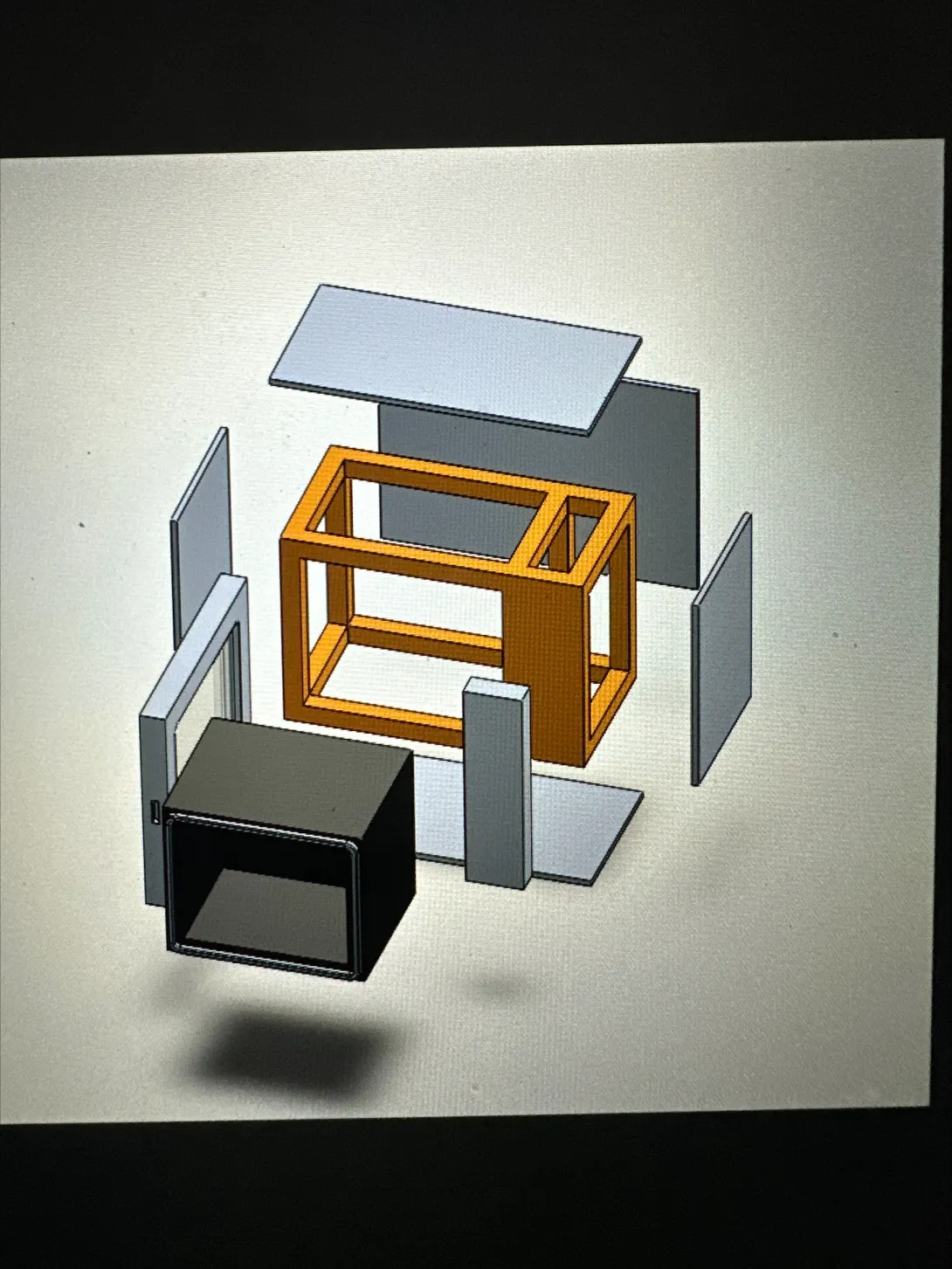
Model image of Team Sustain lock box for home cooked meals
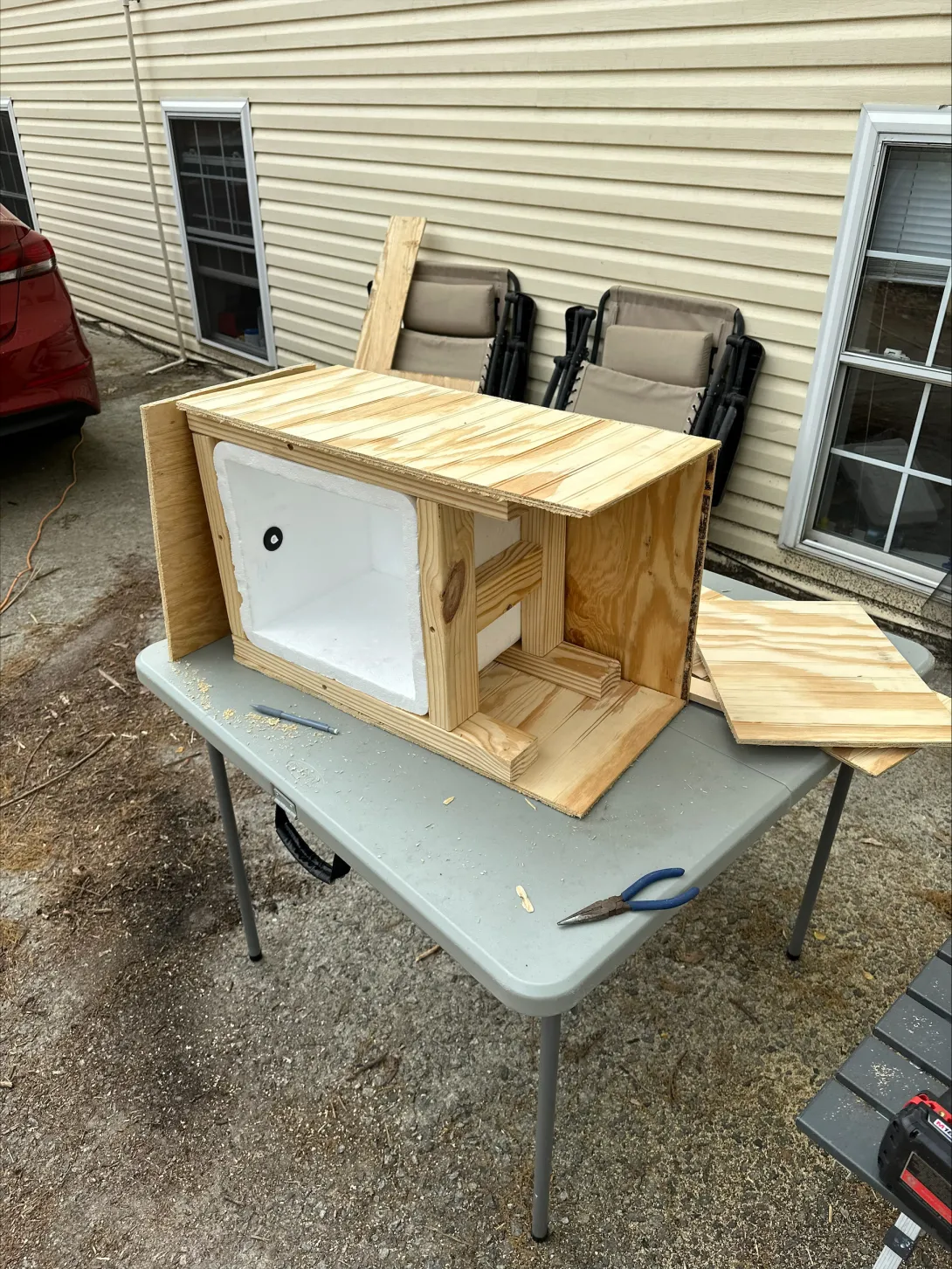
Wooden components make up the initial draft of the lock box for home cooked meals, made by Team Sustain
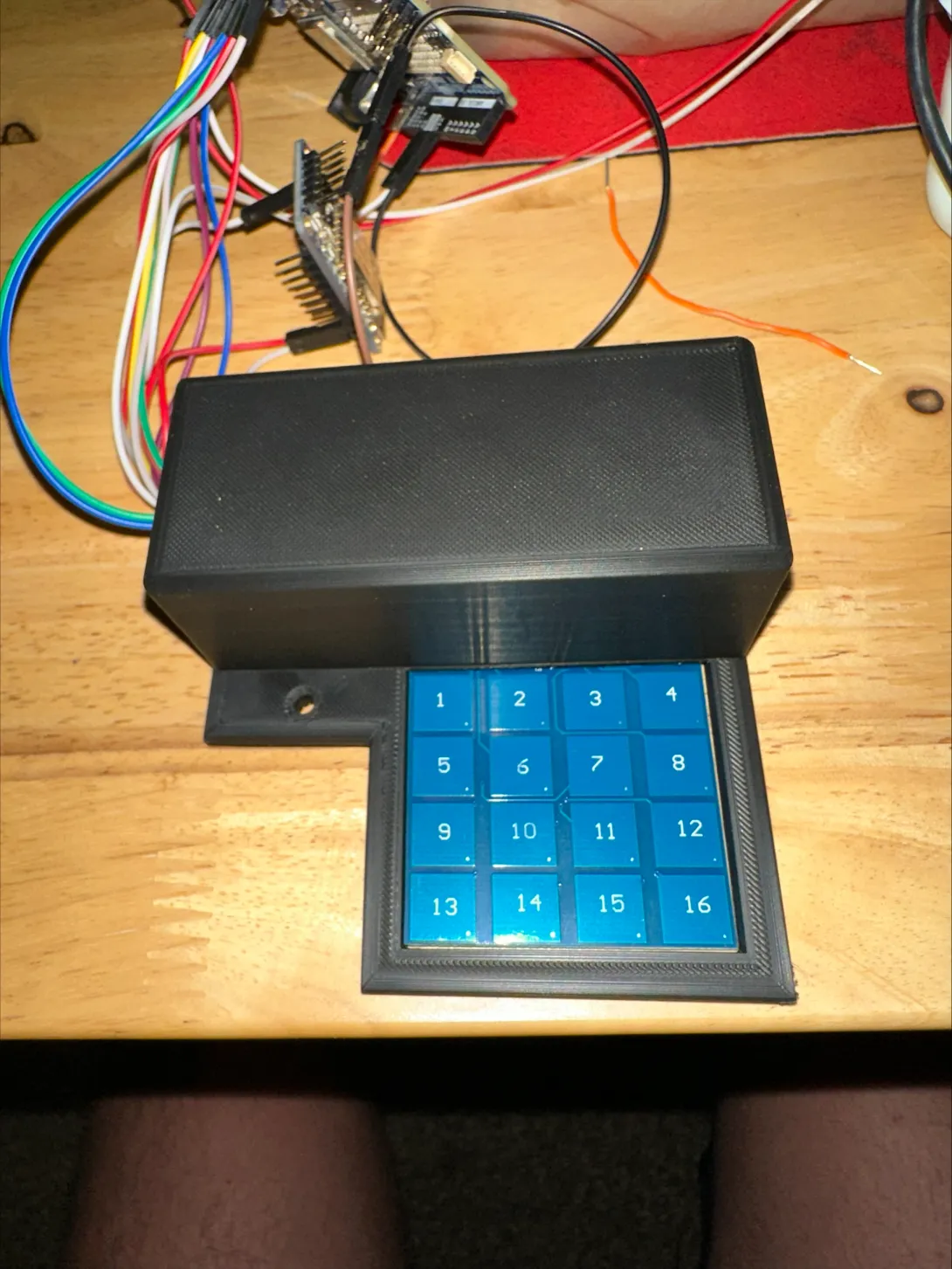
Team Sustain printer with components their lock box for home cooked meals
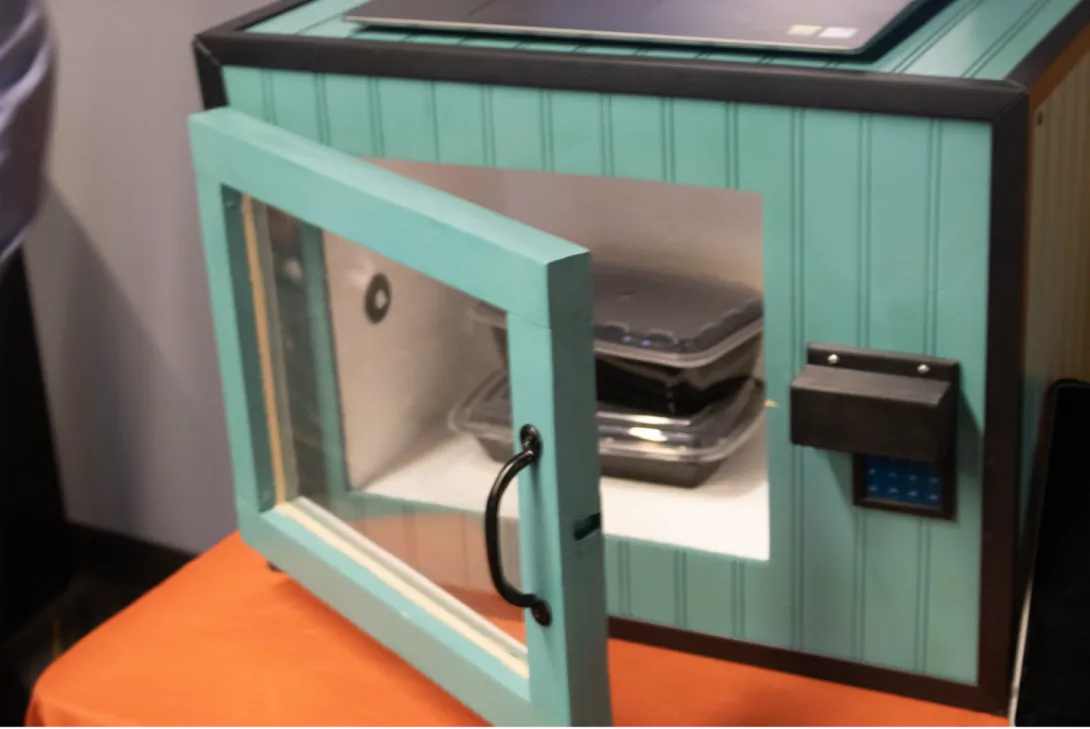
A lock box for home cooked meals is presented at the 2024 Spring Capstone Expo.
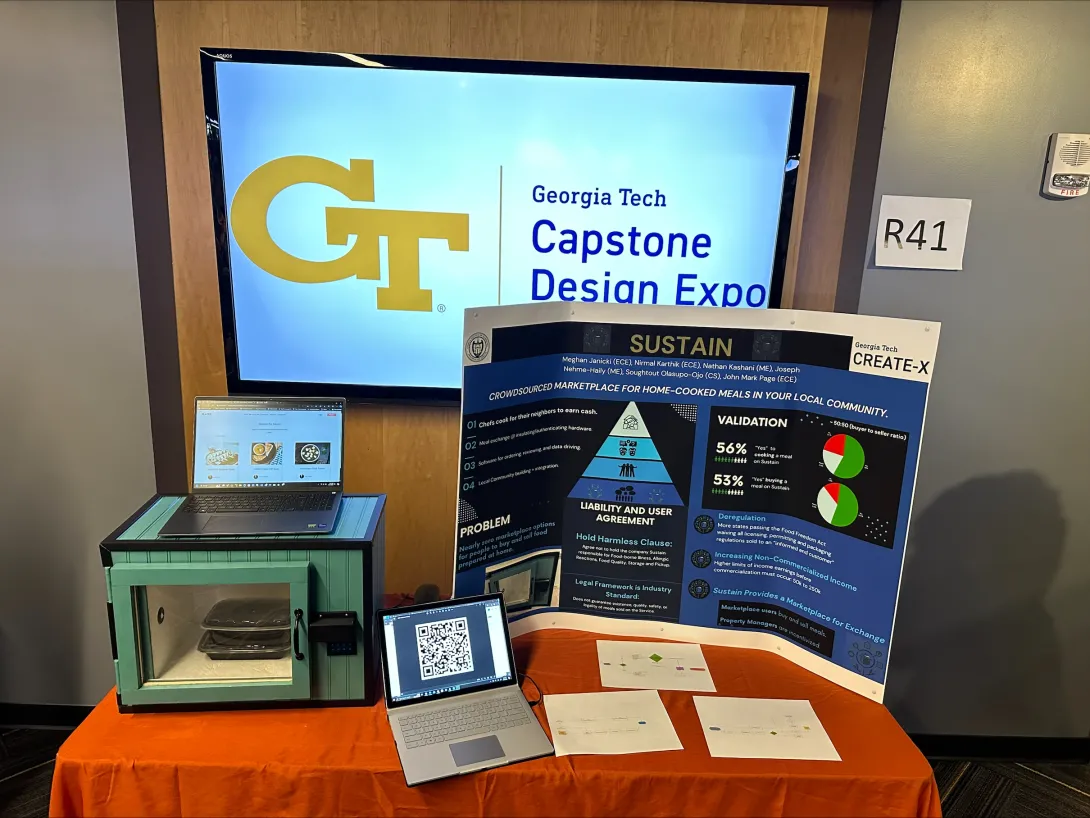
Team Sustain lock box for home cooked meals sits with a tri-fold explainer and a laptop with a QR code at the Spring 2024 Capstone Expo
CREATE-X Capstone Design offers students a unique opportunity to blend their technical skills with entrepreneurial ambitions. In this interdisciplinary program, teams of students identify real-world problems and develop innovative solutions through customer discovery and hands-on experience. Below we spotlight Team Sustain, a group of students who participated in the Spring 2024 Capstone Expo. Their project focused on bringing convenience to home-cooked meals, showcasing the practical application of their engineering and entrepreneurial skills. Read on to learn about their journey, their challenges, and how you can get involved in CREATE-X Capstone Design.
Team Sustain
Sustain offers a way to crowdsource meals and provide home cooks with a cash incentive. The system includes software for ordering, reviewing, and collecting data and hardware for meal exchange.
Nirmal Karthik, electrical and computer engineering
Soughtout Olasupo-Ojo, computer science
Nathan Kashani, mechanical engineering
Meghan Janicki, electrical and computer engineering
Joseph Nehme-Haily, mechanical engineering
John Mark Page, electrical engineering
Why did you all choose this project?
“One of the main things CREATE-X Capstone encourages us to do is customer discovery. Through our discussions, we realized that many people enjoy home-cooked meals but find them inconvenient to prepare. While most things in life are just a click away, home-cooked meals still require a personal touch. CREATE-X challenged us to find a problem and create a solution, so we focused on making home-cooked meals more convenient,” Page said.
Why CREATE-X Capstone?
“After graduation, I wanted to try my hand at entrepreneurship later. I thought CREATE-X was a good way for me to try and learn entrepreneurship skills: how to run a business, what it looks like, the timeline, and so on. Either way, if it went well or badly, I could say with my heart that I have an idea of how to do entrepreneurship,” Olasupo-Ojo said.
“You can go into a big city like Atlanta and actually feel like you can do something to help people. It is a great benefit, as opposed to being in the technical weeds of an engineering project. Mixing them together has been a great experience,” Janicki said.
“CREATE-X empowers students to think independently and explore projects they’re passionate about. We get to drive our projects and businesses, learning skills firsthand rather than just in theory,” Kashani said.
What was your biggest struggle?
“As engineers, we’re classically, especially in school, already given the problem. So, the challenge was figuring out what the problem was, and if our solution really solves the root cause of the problem. We figured out how to find the problem,” Page said.
“Figuring out the idea was our biggest struggle. We delved into markets to find opportunities and ways to help people,” Kashani said.
What has been your favorite part of this experience?
“The team. Make sure you surround yourself with good people, and I think each of us has done that. That’s what I’m proudest about — our team,” Page said.
What advice would you give to someone considering entrepreneurship?
“Develop the skill sets to see problems and be able to think about them. At the beginning of the semester, we were thinking about solar design and building solar design for farms, and now we are in a completely different space. But we’re still applying the same skills and building something up from it that matters. The most important skill is adaptability,” Janicki said.
“Be ready to make mistakes. You won’t get it right the first, second, or even third time. Customer discovery is a continuous process — don’t let setbacks discourage you,” Olasupo-Ojo said.
“Don’t be afraid to get started. If you’re feeling nervous or unsure, there’s only one way to find out, so I’d say go full force into it,” Kashani said.
CREATE-X Capstone Design is open to senior undergraduate students in mechanical engineering, electrical and computer engineering, industrial and systems engineering, and computer science. Course registration is available for the fall and spring semesters, and the current sections are ME4723-X/X01, CS4723-X/X01, ECE4853 X/LX, BME4723-X/X01, and ISYE4106.
CREATE-X also offers other programs like Startup Lab and Idea to Prototype, providing students with a foundational entrepreneurial education. For those interested in launching their own ventures, CREATE-X’s 12-week summer accelerator, Startup Launch, offers mentorship, $5,000 in seed funding, and $150,000 of in-kind services. The priority deadline for the accelerator is Nov. 17. Apply for Startup Launch to maximize your chances of acceptance and receive early feedback.
Making Sustain: The Gallery
News Contact
Breanna Durham
Marketing Strategist
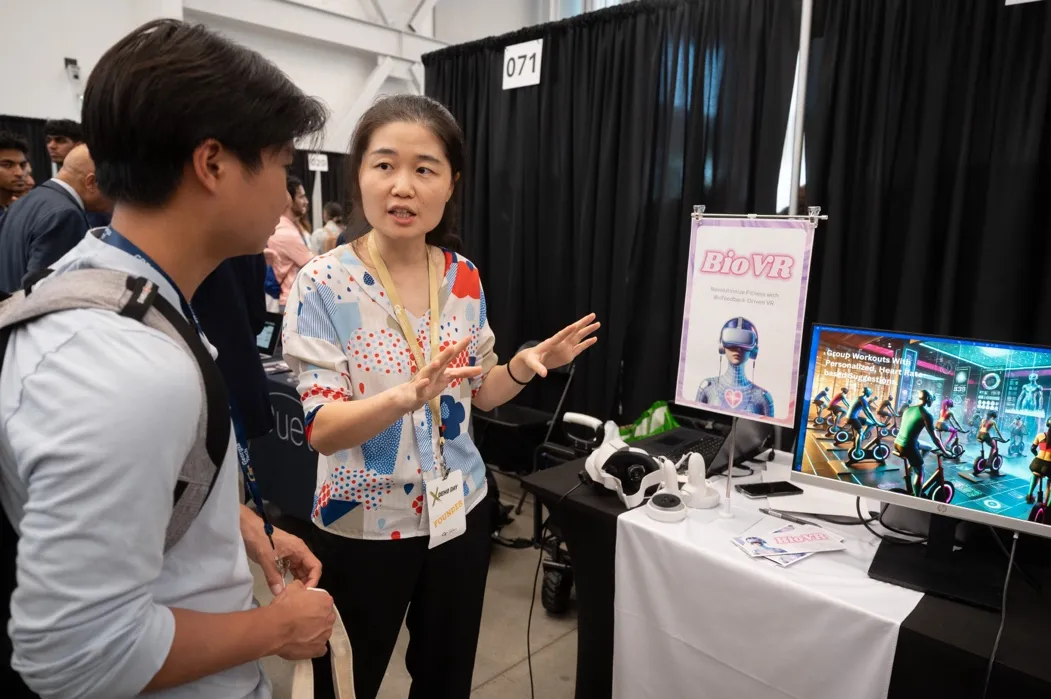
Digital media Ph.D. candidate Yuchen Zhao’s startup aims to revolutionize fitness with VR and biofeedback integration in her startup, BioVR.
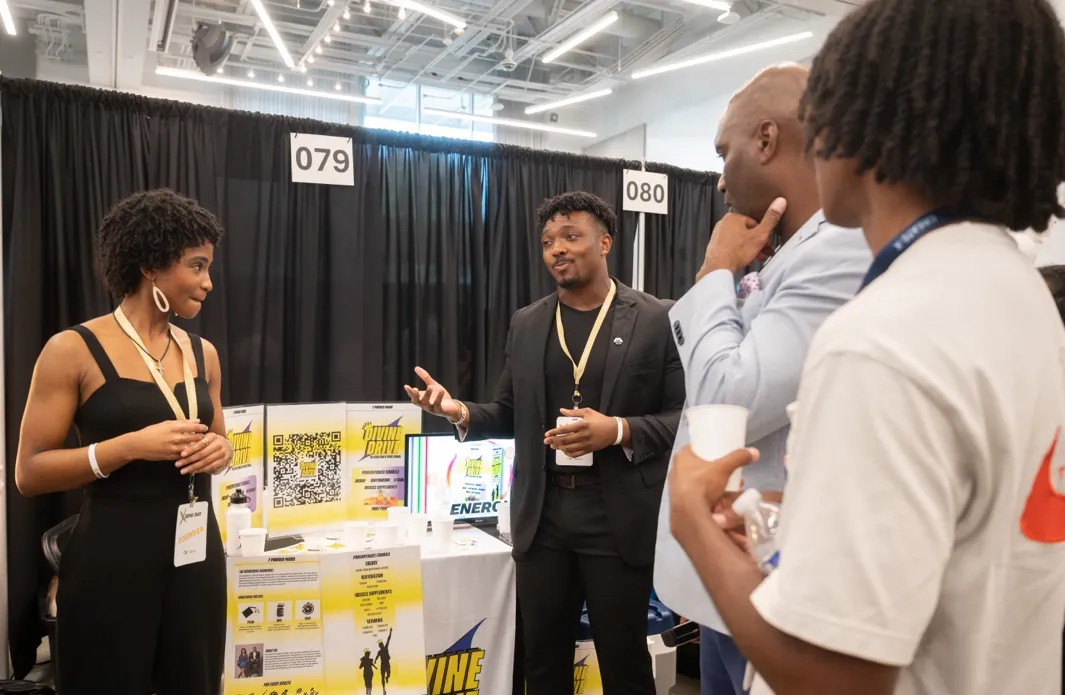
Business administration major Ty Christian Thompson and biomedical engineering major Sydney Brown developed their startup, DivineDrive, to maximize hydration and energy while minimizing the risk of injury due to dehydration.
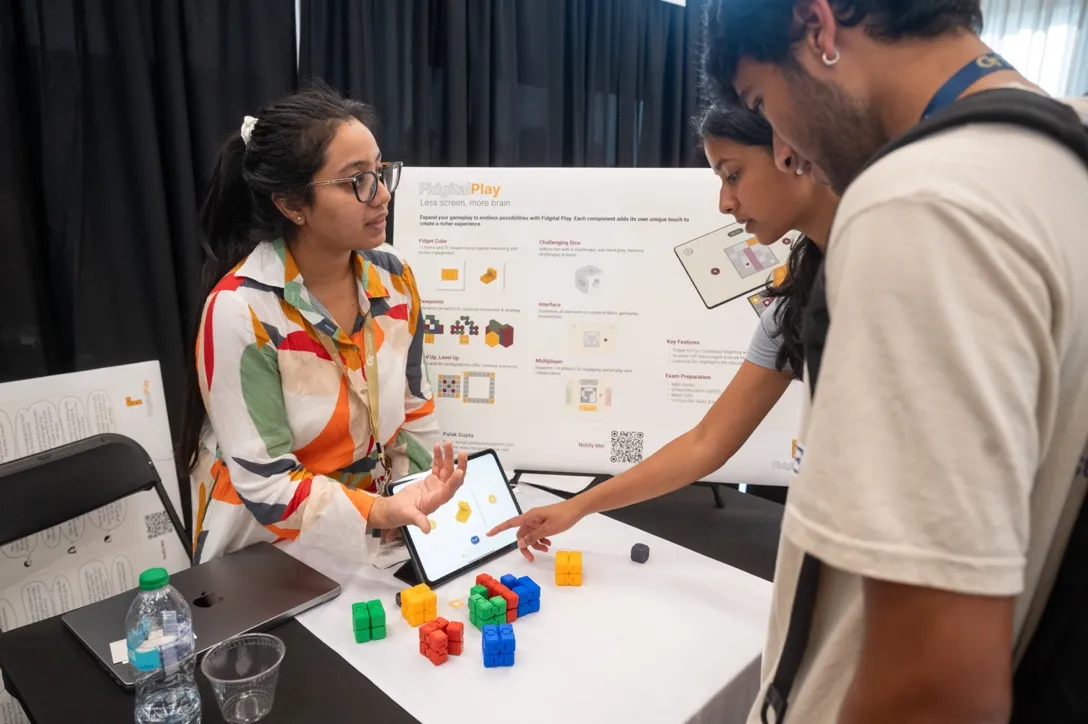
To tackle the issue of too much screen time for kids, Georgia Tech School of Industrial Design research assistant Palak Gupta created Fidgital-Play, a mobile app that reimagines play.
Georgia Tech structural mechanics and materials alumna Katy Bradford and co-founder Jonathan Valz created their Cassette panels to reduce labor needs and construction timelines.
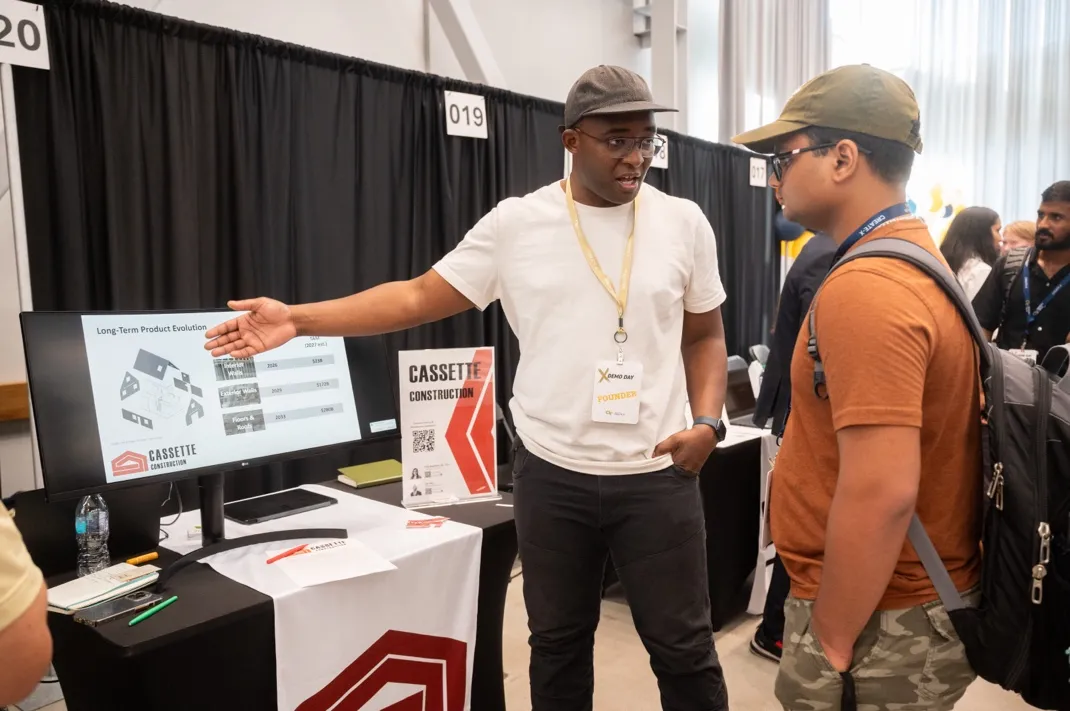
Katy Bradford

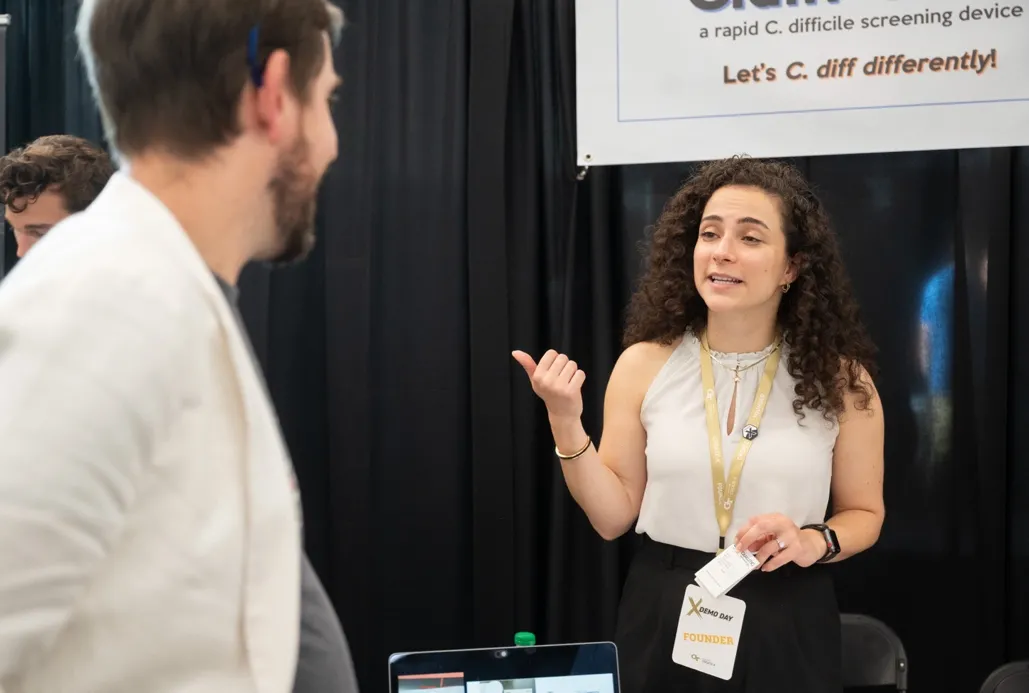
Tackling the problem of expensive testing for hospital-acquired infections, Danae Rammos, biomedical engineering major, founded Qualitic Biotechnology LLC, which produces a rapid C. difficile bacterial screening device.
Kicking off a new decade of startup production at Georgia Tech, CREATE-X hosted its 11th Demo Day, showcasing 100 startups created by Georgia Tech students, faculty, researchers, and alumni over 12 weeks this summer. More than 1,500 attendees, including Georgia government and business leaders, viewed new solutions ranging from fashion to healthcare in a bustling Exhibition Hall on Aug. 29.
The event traditionally begins shortly after the semester starts, giving the entrepreneurially curious a preview of what’s to come if they join the program’s accelerator during the next application cycle.
Demo Day is the culmination of the 12-week summer accelerator, Startup Launch, where founders receive mentorship, $5,000 in optional funding, and $150,000 in services to help build their businesses. Teams can be interdisciplinary, made up of co-founders even outside of Georgia Tech, and solopreneurs, ready to solve real-world problems.
Each year, Startup Launch has grown, from an initial cohort of eight startups to over 100 this year. The Office of Commercialization, the home of CREATE-X, plans to keep expanding opportunities for the Georgia Tech community to grow their entrepreneurial skills.
Counting courses, events, programming, and partnerships, CREATE-X has had more than 32,000 participants. The ultimate goal and mission of the program is to instill entrepreneurial confidence in all Tech students. Rahul Saxena, director of the program, spoke about how far the Institute has come in the last decade.
“I’ve been plugged into Georgia Tech for over 10 years. In the past, when you said Georgia Tech and entrepreneurship in the same sentence, they’d laugh, believe it or not,” he said. “Fast-forward, we’re one of the top entrepreneurial schools in the country. Our first four cohorts value over $100 million, with one of them being a unicorn, and our last four cohorts are well on their way. We want our students to have as many shots at gold as possible before they graduate. And even if they decide on a traditional career pathway, we believe they’ll be ahead with this entrepreneurial mindset, which is something lacking in corporate.”
This year, CREATE-X reached over 560 startup teams launched. Founders represented 38 academic majors, and their total startup portfolio valuation exceeds $2 billion.
CREATE-X opened its Startup Launch application for its next cohort on Aug. 30. For those interested, the priority deadline is Nov. 17. Early applicants have a higher chance at acceptance and the opportunity for more feedback. So, send in your applications to Startup Launch and become the next founder at Georgia Tech.
Missed out on Demo Day? Check out the CREATE-X Flickr page to see photos from the event and the Demo Day page to see other teams. For more opportunities to engage, visit the CREATE-X Engage page for upcoming events.
Spotlight on Startups
Some of the standout startups from this year’s Demo Day include:
News Contact
Breanna Durham
Marketing Strategist
On Aug. 29, CREATE-X will celebrate its 10th anniversary at Demo Day, showcasing over 100 startups and more than 250 founders.
On Aug. 29 in the Exhibition Hall from 5 to 7p.m, CREATE-X will celebrate its 10th year of supporting entrepreneurship at Georgia Tech by introducing its next cohort of startup founders at Demo Day. This free event, attracting more than 1,500 people annually, allows the public to explore products from over 100 newly minted startups, ranging from consumer apps to deep tech. It also provides a chance to engage with more than 250 founders thanks to its no-pitch format.
Since its inception in 2014, CREATE-X has worked to infuse a spirit of entrepreneurship at Georgia Tech. From supporting eight teams in its inaugural cohort, the program has grown to support the launch of over 100 startups this summer, bringing the total to 560 startup teams boasting a total portfolio valuation of over $2 billion. In the last year, the program has expanded internationally and looks to continue building opportunities for its students.
“Our mission is to instill entrepreneurial confidence. We believe that entrepreneurship is a life skill,” says Rahul Saxena, CREATE-X director. “Georgia Tech students are capable of creating startups. We’re just giving them the tools and resources to do it. We want every Tech student to have this advantage when starting their business.”
At the kickoff for Startup Launch, the program’s summer startup accelerator, CREATE-X co-founder Chris Klaus spoke on the landscape of startups. “The secret sauce for unicorns is colleges. The number of unicorns is increasing, and I expect that trend to continue. This is the perfect place to build a startup,” he said.
Startup Launch has concluded for the summer, and the founders are preparing to showcase their solutions at Demo Day.
Register Now
“We invite you to become part of shaping what comes next. Support these founders as they creatively solve real-world issues. See future industry leaders be born. Join us for the culmination of these founders’ hard work, passion, and ingenuity at Demo Day,” Rahul said.
Demo Day 2024 registration is open. Tickets are free but limited. Don’t miss this chance to witness the future of innovation and entrepreneurship. For more information, visit the CREATE-X website.
News Contact
Breanna Durham
Marketing Strategist
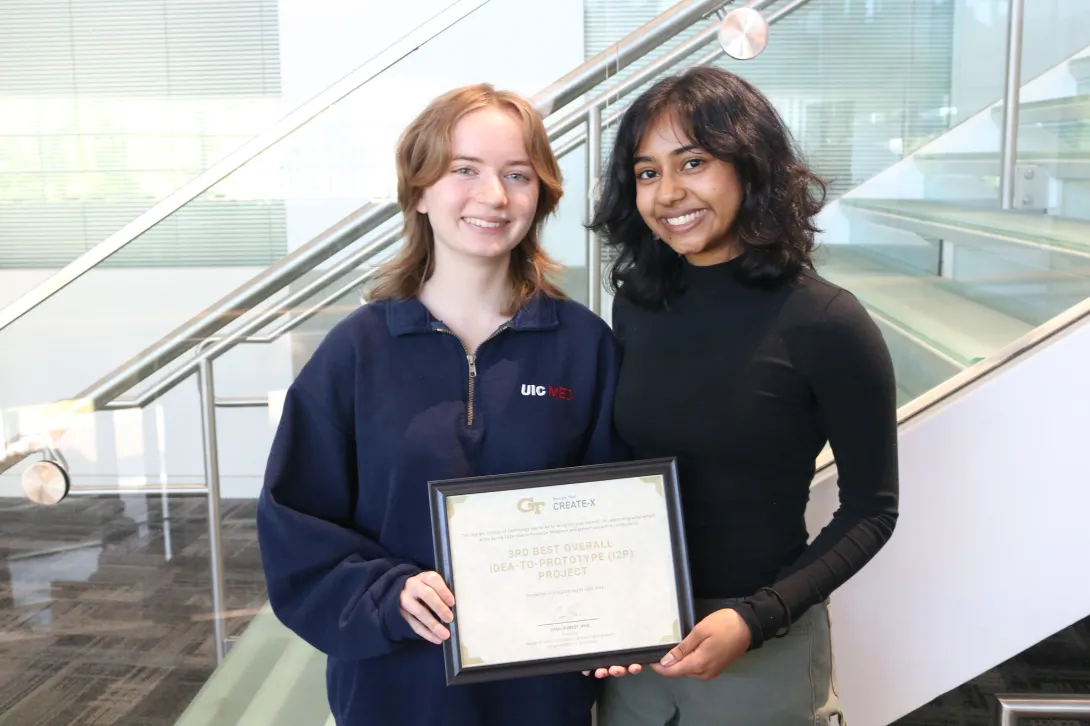
Electrosuit, a startup by Aubrey Hall and Sherya Chakraborty, secured third place in the Spring 2024 I2P Showcase, and their product, a garment for at-home electrical stimulation, targets individuals with chronic pain or motor impairments.
CREATE-X is built to help students integrate entrepreneurship into their academic journey through courses, workshops, and a startup accelerator. This spring, a new set of students displayed their solutions to real-world problems at the I2P Showcase. It’s our privilege to shine a light on and celebrate those journeys. Today’s spotlight focuses on the spring I2P Showcase third-place winners.
Electrosuit
Aubrey Hall, a first-year biomedical student, and Sherya Chakraborty, a first-year computer science major, founded a startup to produce a garment that eases the use of at-home, prescribed electrical stimulation for people with chronic pain, stroke, and motor impairments.
What made you interested in building this solution?
“I did research at Northwestern for a couple of years before this, and some of the patients I worked with had severe stroke and spasticity in their arms,” Chakraborty said. “I found out that when they tried using at-home prescribed electrical stimulation, they had trouble setting it off themselves. So, we created a garment to ease pressure on that.”
What part of the course was most helpful to you?
“One of our mentors, Sun Mi Park, was the first person to patent printable wires on fabric, and that gave us some inspiration to make our garment even more compact, easier to use, and integrate some interesting ideas that we wouldn’t have been able to without our mentors. So, our mentors are honestly the best part of the program,” Chakraborty said.
“For me, you don’t get a lot of chances to apply these engineering courses outside of the classroom,” said Hall. “This course is a really interesting way to get firsthand experience building a prototype and really understand the engineering process.”
What’s so special about CREATE-X?
“I think these student projects are the future, and a lot of these projects make it out of college and become actual companies. Giving students that possibility to make a change just from a simple idea and fueling that with funding so we don’t have to take risks out of our own pockets is a, really big deal,” Chakraborty said.
“It’s helpful to have that safety net, knowing that you have your mentors to back you, and also the people of the program to back you. It brings a lot of security and opportunity to try different things out and not have to be so fearful of failure. Even if you fail a million times, you can get back up and try again,” Hall said.
What’s the best insight you’ve gained from doing this?
“I think one big misconception is that entrepreneurship has a lot to do with finance and business and just lucrative ideas, but it’s pretty important to understand that you can solve a seemingly everyday problem,” said Chakraborty. “If it affects you or your friends, it’s still worth trying to find a way to solve it, especially backed up with money and mentors from CREATE-X. What’s the harm in trying something out?”
“Don’t try to make it feel like it’s an all-or-nothing project,” Hall said. “You’re allowed to live your life as a college student but also pursue these interesting ideas and figure out if you enjoy entrepreneurship. It shouldn’t be this daunting task where if you don’t put everything in, you’re going to fail.”
“It’s also important to keep an open mind. We might come in with an idea and a very specific way of executing that idea, but we found out through talking with mentors, and with other students and people who gave us advice, that sometimes the idea you come in with is not going to be the same thing you end up with,” Chakraborty said.
Next Steps
“We’ve only done four or five prototypes so far,” she noted. “We want to do at least 12 of those prototypes and keep working with our mentors, keep making connections at Emory, and just constantly getting more and more feedback about our prototypes until we get to a state where we’re satisfied, and we can demo our product and work with physical therapists across Atlanta.”
If you’re a student interested in building your own product for college credit, apply for I2P. And join us for Demo Day, Aug. 29, at 5 p.m., in the Georgia Tech Exhibition Hall to see new CREATE-X founders launch products in a variety of industries. Tickets are free but limited. Register today to secure your spot.
News Contact
Breanna Durham
Marketing Strategist
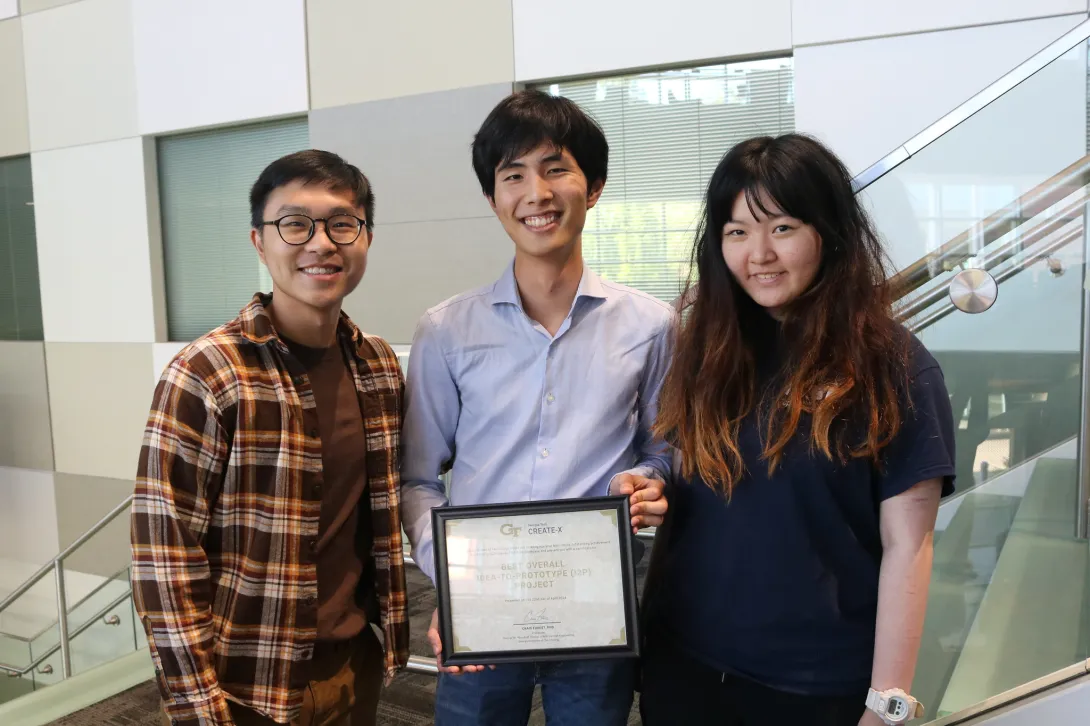
Founded by first-year computer science majors Marianna Cao, James Gao, and Jaeheon Shim, founders of Dolfin Solutions, win at I2P Spring 2024 Showcase
During the school year and the summer, Georgia Tech students can incorporate entrepreneurship into their college experience through courses, workshops, special events, and even a startup accelerator. CREATE-X invites you to delve into the journeys of our top achievers, this time focusing on the Spring 2024 I2P Showcase first-place winners:
Dolfin Solutions
Marianna Cao, James Gao, and Jaeheon Shim, first-year computer science majors, are the founders of Dolfin Solutions, a personal financial management platform that promises a unified solution to budgeting, transaction management, and expense tracking, among other personal finance tasks.
What challenges did you have in I2P, and how did you work through them?
“We were really lucky to get an excellent mentor, Aaron Hillegass. He has a lot of experience in the industry as a startup founder himself, and he gave us a lot of help, both technical as well as business, throughout the process. That helped us make better decisions,” Gao said.
“I think the biggest challenge was, I had done projects in the past by myself, writing the full stack, but working together, communicating the requirements, and integrating everyone's different code at the end was a little bit of a logistical struggle,” Shim said. “But we managed to figure it out.”
What advice do you have for students interested in I2P or entrepreneurship in general?
“Go for it. It's a three-credit course, so it counts toward your junior capstone as well. You get $500. Now is the perfect time to start because you don't have much to lose. If you're doing I2P and your company fails, you still have four years of college; you can still pursue a traditional path. It's a little risk but a lot to gain,” Shim said.
“Even if you pivot or change your idea, it's important to believe in what you started,” said Cao. “If you don't believe in your app, then nobody else does. Right now, you have all of the friends, mentors, professors, and the right resources, and money is not an issue. It's a good opportunity for you to work on it on the side, and maybe it could turn into something.”
What’s Next?
“We’re going to build for the iOS and Android platforms, and then we're going to deploy hopefully by the end of summer,” Shim said.
If you’re a student interested in building your own product for college credit, apply for I2P. And join us for Demo Day, Aug. 29, at 5 p.m., in the Georgia Tech Exhibition Hall to see new CREATE-X founders launch products in a variety of industries. Tickets are free but limited. Register today to secure your spot.
News Contact
Breanna Durham
Marketing Strategist
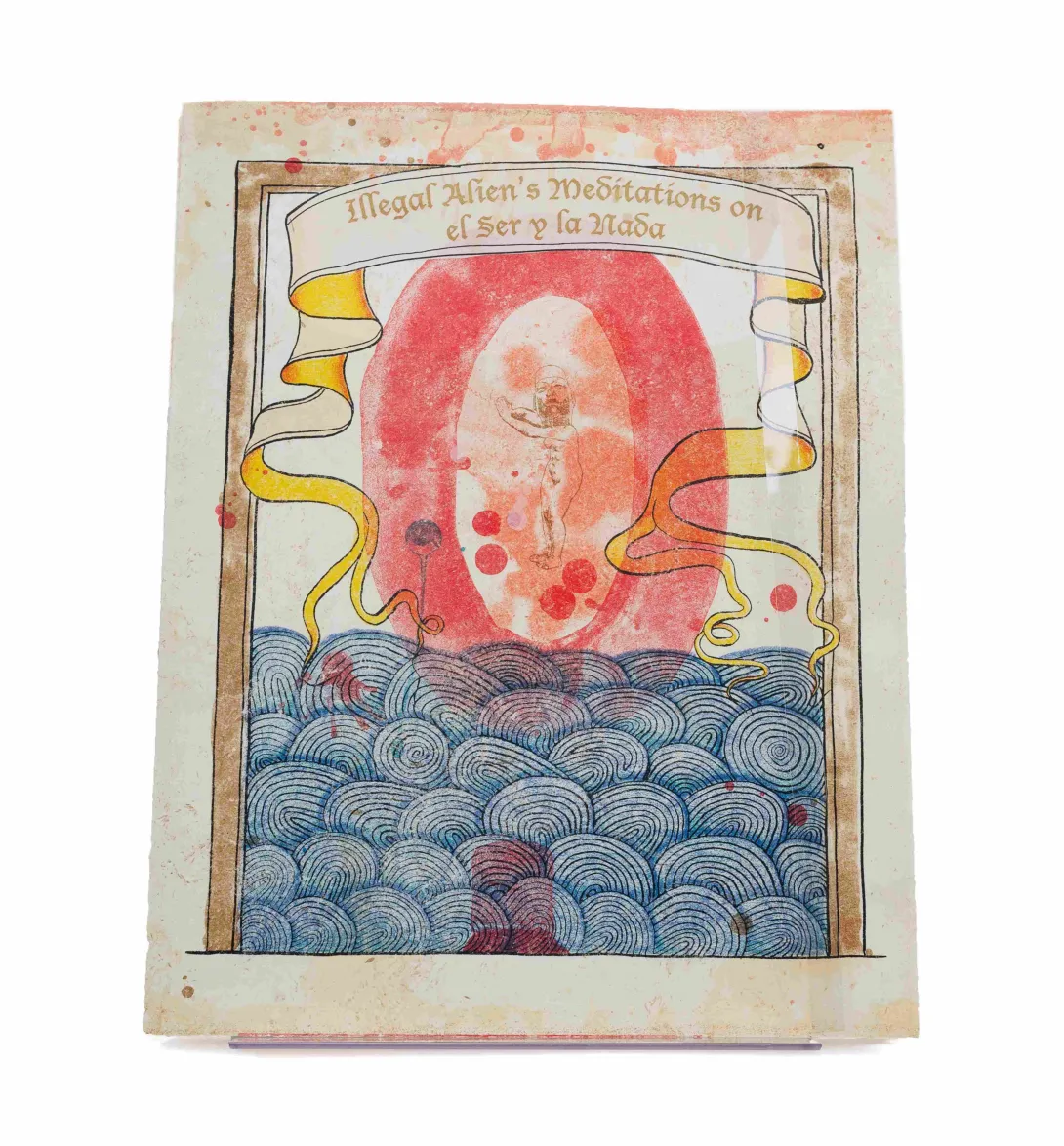
by Isabella Tallman-Jones
This thoughtfully curated exhibition was brought to life by curators Jill Powers and Lisa Miles of the North American Hand Papermakers for the organization’s Guest Curated Exhibition Triennial. With collaboration between the guest curators and the Robert C. Williams Museum of Papermaking, the resulting deep dive has produced an insightful perspective on an often-forgotten ancient practice. Bark paper has existed within a centuries-long genealogy of craft in places like Uganda, Indonesia, Mexico, Hawaii, and a variety of Polynesian and Pacific-Islander cultures. Somewhat attributed to the Global South, it is no wonder why this alternative production of natural matrix does not exist within the Western hegemonic history of writing and visual culture at large.
The exhibit’s contemporary innovations utilize the signifiers of civilizations’ papermaking pasts. Through timeless pattern-making practices and the further development of a shared semiotic language, both representational and abstract; the artists transcend temporal obstacles through artistic creation. Repetition and the meditative beating of pulp and cellulose are central to the ancestral language of symbols and techniques of meaning-making.
Some of the topics broached by these contemporary interpretations include immigration, tradition, community, and issues of belonging in a post-colonial present. These themes bubble to the surface of Enrique Chagoy’s Illegal Alien’s Meditations on el Ser y la Nada. The accordion-style artist's book unfolds into a colorful comic-like narrative throughout its ten lithographic prints on handmade Amate (Nahuatl for “bark paper”). The illustrations are stylized, suggesting its inspiration from pre-colonial Nahuatl codices. This reference informs the viewer’s reading, meant to be traditionally read from right to left. The dots and slashes at the corner of each page share the number/date system used by civilizations under the Aztec empire. The title page pictures the protagonist as an Aztec sculpture head attached to a classicized female body. The head reoccurs in the corner of another page with the subtitled “Hernán Cortés” after the man behind the atrocities of the Spanish Conquest of New Spain. Other similar sculptural elements are littered throughout the book, often written over and struck through by other symbols in a red wash. Additional scenes are composited from comic and mass cultural depictions of white people interacting, often derogatorily, with a cast of unnamed indigenous and stereotyped characters. These interactions are especially evident on a page with a series of 12 comic vignettes. Some of these vignettes have been altered with superimposed images. The overall effect is reminiscent of the Spanish casta paintings, which promoted a newly invented racial hierarchy to scientifically and culturally justify the systematic extermination of the New World’s inhabitants. The original ephemera from which Chagoya takes inspiration is virtually nonexistent today, though its practices and techniques have miraculously survived generations and centuries after the Spanish Inquisition. Bark paper production and Nahuatl writing practices were effectively banned by the conquistadors– burned, denigrated, and rewritten histories. The title of the work refers to its contemporary take on the Mexican-American experience and how it might comically parallel a seemingly distant colonial past. Further, the title evokes Jean-Paul Sartre’s Being and Nothingness as an acknowledgment of the existentialist center of the
Mexican-American ontological experience. The meditative processes associated with the making of the artist's book itself are an active forging of a connection to the past and an upholding of that legacy, but also a history lesson that might allow the viewer to make space for a new reality long silenced.
Several works in the exhibition are spiritually oriented such as the Otomí “Spirit Figures” or the Hawaiian lananu ‘u mamao or “Oracle Tower” entitled Pa ‘aikalani (Grounded to the Heavens) by Dalani Tanahy. The wispy and ethereal materiality of bark paper lends itself well to the art and expression of fleeting and translucent light that of a specter. The resulting exhibit is a diverse spectrum of these innumerable qualities: delicate and hardened, narrative-driven or abstract, and encaustic, coptic, or chemically treated.
Ecologically, the mutuality of bark paper’s production is clear to see. UNESCO’s 2005 decree of bark cloth as a “Masterpiece of Oral and Intangible Cultural Heritage” is a testament to its reemergence in contemporary artistic practices. Artists across time are called to action, creating a renewed awareness of the need for emphatic preservation of marginalized cultural practices previously destroyed. Artists are reclaiming and preserving marginalized cultural traditions, using sustainable methods to transform terrestrial resources into mediums for memory and ritual. Bark paper isn’t just historical; it’s social, cultural, and political. It has endured colonization, intellectual suppression, and mass re-education efforts throughout history, making its preservation crucial for understanding our collective past.
Bark Rhythms: Contemporary Innovations & Ancestral Traditions serves as a profound testament to the enduring significance of bark paper within global cultural heritage. By bridging past and present, the artists not only showcase the beauty and versatility of this ancient practice but also provoke reflection on its ecological, social, and political implications. As we marvel at the intricate works on display, we are reminded of the resilience of marginalized traditions and the imperative of their preservation in shaping a more inclusive and enlightened future. Through the medium of bark paper, we glimpse not only history but also the potential for transformative dialogue and mutual understanding across cultures and generations.
News Contact
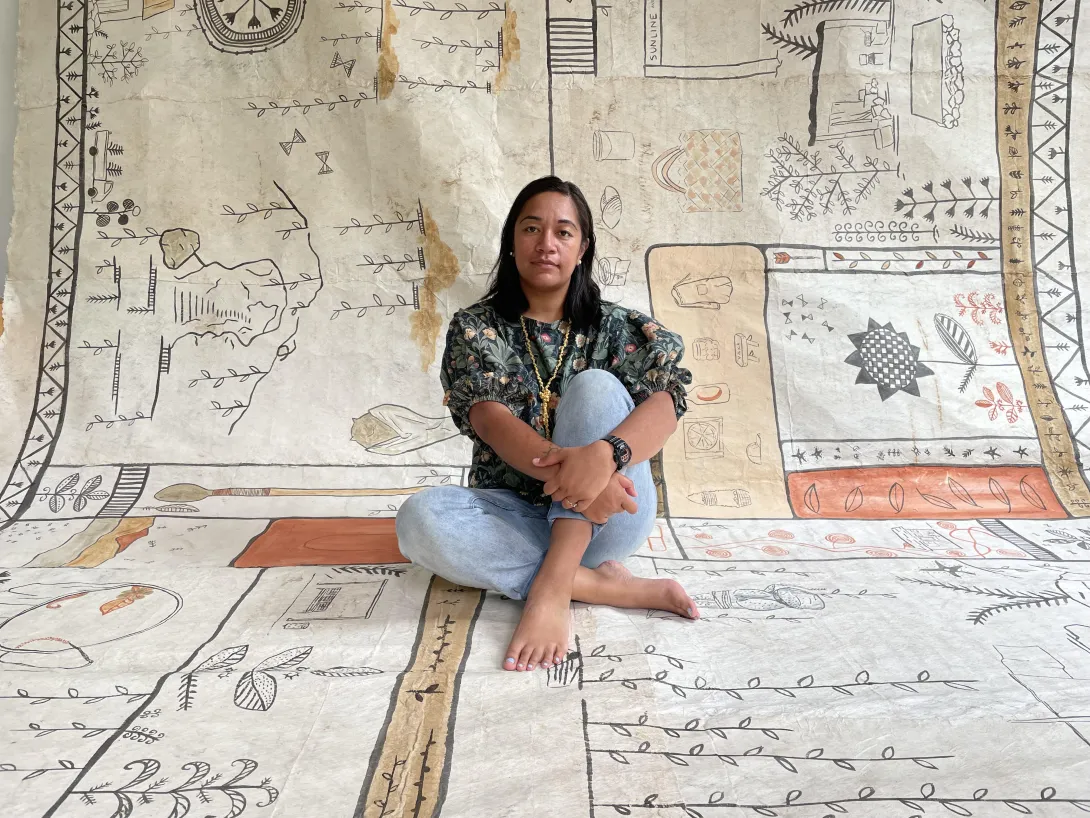
Artist Cora-Allan Lafaiki Twiss from New Zealand.
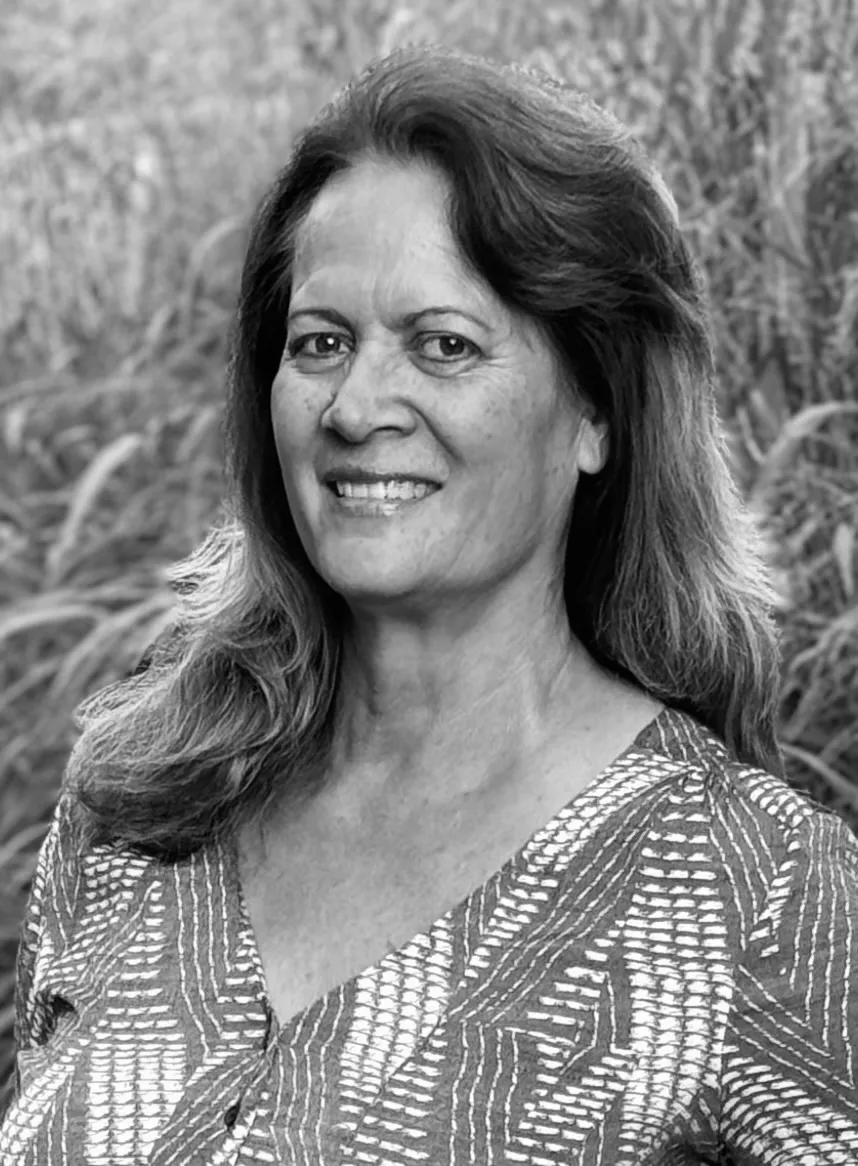
Artist Dalani Tanahy
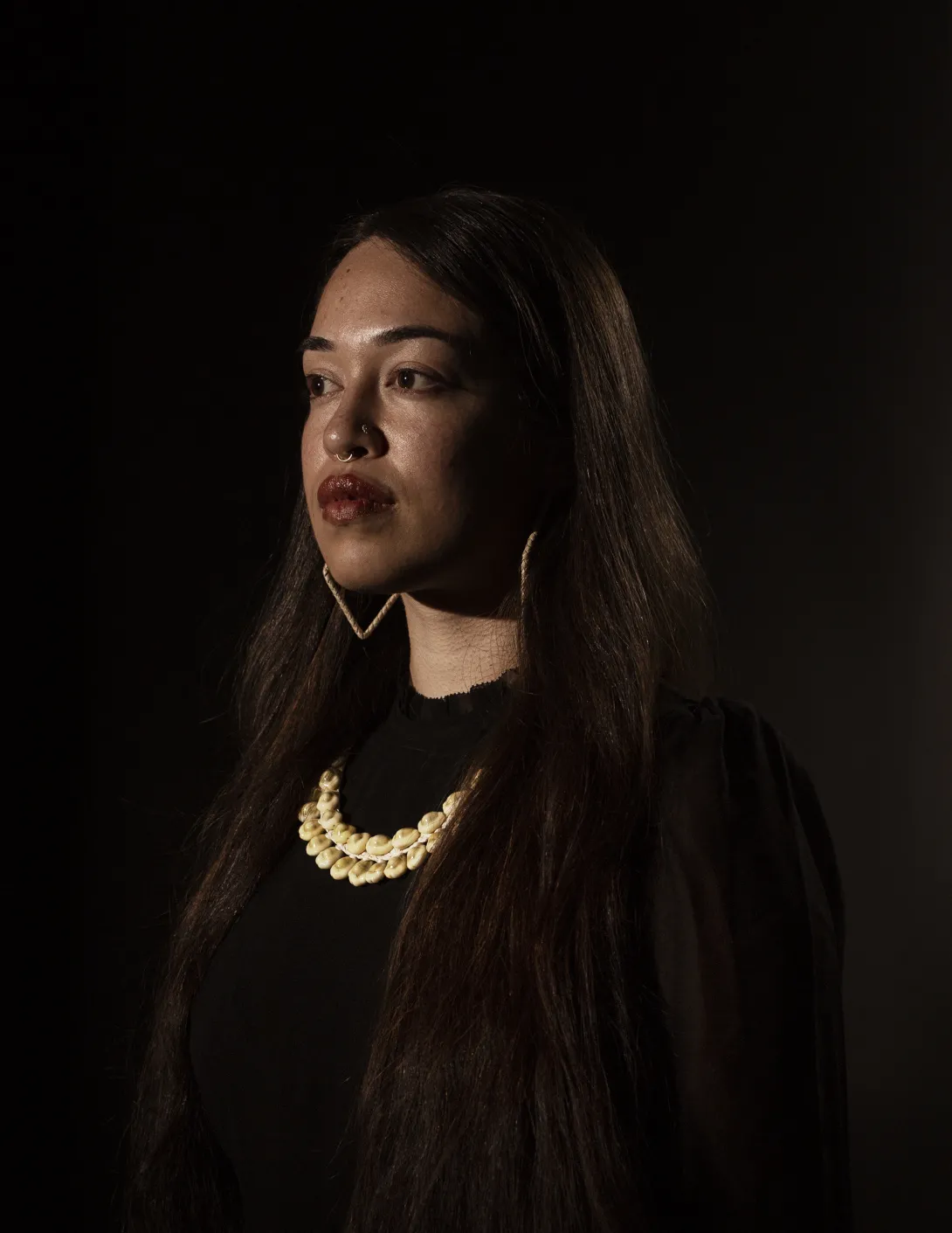
Lehuauakea - photo credit Leah Rose
Artist Cekouat Elim Leon Peralta shows one of his works.
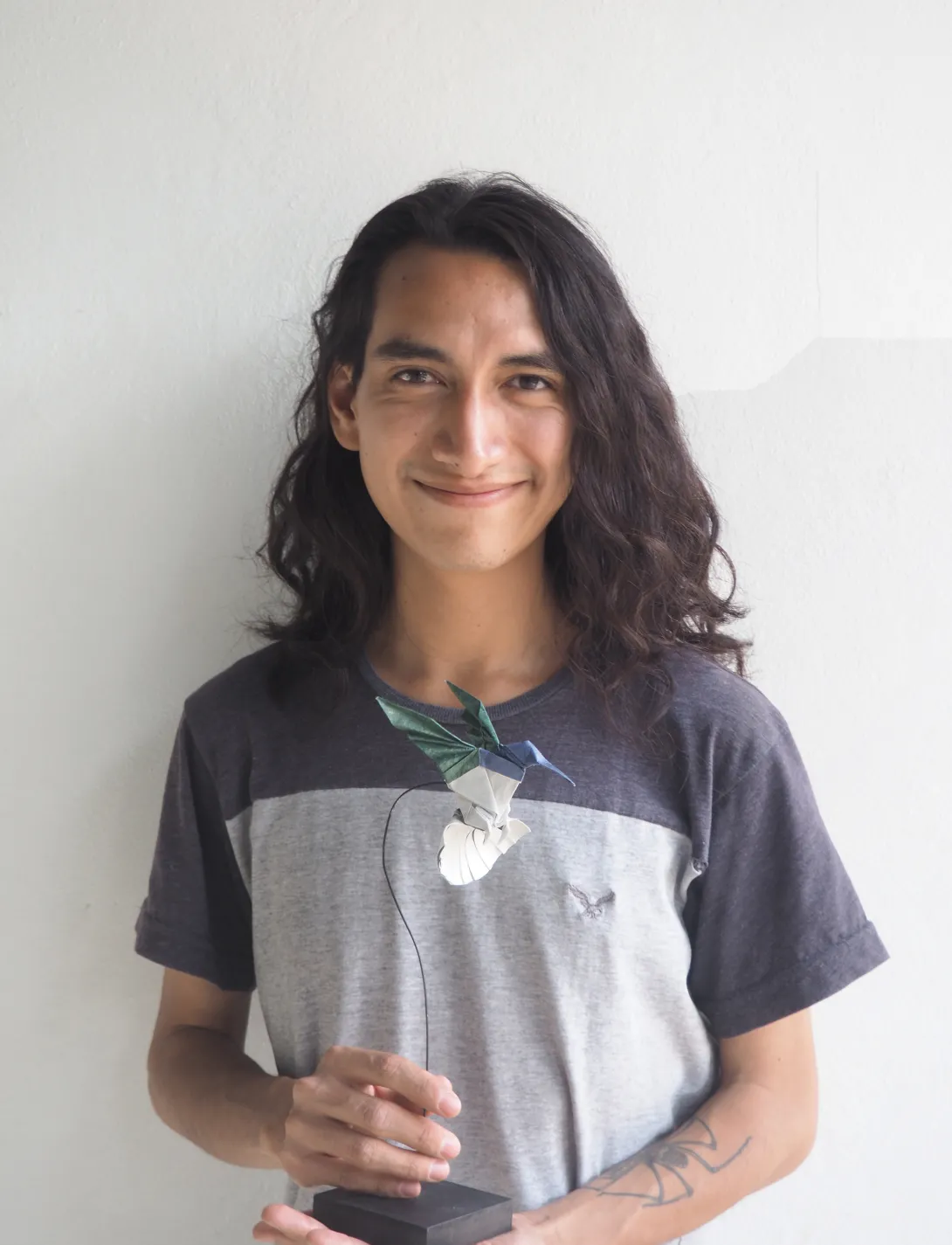
Artist Tedi Permadi

Image of Sheila Nakitende

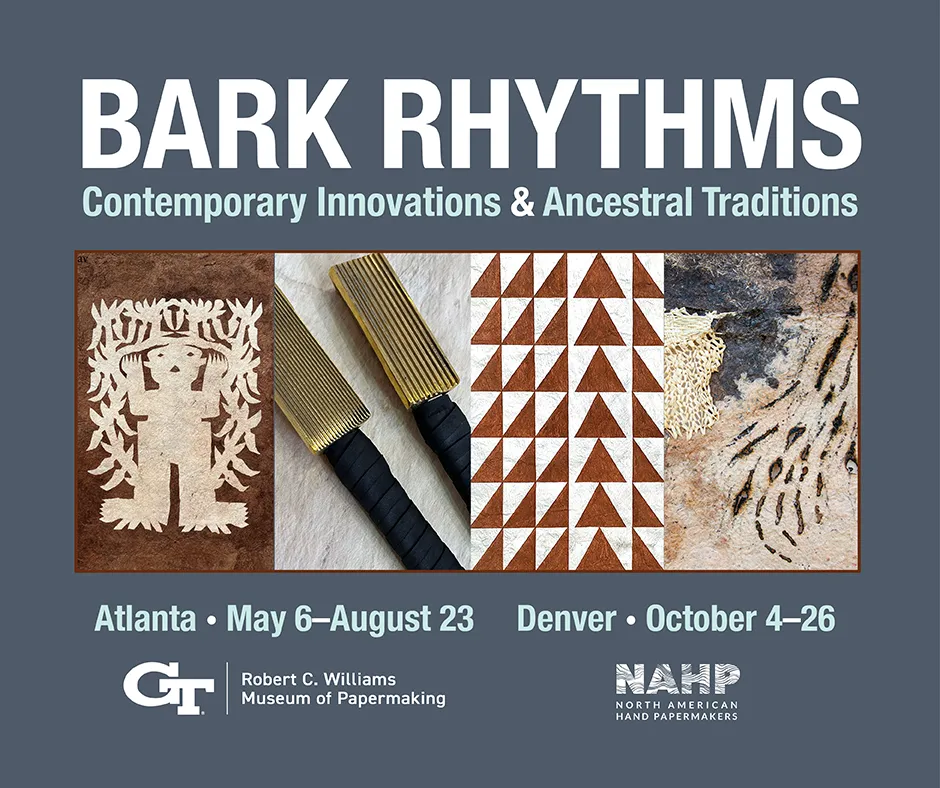
Bark Rhythms: Contemporary Innovations & Ancestral Traditions features historical examples of hand-beaten bark papers, barkcloth, and traditional beaters, paired with the work of contemporary artists from global communities who use bark fiber materials and techniques in innovative and unexpected ways.
The Paper Museum worked with Jill Powers and Lisa Miles to produce Bark Rhythms. The goal was to create an exhibit that showcased the ongoing practices of barkcloth and bark papers. Powers and Miles connected with artists around the world to develop an exhibit that is interesting and engaging, especially for people who have no experience with these materials. “One of the aspects emphasized by Bark Rhythms is that these practices are living— that the people who make bark paper and barkcloth are producing something that is important and relevant to the communities they are part of. That element really spoke to us as important to emphasize in an exhibit. Lisa and Jill wanted to ensure Bark Rhythms was as comprehensive as our space allowed,” says museum director Virginia Howell. The exhibit features contemporary artwork, but there are historic examples included throughout. In addition to artwork, the tools –beaters—used in production are prominently featured. This includes about a dozen wood beaters acquired by Dard Hunter in the first quarter of the 20th century.
In the world of handmade paper, the definition of paper has long venerated European and Asian traditions, which employ moulds to form sheets with macerated pulp. Bark paper and bark cloth are created by hand-beating the cooked or fermented inner bark of certain trees with a shaped stone, wood, or metal beating implement. Bark Rhythms seeks to elevate and honor Indigenous beaten bark fiber traditions that have been undervalued or excluded from exhibitions and scholarship within the field of papermaking and beyond. Highlighting the manifestation of ancient traditions into distinctive, contemporary art practices, this exhibition connects the dots between bark paper and barkcloth, and it shines a light on makers who maintain a deep respect for their materials, techniques, tools, and cultural origins. Although not comprehensive worldwide, Bark Rhythms focuses on bark paper and bark cloth traditions from Mexico, Hawaii, the Polynesian Islands, Indonesia, and Uganda, and marks the first time many of these artists have exhibited work in the United States.
Bark Rhythms opened at the Robert C. Williams Museum of Papermaking in Atlanta, Georgia, on May 6, 2024. A celebratory reception will be held on Thursday, July 11 from 4-7pm. Sponsored by North American Hand Papermakers and the Robert C. Williams Museum of Papermaking, Bark Rhythms is curated by papermakers Jill Powers and Lisa Miles as part of NAHP's second Guest Curated Exhibition Triennial.
Events
Wednesday, May 29 • Virtual talk: Sheila Nakitende & Tedi Permadi: Ugandan barkcloth, Indonesian Duluang bark paper
Tuesday, June 18 • Virtual talk: James Ojascastro & Cekouat Elim León Peralta : Bast fibers for bark paper & cloth, Papel amate from Mexico
Thursday, July 11 • Exhibit Reception 4-7pm
Wednesday, Aug 7 • Virtual talk: Lehuauakea, Dalani Tanahy, & Cora-Allan Lafaiki Twiss: Kapa bark cloth from Hawai‘i, Hiapo bark cloth from Niue
All events are free and open to the public. The virutal talks are held on Zoom. To register, visit the museum website (www.paper.gatech.edu) or email Anna.Doll@rbi.gatech.edu
Exhibiting Artists
Adnan Rusdi, Bobby Britnell, Cekouat Peralta, Cora-Allan Twiss, Dalani Tanahy, Enrique Chagoya, Faris Wibisono, Fred Mubuti, Gaal Cohen, Jennie Frederick, Lehuauakea, Maria Montaño Guerrero, Maribel Portela, Mufid Sururi, Sheila Nakitende, Tedi Permadi
About the Curators
Jill Powers is a paper and book artist, primarily working with hand cast and beaten bark fiber. Her art takes the form of sculpture, installation art, and book arts, and focuses on environmental themes. Powers has a graduate degree from Tyler School of Art in Philadelphia. She lives in Boulder Colorado, where she taught at Naropa University for 20 years, founding courses in 3D Ephemeral Media and Eco Art. Her work is in the Lieberman Collection and the RCW Museum of Papermaking, and many private and public collections. She has taught bark fiber courses at many places, including the Sitka Center for Art and Ecology in Oregon, the Honolulu Museum of Art in Hawaii, the Denver Botanical Gardens, and the Museo de las Americas.
Lisa Miles is a papermaker and book artist who creates one-of-a-kind, hand-beaten bark paperworks. Originally from New England, Miles is based in Santa Fe, New Mexico. She holds an MFA in Book Arts from the University of Iowa Center for the Book, a BFA in Graphic Design from the New England School of Art & Design, and an AA in Printmaking from the Santa Fe Community College. In 2016, she researched papel amate in Mexico, with the support of a University of Iowa Stanley Graduate Award for International Research. In 2017–2018, she received a Fulbright Arts Research grant for her project, “Bark Paper, Plant Dyes, and the Book Arts in Indonesia,” where she studied daluang bark paper in Java and fuya bark cloth in Sulawesi. In 2018, Miles was awarded the Holle Award for Excellence in Book Arts from the University of Alabama. Her work is held in public and private collections.
News Contact
Virginia Howell
404-894-5726
virginia.howell@rbi.gatech.edu
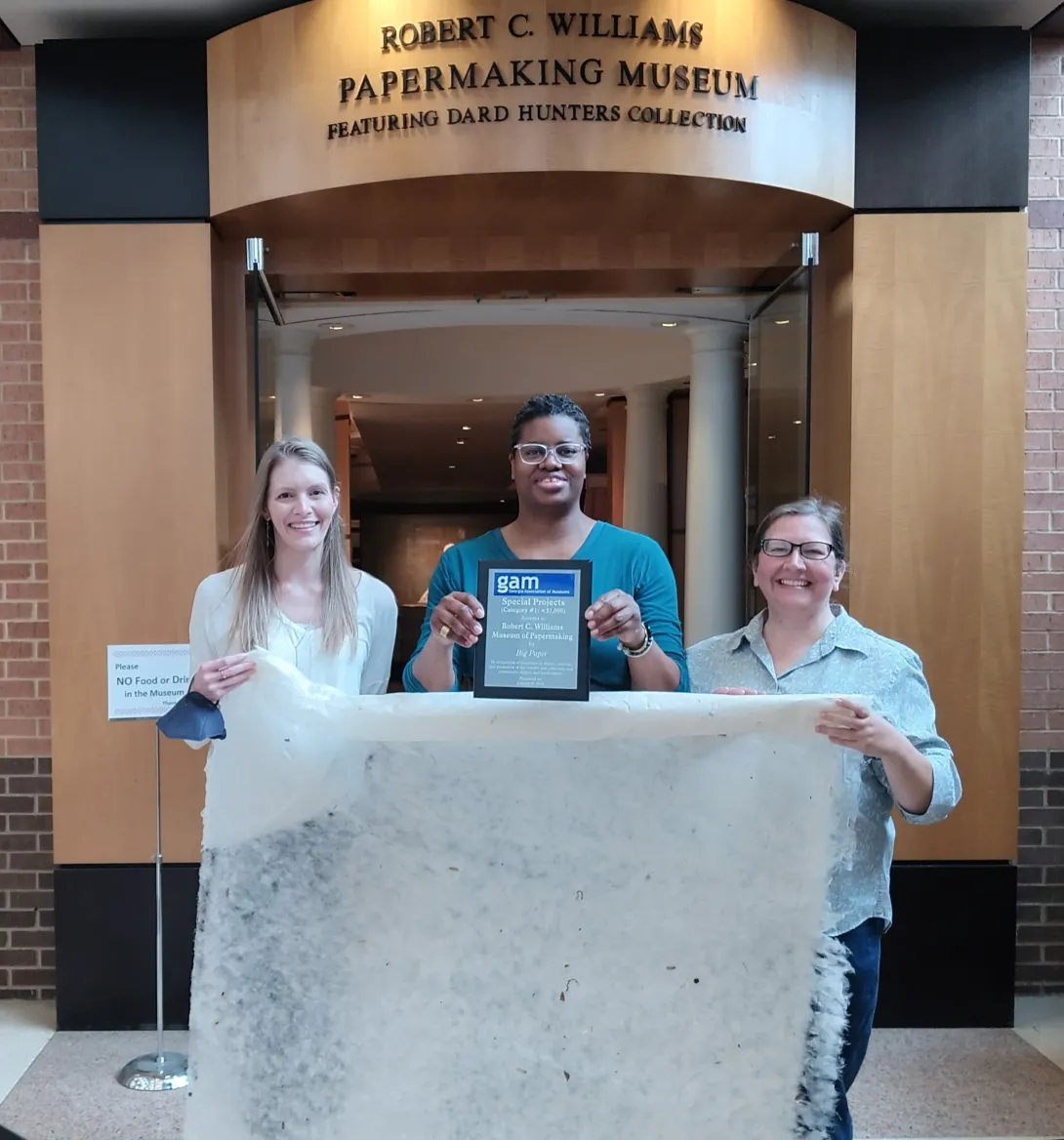
Museum staff Anna Doll, Jerushia Graham, and Virginia Howell pose with a large sheet of paper and an award from the Georgia Association of Museums for the project "Big Paper."
Over 200 museum professionals recently descended upon Athens, Georgia, for the annual meeting of the Georgia Association of Museums (GAM). They arrived from all regions of the state, from Rome to Thomasville to Savannah. The theme of the 2024 conference was “Finding the Right Frequency: Museums and Communities in Harmony.” Attendees participated in a variety of sessions and workshops ranging from developing education programs to designing eye-catching exhibits and visiting with vendors whose products and services target the field. Many Athens-Clarke County museums and cultural institutions opened their doors to attendees for tours and events. The highlight of the week was the annual GAM Awards Luncheon.
This year the Robert C. Williams Museum of Papermaking was presented the Special Project (under $1,000) award by GAM President Marcy Breffle and Award Committee Co-Chairs Melissa Swindell and Karin Dalton for the project “Big Paper.” “We are very pleased to present this award to a very deserving recipient,” said GAM President Breffle. “Our members represent a good cross section of museums and cultural organizations in Georgia’s communities, large and small,” she added. “We are happy to honor institutions, staff members, volunteers, patrons, exhibits, and special projects that have excelled in providing inspiring programs and leadership,” she concluded.
Under the guidance of museum staff Jerushia Graham and Anna Doll, “Big Paper” is a project in which groups from nearby colleges and universities experience making large sheets of paper – 4’ x 6’—in a communal setting. From preparing fiber by hand beating plant material to working together to fill a papermaking mold, students worked together to create something huge! The inaugural event was in April, 2023, and had participants from the University of Georgia, Spelman College, Kennesaw State University, and the Georgia State University Art Club. The event returns in 2024 with noted papermaker Tom Balbo, founding director of the Morgan Conservatory, leading the communal event.
Museum Director Virginia Howell says, “The Paper Museum is honored to receive this award. It is a testament to the hard work of the museum team, and the project has allowed us to build on relationships with so many people who are interested in learning more about the papermaking process and how it can be an incredibly fun yet challenging experience.”
Big Paper returns on April 13, 2024.
News Contact
Virginia Howell
virginia.howell@rbi.gatech.edu
404-894-5726
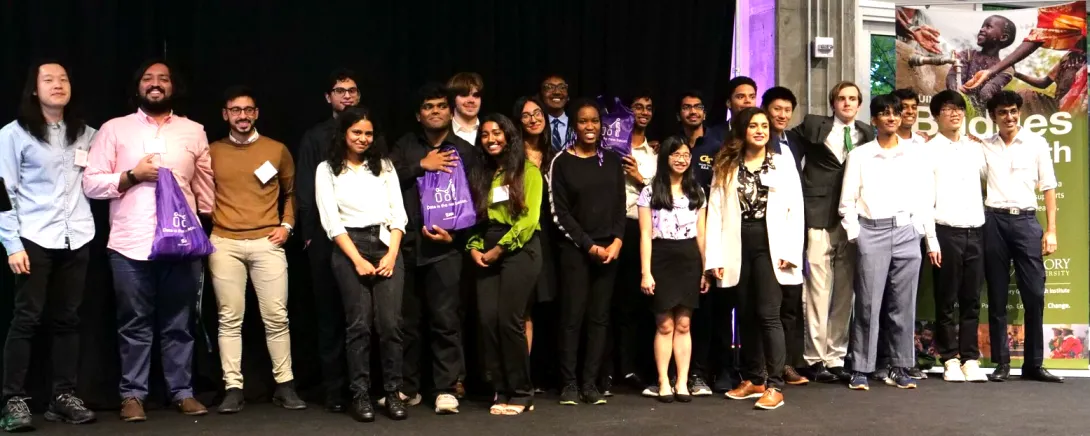
Students tackled climate change in the Fall 2023 Emory Global Health Institute (EGHI) /Georgia Institute of Technology (GT) Global Health Hackathon, Nov. 11, at Tech Square ATL Social. Competing for cash prizes and a spot in GT Startup Launch, first place went to Team iManhole. The team created an integrated system that gathers real-time data from manholes and uses machine learning algorithms to predict flooding to manage traffic and evacuation routes.
“The effects of climate change are felt in every country with the brunt and burden of an unmanaged climate crises threatening to set back global health progress by eroding decades of poverty eradication and health equity efforts worldwide,” said Dr. Rebecca Martin, EGHI director of Emory Global Health Institute. “Students are an important partner in our work as a global community to mitigate the impacts of climate change on health, safety, and security.”
The EGHI/GT Global Health Hackathon is a partner event between EGHI and CREATE-X. It provides multidisciplinary student teams from Emory University and the Georgia Institute of Technology an opportunity to create technology-based product solutions for global health problems. The target for this fall’s event was creating solutions that address urban flooding, urban heat, or global sea level rise in densely populated, low-resource urban settings. Prizes included $4,000 and a golden ticket into CREATE-X Startup Launch for first place winners, $3,000 for second place winners, $2,000 for third place winners, and $500 each for two honorable mention winners.
“This hackathon continues to be a wonderful partnership between our two institutions that gives these talented students the platform and support to put forward solutions to the most pressing issues we face today,” Rahul Saxena, director of CREATE-X, said. “Each hackathon, I’m increasingly impressed with their ingenuity and their dedication to build something of impact.”
Check out the event program on the EGHI website and see photos from the event on the CREATE-X Flickr account. The full list of the winners of this year’s event includes:
1st Place: iManhole
An integrated system that gathers real-time data from manholes and uses machine learning algorithms to predict flooding to manage traffic and evacuation routes
Team Members: Imran Shah, Leonardo Molinari, and Jiaqi Yang
2nd Place: Canopy
A climate-tech software platform for democratizing climate analytics using machine learning for urban development planning.
Team Members: Deesha Panchal, Kruthik Ravikanti, Vaibhav Mishra, Nicholas Swanson, Jennifer Samuel, and Vaishnavi Sanjeev
3rd Place: Floodwise
A package of effective simulations and an informed chatbot that help facilitate wise decisions during floods.
Team Members: Ansh Gupta, Dimi Deju, Mukund Chidambaram, and Sahit Mamidipaka
Honorable Mention
Conquering Heat Islands
Process and hardware that uses excess solar power to mine crypto
Team Members: Rida Akbar, DJ Louis, Edward Zheng, Dmitri Kalinin, and Jade Bondy
Real-Time Computational Modeling of Urban Flooding and Evacuation in Local Atlanta Communities
Integrated system to gather real-time data from manholes and use machine learning algorithms to predict flooding and optimize traffic/evacuation.
Team Members: Imran Shah, Leonardo Molinari, and Jiaqi Yang
News Contact
Breanna Durham
Marketing Strategist
breanna.durham@gatech.edu
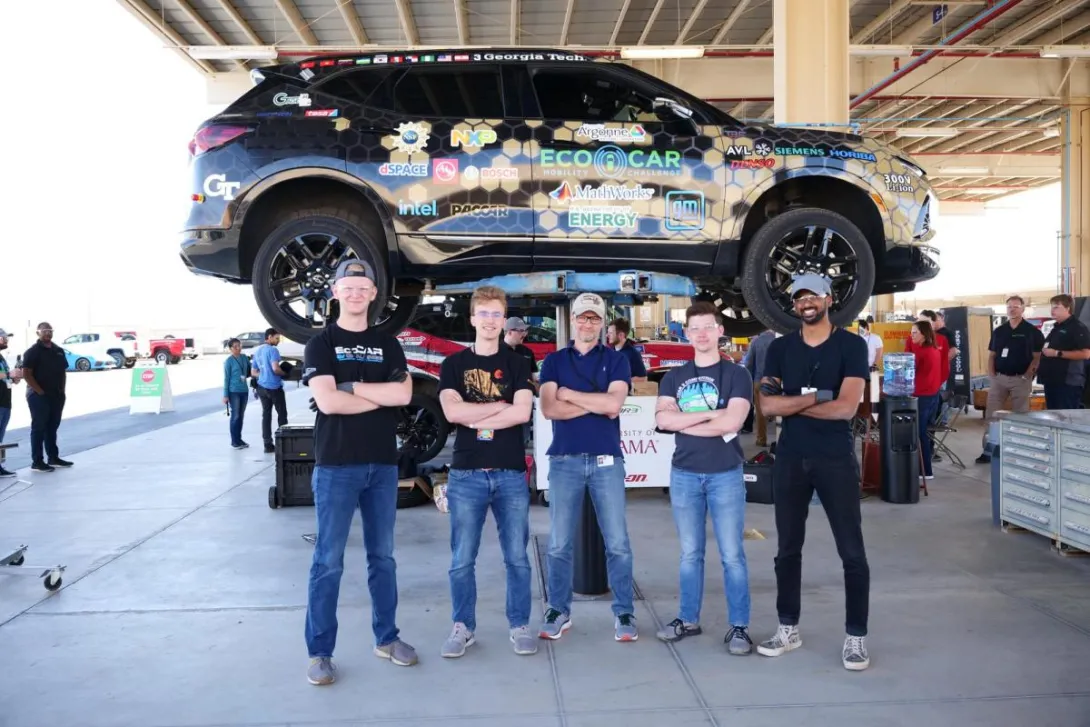

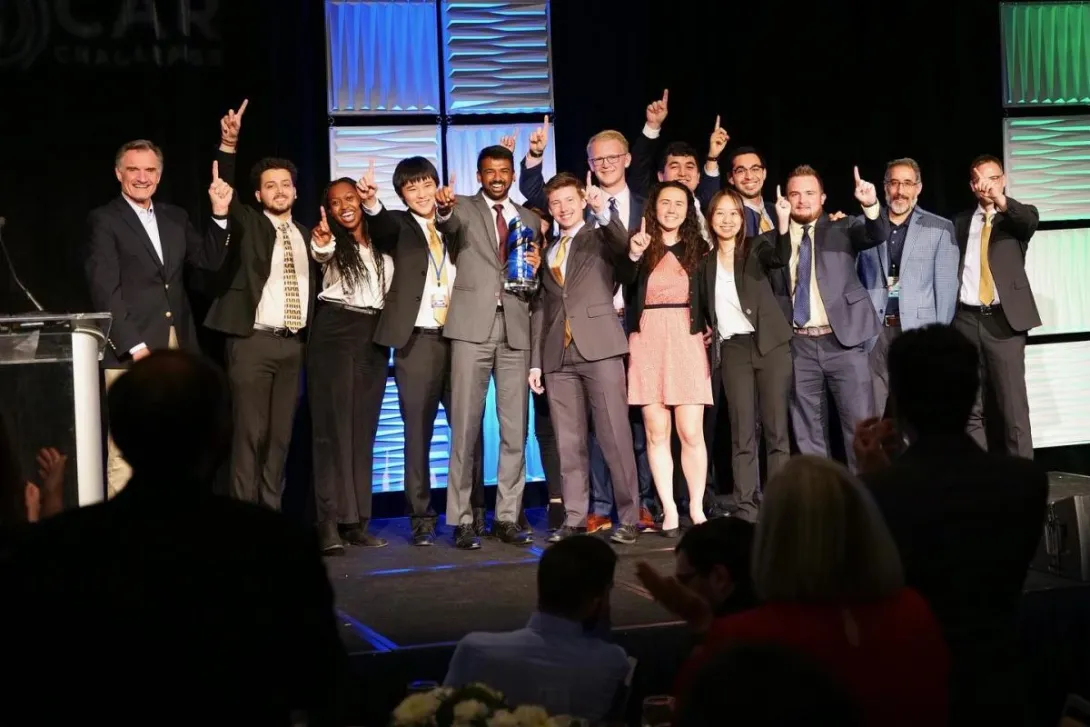
Multiple members of the School of Electrical and Computer Engineering (ECE) contributed to the four-year project.
Georgia Institute of Technology has been named the EcoCAR Mobility Challenge Year Four champion by the U.S. Department of Energy (DOE). Tech’s award-winning interdisciplinary team consists of approximately 60 undergraduate and graduate students from the College of Engineering, College of Computing, Scheller College of Business, and Georgia State University.
Eleven North American university EcoCAR teams gathered for the final challenge in Arizona from May 9-20, 2022. The event marked the culmination of the competition, which tasked the universities with applying propulsion system electrification, autonomous driving control, and vehicle-to-infrastructure connectivity, to improve the energy efficiency of a 2019 Chevrolet Blazer while maintaining safety, utility, and consumer acceptability.
Over the four-year competition — sponsored by the DOE, General Motors (GM) and MathWorks — each team transformed its vehicle from a design concept into a reality. The final year of competition challenged teams to test, prove, and refine their work from the previous three years, mimicking a real-world automotive product development cycle.
ECE professor David Taylor is a faculty advisor for Georgia Tech’s EcoCAR team, along with professors Michael Leamy in the George W. Woodruff School of Mechanical Engineering (ME), and Thomas Fuller in the School of Chemical and Biomolecular Engineering (ChBE).
“The role of ECE in this competition is significant, ranging from powertrain electrification to driving automation. Our team’s vehicle excelled in these areas, winning the events concerned with energy consumption and autonomous operation,” said Taylor. “The EcoCAR program provides valuable experiences for ECE students because the real-world challenges of the project effectively supplement classroom learning.”
Georgia Tech’s EcoCAR team is a $1 million research program housed under Georgia Tech’s Vertically Integrated Projects (VIP) Program. VIP allows undergraduate and graduate students to participate in ambitious, long-term, multidisciplinary project teams that are led by faculty. The VIP program originated in ECE under the leadership of professor Edward Coyle.
ECE graduate research assistant (GRA) Nicholas Hummel played a key leadership role on the team along with fellow GRA Nishan Nekoo in ME. Both Hummel and Nekoo received their master’s degrees this spring. Hummel also gave the first-place presentation on Connected and Automated Vehicle Systems with recent ECE bachelor’s degree graduate Joyce Zhao.
“I've been on the team for the past two years, and have seen it come from a nearly fully virtual format at the beginning of the pandemic to the success we've achieved this year,” said Hummel, who led the team’s driving automation efforts. “If I had not joined this team, I would never have had the opportunity to grow so much as a leader and increase my passion for automation and robotics.”
Additionally, recent ECE bachelor’s degree graduate Braeden Dickson, along with recent ME bachelor’s degree graduate Anna Cobb, gave the first-place presentation on Propulsion Controls and Modeling. Braeden worked on powertrain controls to convert the conventional Chevy Blazer to a hybrid electric vehicle architecture. With his efforts, Georgia Tech vehicle was the only vehicle of the competition to improve energy consumption over the stock Blazer.
Read more about the award-winning team, view pictures from the finale, and learn about future plans.
News Contact
Dan Watson
dwatson@ece.gatech.edu