
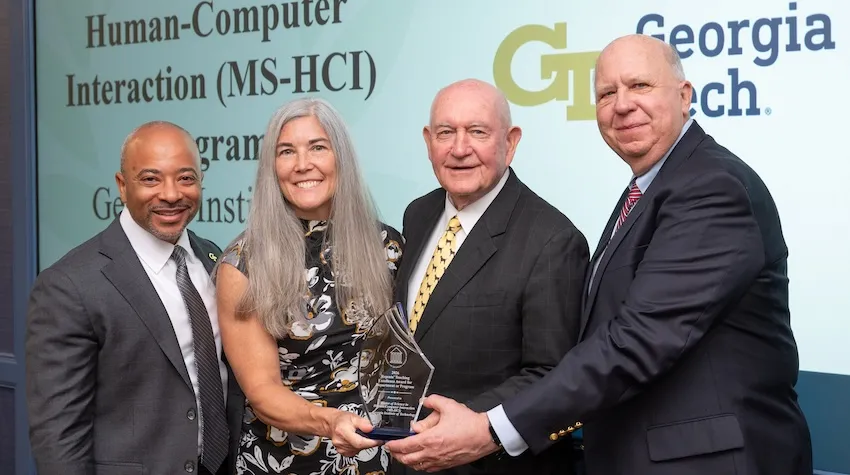
The Georgia Tech Master of Science in Human-Computer Interaction (MSHCI) program has another reason to celebrate as it prepares to mark its 30th anniversary later this year.
The Board of Regents of the University System of Georgia awarded the program the 2026 Teaching Excellence Award for Department or Program.
MSHCI program director Dick Henneman and assistant director Carrie Bruce received the award on May 12 during a Board of Regents (BOR) meeting.
Henneman has served as director of the program since 2015, and Bruce has served as assistant director since 2014. The program began in 1996 and has since expanded to be offered by four Georgia Tech schools:
“As we put our award submission together, it was nice for us to reflect on all our hard work and to understand the impact this program has had on students,” Bruce said. “We recently surveyed alums, and so many said they were thankful for the way this program shaped their careers.”
Under the leadership of Henneman and Bruce, the program has achieved a 99% graduation rate, with about 60 graduates per year, up from about 30 since 2015. Henneman said the program has become one of the most competitive of its kind in the world, with an admission rate under 10%.
“We have some incredibly qualified students who are a part of the program,” he said. “We’ve had a number of graduates move into design management positions, and some have started their own companies.”
Henneman and Bruce said that one thing that distinguishes Tech’s MSHCI program is its close partnerships and alignment with industry. The program has an industry advisory board that keeps students informed about the skills companies value.
“We adapted our core classes quite a bit to ensure that they weren’t just getting the academic version of HCI methods,” Bruce said. “Our program is practical and focuses on what they are going to do when they get into industry.”
Though the program continues to grow, Henneman says it has maintained a sense of community among students, which he says is another thing that sets it apart. Many alumni keep in touch and return to offer industry advice, critique resumes, and conduct mock interviews with current students.
“A lot of times graduate school can be all about the individual,” he said. “As we prepare students to go work in industry, it’s all about collaboration and the people you’re working with and learning how to work on teams.”
Georgia Tech had 21 faculty and researchers recognized in the 2026 Regents Awards. From the College of Computing, Santosh Vempala was named a Regents’ Professor, while Srinivas Aluru and Ellen Zegura had their Regents’ titles renewed.
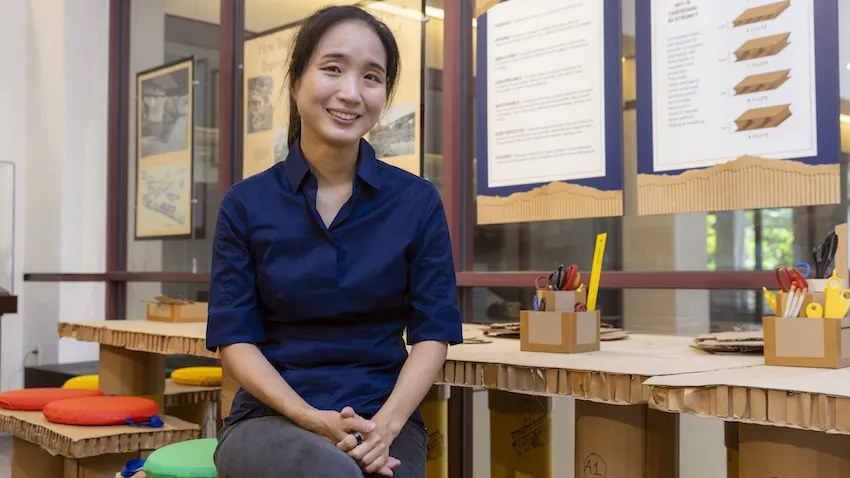
A new educational initiative is set to teach Atlanta high school students how to create electronics, wearable devices, and other technologies that are built on paper and craft materials.
Workshops hosted by the Robert C. Williams Museum of Papermaking and led by Georgia Tech Assistant Professor HyunJoo Oh will introduce about 60 students from Atlanta Public Schools to paper-based electronics through hands-on workshops.
The Williams Museum will open an exhibit titled “The Future of Paper” that displays designs created in the workshop alongside visionary examples of paper-based technologies from Georgia Tech researchers.
The exhibit, funded by the National Science Foundation, is slated to open to the public in 2027.
Oh is a researcher with joint appointments in the School of Interactive Computing and the School of Industrial Design. She leads the Computational Design and Craft (CoDe Craft) Group at Georgia Tech, where her team integrates everyday craft materials with computing to support creative exploration.
Oh believes paper could be widely used to support prototyping printed circuit boards (PCBs) as a sustainable alternative to silicon. While silicon is the most prominent material used by technology companies to build computer chips, it isn’t biodegradable. And it can be harmful to the environment and contribute to e-waste.
Paper, however, provides an eco-friendly platform for printing conductive traces and mounting small electronic components. With the expansion of printed electronic tools and techniques, paper and similar materials have become more popular among technologists who develop sensing technologies and wearable devices.
“It’s widely available and accessible,” Oh said. “I can’t think of anything more affordable and approachable that young makers and the broader maker community can use for circuits than paper.
“Printed electronics traditionally required expensive equipment, but with recent innovation in materials science, conductive materials such as conductive pens and paint available in local arts and crafts stores can be used to build circuits on paper. We can also print circuits using a regular office inkjet printer with silver ink.”
Shared Vision
Shortly after arriving at Georgia Tech in 2019, Oh knew she had to develop a project that would let her partner with the Williams Museum.
“I was captivated by the museum’s space and its celebration of paper,” she said. “I wanted a collaboration that would integrate technology in a way that complemented and respected the museum’s existing beauty.”
Museum director Virginia Howell said the project was a perfect match for the museum, which has documented the history of papermaking since it was founded in 1939 by the Massachusetts Institute of Technology. Georgia Tech became the new home of the museum in 2003.
With more than 100,000 objects in its collection — some dating back as far as 2,000 years ago — the museum is unique, Howell said. Most papermaking museums are typically located at an historic mill, but the Williams Museum covers the history of papermaking.
Howell said that before she met Oh, she had been looking for an exhibit that would display the possible future of papermaking.
“We do the past of paper fantastically well, and we do the present of paper well through our changing exhibitions,” Howell said. “The future of paper is something we haven’t spent a lot of time interpreting.”
Crafting the Future
Oh and Howell agree that young people will shape that future. Oh said paper is commonly linked to art in the education sphere. As the material’s use in technology increases, however, it can funnel the interests of students toward engineering and computing.
Incorporating paper and craft materials can invite more students to explore engineering and computing concepts. After all, a circuit board created on paper isn’t so different from one built on a silicon PCB, Oh said.
“This approach can excite the kind of students who usually feel disconnected from electronics and computing,” she said. “It gives those who only see themselves as creative or artistic a way to enjoy technology and resonate with it.
“Usually when I work with young students, especially girls, if I start with something technical, their interest wanes. But when I present those same ideas through art using familiar materials like paper, they become more engaged and confident. That’s when they start to flourish.”
Oh and Howell will hold three rounds of 10-week workshops for the students — spring 2026, fall 2026, and spring 2027. The best designs from those workshops will be displayed in the exhibit.
“They’ll feel more comfortable with computing and engineering as an introductory experience,” Howell said. “When they successfully build on it and realize they did this on a sheet of paper, it’s exciting to think what they’ll do when they get more sophisticated tools and access.”
News Contact
Nathan Deen
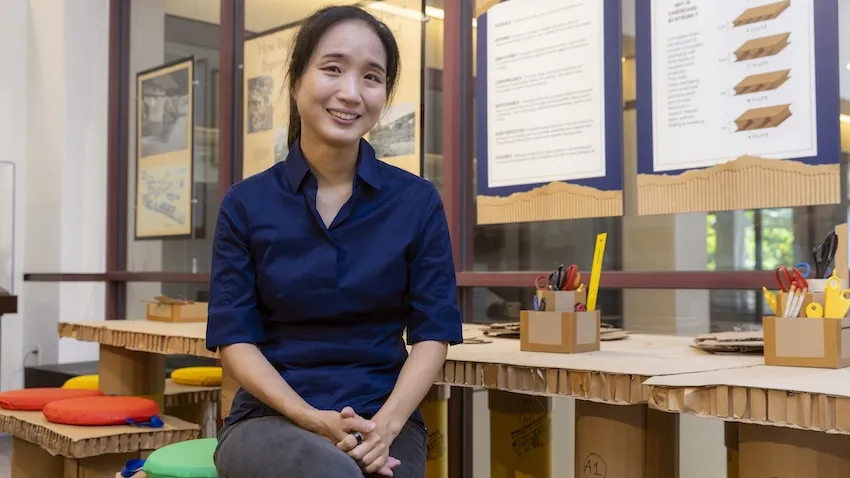
A new educational initiative is set to teach Atlanta high school students how to create electronics, wearable devices, and other technologies that are built on paper and craft materials.
Workshops hosted by the Robert C. Williams Museum of Papermaking and led by Georgia Tech Assistant Professor HyunJoo Oh will introduce about 60 students from Atlanta Public Schools to paper-based electronics through hands-on workshops.
The Williams Museum will open an exhibit titled “The Future of Paper” that displays designs created in the workshop alongside visionary examples of paper-based technologies from Georgia Tech researchers.
The exhibit, funded by the National Science Foundation, is slated to open to the public in 2027.
Oh is a researcher with joint appointments in the School of Interactive Computing and the School of Industrial Design.She leads the Computational Design and Craft (CoDe Craft) Group at Georgia Tech, where her team integrates everyday craft materials with computing to support creative exploration.
Oh believes paper could be widely used to support prototyping printed circuit boards (PCBs) as a sustainable alternative to silicon. While silicon is the most prominent material used by technology companies to build computer chips, it isn’t biodegradable. And it can be harmful to the environment and contribute to e-waste.
Paper, however, provides an eco-friendly platform for printing conductive traces and mounting small electronic components. With the expansion of printed electronic tools and techniques, paper and similar materials have become more popular among technologists who develop sensing technologies and wearable devices.
“It’s widely available and accessible,” Oh said. “I can’t think of anything more affordable and approachable that young makers and the broader maker community can use for circuits than paper.
“Printed electronics traditionally required expensive equipment, but with recent innovation in materials science, conductive materials such as conductive pens and paint available in local arts and crafts stores can be used to build circuits on paper. We can also print circuits using a regular office inkjet printer with silver ink.”
Shared Vision
Shortly after arriving at Georgia Tech in 2019, Oh knew she had to develop a project that would let her partner with the Williams Museum.
“I was captivated by the museum’s space and its celebration of paper,” she said. “I wanted a collaboration that would integrate technology in a way that complemented and respected the museum’s existing beauty.”
Museum director Virginia Howell said the project was a perfect match for the museum, which has documented the history of papermaking since it was founded in 1939 by the Massachusetts Institute of Technology. Georgia Tech became the new home of the museum in 2003.
With more than 100,000 objects in its collection — some dating back as far as 2,000 years ago — the museum is unique, Howell said. Most papermaking museums are typically located at an historic mill, but the Williams Museum covers the history of papermaking.
Howell said that before she met Oh, she had been looking for an exhibit that would display the possible future of papermaking.
“We do the past of paper fantastically well, and we do the present of paper well through our changing exhibitions,” Howell said. “The future of paper is something we haven’t spent a lot of time interpreting.”
Crafting the Future
Oh and Howell agree that young people will shape that future. Oh said paper is commonly linked to art in the education sphere. As the material’s use in technology increases, however, it can funnel the interests of students toward engineering and computing.
Incorporating paper and craft materials can invite more students to explore engineering and computing concepts. After all, a circuit board created on paper isn’t so different from one built on a silicon PCB, Oh said.
“This approach can excite the kind of students who usually feel disconnected from electronics and computing,” she said. “It gives those who only see themselves as creative or artistic a way to enjoy technology and resonate with it.
“Usually when I work with young students, especially girls, if I start with something technical, their interest wanes. But when I present those same ideas through art using familiar materials like paper, they become more engaged and confident. That’s when they start to flourish.”
Oh and Howell will hold three rounds of 10-week workshops for the students — spring 2026, fall 2026, and spring 2027. The best designs from those workshops will be displayed in the exhibit.
“They’ll feel more comfortable with computing and engineering as an introductory experience,” Howell said. “When they successfully build on it and realize they did this on a sheet of paper, it’s exciting to think what they’ll do when they get more sophisticated tools and access.”
A new educational initiative is set to teach Atlanta high school students how to create electronics, wearable devices, and other technologies that are built on paper and craft materials.
Workshops hosted by the Robert C. Williams Museum of Papermaking and led by Georgia Tech Assistant Professor HyunJoo Oh will introduce about 60 students from Atlanta Public Schools to paper-based electronics through hands-on workshops.
The Williams Museum will open an exhibit titled “The Future of Paper” that displays designs created in the workshop alongside visionary examples of paper-based technologies from Georgia Tech researchers.
The exhibit, funded by the National Science Foundation, is slated to open to the public in 2027.
Oh is a researcher with joint appointments in the School of Interactive Computing and the School of Industrial Design.She leads the Computational Design and Craft (CoDe Craft) Group at Georgia Tech, where her team integrates everyday craft materials with computing to support creative exploration.
Oh believes paper could be widely used to support prototyping printed circuit boards (PCBs) as a sustainable alternative to silicon. While silicon is the most prominent material used by technology companies to build computer chips, it isn’t biodegradable. And it can be harmful to the environment and contribute to e-waste.
Paper, however, provides an eco-friendly platform for printing conductive traces and mounting small electronic components. With the expansion of printed electronic tools and techniques, paper and similar materials have become more popular among technologists who develop sensing technologies and wearable devices.
“It’s widely available and accessible,” Oh said. “I can’t think of anything more affordable and approachable that young makers and the broader maker community can use for circuits than paper.
“Printed electronics traditionally required expensive equipment, but with recent innovation in materials science, conductive materials such as conductive pens and paint available in local arts and crafts stores can be used to build circuits on paper. We can also print circuits using a regular office inkjet printer with silver ink.”
Shared Vision
Shortly after arriving at Georgia Tech in 2019, Oh knew she had to develop a project that would let her partner with the Williams Museum.
“I was captivated by the museum’s space and its celebration of paper,” she said. “I wanted a collaboration that would integrate technology in a way that complemented and respected the museum’s existing beauty.”
Museum director Virginia Howell said the project was a perfect match for the museum, which has documented the history of papermaking since it was founded in 1939 by the Massachusetts Institute of Technology. Georgia Tech became the new home of the museum in 2003.
With more than 100,000 objects in its collection — some dating back as far as 2,000 years ago — the museum is unique, Howell said. Most papermaking museums are typically located at an historic mill, but the Williams Museum covers the history of papermaking.
Howell said that before she met Oh, she had been looking for an exhibit that would display the possible future of papermaking.
“We do the past of paper fantastically well, and we do the present of paper well through our changing exhibitions,” Howell said. “The future of paper is something we haven’t spent a lot of time interpreting.”
Crafting the Future
Oh and Howell agree that young people will shape that future. Oh said paper is commonly linked to art in the education sphere. As the material’s use in technology increases, however, it can funnel the interests of students toward engineering and computing.
Incorporating paper and craft materials can invite more students to explore engineering and computing concepts. After all, a circuit board created on paper isn’t so different from one built on a silicon PCB, Oh said.
“This approach can excite the kind of students who usually feel disconnected from electronics and computing,” she said. “It gives those who only see themselves as creative or artistic a way to enjoy technology and resonate with it.
“Usually when I work with young students, especially girls, if I start with something technical, their interest wanes. But when I present those same ideas through art using familiar materials like paper, they become more engaged and confident. That’s when they start to flourish.”
Oh and Howell will hold three rounds of 10-week workshops for the students — spring 2026, fall 2026, and spring 2027. The best designs from those workshops will be displayed in the exhibit.
“They’ll feel more comfortable with computing and engineering as an introductory experience,” Howell said. “When they successfully build on it and realize they did this on a sheet of paper, it’s exciting to think what they’ll do when they get more sophisticated tools and access.”
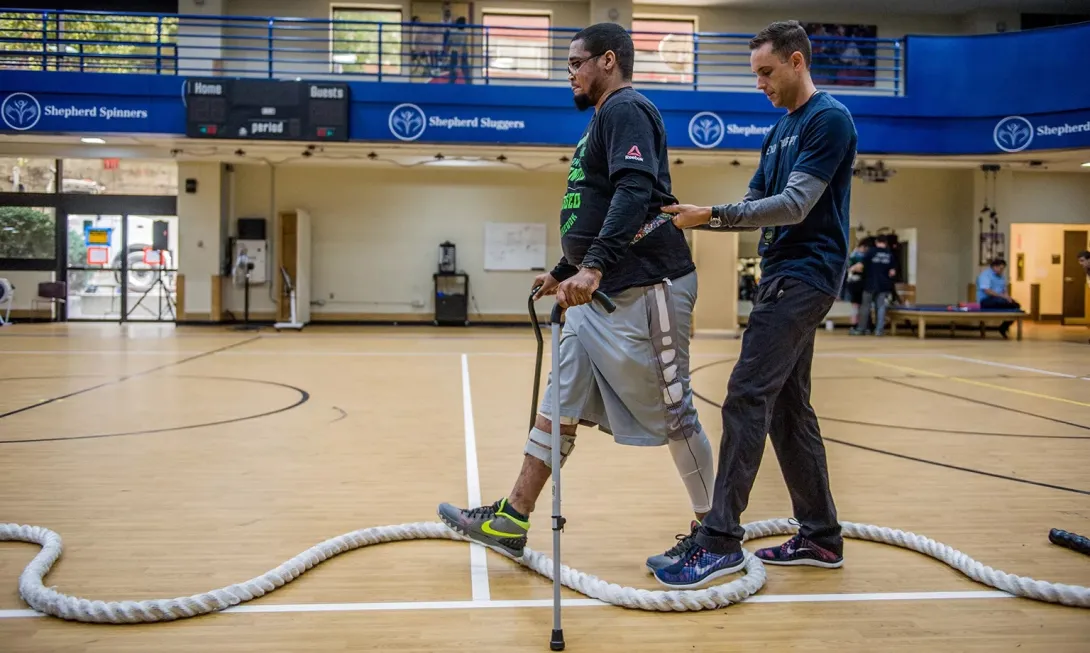
The seed grants will fund projects focused on enhancing wheelchair seating surfaces, supporting stroke patients as they transition home from rehabilitation, assessing lower limb exoskeleton technologies, and exploring the use of AI in remote rehab settings. Photo: Shepherd Center.
Georgia Tech and Shepherd Center recently awarded four seed grants totaling nearly $200,000 to researchers focusing on projects that will advance discoveries in neurorehabilitation, including acquired brain injury, spinal cord injury, multiple sclerosis, chronic pain, and other neurological conditions.
The Georgia Tech-Shepherd Center Seed Grant Program is part of an ongoing partnership between the two institutions that started in 2023 with the goal of advancing rehabilitative patient care and research.
“The seed grant program is intended to stimulate new interdisciplinary research collaborations by providing seed funding to obtain preliminary data or prototypes necessary for the submission of an external grant or industry opportunities,” says Deborah Backus, vice president of Research and Innovation at Shepherd Center. “As two leading research institutions, we know the potential for advancing rehabilitation therapies is even greater when we work together. We look forward to the solutions, treatments, and therapies that emerge from these initial seed grants.”
Experts from both institutions evaluated and scored seed grant applications based on the research’s innovation, approach, and potential for training opportunities, as well as its anticipated impact, prospects for commercial translation, and strategy for securing continued funding. This year, each awardee team received close to $50,000.
“We are very excited to launch this new seed grant program, which will spur ideas and propel research forward,” said Michelle LaPlaca, professor in the Coulter Department of Biomedical Engineering and the Georgia Tech lead of the Collaborative. “The complementary expertise of Georgia Tech and Shepherd Center researchers, combined with the motivation to find solutions for individuals with neurological injury and disability, is a winning formula for innovation.”
"Offering new hope for neurorehabilitation patients requires bringing together interdisciplinary researchers to explore new and creative ideas,” adds Chris Rozell, Julian T. Hightower Chaired professor in the School of Electrical and Computer Engineering and the inaugural executive director of the Institute of Neuroscience, Neurotechnology, and Society (INNS) at Georgia Tech. “I'm excited to see the talent at these world class institutions coming together to develop new solutions for these complex problems."
This year’s seed grants were awarded to the following projects:
- Proof of Concept Development of the Recovery Cushion – Stephen Sprigle, professor, School of Industrial Design and School of Mechanical Engineering, Georgia Tech; Jennifer Cowhig, research physical therapist, Shepherd Center.
- Paving a Smooth Path from Hospital to Home: A Feasibility Study of an Integrated Smart Transitional Home Lab to Support Stroke Rehabilitation Patients’ Transition to Home – John Morris, senior clinical research scientist, Shepherd Center; Hui Cai, professor in the School of Architecture, executive director of the SimTigrate Design Center, Georgia Tech.
- A Comparative Analysis of Lower-Limb Exoskeleton Technology for Non-Ambulatory Individuals with Spinal Cord Injury – Maegan Tucker, assistant professor, School of Electrical and Computer Engineering and School of Mechanical Engineering, Georgia Tech; Nicholas Evans (AP 2023), clinical research scientist, Shepherd Center.
- Improving Accessibility and Precision in Neurorehabilitation at the Point of Care with AI-Driven Remote Therapeutic Monitoring Solutions – Brad Willingham, clinical research scientist, director of Multiple Sclerosis Research, Shepherd Center; May Dongmei Wang, professor, Wallace H. Coulter Department of Biomedical Engineering, Georgia Tech.
News Contact
Kerry Ludlam
Director of Communications
Shepherd Center
Audra Davidson
Research Communications Program Manager
Institute for Neuroscience, Neurotechnology, and Society
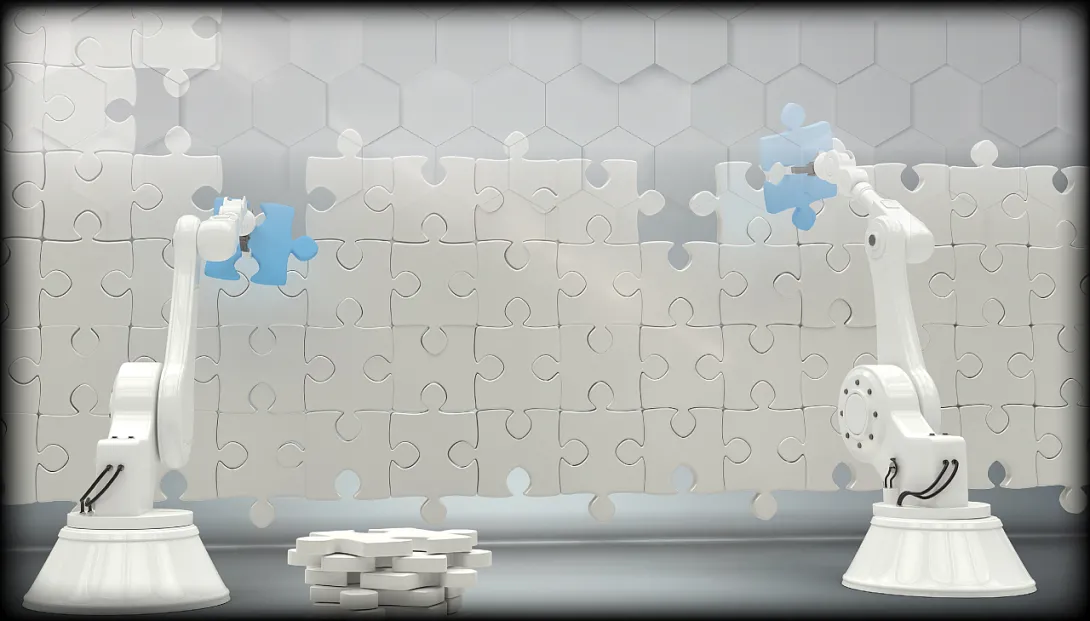
Industrial Robots sloving a puzzle
The Institute for Robotics and Intelligent Machines (IRIM) launched a new initiatives program, starting with several winning proposals, with corresponding initiative leads that will broaden the scope of IRIM’s research beyond its traditional core strengths. A major goal is to stimulate collaboration across areas not typically considered as technical robotics, such as policy, education, and the humanities, as well as open new inter-university and inter-agency collaboration routes. In addition to guiding their specific initiatives, these leads will serve as an informal internal advisory body for IRIM. Initiative leads will be announced annually, with existing initiative leaders considered for renewal based on their progress in achieving community building and research goals. We hope that initiative leads will act as the “faculty face” of IRIM and communicate IRIM’s vision and activities to audiences both within and outside of Georgia Tech.
Meet 2024 IRIM Initiative Leads
Stephen Balakirsky; Regents' Researcher, Georgia Tech Research Institute & Panagiotis Tsiotras; David & Andrew Lewis Endowed Chair, Daniel Guggenheim School of Aerospace Engineering | Proximity Operations for Autonomous Servicing
Why It Matters: Proximity operations in space refer to the intricate and precise maneuvers and activities that spacecraft or satellites perform when they are in close proximity to each other, such as docking, rendezvous, or station-keeping. These operations are essential for a variety of space missions, including crewed spaceflights, satellite servicing, space exploration, and maintaining satellite constellations. While this is a very broad field, this initiative will concentrate on robotic servicing and associated challenges. In this context, robotic servicing is composed of proximity operations that are used for servicing and repairing satellites in space. In robotic servicing, robotic arms and tools perform maintenance tasks such as refueling, replacing components, or providing operation enhancements to extend a satellite's operational life or increase a satellite’s capabilities.
Our Approach: By forming an initiative in this important area, IRIM will open opportunities within the rapidly evolving space community. This will allow us to create proposals for organizations ranging from NASA and the Defense Advanced Research Projects Agency to the U.S. Air Force and U.S. Space Force. This will also position us to become national leaders in this area. While several universities have a robust robotics program and quite a few have a strong space engineering program, there are only a handful of academic units with the breadth of expertise to tackle this problem. Also, even fewer universities have the benefit of an experienced applied research partner, such as the Georgia Tech Research Institute (GTRI), to undertake large-scale demonstrations. Georgia Tech, having world-renowned programs in aerospace engineering and robotics, is uniquely positioned to be a leader in this field. In addition, creating a workshop in proximity operations for autonomous servicing will allow the GTRI and Georgia Tech space robotics communities to come together and better understand strengths and opportunities for improvement in our abilities.
Matthew Gombolay; Assistant Professor, Interactive Computing | Human-Robot Society in 2125: IRIM Leading the Way
Why It Matters: The coming robot “apocalypse” and foundation models captured the zeitgeist in 2023 with “ChatGPT” becoming a topic at the dinner table and the probability occurrence of various scenarios of AI driven technological doom being a hotly debated topic on social media. Futuristic visions of ubiquitous embodied Artificial Intelligence (AI) and robotics have become tangible. The proliferation and effectiveness of first-person view drones in the Russo-Ukrainian War, autonomous taxi services along with their failures, and inexpensive robots (e.g., Tesla’s Optimus and Unitree’s G1) have made it seem like children alive today may have robots embedded in their everyday lives. Yet, there is a lack of trust in the public leadership bringing us into this future to ensure that robots are developed and deployed with beneficence.
Our Approach: This proposal seeks to assemble a team of bright, savvy operators across academia, government, media, nonprofits, industry, and community stakeholders to develop a roadmap for how we can be the most trusted voice to guide the public in the next 100 years of innovation in robotics here at the IRIM. We propose to carry out specific activities that include conducting the activities necessary to develop a roadmap about Robots in 2125: Altruistic and Integrated Human-Robot Society. We also aim to build partnerships to promulgate these outcomes across Georgia Tech’s campus and internationally.
Gregory Sawicki; Joseph Anderer Faculty Fellow, School of Mechanical Engineering & Aaron Young; Associate Professor, Mechanical Engineering | Wearable Robotic Augmentation for Human Resilience
Why It Matters: The field of robotics continues to evolve beyond rigid, precision-controlled machines for amplifying production on manufacturing assembly lines toward soft, wearable systems that can mediate the interface between human users and their natural and built environments. Recent advances in materials science have made it possible to construct flexible garments with embedded sensors and actuators (e.g., exosuits). In parallel, computers continue to get smaller and more powerful, and state-of-the art machine learning algorithms can extract useful information from more extensive volumes of input data in real time. Now is the time to embed lean, powerful, sensorimotor elements alongside high-speed and efficient data processing systems in a continuous wearable device.
Our Approach: The mission of the Wearable Robotic Augmentation for Human Resilience (WeRoAHR) initiative is to merge modern advances in sensing, actuation, and computing technology to imagine and create adaptive, wearable augmentation technology that can improve human resilience and longevity across the physiological spectrum — from behavioral to cellular scales. The near-term effort (~2-3 years) will draw on Georgia Tech’s existing ecosystem of basic scientists and engineers to develop WeRoAHR systems that will focus on key targets of opportunity to increase human resilience (e.g., improved balance, dexterity, and stamina). These initial efforts will establish seeds for growth intended to help launch larger-scale, center-level efforts (>5 years).
Panagiotis Tsiotras; David & Andrew Lewis Endowed Chair, Daniel Guggenheim School of Aerospace Engineering & Sam Coogan; Demetrius T. Paris Junior Professor, School of Electrical and Computer Engineering | Initiative on Reliable, Safe, and Secure Autonomous Robotics
Why It Matters: The design and operation of reliable systems is primarily an integration issue that involves not only each component (software, hardware) being safe and reliable but also the whole system being reliable (including the human operator). The necessity for reliable autonomous systems (including AI agents) is more pronounced for “safety-critical” applications, where the result of a wrong decision can be catastrophic. This is quite a different landscape from many other autonomous decision systems (e.g., recommender systems) where a wrong or imprecise decision is inconsequential.
Our Approach: This new initiative will investigate the development of protocols, techniques, methodologies, theories, and practices for designing, building, and operating safe and reliable AI and autonomous engineering systems and contribute toward promoting a culture of safety and accountability grounded in rigorous objective metrics and methodologies for AI/autonomous and intelligent machines designers and operators, to allow the widespread adoption of such systems in safety-critical areas with confidence. The proposed new initiative aims to establish Tech as the leader in the design of autonomous, reliable engineering robotic systems and investigate the opportunity for a federally funded or industry-funded research center (National Science Foundation (NSF) Science and Technology Centers/Engineering Research Centers) in this area.
Colin Usher; Robotics Systems and Technology Branch Head, GTRI | Opportunities for Agricultural Robotics and New Collaborations
Why It Matters: The concepts for how robotics might be incorporated more broadly in agriculture vary widely, ranging from large-scale systems to teams of small systems operating in farms, enabling new possibilities. In addition, there are several application areas in agriculture, ranging from planting, weeding, crop scouting, and general growing through harvesting. Georgia Tech is not a land-grant university, making our ability to capture some of the opportunities in agricultural research more challenging. By partnering with a land-grant university such as the University of Georgia (UGA), we can leverage this relationship to go after these opportunities that, historically, were not available.
Our Approach: We plan to build collaborations first by leveraging relationships we have already formed within GTRI, Georgia Tech, and UGA. We will achieve this through a significant level of networking, supported by workshops and/or seminars with which to recruit faculty and form a roadmap for research within the respective universities. Our goal is to identify and pursue multiple opportunities for robotics-related research in both row-crop and animal-based agriculture. We believe that we have a strong opportunity, starting with formalizing a program with the partners we have worked with before, with the potential to improve and grow the research area by incorporating new faculty and staff with a unified vision of ubiquitous robotics systems in agriculture. We plan to achieve this through scheduled visits with interested faculty, attendance at relevant conferences, and ultimately hosting a workshop to formalize and define a research roadmap.
Ye Zhao; Assistant Professor, School of Mechanical Engineering | Safe, Social, & Scalable Human-Robot Teaming: Interaction, Synergy, & Augmentation
Why It Matters: Collaborative robots in unstructured environments such as construction and warehouse sites show great promise in working with humans on repetitive and dangerous tasks to improve efficiency and productivity. However, pre-programmed and nonflexible interaction behaviors of existing robots lower the naturalness and flexibility of the collaboration process. Therefore, it is crucial to improve physical interaction behaviors of the collaborative human-robot teaming.
Our Approach: This proposal will advance the understanding of the bi-directional influence and interaction of human-robot teaming for complex physical activities in dynamic environments by developing new methods to predict worker intention via multi-modal wearable sensing, reasoning about complex human-robot-workspace interaction, and adaptively planning the robot’s motion considering both human teaming dynamics and physiological and cognitive states. More importantly, our team plans to prioritize efforts to (i) broaden the scope of IRIM’s autonomy research by incorporating psychology, cognitive, and manufacturing research not typically considered as technical robotics research areas; (ii) initiate new IRIM education, training, and outreach programs through collaboration with team members from various Georgia Tech educational and outreach programs (including Project ENGAGES, VIP, and CEISMC) as well as the AUCC (World’s largest consortia of African American private institutions of higher education) which comprises Clark Atlanta University, Morehouse College, & Spelman College; and (iii) aim for large governmental grants such as DOD MURI, NSF NRT, and NSF Future of Work programs.
-Christa M. Ernst

Top-down, slow motion view of hands tying a traditional fishing net knot
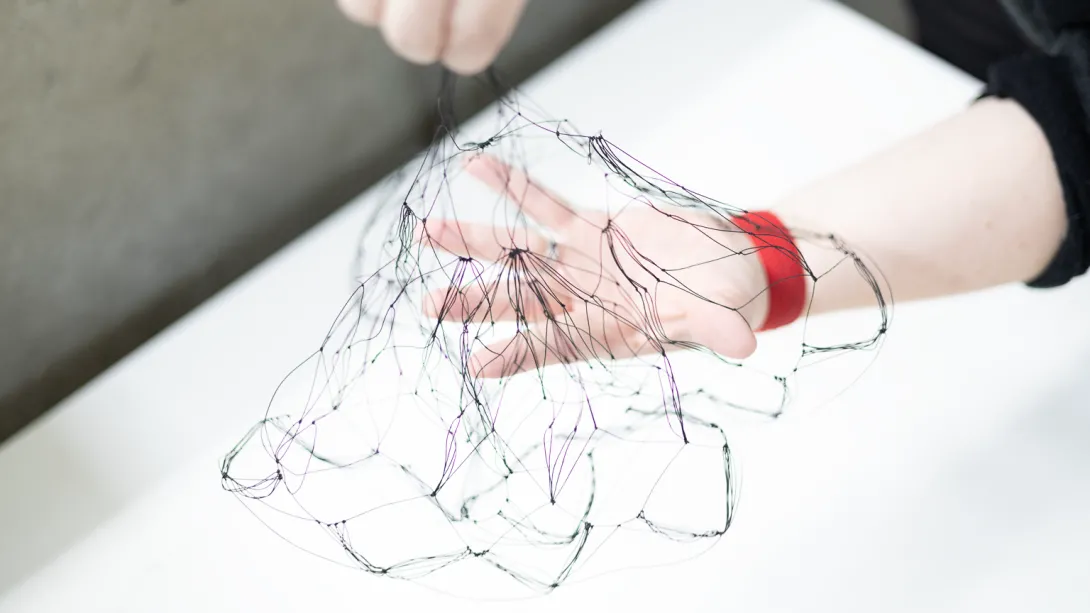
Image courtesy of Georgia Tech Research Institute.
Diagram showing concept of active space debris removal. The system is launched from earth and maneuvers to intercept a spent rocket fuselage. It then separates into four components with a net stretched between them. The net wraps around the fuselage, capturing it, and the entire system deorbits safely.
One hand holding a net of thin black cord in the middle. The net is draped over the person's other hand, below.
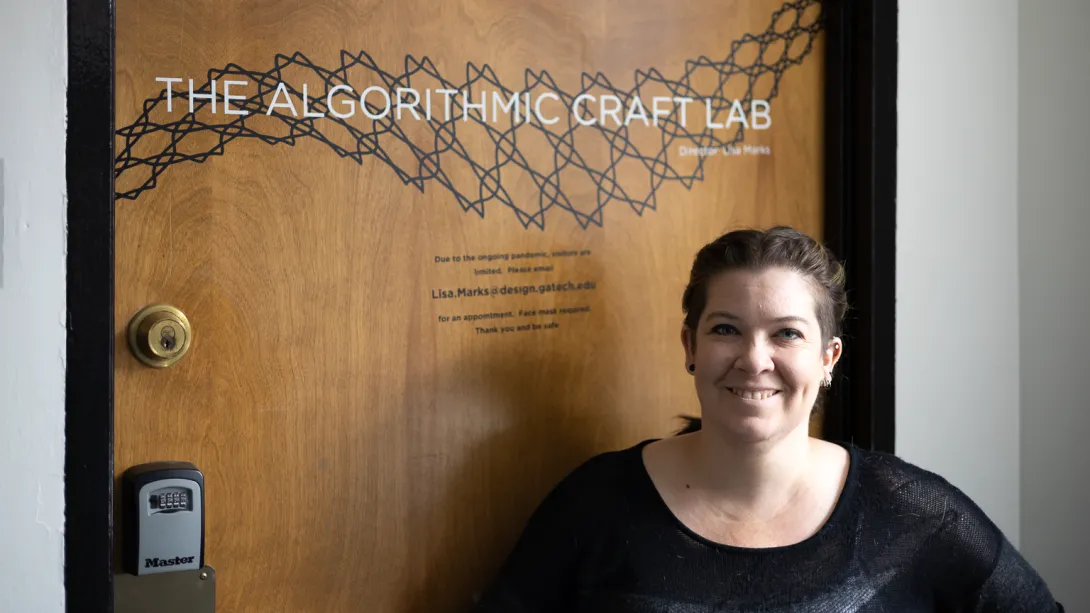
Lisa Marks is launching the ancient craft of fishing villages into space vehicle design. Her work adapting traditional textile handcraft to modern problems created a unique opportunity for collaboration cleaning up space debris.
According to NASA's Orbital Debris Program Office (OPDO), this debris jeopardizes future space projects. Large objects like rocket bodies and non-functional satellites are the source of fragmentation debris.
The OPDO website says removal of even five of the highest-risk objects per year could stabilize the low Earth orbit debris environment.
A research team with members from the Georgia Tech Research Institute, the Aerospace Systems Design Laboratory, and the Space Systems Design Laboratory has developed a concept using a net to capture and de-orbit large debris.
A mutual connection at Tech's GVU recommended that the team speak to Lisa Marks, assistant professor in the School of Industrial Design, based on her work combining traditional textile with new materials and methods.
Putting Textiles in Space Requires Creative Expertise
“There’s a lot of different projects on space debris happening all around the world,” Marks said, “and there’ve been a few concept papers talking about using a net.”
“But all the drawings of the net are basic concepts, just a square with a few hatches through it. No one has figured out what that net might be.”
Marks researches ways to combine traditional textile handcraft with algorithmic modeling. “I specialize in analyzing the shape of every stitch and how we can use that stitch differently. Can we create new patterns through coding, or make it larger and out of wood?”
“It allows me to think really creatively about how we can use different textiles.”
This innovative, exploratory approach is a natural fit to create a net for a job no has ever done. “There's a lot of technical considerations with this,” Marks said.
“It must pack incredibly small, weigh very little, and still be strong enough to capture and drag a rocket fuselage. There are considerations just for a material to exist in space. It needs to have low UV reactivity, low off gassing.”
“We need to understand every single little aspect of each of these techniques in order to do this.”
Static Nets Catch Fish; Slippery Nets Catch Rockets
Marks is working with Teflon, using the same knots used for fishing nets, but the non-traditional material means the nets work differently than fishing nets, she said. “These knots are made to be static, because you don’t want fish to get through the nets. But because Teflon is so slippery, the knots move around.”
“I think it will help the net’s strength, because the net will deform around irregular shapes before it breaks. What makes it unsuitable for fishing and annoying to work with becomes a huge benefit for what we need it to do.”
Some traditional handcraft techniques are dying out, and Marks sees projects like this as a reason preserving these techniques is important. “We don’t know what problems we’re going to have to solve in the future, and these crafts can be used in really surprising ways.”
“I would not have thought, ‘Netted filet lace, that’s how we’re going to solve a space problem!’ But if we lose this type of lace, we can’t solve space problems with it.”
The 2022-23 Micro-Grants Community-Based Research awardees presented their findings at the second annual symposium, held on April 18, 2023, in the auditorium of the Kendeda Building for Innovative Sustainable Design, which is the region’s first Living Building. Ten teams presented to faculty, staff, students, and student family members. The topics were wide ranging, and dealt with both practical and theoretical issues. The work surpassed all expectations for quality and quantity.
Devised by the Kendeda Building Advisory Board and sponsored by the Brook Byers Institute for Sustainable Systems and the Kendeda Building, the Micro-Grants Research Program solicits proposals for very small scale ($50 to $500), short term, sustainability related, research studies to be conducted by members of the Georgia Tech community. Community investigators are encouraged to explore ways in which the Georgia Tech campus can continue to innovate, demonstrate, prove, and promote the adoption of best and next practices in regenerative design and operations. Researchers were also encouraged to use the United Nations Sustainable Development Goals as a framework for research design. All members of the Georgia Tech community were encouraged to apply. The program especially sought proposals from students and staff that had little or no prior research experience.
The program has four objectives:
- to expand scientific thinking and the understanding of the research process amongst those not (yet) directly involved in scientific research;
- to bolster the use of the campus as a living laboratory;
- to give voice to people and communities outside of research that have culturally novel perspectives on problems and their possible solutions, and to create new pathways for partnering with them; and
- to seed novel ideas and nurture nascent investigators.
The 2022-23 awardees and the titles of their projects are:
- Alex Lomis, Devi Patel, and Dr. Jung-Ho Lewe, "Design and Development of a Low-Cost and Highly-Scaleable Occupancy Counter to Optimize the Utilization of HVAC Resources"
- Kaitlyn Tran, Shivani Potdar, and Amanda Janusz, "Bird Safe Campus"
- Ricardo Martinez, "Chiropterans at Georgia Tech"
- Elizabeth Umanah, "Reimagining Eco-Friendly Parking Lot Design Through Simulations"
- Lujain Diab, Ally Kimpling, Jenna Sitta, Marcus Morris, Skylar Ryan, Dr. Jennifer Leavey, and Steve Place, "A Greener Grey: “Ironing” Out Issues in Greywater Systems"
- Jun Wang and Yilun Zha, "Kendeda’s Educational Role in Waste Management and Recycling"
- Siddharth Sivakumarun, "Investigating Capacity for Regenerative Energy through Foot Traffic"
- Alexandra Rodriguez Dalmau and John Fortner, "Recognition of Insect Species in the Georgia Tech campus with Machine Learning"
- Gray Simmons, Kevin Leach, and Dr. Jung-Ho Lewe, "IOT Climate Sensor Development for HVAC Efficiency Analysis"
- Kaylin Cross, Pranav Jothi, Maanas Kumar, Brian Wu, Savannah Howard, and Sheng Dai, "Prototyping Bio-inspired Geothermal Energy Recovery for Space Heating and Cooling"
More details and links to all the presentations are available at this web page.
News Contact
Brent Verrill, Research Communications Program Manager, BBISS
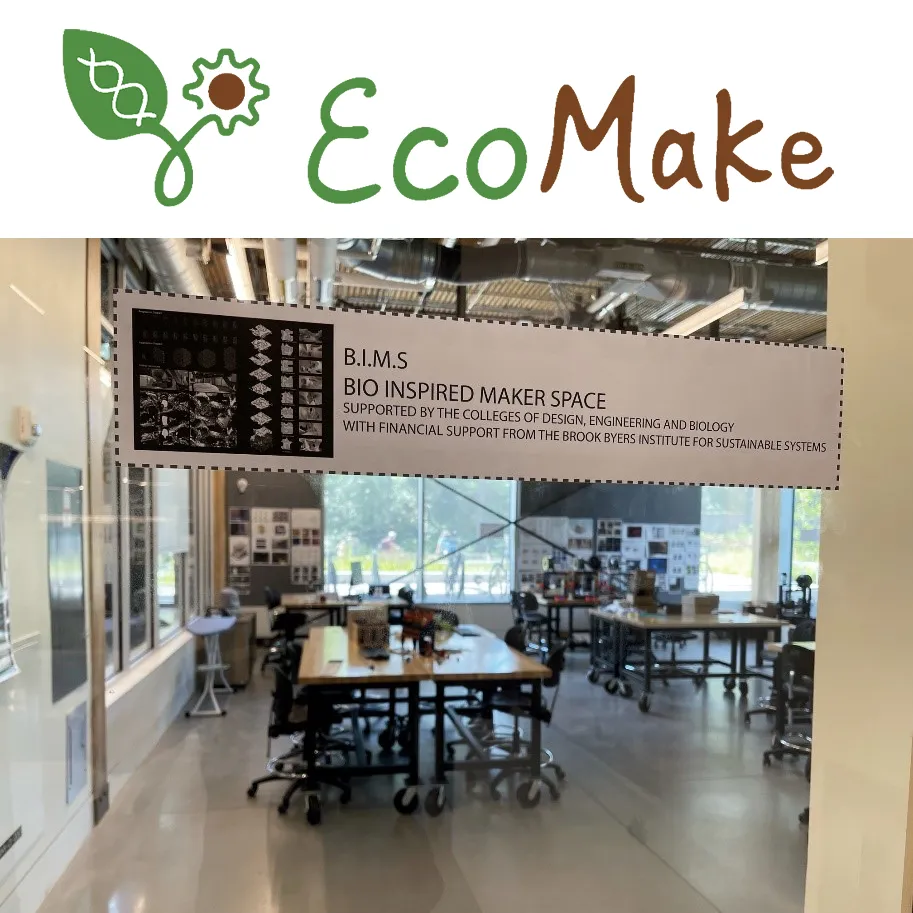
At first glance, the new maker space opening in the Kendeda Living Building for Innovative Sustainable Design might look like many others. However, the space, named EcoMake, has some important differences. Because it is housed in the Kendeda Building, there are strict standards for what types of materials and equipment can be used there in order to maintain its Living Building Certification. For example, you will find several 3-D printers there, like almost all maker spaces, but the plastic filament used in them is made from recycled plastic, perhaps recycled on-site with equipment in the lab itself.
Some might regard such restrictions as too limiting to their creativity or design goals. Viewed another way, this approach opens up a unique set of possibilities. Biologically Inspired and Green Design (BIG-D) is a field of study (sometimes referred to by different names, like “biomimicry”) that has demonstrated a lot of promise in the past few decades. This approach aims to translate the billions of years of knowledge and design wisdom embodied in our biological world into innovative green products. However, no matter how green the design of a product, they are often manufactured with traditional processes with limited consideration for energy, toxicity, water, or material use. Having a lab like EcoMake will help to usher in the field of study of Biologically Inspired and Green Manufacturing (BIG-M). BIG-M will require knowledge, equipment, and resources that are much different than traditional fabrication methods. Like natural systems, this new facility will operate within the means of nature, using no more energy or water than can be generated from its geometric footprint, and producing no more waste than it can assimilate on site.
EcoMake has the following tools and equipment (so far):
- 8 - Prusa I3S+ 3-D Printers
- 5 - Ender 3 Pro 3-D Printers
- EinScan-SP 3-D Object Scanner
- Mark-10 ESM303 Mechanical Tester
- 300-X Digital Microscope
- 3Devo Filament Extruder
- Shini SG-16N Plastic Granulator
- Plastic Chip Dryer
- Singer Heavy Duty 4423 Sewing Machine
- Complement of Standard Fabric Crafting Equipment
EcoMake, the bio-inspired maker space will be open to students from all disciplines. It is supported by the Colleges of Design, Engineering, and Biology, and the Brook Byers Institute for Sustainable Systems. Contact Michael Gamble for more information.
News Contact
Brent Verrill, Research Communications Program Manager, BBISS
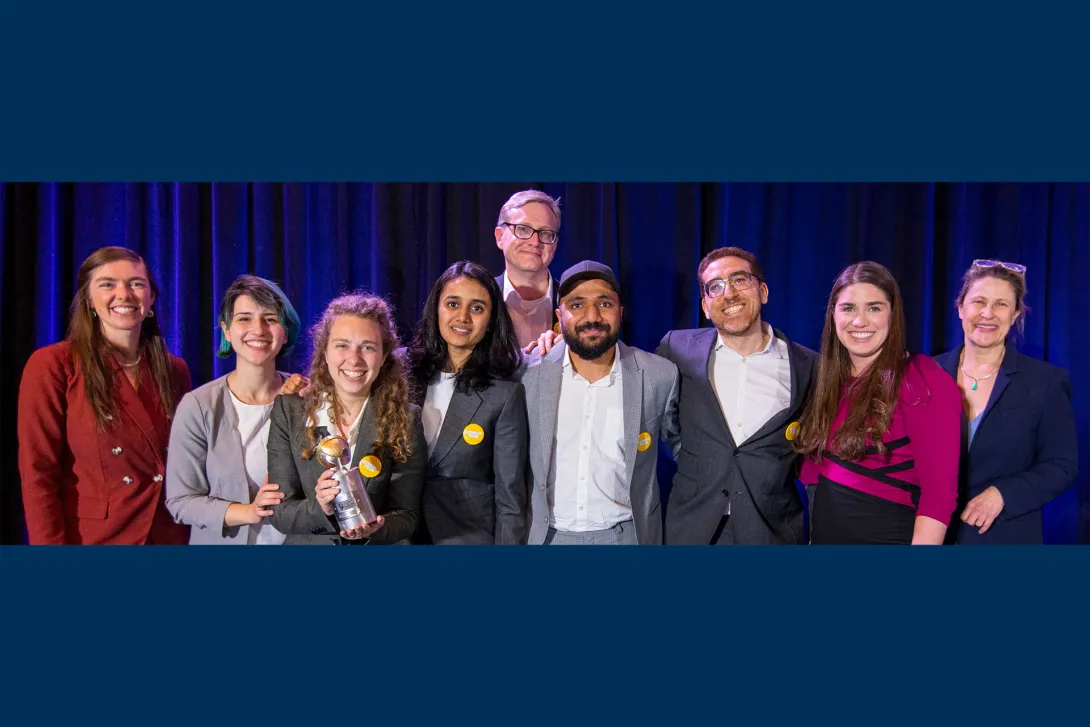
The Georgia Tech student team, "English Avenue Yellow Jackets", is the 2022 Design Challenge Residential Division Grand Winner for the Department of Energy's Solar Decathlon. They also took home first place in the contest's new Retrofit Housing division. Their winning entry retrofitted a 102-year-old house in Atlanta's English Avenue neighborhood.
"The target was to retrofit an existing house to net zero," Aayushi Mody, the team lead said. "And, well, we exceeded the target by making it net positive. The house basically generates more energy than it utilizes." But, Mody explained, that's just the beginning.
In addition to a net positive retrofit, the English Avenue Yellow Jackets provided solutions for rainwater harvesting and graywater reuse, a financial model that included land trust subsidies, and an additional 60 years' worth of projected weather data that proved the house would stay net positive even in cases of extreme weather.
Full Story...
News Contact
Ann Hoevel, Director of Communications, College of Design