
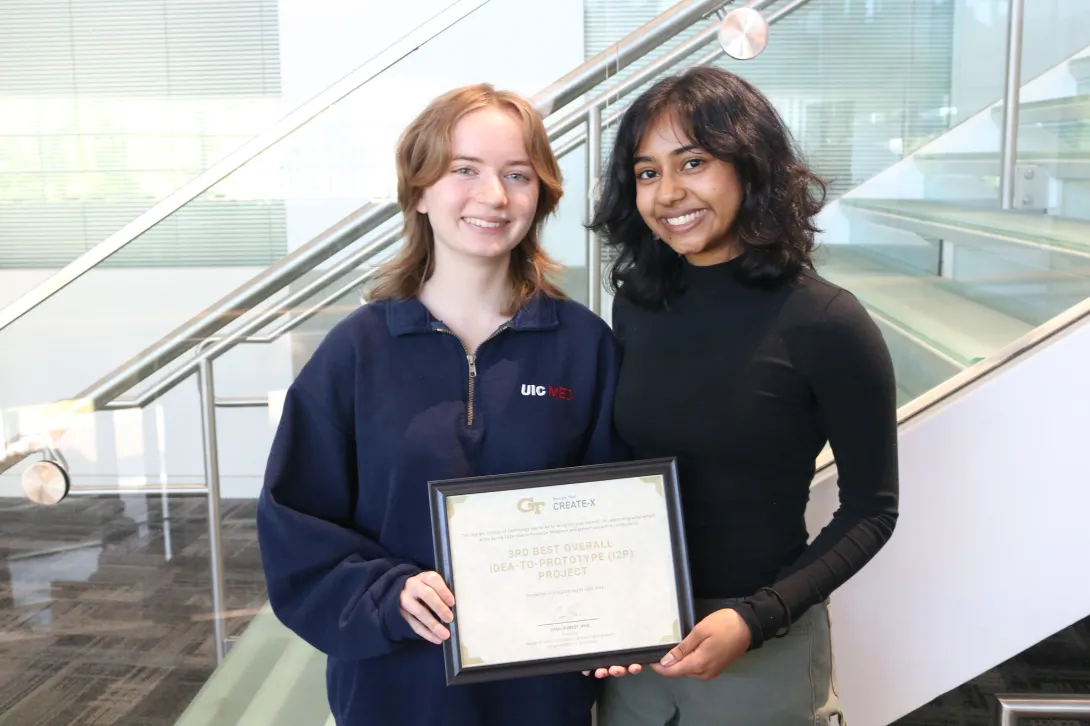
Electrosuit, a startup by Aubrey Hall and Sherya Chakraborty, secured third place in the Spring 2024 I2P Showcase, and their product, a garment for at-home electrical stimulation, targets individuals with chronic pain or motor impairments.
CREATE-X is built to help students integrate entrepreneurship into their academic journey through courses, workshops, and a startup accelerator. This spring, a new set of students displayed their solutions to real-world problems at the I2P Showcase. It’s our privilege to shine a light on and celebrate those journeys. Today’s spotlight focuses on the spring I2P Showcase third-place winners.
Electrosuit
Aubrey Hall, a first-year biomedical student, and Sherya Chakraborty, a first-year computer science major, founded a startup to produce a garment that eases the use of at-home, prescribed electrical stimulation for people with chronic pain, stroke, and motor impairments.
What made you interested in building this solution?
“I did research at Northwestern for a couple of years before this, and some of the patients I worked with had severe stroke and spasticity in their arms,” Chakraborty said. “I found out that when they tried using at-home prescribed electrical stimulation, they had trouble setting it off themselves. So, we created a garment to ease pressure on that.”
What part of the course was most helpful to you?
“One of our mentors, Sun Mi Park, was the first person to patent printable wires on fabric, and that gave us some inspiration to make our garment even more compact, easier to use, and integrate some interesting ideas that we wouldn’t have been able to without our mentors. So, our mentors are honestly the best part of the program,” Chakraborty said.
“For me, you don’t get a lot of chances to apply these engineering courses outside of the classroom,” said Hall. “This course is a really interesting way to get firsthand experience building a prototype and really understand the engineering process.”
What’s so special about CREATE-X?
“I think these student projects are the future, and a lot of these projects make it out of college and become actual companies. Giving students that possibility to make a change just from a simple idea and fueling that with funding so we don’t have to take risks out of our own pockets is a, really big deal,” Chakraborty said.
“It’s helpful to have that safety net, knowing that you have your mentors to back you, and also the people of the program to back you. It brings a lot of security and opportunity to try different things out and not have to be so fearful of failure. Even if you fail a million times, you can get back up and try again,” Hall said.
What’s the best insight you’ve gained from doing this?
“I think one big misconception is that entrepreneurship has a lot to do with finance and business and just lucrative ideas, but it’s pretty important to understand that you can solve a seemingly everyday problem,” said Chakraborty. “If it affects you or your friends, it’s still worth trying to find a way to solve it, especially backed up with money and mentors from CREATE-X. What’s the harm in trying something out?”
“Don’t try to make it feel like it’s an all-or-nothing project,” Hall said. “You’re allowed to live your life as a college student but also pursue these interesting ideas and figure out if you enjoy entrepreneurship. It shouldn’t be this daunting task where if you don’t put everything in, you’re going to fail.”
“It’s also important to keep an open mind. We might come in with an idea and a very specific way of executing that idea, but we found out through talking with mentors, and with other students and people who gave us advice, that sometimes the idea you come in with is not going to be the same thing you end up with,” Chakraborty said.
Next Steps
“We’ve only done four or five prototypes so far,” she noted. “We want to do at least 12 of those prototypes and keep working with our mentors, keep making connections at Emory, and just constantly getting more and more feedback about our prototypes until we get to a state where we’re satisfied, and we can demo our product and work with physical therapists across Atlanta.”
If you’re a student interested in building your own product for college credit, apply for I2P. And join us for Demo Day, Aug. 29, at 5 p.m., in the Georgia Tech Exhibition Hall to see new CREATE-X founders launch products in a variety of industries. Tickets are free but limited. Register today to secure your spot.
News Contact
Breanna Durham
Marketing Strategist
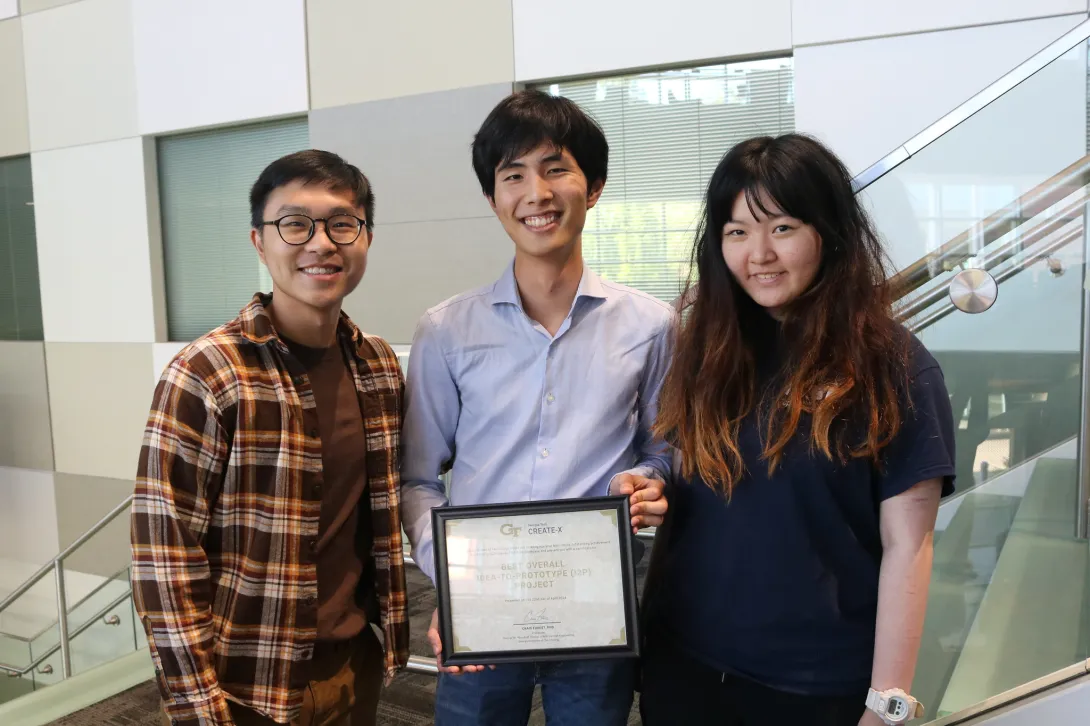
Founded by first-year computer science majors Marianna Cao, James Gao, and Jaeheon Shim, founders of Dolfin Solutions, win at I2P Spring 2024 Showcase
During the school year and the summer, Georgia Tech students can incorporate entrepreneurship into their college experience through courses, workshops, special events, and even a startup accelerator. CREATE-X invites you to delve into the journeys of our top achievers, this time focusing on the Spring 2024 I2P Showcase first-place winners:
Dolfin Solutions
Marianna Cao, James Gao, and Jaeheon Shim, first-year computer science majors, are the founders of Dolfin Solutions, a personal financial management platform that promises a unified solution to budgeting, transaction management, and expense tracking, among other personal finance tasks.
What challenges did you have in I2P, and how did you work through them?
“We were really lucky to get an excellent mentor, Aaron Hillegass. He has a lot of experience in the industry as a startup founder himself, and he gave us a lot of help, both technical as well as business, throughout the process. That helped us make better decisions,” Gao said.
“I think the biggest challenge was, I had done projects in the past by myself, writing the full stack, but working together, communicating the requirements, and integrating everyone's different code at the end was a little bit of a logistical struggle,” Shim said. “But we managed to figure it out.”
What advice do you have for students interested in I2P or entrepreneurship in general?
“Go for it. It's a three-credit course, so it counts toward your junior capstone as well. You get $500. Now is the perfect time to start because you don't have much to lose. If you're doing I2P and your company fails, you still have four years of college; you can still pursue a traditional path. It's a little risk but a lot to gain,” Shim said.
“Even if you pivot or change your idea, it's important to believe in what you started,” said Cao. “If you don't believe in your app, then nobody else does. Right now, you have all of the friends, mentors, professors, and the right resources, and money is not an issue. It's a good opportunity for you to work on it on the side, and maybe it could turn into something.”
What’s Next?
“We’re going to build for the iOS and Android platforms, and then we're going to deploy hopefully by the end of summer,” Shim said.
If you’re a student interested in building your own product for college credit, apply for I2P. And join us for Demo Day, Aug. 29, at 5 p.m., in the Georgia Tech Exhibition Hall to see new CREATE-X founders launch products in a variety of industries. Tickets are free but limited. Register today to secure your spot.
News Contact
Breanna Durham
Marketing Strategist
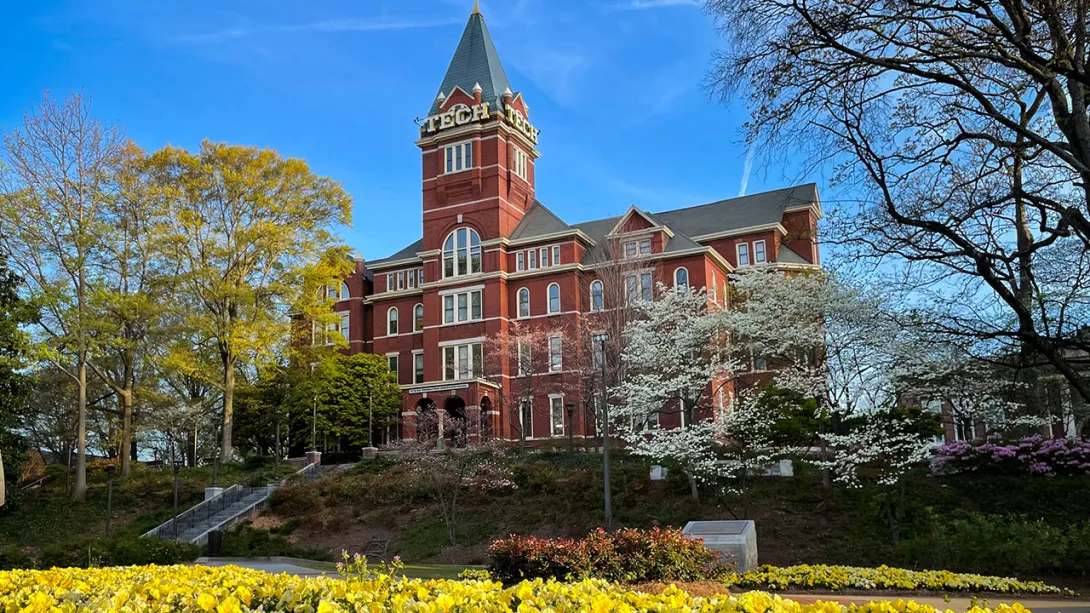
Students in the Pulp and Paper Certification Program at Georgia Tech had real-world experiences outside the classroom this spring. Over 30 students taking the Emerging Technologies in the Manufacture of Forest Bioproducts course (CHBE/ME 4730/8803) took field trips to Greif’s Austell location and GranBio’s Thomaston facility in Georgia. The course is taught by Chris Luettgen, professor of the practice and initiative lead for the process efficiency & intensification of pulp paper packaging & tissue manufacturing initiative at Georgia Tech's Renewable Bioproducts Institute.
At the Sweetwater Mill, one of Greif’s three paper mills in Austell, students saw the pressure cylinder machine, a pre-coater that smoothens the board for printability, and a curtain coater that makes value-added products such as one-sided chipboard packaging for retail displays. The mill runs 100% recycled fiber into stock cores, gypsum board liners, and chipboard packaging. The tour included converting the machine roll (called a parent roll) into smaller rolls that will be further converted at downstream customers’ locations.
At the GranBio’s facility in Thomaston, Tech students were able to see a biorefinery at work where a wide variety of lignocellulosic feedstocks, including wood chips, were getting converted into multiple bioproducts. They had a firsthand look at the SEW (sulfur dioxide, ethanol, and water) process, which was quite different from the traditional kraft pulping process. It creates a highly acidic mush, with a high pH, instead of fiber, which could then be used to make biofuels and other value-added products. In addition, they were able to discuss the recent DOE award to scale their process to a 100 ton/day biomass to Sustainable Aviation Fuel (SAF). The company explained that they were still in site selection and would be hiring engineers in the near future.
About the Pulp and Paper Certification
The College of Engineering at Georgia Tech offers a certificate program in pulp and paper. The certificate consists of 12 credit hours focused on forest bioproduct topics, including lecture- and laboratory-based courses. Since its inception in 1990, more than 100 students have completed their certification.
The foundational course in the program introduces students to the history of pulp and paper manufacturing from its origins and covers the forest bioeconomy, wood structure, chemistry, and fiber morphology, and goes through the unit operations utilized to transform lignocellulosic feedstocks into value-added products, including chemical and mechanical pulping, recycled fiber operations, chemical recovery, bleaching, stock preparation, and papermaking.
The emerging technologies course focuses on the future of bioproducts industries. Case studies on the use of biomass in the production of value-added products are covered. Included are fluff pulp and dissolving pulps, alternative fibers, specialty papers, packaging, and printed electronics, biorefining technologies, nanocellulose and bio composites, and renewable polymers.
The pulp and paper laboratory course introduces students to pulping operations, bleaching, hand sheet formation, pulp and paper physical properties, and recycled fiber. The final course allows students to pursue research on special problems under supervision from an RBI-affiliated faculty.
Students in the program can demonstrate their proficiency in pulp and paper science and engineering and are in high demand for their expertise.
News Contact
Priya Devarajan || RBI Communications Program Manager
Georgia Tech has earned a STARS Gold Rating in recognition of its sustainability achievements from the Association for the Advancement of Sustainability in Higher Education (AASHE). STARS, the Sustainability Tracking, Assessment & Rating System, measures and encourages sustainability in all aspects of higher education.
With more than 1,200 participating institutions in 52 countries, AASHE’s STARS program is the most widely recognized framework in the world for publicly reporting comprehensive information related to a college or university’s sustainability performance. Participants report achievements in five areas:
- Academics and research
- Engagement
- Operations
- Planning and administration
- Innovation and leadership
“STARS was developed by the campus sustainability community to provide high standards for recognizing campus sustainability efforts,” said AASHE Executive Director Meghan Fay Zahniser. “Georgia Tech has demonstrated a substantial commitment to sustainability by achieving a STARS Gold Rating.”
The STARS program is open to all institutions of higher education and allows for both internal comparisons as well as comparisons with similar institutions. "STARS is the cornerstone of sustainability reporting for colleges in the U.S. It is our most comprehensive process for collecting data and tracking our sustainability progress at Georgia Tech," said Jennifer Chirico, associate vice president of The Office of Sustainability at Georgia Tech.
The Office of Sustainability led the charge, reaching out to more than 200 individuals and dozens of offices collecting data for STARS. The information provides a deep understanding of how diverse campus areas work together to support sustainability. STARS data directly informed Georgia Tech’s recently published Climate Action Plan, whose goals advance Tech’s commitment to advancing the UN Sustainable Development Goals (SDGs).
“Achieving this rating is evidence of our commitment to sustainability and responsible stewardship,” said Shantay Bolton, executive vice president for Administration and Finance. “It reflects the collaborative efforts of our entire campus community — students, faculty, and staff — as we work together to create a more innovative, environmentally conscious, and socially responsible institution. Let this be an inspiration as we continue advancing sustainable practices and making a positive impact on our campus, in Atlanta, the state of Georgia, and the world.”
Emma Blandford serves as portfolio manager for Sustainability Next and project manager for the STARS report. She says, “This team is incredibly passionate, and they are all experts in their fields. This report truly showcases that amazing work, but the progress does not end there. As proud as we are of earning a Gold Rating, Georgia Tech will continue to improve our commitment to sustainability going forward.”
It is important to note that this report showcases data only from Summer 2021 through Summer 2023. Since the fall, Georgia Tech has:
- Launched Sustainability Next, a 10-year strategic plan to advance sustainability across research, education, operations, and commercialization.
- Launched the Georgia Tech Climate Action Plan, an actionable road map for halving Institute emissions by 2030 and reaching net-zero emissions by 2050. Led by the Office of Sustainability, it includes 30 climate-focused strategies.
- Distributed over $400,000 in seed grants for sustainability-related research in partnership with the Brook Byers Institute for Sustainable Systems, the Strategic Energy Institute, and the Renewable Biproducts Institute.
- Awarded over $150,000 in seed grants significantly expanding the reach of Georgia Tech’s sustainability-across-the-curriculum initiatives and launched a Community of Practice through the Center for Teaching and Learning in partnership with the Undergraduate Sustainability Education Committee.
The Gold Rating represents an improvement from Georgia Tech's 2021 submission, which received a Silver designation. From highest to lowest, STARS ratings include Platinum, Gold, Silver, Bronze, and Reporter. Blandford adds, “We have landed Gold status, but the path to Platinum is visible. We are excited to see how far we can go.”
Georgia Tech’s STARS report is publicly available on the STARS website.
News Contact
Emma Blandford
Program and Portfolio Manager
Sustainability Next


The College of Sciences is funding two research centers through a new seed grant program.
Selected from a finalist pool of nine proposals, Associate Professors Yuanzhi Tang and Thackery Brown’s ideas were chosen for their high potential for novel interdisciplinary research and impact.
Tang’s center will focus on sustainable mineral research, and Brown’s on spatial computation and navigation. Applications for the research will span the development of more sustainable batteries, as well as seeking to improve human health and well-being.
“Improving the human condition, fostering community, and pursuing research excellence are at the forefront of Georgia Tech’s mission, and these new centers will play a critical role in furthering that goal,” says Laura Cadonati, associate dean for Research in the College of Sciences and a professor in the School of Physics. “The College of Sciences is thrilled to support these new initiatives, and is excited to continue to develop the seed grant program.”
A second call for research center proposals is planned for January 2025, with funding to start in July 2025.
The new Center for Sustainable and Decarbonized Critical Energy Mineral Solutions (CEMS), to be led by Yuanzhi Tang, an associate professor in the School of Earth and Atmospheric Sciences, will serve as a hub for sustainable procurement solutions for critical energy mineral resources, including rare earth elements and metals used for battery production.
Thackery Brown, an associate professor in the School of Psychology, will lead the second center, the Center for Research and Education in Navigation (CRaNE). CRaNE will investigate problems related to spatial computation, cognition, and navigation — which has implications for human health, animal conservation, smart architecture and urban design.
“This generous support from the College of Sciences will enable us to host a conference on spatial cognition, computation, design, and navigation; to provide collaborative multi-lab seed grants; and to establish the first of a series of explicitly co-mentored, interdisciplinary graduate student Fellowships,” Brown says. “Collectively, these are the seeds of a high-impact and self-sustaining center.”
About the Center for Sustainable and Decarbonized Critical Energy Mineral Solutions (CEMS)
Yuanzhi Tang, School of Earth and Atmospheric Sciences
Co-sponsored by the College of Sciences, Strategic Energy Institute (SEI), Brook Byers Institute for Sustainable Systems (BBISS), Institute for Electronics and Nanotechnology (IEN), and Institute for Materials (iMat), CEMS began as a joint BBISS-SEI initiative lead project that has since grown into a joint center focused on critical elements and materials for sustainable energy.
Sustainably sourcing these materials provides a critical foundation for both high-tech industry and green economy. “Rare earth elements and battery metals like lithium, copper, and nickel are in high demand, but low domestic resources and production have resulted in a heavy reliance on imports,” Tang explains. “How can we domestically produce these resources, and how can we do this sustainably?
Georgia Tech and the College of Sciences are at a unique position for developing a large regional research umbrella to connect these dots.”
CEMS will leverage on three key pillars: science and technology development, strengthening collaboration among the University System of Georgia (USG) universities, and developing regional resources and economy, Tang says. “By leveraging collaboration among Georgia universities, and fostering engagement with regional industries, the Center will develop new science and technology, leading the way in research on how to procure these ‘essential vitamins’ for clean energy transition in a sustainable and decarbonized manner.”
About the Center for Research and Education in Navigation (CRaNE)
Thackery Brown, School of Psychology
CRaNE will focus on solving problems related to spatial computation, cognition, and navigation. “How do we treat catastrophic loss of one’s ability to get from A to B in Alzheimer's disease? How do we build smarter cities that are easier and more carbon efficient to navigate? How can we develop robots,” Brown says, “which navigate with the flexibility and efficiency of our own minds? CRaNE will bring together experts from many different fields to help address these problems with truly creative and integrative scientific and technological solutions.”
CRaNE will support interdisciplinary collaborative research, including developing a graduate student fellowship program, and conducting K-12 outreach.
“Our goal for CRaNE is to position the College of Sciences, Georgia Tech, and our extended network of collaborator institutions as a center of gravity for cutting-edge work on how the mind, brain, and artificial systems process space — how they can be made better at it, and how we can engineer our world around us in ways that support the humans and animals that need to navigate it to survive,” Brown says.
Emphasizing the collaborative nature of CRaNE, Brown adds that “by targeting collaborative grants, research, and education, and by promoting outreach and education earlier in the STEM pipeline, we hope to accelerate progress at the frontiers of these fields — and to invest in future science that cannot be easily addressed by a single lab or discipline.”
News Contact
Written by Selena Langner
Contact:
Jess Hunt-Ralston
Director of Communications
College of Sciences
Georgia Tech
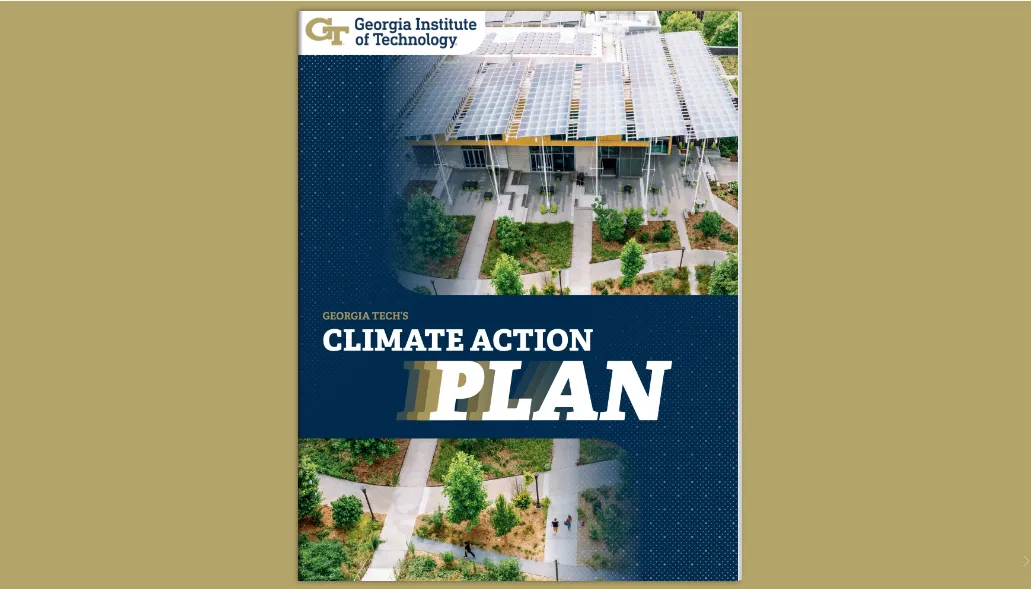
Cover of the Georgia Tech Climate Action Plan.
Georgia Tech unveiled its first Climate Action Plan (CAP), an actionable road map for halving Institute emissions by 2030 and reaching net-zero emissions by 2050. It provides strategies for mitigation, adaptation, climate education, and research, while finding ethical, cost-effective solutions.
The CAP is a deliverable of Sustainability Next, Georgia Tech’s 10-year strategic sustainability plan, and it is aligned with the United Nations Sustainable Development Goals, the Institute’s strategic plan, and the Comprehensive Campus Plan.
“As one of the world’s leading research universities, Georgia Tech has the opportunity, and the obligation, to create and share solutions that can help curb climate change and mitigate its harmful impact on our planet and our lives,” said President Ángel Cabrera. “Our Climate Action Plan is bold and ambitious, aiming for 100% clean ground transportation by 2030 and 100% clean energy by 2050. These goals are not easy, but they reflect the seriousness of the challenges before us.”
The CAP was led by Georgia Tech’s Office of Sustainability, with engagement across the campus community. The CAP Advisory Task Force, comprising experts and Institute leadership, helped guide the effort. Nine working groups in key focus areas developed climate action strategies, and additional stakeholder outreach with students, staff, faculty, and the Atlanta community took place at workshops, events, town halls, and webinars.
The plan’s nine focus areas and guiding principles are:
- Community, Ethics, and Accessibility: We seek to ensure that fair and just climate policies and strategies are in place at Georgia Tech and that they prioritize affordable climate change solutions that support our internal and external community.
- Building Energy: We are committed to reaching net-zero emissions by 2050.
- Renewable Energy and Offsets: We prioritize clean energy technologies to eliminate emissions.
- Mobility: We optimize campus mobility through a variety of transportation modes that are accessible, affordable, and low- to no-emissions, considering environmental and human health impacts when determining and implementing transit and land use actions.
- Materials Management: We support a thriving circular economy that focuses on upstream systems for achieving zero waste, ensures sustainable procurement, and supports our local community.
- Water Management: We adapt our water infrastructure to be resilient to the impacts of climate change.
- Education: We prepare all students, regardless of discipline, to address climate-related challenges in their personal and professional lives.
- Research: We expand support for faculty, staff, and students to advance innovative research and projects to address climate-related issues.
- Carbon Sequestration: We leverage the natural and physical resources of our campus to sequester and store carbon dioxide from the atmosphere.
The plan has 30 strategies for reaching net-zero emissions by 2050 and advancing climate research and education. The most ambitious strategies include:
- Transition to electrification of combustion-based heating systems.
- Increase energy efficiency in building operations.
- Increase on-site renewable energy production, and procure energy generated from renewable and zero-emissions sources.
- Transition the campus vehicle fleet to zero-emissions vehicles and increase sustainable and affordable commuting options.
- Implement blackwater reuse systems and increase water efficiency and conversation.
- Become a Zero Waste campus.
- Prioritize climate education across Georgia Tech’s curriculum.
- Identify and shape future climate research opportunities in which Georgia Tech aspires to lead.
“Georgia Tech is committed to sustainability and the environmental stewardship of our campus community,” said Jennifer Chirico, associate vice president of Sustainability and chair of the CAP Advisory Task Force. “The CAP was developed in partnership with leadership and with our own experts from within Georgia Tech. As we move toward implementation, it will require a whole-community approach, and we will continue to work together to reach our goal of net-zero emissions by 2050.”
To read or download the full plan, visit the Office of Sustainability’s webpage here. If you are interested in participating in an implementation committee, please fill out the form on the CAP website.
News Contact
The University of Waterloo and the Board of Regents of the University System of Georgia, representing Georgia Institute of Technology (Georgia Tech), have officially entered a Memorandum of Understanding (MOU) to strengthen academic and research ties between the two institutions. The MOU signifies a commitment to fostering collaborative initiatives in research, education, and other areas of mutual interest. Both universities, recognized for their global impact and innovation, are eager to embark on this journey of cooperation.
Charmaine Dean, Vice-President of Research & International, shared, “The University of Waterloo is pleased to embark on a new collaboration with Georgia Tech, featuring faculty and student exchanges, joint research projects, dual degrees, and conferences. Strengthening ties between our institutions through this collaboration creates a dynamic environment for our faculty and students to foster innovation in many areas of mutual excellence.”
“Georgia Tech is excited to see its NSF AI Institute for Advances in Optimization (AI4OPT), under the leadership of Prof. Pascal Van Hentenryck, partner with experts from the Waterloo Artificial Intelligence Institute of the University of Waterloo. I am really looking forward to the impact that this partnership will have in advancing the fundamental knowledge of AI, in further expanding its applications, and in enabling its wider adoption,” noted Prof. Bernard Kippelen, Vice Provost for International Initiatives at Georgia Tech.
This collaboration is poised to elevate the academic and research landscape of both institutions, promoting global engagement and creating opportunities for students and faculty to thrive in an interconnected world.
News Contact
Breon Martin
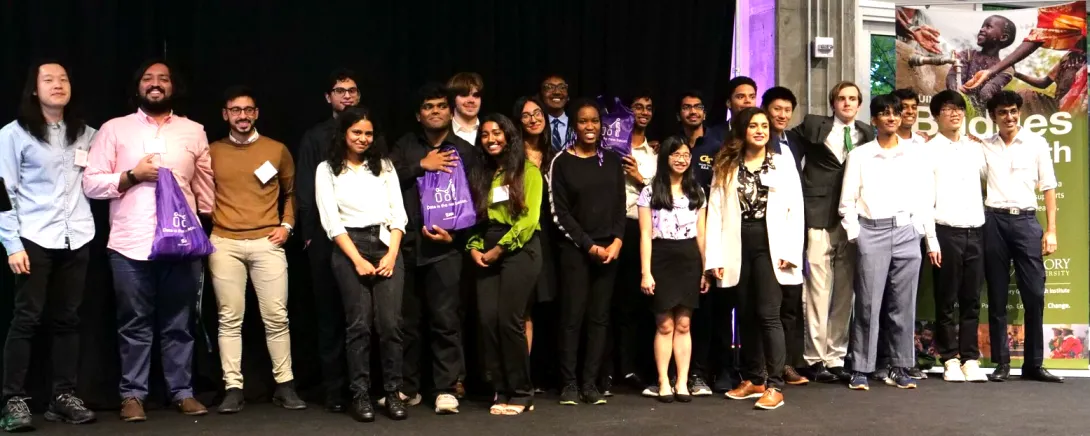
Students tackled climate change in the Fall 2023 Emory Global Health Institute (EGHI) /Georgia Institute of Technology (GT) Global Health Hackathon, Nov. 11, at Tech Square ATL Social. Competing for cash prizes and a spot in GT Startup Launch, first place went to Team iManhole. The team created an integrated system that gathers real-time data from manholes and uses machine learning algorithms to predict flooding to manage traffic and evacuation routes.
“The effects of climate change are felt in every country with the brunt and burden of an unmanaged climate crises threatening to set back global health progress by eroding decades of poverty eradication and health equity efforts worldwide,” said Dr. Rebecca Martin, EGHI director of Emory Global Health Institute. “Students are an important partner in our work as a global community to mitigate the impacts of climate change on health, safety, and security.”
The EGHI/GT Global Health Hackathon is a partner event between EGHI and CREATE-X. It provides multidisciplinary student teams from Emory University and the Georgia Institute of Technology an opportunity to create technology-based product solutions for global health problems. The target for this fall’s event was creating solutions that address urban flooding, urban heat, or global sea level rise in densely populated, low-resource urban settings. Prizes included $4,000 and a golden ticket into CREATE-X Startup Launch for first place winners, $3,000 for second place winners, $2,000 for third place winners, and $500 each for two honorable mention winners.
“This hackathon continues to be a wonderful partnership between our two institutions that gives these talented students the platform and support to put forward solutions to the most pressing issues we face today,” Rahul Saxena, director of CREATE-X, said. “Each hackathon, I’m increasingly impressed with their ingenuity and their dedication to build something of impact.”
Check out the event program on the EGHI website and see photos from the event on the CREATE-X Flickr account. The full list of the winners of this year’s event includes:
1st Place: iManhole
An integrated system that gathers real-time data from manholes and uses machine learning algorithms to predict flooding to manage traffic and evacuation routes
Team Members: Imran Shah, Leonardo Molinari, and Jiaqi Yang
2nd Place: Canopy
A climate-tech software platform for democratizing climate analytics using machine learning for urban development planning.
Team Members: Deesha Panchal, Kruthik Ravikanti, Vaibhav Mishra, Nicholas Swanson, Jennifer Samuel, and Vaishnavi Sanjeev
3rd Place: Floodwise
A package of effective simulations and an informed chatbot that help facilitate wise decisions during floods.
Team Members: Ansh Gupta, Dimi Deju, Mukund Chidambaram, and Sahit Mamidipaka
Honorable Mention
Conquering Heat Islands
Process and hardware that uses excess solar power to mine crypto
Team Members: Rida Akbar, DJ Louis, Edward Zheng, Dmitri Kalinin, and Jade Bondy
Real-Time Computational Modeling of Urban Flooding and Evacuation in Local Atlanta Communities
Integrated system to gather real-time data from manholes and use machine learning algorithms to predict flooding and optimize traffic/evacuation.
Team Members: Imran Shah, Leonardo Molinari, and Jiaqi Yang
News Contact
Breanna Durham
Marketing Strategist
breanna.durham@gatech.edu
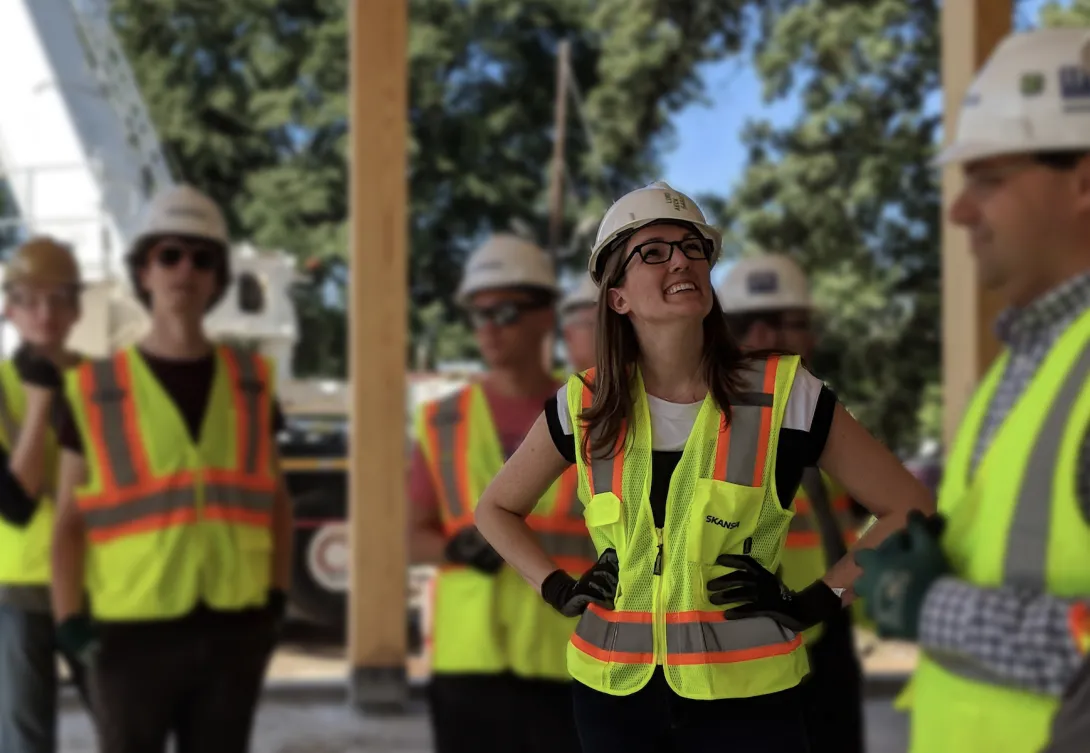
When Amy Stone first arrived on the Georgia Tech campus in 2006 to pursue a bachelor's degree in architecture, she was in awe of her surroundings. Seventeen years later, the soon-to-be triple Jacket and mother of three leaves behind her own stamp on the Institute's future.
When Amy Stone first arrived on the Georgia Tech campus in 2006 to pursue a bachelor's degree in architecture, she was in awe of her surroundings. Seventeen years later, the soon-to-be triple Jacket and mother of three leaves behind her own stamp on the Institute's future.
While she didn't realize how much time she'd spend at Tech after arriving as a transfer student, Stone knew instantly that she had found a home here.
"I remember driving up to Georgia Tech and just being wowed by the beauty of the campus and its history and feeling like this place was special,” she said. “This green urban campus in the middle of a city has so much to offer. I kept coming back for the quality of the education, and I love to see how the campus has gotten more beautiful, advanced, and innovative by improving upon itself."
Among the transformative projects completed during Stone's time on campus is The Kendeda Building for Innovative and Sustainable Design — a building she had a hand in designing as a member of the project team.
"It's such an honor as a student to be able to put my own thumbprint on this campus that has given me so much. I'm so proud of the outcome and that it can be used as an example, as a learning lab, and an educational opportunity to show this is what sustainability looks like," she said.
As construction crews continue their work on the early stages of Tech Square Phase 3, Stone sees another dream project come to fruition, having worked on the concept phase of the high-rise towers. The Scheller and George Towers will add more than 400,000 square feet of new space for research and collaboration and, to Stone, signify an ongoing commitment to the Institute putting its mission statement into action.
"There is something so ambitious and beautiful about this project, continuing to connect a green, urban campus to these dense buildings that are reaching up and stating to the skyline, 'We are Georgia Tech,'" she said of the towers, which are expected to be completed in 2026.
Stone has seen the campus grow through the years alongside her growing family, which now includes three kids. After completing her first degree, she and her husband, Lorrin, welcomed their first two children. When she returned to Tech to pursue a master's degree in architecture, her children were there to lend a helping hand.
"I was hauling them to student meetings, and they were meeting me in the studio between classes. They have been on campus more times than they recognize, and they are just growing as this campus grows. They have watched me do homework, they have been a part of my group assignments and group calls, and I feel it's only fitting that they are here at Commencement at the final moment with me," she said.
That teamwork played a key role in Stone's final semester of her master's program in 2020, when her backyard became her lab due to the pandemic.
"I built my model for my final project with my son and my daughter breaking bricks and gluing them to the side of a facade," said Stone, who was pregnant with the couple's third child at the time. "I got to bring in small hands to help with projects and explain to them what I was doing and why I was doing it in a way that they don't normally get to see. We learned a lot during the pandemic, but that's what we do at Georgia Tech. We innovate, we learn, we adapt."
Intrigued by the intersection of architecture and business, Stone was drawn to the Scheller College of Business, where she will receive her MBA, bringing an end to her educational journey with her family at her side. After taking time to enjoy the holidays and complete a Half Ironman triathlon, Stone will be teaching an architecture course at Kennesaw State University in the spring.
News Contact
Steven Gagliano - Institute Communications
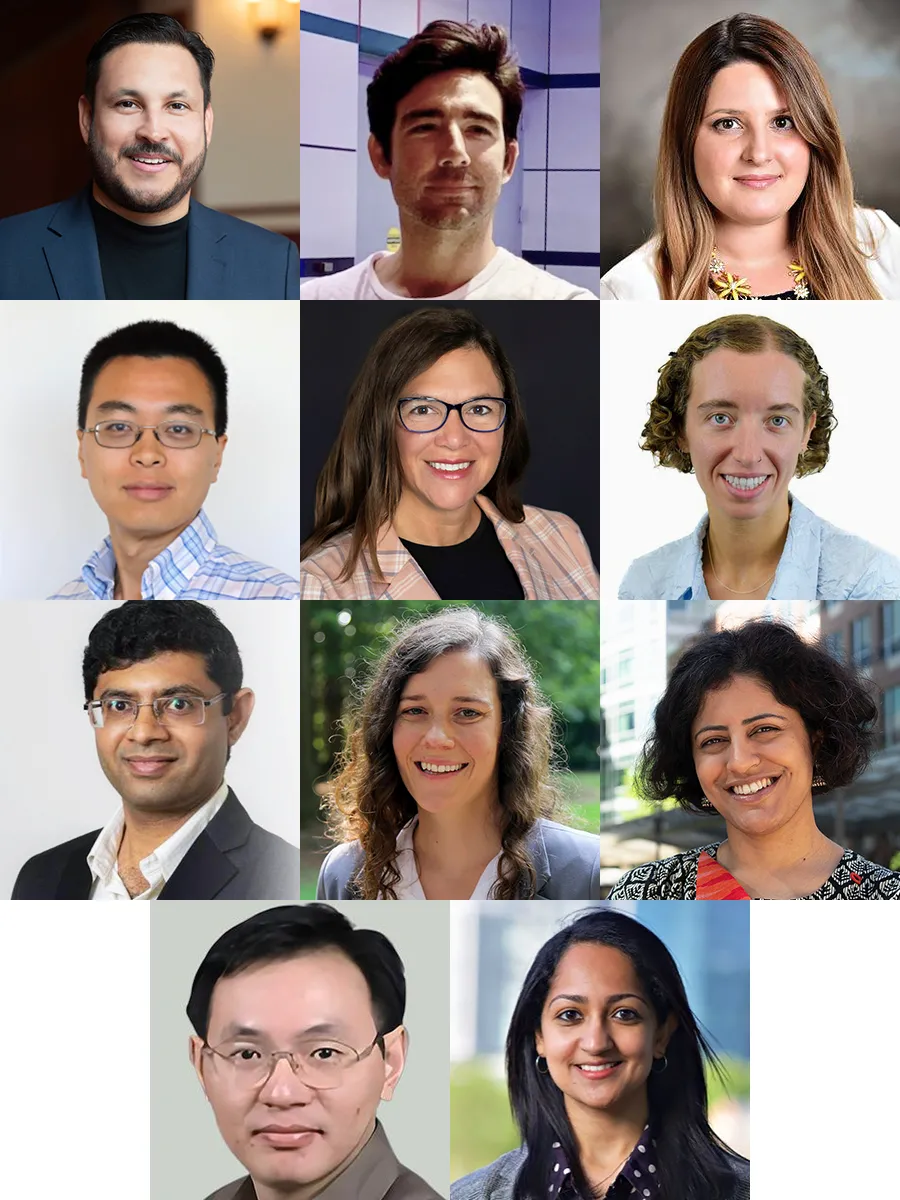
L to R: Omar Asensio; Christos Athanasiou; Fani Boukouvala; Peng Chen; Kelly Comfort; Constance Crozier; Ashutosh Dhekne; Jennifer Kaiser; Neha Kumar; Jian Luo; Akanksha Menon
Eleven new Faculty Fellows were appointed to the Brook Byers Institute for Sustainable Systems (BBISS). In addition to their own work, BBISS Fellows serve as a board of advisors to the BBISS; foster the culture and community of sustainability researchers, educators, and students at Georgia Tech; and communicate broadly the vision, mission, values, and objectives of the BBISS. Fellows will work with the BBISS for three years, with the potential for a renewed term.
The BBISS Faculty Fellows program has been in place since 2014. Fellows are drawn from across all 6 colleges and GTRI at Georgia Tech. BBISS Interim Executive Director Beril Toktay says, "I’m delighted with the diversity of backgrounds and disciplines among the fellows and look forward to seeing the strengthening ties and growing collaborations in the sustainability community."
The new BBISS Faculty Fellows are:
- Omar Asensio - Associate Professor, School of Public Policy
- Christos Athanasiou - Assistant Professor, Daniel Guggenheim School of Aerospace Engineering
- Fani Boukouvala - Associate Professor, School of Chemical and Biomolecular Engineering
- Peng Chen - Assistant Professor, School of Computational Science and Engineering
- Kelly Comfort - Professor, School of Modern Languages
- Constance Crozier - Assistant Professor, H. Milton Stewart School of Industrial and Systems Engineering
- Ashutosh Dhekne - Assistant Professor, School of Computer Science
- Jennifer Kaiser - Assistant Professor, Civil and Environmental Engineering and Earth and Atmospheric Sciences
- Neha Kumar - Associate Professor, Sam Nunn School of International Affairs and the School of Interactive Computing
- Jian Luo – Professor, School of Civil and Environmental Engineering
- Akanksha Menon - Assistant Professor, George W. Woodruff School of Mechanical Engineering
These faculty members will join the current roster of Faculty Fellows:
- Baabak Ashuri - Associate Professor, School of Building Construction
- Joe Bozeman – Assistant Professor, School of Civil and Environmental Engineering
- Dylan Brewer - Assistant Professor, School of Economics
- Kate Pride Brown- Associate Professor, School of History and Sociology
- Andre Calmon – Assistant Professor, Scheller College of Business
- Kevin Caravati – Principal Research Scientist, Georgia Tech Research Institute
- Ellen Dunham-Jones – Professor, School of Architecture
- Brian Gunter - Associate Professor, Daniel Guggenheim School of Aerospace Engineering
- Daniel Matisoff - Associate Professor, School of Public Policy
- Jenny McGuire – Assistant Professor, School of Earth and Atmospheric Sciences
- Jessica Roberts – Assistant Professor, College of Computing
- Ilan Stern – Senior Research Scientist, Georgia Tech Research Institute
- Yuanzhi Tang - Associate Professor, School of Earth and Atmospheric Sciences
- Anjali Thomas> - Associate Professor, Sam Nunn School of International Affairs
- Zhaohui Tong - Associate Professor, School of Chemical & Biomolecular Engineering
- Perry Yang – Professor, School of City and Regional Planning
More information can be found on the BBISS website.
News Contact
Brent Verrill, Research Communications Program Manager, BBISS