
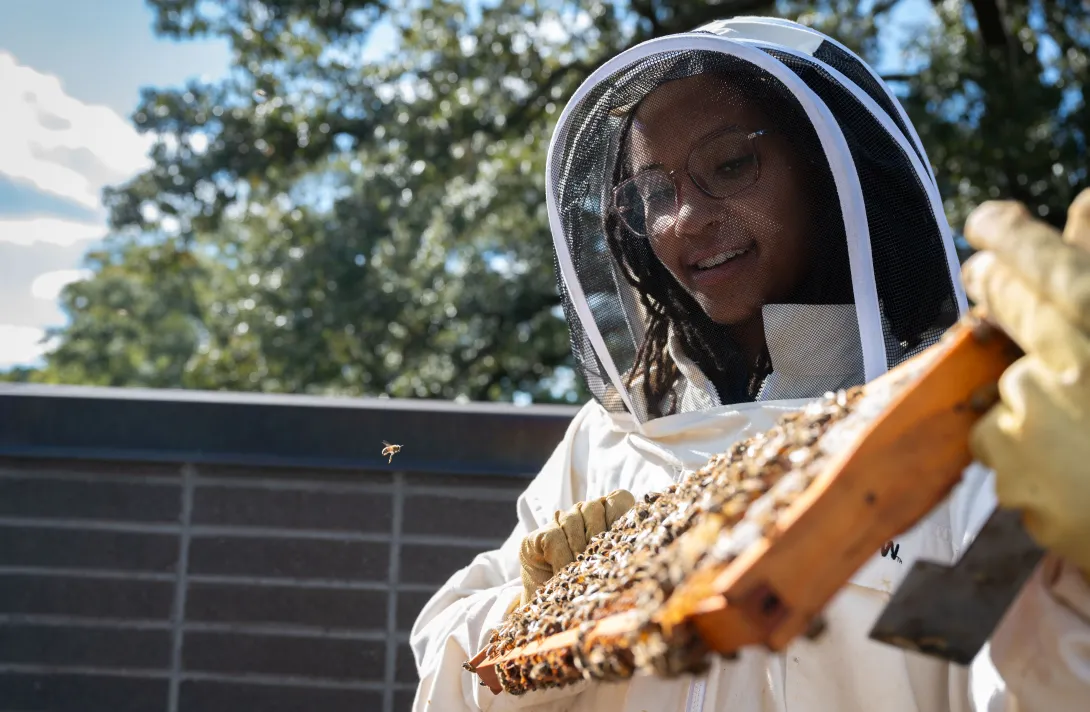
The Urban Honey Bee Project’s new beekeeper in residence is creating art and educating the public with her practice.
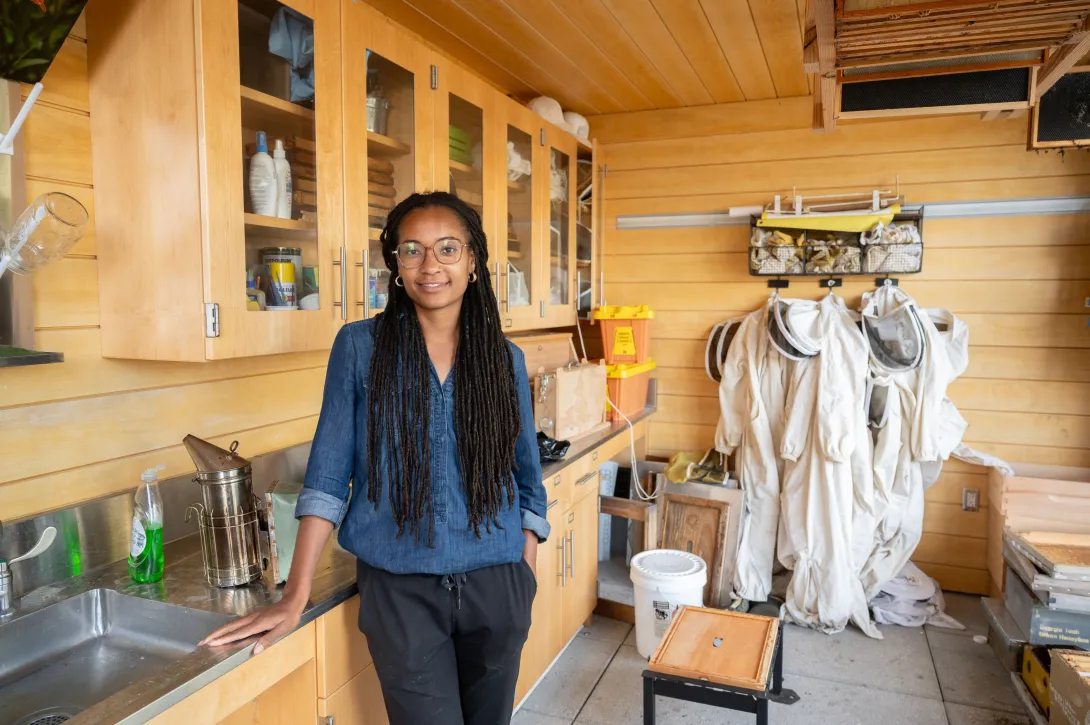
Janelle Dunlap conducts a hive inspection at The Kendeda Building for Innovative Sustainable Design. Photo by Allison Carter.
Hundreds of thousands of honeybees make their home atop The Kendeda Building for Innovative Sustainable Design, and it's up to Janelle Dunlap to make sure the hives thrive.
Dunlap was hired earlier this year as the Urban Honey Bee Project's (UHBP) first-ever beekeeper in residence. Throughout her residency, she'll conduct research into the pollinator's place in our ecosystem and how beekeeping may offer relief to veterans dealing with post-traumatic stress disorder (PTSD), while connecting with the bees through art.
Dunlap had been gardening for over a decade, but in 2016, when she got the urge to find new ways to engage with nature, she recalled a powerful piece of imagery that shaped her childhood — Wu-Tang Clan's music video for “Triumph” and its depiction of the group's members as a powerful swarm of Africanized killer bees.
"The political messaging and tying Africanized killer bees in with the stereotypes and the tropes of African Americans in the media, and the way that that was so poetically tied in, visually stuck with me,” she said. “It was the first time I recognized a political message being articulated through art. For that reason, it stuck with me that bees were a form of strong symbolism tied to resilience."
Living in Charlotte, North Carolina, Dunlap became a certified beekeeper under the Mecklenburg County Beekeepers Association in 2017. She continued practicing as she moved around the country, with stops in Chicago and Denver, eventually landing in Atlanta in 2021. Looking for a way to connect to the local beekeeping community, she attended an April presentation by UHBP Director Jennifer Leavey, who offered Dunlap a chance to get involved at Georgia Tech.
She now handles the inspection of the hives on The Kendeda Building roof, where she monitors for pests and ensures the bees have proper nutrition to sustain their population through the seasons. The UHBP began in 2012 with the goal of educating the Tech community on the importance of these pollinators within the Atlanta ecosystem and beyond — a charge that Dunlap carries on.
Over the next year, she will continue working on her sound art project that examines the frequency at which bees “buzz” and how it, along with the responsibilities of beekeeping, is being used by VA hospitals and programs to ease the effects of PTSD. While the science behind the connection is still being explored, beekeeping was recommended more than a century ago — to soldiers returning home from World War I — according to a CNBC profile of Bees4Vets, a nonprofit based in Nevada.
From the Hive to the Canvas
Whether it was baking sourdough bread or learning a new language, many people, including Dunlap, took the early days of the Covid-19 pandemic to pick up a new hobby. She began a master's program at the School of the Art Institute of Chicago with the goal of using beeswax in encaustic painting, which uses hot wax mixed with pigments. The use of natural materials collected through her beekeeping practice connects Dunlap to her work.
“It's a way of tapping into another level of consciousness. It's a way of articulating the noncommunicable relationship between me and the bees. When there's a language gap between people, we try to fill it in with translation, but without a direct way to translate the language or the sensation that I feel from the bees, this allows me to document my practice in an abstract form,” she said.
By layering the wax and applying heat throughout the process, Dunlap watches the pieces take shape, often with the unpredictability of an active hive, as she says the art “can create itself.” She collects the wax in small amounts, knowing that she can only produce her art if the bees are healthy.
"It's an eco-conscious practice, making sure I don't use more than I need," she explained. “I love the landscape it creates, and it's all about me creating a direct relationship with my medium and knowing that I earned it by developing a relationship with the bees."
As Dunlap continues her year-long residency with the UHBP, she intends to help educate the community, both on campus and around the Atlanta area, in the hopes that more prospective beekeepers will explore their curiosity to unlock the full potential of the practice.
"It's been a practice that keeps unveiling itself to me," she said. "As you get more engaged, you learn there is so much more to it than just the day-to-day hive inspections. There is a lot of beauty to it as well."
Students at Tech have several ways to get involved with research and beekeeping, including the Living Building Science VIP team, the Beekeeping Club, and various classes and workshops hosted by the UHBP.
News Contact
Steven Gagliano - Institute Communications
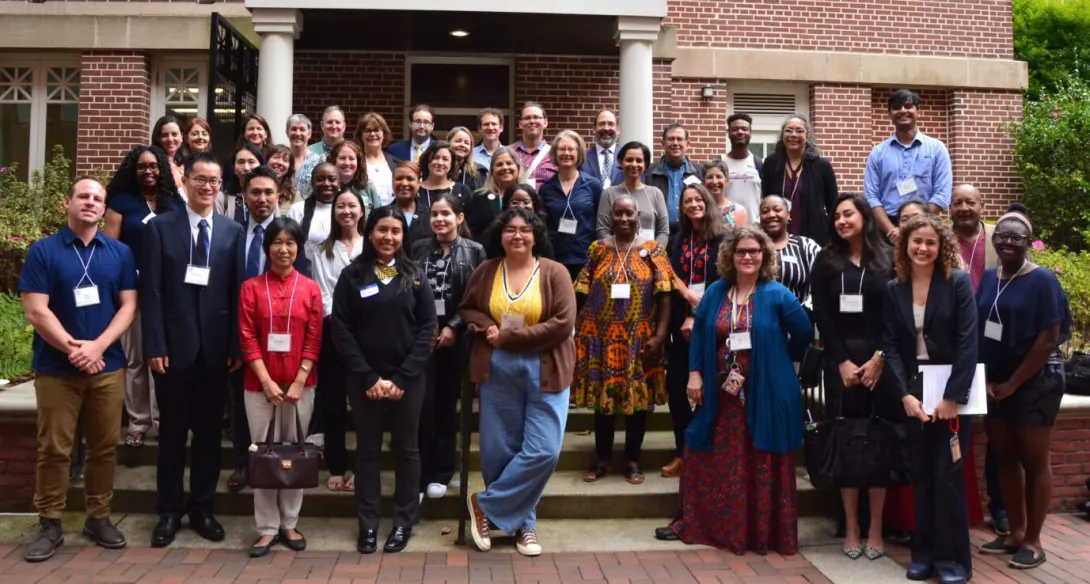
A group of attendees to the RCE Americas meeting in Atlanta pose for a group photo outside a red brick Georgia Tech building.
The Georgia Tech campus recently served as host to the 2023 RCE Americas Regional Meeting. From September 26 – 29, students, academics, and working professionals from around the Americas gathered to share their diverse perspectives and experiences, and delved into the discourse of sustainability. Participants attended panel sessions, presentations, site visits, and workshops (one of which was student led) over the three-day meeting, offering their unique viewpoints on how sustainability plays a role in their work and academic careers.
RCE Greater Atlanta was acknowledged by the United Nations University (UNU) on December 18, 2017, as a Regional Centre of Expertise on Education for Sustainable Development. RCE Greater Atlanta is one of over 190 RCEs recognized worldwide as part of the UNU RCE network. RCEs support multi-stakeholder implementation of the U.N. Sustainable Development Goals (SDGs) at the regional level, through education and training.
RCE Greater Atlanta is committed to leveraging educational resources for regional implementation of the SDGs, with a focus on equity and justice, building on Atlanta’s history as the home of the Civil Rights Movement. RCE Greater Atlanta members, representing all sectors of community, business, government, and civil society, contribute to the creation of an inclusive and collaborative community that advances SDG knowledge and action, and nurtures strong youth leadership by harnessing higher education capacity and knowledge for regional benefit.
Among the speakers were Keisuke Midori, section chief from the Ministry of the Environment of Japan; Jenny Hirsch, senior director of the Georgia Tech Center for Sustainable Communities Research and Education, representing RCE Greater Atlanta; and Georgia Tech President Ángel Cabrera. Several of the speakers traveled or participated virtually from around the United States, as well as from places as far-flung as Mexico, Puerto Rico, Canada, Peru, and Columbia. Atlanta was also well represented with participants and speakers from many area colleges and universities including Morehouse School of Medicine, Kennesaw State University, and Georgia Gwinnett College. A wide range of topics were presented such as “Youth Initiatives at Assateague Island,” “Energy Equity: Advancing SDG 7 Affordable and Clean Energy Through Community-University Partnerships,” and “Young Leaders of the Earth Charter at RCE Bogota.”
Several Georgia Tech students were in attendance and have offered their perspectives on the event. Lakshya Sharma, a master’s student in Human Computer Interaction and the student coordination manager for RCE Greater Atlanta, says, “The conference provided people coming from a wide variety of backgrounds an opportunity to present views, opinions, and talk about differences. I was given the responsibility to lead one of these sessions, where we discussed how important local community action is and how these actions can be made more efficient, inclusive, and effective. Participating in these discussions gave me a fresh perspective on things and made me explore new ways to solve problems, which I can now implement as a professional.”
Perrin Brady, who is studying History, Technology, and Society at Georgia Tech and serving as a student engagement coordinator for RCE Greater Atlanta, said, “I was able to raise questions to the room that I struggle with as a young person, like how to navigate possible conflict between requiring fast climate solutions and needing equitable/sustainable solutions that take time and consideration. People's answers gave me hope for future impacts I could make.”
Julie Chen, another student engagement coordinator, who is studying architecture at Georgia Tech, said, “The range of presentations remains an inspiration, as I was able to witness different RCEs actively involved in unique projects to further the UN SDGs. It was especially heartening to see young students taking the initiative. The RCE Americas Network is a great platform to share these efforts.”
The event was sponsored by Oak Ridge Associated Universities; Kennesaw State University’s Global Education Community Engagement and Outreach; Goethe Zentrum; and several Georgia Tech organizations, namely the Brook Byers Institute for Sustainable Systems, the Renewable Bioproducts Institute, the Strategic Energy Institute, the Atlanta Global Studies Center, and the Ray C. Anderson Center for Sustainable Business with the Drawdown Georgia Business Compact.
The RCE Americas Meeting is an annual event. For more information, see the following links:
Meeting Resources: https://drive.google.com/drive/folders/1K8XeWuCEXq66TEVZuQQm3X3EzfXQ3zVB?usp=sharing
Presentation Recordings: https://www.youtube.com/channel/UCpof6N7frRLybc0UW8dhX4A
News Contact
Kristina Chatfield, Program and Portfolio Manager, Center for Sustainable Communities Research and Education
October is Campus Sustainability Month, an international celebration of sustainability on college and university campuses. Georgia Tech will host sustainability-focused events all month. With the recent release of the Institute’s Sustainability Next plan, these campus opportunities underscore our commitment to the objectives outlined in the plan. There are numerous options centered on climate and social sustainability topics in addition to trips to explore nature around Atlanta. The programming is hosted by diverse campus groups and offers a glimpse into the wide-ranging commitment to sustainability at Tech.
Event Lineup
Climate Action Plan Student Engagement Workshop
Monday, Oct. 2
5 – 6 p.m.
The Kendeda Building for Innovative Sustainable Design, Room 210
As a deliverable of the Sustainability Next Plan, the Georgia Tech Climate Action Plan is a roadmap for integrating climate action strategies across operations, research, and education focusing on climate justice and reducing emissions. Students are invited to join the Office of Sustainability for an interactive, in-person event to learn about the climate action strategies in the plan, share input, and enjoy free pizza.
For registration and additional information, click here. RSVP required.
Climate Action Plan Campus Town Hall (Virtual)
Wednesday, Oct. 4
11 a.m. – noon
Virtual via Zoom (RSVP Required)
The entire Georgia Tech community can learn more about the Georgia Tech Climate Action Plan and share input during a virtual campus town hall hosted by the Office of Sustainability.
For registration and additional information, click here.
Approaching the Limits of Climate Viability: Urban Heat Vulnerability in Atlanta and How to Adapt
Wednesday, Oct. 4
Noon – 1:30 p.m.
Scholar’s Event Theater, First Floor, Price Gilbert Library
As part of Georgia Tech Library’s initiative to highlight research that makes data accessible and meaningful to the public, Brian Stone Jr., a professor in the School of City and Regional Planning, will present a lecture on the urban heat island effect and its context for Atlanta.
Find more details and registration information here.
Brook Byers Institute for Sustainable Systems Seminar Series, Baabak Ashuri — Valuation of Investment in Sustainable Buildings and Renewable Energy Infrastructure
Thursday, Oct. 5
3 – 4 p.m.
Hybrid Event: BBISS Offices, 760 Spring St., Suite 118, and on Teams
Baabak Ashuri, a professor in the School of Building Construction and the School of Civil and Environmental Engineering, and a Brook Byers Institute for Sustainable Systems Fellow, will speak about how a new set of tools for the valuation and appraisal of renewable energy projects can enhance investment decision-making.
Liam's Legacy Symposium 2023: Humanitarian Engineering with Juan Lucena
Thursday, Oct. 5
4 – 6 p.m.
Coda Building, Ninth Floor Atrium
Juan Lucena, director of the Humanitarian Engineering Undergraduate Program and professor of engineering, design, and society at the Colorado School of Mines will visit Georgia Tech for the annual Liam’s Legacy Symposium. Lucena will explore the relationship between engineers, engineering, and the well-being of communities, social justice, and sustainability.
This event is presented by the Center for Sustainable Communities Research and Education in partnership with the School of History and Sociology, through a grant from the Gertrude and William C. Wardlaw Fund in support of the Conference on Human Rights, Changes, and Challenges.
Sustainable Careers and Shared Value Panel
Thursday, Oct. 12
2 – 3:15 p.m.
Scheller College of Business, Room 221
Join the Ray C. Anderson Center for Sustainable Business to hear from three panelists at various stages in their careers and diverse types of corporations about how sustainability is incorporated and how it has shaped their roles.
More information and registration here.
Lullwater Preserve (Emory) Bird Walk
Friday, Oct. 13
7 a.m. – 12:30 p.m.
Meet at Cherry Emerson
Ride the GT/Emory bus with Birdwatchers @ GT to Lullwater Preserve, a beautiful, forested park on Emory’s Druid Hills campus. Open to beginner and expert birders alike — make sure to RSVP if you need binoculars.
For more information and registration, click here.
Campus Energy Challenge
Oct. 16 – 22
Residence Halls Across Campus
Housing and Residence Life’s annual Energy Competition takes place the week of Oct. 16. The competition will give all campus residents a chance to see the daily energy use of their residence halls, along with tips on how to reduce their individual use. The residence hall that reduces its use the most will win a prize.
Contact Malte Weiland, senior sustainability project manager, Auxiliary Services, for more information.
A Conversation With Victor Luckerson, Author of ‘Built From the Fire’
Tuesday, Oct. 17
7 – 8:30 p.m.
Scheller College of Business, Room 100
A panel discussion with Victor Luckerson, author of Built From the Fire, moderated by Todd Michney, associate professor in the School of History and Sociology. The book follows a multigenerational saga of a family and a community in Tulsa’s Greenwood district, known as “Black Wall Street,” that in one century survived the 1921 Tulsa Race Massacre, urban renewal, and gentrification.
Staff Council Drive-Thru Recycling Event
Wednesday, Oct. 18
2 – 4 p.m.
O’Keefe Building Parking Lot, 151 Sixth St. NW
The Georgia Tech Staff Council and CPEC subcommittee are hosting a recycling collection event for faculty and staff. Drop off items such as plastic bottles, mixed paper, household batteries, electronics, and glass.
Brook Byers Institute for Sustainable Systems Seminar Series – Dylan Brewer: Who Heeds the Call in an Energy Emergency? Evidence from Smart Thermostat Data
Thursday, Oct. 19
3 – 4 p.m.
Hybrid Event: BBISS Offices, 760 Spring St., Suite 118, and on Teams
Dylan Brewer, an assistant professor in the School of Economics and BBISS Fellow, will present research exploring the relationship between compliance with calls to conserve energy during a shortage situation and in an environment of political polarization.
Climate and Innovation Business Forum
Friday, Oct. 20
1 – 5:30 p.m.
Global Learning Center
The Climate and Innovation Business Forum will convene stakeholders from various sectors to explore strategies for driving innovative climate solutions. Attendees are invited to participate in discussions on harnessing the potential of climate technology, forging innovative collaborations, and mobilizing capital for environmental and social impact.
Administration and Finance Virtual Town Hall
Friday, Oct. 20
2 – 3 p.m.
Virtual via Zoom gatech.zoom.us/j/95142941085
Celebrate Sustainability Month at the A&F virtual town hall and learn about activities designed to promote sustainability across the Institute. We will share highlights from the recently published Sustainability Next plan, developing strategies from the Climate Action Plan, and how Georgia Tech is harnessing the power of data throughout our utility management efforts to foster a living campus for all.
Georgia Tech Undergraduate Sustainability Education Panel
Tuesday, Oct. 24
11 a.m. – noon
The Kendeda Building for Innovative Sustainable Design, Room 210
Learn more about sustainability-focused campus educational opportunities at this panel discussion and hear from affiliated faculty, staff, and students. Snacks will be provided.
Surviving the “Zombie Apocalypse” at Kendeda 2023
Friday, Oct. 27
4 – 7:30 p.m.
The Kendeda Building for Innovative Sustainable Design
The Kendeda Building is an example of resilient infrastructure, with its potable water storage, solar power system, composting toilets, and ability to grow food on its rooftop garden. This Office of Sustainability event will focus on the lessons that The Kendeda Building has taught us about sustainability, regenerative design, and the benefits of being more self-sufficient. Join us for a spooky Kendeda Building tour, snacks, and lessons in sewing and food pickling.
Get tickets here.
Extension of Community: What It Means to Be Sustainable in a Digital World
Throughout October
Locations include The Kendeda Building, the Library, and the Georgia Tech Media Bridge
Experience an interactive art exhibit at the intersection of science and technology addressing sustainability and the climate crisis.
How have our technological and digital developments helped and harmed us?
How can we be more digitally sustainable?
What are the limits of technology and how can we shift our behaviors to help heal the planet?
Fourteen artists and scientists reflect on community and sustainability within their practice and question the impact of technology on the environment and society. The exhibit, curated by Birney Robert, addresses themes of plastics and waste, social and environmental justice, and imagined futures.
For more information, click here.
Explore the Campus Sustainability Month 2023 Calendar for a comprehensive list of events and updates. Campus groups, departments, and organizations interested in adding their sustainability-focused event to the calendar can email sustain.gatech.edu.
News Contact
Abby Bower
Program Support Coordinator
Office of Sustainability
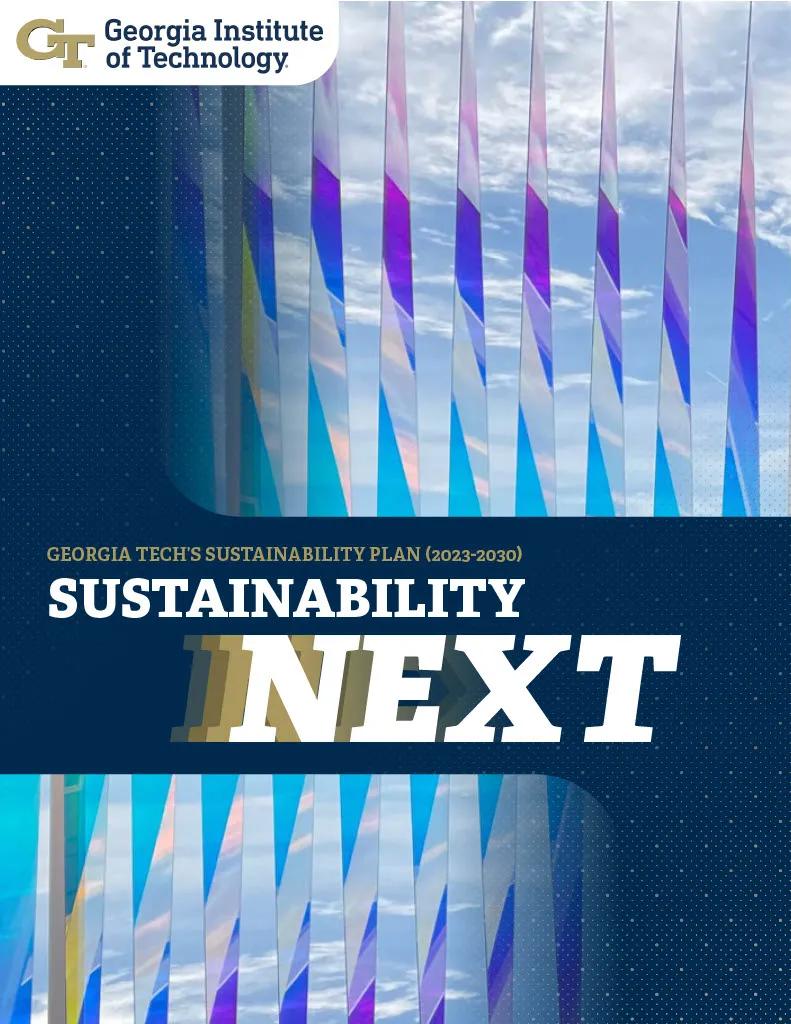
Cover of the Sustainability Next Plan
On the one-year anniversary of the launch of Sustainability Next, a publicly available version of the plan is being released and several plan initiatives are coming to life.
Following the creation of Georgia Tech’s 2020 – 2030 strategic plan, the Institute’s executive leadership team launched a task force to create a strategic sustainability roadmap — the Sustainability Next Plan — to help advance some of its most important goals.
“Sustainability Next is central to Georgia Tech’s commitment to developing leaders who advance technology and improve the human condition,” said President Ángel Cabrera. “As one of the largest technological universities in the world, we have the opportunity and responsibility to help find solutions to the biggest problems we face, achieve the United Nations Sustainable Development Goals, and support a human population that will soon rise to 10 billion while reducing the stress we’re causing on our planet.”
The plan calls on Georgia Tech to:
Be a global sustainability thought leader.
Catalyze innovation through education and research.
Lead by example in the practice and culture of sustainability.
Since the fall of 2022, Sustainability Next has begun to implement projects, including:
The Climate Action Plan to develop a roadmap for integrating climate action strategies across operations, research, and education focusing on climate justice and reducing emissions.
Sustainable X, which supports students interested in and passionate about developing climate tech, sustainability, and social impact startups.
Sustainability Education Innovation Grants for faculty to expand Sustainable Development Goals concept and skill integration across the undergraduate curriculum.
Research Seed Grants to support interdisciplinary climate and sustainability research initiatives.
Living Campus connecting Georgia Tech’s built environment and surrounding landscape to serve as opportunities for collaborations between academics, research, industry, operations, and community partnerships.
These initiatives alone have created collaborations between several sustainability-focused departments on campus, including the Office of Sustainability, the Brook Byers Institute for Sustainable Systems, the Ray C. Anderson Center for Sustainable Business, and the Center for Teaching and Learning.
Creating the Foundation for Successful Implementation
As an outcome of the strategic plan to more intentionally integrate sustainability and lead by example with campus operations, Georgia Tech restructured its facilities management into Infrastructure and Sustainability (I&S) in 2021. The following year, the Office of Campus Sustainability was restructured into the Office of Sustainability within I&S to bridge sustainability efforts across research, education, and operations. It was later expanded to integrate the departments of utilities, sustainable building operations, and The Kendeda Building for Innovative Sustainable Design.
Additionally, Sustainability Next has supported the Brook Byers Institute in becoming a transformative unit focused on climate and sustainability that integrates research and education. It has also strengthened ties in the sustainability cluster of the Vice President for Institutional Research, comprising the Byers Institute, the Renewable Bioproducts Institute, and the Strategic Energy Institute — including the permanent integration of Serve-Learn-Sustain into the newly established Center for Sustainable Communities Research and Education.
Looking Ahead
In the next few months, the Sustainability Next Plan will be supported by a refreshed website, a schedule of sustainability-related events, and calls to action, reinvigorating the sustainability charge set forth in the Institute’s strategic plan.
The Sustainability Next co-chairs invite every member and unit of the Georgia Tech community to join in bringing the Sustainability Next Plan to life and expanding its ambitions over time so that we can build a just, equitable, and sustainable future — together.
For continuous updates and to find out how you can get involved, visit the new Sustainability Next webpage.
News Contact
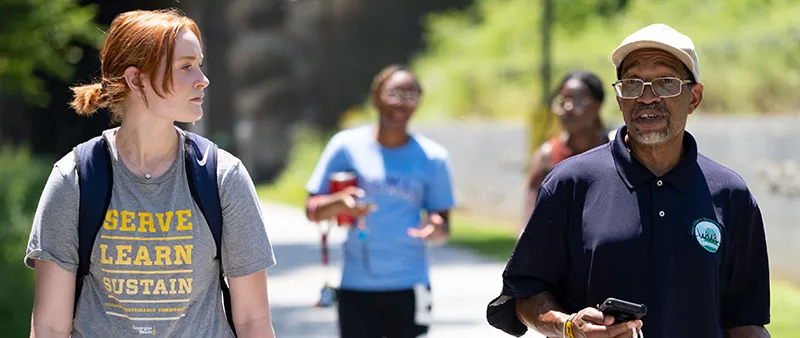
A student wearing a "Serve-Learn-Sustain" tee shirt walks along a campus walkway with a Georgia Tech faculty member. Photo Credit Ben Gray, AJC.
The Vice President for Interdisciplinary Research (VPIR) and the Office of Undergraduate Education (OUE) are excited to announce an institutionalization plan for Serve-Learn-Sustain (SLS) that will advance two of Georgia Tech’s Institute Strategic Plan (ISP) initiatives - Sustainability Next and Transformative Teaching and Learning (TTL) - and strengthen our service learning, community engagement, and sustainability ecosystems at Georgia Tech. Established as Georgia Tech’s last Quality Enhancement Plan (QEP), SLS launched in 2016 as a unit in OUE and concluded its official QEP work in 2021. Its work on the QEP earned Georgia Tech a commendation from the Southern Association of Colleges and Schools Commission on Colleges and established a strong foundation to build on moving forward.
Effective July 1, 2023, the current SLS team will establish a new center, the Center for Sustainable Communities Research and Education (CSCRE), under the VPIR. The Brook Byers Institute for Sustainable Systems (BBISS), which is serving as a hub for coordinating Georgia Tech’s Sustainability Next Strategic Plan initiative, will serve as the administrative home for the new center.
CSCRE will collaborate with the sustainability cluster of the Interdisciplinary Research Institutes (IRIs), including BBISS, the Strategic Energy Institute (SEI), and the Renewable Bioproducts Institute (RBI), as well as Infrastructure and Sustainability, another key Sustainability Next hub, to enhance Georgia Tech’s competitiveness in applying for grants that require meaningful community partnerships as a key component of their research and education plans. It will also continue to support sustainable communities education, in close collaboration with the Center for Teaching and Learning (CTL), OUE, and Education and Learning, to assure the continuity of SLS’s signature programs.
Established as Georgia Tech’s last QEP, Serve-Learn-Sustain launched in 2016 as a unit in OUE and concluded its official QEP work in 2021. Georgia Tech earned a commendation from the Southern Association of Colleges and Schools Commission on Colleges in 2021 for the “exceptional execution” of the 2016 QEP, citing, among other things, that the program “inspired a closer dialogue among faculty regarding research and instructional practices, and thus serves as a model of how a QEP can transform an academic culture.”
To continue advancing and scaling undergraduate service learning and community engagement as a high-impact practice, OUE will establish a new service learning team, as a priority that supports the Transformative Teaching and Learning ISP initiative. Institutionalizing the service-learning functions of SLS within OUE and aligning it with other high impact practices - such as undergraduate research, student innovation programs, first-year seminars, co-op and internships, and learning communities - will position these programs to work collectively in support of the development of Georgia Tech’s next QEP, which will begin in 2025.
Thank you to the SLS staff and to everyone who has collaborated with and supported the work that SLS has spearheaded to make Georgia Tech a better place for our students, our faculty and staff, and our surrounding communities. We look forward to continuing to advance this work, together.
News Contact
Brent Verrill, Research Communications Program Manager, BBISS

Earth (Credit NASA/Joshua Stevens)
Georgia Tech’s newest interdisciplinary degree program, the Environmental Science B.S. degree (ENVS), developed jointly by faculty of the School of Earth and Atmospheric Sciences and the School of Biological Sciences, has launched and is now enrolling students.
The ENVS degree will provide a strong foundation in the basic sciences, requiring core content in mathematics, physics, chemistry, biology, earth sciences, and environmental policy. Flexible electives in upper-level coursework will allow students to customize their program of study to their interest and career goals.
A launch event for the degree program will take place at the Kendeda Building on the afternoon of Friday, August 25, 2023.
“The new degree will prepare students to be future leaders who are well-versed on how the Earth's systems can be influenced by human activity and contribute to human well-being,” says Greg Huey, professor and chair of the School of Earth and Atmospheric Sciences. “Graduates will be positioned to be leaders in industry, academia, education, and communication to create innovative solutions to the most significant environmental challenges of our time.”
Two faculty members in the School of Earth and Atmospheric Sciences (EAS) and a faculty member in the School of Biological Sciences will serve as inaugural leadership: Jennifer Glass, associate professor, is program director; Samantha Wilson, academic professional, is director of Undergraduate Studies; and Linda Green, senior academic professional in the School of Biological Sciences, is director of Experiential Learning.
The foundational science classes in this new degree will be complemented by courses in Public Policy and City Planning, including Geographical Information Systems (GIS) and Environmental Policy and Politics, before opening up and providing students with flexibility in course options to better fit their career paths and interests.
“Past EAS students have been interested in careers related to environmental consulting, environmental law, and continuing their studies in graduate school,” Wilson says. “The variety of environmental career paths was the driver behind allowing students to diversify their options within the degree.”
“This degree will give Georgia Tech students a unique opportunity to customize their environmental science program of study to their interests and career goals in science, policy, public service, non-profit, government, industry, academia, or beyond,” adds Glass. “We are committed to building an academic community in ENVS that values student leadership, ethics, justice, accessibility, and belonging.”
Hands-on learning opportunities will include field station experiences and field trip excursions, study abroad programs, and internships, Green says. “This major sustains the Institute’s strategic plan to lead by example, champion innovation, and connect globally — particularly in an area so critical as addressing Earth’s environmental issues.”
Glass added that the Schools of Chemistry, Biological Sciences, and Earth and Atmospheric Sciences are currently revamping several classes to meet United Nations Sustainable Development Goals (SDGs). Students will advance to be global leaders of environmental solutions that draw upon the U.N. Sustainable Development Goals and incorporate awareness of cultural relevance.
“We can’t wait for August to celebrate the ENVS launch with our incoming and current students,” Glass says.
More information on the Environment Science (ENVS) degree:
General information: jennifer.glass@eas.gatech.edu
Curriculum and enrollment: samantha.wilson@eas.gatech.edu
Co-curricular initiatives: linda.green@gatech.edu
Learn more: Three new EAS undergraduate degrees
Beginning Summer 2023, prospective and current Georgia Tech students will have three new Bachelor of Science degrees to choose from in the School of Earth and Atmospheric Sciences. The expanded undergraduate offerings target a wider range of job and research opportunities — from academia to analytics, NASA to NOAA, meteorology to marine science, climate and earth science, to policy, law, consulting, sustainability, and beyond.
The Board of Regents of the University System of Georgia has approved two new specific degrees within the School: Atmospheric and Ocean Sciences (AOS) and Solid Earth and Planetary Sciences (SEP). Regents also approved Environmental Science (ENVS) as an interdisciplinary College of Sciences degree between the School of Earth and Atmospheric Sciences and the School of Biological Sciences. The existing Earth and Atmospheric Sciences B.S. degree will sunset in two years for new students. Learn more.
News Contact
Writer: Renay San Miguel
Communications Officer II/Science Writer
College of Sciences
404-894-5209
Editor: Jess Hunt-Ralston
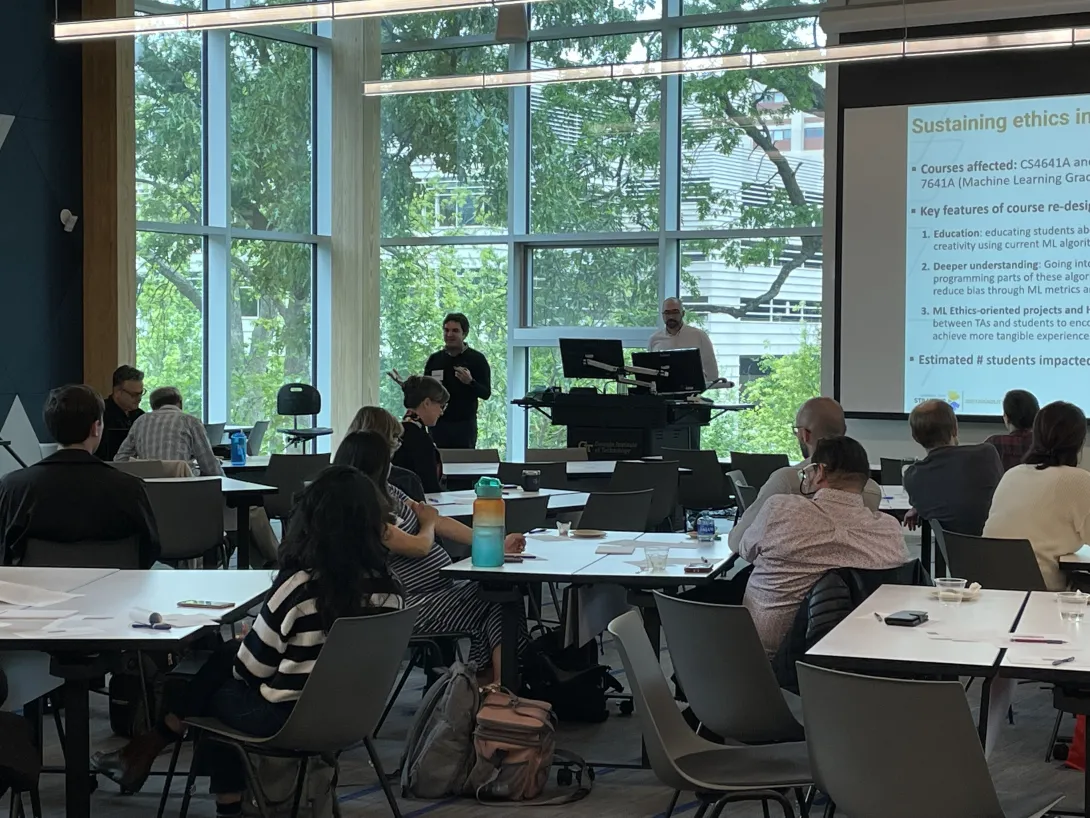
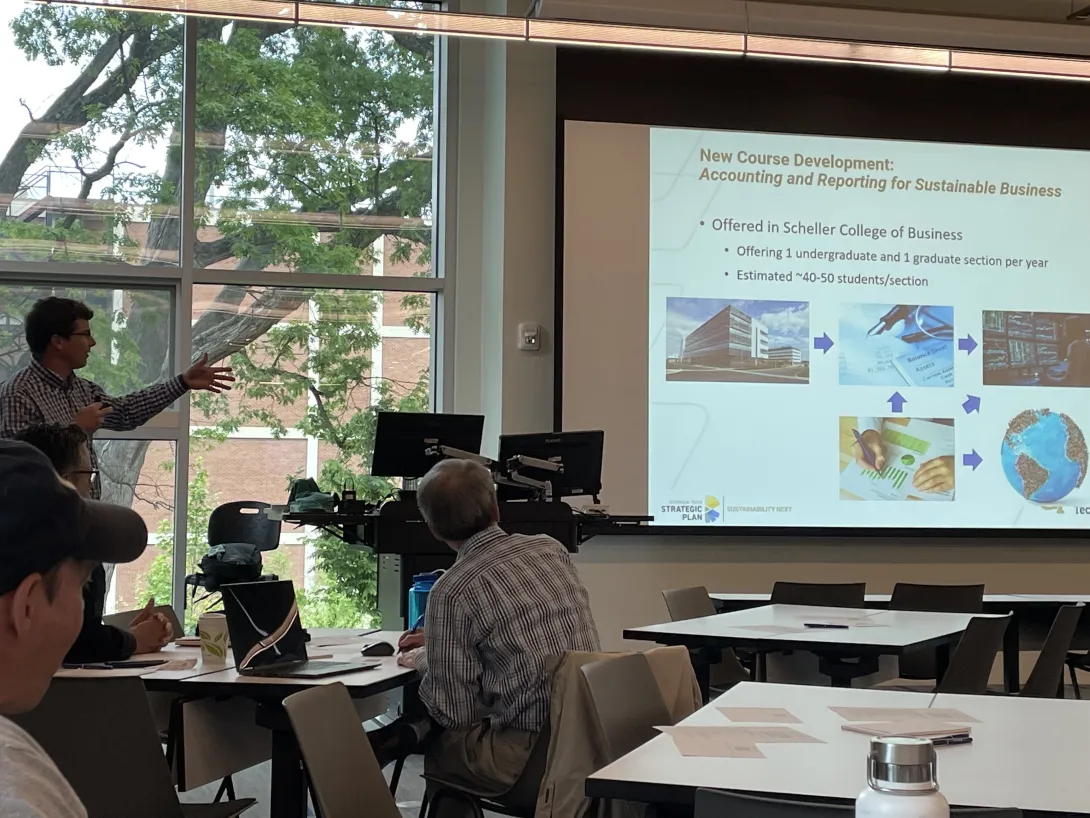
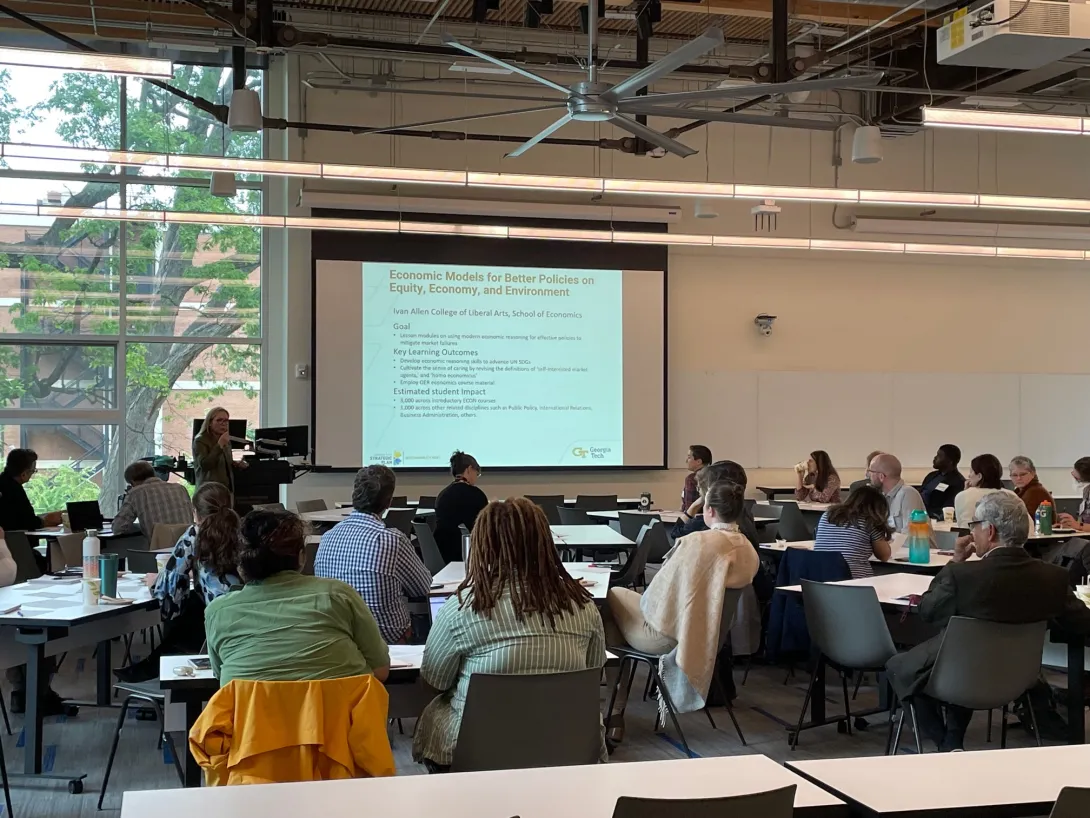
One of the Institute Strategic Plan (ISP) goals is to connect globally and amplify impact by contributing “to global collaborative efforts that advance the U.N. Sustainable Development Goals (SDGs) through our education, research, and service.” In response, Sustainability Next developed a plan to expand SDG concept and skill integration across the undergraduate curriculum. In support of the plan, 21 projects representing all six colleges and 15 schools were presented at the Undergraduate Sustainability Education Jamboree, held on April 26 in the Kendeda Building auditorium. With many winning projects featuring high enrollment and core courses, this first round of sustainability education “seed grants” will significantly expand the reach of Georgia Tech’s sustainability-across-the-curriculum initiatives.
“Our Strategic Plan commitment to bring the United Nations Sustainable Development Goals (SDGs) into our teaching is part of our vision for transformative teaching and learning more broadly,” explains Larry Jacobs, Senior Vice Provost for Education and Learning. “Helping students identify connections between disciplinary concepts and skills and complex societal challenges enhances learning and supports Georgia Tech’s mission to equip students to improve the human condition.”
The Jamboree featured lightning presentations from the award winners, as well as presentations about related initiatives at Georgia Tech to help instructors, students, and staff better understand the landscape of sustainability education innovation on campus. Instructors engaged in course design or re-design through the awards will have opportunities to collaborate with and learn from their peers through a Community of Practice on Transformative Teaching with the SDGs and a SoTL (Scholarship of Teaching and Learning) research group. Many began identifying potential collaborators at the event, as they heard from other award winners. “The afternoon of lightning presentations by fellow faculty was exhilarating,” Sabir Khan, Associate Professor, Schools of Industrial Design and Architecture, shared. “I came away impressed and excited at the range of projects and have already invited a few instructors to join my class in the fall to discuss their approaches to tackling the UN SDGs."
Presenter Kate Williams, Interim Director, Transformative Teaching and Learning, Faculty Initiatives, shared connections between the Sustainability Innovation Awards and Georgia Tech’s Transformative Teaching and Learning (TTL) strategic initiative. “The success of the first round of Sustainability Education Innovation Grants demonstrates our faculty's commitment to creating innovative experiential learning opportunities for students,” Dr. Williams noted.
For more information about future award opportunities or the communities of practice described above, please contact Jennifer Leavey (Assistant Dean for Faculty Mentoring, College of Sciences) or Rebecca Watts Hull (Assistant Director, Faculty Development for Sustainability Education Initiatives, Center for Teaching and Learning).
Review all 21 awarded Undergraduate Sustainability Education Innovation projects.
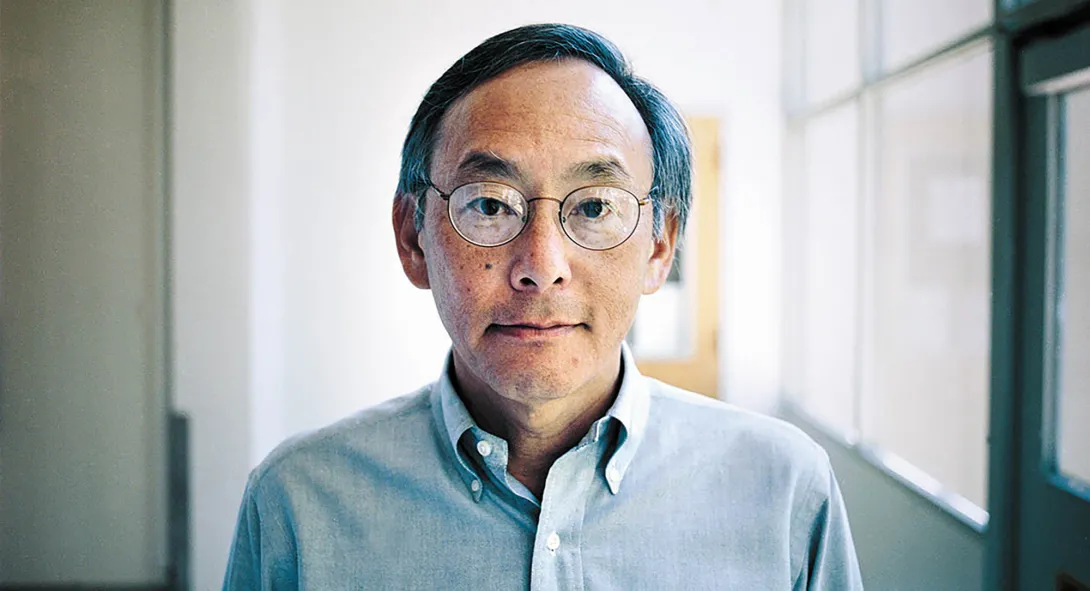

On April 26, 2023, the School of Physics and College of Sciences at Georgia Tech will welcome Stanford University physicist Steven Chu to speak on climate change and innovative paths towards a more sustainable future. Chu is the 1997 co-recipient of the Nobel Prize in Physics, and in his former role as U.S. Secretary of Energy, became the first scientist to hold a U.S. Cabinet position.
About the Talk
The event is part of the School of Physics “Inquiring Minds” public lecture series, and will be held at the Ferst Center for the Arts. The talk is free and open to campus and the Atlanta community, and no RSVP is required. Refreshments begin at 4:30, and the lecture will start at 5 p.m. ET.
“The multiple industrial and agricultural revolutions have transformed the world,” Chu recently shared in an abstract for the lecture. “However, an unintended consequence of this progress is that we are changing the climate of our planet. In addition to the climate risks, we will need to provide enough clean energy, water, and food for a more prosperous world that may grow to 11 billion by 2100.”
The talk will discuss the significant technical challenges and potential solutions that could provide better paths to a more sustainable future. “How we transition from where we are now to where we need to be within 50 years is arguably the most pressing set of issues that science, innovation, and public policy have to address,” Chu added.
The event’s faculty host is Daniel Goldman, Dunn Family Professor in the School of Physics at Georgia Tech.
About Steven Chu
Steven Chu is the William R. Kenan, Jr. Professor of Physics and a professor of Molecular and Cellular Physiology in the Medical School at Stanford University.
Chu served as the 12th U.S. Secretary of Energy from January 2009 until the end of April 2013. As the first scientist to hold a U.S. Cabinet position and the longest serving Energy Secretary, Chu led several initiatives including ARPA-E (Advanced Research Projects Agency – Energy), the Energy Innovation Hubs, and was personally tasked by President Obama to assist in the Deepwater Horizon oil leak.
In the spring of 2010, Chu was the keynote speaker for the Georgia Tech Ph.D. and Master's Commencement Ceremony.
Prior to his cabinet post, Chu was director of the Lawrence Berkeley National Laboratory, where he was active in pursuit of alternative and renewable energy technologies, and a professor of Physics and Applied Physics at Stanford, where he helped launch Bio-X, a multi-disciplinary institute combining the physical and biological sciences with medicine and engineering. Previously he also served as head of the Quantum Electronics Research Department at AT&T Bell Laboratories.
He is the co-recipient of the 1997 Nobel Prize in Physics for his contributions to laser cooling and atom trapping. He is a member of the National Academy of Sciences, the American Philosophical Society, the American Academy of Arts and Sciences, the Pontifical Academy Sciences, and of seven foreign academies. He formerly served as president, and then chair of the American Association for the Advancement of Science.
Chu earned an A.B. degree in mathematics and a B.S. degree in physics from the University of Rochester, and a Ph.D. in physics from the University of California, Berkeley, as well as 35 honorary degrees.
He has published over 280 papers in atomic and polymer physics, biophysics, biology, bio-imaging, batteries, and other energy technologies. He holds 15 patents, and an additional 15 patent disclosures or filings since 2015.
News Contact
Jess Hunt-Ralston
Director of Communications
College of Sciences at Georgia Tech
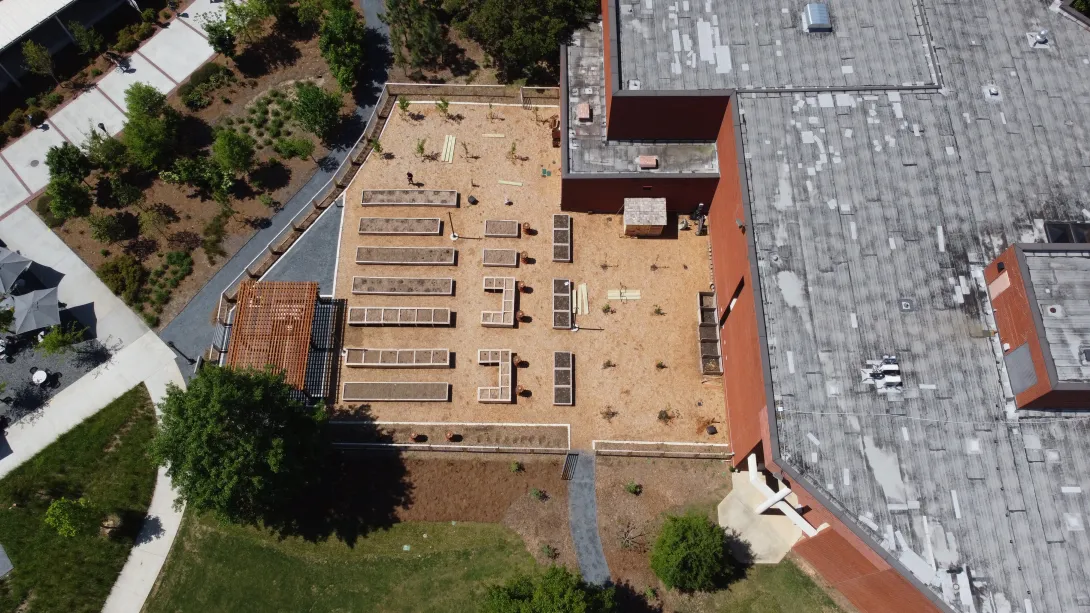
Bird's eye view of the expanded Community Garden
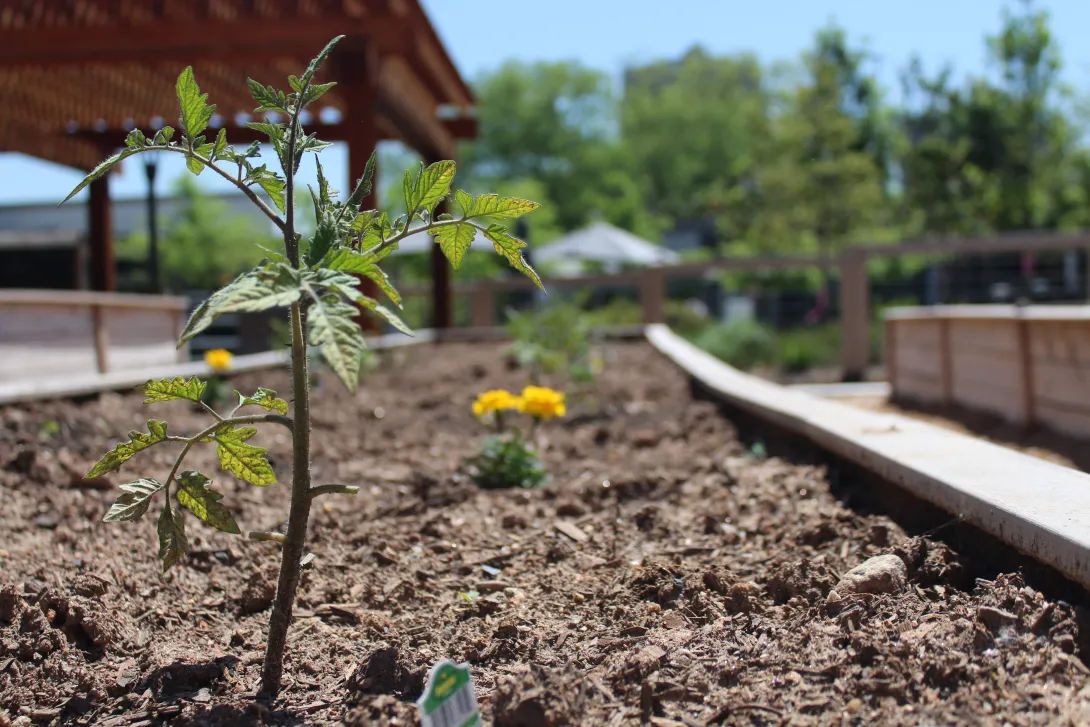
Tomato plants in the new community garden.
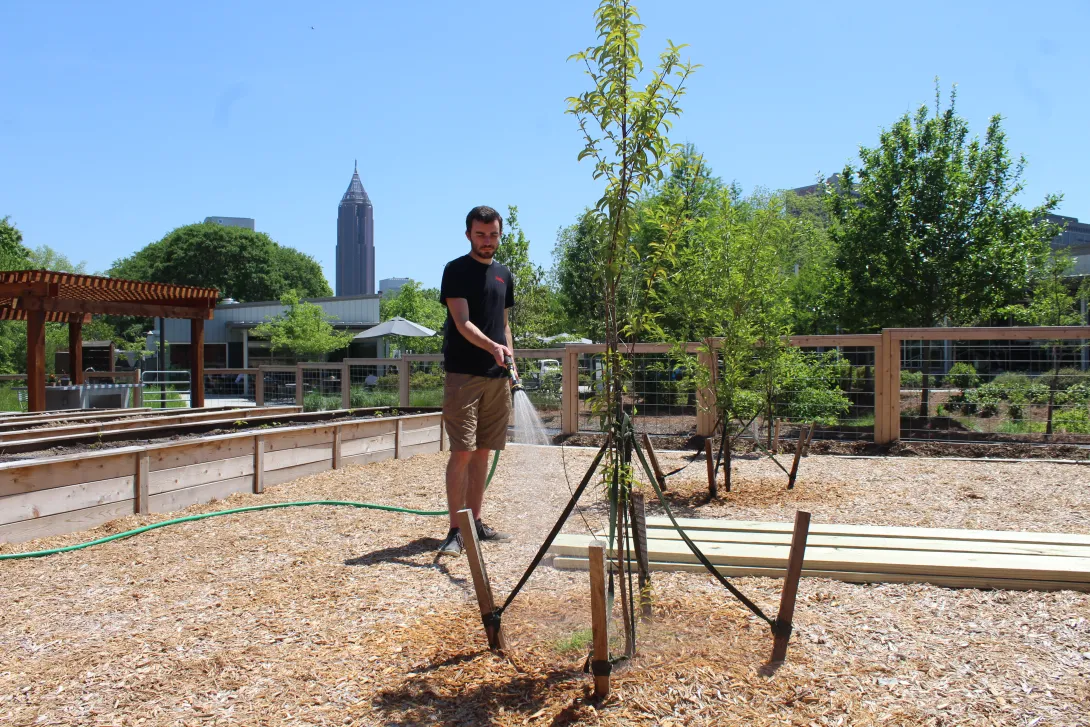
Elias Winterscheidt waters trees in the Community Garden
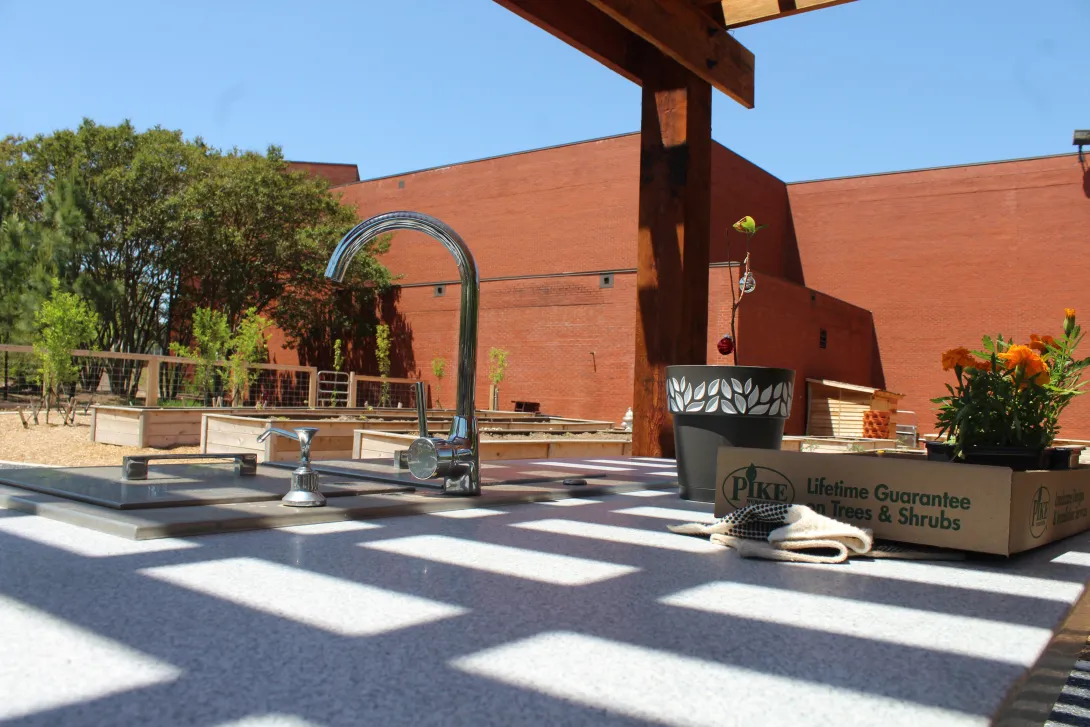
Demo kitchen inside the Community Garden
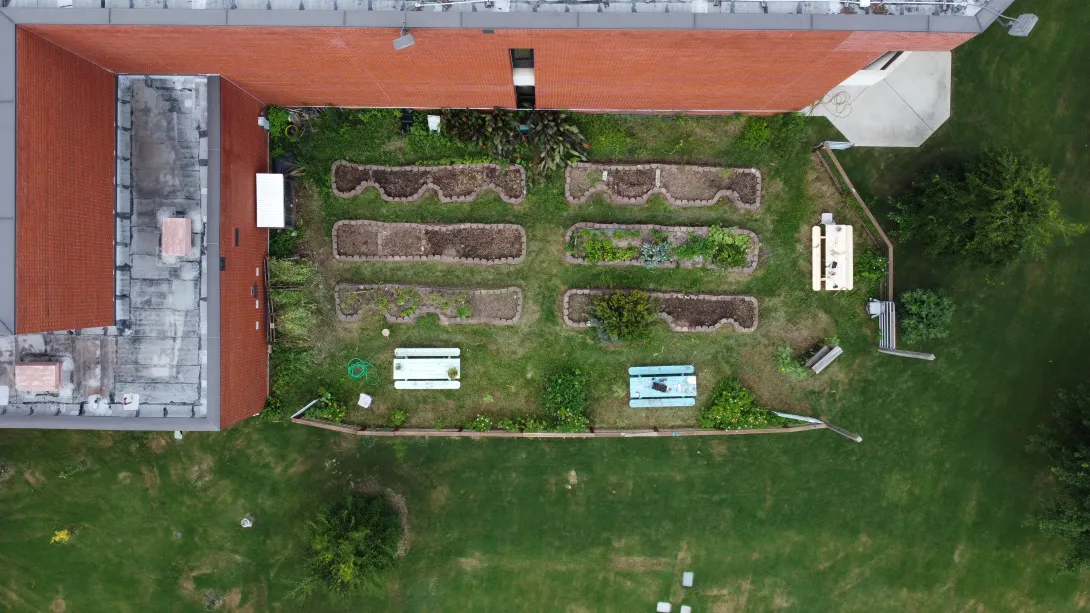
The Community Garden prior to its expansion.
As Georgia Tech continues to celebrate Earth Month, Friday's ribbon-cutting ceremony for the newly expanded Community Garden represents another step in the Institute's commitment to a sustainable future.
First opened in 2012 with six small planting beds, the garden has received a complete transformation over the past decade. With the latest project, which began in July 2022, essentially doubling its square footage, the garden now touts 21 fruit trees and nine large beds that are free and open to students. Two additional medium and nine small beds are available for lease for the Tech community. A new shed for gardening tools has been constructed alongside a brand-new demo kitchen to feature the garden's produce in healthy recipes. With the inclusion of slate-chip pathways and high-density mulch, the garden is now fully ADA accessible — a primary goal of the expansion effort.
Elias Winterscheidt was drawn to the garden while touring the Tech campus in 2019. With prior planting experience, he immediately got involved with Students Organizing for Sustainability (SOS), taking over as the Community Garden director in April 2021. Over the past three semesters before construction began, the garden donated 50 pounds of produce to Klemis Kitchen — Georgia Tech's on-campus food bank — in addition to the produce harvested by 500 volunteers during that time.
Winterscheidt anticipates the growth of the garden community continuing, with hopes of doubling both donations to Klemis Kitchen and the number of volunteers.
SOS got a head start on its goal at the outset of Earth Month, when Winterscheidt and a group of volunteers planted the first seeds in the expanded garden during a pair of community workdays. Sweet potatoes, tomatoes, strawberries, and various seeds are already in the ground, but plenty more fruits, vegetables, and herbs will be added soon.
In addition to a passion for gardening, Winterscheidt arrived at Tech at a time when many students were seeking ways to get outside during the pandemic. A lasting effect of the interruption has been an increase in the number of virtual events, but the garden provides the perfect opportunity to interact with nature and with other people.
"We're trying to get people to come outside. Our goal is to get Georgia Tech students away from their computers, away from their homework, and to de-stress and get their hands in the soil," he said, adding that the workdays give students a chance to interact with others from different majors and backgrounds. "Come for a few hours, chat with people, and after two hours, you feel refreshed. It's a kind of group therapy."
Community workdays in the garden are typically held on Saturday mornings, depending on the weather.
Beginning with summer programming, SOS will partner with the Wellness Empowerment Center to highlight the mental and physical health benefits of gardening. They will also be emphasizing sustainability. The Community Garden is entirely permaculture friendly, meaning it's a pesticide-free environment, and seeds are planted with purpose.
"We're mimicking nature in how we plant things," Winterscheidt explained. “Rather than spraying with pesticide, I can plant a basil plant that will deter hornworms from our tomatoes. Rather than spraying with herbicides, we can pluck all the weeds off individually. It takes a lot longer, but it's much better for our soil. Rather than growing for maximum output, we're growing in a way that benefits our soil the most."
While largely student-run, the garden does require constant upkeep, so in years past, the summer months could be challenging. However, with the expansion, Tamsin Leavy has been brought on as staff member to support the garden year-round.
"Like any garden or farm space, you don't want to lose all your hard work to the elements or other pests that can quickly annihilate a crop. We have put a lot of effort into this space and are looking forward to watching it grow. No pun intended," Leavy said. "It would be devastating to lose it to the harsh Georgia summer sun, so we will all be working together to keep our garden growing."
Volunteer opportunities remain plentiful over the summer, and in the absence of a large contingent of students, Malte Weiland, senior sustainability project manager for Campus Services, welcomes Tech faculty and staff to lend a hand. He encouraged all Tech employees to reach out to assist the team in maintaining the space and even urges entire departments to inquire about outings that can serve as wellness and team-building exercises.
For those looking to get involved with the garden or learn more about its expansion, Friday's ribbon-cutting ceremony will begin at 2 p.m.
“We all hope that the garden will continue to be a community gathering space where not just horticultural and agricultural education can happen, but anything adjacent to it — discussion on composting, urban gardens, or food justice issues. And day-to-day, for Tech students, I hope it can be a space where they are comfortable, where they can come to smell the flowers, put their hands in the dirt — even if it's just for a few minutes between classes to de-stress and reconnect to the earth," Leavy said.
The Community Market is another resource that brings sustainably sourced food to the Tech community every Wednesday from 10 a.m. to 2 p.m. along Tech Walkway. The Office of Sustainability will wrap up the spring semester market at the end of April, but selective summer dates will be announced soon. When the market returns in the fall, Weiland said that vendors and patrons can expect several updates, including a market map, and students will be able to make purchases using dining dollars on their BuzzCards.
News Contact
Steven Gagliano - Communications Officer
Institute Communications
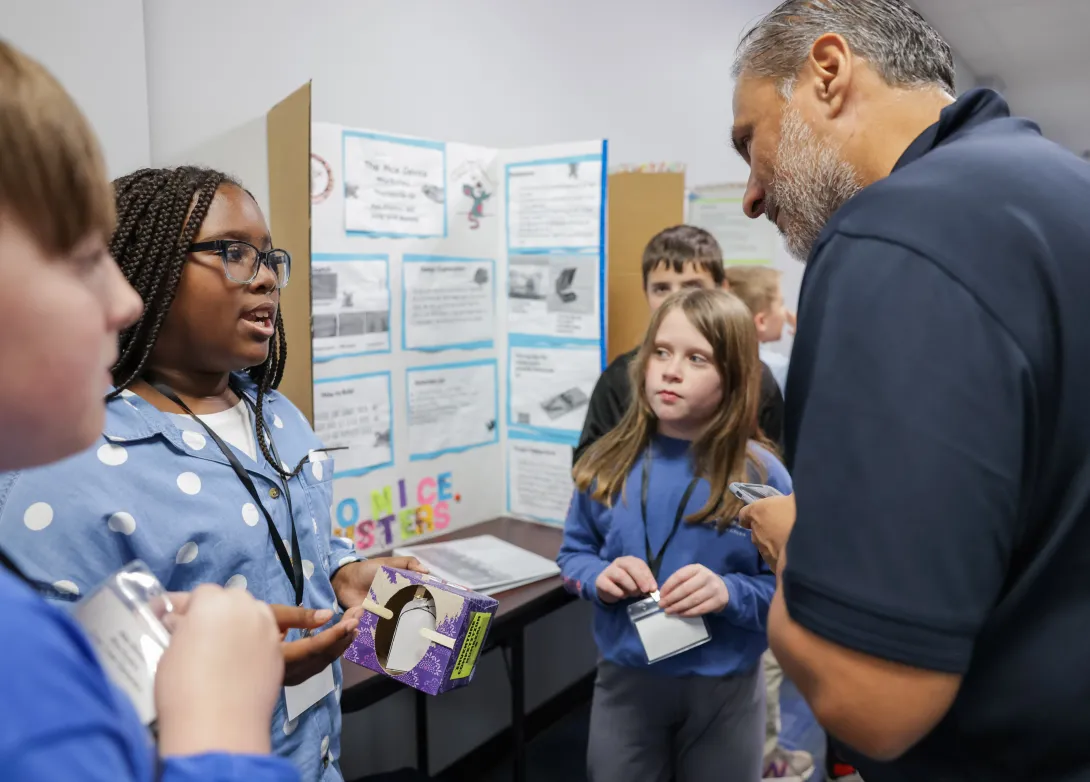
Students in Thomasville, Ga. explain their invention to a competition judge as a part of Georgia Tech’s expanding K-12 InVenture Prize program.
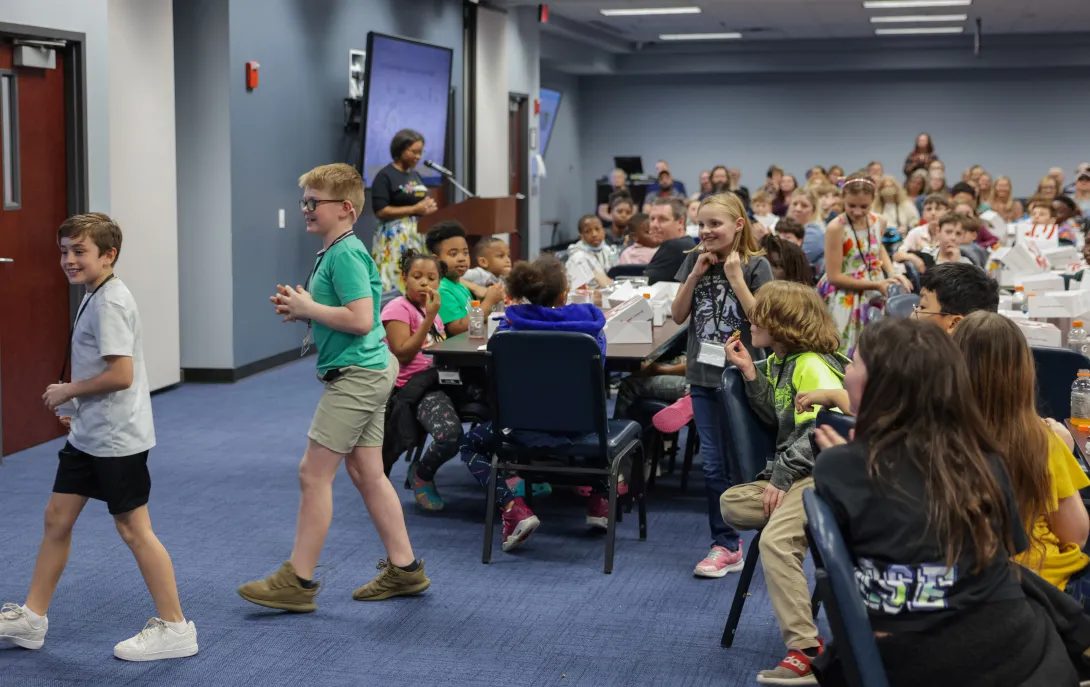
Students in Thomasville, Ga. present their own inventions as a part of Georgia Tech’s expanding K-12 InVenture Prize competition program.
Georgia Institute of Technology’s Center for Education Integrating Science, Mathematics, and Computing (CEISMC) is at the center of a new statewide initiative combining artificial intelligence and manufacturing innovations with transformational workforce development and K-12 outreach. The Georgia Artificial Intelligence Manufacturing Corridor project (Georgia AIM) is supported by a record-shattering $65 million grant Georgia Tech received in September 2022 from the U.S. Department of Commerce’s Economic Development Administration.
Georgia AIM will support a total of nine inter-related projects throughout the state and is designed to increase job and wage opportunities in distressed and rural communities and among historically underrepresented and underserved people. Georgia AIM targets rural residents, women, Black, Indigenous and People of Color (BIPOC), those living with disabilities, and veterans — groups historically underrepresented in manufacturing. Through innovation, collaboration, education, and participation, Georgia AIM will provide the tools and knowledge to empower these communities to participate fully in a diverse AI manufacturing workforce.
“Many people have preconceived notions about manufacturing and may not be able to see how they could possibly connect to it," said Roxanne Moore, Woodruff School of Mechanical Engineering’s senior research engineer and director of CEISMC’s K-12 InVenture Prize program. “What they may not realize is that manufacturing is what brings new ideas to life. AI is rapidly reshaping the manufacturing industry and changing the landscape for job opportunities. The work that we are doing will position Georgia to lead the nation into the future of AI and manufacturing.”
Moore explains that through Georgia AIM, CEISMC will expand its K-12 InVenture Prize invention and entrepreneurship program to collaborate with school districts and businesses in Southwest Georgia, Southeast Georgia and Northeast Georgia. The initiative will expand on existing partnerships Georgia Tech has established with technical colleges and minority-serving institutions.
The project will reach at least 1,000 K-12 students and 100 teachers from underserved areas, with a focus on rural communities via existing programs at Georgia Tech, other nonprofits, the Technical College System of Georgia, the Southwest Georgia Regional Commission, local manufacturers, and K-12 school leaders, Moore said.
“We need to illustrate the powerful relationships between innovation, entrepreneurship, and manufacturing so that students can see how ideas come to life and how they can improve their communities,” said Moore. “It is my hope that these regional ecosystems become a role model for how educational institutions can support each other in expanding access to high-quality STEM experiences for diverse students who typically are not empowered to create their futures.”
As part of Georgia AIM, CEISMC will also expand its offerings through partnerships with the institute’s GoSTEM program to better serve Latino populations. GoSTEM is a collaborative partnership at Georgia Tech between CEISMC and Institute Diversity, Equity and Inclusion (IDEI). Its mission is to promote STEM academic achievement and college attendance among Latino and other cultural and linguistic minority K-12 students. Plans include translating existing invention and entrepreneurship curriculum into Spanish, adding lessons to the curriculum on AI and manufacturing, assisting with the development of regionally focused curricula, and expanding training and events to make them more inclusive.
“Our goal is to make invention education accessible to everyone in the state, especially those who may have been previously left out of the conversation,” said Danyelle Larkin, educational outreach manager with CEISMC. “By going into more rural areas of the state and working to develop multi-lingual curricula that is focused on the needs of the region, we hope to serve as a national model for how to accelerate the transition to automation in manufacturing while diversifying the next generation of AI leadership.
Additional Georgia AIM expansion plans for CEISMC and K-12 InVenture Prize include supporting an existing high school entrepreneurship program in Fitzgerald and working with Albany State University to host teacher workshops, support local schools, and host regional competitions with a focus on inventiveness and the entrepreneurial mindset.
"The overall goal of Georgia AIM is to establish the United States as a leader in AI manufacturing while making sure that these systems complement rather than replace existing workers,” Larkin said. “The work that we are doing in CEISMC plays an integral role in Georgia AIM with our specific expertise in weaving invention education and entrepreneurship into K-12 classrooms and connecting with diverse communities. This huge grant gives us a chance to amplify our work and bring even more people into the AI conversation. It’s about building a better, more equitable future for the people of Georgia.”
—Randy Trammell, CEISMC Communications