

Jennifer Chirico leads the energy and infrastructure initiative at Georgia Tech’s Strategic Energy Institute. She is a longtime Yellow Jacket, bringing more than 25 years of sustainability experience as the inaugural associate vice president of Sustainability at Georgia Tech. In this role, she oversees the Office of Sustainability and works across the Institute on emissions reductions, clean energy, water management, circular economy, sustainable technology, and strategy.
Chirico led the development and publication of the Institute’s first Climate Action Plan and co-led Tech’s sustainability plan, Sustainability Next. She is LEED Green Associate (Leed GA) accredited and holds certifications in the Carbon Disclosure Project, the Global Reporting Initiative, WaterSense, climate action planning, and Home Energy Survey Professional.
She holds a Ph.D. in public policy from Georgia Tech, a master’s in public health with a major in environmental health, and a bachelor’s degree in management from Georgia Tech. She has published books and written numerous chapters on sustainability related to systems thinking, net zero strategies, adaptive management, and the United Nations Sustainable Development Goals on leadership for the collective well-being.
Below is a brief Q&A with Chirico in which she discusses her focus areas and how her work at Georgia Tech influences the energy and infrastructure initiative here.
- What is your field of expertise, and at what point in your life did you first become interested in this area?
My field of expertise is sustainability, with a focus on the intersection of environmental, social, and economic systems. Although I began my career in finance, I discovered my passion for sustainability during a year I spent working abroad in New Zealand in 2000. That experience opened my eyes to the importance of balancing economic development with environmental stewardship and social responsibility. When I returned to the United States, I pursued a master’s degree in environmental health, followed by a Ph.D. in environmental policy. Over the past 25 years, I’ve dedicated my career to advancing sustainability and creating meaningful impacts. I continue to be inspired by the tangible, positive results that emerge when organizations integrate sustainability principles into their decision-making.
- What questions or challenges sparked your current work at Georgia Tech? What are the big issues facing the campus infrastructure right now as it relates to energy?
One of the most pressing challenges today is strengthening resilience for our infrastructure, well-being, and natural resources. As our environment continues to change, the ability to both mitigate impacts and adapt effectively is essential to our success. In my work, I am committed to advancing a healthier, safer, and more sustainable campus. Much of my work focuses on planning, reporting, and guiding efforts to build a stable, reliable, and clean energy infrastructure. A major part of this involves balancing firm energy sources with intermittent renewable sources in a way that ensures both reliability and sustainability. Georgia Tech has already made meaningful progress by installing over 1 megawatt of solar capacity and piloting the Stryten battery storage system. These projects demonstrate what is possible. We still have a long way to go to reduce our emissions and scale clean energy solutions across campus. Continuing to strengthen our energy resilience and expand renewable integration will be critical to meeting our long‑term goals.
- What interests you the most about leading the energy and infrastructure initiative? Why is your initiative important to Georgia Tech’s energy goals?
What interests me most is the opportunity to collaborate with some of the nation’s top energy researchers to identify the most resilient, scalable, and forward‑thinking energy solutions for our campus. I’m particularly passionate about bridging the gap between research and operations to support turning innovative work into tangible, real‑world applications that strengthen Georgia Tech’s infrastructure. Building strong partnerships across academics, operations, and industry is central to this effort. When these groups work together, we can accelerate progress, pilot new technologies, and create a living-learning campus that demonstrates what a resilient, low‑carbon future can look like.
- What are the broader regional, global, and social benefits of the energy and infrastructure initiative at Georgia Tech?
It creates benefits that reach far beyond our campus. By implementing clean, resilient energy systems, we contribute to regional progress in the Southeast. Our campus can serve as a model and test bed, demonstrating scalable solutions and sharing best practices with peer institutions, local governments, and industry partners. Globally, our research and operational innovations support the broader transition to cleaner, more reliable energy systems. And socially, these efforts promote healthier communities, reduce environmental burdens, and help prepare a skilled workforce for the rapidly growing energy sector.
- What are your hobbies?
My favorite hobbies are hiking, reading, yoga, and paddleboarding. I also love spending time in nature and with family and friends.
News Contact
Priya Devarajan || SEI Communications Program Manager
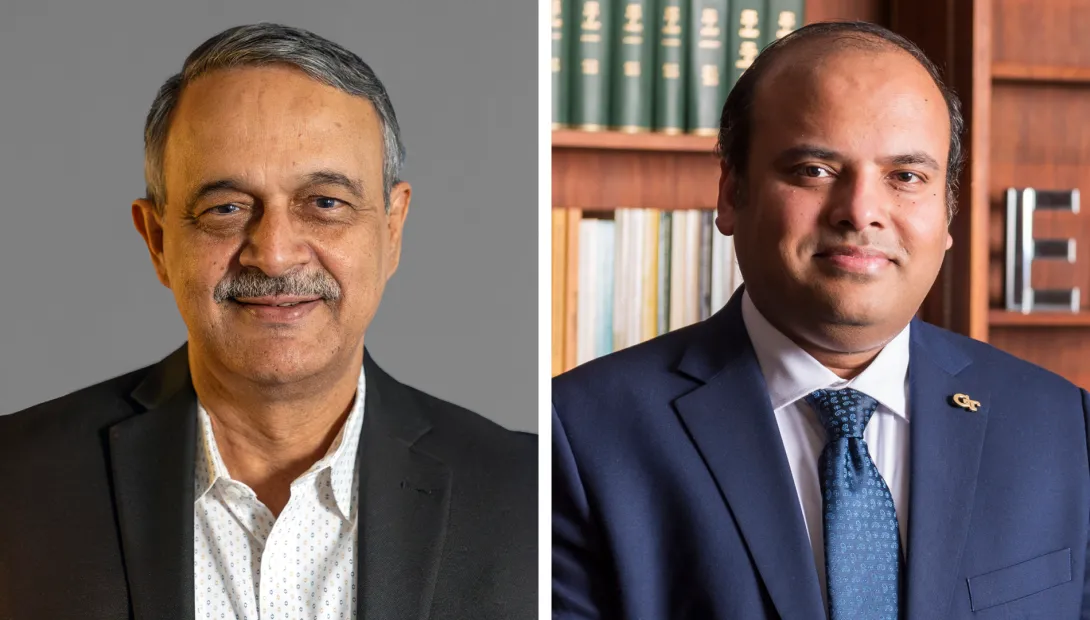
The National Academy of Inventors is honoring two Georgia Tech faculty members for their contributions to technology and society: Deepakraj “Deepak” Divan and Arijit Raychowdhury. Both are in the School of Electrical and Computer Engineering.
Raychowdhury is a semiconductor pioneer whose patented circuit and system-on-chip designs have advanced computing efficiency and commercialization. Divan is a global leader in power electronics and grid modernization, whose innovations and ventures have transformed how electricity is delivered and managed worldwide.
“Congratulations to Deepakraj and Arijit on earning one of the most esteemed accolades in technology and discovery. Their groundbreaking work, with nearly 100 patents between them, advances solutions to global challenges,” said Raghupathy “Siva” Sivakumar, chief commercialization officer at Georgia Tech. “Their success exemplifies how research commercialization drives real-world impact, and we’re proud to see them honored as academy fellows.”
Election to NAI is the highest professional distinction specifically awarded to inventors. With this recognition, Georgia Tech’s roster of NAI Fellows grows to 24. Divan and Raychowdhury join a 2025 class of 169 new fellows representing university, government, and nonprofit organizations worldwide. They will be inducted at the NAI 15th Annual Conference on June 4, 2026, in Los Angeles.
Deepakraj “Deepak” Divan
Professor Emeritus (2004-2025)
Georgia Research Alliance Eminent Scholar
School of Electrical and Computer Engineering
Founder, Georgia Tech Center for Distributed Energy
Deepakraj “Deepak” Divan is a globally recognized innovator in power electronics and grid transformation. He was awarded the IEEE Medal in Power Engineering in 2024.
He holds over 85 U.S. and international patents and has authored 400 refereed publications. His pioneering work on soft‑switching converters—integral for efficient energy storage, EV charging, and industrial controls—has spurred a global $70 billion power electronics industry.
Divan laid the groundwork for grid‑forming inverter control, enabling high-renewables integration. He is the co-author of Energy 2040: Aligning Innovation, Economics and Decarbonization, named by Forbes as one of the “10 Essential Books and Podcasts Every Leader Needs in 2025”.
“Being named an NAI Fellow is a tremendous honor,” said Divan. “It reflects years of effort to rethink how electricity is delivered and managed to solve real problems and to drive practical innovations that matter.”
As the founder of Georgia Tech’s Center for Distributed Energy, he led research that transforms electricity delivery through analytics, monitoring, and optimization.
An entrepreneur, Divan co-founded Varentec (backed by Bill Gates and Khosla Ventures) and seeded ventures including GridBlock, Soft Switching Technologies, Innovolt, and Smart Wires—raising over $500 million. A National Academy of Engineering member and IEEE Fellow, he champions scalable energy-access solutions worldwide.
Arijit Raychowdhury
Professor and Steve W. Chaddick School Chair
School of Electrical and Computer Engineering
Director, Center for the Co-Design of Cognitive Systems
Arijit Raychowdhury has been the Steve W. Chaddick School Chair of ECE since 2021. He is a leading innovator in semiconductor technologies, holding more than 27 U.S. and international patents and authoring over 350 publications.
His work spans low-power circuits, specialized accelerators, and system-on-chip design, with breakthroughs widely adopted in industry.
“This recognition reflects the collective effort of students, colleagues, and partners who share a vision for advancing microelectronics,” said Raychowdhury. “I am honored that NAI champions the same mission to lead through research, education, and innovation."
At Texas Instruments, he developed the world’s first adaptive echo-cancellation network for integrated Digital Subscriber Lines (DSL)—a patented technology that enabled high-speed internet over traditional phone lines that received the EDN Innovation of the Year award. At Intel, he developed and incorporated foundational memory and logic technologies that shaped commercial products across global markets for more than a decade.
His research on fine-grain power management of systems-on-chip at Georgia Tech has been licensed and widely adopted by the semiconductor industry.
He directs Georgia Tech’s Center for the Co-Design of Cognitive Systems and leads initiatives to advance microelectronics design with applications to AI. Over the years, he has served as a founding advisor and board member to multiple startups in the areas of edge-computing and low power design.
Raychowdhury’s research bridges invention and real-world impact, earning him numerous honors, including IEEE Fellow, Semiconductor Research Corporation Technical Excellence Award, and multiple industry awards. Through pioneering designs and mentorship, he continues to drive innovation in computing systems, influencing both academic research and industrial commercialization.
News Contact
Dan Watson
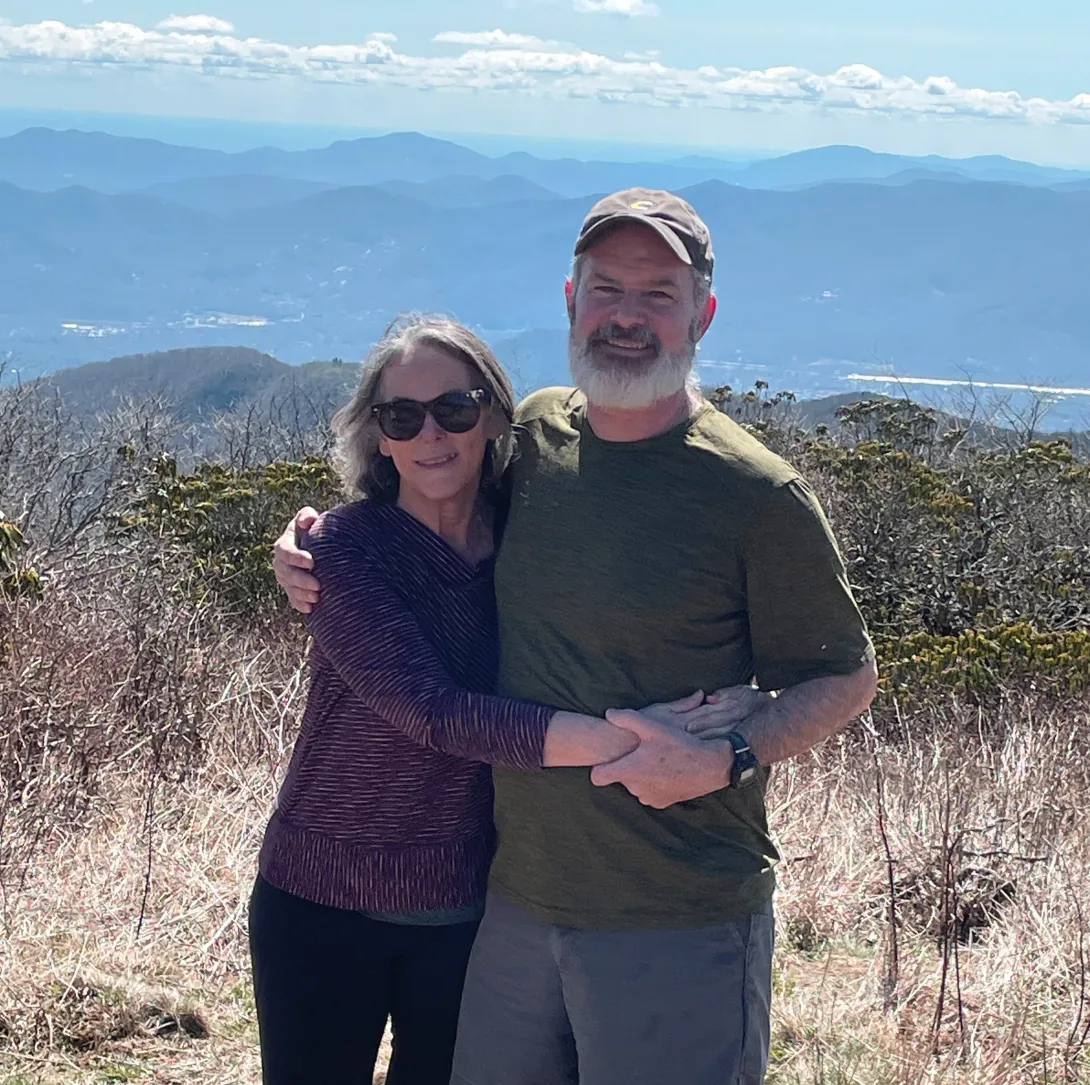
Rebecca Watts Hull wants to transform what students learn and how faculty across campus connect, innovate, and inspire action for a sustainable future. The assistant director for Faculty Development for Sustainability Education Initiatives in the Center for Teaching and Learning brings a collaborative spirit that’s made her an invaluable partner to Georgia Tech’s Brook Byers Institute for Sustainable Systems (BBISS) and to faculty interested in showing the real-world relevance of sustainability in their classrooms.
Her path to Georgia Tech was shaped by years of hands-on experience in nonprofit environmental advocacy, driving partnerships among medical professionals, scientists, and educators to protect air quality and children’s health. “I kept asking myself why it is,” she says, “that in a city like Atlanta, with all these higher education institutions and one of the largest concentrations of nonprofit organizations in the country, there weren’t more partnerships between nonprofits and academia.” Watts Hull says she was confused since the two groups “often care about and are aiming to advance the same things.”
In 2013, while teaching a continuing education course on sustainability leadership at Emory University, Watts Hull realized that sustainability in higher education was taking off. She pivoted to pursue a Ph.D. at Georgia Tech in history and sociology, and later joined Georgia Tech’s Serve-Learn-Sustain (SLS) program, established to build bridges between the university and community partners.
When Georgia Tech’s strategic plan elevated sustainability as a core value, Watts Hull served on the “Amplify Impact” team to help shape the strategy and implementation of the plan. An immediate result was the creation of her role within the Center for Teaching and Learning, specifically around sustainability and the United Nations’ Sustainable Development Goals (SDGs). “Our aim is to equip students to become true change makers, who can advance the SDGs and fulfill Georgia Tech’s mission of improving not only technology, but also lives and communities,” she explains.
Central to her approach are partnerships with other units, including BBISS, which unites faculty and researchers across the Institute who are focused on sustainability. Watts Hull leads the Community of Practice on Transformative Teaching with the SDGs, an initiative in its third year. “It’s a space where faculty can learn from each other how to teach sustainability in different disciplines,” she says. In addition, participants engage in outreach, sharing cross-disciplinary strategies and creative classroom approaches at Georgia Tech events and conferences.
Watts Hull says incorporating sustainability into courses not only enhances students’ overall learning and motivation but also helps faculty find renewed meaning and enjoyment in their teaching. “Well-designed, real-world projects help students see the importance of what they’re learning, and they stay engaged,” she notes. “But it’s also true that faculty feel more inspired when they know their teaching matters for big, pressing challenges.” One way faculty can engage is by applying for Undergraduate Sustainability Education Innovation grants. To date, 60 awards have been granted to faculty across campus.
Supporting student and faculty success is a family affair. Her husband, Jonathan, serves as associate vice chancellor for Student and Faculty Success for the University System of Georgia. “Our work both relates to teaching and learning, so we enjoy sharing that in common,” says Watts Hull, whose early community work included serving as a Peace Corps volunteer in Uganda.
Most recently, the busy administrator has contributed a chapter to a 2025 book, Higher Education’s Leadership in Climate Action and Sustainability, where she highlights five strategies for scaling up faculty engagement in sustainability across the curriculum.
One of her favorite pastimes is hiking in North Georgia, especially on Blood Mountain, the state’s highest summit along the Appalachian Trail. “The view from the top is just spectacular,” she says. It’s a fitting parallel to the ongoing journey toward a more sustainable future at Georgia Tech, one step — and partnership — at a time.
—Anne Wainscott-Sargent
News Contact
Brent Verrill, Research Communications Program Manager, BBISS
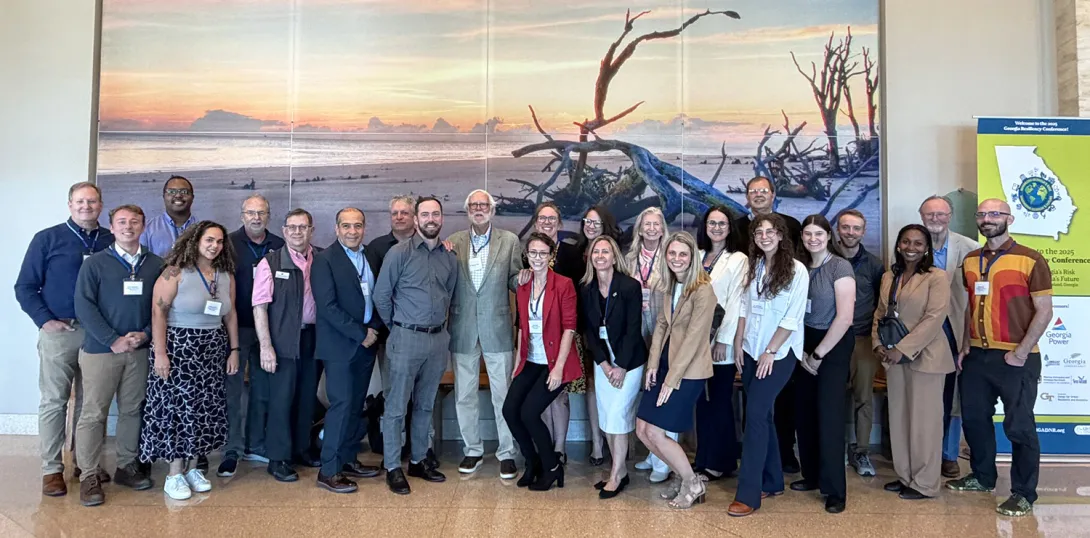
Against a backdrop of ancient live oaks draped in Spanish moss and salt marshes alive with shorebirds, a statewide conversation about the future of Georgia's environmental resilience took place at Jekyll Island. The Georgia Resiliency Conference 2025, organized by the Georgia Department of Natural Resources (DNR), brought together more than 430 leaders and experts from across public, private, nonprofit, and academic sectors, including a large delegation from Georgia Tech.
The island's natural beauty and vitality served as both inspiration and an urgent reminder of what communities across Georgia stand to lose without coordinated action. Faculty, administration, research fellows, students, collaborators, and Georgia Tech President Emeritus and keynote speaker G. Wayne Clough brought diverse perspectives to discussions ranging from coastal vulnerability to data-driven decision-making. Throughout the event, one theme remained constant: the essential role of interdisciplinary research in addressing real-world environmental challenges across the state.
In the reflections below, Georgia Tech attendees share their takeaways from this landmark gathering.
“The continued commitment by many stakeholders to manage our carbon pollution stood out, as did the importance and fragility of Georgia’s coastal wetlands. It was also rewarding to reconnect with Wayne Clough and hear his geological perspective on our state. I was particularly impressed by the use of AI and spatial data analytics featured in the tools cafe.”
— Marilyn Brown, Regents’ and Brook Byers Professor, Jimmy and Rosalynn Carter School of Public Policy
“Resiliency is now. It’s not a future goal — it’s a present imperative. As we face accelerating environmental challenges, we must adapt in real time to protect our resources and communities. I was deeply inspired by Wayne Clough’s keynote, which emphasized the importance of conservation and forward-thinking systems that can endure uncertainty. What struck me most was the number of Georgia Tech colleagues actively advancing both urban and rural resiliency across our state. Their dedication and innovation give me hope and reaffirm the importance of collaboration in this work.”
— Jennifer Chirico, Associate Vice President of Sustainability
“It was great to reconnect and network with sponsors, Georgia researchers, local governments, and other stakeholders concerned with coastal resiliency. I was pleasantly surprised by Georgia Tech’s strong presence this year and proud to see my colleagues presenting and moderating sessions. It was long overdue, as planners routinely address issues like climate change and resiliency. The conference’s dedicated focus on connecting natural areas across the state deeply resonated. Having worked on greenspace issues for 25 years, I was inspired by the vision for a statewide trail system linking Macon to the coast through wildlife corridors. Big ideas like this will make a real difference in Georgia’s future.”
— Tony Giarrusso, Associate Director, Center for Urban Resilience and Analytics, College of Design
“The Georgia Resilience Conference provided a great forum for us to introduce our new Georgia Tech for Georgia’s Tomorrow (GT²) Center to a range of stakeholders and collaborators — from the Georgia DNR to local officials. From the coastal barrier islands to the Blue Ridge Mountains, we’re focusing on research that strengthens resilience and reduces risk from natural disasters, while connecting Georgia Tech’s science to communities across the state. We were inspired by the level of collaboration among agencies, researchers, and practitioners, and we were glad to jointly debut the center’s plans at this year’s event. Our thanks to Jennifer Kline and the Georgia DNR for organizing such a meaningful and energizing conference.”
— Joel Kostka, Tom and Marie Patton Distinguished Professor and Inaugural Director, Georgia Tech for Georgia’s Tomorrow (GT²); Associate Chair for Research, School of Biological Sciences
“I had a phenomenal experience at the Georgia Resilience Conference. It was heartening and eye-opening to see so many participants from all sectors invested in protecting the environment and supporting communities impacted by environmental change. I connected with professors from other universities to discuss future collaborations that could expand on my current project at Tech. Additionally, when I spoke with project managers and engineers within the private sector, I was further motivated by the realization that there is both interest and need for the research we are doing — not only to advance science but also to help those restoring our waterways apply the most promising and sustainable techniques available. This conference was well worth it and is already on my calendar for next time.”
— Maggie Straight, Ph.D. Candidate, Ocean Science and Engineering
“One of the best parts of the conference was spending time with current and former Ph.D. students like Maggie Straight and Sarah Roney (Ph.D. OSE 2025). Maggie’s research characterizes bacteria-algae interactions in micro-algae systems, while Sarah worked on oyster ecosystems during her time at Georgia Tech. What struck me about our conversation was that the principles of resilience show up at every scale. Both Maggie and Sarah are exploring how foundational species — from micro-algae to oysters — create the conditions for entire ecosystems to thrive. This is exactly the kind of systems thinking we need. I am proud to see the next generation of scientists translating their research into real-world impact and grateful for conversations that connect the dots across disciplines and scales.”
— Beril Toktay, Executive Director, Brook Byers Institute for Sustainable Systems; Regents’ Professor; and Brady Family Chair in Management, Scheller College of Business
The Georgia Resilience Conference highlighted the power of collaboration — connecting scientists, policymakers, and community leaders who are shaping Georgia’s response to a changing climate. BBISS remains dedicated to amplifying these voices and translating research into action that strengthens resilience across the Southeast.
— Written by Seungho Lee
News Contact
Brent Verrill, Research Communications Program Manager, BBISS
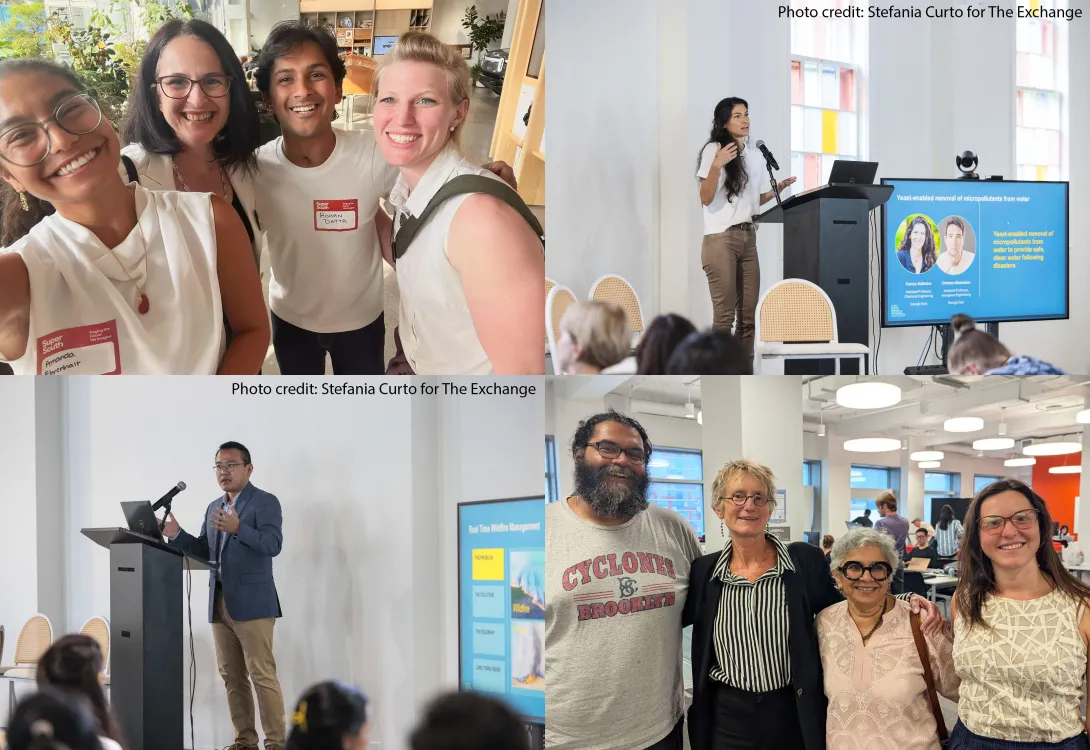
Collage of four images taken at the New York Climate Exchange 2025 events with Georgia Tech participants.
Beril Toktay, Regents’ Professor and Brady Family Chair, Scheller College of Business
Executive Director, Brook Byers Institute for Sustainable Systems
Board of Directors, New York Climate Exchange
I returned from Climate Week NYC energized by what I witnessed: Georgia Tech faculty, students, and startups showcasing the breadth and depth of our climate innovation work on one of the world's biggest stages.
Climate Week NYC brings together more than 900 events, but what stood out wasn’t the scale — it was the substance. Across five New York Climate Exchange partner events, the Georgia Tech community demonstrated something essential. Georgia Tech bridges research and real-world impact where it matters most — in people’s lives.
At the Super South event, we flipped the script on where climate innovation happens and demonstrated the Southeast as a climate tech powerhouse. Too often, conversations about climate tech center on coastal hubs. But Georgia Tech-affiliated entrepreneurs Tarek Rakha (Lamarr.AI), Mya Love Griesbaum (Mycorrhiza Fashion), Joe Metzler (Metzev), Laura Stoy (Ph.D. ECE 2021, Rivalia Chemical), Charlie Cichetti (MGT 2004, Skema), Joseph Mooney (research engineer, School of Civil and Environmental Engineering, WattAir), Lewis Motion (MBA 2017, WEAV3D), and Ramtin Motahar (IE 2004, ECON 2004, M.S. AE 2017, Joulea) showed that the Southeast isn’t just participating in the clean energy transition — we’re leading it.
The Climate Tech Fellowship Showcase was personal. Seeing two Georgia Tech teams — Patricia Stathatou and Christos Athanasiou’s yeast-based water purification system, and Xiao Liu’s AI-powered wildfire management platform — selected for the inaugural cohort reminded me why partnerships like the New York Climate Exchange matter. These early-stage innovators need more than good ideas. They need networks, mentorship, and funding pathways. NYCE provides those connections.
From flooding to batteries, two symposia highlighted GT faculty doing research that matters. At Weathering the Future, Iris Tien joined experts from AECOM, NVIDIA, and the NYC Department of Environmental Protection to discuss integrating resilience into urban infrastructure. Her work on coastal adaptation and infrastructure resilience addresses real vulnerabilities that cities face today. The Global Battery Alliance Leadership Meeting and Urban Battery Forum brought Yuanzhi Tang into conversations about building sustainable, circular battery value chains. As EVs scale and stationary storage grows, how we manage battery lifecycles — from securing raw resources to manufacturing to second-life reuse/recycling — will determine how we balance electrification, sustainability, environmental considerations, and economics; more details can be found in the NYCE report on battery circularity co-authored by Wyatt Williams (M.S. CEE 2024, MBA 2024).
Nicole Kennard’s leadership in the Climate Storytelling Workshop reinforced something I believe deeply: Technical solutions alone won’t solve the climate crisis. We need approaches that center community voices, acknowledge environmental justice concerns, and build trust. This became particularly clear in Kennard’s lecture for NYU’s Center for Urban Science and Progress: "Food, Place, and Belonging: From Global Visions to Local Sustainability." Presented with Janelle Wright (M CP 2022) from the West Atlanta Watershed Alliance, this lecture demonstrated how sustainable food systems can draw on global frameworks but must center community values and honor the history of place.
A few insights emerged from the week:
1. Geography matters — and so does bridging it. Collaborative platforms like NYCE that create genuine partnerships across regions will be more effective in achieving Georgia Tech’s vision of doing climate work that is grounded in Georgia and global in impact.
2. Visibility accelerates impact. Several faculty and entrepreneurs told me that Climate Week NYC opened doors — to investors, to funders, to partners, and to media. Platforms like NYCE amplify work that might otherwise stay local.
3. Students are passionate about climate opportunities. Every conversation about internships, fellowships, and experiential learning generated immediate interest. We need to build more pathways for students like Rohan Datta and Amanda Ehrenhalt to engage in climate work across both New York and Atlanta ecosystems — creating opportunities for hands-on experience, knowledge diffusion across regions, and the professional networks that will define their careers.
4. Our community extends far beyond campus. Meeting alumnus Alan Warren (PHYS 1978) drove this message home. Alan brings a unique vantage point on coastal resilience challenges faced in New York — and he’s energized by what our partnership can achieve. His offer to serve as Georgia Tech’s “envoy” in NYC, connecting our climate work to networks and opportunities there, is exactly the kind of volunteer leadership that accelerates impact. Alan’s own inspirational story of resilience and regeneration makes his commitment to climate resilience work even more meaningful.
Looking ahead, I see Georgia Tech’s partnership with the NYCE creating a powerful platform: NYCE amplifies our work through capital and convening; Georgia Tech anchors deployment with Southeast roots and global reach. Working alongside a distinguished board led by incoming chair Andrea Goldsmith, president of Stony Brook University, gives me confidence in this direction.
President Ángel Cabrera met with Goldsmith this week and reaffirmed our shared vision for bridging research and impact. “Georgia Tech’s mission has always been about translating knowledge into progress that serves society,” said Cabrera. “The New York Climate Exchange partnership exemplifies this commitment to innovative solutions that can be scaled to create real human impact. By connecting our strengths in community-engaged climate research with networks that can amplify and accelerate solutions, we’re living our motto of Progress and Service as we address one of humanity’s most urgent challenges.”
The Brook Byers Institute for Sustainable Systems (BBISS) convenes faculty, students, and partners to address sustainability challenges through research, education, and collaboration. Connect with BBISS on LinkedIn to be part of the ongoing discussion and/or reach out to Susan Ryan (susan.ryan@gatech.edu) to be added to BBISS’ climate science and solutions community of practice.
News Contact
Brent Verrill, Research Communications Program Manager, BBISS

Nicole Kennard holds a young chicken.
Nicole Kennard’s passion for sustainability and food justice took root as a Georgia Tech undergraduate in materials science and engineering. It then blossomed across the Atlantic in the U.K., where she studied sustainable food systems as a Fulbright Scholar and later as a doctoral student.
Today, she’s back at Georgia Tech as assistant director for Community-Engaged Research in the Brook Byers Institute for Sustainable Systems (BBISS). Kennard supports faculty in building meaningful and co-creative research partnerships with local communities to address pressing sustainability and societal challenges.
“I find food very interesting because it’s interdisciplinary by necessity. Food is the great connector,” says Kennard.
She calls her journey back to Georgia Tech “a full-circle moment,” particularly since, as an undergrad, she worked on a community-engaged sustainability project for the Center for Serve-Learn-Sustain, now the Center for Sustainable Communities Research and Education (SCoRE).
While a Tech student, Kennard served for three years as president of the student chapter of Engineers for a Sustainable World, which started her interest in urban agriculture. She recalled a day when a nonprofit contacted her with a strange donation offer: hydroponic equipment they had received from the set of The Hunger Games. Hydroponics is a method of growing plants without soil.
“I googled it and thought, why not?” recalls Kennard, who started a campus hydroponics project. “We were just a group of students across different disciplines who took over the greenhouse on top of the biology building that hadn’t been used for a long time,” she said. “We got good at experimenting — we were growing food for the Atlanta Community Food Bank.”
The students’ expertise led them to build systems for other nonprofits and classrooms in the Atlanta area. From there, Kennard met Atlantans working in food justice and sustainable agriculture. It sparked a thirst for furthering her education, and Kennard was awarded a Fulbright scholarship to pursue a master’s in sustainable agriculture and food security at Newcastle University in the U.K. She stayed through the Covid pandemic, earning her Ph.D. in chemistry and biosciences from the University of Sheffield in 2023.
Now, she’s excited to be home and connecting faculty with community partners. She hopes to build co-creative research partnerships that are “meaningful, sustainable, and long-lasting.” Her vision is to make Tech’s research more locally beneficial by working directly with surrounding communities.
“Sustainability is so broad that I feel it can touch anyone. At Georgia Tech, we have so much expertise that is perfect for this field.”
Kennard is also passionate about training and connecting graduate students doing community-engaged research. She recently received a seed grant to build a cross-university network with Georgia State University, Emory University, and Spelman College.
Kennard’s research projects include mapping Atlanta's local food system and addressing challenges for local urban growers. She notes that accessing food can be an issue for many in Atlanta, complicated by financial and transportation barriers. At the same time, Atlanta is one of the leading U.S. cities in urban agriculture and has a rich agricultural history and food culture. The city has a wealth of urban farms, community gardens, and local nonprofits working together to increase access to fresh, healthy foods and build community through food.
An outdoor enthusiast, the Acworth, Georgia, native enjoys hiking, camping, traveling, foraging, and gardening in her free time.
— written by Anne Wainscott-Sargent
News Contact
Brent Verrill, Research Communications Program Manager, BBISS
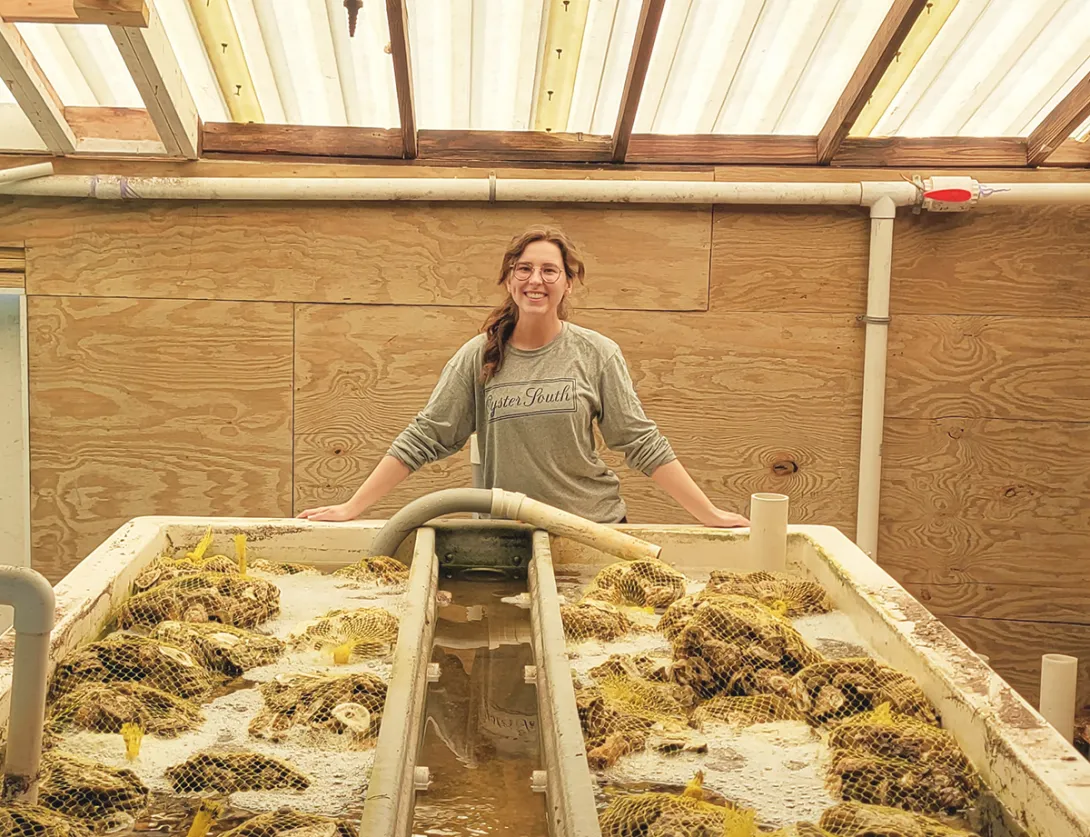
Sarah Roney oversees nursery troughs in the UGA Shellfish Research Lab filled with young oysters growing on shells recycled from restaurants all over Georgia.
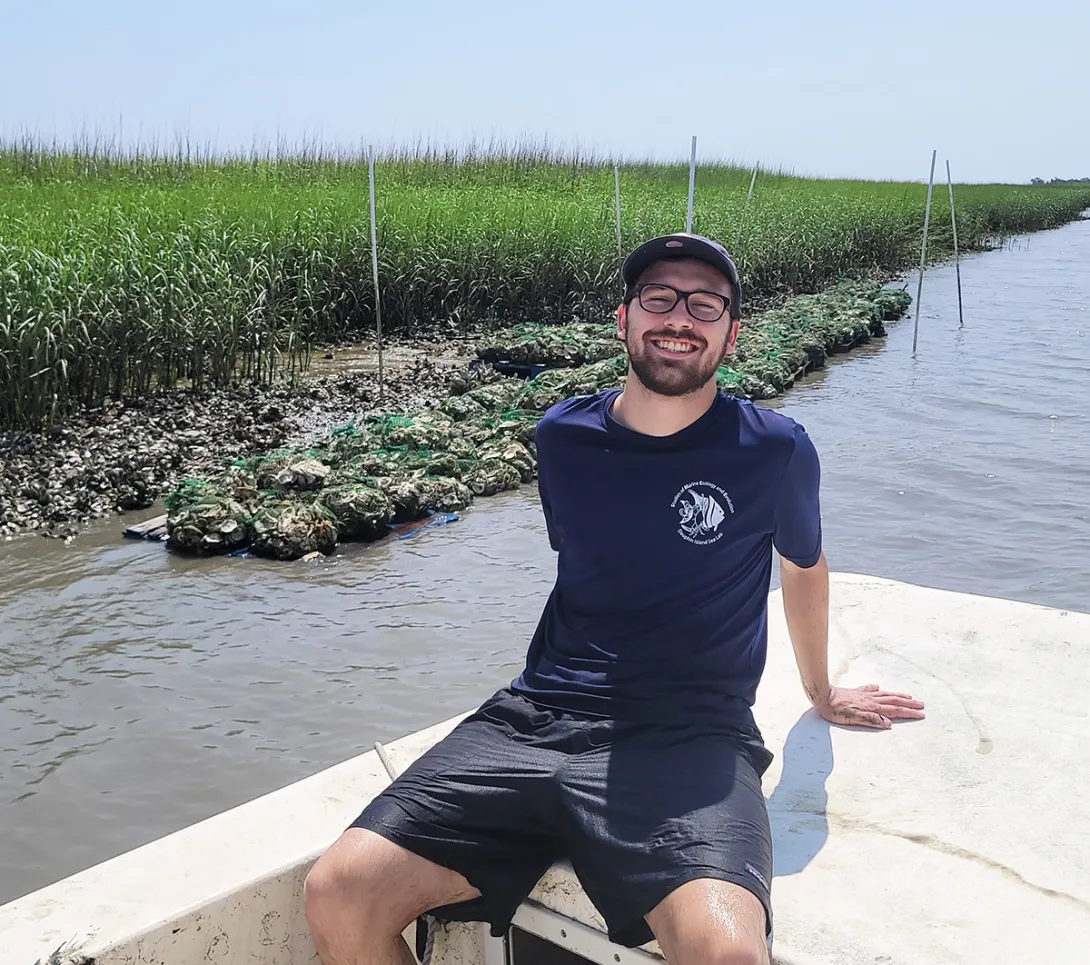
Tanner Lee (Georgia Tech, BS Biology '23) helped construct the oyster reef he observes from a boat as part of an undergraduate research project.
Sarah Roney studies oysters — and coastline restoration, wave energy, erosion, blue crabs, and predator chemical cues. A Ph.D. candidate in Georgia Tech’s Ocean Science and Engineering program and a Brook Byers Graduate Fellow, Roney has spent the past four years studying how strategically placing oyster reefs along Georgia’s coast could yield significant benefits.
Georgia’s coastal ecology is being degraded by several threats. Erosion caused by a combination of traffic from water vessels, sea-level rise, increased storm intensity and frequency, and property development, are negatively impacting both coastal living systems and the state’s economy. Tourism, agriculture, recreation, fisheries, property development, and trade (through the Port of Savannah) all rely on healthy coastlines.
Roney’s interest in coastal ecology and oysters drew her to focus her doctoral thesis on this problem. She divided her project into two parts. The first involved understanding how much oyster reefs reduce the erosion caused by wave energy (ship wake) from water traffic. The second part demonstrated a method for making young oysters resistant to predation — increasing their survival rates and that of the reef colonies they call home. Roney focused her research on two major waterways in the Savannah area. The Intracoastal Waterway and the South Channel of the Savannah River, which leads to the Port of Savannah, are both subject to heavy ship and boat traffic. According to Roney’s collaborators at Georgia Tech, 65% of the wave energy lashing the South Channel’s shores is generated by cargo vessels navigating to and from the Port of Savannah. Because traffic along the Intracoastal Waterway is subject to very few speed restrictions, there is plenty of erosive wave energy there also, even though the vessels are almost exclusively small.
Roney chose one site in each waterway to place her reef structures. Mesh bags of oyster shells were seeded with young oysters by personnel working at a University of Georgia Shellfish Research Lab. Roney created her reef structures by placing these bags in a row 15 to 20 meters long and a meter wide. Once established, Roney found that constructed reefs dissipate 40% of the wave energy before it reaches the marsh edge. “This is an experimental pilot study, so the reefs are on the smaller side,” Roney explained. “Reefs as large as 100 meters long may be necessary to protect certain areas — which sounds like a big investment. But because these are living shorelines, they are self-sustaining, and will keep growing and building on themselves.”
Establishing oyster reefs can be challenging, however, because predators feast on young oysters. Blue crabs are among the most voracious. The second part of Roney’s research was to develop a method that improves adolescent oysters’ chances of surviving to adulthood — when they infrequently succumb to predation. Roney and her collaborators at Georgia Tech identified two compounds found in blue crab urine, called trigonelline and homarine, that induce young oysters to devote more energy toward growing their shells, which become 25-60% stronger than normal. Roney found that after four to eight weeks of exposure to these compounds in hatchery conditions, their overall survival rate improved by 30% once placed in a reef. Her method not only helps constructed reefs to become established, but can also help existing oyster reefs become more resilient by slowing, or reversing, their decline.
While coastal restoration projects are not new in Georgia, the techniques Roney developed are relatively novel. Conventional shoreline restoration projects involve excavation, placing gravel beds, and extensive plantings, mostly with sea grasses. Roney has shown that using living shoreline strategies are less intensive and less expensive to establish and are also effective in reducing wave energy in waterways vulnerable to erosion. Perhaps most significantly, these techniques also restore the foundational functions of the ecosystems in which they are placed. The reefs become nurseries, incubating fish, bird, plant, and crustacean species.
Roney engaged several partners over the four years of her project, many in the communities along Georgia’s coast. Over 35 coastal residents, business owners, citizen scientists, and students volunteered their time and resources to help Roney’s project succeed. Roney said, “I think the most rewarding part of the project has been seeing how many people are truly invested in our coastal resources and want oyster reefs to thrive.”
This project isn’t likely to end once Roney earns her PhD. For living shoreline restoration practices to catch on, several other problems require investigation. Roney wants to devise a way to slowly release predator cue compounds into the water near oyster reefs, so baby oysters won’t need to spend as much time in a hatchery before being placed in the wild. Perfecting such a time-release mechanism could also help rejuvenate naturally occurring oyster reefs under threat from erosion and predation.
Roney also wants to try combining constructed oyster reefs with oyster farms, integrating one of the most sustainable ways that protein can be raised with living shoreline restoration. “As the mariculture industry in Georgia grows, there will be lots of opportunities to investigate the possible intersections between the ecological benefits, engineering benefits, and cultural benefits of oyster farming,” Roney said. “Food might be a continuous byproduct of shoreline restoration projects.”
Roney’s research shows that economic development and preserving, or even regenerating, diverse and productive coastal habitats for future generations don’t have to be mutually exclusive propositions.
Roney’s thesis advisor is Marc Weissburg, Brook Byers Professor in the School of Biological Sciences. Kevin Haas, professor in the School of Civil and Environmental Engineering, helped Roney map and measure the hydrodynamic forces in her study zones. The Coastal Resources Division of the Georgia Department of Natural Resources, the National Parks Service, and the University of Georgia Marine Extension and Georgia Sea Grant program provided access, permitting, funding, and resources.
News Contact
Brent Verrill, Research Communications Program Manager, BBISS
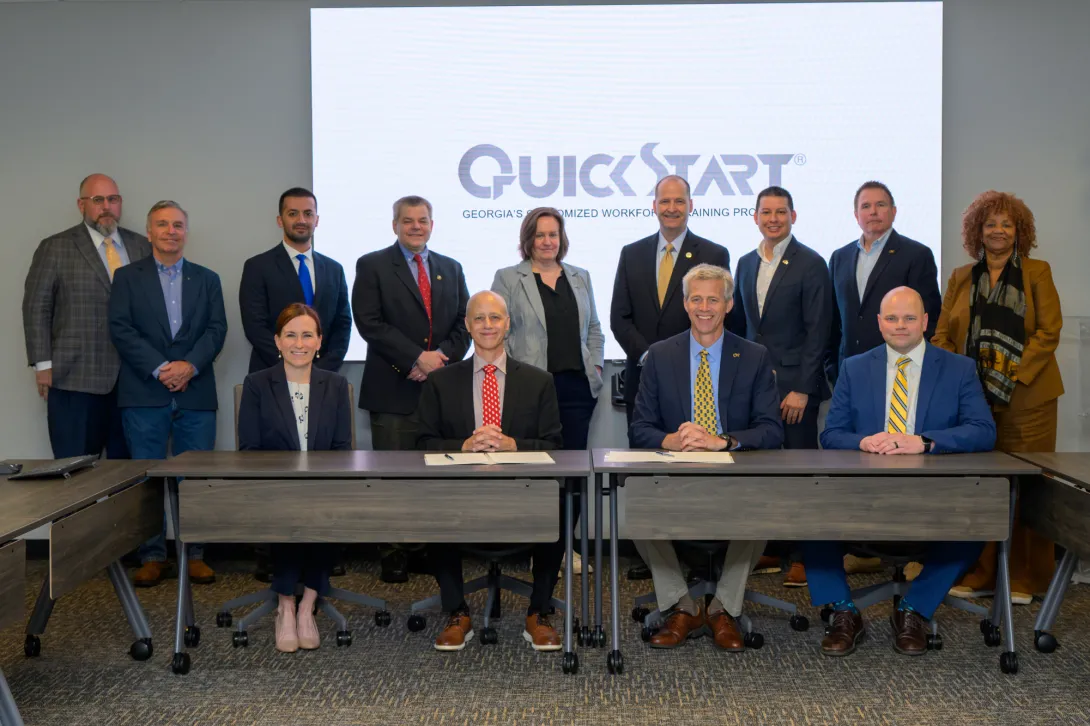
Georgia Quick Start Deputy Commissioner Scott McMurray (center left) and Georgia Tech Executive Vice President for Research Tim Lieuwen (center right) gathered with members of the Georgia Tech Manufacturing Institute, Georgia AIM, and more to officially commemorate the partnership on April 8.
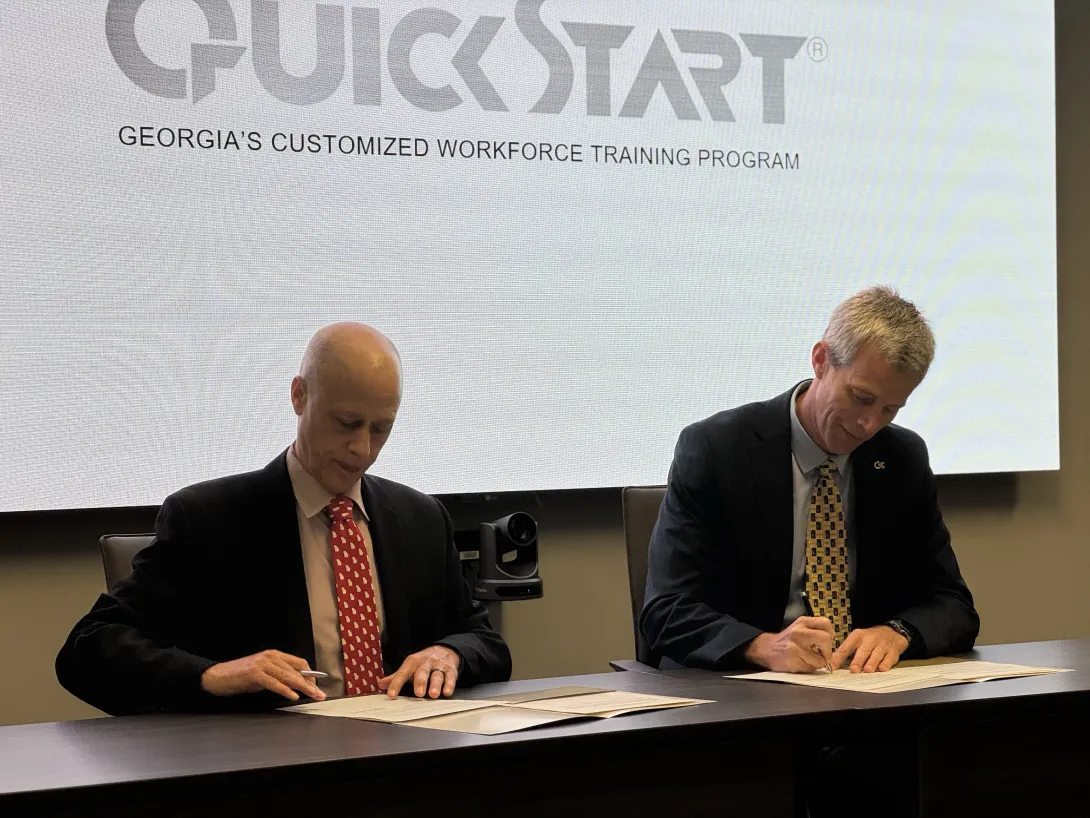
McMurray and Lieuwen signed a Memorandum of Understanding to mark the collaboration.
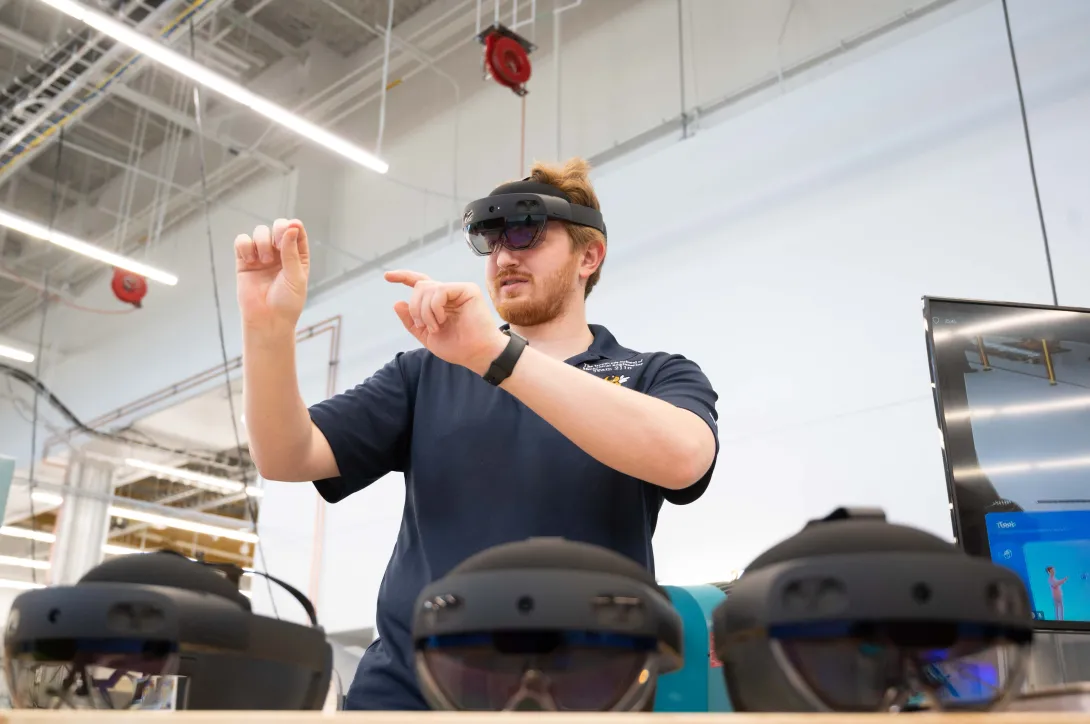
Georgia Tech researchers will work with Georgia Quick Start to develop extended reality training programs for manufacturing workers to make training more consistent and efficient.
In a significant move to bolster Georgia's workforce, Georgia Tech has partnered with Georgia Quick Start to advance manufacturing training and skill development. This collaboration, formalized by the signing of a Memorandum of Understanding on April 8, aims to elevate the quality and efficiency of manufacturing workforce training across the state.
“At Georgia Tech, innovation isn’t just about discovery — it’s about solving real-world challenges,” said Executive Vice President for Research Tim Lieuwen. “Georgia Quick Start ensures that cutting-edge research in advanced manufacturing translates into practical training solutions. Together, we are equipping Georgia’s workforce with the skills needed to drive economic growth and industry advancement.”
As manufacturing technologies and artificial intelligence continue to evolve, U.S. manufacturers increasingly require skilled workers experienced in advanced manufacturing. For decades, Georgia Quick Start, administered by the Technical College System of Georgia, has been addressing this need and has been recognized as the country’s top workforce training program for 15 years.
Now, researchers at Georgia Tech will collaborate with Georgia Quick Start to enhance these efforts by developing Extended Reality (XR) training programs, providing a scalable and experiential solution to meet the growing demand for training.
“We have been so successful for so many years because we stay focused on relevance, flexibility, and responsiveness,” said Scott McMurray, deputy commissioner for Georgia Quick Start. “This partnership is an example of how Quick Start is able to develop and deliver effective training even for companies working on the leading edge of advanced manufacturing technologies.”
Extended Reality, Scaled Training
XR technologies use a combination of virtual and augmented reality to create immersive, interactive experiences. By simulating real-world manufacturing environments and processes, XR has the potential to allow trainees to practice and refine their skills in a controlled, risk-free setting through standardized training experiences. This not only enhances the learning experience but also ensures consistency in training quality across a large workforce.
“Virtual reality scales training by gamifying complex tasks and removing the need for costly or hazardous physical equipment. Augmented reality scales on-the-job training by providing adaptive, context-aware guidance exactly when and where it’s needed, reducing the need for expert supervision,” said manufacturing XR researcher Mohsen Moghaddam, Gary C. Butler Family associate professor in the H. Milton Stewart School of Industrial and Systems Engineering and the George W. Woodruff School of Mechanical Engineering. “Together, they make training more consistent, up-to-date, accessible, and safe, especially for workers who may hesitate to ask for assistance from peers or supervisors out of fear of judgment.”
The collaboration will leverage Moghaddam’s research and the AR/VR training space within the expanded Advanced Manufacturing Pilot Facility, providing a state-of-the-art environment for developing and deploying XR training technologies. Researchers from the Georgia Tech Manufacturing Institute (GTMI) and Georgia AIM(Artificial Intelligence in Manufacturing) will also play pivotal roles in the development of these training programs.
“Partnerships like these highlight the power of the integrated University of Georgia and Technical College System of Georgia’s workforce development ecosystem,” said Thomas Kurfess, Regents’ Professor and GTMI executive director. “Our country not only needs the creation of new jobs but also the skilled workforce to fill them. At Georgia Tech and GTMI, we are serving as an enabler of innovation in that workforce development.”
News Contact
Writer: Audra Davidson
Research Communications Program Manager
Georgia Tech Manufacturing Institute
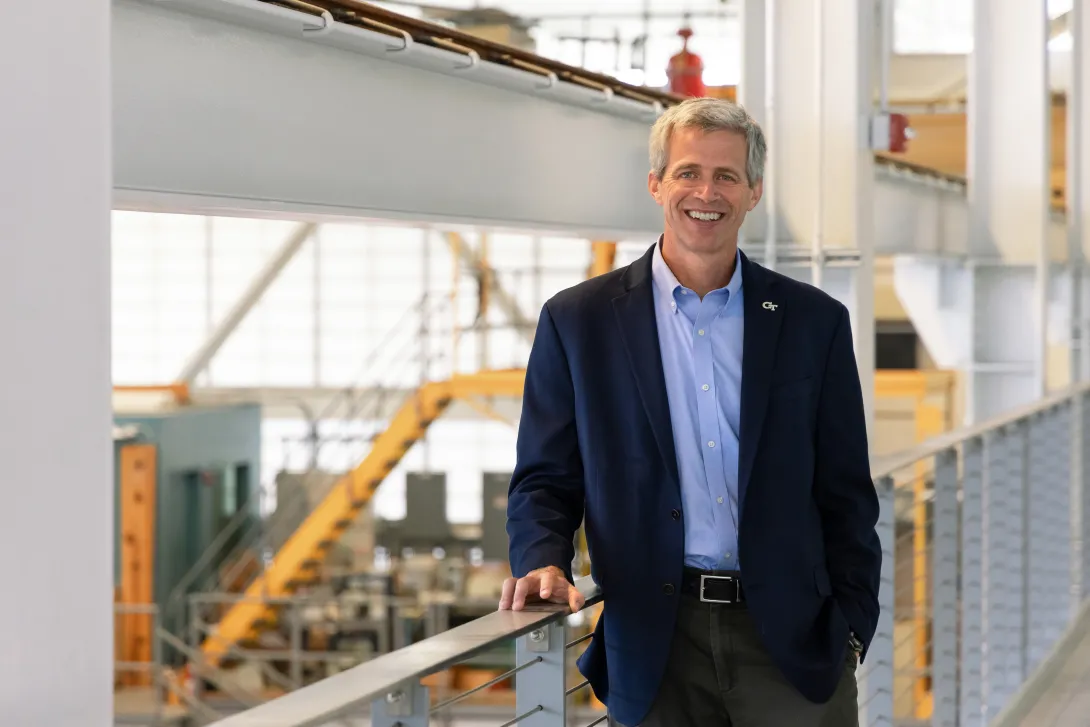
Tim Lieuwen, Executive Vice President for Research
Following a nationwide search, Georgia Tech President Ángel Cabrera has named Timothy Lieuwen the Executive Vice President for Research (EVPR). Lieuwen has served as interim EVPR since September 10, 2024.
“Tim’s ability to bridge academia, industry, and government has been instrumental in driving innovation and positioning Georgia Tech as a critical partner in tackling complex global challenges,” said Cabrera. “With his leadership, I am confident Georgia Tech will continue to expand its impact, strengthen its strategic collaborations, and further solidify its reputation as a world leader in research and innovation.”
A proud Georgia Tech alumnus (M.S. ME 1997, Ph.D. ME 1999), Lieuwen has spent more than 25 years at the Institute. He is a Regents’ Professor and holds the David S. Lewis, Jr. Chair in the Daniel Guggenheim School of Aerospace Engineering. Prior to the interim EVPR role, Lieuwen served as executive director of the Strategic Energy Institute for 12 years. His expertise spans energy, propulsion, energy policy, and national security, and he has worked closely with industry and government to develop new knowledge and see its implementation in the field.
Lieuwen has been widely recognized for his contributions to research and innovation. He is a member of the National Academy of Engineering, as well as a fellow of multiple other professional organizations. Recently, he was elected an International Fellow of the U.K.’s Royal Academy of Engineering, one of only three U.S. engineers in 2024 to receive this prestigious commendation. The honor acknowledges Lieuwen’s contributions to engineering and his efforts to advance research, education initiatives, and industry collaborations.
He has authored or edited four books, published over 400 scientific articles, and holds nine patents — several of which are licensed to industry. He also founded TurbineLogic, an analytics firm working in the energy industry. Additionally, Lieuwen serves on governing and advisory boards for three Department of Energy national labs and was appointed by the U.S. Secretary of Energy to the National Petroleum Council.
The EVPR is the Institute’s chief research officer and directs Georgia Tech’s $1.37 billion portfolio of research, development, and sponsored activities. This includes leadership of the Georgia Tech Research Institute, the Enterprise Innovation Institute, nine Interdisciplinary Research Institutes and numerous associated research centers, and related research administrative support units: commercialization, corporate engagement, research development and operations, and research administration.
“I am honored to step into this role at a time when research and innovation have never been more critical,” Lieuwen said. “Georgia Tech’s research enterprise is built on collaboration — across disciplines, across industries, and across communities. Our strength lies not just in the breakthroughs we achieve, but in how we translate them into real-world impact.
“My priority is to put people first — empowering our researchers, students, and partners to push boundaries, scale our efforts, and deepen our engagement across Georgia and beyond. Together, we will expand our reach, accelerate discovery, and ensure that Georgia Tech remains a driving force for progress and service.”
News Contact
Shelley Wunder-Smith | Director of Research Communications
shelley.wunder-smith@research.gatech.edu
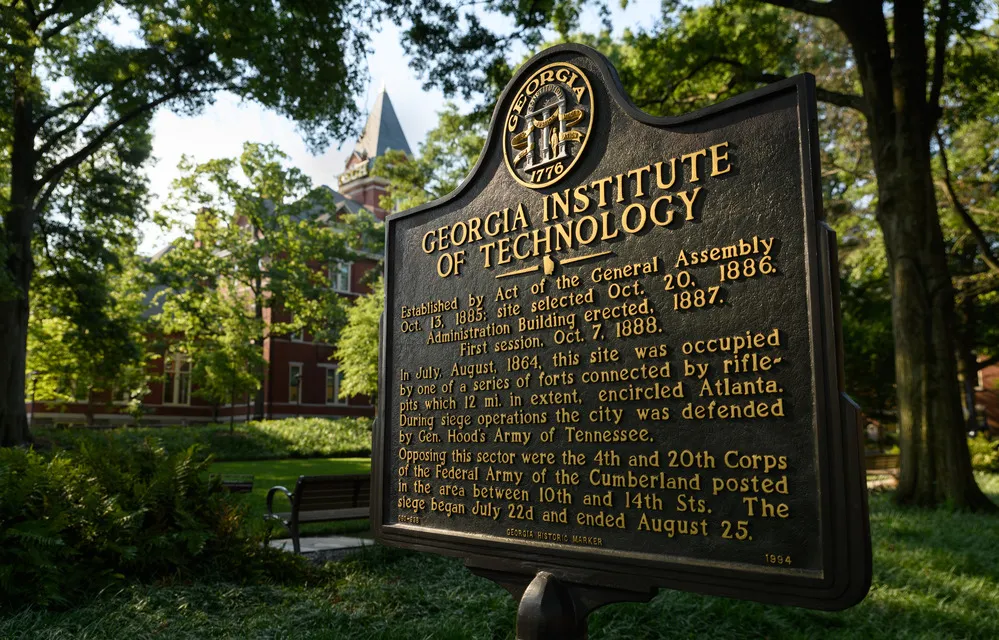
Georgia Tech’s Executive Vice President for Research search committee has selected three finalists. Each candidate will visit campus and present a seminar sharing their broad vision for the Institute's research enterprise.
The seminars are open to all faculty, students, and staff across the campus community. Interested individuals can attend in person or register to participate via Zoom (pre-registration is required).
All seminars will take place at 11 a.m. on the following dates:
- Candidate 1: Monday, January 13, Scholars Event Theater, Price Gilbert 1280 (register for webinar)
- Candidate 2: Tuesday, January 21, Bill Moore Student Success Center, Press Rooms A&B (register for webinar)
- Candidate 3: Monday, January 27, Scholars Event Theater, Price Gilbert 1280 (register for webinar)
Each candidate’s bio and curriculum vitae, along with further details, will be accessible through the EVPR search site 48 hours prior to each visit. Georgia Tech credentials are required to access all materials. Information is being made available in this manner to protect the confidentiality of the finalists. Following each candidate’s visit, is the campus community is invited to share their comments via a survey that will be posted on the candidate’s webpage
The search committee is chaired by Susan Lozier, dean of the College of Sciences. Search committee members include a mix of faculty and staff representing colleges and units across campus. Georgia Tech has retained the services of the executive search firm WittKieffer for the search.
News Contact
Shelley Wunder-Smith | shelley.wunder-smith@research.gatech.edu
Director of Research Communications