

The Georgia Tech EcoCommons (Photo by Nick Hubbard)
The College of Sciences is proud to launch Georgia Tech for Georgia’s Tomorrow, a new center focused on research that aims to improve life across the state.
“From resilient communities and agriculture, to health and sustainable energy resources, Georgia's Tomorrow will focus on improving the lives of Georgians and their communities,” Dean Susan Lozier says.
An expansion of the College’s strategic plan, the initiative will serve as a statewide fulcrum, fostering research in direct service to Georgia cities, counties, and communities.
The center specifically addresses critical health and climate challenges throughout Georgia, and aims to pave the way for increased public-private partnerships. The initiative will also expand access — broadening participation opportunities for Georgia students and communities to engage with research.
The search for an inaugural faculty director has commenced, and will be followed by a dedicated cluster hire in 2025, funded by the Office of the Provost. Dean Lozier, who also serves as a professor in the School of Earth and Atmospheric Sciences, has reserved funds from the College of Sciences Betsy Middleton and John Clark Sutherland Dean’s Chair to initiate the center.
People and planet
Selected from a pool of 17 faculty proposals, two dedicated faculty cluster hires will focus on improving the health of Georgians and Georgia’s communities — and the resilience of humans and ecosystems to current and anticipated climate change in the state. Appointments will be sought across the College’s six schools.
“These proposals address themes that are critically important right now for Georgia Tech research growth: sustainability and climate, along with health and well-being,” says Julia Kubanek, Vice President for Interdisciplinary Research at Georgia Tech and a professor in the School of Biological Sciences and the School of Chemistry and Biochemistry. “This is an opportunity for Georgia to be a model for the nation on how to solve health disparities.”
“These new cluster hires will strengthen the College’s existing research programs,” Lozier adds. “They will also facilitate large collaborations across campus, and educate the next generation of scientists who will tackle these problems in Georgia and beyond.”
Rising Tide Program
An adjacent effort, the new College of Sciences Rising Tide Program, is selecting promising early-career scientists for a two-year virtual mentorship initiative.
The Rising Tide Program will work in tandem with the Georgia's Tomorrow cluster hire, complementing the strong culture of mentorship in the College, while providing a pathway to support local research at the Institute.
“Rising Tide aims to help the College recruit scientists with professional or lived experiences in the Southeast — or focused on research with particular relevance to the Southeast,” explains Rising Tide Director Alex Robel, associate professor in the School of Earth and Atmospheric Sciences. “One of our key goals is to bring more faculty to Georgia Tech who can contribute to research and teaching that’s particularly relevant to communities in Georgia.”
“The reach of Georgia Tech is global,” Lozier adds. “Our fingerprints are on discoveries and innovations that benefit people and their communities around the world. As researchers at a leading public university in the state of Georgia, we are also cognizant of the responsibility and opportunity to focus our efforts more intently here at home.”
Georgia's Tomorrow: Director search
The College has launched an internal leadership search for the Georgia’s Tomorrow center, with an expected appointment to be announced in February 2025. The inaugural director will have the opportunity to shape the direction of this new initiative by:
- Formulating a strategic plan for the center in partnership with interested parties across campus
- Promoting synergies between faculty within the college, and elsewhere at Georgia Tech, whose work relates to the health of Georgia’s people, its ecosystems, and communities
- Fostering collaborations with offices at Georgia Tech that focus on community, government, and industry engagement so as to develop meaningful external partnerships that will advance the work of this center
All faculty who hold a majority appointment within the College of Sciences are eligible and encouraged to apply. Learn more and apply via InfoReady.
Funding
Initial support for Georgia Tech for Georgia's Tomorrow is generously provided by the College of Sciences Betsy Middleton and John Clark Sutherland Dean's Chair fund. Cluster hire funding has been awarded by Provost Steven W. McLaughlin.
Georgia's Tomorrow will also seek funding from state, national and international organizations, private foundations, and government agencies to expand impact. Philanthropic support will also be sought in the form of professorships, programmatic support for the center, and seed funding.
2025 updates:
Professor Joel Kostka has been selected to serve the center's inaugural faculty director.
Note: Georgia Tech for Georgia's Tomorrow initially launched under the working title Science for Georgia's Tomorrow (Sci4GT).
News Contact
Written by: Selena Langner
Media contact: Jess Hunt-Ralston

Eight Georgia Tech researchers were honored with the ACM Distinguished Paper Award for their groundbreaking contributions to cybersecurity at the recent ACM Conference on Computer and Communications Security (CCS).
Three papers were recognized for addressing critical challenges in the field, spanning areas such as automotive cybersecurity, password security, and cryptographic testing.
“These three projects underscore Georgia Tech's leadership in advancing cybersecurity solutions that have real-world impact, from protecting critical infrastructure to ensuring the security of future computing systems and improving everyday digital practices,” said School of Cybersecurity and Privacy (SCP) Chair Michael Bailey.
One of the papers, ERACAN: Defending Against an Emerging CAN Threat Model, was co-authored by Ph.D. student Zhaozhou Tang, Associate Professor Saman Zonouz, and College of Engineering Dean and Professor Raheem Beyah. This research focuses on securing the controller area network (CAN), a vital system used in modern vehicles that is increasingly targeted by cyber threats.
"This project is led by our Ph.D. student Zhaozhou Tang with the Cyber-Physical Systems Security (CPSec) Lab," said Zonouz. "Impressively, this was Zhaozhou's first paper in his Ph.D., and he deserves special recognition for this groundbreaking work on automotive cybersecurity."
The work introduces a comprehensive defense system to counter advanced threats to vehicular CAN networks, and the team is collaborating with the Hyundai America Technical Center to implement the research. The CPSec Lab is a collaborative effort between SCP and the School of Electrical and Computer Engineering (ECE).
In another paper, Testing Side-Channel Security of Cryptographic Implementations Against Future Microarchitectures, Assistant Professor Daniel Genkin collaborated with international researchers to define security threats in new computing technology.
"We appreciate ACM for recognizing our work," said Genkin. “Tools for early-stage testing of CPUs for emerging side-channel threats are crucial to ensuring the security of the next generation of computing devices.”
The third paper, Unmasking the Security and Usability of Password Masking, was authored by graduate students Yuqi Hu, Suood Al Roomi, Sena Sahin, and Frank Li, SCP and ECE assistant professor. This study investigated the effectiveness and provided recommendations for implementing password masking and the practice of hiding characters as they are typed and offered.
"Password masking is a widely deployed security mechanism that hasn't been extensively investigated in prior works," said Li.
The assistant professor credited the collaborative efforts of his students, particularly Yuqi Hu, for leading the project.
The ACM Conference on Computer and Communications Security (CCS) is the flagship annual conference of the Special Interest Group on Security, Audit and Control (SIGSAC) of the Association for Computing Machinery (ACM). The conference was held from Oct. 14-18 in Salt Lake City.
News Contact
John Popham
Communications Officer II
College of Computing | School of Cybersecurity and Privacy
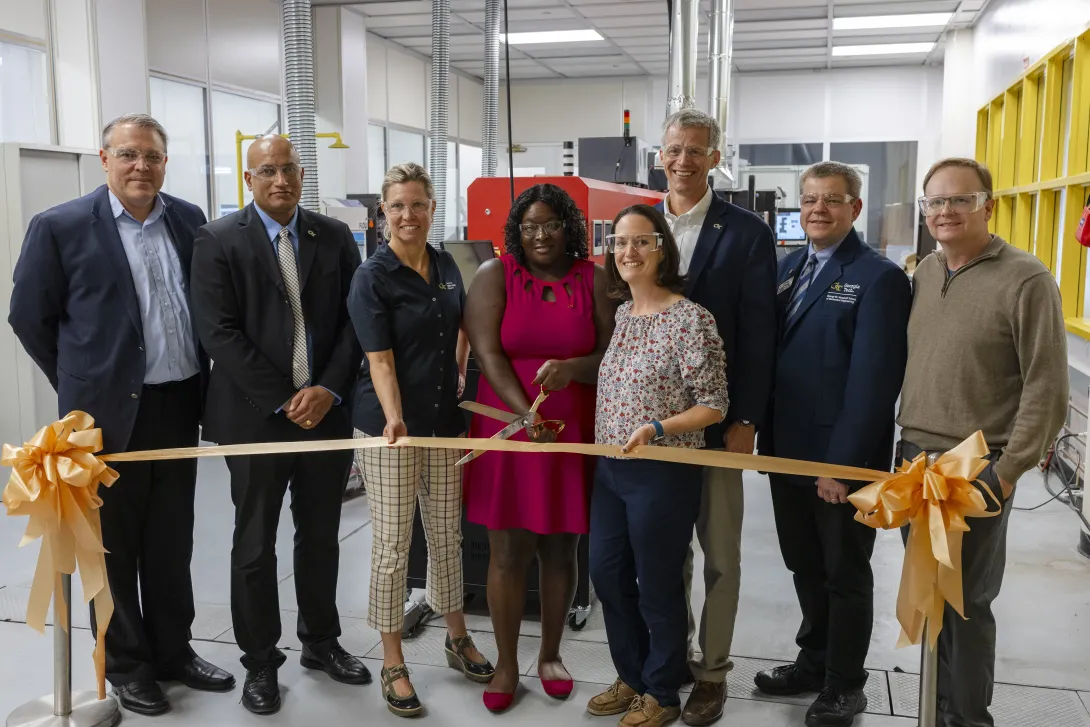
Partners of the facility gathered for an official ribbon cutting ceremony. From left to right: Eric Vogel, Hightower Professor in MSE, and executive director for the Institute for Matter and Systems; Devesh Ranjan, Eugene C. Gwaltney, Jr. school chair and professor in the George W. Woodruff School of Mechanical Engineering; Julia Kubanek, Vice President of Interdisciplinary Research; Tequila Harris, professor in the Woodruff School and facility leader; Christine Conwell, interim executive director for the Strategic Energy Institute; Tim Liewen, interim executive vice president for Research; Thomas Kurfess, Regent's Professor in the Woodruff School and executive director of the Georgia Tech Manufacturing Institute; J. Carson Meredith, professor and James Preston Harris Faculty Fellow in the School of Chemical and Biomolecular Engineering, executive director of the Renewable Bioproducts Institute. Photo: Christopher McKenney.
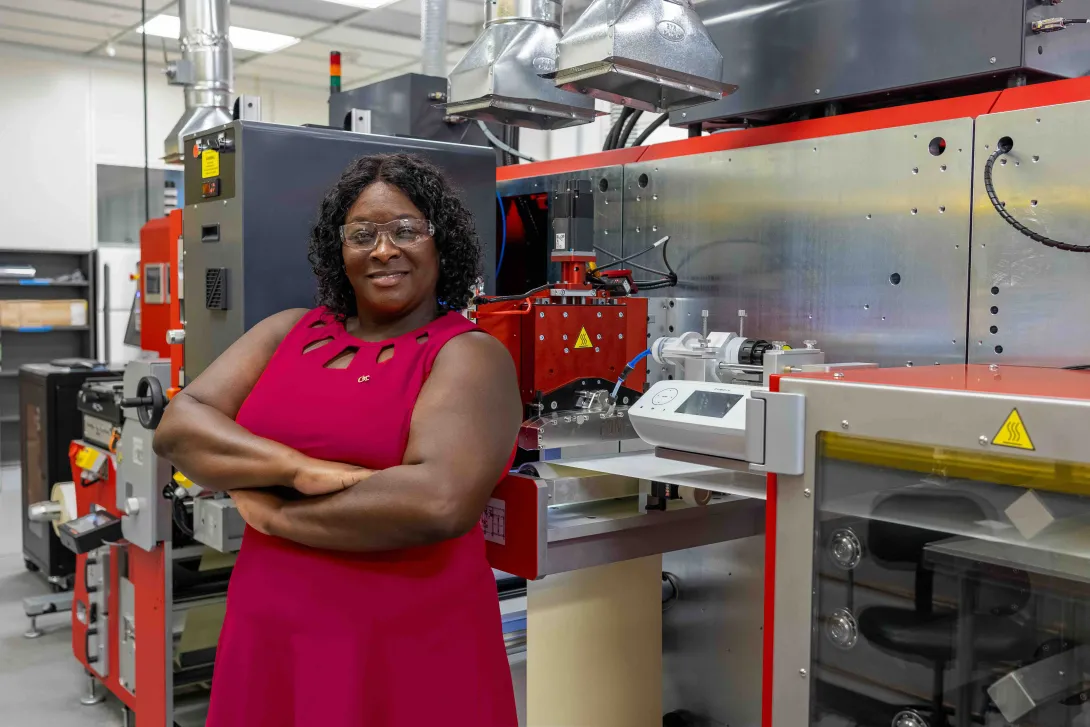
Tequila Harris, professor in the George W. Woodruff School of Mechanical Engineering, next to the modular R2R equipment. Photo: Christopher McKenney.
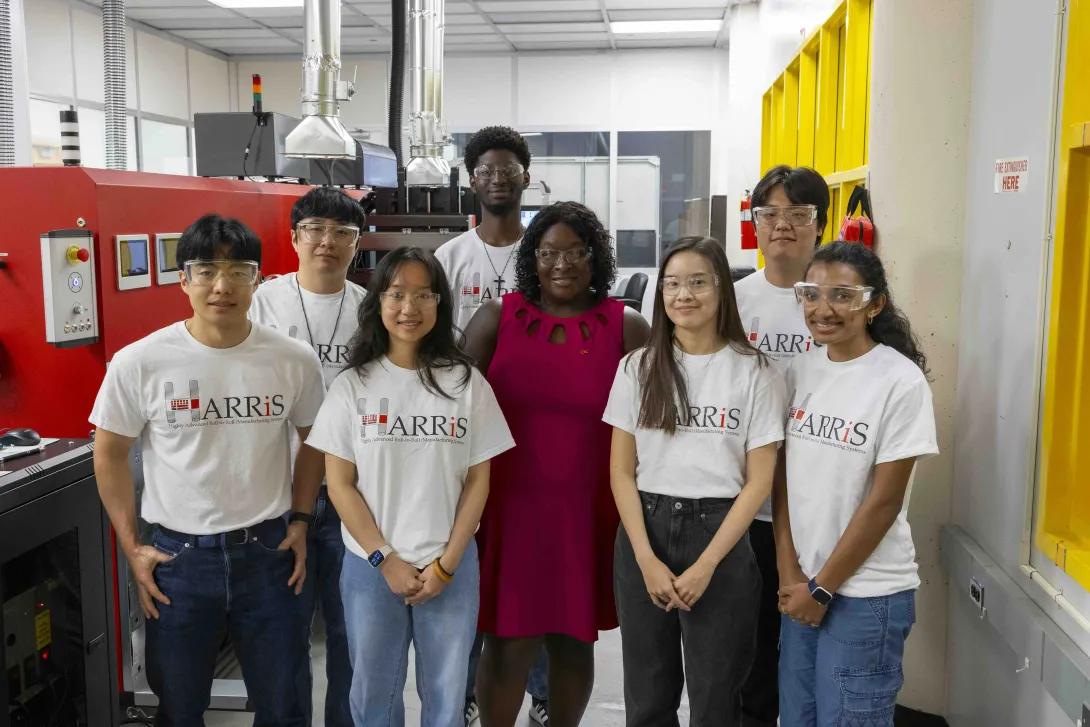
The Highly Advanced Roll-to-Roll iManufacturing Systems (HARRiS) research group in the new R2R facility. Photo: Christopher McKenney.
Whether it’s developing new products, reducing costs, or increasing accessibility, innovations in manufacturing stand to improve the lives of companies and consumers alike. Georgia Tech recently took another step toward ensuring those innovations make it from lab to market with the launch of a Modular Pilot Scale Roll-to-Roll Manufacturing Facility.
“As researchers develop new materials, one of the key aspects we’re missing is how to make them at scale. This is a major oversight because if we can’t make them at scale, we can’t transition from basic research to commercialization,” said Tequila Harris, a professor in the George W. Woodruff School of Mechanical Engineering. “With this new facility, we can prove our discoveries beyond lab-scale studies — and can go from materials innovation to product development at scale.”
Led by Harris, the new facility is the result of a partnership between the Georgia Tech Manufacturing Institute(GTMI), the Strategic Energy Institute, and the Woodruff School. As a pilot facility, it will serve as a testbed for scaling up manufacturing research open for Georgia Tech researchers as well as academic, government, and industry partners around the world.
“The larger vision I see at Georgia Tech involves innovation in manufacturing for large-scale industries,” said Georgia Tech’s Interim Executive Vice President for Research Tim Lieuwen at the facility’s unveiling event on Sept. 19. “It’s crucial that we’re innovating in basic science and technology, but we also need to be innovating in large-scale manufacturing.”
Roll-to-roll (R2R) manufacturing transforms flexible rolls of substrate materials, such as paper, metal foils, and plastics, into more complex, transportable rolls upon coating the surface with one or more fluids, such as inks, suspensions, and solutions, which are subsequently dried or cured on the base substrate. Its high yield and efficiency make R2R an ideal method for the sustainable, large-scale production of components for solar cells, batteries, flexible electronics, and separations — all industries that have expanded in Georgia in recent years.
“As a state institution, we’re ultimately here to serve our state,” said Lieuwen, who is also Regents’ Professor and David S. Lewis Jr. Chair in the Daniel Guggenheim School of Aerospace Engineering. “We’re seeing Georgia emerge as the national leader in terms of recruiting corporate investments in this space and in industries that will be served by this facility.”
Roll-to-Roll Innovations
The R2R process is similar to the production of newspapers, where a large roll of blank paper goes through a series of rollers printing text and photos. “The roll-to-roll aspect is the process of using a specialized tool to force fluid onto a moving surface,” says Harris. It’s one of the fastest-growing methods for producing thin film materials — photovoltaics used in solar cells, transistors in flexible electronics, and micro-batteries, for example — at a large scale.
Harris’s group works to develop novel manufacturing tools, with a particular focus on understanding and improving the dynamics of thin film manufacturing to increase efficiency and minimize waste. Her group is particularly interested in slot die coating, an R2R technique where a liquid material is precisely deposited onto a substrate through a narrow slot. With the new pilot facility, researchers like Harris will be able to take their work to the next level.
“Slot die coating on a roll-to-roll can handle the broadest viscosity range of most coating methods. Therefore, you can process a lot of different materials very quickly and easily,” says Harris. “It’s one of the fastest-growing technologies in the U.S. — and currently, this is the most advanced modular pilot scale facility at an academic university in the United States.”
“Georgia Tech is way ahead of the curve in terms of our facilities,” says GTMI Executive Director and Regents’ Professor Thomas Kurfess. “This will grow our capability in the battery area, membranes, flexible electronics, and more to allow us to support the development of new technologies.”
“As technologies around cleantech continue to advance at an unprecedented pace, pilot manufacturing facilities provide a critical bridge between innovative benchtop research and commercial-scale production and manufacturing,” says Christine Conwell, interim executive director of the Strategic Energy Institute. “We are excited about the opportunities this R2R facility will provide to the Georgia Tech energy community and our industry partners.”
News Contact
Audra Davidson
Research Communications Program Manager
Georgia Tech Manufacturing Institute
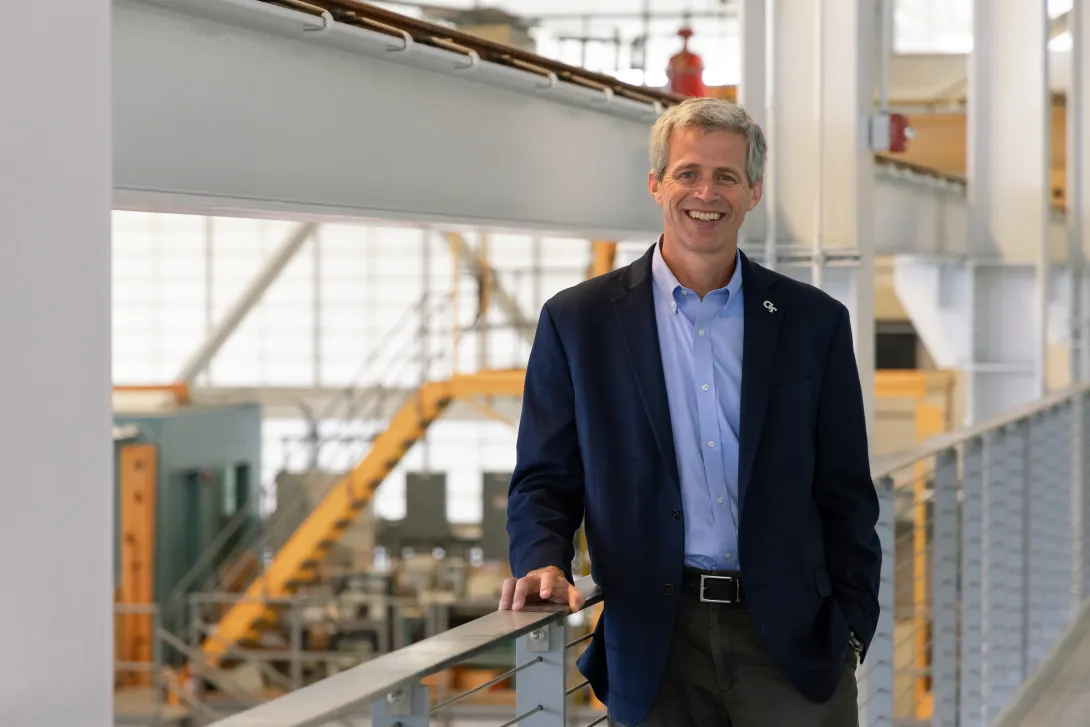
Professor Tim Lieuwen has been elected to the status of International Fellow by the U.K.’s Royal Academy of Engineering. He is one of three other US engineers to receive this prestigious fellowship, which emphasizes enhancing the role of engineering in society and developing an inclusive future through research, education initiatives, and industry collaborations.
Lieuwen is a Regents’ Professor, the David S. Lewis, Jr. Chair in the Daniel Guggenheim School of Aerospace Engineering (AE), a member of the National Academy of Engineering, and a fellow of the American Society of Mechanical Engineers and the American Institute of Aeronautics and Astronautics, among several others. For 12 years, he served as executive director of the Strategic Energy Institute; he is currently serving as Georgia Tech’s interim executive vice president for Research.
“Tim Lieuwen’s groundbreaking research and leadership have been instrumental in advancing the AE School’s mission,” said Mitchell Walker, AE chair. “His work in combustion dynamics, propulsion, and clean energy systems not only enhances our academic reputation but also drives significant, real-world impact, as recognized by the Academy.”
Lieuwen’s research focuses on developing clean combustion technologies for power generation and propulsion. He works closely with industry and government professionals to address energy concerns and set the standard for clean tech manufacturing. The Georgia Tech alumnus will formally be admitted to the Academy at a special ceremony in London on November 27, 2024.
The 2024 class includes 60 Fellows, six International Fellows, and five Honorary Fellows, each of whom has made exceptional contributions to their own field, pioneering new innovations, leading progress in business or academia, providing high-level advice to government, or promoting wider understanding of engineering and technology.

- Written by Benjamin Wright -
Yuanzhi Tang knows firsthand how much of an impact BBISS can make through its programs. The associate professor in the School of Earth and Atmospheric Sciences answered a BBISS call for faculty fellowships, and later seed funding for a project related to sustainable resources. That project grew into a collaboration with Georgia Tech’s Strategic Energy Institute; the Center for Critical Mineral Solutions (CCMS), supported by the College of Sciences and co-sponsored by BBISS; SEI; the Institute for Electronics and Nanotechnology (IEN); and the Institute for Materials (IMat and IEN are now combined into the Institute for Matter and Systems). The goal of the center is to develop sustainable solutions for the grand challenges associated with critical metals and materials essential for the clean energy transition.
During her time as a faculty fellow within BBISS, Yuanzhi became familiar with the people in the organization and had the opportunity to evaluate student and faculty fellow applications. When the opportunity arose to take on the role of associate co-director of interdisciplinary research for BBISS, she was happy to accept so she could help others access resources that had shaped her growth as a researcher at Georgia Tech.
“Being part of a community of people who value interdisciplinary research on sustainability-related topics, I benefited from the interactions and engagement with BBISS and I hope to carry that forward, particularly for young faculty. They are often eager to connect but might not know where to begin. BBISS can be a starting point for them.”
With a background in geochemistry and degrees from Peking University, Stony Brook University, and a postdoc at Harvard, Yuanzhi has gained a breadth of experience that has earned her a variety of awards and recognition. As she joins BBISS in a formal role, she has some advice for early-career colleagues.
“Go to seminars, events, and organized activities, as the best ideas often come through communicating and networking with others, and that’s how you discover that your expertise is needed in other fields. Be confident in who you are as a scholar, but also go out and find ways to collaborate. Georgia Tech places value on interdisciplinary research, and this is a unique strength that you should leverage.”
Away from the office, classroom, and lab, Yuanzhi is a wife and mother of two young children. She enjoys cuddle time with the kids and navigating parenthood in an academically driven household. Her husband is also a Georgia Tech professor and together they juggle the challenges of their careers with spending quality time with the children. “We try to keep work minimal on weekends and get out of the house and enjoy what Atlanta has to offer. We love nature and appreciate that we can be close to campus, close to the city, and still have so many green places to be outside.”
As she embarks on her new role with BBISS, Yuanzhi sees parallels between being a parent, professor, and now an administrator.
“The world is changing rapidly with the explosion of information and technology. It’s a struggle to know what to teach my kids and my students. How do we prepare them for five, 10, or even 20 years from now? This feeling of responsibility connects my work and personal life. It’s challenging, but also very exciting to see how we can help them embrace changes.”
News Contact
Brent Verrill, Research Communications Program Manager, BBISS

Timothy Lieuwen has been appointed interim executive vice president for Research (EVPR) by Georgia Tech President Ángel Cabrera, effective September 10.
Lieuwen is a Regents’ Professor, the David S. Lewis, Jr. Chair in the Daniel Guggenheim School of Aerospace Engineering, and executive director of the Strategic Energy Institute. His research interests range from clean energy and propulsion systems to energy policy, national security, and regional economic development. He works closely with industry and government to address fundamental problems and identify solutions in the development of clean energy systems and alternative fuels.
A proud Georgia Tech alumnus, Lieuwen (M.S. ME 1997, Ph.D. ME 1999) has had a remarkable academic career. He is a member of the National Academy of Engineering and is a fellow of the American Society of Mechanical Engineers, the American Institute of Aeronautics and Astronautics, the American Physical Society, the Combustion Institute, and the Indian National Academy of Engineering (foreign fellow). He has received numerous awards, including the ASME George Westinghouse Gold Medal and the AIAA Pendray Award. He serves on governing or advisory boards of three Department of Energy national labs: Oak Ridge National Laboratory, Pacific Northwest National Laboratory, and the National Renewable Energy Laboratory and was appointed by the U.S. Secretary of Energy to the National Petroleum Council.
Lieuwen has authored or edited four books on combustion and over 400 scientific publications. He also holds nine patents, several of which are licensed to industry, and is founder of an energy analytics company, Turbine Logic, where he acts as chief technology officer.
In Lieuwen’s appointment announcement, President Cabrera said, “Tim’s extensive experience and knowledge of Georgia Tech makes him uniquely suited to lead our research enterprise as we search for a permanent EVPR. I am grateful for his willingness to serve the Institute during this period of remarkable growth, and I look forward to working with him and the rest of the team.”
News Contact
Shelley Wunder-Smith
Director of Research Communications

Omar Asensio is Associate Professor at Georgia Institute of Technology and Climate Fellow, Harvard Business School
With new vehicle models being developed by major brands and a growing supply chain, the electric vehicle (EV) revolution seems well underway. But, as consumer purchases of EVs have slowed, car makers have backtracked on planned EV manufacturing investments. A major roadblock to wider EV adoption remains the lack of a fully realized charging infrastructure. At just under 51,000 public charging stations nationwide, and sizeable gaps between urban and rural areas, this inconsistency is a major driver of buyer hesitance.
How do we understand, at a large scale, ways to make it easier for consumers to have confidence in public infrastructure? That is a major issue holding back electrification for many consumer segments.
- Omar Asensio, Associate Professor at Georgia Institute of Technology and Climate Fellow, Harvard Business School | Director, Data Science & Policy Lab
Omar Asensio, associate professor in the School of Public Policy and director of the Data Science and Policy Lab at the Georgia Institute of Technology, and his team have been working to solve this trust issue using the Microsoft CloudHub partnership resources. Asensio is also currently a visiting fellow with the Institute for the Study of Business in Global Society at the Harvard Business School.
The CloudHub partnership gave the Asensio team access to Microsoft’s Azure OpenAI to sift through vast amounts of data collected from different sources to identify relevant connections. Asensio’s team needed to know if AI could understand purchaser sentiment as negative within a population with an internal lingo outside of the general consumer population. Early results yielded little. The team then used specific example data collected from EV enthusiasts to train the AI for a sentiment classification accuracy that now exceeds that of human experts and data parsed from government-funded surveys.
The use of trained AI promises to expedite industry response to consumer sentiment at a much lower cost than previously possible. “What we’re doing with Azure is a lot more scalable,” Asensio said. “We hit a button, and within five to 10 minutes, we had classified all the U.S. data. Then I had my students look at performance in Europe, with urban and non-urban areas. Most recently, we aggregated evidence of stations across East and Southeast Asia, and we used machine learning to translate the data in 72 detected languages.”
We are excited to see how access to compute and AI models is accelerating research and having an impact on important societal issues. Omar's research sheds new light on the gaps in electric vehicle infrastructure and AI enables them to effectively scale their analysis not only in the U.S. but globally.
- Elizabeth Bruce, Director, Technology for Fundamental Rights, Microsoft
Asensio's pioneering work illustrates the interdisciplinary nature of today’s research environment, from machine learning models predicting problems to assisting in improving EV infrastructure. The team is planning on applying the technique to datasets next, to address access concerns and reduce the number of “charging deserts.” The findings could lead to the creation of policies that help in the adoption of EVs in infrastructure-lacking regions for a true automotive electrification revolution and long-term environmental sustainability in the U.S.
- Christa M. Ernst
Source Paper: Reliability of electric vehicle charging infrastructure: A cross-lingual deep learning approach - ScienceDirect
News Contact
Christa M. Ernst
Research Communications Program Manager
Topic Expertise: Robotics | Data Sciences| Semiconductor Design & Fab
Research @ the Georgia Institute of Technology
christa.ernst@research.gatech.edu
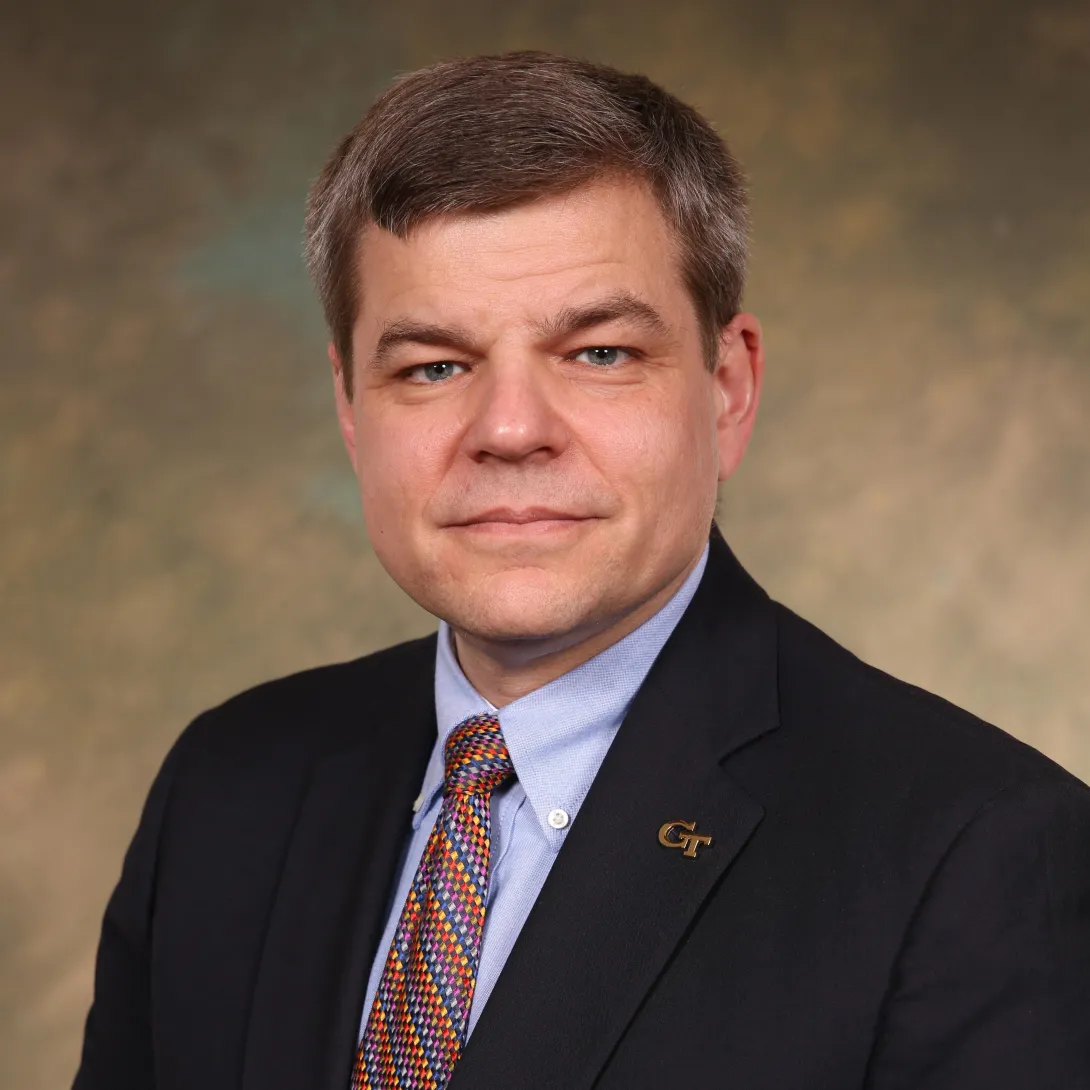
Thomas Kurfess, executive director of the Georgia Tech Manufacturing Institute.
The University System of Georgia (USG) Board of Regents honored 12 Georgia Tech faculty members across campus with Regents’ appointments at its April meeting.
Among those recognized is Georgia Tech Manufacturing Institute (GTMI) Executive Director Thomas Kurfess, who was named Regents' Professor. The highest distinction awarded by the USG, Regents' distinctions recognize faculty members for academic, innovation, and entrepreneurial excellence.
About Kurfess
Thomas Kurfess
Regents’ Professor, George W. Woodruff School of Mechanical Engineering
HUSCO/Ramirez Distinguished Chair in Fluid Power and Motion Control
Kurfess researches advanced manufacturing systems, designing, developing, and optimizing new approaches for complex production systems. He helps lead a $65 million effort to use artificial intelligence in manufacturing and transform Georgia’s industrial economy. The Georgia AI Manufacturing (GA-AIM) Technology Corridor is creating and deploying new AI innovations across all manufacturing sectors while training the necessary talent and workforce.
In addition to his role as executive director of GTMI, Kurfess is the 2023-24 president of the American Society of Mechanical Engineers (ASME).
He served as chief manufacturing officer at Oak Ridge National Laboratory from 2019 to 2021, overseeing strategic planning in advanced manufacturing. Kurfess also previously led the advanced manufacturing team at the White House Office of Science and Technology Policy during the Obama administration from 2012 to 2013.
Kurfess is a member of the National Academy of Engineering and a fellow of the Society of Manufacturing Engineers, ASME, and the American Association for the Advancement of Science.
News Contact
Audra Davidson
Research Communications Program Manager
Institute Communications
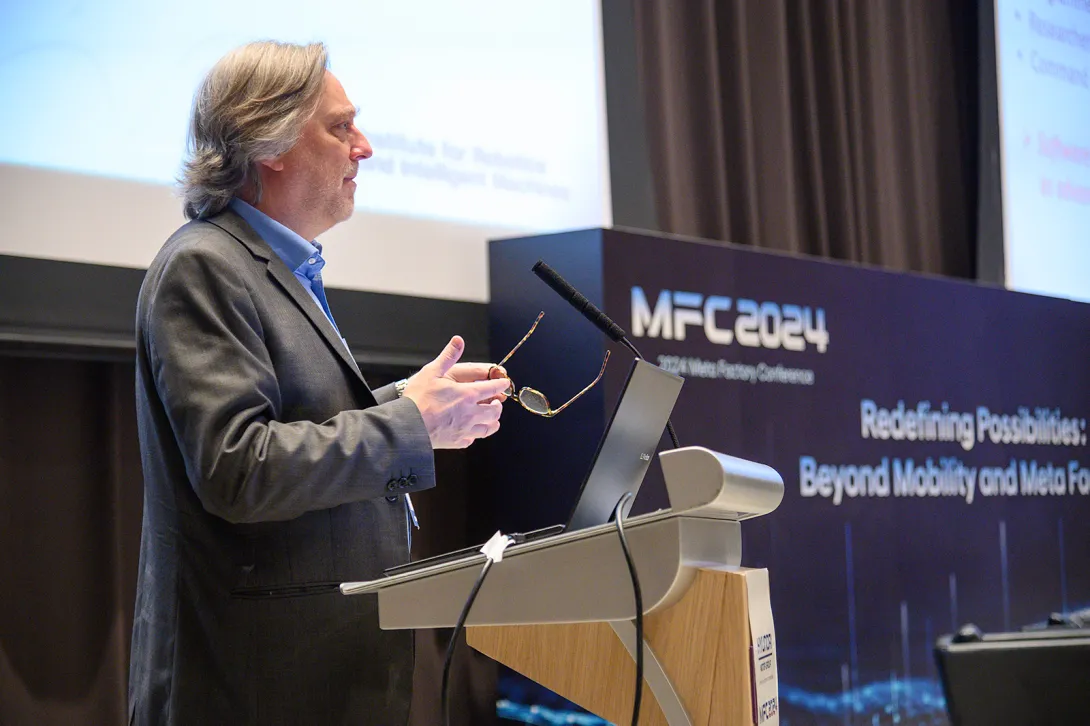
IRIM Director Seth Hutchinson at Hyundai Meta Factory Conference Delivering Keynote
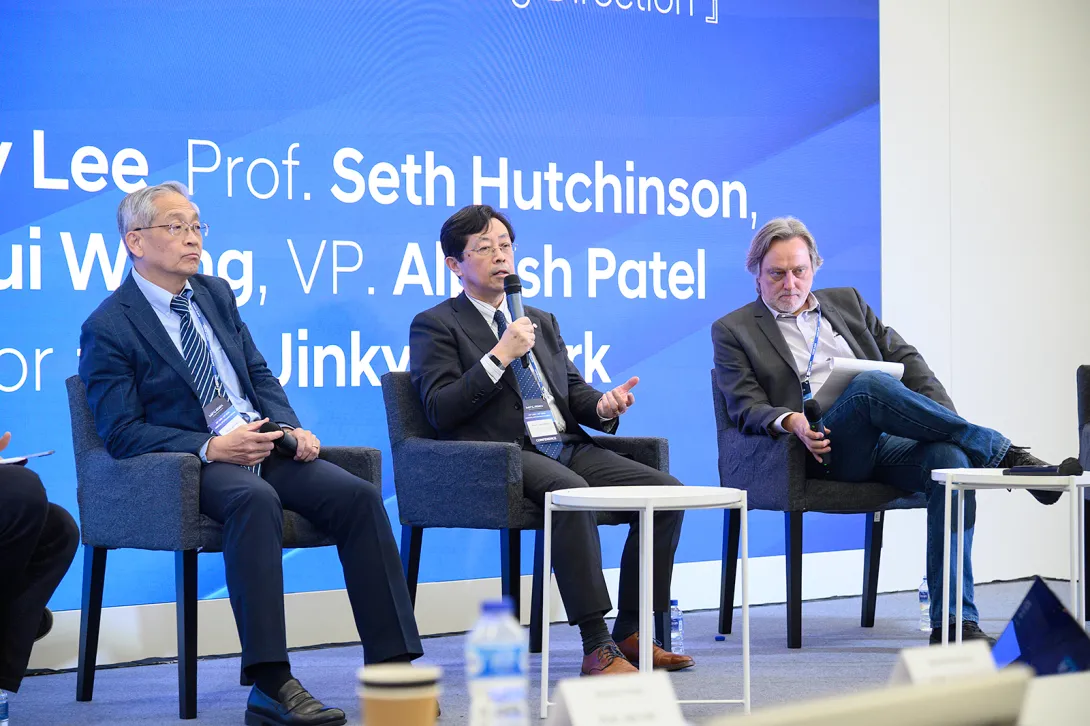
IRIM Director Seth Hutchinson at Hyundai Meta Factory Conference on Panel Discussion
Hyundai Motor Group Innovation Center Singapore hosted the Meta-Factory Conference Jan. 23 – 24. It brought together academic leaders, industry experts, and manufacturing companies to discuss technology and the next generation of integrated manufacturing facilities.
Seth Hutchinson, executive director of the Institute for Robotics and Intelligent Machines at Georgia Tech, delivered a keynote lecture on “The Impacts of Today’s Robotics Innovation on the Relationship Between Robots and Their Human Co-Workers in Manufacturing Applications” — an overview of current state-of-the-art robotic technologies and future research trends for developing robotics aimed at interactions with human workers in manufacturing.
In addition to the keynote, Hutchinson also participated in the Hyundai Motor Group's Smart Factory Executive Technology Advisory Committee (E-TAC) panel on comprehensive future manufacturing directions and toured the new Hyundai Meta-Factory to observe how digital-twin technology is being applied in their human-robot collaborative manufacturing environment.
Hutchinson is a professor in the School of Interactive Computing. He received his Ph.D. from Purdue University in 1988, and in 1990 joined the University of Illinois Urbana-Champaign, where he was professor of electrical and computer engineering until 2017 and is currently professor emeritus. He has served on the Hyundai Motor Group's Smart Factory E-TAC since 2022.
Hyundai Motor Group Innovation Center Singapore is Hyundai Motor Group’s open innovation hub to support research and development of human-centered smart manufacturing processes using advanced technologies such as artificial intelligence, the Internet of Things, and robotics.
- Christa M. Ernst
Related Links
- Hyundai Newsroom Article: Link
- Event Link: https://mfc2024.com/
- Keynote Speakers: https://mfc2024.com/keynotes/
News Contact
Christa M. Ernst - Research Communications Program Manager
christa.ernst@research.gatech.edu
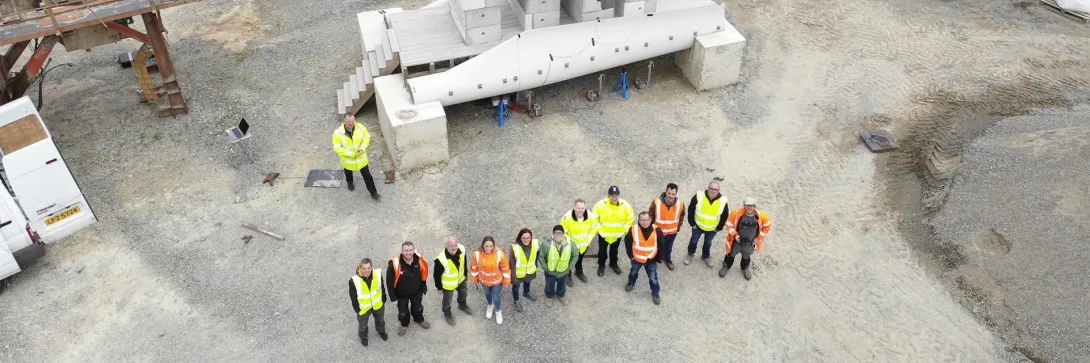
Overhead view of the Re-Wind crew doing structural testing on a decommissioned wind turbine blade bridge on an industrial lot.
Pioneering a new recycling approach led to a big win for Re-Wind USA, a Georgia Tech research team led by Russell Gentry. The team has won the first phase of the Department of Energy's Wind Turbine Materials Recycling Prize, receiving $75,000 and an invitation to compete in the final phase.
"Our innovation for end-of-service wind turbine blades is both simple and elegant – at its core, our technology captures all the embodied energy in the composite materials in the blade," said Gentry, professor in the School of Architecture.
"The Re-Wind Network has pioneered structural recycling, the only of a number of competing technologies that upcycles the material of the blade and preserves the embodied energy from manufacturing," Gentry said.
"Little additional energy is used to remanufacture the blade and the life of the blade, typically 20 years, is extended at least 50 years. This is a win-win solution from an environmental and economic perspective."
Other methods for dealing with decommissioned wind blades involve mechanical grinding and landfilling of subsequent waste, an expensive and energy-intensive process, he said.
Team members include Gentry, Sakshi Kakkad, Cayleigh Nicholson, Mehmet Bermek, and Larry Bank, from the School of Architecture; Gabriel Ackall, Yulizza Henao, and Aeva Silverman, from the School of Civil and Environmental Engineering; and Eric Johansen, a business consultant from Fiberglass Trusses Inc.
The team is part of the Re-Wind Network, a multinational research and development network which develops large-scale infrastructure projects from decommissioned wind turbine blades.
Re-Wind's pedestrian bridges, known as BladeBridges, have already captured media attention. Two more BladeBridges are expected in Atlanta in 2024, Gentry said. Re-Wind has also developed, prototyped, and tested transmission poles made from blade segments. The team's other proposals include culverts, barriers, and floats.
News Contact
Ann Hoevel, Director of Communications, College of Design