
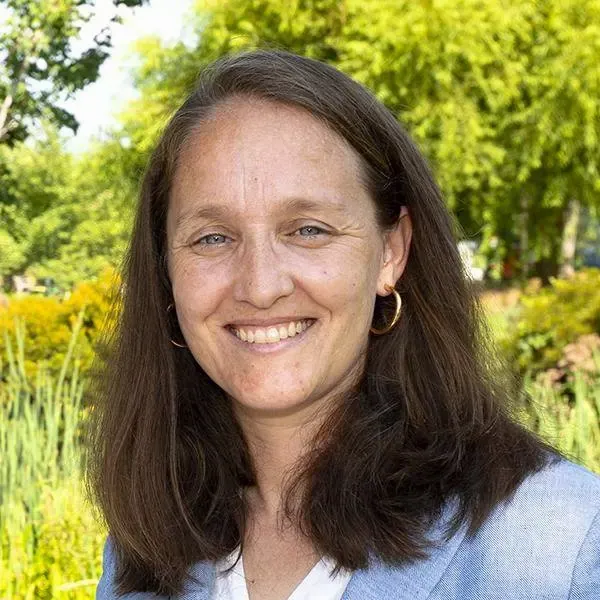
Portrait of Marta Hatzell
Associate Professor Marta Hatzell has won a 2024 ACS Sustainable Chemistry & Engineering Lectureship Award, which recognizes leading contributions of scientists and engineers active in the general fields of green chemistry, green engineering, and sustainability in the broadest sense of the chemical enterprise.
Hatzell, who holds joint appointments in Georgia Tech's School of Mechanical Engineering and School of Chemical and Biomolecular Engineering, was honored for her multiple contributions that drive the application of electrochemistry to enable critical systems with enhanced circularity.
The ACS Sustainable Chemistry & Engineering Lectureship awards were created to celebrate early to midcareer investigators who completed academic training no more than 10 years prior to nomination. In support of their commitment to nurture and stimulate a global community of outstanding practice. ACS Sustainable Chemistry & Engineering and the ACS Green Chemistry Institute gave three Lectureship Awards to recognize outstanding levels of contribution from The Americas, Europe/Middle East/Africa, and Asia/Pacific.
The award recipients will be honored at a joint plenary session of the 28th Annual Green Chemistry & Engineering Conference in their honor (June 3–5, 2024; https://www.gcande.org/).
News Contact
Brad Dixon, Communications Manager, School of Chemical and Biomolecular Engineering
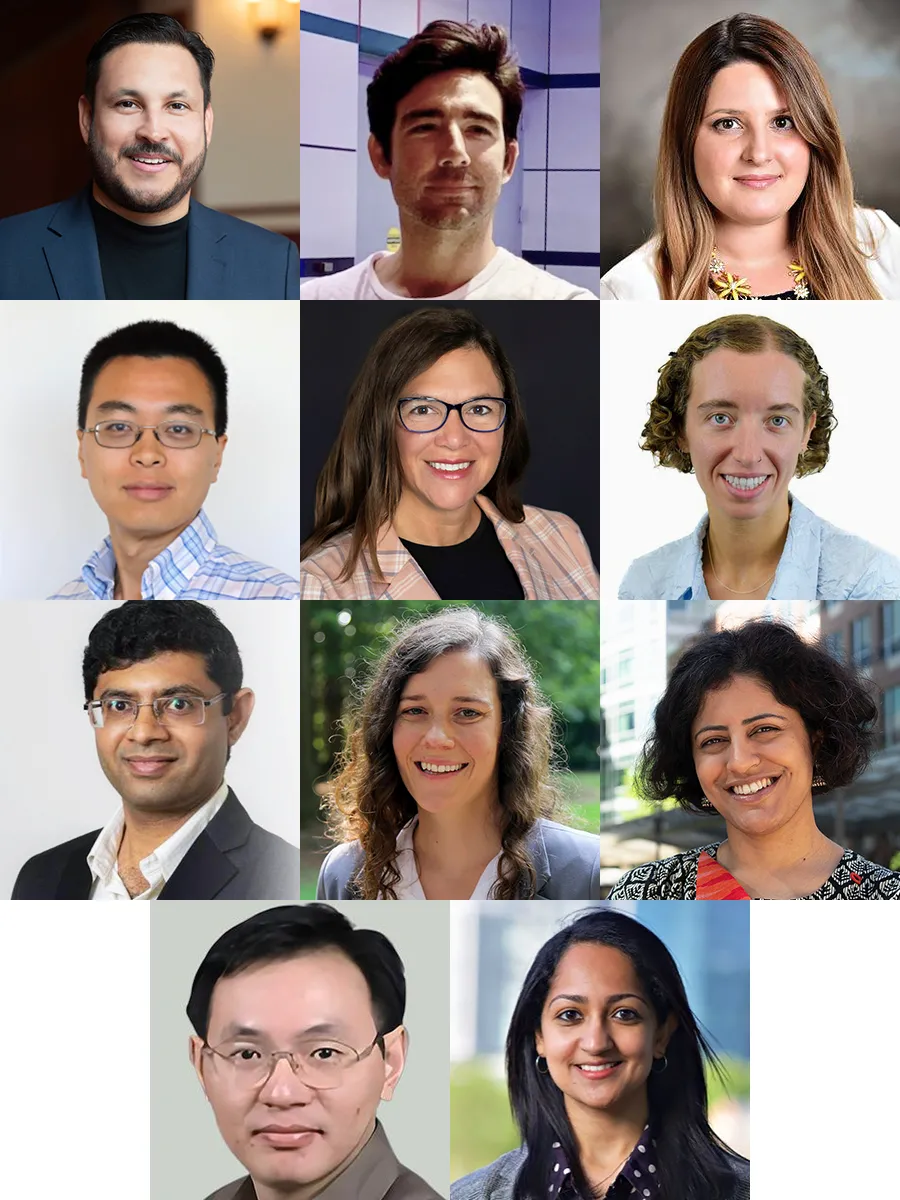
L to R: Omar Asensio; Christos Athanasiou; Fani Boukouvala; Peng Chen; Kelly Comfort; Constance Crozier; Ashutosh Dhekne; Jennifer Kaiser; Neha Kumar; Jian Luo; Akanksha Menon
Eleven new Faculty Fellows were appointed to the Brook Byers Institute for Sustainable Systems (BBISS). In addition to their own work, BBISS Fellows serve as a board of advisors to the BBISS; foster the culture and community of sustainability researchers, educators, and students at Georgia Tech; and communicate broadly the vision, mission, values, and objectives of the BBISS. Fellows will work with the BBISS for three years, with the potential for a renewed term.
The BBISS Faculty Fellows program has been in place since 2014. Fellows are drawn from across all 6 colleges and GTRI at Georgia Tech. BBISS Interim Executive Director Beril Toktay says, "I’m delighted with the diversity of backgrounds and disciplines among the fellows and look forward to seeing the strengthening ties and growing collaborations in the sustainability community."
The new BBISS Faculty Fellows are:
- Omar Asensio - Associate Professor, School of Public Policy
- Christos Athanasiou - Assistant Professor, Daniel Guggenheim School of Aerospace Engineering
- Fani Boukouvala - Associate Professor, School of Chemical and Biomolecular Engineering
- Peng Chen - Assistant Professor, School of Computational Science and Engineering
- Kelly Comfort - Professor, School of Modern Languages
- Constance Crozier - Assistant Professor, H. Milton Stewart School of Industrial and Systems Engineering
- Ashutosh Dhekne - Assistant Professor, School of Computer Science
- Jennifer Kaiser - Assistant Professor, Civil and Environmental Engineering and Earth and Atmospheric Sciences
- Neha Kumar - Associate Professor, Sam Nunn School of International Affairs and the School of Interactive Computing
- Jian Luo – Professor, School of Civil and Environmental Engineering
- Akanksha Menon - Assistant Professor, George W. Woodruff School of Mechanical Engineering
These faculty members will join the current roster of Faculty Fellows:
- Baabak Ashuri - Associate Professor, School of Building Construction
- Joe Bozeman – Assistant Professor, School of Civil and Environmental Engineering
- Dylan Brewer - Assistant Professor, School of Economics
- Kate Pride Brown- Associate Professor, School of History and Sociology
- Andre Calmon – Assistant Professor, Scheller College of Business
- Kevin Caravati – Principal Research Scientist, Georgia Tech Research Institute
- Ellen Dunham-Jones – Professor, School of Architecture
- Brian Gunter - Associate Professor, Daniel Guggenheim School of Aerospace Engineering
- Daniel Matisoff - Associate Professor, School of Public Policy
- Jenny McGuire – Assistant Professor, School of Earth and Atmospheric Sciences
- Jessica Roberts – Assistant Professor, College of Computing
- Ilan Stern – Senior Research Scientist, Georgia Tech Research Institute
- Yuanzhi Tang - Associate Professor, School of Earth and Atmospheric Sciences
- Anjali Thomas> - Associate Professor, Sam Nunn School of International Affairs
- Zhaohui Tong - Associate Professor, School of Chemical & Biomolecular Engineering
- Perry Yang – Professor, School of City and Regional Planning
More information can be found on the BBISS website.
News Contact
Brent Verrill, Research Communications Program Manager, BBISS
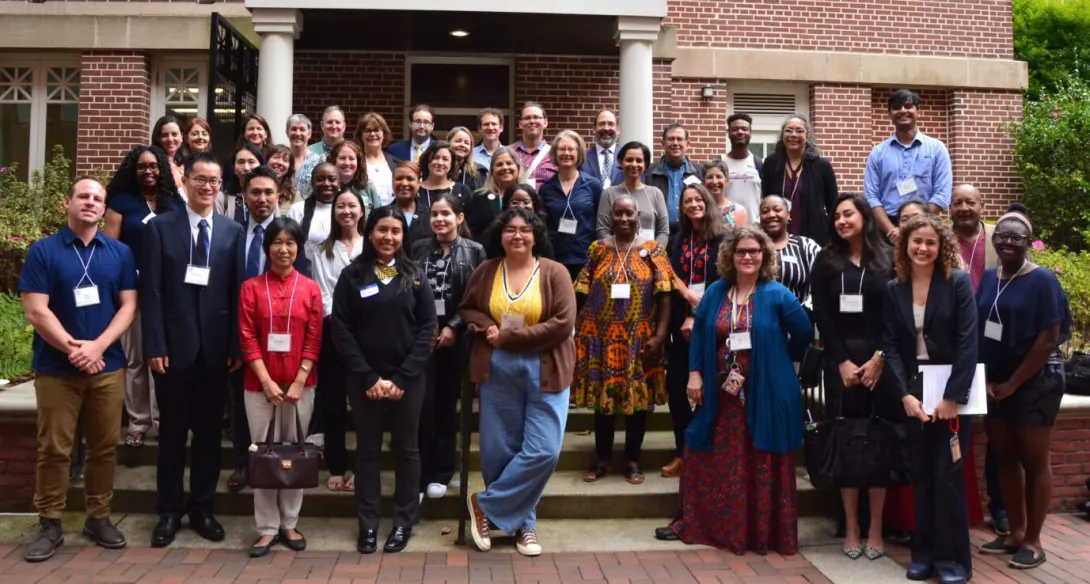
A group of attendees to the RCE Americas meeting in Atlanta pose for a group photo outside a red brick Georgia Tech building.
The Georgia Tech campus recently served as host to the 2023 RCE Americas Regional Meeting. From September 26 – 29, students, academics, and working professionals from around the Americas gathered to share their diverse perspectives and experiences, and delved into the discourse of sustainability. Participants attended panel sessions, presentations, site visits, and workshops (one of which was student led) over the three-day meeting, offering their unique viewpoints on how sustainability plays a role in their work and academic careers.
RCE Greater Atlanta was acknowledged by the United Nations University (UNU) on December 18, 2017, as a Regional Centre of Expertise on Education for Sustainable Development. RCE Greater Atlanta is one of over 190 RCEs recognized worldwide as part of the UNU RCE network. RCEs support multi-stakeholder implementation of the U.N. Sustainable Development Goals (SDGs) at the regional level, through education and training.
RCE Greater Atlanta is committed to leveraging educational resources for regional implementation of the SDGs, with a focus on equity and justice, building on Atlanta’s history as the home of the Civil Rights Movement. RCE Greater Atlanta members, representing all sectors of community, business, government, and civil society, contribute to the creation of an inclusive and collaborative community that advances SDG knowledge and action, and nurtures strong youth leadership by harnessing higher education capacity and knowledge for regional benefit.
Among the speakers were Keisuke Midori, section chief from the Ministry of the Environment of Japan; Jenny Hirsch, senior director of the Georgia Tech Center for Sustainable Communities Research and Education, representing RCE Greater Atlanta; and Georgia Tech President Ángel Cabrera. Several of the speakers traveled or participated virtually from around the United States, as well as from places as far-flung as Mexico, Puerto Rico, Canada, Peru, and Columbia. Atlanta was also well represented with participants and speakers from many area colleges and universities including Morehouse School of Medicine, Kennesaw State University, and Georgia Gwinnett College. A wide range of topics were presented such as “Youth Initiatives at Assateague Island,” “Energy Equity: Advancing SDG 7 Affordable and Clean Energy Through Community-University Partnerships,” and “Young Leaders of the Earth Charter at RCE Bogota.”
Several Georgia Tech students were in attendance and have offered their perspectives on the event. Lakshya Sharma, a master’s student in Human Computer Interaction and the student coordination manager for RCE Greater Atlanta, says, “The conference provided people coming from a wide variety of backgrounds an opportunity to present views, opinions, and talk about differences. I was given the responsibility to lead one of these sessions, where we discussed how important local community action is and how these actions can be made more efficient, inclusive, and effective. Participating in these discussions gave me a fresh perspective on things and made me explore new ways to solve problems, which I can now implement as a professional.”
Perrin Brady, who is studying History, Technology, and Society at Georgia Tech and serving as a student engagement coordinator for RCE Greater Atlanta, said, “I was able to raise questions to the room that I struggle with as a young person, like how to navigate possible conflict between requiring fast climate solutions and needing equitable/sustainable solutions that take time and consideration. People's answers gave me hope for future impacts I could make.”
Julie Chen, another student engagement coordinator, who is studying architecture at Georgia Tech, said, “The range of presentations remains an inspiration, as I was able to witness different RCEs actively involved in unique projects to further the UN SDGs. It was especially heartening to see young students taking the initiative. The RCE Americas Network is a great platform to share these efforts.”
The event was sponsored by Oak Ridge Associated Universities; Kennesaw State University’s Global Education Community Engagement and Outreach; Goethe Zentrum; and several Georgia Tech organizations, namely the Brook Byers Institute for Sustainable Systems, the Renewable Bioproducts Institute, the Strategic Energy Institute, the Atlanta Global Studies Center, and the Ray C. Anderson Center for Sustainable Business with the Drawdown Georgia Business Compact.
The RCE Americas Meeting is an annual event. For more information, see the following links:
Meeting Resources: https://drive.google.com/drive/folders/1K8XeWuCEXq66TEVZuQQm3X3EzfXQ3zVB?usp=sharing
Presentation Recordings: https://www.youtube.com/channel/UCpof6N7frRLybc0UW8dhX4A
News Contact
Kristina Chatfield, Program and Portfolio Manager, Center for Sustainable Communities Research and Education
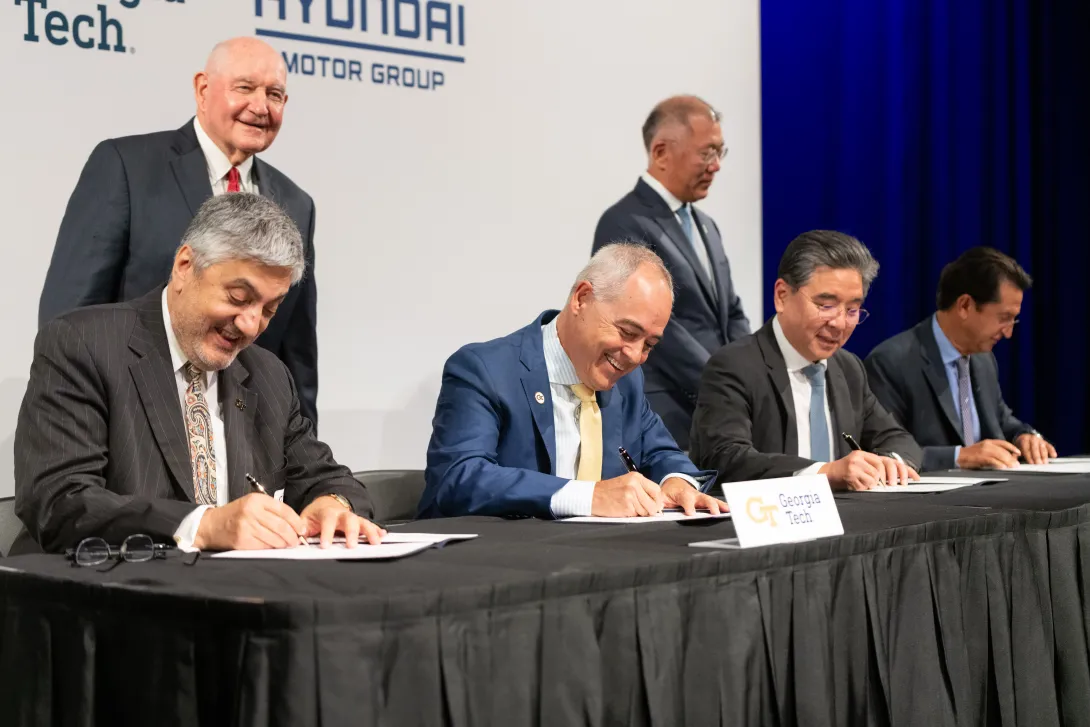
USG Chancellor Sonny Perdue looks on as Georgia Tech President Ángel Cabrera and Executive Vice President for Research Chaouki Abdallah sign the memorandum of understanding with Hyundai officials, signifying the beginning of a transformative partnership.
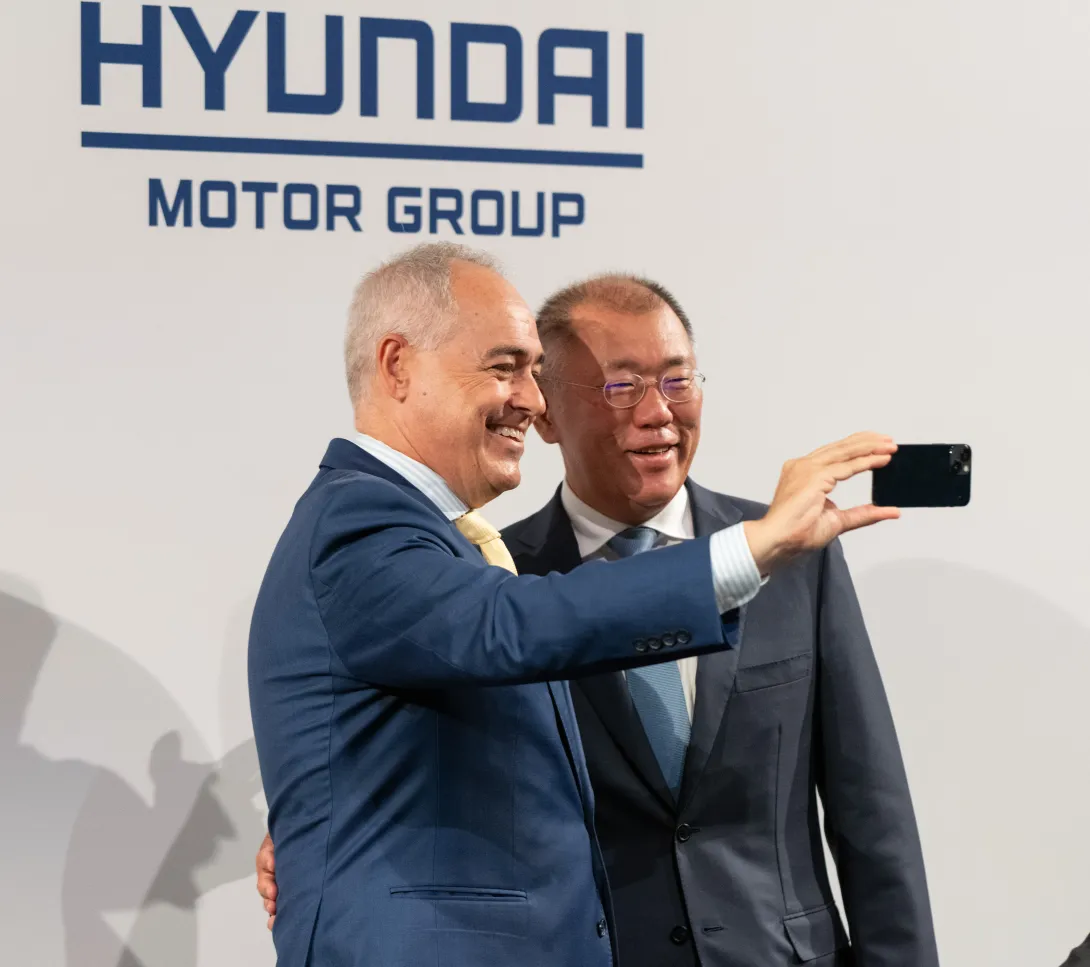
Georgia Tech President Ángel Cabrera poses for a selfie with Euisun Chung, executive chairman of Hyundai Motor Company.
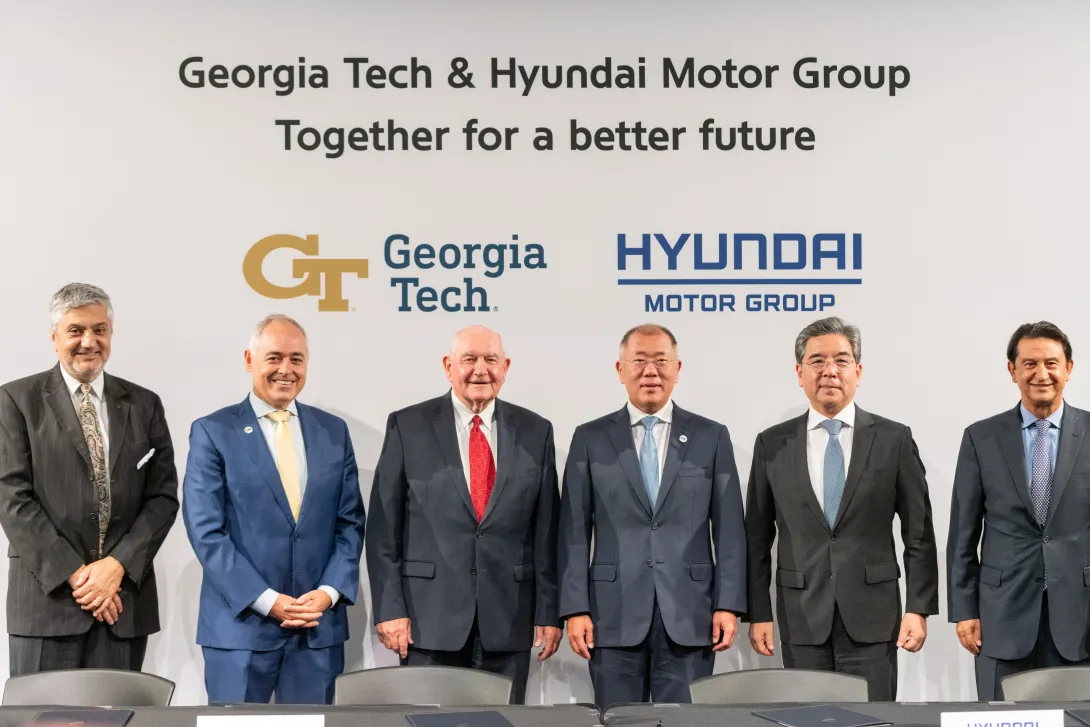
Georgia Tech and Hyundai leaders pose for a photo following the signing of the memorandum of understanding. From left to right: Executive Vice President for Research Chaouki Abdallah, Georgia Tech President Ángel Cabrera, University System of Georgia Chancellor Sonny Perdue, Executive Chairman of Hyundai Motor Company Euisun Chung, President and CEO Jay Chang, President and Global COO José Muñoz.
In front of a standing-room-only crowd inside the John Lewis Student Center's Atlantic Theater, global leaders from the Hyundai Motor Group and Georgia Tech signed a memorandum of understanding, creating a transformative partnership focused on sustainable mobility, the hydrogen economy, and workforce development.
As the automaker continues to construct its Metaplant America site in Bryan County — the cornerstone of Hyundai's $12 billion investment into electric vehicles and battery production across the state of Georgia — today's signing ceremony symbolizes the vision that Hyundai and Georgia Tech share on the road to advancing technology and improving the human condition.
"As a leading public technological research university, we believe we have the opportunity and the responsibility to serve society, and that technology and the science and policy that support it must change our world for the better. These are responsibilities and challenges that we boldly accept. And we know we can't get there alone. On the contrary, we need travel partners, like-minded innovators, and partners with whom we can go farther, and today's partnership with Hyundai is a perfect example of what that means," Georgia Tech President Ángel Cabrera said.
The state of Georgia and the Institute have positioned themselves as leaders in the electrification of the automotive industry. Hyundai is among the top sellers of electric vehicles in the United States as the company aims to produce up to 500,000 vehicles annually at the $7 billion Savannah plant when production begins in 2025. The plant will create 8,500 jobs, and the company's total investments are projected to inject tens of billions of dollars into the state economy while spurring the creation of up to 40,000 jobs.
"It's clear, we are in the right place with the right partners," Jay Chang, president and CEO of Hyundai Motor Company, said. "When our executive chairman first decided on [the site of] the metaplant, one of the first things he said was, 'Make sure we collaborate with Georgia Tech.’ Hyundai and Georgia Tech have a lot in common. We have proud histories. We celebrate excellence, and we have very high standards. What we love about Georgia Tech is the vision to be a leading research university that addresses global challenges and develops exceptional leaders from all backgrounds."
Spearheading new opportunities for students, the partnership will create technical training and leadership development programming for Hyundai employees and initiate engagement activities to stimulate interest in STEM degrees among students.
José Muñoz, president and global COO of Hyundai Motor Company and president and CEO of Hyundai and Genesis Motor North America, says the company quickly realized the potential impact of the newly forged partnership with Georgia Tech.
"Proximity to institutions like Georgia Tech was one of the many reasons Hyundai selected Georgia for our new EV manufacturing facility. Imagine zero-emissions, hydrogen-powered vehicles here on campus, advanced air mobility shuttling people to Hartsfield-Jackson Atlanta International Airport, or riding hands-free and stress-free in autonomous vehicles during rush hour on I-75 and I-85. Together, Georgia Tech and Hyundai have the resources to fundamentally improve how people and goods move," he said.
In pursuit of sustainability, Hyundai has invested heavily in the potential of hydrogen and plans to lean on the Institute's expertise to explore the potential of the alternative fuel source, primarily for commercial vehicles. Hyundai has deployed its hydrogen-powered XCIENT rigs to transport materials in five countries.
University System of Georgia Chancellor Sonny Perdue was on hand for Tuesday’s ceremony. Reflecting on his visits to the company's global headquarters in South Korea prior to the construction of the West Point, Georgia, Kia plant, he praised the company's values and world-class engineering ability.
"This is a relationship built on mutual trust and respect. It's a company, a family atmosphere, and a culture that I respect and admire for the way they do business and honor progress, innovation, and creativity. That is why I am so excited about this partnership between the Hyundai Motor Group and the Georgia Institute of Technology because that will only enhance that," Perdue said.
Owned by Hyundai, Kia recently invested an additional $200 million into its West Point facility to prepare for the production of the all-electric 2024 EV9 SUV. The plant currently manufactures more than 40% of all Kia models sold in the U.S.
The partnership also includes field-naming recognition at Bobby Dodd Stadium, which is now known as Bobby Dodd Stadium at Hyundai Field, and provides student-athletes and teams with the resources needed to compete at the highest levels, both athletically and academically.
News Contact
Steven Gagliano - Communications Officer
Institute Communications
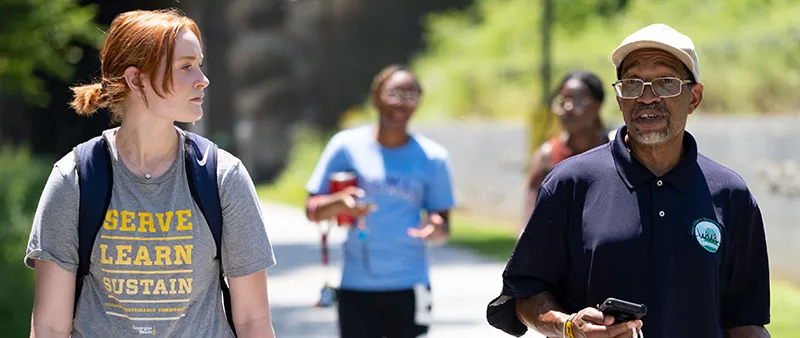
A student wearing a "Serve-Learn-Sustain" tee shirt walks along a campus walkway with a Georgia Tech faculty member. Photo Credit Ben Gray, AJC.
The Vice President for Interdisciplinary Research (VPIR) and the Office of Undergraduate Education (OUE) are excited to announce an institutionalization plan for Serve-Learn-Sustain (SLS) that will advance two of Georgia Tech’s Institute Strategic Plan (ISP) initiatives - Sustainability Next and Transformative Teaching and Learning (TTL) - and strengthen our service learning, community engagement, and sustainability ecosystems at Georgia Tech. Established as Georgia Tech’s last Quality Enhancement Plan (QEP), SLS launched in 2016 as a unit in OUE and concluded its official QEP work in 2021. Its work on the QEP earned Georgia Tech a commendation from the Southern Association of Colleges and Schools Commission on Colleges and established a strong foundation to build on moving forward.
Effective July 1, 2023, the current SLS team will establish a new center, the Center for Sustainable Communities Research and Education (CSCRE), under the VPIR. The Brook Byers Institute for Sustainable Systems (BBISS), which is serving as a hub for coordinating Georgia Tech’s Sustainability Next Strategic Plan initiative, will serve as the administrative home for the new center.
CSCRE will collaborate with the sustainability cluster of the Interdisciplinary Research Institutes (IRIs), including BBISS, the Strategic Energy Institute (SEI), and the Renewable Bioproducts Institute (RBI), as well as Infrastructure and Sustainability, another key Sustainability Next hub, to enhance Georgia Tech’s competitiveness in applying for grants that require meaningful community partnerships as a key component of their research and education plans. It will also continue to support sustainable communities education, in close collaboration with the Center for Teaching and Learning (CTL), OUE, and Education and Learning, to assure the continuity of SLS’s signature programs.
Established as Georgia Tech’s last QEP, Serve-Learn-Sustain launched in 2016 as a unit in OUE and concluded its official QEP work in 2021. Georgia Tech earned a commendation from the Southern Association of Colleges and Schools Commission on Colleges in 2021 for the “exceptional execution” of the 2016 QEP, citing, among other things, that the program “inspired a closer dialogue among faculty regarding research and instructional practices, and thus serves as a model of how a QEP can transform an academic culture.”
To continue advancing and scaling undergraduate service learning and community engagement as a high-impact practice, OUE will establish a new service learning team, as a priority that supports the Transformative Teaching and Learning ISP initiative. Institutionalizing the service-learning functions of SLS within OUE and aligning it with other high impact practices - such as undergraduate research, student innovation programs, first-year seminars, co-op and internships, and learning communities - will position these programs to work collectively in support of the development of Georgia Tech’s next QEP, which will begin in 2025.
Thank you to the SLS staff and to everyone who has collaborated with and supported the work that SLS has spearheaded to make Georgia Tech a better place for our students, our faculty and staff, and our surrounding communities. We look forward to continuing to advance this work, together.
News Contact
Brent Verrill, Research Communications Program Manager, BBISS
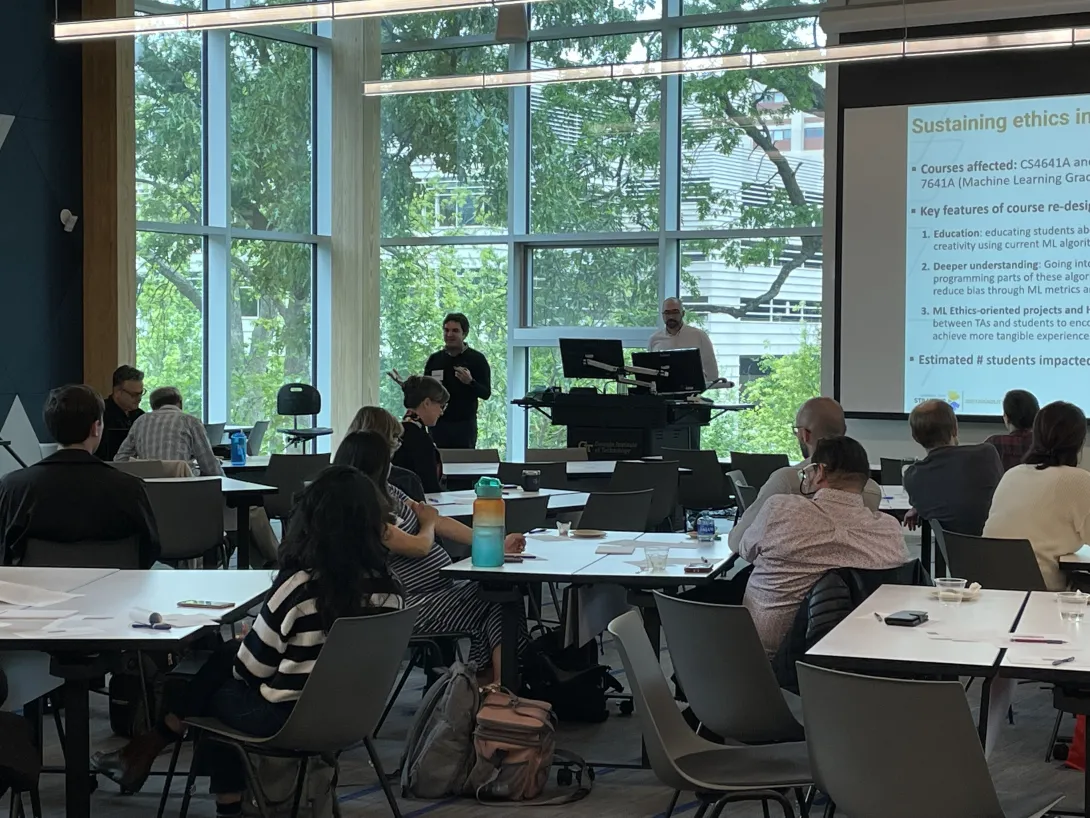
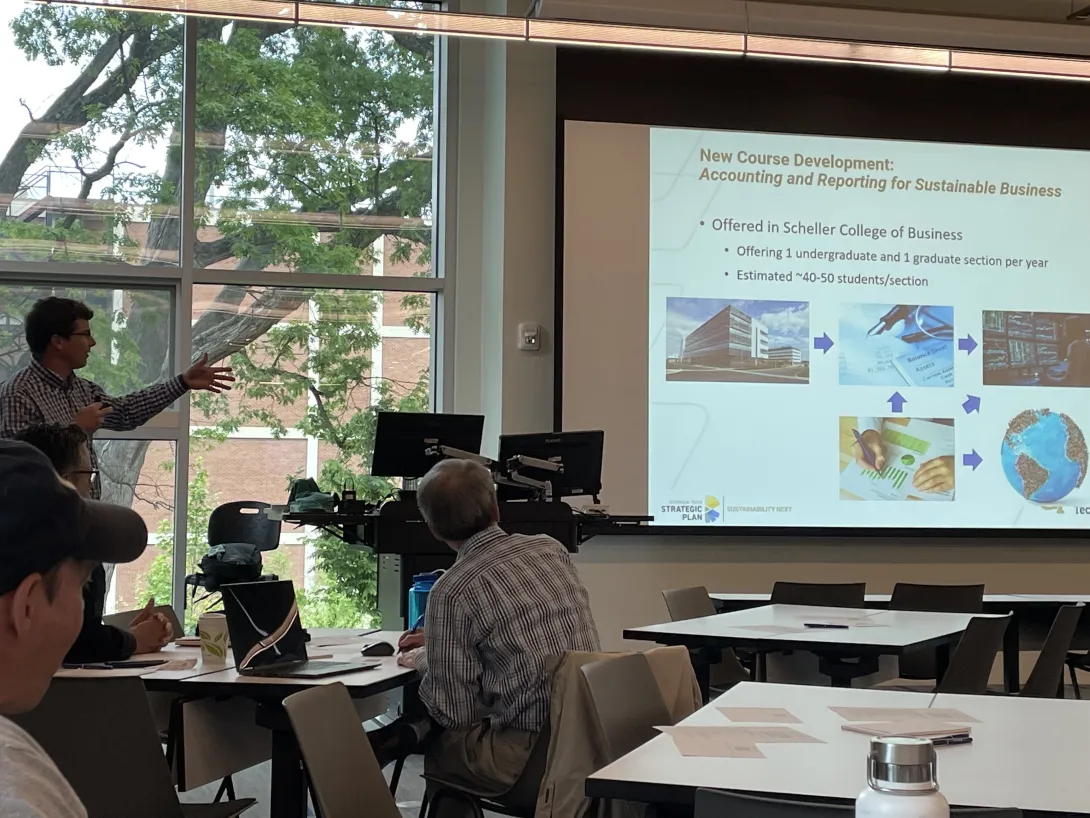
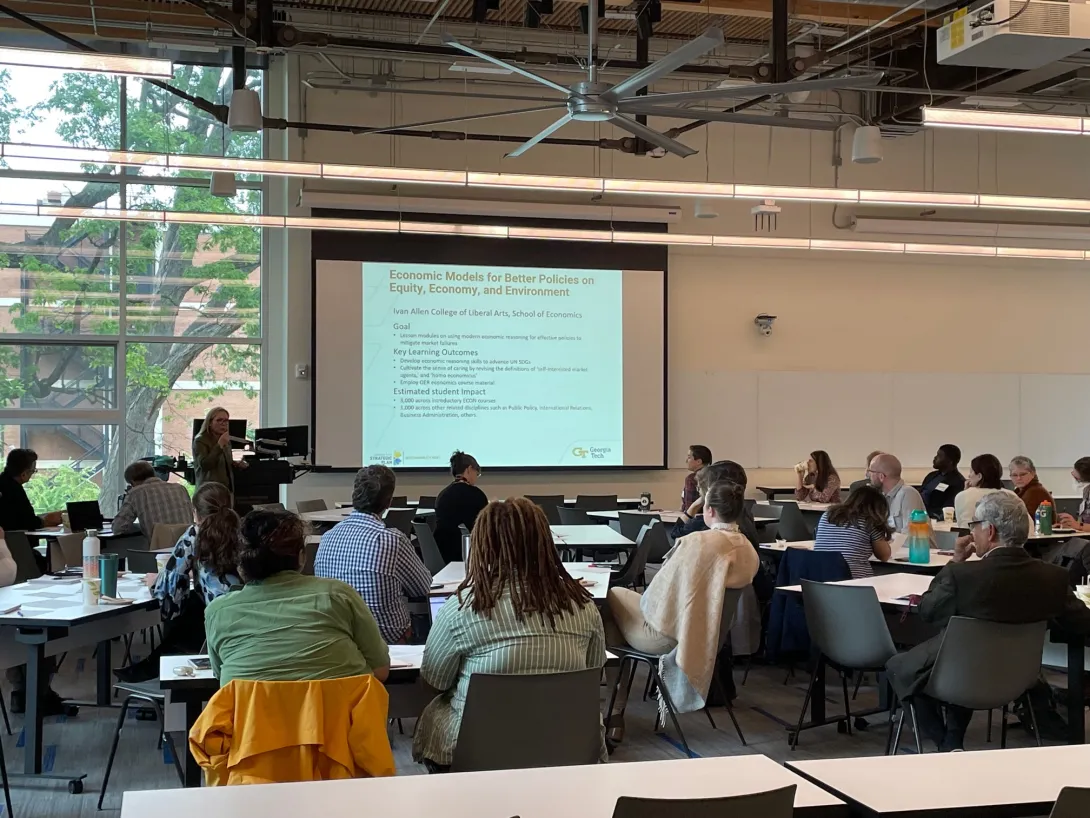
One of the Institute Strategic Plan (ISP) goals is to connect globally and amplify impact by contributing “to global collaborative efforts that advance the U.N. Sustainable Development Goals (SDGs) through our education, research, and service.” In response, Sustainability Next developed a plan to expand SDG concept and skill integration across the undergraduate curriculum. In support of the plan, 21 projects representing all six colleges and 15 schools were presented at the Undergraduate Sustainability Education Jamboree, held on April 26 in the Kendeda Building auditorium. With many winning projects featuring high enrollment and core courses, this first round of sustainability education “seed grants” will significantly expand the reach of Georgia Tech’s sustainability-across-the-curriculum initiatives.
“Our Strategic Plan commitment to bring the United Nations Sustainable Development Goals (SDGs) into our teaching is part of our vision for transformative teaching and learning more broadly,” explains Larry Jacobs, Senior Vice Provost for Education and Learning. “Helping students identify connections between disciplinary concepts and skills and complex societal challenges enhances learning and supports Georgia Tech’s mission to equip students to improve the human condition.”
The Jamboree featured lightning presentations from the award winners, as well as presentations about related initiatives at Georgia Tech to help instructors, students, and staff better understand the landscape of sustainability education innovation on campus. Instructors engaged in course design or re-design through the awards will have opportunities to collaborate with and learn from their peers through a Community of Practice on Transformative Teaching with the SDGs and a SoTL (Scholarship of Teaching and Learning) research group. Many began identifying potential collaborators at the event, as they heard from other award winners. “The afternoon of lightning presentations by fellow faculty was exhilarating,” Sabir Khan, Associate Professor, Schools of Industrial Design and Architecture, shared. “I came away impressed and excited at the range of projects and have already invited a few instructors to join my class in the fall to discuss their approaches to tackling the UN SDGs."
Presenter Kate Williams, Interim Director, Transformative Teaching and Learning, Faculty Initiatives, shared connections between the Sustainability Innovation Awards and Georgia Tech’s Transformative Teaching and Learning (TTL) strategic initiative. “The success of the first round of Sustainability Education Innovation Grants demonstrates our faculty's commitment to creating innovative experiential learning opportunities for students,” Dr. Williams noted.
For more information about future award opportunities or the communities of practice described above, please contact Jennifer Leavey (Assistant Dean for Faculty Mentoring, College of Sciences) or Rebecca Watts Hull (Assistant Director, Faculty Development for Sustainability Education Initiatives, Center for Teaching and Learning).
Review all 21 awarded Undergraduate Sustainability Education Innovation projects.
The 2022-23 Micro-Grants Community-Based Research awardees presented their findings at the second annual symposium, held on April 18, 2023, in the auditorium of the Kendeda Building for Innovative Sustainable Design, which is the region’s first Living Building. Ten teams presented to faculty, staff, students, and student family members. The topics were wide ranging, and dealt with both practical and theoretical issues. The work surpassed all expectations for quality and quantity.
Devised by the Kendeda Building Advisory Board and sponsored by the Brook Byers Institute for Sustainable Systems and the Kendeda Building, the Micro-Grants Research Program solicits proposals for very small scale ($50 to $500), short term, sustainability related, research studies to be conducted by members of the Georgia Tech community. Community investigators are encouraged to explore ways in which the Georgia Tech campus can continue to innovate, demonstrate, prove, and promote the adoption of best and next practices in regenerative design and operations. Researchers were also encouraged to use the United Nations Sustainable Development Goals as a framework for research design. All members of the Georgia Tech community were encouraged to apply. The program especially sought proposals from students and staff that had little or no prior research experience.
The program has four objectives:
- to expand scientific thinking and the understanding of the research process amongst those not (yet) directly involved in scientific research;
- to bolster the use of the campus as a living laboratory;
- to give voice to people and communities outside of research that have culturally novel perspectives on problems and their possible solutions, and to create new pathways for partnering with them; and
- to seed novel ideas and nurture nascent investigators.
The 2022-23 awardees and the titles of their projects are:
- Alex Lomis, Devi Patel, and Dr. Jung-Ho Lewe, "Design and Development of a Low-Cost and Highly-Scaleable Occupancy Counter to Optimize the Utilization of HVAC Resources"
- Kaitlyn Tran, Shivani Potdar, and Amanda Janusz, "Bird Safe Campus"
- Ricardo Martinez, "Chiropterans at Georgia Tech"
- Elizabeth Umanah, "Reimagining Eco-Friendly Parking Lot Design Through Simulations"
- Lujain Diab, Ally Kimpling, Jenna Sitta, Marcus Morris, Skylar Ryan, Dr. Jennifer Leavey, and Steve Place, "A Greener Grey: “Ironing” Out Issues in Greywater Systems"
- Jun Wang and Yilun Zha, "Kendeda’s Educational Role in Waste Management and Recycling"
- Siddharth Sivakumarun, "Investigating Capacity for Regenerative Energy through Foot Traffic"
- Alexandra Rodriguez Dalmau and John Fortner, "Recognition of Insect Species in the Georgia Tech campus with Machine Learning"
- Gray Simmons, Kevin Leach, and Dr. Jung-Ho Lewe, "IOT Climate Sensor Development for HVAC Efficiency Analysis"
- Kaylin Cross, Pranav Jothi, Maanas Kumar, Brian Wu, Savannah Howard, and Sheng Dai, "Prototyping Bio-inspired Geothermal Energy Recovery for Space Heating and Cooling"
More details and links to all the presentations are available at this web page.
News Contact
Brent Verrill, Research Communications Program Manager, BBISS
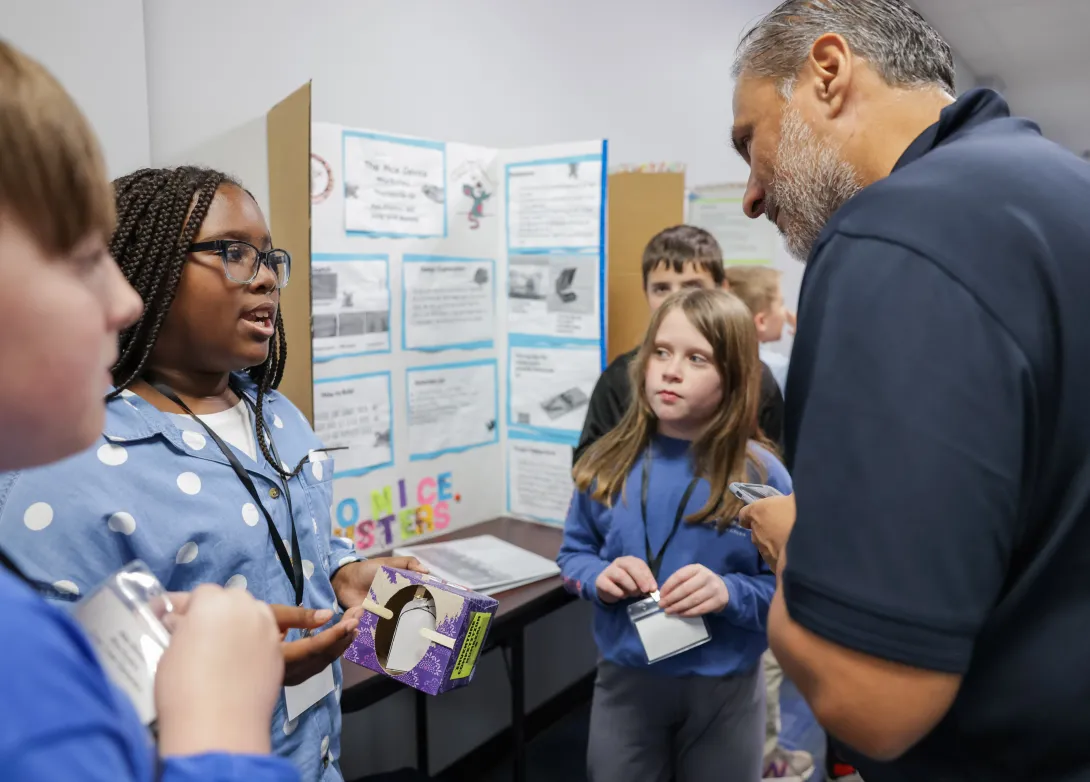
Students in Thomasville, Ga. explain their invention to a competition judge as a part of Georgia Tech’s expanding K-12 InVenture Prize program.
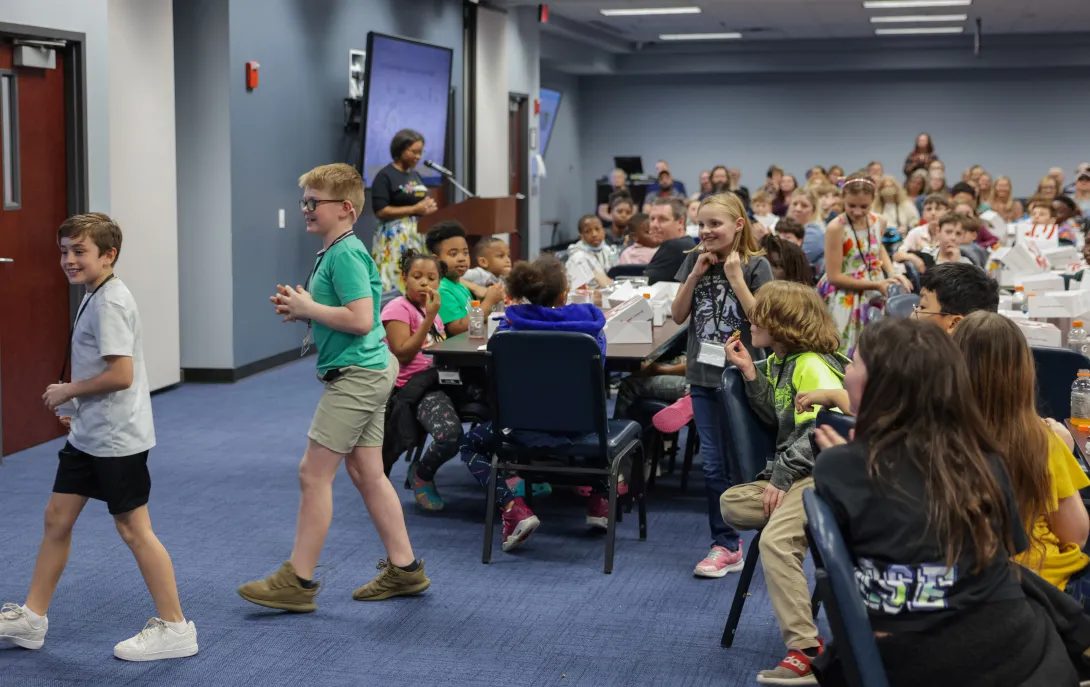
Students in Thomasville, Ga. present their own inventions as a part of Georgia Tech’s expanding K-12 InVenture Prize competition program.
Georgia Institute of Technology’s Center for Education Integrating Science, Mathematics, and Computing (CEISMC) is at the center of a new statewide initiative combining artificial intelligence and manufacturing innovations with transformational workforce development and K-12 outreach. The Georgia Artificial Intelligence Manufacturing Corridor project (Georgia AIM) is supported by a record-shattering $65 million grant Georgia Tech received in September 2022 from the U.S. Department of Commerce’s Economic Development Administration.
Georgia AIM will support a total of nine inter-related projects throughout the state and is designed to increase job and wage opportunities in distressed and rural communities and among historically underrepresented and underserved people. Georgia AIM targets rural residents, women, Black, Indigenous and People of Color (BIPOC), those living with disabilities, and veterans — groups historically underrepresented in manufacturing. Through innovation, collaboration, education, and participation, Georgia AIM will provide the tools and knowledge to empower these communities to participate fully in a diverse AI manufacturing workforce.
“Many people have preconceived notions about manufacturing and may not be able to see how they could possibly connect to it," said Roxanne Moore, Woodruff School of Mechanical Engineering’s senior research engineer and director of CEISMC’s K-12 InVenture Prize program. “What they may not realize is that manufacturing is what brings new ideas to life. AI is rapidly reshaping the manufacturing industry and changing the landscape for job opportunities. The work that we are doing will position Georgia to lead the nation into the future of AI and manufacturing.”
Moore explains that through Georgia AIM, CEISMC will expand its K-12 InVenture Prize invention and entrepreneurship program to collaborate with school districts and businesses in Southwest Georgia, Southeast Georgia and Northeast Georgia. The initiative will expand on existing partnerships Georgia Tech has established with technical colleges and minority-serving institutions.
The project will reach at least 1,000 K-12 students and 100 teachers from underserved areas, with a focus on rural communities via existing programs at Georgia Tech, other nonprofits, the Technical College System of Georgia, the Southwest Georgia Regional Commission, local manufacturers, and K-12 school leaders, Moore said.
“We need to illustrate the powerful relationships between innovation, entrepreneurship, and manufacturing so that students can see how ideas come to life and how they can improve their communities,” said Moore. “It is my hope that these regional ecosystems become a role model for how educational institutions can support each other in expanding access to high-quality STEM experiences for diverse students who typically are not empowered to create their futures.”
As part of Georgia AIM, CEISMC will also expand its offerings through partnerships with the institute’s GoSTEM program to better serve Latino populations. GoSTEM is a collaborative partnership at Georgia Tech between CEISMC and Institute Diversity, Equity and Inclusion (IDEI). Its mission is to promote STEM academic achievement and college attendance among Latino and other cultural and linguistic minority K-12 students. Plans include translating existing invention and entrepreneurship curriculum into Spanish, adding lessons to the curriculum on AI and manufacturing, assisting with the development of regionally focused curricula, and expanding training and events to make them more inclusive.
“Our goal is to make invention education accessible to everyone in the state, especially those who may have been previously left out of the conversation,” said Danyelle Larkin, educational outreach manager with CEISMC. “By going into more rural areas of the state and working to develop multi-lingual curricula that is focused on the needs of the region, we hope to serve as a national model for how to accelerate the transition to automation in manufacturing while diversifying the next generation of AI leadership.
Additional Georgia AIM expansion plans for CEISMC and K-12 InVenture Prize include supporting an existing high school entrepreneurship program in Fitzgerald and working with Albany State University to host teacher workshops, support local schools, and host regional competitions with a focus on inventiveness and the entrepreneurial mindset.
"The overall goal of Georgia AIM is to establish the United States as a leader in AI manufacturing while making sure that these systems complement rather than replace existing workers,” Larkin said. “The work that we are doing in CEISMC plays an integral role in Georgia AIM with our specific expertise in weaving invention education and entrepreneurship into K-12 classrooms and connecting with diverse communities. This huge grant gives us a chance to amplify our work and bring even more people into the AI conversation. It’s about building a better, more equitable future for the people of Georgia.”
—Randy Trammell, CEISMC Communications
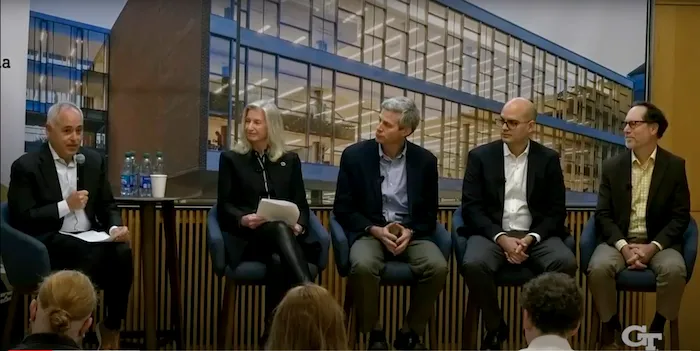
L to R: Ángel Cabrera, Marilyn Brown, Tim Lieuwen, Andre Calmon & Brian Stone
In the latest installment of his unscripted video series, President Cabrera led a panel of Georgia Tech faculty including Marilyn Brown, Regents' and Brook Byers Professor of Sustainable Systems in the School of Public Policy, Tim Lieuwen, Regents’ Professor and executive director of the Strategic Energy Institute, Andre Calmon, assistant professor at the Scheller College of Business, and Brian Stone, professor at the School of City & Regional Planning, in a discussion on the policies, technologies, and planning that can help us achieve the best quality of life while also maintaining a global climate that remains within healthy limits.
News Contact
Brent Verrill, Research Communications Program Manager
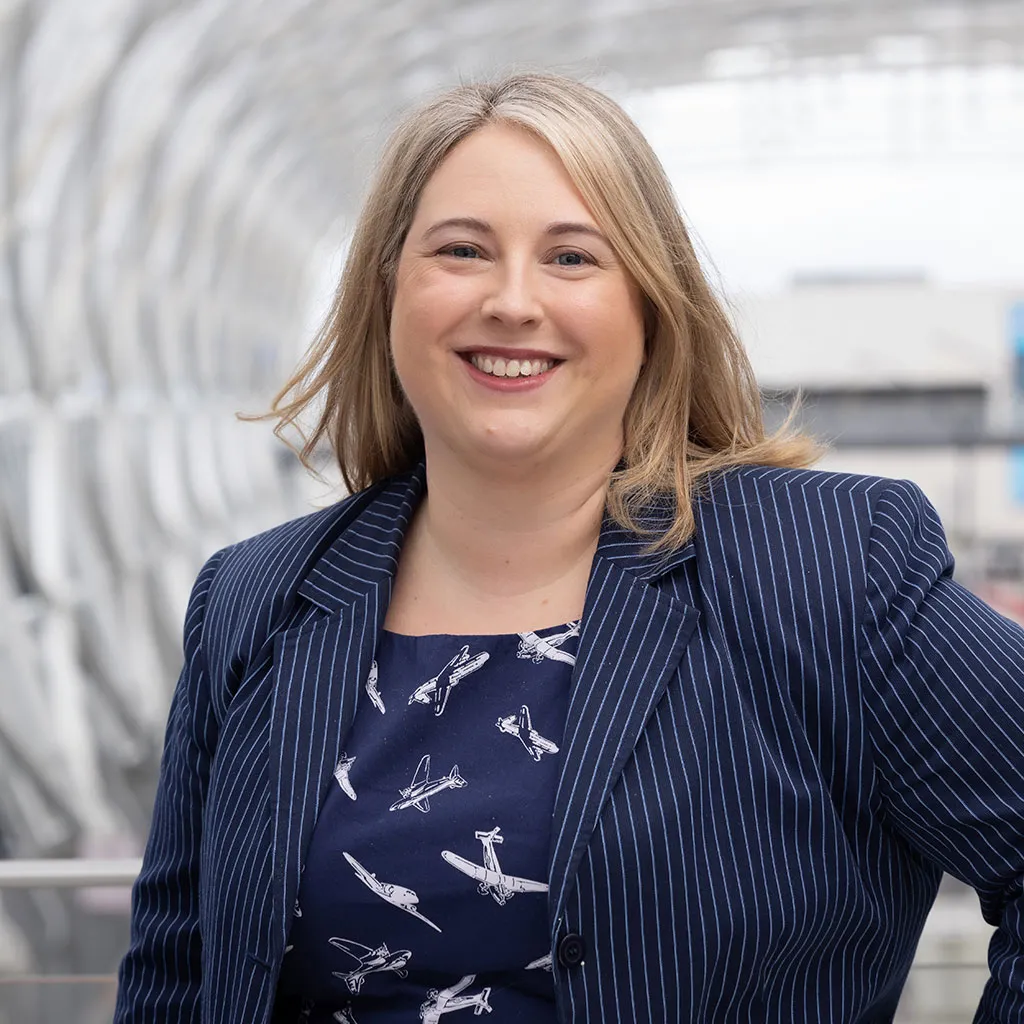
Becky Francosky is the Director of Air Service Development at Hartsfield-Jackson Atlanta International Airport (ATL). She has more than 15 years of experience in strategic planning, market research, analytics and project management that has been refined in roles in both the private and public sector. Ms. Francosky has broad experience in conducting primary and secondary research, analyzing market and competitive intelligence, gap analysis, forecasting and leveraging analytical frameworks to develop forward-looking and extrapolative insights.
Becky rejoined Hartsfield-Jackson in 2022 after working extensively with ATL on several key analytical studies through her company Advanced Aviation Analytics. While in her consulting role, she worked on a variety of projects including the Economic Impact Study, management dashboards and frameworks for gate utilization and forecasting. She has recruited several international passenger and cargo airlines and frequently engages with current and prospective airlines to help build stakeholder engagement.
Additionally, Becky plans and coordinates economic and business development activities with a variety of state and local organizations. From 2008 to 2012, Becky directed the market research program to understand customer’s preferences and needs, which led to expanded product and service offerings and increased non-aeronautical revenue by 40 percent.
We are very excited to have Becky join our board, lend us her expertise, and continue ATL's participation and support of SCL programs.