
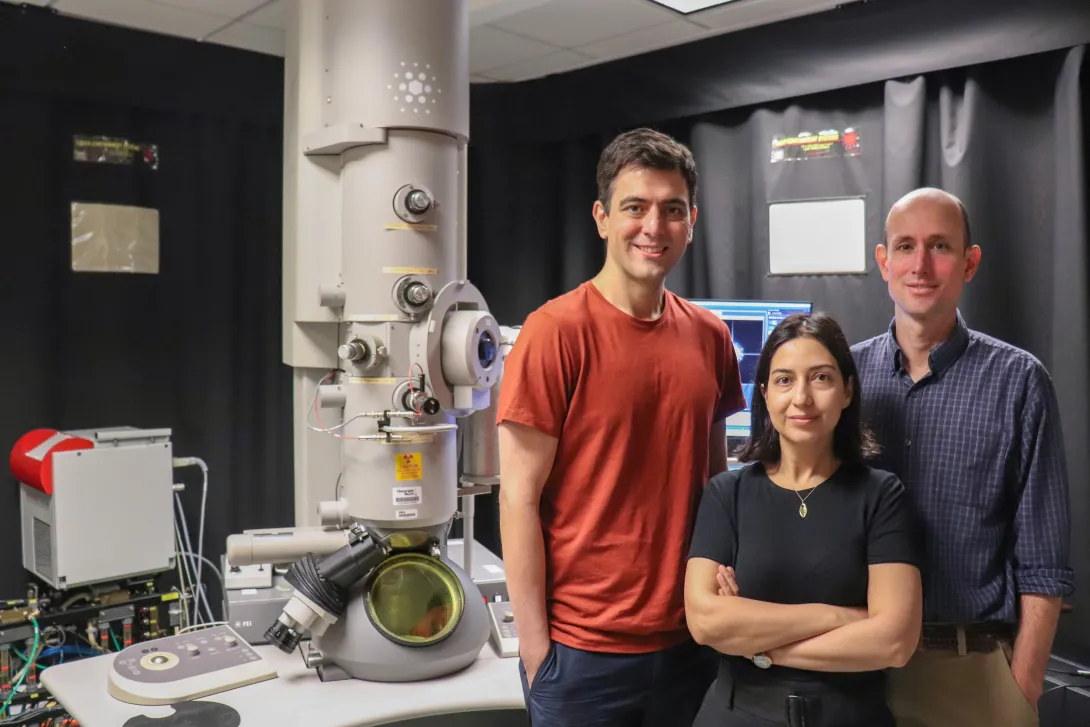
A photo of Vida Jamali, assistant professor the School of Chemical and Biomolecular Engineering; Amirali Aghazadeh, assistant professor in the School of Electrical and Computer Engineering; and Josh Kacher, associate professor in the School of Materials Science and Engineering standing in front of a TEM at Georgia Tech.
Scientific discovery is often portrayed as the result of long hours alone in a lab, but true science is inherently collaborative. The most robust experimental processes are developed through partnerships across multiple areas of research. The need for specialized, multidisciplinary teams slows experiment design, execution, data analysis, and process updates, delaying technological validation and deployment. But if the increasingly automated tools scientists already use in the lab could contribute to this team process of experimental design, the timeline for these goals could be greatly accelerated.
This concept of “lab tool as lab assistant” is the premise of a recent paper in npj | Computational Materials titled “Thinking Microscopes: Agentic AI and the Future of Electron Microscopy,” by Vida Jamali, assistant professor the School of Chemical and Biomolecular Engineering; Amirali Aghazadeh, assistant professor in the School of Electrical and Computer Engineering; and Josh Kacher, associate professor in the School of Materials Science and Engineering.
In the paper, the team introduces the concept of “thinking electron microscopes,” in which agentic AI systems are directly integrated with the instrument. This allows microscopes to move beyond their conventional role as characterization tools and toward functioning as co-scientists for human users.
Drawing on advances in specialized large language models, or LLMs, that demonstrate their ability to collaborate, reason over data, and integrate prior knowledge, the team envisions specialized LLM-based agents assigned to specific roles and areas of knowledge expertise. By explicitly incorporating domain knowledge into specialized agents and distributing information across multiple agents with focused expertise, the approach enables parallel evaluation of competing hypotheses, clearer separation of roles — such as planning, simulation, and critique — and more transparent and robust reasoning.
Within the experimental pipeline, these agents can analyze materials’ properties, physical data, chemical processes, and other relevant parameters. They could also collaborate with an agent that specializes in experimental design, refining iterative closed-loop experimentation, and real-time scientific discovery.
Although the research focuses on AI collaboration, the team notes that human researchers must retain accountability for the accuracy and integrity of both the experimental process and the results reported. This oversight begins with advocating for greater open access to research materials in all formats, building community-driven data repositories, and adopting standardization in how experimental parameters and metadata are reported. Equally important, researchers should be willing to report data from failed experiments as well as successful outcomes. Finally, organizations should work together to standardize secure APIs that enable shared, remote access to infrastructure across distances.
We see this as a step toward scientific instruments that do more than acquire data; systems that can reason over experiments, adapt measurements, and participate in the scientific discovery process alongside researchers. - Vida Jamali, assistant professor the School of Chemical and Biomolecular Engineering
The team is already developing these systems by connecting cloud-based, agentic infrastructures to microscopes at the Institute for Matter and Systems at Georgia Tech. With the addition of agentic AI, the goal is to accelerate discovery and engineering of new nanoscale materials for energy and quantum applications, as well as advance capabilities in cryo-electron microscopy and structural biology. These tools can optimize data collection, link real-time microscope observations with structural models of proteins, and dynamically adjust and prioritize experiments. The team sees this work as the first step toward the next generation of “thinking” electron microscopes, as well as an advancement in scientific discovery across domains.
- Christa M. Ernst
This research is supported by the Institute for Data Engineering and Science and the Institute for Matter and Systems
Original Publication
Jamali, V., Aghazadeh, A. & Kacher, J. Thinking microscopes: agentic AI and the future of electron microscopy. npj Computational Materials 12, 149 (2026). https://doi.org/10.1038/s41524-026-02077-y
News Contact

Researchers at Georgia Tech are using math, science, and artificial intelligence to better understand how people think, move, and perceive the world.
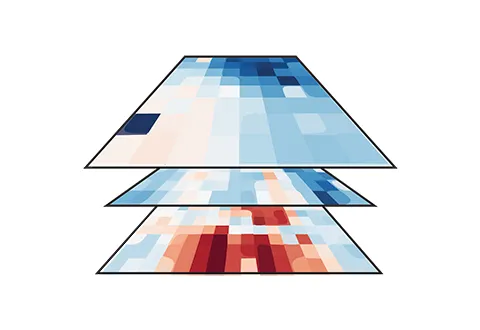
Caption: This image shows a topographic vision model trained to have a brain-like organization.
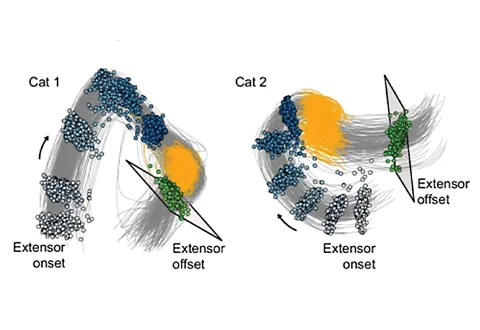
Caption: This shows how spinal cord activity guides transitions in muscle output for extensor muscles.
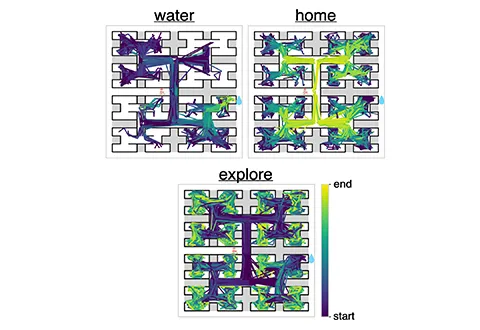
Caption: This shows how mice behave differently when they are pursuing different goals.
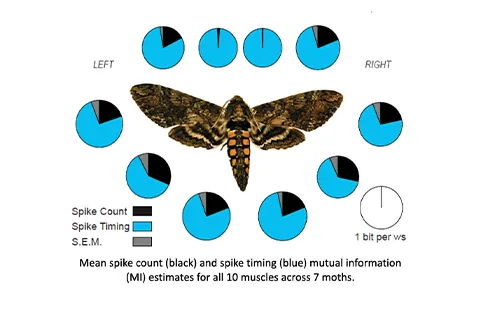
Caption: This shows the spike patterns of a hawk moth. Motor systems use spike codes to control motor output.
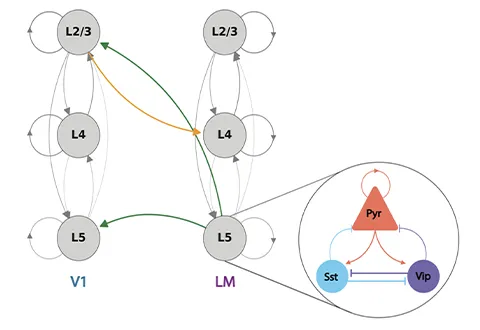
Caption: This shows how visual data from the retina is directed to the correct cognitive domain in the brain through a region of the visual cortex.
Nothing rivals the human brain’s complexity. Its 86 billion neurons and 85 billion other cells make an estimated 100 trillion connections. If the brain were a computer, it would perform an exaflop (a billion-billion) mathematical calculations every second and use the equivalent of only 20 watts of power. As impressive as the brain is, neurologists can’t fully explain how neurons work together.
To help find answers, researchers at the Institute for Neuroscience, Neurotechnology, and Society (INNS) are using math, data, and AI to unlock the secrets of thought. Together they are helping turn the brain’s raw electrical “noise” into real insights about how people think, move, and perceive the world.
Fair warning: Prepare your neurons for the complexity of this brain research ahead.
Building AI Like a Brain
What if artificial neurons in AI programs were arranged as they are in the brain?
AI programs would then help us understand why the brain is organized the way it is. This neuro-AI synthesis would also work faster, use less energy, and be easier to interpret. Creating such systems is the goal of Apurva Ratan Murty, an assistant professor of Psychology who is creating topographic AI models like the one above of three domains — vision, audition, and language inspired by the brain. In the near future, he predicts doctors might be able to use these patterns to predict the effects of brain lesions and other disorders. “We’re not there yet,” he says. “But our work brings us significantly closer to that future than ever before.”
Computing Thought and Movement
How cats walk keeps Chethan Pandarinath on his toes. This biomedical engineer uses sensors to analyze how two sets of feline leg muscles — flexors and extensors — are controlled by the spinal cord. Understanding how that happens could help patients partially paralyzed from spinal cord injuries, strokes, or progressive neuro-degenerative diseases get back on their feet again. “My lab is using AI tools that allow us to turn complex spinal cord activity data into something we can interpret. It tells us there’s a simple underlying structure behind the complex activity patterns,” says the associate professor.
Revealing the Brain’s Spike Patterns
“The brain is like a symphony conductor,” says Simon Sponberg. “Individual instruments have some independent control, but most of the music comes from the brain’s precise coordination of notes among the different players in the body.” This physics professor studies the fantastically fast-beating wings of the hummingbird-sized hawk moth (Manduca sexta). Its agile flight movement comes as a result of spikes in electrical activity in 10 muscles. Sponberg found something that surprised him — the brain focuses less on creating the number of spikes than in orchestrating their precise patterns over time. To Sponberg, every millisecond matters. “We are just beginning to understand how the nervous system first acquires precisely timed spiking patterns during development,” he says.
Predicting Decisions Through Statistics
Put a mouse in a maze with food far away, and it will learn to find it. But life for mice — and people — isn’t so simple. Sometimes they want to explore, only want water, or just want to go home. What’s more, animals make decisions based on their history, not just on how they feel at the moment. To dig deeper into the decision-making process, Anqi Wu, an assistant professor in the School of Computational Science and Engineering, is giving mice more options. By using a new computational framework called SWIRL (Switching Inverse Reinforcement Learning), her findings have outperformed models that fail to take historical behavior into account. “We’re seeking to understand not only animal behavior but also human behavior to gain insight into the human decision-making process over a long period of time,” she says.
Modeling the Mind’s Wiring With Math
Connectivity shapes cognition in the cerebral cortex, a layered structure in the brain. The visual cortex, in particular, processes visual data from the retina relayed through the Lateral Geniculate Nucleus (LGN) in the thalamus, and directs it to the correct cognitive domain in the brain. How it does this is the mystery that computational neuroscientist Hannah Choi wants to solve. “The big question I’m interested in is how network connectivity patterns in the architecture of the LGN are related to computations,” says this assistant math professor. To find answers, she shows mice repeated image patterns such as flower-cat-dog-house and then disrupts the pattern. The goal? To grasp how the thalamus’s nonlinear dynamical system works. If scientists and doctors better understand how brain regions are wired together, such knowledge could lead to better disease treatment.
This story was originally published through the Georgia Tech Alumni Magazine. Read the original publication here.
News Contact
Writer: George Spencer
News and Media Contact: Audra Davidson
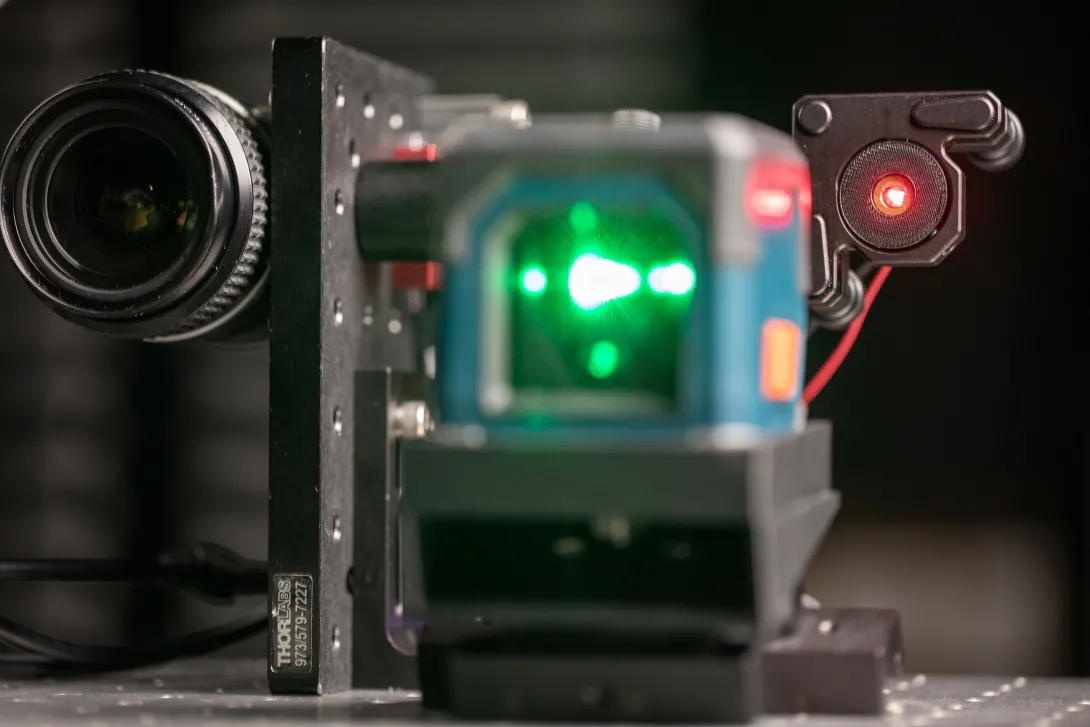
Example of a functional dual-laser prototype using 3D printed materials and off-the-shelf components, highlighting the compact low-cost paradigm exhibited by the Scheimpflug optical ranging technology for wide-domain application. (Credit: Sean McNeil, GTRI)
An optical principle discovered more than a century ago may soon find new applications in such areas as monitoring atmospheric turbulence, tracking airborne objects, and mapping the environment, thanks to researchers at the Georgia Tech Research Institute (GTRI).
Applying the Scheimpflug technique, the researchers are developing inexpensive rangefinder camera technology, advanced sensors and computational techniques to both complement and provide an alternative to established light detection and ranging (LiDAR) technology in certain applications. The technique works best in short- and medium-distance metrology, and can be used passively or in collaboration with laser-based techniques.
“The Scheimpflug technique is a complete alternative to time-of-flight (ToF) LiDAR, and we’re looking for everything we can do with it,” said Nathan Meraz, a GTRI senior research scientist who has been refining the new applications for several years. “It measures things differently, and since it’s a camera sensor, there’s a lot more information to process compared to a LiDAR signal. And there are also data fusion aspects.”
A paper on the technique and its potential remote sensing applications was presented during 2025 at the SPIE Defense + Commercial Systems (DCS) Conference. The research was supported by GTRI’s Independent Research and Development (IRAD) program and also has been advanced by teams of student researchers from the GTRI Research Internship Program (GRIP).
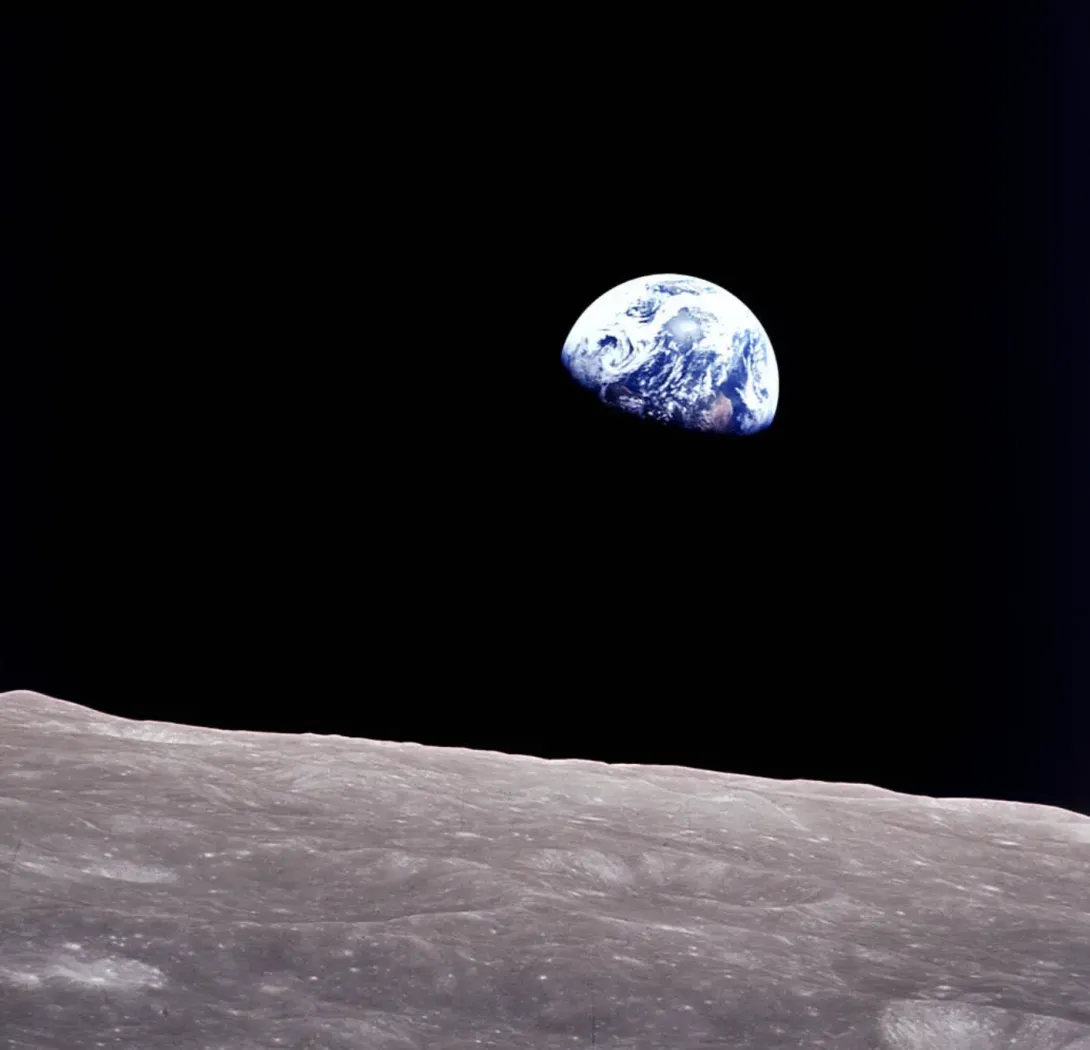
Taken aboard Apollo 8 by Bill Anders, this iconic picture shows Earth peeking out from beyond the lunar surface as the first crewed spacecraft circumnavigated the Moon, with astronauts Anders, Frank Borman, and Jim Lovell aboard. (Credit: NASA)

Advik Vira
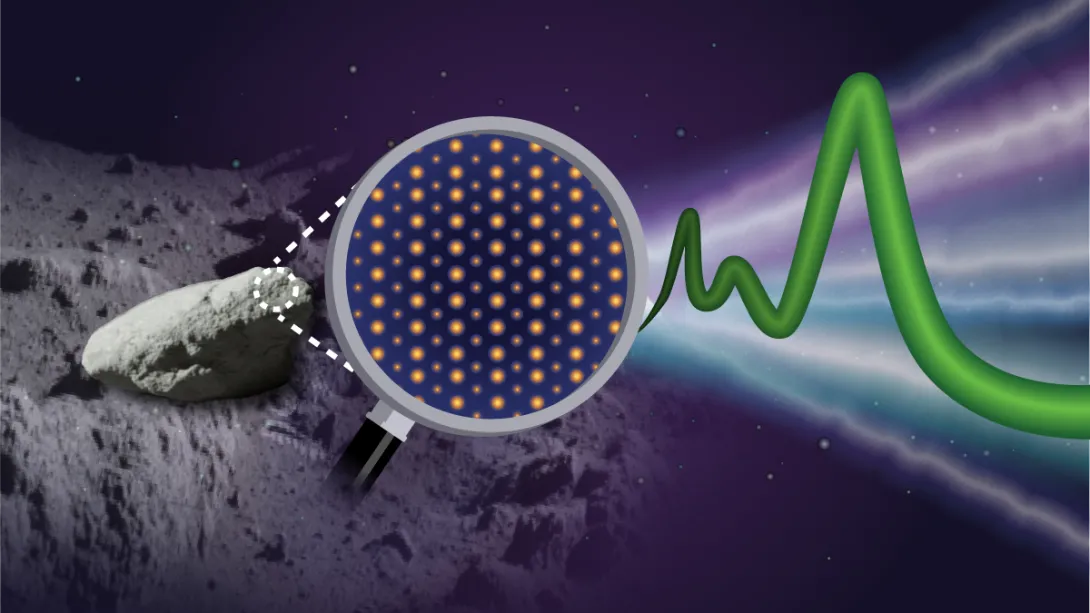
An illustration of the Apollo rock 75035 on the Moon, an atomic image of the sample, and its spectral signature. (Credit: August Davis)
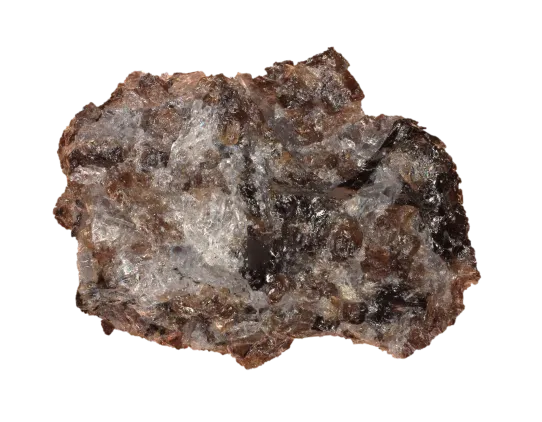
An optical image of the chip from the lunar rock the team investigated.
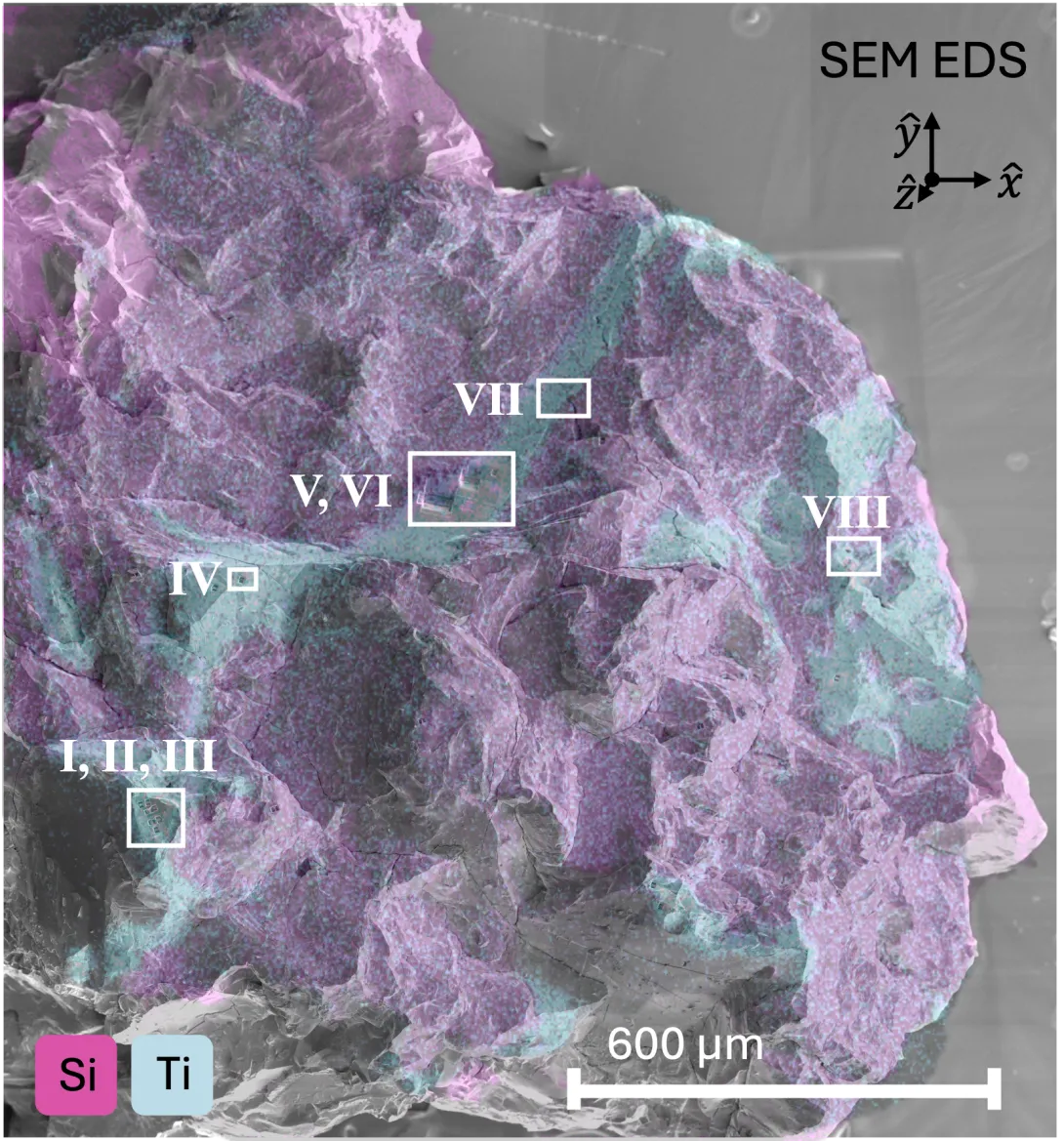
An image of the chip from the sample, imaged using scanning electron microscopy. Titanium is shown in light blue, and white boxes show areas where samples were extracted to analyze the ilmenite crystal.
A chemical signature hidden in a 3.8‑billion‑year‑old lunar rock is offering new insights into the availability of oxygen within the young Moon.
Published today in the journal Nature Communications, the paper “Trivalent Titanium in High-Titanium Lunar Ilmenite” confirms titanium in a reduced, trivalent state in a black, metal-rich lunar mineral called ilmenite. It’s a state only possible in low-oxygen environments, conditions researchers refer to as “reducing.”
“Models have suggested that these reducing conditions may have varied at different locations and times across the surface of the Moon,” says lead author Advik Vira, a graduate student in the School of Physics who recently earned his doctoral degree. “We hope our microscopy technique can be a valuable step in mapping and understanding the Moon’s 4.5-billion-year history.”
The team anticipates that their technique could be used on many of the lunar samples collected more than 50 years ago by the Apollo missions in addition to the Apollo Next Generation Samples — a group of lunar samples that have been stored under pristine conditions — and new samples from the planned Artemis missions, with Artemis II slated for launch this spring. The technique might also be applicable to samples collected from the far side of the Moon and returned in 2024 by the Chang’e-6 mission.
“The Moon holds clues not only to its own past, but also to the earliest eras of Earth’s evolution — history that has long since been erased from our planet,” Vira says. “This study is a step toward understanding the history of both and a reminder that there is still so much left to learn from the lunar rocks we’ve brought back to Earth.”
The School of Physics research team included corresponding authors Vira and Professor Phillip First; in addition to graduate student Roshan Trivedi; undergraduate students Gabriella Dotson, Keyes Eames, Dean Kim, and Emma Livernois; and Professor Zhigang Jiang, along with Institute for Matter and Systems Materials Characterization Facility Senior Research Scientist Mengkun Tian; School of Chemistry and Biochemistry Senior Research Scientist Brant Jones and Thom Orlando, Regents' Professor in the School of Chemistry and Biochemistry with a joint appointment in the School of Physics.
The Georgia Tech team was joined by Addis Energy Senior Geochemist Katherine Burgess; Macalester College Assistant Professor of Geology Emily First; along with Lawrence Berkeley National Laboratory Research Scientist Harrison Lisabeth, Senior Scientist Nobumichi Tamura, and Postdoctoral Fellow Tyler Farr, who recently earned a Ph.D. from Georgia Tech’s George W. Woodruff School of Mechanical Engineering.
CLEVER research
The investigation began with a dark gray rock called a lunar basalt. Formed when ancient magma erupted on the Moon’s surface, minerals crystallized as it cooled — preserving key information in their structures. Billions of years later, the rock was brought to Earth by the 1972 Apollo 17 mission, where a small piece is now stored at Georgia Tech’s Center for Lunar Environment and Volatile Exploration Research (CLEVER), a NASA Solar System Exploration Research Virtual Institute (SSERVI) center led by Orlando.
As a NASA virtual institute, CLEVER supports researchers exploring lunar conditions and developing tools for the upcoming crewed Artemis missions, and provided the lunar samples for this research. The SSERVI also plays a critical role in training the next generation of planetary researchers: both Vira and Farr earned their Ph.D.s while on the CLEVER team.
“At CLEVER, we are very interested in understanding the impacts of space weathering,” Vira says. “We implemented modern sample preparation and advanced microscopy techniques to image samples at the atomic level, and were curious to apply it more broadly to the collection of Apollo rocks in the Orlando Lab. This sample caught our attention.”
“When we imaged an ilmenite crystal from the lunar basalt, what struck us first was how uniform and perfect the crystal structure was,” he recalls. “We found no defects from space weathering and instead saw an undamaged, pristine crystal — undisturbed for 3.8 billion years.”
To investigate further, the team analyzed small chips of the rock with Burgess, a member of the RISE2 SSERVI team and then a geologist at the U.S. Naval Research Laboratory. Using state-of-the-art electron microscopy and spectroscopy techniques, Vira determined the oxidation state of the elements in the ilmenite present.
In spectroscopy measurements, each element leaves a distinct ‘signature,’ Vira explains. “When we brought our results back to Georgia Tech’s Materials Characterization Facility, Mengkun (Tian) noticed something unusual: the signature showed titanium might be present in the trivalent state.”
The presence of trivalent titanium had long been suspected in this lunar mineral. The team was intrigued.
A new window into old rocks
With funding from Georgia Tech’s Center for Space Technology and Research (CSTAR), Vira returned to the U.S. Naval Research Laboratory to analyze additional samples. The results confirmed that more titanium was present than the mineral’s formula (FeTiO₃) predicts — indicating a portion of the titanium present was trivalent.
“That led me to place our measurements in terms of the broader geological context,” Vira shares. Working with First, Vira explored how ilmenite with trivalent titanium could help reconstruct the nature of ancient magmas from the Moon, especially the chemical availability of oxygen.
“Because its location on the Moon was noted during the Apollo mission, we know exactly where this rock is from, and we can determine how old the rock is,” he explains. “When coupled with our trivalent titanium measurements, we can use that information to estimate the reducing conditions for this specific region at the specific time our rock formed.”
If the upcoming Artemis missions return samples suitable for the team’s technique, these rocks could provide a new window into ancient lunar geology. The research also highlights that many lunar samples already on Earth could be reexamined to look for trivalent titanium.
“There is still so much to learn from the lunar samples we have already brought to Earth,” Vira says. “It’s a testament to the long-term value of each sample return mission. As technology continues to advance, this type of work will continue to give us critical insights into our planet and our place in the universe for years to come.”
DOI: 10.1038/s41467-026-69770-w
Funding: This work was directly supported by the NASA SSERVI under CLEVER. Researchers were also supported by the NASA RISE2 SSERVI and the Heising-Simons Foundation. Funding for collaborations between the U.S. Naval Research Laboratory and Georgia Tech for the investigation of lunar minerals was provided by the Georgia Tech Center for Space Technology and Research. Sample preparation was performed at the Georgia Tech Institute for Matter and Systems, which is supported by the National Science Foundation. This work utilized the resources of the Advanced Light Source, a user facility supported by the U.S. Department of Energy, Office of Science, Office of Basic Energy Sciences, and was supported in part by previous breakthroughs obtained through the Laboratory Direct.
News Contact
Written by:
Selena Langner
College of Sciences
Georgia Institute of Technology
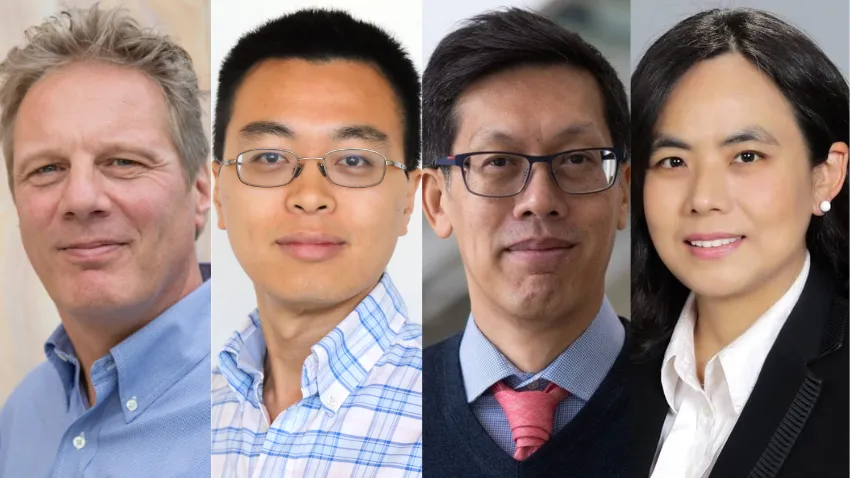
Georgia Tech researchers applied their expertise to a national research program that will shape the future of computing. Their work may yield more energy-efficient computers and better predictions for environmental challenges like carbon storage, tsunamis, wildfires, and sustainable energy.
The Department of Energy Office of Science recently released two reports through its Advanced Scientific Computing Research (ASCR) program. The reports were produced by workshops that brought together researchers from universities, national labs, government, and industry to set priorities for scientific computing.
Professor Felix Herrmann served on the organizing committee for the Workshop on Inverse Methods for Complex Systems under Uncertainty. Assistant Professor Peng Chen joined Herrmann as a workshop participant, contributing expertise in data science and machine learning.
Inverse methods work backward from outcomes to find their causes. Scientists use these tools to study complex systems, like designing new materials with targeted properties and using past wildfires to map vulnerable areas and behavior of future fires.
The ASCR report highlighted Herrmann’s work on seismic exploration and monitoring through digital twins. Founded on inverse methods, digital twins upgrade from static models to virtual systems that accurately mirror their physical counterparts.
Digital twins integrate real-time data sources, including fluid flows, monitoring and control systems, risk assessments, and human decisions. These models also account for uncertainty and address data gaps or limitations.
The DOE organized the workshop to support the growing role of inverse modeling. The group identified four priority research directions (PRDs) to guide future work. The PRDs are:
- PRD 1: Discovering, exploiting, and preserving structure
- PRD 2: Identifying and overcoming model limitations
- PRD 3: Integrating disparate multimodal and/or dynamic data
- PRD 4: Solving goal-oriented inverse problems for downstream tasks
“A digital twin is a system you can control, like to optimize operations or to minimize risk,” said Herrmann, who holds joint appointments in the Schools of Earth and Atmospheric Sciences, Electrical and Computer Engineering, and Computational Science and Engineering.
“Digital twins give you a principled way to consider uncertainties, which there are a lot in subsurface monitoring. If you inject carbon dioxide too fast, you will will increase the pressure and may fracture the rock. If you inject too slow, then the process may become too costly. Digital twins help us make balanced decisions under uncertainty.”
Supercomputers, algorithms, and artificial intelligence now power modern science. However, these tools consume enormous amounts of energy. This raises concerns about how to sustain computing and scientific research as we know them in the decades ahead.
Professors Rich Vuduc and Hyesoon Kim co-authored the report from the Workshop on Energy-Efficient Computing for Science. At the three-day ASCR workshop, participants identified five key research directions:
- PRD 1: Co-design energy-efficient hardware devices and architectures for important workloads
- PRD 2: Define the algorithmic foundations of energy-efficient scientific computing
- PRD 3: Reconceptualize software ecosystems for energy efficiency
- PRD 4: Enable energy-efficient data management for data centers, instruments, and users
- PRD 5: Develop integrated, scalable energy measurement and modeling capabilities for next-generation computing systems
“I’m cautiously optimistic about the future of energy-efficient computing. The ASCR report says, from a technological point of view, there are things we can do,” said Vuduc.
“The report lays out paths for how we might design better apps, hardware systems, and algorithms that will use less energy. This is recognition that we should think about how architectures and software work together to drive down energy usage for systems.”
News Contact
Bryant Wine, Communications Officer
bryant.wine@cc.gatech.edu

“Cracks are complex — they interact with the material, change shape, and respond dynamically," says Kolvin. "All of this affects the overall toughness, and that impacts safety.” (Adobe Stock)
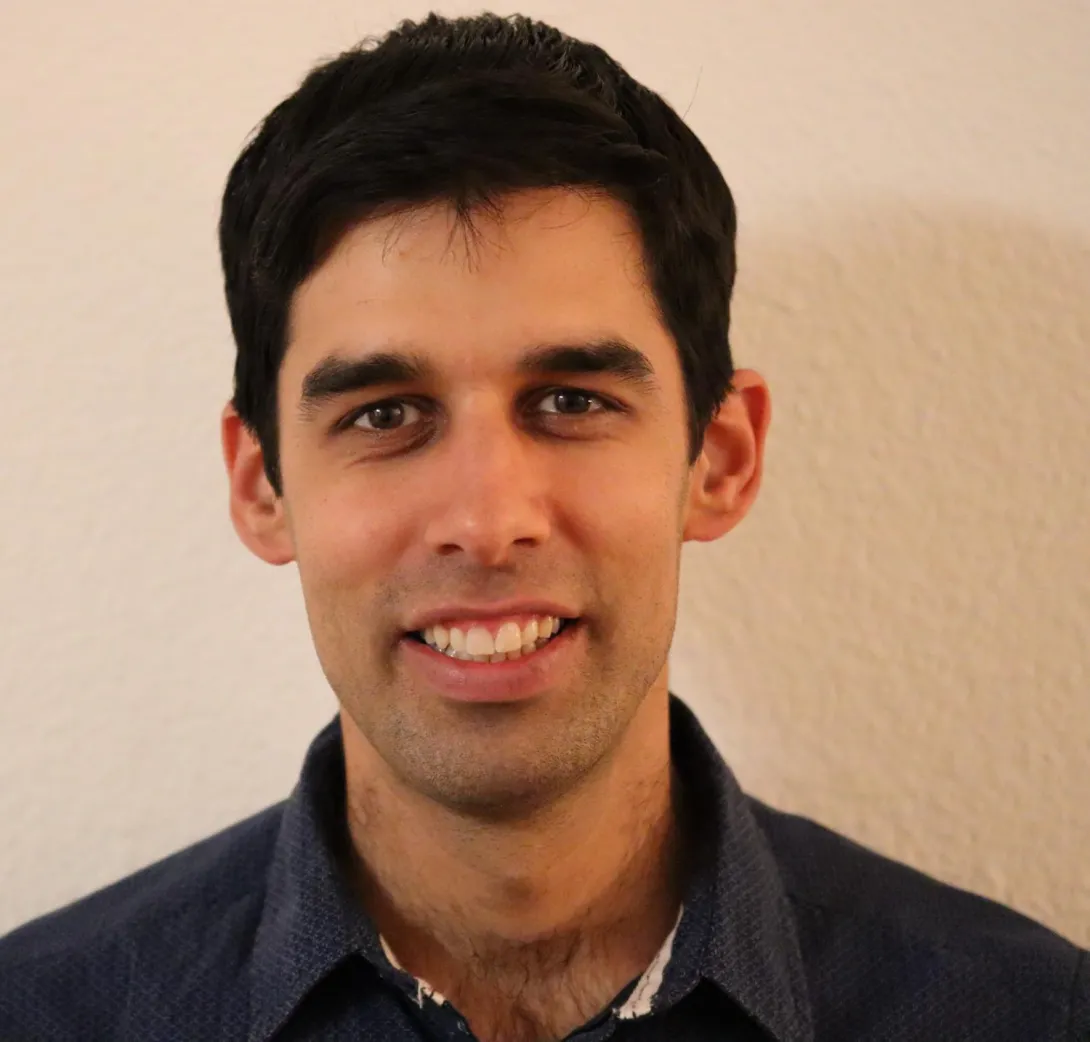
Itamar Kolvin
Imagine a material cracking — now imagine what happens if there are small inclusions in the material. Do they create an obstacle course for the crack to navigate, slowing it down? Or do they act as weak points, helping the crack spread faster?
Historically, most engineers believed the former, using heterogeneities, or differences, in materials to make materials stronger and more resilient. However, research from Georgia Tech is showing that, in some cases, heterogeneities make materials weaker and can even accelerate cracks.
Led by School of Physics Assistant Professor Itamar Kolvin, the study, “Dual Role for Heterogeneity in Dynamic Fracture,” was published in Physical Review Letters this fall.
While Kolvin’s work is theoretical, the results of the research are widely applicable. “Predicting this type of toughening effect helps engineers decide how much reinforcement to add to a material, and the best way to do so,” he says. “Cracks are complex — they interact with the material, change shape, and respond dynamically. All of this affects the overall toughness, which impacts safety.”
Building Strong Materials
The study found that the key to crack behavior starts at the microscopic level where the material’s microscopic structure influences how it resists cracks running at different speeds.
“Cracks propagate by breaking bonds, and that costs energy,” he explains. “On top of this, materials experience extreme deformations close to where the crack runs, which costs additional energy. In some materials, the amount of this energy cost can depend on the crack’s speed because of microscopic friction between molecules.”
Other materials, like window glass, are mostly indifferent to the crack speed. These materials are made of simple molecules, allowing a crack to propagate slowly or quickly using the same amount of energy. The researchers found that including heterogeneities can help strengthen these materials.
Materials made of more complex molecules, like polymer plastics and gels, on the other hand, are velocity dependent: it takes more energy for a crack to propagate faster. In these materials, heterogeneities are less effective at toughening, and if the crack is fast enough, heterogeneities could help it advance. “That’s something we didn’t expect when we started,” Kolvin says.
Disorder Versus Design
After discovering which types of materials can benefit from heterogeneities, Kolvin wanted to investigate the best way to add them. “Natural materials like rocks are usually very messy and disordered,” he explains, “but in engineering, heterogenous materials tend to be patterned.” For example, imagine a manufactured material: heterogeneities may be added in a grid-like or other patterned way. Now, contrast that with the irregular freckles and inclusions you might see in a rock found in a streambed.
Kolvin’s question was simple: which material was stronger? The results, again, were surprising. The disordered case — similar to what is found in nature — created the toughest material.
Among the patterned materials the team tested, only one was as tough as the disordered case — and every other pattern tested made the material weaker.
From Lab to Landscape
At Georgia Tech, Kolvin’s lab focuses on the mechanics of materials — both solid and fluid. “We are using our expertise in physics to explore questions across different fields,” he says. “A common concept is treating materials as continua — zooming out from molecular detail to look at how materials deform and flow at the large scale.”
This current research follows suit with applications ranging from investigating the smallest material microstructures to predicting earthquake fractures. “Earthquake faults are highly disordered, and simulating these ruptures is a major challenge, usually requiring supercomputers to solve crack propagation in three dimensions,” Kolvin says. “But with the tools our study has developed, we can simulate similar conditions and large systems using just a desktop computer.”
“This opens the doors for scientists, engineers, physicists, and geologists to explore problems right from their own computer, allowing more researchers access to more tools,” he adds. “And new tools often lead to new discoveries.”
News Contact
Written by Selena Langner
College of Sciences
Georgia Institute of Technology
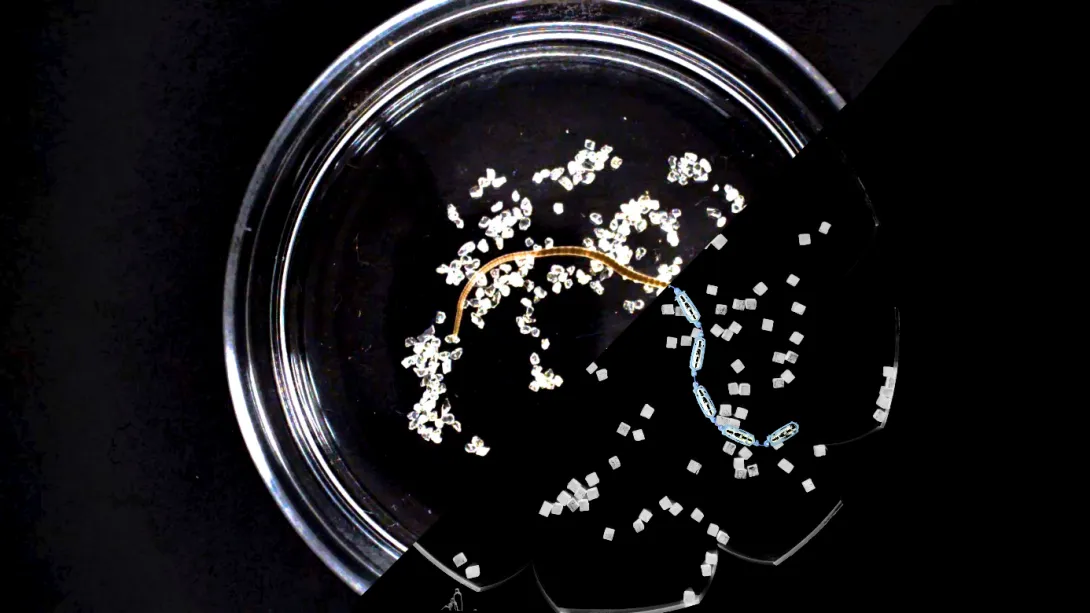
A real worm in a Petri dish (top left) and a robot worm (bottom right) clean their environments of tiny particles in a very similar manner.
When centimeter-long aquatic worms, such as T. tubifex or Lumbriculus variegatus, are placed in a Petri dish filled with sub-millimeter sized sand particles, something surprising happens. Over time, the worms begin to spontaneously clean up their surroundings. They sweep particles into compact clusters, gradually reshaping and organizing their environment.
In a study recently published in Physical Review X, a team of researchers show that this remarkable sweeping behavior does not require a brain, or any kind of complex interaction between the worms and the particles. Instead, it emerges from the natural undulating motion and flexibility that the worms possess.
The study was co-led by Saad Bhamla, associate professor in Georgia Tech’s School of Chemical and Biomolecular Engineering, and Antoine Deblais of the University of Amsterdam.
Deblais said: “It is fascinating to see how living worms can organize their surroundings just by moving.” Bhamla added: “Their activity and flexibility alone are enough to collect particles and reshape their environment.”
By building simple robotic and computer models that mimic the living worms, the researchers discovered that only these two ingredients – activity and flexibility – are sufficient to reproduce the sweeping and collecting effects. The result is a self-organized, dynamic form of environmental restructuring driven purely by motion and shape.
Order emerges
The results do not just teach us a surprising lesson about worms. Understanding how these organisms spontaneously collect particles has much broader implications. On the technological side, what the researchers have learned could inspire the design of soft robots that clean or sort materials without needing sensors or pre-programmed intelligence.
Such robots, like the worms, would simply move and let order emerge from motion. “Brainless” machines of this sort could perhaps one day help remove microplastics or sediments from aquatic environments, or perform complex tasks in unpredictable terrains.
From a biological perspective, the results also offer insights into how elongated living organisms – not just worms, but also filamentous bacteria, or cytoskeletal filaments – can structure and modify their own habitats through simple physical interactions. Understanding this structuring and modifying behaviour has been a central question for, e.g., earthworms in their role in soil aeration.
From a biological perspective, the results also offer insights into how elongated living organisms – not just worms, but also filamentous bacteria, or cytoskeletal filaments – can structure and modify their own habitats through simple physical interactions. Understanding this structuring and modifying behaviour has been a central question for, e.g., earthworms in their role in soil aeration.
Team effort
This project grew out of curiosity about how living systems shape their environment without centralized control. Initial experiments with worms, conducted by Harry Tuazon (Bioengineering PhD 2024) at Georgia Tech, showed the unexpected particle collection patterns. This led the team to attempt to reproduce the behavior using robotic and simulated counterparts – something that worked surprisingly well. In the project, experimentalists and theorists worked side by side, allowing the team to uncover the physical principles behind this seemingly purposeful behavior.
Co-first author Rosa Sinaasappel conducted the robot experiments at the University of Amsterdam. “By mimicking the worms’ motion with simple brainless robots connected by flexible rubber links, we could pinpoint the two ingredients that are essential for the sweeping mechanism,” she said.
Co-first author Prathyusha Kokkoorakunnel Ramankutty, a research scientist in the Bhamla Lab at Georgia Tech, performed the computer simulations of the behavior. “Our computational model, built on simple ingredients like propulsion and flexibility, shows that this principle works across different scales and can be adapted for new designs, as demonstrated by a soft robotic sweeper that autonomously ‘cleans’ and reorganizes particles without programmed intelligence,” she explained.
The researchers will continue to investigate this type of behaviour in the future. While a mathematical model of active sweeping is now presented in a simple form, many challenging questions raised by this complex system remain open for theoreticians.
Multiple groups of students helped greatly with the robot experiments, doing projects in the lab. Their efforts ranged from performing the experiments to replacing the in total about 200 batteries, after perhaps one of the most difficult tasks: wrestling them free from the child-proof packaging.
CITATION:
Particle Sweeping and Collection by Active and Living Filaments, Sinaasappel, R., Prathyusha, K. R., Tuazon, Harry, Mirzahossein, E., Illien, P., Bhamla, Saad, and A. Deblais. Physical Review X (2026)
News Contact
Brad Dixon, braddixon@gatech.edu
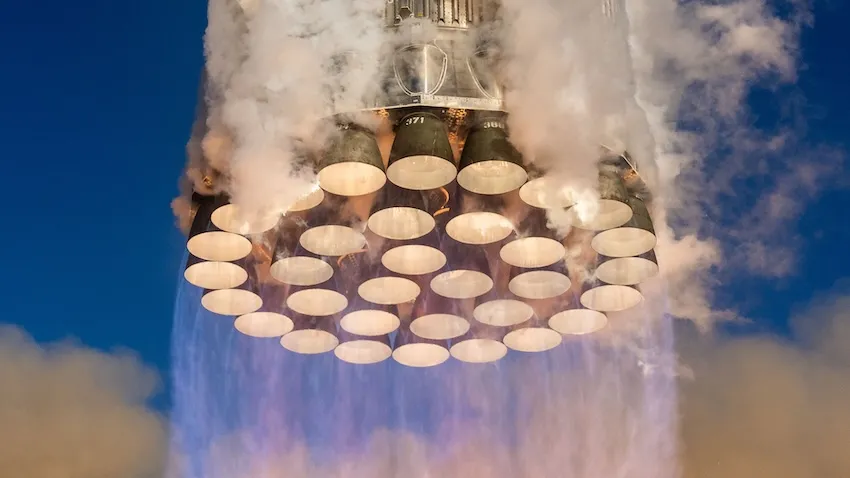
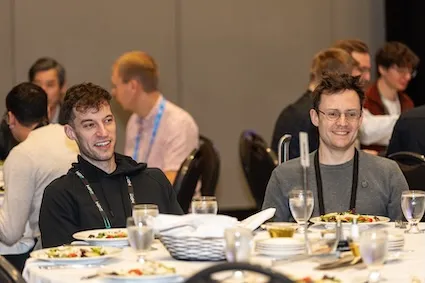
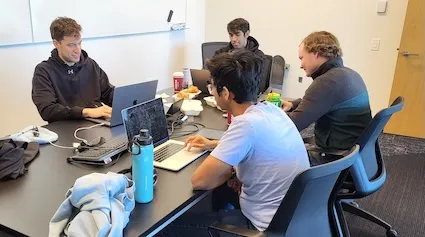
Spaceflight is becoming safer, more frequent, and more sustainable thanks to the largest computational fluid flow simulation ever ran on Earth.
Inspired by SpaceX’s Super Heavy booster, a team led by Georgia Tech’s Spencer Bryngelson and New York University’s Florian Schäfer modeled the turbulent interactions of a 33-engine rocket. Their experiment set new records, running the largest ever fluid dynamics simulation by a factor of 20 and the fastest by over a factor of four.
The team ran its custom software on the world’s two fastest supercomputers, as well as the eighth fastest, to construct such a massive model.
Applications from the simulation reach beyond rocket science. The same computing methods can model fluid mechanics in aerospace, medicine, energy, and other fields. At the same time, the work advances understanding of the current limits and future potential of computing.
The team finished as runners-up for the 2025 Gordon Bell Prize for its impactful, multi-domain research. Referred to as the Nobel Prize of supercomputing, the award was presented at the world’s top conference for high-performance computing (HPC) research.
“Fluid dynamics problems of this style, with shocks, turbulence, different interacting fluids, and so on, are a scientific mainstay that marshals our largest supercomputers,” said Bryngelson, an assistant professor with the School of Computational Science and Engineering (CSE).
“Larger and faster simulations that enable solutions to long-standing scientific problems, like the rocket propulsion problem, are always needed. With our work, perhaps we took a big dent out of that issue.”
The Super Heavy booster reflects the space industry’s move toward reusable multi-engine first-stage rockets that are easier to transport and more economical overall.
However, this shift creates research and testing challenges for new designs.
Each of Super Heavy’s 33 thrusters expels propellant at ten times the speed of sound. As individual engines reach extreme temperatures, pressures, and densities, their combined interactions with the airframe make such violent physics even more unpredictable.
Frequent physical experiments would be expensive and risky, so scientists rely on computer models to supplement the engineering process.
Bryngelson’s flagship Multicomponent Flow Code (MFC) software anchored the experiment. MFC is an open-source computer program that simulates fluid dynamic models. Bryngelson’s lab has been modifying MFC since 2022 to run on more powerful computers and solve larger problems.
In computing terms, this MFC-enhanced model simulated fluid flow resolution at 200 trillion grid points and one quadrillion degrees of freedom. These metrics exceeded previous record-setting benchmarks that tallied 10 trillion and 30 trillion grid points.
This means MFC simulations provide greater detail and capture smaller-scale features than previous approaches. The rocket simulation also ran four times faster and achieved 5.7 times the energy efficiency of comparable methods.
Integrating information geometric regularization (IGR) into MFC played a key role in attaining these results. This new approach improved the simulation’s computational efficiency and overcame the challenge of shock dynamics.
In fluid mechanics, shock waves occur when objects move faster than the speed of sound. Along with hampering the performance of airframes and propulsion systems, shocks have historically been difficult to simulate.
Computational scientists have used empirical models based on artificial viscosity to account for shocks. Although these approaches mimic the physical effects of shock waves at the microscopic scale, they struggle to effectively capture the large-scale features of the flow.
Information geometry uses curved spaces to study concepts of statistics and information. IGR uses these tools to modify the underlying geometry in fluid dynamics equations. When traveling in the modified geometry, fluid in the model preserves the shocks in a more natural way.
“When regularizing shocks to much larger scales relevant in these numerical simulations, conventional methods smear out important fine-scale details,” said Schäfer, an assistant professor at NYU’s Courant Institute of Mathematical Sciences.
“IGR introduces ideas from abstract math to CFD that allow creating modified paths that approach the singularity without ever reaching it. In the resulting fluid flow, shocks never become too spiky in simulations, but the fine-scale details do not smear out either.”
Simulating a model this large required the Georgia Tech researchers to run MFC on El Capitan and Frontier, the world's two fastest supercomputers.
The systems are two of four exascale machines in existence. This means they can solve at least one quintillion (“1” followed by 18 zeros) calculations per second. If a person completed a simple math calculation every second, it would take that person about 30 billion years to reach one quintillion operations.
Frontier is housed at Oak Ridge National Laboratory and debuted as the world’s first exascale supercomputer in 2022. El Capitan surpassed Frontier when Lawrence Livermore National Laboratory launched it in 2024.
To prepare MFC for performance on these machines, Bryngelson’s lab followed a methodical approach spanning years of hardware acquisition and software engineering.
In 2022, Bryngelson attained an AMD MI210 GPU accelerator. Optimizing MFC on the component played a critical step toward preparing the software for exascale machines.
AMD hardware underpins both El Capitan and Frontier. The MI300A GPU powers El Capitan while Frontier uses the MI250X GPU.
After configuring MFC on the MI210 GPU, Bryngelson’s lab ran the software on Frontier for the first time during a 2023 hackathon. This confirmed the code was ready for full-scale deployment on exascale supercomputers based on AMD hardware.
In addition to El Capitan and Frontier, the simulation ran on Alps, the world’s eight-fastest supercomputer based at the Swiss National Supercomputing Centre. It is the largest available system that features the NVIDIA GH200 Grace Hopper Superchip.
Like with AMD GPUs, Bryngelson acquired four GH200s in 2024 and began configuring MFC to the latest hardware innovation powering New Age supercomputers. Later that year, the Jülich Research Centre accepted Bryngelson’s group into an early access program to test JUPITER, a developing supercomputer based on the NVIDIA superchip.
The group earned a certificate for scaling efficiency and node performance on the way toward validating that their code worked on the GH200. The early access project proved successful for JUPITER, which launched in 2025 as Europe’s fastest supercomputer and fourth fastest in the world.
“Getting the level of hands-on experience with world-leading supercomputers and computing resources at Georgia Tech through this project has been a fantastic opportunity for a grad student,” said CSE Ph.D. student Ben Wilfong.
“To leverage these machines, I learned more advanced programming techniques that I’m glad to have in my tool belt for future projects. I also enjoyed the opportunity to work closely with and learn from industry experts from NVIDIA, AMD, and HPE/Cray.”
El Capitan, Frontier, JUPITER, and Alps maintained their rankings at the 2025 International Conference for High Performance Computing Networking, Storage and Analysis (SC25). Of note, the TOP500 announced at SC25 that JUPITER surpassed the exaflop threshold.
The SC Conference Series is one of two venues where the TOP500 announces updated supercomputer rankings every June and November. The TOP500 ranks and details the 500 most powerful supercomputers in the world.
The SC Conference Series serves as the venue where the Association for Computing Machinery (ACM) presents the Gordon Bell Prize. The annual award recognizes achievement in HPC research and application. The Tech-led team was among eight finalists for this year’s award.
Along with Bryngelson, Georgia Tech members included Ph.D. students Anand Radhakrishnan and Wilfong, postdoctoral researcher Daniel Vickers, alumnus Henry Le Berre (CS 2025), and undergraduate student Tanush Prathi.
Schäfer’s partnership with the group stems from his previous role as an assistant professor at Georgia Tech from 2021 to 2025.
Collaborators on the project included Nikolaos Tselepidis and Benedikt Dorschner from NVIDIA, Reuben Budiardja from ORNL, Brian Cornille from AMD, and Stephen Abbot from HPE. All were co-authors of the paper and named finalists for the Gordon Bell Prize.
“I’m elated that we have been nominated for such a prestigious award. It wouldn't have been possible without the combined and diligent efforts of our team,” Radhakrishnan said.
“I’m looking forward to presenting our work at SC25 and connecting with other researchers and fellow finalists while showcasing seminal work in the field of computing.”
News Contact
Bryant Wine, Communications Officer
bryant.wine@cc.gatech.edu
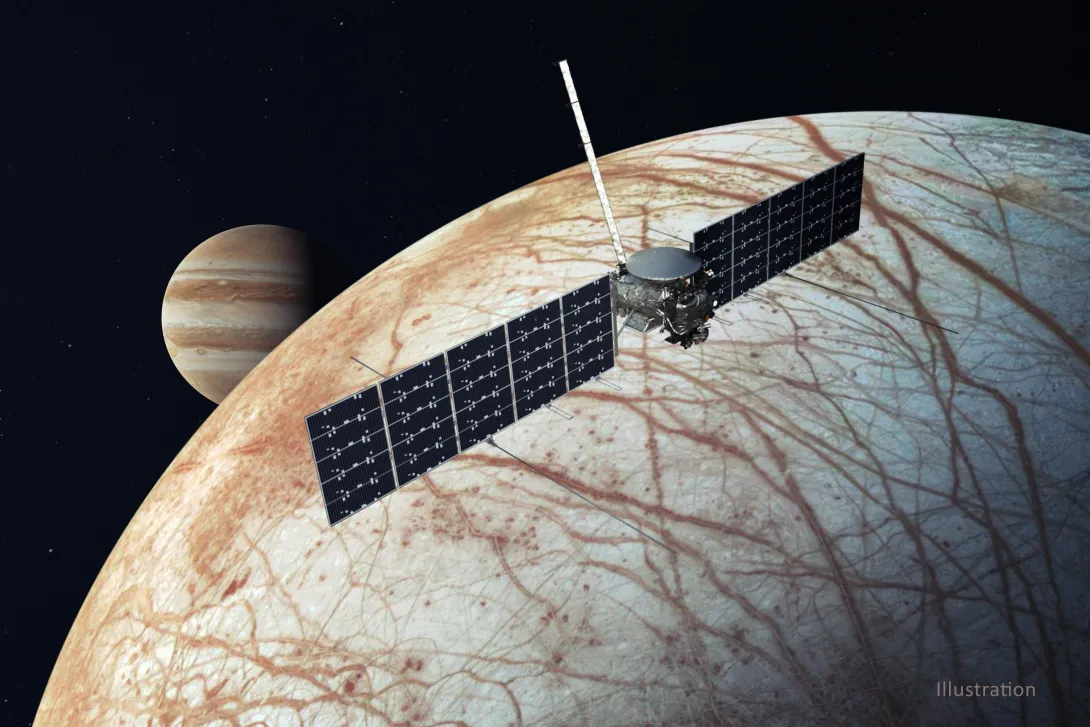
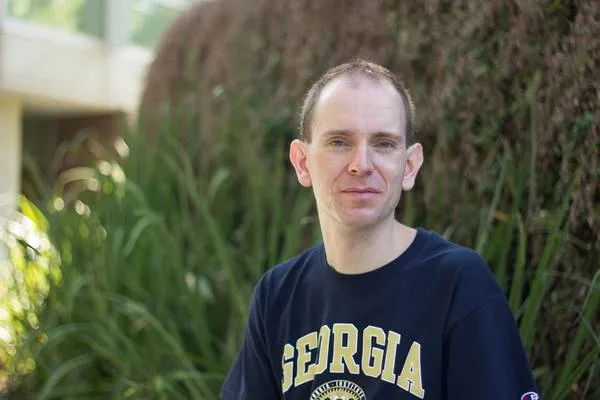
In four years, National Aeronautics and Space Administration (NASA)’s Europa Clipper mission will arrive in Jupiter’s orbit to investigate whether the planet’s icy moon, Europa, could support life. In the interim, researchers like Sven Simon, a professor in the Schools of Earth and Atmospheric Sciences and Physics, are working to uncover critical information to support the rapid analysis of measurements from the mission.
Simon’s research team has been awarded $1.4 million through NASA’s Precursor Science Investigations for Europa (PSI-E) program. Their project is one of seven selected to provide essential insights that, according to the program announcement, “will maximize the science return during the radiation-limited lifetime of the Europa Clipper.”
Simon also serves as the institutional lead co-investigator of a second $1.4 million project, led by researchers at the University of California, Berkeley, which seeks to decipher how Europa's atmosphere and ionosphere contribute to the magnetic field near the moon. This project was selected during the same call for proposals.
“The research award is a fantastic opportunity to contribute to a mission centered on Europa’s complex plasma and electromagnetic environment,” says Simon, referencing the Georgia-Tech led proposal. “Our project combines foundational plasma physics from our School of Physics and geophysical knowledge from our School of Earth and Atmospheric Sciences to understand how the magnetic field near Europa is affected by the plasma populating Jupiter’s environment.”
The research team includes Earth and Atmospheric Sciences Ph.D. students Ariel Tello Fallau and Charles Michael Haynes. Neil Baker, a Ph.D. student in the School of Physics, is contributing to the Berkeley-led PSI-E project that also includes Georgia Tech alumnus Lucas Liuzzo (Ph.D. EAS 2018), now an assistant research scientist at the University of California, Berkeley’s Space Sciences Laboratory.
Groundwork for discovery
With a radius of only 1,560 kilometers, Europa is one of Jupiter’s four largest moons, known as the Galilean moons, discovered by Italian astronomer Galileo Galilei in the 1600s.
More than two decades ago, data from NASA’s Galileo mission — specifically magnetic field measurements collected far above Europa’s surface — pointed to the existence of a global subsurface ocean. This ocean, which may contain more liquid water than all of the Earth’s oceans combined, has made Europa a prime candidate in the search for life beyond Planet Earth.
“Finding evidence of a saltwater ocean lurking beneath Europa’s surface was a serendipitous discovery during the Galileo mission,” Simon explains. “NASA’s Europa Clipper mission picks up where the Galileo mission left off.”
Launched in October 2024, the Europa Clipper space probe is expected to reach Jupiter’s orbit in 2030. That gives Simon and his team only a few years to complete their analysis.
“Our research is doing the preparatory work to determine what and where we can measure further magnetic evidence of the ocean beneath Europa’s surface,” says Simon. “When the spacecraft arrives, we will find out whether our predictions are correct.”
Using advanced computer simulations, the team aims to better understand the magnetic fields near Europa. Part of these fields is generated by electric currents in the moon’s saltwater ocean; the other part is created by fast-moving flows of plasma — ionized matter that fills much of space — as it interacts with Europa’s atmosphere and surface.
“Our project focuses on how the magnetic fields from plasma flow patterns compete with the magnetic signal from Europa’s ocean,” says Simon. “We want to determine which part of the magnetic field near Europa originates from the ocean and which part is a disruptive effect from the plasma.”
Deciphering these magnetic signals will provide essential context for interpreting Europa Clipper’s measurements, helping to not only confirm the ocean’s existence but also reveal details about its structure.
News Contact
Writer: Lindsay C. Vidal
Isaiah Bolden
Jennifer Glass
Alex Robel

Yuanzhi Tang
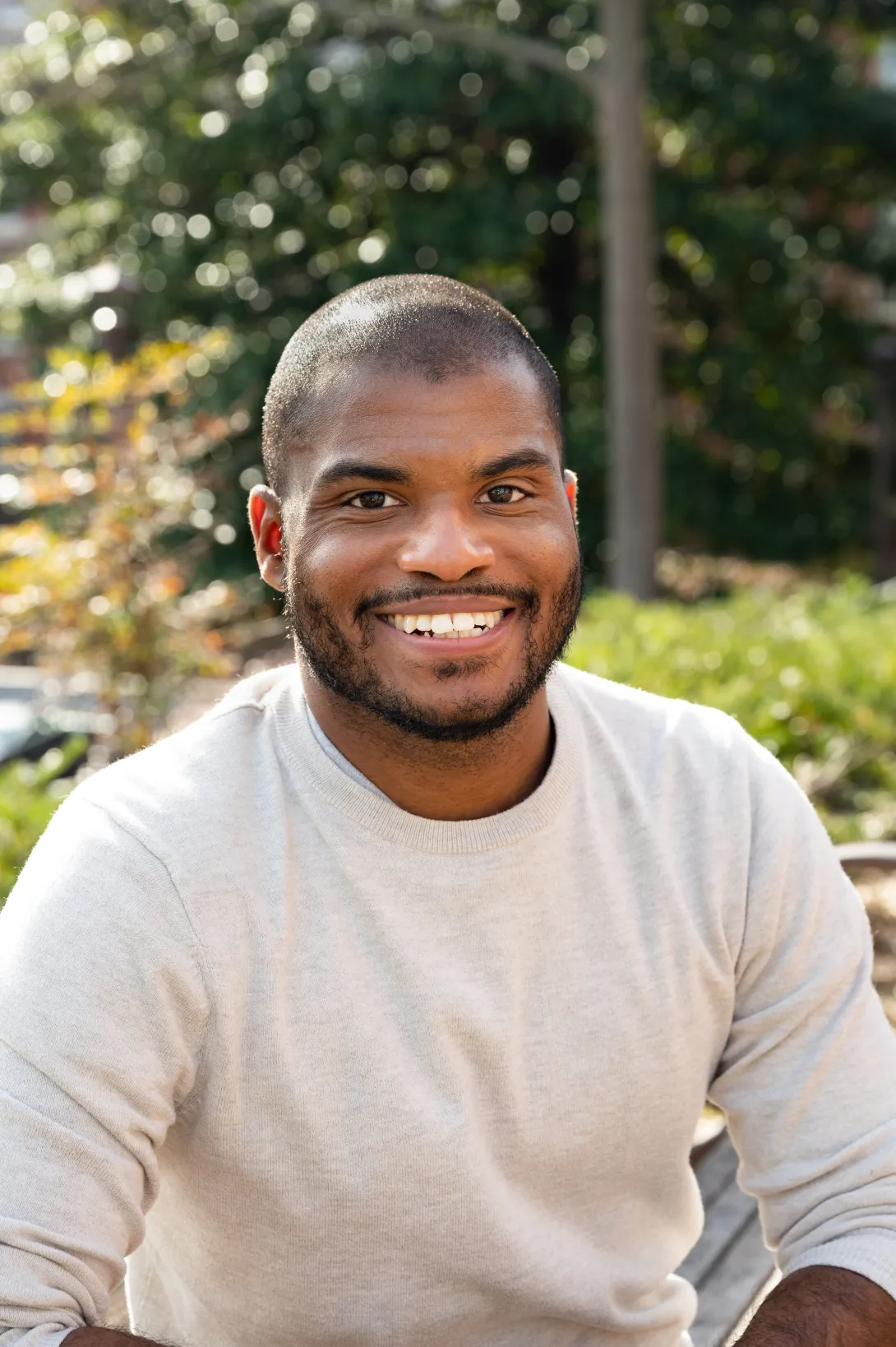
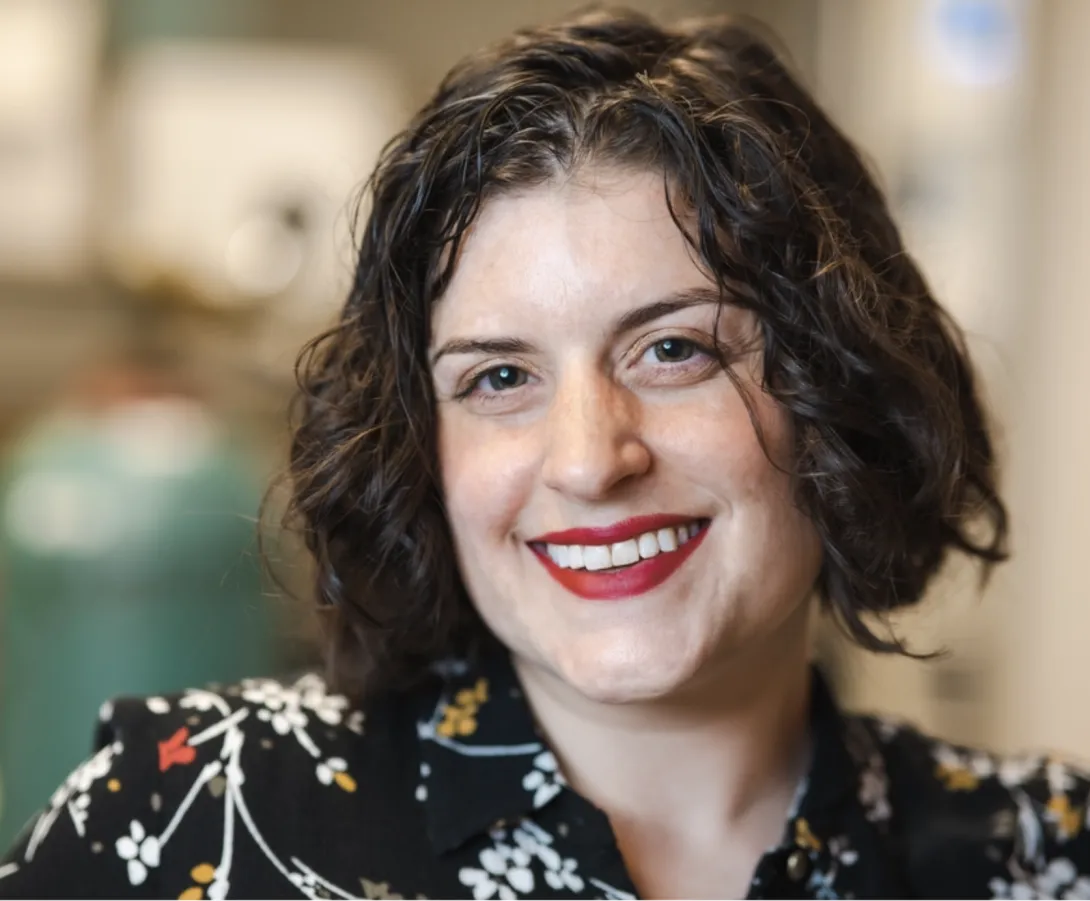
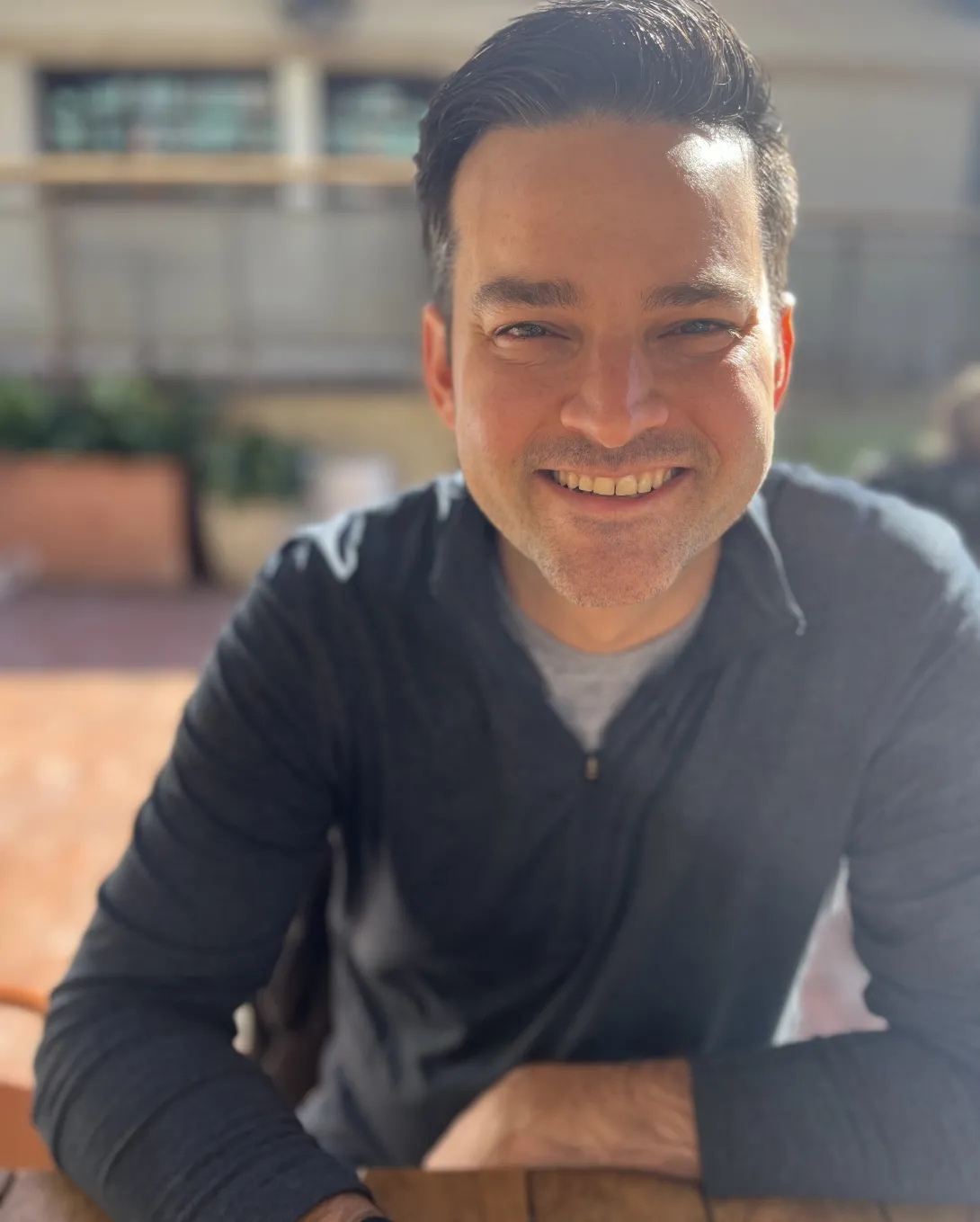
The College of Sciences has named four faculty members — Isaiah Bolden, Jennifer Glass, Alex Robel, and Yuanzhi Tang — from the School of Earth and Atmospheric Sciences (EAS) to newly endowed positions. The awards recognize their leadership in climate, sustainability, and environmental sciences.
“These endowments are allowing stellar early and mid-career faculty to amplify their educational and research activities,” says EAS Chair Jean Lynch-Stieglitz. “We are grateful to reward their achievements and ensure they can continue to contribute at a high level to the ongoing growth of Georgia Tech’s new Environmental Science B.S. program and the School’s research profile in climate and sustainability.”
Jean “Chris” Purvis Early Career Award: Isaiah Bolden
EAS Assistant Professor Isaiah Bolden’s research focuses on providing foundational data needed for climate and sustainability science in vulnerable coastal environments. He and his team in the Chemical Oceanography – Observations and Outreach Lab study chemical fingerprints preserved in coastal waters, corals, and shells to provide early warning indicators and mitigation strategies to preserve biodiversity and ecosystem services.
“I am most excited by the award’s ability to provide the flexible, sustained support necessary to bridge the gap between academic discovery and community impact,” he says. “With this endowment, I can pursue high-risk, high-reward research questions and dedicate resources to long-term, community-based projects. It directly empowers my drive to put science to work as a tool for environmental policymaking and cultural preservation.”
Bolden plans to direct the funds to support marine science curricula for coastal Georgia middle and high school students, paid undergraduate internships, specialized sample analyses, and travel logistics.
New research: Bolden’s group is actively pioneering the use of coastal Georgia oyster shells as novel natural archives of environmental change. Similar to tropical corals, the oyster shells provide high-resolution data on local water quality, pollution, and climate shifts. This work is intended to dovetail with Bolden’s coastal community-based partnerships, including the Ladies and Lads in Lab Coats program, which provides students with STEM exposure and enables them to collect and analyze data that documents their region’s environmental history.
Jean “Chris” Purvis Professorship: Jennifer Glass
EAS Professor Jennifer Glass drives new research at the intersection of environmental microbiology and climate science. The Glass Lab investigates microorganisms that produce and consume greenhouse gases — focusing on the chemical-level mechanisms behind how these gases are created and destroyed — with the ultimate aim of harnessing biological processes to address some of the urgent environmental challenges facing humanity. One major focus of her research is the vast reserves of methane hydrate found beneath the continental margin seafloor, representing the largest natural gas resource on Earth.
“I’m incredibly thankful to the donor and the Institute,” says Glass, who is also the EAS associate chair for Undergraduate Affairs. “This support arrives at a critical time for environmental science and allows me to pursue new opportunities that would otherwise be out of reach.”
She plans to use the funds to attend key conferences, build new collaborations, and support student engagement in upcoming initiatives.
New research: The Glass Lab is exploring environmentally friendly ways to extract and recycle rare earth elements — critical minerals used in batteries and electric vehicles. By studying marine microbes, which are less understood than their soil counterparts, the team aims to develop green biotechnology alternatives to current mining practices.
Jean “Chris” Purvis Early Career Award: Alex Robel
EAS Associate Professor and Rising Tide Director Alex Robel combines physics, applied mathematics, and ocean sciences to understand how climate changes are impacting Earth’s largest ice sheets and glaciers. His research lab, the GT Ice and Climate Group, focuses on developing computational models of ice sheet melt to predict future sea level rise. In partnership with coastal communities, they leverage those predictions to help make city streets more resilient to flooding.
“This award helps me pursue more opportunities to engage closely with community partners, using climate information to make concrete improvements in their infrastructure,” explains Robel.
Specific plans for the funds include enhancing pilot projects in coastal resilience, including the Community Hubs for Optimizing Resilience (CHORUS) initiative. Using building-scale flood models, CHORUS will help communities select potential infrastructure interventions to mitigate future flooding that threatens valued community assets.
New research: Robel is launching a project to use machine learning methods to improve the representation of small-scale processes in ice sheet computational models. These methods will help his group blend an understanding of how ice flows and fractures, based on basic physical principles, with real-world measurements of crevasse formation on ice sheets.
Georgia Power Professorship: Yuanzhi Tang
EAS Professor Yuanzhi Tang is the founding director of the Center for Critical Mineral Solutions and associate director, Strategic Partnerships and Engagement for the Brook Byers Institute for Sustainable Systems. Her research integrates geochemistry, environmental engineering, and sustainability science to advance a circular economy for critical minerals, from resource discovery and recovery to recycling and reuse.
The Tang Research Group investigates the fundamental chemical, geological, and biological processes that control the transformation and mobility of critical elements across natural and engineered environments. Her work directly informs the development of low-impact extraction technologies and sustainable supply chains essential for clean energy transition.
“The Georgia Power Professorship provides support for building partnerships across academia and industry partners to accelerate innovation in critical minerals,” says Tang. “It enables us to link fundamental geochemical and geological science with real-world applications that strengthen both energy security and environmental stewardship.”
Tang plans to use the funds to expand student participation and interdisciplinary collaborations with academic and industry partners — positioning Georgia and the broader Southeast as a leader in sustainable mineral innovation.
New research: Tang’s research team is developing sustainable methods for the extraction and separation of critical minerals from alternative and waste resources. By coupling molecular-scale characterization with rational engineering design, her team aims to transform waste byproducts into valuable sources of critical elements while minimizing environmental impacts.
About the Purvis Endowment
The Jean “Chris” Purvis Endowed Awards are supported by the generosity of the late J. Chris Purvis, M.D. (Applied Biology 1969), a psychiatrist and neurologist who specialized in juvenile and adolescent behavioral psychiatry.
About the Georgia Power Professorship
The Georgia Power Professorship was established through the generosity of Georgia Power, which funds several endowed professorships at Georgia Tech to support faculty in fields like energy, science, sustainability, and engineering.
News Contact
Laura S. Smith, writer