

Flooding dominated the headlines of summer 2025. Atypical storms and rising rivers in the Texas Hill Country washed away an entire summer camp. Glacial snow melt, combined with flash river floods, caused hundreds of deaths in Pakistan. As the Atlantic hurricane season hits its peak, Americans wait to see if another storm may be as unexpectedly devastating as 2024’s Hurricane Helene.
Flooding can be an existential threat, affecting everything from infrastructure to health. Georgia Tech researchers are developing solutions to monitor and forecast flooding, as well as restore ecosystems to prevent future flooding. These efforts support communities’ resilience in the face of climate change and keep the U.S. secure.
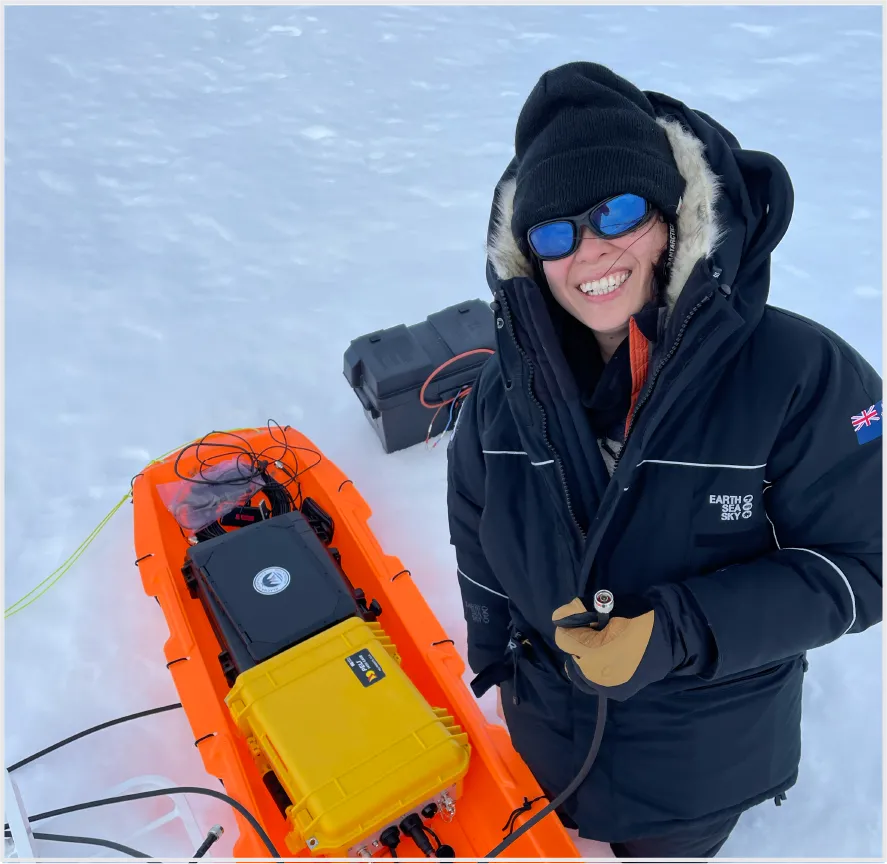
Winnie Chu
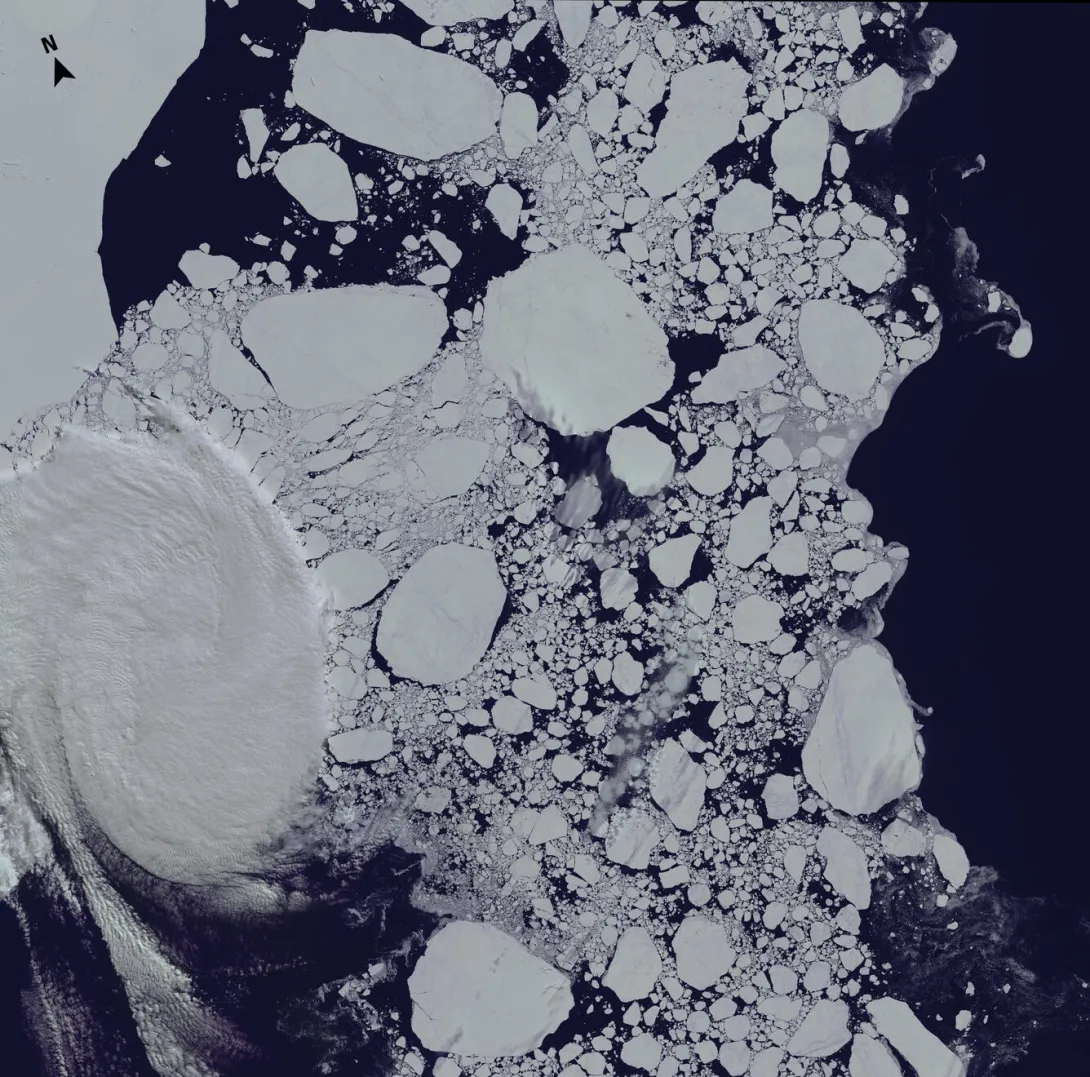
The Ross Archipelago near the McMurdo Station in Antarctica. (Credit: USGS)
Covering 98% of the continent and spanning more than 5.4 million square miles, the Antarctic ice sheet is the largest single mass on Earth. Georgia Tech’s Winnie Chu is going to map it.
Chu, an assistant professor in the School of Earth and Atmospheric Sciences has been awarded a $770,000 CAREER grant from the National Science Foundation (NSF) to create the first-ever comprehensive map of temperatures at the bottom of the ice sheet — a map that will span the entire Antarctic continent.
The NSF Faculty Early Career Development Program is a five-year grant designed to help promising researchers establish a foundation for a lifetime of leadership in their field. Known as CAREER awards, the grants are NSF’s most prestigious funding for early-career faculty.
In total, the Antarctic ice sheet holds enough water to raise global sea levels by over 200 feet — more than 50 feet higher than the top of Tech Tower. Climate models help predict how much of this ice may melt in the coming years, providing critical safety and planning information for coastal communities. However, researchers have limited knowledge of temperatures at the base of the ice sheet — miles beneath the surface — and these temperatures play a critical role in melting.
“Our research addresses this critical gap in Antarctic ice sheet modeling,” Chu explains. “If temperatures at the base are warm enough, the ice can melt and lubricate the interface.” The result? The surface acts like a slip-and-slide, carrying ice toward the ocean and accelerating melt.
“It is crucial that we can accurately predict this behavior,” Chu says. “This map will be an essential step forward in refining our climate models for the safety of coastal communities, for infrastructure planning, and for climate adaptation worldwide.”
Mapping miles-thick ice
The process isn’t as simple as measuring the temperature with a thermometer though. The Antarctic ice sheet is, on average, over a mile thick and can range up to three miles thick.
Chu, who leads the Polar Geophysical Simulation Lab at Georgia Tech, will combine 20 years of radar data — the result of multiple international polar programs — and leverage a technique called “radar sounding,” which analyzes the echoes of airborne radar measurements. The brightness and shape of the echoes can reveal clues about subglacial meltwater and temperatures. To complete the picture, Chu will use cutting-edge generative artificial intelligence (AI) models.
“Innovations in generative AI are part of what makes this research possible,” says Chu, “but the driving force is the data collected by these long-term research studies. AI can help complete the picture — but only because that data exists.”
Preparing for the future
Chu aims for the temperature map to improve the parameterization of climate models and ice sheet projections. This will enable better predictions of future melt and help scientists assess areas that may be particularly vulnerable.
She hopes that the map will drive further advances in polar science. “Our datasets and radar observations will be open access, meaning they’ll be available for all researchers to use,” Chu shares. “We’ll also be sharing the AI processing codes that we develop and the enhanced ice sheet model outputs.”
Additionally, the research will train the next generation of climate scientists through developing educational programs for high schoolers, empowering and engaging students nationwide with hands-on polar science and AI applications.
“This research is about more than just mapping Antarctica — it’s about building tools that help us prepare for the future,” Chu says. “By making our data and models openly available, and by engaging students in the science behind climate change, we’re not only advancing polar research — we’re empowering the next generation to carry it forward.”
News Contact
Written by Selena Langner

Researchers across Georgia Tech are joining forces to explore the brain — advancing science, technology, and society through interdisciplinary collaboration.
The brain is the most intricate system known to science — billions of cells forming dynamic networks that allow us to think, feel, move, and adapt. Yet despite decades of research, much about how the brain works remains a mystery. At the same time, neurological and neuropsychiatric conditions are on the rise, affecting more than one-third of the global population and costing trillions in healthcare and lost productivity.
Understanding the brain is key to unlocking human health and flourishing. The need has never been more urgent, but this challenge is too vast for any single discipline to solve alone.
That’s why Georgia Tech recently launched the Institute for Neuroscience, Neurotechnology, and Society (INNS). A step toward a more connected, collaborative future, INNS brings together experts from across Georgia Tech’s seven colleges and the Georgia Tech Research Institute (GTRI) to study the brain in ways that connect scientific discovery with technological innovation and real-world societal needs.
INNS supports research that crosses traditional academic boundaries. As an Interdisciplinary Research Institute (IRI), it builds community, fosters collaboration, and fills critical gaps in education, professional development, and research infrastructure.
“Georgia Tech has a long-standing culture of interdisciplinary collaboration — it’s in our DNA,” says INNS Executive Director Chris Rozell. Rozell also serves as Julian T. Hightower Chaired Professor in the School of Electrical and Computer Engineering. “INNS builds on that strength to create a space where breakthroughs in neuroscience and neurotechnology can move from lab to life, impacting real people in real ways.”
A Community Built to Collaborate
INNS is home to a growing network of faculty, students, and research centers spanning the full spectrum of Georgia Tech’s research expertise. This diversity is not just a feature, it’s the foundation.
That foundation was laid over decades of growth, vision, and grassroots momentum. Georgia Tech welcomed its first neuroscience-focused faculty member in 1990, sparking a steady expansion of brain-related research across campus. As more faculty joined and new focus areas emerged, a vibrant, cross-disciplinary community began to take shape.
In 2014, that community organized under the name GT Neuro, a grassroots initiative that united researchers who shared a passion for understanding the brain. This collective energy led to new educational programs, including the launch of Georgia Tech’s undergraduate neuroscience major in the College of Sciences.
“Our undergraduate students absolutely love teaching others about Neuroscience,” said Christina Ragan, director of Outreach for the Undergraduate Neuroscience Program and senior academic professional in the School of Biological Sciences. “I'm really excited to explore ways for INNS to connect our neuroscience community at Tech with the public.”
By 2023, the Neuro Next Initiative launched to bring together leaders from across campus and chart a strategic path forward — the result of nearly two years of community-driven planning to formalize and expand Georgia Tech’s neuroscience ecosystem.
“The launch of INNS has built on the momentum of the Neuro Next Initiative, which ignited crucial conversations and fostered new collaborations between researchers at GTRI and Georgia Tech faculty,” says Tabitha Rosenbalm, GTRI senior research engineer. “The remarkable demonstration at Interface Neuro — witnessing a quadriplegic man walk and communicate thanks to innovative research — underscores the transformative breakthroughs possible when academic and applied researchers unite. INNS is uniquely positioned to serve as a catalyst, propelling Atlanta, Georgia Tech, and GTRI as national leaders in neurotechnology, driving advancements in both human health and engineering innovation.”
INNS is also helping shape the future of education. A new interdisciplinary Ph.D. program in neuroscience and neurotechnology welcomed its first cohort this fall, and INNS is poised to support it with professional development, research opportunities, and community engagement.
Breaking Boundaries to Advance Brain Science
Whether it’s developing neurotechnologies, designing therapeutic environments, or exploring the ethical implications of brain research, INNS is here to support work that spans fields and impacts lives.
“To responsibly address the societal and human impacts of advances in neuroscience and neurotechnology, we first need to understand them,” said Margaret Kosal, professor and director of Graduate Students in the Ivan Allen College of Liberal Arts. “That requires real and substantive collaboration beyond traditional engineering or biology labs.”
One example of INNS in action is the Smart Transitional Home Lab, a project funded by the inaugural INNS/Shepherd Center Seed Grant. This initiative brings together experts in architecture, inclusive design, neuroengineering, and rehabilitation to prototype environments that actively support stroke recovery, blending rigorous research with human-centered design.
“The establishment of INNS creates a powerful platform where diverse minds, from neuroscience to architecture to rehabilitation, can converge around a shared mission to advance human health,” says Hui Cai, professor in the School of Architecture, executive director of the SimTigrate Design Center, and co-leader of the project. “It enables interdisciplinary work with the potential to transform lives and redefine how we design for healing and recovery.”
“From whole brain recordings, to mapping the connectome, to the incredible advances in artificial intelligence, it's never been a more exciting time to study the mind and brain,” says Bob Wilson, director of the Center of Excellence for Computation and Cognition and associate professor in the School of Psychology. “I'm extremely excited for INNS to act as a central hub, building the neuroscience community at Georgia Tech and beyond.”
Join Us
INNS is more than an institute, it’s a growing, vibrant community of researchers, educators, students, and partners. Together, we’re working to understand the brain, develop technologies that improve lives, and ensure those innovations serve society responsibly.
Whether you're a student, researcher, policymaker, or simply curious about the brain, INNS is your gateway to interdisciplinary neuroscience at Georgia Tech. Get involved at neuro.gatech.edu.
News Contact
Audra Davidson
Research Communications Program Manager
Institute for Neuroscience, Neurotechnology, and Society
Institute Communications
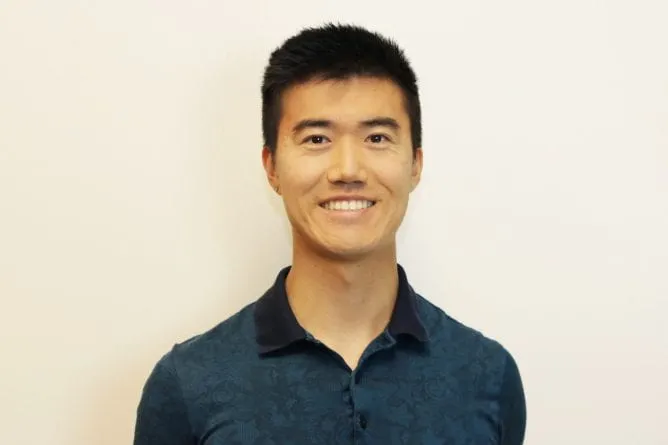
Jaden Wang
Georgia Tech’s Jaden Wang (Zhuochen Wang) has been awarded a NASA Space Technology Graduate Research Opportunity (NSTGRO). The grant supports graduate students who “show significant potential to contribute to NASA’s goal of creating innovative new space technologies for our nation’s science, exploration, and economic future.”
Wang, who is a Ph.D. student in the School of Mathematics and a master’s student in the Daniel Guggenheim School of Aerospace Engineering, will focus on developing mathematically-backed landing solutions for spacecraft.
“I first became interested in powered descent problems during my Fall 2024 internship with NASA’s Human Landing System at Marshall Space Flight Center,” he says. “With my mathematical background in optimization and topology, and my passion for space exploration, I saw this research topic as a perfect fit when my co-advisor Dr. Panagiotis Tsiotras suggested it.”
Wang is co-advised by School of Mathematics Professor and Hubbard Research Fellow John Etnyre alongside Panagiotis Tsiotras, who holds the David and Andrew Lewis Endowed Chair in the Daniel Guggenheim School of Aerospace Engineering and is also associate director at the Institute for Robotics and Intelligent Machines.
In addition to his Georgia Tech advisors, Wang will collaborate with a NASA Subject Matter Expert, who will connect him with the larger technical community. He will perform part of the research as a visiting technologist at multiple NASA centers, giving him the opportunity to work with leading engineers and scientists and share his research results directly with the NASA community.
From abstractions to space exploration
“NASA’s upcoming missions to the Moon, Mars, and beyond need technology that allows spacecraft to land precisely at their intended sites,” says Wang. “My research will focus on the last stage of landing, called powered descent. This stage powers up engines, which guide the spacecraft into a safe landing using a pre-designed trajectory that autopilot follows.”
This means that researchers need to figure out the correct thrust, direction, and timing to reach a landing spot — all while navigating a landing that uses as little fuel as possible.
“A common approach is to treat this as an optimization problem: minimizing fuel consumption with rigid-body physics as constraints to determine the best thrust profile,” Wang explains. “This can work well, but it has drawbacks. It assumes that there is no uncertainty in the system (for example, that the thrust of the engines is applied perfectly) and it simplifies the motion of the spacecraft by treating it as though it’s traveling through flat space instead of on a true curved geometry. Both shortcuts introduce errors — our research aims to address these gaps.”
To improve landing precision, Wang will develop a curved-space geometric mathematical model, which takes into account the curved-space geometry of spacecraft motion rather than assuming flat space. To find a fuel-efficient landing trajectory, Wang will develop the model around optimal covariance steering, a stochastic control problem that both minimizes fuel costs while keeping the uncertainty of the spacecraft's exact landing spot within a safe amount.
It’s a problem that leverages his experience in theoretical math and his background in aerospace engineering. “I’m incredibly honored that NASA finds this research exciting and is supporting my pursuit of it,” he says. “There are so many fascinating engineering problems that could benefit from deeper theoretical scrutiny, especially using abstract machineries not typically covered in an engineering curriculum. I hope this inspires more theoretical researchers and graduate students to explore bridging these gaps.”
News Contact
Written by Selena Langner
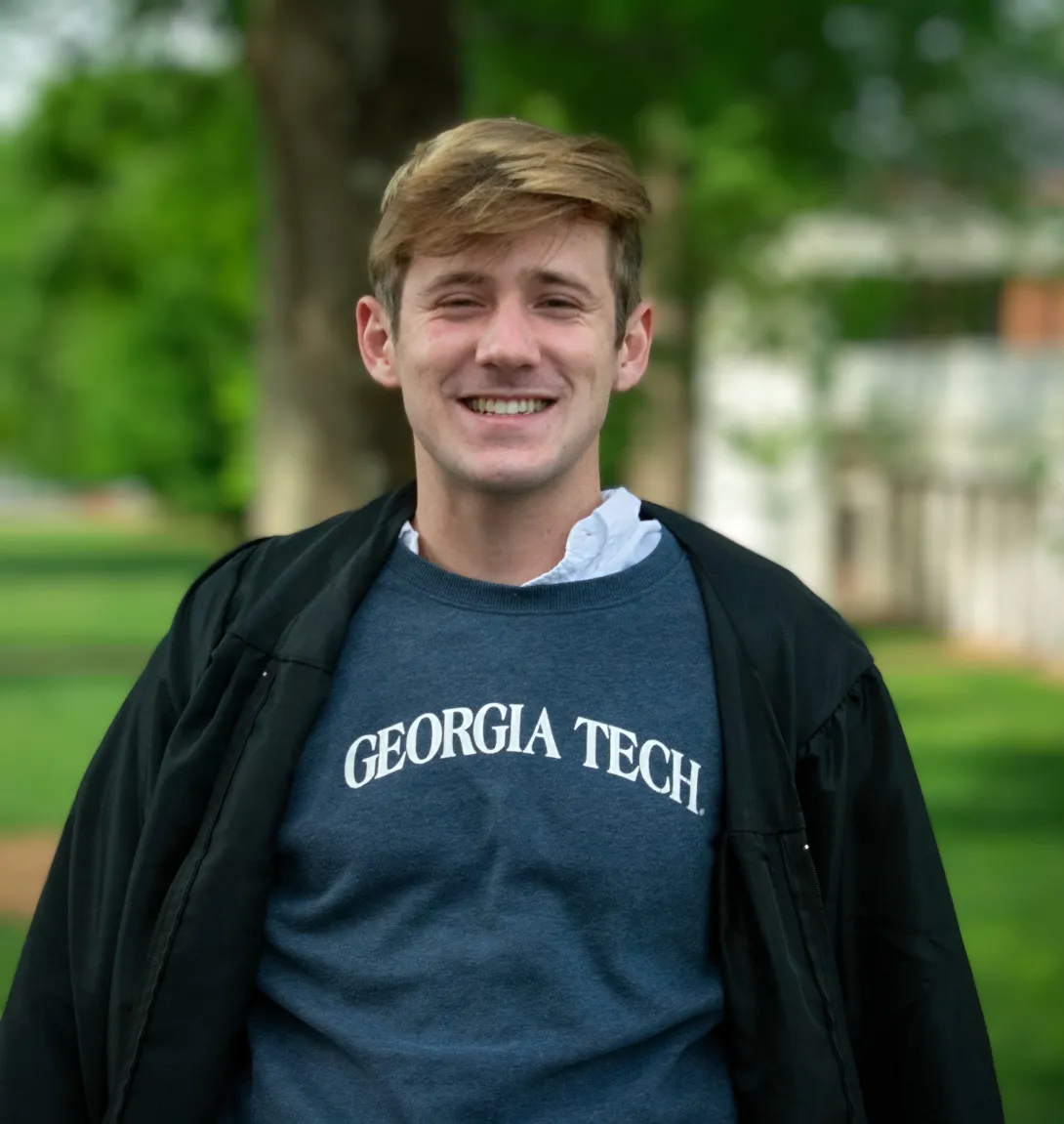
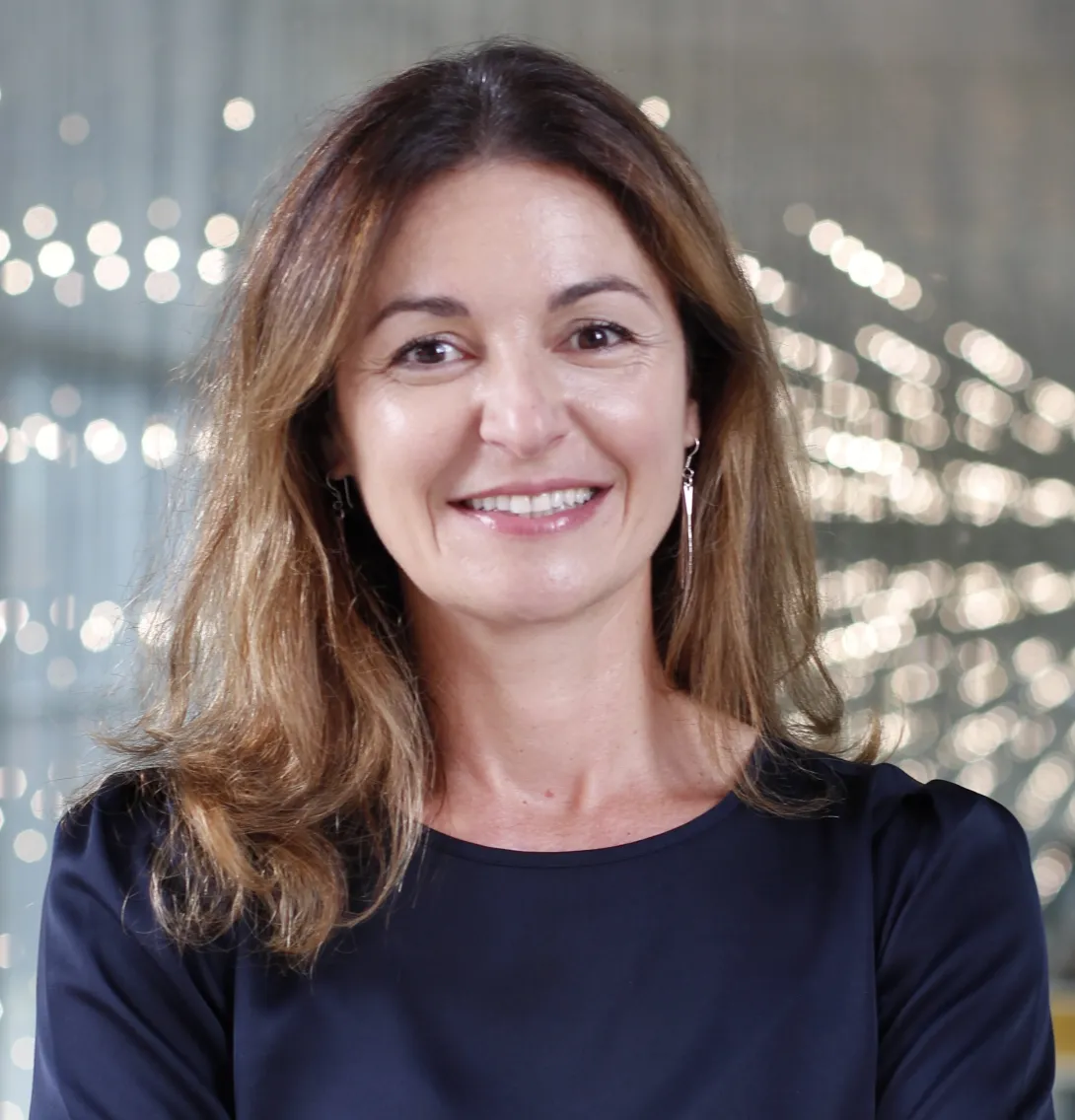
J. Cole Faggert, a Ph.D. student in the School of Physics, has received a NASA FINESST (Future Investigators in NASA Earth and Space Science and Technology) Award to study supermassive black holes and the physics of their plasma flows. His research proposal was one of 24 selected from more than 450 astrophysics submissions this year.
“It’s amazing to be recognized for this research,” says Faggert. “I am grateful to my research group for helping me prepare the proposal and inspiring my ideas.”
Through the FINESST program, NASA’s Science Mission Directorate provides three-year grants for “graduate student-designed and performed research projects that contribute to its science, technology, and exploration goals,” according to the program’s website.
Faggert will serve as the future investigator of the award and will be advised by Feryal Özel, chair and professor in the School of Physics.
“I am very proud that Cole has been selected for the FINESST Fellowship, one of the most competitive graduate awards in the country,” says Özel, who is the principal investigator of the research. “This fellowship will support groundbreaking research on multi-wavelength imaging of black holes — an area central to advancing our understanding of black holes and galaxies. It is especially exciting that this work also contributes directly to the development of our space-based mission at Georgia Tech.”
A key aspect of Faggert’s proposal is its multi-frequency approach, which generates and analyzes images of supermassive black holes using different radio wavelengths. When combined and compared, these multi-frequency observations allow scientists to learn about black holes and explore fundamental physical concepts such as gravity and plasma behavior.
“One of the coolest things about studying cosmic objects like black holes is that you have to work with the information you have,” explains Faggert. “But when you combine several avenues of information, like in multi-frequency radio imaging, you can gain a better understanding of phenomena and under conditions that can’t be replicated on Earth.”
This research aligns with current trends in astrophysics that focus on advanced imaging techniques to broaden the data available on the structure, formation, and behavior of black holes and other celestial objects. According to Faggert, this information can then be contrasted with theoretical simulations, providing insights into fundamental physics and the nature of the universe.
Receiving the FINESST Award is particularly meaningful for Faggert, given his longstanding interest in space and his previous exposure to NASA’s Wallops Flight Facility and Langley Research Center through the Virginia Aerospace Science and Technology Scholars program.
“Being associated with NASA holds a special place in my heart. Over the years, my focus has shifted from designing space missions to studying the science those missions make possible. It is definitely rewarding to come full circle and be recognized by NASA for this research,” he adds.
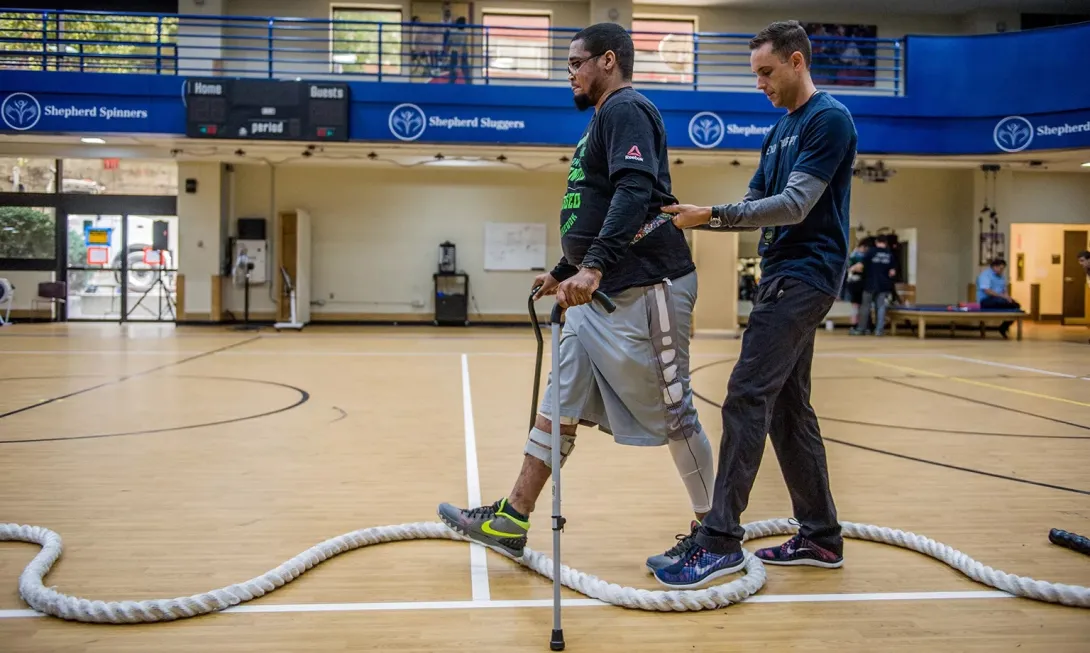
The seed grants will fund projects focused on enhancing wheelchair seating surfaces, supporting stroke patients as they transition home from rehabilitation, assessing lower limb exoskeleton technologies, and exploring the use of AI in remote rehab settings. Photo: Shepherd Center.
Georgia Tech and Shepherd Center recently awarded four seed grants totaling nearly $200,000 to researchers focusing on projects that will advance discoveries in neurorehabilitation, including acquired brain injury, spinal cord injury, multiple sclerosis, chronic pain, and other neurological conditions.
The Georgia Tech-Shepherd Center Seed Grant Program is part of an ongoing partnership between the two institutions that started in 2023 with the goal of advancing rehabilitative patient care and research.
“The seed grant program is intended to stimulate new interdisciplinary research collaborations by providing seed funding to obtain preliminary data or prototypes necessary for the submission of an external grant or industry opportunities,” says Deborah Backus, vice president of Research and Innovation at Shepherd Center. “As two leading research institutions, we know the potential for advancing rehabilitation therapies is even greater when we work together. We look forward to the solutions, treatments, and therapies that emerge from these initial seed grants.”
Experts from both institutions evaluated and scored seed grant applications based on the research’s innovation, approach, and potential for training opportunities, as well as its anticipated impact, prospects for commercial translation, and strategy for securing continued funding. This year, each awardee team received close to $50,000.
“We are very excited to launch this new seed grant program, which will spur ideas and propel research forward,” said Michelle LaPlaca, professor in the Coulter Department of Biomedical Engineering and the Georgia Tech lead of the Collaborative. “The complementary expertise of Georgia Tech and Shepherd Center researchers, combined with the motivation to find solutions for individuals with neurological injury and disability, is a winning formula for innovation.”
"Offering new hope for neurorehabilitation patients requires bringing together interdisciplinary researchers to explore new and creative ideas,” adds Chris Rozell, Julian T. Hightower Chaired professor in the School of Electrical and Computer Engineering and the inaugural executive director of the Institute of Neuroscience, Neurotechnology, and Society (INNS) at Georgia Tech. “I'm excited to see the talent at these world class institutions coming together to develop new solutions for these complex problems."
This year’s seed grants were awarded to the following projects:
- Proof of Concept Development of the Recovery Cushion – Stephen Sprigle, professor, School of Industrial Design and School of Mechanical Engineering, Georgia Tech; Jennifer Cowhig, research physical therapist, Shepherd Center.
- Paving a Smooth Path from Hospital to Home: A Feasibility Study of an Integrated Smart Transitional Home Lab to Support Stroke Rehabilitation Patients’ Transition to Home – John Morris, senior clinical research scientist, Shepherd Center; Hui Cai, professor in the School of Architecture, executive director of the SimTigrate Design Center, Georgia Tech.
- A Comparative Analysis of Lower-Limb Exoskeleton Technology for Non-Ambulatory Individuals with Spinal Cord Injury – Maegan Tucker, assistant professor, School of Electrical and Computer Engineering and School of Mechanical Engineering, Georgia Tech; Nicholas Evans (AP 2023), clinical research scientist, Shepherd Center.
- Improving Accessibility and Precision in Neurorehabilitation at the Point of Care with AI-Driven Remote Therapeutic Monitoring Solutions – Brad Willingham, clinical research scientist, director of Multiple Sclerosis Research, Shepherd Center; May Dongmei Wang, professor, Wallace H. Coulter Department of Biomedical Engineering, Georgia Tech.
News Contact
Kerry Ludlam
Director of Communications
Shepherd Center
Audra Davidson
Research Communications Program Manager
Institute for Neuroscience, Neurotechnology, and Society

An illustration of the binary black hole merger. (Image credit: Raul Perez and Davis Newell)
The Laser Interferometer Gravitational-Wave Observatory (LIGO)’s LIGO-Virgo-KAGRA (LVK) collaboration has detected an extremely unusual binary black hole merger — a phenomenon that occurs when two black holes are pulled into each other's orbit and combine. Announced yesterday in a California Institute of Technology press release, the binary black hole merger, GW231123, is the largest ever detected with gravitational waves.
Before merging, both black holes were spinning exceptionally fast, and their masses fell into a range that should be very rare — or impossible.
“Most models don't predict black holes this big can be made by supernovas, and our data indicates that they were spinning at a rate close to the limit of what’s theoretically possible,” says Margaret Millhouse, a research scientist in the School of Physics who played a key role in the research. “Where could they have come from? It raises interesting questions.”
A binary black hole merger absorbs characteristics from both of the contributors, she adds. “As a result, this is not only the most massive binary black hole ever seen but also the fastest-spinning binary black hole confidently detected with gravitational waves.”
“GW231123 is a record-breaking event,” says School of Physics Professor Laura Cadonati, who has been a member of the LIGO Scientific Collaboration since 2002. “LIGO has been observing the cosmos for 10 years now. This discovery underscores that there is still so much that this instrument can help us learn.”
A Cosmic View
The findings challenge current theories on how smaller black holes form, says School of Physics Assistant Professor and LIGO collaborator Surabhi Sachdev. Smaller black holes are the result of supernovae: dying and collapsing stars. During that collapse, explosions can tear apart or eject part of the star’s mass — limiting the size of the black hole that forms.
“Black holes from supernovae can weigh up to about 60 times the mass of our Sun,” she says. “The black holes in this merger were likely the mass of hundreds of suns.”
Because of its size, GW231123 also allowed the team to study the merger in unprecedented detail. “LIGO has observed scores of black hole mergers,” says Cadonati. “Of these, GW231123 has provided us with the clearest view of the ‘grand finale’ of a merger thus far. This adds a new clue to solve the puzzle that are black holes, including their origins and properties.”
“While we saw that our expectations matched the data, the extreme nature of this event pushed our models to their limits,” Millhouse adds. “A massive, highly spinning system like this will be of interest to researchers who study how binary black holes form.”
Decoding a Split-Second Signal
Millhouse and School of Physics Postdoctoral Fellow Prathamesh Joshi used Einstein’s equations for general relativity to confirm LIGO’s detections.
To find black holes, LIGO measures distortions in spacetime — ripples that are created when two black holes collide. These patterns in gravitational waves can be used to find the signature signal of black hole collisions.
“In this case, the signal lasted for just one-tenth of a second, but it was very clear,” says Joshi. "Previously, we designed a special study to detect these interesting signals, which accounted for all the unusual properties of such massive systems — and it paid off!”
“To ensure it wasn’t noise, the Georgia Tech team first reconstructed the signal in a model-agnostic way,” Millhouse adds. “We then compared those reconstructions to a model that uses Einstein's equations of general relativity, and both reconstructions looked very similar, which helped confirm that this highly unusual phenomenon was a genuine detection.”
Sachdev says that seeing the signal at both LIGO Observatories — placed in Hanford, Washington and Livingston, Louisiana — was also critical. “These short signals are very hard to detect, and this signal is so unlike any of the other binary black holes that we've seen before,” she says. “Without both detectors, we would have missed it.”
A Decade of Discovery
While the team has yet to determine how the original black holes formed, one theory is that they may have resulted from mergers themselves. “This could have been a chain of mergers,” Sachdev explains. “This tells us that they could have existed in a very dense environment like a nuclear star cluster or an active galactic nucleus.” Their spins provide another clue as spinning is a characteristic usually seen in black holes resulting from a merge.
The team adds that GW231123 could provide clues on how larger black holes are formed — including the mysterious supermassive black holes at the center of galaxies.
“Gravitational wave science is almost a decade old, and we're still making fundamental discoveries,” says Millhouse. “It’s exciting that LIGO is continuing to detect new phenomena, and this is at the edge of what we've seen thus far. There's still so much we can learn.”
The team expects to update their catalogue of black holes in August 2025, which will provide another window into how this exceptionally heavy black hole might fit into the universe, and what we can continue to learn from it.
Funding: The LIGO Laboratory is supported by the U.S. National Science Foundation and operated jointly by Caltech and MIT.
News Contact
Written by Selena Langner
Contact: Jess Hunt-Ralston
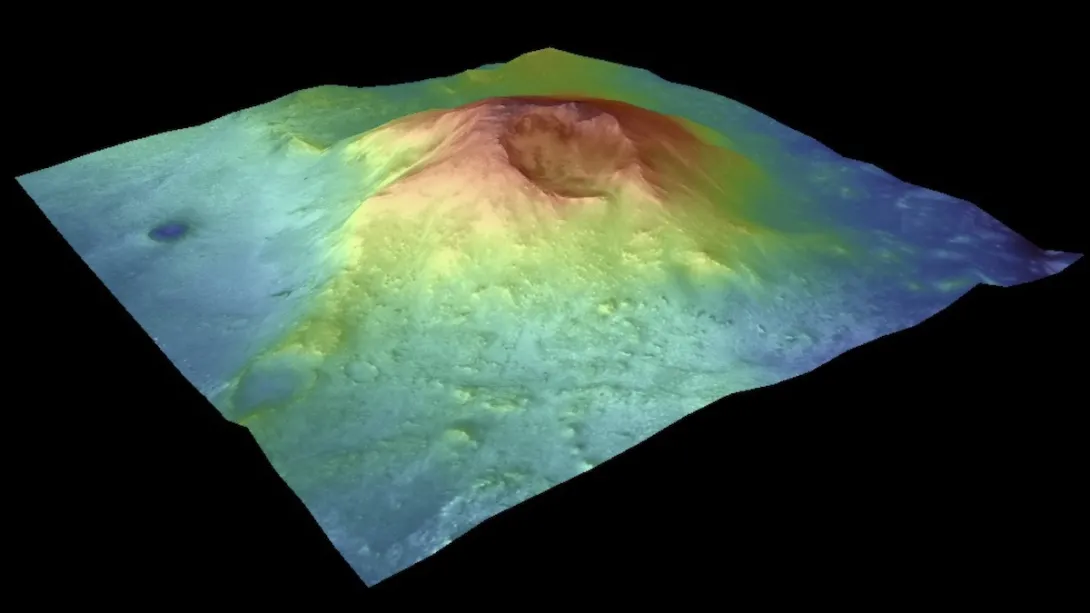
A view of Jezero Mons from the publication. The mountain is ~21 km across.
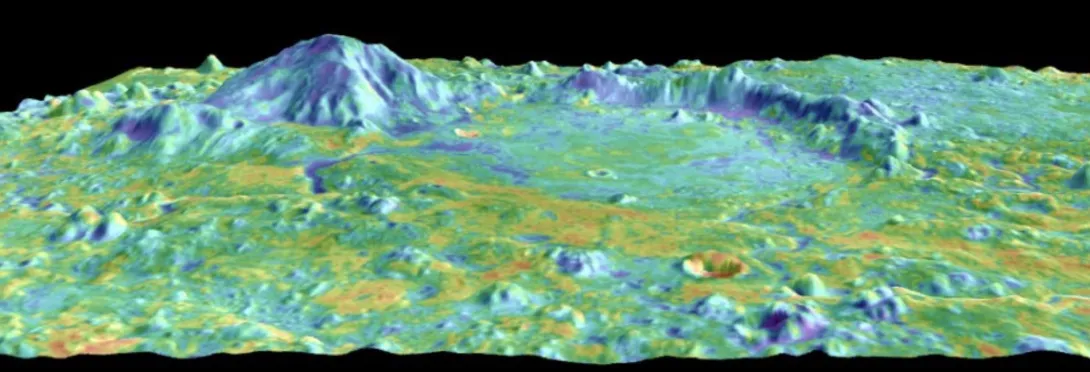
An image from the publication showing an oblique view from north-northeast of Jezero crater, with topography exaggerated ~3x
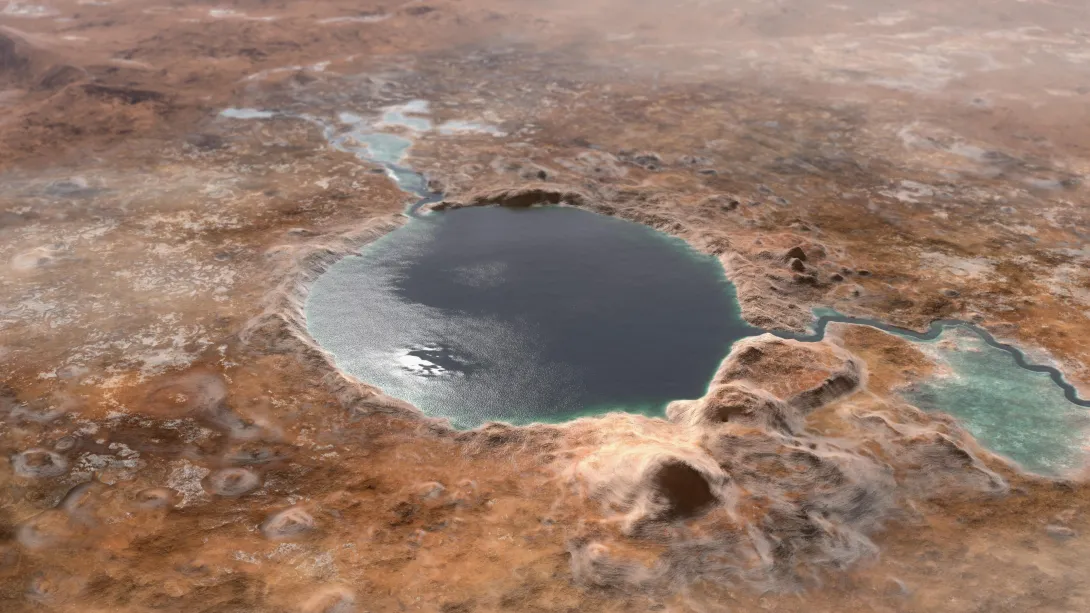
An illustration of Jezero Crater as it may have looked billions of years go on Mars, when it was a lake. Jezero Mons is visible on the front right-side of the crater rim. (Credit: NASA)
Georgia Tech scientists have uncovered evidence that a mountain on the rim of Jezero Crater — where NASA’s Perseverance Rover is currently collecting samples for possible return to Earth — is likely a volcano. Called Jezero Mons, it is nearly half the size of the crater itself and could add critical clues to the habitability and volcanism of Mars, transforming how we understand Mars’ geologic history.
The study, “Evidence for a composite volcano on the rim of Jezero crater on Mars,” was published this May in the Nature-family journal Communications Earth & Environment, and underscores how much we have left to learn about one of the most well-studied regions of Mars.
Lead author Sara C. Cuevas-Quiñones completed the research as an undergraduate during a summer program at Georgia Tech; she is now a graduate student at Brown University. The team also included corresponding author Professor James J. Wray (School of Earth and Atmospheric Sciences), Assistant Professor Frances Rivera-Hernández (School of Earth and Atmospheric Sciences), and Jacob Adler, then a postdoctoral fellow at Georgia Tech and now an assistant research professor at Arizona State University.
“Volcanism on Mars is intriguing for a number of reasons — from the implications it has on habitability, to better constraining the geologic history,” Wray says. “Jezero Crater is one of the best studied sites on Mars. If we are just now identifying a volcano here, imagine how many more could be on Mars. Volcanoes may be even more widespread across Mars than we thought.”
A mountain in the margins
Wray first noticed the mountain in 2007, while considering Jezero Crater as a graduate student.
“I was looking at low-resolution photos of the area and noticed a mountain on the crater’s rim,” he recalls. “To me, it looked like a volcano, but it was difficult to get additional images.” At the time, Jezero Crater was newly discovered, and imaging focused almost entirely on its intriguing water history, which is on the opposite side of the 28-mile-wide crater.
Then, Jezero Crater, due to these lake-like sedimentary deposits, was selected as the landing spot for the 2020 Perseverance Rover — an ongoing NASA mission seeking signs of ancient Martian life and collecting rock samples for possible return to Earth.
However, after landing, some of the first rocks Perseverance encountered were not the sedimentary deposits one might expect from a previously-flooded area — they were volcanic. Wray suspected he might know the origin of these rocks, but to make a case for it, he would need to show that the mountain on the edge of Jezero Crater could indeed be a volcano.
A new researcher — and old data
The opportunity presented itself several months after Perseverance landed when Cuevas-Quiñones applied to a Summer Research Experience for Undergraduates (REU) program hosted by the School of Earth and Atmospheric Sciences to work with Wray.
“A previous study led by Briony Horgan (professor of planetary science at Purdue University) had also suggested that Jezero Mons could be volcanic,” Cuevas-Quiñones says. “I began wondering if there was a way to home in on these suspicions.”
The team partnered with study coauthor Rivera-Hernández, who specializes in characterizing the surface of planets and their habitability. They decided to use datasets gathered from spacecraft orbiting Mars to compare the properties of Jezero Mons to other, known, volcanoes. “We can’t visit Mars and definitively prove that Jezero Mons is a volcano, but we can show that it shares the same properties with existing volcanoes — both here on Earth and Mars,” Wray explains.
“We used data from the Mars Odyssey Orbiter, Mars Reconnaissance Orbiter, ExoMars Trace Gas Orbiter, and Perseverance Rover, all in combination to puzzle this out,” he adds. “I think this shows that these older spacecraft can be extremely valuable long after their initial missions end — these old spacecraft can still make important discoveries and help us answer tricky questions.”
For Cuevas-Quiñones, it also underscores the importance of REU programs and opportunities for undergraduates. “I was an undergraduate student at the time, and this was my first time conducting research,” she says. “It was fascinating to learn how different data sets could be used to decode the origin of a landscape. After Jezero Mons, it became clear to me that I would continue to study Mars and other planetary bodies.”
The search for life — and determining Mars’ age
The discovery makes the crater even more intriguing in the search for past life on Mars. A volcano so close to watery Jezero Crater could add a critical source of heat on an otherwise cold planet, including the potential for hydrothermal activity — energy that life could use to thrive.
This type of system also holds interest for Mars as a whole. “The coalescence of these two types of systems makes Jezero more interesting than ever,” shares Wray. “We have samples of incredible sedimentary rocks that could be from a habitable region alongside igneous rocks with important scientific value.” If returned to Earth, igneous rocks can be radioisotope dated to know their age very precisely. Dating the Jezero Crater samples could be used to calibrate age estimates, providing an unprecedented window into the geologic history of the planet.
The take home message? “Mars is the best place we have to look in our solar system for signs of life, and thanks to the Perseverance Rover collecting samples in Jezero, the United States has samples from the best rocks in the best place on Mars,” Wray says. “If these samples are returned to Earth, we can do incredible, groundbreaking science with them.”
DOI: https://doi.org/10.1038/s43247-025-02329-7
Funding: Cuevas-Quiñones was supported by Georgia Tech’s 2021 Research Experience for Undergraduates program sponsored by NSF and 3M corporation. Wray was supported by NASA funding for Co-Investigators on HiRISE and CaSSIS. CaSSIS is a project of the University of Bern and funded through the Swiss Space Office via ESA’s PRODEX program. The instrument hardware development was also supported by the Italian Space Agency (ASI) (ASI-INAF agreement 2020-17-HH.0), INAF/Astronomical Observatory of Padova, and the Space Research Center (CBK) in Warsaw. Support from SGF (Budapest), the University of Arizona Lunar and Planetary Lab, and NASA are also gratefully acknowledged. Operation support from the UK Space Agency is also acknowledged.
News Contact
Written by Selena Langner

By unlocking a new type of origami-inspired folding, a recent physics study could lead to advances in everything from heart stents to airplane wings. (Adobe Stock)
Origami — the Japanese art of folding paper — could be at the next frontier in innovative materials.
Practiced in Japan since the early 1600s, origami involves combining simple folding techniques to create intricate designs. Now, Georgia Tech researchers are leveraging the technique as the foundation for next-generation materials that can both act as a solid and predictably deform, “folding” under the right forces. The research could lead to innovations in everything from heart stents to airplane wings and running shoes.
Recently published in Nature Communications, the study, “Coarse-grained fundamental forms for characterizing isometries of trapezoid-based origami metamaterials,” was led by first author James McInerney, who is now a NRC Research Associate at the Air Force Research Laboratory. McInerney, who completed the research while a postdoctoral student at the University of Michigan, was previously a doctoral student at Georgia Tech in the group of study co-author Zeb Rocklin. The team also includes Glaucio Paulino (Princeton University), Xiaoming Mao (University of Michigan), and Diego Misseroni (University of Trento).
“Origami has received a lot of attention over the past decade due to its ability to deploy or transform structures,” McInerney says. “Our team wondered how different types of folds could be used to control how a material deforms when different forces and pressures are applied to it” — like a creased piece of cardboard folding more predictably than one that might crumple without any creases.
The applications of that type of control are vast. “There are a variety of scenarios ranging from the design of buildings, aircraft, and naval vessels to the packaging and shipping of goods where there tends to be a trade-off between enhancing the load-bearing capabilities and increasing the total weight,” McInerney explains. “Our end goal is to enhance load-bearing designs by adding origami-inspired creases — without adding weight.”
The challenge, Rocklin adds, is using physics to find a way to predictably model what creases to use and when to achieve the best results.
Deformable solids
Rocklin, a theoretical physicist and associate professor in the School of Physics at Georgia Tech, emphasizes the complex nature of these types of materials. “If I tug on either end of a sheet of paper, it's solid — it doesn’t separate,” he explains. “But it's also flexible — it can crumple and wave depending on how I move it. That’s a very different behavior than what we might see in a conventional solid, and a very useful one.”
But while flexible solids are uniquely useful, they are also very hard to characterize, he says. “With these materials, it is often difficult to predict what is going to happen — how the material will deform under pressure because they can deform in many different ways. Conventional physics techniques can't solve this type of problem, which is why we're still coming up with new ways to characterize structures in the 21st century.”
When considering origami-inspired materials, physicists start with a flat sheet that's carefully creased to create a specific three-dimensional shape; these folds determine how the material behaves. But the method is limited: only parallelogram-based origami folding, which uses shapes like squares and rectangles, had previously been modeled, allowing for limited types of deformation.
“Our goal was to expand on this research to include trapezoid faces,” McInerney says. Parallelograms have two sets of parallel sides, but trapezoids only need to have one set of parallel sides. Introducing these more variable shapes makes this type of creasing more difficult to model, but potentially more versatile.
Breathing and shearing
“From our models and physical tests, we found that trapezoid faces have an entirely different class of responses,” McInerney shares. In other words — using trapezoids leads to new behavior.
The designs had the ability to change their shape in two distinct ways: "breathing" by expanding and contracting evenly, and “shearing" by deforming in a twisting motion. “We learned that we can use trapezoid faces in origami to constrain the system from bending in certain directions, which provides different functionality than parallelogram faces,” McInerney adds.
Surprisingly, the team also found that some of the behavior in parallelogram-based origami carried over to their trapezoidal origami, hinting at some features that might be universal across designs.
“While our research is theoretical, these insights could give us more opportunities for how we might deploy these structures and use them,” Rocklin shares.
Future folding
“We still have a lot of work to do,” McInerney says, sharing that there are two separate avenues of research to pursue. “The first is moving from trapezoids to more general quadrilateral faces, and trying to develop an effective model of the material behavior — similar to the way this study moved from parallelograms to trapezoids.” Those new models could help predict how creased materials might deform under different circumstances, and help researchers compare those results to sheets without any creases at all. “This will essentially let us assess the improvement our designs provide,” he explains.
“The second avenue is to start thinking deeply about how our designs might integrate into a real system,” McInerney continues. “That requires understanding where our models start to break down, whether it is due to the loading conditions or the fabrication process, as well as establishing effective manufacturing and testing protocols.”
“It’s a very challenging problem, but biology and nature are full of smart solids — including our own bodies — that deform in specific, useful ways when needed,” Rocklin says. “That’s what we’re trying to replicate with origami.”
This research was funded by the Office of Naval Research, European Union, Army Research Office, and National Science Foundation.
News Contact
Written by Selena Langner
Contact: Jess Hunt-Ralston
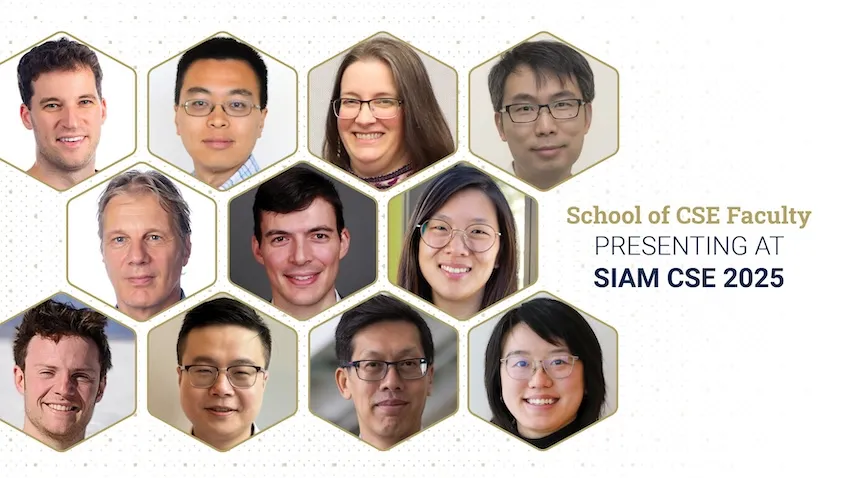
Many communities rely on insights from computer-based models and simulations. This week, a nest of Georgia Tech experts are swarming an international conference to present their latest advancements in these tools, which offer solutions to pressing challenges in science and engineering.
Students and faculty from the School of Computational Science and Engineering (CSE) are leading the Georgia Tech contingent at the SIAM Conference on Computational Science and Engineering (CSE25). The Society of Industrial and Applied Mathematics (SIAM) organizes CSE25, occurring March 3-7 in Fort Worth, Texas.
At CSE25, the School of CSE researchers are presenting papers that apply computing approaches to varying fields, including:
- Experiment designs to accelerate the discovery of material properties
- Machine learning approaches to model and predict weather forecasting and coastal flooding
- Virtual models that replicate subsurface geological formations used to store captured carbon dioxide
- Optimizing systems for imaging and optical chemistry
- Plasma physics during nuclear fusion reactions
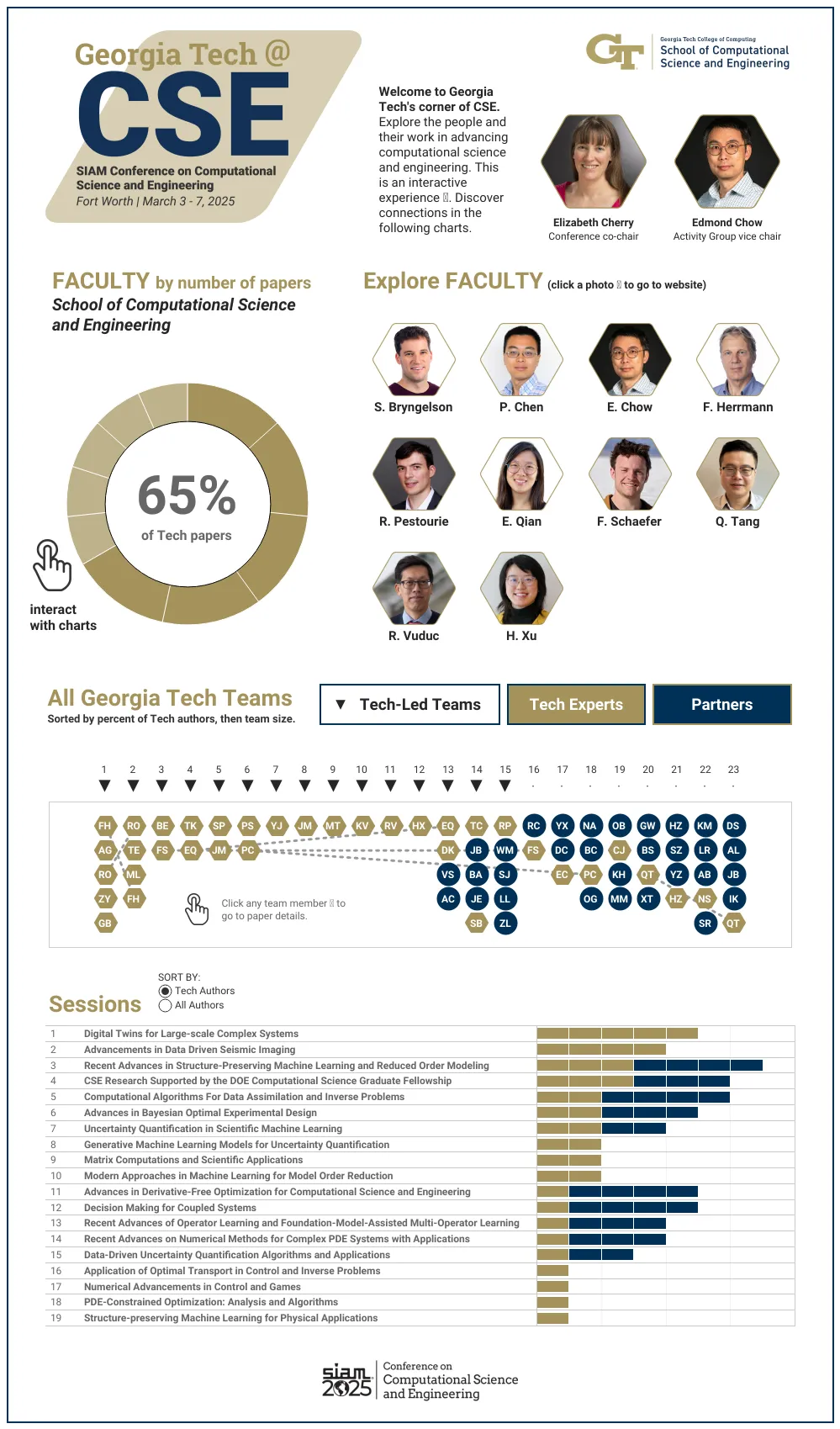
[Related: GT CSE at SIAM CSE25 Interactive Graphic]
“In CSE, researchers from different disciplines work together to develop new computational methods that we could not have developed alone,” said School of CSE Professor Edmond Chow.
“These methods enable new science and engineering to be performed using computation.”
CSE is a discipline dedicated to advancing computational techniques to study and analyze scientific and engineering systems. CSE complements theory and experimentation as modes of scientific discovery.
Held every other year, CSE25 is the primary conference for the SIAM Activity Group on Computational Science and Engineering (SIAG CSE). School of CSE faculty serve in key roles in leading the group and preparing for the conference.
In December, SIAG CSE members elected Chow to a two-year term as the group’s vice chair. This election comes after Chow completed a term as the SIAG CSE program director.
School of CSE Associate Professor Elizabeth Cherry has co-chaired the CSE25 organizing committee since the last conference in 2023. Later that year, SIAM members reelected Cherry to a second, three-year term as a council member at large.
At Georgia Tech, Chow serves as the associate chair of the School of CSE. Cherry, who recently became the associate dean for graduate education of the College of Computing, continues as the director of CSE programs.
“With our strong emphasis on developing and applying computational tools and techniques to solve real-world problems, researchers in the School of CSE are well positioned to serve as leaders in computational science and engineering both within Georgia Tech and in the broader professional community,” Cherry said.
Georgia Tech’s School of CSE was first organized as a division in 2005, becoming one of the world’s first academic departments devoted to the discipline. The division reorganized as a school in 2010 after establishing the flagship CSE Ph.D. and M.S. programs, hiring nine faculty members, and attaining substantial research funding.
Ten School of CSE faculty members are presenting research at CSE25, representing one-third of the School’s faculty body. Of the 23 accepted papers written by Georgia Tech researchers, 15 originate from School of CSE authors.
The list of School of CSE researchers, paper titles, and abstracts includes:
Bayesian Optimal Design Accelerates Discovery of Material Properties from Bubble Dynamics
Postdoctoral Fellow Tianyi Chu, Joseph Beckett, Bachir Abeid, and Jonathan Estrada (University of Michigan), Assistant Professor Spencer Bryngelson
[Abstract]
Latent-EnSF: A Latent Ensemble Score Filter for High-Dimensional Data Assimilation with Sparse Observation Data
Ph.D. student Phillip Si, Assistant Professor Peng Chen
[Abstract]
A Goal-Oriented Quadratic Latent Dynamic Network Surrogate Model for Parameterized Systems
Yuhang Li, Stefan Henneking, Omar Ghattas (University of Texas at Austin), Assistant Professor Peng Chen
[Abstract]
Posterior Covariance Structures in Gaussian Processes
Yuanzhe Xi (Emory University), Difeng Cai (Southern Methodist University), Professor Edmond Chow
[Abstract]
Robust Digital Twin for Geological Carbon Storage
Professor Felix Herrmann, Ph.D. student Abhinav Gahlot, alumnus Rafael Orozco (Ph.D. CSE-CSE 2024), alumnus Ziyi (Francis) Yin (Ph.D. CSE-CSE 2024), and Ph.D. candidate Grant Bruer
[Abstract]
Industry-Scale Uncertainty-Aware Full Waveform Inference with Generative Models
Rafael Orozco, Ph.D. student Tuna Erdinc, alumnus Mathias Louboutin (Ph.D. CS-CSE 2020), and Professor Felix Herrmann
[Abstract]
Optimizing Coupled Systems: Insights from Co-Design Imaging and Optical Chemistry
Assistant Professor Raphaël Pestourie, Wenchao Ma and Steven Johnson (MIT), Lu Lu (Yale University), Zin Lin (Virginia Tech)
[Abstract]
Multifidelity Linear Regression for Scientific Machine Learning from Scarce Data
Assistant Professor Elizabeth Qian, Ph.D. student Dayoung Kang, Vignesh Sella, Anirban Chaudhuri and Anirban Chaudhuri (University of Texas at Austin)
[Abstract]
LyapInf: Data-Driven Estimation of Stability Guarantees for Nonlinear Dynamical Systems
Ph.D. candidate Tomoki Koike and Assistant Professor Elizabeth Qian
[Abstract]
The Information Geometric Regularization of the Euler Equation
Alumnus Ruijia Cao (B.S. CS 2024), Assistant Professor Florian Schäfer
[Abstract]
Maximum Likelihood Discretization of the Transport Equation
Ph.D. student Brook Eyob, Assistant Professor Florian Schäfer
[Abstract]
Intelligent Attractors for Singularly Perturbed Dynamical Systems
Daniel A. Serino (Los Alamos National Laboratory), Allen Alvarez Loya (University of Colorado Boulder), Joshua W. Burby, Ioannis G. Kevrekidis (Johns Hopkins University), Assistant Professor Qi Tang (Session Co-Organizer)
[Abstract]
Accurate Discretizations and Efficient AMG Solvers for Extremely Anisotropic Diffusion Via Hyperbolic Operators
Golo Wimmer, Ben Southworth, Xianzhu Tang (LANL), Assistant Professor Qi Tang
[Abstract]
Randomized Linear Algebra for Problems in Graph Analytics
Professor Rich Vuduc
[Abstract]
Improving Spgemm Performance Through Reordering and Cluster-Wise Computation
Assistant Professor Helen Xu
[Abstract]
News Contact
Bryant Wine, Communications Officer
bryant.wine@cc.gatech.edu