

A recent study by EPIcenter faculty affiliates Joe F. Bozeman III (School of Civil and Environmental Engineering, Georgia Institute of Technology) and Daniel C. Matisoff (Carter School of Public Policy, Georgia Institute of Technology), along with John D. Kim (Carter School of Public Policy, Georgia Institute of Technology) and co-authors Sanya Carley, David M. Konisky, Jeremy J. Michalek, and Destenie Nock, examines U.S. household electric vehicle (EV) ownership and adoption intent beyond upfront costs, focusing on charging access, travel behavior, housing, and demographics. The study utilizes a nationally representative survey of 2,870 households to examine how these factors shape both current EV ownership rates and consumers’ intentions to purchase or lease an EV in the future.
The study finds that EV ownership remains relatively low among households with “median” characteristics — approximately 1% of household vehicles are electric — but increases substantially when households report access to community charging infrastructure. In contrast, single‑vehicle households and households located in states without Tesla dealerships exhibit significantly lower EV ownership rates. When examining adoption intent, the authors find that access to community and workplace charging, trust in the federal government, more liberal political ideology, younger age, and urban residence are consistently associated with higher stated interest in EV adoption. Notably, single‑vehicle households express significantly greater intent to adopt one in the future, despite being less likely to own an EV today. The analysis also reveals that public transit users show elevated EV adoption intent at earlier stages of consideration, suggesting potential complementarities between transit use and personal vehicle electrification.
Read Full Story and listen to a related podcast on the EPIcenter Newspage
News Contact
Priya Devarajan | SEI Communications Program Manager

Marilyn Brown
Modeling how the U.S. can meet changing energy needs — today and tomorrow
An illustrious career focused on understanding the nuances of energy policy through analytics has shaped the career of Marilyn Brown, the Regents & Brook Byers Professor of Sustainable Systems at the Jimmy and Rosalynn Carter School of Public Policy at Georgia Tech.
The oil shortages of the 1970s galvanized Marilyn Brown to focus her graduate research on ways to improve energy security and affordability. This focus launched an impactful career for Brown, currently a Regents & Brook Byers Professor of Sustainable Systems at the Jimmy and Rosalynn Carter School of Public Policy at Georgia Tech.
Along the way she was an Associate Professor of Geography at the University of Illinois, a two-term Presidentially appointed regulator of the Tennessee Valley Authority, and the Energy Engineering Division Director and Program Manager of Oak Ridge National Laboratory’s research on energy efficiency, renewable energy, and the electric grid.
Over the years, Brown has authored seven books, 350 publications, and contributed to the 2007 Intergovernmental Panel on Climate Change (IPCC) assessment reports for which the IPCC shared the 2007 Nobel Peace Prize.
Leading local climate impact efforts
Interested in the physical sciences and mathematics early on, Brown worked on understanding the “diffusion” of innovation: how advances propagate in the energy field.
Her current projects focus on both local and national climate-related challenges. This research has been enriched by surveys of energy service providers, utility regulators, manufacturers, consumers, and low-income households.
Understanding the role of influencers and perceived risks and paybacks, helps optimize energy policies and programs. With this premise in mind, Brown has explored the consequences of high energy bills on households living on the edge. She led the first nationwide evaluation of the world’s largest low-income energy efficiency initiative, the Weatherization Assistance Program. The results documented the magnitude of the problem of inefficient housing nationwide, and the particularly high energy burden of low-income households in the South.
News Contact
Gil Gonzalez || EPIcenter Program Coordinator

A new study by Georgia Tech researchers Brian An, Daein Kang, John Kim, and Moe Kyaw Thu analyzes how national governments describe Small Modular Reactors (SMRs) in official energy policy documents. Using natural language processing (NLP) on more than 800,000 words extracted from 66 national and international energy plans, the authors assess whether SMRs are framed as narrowly technical innovations or as contributors to broader urban energy transitions. Their findings show that SMR discourse remains dominated by references to reactor design, regulation, and safety, while themes central to modern energy planning—such as resilience, urban–rural equity, cogeneration, and diversified energy services—appear inconsistently and with low prominence.
Perhaps most notably, governance‑related concepts such as community engagement, siting justice, and public trust are largely absent from the dominant keyword clusters revealed through TF‑IDF and LDA analysis. This pattern contrasts with long‑standing evidence that nuclear deployment outcomes hinge on procedural fairness, transparency, and risk communication. As cities face rising electricity demand, climate‑driven outages, growing data center loads, and new siting pressures, the lack of urban‑relevant framing in national SMR strategies may limit the technology’s ability to support equitable and resilient energy systems.
The authors conclude that viewing SMRs chiefly as engineering solutions risks missing their potential contributions to multi‑service energy portfolios and resilience planning. They argue that meaningful integration of SMRs into smart energy cities will require a broader policy architecture—one that explicitly addresses governance, cross‑sectoral applications, spatial justice, and local participation. Expanding future analyses to include state, provincial, and municipal policies will also be essential, given that these levels of government oversee land use, community engagement, and emergency management—factors central to nuclear siting and energy justice.
To learn more and listen to a podcast on the paper, please visit the EPIcenter Newspage.
News Contact
Gil Gonzalez || EPIcenter Program Coordinator

Afi Ramadhani, Ph.D. student at the School of Economics and EPIcenter Student Affiliate
Afi Ramadhani, a graduate student in economics and a student affiliate of Georgia Tech’s Energy Policy Innovation Center, has won a prize for the best research paper from the School of Economics. The research developed in the paper was supported by EPIcenter’s Graduate Student Summer Research Program.
The prize recognizes outstanding student research produced within the School and highlights the value of EPIcenter’s sustained research support and professional development for graduate students.
Ramadhani’s award-winning paper, titled “Battery Storage and Natural Gas Generator Market Power,” was developed during his participation in EPIcenter’s Summer Research Program for graduate and doctoral students pursuing energy policy research at Georgia Tech. Through the program, he received research mentoring and communications coaching that strengthened his work.
“This award reflects what can happen when students have the time, mentorship, and support to fully develop their ideas,” said Laura Taylor, director of EPIcenter. “Our Summer Research Program is designed to help graduate students advance rigorous energy policy research while also building the skills needed to communicate that work effectively.”
Supporting Graduate Research in Energy Policy
The program supports graduate students whose work contributes to energy policy and innovation. Student affiliates receive funding, mentorship, and access to EPIcenter’s research and communications resources, helping them build their academic profiles and translate complex research for broader audiences.
In addition, they gain valuable opportunities to present their work, participate in EPIcenter programs and events, share their research through EPIcenter’s communications platforms, and build their skills through tailored collaboration and training with EPIcenter staff.
During the summer, Ramadhani worked closely with EPIcenter staff and mentors. The program’s stipend allowed him to spend those months fully focused on his research, rather than taking on teaching or other responsibilities.
"Participating in the program really made my summer productive. I got a lot of good feedback on how to shape the idea into a paper," he said.
Advancing Emerging Scholars
Ramadhani’s recognition reflects EPIcenter’s broader commitment to supporting graduate students whose research addresses critical energy and policy challenges. By pairing research support with mentorship and communications training, the center helps students develop work that earns recognition well beyond the program itself.
News Contact
Priya Devarajan || SEI Communications Program Manager
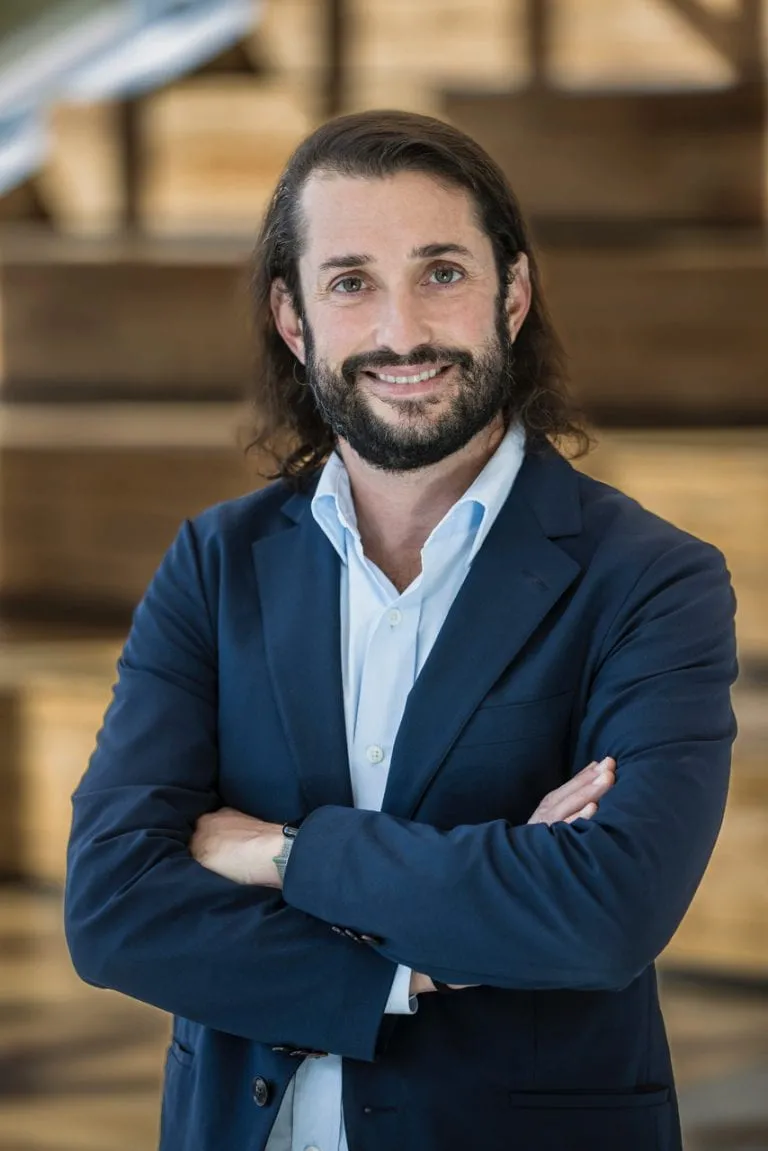
Dan Matisoff
As an undergraduate at the University of Pennsylvania, Daniel Matisoff was intrigued by the ability of economic markets to help solve environmental problems. “Learning about the regulatory role of governments in cap-and-trade markets for reducing carbon emissions shaped my career path,” says Matisoff, a professor at the Jimmy and Rosalynn Carter School of Public Policy and EPIcenter faculty affiliate. “It helped me decide to enter academia after earning my PhD in public policy at Indiana University, where I compared voluntary and mandatory emission reduction policies.”
Today, Matisoff continues research activities in this space and also directs a professional master’s program whose graduates help implement environmental policies in the public and private sector. Soon after joining the Georgia Tech faculty in 2009, he began to focus on market transformation through regulation, government subsidies and other financial incentives.
This led to an award-winning 2023 book about the Leadership in Energy and Environmental Design (LEED) certification program. It sparked the construction industry’s green building movement and incentivized early adopters of sustainable technology to create new supply chains. For Matisoff, LEED is a perfect example of using governance as a lever for environmental change.
News Contact
Gil Gonzalez
Program Coordinator
EPIcenter
Written by: Silke Schmidt
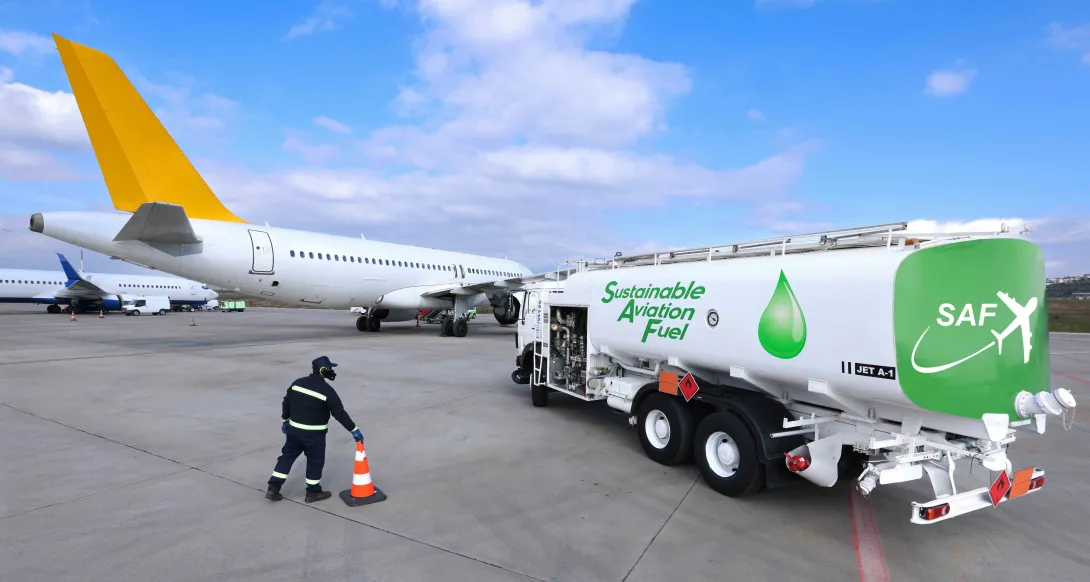
Georgia Tech’s Energy Policy and Innovation Center (EPIcenter) has collaborated with Dan Matisoff, professor in the Jimmy and Rosalynn Carter School of Public Policy and EPIcenter’s faculty affiliate, to develop a new Sustainable Aviation Fuel (SAF) Data Dashboard, designed to provide clear, accessible insights into the rapidly evolving SAF market.
The interactive dashboard compiles and visualizes data gathered by Matisoff, along with Program and Operations Manager Michael Morley, offering a comprehensive view of SAF production, feedstock availability, and policy trends.
EPIcenter Research Associate Yang You has designed the dashboard to translate complex datasets into policy-relevant insights for decision-makers. By organizing key metrics into interactive visuals, the dashboard helps stakeholders assess market readiness and identify regulatory actions that could accelerate SAF adoption.
Emphasizing the importance of data-driven insights, Matisoff said, “The Department of Energy has a Grand Challenge to produce 3 billion gallons a year of Sustainable Aviation Fuel by 2030, and 35 billion gallons a year by 2050. By compiling and visualizing SAF data, we can help policymakers and researchers understand progress towards these goals, where the key opportunities and bottlenecks are – and how to move forward effectively”.
Why SAF Matters
While aviation only accounts for about 3% of global greenhouse gas emissions, it is a rapidly growing share, and decarbonizing this sector is considered one of the most challenging aspects of the energy transition. Produced from renewable feedstocks, sustainable aviation fuel offers a pathway to reduce lifecycle emissions from air travel without requiring major changes to aircraft or infrastructure. However, SAF production and deployment face hurdles related to cost, supply chain development, and policy support.
EPIcenter’s Director Laura Taylor highlighted the dashboard’s role in addressing these challenges:
“Sustainable aviation fuel is a cornerstone of decarbonizing air travel, but the market is complex and rapidly evolving. The dashboard provides clarity by organizing the relevant data in a way that’s accessible and actionable for decision-makers.”
“This tool is meant to bridge analysis and action,” said You. “By visualizing SAF production, capacity, and offtake dynamics, the dashboard allows policymakers and stakeholders to see where the market is moving, where gaps remain, and how targeted infrastructure investments or supportive policies could unlock scale.”
The EPIcenter SAF Dashboard is intended as a resource for industry leaders, policymakers, and researchers working to accelerate SAF adoption. By providing transparent, data-driven insights, Georgia Tech aims to support informed decisions that advance innovation and sustainability in aviation.
To explore the dashboard and learn more about Georgia Tech’s work on sustainable aviation fuel, visit EPIcenter’s SAF page.
News Contact
Priya Devarajan || SEI Communications Program Manager

The United States has prepared for decades to defend itself from every conceivable military conflict on its shores, but it turns out psychological warfare, not missiles, might pose the greatest threat to national security.
This is a challenge Assistant Professor Ryan Shandler will spend the next two years exploring as a recipient of the Young Faculty Award from the Defense Advanced Research Projects Agency (DARPA).
DARPA uses this award to recognize up-and-coming early-career faculty it hopes to continue working with in the future.
Currently, DARPA is concerned with cyberattacks from foreign countries aimed at provoking social unrest and eroding public trust in democratic institutions. In a study released last year by Microsoft, it was estimated that 600 million cyberattacks were launched everyday by criminals and nation-state actors from July 2023 to July 2024.
Tools built by cybersecurity engineers help mitigate the attacks made by criminals and in some cases even help track down stolen money. However, nation-state actors don’t launch cyberattacks to score a payday.
Instead, they attack things like power plants or voting precincts as a show of strength. Exposing these vulnerabilities shows how unsafe life could be, and these actors want nothing more than to cause total panic.
So now instead looking only to hardware and software for the solution to this problem, DARPA is investing in the human dimension of cybersecurity.
This area has long been a focus of Shandler’s research, making him uniquely qualified to confront this previously overlooked vulnerability. His past experiments have already shown how cyberattacks generate severe public anxiety and prompt calls for physical military retaliation.
For this new project, he will track a controlled population of several thousand people by exposing them to simulated cyberattacks. At no point will the participants be made to think the attacks are real. Shandler and his team will then interview the participants to gauge how their experience impacted their perception of security.
“We are looking to see which groups are more susceptible to this kind of cumulative threat. Once we model the risk, the next step will be building countermeasures to defend against it,” he said.
However, creating a defense system that promotes societal resilience will be as challenging as it is revolutionary.
"I'm fortunate to be conducting this research in an interdisciplinary unit like the School of Cybersecurity and Privacy. Tackling a challenge of this scale requires computer scientists and social scientists working side by side,” Shandler said.
“Alone, neither field stands a chance—but together, we stand a real chance of success."
Shandler is jointly appointed with the School of Cybersecurity and Privacy and the Sam Nunn School of International Affairs.
News Contact
John Popham Communications Officer II | School of Cybersecurity and Privacy

A Georgia Tech study examines how short-term variability in wind power—known as wind intermittency—affects real-time electricity system imbalances in U.S. regional power markets.
This study examines how short-term variability in wind power—known as wind intermittency—affects real-time electricity system imbalances in U.S. regional power markets. The authors, Victoria Godwin and Matthew E. Oliver of the Georgia Institute of Technology and EPIcenter affiliates, analyze data from four major system operators: Bonneville Power Administration (BPA), New York ISO (NYISO), Southwest Power Pool (SPP), and PJM Interconnection. They focus on Area Control Error (ACE), a real-time metric used by grid operators to measure the mismatch between electricity supply and demand, adjusted for frequency deviations. Maintaining ACE near zero is essential for grid stability.
The authors find that a doubling of hourly wind generation variance increases average hourly ACE by 2% in BPA, 3.7% in NYISO, and 11.4% in SPP—equivalent to 1.2 MW, 1.8 MW, and 9.35 MW increases in system imbalance, respectively. PJM shows no significant effect, likely due to less granular data. They also show that sudden increases in wind generation are more likely to cause oversupply (positive ACE), while sudden drops lead to undersupply (negative ACE), confirming asymmetric operational impacts.
Read Full Story on the EPIcenter Website
News Contact
Gilbert Gonzalez || EPIcenter
Media Contact: Priya Devarajan | Strategic Energy Institute
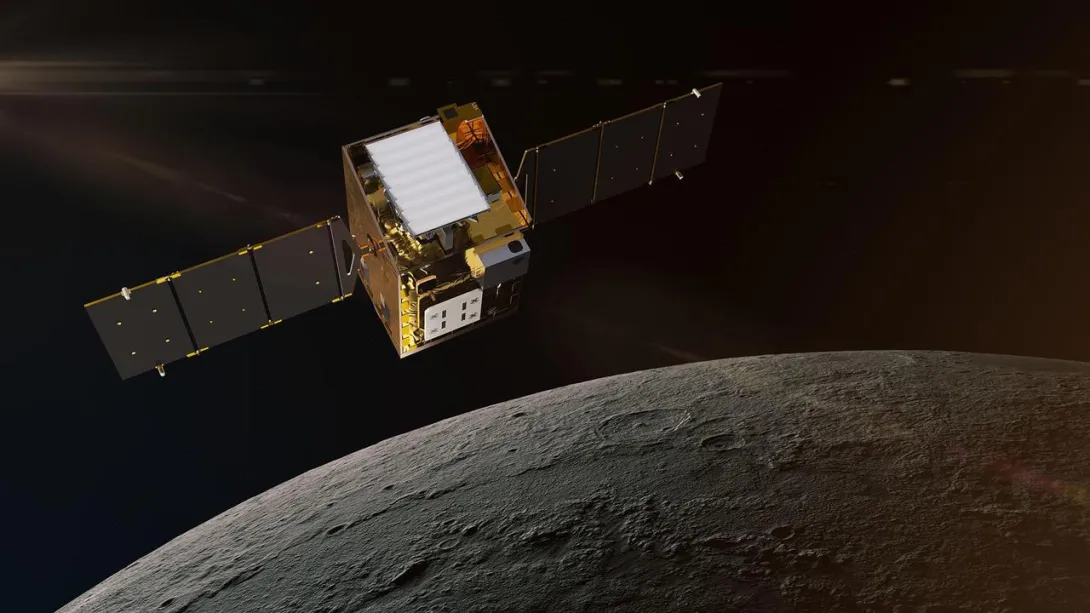
NASA's Lunar Trailblazer in Orbit Around the Moon (Artist's Concept). Image furnished by NASA.
As more satellites launch into space, the satellite industry has sounded the alarm about the danger of collisions in low Earth orbit (LEO). What is less understood is what might happen as more missions head to a more targeted destination: the moon.
According to The Planetary Society, more than 30 missions are slated to launch to the moon between 2024 and 2030, backed by the U.S., China, Japan, India, and various private corporations. That compares to over 40 missions to the moon between 1959 and 1979 and a scant three missions between 1980 and 2000.
A multidisciplinary team at Georgia Tech has found that while collision probabilities in orbits around the moon are very low compared to Earth orbit, spacecraft in lunar orbit will likely need to conduct multiple costly collision avoidance maneuvers each year. The Journal of Spacecraft and Rockets published the Georgia Tech collision-avoidance study in March.
“The number of close approaches in lunar orbit is higher than some might expect, given that there are only tens of satellites, rather than the thousands in low Earth orbit,” says paper co-author Mariel Borowitz, associate professor in the Sam Nunn School of International Affairs in the Ivan Allen College of Liberal Arts.
Borowitz and other researchers attribute these risky approaches in part to spacecraft often choosing a limited number of favorable orbits and the difficulty of monitoring the exact location of spacecraft that are more than 200,000 miles away.
“There is significant uncertainty about the exact location of objects around the moon. This, combined with the high cost associated with lunar missions, means that operators often undertake maneuvers even when the probability is very low — up to one in 10 million,” Borowitz explains.
The Georgia Tech research is the first published study showing short- and long-term collision risks in cislunar orbits. Using a series of Monte Carlo simulations, the researchers modeled the probability of various outcomes in a process that cannot be easily predicted because of random variables.
“Our analysis suggests that satellite operators must perform up to four maneuvers annually for each satellite for a fleet of 50 satellites in low lunar orbit (LLO),” said one of the study’s authors, Brian Gunter, associate professor in the Daniel Guggenheim School of Aerospace Engineering.
He noted that with only 10 satellites in LLO, a satellite might still need a yearly maneuver. This is supported by what current cislunar operators have reported.
Favored Orbits
Most close encounters are expected to occur near the moon’s equator, an intersection point between the orbit planes of commonly used “frozen” and low lunar orbits, which are preferred by many operators. Other possible regions of congestion can occur at the Lagrangian points, or regions where the gravitational forces of Earth and the moon balance out. Stable orbits in these regions have names such as Halo and Lyapunov orbits.
“Lagrangian points are an interesting place to put a satellite because it can maintain its orbit for long periods with very little maneuvering and thrusting. Frozen orbits, too. Anywhere outside these special areas, you have to spend a lot of fuel to maintain an orbit,” he said.
Gunter and other researchers worry that if operators aren’t coordinated about how they plan lunar missions, opportunities for collision will increase in these popular orbits.
“The close approaches were much more common than I would have intuitively anticipated,” says lead study author Stef Crum.
The 2024 graduate of Georgia Tech’s aerospace engineering doctoral program notes that, considering the small number of satellites in lunar orbit, the need for multiple maneuvers was “really surprising.”
Crum, who is also co-founder of Reditus Space, a startup he founded in 2024 to provide reusable orbital re-entry services, adds that the cislunar environment is so challenging because “it’s incredibly vast.”
His research also examines ways to improve object monitoring in cislunar space. Maintaining continuous custody of these objects is difficult because a target’s position must be monitored over the entire duration of its trajectory.
“That wasn’t feasible for translunar orbits, given the vast volume of cislunar orbit, which stretches multiple millions of kilometers in three dimensions,” he says.
By estimating a satellite’s orbit using observed data and constraining the presumed location and direction of the satellite, rather than continuous tracking (a process known as continuous custody), Crum greatly simplified the process.
“You no longer need thousands of satellites or a set of enormous satellites to cover all potential trajectories,” he explains. “Instead, one or a few satellites are required, and operators can lose custody for a time as long as the connection is reacquired later.”
Since the team started their study, there has been a lot of interest in the moon and cislunar activity — both NASA and China’s National Space Administration are planning to send humans to the moon. In the last two years, India, Japan, the U.S., China, Russia, and four private companies have attempted missions to the moon.
Why the Moon
Spacefaring nations’ intense interest in exploring the lunar surface comes as no surprise given that the moon offers a variety of resources, including solar power, water, oxygen, and metals like iron, titanium, and uranium. It also contains Helium-3, a potential fuel for nuclear fusion, and rare earth metals vital for modern technology. With the recent discovery of water ice, it could be a plentiful source for rocket fuel that can be created from liquifying oxygen and hydrogen needed to launch deep space missions to destinations like Mars. In February, Georgia Tech announced that researchers have developed new algorithms to help Intuitive Machines’ lunar lander find water ice on the moon.
Commercial space companies like Axiom Space and Redwire Space, as well as space agencies, are actively building lunar infrastructure, from satellite constellations to orbital platforms to support communication, navigation, scientific research, and eventually space tourism.
A key project involves the Lunar Gateway, a joint venture of NASA and international space agencies like ESA, JAXA, and CSA, as well as commercial partners. Humanity’s first space station around the moon will serve as a central hub for human exploration of the moon and is considered a stepping stone for future deep space missions.
Getting Ahead of a Gold Rush to the Moon
All this activity underscores the urgency to get out in front of potential crowding issues — something that hasn’t occurred in LEO, where near-miss collisions, or conjunctions, are frequent. LEO, which is 100 to 1,200 miles above the Earth’s surface, is host to more than 14,000 satellites and 120 million pieces of debris from launches, collisions, and wear and tear, reports Reuters.
“Using the near-Earth environment as an example, the space object population has gone from approximately 6,000 active satellites in the early 2020s to an anticipated 60,000 satellites in the coming decade if the projected number of large satellite constellations currently in the works gets deployed. That poses many challenges in terms of how we can manage that sustainably,” observed Gunter. “If something similar happens in the lunar environment, say if Artemis (NASA’s program to establish the first long-term presence on the moon) is successful and a lunar base is established, and there is discovery of volatiles or water deposits, it could initiate a kind of gold rush effect that might accelerate the number of actors in cislunar space.”
For this reason, Borowitz argues for the need to begin working on coordination, either in the planning of the orbits for future missions or by sharing information about the location of objects operating in lunar orbit. She pointed out that spacecraft outfitted for moon missions are expensive, making a collision highly costly. Also, debris from such a scenario would spread in an unpredictable way, which could be problematic for other objects.
Gunter agreed, noting, “If we’re not careful, we could be putting a lot of things in this same path. We must ensure we build out the cislunar orbital environment in a smart way, where we’re not intentionally putting spacecraft in the same orbital spaces. If we do that, everyone should be able to get what they want and not be in each other’s way.”
Borowitz says some coordination efforts are underway with the UN Committee on the Peaceful Uses of Outer Space and the creation of an action team on lunar activities; however, international diplomacy is a time-consuming process, and it can be a challenge to keep pace with advancements in technology.
She contends that the Georgia Tech study could provide baseline data that “could be helpful for international coordination efforts, helping to ensure that countries better understand potential future risks.”
Gunter and Borowitz say that follow-on research for the team could involve looking into the Lunar Gateway orbit and other special orbits to see how crowded that space will likely get, and then do an end-to-end simulation of these orbits to determine the most effective way to build them out to avoid collision risks. Ultimately, they intend to develop guidelines to help ensure that future space actors headed to the moon can operate safely.
News Contact
News Contact: Laurie Haigh
Writer: Anne Wainscott-Sargent
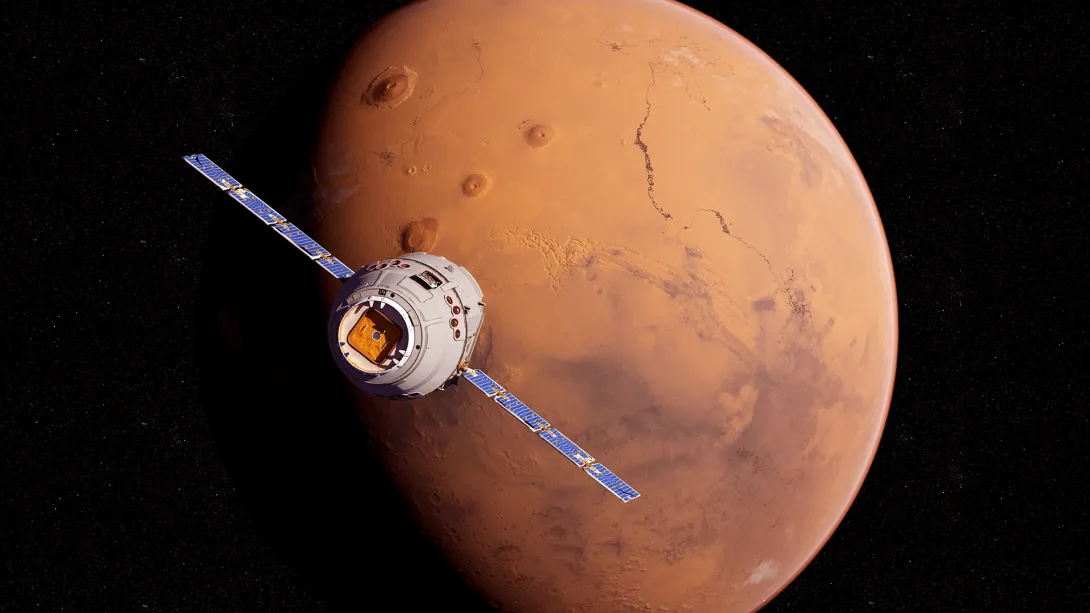
More than half a century after the United States won the race to the moon, the White House is setting its sights on a new frontier: Mars. In a move reminiscent of the Apollo era, the administration has proposed landing Americans on the red planet by the end of 2026 — a bold initiative that has reignited national ambition and drawn comparisons to the space race of the 20th century.
At Georgia Tech, researchers are already considering the mission’s implications, from engineering challenges to international diplomacy. While the White House has framed the mission as a demonstration of American leadership, experts say its success will depend on collaboration — across disciplines, sectors, and borders.
“This is more than a space race,” said Christos Athanasiou, an assistant professor in the Daniel Guggenheim School of Aerospace Engineering. “Mars isn’t just the next step for space exploration — it’s a stress test for everything we’ve learned about sustainability, resilience, and engineering under uncertainty.”
Engineering for the Red Planet
For Athanasiou, the Mars mission is a test of human ingenuity, creativity, and endurance. Unlike the moon, Mars is months away by spacecraft, with no quick return option. That distance introduces a host of engineering challenges that must be solved before a single boot touches Martian soil.
“Ensuring astronaut safety on such a long-duration mission requires us to understand how the Earth materials we will be using in our mission behave in extraterrestrial conditions,” he said.
In his recent TEDx talk, Athanasiou emphasized that the mission must also consider its environmental impact. Mars may be barren, but it is not immune to contamination. Athanasiou believes that strategies used for environmental remediation on Earth — such as waste recycling, habitat sustainability, and pollution control — can be adapted to protect the Martian environment.
“If we can build structures that survive Mars using recycled materials, AI, and Earth-born ingenuity, we’ll unlock entirely new ways to live — both out there and back here,” he said.
Reading the Martian Landscape
James Wray, a professor in the School of Earth and Atmospheric Sciences, has spent years analyzing Mars’ surface using data from orbiters and rovers. He sees the planet as both a scientific treasure trove and a logistical puzzle.
“Mars has vast lava plains, dust storms, and steep canyons that pose real risks to human settlement,” Wray said.
But beneath the challenges lies opportunity. Mars is home to significant deposits of water ice, especially near the poles and just below the surface in some mid-latitude regions. That water could be used not only for drinking but also for producing oxygen and rocket fuel — critical resources for long-term habitation and return missions.
“The presence of water ice near the surface is a game changer. It could support life, and more importantly, it could support us,” Wray said.
He also noted that Mars’ thin atmosphere — just 1% the density of Earth’s — complicates everything from landing spacecraft to shielding astronauts from cosmic radiation. “We’ve learned a lot from robotic missions. Now it’s time to apply that knowledge to human exploration.”
Diplomacy Beyond Earth
Lincoln Hines, an assistant professor in the Sam Nunn School of International Affairs, says that the Mars mission could have significant diplomatic implications. “The Mars mission has little to no bearing on space security; it has no military value,” he said. However, he noted that international cooperation could still play a valuable role in reducing the financial burden of such a costly endeavor.
Hines warned that shifting U.S. priorities from the moon to Mars could strain the international partnerships built through the Artemis program. He explained that some countries may view the Mars initiative as a distraction from the more immediate and economically promising lunar goals. Political instability in the U.S., he added, could further erode trust in its long-term commitments. “Countries may lose faith that the United States is a reliable partner to cooperate with for its lunar program if Mars seems to be the new priority,” he said.
He also pointed to existing legal frameworks like the Outer Space Treaty, which prohibits sovereign claims on celestial bodies, and the Rescue Agreement, which obliges nations to assist astronauts in distress. While these agreements provide a foundation, Hines emphasized that they don’t fully address the complexities of future Mars missions.
Establishing international norms for Mars exploration, he said, will be challenging. “Norms are really hard to develop,” Hines explained, noting that countries often hesitate to commit to rules without assurance that others will do the same. Still, he suggested that Mars — with its limited material value — might offer a rare opportunity for cooperation, if nations are willing to engage in good faith.
News Contact
Siobhan Rodriguez
Senior Media Relations Representative
Institute Communications