

Vida Jamali, Assistant Professor of Chemical and Biomolecular Engineering, Georgia Tech
Assistant Professor Vida Jamali is the inaugural recipient of the new Dr. James Robert and Margaret Spencer Early Career Fellowship in Georgia Tech’s School of Chemical and Biomolecular Engineering (ChBE@GT).
“Her outstanding research accomplishments and contributions to the School and Georgia Tech led to this selection,” said Professor Christopher W. Jones, the John F. Brock III School Chair in ChBE@GT.
The $20,000 in discretionary funding from this one-year fellowship will support Jamali’s research activities focused on developing new tools for in situ liquid-phase transmission electron microscopy, stochastic thermodynamics, and nanoscience-based platforms.
The Spencers established the endowment from which the term fellowship funding comes in 2017. This endowment will eventually lead to the establishment of a professorship in ChBE@GT.
“Bob Spencer is a successful alumnus who has remained connected to our chemical engineering program,” according to Jones. “His family’s gift will allow ChBE@GT to support an early career professor at a critical stage of their development—the crucial years just before their promotion and tenure review. We are grateful for their support and generosity.”
News Contact
Brad Dixon, ChBE

New cybersecurity research indicates that one of the world’s leading age verification providers collects and shares highly sensitive personal data—including facial photos and device fingerprints—with third parties.
The research also reveals that most websites that require age verification don’t enforce the policy.
The findings come from a new paper that researchers from the Georgia Institute of Technology and the University of California, Irvine (UC Irvine) will present at this week’s IEEE Symposium on Security and Privacy conference in San Francisco.
The research team examined Yoti, a London-based company that provides age-verification services for an estimated 60% of websites that require it. Its client list includes Meta, OnlyFans, Sony PlayStation, and TikTok.
The research team determined that the process Yoti uses to verify a person’s age broadcasts the person’s personal information to third- and fourth-party companies.
When a bartender checks an ID, they quickly verify a customer’s date of birth and identity before serving them. Companies like Yoti that employ digital age verification claim their products function the same way, but in a completely private manner.
That analogy has justified laws passed in 25 U.S. states — comprising more than 40% of Americans — mandating the use of digital age verification to gate access to social media and adult online content.
However, by measuring online age verification, researchers reveal that the reality of these systems is far from ideal. The study found that most sites covered by these laws do not appear to enforce age verification.
When sites comply, they force users to use third-party age-verification services like Yoti, which collect and share highly sensitive data with other third parties.
“There have been laws passed and court cases settled on the promise that these companies are incentivized to keep users’ data private” said Assistant Professor Michael A. Specter at the School of Cybersecurity and Privacy. “We found that reality is starkly different.”
Digital age verification laws are being considered by other legislative bodies to bar minors from social media sites. The problem, Specter and his colleagues argue, is that current methods of age verification are ineffective and create new privacy risks.
“In legal arguments, there have been comparisons to these services acting like a bartender checking IDs,” said Specter. “However, what is really happening is the bartender is making photocopies of the patron’s license and sending it to their food vendors.”
According to the researchers, the data is then sent to credit card companies, IP geolocation services, and data brokers. The researchers found that the information being shared can be used to identify and track devices. For example, a single verification attempt may transmit a user’s facial image, IP address, and device fingerprint to credit card companies.
Aside from privacy concerns, researchers note that differing state policies could lead to what they call the Balkanization of the U.S. web. In other words, users may have access to different parts of the internet depending on the state they are in. This will potentially limit the free exchange of ideas and information.
According to Assistant Professor Harry Oppenheimer of the Jimmy and Rosalynn Carter School of Public Policy, users are already accustomed to experiencing the internet differently across countries. However, this may signal the beginning of similar fragmentation within the United States.
“We are going to start seeing comparable differences between U.S. states,” said Oppenheimer. “Users in some states will now have to go through additional steps to access information. Close your laptop in New York before a flight to Dallas and try to load the same web page—now you see two different results.”
“We also observed age verification deployed on websites accessed from New York, which has no law requiring verification,” said Associate Professor Paul Pearce of UC Irvine’s Department of Computer Science.
“We don’t know why these sites are deploying such verification—it could be a move to limit liability or simplify operations. Regardless, it points to an emerging threat for the open Internet where restrictive laws from some states could impact the entire country and beyond.”
“This is why we can’t have nice things,” Specter added.
The study, Papers Please: A First Look at Age Verification on the Web, was led by Georgia Tech Ph.D. student Shreyas Minocha, undergraduate Isaac Sheridan, and Oppenheimer, Pearce, and Specter. It is part of the proceedings of the 47th IEEE Symposium on Security and Privacy and will be presented in San Francisco on May 20, and was featured in Arstechnica.
News Contact
John Popham
Communications Officer II at the School of Cybersecurity and Privacy
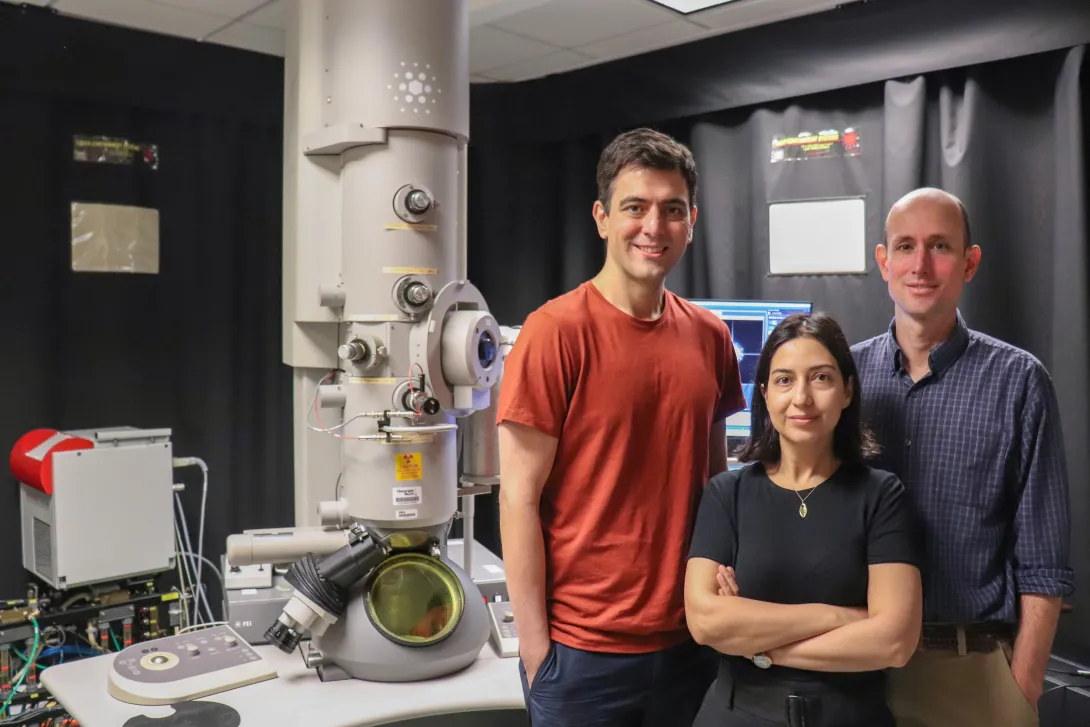
A photo of Vida Jamali, assistant professor the School of Chemical and Biomolecular Engineering; Amirali Aghazadeh, assistant professor in the School of Electrical and Computer Engineering; and Josh Kacher, associate professor in the School of Materials Science and Engineering standing in front of a TEM at Georgia Tech.
Scientific discovery is often portrayed as the result of long hours alone in a lab, but true science is inherently collaborative. The most robust experimental processes are developed through partnerships across multiple areas of research. The need for specialized, multidisciplinary teams slows experiment design, execution, data analysis, and process updates, delaying technological validation and deployment. But if the increasingly automated tools scientists already use in the lab could contribute to this team process of experimental design, the timeline for these goals could be greatly accelerated.
This concept of “lab tool as lab assistant” is the premise of a recent paper in npj | Computational Materials titled “Thinking Microscopes: Agentic AI and the Future of Electron Microscopy,” by Vida Jamali, assistant professor the School of Chemical and Biomolecular Engineering; Amirali Aghazadeh, assistant professor in the School of Electrical and Computer Engineering; and Josh Kacher, associate professor in the School of Materials Science and Engineering.
In the paper, the team introduces the concept of “thinking electron microscopes,” in which agentic AI systems are directly integrated with the instrument. This allows microscopes to move beyond their conventional role as characterization tools and toward functioning as co-scientists for human users.
Drawing on advances in specialized large language models, or LLMs, that demonstrate their ability to collaborate, reason over data, and integrate prior knowledge, the team envisions specialized LLM-based agents assigned to specific roles and areas of knowledge expertise. By explicitly incorporating domain knowledge into specialized agents and distributing information across multiple agents with focused expertise, the approach enables parallel evaluation of competing hypotheses, clearer separation of roles — such as planning, simulation, and critique — and more transparent and robust reasoning.
Within the experimental pipeline, these agents can analyze materials’ properties, physical data, chemical processes, and other relevant parameters. They could also collaborate with an agent that specializes in experimental design, refining iterative closed-loop experimentation, and real-time scientific discovery.
Although the research focuses on AI collaboration, the team notes that human researchers must retain accountability for the accuracy and integrity of both the experimental process and the results reported. This oversight begins with advocating for greater open access to research materials in all formats, building community-driven data repositories, and adopting standardization in how experimental parameters and metadata are reported. Equally important, researchers should be willing to report data from failed experiments as well as successful outcomes. Finally, organizations should work together to standardize secure APIs that enable shared, remote access to infrastructure across distances.
We see this as a step toward scientific instruments that do more than acquire data; systems that can reason over experiments, adapt measurements, and participate in the scientific discovery process alongside researchers. - Vida Jamali, assistant professor the School of Chemical and Biomolecular Engineering
The team is already developing these systems by connecting cloud-based, agentic infrastructures to microscopes at the Institute for Matter and Systems at Georgia Tech. With the addition of agentic AI, the goal is to accelerate discovery and engineering of new nanoscale materials for energy and quantum applications, as well as advance capabilities in cryo-electron microscopy and structural biology. These tools can optimize data collection, link real-time microscope observations with structural models of proteins, and dynamically adjust and prioritize experiments. The team sees this work as the first step toward the next generation of “thinking” electron microscopes, as well as an advancement in scientific discovery across domains.
- Christa M. Ernst
This research is supported by the Institute for Data Engineering and Science and the Institute for Matter and Systems
Original Publication
Jamali, V., Aghazadeh, A. & Kacher, J. Thinking microscopes: agentic AI and the future of electron microscopy. npj Computational Materials 12, 149 (2026). https://doi.org/10.1038/s41524-026-02077-y
News Contact
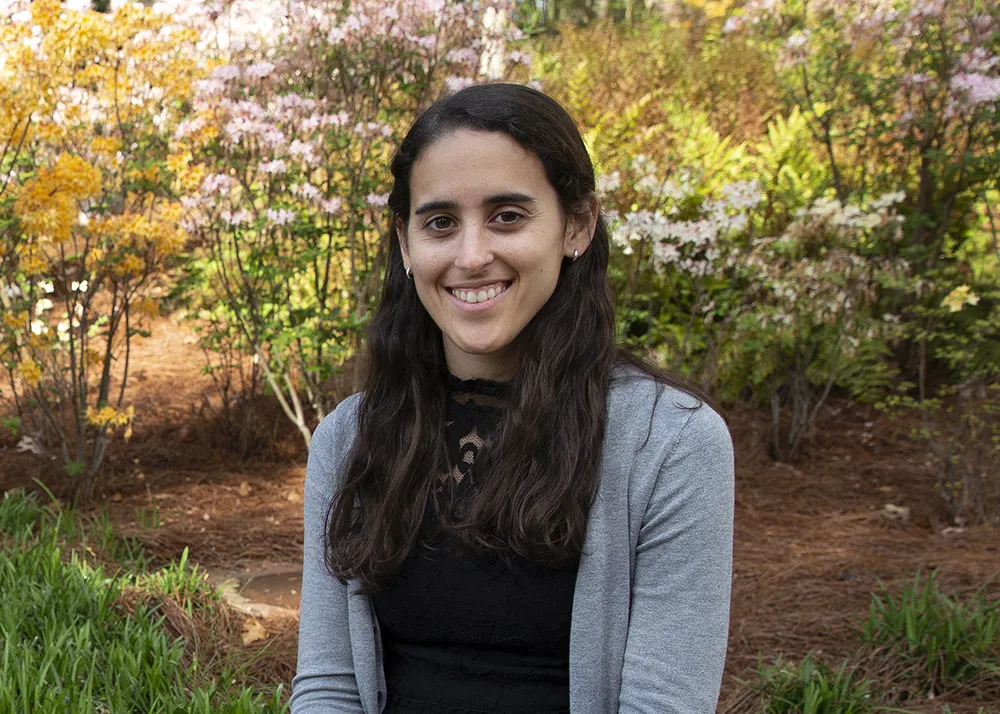
Emily Sanders, assistant professor in the George W. Woodruff School of Mechanical Engineering, has received the prestigious Faculty Early Career Development (CAREER) Award from the National Science Foundation’s (NSF) Division of Civil, Mechanical, and Manufacturing Innovation.
The NSF CAREER Award supports early-career faculty who have the potential to serve as academic role models in research and education and to lead advances in the mission of their department or organization. The award provides $662,045 over five years to support Sanders’ project, Patterning Hard Interlocking Particles to Achieve Soft Materials and Structures.
Read the full story on the George W. Woodruff School of Mechanical Engineering website.
News Contact
Ashley Ritchie
George W. Woodruff School of Mechanical Engineering
Sleep-related breathing disorders, including sleep apnea, affect millions of people worldwide but frequently go undiagnosed. One major barrier to diagnosis is the test itself.
Traditional sleep monitoring systems often rely on bulky equipment and nasal cannulas — small tubes inserted into the nostrils to measure airflow. While effective, these systems can be uncomfortable, intrusive, and difficult to tolerate overnight, limiting their use for long-term monitoring at home.
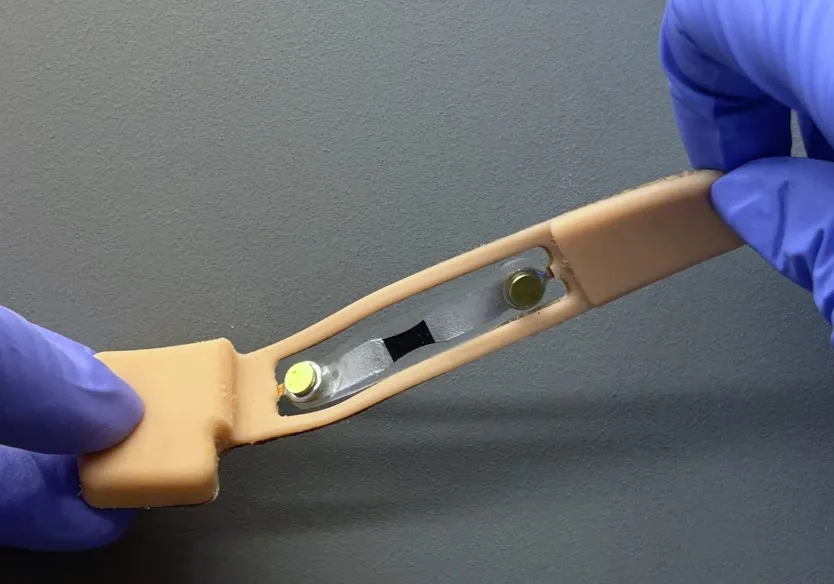
Now, researchers led by W. Hong Yeo, Peterson Professor in Pediatric Research at the George W. Woodruff School of Mechanical Engineering, have developed a soft, wireless nasal patch that could offer a more comfortable alternative for monitoring breathing during sleep.
The technology, described in a recent study published in Proceedings of the National Academy of Sciences (PNAS), uses ultrathin, skin-like wearable electronics to detect subtle movements of the nose caused by breathing without tubes, wires, or direct airflow measurements.
Read the full story on the George W. Woodruff School of Mechanical Engineering website.
News Contact
Ashley Ritchie
George W. Woodruff School of Mechanical Engineering
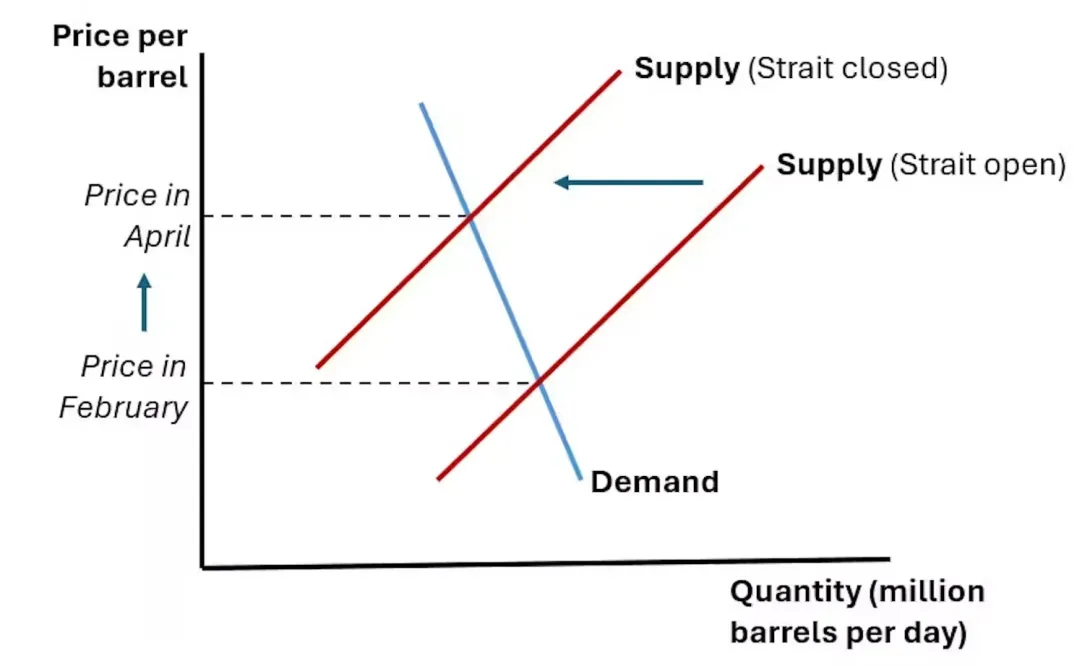
In general, when supply of a product is reduced, prices rise. As a result, even when demand remains stable, the quantity consumers buy decreases because of higher prices. Matthew E. Oliver and Tibor Besedeš, CC BY-NC-ND
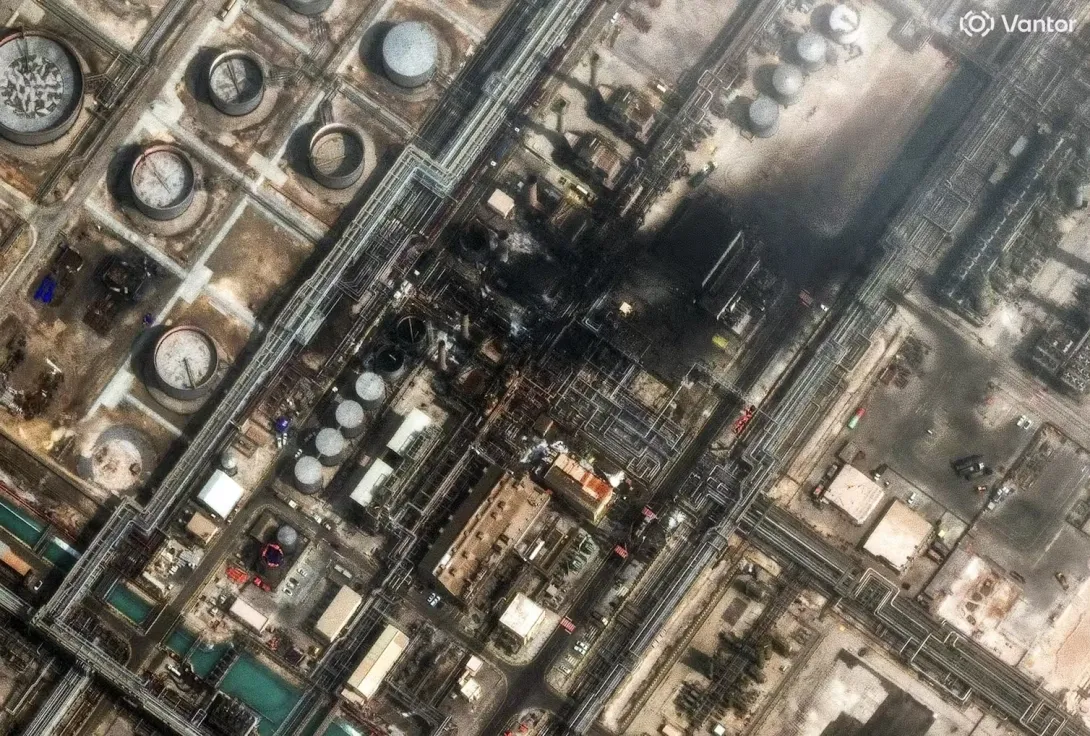
A satellite photo shows damage from the war at Saudi Arabia’s Ras Tanura oil refinery, which must be repaired before full operations can resume. Satellite image (c) 2026 Vantor via Getty Images

Drilling rigs in the North Sea are still operating and shipping oil. AP Photo/James Brooks
The market for oil is global, which is why events like the war in Iran affect oil prices – and prices of the wide range of products made from oil – literally everywhere. Federal data shows that the price at the primary crude oil hub in the U.S. was US$66 a barrel in late February 2026 – before the U.S. and Israel attacked Iran – and $101 a barrel on April 13. Similar price increases have reverberated around the globe.
As an energy economist and an international trade economist, we field a lot of questions during such episodes, because when oil prices go up, manufacturers, businesses and ultimately consumers pay more.
Some basic economics
Crude oil may be the most important commodity in the global economic system.
It’s a literal fuel for the industrial economy. It powers the engines that drive transportation and paves the roads vehicles drive on. It’s a source for plastics from which the world’s products get made and packaged, and a key ingredient at some point in almost every supply chain. Even fertilizers that boost the food supply are made from it. In short, it is difficult to imagine modern life without oil and its derivatives.
And when its supply changes, its price changes. Economists explain this using a fundamental model of our field: the supply-demand diagram. When there’s less of something to go around, competition among consumers who want it and companies that need it can drive the price up.
Sometimes this process can play out over time, allowing people to adjust their purchasing or activities to dampen price shocks. But when a significant source of the world’s oil is effectively blocked without much advance notice, such as when the the U.S. and Israeli attacks on Iran closed the Strait of Hormuz, prices can rise sharply in a short period of time.
A natural question many people ask when oil prices spike is: Where does all that additional money go, and who benefits from it?
Some people have written entire books dissecting all the places that money goes when it leaves consumers’ pockets. But ultimately, the bulk of the money heads in the direction of the source of the oil itself – the oil companies.
What they do with the money varies widely, depending on where in the world an oil company is operating and who owns it. What also matters is the business environment – the set of laws and regulations – in which the company operates.
Middle East faces danger
Oil producers in the Middle East face significant new risk because of the war in Iran, including threats to production, processing locations and shipping routes. These risks raise their costs for insurance, security and transportation.
But production costs in the region are relatively low, so higher global oil prices typically still translate into strong profits.
For a major exporter such as Saudi Arabia, the government owns and controls nearly all oil production, so high prices generally benefit the government’s finances and investments, even during a war. In Saudi Arabia, oil revenue has historically been used to fund public spending.
West Texas gets a windfall
The Permian Basin, the largest oil field in the U.S., is a long way from the Persian Gulf. When global oil prices rise because of the war in Iran, oil companies operating in West Texas effectively get a windfall gain: Prices rise more quickly than costs, at least in the short run.
The immediate effect is more income from higher prices. The money largely goes to company owners – meaning shareholders – through dividends, debt reduction, company-backed purchases of its own stock, and reinvestment in drilling and production. Over time, companies may decide to spend some of that windfall on building more production capacity or pipelines to get more oil and gas to market.
North Sea boosts government revenue
In the North Sea, between the island of Great Britain and Scandinavia, a mix of multinational and government-owned companies produce most of the oil.
In the U.K., private shareholders are the primary beneficiaries of higher profits from increased oil prices, though an additional tax on oil and gas companies’ profits means the government also collects a significant share of the money, which it uses to help pay public expenses.
In Norway, oil revenues flow into the Government Pension Fund Global, the world’s largest sovereign wealth fund, valued at over $2 trillion. Laws govern how much, and for what purposes, money can be withdrawn from the fund, supporting public spending and preserving wealth for future generations. This is a similar model to Alaska’s state-owned program, funded by oil revenue, that pays for government services and sends an annual dividend to every permanent resident.
Russian oligarchs get rich
Russian oil is subject to stringent economic sanctions imposed by major industrial countries as a response to the Russian invasion and occupation of parts of Ukraine. While the U.S. cannot control how much Russia charges for its oil, it can control services needed to move Russian oil around the world. Under current price sanctions, Western shipping, insurance and financing can be used to ship and sell Russian crude oil only if the price is below $60 per barrel.
Russia’s oil industry is dominated by government-controlled companies whose leaders maintain close ties to President Vladimir Putin. The dealings of those shadowy figures are often shrouded in secrecy, but it is likely that they and Putin’s military-industrial complex – not the Russian people – are the main beneficiaries of high oil prices.
What this means for you
Everyday U.S. consumers may not like the idea of their hard-earned cash going into the already deep pockets of any of these groups. But in the short run, there’s not much to do but pay the price. For the long run, however, people around the world are already thinking and talking about, and opting for, sources of energy that don’t depend on fossil fuels.
This article is republished from The Conversation under a Creative Commons license. Read the original article.
News Contact
Authors
Matthew E. Oliver
Associate Professor of Economics, Georgia Institute of Technology
Tibor Besedeš
Professor of Economics, Georgia Institute of Technology
Media Contact
Shelley Wunder-Smith
shelley.wunder-smith@research.gatech.edu

Gas prices were well over $4 a gallon on April 28, 2026, in Brooklyn, N.Y. Spencer Platt/Getty Images
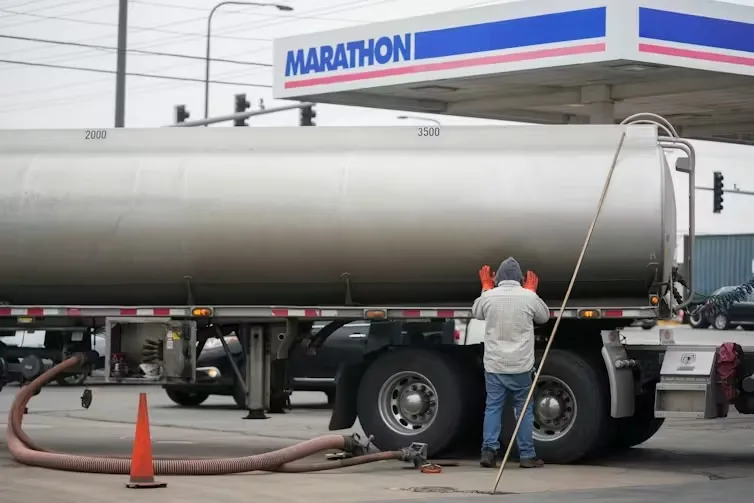
A tanker truck delivers fuel to a gas station. AP Photo/Erin Hooley

Suspending the Jones Act allows foreign-based oil tankers to sail between U.S. ports. AP Photo/Eric Gay
The U.S. Energy Information Administration expects nationwide retail gasoline prices to average near US$4.30 a gallon for April 2026 – the highest monthly average of the year. The political response has been familiar. Georgia has suspended its state gas tax, other states are weighing their own tax holidays, and the White House has issued a temporary waiver of a law known as the Jones Act in hopes of moving more domestic fuel to East Coast ports.
As an energy economist, I am often asked about what contributes to gas prices and what different policies can do to affect them.
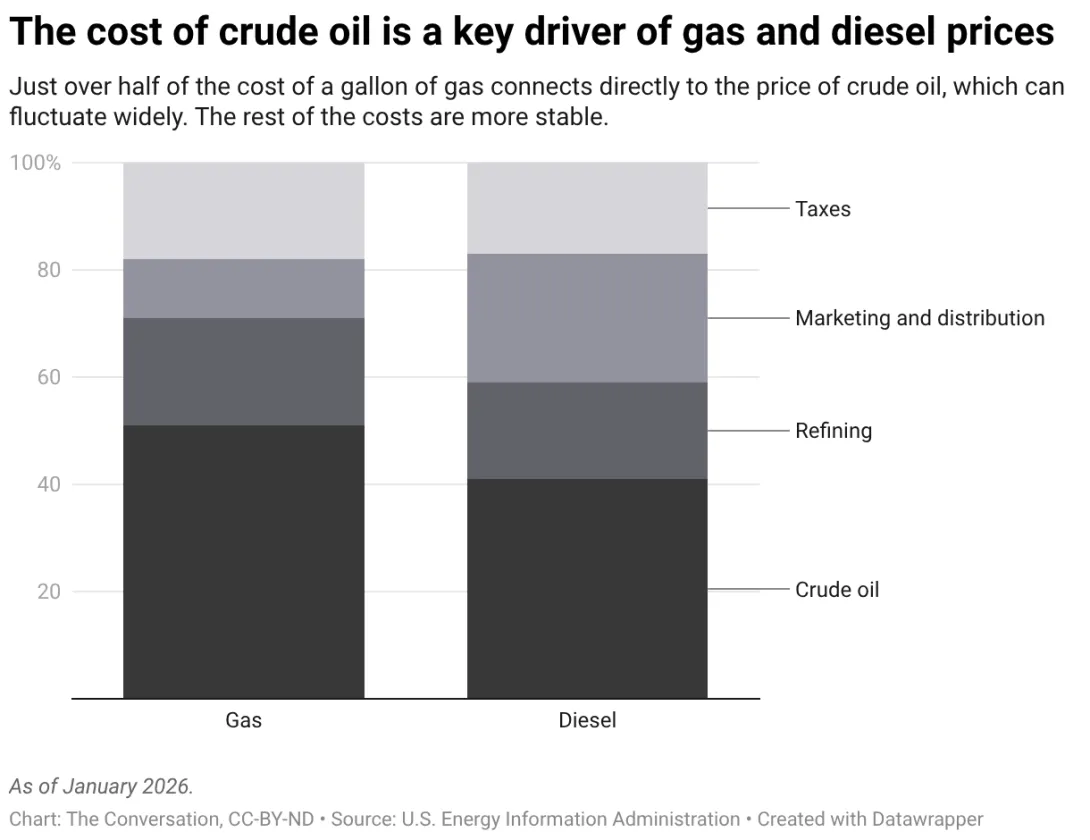
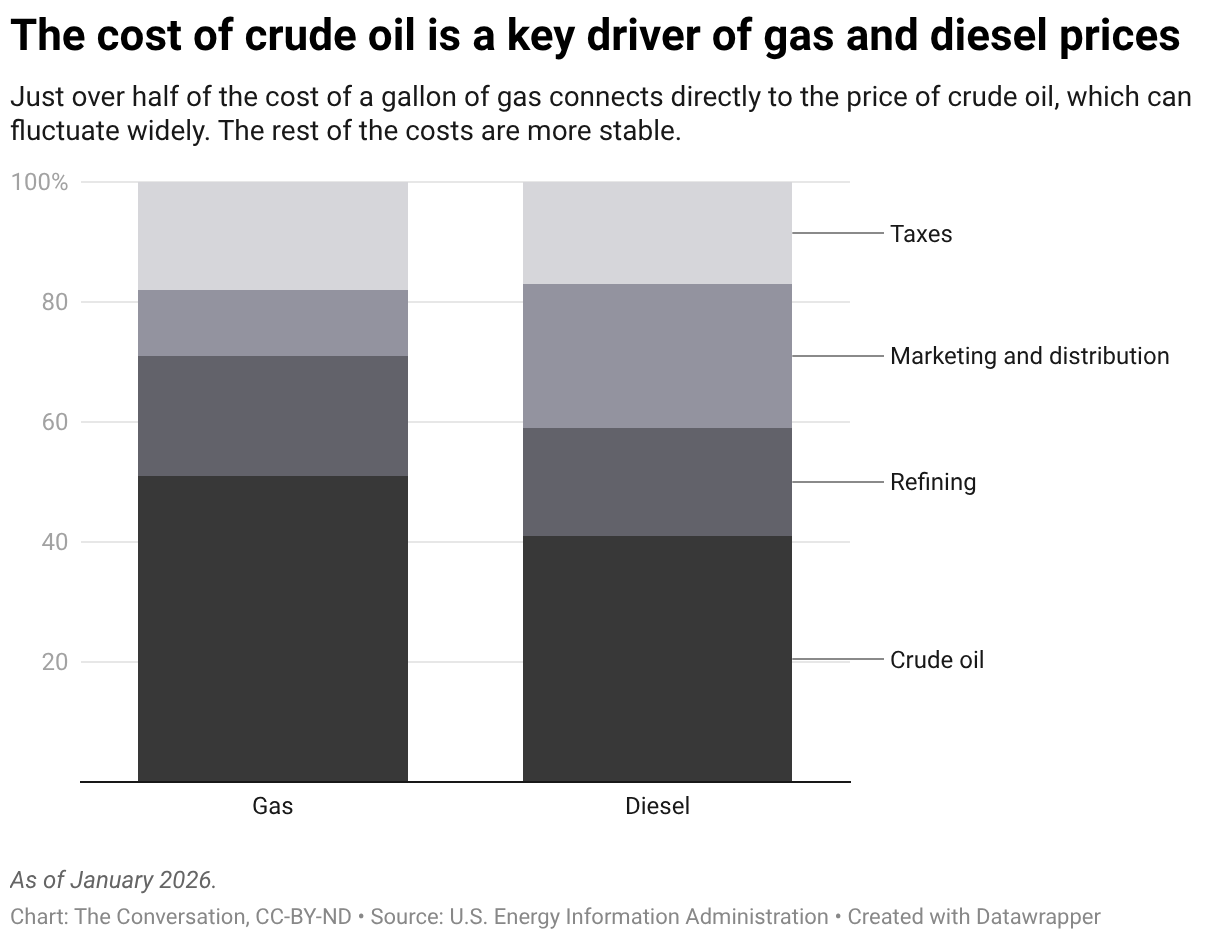
The price of a retail gallon of gas is the sum of four things: the cost of crude oil, refining, distribution and marketing, and taxes.
In nationwide figures from January 2026, crude oil accounted for about 51% of the pump price, refining roughly 20%, distribution and marketing about 11% and taxes about 18%. That mix shifts with conditions: When crude oil prices spike, that can drive more than 60% of the price; when the price drops, taxes and logistics are larger shares of the cost.
Crude oil is the biggest ingredient
Because the price of crude oil is the largest element, most of the price at the pump is derived from the global oil market.
Usually, big swings in crude prices come mainly from shifts in global demand and expectations – not from supply disruptions, according to widely cited research in 2009 by the economist Lutz Kilian.
But what is happening in early 2026 with the war in Iran is one of the exceptions: a classic supply shock. Severe disruptions to shipping through the Strait of Hormuz and attacks on Middle East oil infrastructure have taken millions of barrels a day off the global market.
Most drivers generally can’t quickly reduce how much they drive or how much gas they use when prices rise, so gasoline demand doesn’t change much in the short run. That means a jump in crude costs tends to result in people paying more rather than driving less.
Refining, regulations and the California puzzle
Refining turns crude into gasoline at industrial scale. The U.S. doesn’t have a single gasoline market, though. Roughly a quarter of U.S. gasoline is a cleaner-burning blend of petroleum-derived chemicals called “reformulated gasoline,” which is required in urban areas across 17 states and the District of Columbia to reduce smog.
California uses an even stricter formulation that few out-of-state refineries make. California is also geographically isolated: No pipelines bring gasoline in from other U.S. refining regions.
California’s gasoline prices have long run above the national average, explained in part by higher state taxes and stricter environmental rules. But since a refinery fire in Torrance, California, in 2015 reduced production capacity, the state’s prices have been about 20 to 30 cents a gallon higher than what those factors would indicate.
Energy economist and University of California, Berkeley, professor Severin Borenstein has called this the “mystery gasoline surcharge” and attributes it to the fact that there isn’t as much competition between refineries or gas stations in California as in other states. California’s own Division of Petroleum Market Oversight says the surcharge cost the state’s drivers about $59 billion from 2015 to 2024. It’s not exactly clear who is getting that money, but it could be gas stations themselves or refineries, through complex contracts with gas stations.
Getting the gas into your car
The distribution and marketing category covers the costs of everything involved in getting the gasoline from the refinery gate to your tank.
Gasoline moves by pipeline, ship, rail and truck to wholesale terminals, and then by local delivery truck to service stations.
At the retailer’s end, the key factors are station rent and labor, the cost to buy gasoline in bulk to be able to sell it, credit card fees of as much as 6 to 10 cents a gallon at current prices, and franchise fees paid to the national brand, such as Sunoco or ExxonMobil, for permission to put their branding on the gas station.
Most gas station operators net only a few cents per gallon on fuel itself – which is why many gas stations are really convenience stores with pumps out front. Borenstein and some of his collaborators have also documented that retail gas prices rise quickly when wholesale costs climb but fall slowly when wholesale costs drop.
The question of gas tax holidays
The federal government charges a tax on fuel, of 18.4 cents a gallon for gasoline and 24.3 cents a gallon for diesel. States charge their own taxes, ranging from 70.9 cents a gallon for gas in California to 8.95 cents in Alaska.
When gas prices rise, many politicians start talking about temporarily suspending their state’s gas tax. That does reduce prices, but not as much as politicians – or consumers – might hope. Research on past gas tax holidays has found that consumers get about 79% of the reduction in gas taxes. That means oil companies and fuel retailers keep about one-fifth of the tax cut for themselves rather than passing that savings to the public.
Gas tax holidays also reduce funding for what the taxes are designed to pay for, typically roads and bridges. That pushes road and bridge upkeep costs onto future drivers and general taxpayers.
There is an additional problem, too: Taxes on gasoline are supposed to charge drivers for some of the costs their driving imposes on everyone else – carbon emissions, local air pollution, congestion and crashes. But Borenstein has found that U.S. fuel tax levels are already far below the true cost to society. Removing the tax on drivers effectively raises the costs for everyone else.
The Jones Act: A small number that adds up
The 1920 Jones Act is a federal law that requires cargo moving between U.S. ports to travel on vessels built and registered in the U.S., owned by U.S. citizens, and crewed primarily by U.S. citizens and permanent residents. Of the world’s 7,500 oil tankers, only 54 meet this requirement. Only 43 of these can transport refined fuels such as gasoline.
So, despite significant refining capacity on the Gulf Coast, some U.S. gasoline is exported overseas even as the Northeast imports fuel, in part reflecting the relatively high cost of moving fuel between U.S. ports.
Economists Ryan Kellogg and Rich Sweeney estimate that the law raises East Coast gasoline prices by about a penny and a half per gallon on average, costing drivers roughly $770 million a year. In light of the war’s effect on gas prices, the Trump administration has temporarily suspended the Jones Act requirements – an action more commonly taken when hurricanes knock out Gulf Coast refineries and pipeline networks.
What moves the number
The result of all these factors is that the price that drivers see at the pump mostly reflects the global price of crude, plus a stack of domestic costs, only some of which are inefficient.
Tax holidays give a partial, short-lived rebate. Jones Act waivers trim pennies, though permanent repeal may cause more fundamental changes, such as reduced rail and truck transport of all goods, which could lower costs, emissions and infrastructure damage associated with cargo transportation. Harmonizing fuel blends across states and seasons may lower prices somewhat, but likely at the expense of increased emissions.
Ultimately, the best protection against oil price shocks is a more efficient gas-burning vehicle, or one that doesn’t burn gasoline at all. In the meantime, the best I can offer as an economist is clarity about what that $4.30 actually buys.
This article is republished from The Conversation under a Creative Commons license. Read the original article.
News Contact
Author:
Assistant Professor of Economics, Georgia Institute of Technology
Media Contact:
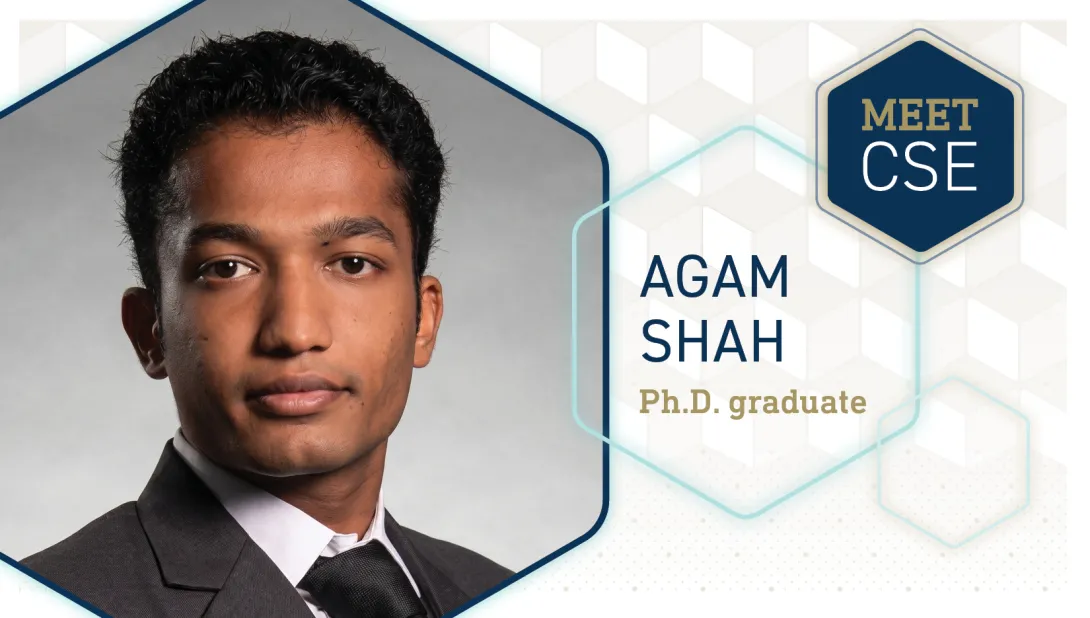
Investment is the best word that summarizes Agam Shah’s journey as a graduate student at Georgia Tech.
That is clearest on the surface, where Shah studied how public statements by businesses and financial institutions shape market behavior. At a deeper level, though, his success was buoyed by support from professors and his mentorship of younger students.
Shah’s ability to connect and invest in others led him to partner with Georgia Tech colleagues and start a financial technology business. He returns to campus this week to officially graduate from Tech, giving us a chance to catch up about his grad school experience and life as an entrepreneur.
Graduate: Agam Shah
Research Interests: Quantitative and computational finance, artificial intelligence, natural language processing, large language models (LLMs)
Education: Ph.D. in Machine Learning, home unit in the School of Computational Science and Engineering (CSE)
Faculty Advisors: Scheller College of Business Professor Sudheer Chava and School of CSE Associate Professor Chao Zhang
What persuaded you to attend graduate school at Georgia Tech?
Georgia Tech’s dedicated College of Computing strongly appealed to me. I was particularly drawn to the interdisciplinary nature of its machine learning Ph.D. program and the School of Computational Science and Engineering, both of which align well with my research interests.
What research project(s) from Georgia Tech are you most proud of and why?
I am proud of all 20-plus research papers I have had the opportunity to contribute to at Georgia Tech. However, if I had to choose one, it would be my work on Federal Open Market Committee (FOMC) text analysis, which was also highlighted in the news.
This work is not only well-cited in academic literature, but the language model developed in the paper is also actively used by economists at many of the world’s top central banks, including researchers at the FOMC and the Bank of England. It is also used by leading financial institutions such as BlackRock and Daiwa Securities. Since its release, the model has achieved over 100,000 downloads on Hugging Face.
What can you tell us more about your startup, ZettaQuant?
ZettaQuant aims to solve one of the biggest challenges in using LLMs and agents: working effectively with massive underlying datasets. We serve as a layer between raw data and LLMs, helping distill billions of tokens into the relevant context that models can use.
As a deep-tech startup, we are actively engaging with industry practitioners to better understand how to design and engineer our system to integrate seamlessly with their evolving AI workflows. Given the complexity of the problem we are tackling, particularly in advancing document intelligence systems, we are currently very focused on research and foundational development.
How did your Georgia Tech education prepare you for starting ZettaQuant?
Not just my education, but my entire experience at Georgia Tech, extending beyond the classroom, prepared me for this journey. I met my co-founders at Georgia Tech, and many of the initial use cases we are exploring at ZettaQuant are built on open-source research I conducted there.
In addition to research, I mentored more than 300 students through the Vertically Integrated Project “NLP for Financial Markets.” This experience taught me how to manage teams and think about building systems with a long-term vision.
What advice would you give someone interested in graduate school?
Most people pursue graduate school after already completing more than 15 years of education. Also, people who are admitted to a top school like Georgia Tech are often already well-positioned to secure strong job opportunities. So, graduate school should provide value beyond what you could learn outside the classroom.
Before deciding, think carefully about what you hope to gain from graduate school that you cannot otherwise. Once you enroll, take full advantage of the faculty, research labs, networks, and seminars. Many students underutilize these opportunities during their undergraduate and graduate years.
I would also like to quote the epilogue of my Ph.D. thesis: ‘Advice is abundant; conviction must be your own.’ Build a strong conviction about what you want to achieve from graduate school before committing to it.
What did you do for fun and relaxation while attending Georgia Tech? Do you still keep up with these now?
This may sound unconventional, but I spent a significant amount of time mentoring and teaching throughout my Ph.D. Many of my mentees went on to gain admission to top graduate programs. This included two students I mentored for all four years of their undergraduate studies who later joined the ML Ph.D. program at Georgia Tech. They are now teaching and mentoring students, completing a full-circle journey.
Working with mentees and supporting their growth gives me a strong sense of fulfillment and serves as a form of relaxation. In addition, I enjoy listening to music, especially while coding, and I continue to do that today.
What is your favorite Georgia Tech memory?
If I had to choose one favorite memory, beyond the many exciting late nights in the lab, it would be proposing to my wife on Tech Green at Georgia Tech. She is also a Yellow Jacket, having completed her undergraduate degree here and currently pursuing her Ph.D. Our home truly is a hive of Yellow Jackets.
News Contact
Bryant Wine, Communications Officer
bryant.wine@cc.gatech.edu
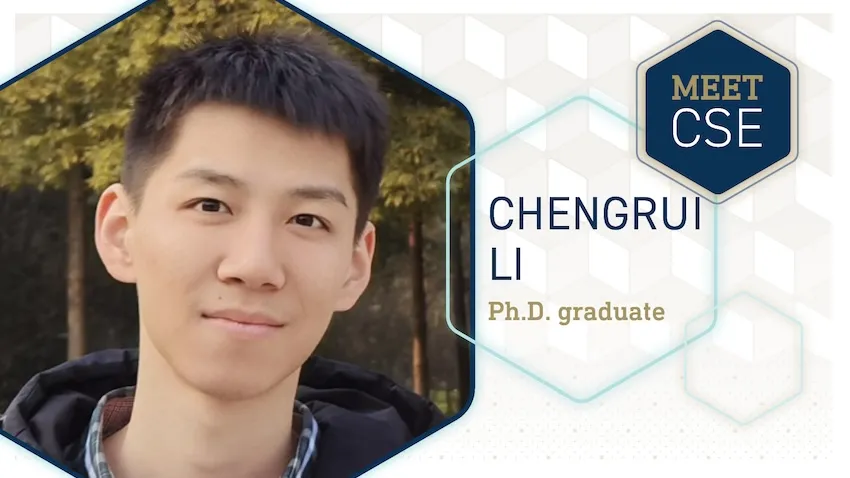
When Chengrui Li walks across the stage this Thursday at Commencement, it will be his final, and perhaps easiest, performance at Georgia Tech.
Between orchestra concerts, magic shows, and yo-yo exhibitions, Li thrives in the limelight. In fact, not much rattles his nerves considering the five years of pressure he endured studying computational neuroscience at Tech.
Before he returns to New York City to continue building brain-interface technologies at Meta, we caught up with Li to learn how he keeps such a cool head at Georgia Tech and beyond.
Graduate: Chengrui Li
Research Interests: Computational neuroscience, eye-tracking experiments and data analysis, statistical machine learning
Education: Ph.D. in Computational Science and Engineering (CSE)
Faculty Advisor: School of CSE Assistant Professor Anqi Wu
What persuaded you to attend graduate school at Georgia Tech?
My undergraduate was at Sichuan University in China. We knew that the most cutting-edge technology and research were in the United States, so I participated in an undergraduate exchange program at the University of Tennessee, Knoxville, during my third year.
I wanted to pursue a Ph.D. in neuroscience while also becoming very proficient in math and computer science (CS). This led me to apply to the CSE Ph.D. program over others. Georgia Tech’s CS ranking is very high, and the CSE program is very interdisciplinary, which matched my expectations super well. I did attain a solid education in math and CS at Georgia Tech. I also advanced my interest in neuroscience and its application by studying mathematical models and algorithms.
What research project from Georgia Tech are you most proud of?
My variational importance sampling paper is a favorite. That one was based heavily on statistical inference. I spent many hours working through complicated derivation calculations, often half-awake and half-asleep after several late nights.
This paper confirmed to me, though, that innovative research requires both hard work and inspiration, and that this endeavor can be rewarding. The paper was selected as a top 5% spotlight paper at ICLR 2024, a world-leading conference on artificial intelligence research.
Could you share more about your role as a research scientist at Meta?
I have been working on Meta’s electromyography (EMG) neural band. This next-generation human-computer interaction device connects with and navigates Meta’s AI glasses.
With the neural band, you can use finger gestures to control the display content you see through the glasses, like swiping your thumb to scroll the screen, or writing on your lap as if you had a pen in your hand to send WhatsApp messages.
How did your Georgia Tech education prepare you for this role?
By pursuing my Ph.D., I am more proficient in critical thinking, math, coding, and presentation. During my interview, I demonstrated these skills and provided my publication records. This helped me land an internship, enabled my success in that role, and led to a full-time position. Additionally, my background in computational neuroscience best matched the work on the EMG neural band team at a big tech company.
What advice would you give someone interested in graduate school?
First, be clear whether a bachelor’s or master’s degree meets your work needs, or if you are truly interested in a scientific research topic. This interest should be based on your own passion, not the current trends. Interest is an important factor in deciding to pursue a Ph.D. because you have to like the topic and like it for a long time. A Ph.D. will require you to dive deep into a subject you must be genuinely curious about.
Second, we are in a new era with rapid advances in information technology. Time is an invaluable resource and is shaped by technology. You have to think more about your time, consider where and how you spend it, and embrace ways to use it more efficiently.
Can you tell us more about your hobbies and how you keep up with them?
I started learning violin when I was five years old, and magic tricks when I was 11. The brain is a supercomputer suitable for functional computation. Our brain is an interface between the objective and subjective, where computation plays a core role in integrating these exact mechanics into interpretations of the world. This realization was one of the important factors that inspired me to pursue my Ph.D. research in computational neuroscience.
Another comparison I’ve learned after playing violin for 23 years is that the cochlea in our inner ear is a fast Fourier Transformer that simultaneously computes the aesthetic of music for us. Performing magic tricks for 17 years taught me that all the occurrences of seemingly low-probability magic phenomena are achieved by either letting it be a certain event or exhausting all possibilities.
I also have other hobbies, like yo-yo balls. I enjoy performing all these skills in front of audiences. Performing brings me satisfaction when I see excitement and happiness from the people I entertain. I am very grateful to my parents for their cultivation and encouragement in doing things that bring me fulfillment. They taught me to be curious and explore my interests, to enjoy pastimes, and instilled the habit to not give up my passions. These were not secondary things that distracted me from coursework or Ph.D. research, but rather complementary parts of my life that bring out the best in me.
What is your favorite Georgia Tech memory?
I have a lot. For my research, I debated frequently with Anqi Wu, my advisor. These often went late into the night to defend my stances. These challenged my beliefs and made me a stronger scholar, for which I am grateful to Anqi for her time and patience.
I also enjoyed performing in the Georgia Tech symphony orchestra with our great conductor, Chaowen Ting. I was involved with the Georgia Tech Chinese Students and Scholars Association, where I showcased magic and yo-yo performances at organization events.
News Contact
Bryant Wine, Communications Officer
bryant.wine@cc.gatech.edu
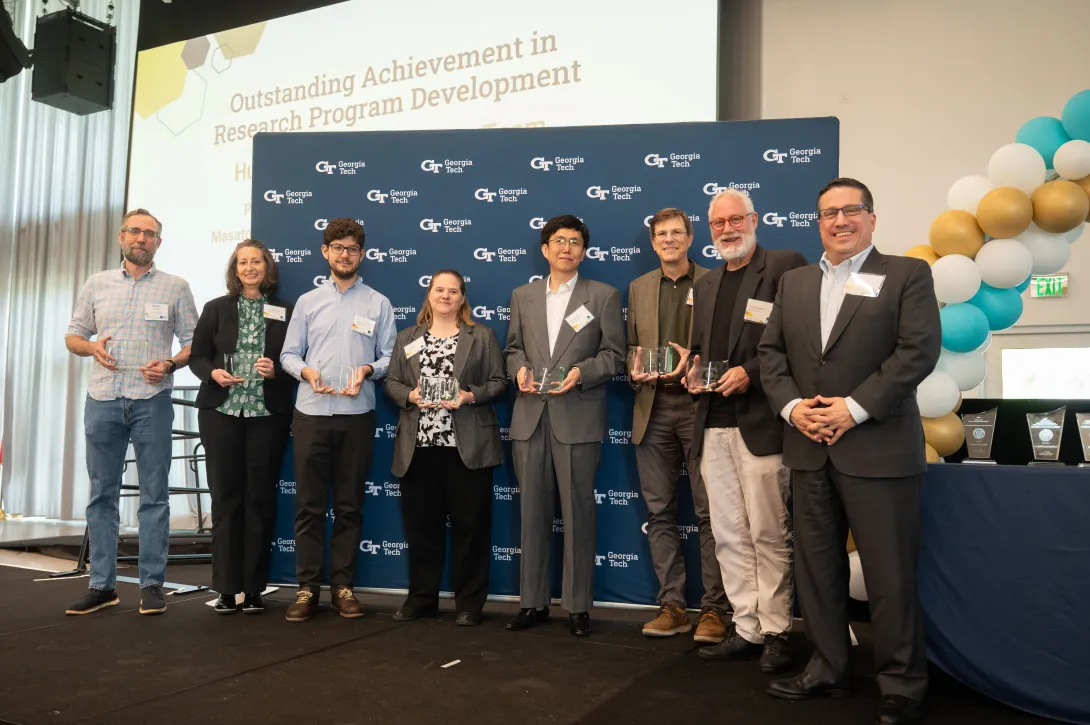
This year's Outstanding Achievement in Research Program Development Award went to the Human Space Exploration Team, whose interdisciplinary efforts have advanced Georgia Tech’s role in space research through cross college collaboration, external engagement, and integrated research vision.
Faculty affiliated with Georgia Tech’s Space Research Institute (SRI) were recognized this awards season for achievements that underscore the Institute’s leadership in space‑related research, interdisciplinary collaboration, and high‑impact program development.
Spanning individual faculty honors and major institute‑level research awards, these recognitions reflect the depth and breadth of SRI‑affiliated work across engineering, physical sciences, and large‑scale collaborative initiatives advancing space exploration, technology, and manufacturing.
“SRI faculty are tackling some of the most complex challenges in space research, often through large, highly collaborative efforts,” said W. Jud Ready, executive director of SRI and principal research engineer at the Georgia Tech Research Institute. “These awards recognize not only individual excellence, but also the kind of cross‑cutting leadership and teamwork that defines impactful space research at Georgia Tech.”
Presented through peer‑driven nomination processes, Georgia Tech’s internal awards honor contributions across the research lifecycle, from foundational scholarship to interdisciplinary program building and long‑term research impact. This year’s SRI‑affiliated awardees include faculty recognized for outstanding publications as well as leaders and contributors to major research teams shaping Georgia Tech’s space enterprise.
In addition to these honors, SRI also celebrates affiliated faculty who received tenure or promotion this spring, reflecting their sustained contributions to research, teaching, and leadership at Georgia Tech.
SRI Affiliate Award Recipients
Outstanding Achievement in Research Program Development Award
Human Space Exploration Team
The Outstanding Achievement in Research Program Development Award recognizes a faculty‑ and staff‑led research team that has built a thought‑leadership platform to significantly expand Georgia Tech’s research and scholarship portfolio. This year’s award honors the Human Space Exploration Team, whose interdisciplinary efforts have advanced Georgia Tech’s role in space research through cross‑college collaboration, external engagement, and integrated research vision.
The team brings together expertise across engineering, physical sciences, materials science, and human‑centered research to address the technical, biological, and societal challenges of sustained human presence in space. Their work spans foundational research, technology development, and program‑level coordination, helping position Georgia Tech as a leader in human space exploration research.
- Phillip First, Professor, School of Physics
- Masatoshi Hirabayashi, Associate Professor, School of Aerospace Engineering
- Brant Jones, Senior Research Scientist, College of Sciences
- Julie Linsey, Professor, College of Engineering
- Peter Loutzenhiser, Associate Professor, School of Aerospace Engineering
- Thomas Orlando (Team Leader), Regents’ Professor, School of Chemistry and Biochemistry
- Frances Rivera‑Hernandez, Assistant Professor, College of Sciences
- Alvaro Romero‑Calvo, Assistant Professor, College of Engineering
- Meisha Shofner, Professor, School of Materials Science and Engineering
Learn more about the Human Space Exploration Team.
Outstanding Achievement in Research Program Impact Award
Georgia Artificial Intelligence in Manufacturing (GA‑AIM)
- Brian Gunter, Associate Professor, Daniel Guggenheim School of Aerospace Engineering
- Thomas Kurfess, Executive Director, Georgia Tech Manufacturing Institute
Recognizes a research program demonstrating measurable impact, broad influence, and sustained engagement with academic, industry, and community partners.
Learn more about Georgia AIM.
Best Faculty Paper Award
Matthew McDowell
Professor, Woodruff School of Mechanical Engineering
Recognized for outstanding scholarly publication advancing research excellence in engineering.
ANAK Faculty Award
John D. Cressler
Schlumberger Chair in Electronics and Professor, School of Electrical and Computer Engineering
Honors distinguished faculty contributions to the Georgia Tech community.
Newly Tenured or Promoted SRI Faculty Affiliates
Promoted to Professor
- John A. Christian, Daniel Guggenheim School of Aerospace Engineering, College of Engineering
- Christopher Thomas Reinhard, School of Earth and Atmospheric Sciences, College of Sciences
- Lawrence Peter Rubin, Sam Nunn School of International Affairs, Ivan Allen College of Liberal Arts
Promoted to Associate Professor / Awarded Tenure
- Christopher E. Carr, Daniel Guggenheim School of Aerospace Engineering, College of Engineering; School of Earth and Atmospheric Sciences, College of Sciences
- Pengfei Liu, School of Earth and Atmospheric Sciences, College of Sciences
- Jürgen Rauleder, Daniel Guggenheim School of Aerospace Engineering, College of Engineering
- Samer Naif, School of Earth and Atmospheric Sciences, College of Sciences
News Contact
Audra Davidson
Research Communications Program Manager
Space Research Institute