

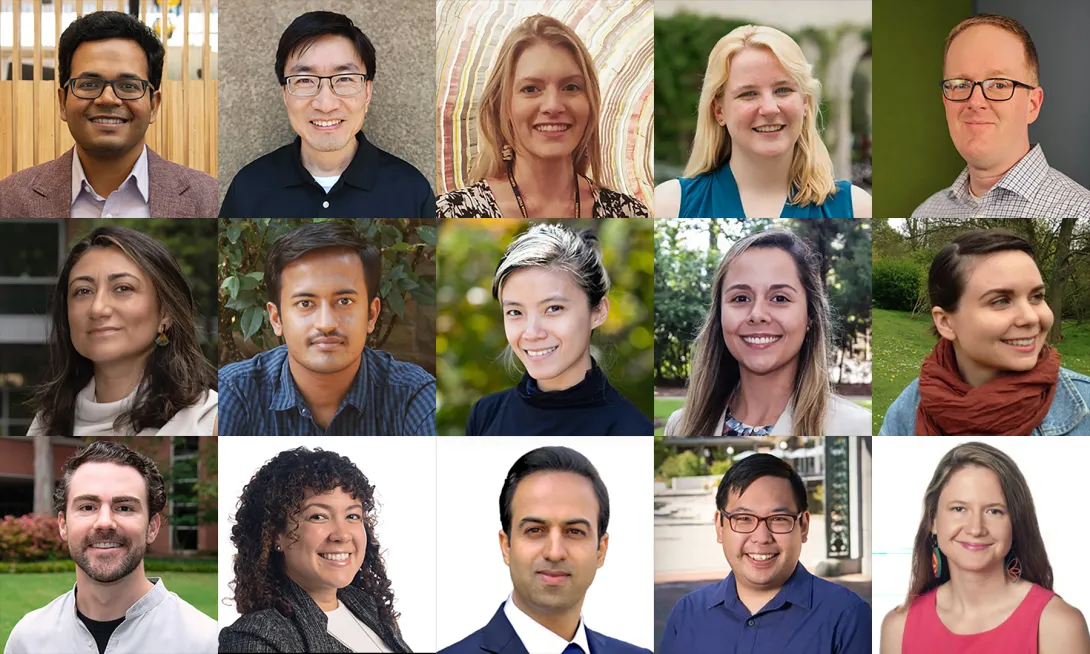
EPIcenter ACCELERATE Program Recipients: Top (Left to Right) - Clio Andris, Marilyn Brown, Dylan Brewer, Gaurav Doshi, Michelle Graff; Bottom (Left to Right) - Tony Harding, Brian An, Matt Oliver, Micah Ziegler, Constance Crozier
The Energy Policy and Innovation Center (EPIcenter) at Georgia Tech has awarded funding to a new cohort of faculty through its ACCELERATE program, an initiative designed to strengthen Georgia Tech’s thought leadership and real‑world impact in energy policy, decision‑making, and innovation across the Southeast.
Eight faculty members received funding for projects that advance Georgia Tech energy research by generating early insights, expanding shared research tools, and exploring solutions related to energy policy, grid reliability, clean energy incentives, and industry‑driven innovation shaping Georgia’s energy future.
By supporting timely, policy-relevant research and engagement that connect Georgia Tech expertise with pressing regional energy challenges, the ACCELERATE program encourages collaboration across the Institute and with external partners, supports graduate student involvement, and amplifies research outputs that inform policy, regulatory, and market decisions.
“ACCELERATE is designed to help early- and mid-career faculty move quickly on ideas that can shape energy policy and practice,” said Laura Taylor, director of EPIcenter. “By supporting both early‑stage collaboration and more developed policy research, the program enables Georgia Tech researchers to engage decision‑makers and stakeholders when it matters most.”
Proposals considered for funding were grounded in policy and behavioral research, including studies that examined how past or potential policies and regulations worked, and analyses of current market and behavioral outcomes that revealed management, policy, or regulatory gaps and opportunities.
Funded projects span a range of disciplines and policy‑focused topics aligned with EPIcenter’s mission, with a strong emphasis on challenges facing Georgia and the Southeast. Collectively, the awards support research development, data creation, stakeholder engagement, and public-facing thought leadership intended to inform energy policy and implementation.
"As electricity demand grows, it is increasingly important to understand how industrial processes could use energy flexibly to enable efficient use of renewable resources like solar and wind,” said Micah Ziegler, assistant professor in the School of Chemical and Biomolecular Engineering and the Jimmy and Rosalynn Carter School of Public Policy. “Support from the EPIcenter ACCELERATE program enables us to ask fundamental questions about how to design flexible systems and supply chains."
Awards ranged from $5,000 to $75,000. Projects that received ACCELERATE funding include:
Measuring the Alignment Between Legislators’ Energy Bill Votes and Their District Characteristics in the Georgia House of Representatives
Faculty Researcher: Clio Andris, Associate Professor, School of City and Regional Planning and School of Interactive Computing
Strengthening Georgia Tech’s National Energy Modeling of Priority Research Areas
Faculty Researcher: Marilyn Brown, Regents' Professor and Brook Byers Professor of Sustainable Systems, Jimmy and Rosalynn Carter School of Public Policy
Protecting Consumers From Price Volatility: Evidence and Policy Lessons From Georgia's Natural Gas Market
Faculty Researcher: Dylan Brewer, Assistant Professor, School of Economics
Can Place-Based Incentives Accelerate the Energy Transition?
Faculty Researcher: Gaurav Doshi, Assistant Professor, School of Economics
The Revolving Door in Utility Regulation
Faculty Researcher: Michelle Graff, Assistant Professor, Jimmy and Rosalynn Carter School of Public Policy
How Do Data Centers Affect Tradeoffs Between Reliability and Decarbonization?
Faculty Researchers: Tony Harding, Assistant Professor, Jimmy and Rosalynn Carter School of Public Policy, and Brian An, Assistant Professor, Jimmy and Rosalynn Carter School of Public Policy
Calculating the Emissions Cost of the Solar Rebound for the United States
Faculty Researcher: Matt Oliver, Associate Professor, School of Economics
Evaluating Long-Duration Flexibility of Industrial Demand in Electric Power Systems
Faculty Researchers: Micah Ziegler, assistant professor, School of Chemical and Biomolecular Engineering and the Jimmy and Rosalynn Carter School of Public Policy, and Constance Crozier, Assistant Professor, H. Milton Stewart School of Industrial and Systems Engineering
ACCELERATE is an annual program open to all Georgia Tech faculty, focusing on policy‑ and decision‑relevant research that advances energy affordability, reliability, resilience, and decarbonization in the region.
More information about EPIcenter’s research areas and programs is available at epicenter.energy.gatech.edu.
News Contact
Priya Devarajan || SEI Communications Program Manager
2026 Sustainability Next Seed Grant Principal Investigators: (R to L, Top to Bottom) Rounaq Basu, Sheng Dai, Anna Doll, Lilian Dove, Scott Duncan, Paula Gomez, Suhas S. Jain, Cindy Kaiying Lin, Sofía Pérez Guzmán, Caitlin Petro, Gregory Randolph, Rosemarie Santa Gonzalez, Ali Sarhadi, Richmond Wong, and Ruth C. Yow.
The most recent round of Sustainability Next Research Seed Grants has been awarded to 15 transdisciplinary teams featuring 36 collaborators from across Georgia Tech and beyond. The teams span 21 units from six of Georgia Tech’s seven Colleges, including Schools, research centers, and Interdisciplinary Research Institutes, as well as organizations external to Georgia Tech.
The seed grant program, administered by the Brook Byers Institute for Sustainable Systems (BBISS), reaches faculty members from a diverse array of disciplines due to the generous support provided by broad-based partnerships in addition to the funds provided by the Sustainability Next committee. This year’s partners are the School of Civil and Environmental Engineering, the College of Design, BBISS, the Renewable Bioproducts Institute, the Georgia Tech Research Institute, and the Institute for Data Engineering and Science.
The goal of the program is to nurture promising research areas for future large-scale collaborative sustainability research, research translation, and/or high-impact outreach; to provide mid-career faculty with leadership and community-building opportunities; and to broaden and strengthen the Georgia Tech sustainability community as a whole. The call for proposals was modeled after the Office of the Executive Vice President for Research’s Moving Teams Forward and Forming Teams programs.
This year’s seed grant awards align with the four main thematic areas in which BBISS aims to enhance Georgia Tech’s research to address some of our most pressing sustainability challenges:
- AI and Sustainability, and the Sustainability of AI Infrastructure.
- Climate Science, Technology, and Solutions.
- Healthy Environments and Sustainable Resource Use.
- Resilience and Regeneration.
The 2026 Sustainability Next Seed Grant awards are:
Forming Teams:
- Actualize Shallow Geothermal Systems for Decentralized Heating. Principal Investigator (PI): Sheng Dai.
- Building Community University Research Capacity for PFAS Testing and Treatment. PI: Ruth C. Yow. Co-Principal Investigators (Co-PIs): Joe Bozeman, Yongsheng Chen, and Ahmed Ibrahim Yunus.
- A Global Sustainability Analysis of Places “Urbanizing from Within.” PI: Gregory Randolph. Co‑PIs: Sabina Dewan, Yiyi He, John Taylor, and Celine Vacchiani‑Marcuzzo.
- Creating a Refusal Taxonomy to Explore Alternate Computing Practices. PI: Richmond Wong. Co‑PIs: Heidi Biggs and Carl DiSalvo.
- Demystifying Data Centers: Examining Georgia Tech’s Coda HPCC in the Context of Sustainability and Resilience. PI: Scott Duncan. Co-PIs: Jung-Ho Lewe and David Solano Sarmiento.
- Physical Transport of Sunlight‑Exposed Dissolved Organic Carbon in the New Arctic. PI: Lilian Dove. Co‑PI: Jennifer Bowen.
Moving Teams Forward:
- Agentic AI Digital Twins for Hurricane Resilience in Coastal Georgia. PI: Ali Sarhadi.
- CLEAR‑SE: Co‑Creating a Center‑Scale Network for Advancing Collaborative, Long‑Term Action Research on Community‑Led Resilience and Disaster Risk Reduction in the Southeast. PI: Sofía Pérez‑Guzmán. Co‑PI: Jennifer Hirsch.
- Data Center Effects on Communities in Georgia’s Black Belt. PI: Cindy Kaiying Lin. Co‑PIs: Joe Bozeman, Anthony Harding, Allen Hyde, Nicole Kennard, Jung-Ho Lewe, and Ahmed Saeed.
- Reimagining Southern Forests: Enabling Cost‑Effective Sustainable Production of High‑Value Climate‑Ready Southern Pines. PI: Caitlin Petro. Co‑PIs: Lucas Clay, Ulrika Egertsdotter, and Joel Kostka.
- Human‑Technology Collaborations: Towards Sustainable and Inclusive Food Systems. PI: Rosemarie Santa Gonzalez. Co‑PIs: Ashutosh Dhekne, Sylivia Janicki, Nicole Kennard, Yaman Sangar, and Abigale Stangl.
- Guiding Transportation with Community Action through Research, Education, and Service (GT‑CARES). PI: Rounaq Basu. Co-PIs: Sofía Pérez‑Guzmán, Jennifer Hirsch, and Scott Moffat.
- Instability‑Resolved Ocean Mixing for Climate Prediction and Climate Solutions. PI: Suhas S. Jain. Co‑PIs: Mohammad Mohaghar, and Donald Webster.
- Buildings Next: Forming a Transdisciplinary Consortium for Sustainable Building Innovation. PI: Paula Gomez. Co‑PI: Allison Bridges.
- Paper and Natural Dye Living Exhibition. PI: Anna Doll. Co‑PI: Virginia Howell.
News Contact
Brent Verrill, Research Communications Program Manager, BBISS
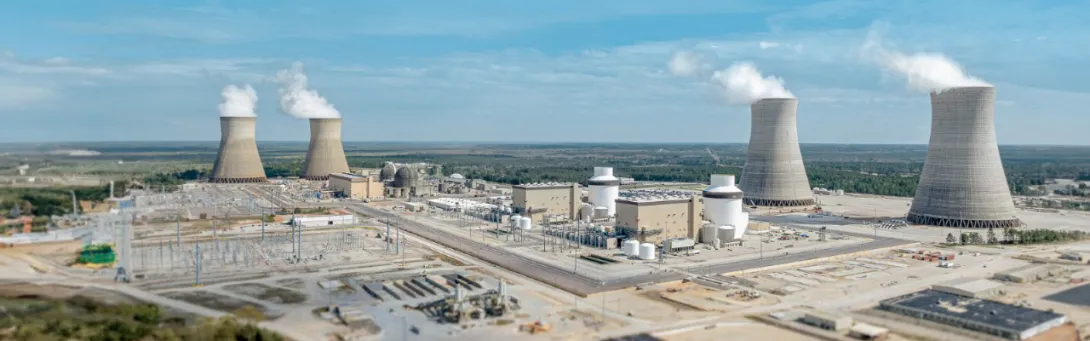
Primarily driven by the rapid construction of data centers nationwide amid the artificial intelligence boom, total electricity usage in the United States is projected to grow by 32% by 2030, according to the Connected Grid Initiative.
Nuclear power currently supplies roughly 20% of U.S. electricity, but because of its reliability compared to wind and solar power and its potential to reduce carbon emissions, the industry is positioned to expand its role in reshaping the future of energy. When Southern Company officially connected Units 3 and 4 at the Alvin W. Vogtle Electric Generating Plant to the grid, Georgia became home to the country’s largest nuclear power facility and to the first nuclear units built in the U.S. in more than 30 years.
With Georgia Tech alumni playing critical roles at the plant, students entering the field, and faculty conducting innovative research, the Institute’s influence can be felt throughout the industry.
News Contact

A recent review published in Energy Research & Social Science by EPIcenter public policy affiliates – Ryan Anthony, Brian An, Marilyn A. Brown, Michelle Graff, and Daniel C. Matisoff – examines five decades of low-income weatherization program evaluations. The researchers systematically analyzed 17 retrospective, outcome-focused evaluations to identify how assessment methods have shifted from early pre-post energy comparisons to more rigorous causal inference research designs. While the literature consistently finds low-income home retrofit programs, such as the Weatherization Assistance Program (WAP), reduce energy burdens, many earlier evaluations are limited by research designs, including selection-biased control groups and minimal community engagement in the evaluation process.
To address these limitations, the authors recommend that future evaluations prioritize the construction of appropriate control groups or adopt quasi-experimental approaches, such as propensity score matching, to better isolate causal impacts. They also highlight the value of modern difference-in-difference estimators for strengthening causal identification. In addition, the review emphasizes the importance of leveraging available and emerging technologies, such as smart meters, thermostats, and sensors, to provide timely, precise data for evaluating both energy consumption and savings as well as non-energy impacts, like health and safety.
News Contact
Gil Gonzalez, Energy Policy and Innovation Center

A new study by Georgia Institute of Technology researchers examines whether electrified supply chains can provide a new source of long‑duration demand flexibility for the electric grid, helping integrate variable renewable energy such as wind and solar.
The paper, authored by EPIcenter faculty affiliate Constance Crozier (School of Industrial and Systems Engineering, Georgia Institute of Technology), EPIcenter student affiliate Rina Davila Severiano (School of Industrial and Systems Engineering, Georgia Institute of Technology) and Mark O’Malley explores how electrifying both industrial manufacturing and freight transportation could allow electricity demand to shift over days or even weeks — far longer than the hours‑long flexibility commonly associated with electric vehicle charging or battery storage.
Using a case study of the cement industry along the U.S. East Coast, the authors model a fully electrified supply chain spanning 20 cities, two manufacturing hubs, electric truck fleets and warehouse storage. Their analysis shows that, by adjusting manufacturing schedules and inventory levels, electrified supply chains could shift tens of gigawatt‑hours of electricity demand to better align with renewable availability, particularly wind power, whose output varies over longer timescales. They find that this flexibility can emerge under relatively modest carbon price signals — below $50 per ton of CO₂ — well before grid‑scale battery storage becomes economically viable.
News Contact
Priya Devarajan | SEI Communications Program Manager
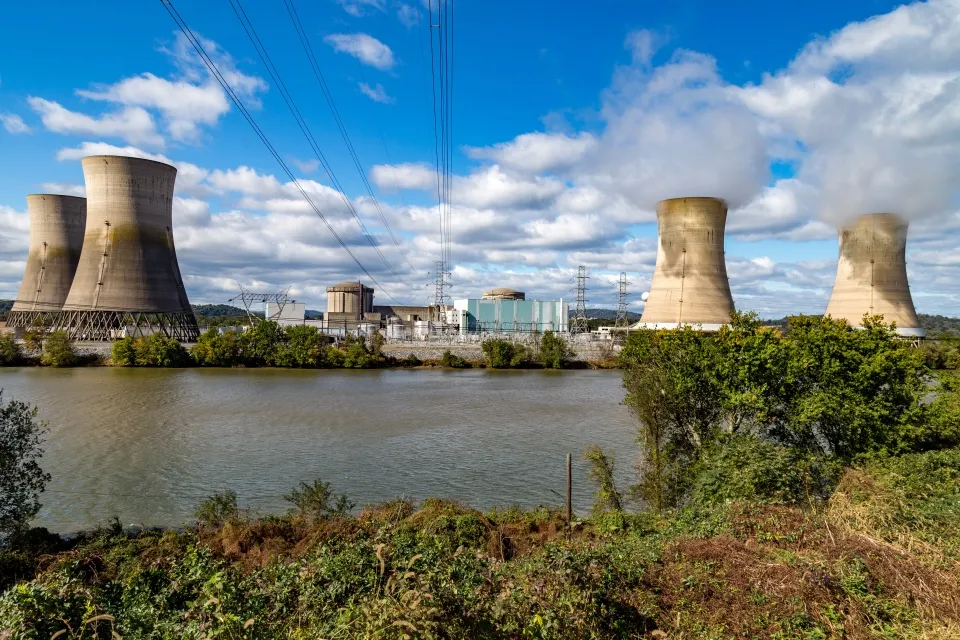
The demand for electricity to power AI data centers is skyrocketing, placing immense pressure on traditional energy sources.
“If we continue pursuing clean energy for AI and data centers, we will need to triple the energy supply for data centers by 2030,” says Woodruff Professor Anna Erickson, a nuclear engineering expert from Georgia Tech. Nuclear power, with its high energy density and continuous operation, is well-suited to provide the steady base load of electricity required.
According to Erickson, the recent headlines of the restarting of Pennsylvania’s Three Mile Island Unit 1 reactor (TMI-1) could play a crucial role in meeting these demands sustainably.
This decision, supported by a 20-year agreement with Microsoft, aims to provide carbon-free energy to meet the escalating power demands of AI data centers. The company’s goal to be carbon negative by 2030 aligns with the broader push for sustainable energy solutions.
According to the United States Energy Information Administration, as of Aug. 1, 2023, the United States has 93 operating commercial nuclear reactors across 54 nuclear power plants in 28 states. The most recent reactor to begin commercial operation is Unit 4 at the Alvin W. Vogtle Electric Generating Plant in Georgia, which started on April 29, 2024.
The commercial start of Unit 4 completes the 11-year expansion project at Plant Vogtle.
News Contact
Siobhan Rodriguez - sar30@gatech.edu

A Georgia Tech School of Interactive Computing professor and his Ph.D. student have been named to the 2026 list of Microsoft Research Fellows and Fellowship Advisors.
Associate Professor Alan Ritter and Ph.D. student Ethan Mendes were awarded fellowships for their work on creating artificial intelligence (AI) agents that function as teammates.
Mendes was named a fellow, while Ritter will serve as his fellowship advisor.
The Microsoft Research Fellowship is open to faculty, students, and postdocs. Ritter said that if Microsoft sees alignment in a project, it gives recipients the opportunity to work even closer with their collaborators by inviting them to join as additional fellows.
That turned out to be the case with Mendes after Ritter listed him as a collaborator in his fellowship proposal.
“I’m delighted to serve as Ethan Mendes’ fellowship advisor,” Ritter said. “He is an exceptionally strong researcher, and I’m excited to see his work recognized through the Microsoft Research Fellowship.”
Through the fellowship, Ritter and Mendes will design AI systems that better support collaboration and decision-making within organizations.
“The goal is to move beyond AI as a tool for a single user and instead study how AI can help groups make more informed, transparent, and coordinated decisions,” Ritter said. “We will focus on methods that bring together information from many different sources, help people reason under uncertainty, and generate analyses that support collective problem-solving in complex work settings.”
Professor Named to Sustainability Cohort
The Purple Mai’a Foundation has selected Associate Professor Josiah Hester to join its Eahou Global Immersion Cohort.
The Purple Mai’a Foundation is a technology education nonprofit headquartered in Aiea, Hawaii, that teaches coding and computer science to Native Hawaiian students.
The 29 members of the Eahou Global Immersion Cohort from 15 countries are leaders from indigenous communities recognized for their contributions to sustainability.
Hester is a Native Hawaiian whose research centers on sustainable and battery-free technology.
The cohort will gather on O’ahu May 1-3 for Eahou Fest, where they will share stories and solutions from research around the world.
“I’m honored to be selected for the Eahou Global Immersion Cohort and to learn alongside such an inspiring group of resilience leaders who come from around the globe,” Hester said.
“Participants are selected for their significant leadership over the past decade and their ability to bring what they learn back to their communities and integrate it into ongoing work and partnerships. I’m excited to connect these experiences with my work and bring these lessons back into research and teaching at Georgia Tech.”
Jill Watson Creator Receives AAAI Lecture Award
Professor Ashok Goel received one of the most distinguished awards from the Association for the Advancement of Artificial Intelligence (AAAI).
Goel was selected as the 20th recipient of the AAAI Robert S. Engel Memorial Lecture Award. Established in 2003, the award is given to those who have demonstrated excellence in AI scholarship, outstanding applications of AI, and extraordinary service to AAAI and the AI community.
Goel received the award in January during the AAAI Conference on Artificial Intelligence in Singapore. According to the awards program, Goel was recognized for contributions to biologically inspired design, case-based reasoning, and application of AI in virtual teaching.
Goel is the inventor of Jill Watson, one of the first AI virtual teaching assistants used in higher education classrooms.
AAAI is also the publisher of AI Magazine, which Goel served as editor-in-chief from 2016 to 2021.
“I am both honored and humbled to receive AAAI's Robert Engelmore Award,” Goel said. “Bob was a long-time editor of AAAI's AI Magazine, and many years after he retired, I became the editor of the magazine. This makes the Engelmore Award special to me.”
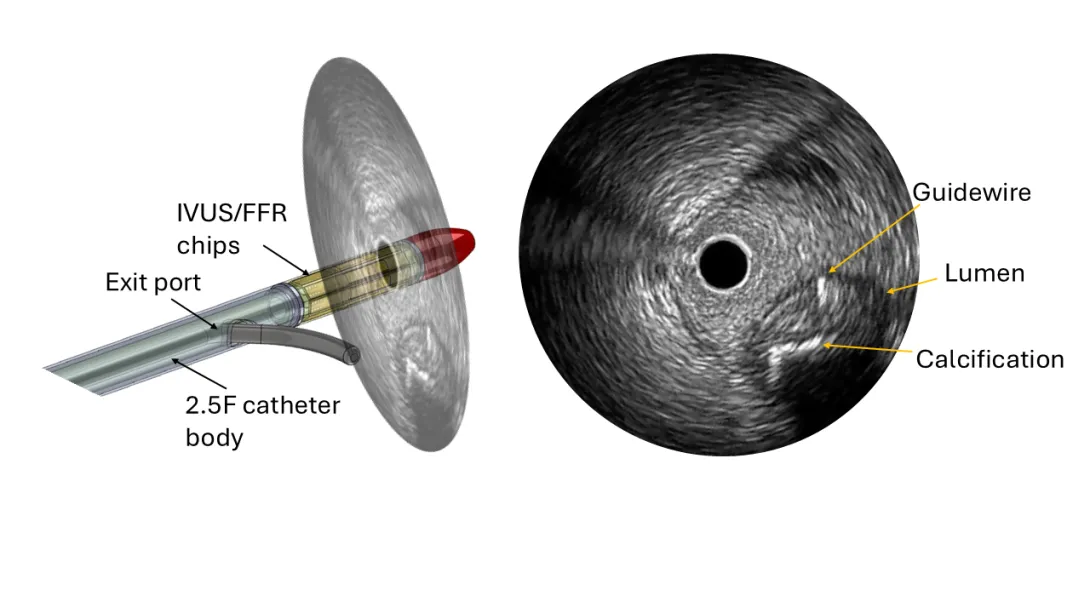
When patients undergo procedures to open blocked heart arteries, precision matters. Even small imperfections in placing a stent can affect blood flow and long-term health. Now, a research team led by F. Levent Degertekin, Regents’ Entrepreneur, George W. Woodruff Chair in Mechanical Systems, and professor in the George W. Woodruff School of Mechanical Engineering, is working to change that with a new kind of catheter designed to give doctors clearer, real-time insight during these life-saving procedures.
Backed by a four-year, $2.2 million National Institutes of Health Research Project (R01) grant, the project aims to develop a microcatheter that combines high-resolution imaging with precise pressure sensing in a single device.
Read the full story on the George W. Woodruff School of Mechanical Engineering website.
News Contact
Ashley Ritchie
George W. Woodruff School of Mechanical Engineering
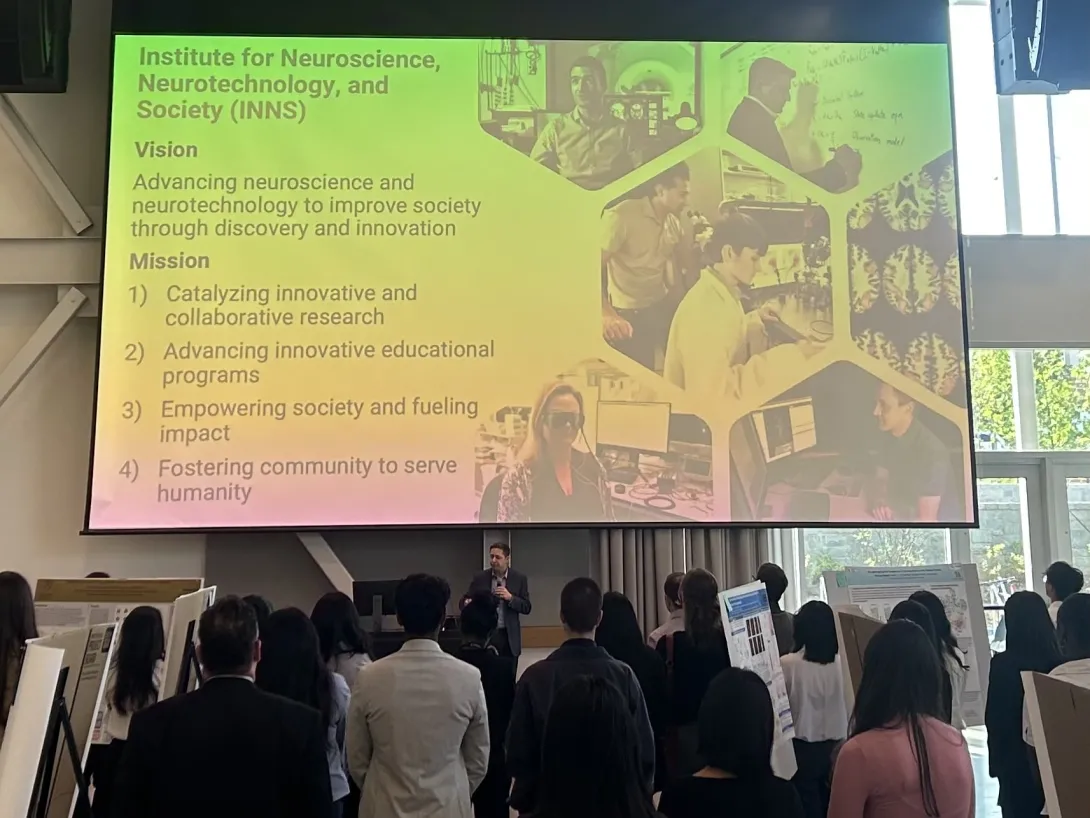
Chris Rozell is giving the opening remarks at the ATL Neuro Networking and Symposium Night.
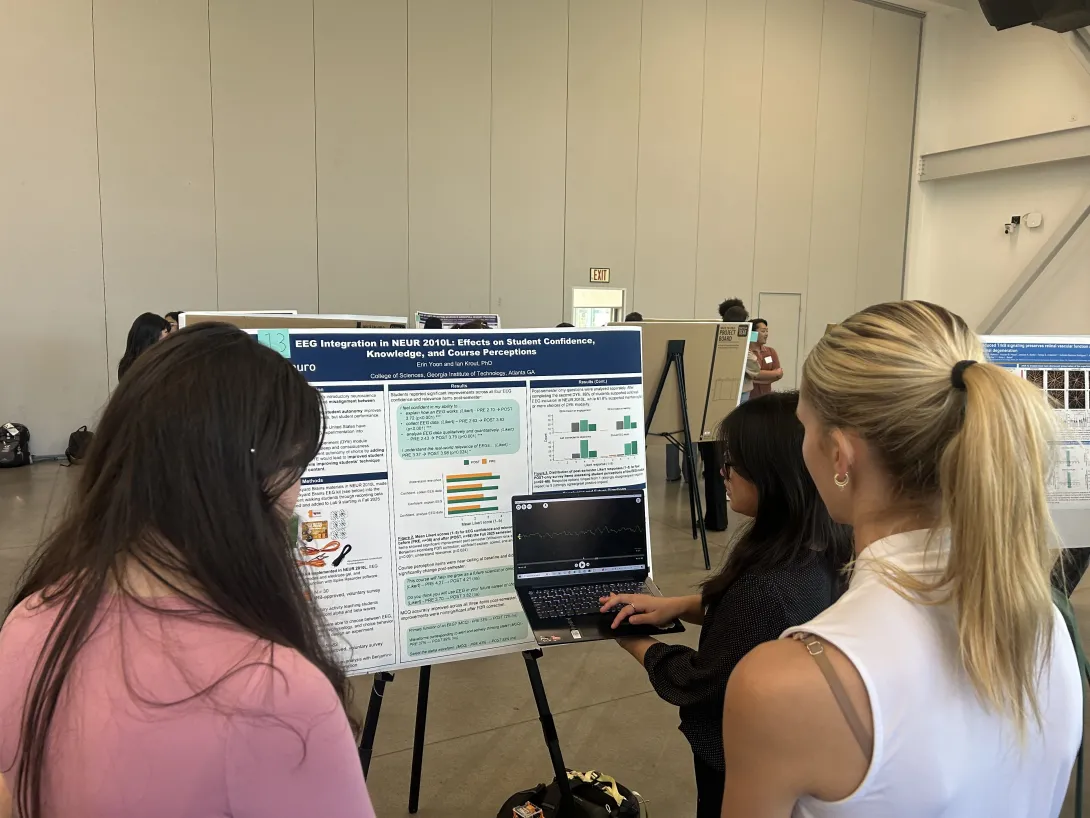
A group of students is discussing a poster, and the presenter is giving an example during the first poster session.
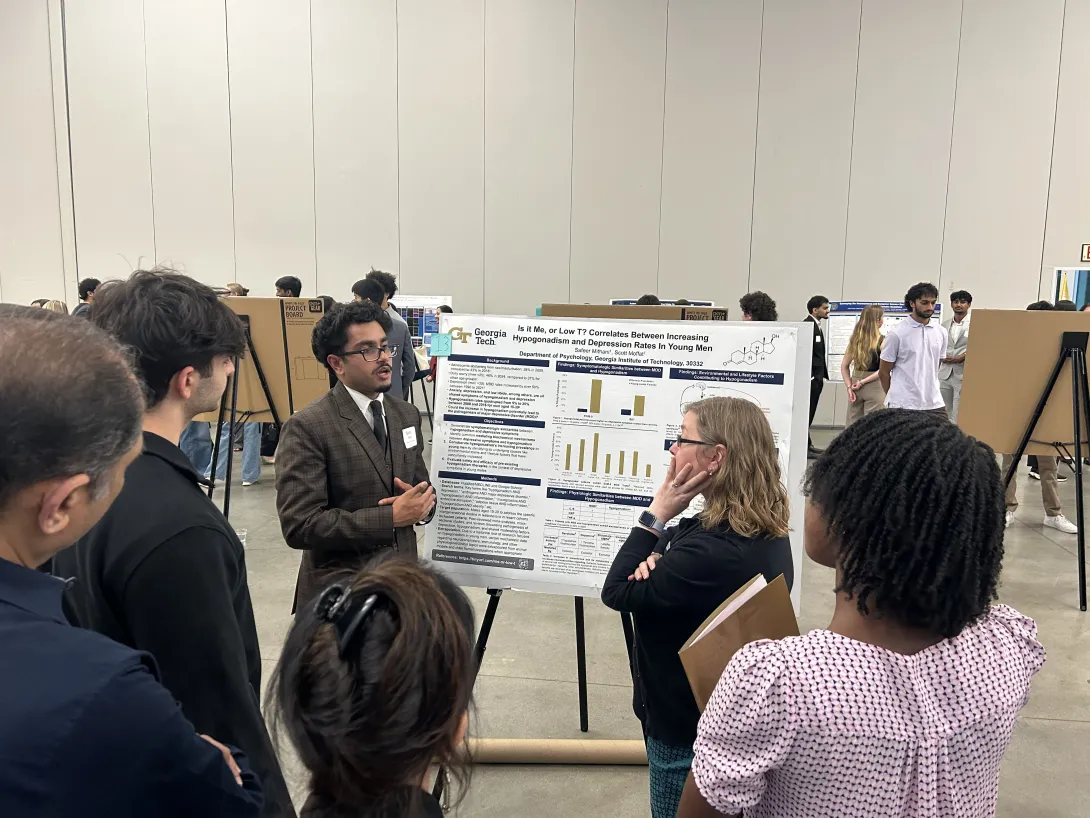
A group of students and faculty is discussing a poster during the second poster session.
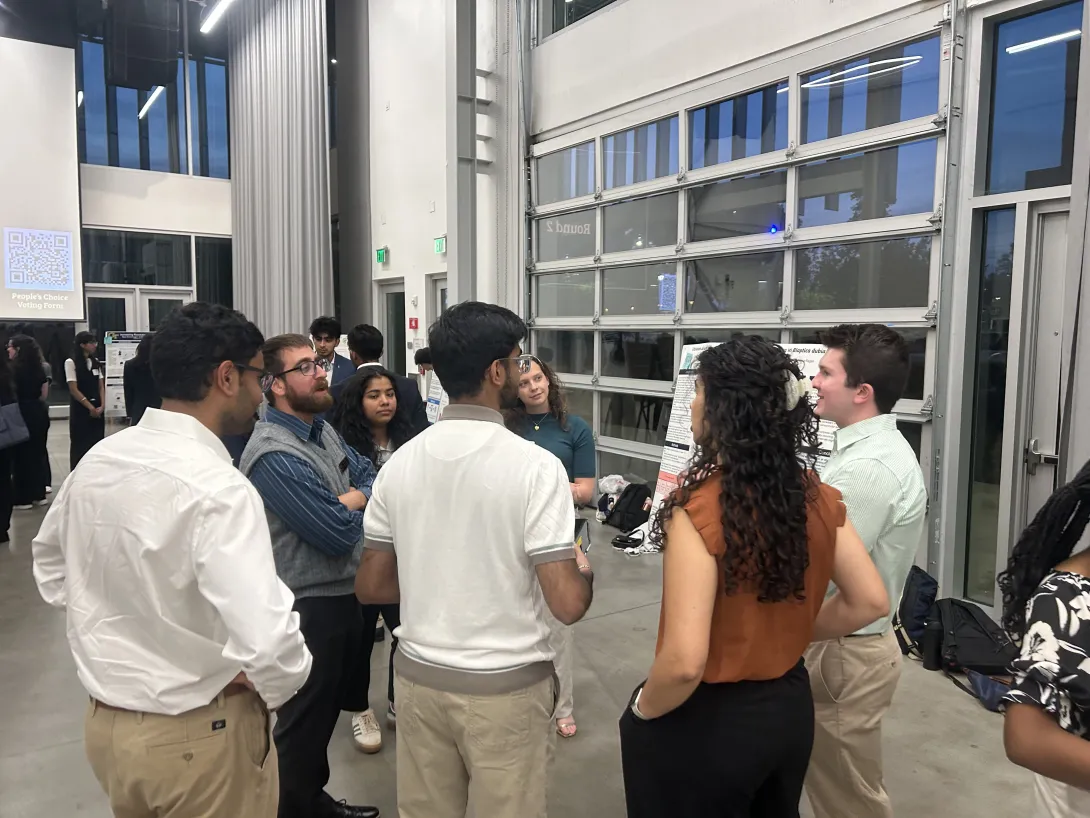
A group of students and faculty is discussing a capstone poster during the second poster session.
At Georgia Tech, undergraduate students are an integral part of the research enterprise – particularly when it comes to neuroscience. That dedication to undergraduate research was on full display on April 8, when more than 100 students from Atlanta-area universities gathered for the annual ATL Neuro Networking and Symposium Night.
This student-run event, hosted by the Georgia Tech Student Neuroscience Association (SNA) and co-sponsored by the Institute for Neuroscience, Neurotechnology, and Society (INNS) and the Neuroscience Undergraduate Program at Georgia Tech, aimed to bring together students and faculty from the broader Atlanta neuroscience community for an evening of data-blitz talks showcasing faculty research, undergraduate poster presentations, and catered networking.
“Our goal was to bridge the gap between Atlanta’s institutions and showcase the diversity of undergraduate research,” says Harshin Vijay, symposium director of SNA. “By bringing these groups together through SNA, we’re fostering an ecosystem where the next generation of scientists can exchange ideas and build collaborative networks essential for future innovation."
The impact of undergraduate neuroscience research is “more than bench to bedside,” said INNS Executive Director Chris Rozell at the event. “It’s about advancing neuroscience and neurotechnology to improve society through discovery and innovation. Undergraduate research catalyzes innovation – invigorating and advancing educational programs through collaboration that empowers society – fueling impact and fostering the community of next-generation scientists.”
Featuring more than 40 undergraduate posters, research topics ranged anywhere from the impact of music on associative memory to the role of taste projection neurons in Drosophila. Some students even examined their own coursework, either as a TA or their involvement with capstone research.
“There are neuroscientists in every College at Georgia Tech, and we have undergraduate neuroscience students performing research all over campus and in the broader Atlanta neuroscience community,” says Katharine McCann, the director of Undergraduate Research for Georgia Tech’s neuroscience program. “Events like this bring those students together to learn from each other and broaden their networks. It is exciting to see so many students passionate about their research.”
Four posters were awarded for their work:
Best Poster Design: “Role of Taste Projection Neurons in Drosophila Taste Processing”
- Hanti Jiang, Emory University
Best Presentation: “Neuroscience and Computer Science Roots of Pattern Recognition”
- Rishi Polepally, Georgia Tech
- Aryan Kumar, Georgia Tech
- Vedanth Natarajan, Georgia Tech
Best 4001 Group: “Evaluating Cognitive Engagement in AI-Generated VS. Human-Created Educational Content”
- Hannah Ammari, Georgia Tech
- Shobini Palaniappan, Georgia Tech
- Rayhan Quraishi, Georgia Tech
- Aryan Shah, Georgia Tech
- Divya Tadanki, Georgia Tech
People's Choice Award: “Vibration as an effective facilitation of sensorimotor learning in Blaptica dubia cockroaches”
- Diana Sethna, Georgia Tech
- Jacob Hayes, Georgia Tech
- Ellie Kate Watson, Georgia Tech
- Arya Oak, Georgia Tech
Esha Panse, Georgia Tech
- Hersh Mathur, Georgia Tech
News Contact
Writer: Hunter Ashcraft
Communications Student Assistant
Institute for Neuroscience, Neurotechnology, and Society
Media Contact: Audra Davidson
Research Communications Program Manager
Institute for Neuroscience, Neurotechnology, and Society
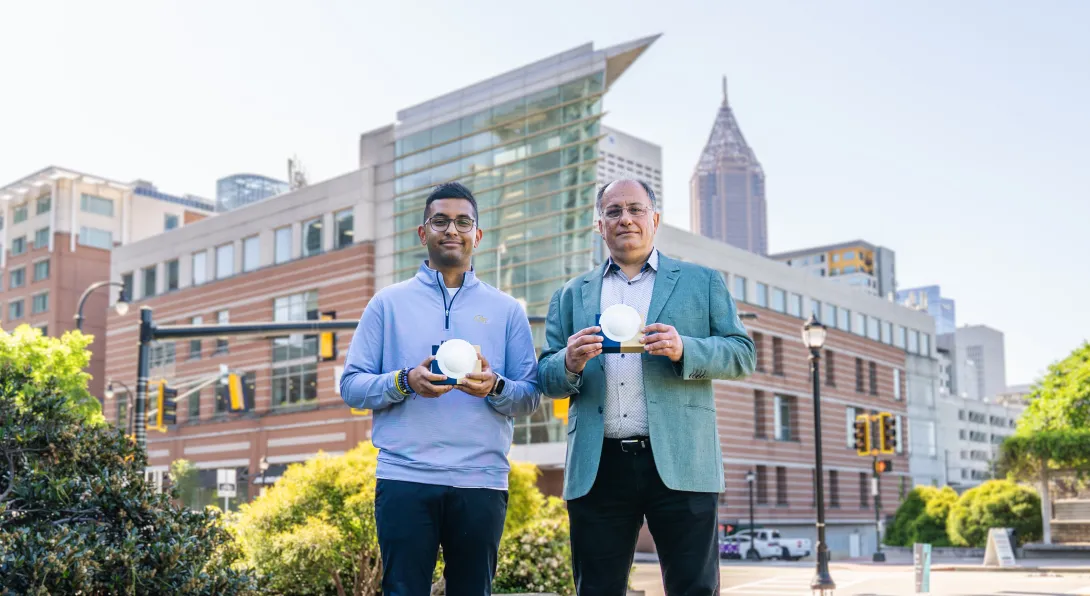
Professor Emmanouil “Manos” Tentzeris and Ph.D. student Marvin Joshi hold a lens‑enabled backscatter system that could support battery‑free wireless communication across future smart city infrastructure.
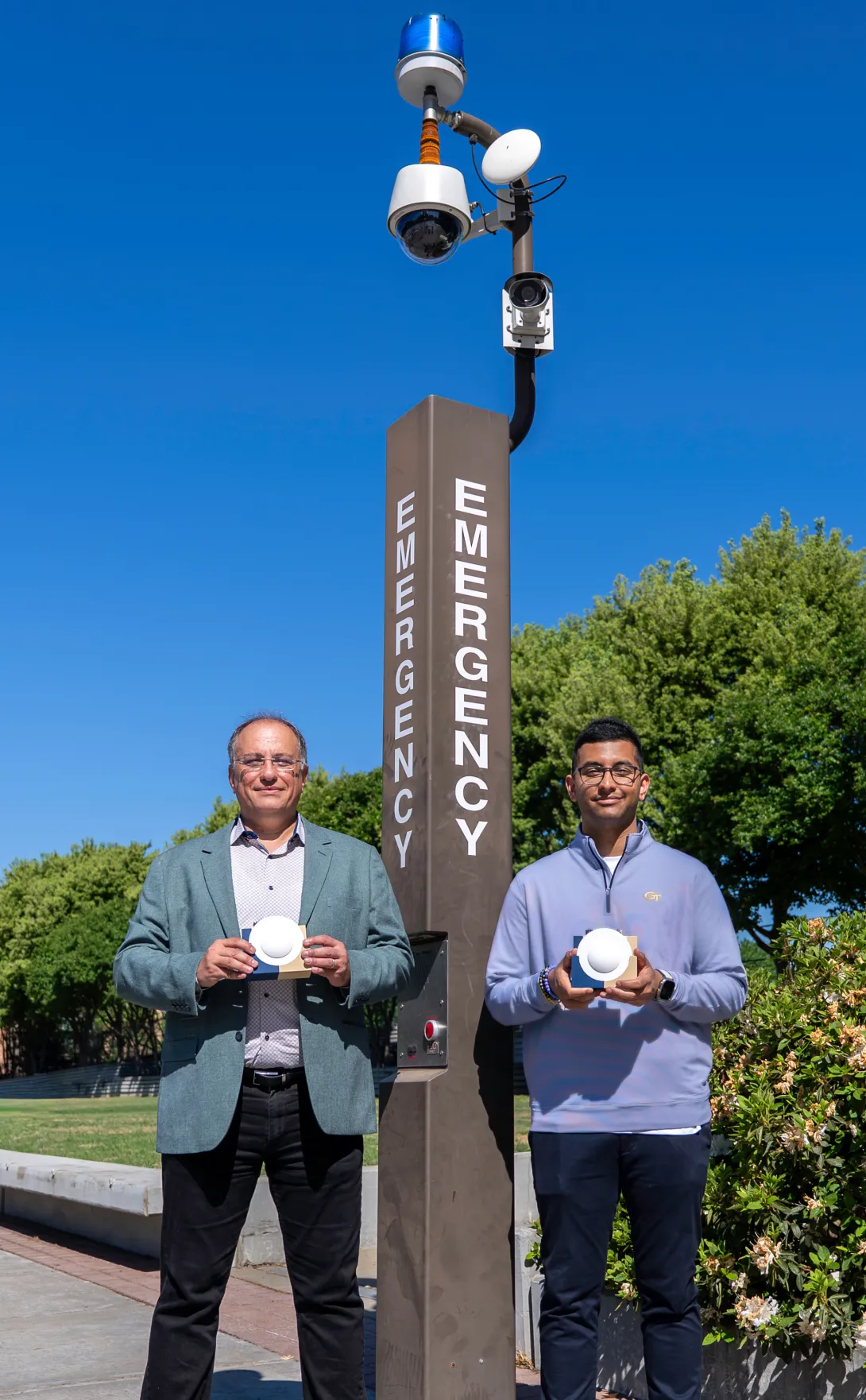
Shown near existing campus emergency infrastructure, the lens‑enabled backscatter device highlights how ultra‑low‑power wireless systems could be integrated directly into everyday infrastructure without relying on batteries or wired power.
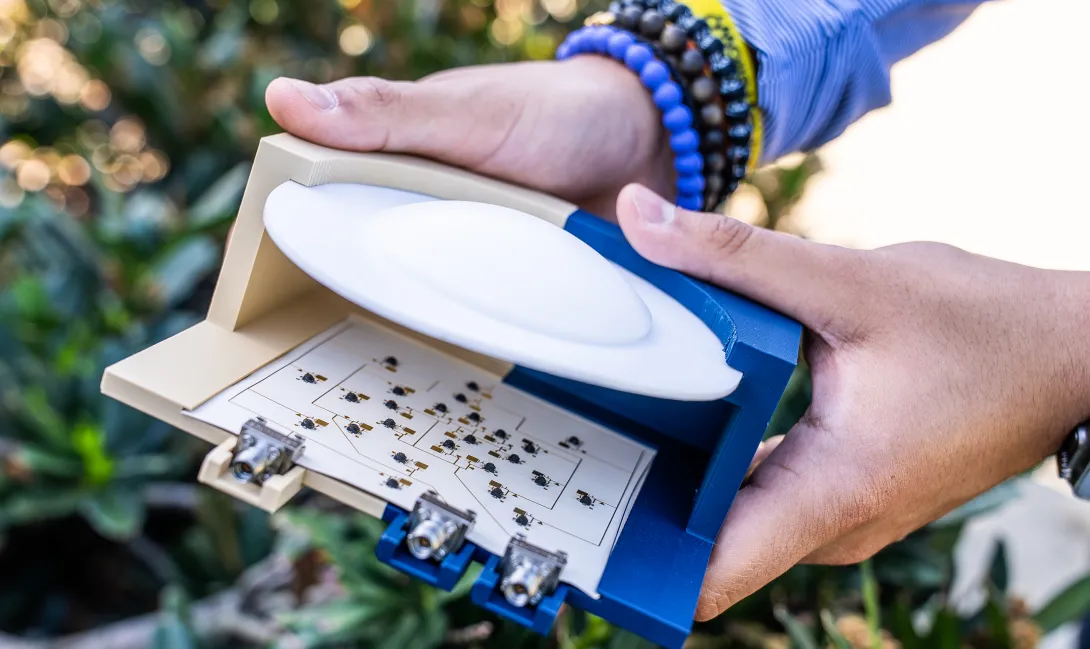
A close‑up view of the device displays an array of tiny antenna elements positioned behind the lens, each modulating reflected wireless signals to enable high‑speed communication with minimal energy use.
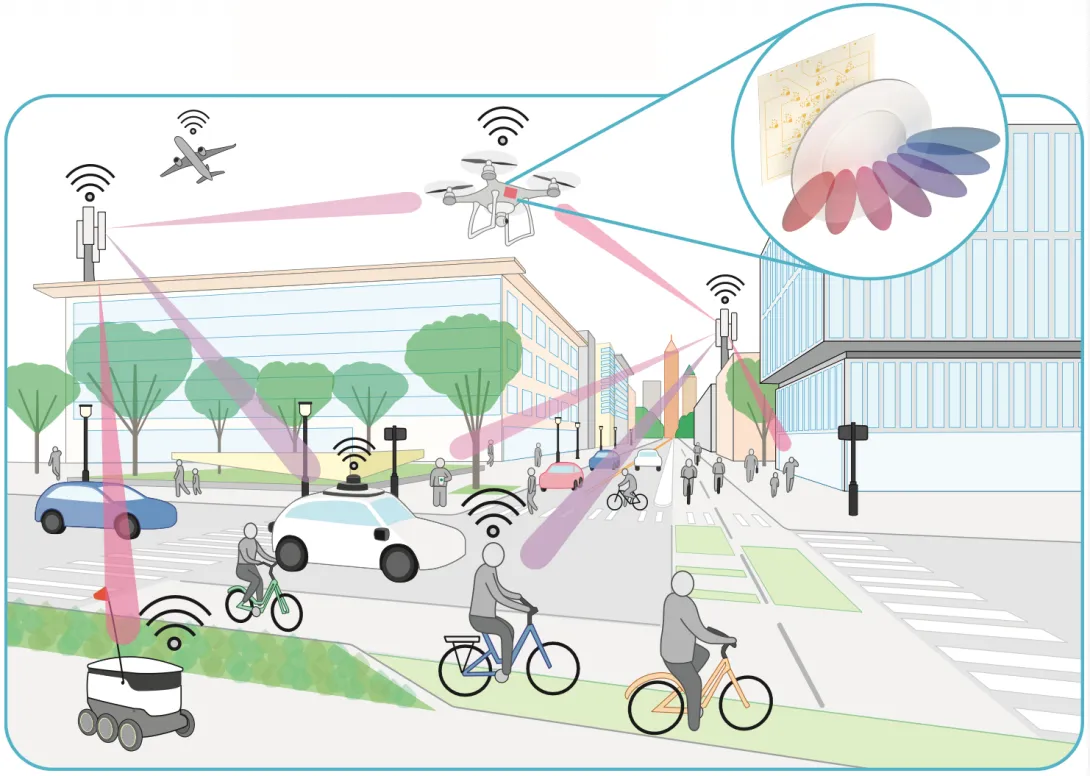
A concept illustration shows how the lens-enabled system’s wide angular coverage and passive backscatter communication enable flexible deployment on moving platforms such as drones and aircraft, as well as fixed smart city infrastructure and personal devices.
Earlier this year, Georgia Tech researchers showed that specially designed lenses could harvest energy from ambient wireless signals, pointing toward a future of battery-free sensors embedded throughout smart cities and digital infrastructure.
But powering devices is only part of the challenge. Enabling those same systems to communicate at modern data rates is a much harder. That’s the leap the team is now making. The same lens-based approach is being used to unlock high-speed communication once considered out of reach for ultra-low-power systems.
In a study published in Nature Communications, researchers in Professor Manos (Emmanouil) Tentzeris’ Agile Technologies for High-performance Electromagnetic Novel Applications (ATHENA) lab demonstrated a first-of-its-kind lens-enabled backscatter system capable of multi-gigabit data rates, reaching up to 4 gigabits per second (Gbps). At the same time, it operates using only a fraction of the power required by conventional wireless devices — bringing high-speed connectivity to systems that were never meant to support it.
For years, backscatter has been treated as a tradeoff: extremely low power, but extremely limited performance. Rather than generating its own radio signal, a backscatter device modulates and reflects existing wireless transmissions to communicate, allowing it to operate with minimal energy.
As a result, backscatter has typically been used only to send small amounts of data, most often in simple identification and sensing systems.
“What we’ve shown is that backscatter doesn’t have to be slow,” said Marvin Joshi, the research lead and Ph.D. candidate in the School of Electrical and Computer Engineering. “With the right architecture, it can operate at gigabit‑per‑second speeds while remaining ultra‑low power.”
The Lens That Makes It Possible
The Georgia Tech team’s dielectric lens — similar in spirit to an optical lens — focuses incoming millimeter-wave energy onto an array of tiny antenna elements, enabling both wireless energy capture and high‑speed backscatter communication within the same system.
The system reshapes and reflects existing wireless signals, with each element modulating the reflected signal to enable high-speed data transmission without requiring a traditional transmitter.
At millimeter-wave frequencies, used by 5G and future 6G systems, there is plenty of available bandwidth, but signals at these frequencies are highly directional and sensitive to alignment.
In practice, that means even small misalignment can break the link. This has been a major limitation for real-world deployment. The lens overcomes that constraint by enabling high gain and wide angular coverage simultaneously, without the need for active beam steering.
“Think of it like a camera lens for wireless signals,” Tentzeris said, who is a Ed and Pat Joy Chair Professor in ECE. “It captures energy coming from many different directions and focuses it efficiently onto the device.”
The result is a system that can communicate over a ±55-degree field of view, maintaining strong performance even when the device and the reader are not perfectly aligned.
Fiber-Level Speeds, Nearly Zero Power
In controlled experiments, the researchers achieved data rates of up to four Gbps, with sustained gigabit communication at distances of up to 20 meters, using high-order modulation schemes like those used in modern cellular networks.
For a system that doesn’t generate its own signal, those numbers are unexpectedly efficient. The system operates at just 0.08 picojoules per bit — approaching million-fold improvements compared to conventional wireless radios.
“To put that in perspective,” Tentzeris said, “a typical wireless transmitter burns milliwatts of power. This system operates at essentially near-zero power while pushing the data rates 1,000 times higher than what traditional backscatter could do.”
Taken together, the results point to a fundamentally different class of wireless system, according to Tentzeris, one that combines high data rates with ultra-low power in a way that hasn’t been demonstrated before.
Based on standard wireless modeling, the team estimates the technology could support Gbps communication over distances of kilometers when paired with existing 5G millimeter-wave infrastructure, extending high-speed, ultra-low-power links far beyond what has been achievable with backscatter systems.
“That combination is exactly what future wireless networks are moving toward. This capability aligns naturally with next‑generation 6G systems,” said Tentzeris, pointing to the growing importance of Integrated Sensing and Communication (ISAC) and Joint Communication and Sensing (JCAS) frameworks that require simultaneous communication, sensing, and localization.
From Smart Cities to Disaster Response
But speed and efficiency are only part of the story. Because the devices are low-cost, lightweight, and printable, they could be deployed at massive scale on buildings, roads, vehicles, drones, or wearable systems.
In a smart city, thousands of these tags could continuously exchange information about traffic, air quality, or structural health without ever needing batteries. That means dense, always-on sensing and communication without worrying about power or upkeep.
In disaster zones, temporary high-speed networks could be set up almost instantly, without cables or power infrastructure.
“Imagine an ambulance transmitting high-resolution medical images in real time, or first responders building a live digital map of a disaster area,” Joshi said. “You get fiber-like performance, but completely wireless and energy-efficient.”
What’s Next
The architecture also lends itself to intelligent optimization, where AI-based control can be enabled to dynamically enhance signal capture and system efficiency, further expanding performance in large-scale deployments.
“This is really about adding intelligence to anything, anywhere,” Tentzeris said. “When communication becomes this fast, efficient, and scalable, entirely new applications become possible.”
With the core architecture now demonstrated, the ATHENA Lab team is shifting focus from proof‑of‑concept to deployment. That means moving out of the lab and into real-world environments. The next phase includes testing the system outdoors, integrating it onto drones and mobile platforms, and exploring flatter, more compact lens designs that could be easier to mount on real-world infrastructure.
“We’re thinking about how this fits into the broader wireless ecosystem,” Joshi said. “We’ve shown what’s possible. Now the question is how far we can push it in the real world."
News Contact
Dan Watson