
Nov. 01, 2025
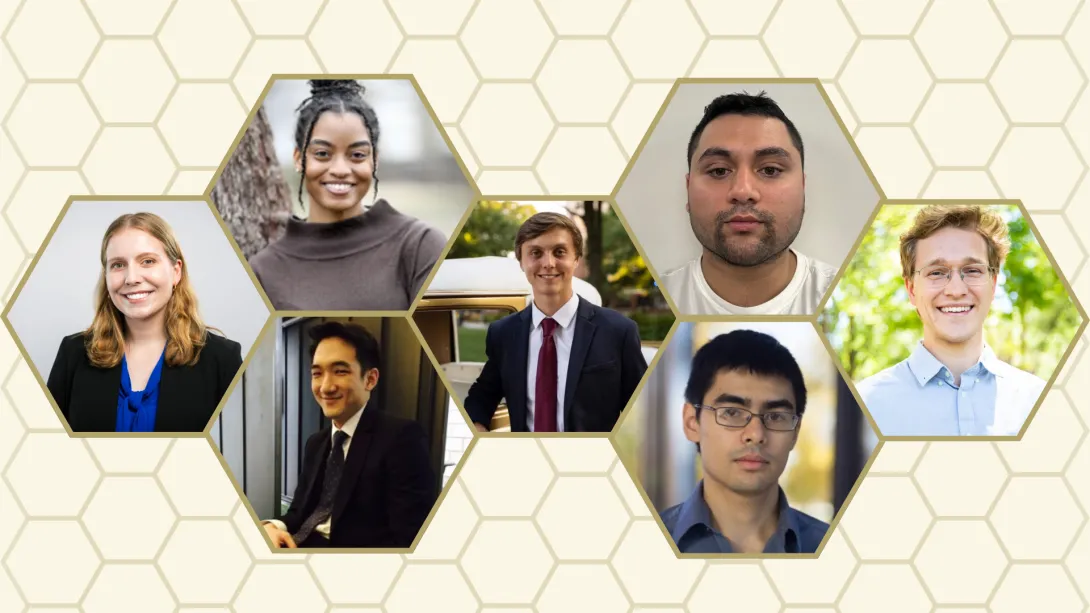
Collage of 2025 James G. Campbell and Spark Award Recipients

From the Left: Anna Raymaker, Talia Thomas, John Kim, Kristian Lockyear, Daksh Adhikari, Alex Magalhaes, and Douglas Lars Nelson.

The Strategic Energy Institute and the Energy, Policy, and Innovation Center at the Georgia Institute of Technology have announced the recipients of this year’s James G. Campbell Fellowship and Spark Awards.

Kristian Lockyear, a doctoral student in the Sustainable Systems Thermal Lab, received the Campbell Fellowship, which recognizes a Georgia Tech graduate student conducting outstanding research in renewable energy systems. Candidates are nominated by their advisors for exceptional academic achievement in the field.

Lockyear’s research, advised by Professor Srinivas Garimella in the George W. Woodruff School of Mechanical Engineering, centers on developing a biomass-powered adsorption cooling system to address food supply shortages in the cold chain and enable vaccine delivery to remote regions. He also holds a bachelor’s degree in chemical and biomolecular engineering from Georgia Tech and is committed to advancing sustainable cooling technologies that improve access in developing areas and promote global energy equity.

The Spark Award honors Georgia Tech graduate students who have demonstrated exceptional leadership in advancing student engagement with energy research, along with a strong record of service and broader impact. This year’s recipients are Daksh Adhikari, John Kim, Douglas Lars Nelson, Alex Magalhaes, Anna Raymaker, and Talia Thomas. “This year saw one of the largest pools of applications for the annual awards,” said Jordann Britt, SEI’s program coordinator, who led the selection process. “Awardees were thoughtfully chosen based on research excellence, a strong record of service, and projects demonstrating broader impact on advancing renewable energy. Through these scholarships, we hope to encourage and support students as they grow into future leaders in the energy industry.”

Daksh Adhikari is a second-year doctoral student in mechanical engineering working in the MiNDS Lab. His research focuses on increasing the adoption of two-phase thermal management techniques in artificial intelligence data centers to reduce water consumption. Adhikari is developing machine learning-based control systems to manage the unstable regions inherent in two-phase cooling processes. Outside of the lab, he enjoys playing guitar and exploring scientific topics related to space.

John Kim is a doctoral candidate in public policy, advised by Professor Daniel Matisoff. His research examines the distributional effects of environmental and energy infrastructure challenges, with a focus on grid resilience, public safety, and environmental justice. Kim’s broader research agenda includes analyzing inequities in power grid restoration, the economic impacts of EPA Superfund cleanups, and the socioeconomic drivers of electric vehicle adoption.

Douglas Lars Nelson is a fifth-year doctoral candidate at the School of Materials Science and Engineering, advised by Professor Matthew McDowell. His research uses advanced characterization techniques to quantify degradation in next-generation battery materials, contributing to the development of safer, high-energy batteries. Nelson earned his undergraduate degree in materials science and engineering from Clemson University.

Alex Magalhaes is a master’s student in computational science and engineering, advised by Professor Qi Tang. His research centers on developing scalable, high-fidelity numerical algorithms to simulate plasma confinement and equilibrium in nuclear fusion reactors. Magalhaes holds a bachelor’s degree in physics from Wesleyan University and previously worked as a data scientist at Quantiphi. He plans to pursue a doctorate in computational plasma physics. In his free time, he enjoys rock climbing, which he’s done at Yosemite and Grand Teton National Park.

Anna Raymaker is a doctoral student in the School of Electrical and Computer Engineering, advised by Professor Saman Zonouz. Her research focuses on securing critical infrastructure by identifying and mitigating cyber risks in systems, such as maritime networks and distributed energy resources. Raymaker leads a U.S. Department of Energy-aligned initiative to locate exposed solar inverters worldwide and assess their impact on operational power grids. She currently serves as president of the Graduate Student Association for the School of Cybersecurity and Privacy.

Talia Thomas is a doctoral candidate in mechanical engineering working in the McDowell Lab. Her research focuses on sustainable carbon materials for next-generation lithium- and sodium-ion batteries by using biomass precursors such as lignin and cellulose to develop high-performance anodes. Thomas also integrates life cycle and techno-economic assessments to evaluate scalability and environmental impact. She is an active leader in the graduate community, organizing initiatives that promote inclusion and student engagement. Before graduate school, she worked as a maintenance engineer at Dow and as a chemistry research associate at Zymergen.


Written by: Katie Strickland.

News Contact

News Contact

Priya Devarajan || SEI Communications Program Manager

Nov. 06, 2025
Robbie Moon, associate professor of Accounting

Robbie Moon, associate professor of Accounting

Cryptocurrency continues to reshape the financial landscape. As cryptocurrency moves from niche to mainstream, companies are grappling with how to account for these volatile digital assets. New research from Scheller College of Business accounting professor Robbie Moon, and his co-authors Chelsea M. AndersonVivian W. Fang, and Jonathan E. Shipman, sheds light on how U.S. public companies have navigated crypto holdings and accounting practices over the past decade.
 

ASU 2023-08, the Financial Accounting Standards Board’s (FASB) newly enacted rule, aims to bring clarity and consistency to crypto asset reporting with the mandate for fair value reporting. Moon’s research, which examined a comprehensive set of companies from 2013 to 2022, looks at the exponential rise in corporate crypto investments and the diverse, and often inconsistent, ways firms have reported them.

In “Accounting for Cryptocurrencies,” Moon and his co-authors work to better understand this pivotal point in financial reporting with research that dives into why firms hold crypto – whether for mining, payment acceptance, or investment – and how reporting practices have evolved to meet this current moment.

Keep reading to learn more about Moon’s research and why it matters right now.

Why do companies hold cryptocurrencies, and how has this changed over time?

Companies hold cryptocurrency for three main reasons: they mine it, they accept it as payment, or they consider it an investment. Early on, most businesses kept crypto because customers used it to pay for goods and services. Around 2017, that trend declined, and more companies began mining crypto themselves. Today, mining accounts for about half of corporate crypto holdings, while payment acceptance and investment make up the rest.

What were the main challenges companies face when trying to report cryptocurrency holdings in their financial statements?

Until the end of 2023, there were no official rules on how companies should report cryptocurrency on their financial statements. Back in 2018, the Big Four accounting firms (Deloitte, PwC, EY, and KPMG) stepped in with guidance, suggesting that crypto be treated like intangible assets, similar to things like patents or trademarks. This is known as the impairment model.

What is the difference between the “fair value model” and the “impairment model” for accounting crypto assets, and why does it matter?

The two accounting methods differ in how they handle changes in crypto value. The fair value model updates the value of a company’s crypto to match current market prices every reporting period. If the price goes up or down, the change shows up on the company’s income statement as a gain or loss.

The impairment model only lets companies record losses when the value drops below what they paid. If the price goes up, they can’t record the increase.

The difference in the two approaches can best be seen when crypto prices rise. Under the impairment model, companies’ balance sheets understate the true value of the crypto since the gains cannot be recorded. The fair value model allows companies to adjust the balance sheet value of crypto as market prices change.

What factors led ASU 2023-08 to favor fair value reporting?

When the FASB was trying to decide if they should add crypto accounting to their standard setting agenda, they reached out to the public for feedback. The response was overwhelming and most practitioners and firms called for the use of the fair value model. 

How do big accounting firms, like Deloitte or PwC, influence how companies report their crypto holdings?

When there aren’t official rules for complex issues like crypto accounting, the Big Four firms often step in to guide companies. In 2018, they recommended using the impairment model, which they viewed as most appropriate based on existing standards. After that, most companies switched from fair value reporting to the impairment approach.

Their guidance in 2018 was based on what was allowed under the standards at that time. With the new rule in place, the firms will likely help clients manage the transition.

Does using fair value accounting for crypto make a company’s stock price more volatile or its earnings reports more useful to investors?

The primary downside of using a fair value model for a risky asset like crypto is how volatility affects earnings.  Moon’s research suggests that stock price volatility increases for firms using the fair value model, and it doesn’t appear the model makes earnings more useful for investors. That said, the results should be viewed cautiously because the study’s sample largely consisted of smaller companies.

Why does this research matter right now?

This research matters because more companies are investing in cryptocurrency. That trend is only expected to grow. This research looks at how businesses handled crypto before official rules came out in 2023, showing that many treated it like traditional investments. This provides a baseline against which future research can evaluate the new rule. The research also warns that the fair value approach could make stock prices more volatile without necessarily making earnings reports more useful for investors.
 
Read More: Accounting for Cryptocurrencies

News Contact

News Contact

Kristin Lowe

kristin.lowe@scheller.gatech.edu

Nov. 06, 2025
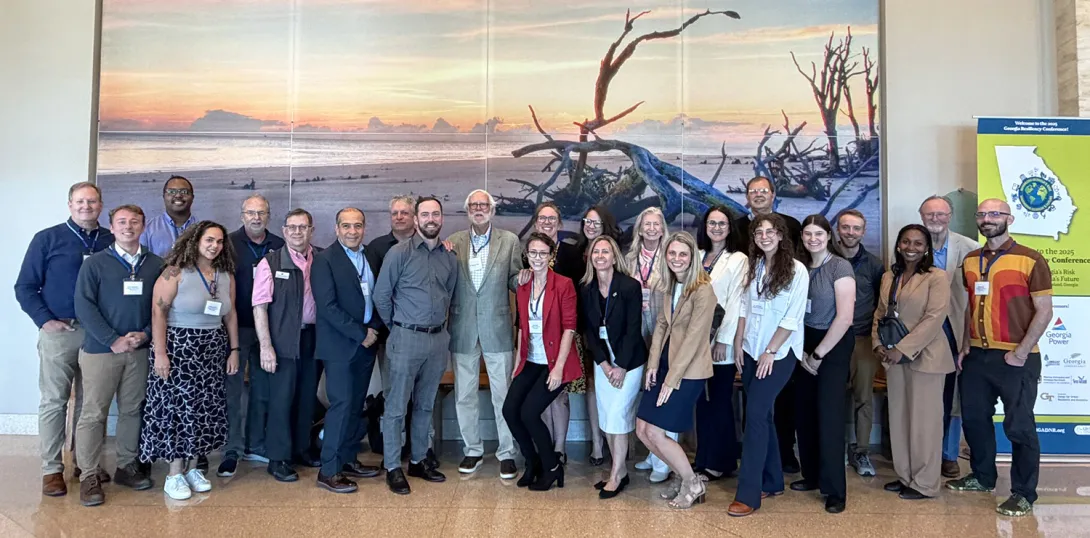
The Georgia Tech contingent gather for a group photo at the 2025 Georgia Resiliency Conference.

Against a backdrop of ancient live oaks draped in Spanish moss and salt marshes alive with shorebirds, a statewide conversation about the future of Georgia's environmental resilience took place at Jekyll Island. The Georgia Resiliency Conference 2025, organized by the Georgia Department of Natural Resources (DNR), brought together more than 430 leaders and experts from across public, private, nonprofit, and academic sectors, including a large delegation from Georgia Tech.

The island's natural beauty and vitality served as both inspiration and an urgent reminder of what communities across Georgia stand to lose without coordinated action. Faculty, administration, research fellows, students, collaborators, and Georgia Tech President Emeritus and keynote speaker G. Wayne Clough brought diverse perspectives to discussions ranging from coastal vulnerability to data-driven decision-making. Throughout the event, one theme remained constant: the essential role of interdisciplinary research in addressing real-world environmental challenges across the state.

In the reflections below, Georgia Tech attendees share their takeaways from this landmark gathering.

“The continued commitment by many stakeholders to manage our carbon pollution stood out, as did the importance and fragility of Georgia’s coastal wetlands. It was also rewarding to reconnect with Wayne Clough and hear his geological perspective on our state. I was particularly impressed by the use of AI and spatial data analytics featured in the tools cafe.”
Marilyn Brown, Regents’ and Brook Byers Professor, Jimmy and Rosalynn Carter School of Public Policy

“Resiliency is now. It’s not a future goal — it’s a present imperative. As we face accelerating environmental challenges, we must adapt in real time to protect our resources and communities. I was deeply inspired by Wayne Clough’s keynote, which emphasized the importance of conservation and forward-thinking systems that can endure uncertainty. What struck me most was the number of Georgia Tech colleagues actively advancing both urban and rural resiliency across our state. Their dedication and innovation give me hope and reaffirm the importance of collaboration in this work.”
 — Jennifer Chirico, Associate Vice President of Sustainability

“It was great to reconnect and network with sponsors, Georgia researchers, local governments, and other stakeholders concerned with coastal resiliency. I was pleasantly surprised by Georgia Tech’s strong presence this year and proud to see my colleagues presenting and moderating sessions. It was long overdue, as planners routinely address issues like climate change and resiliency. The conference’s dedicated focus on connecting natural areas across the state deeply resonated. Having worked on greenspace issues for 25 years, I was inspired by the vision for a statewide trail system linking Macon to the coast through wildlife corridors. Big ideas like this will make a real difference in Georgia’s future.”
Tony Giarrusso, Associate Director, Center for Urban Resilience and Analytics, College of Design

“The Georgia Resilience Conference provided a great forum for us to introduce our new Georgia Tech for Georgia’s Tomorrow (GT²) Center to a range of stakeholders and collaborators — from the Georgia DNR to local officials. From the coastal barrier islands to the Blue Ridge Mountains, we’re focusing on research that strengthens resilience and reduces risk from natural disasters, while connecting Georgia Tech’s science to communities across the state. We were inspired by the level of collaboration among agencies, researchers, and practitioners, and we were glad to jointly debut the center’s plans at this year’s event. Our thanks to Jennifer Kline and the Georgia DNR for organizing such a meaningful and energizing conference.”
Joel Kostka, Tom and Marie Patton Distinguished Professor and Inaugural Director, Georgia Tech for Georgia’s Tomorrow (GT²); Associate Chair for Research, School of Biological Sciences

“I had a phenomenal experience at the Georgia Resilience Conference. It was heartening and eye-opening to see so many participants from all sectors invested in protecting the environment and supporting communities impacted by environmental change. I connected with professors from other universities to discuss future collaborations that could expand on my current project at Tech. Additionally, when I spoke with project managers and engineers within the private sector, I was further motivated by the realization that there is both interest and need for the research we are doing — not only to advance science but also to help those restoring our waterways apply the most promising and sustainable techniques available. This conference was well worth it and is already on my calendar for next time.”
Maggie Straight, Ph.D. Candidate, Ocean Science and Engineering

“One of the best parts of the conference was spending time with current and former Ph.D. students like Maggie Straight and Sarah Roney (Ph.D. OSE 2025). Maggie’s research characterizes bacteria-algae interactions in micro-algae systems, while Sarah worked on oyster ecosystems during her time at Georgia Tech. What struck me about our conversation was that the principles of resilience show up at every scale. Both Maggie and Sarah are exploring how foundational species — from micro-algae to oysters — create the conditions for entire ecosystems to thrive. This is exactly the kind of systems thinking we need. I am proud to see the next generation of scientists translating their research into real-world impact and grateful for conversations that connect the dots across disciplines and scales.”
— Beril Toktay, Executive Director, Brook Byers Institute for Sustainable Systems; Regents’ Professor; and Brady Family Chair in Management, Scheller College of Business

The Georgia Resilience Conference highlighted the power of collaboration — connecting scientists, policymakers, and community leaders who are shaping Georgia’s response to a changing climate. BBISS remains dedicated to amplifying these voices and translating research into action that strengthens resilience across the Southeast.

— Written by Seungho Lee

News Contact

News Contact

Brent Verrill, Research Communications Program Manager, BBISS

Nov. 06, 2025
Wind power near Dodge City, Kan. Halbergman/iStock/Getty Images Plus

Wind power near Dodge City, Kan. Halbergman/iStock/Getty Images Plus

Countries around the world have been discussing the need to rein in climate change for three decades, yet global greenhouse gas emissions – and global temperatures with them – keep rising.

When it seems like we’re getting nowhere, it’s useful to step back and examine the progress that has been made.

Let’s take a look at the United States, historically the world’s largest greenhouse gas emitter. Over those three decades, the U.S. population soared by 28% and the economy, as measured by gross domestic product adjusted for inflation, more than doubled.

Yet U.S. emissions from many of the activities that produce greenhouse gases – transportation, industry, agriculture, heating and cooling of buildings – have remained about the same over the past 30 years. Transportation is a bit up; industry a bit down. And electricity, once the nation’s largest source of greenhouse gas emissions, has seen its emissions drop significantly.

Overall, the U.S. is still among the countries with the highest per capita emissions, so there’s room for improvement, and its emissions haven’t fallen enough to put the country on track to meet its pledges under the 10-year-old Paris climate agreement. But U.S. emissions are down about 15% over the past 10 years.

Here’s how that happened:

US Electricity Emissions Have Fallen

U.S. electricity use has been rising lately with the shift toward more electrification of cars and heating and cooling and expansion of data centers, yet greenhouse gas emissions from electricity are down by almost 30% since 1995.

One of the main reasons for this big drop is that Americans are using less coal and more natural gas to make electricity.

Both coal and natural gas are fossil fuels. Both release carbon dioxide to the atmosphere when they are burned to make electricity, and that carbon dioxide traps heat, raising global temperatures. But power plants can make electricity more efficiently using natural gas compared with coal, so it produces less emissions per unit of power.


Why did the U.S. start using more natural gas?

Research and technological innovation in fracking and horizontal drilling have allowed companies to extract more oil and gas at lower cost, making it cheaper to produce electricity from natural gas rather than coal.

As a result, utilities have built more natural gas power plants – especially super-efficient combined cycle gas power plants, which produce power from gas turbines and also capture waste heat from those turbines to generate more power. More coal plants have been shutting down or running less.

Because natural gas is a more efficient fuel than coal, it has been a win for climate in comparison, even though it’s a fossil fuel. The U.S. has reduced emissions from electricity as a result.

Significant improvements in energy efficiency, from appliances to lighting, have also played a role. Even though tech gadgets seem to be recharging everywhere all the time today, household electricity use, per person, plateaued over the first two decades of the 2000s after rising continuously since the 1940s.

Costs for Renewable Electricity, Batteries Fall

U.S. renewable electricity generation, including wind, solar and hydro power, has nearly tripled since 1995, helping to further reduce emissions from electricity generation.

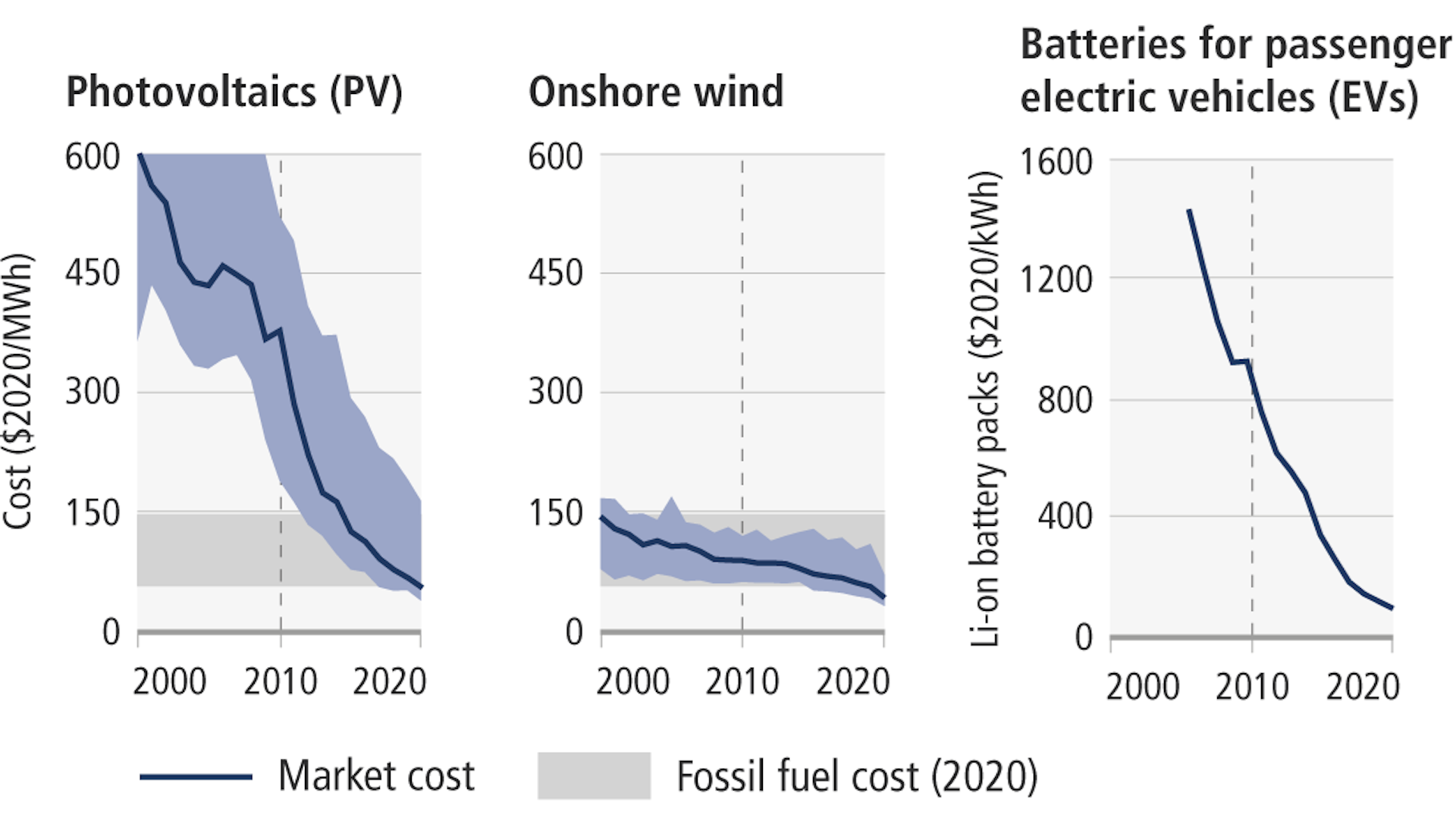
Costs for solar and wind power have fallen so much that they are now cheaper than coal and competitive with natural gas. Fourteen states, including most of the Great Plains, now get at least 30% of their power from solar, wind and battery storage.

While wind power has been cost competitive with fossil fuels for at least 20 years, solar photovoltaic power has only been competitive with fossil fuels for about 10 years. So expect deployment of solar PV to continue to increase, both in the U.S. and internationally, even as U.S. federal subsidies disappear.

Both wind and solar provide intermittent power: The sun does not always shine, and the wind does not always blow. There are a number of ways utilities are dealing with this. One way is to use demand management, offering lower prices for power during off-peak periods or discounts for companies that can cut their power use during high demand. Virtual power plants aggregate several kinds of distributed energy resources – solar panels on homes, batteries and even smart thermostats – to manage power supply and demand. The U.S. had an estimated 37.5 gigawatts of virtual power plants in 2024, equivalent to about 37.5 nuclear power reactors.

Charts show cost decline compared with fossil fuels.

Globally, the costs of solar, onshore wind and EV batteries fell quickly over the first two decades of the 2000s. IPCC 6th Assessment Report

Another energy management method is battery storage, which is just now beginning to take off. Battery costs have come down enough in the past few years to make utility-scale battery storage cost-effective.

What About Driving?

In the U.S., gasoline consumption has remained roughly constant but fuel efficiency has generally improved over the decades.

Sales of electric vehicle, which could cut emissions more, have been slow, however. Some of this could be due to the success of fracking: U.S. petroleum production has increased, and gasoline and diesel prices have remained relatively low.

People in other countries are switching to electric vehicles more rapidly than in the U.S. as the cost of EVs has fallen. Chinese consumers can buy an entry-level EV for under US$10,000 in China with the help of government subsidies, and the country leads the world in EV sales.

In 2024, people in the U.S. bought 1.6 million EVs, and global sales reached 17 million, up 25% from the year before.

The Unknowns Ahead: What About Data Centers?

The construction of new data centers, in part to serve the explosive growth of artificial intelligence, is drawing a lot of attention to future energy demand and to the uncertainty ahead.

Data centers are increasing electricity demand in some locations, such as northern Virginia, Dallas, Phoenix, Chicago and Atlanta. The future electricity demand growth from data centers is still unclear, though, meaning the effects of data centers on electric rates and power system emissions are also uncertain.

However, AI is not the only reason to watch for increased electricity demand: The U.S. can expect growing electricity demand for industrial processes and electric vehicles, as well as the overall transition from using oil and gas for heating and appliances to using electricity that continues across the country.The Conversation


This article is republished from The Conversation under a Creative Commons license. Read the original article.
News Contact

News Contact
Author:

Valerie Thomas, Professor of Industrial Engineering, Georgia Institute of Technology

Media Contact:

Shelley Wunder-Smith
shelley.wunder-smith@research.gatech.edu

Nov. 03, 2025
Rich Vuduc CSSE Director

Scientists across Georgia Tech rely on powerful software tools to propel breakthroughs in fields ranging from physics to biology. Now, software experts who make that research possible are gaining a new leader. 

The College of Computing named Professor Rich Vuduc as director of the Center for Scientific Software Engineering (CSSE). The Georgia Tech hub is dedicated to building reliable, high-performance software for scientists.  

Under Vuduc’s leadership, CSSE strives to accelerate the pace and increase the quality of scientific discovery by developing custom software tools and best practices tailored to researchers’ needs.

“There is a reproducibility and reliability problem right now with scientific software,” Vuduc said. “The promise of CSSE is to leverage capabilities shared between Georgia Tech, Schmidt Sciences, and industry experts to address this problem.” 

Issues arise because scientists often need to develop their own software for experiments or data analysis. However, troubleshooting coding issues and other bugs can slow down research.

To assist these scientists, CSSE receives their input to create custom software tools and best practices. The center employs professional software engineers who build and deliver products tailor-made to the needs of researchers at Georgia Tech and broader scientific communities.

Beyond its research focus, CSSE helps Georgia Tech fulfill its educational mission. The center provides students with direct access and exposure to real-world software engineering.

As the center enters its third year, Vuduc wants to better prepare students for employment by enhancing their hands-on experience while learning from CSSE engineers.

To achieve this goal, Vuduc is working to establish a Ph.D. fellowship program in which CSSE engineers mentor students. This program would connect academic inquiry with industry expertise, creating the next generation of dynamic leaders in computational science.  

Vuduc also envisions pairing CSSE with Georgia Tech’s Vertically Integrated Projects (VIP) program. This approach would allow undergraduate students to earn class credit while working with CSSE engineers on large software engineering projects spanning multiple semesters.

“The center gives our students access to something that is very unique to find in a university environment,” Vuduc said. 

“The software engineers in CSSE mostly come from industry. They have over 65 years of combined experience doing real-world software engineering that students can learn from.”

Vuduc is a 2010 recipient of the Gordon Bell Prize and a leading expert in high-performance computing (HPC). He was a finalist for the award in 2020 and 2022.

The Gordon Bell Prize, often referred to as the Nobel Prize in supercomputing due to the scope and magnitude of research it recognizes, celebrates achievement in HPC research and application. 

Vuduc joined Georgia Tech in 2007 as one of the first faculty hired for the new Division of Computational Science and Engineering (CSE). Not a stranger of leading new units, he saw CSE begin offering M.S. and Ph.D. degrees in 2008 and attain school status in 2010.  

Since 2021, Vuduc has served as co-director of the Center for Research into Novel Computing Hierarchies (CRNCH). 

CRNCH is an interdisciplinary research center at Georgia Tech that explores technologies and approaches that will usher the next generation of computing. Areas CRNCH studies include quantum computing, brain-inspired computing, and approximate computing. 

Vuduc will step down as CRNCH co-director to fulfill his role as CSSE director. The College of Computing will lead a search for CRNCH’s next co-director.

“In a sense, the CRNCH to CSSE transition was partly a natural one because one thing that contributes to software challenges is that hardware platforms are also changing and evolving very rapidly,” said Vuduc. 

“People are exploring radically new hardware systems and we will have to write software configured for those too. Centers, like CRNCH and CSSE, strongly position Georgia Tech to lead these endeavors.” 

Alessandro (Alex) Orso, the previous CSSE director, departed Georgia Tech earlier this year to become dean of the University of Georgia’s College of Engineering. Orso and Distinguished Professor Irfan Essa wrote the proposal to bring CSSE to Georgia Tech.

Georgia Tech formed CSSE in 2022 after securing an $11 million grant from Schmidt Sciences. Former Google CEO Eric Schmidt and his spouse, Wendy Schmidt, founded the philanthropic venture that funds science and technology research and talent networking programs. 

Georgia Tech’s CSSE is part of Schmidt Sciences’ Virtual Institute for Scientific Software (VISS) program. This network helps scientists obtain more robust, flexible, scalable open-source software. 

Schmidt Sciences is investing $40 million in VISS over five years at four universities: Georgia Tech, University of Washington, Johns Hopkins University, and University of Cambridge.

CSSE uses the funding to employ a software engineering lead, three senior and two junior software engineers. The Schmidt Sciences grant equips these engineers with computing resources to build scientific software. Along with the director, an advisory board guides the group’s work to meet the point of need for scientists in the field. 

“I am grateful to Schmidt Sciences for their support of CSSE. It aligns with our college’s strategic goals and expertise in scientific software, and I am delighted that Rich has agreed to take on this important role,” said Vivek Sarkar, Dean and John P. Imlay Jr. Chair of Computing.

“I know that Rich is committed to growing CSSE's internal and external visibility and long-term sustainability. I am confident that he will also help further socialize CSSE among internal stakeholders across Georgia Tech.”

News Contact

News Contact

Bryant Wine, Communications Officer
bryant.wine@cc.gatech.edu

Nov. 04, 2025
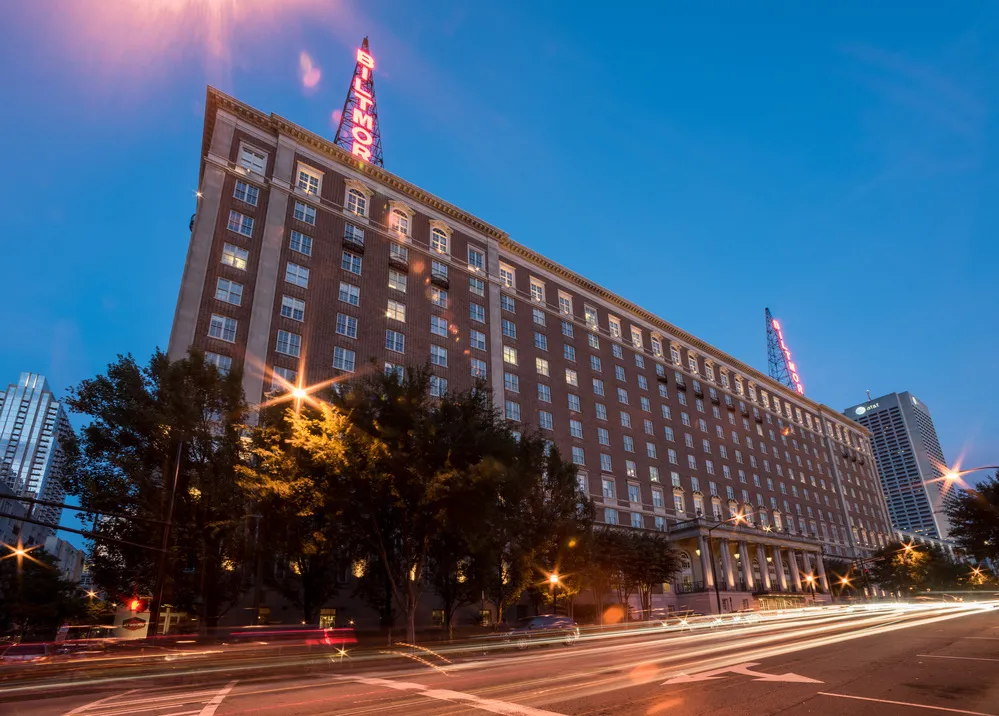
Biltmore house building in Atlanta

The historic Biltmore will house co-working space for Velocity Startups.

Today, Velocity Startups joins Georgia Tech’s comprehensive commercialization ecosystem, solidifying the Institute’s role as a national leader and premier hub for research commercialization and startup growth. Velocity Startups serves as a bridge between early-stage startup founders who are focused on scaling their businesses and readying themselves for late-stage accelerators such as the Advanced Technology Development Center (ATDC), Engage, Fusen, and Atlanta Tech Village within the City of Atlanta. 

To support emergent startups, the early-stage accelerator will establish a collaborative facility at The Biltmore in Atlanta’s Tech Square, the national innovation district and dedicated area in the city that fosters community growth and meaningful innovation at the heart of the city’s tech scene. 

“Atlanta is where innovation becomes opportunity, and Velocity Startups will make that journey even faster,” said Donnie Beamer, senior technology advisor in the Atlanta Mayor’s Office of Technology and Innovation. “By connecting entrepreneurs to the critical resources they need to scale, we are fueling more startups, creating more jobs, and driving economic growth. Ultimately, this will secure Atlanta’s place as a top global destination for innovation, investment, and entrepreneurial success.”

As an early-stage accelerator, Velocity Startups provides resources — including mentorship support, space, tools, networks, and infrastructure — to Georgia Tech students, faculty, researchers, and the greater Atlanta community, bridging the gap from spinoff to viable startup. At Georgia Tech, many startups that complete the CREATE-X Startup Launch program and present at the Demo Day event will gain access to Velocity Startups. The accelerator will also offer strategic programming, funding, and access to Georgia Tech’s research resources and serve as a coordinating entity for Metro Atlanta’s entrepreneurial ecosystem, engaging more than 50 colleges and advocating for policies that support startup success. 

“Velocity Startups represents a pivotal step in bringing together the resources, expertise, and entrepreneurial spirit within our ecosystems as we look to further establish Atlanta as a top national tech hub. By uniting these elements, Velocity Startups will help startups scale from their first customer to long-term growth,” said Raghupathy “Siva” Sivakumar, vice president of commercialization and chief commercialization officer at Georgia Tech and president of Georgia Advanced Technology Ventures. “This accelerator enables the communities at Georgia Tech and beyond to translate groundbreaking research into high-impact ventures.”

Velocity Startups is a subsidiary of Georgia Advanced Technology Ventures and will operate in partnership with the City of Atlanta. A national search is currently underway for a director to lead the accelerator. 

For additional information about Velocity Startups, visit commercialization.gatech.edu/velocity.

News Contact

News Contact

Georgia Parmelee

Director of Communications

Office of Commercialization

Nov. 03, 2025
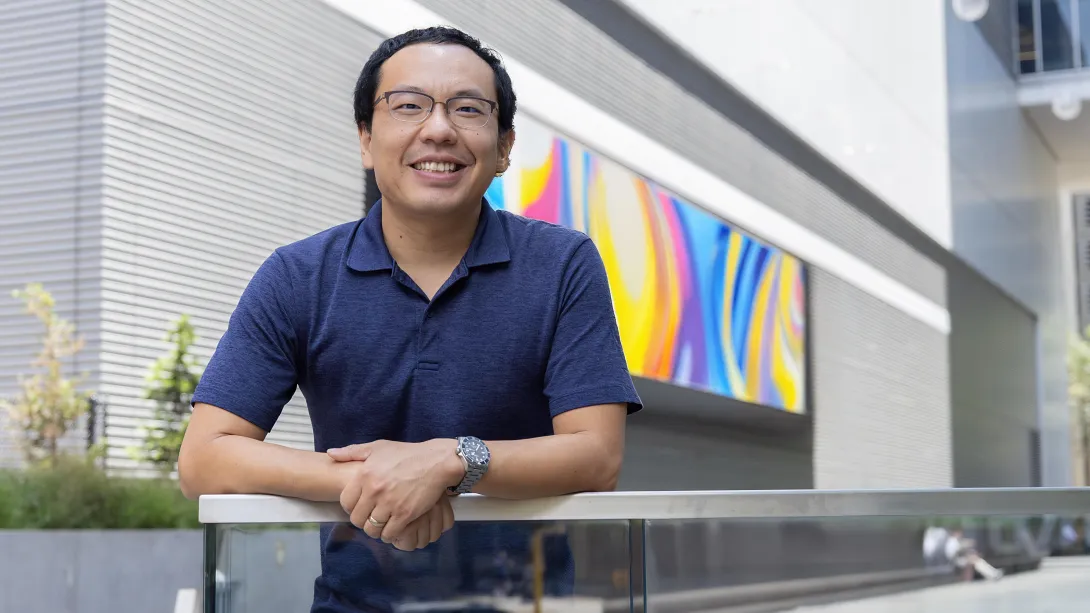
A man standing outside in a building breezeway. He is wearing glasses, a blue polo and is smiling.

Assistant Professor Frank Li standing outside of the Coda Building in Tech Square. Photos by Terence Rushin/College of Computing

Although they are currently essential to online security and privacy, the days of relying on password protection may be numbered, thanks to Assistant Professor Frank Li and his National Science Foundation (NSF) CAREER Award project.

While passwords have security limitations and can be challenging to use, emerging technologies such as Fast IDentity Online 2 (FIDO2) and other passkey authentication methods provide strong security and usability. For example, if you have ever used your smartphone’s facial recognition feature to log in to your bank account instead of typing out the password, you have used a FIDO2 passkey.

Users and online services, however, have been slow to adopt the new technology despite the benefits. Li’s NSF CAREER Award project addresses this challenge. Along with advancing the technology, Li will also advocate for its use.

“We are not assuming that this technology is coming,” said Li. “It is already here. The challenge is to get people to use this technology.” 

This up-and-coming technology has been part of Li’s research for some time. His prior work provided a new security analysis of the FIDO2 authentication protocol, which includes passkeys. 

Li’s CAREER project will investigate real-world uses of FIDO2/passkeys and security and usability issues that can arise. A goal of his research is to identify and resolve problems before they become widespread and more difficult to address. 

“There’s still a lot to do when it comes to authentication research, and there’s even more to be done with passkeys,” he said. 

“Online authentication is a core function needed for online security. Making any changes to it will have huge implications. For example, accounts that send spam and phishing attacks are often accounts with compromised passwords. A passwordless future will reduce that threat.”

The final component of Li’s CAREER Award is an educational outreach program. The NSF wants researchers to inspire the next generation of scientists as a part of their projects. Li plans to reach out to Atlanta high schools and engage their computer science programs.

NSF CAREER Awards are prestigious federal grants given to early career academic faculty and are widely recognized as a career defining moment. Li’s project will be conducted in the School of Cybersecurity and Privacy as well as the School of Electrical and Computer Engineering. 

News Contact

News Contact

John Popham Communications Officer II | School of Cybersecurity and Privacy

Oct. 24, 2025
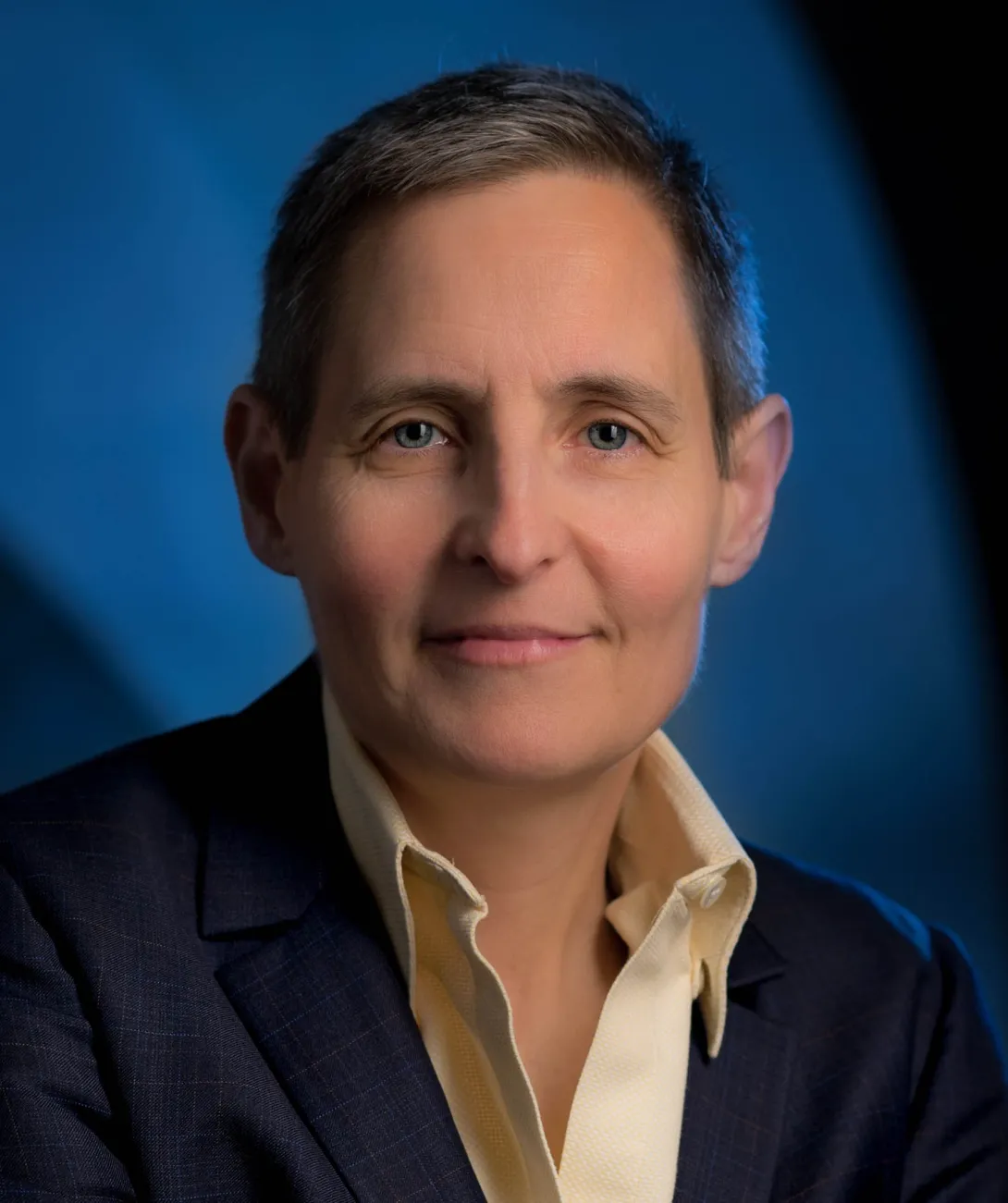
Portrait of Ann Dunkin

Ann Dunkin

Ann Dunkin joined the Georgia Tech Strategic Energy Institute (SEI) as a distinguished external fellow in April. Before that, she served as the chief information officer at the U.S. Department of Energy, where she managed the department’s information technology portfolio and modernization; oversaw its cybersecurity efforts; led technology innovation and digital transformation; and enabled collaboration across the agency. Dunkin also served in former President Barack Obama’s administration as chief information officer of the U.S. Environmental Protection Agency. 

Other previous roles include chief strategy and innovation officer at Dell Technologies; chief information officer for the County of Santa Clara, California; chief technology officer for Palo Alto Unified School District in California; and leadership positions at Hewlett Packard focused on engineering, research and development, IT, manufacturing engineering, software quality, and operations. 

Dunkin is a published author, most recently of the book Industrial Digital Transformation, and a frequent speaker on topics such as government technology modernization, digital transformation, and organizational development. She received the 2022 Capital CIO Large Enterprise ORBIE Award and has earned numerous honors, including Washington, D.C.’s Top 50 Women in Technology for 2015 and 2016; Computerworld’s Premier 100 Technology Leaders for 2016; StateScoop’s Top 50 Women in Technology list for 2017; FedScoop’s Golden Gov Executive of the Year in 2016 and 2021; and FedScoop’s Best Bosses in Federal IT 2022.  

Dunkin holds a master of science degree and a bachelor of industrial engineering degree, both from Georgia Tech. She is a licensed professional engineer in California and Washington state. In 2018, she was inducted into Georgia Tech’s Academy of Distinguished Engineering Alumni. 

Below is a short Q&A with Dunkin reflecting on how the Institute influenced her career.

  • How did your Georgia Tech education shape your approach to leadership and innovation throughout your career?

    My Georgia Tech education instilled the core ideas and values that we see in our graduates today, and that made me successful in my career. You can’t graduate from Georgia Tech without learning how to be part of a team and to lead through influence, which may be the hardest part of leadership. It’s far easier, although less effective, to lead through authority. In addition, the concept of grit has informed my approach to my roles — that my team and I will work hard together to find solutions to difficult challenges and that no challenge is too hard if we set our minds to accomplishing it. This may seem like an unusual connection to innovation, but it’s not. A lot of people think that innovation is about a light bulb going off in your head with a great idea. Sure, that happens sometimes. But the idea is only the spark of innovation. Innovation is about the hard work to turn an idea into reality — and that’s why it takes grit. You have to do the work and not be discouraged by setbacks.  

  • What does it mean to you to return to Georgia Tech as a distinguished external fellow?

    First, coming back to Georgia Tech feels like the ultimate full circle moment. It’s an honor to be invited back as a distinguished external fellow and a distinguished professor of the practice. It shows that the leadership team at Georgia Tech, one of the best engineering institutions in the world, respects the work that I’ve done in my career. Second, this is an exciting opportunity to shift gears in my career, continue to do interesting work, and contribute at a high level. I’m excited to be here and look forward to what we’re going to accomplish together. 

  • What aspect of your collaboration with the SEI are you most passionate about?

    There are so many things that it’s hard to identify just one. The SEI is at the center of the future of energy, working to solve difficult problems to ensure that we have abundant, affordable, clean energy. During my time at the Energy Department, I developed a strong interest in energy technology, including next-generation nuclear, fusion, and battery technologies. I’m also interested in grid resilience, particularly permitting, planning, and cybersecurity. I hope to help the SEI deepen collaboration with the Energy Department’s labs and to engage other partners as well.

  • How do you see the SEI influencing the energy landscape of our nation?

    The SEI has the ability to influence at a level that exceeds its size. It can drive collaboration between Georgia Tech, national labs, and the private sector on critical issues in the energy sector from research to implementation. I like that the SEI embraces its role as a convener, bringing all the parties together to make something happen.

News Contact

News Contact

Priya Devarajan || Research Communications Program Manager
Georgia Tech Strategic Energy Institute

Oct. 23, 2025
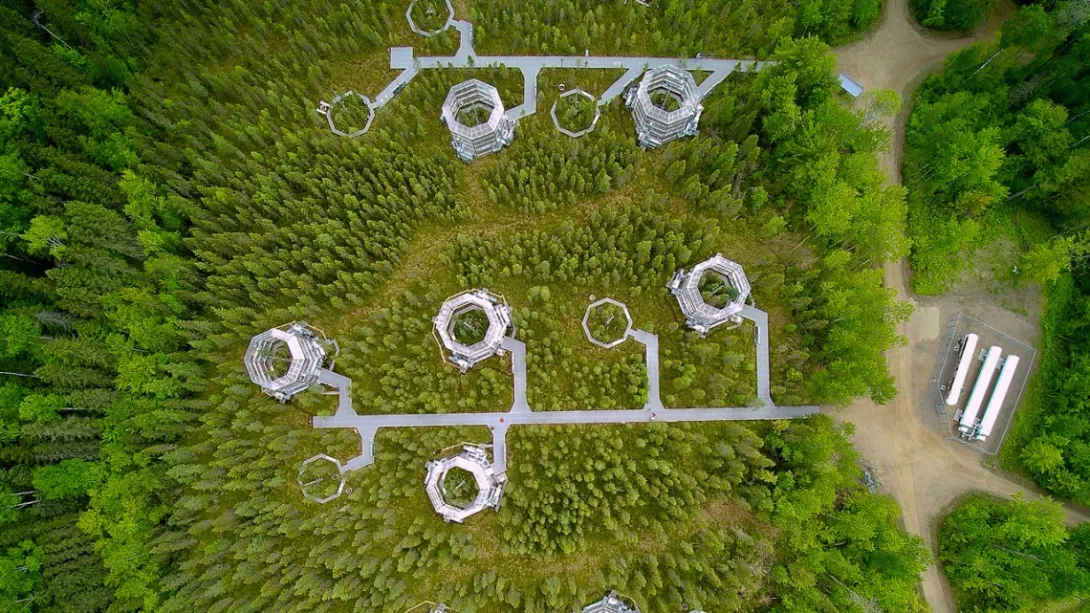
Yurt-like test chambers in a natural boreal spruce bog in northern Minnesota (provided).

This story by Caitlin Hayes is shared jointly with the Cornell Chronicle newsroom.

Study co-author Joel E. Kostka is the Tom and Marie Patton Distinguished Professor and associate chair for Research in the School of Biological Sciences with a joint appointment in the School of Earth and Atmospheric Sciences. He also serves as faculty director of Georgia Tech for Georgia's Tomorrow

The Kostka Lab works in peatland ecosystems to quantify changes in microbial communities brought on by climate change drivers. In particular, next generation gene sequencing and omics approaches are employed to investigate the microbial groups that mediate organic matter degradation and the release of greenhouse gases.

Peatlands make up just 3% of the earth’s land surface but store more than 30% of the world’s soil carbon, preserving organic matter and sequestering its carbon for tens of thousands of years. A new study sounds the alarm that an extreme drought event could quadruple peatland carbon loss in a warming climate. 

In the study, published October 23 in Science, researchers find that, under conditions that mimic a future climate (with warmer temperatures and elevated carbon dioxide), extreme drought dramatically increases the release of carbon in peatlands by nearly three times. This means that droughts in future climate conditions could turn a valuable carbon sink into a carbon source, erasing between 90 and 250 years of carbon stores in a matter of months.

“As temperatures increase, drought events become more frequent and severe,  making peatlands more vulnerable than before,” said Yiqi Luo, senior author and the Liberty Hyde Bailey Professor in the School of Integrative Plant Science’s Soil and Crop Sciences Section, in the College of Agriculture and Life Sciences (CALS) at Cornell University. “We add new evidence to show that with peatlands, the stakes are high. We observed that these extreme drought events can wipe out hundreds of years of accumulated carbon, so this has a huge implication.”

“To me, this study is striking in that it shows that around 10 to 100 years of carbon uptake by one of the most important global soil carbon stores can be erased by just two months of extreme drought,” adds Joel Kostka, Tom and Marie Patton Distinguished Professor in Biological Sciences at Georgia Tech.

It was already well-established that drought reduces ecosystem productivity and increases carbon release in peatlands, but this study is the first to examine how that carbon loss is exacerbated as the planet warms and more carbon dioxide enters the atmosphere. The Intergovernmental Panel on Climate Change estimates extreme drought will become 1.7 to 7.2 times more likely in the near future. 

Read the full story in the Cornell newsroom

###

Other co-authors include Cornell postdoctoral researchers Jian Zhou and Ning Wei; senior research associate Lifen Jiang; and researchers from Georgia Institute of Technology, Florida State University, the U.S. Department of Agriculture (USDA), ETH Zurich, Northern Arizona University, the Australian National University, the University of Western Ontario and Duke University.

Funding for the study came in part from the National Science Foundation, USDA, the New York State Department of Environmental Conservation and the New York State Department of Agriculture and Markets.

News Contact

News Contact

Media contacts:

Jess Hunt-Ralston
Director of Communications 
College of Sciences
Georgia Tech

Kaitlyn Serrao
Media Relations
Cornell University

Natalia Burgess
Media Assistant
ANU Communications and Engagement
The Australian National University

Oct. 27, 2025
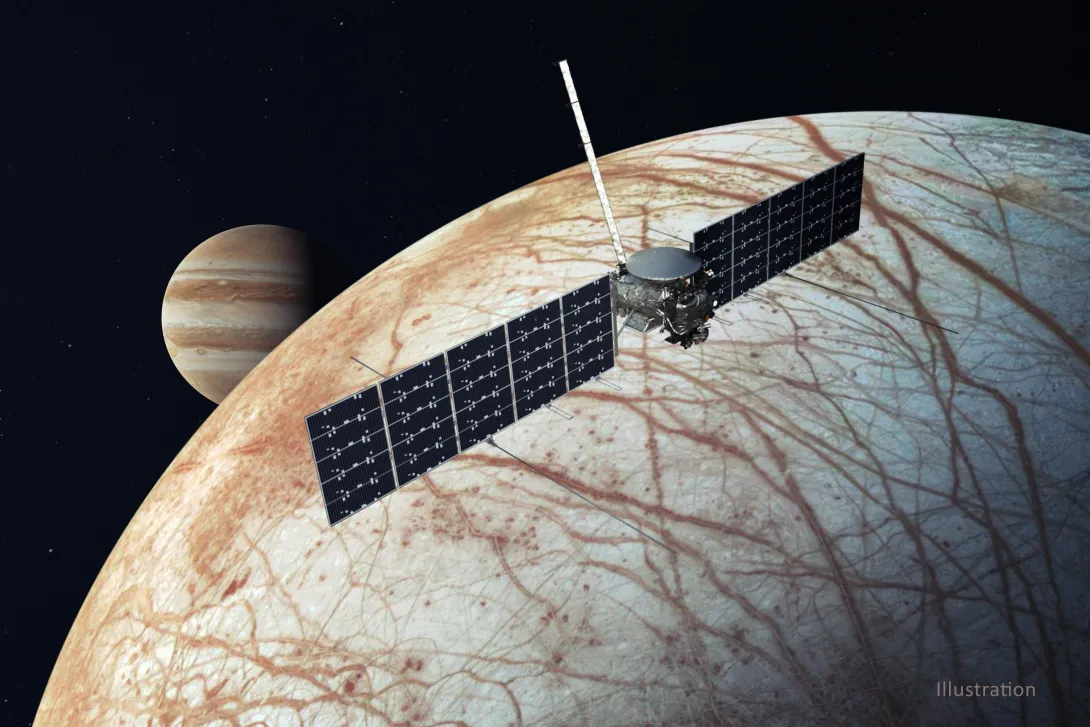
Illustration of NASA's Europa Clipper spacecraft with Jupiter and its icy moon Europa in the background (Credit: NASA/JPL-Caltech)
Professor Sven Simon

In four years, National Aeronautics and Space Administration (NASA)’s Europa Clipper mission will arrive in Jupiter’s orbit to investigate whether the planet’s icy moon, Europa, could support life. In the interim, researchers like Sven Simon, a professor in the Schools of Earth and Atmospheric Sciences and Physics, are working to uncover critical information to support the rapid analysis of measurements from the mission.

Simon’s research team has been awarded $1.4 million through NASA’s Precursor Science Investigations for Europa (PSI-E) program. Their project is one of seven selected to provide essential insights that, according to the program announcement, “will maximize the science return during the radiation-limited lifetime of the Europa Clipper.” 

Simon also serves as the institutional lead co-investigator of a second $1.4 million project, led by researchers at the University of California, Berkeley, which seeks to decipher how Europa's atmosphere and ionosphere contribute to the magnetic field near the moon. This project was selected during the same call for proposals.

“The research award is a fantastic opportunity to contribute to a mission centered on Europa’s complex plasma and electromagnetic environment,” says Simon, referencing the Georgia-Tech led proposal. “Our project combines foundational plasma physics from our School of Physics and geophysical knowledge from our School of Earth and Atmospheric Sciences to understand how the magnetic field near Europa is affected by the plasma populating Jupiter’s environment.”

The research team includes Earth and Atmospheric Sciences Ph.D. students Ariel Tello Fallau and Charles Michael HaynesNeil Baker, a Ph.D. student in the School of Physics, is contributing to the Berkeley-led PSI-E project that also includes Georgia Tech alumnus Lucas Liuzzo (Ph.D. EAS 2018), now an assistant research scientist at the University of California, Berkeley’s Space Sciences Laboratory. 

Groundwork for discovery

With a radius of only 1,560 kilometers, Europa is one of Jupiter’s four largest moons, known as the Galilean moons, discovered by Italian astronomer Galileo Galilei in the 1600s.

More than two decades ago, data from NASA’s Galileo mission — specifically magnetic field measurements collected far above Europa’s surface — pointed to the existence of a global subsurface ocean. This ocean, which may contain more liquid water than all of the Earth’s oceans combined, has made Europa a prime candidate in the search for life beyond Planet Earth.

“Finding evidence of a saltwater ocean lurking beneath Europa’s surface was a serendipitous discovery during the Galileo mission,” Simon explains. “NASA’s Europa Clipper mission picks up where the Galileo mission left off.” 

Launched in October 2024, the Europa Clipper space probe is expected to reach Jupiter’s orbit in 2030. That gives Simon and his team only a few years to complete their analysis. 

“Our research is doing the preparatory work to determine what and where we can measure further magnetic evidence of the ocean beneath Europa’s surface,” says Simon. “When the spacecraft arrives, we will find out whether our predictions are correct.”

Using advanced computer simulations, the team aims to better understand the magnetic fields near Europa. Part of these fields is generated by electric currents in the moon’s saltwater ocean; the other part is created by fast-moving flows of plasma — ionized matter that fills much of space — as it interacts with Europa’s atmosphere and surface.  

“Our project focuses on how the magnetic fields from plasma flow patterns compete with the magnetic signal from Europa’s ocean,” says Simon. “We want to determine which part of the magnetic field near Europa originates from the ocean and which part is a disruptive effect from the plasma.”

Deciphering these magnetic signals will provide essential context for interpreting Europa Clipper’s measurements, helping to not only confirm the ocean’s existence but also reveal details about its structure.

News Contact

News Contact

Writer: Lindsay C. Vidal

Subscribe to Research