
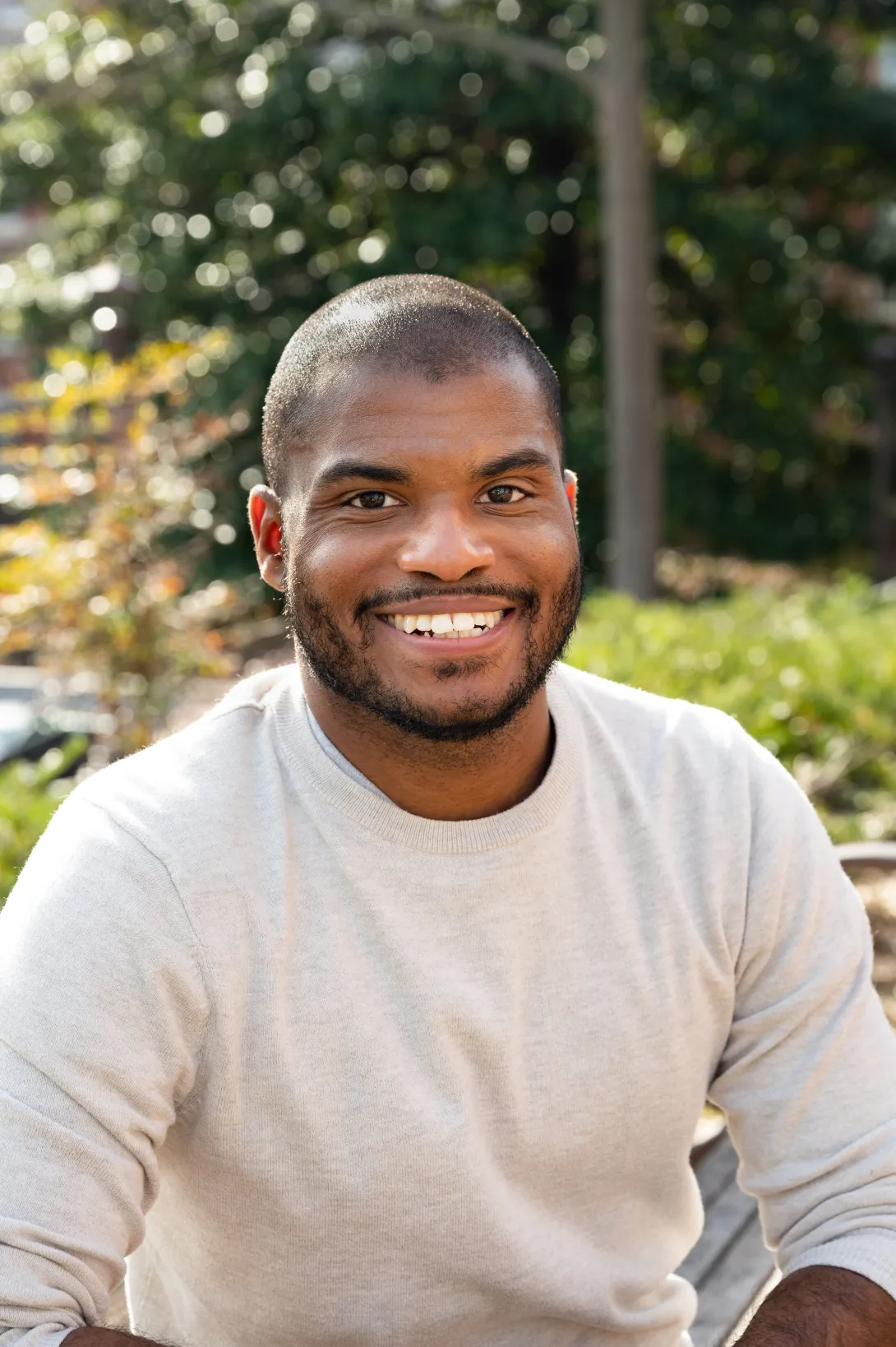
Isaiah Bolden
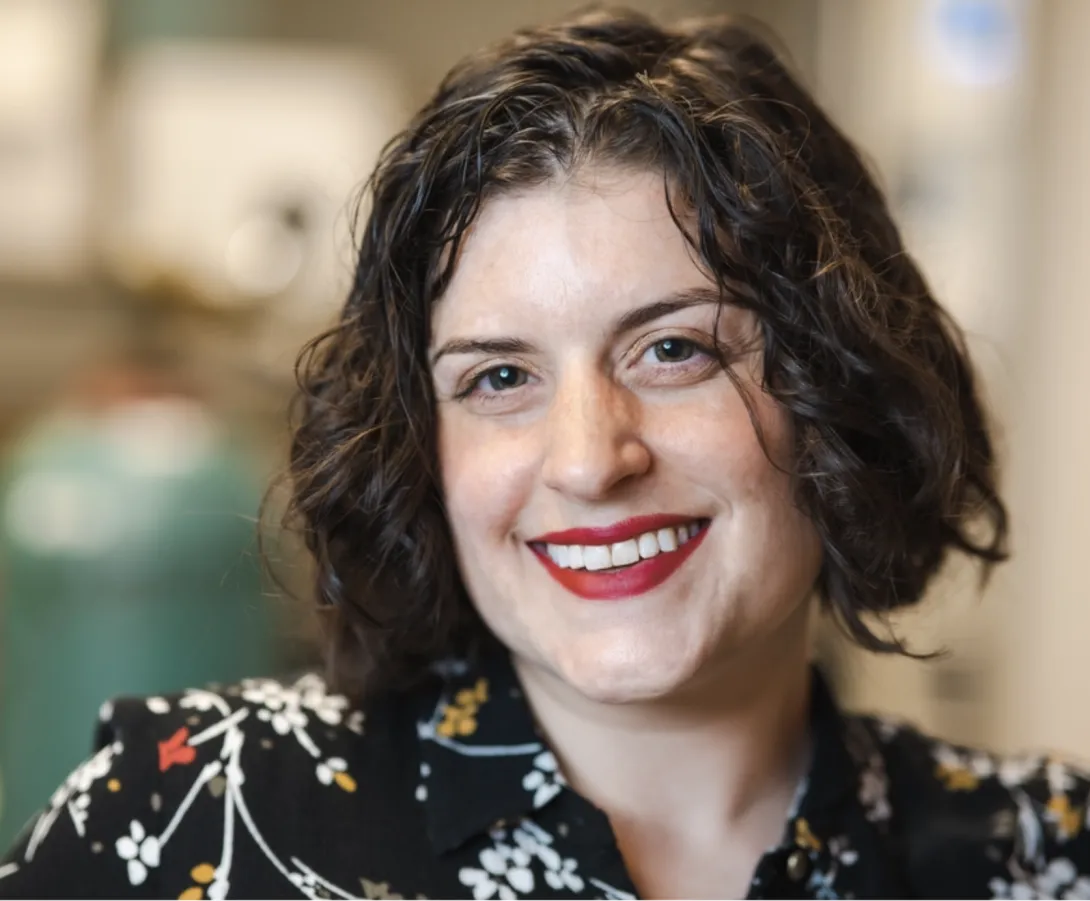
Jennifer Glass
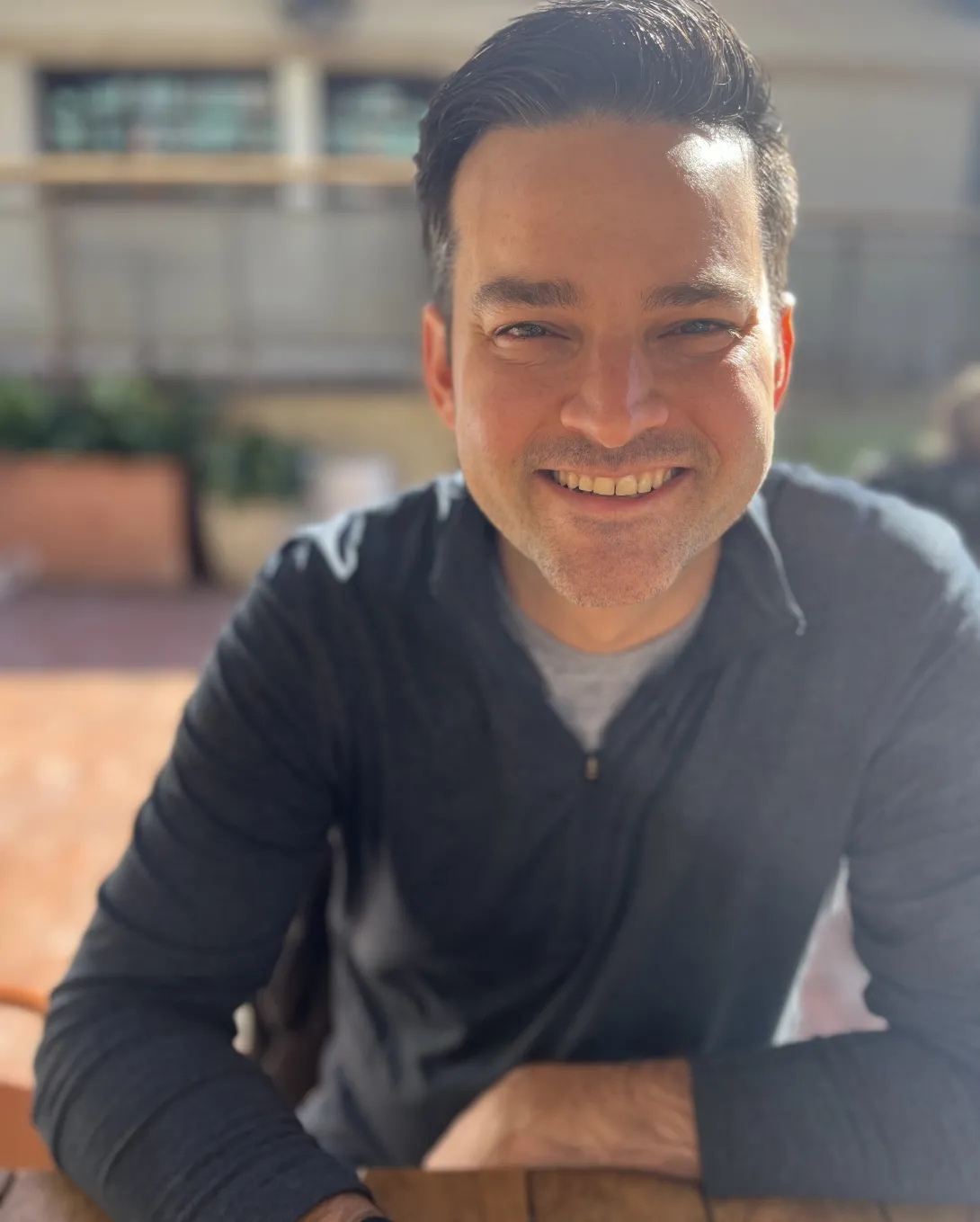
Alex Robel

Yuanzhi Tang
The College of Sciences has named four faculty members — Isaiah Bolden, Jennifer Glass, Alex Robel, and Yuanzhi Tang — from the School of Earth and Atmospheric Sciences (EAS) to newly endowed positions. The awards recognize their leadership in climate, sustainability, and environmental sciences.
“These endowments are allowing stellar early and mid-career faculty to amplify their educational and research activities,” says EAS Chair Jean Lynch-Stieglitz. “We are grateful to reward their achievements and ensure they can continue to contribute at a high level to the ongoing growth of Georgia Tech’s new Environmental Science B.S. program and the School’s research profile in climate and sustainability.”
Jean “Chris” Purvis Early Career Award: Isaiah Bolden
EAS Assistant Professor Isaiah Bolden’s research focuses on providing foundational data needed for climate and sustainability science in vulnerable coastal environments. He and his team in the Chemical Oceanography – Observations and Outreach Lab study chemical fingerprints preserved in coastal waters, corals, and shells to provide early warning indicators and mitigation strategies to preserve biodiversity and ecosystem services.
“I am most excited by the award’s ability to provide the flexible, sustained support necessary to bridge the gap between academic discovery and community impact,” he says. “With this endowment, I can pursue high-risk, high-reward research questions and dedicate resources to long-term, community-based projects. It directly empowers my drive to put science to work as a tool for environmental policymaking and cultural preservation.”
Bolden plans to direct the funds to support marine science curricula for coastal Georgia middle and high school students, paid undergraduate internships, specialized sample analyses, and travel logistics.
New research: Bolden’s group is actively pioneering the use of coastal Georgia oyster shells as novel natural archives of environmental change. Similar to tropical corals, the oyster shells provide high-resolution data on local water quality, pollution, and climate shifts. This work is intended to dovetail with Bolden’s coastal community-based partnerships, including the Ladies and Lads in Lab Coats program, which provides students with STEM exposure and enables them to collect and analyze data that documents their region’s environmental history.
Jean “Chris” Purvis Professorship: Jennifer Glass
EAS Professor Jennifer Glass drives new research at the intersection of environmental microbiology and climate science. The Glass Lab investigates microorganisms that produce and consume greenhouse gases — focusing on the chemical-level mechanisms behind how these gases are created and destroyed — with the ultimate aim of harnessing biological processes to address some of the urgent environmental challenges facing humanity. One major focus of her research is the vast reserves of methane hydrate found beneath the continental margin seafloor, representing the largest natural gas resource on Earth.
“I’m incredibly thankful to the donor and the Institute,” says Glass, who is also the EAS associate chair for Undergraduate Affairs. “This support arrives at a critical time for environmental science and allows me to pursue new opportunities that would otherwise be out of reach.”
She plans to use the funds to attend key conferences, build new collaborations, and support student engagement in upcoming initiatives.
New research: The Glass Lab is exploring environmentally friendly ways to extract and recycle rare earth elements — critical minerals used in batteries and electric vehicles. By studying marine microbes, which are less understood than their soil counterparts, the team aims to develop green biotechnology alternatives to current mining practices.
Jean “Chris” Purvis Early Career Award: Alex Robel
EAS Associate Professor and Rising Tide Director Alex Robel combines physics, applied mathematics, and ocean sciences to understand how climate changes are impacting Earth’s largest ice sheets and glaciers. His research lab, the GT Ice and Climate Group, focuses on developing computational models of ice sheet melt to predict future sea level rise. In partnership with coastal communities, they leverage those predictions to help make city streets more resilient to flooding.
“This award helps me pursue more opportunities to engage closely with community partners, using climate information to make concrete improvements in their infrastructure,” explains Robel.
Specific plans for the funds include enhancing pilot projects in coastal resilience, including the Community Hubs for Optimizing Resilience (CHORUS) initiative. Using building-scale flood models, CHORUS will help communities select potential infrastructure interventions to mitigate future flooding that threatens valued community assets.
New research: Robel is launching a project to use machine learning methods to improve the representation of small-scale processes in ice sheet computational models. These methods will help his group blend an understanding of how ice flows and fractures, based on basic physical principles, with real-world measurements of crevasse formation on ice sheets.
Georgia Power Professorship: Yuanzhi Tang
EAS Professor Yuanzhi Tang is the founding director of the Center for Critical Mineral Solutions and associate director, Strategic Partnerships and Engagement for the Brook Byers Institute for Sustainable Systems. Her research integrates geochemistry, environmental engineering, and sustainability science to advance a circular economy for critical minerals, from resource discovery and recovery to recycling and reuse.
The Tang Research Group investigates the fundamental chemical, geological, and biological processes that control the transformation and mobility of critical elements across natural and engineered environments. Her work directly informs the development of low-impact extraction technologies and sustainable supply chains essential for clean energy transition.
“The Georgia Power Professorship provides support for building partnerships across academia and industry partners to accelerate innovation in critical minerals,” says Tang. “It enables us to link fundamental geochemical and geological science with real-world applications that strengthen both energy security and environmental stewardship.”
Tang plans to use the funds to expand student participation and interdisciplinary collaborations with academic and industry partners — positioning Georgia and the broader Southeast as a leader in sustainable mineral innovation.
New research: Tang’s research team is developing sustainable methods for the extraction and separation of critical minerals from alternative and waste resources. By coupling molecular-scale characterization with rational engineering design, her team aims to transform waste byproducts into valuable sources of critical elements while minimizing environmental impacts.
About the Purvis Endowment
The Jean “Chris” Purvis Endowed Awards are supported by the generosity of the late J. Chris Purvis, M.D. (Applied Biology 1969), a psychiatrist and neurologist who specialized in juvenile and adolescent behavioral psychiatry.
About the Georgia Power Professorship
The Georgia Power Professorship was established through the generosity of Georgia Power, which funds several endowed professorships at Georgia Tech to support faculty in fields like energy, science, sustainability, and engineering.
News Contact
Laura S. Smith, writer

(Illustration: Sarah Collins)
When a Georgia Tech-led project received a contract award from the Advanced Research Projects Agency for Health (ARPA-H), it was for a bold idea with aggressive metrics. And it wasn’t guaranteed money. The team, led by biomedical engineer Gabe Kwong, had to deliver on its vision. Doing so could transform cancer screening and care, leading to one-size-fits-all tests that detect multiple cancers before they’re visible on CT or PET scans.
It’s a big goal, but that’s the point of ARPA-H. The agency funds staggeringly difficult healthcare innovation ideas that require major investment to succeed.
Two years into the $49.5 million project, Kwong and the team from Georgia Tech, Columbia University, and Mount Sinai Health System has crossed a critical threshold.
They’ve built the first tool able to measure enzyme activity around cancer tumors and healthy cells. And they’ve deployed it to understand the unique signatures for tumors from 14 different kinds of cancer.
That data is powering the first version of a cancer “atlas.” Like a geographical atlas, it will offer directions to each kind of tumor, allowing scientists to design sensors that follow the map and detect cancer tumors when they’re still small.
“If I want to deliver a sensor to a particular region inside the body, right now, there's no way of directing it. We give it systemically, and it basically infuses all tissues all the time,” said Kwong, Robert A. Milton Professor in the Wallace H. Coulter Department of Biomedical Engineering. “What's powerful is that we’re now defining tissue sites with a specific molecular ‘barcode.’ Then if a sensor is given systemically, it should only turn on when the barcode matches the local tissue.”
Read more about the project on the College of Engineering website.
News Contact
Joshua Stewart
College of Engineering
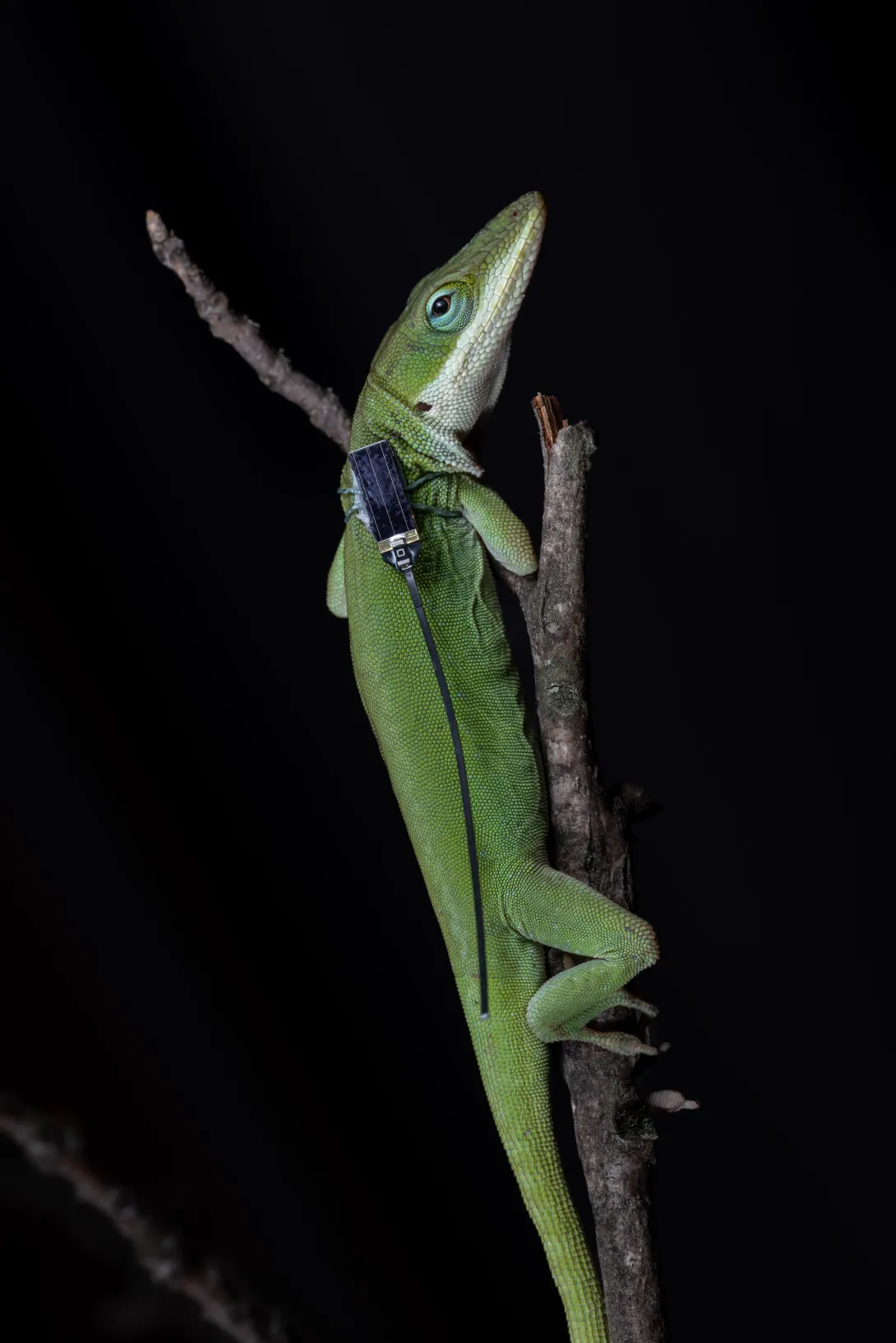
A lizard wearing one of the sensors, which weigh just three-hundredths of a gram each — the same as a two grains of rice. (Credit: Jon Suh)
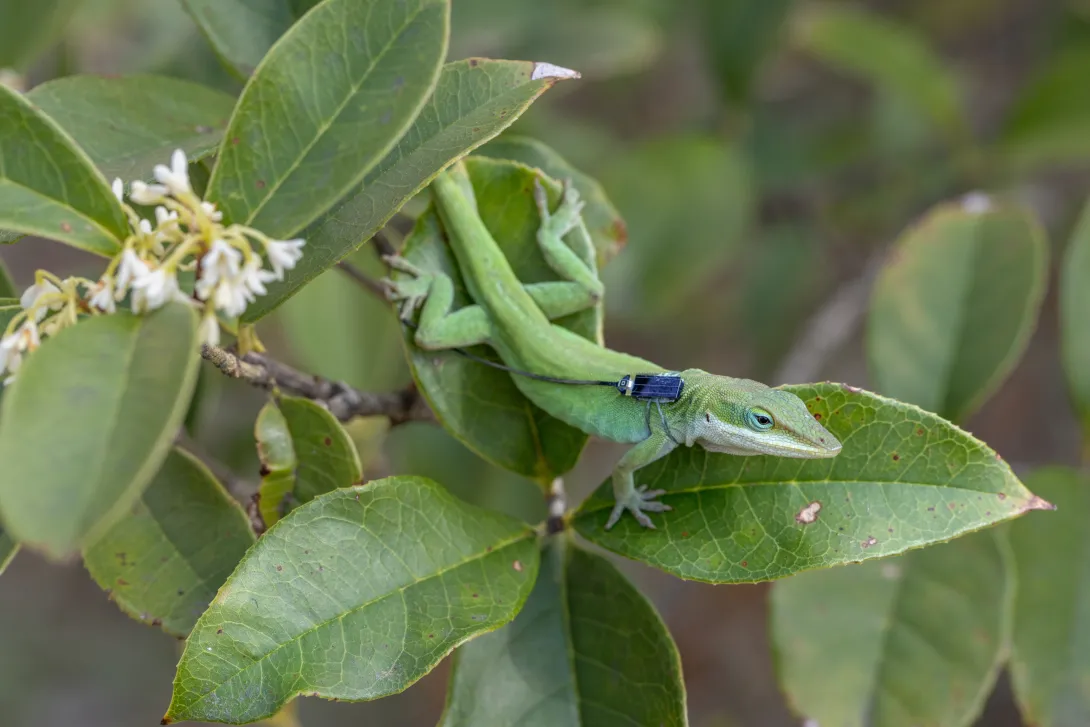
Stroud will spend the next five years transforming Lizard Island into the world’s premier evolutionary observatory (Credit: Jon Suh)
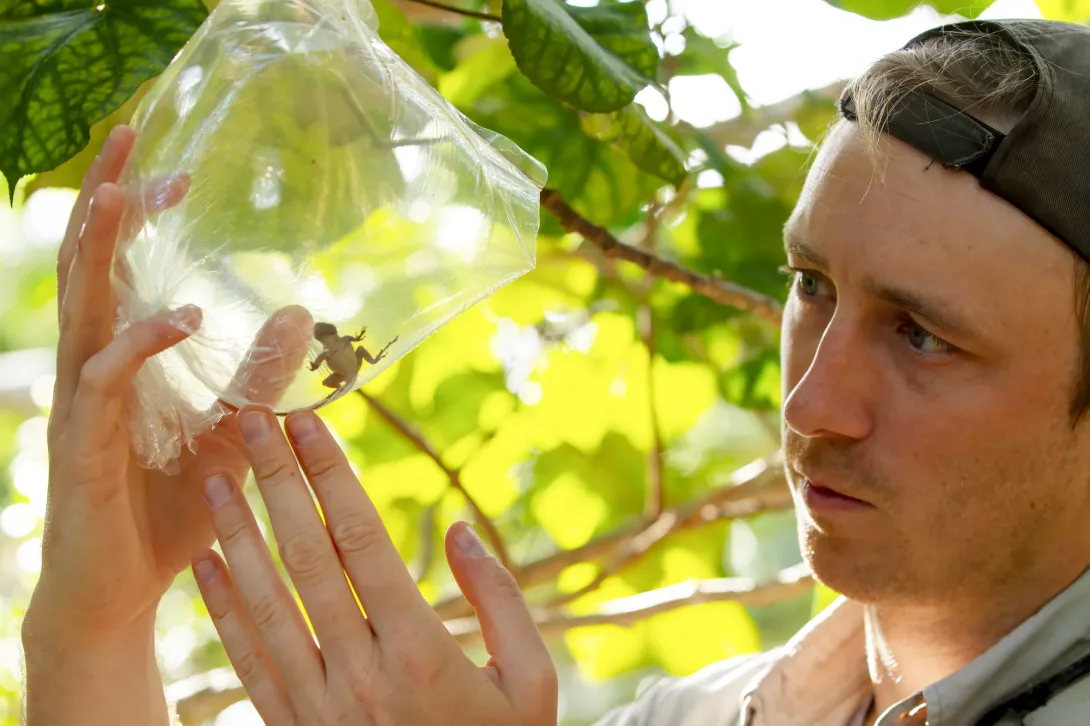
James Stroud examines a lizard in the field. (Credit: Day’s Edge Productions)
James Stroud has been named a 2025 Packard Fellow for his pioneering research in evolutionary biology. Stroud, Elizabeth Smithgall-Watts Early Career Assistant Professor in the School of Biological Sciences, will receive $875,000 over five years to fund his work on “Lizard Island” in South Florida. His goal? To create evolution’s first high-definition map — with the help of 1,000 backpack-wearing lizards.
Awarded annually to just 20 individuals by the David and Lucile Packard Foundation, Packard Fellowships for Science and Engineering support researchers pursuing cutting-edge research and ambitious goals. “These visionary Packard Fellows are pushing the boundaries of knowledge, and their bold ideas will become tomorrow’s real-world solutions,” says Nancy Lindborg, president and CEO of the Packard Foundation in a recent press release.
The flexible funding allows researchers to maximize their creativity and ingenuity. Stroud will spend the next five years transforming Lizard Island into the world’s premier evolutionary observatory, merging groundbreaking technology with long-term field research.
On Lizard Island, that means equipping every lizard with an ultra-lightweight sensor “backpack.” Although the sensors weigh just six-hundredths of a gram each — the same as two grains of rice — when combined with innovations in mapping technology, they will help Stroud investigate the role that behavior plays in driving evolution in the wild.
“I’m incredibly honored to be named a 2025 Packard Fellow,” says Stroud. “This support allows me to pursue a question that has fascinated evolutionary biologists for centuries: how does behavior shape evolution? It’s a transformative opportunity, and I’m deeply grateful to the Packard Foundation for believing in the potential of this work.”
Tiny sensors, big questions
Begun in 2015, Stroud’s work on Lizard Island is one of the longest-running evolutionary studies of its kind: for the last 10 years, he has carefully caught and released every lizard on the island, measuring evolution through documenting their body characteristics, habitat use, and survival.
Through his studies, he has captured evolution in action, but monitoring and measuring behavior in evolutionary studies has historically been an extremely difficult and elusive task. The problem? While smaller animals tend to have higher population densities and reproduce more quickly (making them ideal candidates for evolutionary field studies), it has been difficult to find durable and long-lasting sensors small enough for these animals to carry.
“This has been a missing link because behavior is a critical component of evolution,” Stroud says. “Behavior can both expose individuals to — or shield them from — natural selection. For example, an animal with a less favorable trait, like bad eyesight, could change its behavior to avoid situations where it is disadvantaged.
“These decisions can ultimately determine whether they survive and reproduce in the wild, directly influencing the outcome of natural selection. However, until now, we just haven’t had the technology to measure these types of extremely intricate behaviors across many individuals before.”
Mapping the future
Stroud won’t just know exactly where each lizard is — he’ll also create a detailed three-dimensional map of the entire island using remote sensing technology called LiDAR, updating it each year. “By shooting millions of laser beams, we can create a highly detailed three-dimensional map of Lizard Island, capturing the shape of every branch, rock, and blade of grass on the island,” he explains. “When connected to our lizard backpacks, we’ll know the exact microhabitats and resources available to each lizard as they move through this environment.”
Stroud will also deploy hundreds of microclimate sensors to understand how species are reacting to changes in temperature and climate. The result will be the world’s first comprehensive database: a record of minute lizard movements, the resources each individual uses, daily interactions, and changes in the environment spanning seasons and years.
“For evolutionary scientists, it has been seemingly impossible to track the moment-by-moment decisions of individual organisms… until now,” he says.
“Today, it’s possible to study what Darwin could only dream of — evolution occurring in real time,” Stroud adds. “Behavior is a critical component of evolution, understanding evolution is critical to understanding life on Earth, and understanding life on Earth is more important than ever.”
News Contact
Written by Selena Langner

The high impact between the metal balls in a ball mill reactor and the polymer surface is sufficient to momentarily liquefy the polymer and facilitate chemical reactions.
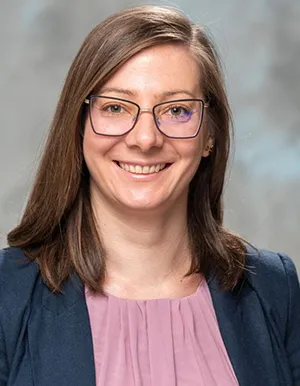
Kinga Gołąbek
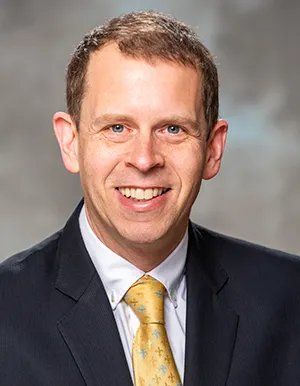
Prof. Carsten Sievers
While plastics help enable modern standards of living, their accumulation in landfills and the overall environment continues to grow as a global concern.
Polyethylene terephthalate (PET) is one of the world’s most widely used plastics, with tens of millions of tons produced annually in the production of bottles, food packaging, and clothing fibers. The durability that makes PET so useful also means that it is more difficult to recycle efficiently.
Now, researchers have developed a method to break down PET using mechanical forces instead of heat or harsh chemicals. Published in the journal Chem, their findings demonstrate how a “mechanochemical” method — chemical reactions driven by mechanical forces such as collisions — can rapidly convert PET back into its basic building blocks, opening a path toward faster, cleaner recycling.
Led by postdoctoral researcher Kinga Gołąbek and Professor Carsten Sievers of Georgia Tech’s School of Chemical and Biomolecular Engineering, the research team hit solid pieces of PET with metal balls with the same force they would experience in a machine called a ball mill. This can make the PET react with other solid chemicals such as sodium hydroxide (NaOH), generating enough energy to break the plastic’s chemical bonds at room temperature, without the need for hazardous solvents.
“We’re showing that mechanical impacts can help decompose plastics into their original molecules in a controllable and efficient way,” Sievers said. “This could transform the recycling of plastics into a more sustainable process.”
Mapping the Impact
In demonstrating the process, the researchers used controlled single-impact experiments along with advanced computer simulations to map how energy from collisions distributes across the plastic and triggers chemical and structural transformations.
These experiments showed changes in structure and chemistry of PET in tiny zones that experience different pressures and heat. By mapping these transformations, the team gained new insights into how mechanical energy can trigger rapid, efficient chemical reactions.
“This understanding could help engineers design industrial-scale recycling systems that are faster, cleaner, and more energy-efficient,” Gołąbek said.
Breaking Down Plastic
Each collision created a tiny crater, with the center absorbing the most energy. In this zone, the plastic stretched, cracked, and even softened slightly, creating ideal conditions for chemical reactions with sodium hydroxide.
High-resolution imaging and spectroscopy revealed that the normally ordered polymer chains became disordered in the crater center, while some chains broke into smaller fragments, increasing the surface area exposed to the reactant. Even without sodium hydroxide, mechanical impact alone caused minor chain breaking, showing that mechanical force itself can trigger chemical change.
The study also showed the importance of the amount of energy delivered by each impact. Low-energy collisions only slightly disturb PET, but stronger impacts cause cracks and plastic deformation, exposing new surfaces that can react with sodium hydroxide for rapid chemical breakdown.
“Understanding this energy threshold allows engineers to optimize mechanochemical recycling, maximizing efficiency while minimizing unnecessary energy use,” Sievers explained.
Closing the Loop on Plastic Waste
These findings point toward a future where plastics can be fully recycled back into their original building blocks, rather than being downcycled or discarded. By harnessing mechanical energy instead of heat or harsh chemicals, recycling could become faster, cleaner, and more energy-efficient.
“This approach could help close the loop on plastic waste,” Sievers said. “We could imagine recycling systems where everyday plastics are processed mechanochemically, giving waste new life repeatedly and reducing environmental impact.”
The team now plans to test real-world waste streams and explore whether similar methods can work for other difficult-to-recycle plastics, bringing mechanochemical recycling closer to industrial use.
“With millions of tons of PET produced every year, improving recycling efficiency could significantly reduce plastic pollution and help protect ecosystems worldwide,” Gołąbek said.
CITATION: Kinga Gołąbek, Yuchen Chang, Lauren R. Mellinger, Mariana V. Rodrigues, Cauê de Souza Coutinho Nogueira, Fabio B. Passos, Yutao Xing, Aline Ribeiro Passos, Mohammed H. Saffarini, Austin B. Isner, David S. Sholl, Carsten Sievers, “Spatially-resolved reaction environments in mechanochemical upcycling of polymers,” Chem, 2025.
News Contact
Brad Dixon, braddixon@gatech.edu

Flooding dominated the headlines of summer 2025. Atypical storms and rising rivers in the Texas Hill Country washed away an entire summer camp. Glacial snow melt, combined with flash river floods, caused hundreds of deaths in Pakistan. As the Atlantic hurricane season hits its peak, Americans wait to see if another storm may be as unexpectedly devastating as 2024’s Hurricane Helene.
Flooding can be an existential threat, affecting everything from infrastructure to health. Georgia Tech researchers are developing solutions to monitor and forecast flooding, as well as restore ecosystems to prevent future flooding. These efforts support communities’ resilience in the face of climate change and keep the U.S. secure.
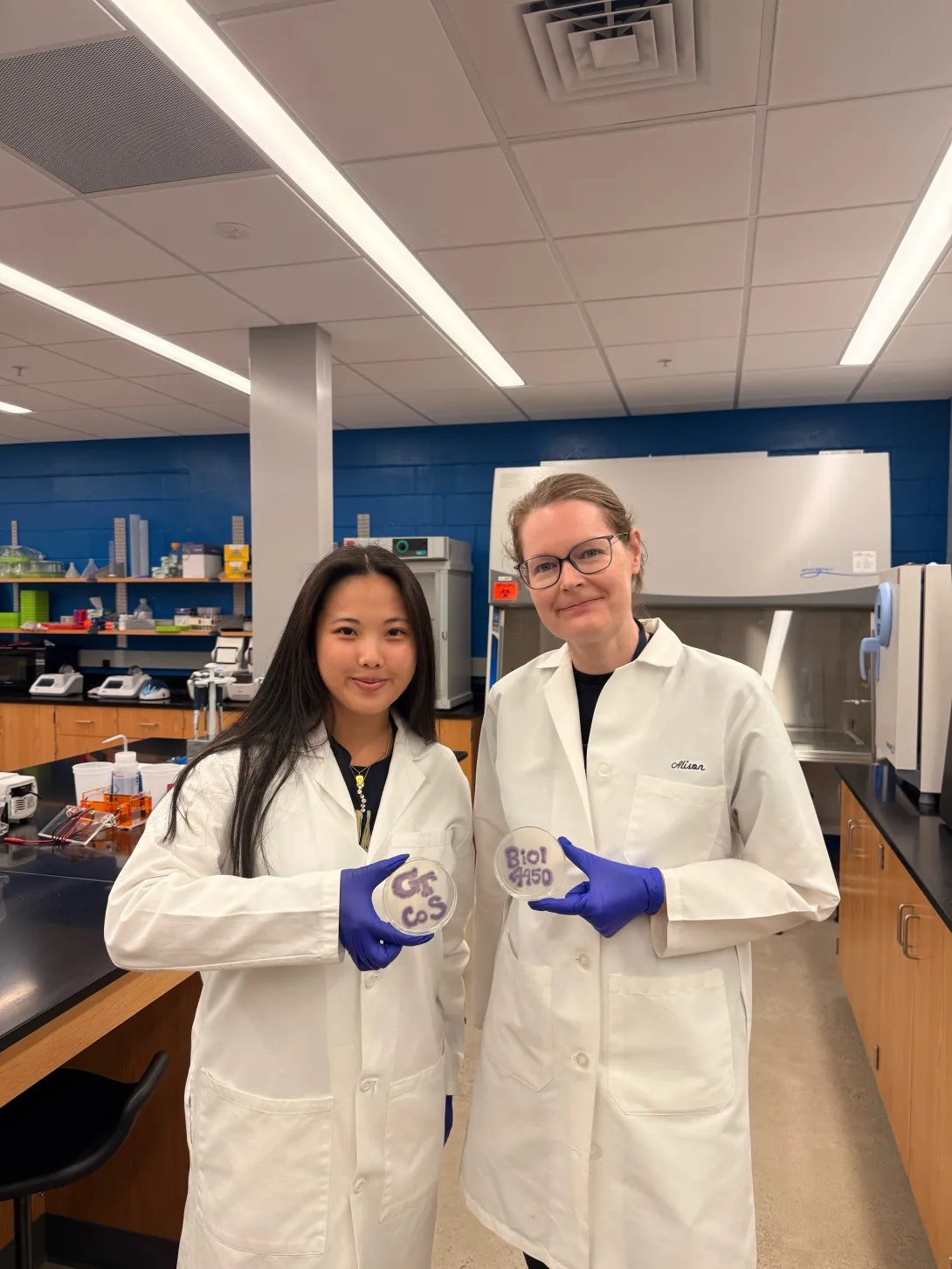
Grace Tang (Left) and Alison Onstine (Right) holding bacteria plates that spell "BIOL 4590" (Credit: Tang and Onstine)
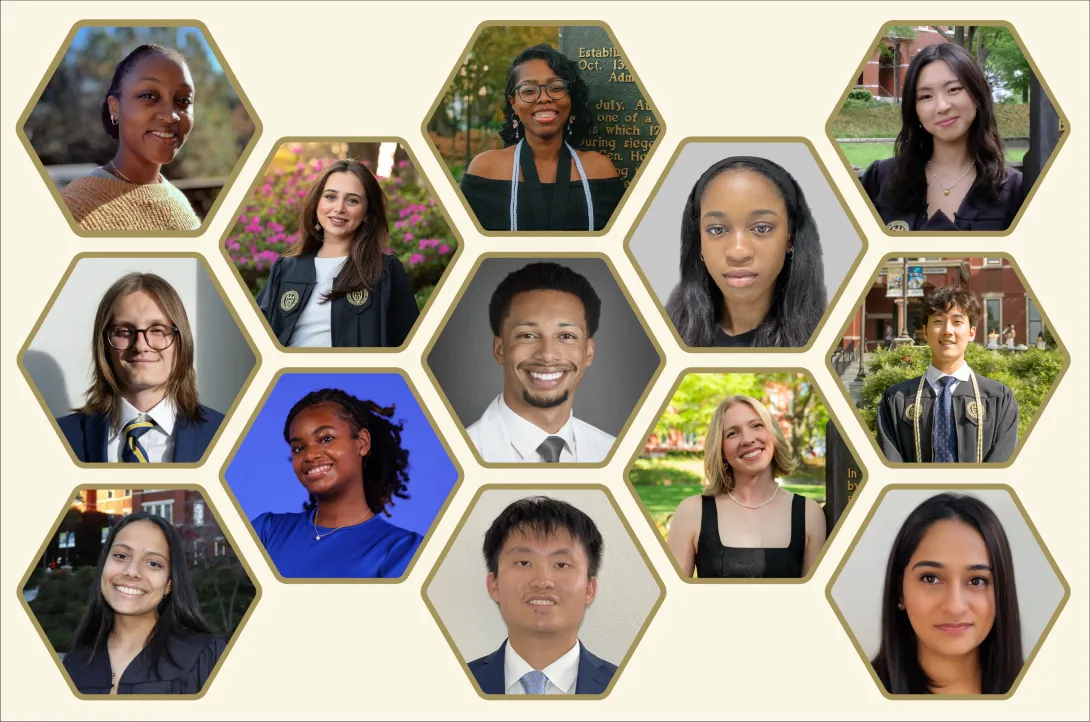
A collection of the undergraduate students who co-authored the paper. (Credit: Tang and Onstine)
This fall, 20 Georgia Tech students published a peer-reviewed scientific paper — the culmination of work done during a semester-long laboratory course. During the semester, students analyzed genomes sequenced from marine samples collected in Key West, Florida — doing hands-on original bioinformatics research on par with graduate students and working with bioinformatics tools to explore drug discovery potential.
The course, BIOS 4590, is a research project lab for senior biology majors that provides an opportunity for professors to share their expertise with students in a hands-on environment. In his class, Associate Professor Vinayak (Vinny) Agarwal, who holds joint appointments in the School of Chemistry and Biochemistry and School of Biological Sciences, aimed to introduce undergraduates to advanced bioinformatics tools through applied research using new-to-science raw data.
The resulting paper, “Phylogenomic Identification of a Highly Conserved Copper-Binding RiPP Biosynthetic Gene Cluster in Marine Microbulbifer Bacteria,” which was recently published in ACS Chemical Biology, involves the historically understudied genus of Microbulbifer, a type of bacteria often associated with sponges and corals. These microbial communities are rich sources of natural products, small biological molecules often associated with medicine and drug discovery.
"This class, and the resulting research, is a testament to the transformative power of hands-on learning,” says Susan Lozier, dean of the College of Sciences, Betsy Middleton and John Clark Sutherland Chair, and professor in the School of Earth and Atmospheric Sciences. “The success of this course — and the students’ remarkable achievement — reflects Georgia Tech's commitment to fostering curiosity, collaboration, and scientific rigor and to empowering the next generation of scientists and leaders."
Funded by Agarwal’s 2023 National Science Foundation CAREER grant and Camille and Henry Dreyfus Foundation Teacher-Scholar award, the class also received support from leadership in the College of Sciences, School of Biological Sciences, and School Chemistry and Biochemistry. The study’s lead author, graduate student Yifan (Grace) Tang, served as the class teaching assistant, and was funded in part by a Biochemistry and Biophysics Graduate Assistance in Areas of National Need fellowship.
“The students in this class are working on important, novel work — this cohort worked with real genomic data that had never been sequenced before,” she says. “Typically, researchers might work with one or two genome sequences, but we provided students with 42 — this might be the first time anyone has looked at Microbulbifer at such a wide scope.”
From classroom to publication
To prepare for the class, Tang worked alongside Laboratory Manager Alison Onstine, who manages the School of Biological Sciences teaching laboratory spaces, to sequence the Key West bacterial genomes.
“Our work in the Agarwal Lab is in natural product discovery. We focus on finding new pharmaceutical drugs through marine bacteria — but with a bioinformatics spin,” Tang explains. “We wanted to bring this type of experience to undergraduates, so we gave fully sequenced genomes to students and asked them to look for potential properties.”
Throughout the class, students learned different techniques for analyzing bacterial genome sequences and extracting data with various tools — gaining both lab and computational skills through hands-on experiences, live demos, and troubleshooting sessions.
“The highlight was showing students just how much we can learn about a bacterial genus, especially one that hasn’t been studied at this scale before,” Tang shares. “This is a growing field, so there are so many opportunities for students to make meaningful contributions while learning new skills.”
Empowering future students
For many students, it was their first time using these types of tools, but Agarwal says that it’s something they'll likely encounter in both industry and research. He sees this type of research experience as especially helpful for seniors, who are often deciding between entering the workforce or continuing their education.
“Bioinformatics is increasingly important for analyzing big data. Students need the ability to manipulate and understand data using computational tools, and this class plays an important role in familiarizing them with this process,” he shares. “Our goal is to demystify research and give students the confidence and tools for both graduate school and for the workforce after graduation.”
The class will be offered for a third time in Fall 2026. While the exact course of research hasn’t yet been decided, “we always aim for something new that can produce publication-quality research — students don’t repeat past year’s work,” Agarwal says. This recent cohort of students built on the success of 18 undergraduates who took the class in 2023, who also published a paper. “This course truly underscores Georgia Tech’s commitment to pioneering meaningful undergraduate experiences — no other peer institution I know of is exposing undergraduates to bioinformatics at this level.”
Funding: NSF CAREER and the Dreyfus Foundation
News Contact
Written by Selena Langner
Cover of the Sustainability Next Plan
The 2025 round of Sustainability Next Research Seed Grants has been awarded to 17 transdisciplinary research teams representing a vibrant network of 51 collaborators from across Georgia Tech. These teams span 21 unique units from six of the seven Colleges, including Schools, research centers, and Interdisciplinary Research Institutes.
The seed grant program, administered by the Brook Byers Institute for Sustainable Systems (BBISS), reaches many faculty members from a diverse array of disciplines due to the generous support provided by broad-based partnerships in addition to the Sustainability Next funds. This year’s partners are the Georgia Tech Arts Initiative, BBISS, Walter H. Coulter Department of Biomedical Engineering, School of Civil and Environmental Engineering, College of Design, School of City and Regional Planning, School of Computer Science, Ray C. Anderson Center for Sustainable Business, Energy Policy and Innovation Center, Parker H. Petit Institute for Bioengineering and Bioscience, Institute for Matter and Systems, Institute for People and Technology, Institute for Robotics and Intelligent Machines, Strategic Energy Institute, and Center for Sustainable Communities Research and Education.
The goal of the program is to nurture promising research areas for future large-scale collaborative sustainability research, research translation, and/or high-impact outreach; to provide mid-career faculty with leadership and community-building opportunities; and to broaden and strengthen the Georgia Tech sustainability community as a whole. The call for proposals was modeled after the Office of the Executive Vice President for Research’s Moving Teams Forward and Forming Teams programs.
Looking ahead, BBISS will support and nurture these projects in collaboration with the relevant funding partners. Beginning in October, BBISS will host a series of focused workshops designed to foster collaboration and provide additional support to help advance these initiatives. Projects have been grouped into five thematic clusters, each of which will be the focus of an upcoming workshop:
- Circularity Programs
- Adaptation to the Changing Environment
- Community Engagement and Education
- Climate Science and Solutions
- Environmental and Health Impacts
BBISS faculty fellows, past seed grant recipients, and other interested Georgia Tech faculty are invited to participate. If you are interested in participating in the workshops, please email kristin.janacek@gatech.edu. The first session on Circularity Programs is Oct. 16 at 1 p.m. in the Peachtree Room (3rd floor) of the John Lewis Student Center.
The 2025 Sustainability Next Seed Grant awards are:
Forming Teams:
- Developing a Sustainable and Ethical Electric Vehicle Ecosystem Workforce for the Future Through Cross-Sector Partnerships. Principal Investigators (PI): Joe Bozeman. Co-Principal Investigator (Co-PI): Jennifer Hirsch.
- Unlocking Circularity at Scale: Platform-Based Solutions for Advancing Material Reuse and Supply Chain Resilience. Principal Investigator: Marco Ceccagnoli. Co-PIs: Matthew Realff, Patricia Stathatou, Christos Athanasiou.
- OpenGUARD: Geospatial Utility Aggregations with Robust Differential Privacy. PI: Patrick Kastner. Co-PI: Juba Ziani.
- Regenerative Framework: A Transdisciplinary Model for Urban Climate Resilience and Soil Health. PI: Jenny McGuire. Co-PI: Nicole Kennard.
- Guiding Transportation With Community Action Through Research, Education, and Service (GT-CARES). PI: Rounaq Basu. Co-PIs: Ruthie Yow, Sofía Pérez-Guzmán, Rebecca Watts Hull.
- Co-optimizing Design and Coordination for Sustainable Multi-Robot Construction. PI: Edvard Bruun. Co-PI: Harish Ravichanda.
- Campus as Material Ecology: Building Transdisciplinary Circular Systems for Plastic Tracking, Transformation, and Community Engagement. PI: Hyojin Kwon. Co-PIs: Michael Best, Russ Clark, Tim Trent, Meisha Shofner.
- Sonifying Climate Infrastructures: Community Outreach and Education With Shade Synthesizer. PI: Heidi Biggs. Co-PIs: Clint Zeagler, Alexandria Smith.
- Building a Georgia Tech Research Partnership for Community-Based Food System Resilience. PI: Johannes Milz. Co-PIs: Xin Chen, Inge Rocker, Sofía Pérez-Guzmán, Nicole Kennard.
Moving Teams Forward:
- Are Data Centers the New Landfills? Social, Economic, and Environmental Tradeoffs. PI: Allen Hyde. Co-PIs: Josiah Hester, Cindy Lin, Nicole Kennard, Joe Bozeman, Elora Raymond, Tony Harding, Jung-Ho Lewe.
- Game-Based Learning in Energy Systems: A Rigorous Evaluation of Current Crisis. PI: Jessica Roberts. Co-PI: Daniel Molzahn.
- Strategic Application of Antibiotic-Independent Therapy to Treat Coral Disease Outbreaks. PI: Lauren Speare.
- Advancing Water Reuse Through Research, Education, and Community Partnerships in Atlanta, Georgia. PI: Katherine Graham. Co-PIs: Amanda Nolen, Yeqing Kong.
- Assessing the Accuracy and Reliability of Low-Cost Particulate Matter (PM) Sensors Across Diverse Ambient Environments. PI: Nga Lee (Sally) Ng. Co-PI: Ted Russell.
- Developing a Georgia Community Center Into a Sustainability Hub. PI: Ashutosh Dhekne, Co-PIs: Umakishore Ramachandran, Danielle Willkens, Ruthie Yow.
- What, When, Where of Air Pollution: PM2.5 and How It Impacts Health. PI: Shuichi Takayama. Co-PI: Nga Lee (Sally) Ng.
- Enabling Communities to Baseline the Performance of Energy Systems. PI: Jung-Ho Lewe. Co-PIs: Scott Duncan, David Solano Sarmiento, Danielle Willkens, Anna Tinoco-Santiago.
This round of funding was highly competitive, with 45 proposals submitted. BBISS extends its gratitude to all the individuals and groups who applied, as well as to the faculty and staff who contributed their time and expertise to evaluate the proposals. Their thoughtful input was essential to achieving a fair and collaborative selection process, ensuring that the awarded proposals align strongly with the BBISS’ strategy and show promise for long-term impact and future research opportunities.
According to BBISS Executive Director Beril Toktay, and Brady Family Chair in Management, “The high level of participation demonstrates the enduring commitment to sustainability research and engagement by the Georgia Tech community. BBISS honors this commitment by looking for collaboration opportunities with all who are driving sustainability efforts at Georgia Tech.”
News Contact
Brent Verrill, Research Communications Program Manager, BBISS
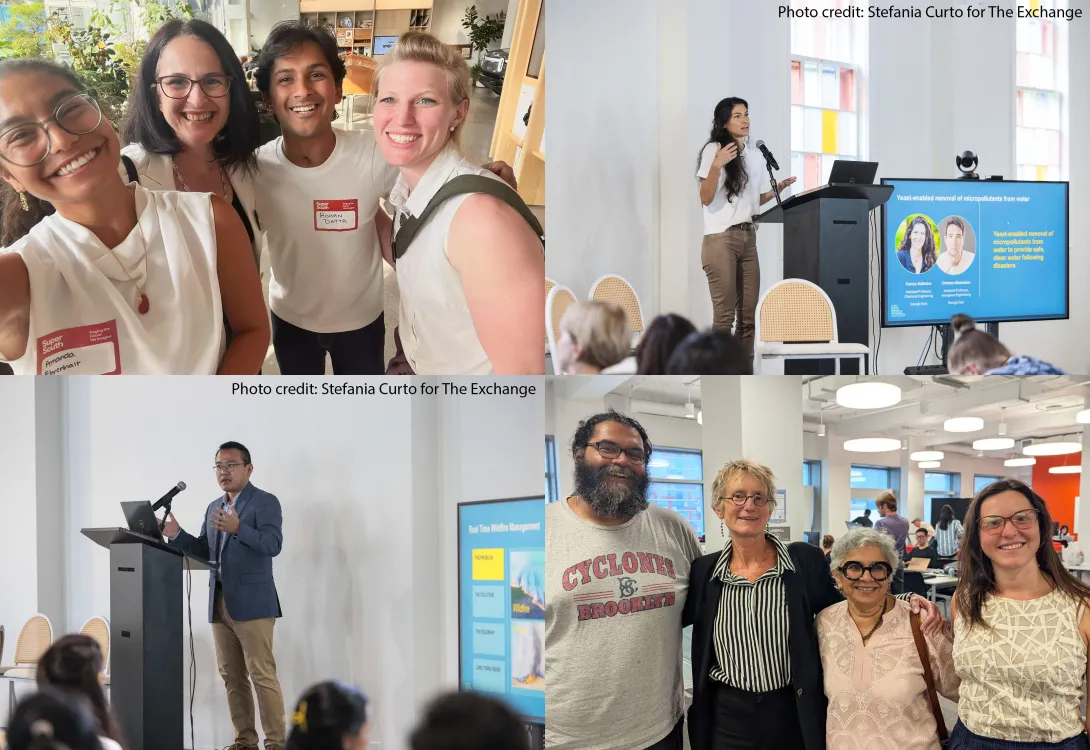
Collage of four images taken at the New York Climate Exchange 2025 events with Georgia Tech participants.
Beril Toktay, Regents’ Professor and Brady Family Chair, Scheller College of Business
Executive Director, Brook Byers Institute for Sustainable Systems
Board of Directors, New York Climate Exchange
I returned from Climate Week NYC energized by what I witnessed: Georgia Tech faculty, students, and startups showcasing the breadth and depth of our climate innovation work on one of the world's biggest stages.
Climate Week NYC brings together more than 900 events, but what stood out wasn’t the scale — it was the substance. Across five New York Climate Exchange partner events, the Georgia Tech community demonstrated something essential. Georgia Tech bridges research and real-world impact where it matters most — in people’s lives.
At the Super South event, we flipped the script on where climate innovation happens and demonstrated the Southeast as a climate tech powerhouse. Too often, conversations about climate tech center on coastal hubs. But Georgia Tech-affiliated entrepreneurs Tarek Rakha (Lamarr.AI), Mya Love Griesbaum (Mycorrhiza Fashion), Joe Metzler (Metzev), Laura Stoy (Ph.D. ECE 2021, Rivalia Chemical), Charlie Cichetti (MGT 2004, Skema), Joseph Mooney (research engineer, School of Civil and Environmental Engineering, WattAir), Lewis Motion (MBA 2017, WEAV3D), and Ramtin Motahar (IE 2004, ECON 2004, M.S. AE 2017, Joulea) showed that the Southeast isn’t just participating in the clean energy transition — we’re leading it.
The Climate Tech Fellowship Showcase was personal. Seeing two Georgia Tech teams — Patricia Stathatou and Christos Athanasiou’s yeast-based water purification system, and Xiao Liu’s AI-powered wildfire management platform — selected for the inaugural cohort reminded me why partnerships like the New York Climate Exchange matter. These early-stage innovators need more than good ideas. They need networks, mentorship, and funding pathways. NYCE provides those connections.
From flooding to batteries, two symposia highlighted GT faculty doing research that matters. At Weathering the Future, Iris Tien joined experts from AECOM, NVIDIA, and the NYC Department of Environmental Protection to discuss integrating resilience into urban infrastructure. Her work on coastal adaptation and infrastructure resilience addresses real vulnerabilities that cities face today. The Global Battery Alliance Leadership Meeting and Urban Battery Forum brought Yuanzhi Tang into conversations about building sustainable, circular battery value chains. As EVs scale and stationary storage grows, how we manage battery lifecycles — from securing raw resources to manufacturing to second-life reuse/recycling — will determine how we balance electrification, sustainability, environmental considerations, and economics; more details can be found in the NYCE report on battery circularity co-authored by Wyatt Williams (M.S. CEE 2024, MBA 2024).
Nicole Kennard’s leadership in the Climate Storytelling Workshop reinforced something I believe deeply: Technical solutions alone won’t solve the climate crisis. We need approaches that center community voices, acknowledge environmental justice concerns, and build trust. This became particularly clear in Kennard’s lecture for NYU’s Center for Urban Science and Progress: "Food, Place, and Belonging: From Global Visions to Local Sustainability." Presented with Janelle Wright (M CP 2022) from the West Atlanta Watershed Alliance, this lecture demonstrated how sustainable food systems can draw on global frameworks but must center community values and honor the history of place.
A few insights emerged from the week:
1. Geography matters — and so does bridging it. Collaborative platforms like NYCE that create genuine partnerships across regions will be more effective in achieving Georgia Tech’s vision of doing climate work that is grounded in Georgia and global in impact.
2. Visibility accelerates impact. Several faculty and entrepreneurs told me that Climate Week NYC opened doors — to investors, to funders, to partners, and to media. Platforms like NYCE amplify work that might otherwise stay local.
3. Students are passionate about climate opportunities. Every conversation about internships, fellowships, and experiential learning generated immediate interest. We need to build more pathways for students like Rohan Datta and Amanda Ehrenhalt to engage in climate work across both New York and Atlanta ecosystems — creating opportunities for hands-on experience, knowledge diffusion across regions, and the professional networks that will define their careers.
4. Our community extends far beyond campus. Meeting alumnus Alan Warren (PHYS 1978) drove this message home. Alan brings a unique vantage point on coastal resilience challenges faced in New York — and he’s energized by what our partnership can achieve. His offer to serve as Georgia Tech’s “envoy” in NYC, connecting our climate work to networks and opportunities there, is exactly the kind of volunteer leadership that accelerates impact. Alan’s own inspirational story of resilience and regeneration makes his commitment to climate resilience work even more meaningful.
Looking ahead, I see Georgia Tech’s partnership with the NYCE creating a powerful platform: NYCE amplifies our work through capital and convening; Georgia Tech anchors deployment with Southeast roots and global reach. Working alongside a distinguished board led by incoming chair Andrea Goldsmith, president of Stony Brook University, gives me confidence in this direction.
President Ángel Cabrera met with Goldsmith this week and reaffirmed our shared vision for bridging research and impact. “Georgia Tech’s mission has always been about translating knowledge into progress that serves society,” said Cabrera. “The New York Climate Exchange partnership exemplifies this commitment to innovative solutions that can be scaled to create real human impact. By connecting our strengths in community-engaged climate research with networks that can amplify and accelerate solutions, we’re living our motto of Progress and Service as we address one of humanity’s most urgent challenges.”
The Brook Byers Institute for Sustainable Systems (BBISS) convenes faculty, students, and partners to address sustainability challenges through research, education, and collaboration. Connect with BBISS on LinkedIn to be part of the ongoing discussion and/or reach out to Susan Ryan (susan.ryan@gatech.edu) to be added to BBISS’ climate science and solutions community of practice.
News Contact
Brent Verrill, Research Communications Program Manager, BBISS
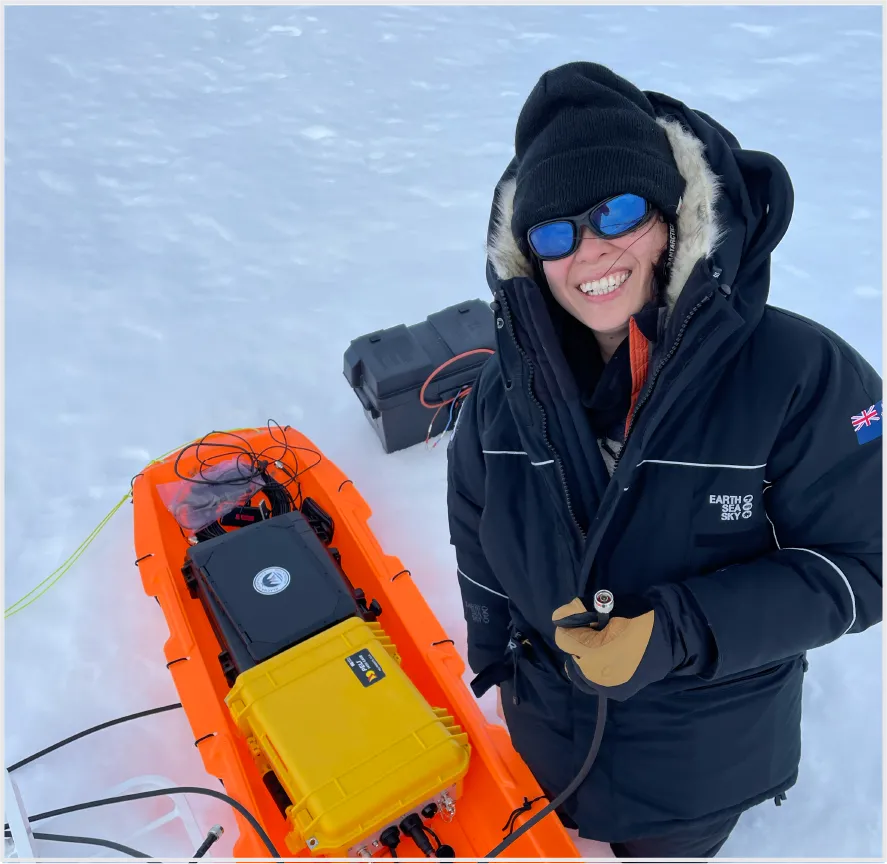
Winnie Chu

The Ross Archipelago near the McMurdo Station in Antarctica. (Credit: USGS)
Covering 98% of the continent and spanning more than 5.4 million square miles, the Antarctic ice sheet is the largest single mass on Earth. Georgia Tech’s Winnie Chu is going to map it.
Chu, an assistant professor in the School of Earth and Atmospheric Sciences has been awarded a $770,000 CAREER grant from the National Science Foundation (NSF) to create the first-ever comprehensive map of temperatures at the bottom of the ice sheet — a map that will span the entire Antarctic continent.
The NSF Faculty Early Career Development Program is a five-year grant designed to help promising researchers establish a foundation for a lifetime of leadership in their field. Known as CAREER awards, the grants are NSF’s most prestigious funding for early-career faculty.
In total, the Antarctic ice sheet holds enough water to raise global sea levels by over 200 feet — more than 50 feet higher than the top of Tech Tower. Climate models help predict how much of this ice may melt in the coming years, providing critical safety and planning information for coastal communities. However, researchers have limited knowledge of temperatures at the base of the ice sheet — miles beneath the surface — and these temperatures play a critical role in melting.
“Our research addresses this critical gap in Antarctic ice sheet modeling,” Chu explains. “If temperatures at the base are warm enough, the ice can melt and lubricate the interface.” The result? The surface acts like a slip-and-slide, carrying ice toward the ocean and accelerating melt.
“It is crucial that we can accurately predict this behavior,” Chu says. “This map will be an essential step forward in refining our climate models for the safety of coastal communities, for infrastructure planning, and for climate adaptation worldwide.”
Mapping miles-thick ice
The process isn’t as simple as measuring the temperature with a thermometer though. The Antarctic ice sheet is, on average, over a mile thick and can range up to three miles thick.
Chu, who leads the Polar Geophysical Simulation Lab at Georgia Tech, will combine 20 years of radar data — the result of multiple international polar programs — and leverage a technique called “radar sounding,” which analyzes the echoes of airborne radar measurements. The brightness and shape of the echoes can reveal clues about subglacial meltwater and temperatures. To complete the picture, Chu will use cutting-edge generative artificial intelligence (AI) models.
“Innovations in generative AI are part of what makes this research possible,” says Chu, “but the driving force is the data collected by these long-term research studies. AI can help complete the picture — but only because that data exists.”
Preparing for the future
Chu aims for the temperature map to improve the parameterization of climate models and ice sheet projections. This will enable better predictions of future melt and help scientists assess areas that may be particularly vulnerable.
She hopes that the map will drive further advances in polar science. “Our datasets and radar observations will be open access, meaning they’ll be available for all researchers to use,” Chu shares. “We’ll also be sharing the AI processing codes that we develop and the enhanced ice sheet model outputs.”
Additionally, the research will train the next generation of climate scientists through developing educational programs for high schoolers, empowering and engaging students nationwide with hands-on polar science and AI applications.
“This research is about more than just mapping Antarctica — it’s about building tools that help us prepare for the future,” Chu says. “By making our data and models openly available, and by engaging students in the science behind climate change, we’re not only advancing polar research — we’re empowering the next generation to carry it forward.”
News Contact
Written by Selena Langner

Researchers across Georgia Tech are joining forces to explore the brain — advancing science, technology, and society through interdisciplinary collaboration.
The brain is the most intricate system known to science — billions of cells forming dynamic networks that allow us to think, feel, move, and adapt. Yet despite decades of research, much about how the brain works remains a mystery. At the same time, neurological and neuropsychiatric conditions are on the rise, affecting more than one-third of the global population and costing trillions in healthcare and lost productivity.
Understanding the brain is key to unlocking human health and flourishing. The need has never been more urgent, but this challenge is too vast for any single discipline to solve alone.
That’s why Georgia Tech recently launched the Institute for Neuroscience, Neurotechnology, and Society (INNS). A step toward a more connected, collaborative future, INNS brings together experts from across Georgia Tech’s seven colleges and the Georgia Tech Research Institute (GTRI) to study the brain in ways that connect scientific discovery with technological innovation and real-world societal needs.
INNS supports research that crosses traditional academic boundaries. As an Interdisciplinary Research Institute (IRI), it builds community, fosters collaboration, and fills critical gaps in education, professional development, and research infrastructure.
“Georgia Tech has a long-standing culture of interdisciplinary collaboration — it’s in our DNA,” says INNS Executive Director Chris Rozell. Rozell also serves as Julian T. Hightower Chaired Professor in the School of Electrical and Computer Engineering. “INNS builds on that strength to create a space where breakthroughs in neuroscience and neurotechnology can move from lab to life, impacting real people in real ways.”
A Community Built to Collaborate
INNS is home to a growing network of faculty, students, and research centers spanning the full spectrum of Georgia Tech’s research expertise. This diversity is not just a feature, it’s the foundation.
That foundation was laid over decades of growth, vision, and grassroots momentum. Georgia Tech welcomed its first neuroscience-focused faculty member in 1990, sparking a steady expansion of brain-related research across campus. As more faculty joined and new focus areas emerged, a vibrant, cross-disciplinary community began to take shape.
In 2014, that community organized under the name GT Neuro, a grassroots initiative that united researchers who shared a passion for understanding the brain. This collective energy led to new educational programs, including the launch of Georgia Tech’s undergraduate neuroscience major in the College of Sciences.
“Our undergraduate students absolutely love teaching others about Neuroscience,” said Christina Ragan, director of Outreach for the Undergraduate Neuroscience Program and senior academic professional in the School of Biological Sciences. “I'm really excited to explore ways for INNS to connect our neuroscience community at Tech with the public.”
By 2023, the Neuro Next Initiative launched to bring together leaders from across campus and chart a strategic path forward — the result of nearly two years of community-driven planning to formalize and expand Georgia Tech’s neuroscience ecosystem.
“The launch of INNS has built on the momentum of the Neuro Next Initiative, which ignited crucial conversations and fostered new collaborations between researchers at GTRI and Georgia Tech faculty,” says Tabitha Rosenbalm, GTRI senior research engineer. “The remarkable demonstration at Interface Neuro — witnessing a quadriplegic man walk and communicate thanks to innovative research — underscores the transformative breakthroughs possible when academic and applied researchers unite. INNS is uniquely positioned to serve as a catalyst, propelling Atlanta, Georgia Tech, and GTRI as national leaders in neurotechnology, driving advancements in both human health and engineering innovation.”
INNS is also helping shape the future of education. A new interdisciplinary Ph.D. program in neuroscience and neurotechnology welcomed its first cohort this fall, and INNS is poised to support it with professional development, research opportunities, and community engagement.
Breaking Boundaries to Advance Brain Science
Whether it’s developing neurotechnologies, designing therapeutic environments, or exploring the ethical implications of brain research, INNS is here to support work that spans fields and impacts lives.
“To responsibly address the societal and human impacts of advances in neuroscience and neurotechnology, we first need to understand them,” said Margaret Kosal, professor and director of Graduate Students in the Ivan Allen College of Liberal Arts. “That requires real and substantive collaboration beyond traditional engineering or biology labs.”
One example of INNS in action is the Smart Transitional Home Lab, a project funded by the inaugural INNS/Shepherd Center Seed Grant. This initiative brings together experts in architecture, inclusive design, neuroengineering, and rehabilitation to prototype environments that actively support stroke recovery, blending rigorous research with human-centered design.
“The establishment of INNS creates a powerful platform where diverse minds, from neuroscience to architecture to rehabilitation, can converge around a shared mission to advance human health,” says Hui Cai, professor in the School of Architecture, executive director of the SimTigrate Design Center, and co-leader of the project. “It enables interdisciplinary work with the potential to transform lives and redefine how we design for healing and recovery.”
“From whole brain recordings, to mapping the connectome, to the incredible advances in artificial intelligence, it's never been a more exciting time to study the mind and brain,” says Bob Wilson, director of the Center of Excellence for Computation and Cognition and associate professor in the School of Psychology. “I'm extremely excited for INNS to act as a central hub, building the neuroscience community at Georgia Tech and beyond.”
Join Us
INNS is more than an institute, it’s a growing, vibrant community of researchers, educators, students, and partners. Together, we’re working to understand the brain, develop technologies that improve lives, and ensure those innovations serve society responsibly.
Whether you're a student, researcher, policymaker, or simply curious about the brain, INNS is your gateway to interdisciplinary neuroscience at Georgia Tech. Get involved at neuro.gatech.edu.
News Contact
Audra Davidson
Research Communications Program Manager
Institute for Neuroscience, Neurotechnology, and Society
Institute Communications