

Researchers across Georgia Tech are joining forces to explore the brain — advancing science, technology, and society through interdisciplinary collaboration.
The brain is the most intricate system known to science — billions of cells forming dynamic networks that allow us to think, feel, move, and adapt. Yet despite decades of research, much about how the brain works remains a mystery. At the same time, neurological and neuropsychiatric conditions are on the rise, affecting more than one-third of the global population and costing trillions in healthcare and lost productivity.
Understanding the brain is key to unlocking human health and flourishing. The need has never been more urgent, but this challenge is too vast for any single discipline to solve alone.
That’s why Georgia Tech recently launched the Institute for Neuroscience, Neurotechnology, and Society (INNS). A step toward a more connected, collaborative future, INNS brings together experts from across Georgia Tech’s seven colleges and the Georgia Tech Research Institute (GTRI) to study the brain in ways that connect scientific discovery with technological innovation and real-world societal needs.
INNS supports research that crosses traditional academic boundaries. As an Interdisciplinary Research Institute (IRI), it builds community, fosters collaboration, and fills critical gaps in education, professional development, and research infrastructure.
“Georgia Tech has a long-standing culture of interdisciplinary collaboration — it’s in our DNA,” says INNS Executive Director Chris Rozell. Rozell also serves as Julian T. Hightower Chaired Professor in the School of Electrical and Computer Engineering. “INNS builds on that strength to create a space where breakthroughs in neuroscience and neurotechnology can move from lab to life, impacting real people in real ways.”
A Community Built to Collaborate
INNS is home to a growing network of faculty, students, and research centers spanning the full spectrum of Georgia Tech’s research expertise. This diversity is not just a feature, it’s the foundation.
That foundation was laid over decades of growth, vision, and grassroots momentum. Georgia Tech welcomed its first neuroscience-focused faculty member in 1990, sparking a steady expansion of brain-related research across campus. As more faculty joined and new focus areas emerged, a vibrant, cross-disciplinary community began to take shape.
In 2014, that community organized under the name GT Neuro, a grassroots initiative that united researchers who shared a passion for understanding the brain. This collective energy led to new educational programs, including the launch of Georgia Tech’s undergraduate neuroscience major in the College of Sciences.
“Our undergraduate students absolutely love teaching others about Neuroscience,” said Christina Ragan, director of Outreach for the Undergraduate Neuroscience Program and senior academic professional in the School of Biological Sciences. “I'm really excited to explore ways for INNS to connect our neuroscience community at Tech with the public.”
By 2023, the Neuro Next Initiative launched to bring together leaders from across campus and chart a strategic path forward — the result of nearly two years of community-driven planning to formalize and expand Georgia Tech’s neuroscience ecosystem.
“The launch of INNS has built on the momentum of the Neuro Next Initiative, which ignited crucial conversations and fostered new collaborations between researchers at GTRI and Georgia Tech faculty,” says Tabitha Rosenbalm, GTRI senior research engineer. “The remarkable demonstration at Interface Neuro — witnessing a quadriplegic man walk and communicate thanks to innovative research — underscores the transformative breakthroughs possible when academic and applied researchers unite. INNS is uniquely positioned to serve as a catalyst, propelling Atlanta, Georgia Tech, and GTRI as national leaders in neurotechnology, driving advancements in both human health and engineering innovation.”
INNS is also helping shape the future of education. A new interdisciplinary Ph.D. program in neuroscience and neurotechnology welcomed its first cohort this fall, and INNS is poised to support it with professional development, research opportunities, and community engagement.
Breaking Boundaries to Advance Brain Science
Whether it’s developing neurotechnologies, designing therapeutic environments, or exploring the ethical implications of brain research, INNS is here to support work that spans fields and impacts lives.
“To responsibly address the societal and human impacts of advances in neuroscience and neurotechnology, we first need to understand them,” said Margaret Kosal, professor and director of Graduate Students in the Ivan Allen College of Liberal Arts. “That requires real and substantive collaboration beyond traditional engineering or biology labs.”
One example of INNS in action is the Smart Transitional Home Lab, a project funded by the inaugural INNS/Shepherd Center Seed Grant. This initiative brings together experts in architecture, inclusive design, neuroengineering, and rehabilitation to prototype environments that actively support stroke recovery, blending rigorous research with human-centered design.
“The establishment of INNS creates a powerful platform where diverse minds, from neuroscience to architecture to rehabilitation, can converge around a shared mission to advance human health,” says Hui Cai, professor in the School of Architecture, executive director of the SimTigrate Design Center, and co-leader of the project. “It enables interdisciplinary work with the potential to transform lives and redefine how we design for healing and recovery.”
“From whole brain recordings, to mapping the connectome, to the incredible advances in artificial intelligence, it's never been a more exciting time to study the mind and brain,” says Bob Wilson, director of the Center of Excellence for Computation and Cognition and associate professor in the School of Psychology. “I'm extremely excited for INNS to act as a central hub, building the neuroscience community at Georgia Tech and beyond.”
Join Us
INNS is more than an institute, it’s a growing, vibrant community of researchers, educators, students, and partners. Together, we’re working to understand the brain, develop technologies that improve lives, and ensure those innovations serve society responsibly.
Whether you're a student, researcher, policymaker, or simply curious about the brain, INNS is your gateway to interdisciplinary neuroscience at Georgia Tech. Get involved at neuro.gatech.edu.
News Contact
Audra Davidson
Research Communications Program Manager
Institute for Neuroscience, Neurotechnology, and Society
Institute Communications
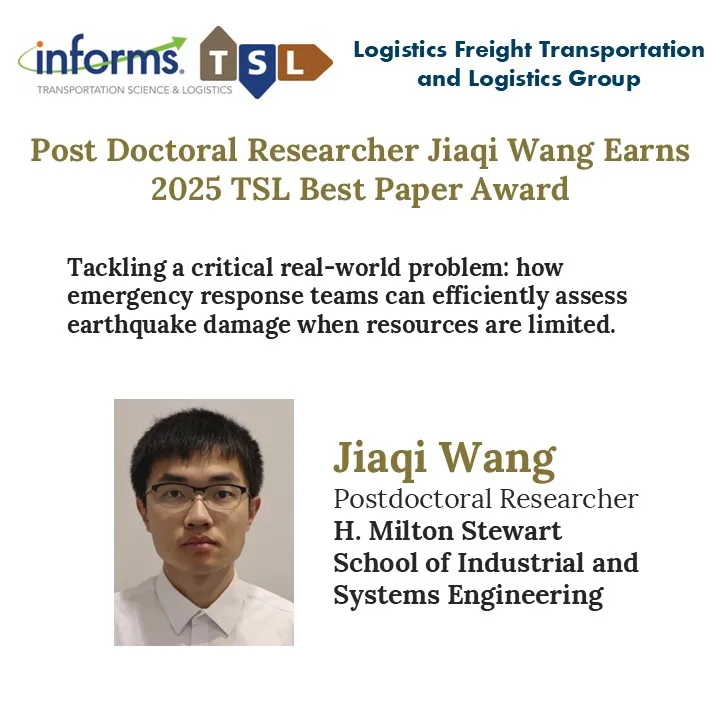
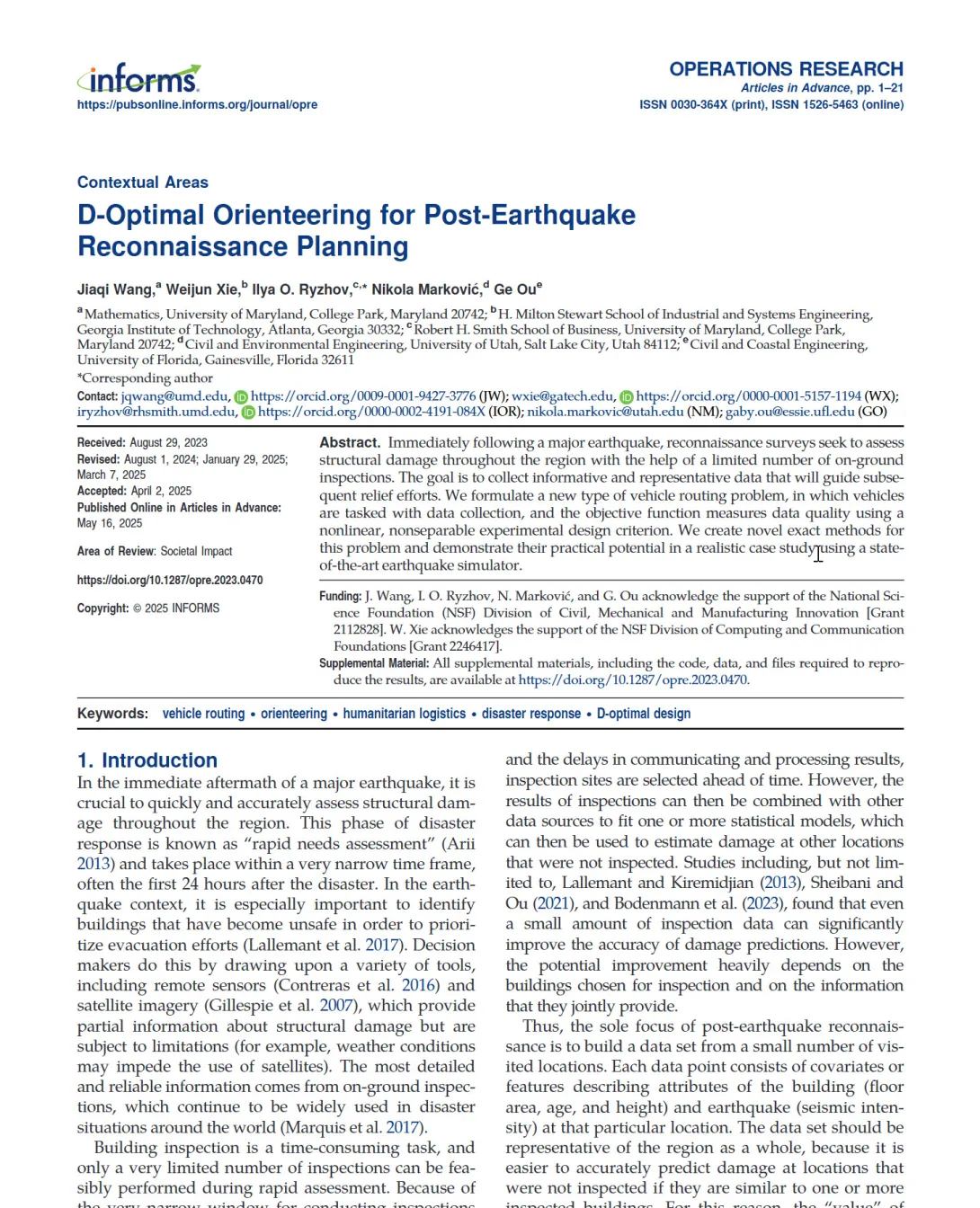
Congratulations to postdoctoral researcher Jiaqi Wang, recipient of a prestigious 2025 Best Paper Award from the Freight Transportation and Logistics Special Interest Group of the INFORMS Transportation Science & Logistics Society, for his paper titled “D-Optimal Orienteering for Post-Earthquake Reconnaissance Planning.” Wang is working under the supervision of Georgia Tech Supply Chain and Logistics Institute affiliated faculty member Professor Weijun Xie.
Award Recognition
This year, the committee received 39 exceptional submissions, resulting in a highly competitive selection process. After two rigorous rounds of voting, only three papers were selected to receive awards, highlighting the exceptional quality of Wang's research.
Groundbreaking Research Impact
The focus of the research tackles a critical real-world problem: how emergency response teams can efficiently assess earthquake damage when resources are limited. In the chaotic aftermath of a major earthquake, inspection teams must quickly determine which buildings are safe and which pose risks to public safety.
The authors transformed this challenge into an innovative vehicle routing optimization problem. Unlike traditional routing that simply moves vehicles from point to point, their approach strategically deploys inspection teams to collect the highest-quality damage assessment data possible.
Technical Innovation
The team developed advanced mathematical methods that measure data quality using sophisticated criteria, ensuring every inspection contributes maximum value to emergency response planning. They validated their methodology through realistic case studies using cutting-edge earthquake simulation technology, proving their system can significantly improve disaster response efficiency.
About the Organization
The INFORMS Transportation Science & Logistics Freight Transportation and Logistics Group focuses on research spanning trucking, rail, shipping, air cargo, and intermodal transportation. Their work encompasses planning, real-time control, pricing, demand management, and risk analysis across global supply chains.
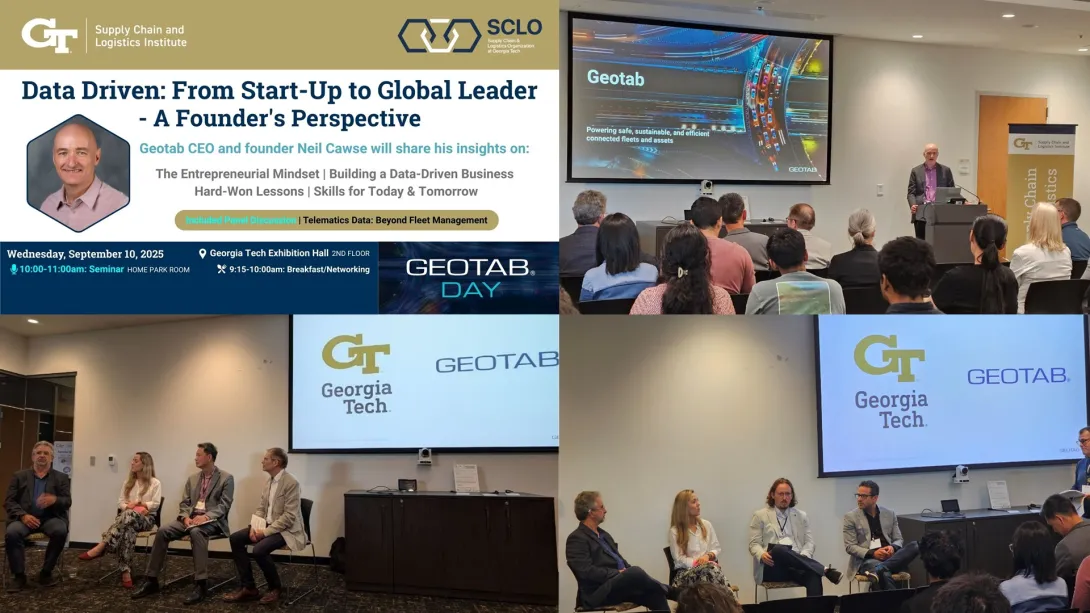
Geotab Inc. (“Geotab”), a global leader in connected vehicle solutions and asset management, today announced a significant research investment of up to $223,000 (USD) to support a doctoral project at Georgia Tech. This funding will specifically enable PhD students to work alongside Geotab staff, tackling real-world challenges in understanding traffic patterns and improving road safety, by leveraging Geotab’s advanced data and AI capabilities.
Geotab and Georgia Tech have formalized their collaboration through a Master Agreement, facilitating joint research initiatives between Geotab teams and Georgia Tech faculty and their students. This strategic partnership emphasizes knowledge transfer and practical outcomes.
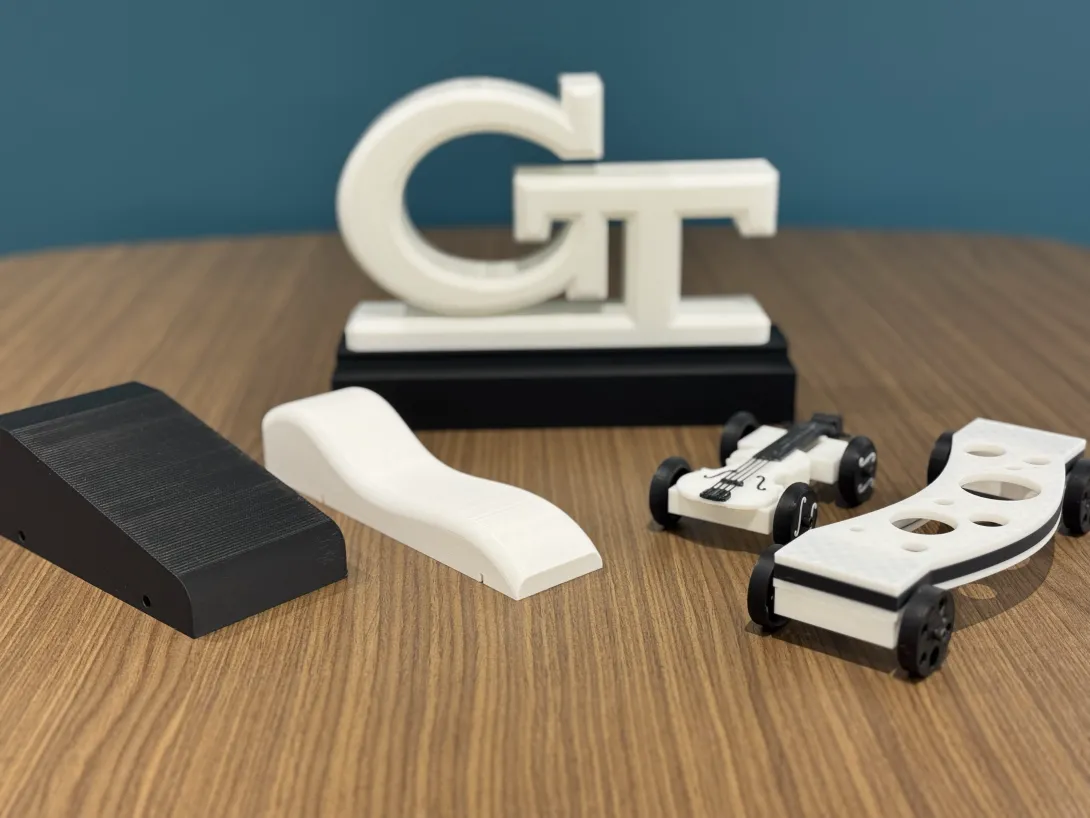
Students across Georgia are designing and 3D printing pinewood derby cars as part of a new hands-on advanced manufacturing initiative.
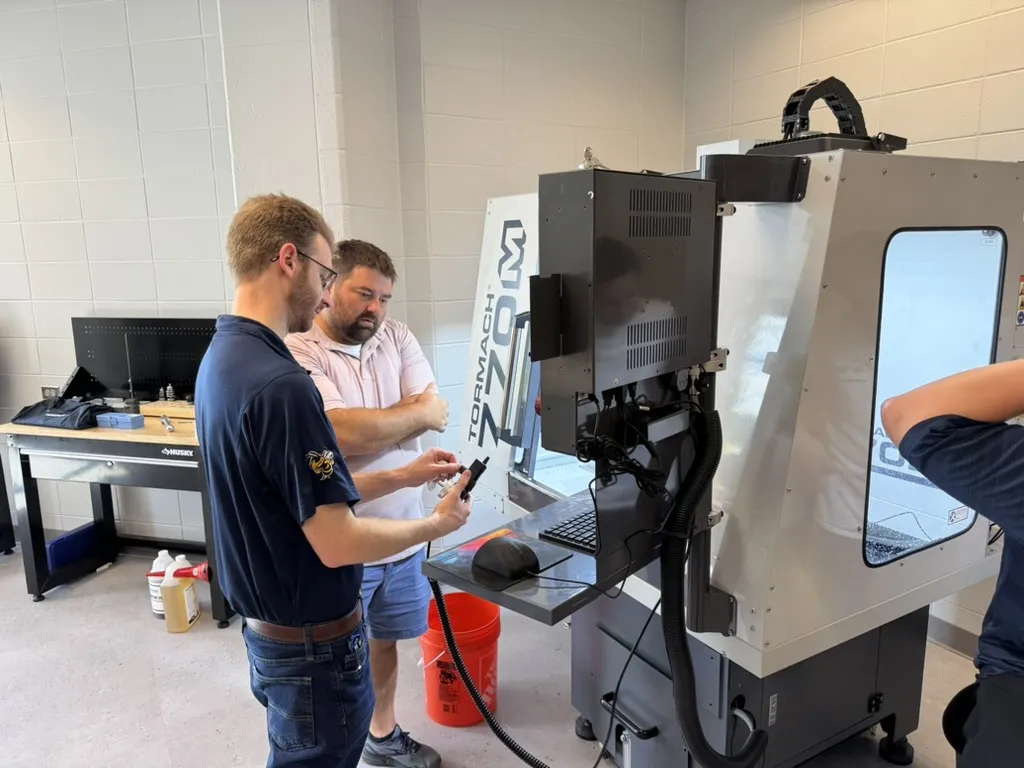
Kyle Saleeby (left) works side-by-side with a teacher to set up precision milling equipment, a key part of the AMP Program’s hands-on curriculum.
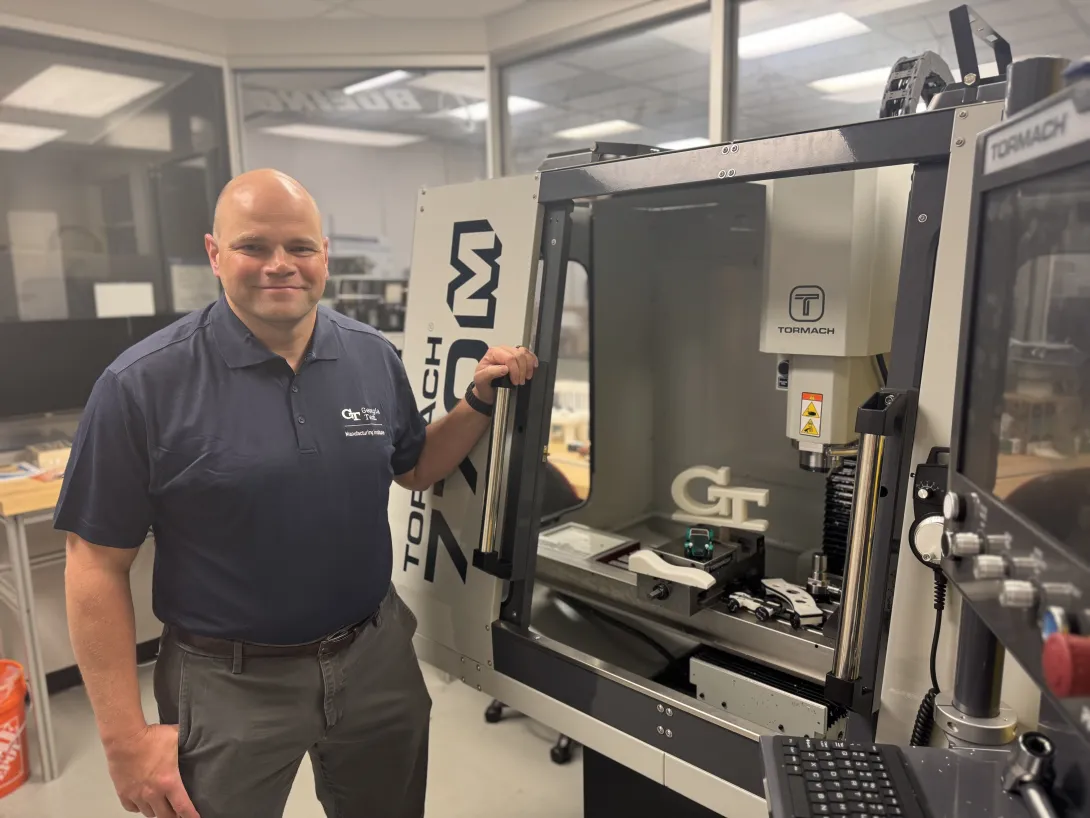
With more than two decades of workforce development experience, Steven Ferguson is helping launch a new era of hands-on learning through the AMP Program.
Smart manufacturing, data-driven design, and artificial intelligence aren’t just buzzwords — they are fields that are creating high-paying, high-tech careers across the country. In rural communities across Georgia, these advanced manufacturing roles are growing, but the talent pipeline isn’t keeping pace.
“It’s not just about creating jobs, it’s about filling them,” says Tom Kurfess, Regents’ Professor in mechanical engineering and executive director of the Georgia Tech Manufacturing Institute (GTMI). “To do that, we need to show students how exciting and innovative manufacturing can be. Manufacturing has really changed over the past few years. Today, going from an idea to a physical part is much easier to do. It is fun and exciting to bring ideas to life and to actually hold the results in your hands.”
GTMI is working to reignite student interest in the art and science of making through its new K–12 initiative: the Advanced Manufacturing Pathways (AMP) Program. Modeled after Georgia Tech’s Rural CS Initiative, AMP empowers schools with faculty expertise, cutting-edge equipment, and a hands-on curriculum to give students early exposure to the tools, technologies, and creativity behind modern manufacturing while building a pipeline of future talent ready to thrive in high-tech careers.
Funded by the Southwest Georgia Regional Commission (SWGRC), AMP is kicking off in three school districts this fall — Decatur County, Thomas County, and the city of Thomasville — with plans to expand to additional schools in the spring of 2026. The program will start by engaging more than 200 students through hands-on learning, virtual instruction, and in-person lab experiences led by Georgia Tech researchers and faculty.
“Here in Southwest Georgia, we believe that opportunities like this are vital for integrated learning in schools and for growing our future workforce,” says Beka Shiver, economic development and transportation planner for SWGRC. “Workforce development and K-12 integration are at the heart of our Southwest Georgia Ecosystem Building Project, and we are so pleased to be able to provide funding for this program.”
The launch of the AMP Program is centered around Design, Build, Race, a course putting a modern spin on the classic pinewood derby. Students will use digital design, 3D printing, and machining to build and race custom cars, while also learning how to collect and analyze performance data to improve their designs and predict outcomes. The course blends engineering with data science, sparking curiosity and showing students how modern manufacturing is powered by both technical skills and smart data.
“This program delivers real-world industry experience to students while strengthening the talent pipeline that drives innovation, competitiveness, and resilience in advanced manufacturing”, says Steven Ferguson, interim director of operations at GTMI and one of the project’s leaders. “After more than 20 years of driving education and workforce development innovation, I’m more energized than ever to help launch the AMP program to open doors for students and advance U.S. manufacturing leadership.”
Building the Blueprint
Before it evolved into the AMP Program, Design, Build, Race was a course developed by GTMI research engineer Kyle Saleeby in 2023. Originating in GTMI’s Advanced Manufacturing Pilot Facility (AMPF), the course was designed to introduce Morehouse and Georgia Tech students to the possibilities of modern manufacturing through digital design, 3D printing, machining, and competitive creativity.
“Even after the first week, it was powerful to watch students discover how exciting it is to design and manufacture a competition-ready car in a matter of hours,” said Saleeby. “That’s when I knew we were onto something special.”
Saleeby teamed up with Ferguson to transform the course into a broader initiative. The duo engaged colleagues from STEM@GTRI and secured funding from SWGRC to modify the curriculum and scale the course for a high school audience.
“We are thrilled that we have been able to take the lessons learned during the development of the Rural Computer Science Initiative and expand opportunities for students in Southwest Georgia,” says Sean Mulvanity, a senior research associate in the Georgia Tech Research Institute. Mulvanity is one of the founders of the initiative and has been a key contributor to the AMP Program. “We hope this program can grow and expose students across the state to the field of advanced manufacturing.”
Though granted by the SWGRC, funds for the program were provided by Georgia Artificial Intelligence in Manufacturing, a statewide initiative founded by GTMI and Georgia Tech’s Enterprise Innovation Institute to advance AI-driven manufacturing.
To bring AMP into classrooms, Southern Regional Technical College helped set up labs and provide technical support, ensuring schools were ready to launch.
“At all levels, the community has rallied around this program,” says Saleeby. “Providing students with a unique experience learning advanced manufacturing technologies will open countless career opportunities. I cannot wait to see where they go.”
News Contact
Audra Davidson
Research Communications Program Manager
Georgia Tech Manufacturing Institute
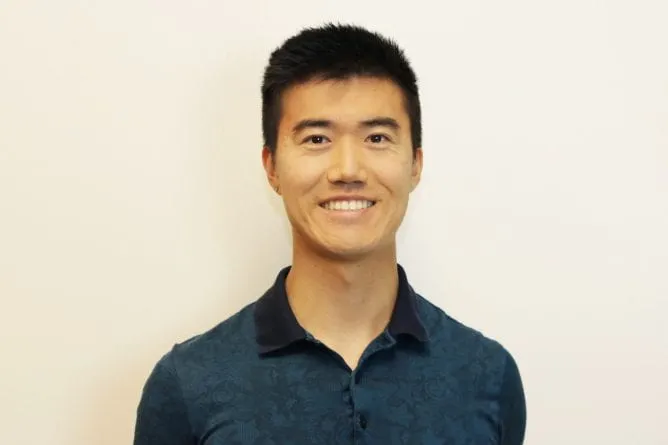
Jaden Wang
Georgia Tech’s Jaden Wang (Zhuochen Wang) has been awarded a NASA Space Technology Graduate Research Opportunity (NSTGRO). The grant supports graduate students who “show significant potential to contribute to NASA’s goal of creating innovative new space technologies for our nation’s science, exploration, and economic future.”
Wang, who is a Ph.D. student in the School of Mathematics and a master’s student in the Daniel Guggenheim School of Aerospace Engineering, will focus on developing mathematically-backed landing solutions for spacecraft.
“I first became interested in powered descent problems during my Fall 2024 internship with NASA’s Human Landing System at Marshall Space Flight Center,” he says. “With my mathematical background in optimization and topology, and my passion for space exploration, I saw this research topic as a perfect fit when my co-advisor Dr. Panagiotis Tsiotras suggested it.”
Wang is co-advised by School of Mathematics Professor and Hubbard Research Fellow John Etnyre alongside Panagiotis Tsiotras, who holds the David and Andrew Lewis Endowed Chair in the Daniel Guggenheim School of Aerospace Engineering and is also associate director at the Institute for Robotics and Intelligent Machines.
In addition to his Georgia Tech advisors, Wang will collaborate with a NASA Subject Matter Expert, who will connect him with the larger technical community. He will perform part of the research as a visiting technologist at multiple NASA centers, giving him the opportunity to work with leading engineers and scientists and share his research results directly with the NASA community.
From abstractions to space exploration
“NASA’s upcoming missions to the Moon, Mars, and beyond need technology that allows spacecraft to land precisely at their intended sites,” says Wang. “My research will focus on the last stage of landing, called powered descent. This stage powers up engines, which guide the spacecraft into a safe landing using a pre-designed trajectory that autopilot follows.”
This means that researchers need to figure out the correct thrust, direction, and timing to reach a landing spot — all while navigating a landing that uses as little fuel as possible.
“A common approach is to treat this as an optimization problem: minimizing fuel consumption with rigid-body physics as constraints to determine the best thrust profile,” Wang explains. “This can work well, but it has drawbacks. It assumes that there is no uncertainty in the system (for example, that the thrust of the engines is applied perfectly) and it simplifies the motion of the spacecraft by treating it as though it’s traveling through flat space instead of on a true curved geometry. Both shortcuts introduce errors — our research aims to address these gaps.”
To improve landing precision, Wang will develop a curved-space geometric mathematical model, which takes into account the curved-space geometry of spacecraft motion rather than assuming flat space. To find a fuel-efficient landing trajectory, Wang will develop the model around optimal covariance steering, a stochastic control problem that both minimizes fuel costs while keeping the uncertainty of the spacecraft's exact landing spot within a safe amount.
It’s a problem that leverages his experience in theoretical math and his background in aerospace engineering. “I’m incredibly honored that NASA finds this research exciting and is supporting my pursuit of it,” he says. “There are so many fascinating engineering problems that could benefit from deeper theoretical scrutiny, especially using abstract machineries not typically covered in an engineering curriculum. I hope this inspires more theoretical researchers and graduate students to explore bridging these gaps.”
News Contact
Written by Selena Langner
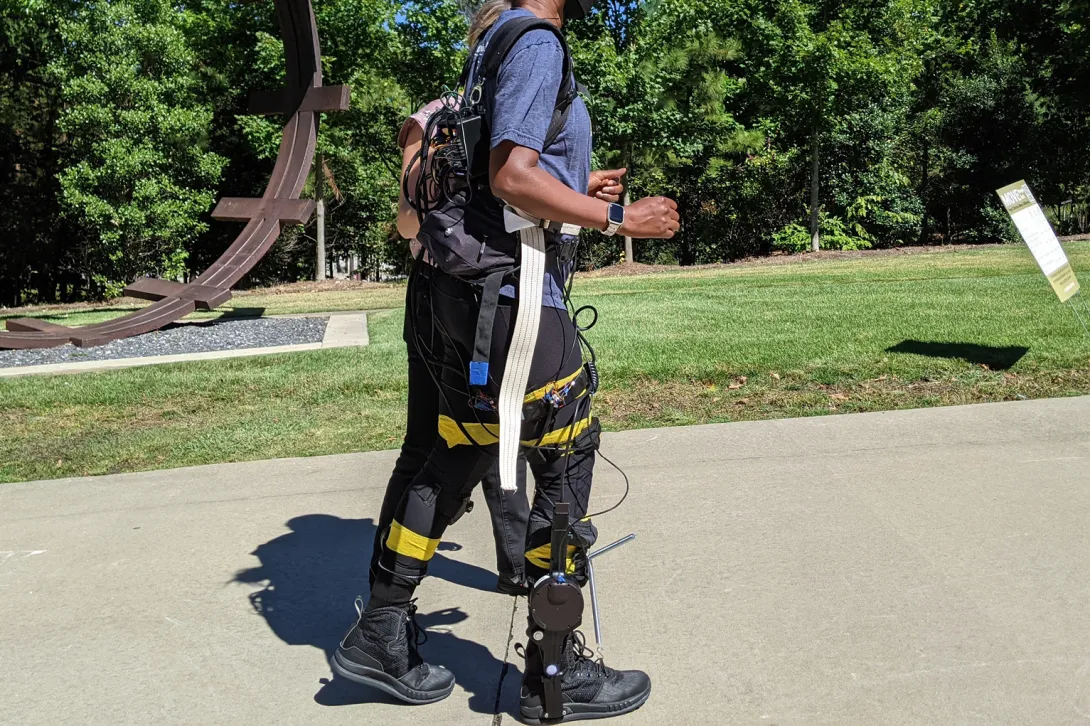
As people age, walking often becomes slower and less efficient, limiting mobility and independence.
To address these challenges, three Georgia Tech researchers have received a $3.2 million Research Project Grant (R01) from the National Institutes of Health's (NIH) National Institute on Aging (NIA).
Leading the study is Gregory Sawicki, Joseph Anderer Faculty Fellow and professor in the George W. Woodruff School of Mechanical Engineering and School of Biological Sciences. He is joined by Woodruff School colleagues Aaron Young, associate professor, and Kinsey Herrin, principal research scientist, along with partners at the Institute for Human & Machine Cognition (IHMC) and Northeastern University. Together, they will study how aging impacts lower-limb joint mechanics, muscle function, and the energy cost of walking.
Read the full story on the George W. Woodruff School of Mechanical Engineering website.
News Contact
Mikey Fuller
George W. Woodruff School of Mechanical Engineering
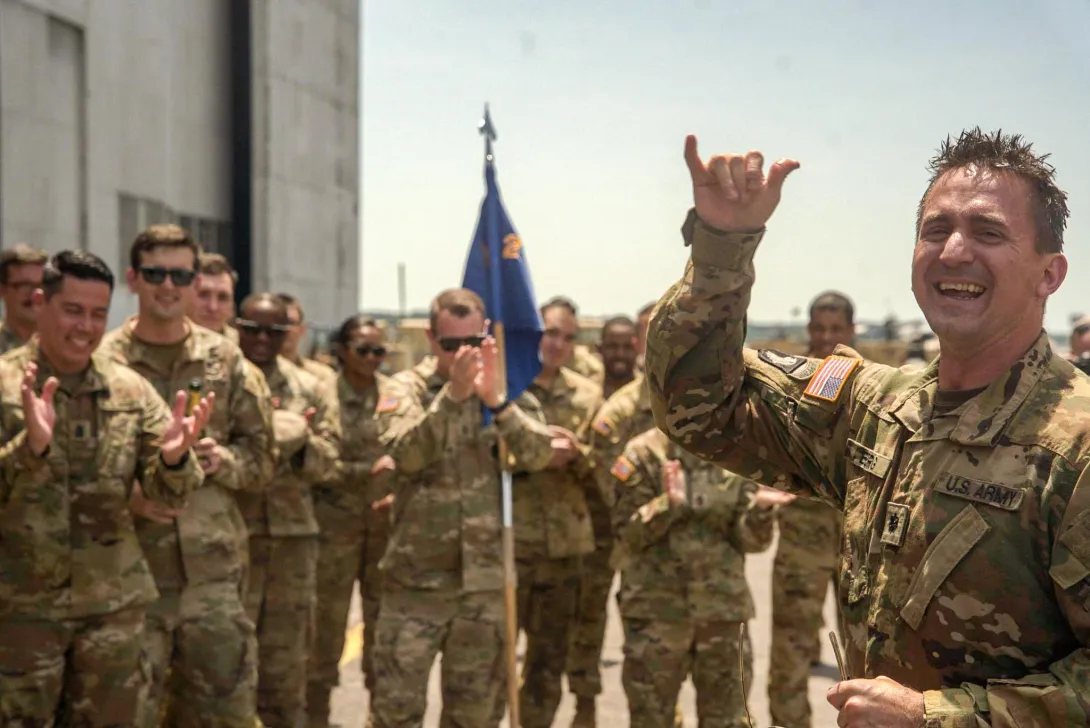
Lukas Berg (right), who flew several variants of the UH-60 Blackhawk over the course of his career, celebrated his final flight before joining the Georgia Tech Manufacturing Institute in August.
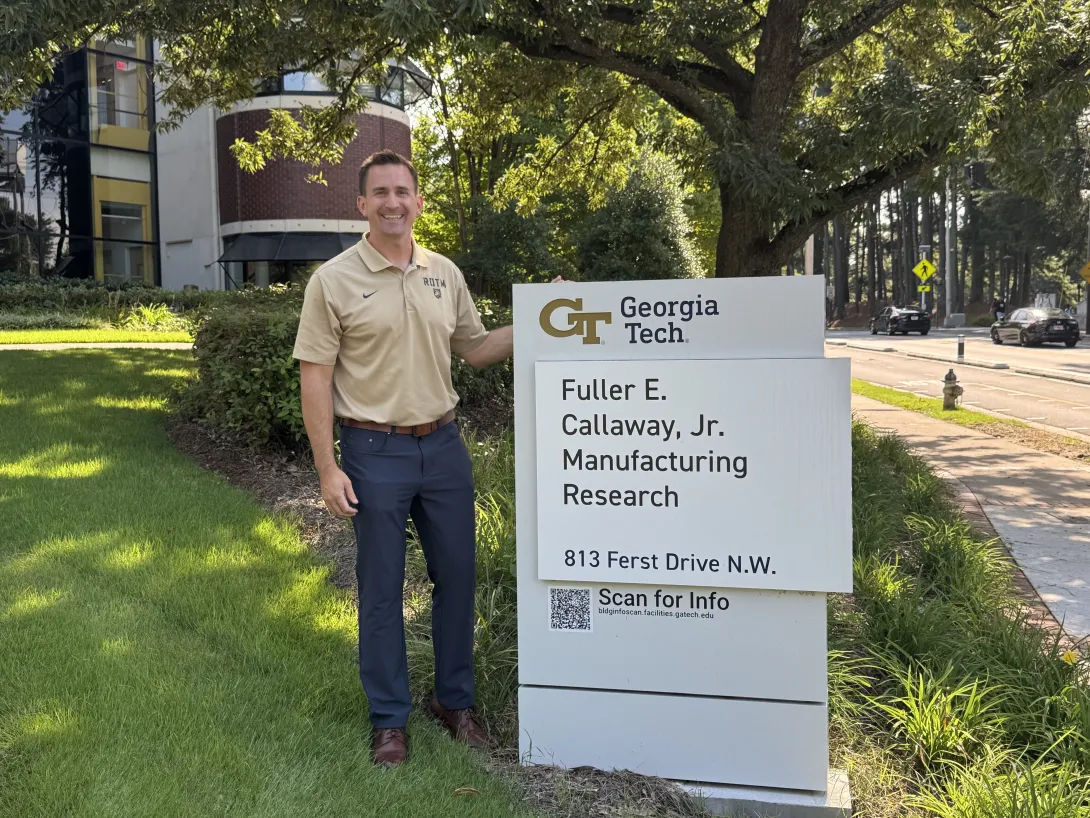
Berg will be working with GTMI for the course of his fellowship with the Hiring Our Heroes program.

Maria Venable, Berg's grandmother, joined the Georgia Tech faculty in 1963 as a 28-year-old native German speaker.
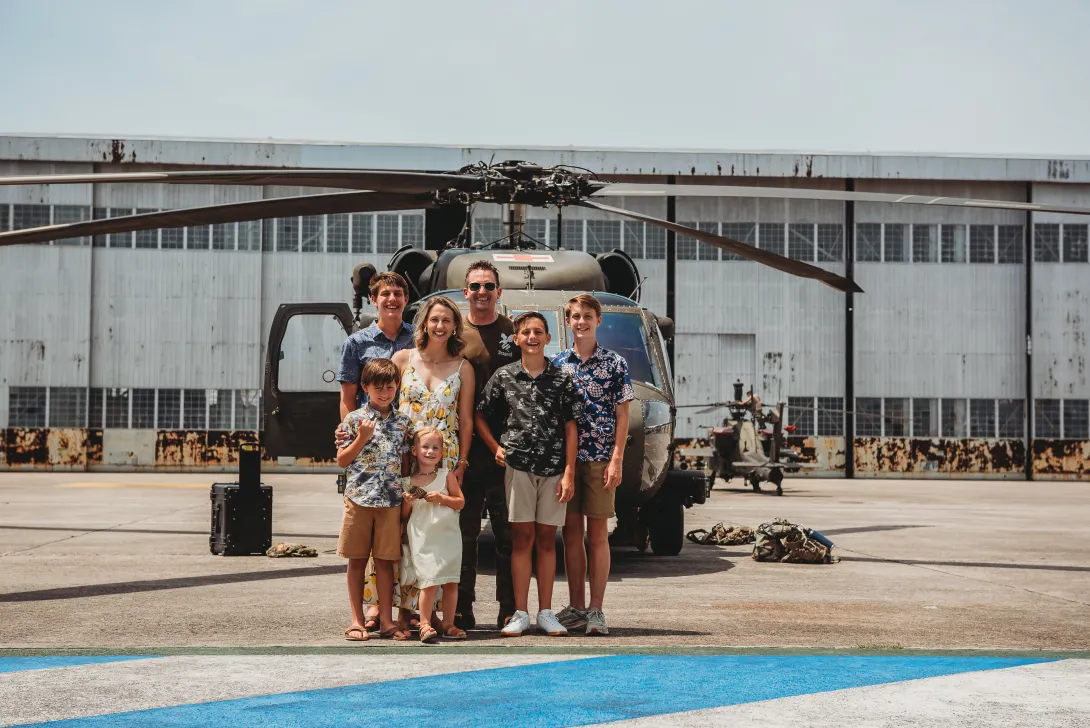
Berg and his family stand next to the model of helicopter frequently flown during his career.
As the U.S. works to strengthen its industrial base and reshore critical manufacturing capabilities, workforce development has emerged as a central challenge — and opportunity.
The Georgia Tech Manufacturing Institute (GTMI) recently welcomed its first Hiring Our Heroes (HOH) Fellow to help address this growing need. Lukas Berg, a retiring U.S. Army officer, will be working with GTMI to support new education and training programs aimed at preparing Georgians for careers in advanced manufacturing.
“Lukas Berg brings a unique blend of operational experience, academic insight, and a deep commitment to service,” said Thomas Kurfess, executive director of GTMI. “His perspective will be invaluable as we work to build stronger connections between Georgia’s communities and the advanced manufacturing sector.”
Hiring Our Heroes is a nationwide initiative led by the U.S. Chamber of Commerce Foundation that helps veterans and military spouses transition into civilian careers through short-term fellowships. Since 2021, Georgia Tech has hosted more than two dozen HOH fellows, beginning with U.S. Army veteran Erik Andersen, who now serves as interim deputy director for the Research, Electronics, Optics, and Systems Directorate at the Georgia Tech Research Institute (GTRI), where he also helps lead the HOH program.
Berg is the first fellow to be placed outside of GTRI, a sign of the program’s growing reach across campus and its potential to support a broader range of workforce development efforts.
“It’s been exciting to see how the Hiring Our Heroes program has grown at Georgia Tech,” said Andersen. “Berg’s placement at GTMI reflects the Institute’s commitment to connecting military talent with real-world innovation and workforce development. Veterans bring a unique perspective and skill set to these challenges, and I’m proud to see the program expanding to new parts of campus.”
Berg’s military career includes aviation command roles, teaching positions at West Point and the Joint Special Operations University, and deployments across multiple regions. At GTMI, he will be contributing to a new initiative that partners with rural school districts to introduce students to hands-on learning in advanced manufacturing, an effort designed to spark interest in high-potential career paths and support long-term workforce readiness.
With personal ties to Georgia Tech and a strong sense of purpose, Berg sees this fellowship as a meaningful next step. We spoke with him to learn more about what brought him to GTMI and how he views the role of manufacturing and workforce development in shaping the country’s future.
What inspired you to pursue a fellowship at the Georgia Tech Manufacturing Institute after your military service?
Last year, I visited Georgia Tech with many of the junior officers and pilots assigned to my helicopter battalion in Savannah. Our agenda included stops at the Georgia Tech Manufacturing Institute and the Advanced Manufacturing Pilot Facility, both of which struck me as being absolutely vital to maintaining the technological edge required to fight and win on the modern battlefield. Pursuing a fellowship at GTMI felt like a natural extension of my military service, and I suspected that it would put me back at the intersection of thinkers and doers (where I have always felt most at home).
You mentioned your grandmother taught at Georgia Tech for over 30 years — how has her legacy influenced your academic and professional journey?
My grandmother, Maria Venable, was the first woman to serve as a full-time faculty member in Georgia Tech’s School of Modern Languages. She poured herself into both her family and her students, and I was lucky to count myself in both populations, as she agreed to tutor me for the AP German exam in high school (but only if I behaved as well as her students at Tech). Her example inspired me to pursue a teaching assignment at West Point halfway through my Army career, and I experienced the same joy in teaching that she did. It’s something that I will continue to do for the rest of my life, whether in a formal or informal capacity.
Can you share more about the specific initiatives you'll be working on at GTMI related to advanced manufacturing education?
Most immediately, I am joining a new GTMI initiative that partners with rural school districts to deliver several weeks’ worth of curriculum and hands-on practice in advanced manufacturing. We just kicked off a pilot program with Bainbridge High School in Decatur, and it’s exciting to see their students leveraging sophisticated systems to design and build Pinewood Derby cars that would make Cub Scouts across the country green with envy. Beyond this initiative, I hope to contribute to other efforts that get young people excited about careers in manufacturing and that assist adult learners in re-skilling and up-skilling for this high-potential industry.
What are you most looking forward to as you begin your fellowship at GTMI?
Georgia Tech feels like a physical and intellectual crossroads of modern civilization. I’m excited to not only contribute as a member of GTMI but also to learn about the countless other departments, institutes, and programs that are convening talent to solve the world’s thorniest problems.
What skills or insights are you hoping to gain during your time at GTMI that will support your next career chapter?
As an Army officer, I’ve been stationed across the country and deployed around the world, but Georgia has always been home. (Gladys Knight’s “Midnight Train to Georgia” has been a fixture on my playlist since I left for West Point at the age of 17.) Now back with my family, I look forward to using my time at GTMI to learn about my home state and identify ways that I can contribute to its near and long-term prosperity, whether through roles in academia, government, or private industry. I also look forward to expanding my network in all these communities, as no single one has a monopoly on problem-solving.
Why do you believe rebuilding America’s industrial base and manufacturing workforce is critical to national security today?
As a career aviator, much of my professional life was spent agonizing over the availability of parts to repair my helicopters. It seemed like there were never enough, and they always took too long to get to me. This experience, coupled with lessons learned from our support of Ukraine’s self-defense, contrasted starkly with my recent study of America’s 20th-century role as the “arsenal of democracy.” I’m convinced that we need to regain that reputation, and I would like to see Georgia at the forefront of associated design, manufacturing, and education initiatives.
How do you see veterans playing a unique role in strengthening the U.S. manufacturing workforce?
I think veterans are the most natural candidates in the world for roles in the manufacturing workforce. They possess the knowledge, skills, and abilities to be successful in most endeavors, but most are looking for ways to extend their service beyond their time in uniform. What better way than to contribute to a field that is so vital to our national security and prosperity?
What does “Progress and Service” mean to you, and what does it mean to you personally to be contributing to that mission?
I love Tech’s motto. I grew up in a family and community that reinforced at every turn the idea that our highest potential as human beings is realized when we serve others. This motivated my choice to serve in the military for the past 20 years, and it remains my North Star for this next chapter. I also love the idea of technological progress being the vehicle by which Georgia Tech collectively serves others, and I hope to accelerate this progress during my time at GTMI.
If you could give one piece of advice to other service members considering a fellowship like this, what would it be?
Inventory your passions and define your purpose. Then start reaching out to people in related fields. I have been amazed at how generous people have been with their time and how eager they have been to help me find my second calling and related opportunities.
News Contact
Audra Davidson
Research Communications Program Manager
Georgia Tech Manufacturing Institute
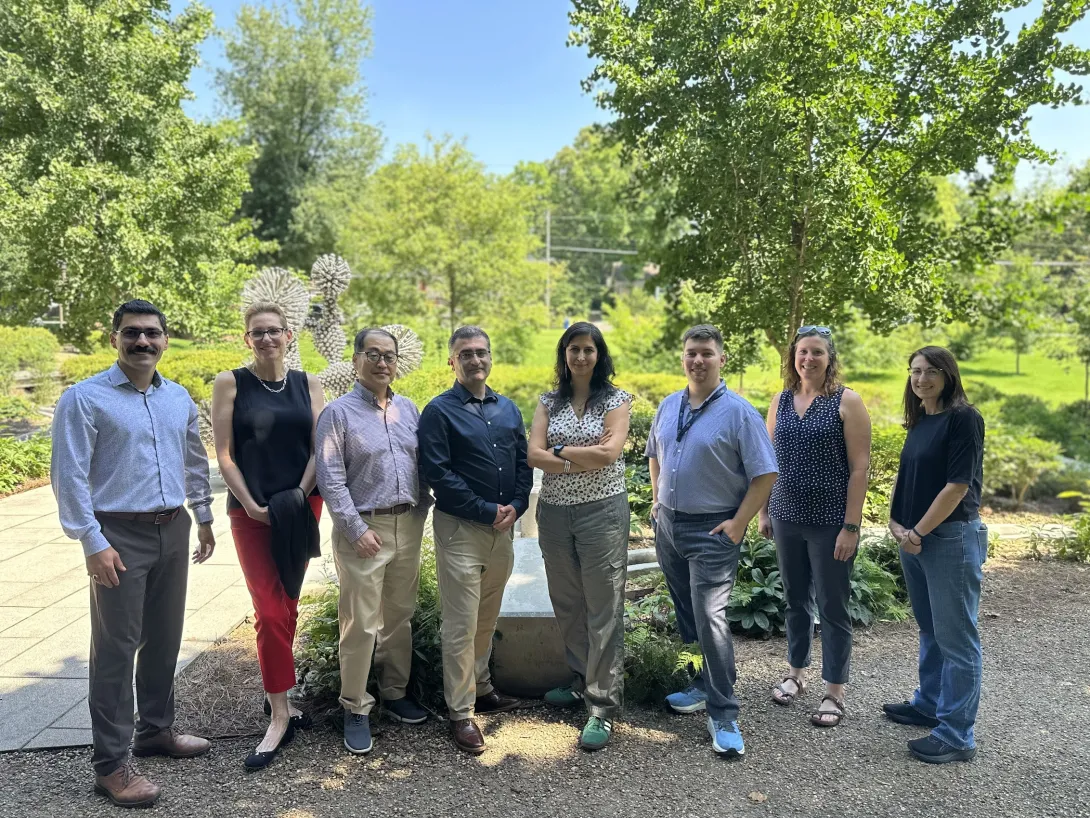
2025 SEI External Faculty Fellows with their Georgia Tech Hosts
From Left to Right: Jamal Mamkhezri, Laura Taylor, Jin-Yeon Kim, Hossein Taheri, Nazanin Bassiri-Gharb, Cody Gonzalez, Erin Ratcliff, Judy Jenkins
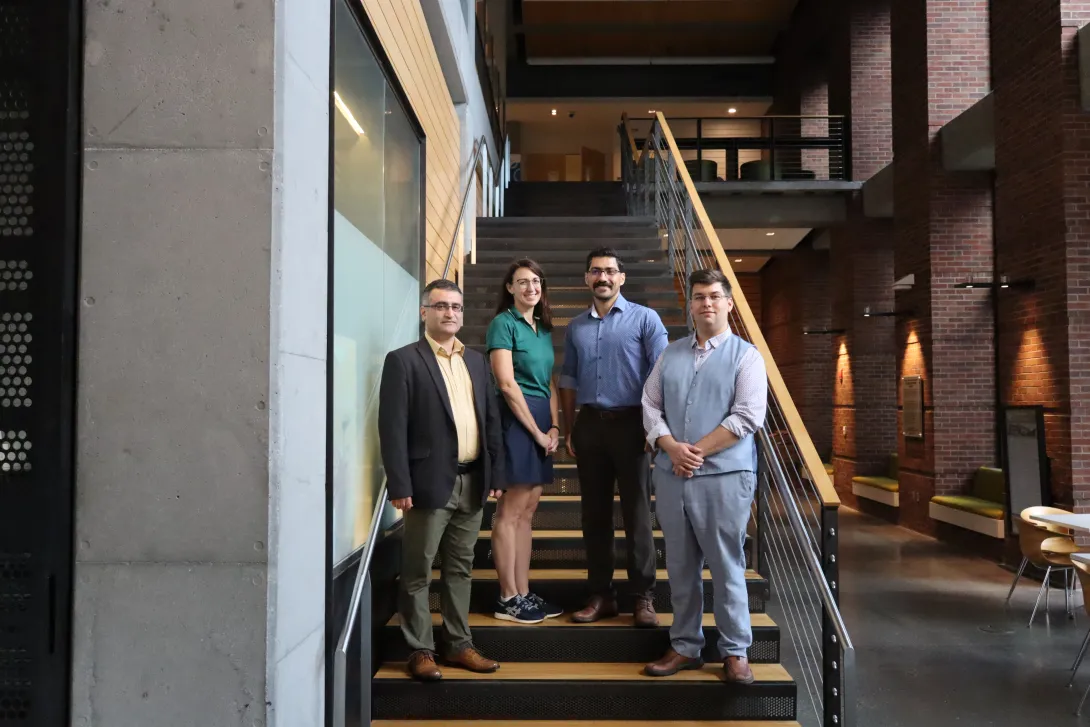
2025 SEI External Faculty Fellows: Hossein Taheri, Judy Jenkins, Jamal Mamkhezri, Cody Gonzalez
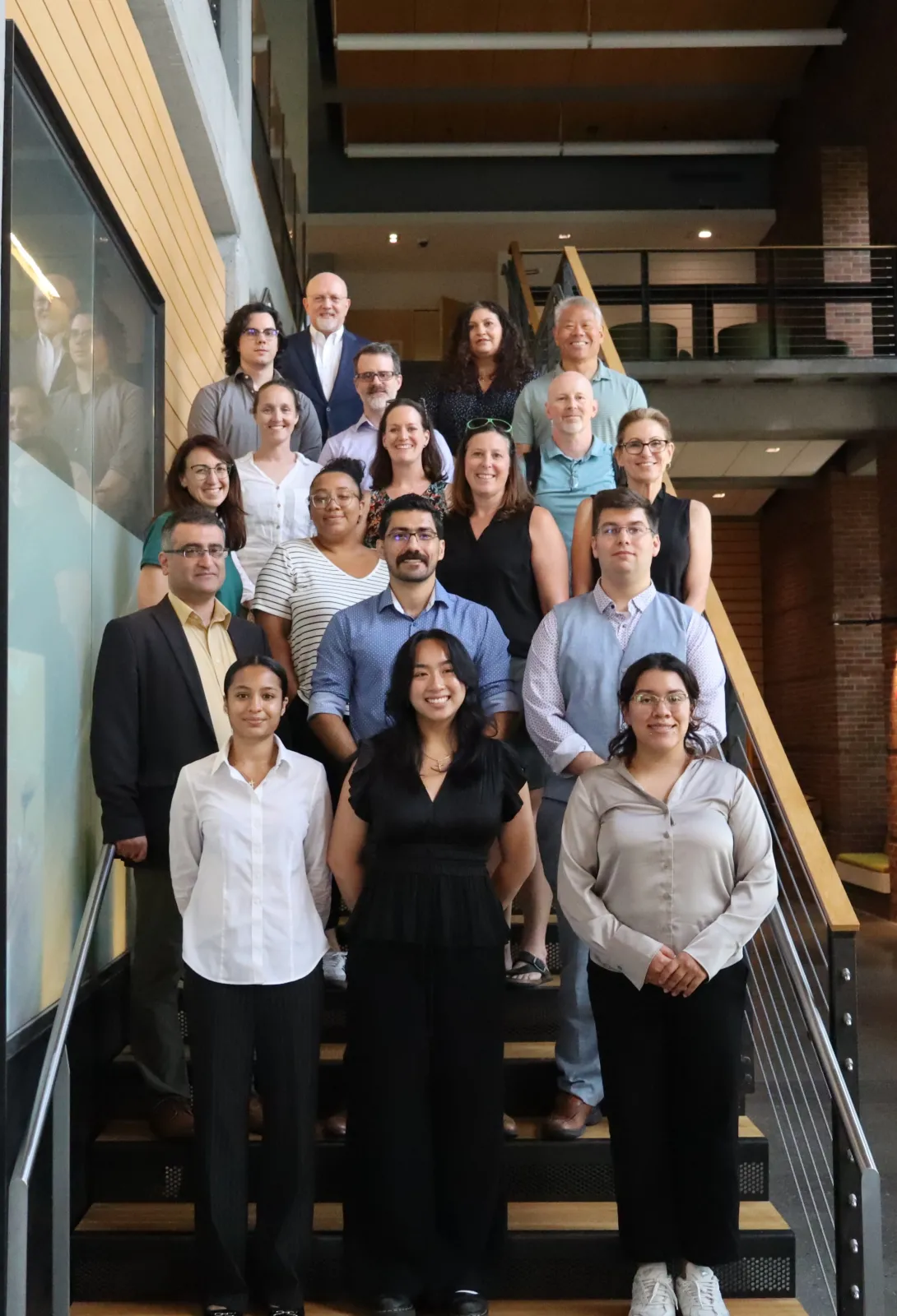
2025 SEI External Faculty Fellows and Students with the SEI Team
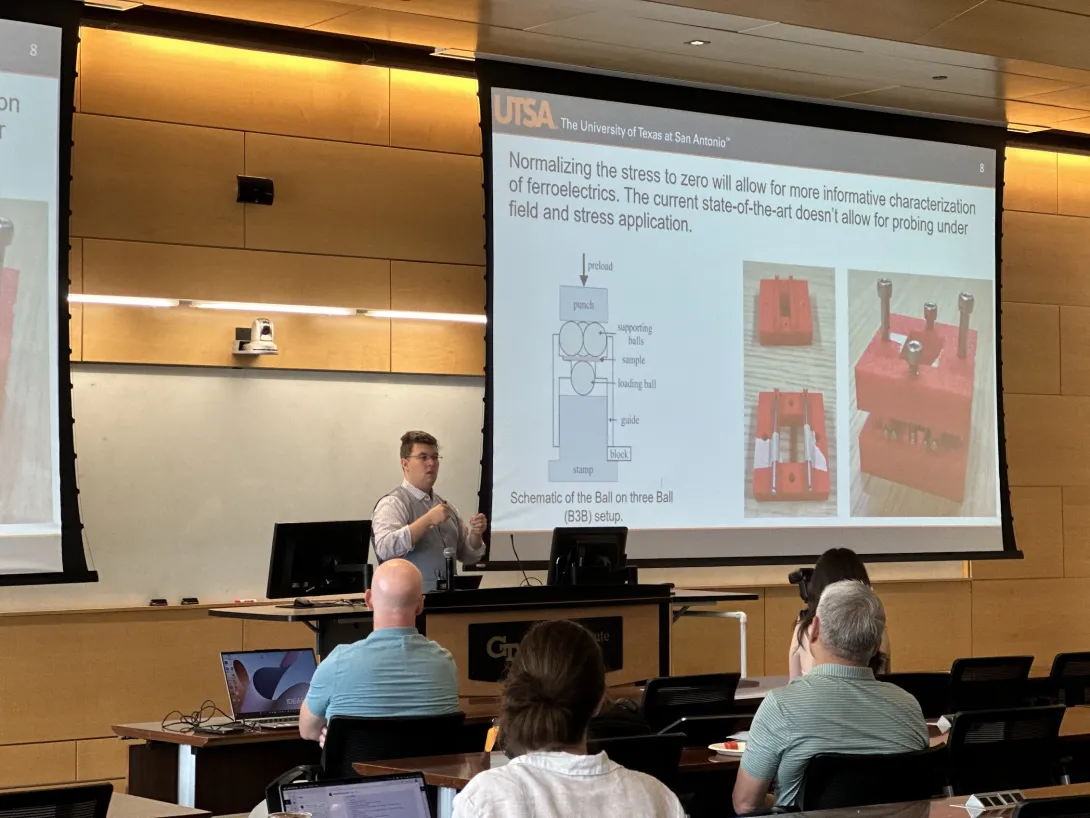
Cody Gonzalez, 2025 SEI Energy Faculty Fellow from the University of Texas San Antonio, presents his research work from the 10-week program.
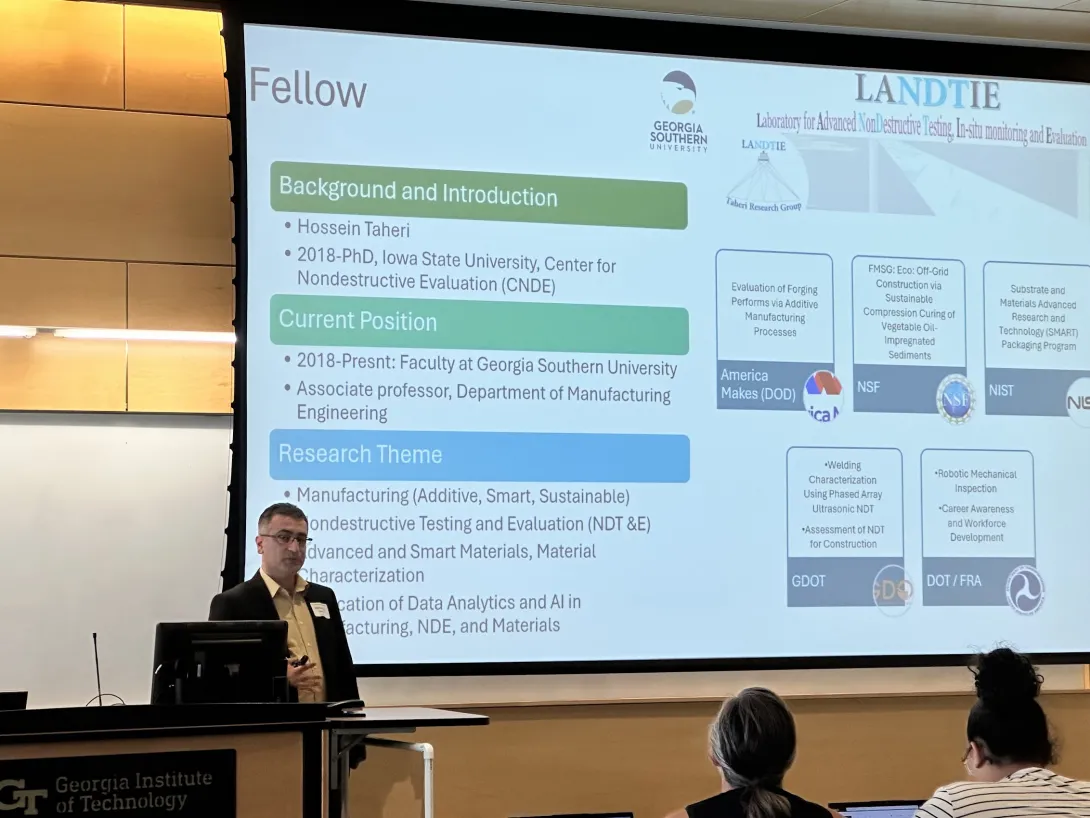
Hossein Taheri, 2025 SEI Energy Faculty Fellow from Georgia Southern University, presents his research work from the 10-week program.
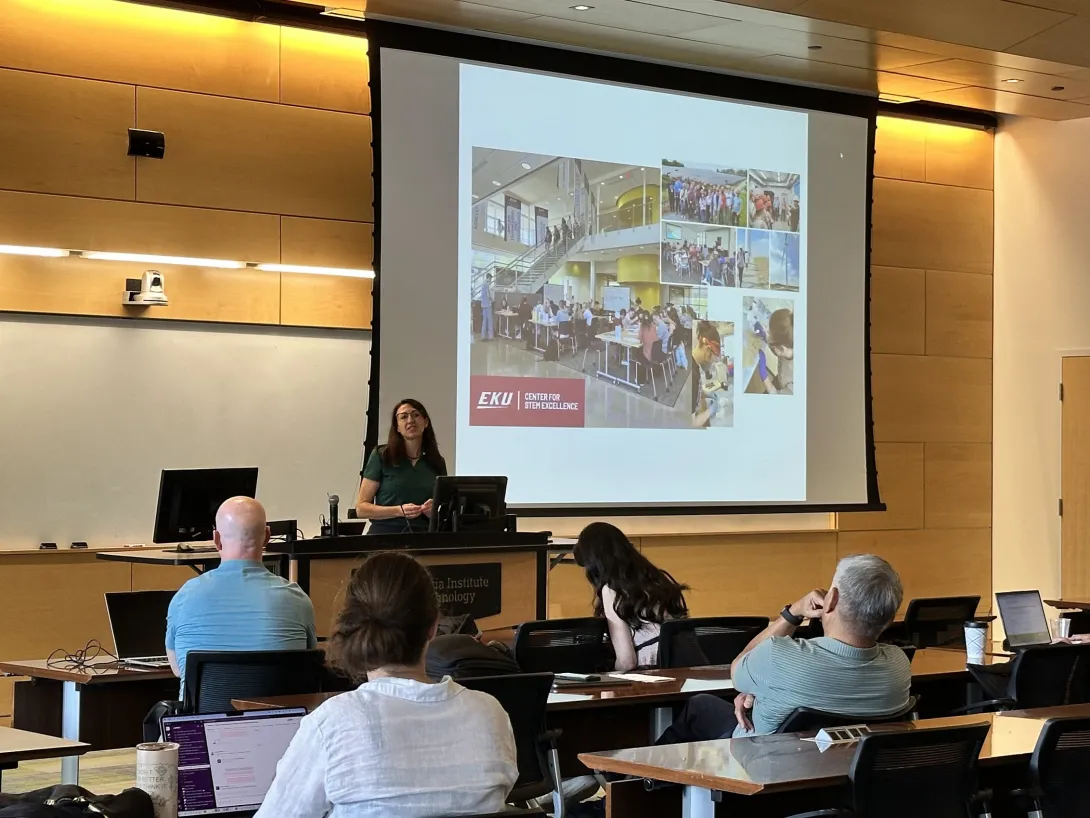
Judy Jenkins, 2025 SEI Energy Faculty Fellow from Eastern Kentucky University, presents her research work from the 10-week program.
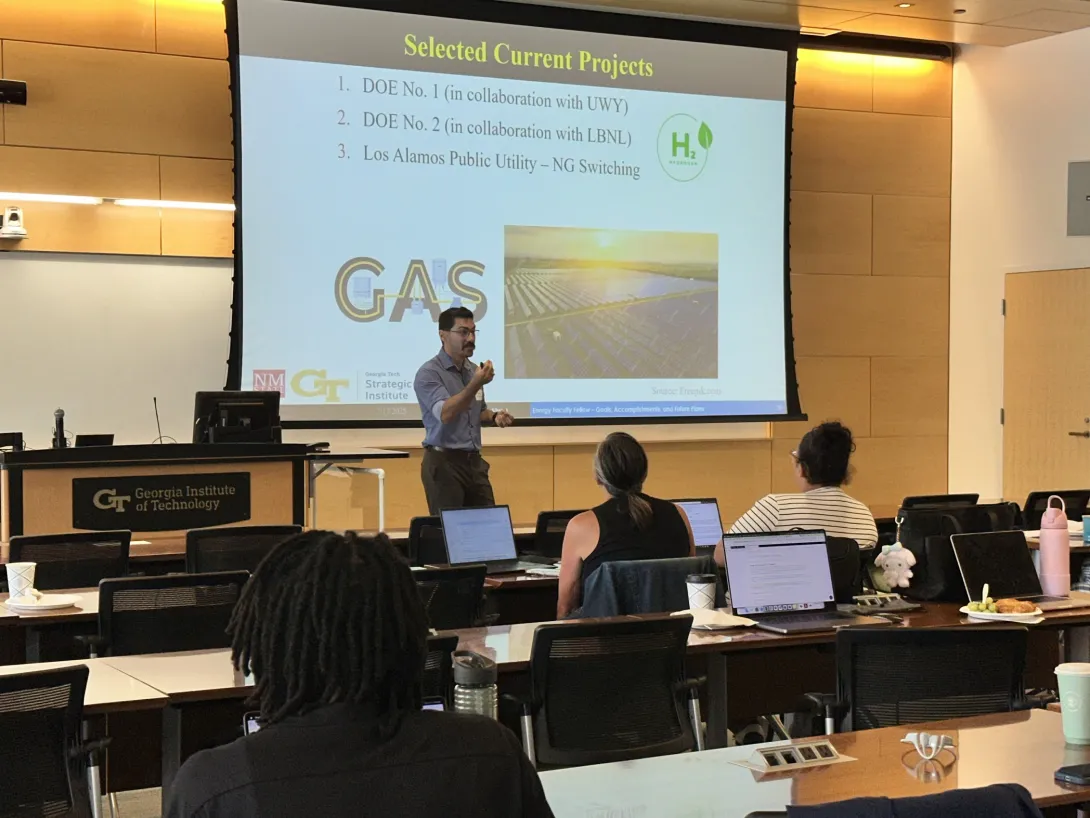
Jamal Mamkhezri, 2025 SEI Energy Faculty Fellow from New Mexico State University, presents his research work from the 10-week program.
The Strategic Energy Institute (SEI) at Georgia Tech concluded its third cohort of Energy Faculty Fellows in August, welcoming a diverse group of researchers for a 10-week summer fellowship. The program is designed to advance energy innovation and collaboration by supporting cross-institutional partnerships and facilitating dialogue on regional, national, and global energy priorities.
The program intends to build research partnerships between Georgia Tech and other academic institutions — specifically, emerging research institutions including R2 universities, minority-serving institutions, historically Black colleges and universities, and primarily undergraduate institutions.
“The Energy Faculty Fellows program is a key part of our five-year strategy to expand collaboration and strengthen workforce development in energy research,” said Christine Conwell, SEI’s interim executive director. “The cross-institutional collaborations foster broader engagement across the energy sector and help connect diverse research communities to meet the demands of the evolving energy landscape.”
During the fellowship, participants engage in joint research with their Georgia Tech hosts and their research teams, gaining hands-on experience and insights. These experiences not only enrich their immediate projects but also contribute to strengthening research systems at their home institutions.
The program continues to advance workforce development in the energy sector by involving undergraduate researchers in its core activities. Students work closely with fellows on applied research, enabling them to explore potential career paths and evaluate their interest in contributing to the future of energy innovation.
Here is the 2025 cohort of SEI’s Energy Faculty Fellows, in their own words.
Fellow: Jamal Mamkhezri, Associate Professor of Economics, New Mexico State University
Host: Laura Taylor, Professor, School of Economics, and Director, Energy Policy and Innovation Center, Georgia Tech
Over the past 10 weeks, I have worked closely with my host, Laura Taylor, and a talented group of students on projects that spanned a wide range of energy topics — from peer-to-peer energy trading and battery storage in wholesale markets to the impacts of energy prices on retail spending, EV charging infrastructure, electricity outages and crime, and the potential of small modular reactors. My own research during this period focused on two key areas: analyzing the impact of data center expansion on wholesale electricity prices and evaluating how utility-scale solar projects influence property and farmland values across the Southeast.
The biggest takeaway from this experience has been the power of interdisciplinary collaboration, combining economics, policy, and engineering perspectives with students and faculty. It sparked richer questions and solutions than what I would have developed on my own.
To my peers back home: Embrace cross-disciplinary hubs like SEI to elevate your research and connections.
Fellow: Judy Jenkins, Professor of Chemistry, Eastern Kentucky University
Host: Erin Ratcliff, Professor, School of Chemistry and Biochemistry, School of Materials Science and Engineering, Georgia Tech
I started the fellowship with two goals — to collaborate with Erin Ratcliff and her group while at Georgia Tech, and to build the foundation for continued collaboration after I return to Eastern Kentucky University. These goals have been realized, and so much more. The Ratcliff group and the whole SEI team welcomed me into the Georgia Tech energy community and supported this partnership every step of the way.
I particularly enjoyed getting to work alongside graduate students and postdocs in the Ratcliff group. While they were much more familiar with the chemical system of interest, I had more experience in some of the techniques. Together we made a great team! Getting to spend 10 weeks with them helped me move from general ideas for collaboration to a much more specific and nuanced understanding of the ways we can work together going forward.
Outside of the lab, I appreciated the way the SEI team introduced us to their initiatives more broadly. I have a much better understanding of the scope of the Institute and the ways different people are working together.
Fellow: Cody Gonzalez, Assistant Professor of Mechanical Engineering, University of Texas at San Antonio
Hosts: Nazanin Bassiri-Gharb, Harris Saunders Jr. Chair and Professor, George W. Woodruff School of Mechanical Engineering; and Hailong Chen, Associate Professor, George W. Woodruff School of Mechanical Engineering, Georgia Tech
Undergraduate Student: Rebecca Lima, University of Texas at San Antonio
During my fellowship, I collaborated with Nazanin Bassiri-Gharb and Hailong Chen on two research fronts: lead zirconate antiferroelectrics and stress-potential coupling in solid-state batteries.
Rebecca Lima, an undergraduate student from my university, was able to join the research through the SURE program and was able to achieve highly oriented lead zirconate films with promising applications in energy storage and actuation, with help from Nazanin’s Ph.D. student, Milan Haddad.
In Chen’s lab, alongside postdoctoral researcher Zhantao Liu, we advanced solid-state cell characterization for improved capacity and self-sensing. Lima also led a battery coating workshop as a knowledge exchange between Georgia Tech and UTSA.
During the 10 weeks, I also began discussions with Tequila Harris on studying how manufacturing methods affect battery anode coatings, with plans to use her pilot-scale, roll-to-roll facility for future testing and collaboration.
Working in the Advanced Research Institute (ARI) in The Kendeda Building with Shannon Yee provided critical support and equipment for electrochemical cell characterization. Through networking within Kendeda, I also got an opportunity to participate in weekly brainstorming sessions on topics like clean water and robotics.
Looking ahead, I plan to integrate Bassiri-Gharb’s expertise in antiferroelectric synthesis and piezo force microscopy with my background in electrochemical cell fabrication to pursue electrochemical strain microscopy. This will enable direct strain measurement from ionic currents, advancing high-capacity batteries and ultra-dense electrochemical actuators for precision applications like telescope mirror alignment.
I'm grateful to my colleagues at UTSA for encouraging me to apply and sharing their positive experiences at Georgia Tech. My time here has been incredibly rewarding — working alongside outstanding collaborators has strengthened my research and expanded both my network and ideas. The Energy Faculty Fellows program has already led to new proposals and co-authored papers, and I’ve encouraged others to apply. Collaborating across disciplines — from materials science and electrochemistry to advanced manufacturing — has opened up exciting opportunities to tackle real-world challenges in energy and beyond.
Fellow: Hossein Taheri, Associate Professor of Manufacturing Engineering, Georgia Southern University.
Host: Jin-Yeon Kim, Senior Research Scientist, Georgia Tech Research Institute
Over the past 10 weeks, I collaborated with my Georgia Tech host Jin Yeon Kim on two key research projects. The first evaluated advanced nondestructive testing (NDT) methods — like PAUT and MCT — for assessing quality in metal additive manufacturing. The second explored acoustic-based NDT techniques to assess the operational health of lithium-ion batteries, particularly in electric vehicle applications. As demand for battery-powered technologies grows, ensuring safe and reliable operation through in-situ monitoring is critical. These efforts have laid a strong foundation for future proposals and joint publications.
The biggest takeaway has been the value of cross-institutional collaboration in advancing interdisciplinary research. Working with researchers at Georgia Tech deepened my technical expertise and showed how partnerships can accelerate innovation.
To my peers at Georgia Southern: Seek out collaborations beyond your institution. They can lead to new ideas, stronger research impact, and more opportunities for funding, publication, and student development. Collaboration is not only beneficial but is essential for addressing today’s engineering challenges.
News Contact
Priya Devarajan || SEI Communications Program Manager
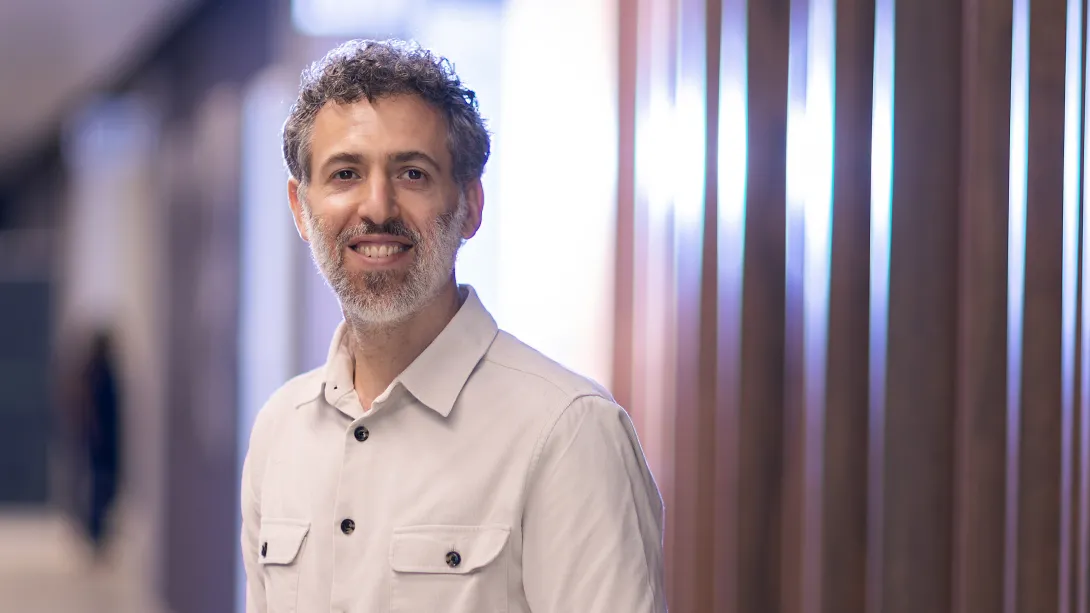
The United States has prepared for decades to defend itself from every conceivable military conflict on its shores, but it turns out psychological warfare, not missiles, might pose the greatest threat to national security.
This is a challenge Assistant Professor Ryan Shandler will spend the next two years exploring as a recipient of the Young Faculty Award from the Defense Advanced Research Projects Agency (DARPA).
DARPA uses this award to recognize up-and-coming early-career faculty it hopes to continue working with in the future.
Currently, DARPA is concerned with cyberattacks from foreign countries aimed at provoking social unrest and eroding public trust in democratic institutions. In a study released last year by Microsoft, it was estimated that 600 million cyberattacks were launched everyday by criminals and nation-state actors from July 2023 to July 2024.
Tools built by cybersecurity engineers help mitigate the attacks made by criminals and in some cases even help track down stolen money. However, nation-state actors don’t launch cyberattacks to score a payday.
Instead, they attack things like power plants or voting precincts as a show of strength. Exposing these vulnerabilities shows how unsafe life could be, and these actors want nothing more than to cause total panic.
So now instead looking only to hardware and software for the solution to this problem, DARPA is investing in the human dimension of cybersecurity.
This area has long been a focus of Shandler’s research, making him uniquely qualified to confront this previously overlooked vulnerability. His past experiments have already shown how cyberattacks generate severe public anxiety and prompt calls for physical military retaliation.
For this new project, he will track a controlled population of several thousand people by exposing them to simulated cyberattacks. At no point will the participants be made to think the attacks are real. Shandler and his team will then interview the participants to gauge how their experience impacted their perception of security.
“We are looking to see which groups are more susceptible to this kind of cumulative threat. Once we model the risk, the next step will be building countermeasures to defend against it,” he said.
However, creating a defense system that promotes societal resilience will be as challenging as it is revolutionary.
"I'm fortunate to be conducting this research in an interdisciplinary unit like the School of Cybersecurity and Privacy. Tackling a challenge of this scale requires computer scientists and social scientists working side by side,” Shandler said.
“Alone, neither field stands a chance—but together, we stand a real chance of success."
Shandler is jointly appointed with the School of Cybersecurity and Privacy and the Sam Nunn School of International Affairs.
News Contact
John Popham Communications Officer II | School of Cybersecurity and Privacy
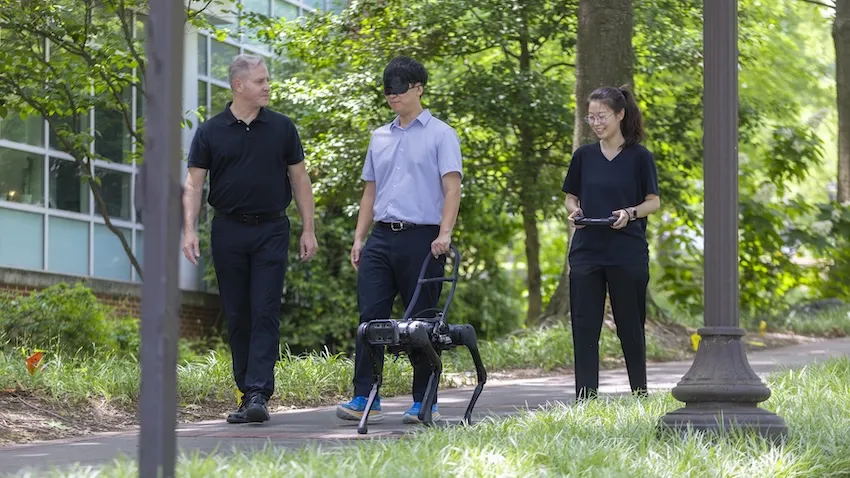
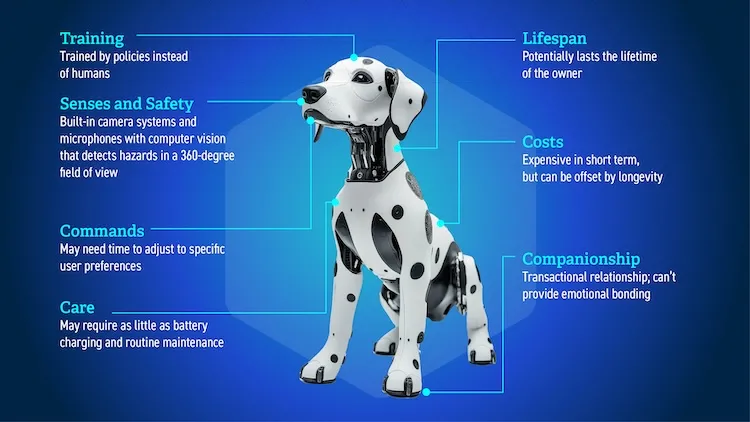
People who are visually impaired and cannot afford or care for service animals might have a practical alternative in a robotic guide dog being developed at Georgia Tech.
Before launching its prototype, a research team within Georgia Tech’s School of Interactive Computing, led by Professor Bruce Walker and Assistant Professor Sehoon Ha, is working to improve its methods and designs based on research within blind and visually impaired (BVI) communities.
“There’s been research on the technical aspects and functionality of robotic guide dogs, but not a lot of emphasis on the aesthetics or form factors,” said Avery Gong, a recent master’s graduate who worked in Walker’s lab. “We wanted to fill this gap.”
Training a guide dog can cost up to $50,000, and while there are nonprofit organizations that can cover these costs for potential owners, there is still a gap between the amount of available guide dogs and BVI individuals who need them. Not all BVI individuals are able to care for a dog and feed it. The dog also has fewer than 10 working years before it needs replacement.
Gong co-authored a paper on the design implications of the robotic guide dog that was presented at the 2025 International Conference on Robotics and Automation (ICRA) in Atlanta in May.
The consensus among the study’s participants indicates they prefer a robotic guide dog that:
- resembles a real dog and appears approachable
- has a clear identifier of being a guide dog, such as a vest
- has built-in GPS and Bluetooth connectivity
- has control options such as voice command
- has soft textures without feeling furry
- has long battery life and self-charging capability
“A lot of people said they didn’t want the dog to look too cute or appealing because it would draw too much attention,” said Aviv Cohav, another lead author of the paper and recent master’s graduate.
“Many people have issues with taking their guide dog to places, whether it’s little kids wanting to play with the dog or people not liking dogs or people being scared of them, and that reflects on the owners themselves. We wanted to look at what would be a good balance between having a functional robot that wouldn’t scare people away or be a distraction.”
The researchers also had to consider the perspectives of sighted individuals and how society at large might view a robotic guide dog.
An example of this is the amount of noise the dog makes while walking. The owner needs to hear the dog is active, but the clanky sound many off-the-shelf robots make could create disturbances in indoor spaces that amplify sounds. To offset the noise, the team developed algorithms that allow the robot to move more quietly.
Walker and his lab have examined similar scenarios that must take public perception into account.
“We like to think of Georgia Tech as going the extra mile,” Walker said. “Let’s not just make a robot, but a robot that’s going to fit into society.
“To have impact, the technologies we produce must be produced with society in mind. This is a holistic design that considers the users and all the people with whom the users interact.”
Taery Kim, a computer science Ph.D. student, began working on the concept of a robotic guide dog when she came to Georgia Tech in 2022. She and Ha, her advisor, have authored papers on building the robot’s navigation and safety components.
“When I started, I thought it would be as simple as giving the guide dog a command to take me to Starbucks or the grocery store, and it would just take me,” Kim said. “But the user must give waypoint directions — ‘go left here,’ ‘turn right,’ ‘go forward,’ ‘stop.’ Detailed commands must be delivered to the dog.”
While a real dog has naturally enhanced senses of hearing and smell that can’t be replicated, technology can provide interconnected safety features during an emergency. The researchers envision a camera system equipped with a 360-degree field of view, computer vision algorithms that detect obstacles or hazards, and voice recognition that recognizes calls for help. An SOS function could automatically call 911 at the owner’s request or if the owner is unresponsive.
Kim said the robot should also have explainability features to enhance communication with the owner. For example, if the robot suddenly stops or ignores an owner’s commands, it should tell the owner that it’s detecting a hazard in their path.
Manufacturing a robot at scale would initially be expensive, but the researchers believe the cost would eventually be offset because of its longevity. BVI individuals may only need to purchase one during their lifetime.
To introduce a prototype, the multidisciplinary research team recognizes that it needs to enlist experts from other fields to adequately address the various implications and research gaps inherent in the project.
Walker said the teams welcome additional partners who are keen to tackle challenges ranging from design and engineering to battery life to human-robot interaction.
Team member J. Taery Kim was supported by the National Science Foundation's Graduate Research Fellowship Program (NSF GRFP) under Grant No. DGE-2039655.
News Contact
Nathan Deen, Communications Officer
School of Interactive Computing
nathan.deen@cc.gatech.edu