
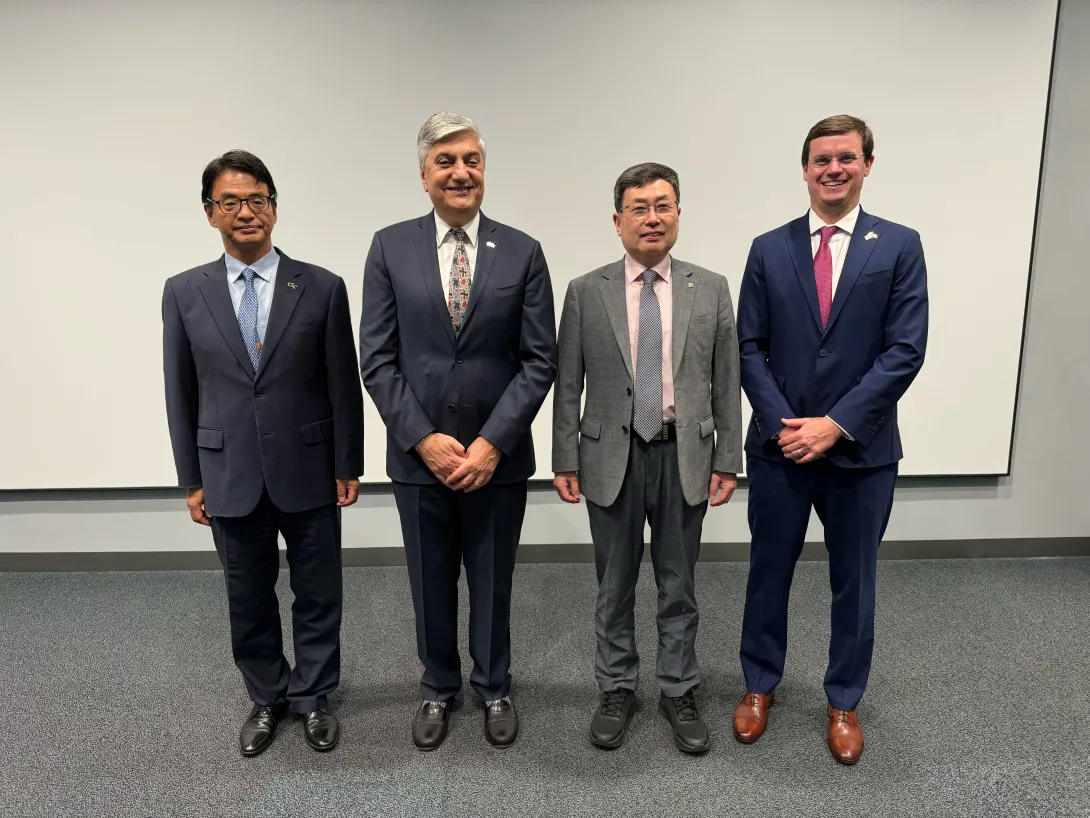
Leadership at the Memorandum of Understanding signing with the Korea Institute of Industrial Technology (KITECH). From left to right: Sangpyo Suh, Consulate General of Korea in Atlanta; Chaouki Abdallah, former executive vice president of Research at Georgia Tech; Sang Mok Lee, president of KITECH; and Barton Lowrey, director of the Georgia Department of Economic Development.
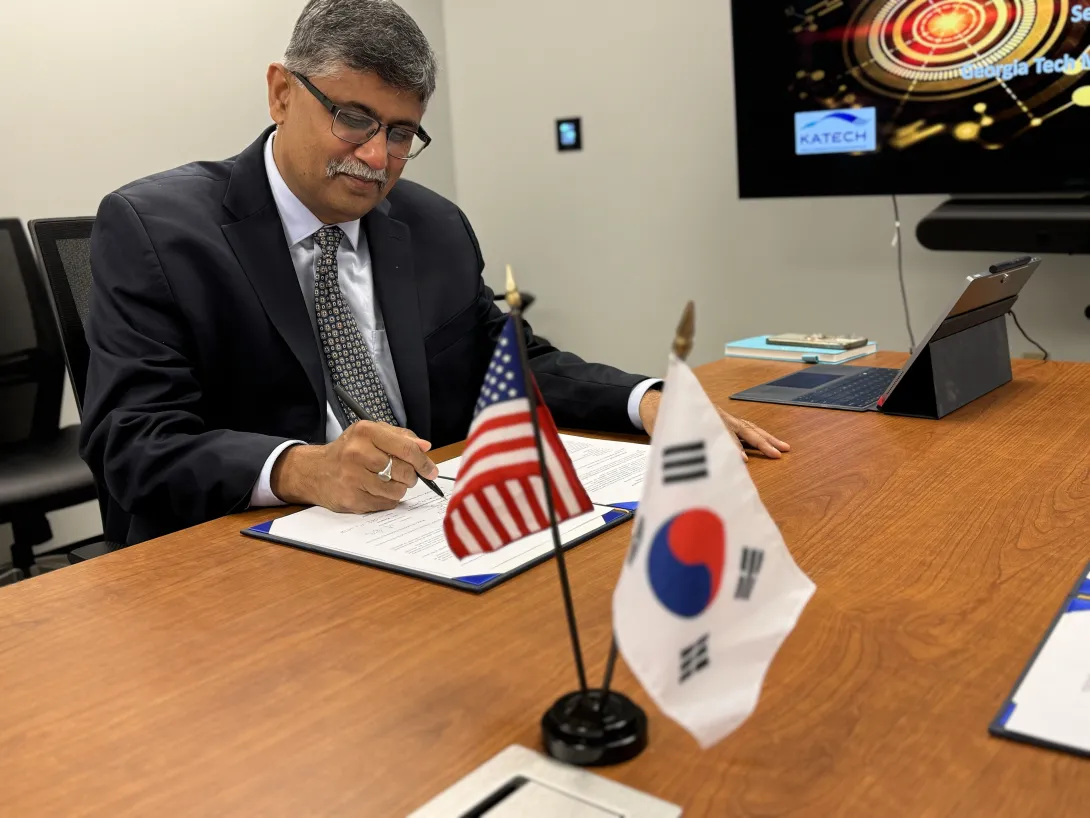
Shreyes Melkote, associate director of the Georgia Tech Manufacturing Institute, signing the Memorandum of Understanding with the Korea Automotive Technology Institute.
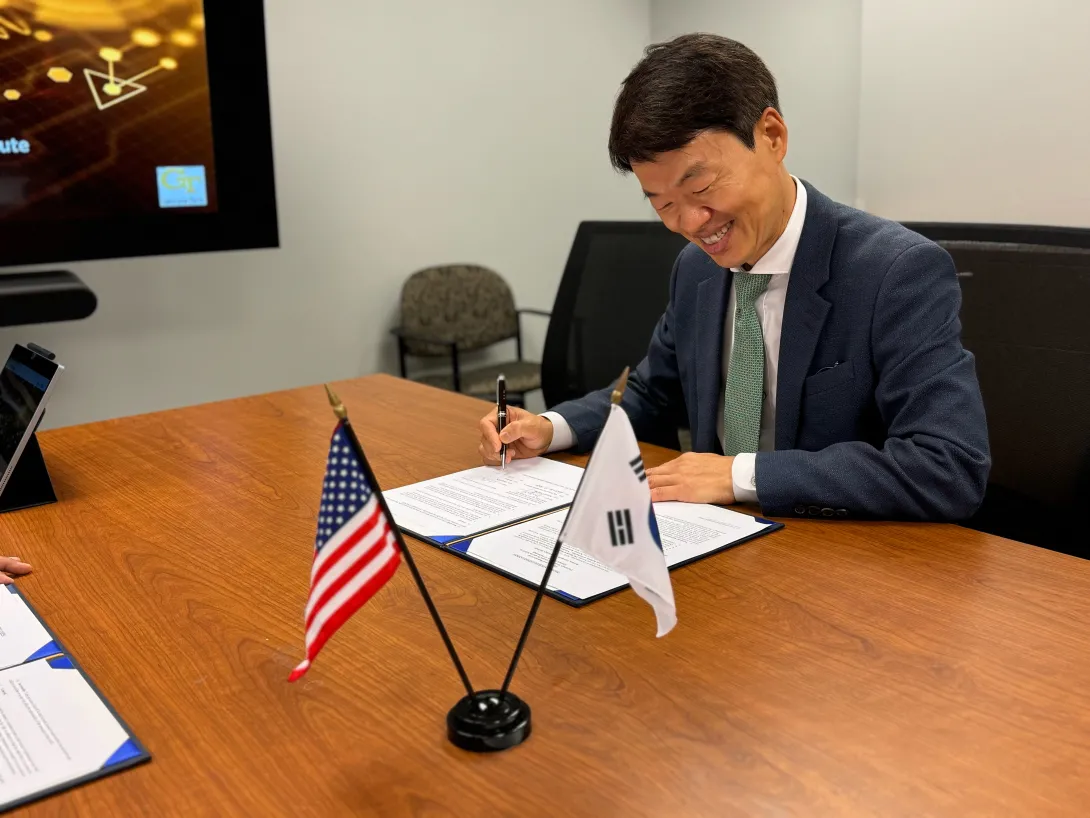
Na-Seung Sik, president of the Korea Automotive Technology Institute, signing the Memorandum of Understanding with Georgia Tech at the Georgia Tech Manufacturing Institute.
In a significant step towards fostering international collaboration and advancing cutting-edge technologies in manufacturing, Georgia Tech recently signed Memorandums of Understanding (MoUs) with the Korea Institute of Industrial Technology (KITECH) and the Korea Automotive Technology Institute (KATECH). Facilitated by the Georgia Tech Manufacturing Institute (GTMI), this landmark event underscores Georgia Tech’s commitment to global partnerships and innovation in manufacturing and automotive technologies.
“This is a great fit for the institute, the state of Georgia, and the United States, enhancing international cooperation,” said Thomas Kurfess, GTMI executive director and Regents’ Professor in the George W. Woodruff School of Mechanical Engineering (ME). “An MoU like this really gives us an opportunity to bring together a larger team to tackle international problems.”
“An MoU signing between Georgia Tech and entities like KITECH and KATECH signifies a formal agreement to pursue shared goals and explore collaborative opportunities, including joint research projects, academic exchanges, and technological advancements,” said Seung-Kyum Choi, an associate professor in ME and a major contributor in facilitating both partnerships. “Partnering with these influential institutions positions Georgia Tech to expand its global footprint and enhance its impact, particularly in areas like AI-driven manufacturing and automotive technologies.”
The state of Georgia has seen significant growth in investments from Korean companies. Over the past decade, approximately 140 Korean companies have committed around $23 billion to various projects in Georgia, creating over 12,000 new jobs in 2023 alone. This influx of investment underscores the strong economic ties between Georgia and South Korea, further bolstered by partnerships like those with KITECH and KATECH.
“These partnerships not only provide access to new resources and advanced technologies,” says Choi, “but create opportunities for joint innovation, furthering GTMI’s mission to drive transformative breakthroughs in manufacturing on a global scale.”
The MoUs with KITECH and KATECH are expected to facilitate a wide range of collaborative activities, including joint research projects that leverage the strengths of both institutions, academic exchanges that enrich the educational experiences of students and faculty, and technological advancements that push the boundaries of current manufacturing and automotive technologies.
“My hopes for the future of Georgia Tech’s partnerships with KITECH and KATECH are centered on fostering long-term, impactful collaborations that drive innovation in manufacturing and automotive technologies,” Choi noted. “These partnerships do not just expand our reach; they solidify our leadership in shaping the future of manufacturing, keeping Georgia Tech at the forefront of industry breakthroughs worldwide.”
Georgia Tech has a history of successful collaborations with Korean companies, including a multidecade partnership with Hyundai. Recently, the Institute joined forces with the Korea Institute for Advancement of Technology (KIAT) to establish the KIAT-Georgia Tech Semiconductor Electronics Center to advance semiconductor research, fostering sustainable partnerships between Korean companies and Georgia Tech researchers.
“Partnering with KATECH and KITECH goes beyond just technological innovation,” said Kurfess, “it really enhances international cooperation, strengthens local industry, drives job creation, and boosts Georgia’s economy.”
News Contact
Audra Davidson
Research Communications Program Manager
Georgia Tech Manufacturing Institute
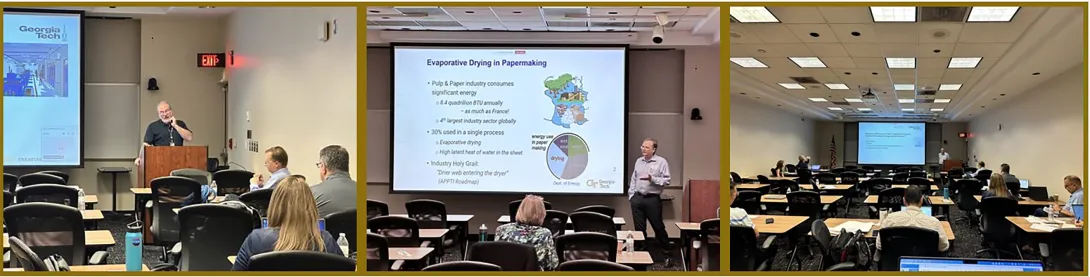
From the Left: Presentations by Chris Luettgen, Carson Meredith and Cyrus Aidun during the 2024 APPTI Net Zero Workshop
The Georgia Tech Renewable Bioproducts Institute (RBI) hosted the APPTI Net Zero Workshop on Decarbonizing the Pulp & Paper Sector during the second week of August.
Over 40 participants from more than 20 organizations participated in the event aimed to educate the pulp, paper, and tissue manufacturing community on current decarbonization technologies ready for immediate deployment, while also exploring the investments needed for future breakthrough innovations.
The workshop kicked off with an overview of APPTI by Chris Luettgen, managing director of APPTI and RBI's lead for process efficiency and intensification of pulp paper packaging & tissue manufacturing. Presentations and discussions revolved around three focus areas for decarbonization--Carbon Capture and Beneficial Use; Biogas Generation from Waste Streams; and Lime Kiln Alternatives to Fossil Fuels. Presenters and panelists consisted of members from the Department of Energy’s Industrial Efficiency and Decarbonization Office (IEDO), academia (North Carolina State University, Abo Academy, University of Toronto, University of Minnesota), and industry (Veolia, Valmet, Metso, FPInnovations, Nexight, Beck and Associates).
RBI’s Carson Meredith, Valerie Thomas, and Cyrus Aidun were among the presenters. Meredith presented his research on felt design to prevent re-wet, while Thomas’ talk was on the topic, life cycle assessment: meeting policy benchmarks for decarbonization, and Aidun presented his work on multi-phase forming.
The workshop concluded with the net zero committee discussing key takeaways from the workshop and potential for a life cycle assessment on the paper industry.
“The outcome of this two-day workshop is a strong feeling about the work RBI and APPTI are doing for the industry. The feedback I received was all very positive,” said Luettgen.
News Contact
Priya Devarajan || RBI Communications Program Manager

'Oumuamua at the edges of our solar system (Artist's Rendition, NASA)
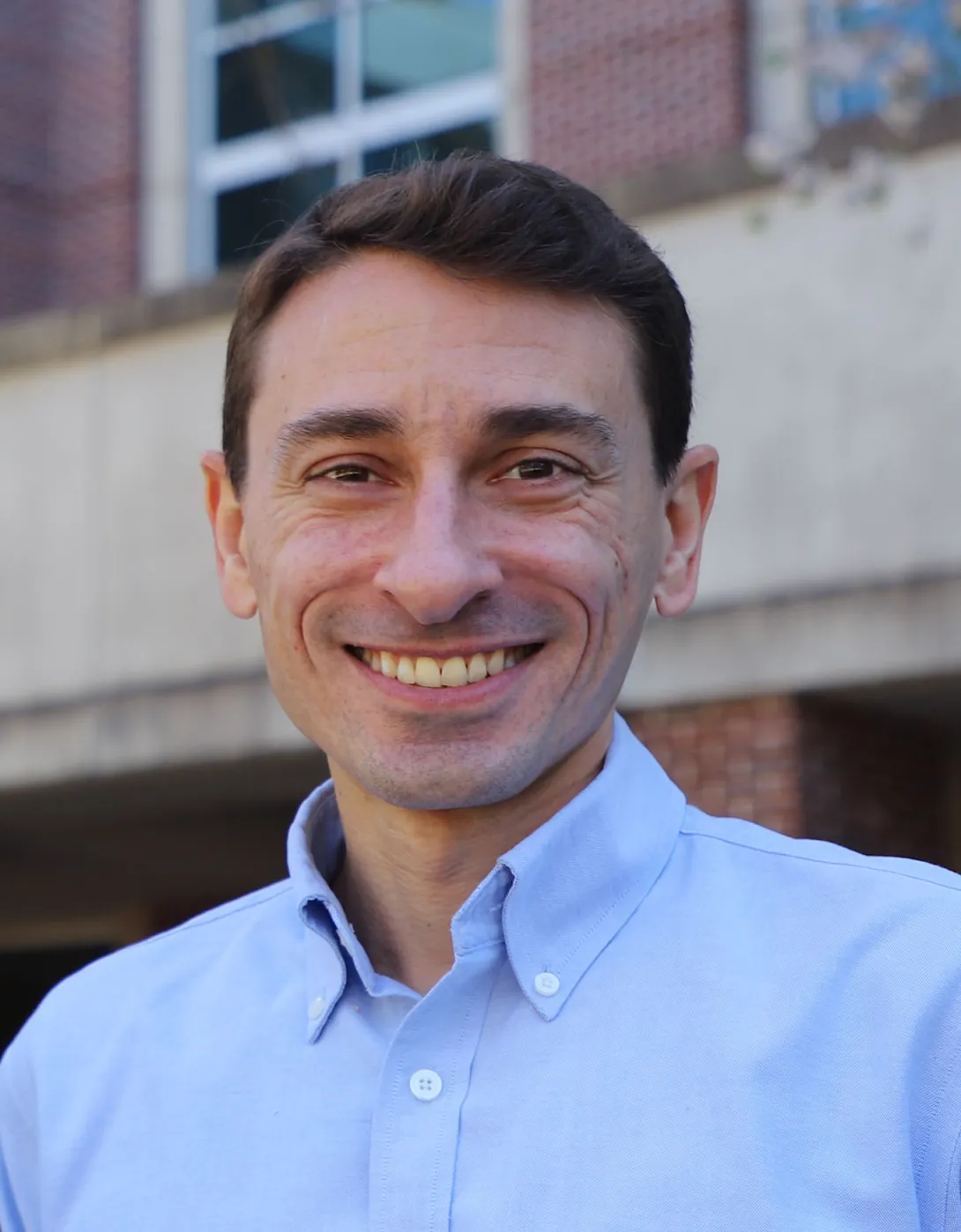
Professor James Wray
In 2017, a long, oddly shaped asteroid passed by Earth. Called ‘Oumuamua, it was the first known interstellar object to visit our solar system, but it wasn’t an isolated incident — less than two years later, in 2019, a second interstellar object (ISO) was discovered.
“‘Oumuamua was found passing just 15 million miles from Earth — that’s much closer than Mars or Venus,” says James Wray. “But it was formed in an entirely different solar system. Studying these objects could give us incredible insight into extrasolar planets, and how our planet fits into the universe.”
Wray, a professor in the School of Earth and Atmospheric Sciences at Georgia Tech, has just been awarded a Simons Foundation Pivot Fellowship to do just that. Pivot Fellowships are among the most prestigious sources of funding for cutting-edge research, and support leading researchers who have the deep interest, curiosity and drive to make contributions to a new discipline.
Wray has primarily studied the geoscience of Mars. He will leverage knowledge of nearby planets to understand ISOs and planets much farther away. “I want to understand how planets got to be the way they are, and if they could have ever hosted life,” he explains. “Extrasolar planets give us many more places to ask those questions than our solar system does, but they're too distant to visit with spacecraft. ISOs provide a unique opportunity to explore other solar systems without leaving our own.”
The Fellowship will provide salary support as well as funding for research, travel, and professional development. “Seed funds like this are so valuable,” says Wray. “I’m incredibly grateful to the Simons Foundation. I’d also like to thank Georgia Tech for its support,” he adds, sharing that the Center for Space Technology and Research supported a related research effort at the University of Hawaii earlier this year. “My mentor and I were able to spend some of that time improving our Pivot Fellowship proposal, which played a critical role in securing this Fellowship.”
In search of ISOs
Wray will study small solar system bodies like asteroids and comets to decode the processes of planet formation and space weathering, and will analyze data from the 2017 and 2019 ISOs.
He will also work alongside collaborators including Karen Meech of the University of Hawaii, who led the paper characterizing ‘Oumuamua, to conceptualize what an intercept mission might look like.
“We still have a lot of questions regarding ISOs,” he says. “Hundreds of papers have already been written about them, but we still don't know the answers.” One key mystery is the composition of the bodies: both the 2017 and 2019 objects were compositionally different from those in our solar system.
“Are they inherently different from the bodies in our solar system, or did the long journey to our solar system make them that way? Is our solar system different from others?” Wray asks. “We could answer so many questions with even a simple picture of the next ISO that comes close enough for us to intercept with spacecraft.”
A cosmic timeline
While there is no guarantee that another ISO might be spotted in our solar system, the timing is opportune — upcoming telescope surveys are poised to detect such interstellar objects. “In mid-2025, when I will start this Fellowship, the new Rubin Observatory will begin scanning the entire sky,” Wray says. “It has the potential to discover up to several new ISOs per year.”
“ISO visits are always brief,” he adds, “so the research needs to be in place for when one is spotted.” If an interstellar object is detected, Wray and Meech will be poised to leverage specialized telescopes in Hawaii, along with others worldwide, to better understand it, studying its size, shape, and composition — and potentially sending spacecraft to image it.
“We might never find another ISO — or they might be the key to imminent breakthroughs in understanding our place in the galaxy,” Wray adds. “I'm extremely grateful to the Simons Foundation for the flexibility to pursue this research at whatever pace the cosmos allows.”
News Contact
Written by Selena Langner
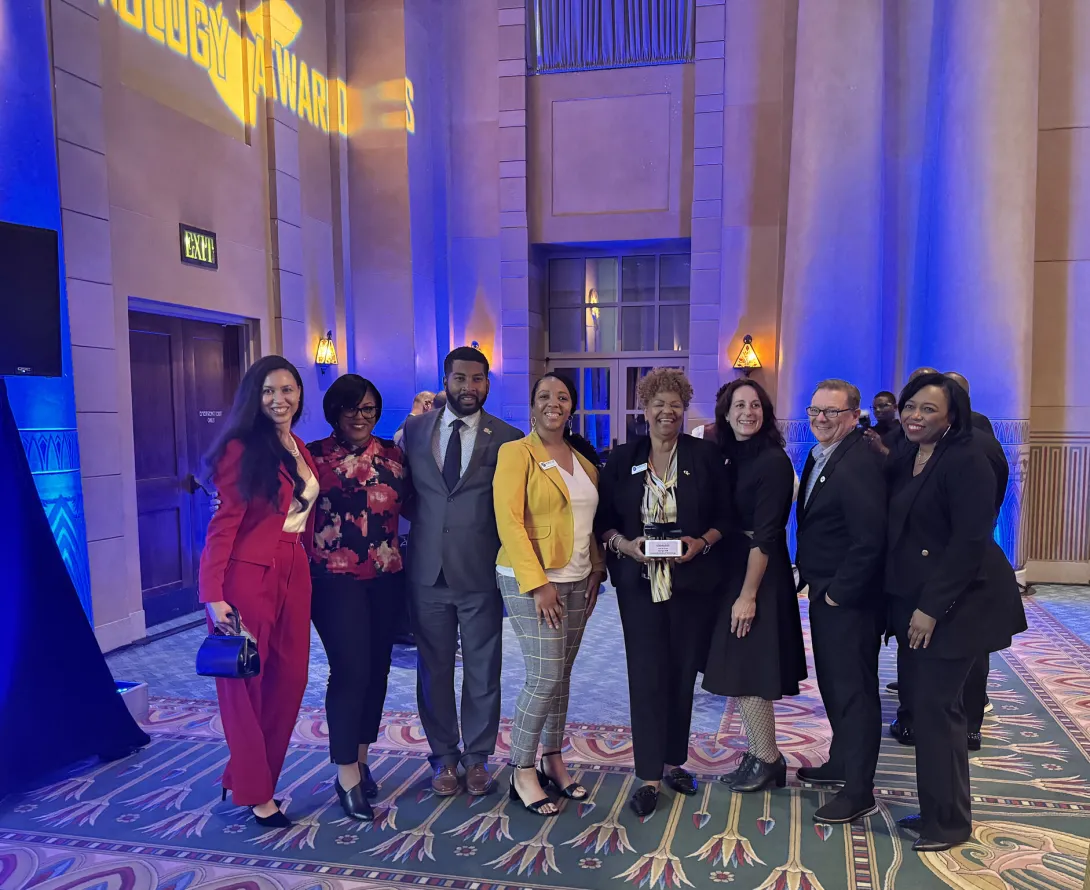
Members of Georgia AIM’s governance team stand for a photo with Cassia Baker, a cybersecurity expert with the Georgia Manufacturing Extension Partnership (left), and David Bridges, executive vice president of Georgia Tech’s Enterprise Innovation Institute (second from right), which oversees the projects.
Georgia AIM (Artificial Intelligence in Manufacturing) was recently awarded the 'Tech for Good' award from the Technology Association of Georgia (TAG), the state’s largest tech organization.
The accolade was presented at the annual TAG Technology Awards ceremony on Nov. 6 at Atlanta’s Fox Theatre. The TAG Technology Awards promote inclusive technology throughout Georgia, and any state company, organization, or leader is eligible to apply.
Tech for Good, one of TAG’s five award categories, honors a program or project that uses technology to promote inclusiveness and equity by serving Georgia communities and individuals who are underrepresented in the tech space.
Georgia AIM is comprised of 16 projects across the state that connect smart technology to manufacturing through K-12 education, workforce development, and manufacturer outreach. The federally funded program is a collaborative project administered through Georgia Tech’s Enterprise Innovation Institute and the Georgia Tech Manufacturing Institute.
TAG is a Georgia AIM partner and provides workforce development programs that train people and assist them in making successful transitions into tech careers.
Donna Ennis, Georgia AIM’s co-director, accepted the award on behalf of the organization.
“Georgia AIM’s mission is to equitably develop and deploy talent and innovation for AI in manufacturing, and the Tech for Good Award reinforces our focus on revolutionizing the manufacturing economy for Georgia and the entire country,” Ennis said in her acceptance speech.
She cited the organization’s many coalition members across the state: the Technical College System of Georgia; Spelman College; the Georgia AIM Mobile Studio team at the Russell Innovation Center for Entrepreneurs and the University of Georgia; the Southwest Georgia Regional Commission; the Georgia Cyber Innovation & Training Center; and TAG and Georgia AIM’s partners in the Middle Georgia Innovation corridor, including 21st Century Partnership and the Houston Development Authority.
Ennis also acknowledged the U.S. Economic Development Administration for funding the project and helping to bring it to fruition. “But most of all,” she said, “I want to thank our manufacturers and communities across Georgia who are at the forefront of creating a new economy through AI in manufacturing. It is a privilege to assist you on this journey of technology and discovery.”
News Contact

Glycine, one of the critical amino acids that the system coverts carbon dioxide into. (Image Credit: NASA)
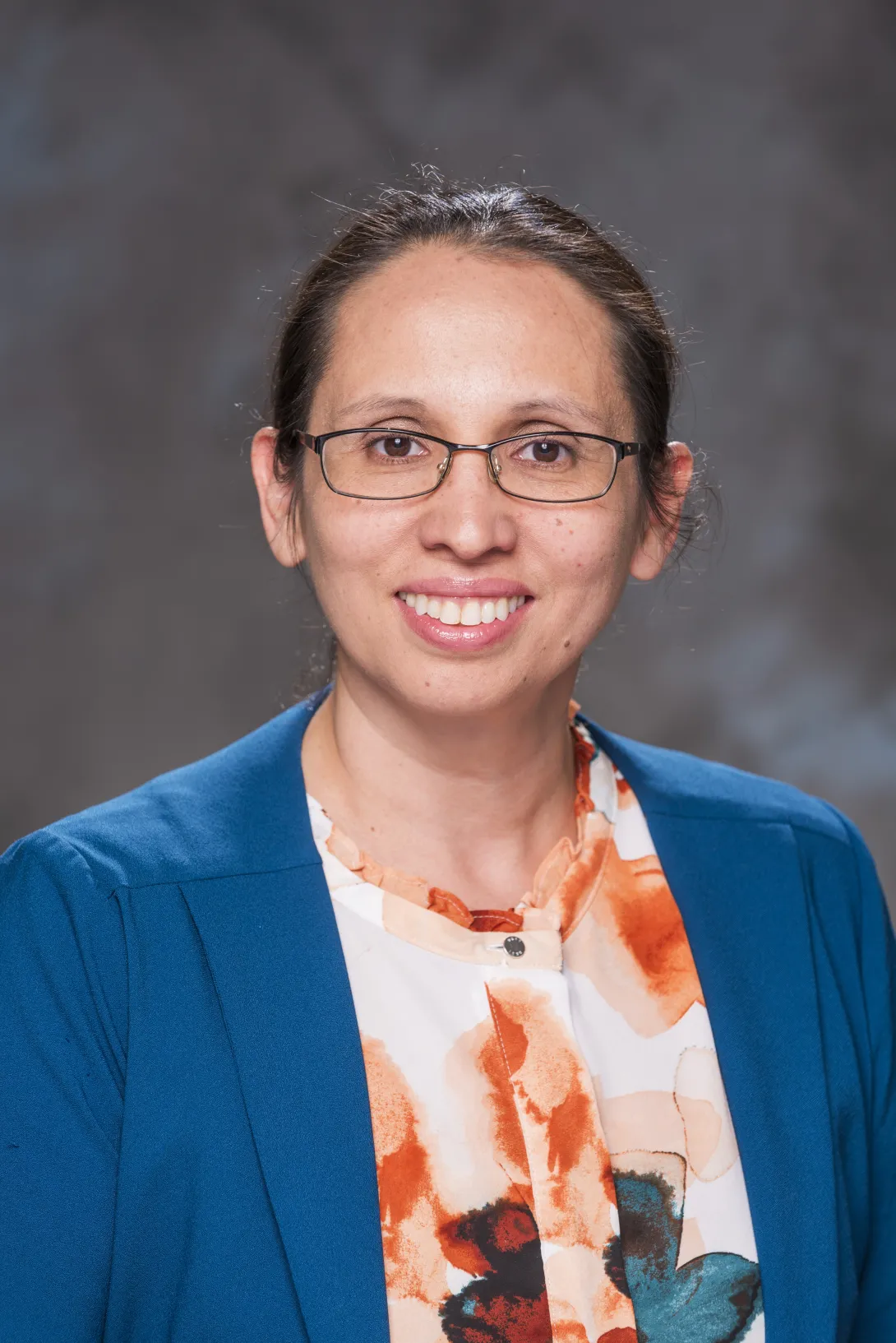
Professor Pamela Peralta-Yahya
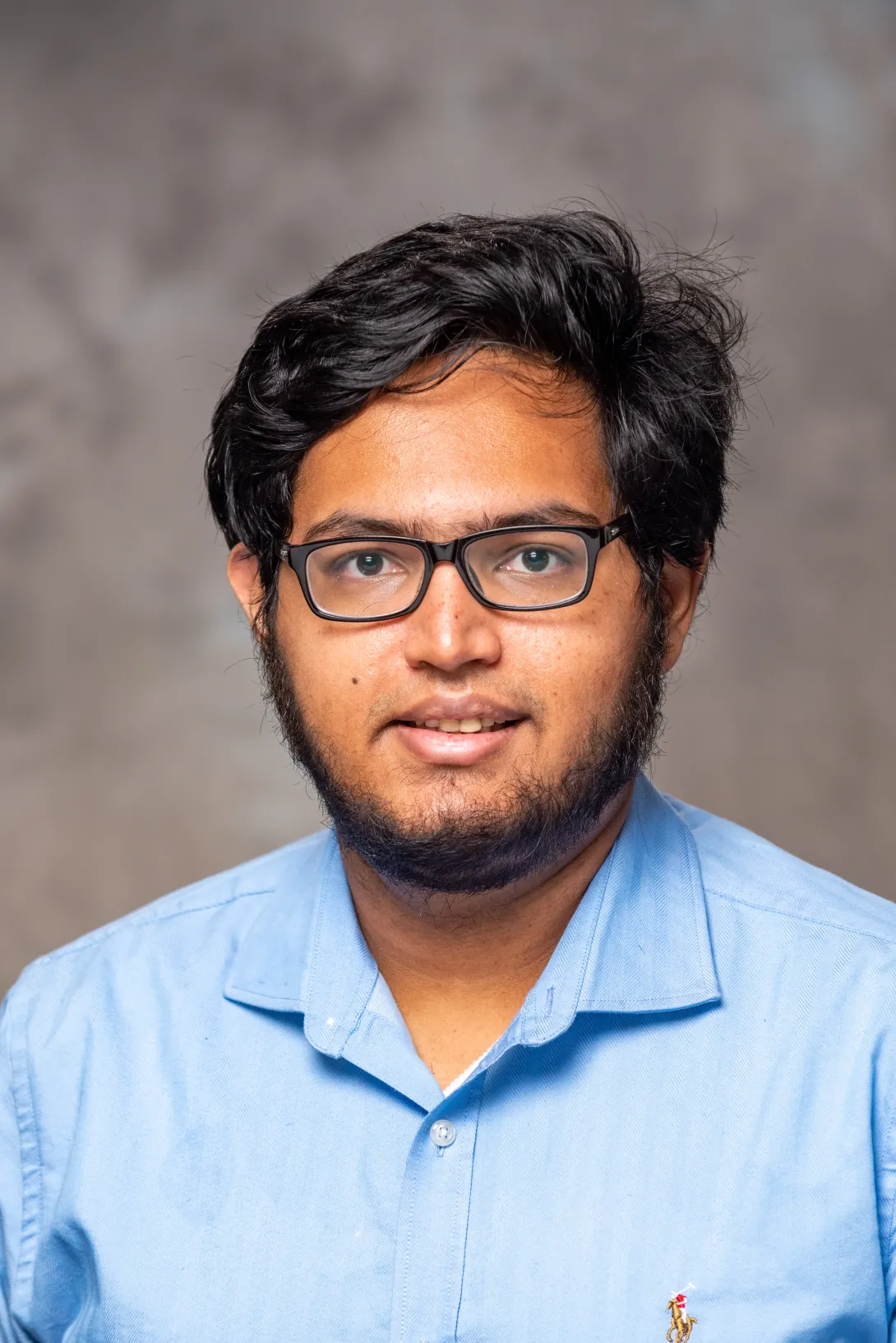
Ph.D. Student Shaafique Chowdhury, first author of the study.

Ph.D. Student Ray Westerberg
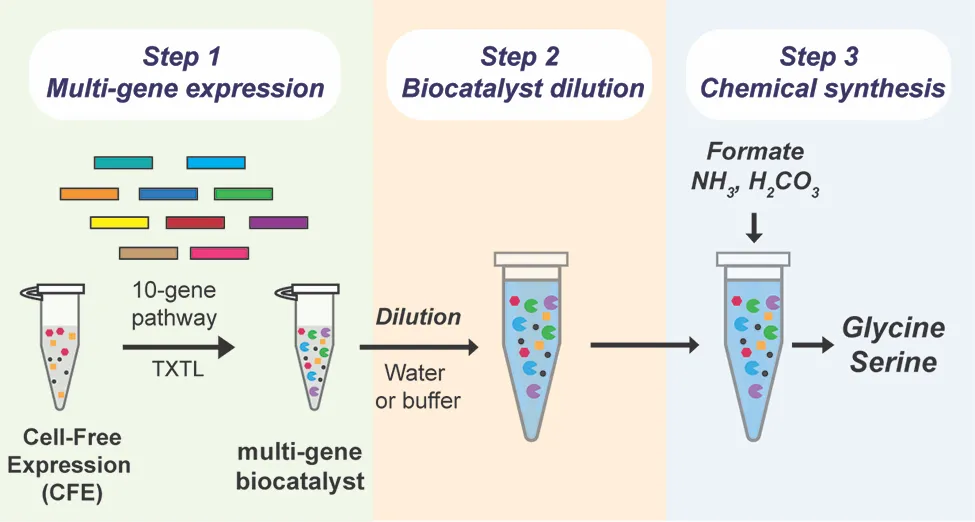
“Part of what makes a cell-free system so efficient,” Westenberg says, “is that it can use cellular enzymes without needing the cells themselves. By generating the enzymes and combining them in the lab, the system can directly convert carbon dioxide into the desired chemicals.”
Amino acids are essential for nearly every process in the human body. Often referred to as ‘the building blocks of life,’ they are also critical for commercial use in products ranging from pharmaceuticals and dietary supplements, to cosmetics, animal feed, and industrial chemicals.
And while our bodies naturally make amino acids, manufacturing them for commercial use can be costly — and that process often emits greenhouse gasses like carbon dioxide (CO2).
In a landmark study, a team of researchers has created a first-of-its kind methodology for synthesizing amino acids that uses more carbon than it emits. The research also makes strides toward making the system cost-effective and scalable for commercial use.
“To our knowledge, it’s the first time anyone has synthesized amino acids in a carbon-negative way using this type of biocatalyst,” says lead corresponding author Pamela Peralta-Yahya, who emphasizes that the system provides a win-win for industry and environment. “Carbon dioxide is readily available, so it is a low-cost feedstock — and the system has the added bonus of removing a powerful greenhouse gas from the atmosphere, making the synthesis of amino acids environmentally friendly, too.”
The study, “Carbon Negative Synthesis of Amino Acids Using a Cell-Free-Based Biocatalyst,” published today in ACS Synthetic Biology, is publicly available. The research was led by Georgia Tech in collaboration with the University of Washington, Pacific Northwest National Laboratory, and the University of Minnesota.
The Georgia Tech research contingent includes Peralta-Yahya, a professor with joint appointments in the School of Chemistry and Biochemistry and School of Chemical and Biomolecular Engineering (ChBE); first author Shaafique Chowdhury, a Ph.D. student in ChBE; Ray Westenberg, a Ph.D student in Bioengineering; and Georgia Tech alum Kimberly Wennerholm (B.S. ChBE ’23).
Costly chemicals
There are two key challenges to synthesizing amino acids on a large scale: the cost of materials, and the speed at which the system can generate amino acids.
While many living systems like cyanobacteria can synthesize amino acids from CO2, the rate at which they do it is too slow to be harnessed for industrial applications, and these systems can only synthesize a limited number of chemicals.
Currently, most commercial amino acids are made using bioengineered microbes. “These specially designed organisms convert sugar or plant biomass into fuel and chemicals,” explains first author Chowdhury, “but valuable food resources are consumed if sugar is used as the feedstock — and pre-processing plant biomass is costly.” These processes also release CO2 as a byproduct.
Chowdhury says the team was curious “if we could develop a commercially viable system that could use carbon dioxide as a feedstock. We wanted to build a system that could quickly and efficiently convert CO2 into critical amino acids, like glycine and serine.”
The team was particularly interested in what could be accomplished by a ‘cell-free’ system that leveraged some process of a cellular system — but didn’t actually involve living cells, Peralta-Yahya says, adding that systems using living cells need to use part of their CO2 to fuel their own metabolic processes, including cell growth, and have not yet produced sufficient quantities of amino acids.
“Part of what makes a cell-free system so efficient,” Westenberg explains, “is that it can use cellular enzymes without needing the cells themselves. By generating the enzymes and combining them in the lab, the system can directly convert carbon dioxide into the desired chemicals. Because there are no cells involved, it doesn’t need to use the carbon to support cell growth — which vastly increases the amount of amino acids the system can produce.”
A novel solution
While scientists have used cell-free systems before, one of the necessary chemicals, the cell lysate biocatalyst, is extremely costly. For a cell-free system to be economically viable at scale, the team needed to limit the amount of cell lysate the system needed.
After creating the ten enzymes necessary for the reaction, the team attempted to dilute the biocatalyst using a technique called ‘volumetric expansion.’ “We found that the biocatalyst we used was active even after being diluted 200-fold,” Peralta-Yahya explains. “This allows us to use significantly less of this high-cost material — while simultaneously increasing feedstock loading and amino acid output.”
It’s a novel application of a cell-free system, and one with the potential to transform both how amino acids are produced, and the industry’s impact on our changing climate.
“This research provides a pathway for making this method cost-effective and scalable,” Peralta-Yahya says. “This system might one day be used to make chemicals ranging from aromatics and terpenes, to alcohols and polymers, and all in a way that not only reduces our carbon footprint, but improves it.”
Funding: Advanced Research Project Agency-Energy (ARPA-E), U.S. Department of Energy and the U.S. Department of Energy, Office of Science, Biological and Environmental Research Program.
News Contact
Written by Selena Langner
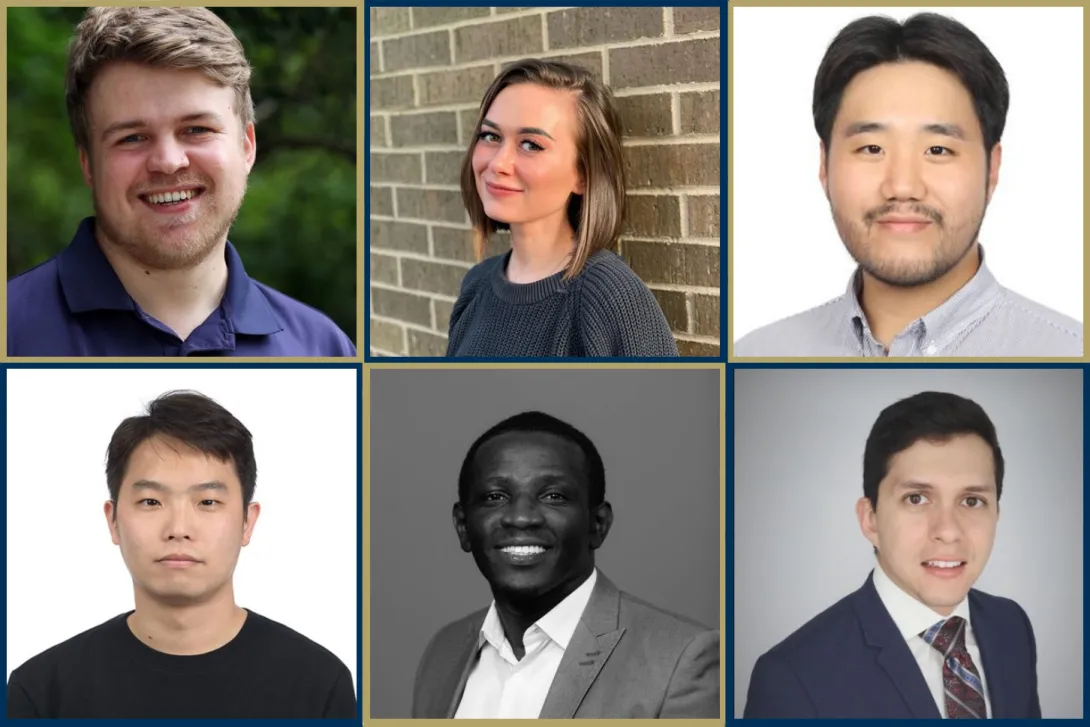
Top Row (Left to Right): Michael Biehler, Winner of 2024 James G. Campbell Fellowship, Erin Phillips & Sanggyun Kim - 2024 Spark Award Winners
Bottom Row (Left to Right): Keun Hee Kim, Richard Asiamah, Erik Barbosa - 2024 Spark Award Winners
The Strategic Energy Institute and the Energy, Policy, and Innovation Center at Georgia Tech are proud to announce the winners of the James G. Campbell Fellowship and Spark Awards for 2024.
Michael Biehler, a fifth-year Ph.D. student in the H. Milton Stewart School of Industrial and Systems Engineering, has been selected as the recipient of the 2024 James G. Campbell Fellowship. The Fellowship is an annual award given to a Georgia Tech graduate student studying renewable energy systems. Candidates are nominated by their advisors in recognition of their exceptional academic achievements in the field of renewable energy.
Biehler’s research leverages multi-modal machine learning to tackle critical challenges in manufacturing, such as enhancing energy efficiency in manufacturing processes. He is advised by Jianjun (Jan) Shi, Carolyn J. Stewart Chair and Professor in the School of Industrial and Systems Engineering.
“I consider this award an incredible honor, and the support means a lot to me, especially with the recent arrival of our second daughter—it will make a significant difference for us,” says Biehler.
The Annual Spark Award recognizes current graduate students who have exhibited outstanding leadership in promoting student engagement with energy research at Georgia Tech, with evidence of broader impacts and service/leadership. The Spark Award recipients for 2024 include Georgia Tech graduate students Richard Asiamah, Erik Barbosa, Keun Hee Kim, Sanggyun Kim, and Erin Phillips.
Richard Asiamah is a third-year Ph.D. student in the School of Electrical and Computer Engineering (ECE). His research focuses on power systems optimization, emphasizing the efficient integration of renewable energy resources into the electricity grid. Asiamah has recently worked as a graduate electrical engineering intern at the National Renewable Energy Laboratory in Golden, Colorado, and is currently serving as the president of the ECE Graduate Students’ Organization.
Erik Barbosa is pursuing a doctorate in mechanical engineering and works under Akanksha Menon, assistant professor in the Woodruff School of Mechanical Engineering. His work in the Water Energy Research Lab focuses on utilizing inorganic salt hydrates to develop thermochemical energy storage, ranging from the material level to system scale, to decarbonize heat for building applications. Barbosa has been actively engaged with mentoring undergraduate students and high schoolers by exposing them to innovative technologies that decarbonize energy.
Keun Hee Kim is a Ph.D. candidate in the Woodruff School. Kim’s research focuses on developing solid polymer electrolytes and artificial interlayers for lithium metal batteries, and synthesizing oxygen evolution reaction and oxygen reduction reaction catalyst materials for proton exchange membrane fuel cells and water electrolyzers.
Sanggyun Kim is a fourth-year Ph.D. student in materials science and engineering, advised by Juan-Pablo Correa-Baena, assistant professor in the School of Materials Science and Engineering. Kim’s research focuses on understanding the complex interfacial interactions between hybrid organic-inorganic halide perovskite films and newly designed charge transport layers in perovskite solar cells (PSCs). His goal is to drive progress in solar energy technology by integrating novel polymer- and molecule-based interlayers, improving the efficiency and stability of PSCs to support more sustainable photovoltaic solutions.
Erin Phillips is a doctoral student in the School of Chemistry and Biochemistry. Her research addresses difficulties associated with lignin valorization, which includes controlling the isolation of lignin from the original irregular lignocellulose structure and depolymerizing lignin into aromatic monomer units via mechanocatalysis. These aromatics can further be valorized as renewable sources for the creation of biofuels and other green chemicals. Phillips is currently serving as the president of the Technical Association of the Pulp and Paper Industry (TAPPI) student chapter at Georgia Tech.
News Contact
News Contact: Priya Devarajan || SEI Communications Program Manager

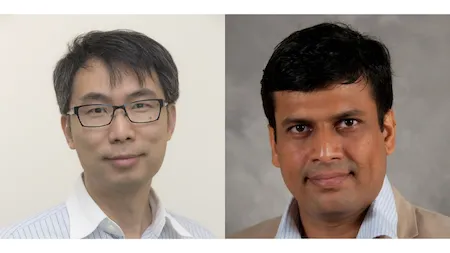

A first-of-its-kind algorithm developed at Georgia Tech is helping scientists study interactions between electrons. This innovation in modeling technology can lead to discoveries in physics, chemistry, materials science, and other fields.
The new algorithm is faster than existing methods while remaining highly accurate. The solver surpasses the limits of current models by demonstrating scalability across chemical system sizes ranging from large to small.
Computer scientists and engineers benefit from the algorithm’s ability to balance processor loads. This work allows researchers to tackle larger, more complex problems without the prohibitive costs associated with previous methods.
Its ability to solve block linear systems drives the algorithm’s ingenuity. According to the researchers, their approach is the first known use of a block linear system solver to calculate electronic correlation energy.
The Georgia Tech team won’t need to travel far to share their findings with the broader high-performance computing community. They will present their work in Atlanta at the 2024 International Conference for High Performance Computing, Networking, Storage and Analysis (SC24).
[MICROSITE: Georgia Tech at SC24]
“The combination of solving large problems with high accuracy can enable density functional theory simulation to tackle new problems in science and engineering,” said Edmond Chow, professor and associate chair of Georgia Tech’s School of Computational Science and Engineering (CSE).
Density functional theory (DFT) is a modeling method for studying electronic structure in many-body systems, such as atoms and molecules.
An important concept DFT models is electronic correlation, the interaction between electrons in a quantum system. Electron correlation energy is the measure of how much the movement of one electron is influenced by presence of all other electrons.
Random phase approximation (RPA) is used to calculate electron correlation energy. While RPA is very accurate, it becomes computationally more expensive as the size of the system being calculated increases.
Georgia Tech’s algorithm enhances electronic correlation energy computations within the RPA framework. The approach circumvents inefficiencies and achieves faster solution times, even for small-scale chemical systems.
The group integrated the algorithm into existing work on SPARC, a real-space electronic structure software package for accurate, efficient, and scalable solutions of DFT equations. School of Civil and Environmental Engineering Professor Phanish Suryanarayana is SPARC’s lead researcher.
The group tested the algorithm on small chemical systems of silicon crystals numbering as few as eight atoms. The method achieved faster calculation times and scaled to larger system sizes than direct approaches.
“This algorithm will enable SPARC to perform electronic structure calculations for realistic systems with a level of accuracy that is the gold standard in chemical and materials science research,” said Suryanarayana.
RPA is expensive because it relies on quartic scaling. When the size of a chemical system is doubled, the computational cost increases by a factor of 16.
Instead, Georgia Tech’s algorithm scales cubically by solving block linear systems. This capability makes it feasible to solve larger problems at less expense.
Solving block linear systems presents a challenging trade-off in solving different block sizes. While larger blocks help reduce the number of steps of the solver, using them demands higher computational cost per step on computer processors.
Tech’s solution is a dynamic block size selection solver. The solver allows each processor to independently select block sizes to calculate. This solution further assists in scaling, and improves processor load balancing and parallel efficiency.
“The new algorithm has many forms of parallelism, making it suitable for immense numbers of processors,” Chow said. “The algorithm works in a real-space, finite-difference DFT code. Such a code can scale efficiently on the largest supercomputers.”
Georgia Tech alumni Shikhar Shah (Ph.D. CSE 2024), Hua Huang (Ph.D. CSE 2024), and Ph.D. student Boqin Zhang led the algorithm’s development. The project was the culmination of work for Shah and Huang, who completed their degrees this summer. John E. Pask, a physicist at Lawrence Livermore National Laboratory, joined the Tech researchers on the work.
Shah, Huang, Zhang, Suryanarayana, and Chow are among more than 50 students, faculty, research scientists, and alumni affiliated with Georgia Tech who are scheduled to give more than 30 presentations at SC24. The experts will present their research through papers, posters, panels, and workshops.
SC24 takes place Nov. 17-22 at the Georgia World Congress Center in Atlanta.
“The project’s success came from combining expertise from people with diverse backgrounds ranging from numerical methods to chemistry and materials science to high-performance computing,” Chow said.
“We could not have achieved this as individual teams working alone.”
News Contact
Bryant Wine, Communications Officer
bryant.wine@cc.gatech.edu
The aviation industry’s commitment to meaningful carbon reduction underscores the need for investing in Sustainable Aviation Fuel (SAF), which provides the most promising solution to achieving net-zero carbon by 2050. According to the International Air Transport Association (IATA), with the right policy measures and financial instruments in place, SAF could help the industry achieve 65% of this reduction. As a key transportation center in the U.S., the Southeast holds immense potential to become a hub for SAF production and adoption.
This prospect was the focus of a recent workshop organized by three Georgia Tech units – the Ray C. Anderson Center for Sustainable Business and its initiative, the Drawdown Georgia Business Compact; the School of Public Policy; and the Strategic Energy Institute; along with the U.S. Department of Energy Bioenergy Technologies Office. The workshop gathered together multiple stakeholder groups representing federal, state, and local government, industry, academia, and the aviation sector to chart a path forward for the Southeast.
News Contact
Titiksha Fernandes | Ray C Anderson Center for Sustainable Business
Southern Company, Georgia Institute of Technology (Georgia Tech), Smart Wires, and other partners have announced that they are collaborating on a new U.S. Department of Energy-funded project. Scheduled for 2025, the project will jointly implement advanced power flow control (APFC) and dynamic line rating (DLR) technologies to support the connection of renewable energy sources and new demand more quickly.
This project, led by the Georgia Tech Center for Distributed Energy with professor Deepak Divan as Principal Investigator, was selected by the U.S. Department of Energy in November 2021 as one of four projects to receive funding for grid enhancing technologies (GETs) that improve grid reliability, optimize existing grid infrastructure, and support the connection of renewable energy. It will use Smart Wires’ APFC solution— SmartValve™—in a mobile deployment combined with its DLR software—SUMO—and also develop control algorithms that improve and fine-tune how these solutions can work in synergy to optimize use of the grid.
“The launch of this innovative project represents an important step toward more efficient and reliable integration of cleaner energy sources,” said Tim Lieuwen, interim executive vice president for Research at Georgia Institute of Technology. “This collaboration allows us to identify, develop and test new ways to manage the power grid in Georgia by co-deploying APFC and DLR technologies.”
While the effectiveness of these solutions is well documented in multiple third-party reports, such as RMI’s GETting Interconnected in PJM, this project will be the first large-scale implementation of both technologies together. It will specifically examine their combined impact and result in the development of design control algorithms to unlock the combined power of these solutions and maximize their efficiency.
SUMO identifies when lines have spare capacity based on real-time weather conditions, while SmartValves can redirect power flows to quickly utilize this spare capacity. This also applies in reverse, with SUMO identifying when the dynamic ratings of lines are less than the static rating. If it’s a hot day, for example, SmartValves can redirect power flows away from these circuits to others with capacity, reducing the risk of system faults while improving operational safety.
The mobile deployment of SmartValves can be installed and in-service within one week. This provides a rapidly deployable solution that avoids extended outages and can be easily moved between sites as system needs evolve over time.
“We’re delighted to provide both SmartValves and SUMO in this project to move the dial in terms of deploying multiple GETs in synergy and optimizing their use,” said Joaquin Peirano, General Manager for the Americas at Smart Wires. “The commitment of utilities like Southern Company to get the most from their existing grid with GETs, combined with the positive regulatory developments such as FERC’s recent Order 1920, positions the U.S. to capture the full value these technologies can provide on transmission grids.”
The project will be delivered in 2025 and will involve a one-year performance period to provide Southern Company with operational experience that can be shared with other utilities and pave the way for greater use of GETs in the U.S.
About Georgia Institute of Technology
The Georgia Institute of Technology is a leading research university, committed to improving the human condition through advanced science and technology. Georgia Tech’s engineering and computing colleges are the largest and among the highest-ranked in the nation. The Institute also offers outstanding programs in business, design, liberal arts, and sciences.
With $1.37 billion annually in research, development, and sponsored activities across all six colleges and the Georgia Tech Research Institute, Georgia Tech is an engine of economic development for the state of Georgia, the Southeast, and the nation. Georgia Tech routinely ranks among the top U.S. universities in volume of research conducted; In 2023, the Institute ranked 17th among U.S. academic institutions in research and development expenditures, according to the National Science Foundation’s Higher Education Research and Development Survey.
About Smart Wires
Smart Wires is the world’s leading grid enhancing technology and services provider. We help electric utilities unlock capacity and solve their critical grid issues, using our solutions to create a more flexible, reliable and affordable grid. This enables a faster, more cost-efficient path to meet growing electricity demand with clean energy generation, at lowest cost to consumers. Headquartered in the Research Triangle of North Carolina, Smart Wires has a global workforce of passionate and visionary industry-leading experts across four continents, who work every day to transform grids globally. In collaboration with our customers and partners, we’ve unlocked over 3.5 Gigawatts capacity—enough to power over 2.5 million homes—supporting the faster integration of clean energy and new demand, enhancing security of supply and delivering cost savings to consumers.
Together, we are reimagining the grid for net zero.
News Contact
Priya Devarajan | SEI Communications Program Manager

From left, Georgia Tech’s Nakia Melecio, Keith McGreggor, and Raghupathy “Siva” Sivakumar, are the NSF I-Corps Southeast Hub director, faculty lead, and principal investigator, respectively.
National Science Foundation Awards $15M to Georgia Tech-Led Consortium
of Universities for Societal-Oriented Innovation and Commercialization Effort
Multi-state I-Corps Hubs project designed to strengthen regional innovation ecosystem and address inequities in access to capital and commercialization opportunities
ATLANTA — The National Science Foundation (NSF) awarded a syndicate of 8eight Southeast universities — with Georgia Tech as the lead — a $15 million grant to support the development of a regional innovation ecosystem with a focus on addressing underrepresentation and increasing entrepreneurship and technology-oriented workforce development.
The NSF Innovation Corps (I-Corps) Southeast Hub, as the project is called, is a five-year project and is based on the I-Corps model, which assists academics in moving their research from the lab and into the market.
Led by Georgia Tech’s Office of Commercialization and Enterprise Innovation Institute, the NSF I-Corps Southeast Hub encompasses four states — Georgia, Florida, South Carolina, and Alabama.
Its member schools include:
- Clemson University
- Morehouse College
- University of Alabama
- University of Central Florida
- University of Florida
- University of Miami
- University of South Florida
In January 2025, when the NSF I-Corps Southeast Hub officially launches, the consortium of schools will expand to also include the University of Puerto Rico. Additionally, through Morehouse College’s activation, Spelman College and the Morehouse School of Medicine will also participate in supporting the project.
With a combined economic output of more than $3.2 trillion, the NSF I-Corps Southeast Hub region represents more than 11% of the entire U.S. economy. As a region, those states and Puerto Rico have a larger economic output than France, Italy, or Canada.
“This is a great opportunity for us to engage in regional collaboration to drive innovation across the Southeast to strengthen our regional economy and that of Puerto Rico,” said the Enterprise Innovation Institute’s Nakia Melecio, director of the NSF I-Corps Southeast Hub. As director, Melecio will oversee strategic management, data collection, and overall operations.
Additionally, Melecio serves as a national faculty instructor for the NSF I-Corps program.
“This also allows us to collectively tackle some of the common challenges all four of our states face, especially when it comes to being intentionally inclusive in reaching out to communities that historically haven’t always been invited to participate,” he said.
That means not just bringing solutions to market that not only solve problems but is intentional about including researchers from a diversity of schools that are inclusive of Black and Hispanic serving institutions, Melecio said.
Keith McGreggor, director of Georgia Tech’s VentureLab, is the faculty lead and charged with designing the curriculum and instruction for the NSF I-Corps Southeast Hub’s partners.
McGreggor has extensive I-Corps experience. In 2012, Georgia Tech was among the first institutions in the country selected to teach the I-Corps curriculum, which aims to further research commercialization. McGreggor served as the lead instructor for I-Corps-related efforts and led training efforts across the Southeast, as well as for teams in Puerto Rico, Mexico and the Republic of Ireland.
Raghupathy “Siva” Sivakumar, Georgia Tech’s vice president of commercialization, is the project’s principal investigator.
The NSF I-Corps Southeast Hub is one of three — the others being in the Northwest and New England regions, led by the University of California, Berkeley and the Massachusetts Institute of Technology, respectively — announced by the NSF. The three I-Corps Hubs are part of the NSF’s planned expansion of its National Innovation Network, which now includes 128 colleges and universities across 48 states.
As designed, the NSF I-Corps Southeast Hub will leverage its partner institutions’ strengths to break down barriers to researchers’ pace of lab to market commercialization.
“Our Hub member schools collectively have brought transformative technologies to market in advanced manufacturing, renewable energy, cybersecurity, and the biomedical sectors,” Sivakumar said. “Our goal is to accomplish two things. It builds and expands a scalable model to translate research into viable commercial ventures. It also addresses societal needs, not just from the standpoint of bringing solutions that solve them but building a diverse pipeline of researchers and innovators and interest in STEM [science, technology, engineering, and math]-related fields.”
U.S. Rep. Nikema Williams (D-Atlanta) is a proponent of the Hub’s STEM component.
“As a biology major-turned-Congresswoman, I know firsthand that STEM education and research open doors far beyond the lab or classroom.,” Williams said. “This National Science Foundation grant means Georgia Tech will be leading the way in equipping researchers and grad students to turn their discoveries into real-world impact — as innovators, entrepreneurs, and business leaders.
“I’m especially excited about the partnership with Morehouse College and other Minority Serving Institutions through this Innovation Hub, expanding pathways to innovation and entrepreneurship for historically marginalized communities and creating one more tool to close the racial wealth gap.”
That STEM aspect, coupled with supporting growth of a regional ecosystem, will speed commercialization, increase higher education-industry collaborations, and boost the network of diverse entrepreneurs and startup founders, said David Bridges, vice president of the Enterprise Innovation Institute.
“This multi-university, regional approach is a successful model because it has been proven that bringing a diversity of stakeholders together leads to unique solutions to very difficult problems,” Bridges said. “And while the Southeast faces different challenges that vary from state to state and Puerto Rico has its own needs, they call for a more comprehensive approach to solving them. Adopting a region-oriented focus allows us to understand what these needs are, customize tailored solutions and keep not just our hub but our nation economically competitive.”
News Contact
Péralte Paul