
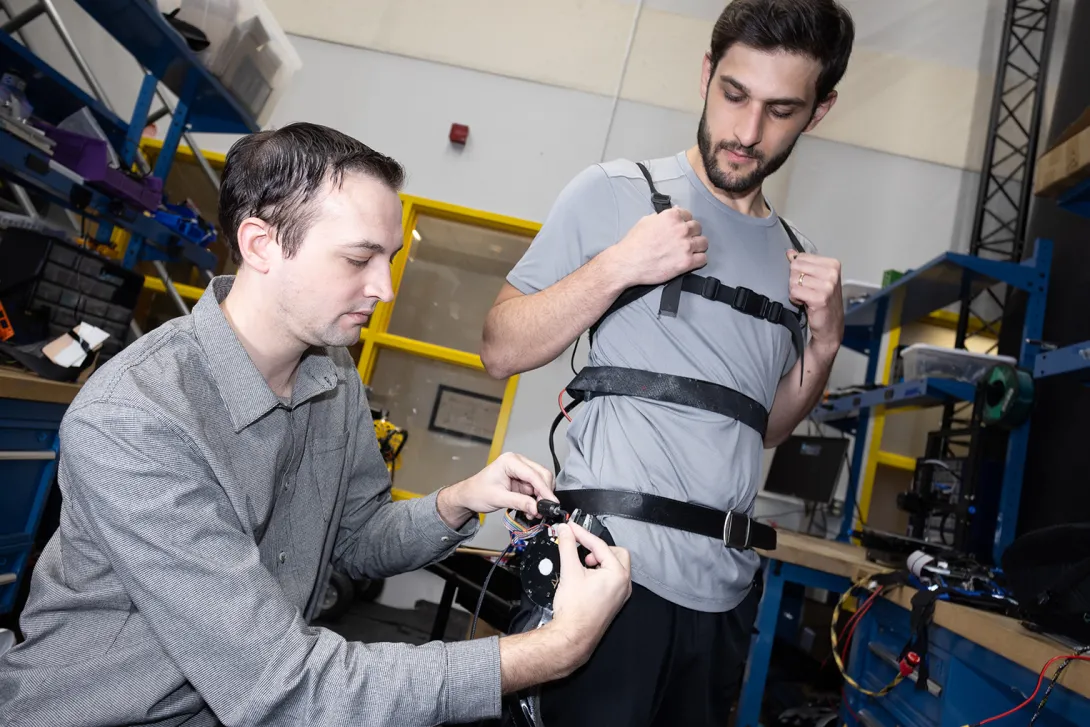
Researcher Aaron Young makes adjustments to an experimental exoskeleton worn by then-Ph.D. student Dean Molinaro. The team used the exoskeleton to develop a unified control framework for robotic assistance devices that would allow users to put on an "exo" and go — no extensive training, tuning, or calibration required. (Photo: Candler Hobbs)
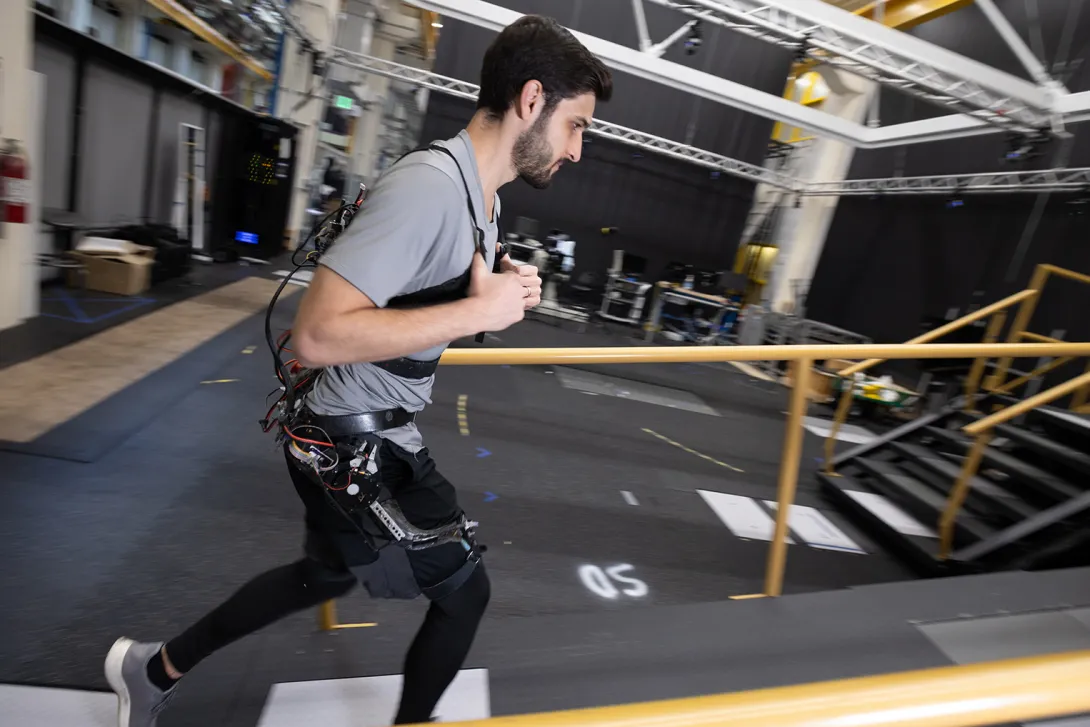
Dean Molinaro walks up an adjustable ramp while wearing an experimental exoskeleton, demonstrating how the team collected data in their effort to develop a unified control framework for robotic assistance devices. (Photo: Candler Hobbs)
Robotic exoskeletons designed to help humans with walking or physically demanding work have been the stuff of sci-fi lore for decades. Remember Ellen Ripley in that Power Loader in Alien? Or the crazy mobile platform George McFly wore in 2015 in Back to the Future, Part II because he threw his back out?
Researchers are working on real-life robotic assistance that could protect workers from painful injuries and help stroke patients regain their mobility. So far, they have required extensive calibration and context-specific tuning, which keeps them largely limited to research labs.
Mechanical engineers at Georgia Tech may be on the verge of changing that, allowing exoskeleton technology to be deployed in homes, workplaces, and more.
A team of researchers in Aaron Young’s lab have developed a universal approach to controlling robotic exoskeletons that requires no training, no calibration, and no adjustments to complicated algorithms. Instead, users can don the “exo” and go.
Their system uses a kind of artificial intelligence called deep learning to autonomously adjust how the exoskeleton provides assistance, and they’ve shown it works seamlessly to support walking, standing, and climbing stairs or ramps. They described their “unified control framework” March 20 in Science Robotics.
“The goal was not just to provide control across different activities, but to create a single unified system. You don't have to press buttons to switch between modes or have some classifier algorithm that tries to predict that you're climbing stairs or walking,” said Young, associate professor in the George W. Woodruff School of Mechanical Engineering.
News Contact
Joshua Stewart
College of Engineering
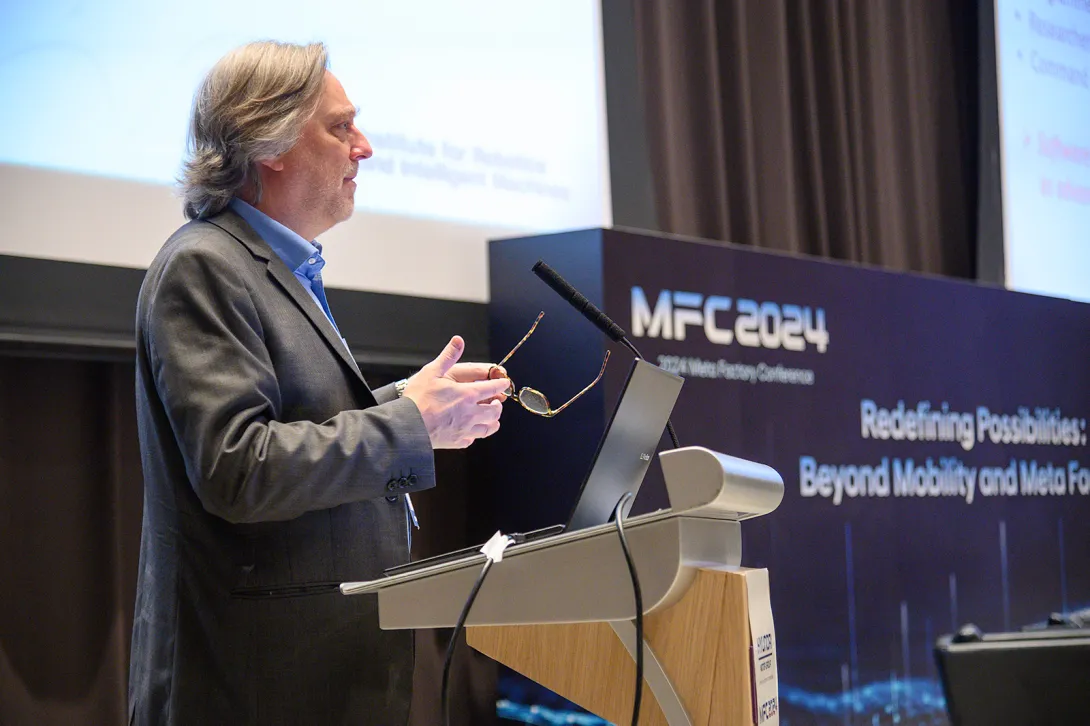
IRIM Director Seth Hutchinson at Hyundai Meta Factory Conference Delivering Keynote
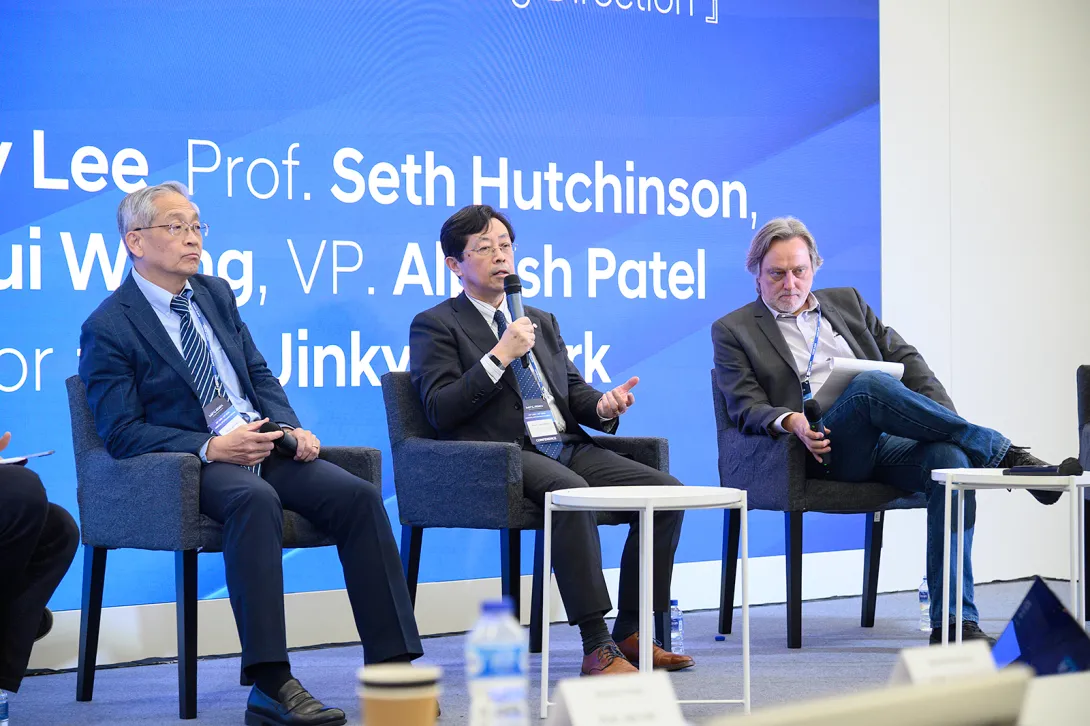
IRIM Director Seth Hutchinson at Hyundai Meta Factory Conference on Panel Discussion
Hyundai Motor Group Innovation Center Singapore hosted the Meta-Factory Conference Jan. 23 – 24. It brought together academic leaders, industry experts, and manufacturing companies to discuss technology and the next generation of integrated manufacturing facilities.
Seth Hutchinson, executive director of the Institute for Robotics and Intelligent Machines at Georgia Tech, delivered a keynote lecture on “The Impacts of Today’s Robotics Innovation on the Relationship Between Robots and Their Human Co-Workers in Manufacturing Applications” — an overview of current state-of-the-art robotic technologies and future research trends for developing robotics aimed at interactions with human workers in manufacturing.
In addition to the keynote, Hutchinson also participated in the Hyundai Motor Group's Smart Factory Executive Technology Advisory Committee (E-TAC) panel on comprehensive future manufacturing directions and toured the new Hyundai Meta-Factory to observe how digital-twin technology is being applied in their human-robot collaborative manufacturing environment.
Hutchinson is a professor in the School of Interactive Computing. He received his Ph.D. from Purdue University in 1988, and in 1990 joined the University of Illinois Urbana-Champaign, where he was professor of electrical and computer engineering until 2017 and is currently professor emeritus. He has served on the Hyundai Motor Group's Smart Factory E-TAC since 2022.
Hyundai Motor Group Innovation Center Singapore is Hyundai Motor Group’s open innovation hub to support research and development of human-centered smart manufacturing processes using advanced technologies such as artificial intelligence, the Internet of Things, and robotics.
- Christa M. Ernst
Related Links
- Hyundai Newsroom Article: Link
- Event Link: https://mfc2024.com/
- Keynote Speakers: https://mfc2024.com/keynotes/
News Contact
Christa M. Ernst - Research Communications Program Manager
christa.ernst@research.gatech.edu
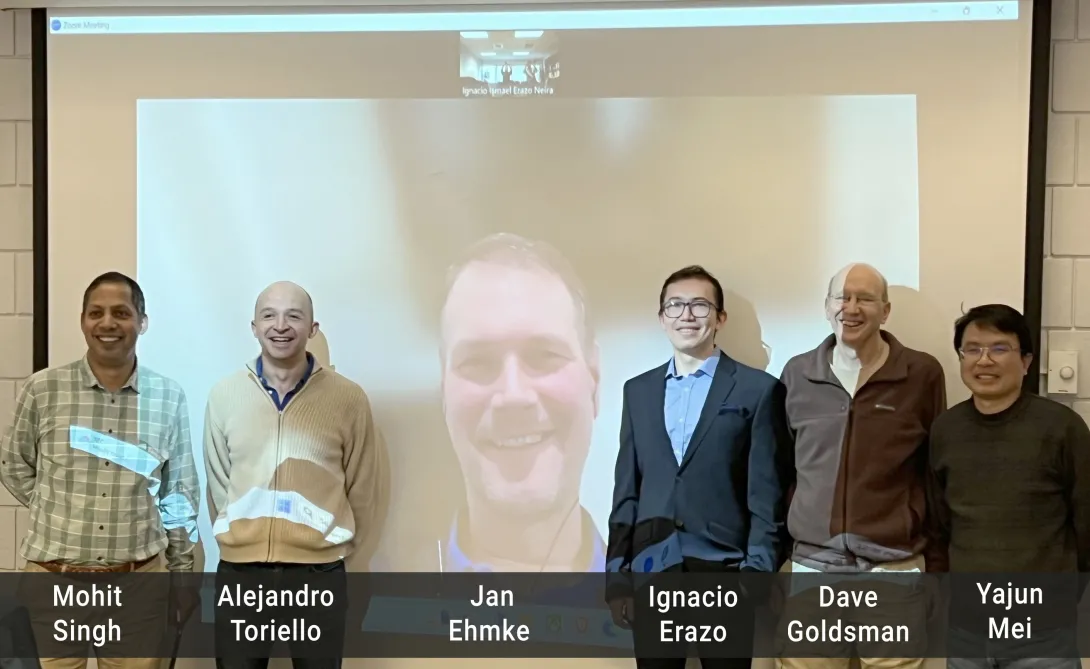
From left to right
- Dr. Mohit Singh, Industrial and Systems Engineering, Georgia Institute of Technology
- Dr. Alejandro Toriello, Industrial and Systems Engineering, Georgia Institute of Technology (co-advisor)
- Dr. Jan Ehmke, Department of Business Decisions and Analytics, University of Vienna
- Dr. David Goldsman, Industrial and Systems Engineering, Georgia Institute of Technology (co-advisor)
- Dr. Yajun Mei, Industrial and Systems Engineering, Georgia Institute of Technology
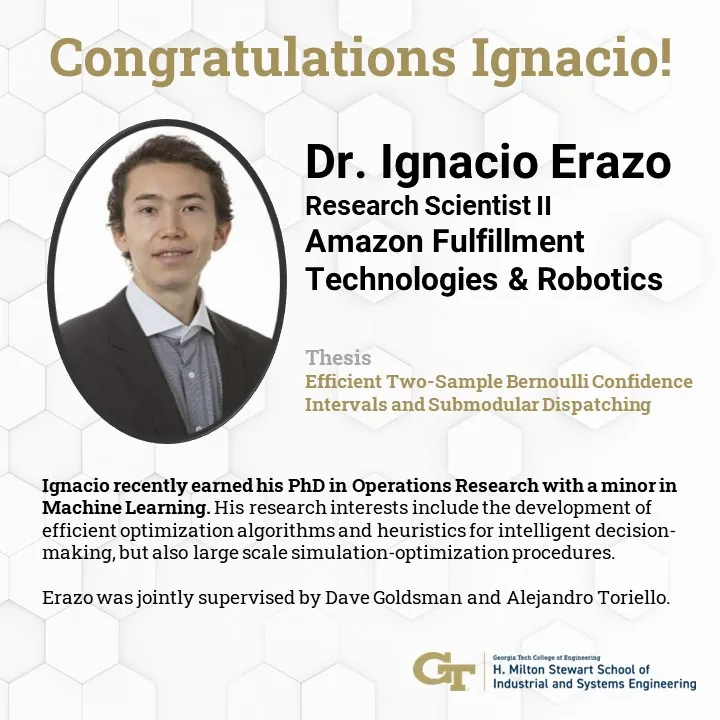
Ignacio Erazo recently defended his thesis titled "Efficient Two-Sample Bernoulli Confidence Intervals and Submodular Dispatching", earning his PhD in Operations Research with a minor in Machine Learning under the supervision of Professors David Goldsman and Alejandro Toriello. Erazo's research interests involve the development of efficient optimization algorithms and heuristics for intelligent decision-making as well as large-scale simulation-optimization procedures. Collaborating with Professor Goldsman, he worked on the efficient computation of Confidence Intervals (CIs) for the difference of probabilities between two populations, with applications in health care, last-mile distribution, and production scheduling. This work is useful for many practical problems such as testing new drugs, evaluating inventory policies, estimating contamination rates, or evaluating the difference in rate of adverse events between generic and brand-name drugs. What is notable about his approach is that it uses fewer observations and generates lower costs. With Professor Toriello, Ignacio focused on problems where orders or items arrive at different times and must be processed or delivered in batches (e.g., e-commerce, machine scheduling). By using mathematical models and proposing new algorithms, the team studied the fundamental trade-offs between waiting for orders and batching them, such as obtaining economies of scale, versus the idleness of resources generated by that strategy. This problem has multiple applications in same-day delivery, machine scheduling, and production environments. This work has been presented at scholarly seminars, at multiple INFORMS Annual Meetings, and at the Transportation Science and Logistics (TSL) Conference. Notably, Ignacio's work was recognized with the Best Applied Student Paper Award at Winter Simulation Conference in 2022.
Prior to his doctoral studies at Georgia Tech, Ignacio obtained his degree in industrial civil engineering from the University of Concepcion in 2019. From a very young age, he loved doing math to solve problems and enjoyed participating in math competitions. "Without even recognizing it, I would obsess over taking the 'best' or optimal approach for everything I could. When I took my first optimization class it was obvious to me that this subset of extremely applied math (optimization, but in a broader sense Operations Research) was what I wanted to do in the future, and possibly forever. Essentially, at that point I already knew I wanted to deepen my knowledge, which meant the best course of action was to do a PhD in a university with the best professors." Reflecting on his journey, Ignacio shares his admiration for Georgia Tech's leading position in Operations Research, highlighting the wealth of expertise available within the department. "While Georgia Tech is not as known as other schools in the rest of the world (i.e., Stanford, Harvard, MIT), Georgia Tech leads almost every ranking related to OR. The department is extremely large and there is a professor working in almost every topic. Specific to optimization, logistics, and supply chain, we have a very large number of researchers and professors. That is the reason why GT was one of the only four places I applied to. Knowing what I know today, GT would be second to none."
Erazo’s professional experience includes internships as an applied and research scientist at tech giants Amazon and Apple where he contributed to cutting-edge projects in supply chain management and inventory optimization. At Apple, he was part of the team that develops science-based solutions for its supply chain. In particular, he worked on inventory management for Apple Stores and on "real-time" carrier selection for Apple's supply chain. His projects involved building new methodologies to solve those problems and coding prototypes that could serve as a starting point for deployment and production.
Recently, Erazo joined Amazon Fulfillment Technologies & Robotics as a Research Scientist II. Amazon operates an extensive and intricate supply chain that constantly advances by integrating robotic tools to boost warehouse efficiency. Within this dynamic framework, the algorithmic tools that enable its warehouses to work at their best need to be continuously modified, improved, and enhanced with new capabilities and use cases. Ignacio will meet the challenge by helping create, pilot, and seamlessly deploy new performance and safety-driven algorithms for Amazon's robotic-assisted picking warehouses across its entire network.
Ignacio's dedication to problem-solving and his passion for optimization exemplify the spirit of inquiry and innovation that defines our academic community. We congratulate him on this achievement and look forward to witnessing his continued contributions to the field.
News Contact
info@scl.gatech.edu
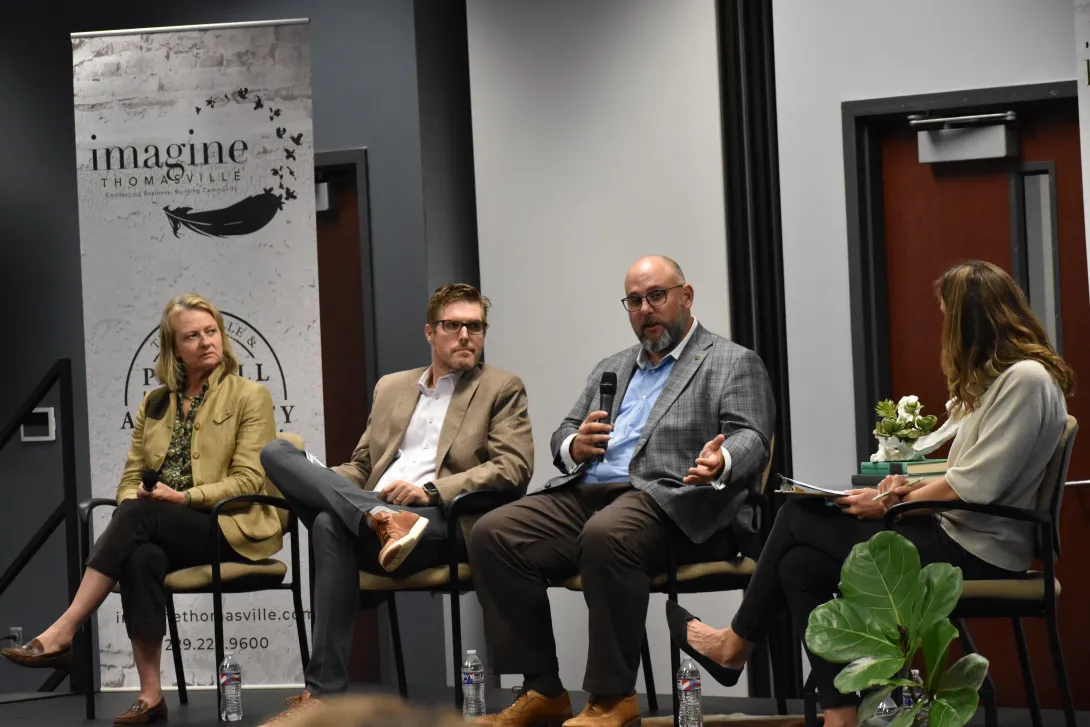
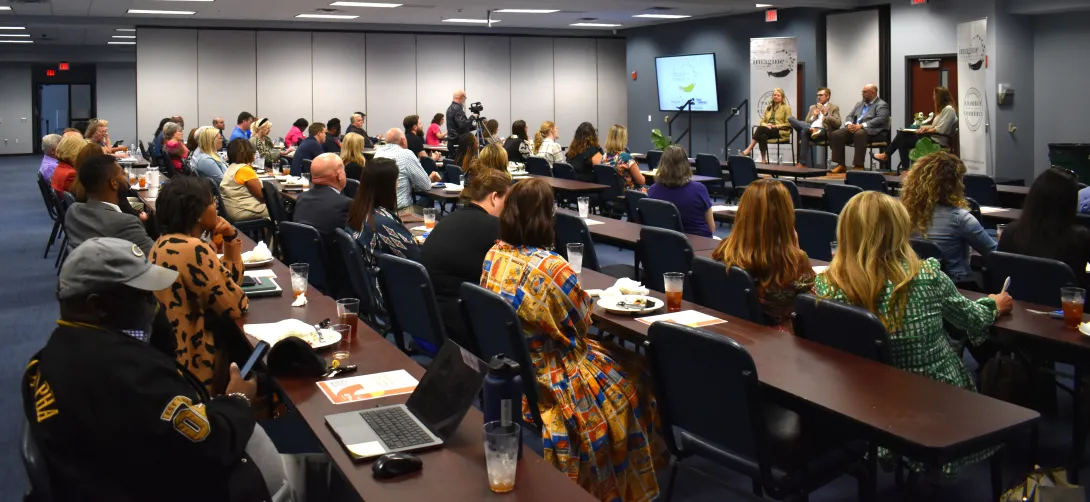
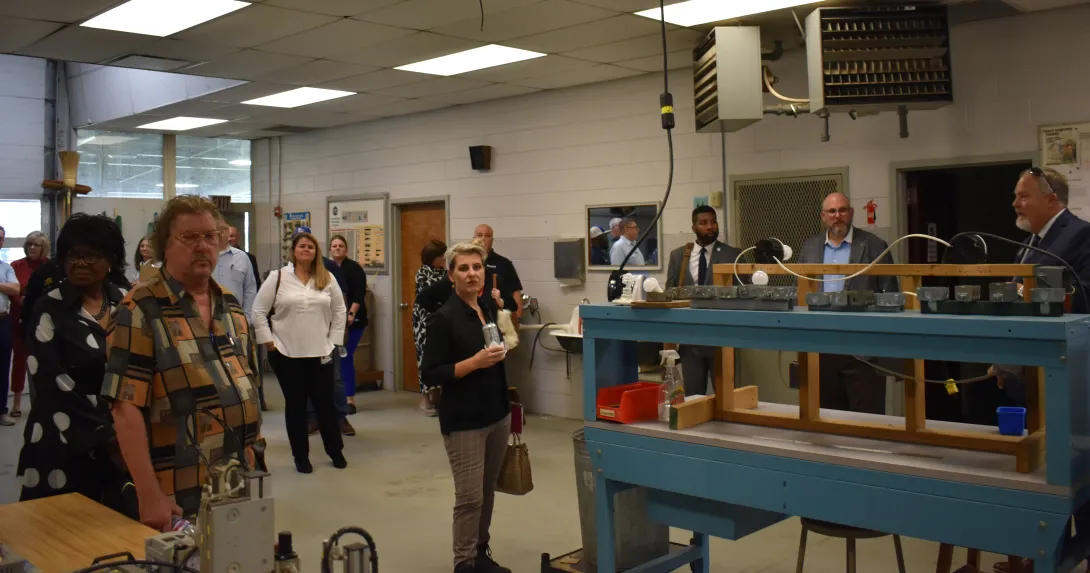
Members of the Georgia Artificial Intelligence in Manufacturing (Georgia AIM) team from the Georgia Institute of Technology met with local partners, manufacturers, and business leaders in Thomasville last week to discuss how investments from the $65 million statewide federal grant can accelerate the transition to automation in manufacturing in South Georgia. The meeting was held at Southern Regional Technical College (SRTC), one of the Georgia AIM partners.
“This grant is an investment in a better and brighter future for communities all across the state including Thomasville,” said Danyelle Larkin, educational outreach manager with the Center for Education Integrating Science, Mathematics, and Computing (CEISMC) at Georgia Tech. “By harnessing the power of AI, we can open up new, better-paying manufacturing jobs while preparing workers and students with the skills they need to succeed in an increasingly high-tech world.”
The meeting highlighted one of the recent developments of the Georgia AIM project: A future lab at Southern Regional Technical College dedicated to manufacturing technology. CEISMC is providing instructional support and curricula, thanks to the program’s expertise in STEM education, while collaborations with other experts at Georgia Tech and the Southwest Georgia community are identifying new technologies and opportunities for jobs in the area.
At the meeting, Aaron Stebner, co-director of Georgia AIM and associate professor of mechanical engineering and materials science and engineering, talked about the potential for AI to revitalize the economy in areas of the country that have struggled for decades.
“The reason a lot of the manufacturers are coming back and growing in the U.S. is because the automation and the AI creates a logistics model that makes it advantageous again to manufacture in the U.S. instead of overseas,” he said. Stebner also talked about how AI is automating many jobs “that humans just don’t want to do anymore and creates more space for the creative jobs that tend to create better internal motivation and higher pay.”
In addition to talking with local manufacturers and touring their facilities, Stebner participated in the Thomasville-Thomas County Chamber Connects panel discussion “Scary Smart: How AI Can Drive Your Business” with Jason Jones, president/CEO of S&L Integrated and Haile McCollum, founder and creative director of Fountaine Maury. The panel was hosted by Katie Chastan of TiskTask, a local workforce development company that is a partner in the Georgia AIM project.
During the meeting, SRTC announced the creation of a new Precision Machining and Manufacturing Lab on its Thomasville campus with an anticipated opening in the fall of 2024. The lab will host two new programs, including Precision Machining & Manufacturing and Manufacturing Engineering Technology. The Georgia AIM grant provided $499,000 in funding for the lab, as well as staffing support.
“A lab for precision manufacturing at Southern Regional Technical College breathes innovation into Thomasville’s existing industry, fueling their growth and ensuring they stay at the cutting edge of technology and competitiveness,” said Shelley Zorn, executive director of the Thomasville Payroll Development Authority.
“The result is a stronger industry base and higher paying jobs for Thomas County citizens and the region,” Zorn said. “It is also a wonderful recruiting tool for new advanced manufacturing partners.”
This could lead to new jobs for the region that reflect the roles that AI automation can create.
“As we heard from the industries gathered at the table, there is a big need for predictive and prescriptive maintenance from our industries,” added Vic Burke, vice president of academic affairs at Southern Regional Technical College. "Our manufacturers are automating more processes, which means fewer low-paying assembly jobs and more higher paying technician jobs.”
--Randy Trammell, CEISMC Communications
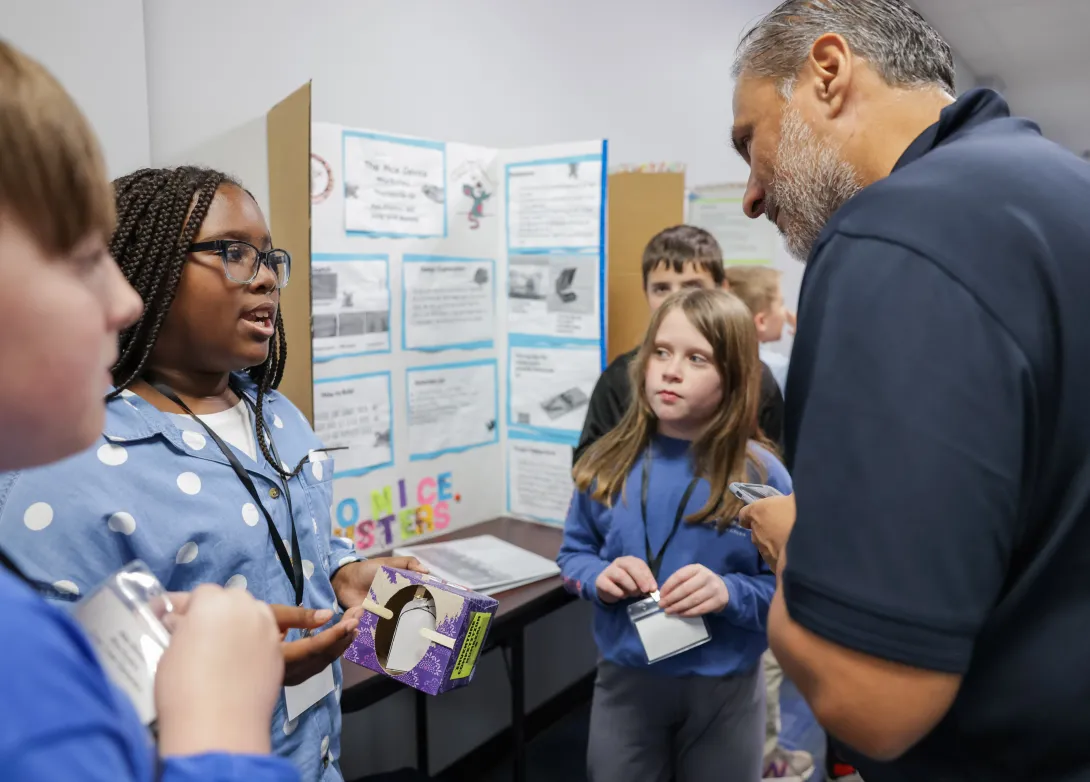
Students in Thomasville, Ga. explain their invention to a competition judge as a part of Georgia Tech’s expanding K-12 InVenture Prize program.
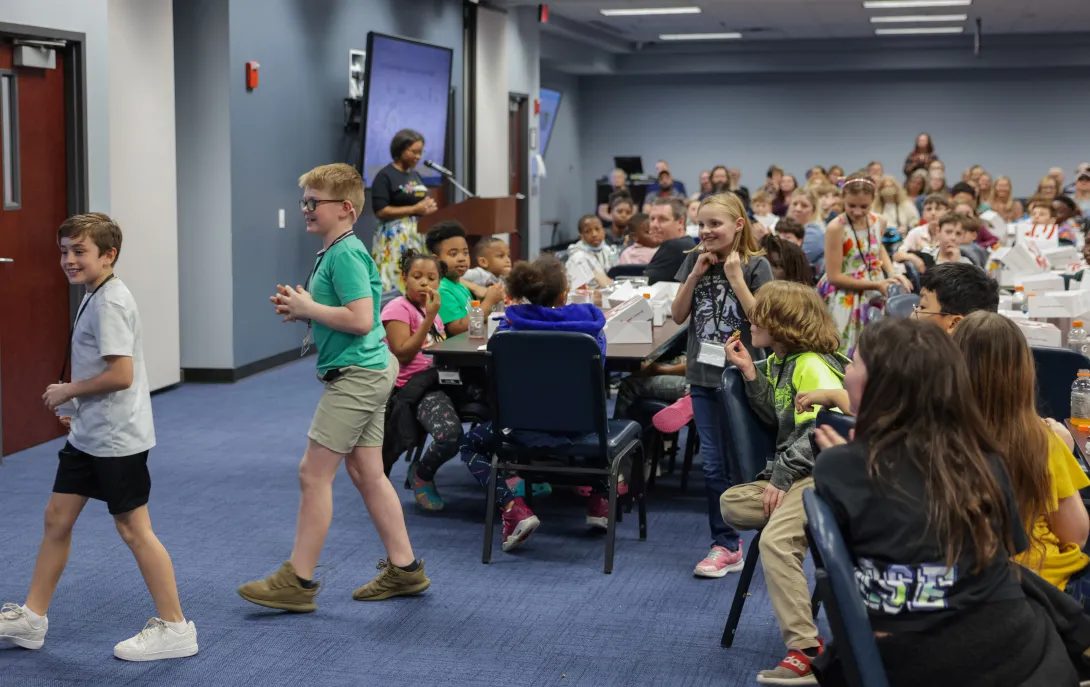
Students in Thomasville, Ga. present their own inventions as a part of Georgia Tech’s expanding K-12 InVenture Prize competition program.
Georgia Institute of Technology’s Center for Education Integrating Science, Mathematics, and Computing (CEISMC) is at the center of a new statewide initiative combining artificial intelligence and manufacturing innovations with transformational workforce development and K-12 outreach. The Georgia Artificial Intelligence Manufacturing Corridor project (Georgia AIM) is supported by a record-shattering $65 million grant Georgia Tech received in September 2022 from the U.S. Department of Commerce’s Economic Development Administration.
Georgia AIM will support a total of nine inter-related projects throughout the state and is designed to increase job and wage opportunities in distressed and rural communities and among historically underrepresented and underserved people. Georgia AIM targets rural residents, women, Black, Indigenous and People of Color (BIPOC), those living with disabilities, and veterans — groups historically underrepresented in manufacturing. Through innovation, collaboration, education, and participation, Georgia AIM will provide the tools and knowledge to empower these communities to participate fully in a diverse AI manufacturing workforce.
“Many people have preconceived notions about manufacturing and may not be able to see how they could possibly connect to it," said Roxanne Moore, Woodruff School of Mechanical Engineering’s senior research engineer and director of CEISMC’s K-12 InVenture Prize program. “What they may not realize is that manufacturing is what brings new ideas to life. AI is rapidly reshaping the manufacturing industry and changing the landscape for job opportunities. The work that we are doing will position Georgia to lead the nation into the future of AI and manufacturing.”
Moore explains that through Georgia AIM, CEISMC will expand its K-12 InVenture Prize invention and entrepreneurship program to collaborate with school districts and businesses in Southwest Georgia, Southeast Georgia and Northeast Georgia. The initiative will expand on existing partnerships Georgia Tech has established with technical colleges and minority-serving institutions.
The project will reach at least 1,000 K-12 students and 100 teachers from underserved areas, with a focus on rural communities via existing programs at Georgia Tech, other nonprofits, the Technical College System of Georgia, the Southwest Georgia Regional Commission, local manufacturers, and K-12 school leaders, Moore said.
“We need to illustrate the powerful relationships between innovation, entrepreneurship, and manufacturing so that students can see how ideas come to life and how they can improve their communities,” said Moore. “It is my hope that these regional ecosystems become a role model for how educational institutions can support each other in expanding access to high-quality STEM experiences for diverse students who typically are not empowered to create their futures.”
As part of Georgia AIM, CEISMC will also expand its offerings through partnerships with the institute’s GoSTEM program to better serve Latino populations. GoSTEM is a collaborative partnership at Georgia Tech between CEISMC and Institute Diversity, Equity and Inclusion (IDEI). Its mission is to promote STEM academic achievement and college attendance among Latino and other cultural and linguistic minority K-12 students. Plans include translating existing invention and entrepreneurship curriculum into Spanish, adding lessons to the curriculum on AI and manufacturing, assisting with the development of regionally focused curricula, and expanding training and events to make them more inclusive.
“Our goal is to make invention education accessible to everyone in the state, especially those who may have been previously left out of the conversation,” said Danyelle Larkin, educational outreach manager with CEISMC. “By going into more rural areas of the state and working to develop multi-lingual curricula that is focused on the needs of the region, we hope to serve as a national model for how to accelerate the transition to automation in manufacturing while diversifying the next generation of AI leadership.
Additional Georgia AIM expansion plans for CEISMC and K-12 InVenture Prize include supporting an existing high school entrepreneurship program in Fitzgerald and working with Albany State University to host teacher workshops, support local schools, and host regional competitions with a focus on inventiveness and the entrepreneurial mindset.
"The overall goal of Georgia AIM is to establish the United States as a leader in AI manufacturing while making sure that these systems complement rather than replace existing workers,” Larkin said. “The work that we are doing in CEISMC plays an integral role in Georgia AIM with our specific expertise in weaving invention education and entrepreneurship into K-12 classrooms and connecting with diverse communities. This huge grant gives us a chance to amplify our work and bring even more people into the AI conversation. It’s about building a better, more equitable future for the people of Georgia.”
—Randy Trammell, CEISMC Communications
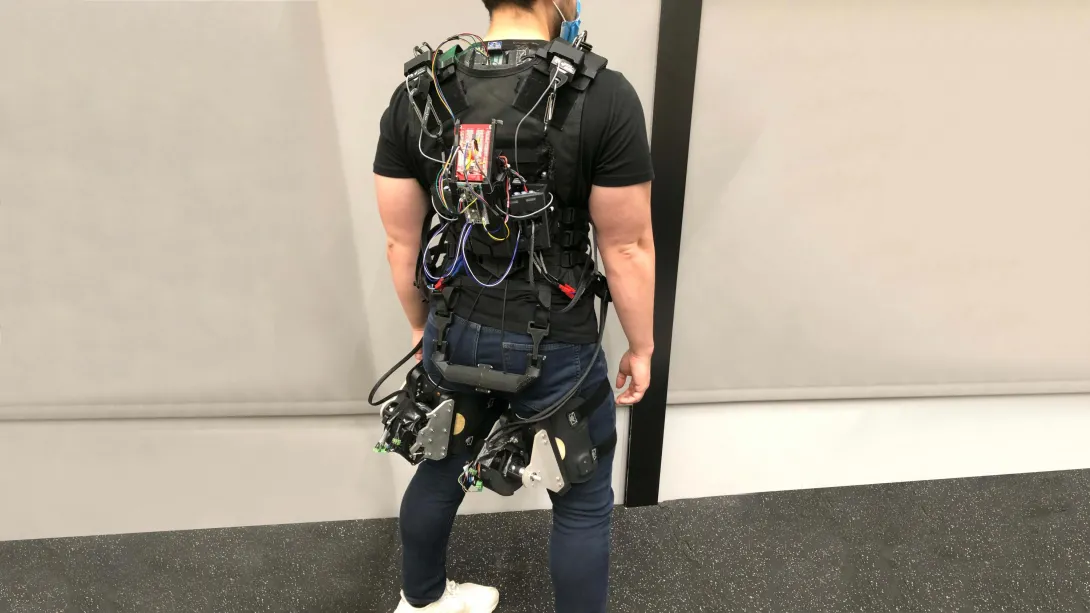
In the last few years, mechanically assistive exosuits, long depicted in works of popular science fiction and film, have finally started to see commercial deployment, according to Aaron Young, professor in the George W. Woodruff School of Mechanical Engineering at Georgia Tech. Most of these exosuits have a so-called passive design, assisting the wearer with unpowered elements like springs.
Active exosuits that incorporate electronics and powered motors are yet to be broadly applied. They tend to be big and heavy, and rely on rigid exoskeletons to transfer weight from body to ground. Exoskeletons add a great deal of stiffness, as well, Young said. Putting on most active exosuits is a little like becoming one with a forklift, restricting a wearer to lifting weights in a vertical plane.
For all these reasons, Young’s Asymmetric Back eXosuit (ABX) described in the October 5 issue of IEEE Transactions on Robotics is highly non-standard. There’s no exoskeleton, no rigid structure, nothing that makes contact with the floor. If the wearer is just standing there, it does nothing except for adding 14 pounds to their legs. But if they raise their body from a leaning over position, it makes a somewhat frantic noise: that is the sound of the ABX helping them rotate their torso, helping them twist.
Although most active exosuits support vertical lifts, rotating and twisting movements are also ubiquitous, especially in certain fields of manual labor like garbage collection and baggage handling. In many cases, these motions can be awkward and strenuous, leading to work-related injuries as well as back pain, according to Young. Back pain, in turn, is directly correlated with the strength of compressive forces and shear forces that are applied to the spine.
In designing their exosuit, the researchers sought a way to reduce these loads on the spinal joints. Putting it on looks a little like donning a futuristic backpack. Two motors are first strapped onto the back of each upper thigh. These motors are then connected to the back of the opposite shoulders, each with their own cable, making for two cables that diagonally overlap. The exosuit provides assistance by applying tension to the cables when it detects a wearer rise from a bending posture.
“It's definitely a different sensation than a sort of standard exoskeleton. It's not your standard design,” said Young.
Because the diagonal cables have a component of motion that is horizontal, they exert a pull on the torso that can aid in twisting it from side to side. In tests, the researchers showed that when a wearer of the ABX swung a weight from the ground to one side, the exosuit reduced their back muscle activations by an average of 16%, as measured by electromyography (EMG) sensors. The exosuit also provided a 37% reduction in back muscle exertion when a wearer lifted weights symmetrically, straight off the ground – an assistance level comparable to more rigid designs.
“People definitely felt like the technology is assisting them, which is great. And we did see the concurrent EMG reduction,” said Young. “I think it’s a great first step.”
In a sense, wearing the exosuit is almost like strapping two additional muscles onto the body – unconventional muscles, which run directly from back to leg. Interestingly, it is the positioning of these muscles rather than their brute strength that makes them functional, said Young.
The motors pull the cables with much less power than the muscles in the body. However, the cables are positioned much further away from the joints. Through this positioning, the cables obtain greater leverage and mechanical advantage, allowing the wearer to reduce their overall muscular output and hence the load that they place on their spine. (Spinal loading was not directly measured in the study.)
Aside from its overall performance, it is the flexible, asymmetric nature of the suit that really makes it unique, Young said. There are currently no other active exosuits that provide assistance for twisting and rotating through a comparable range of motion. While other exosuits also use cables, none have arranged them along diagonal lines.
Young is currently seeking collaborations with industry partners to further develop the exosuit. In future work, he sees its control system as a point to improve. Currently, when a person raises their torso from a lowered position, the cables simply pull with constant tension. But it should be possible to make the system detect different actions of the wearer and adjust its pull in response.
References
J. M. Li, D. D. Molinaro, A. S. King, A. Mazumdar and A. J. Young, "Design and Validation of a Cable-Driven Asymmetric Back Exosuit," in IEEE Transactions on Robotics, doi: 10.1109/TRO.2021.3112280.
About Georgia Tech
The Georgia Institute of Technology, or Georgia Tech, is a top 10 public research university developing leaders who advance technology and improve the human condition. The Institute offers business, computing, design, engineering, liberal arts, and sciences degrees. Its nearly 40,000 students representing 50 states and 149 countries, study at the main campus in Atlanta, at campuses in France and China, and through distance and online learning. As a leading technological university, Georgia Tech is an engine of economic development for Georgia, the Southeast, and the nation, conducting more than $1 billion in research annually for government, industry, and society.
News Contact
Mordechai Rorvig
Senior Science Writer
Georgia Institute of Technology
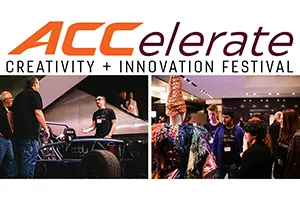
Georgia Tech Arts is still seeking projects for the 2021 ACCelerate: ACC Smithsonian
Creativity and Innovation Festival in Washington, DC. All Georgia Tech students, faculty, and staff are invited to apply by May 1, 2020.
Even if you do not have a finished project exploring the intersection of science,
engineering, art, design, and technology, we encourage you to speak with Es
Famojure at esther.famojure@arts.gatech.edu about your concepts.
Learn about Georgia Tech's 2019 participants for some inspiration.
The festival brings together all institutions included in the Atlantic Coast Conference to
celebrate creativity and innovation with a specific focus on science, engineering, arts, and
design. It will be held April 9 -11, 2021 at the Smithsonian National Museum of American
History.
Submit your project for consideration by May 1, 2020 to be considered.
News Contact
Es Famojure
esther.famojure@arts.gatech.edu