
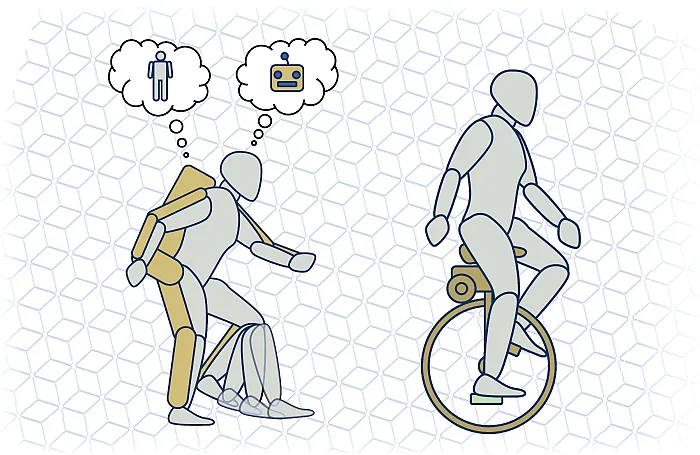
Research into tailored assistive and rehabilitative devices has seen recent advancements but the goal remains out of reach due to the sparsity of data on how humans learn complex balance tasks. To address this gap, a collaborating team of interdisciplinary faculty from Florida State University and Georgia Tech have been awarded ~$798,000 by the NSF to launch a study to better understand human motor learning as well as gain greater understanding into human robot interaction dynamics during the learning process.
Led by PI: Taylor Higgins, Assistant Professor, FAMU-FSU Department of Mechanical Engineering, partnering with Co-PIs Shreyas Kousik, Assistant Professor, Georgia Tech, George W. Woodruff School of Mechanical Engineering, and Brady DeCouto, Assistant Professor, FSU Anne Spencer Daves College of Education, Health, and Human Sciences, the research will use the acquisition of unicycle riding skill by participants to gain a better grasp on human motor learning in tasks requiring balance and complex movement in space. Although it might sound a bit odd, the fact that most people don’t know how to ride a unicycle, and the fact that it requires balance, mean that the data will cover the learning process from novice to skilled across the participant pool.
Using data acquired from human participants, the team will develop a “robotics assistive unicycle” that will be used in the training of the next pool of novice unicycle riders. This is to gauge if, and how rapidly, human motor learning outcomes improve with the assistive unicycle. The participants that engage with the robotic unicycle will also give valuable insight into developing effective human-robot collaboration strategies.
The fact that deciding to get on a unicycle requires a bit of bravery might not be great for the participants, but it’s great for the research team. The project will also allow exploration into the interconnection between anxiety and human motor learning to discover possible alleviation strategies, thus increasing the likelihood of positive outcomes for future patients and consumers of these devices.
Author
-Christa M. Ernst
This Article Refers to NSF Award # 2449160
News Contact
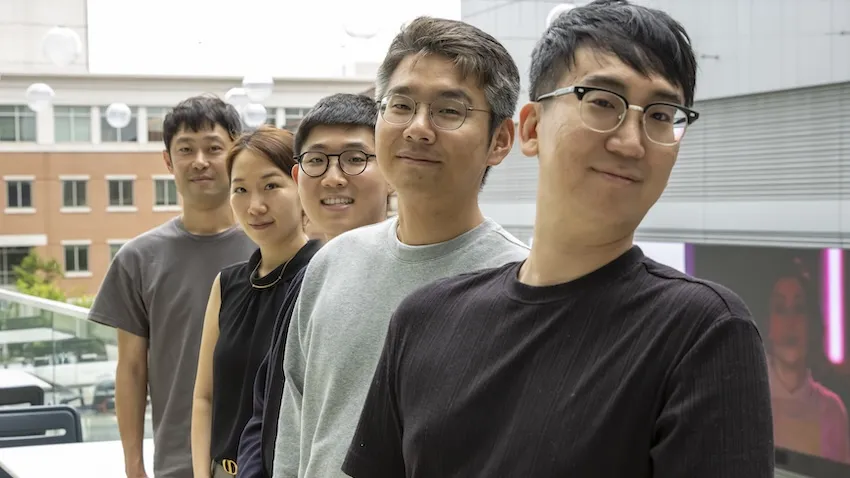
School of Interactive Computing Assistant Professor Sehoon Ha, Neuromeka researchers Joonho Lee and Yunho Kim, School of IC Assistant Professor Jennifer Kim, and Electronics and Telecommunications Research Institute researcher Dongyeop Kang, are collaborating to develop a medical assistant robot to support doctors and nurses in Korea. Photo by Nathan Deen/College of Computing.
Overwhelmed doctors and nurses struggling to provide adequate patient care in South Korea are getting support from Georgia Tech and Korean-based researchers through an AI-powered robotic medical assistant.
Top South Korean research institutes have enlisted Georgia Tech researchers Sehoon Ha and Jennifer G. Kim to develop artificial intelligence (AI) to help the humanoid assistant navigate hospitals and interact with doctors, nurses, and patients.
Ha and Kim will partner with Neuromeka, a South Korean robotics company, on a five-year, 10 billion won (about $7.2 million US) grant from the South Korean government. Georgia Tech will receive about $1.8 million of the grant.
Ha and Kim, assistant professors in the School of Interactive Computing, will lead Tech’s efforts and also work with researchers from the Korea Advanced Institute of Science and Technology and the Electronics and Telecommunications Research Institute.
Neuromeka has built industrial robots since its founding in 2013 and recently decided to expand into humanoid service robots.
Lee, the group leader of the humanoid medical assistant project, said he fielded partnership requests from many academic researchers. Ha and Kim stood out as an ideal match because of their robotics, AI, and human-computer interaction expertise.
For Ha, the project is an opportunity to test navigation and control algorithms he’s developed through research that earned him the National Science Foundation CAREER Award. Ha combines computer simulation and real-world training data to make robots more deployable in high-stress, chaotic environments.
“Dr. Ha has everything we want to put into our system, including his navigation policies,” Lee said. “He works with robots and AI, and there weren’t many candidates in that space. We needed a collaborator who can create the software and has experience running it on robots.”
Ha said he is already considering how his algorithms could scale beyond hospitals and become a universal means of robot navigation in unstructured real-world environments.
“For now, we’re focusing on a customized navigation model for Korean environments, but there are ways to transfer the data set to different environments, such as the U.S. or European healthcare systems,” Ha said.
“The final product can be deployed to other systems and industries. It can help industrial workers at factories, retail stores, any place where workers can get overwhelmed by a high volume of tasks.”
Kim will focus on making the robot’s design and interaction features more human. She’ll develop a large-language model (LLM) AI system to communicate with patients, nurses, and doctors. She’ll also develop an app that will allow users to input their commands and queries.
“This project is not just about controlling robots, which is why Dr. Kim’s expertise in human-computer interaction design through natural language was essential.,” Lee said.
Kim is interviewing stakeholders from three South Korean hospitals to identify service and care pain points. The issues she’s identified so far relate to doctor-patient communication, a lack of emotional support for patients, and an excessive number of small tasks that consume nurses’ time.
“Our goal is to develop this robot in a very human-centered way,” she said. “One way is to give patients a way to communicate about the quality of their care and how the robot can support their emotional well-being.
“We found that patients often hesitate to ask busy nurses for small things like getting a cup of water. We believe this is an area a robot can support.”
The robot’s hardware will be built in Korea, while Ha and Kim will develop the software in the U.S.
Jong-hoon Park, CEO of Neuromeka, said in a press release the goal is to have a commercialized product as soon as possible.
“Through this project, we will solve problems that existing collaborative robots could not,” Park said. “We expect the medical AI humanoid robot technology being developed will contribute to reducing the daily work burden of medical and healthcare workers in the field.”
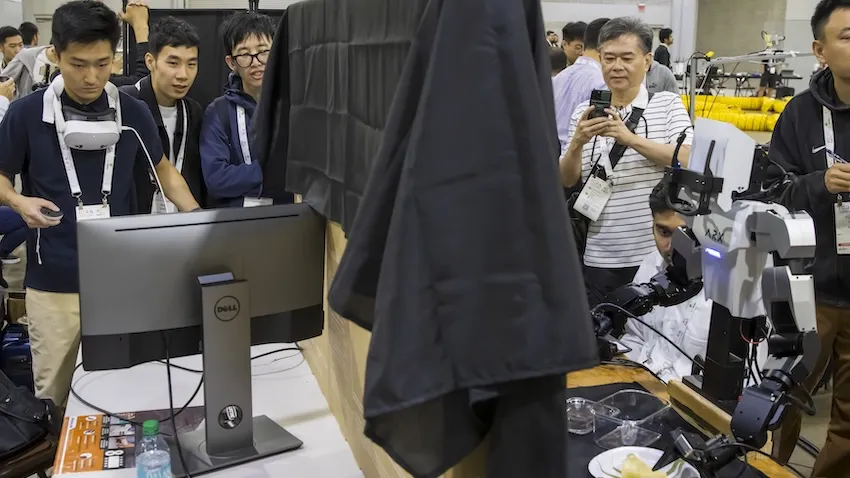
An algorithmic breakthrough from School of Interactive Computing researchers that earned a Meta partnershipdrew more attention at the IEEE International Conference on Robotics and Automation (ICRA).
Meta announced in February its partnership with the labs of professors Danfei Xu and Judy Hoffman on a novel computer vision-based algorithm called EgoMimic. It enables robots to learn new skills by imitating human tasks from first-person video footage captured by Meta’s Aria smart glasses.
Xu’s Robot Learning and Reasoning Lab (RL2) displayed EgoMimic in action at ICRA May 19-23 at the World Congress Center in Atlanta.
Lawrence Zhu, Pranav Kuppili, and Patcharapong “Elmo” Aphiwetsa — students from Xu’s lab — used Egomimic to compete in a robot teleoperation contest at ICRA. The team finished second in the event titled What Bimanual Teleoperation and Learning from Demonstration Can Do Today, earning a $10,000 cash prize.
Teams were challenged to perform tasks by remotely controlling a robot gripper. The robot had to fold a tablecloth, open a vacuum-sealed container, place an object into the container, and then reseal it in succession without any errors.
Teams completed the tasks as many times as possible in 30 minutes, earning points for each successful attempt.
The competition also offered different challenge levels that increased the points awarded. Teams could directly operate the robot with a full workstation view and receive one point for each task completion. Or, as the RL2 team chose, teams could opt for the second challenge level.
The second level required an operator to control the task with no view of the workstation except for what was provided to through a video feed. The RL2 team completed the task seven times and received double points for the challenge level.
The third challenge level required teams to operate remotely from another location. At this level, teams could earn four times the number of points for each successful task completed. The fourth level challenged teams to deploy an algorithm for task performance and awarded eight points for each completion.
Using two of Meta’s Quest wireless controllers, Zhu controlled the robot under the direction of Aphiwetsa, while Kuppili monitored the coding from his laptop.
“It’s physically difficult to teleoperate for half an hour,” Zhu said. “My hands were shaking from holding the controllers in the air for that long.”
Being in constant communication with Aphiwetsa helped him stay focused throughout the contest.
“I helped him strategize the teleoperation and noticed he could skip some of the steps in the folding,” Aphiwetsa said. “There were many ways to do it, so I just told him what he could fix and how to do it faster.”
Zhu said he and his team had intended to tackle the fourth challenge level with the EgoMimic algorithm. However, due to unexpected time constraints, they decided to switch to the second level the day before the competition due to unexpected time constraints.
“I think we realized the day before the competition training the robot on our model would take a huge amount of time,” Zhu said. “We decided to go for the teleoperation and started practicing.”
He said the team wants to tackle the highest challenge level and use a training model for next year’s ICRA competition in Vienna, Austria.
ICRA is the world’s largest robotics conference, and Atlanta hosted the event for the third time in its history, drawing a record-breaking attendance of over 7,000.

Michelle LaPlaca (left), associate chair for Faculty Development and professor in the Department of Biomedical Engineering; W. Hong Yeo, Harris Saunders, Jr. Professor in the George W. Woodruff School of Mechanical Engineering.
Georgia Tech professors Michelle LaPlaca and W. Hong Yeo have been selected as recipients of Peterson Professorships with the Children’s Healthcare of Atlanta Pediatric Technology Center (PTC) at Georgia Tech. The professorships, supported by the G.P. “Bud” Peterson and Valerie H. Peterson Faculty Endowment Fund, are meant to further energize the Georgia Tech and Children’s partnership by engaging and empowering researchers involved in pediatrics.
In a joint statement, PTC co-directors Wilbur Lam and Stanislav Emelianov said, “The appointment of Dr. LaPlaca and Dr. Yeo as Peterson Professors exemplifies the vision of Bud and Valerie Peterson — advancing innovation and collaboration through the Pediatric Technology Center to bring breakthrough ideas from the lab to the bedside, improving the lives of children and transforming healthcare.”
LaPlaca is a professor and associate chair for Faculty Development in the Department of Biomedical Engineering, a joint department between Georgia Tech and Emory University. Her research is focused on traumatic brain injury and concussion, concentrating on sources of heterogeneity and clinical translation. Specifically, she is working on biomarker discovery, the role of the glymphatic system, and novel virtual reality neurological assessments.
“I am thrilled to be chosen as one of the Peterson Professors and appreciate Bud and Valerie Peterson’s dedication to pediatric research,” she said. “The professorship will allow me to broaden research in pediatric concussion assessment and college student concussion awareness, as well as to identify biomarkers in experimental models of brain injury.”
In addition to the research lab, LaPlaca will work with an undergraduate research class called Concussion Connect, which is part of the Vertically Integrated Projects program at Georgia Tech.
“Through the PTC, Georgia Tech and Children’s will positively impact brain health in Georgia’s pediatric population,” said LaPlaca.
Yeo is the Harris Saunders, Jr. Professor in the George W. Woodruff School of Mechanical Engineering and the director of the Wearable Intelligent Systems and Healthcare Center at Georgia Tech. His research focuses on nanomanufacturing and membrane electronics to develop soft biomedical devices aimed at improving disease diagnostics, therapeutics, and rehabilitation.
“I am truly honored to be awarded the Peterson Professorship from the Children’s PTC at Georgia Tech,” he said. “This recognition will greatly enhance my research efforts in developing soft bioelectronics aimed at advancing pediatric healthcare, as well as expand education opportunities for the next generation of undergraduate and graduate students interested in creating innovative medical devices that align seamlessly with the recent NSF Research Traineeship grant I received. I am eager to contribute to the dynamic partnership between Georgia Tech and Children’s Healthcare of Atlanta and to empower innovative solutions that will improve the lives of children.”
The Peterson Professorships honor the former Georgia Tech President and First Lady, whose vision for the importance of research in improving pediatric healthcare has had an enormous positive impact on the care of pediatric patients in our state and region.
The Children’s PTC at Georgia Tech brings clinical experts from Children’s together with Georgia Tech scientists and engineers to develop technological solutions to problems in the health and care of children. Children’s PTC provides extraordinary opportunities for interdisciplinary collaboration in pediatrics, creating breakthrough discoveries that often can only be found at the intersection of multiple disciplines. These collaborations also allow us to bring discoveries to the clinic and the bedside, thereby enhancing the lives of children and young adults. The mission of the PTC is to establish the world’s leading program in the development of technological solutions for children’s health, focused on three strategic areas that will have a lasting impact on Georgia’s kids and beyond.

Men and women in California put their lives on the line when battling wildfires every year, but there is a future where machines powered by artificial intelligence are on the front lines, not firefighters.
However, this new generation of self-thinking robots would need security protocols to ensure they aren’t susceptible to hackers. To integrate such robots into society, they must come with assurances that they will behave safely around humans.
It begs the question: can you guarantee the safety of something that doesn’t exist yet? It’s something Assistant Professor Glen Chou hopes to accomplish by developing algorithms that will enable autonomous systems to learn and adapt while acting with safety and security assurances.
He plans to launch research initiatives, in collaboration with the School of Cybersecurity and Privacy and the Daniel Guggenheim School of Aerospace Engineering, to secure this new technological frontier as it develops.
“To operate in uncertain real-world environments, robots and other autonomous systems need to leverage and adapt a complex network of perception and control algorithms to turn sensor data into actions,” he said. “To obtain realistic assurances, we must do a joint safety and security analysis on these sensors and algorithms simultaneously, rather than one at a time.”
This end-to-end method would proactively look for flaws in the robot’s systems rather than wait for them to be exploited. This would lead to intrinsically robust robotic systems that can recover from failures.
Chou said this research will be useful in other domains, including advanced space exploration. If a space rover is sent to one of Saturn’s moons, for example, it needs to be able to act and think independently of scientists on Earth.
Aside from fighting fires and exploring space, this technology could perform maintenance in nuclear reactors, automatically maintain the power grid, and make autonomous surgery safer. It could also bring assistive robots into the home, enabling higher standards of care.
This is a challenging domain where safety, security, and privacy concerns are paramount due to frequent, close contact with humans.
This will start in the newly established Trustworthy Robotics Lab at Georgia Tech, which Chou directs. He and his Ph.D. students will design principled algorithms that enable general-purpose robots and autonomous systems to operate capably, safely, and securely with humans while remaining resilient to real-world failures and uncertainty.
Chou earned dual bachelor’s degrees in electrical engineering and computer sciences as well as mechanical engineering from University of California Berkeley in 2017, a master’s and Ph.D. in electrical and computer engineering from the University of Michigan in 2019 and 2022, respectively. He was a postdoc at MIT Computer Science & Artificial Intelligence Laboratory prior to joining Georgia Tech in November 2024. He is a recipient of the National Defense Science and Engineering Graduate fellowship program, NSF Graduate Research fellowships, and was named a Robotics: Science and Systems Pioneer in 2022.
News Contact
John (JP) Popham
Communications Officer II
College of Computing | School of Cybersecurity and Privacy
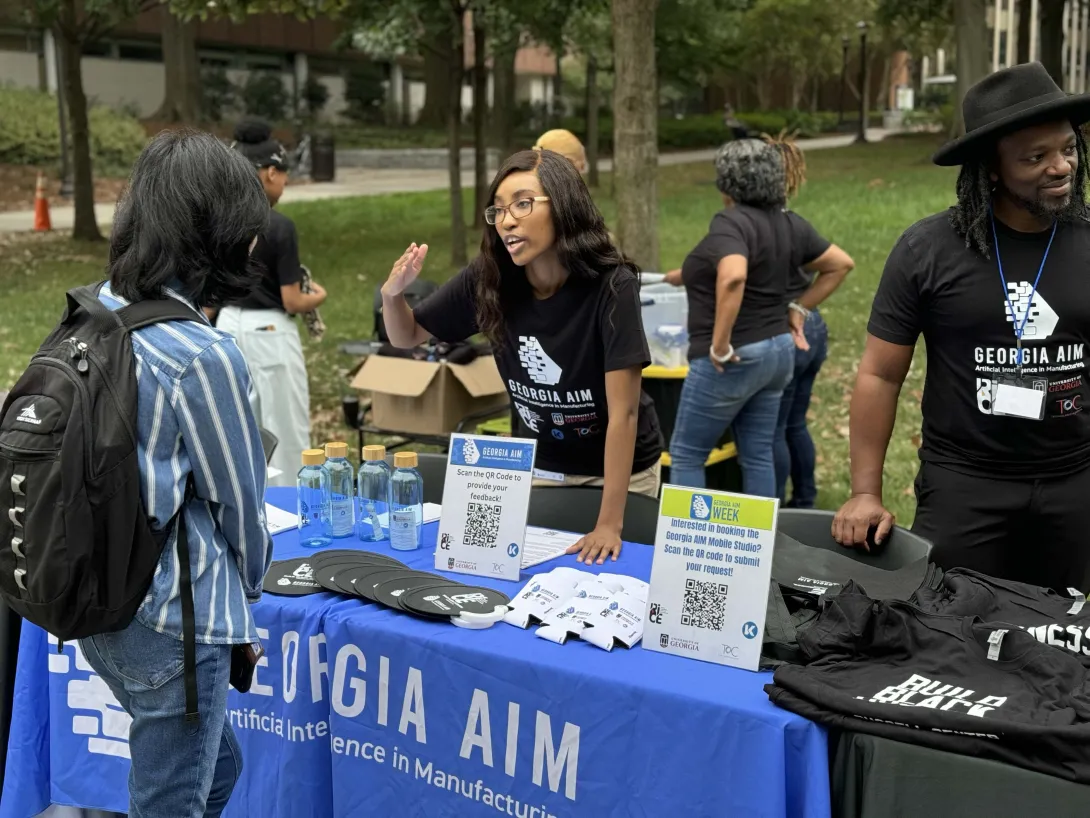
Georgia AIM representatives talk with students on Georgia Tech's campus during the launch event for their new mobile labs.
Gold and white pompoms fluttered while Buzz, the official mascot of the Georgia Institute of Technology, danced to marching band music. But the celebration wasn’t before a football or basketball game — instead, the cheers marked the official launch of Georgia AIM Week, a series of events and a new mobile lab designed to bring technology to all parts of Georgia
Organized by Georgia Artificial Intelligence in Manufacturing (Georgia AIM), Georgia AIM Week kicked off September 30 with a celebration on the Georgia Institute of Technology campus and culminated with another celebration on Friday at the University of Georgia in Athens and aligned with National Manufacturing Day.
In between, the Georgia AIM Mobile Studio made stops at schools and community organizations to showcase a range of technology rooted in AI and smart technology.
“Georgia AIM Week was a statewide opportunity for us to celebrate Manufacturing Day and to launch our Georgia AIM Mobile Studio,” said Donna Ennis, associate vice president, community-based engagement, for Georgia Tech’s Enterprise Innovation Institute and Georgia AIM co-director. “Georgia AIM projects planned events in cities around the state, starting here in Atlanta. Then we headed to Warner Robins, Southwest Georgia, and Athens. We’re excited about the opportunity to bring this technology to our communities and increase access and ideas related to smart technology.”
Georgia AIM is a collaboration across the state to provide the tools and knowledge to empower all communities, particularly those that have been underserved and overlooked in manufacturing. This includes rural communities, women, people of color, and veterans. Georgia AIM projects are located across the state and work within communities to create a diverse AI manufacturing workforce. The federally funded program is a collaborative project administered through Georgia Tech’s Enterprise Innovation Institute and the Georgia Tech Manufacturing Institute.
A cornerstone of Georgia AIM Week was the debut of the Georgia AIM Mobile Studio, a 53-foot custom trailer outfitted with technology that can be used in manufacturing — but also by anyone with an interest in learning about AI and smart technology. Visitors to the mobile studio can experience virtual reality, 3-D printing, drones, robots, sensors, computer vision, and circuits essential to running this new tech.
There’s even a dog — albeit a robotic one — named Nova.
The studio was designed to introduce students to the possibilities of careers in manufacturing and show small businesses some of the cost-effective ways they can incorporate 21st century technology into their manufacturing operations.
“We were awarded about $7.5 million to build this wonderful studio here,” said Kenya Asbill, who works at the Russell Innovation Center for Entrepreneurs (RICE) as the Economic Development Administration project manager for Georgia AIM. “We will be traveling around the state of Georgia to introduce artificial intelligence in manufacturing to our targeted communities, including underserved rural and urban residents.”
Some technology on the Georgia AIM Mobile Studio was designed in consultation with project partners Kitt Labs and Technologists of Color. An additional suite of “technology vignettes” were developed by students at the University of Georgia College of Engineering. RICE and UGA served as project leads for the mobile studio development, and RICE will oversee its deployment across the state in the coming months.
To request a mobile studio visit, please visit the Georgia AIM website.
During Monday’s kickoff, the Georgia Tech cheerleaders and Buzz fired up the crowd before an event that featured remarks by Acting Assistant Secretary of the U.S. EDA Christina Killingsworth; Jay Bailey, president and CEO of RICE; Beshoy Morkos, associate professor of mechanical engineering at the University of Georgia; Aaron Stebner, co-director of Georgia AIM; David Bridges, vice president of Georgia Tech’s Enterprise Innovation Institute; and lightning presentations by Georgia AIM project leads from around the state.
Following the presentations, mobile studio tours were led by Jon Exume, president and executive director, and Mark Lawson, director of technology, for Technologists of Color. The organization works to create a cohesive and thriving community of African Americans in tech.
“I’m particularly excited to witness the launch of the Georgia AIM Mobile Studio. It really will help demystify AI and bring its promise to underserved rural areas across the state,” Killingsworth said. “AI is the defining technology of our generation. It’s transforming the global economy, and it will continue to have tremendous impact on the global workforce. And while AI has the potential to democratize access to information, enhance efficiency, and allow humans to focus on the more complex, creative, and meaningful aspects of work, it also has the power to exacerbate economic disparity. As such, we must work together to embrace the promise of AI while mitigating its risks.”
Other events during Georgia AIM week included the Middle Georgia Innovation Corridor Manufacturing Expo in Warner Robins, West Georgia Manufacturing Day – Student Career Expo in LaGrange, and a visit to Colquitt County High School in Moultrie. The week wrapped on Friday, Oct. 4, at the University of Georgia in Athens with a National Manufacturing Day celebration.
“We’re focused on growing our manufacturing economy,” Ennis said. “We’re also focused on the development and deployment of innovation and talent in the manufacturing industry as it relates to AI and other technologies. Manufacturing is cool. It is a changing industry. We want our students and younger people to understand that this is a career.”
News Contact
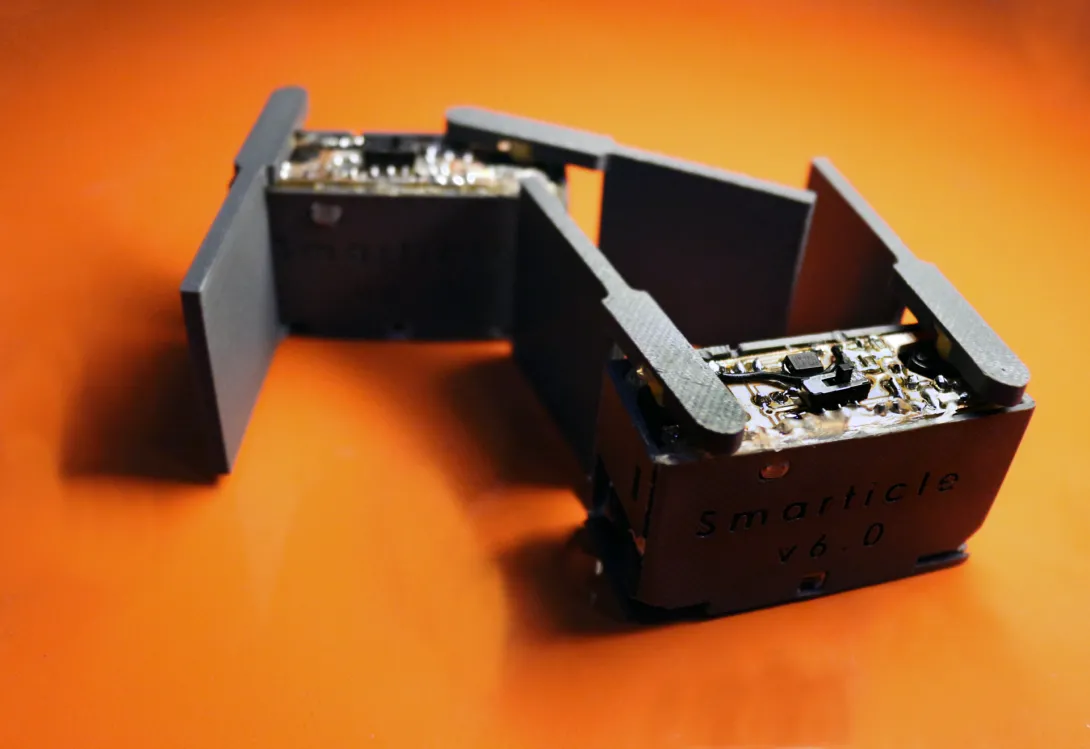
A pair of Smarticle robots from the lab of Prof. Dan Goldman. Earlier research from his group observed the arise of order in active matter from the physics of low rattling. (Photo Credit: Christa M. Ernst)
If you’ve ever watched a large flock of birds on the wing, moving across the sky like a cloud with various shapes and directional changes appearing from seeming chaos, or the maneuvers of an ant colony forming bridges and rafts to escape floods, you’ve been observing what scientists call self-organization. What may not be as obvious is that self-organization occurs throughout the natural world, including bacterial colonies, protein complexes, and hybrid materials. Understanding and predicting self-organization, especially in systems that are out of equilibrium, like living things, is an enduring goal of statistical physics.
This goal is the motivation behind a recently introduced principle of physics called rattling, which posits that systems with sufficiently “messy” dynamics organize into what researchers refer to as low rattling states. Although the principle has proved accurate for systems of robot swarms, it has been too vague to be more broadly tested, and it has been unclear exactly why it works and to what other systems it should apply.
Dana Randall, a professor in the School of Computer Science, and Jacob Calvert, a postdoctoral fellow at the Institute for Data Engineering and Science, have formulated a theory of rattling that answers these fundamental questions. Their paper, “A Local-Global Principle for Nonequilibrium Steady States,” published last week in Proceedings of the National Academy of Sciences, characterizes how rattling is related to the amount of time that a system spends in a state. Their theory further identifies the classes of systems for which rattling explains self-organization.
When we first heard about rattling from physicists, it was very hard to believe it could be true. Our work grew out of a desire to understand it ourselves. We found that the idea at its core is surprisingly simple and holds even more broadly than the physicists guessed.
Dana Randall Professor, School of Computer Science & Adjunct Professor, School of Mathematics
Georgia Institute of Technology
Beyond its basic scientific importance, the work can be put to immediate use to analyze models of phenomena across scientific domains. Additionally, experimentalists seeking organization within a nonequilibrium system may be able to induce low rattling states to achieve their desired goal. The duo thinks the work will be valuable in designing microparticles, robotic swarms, and new materials. It may also provide new ways to analyze and predict collective behaviors in biological systems at the micro and nanoscale.
The preceding material is based on work supported by the Army Research Office under award ARO MURI Award W911NF-19-1-0233 and by the National Science Foundation under grant CCF-2106687. Any opinions, findings, and conclusions or recommendations expressed in this material are those of the authors and do not necessarily reflect the views of the sponsoring agencies.
Jacob Calvert and Dana Randall. A local-global principle for nonequilibrium steady states. Proceedings of the National Academy of Sciences, 121(42):e2411731121, 2024.
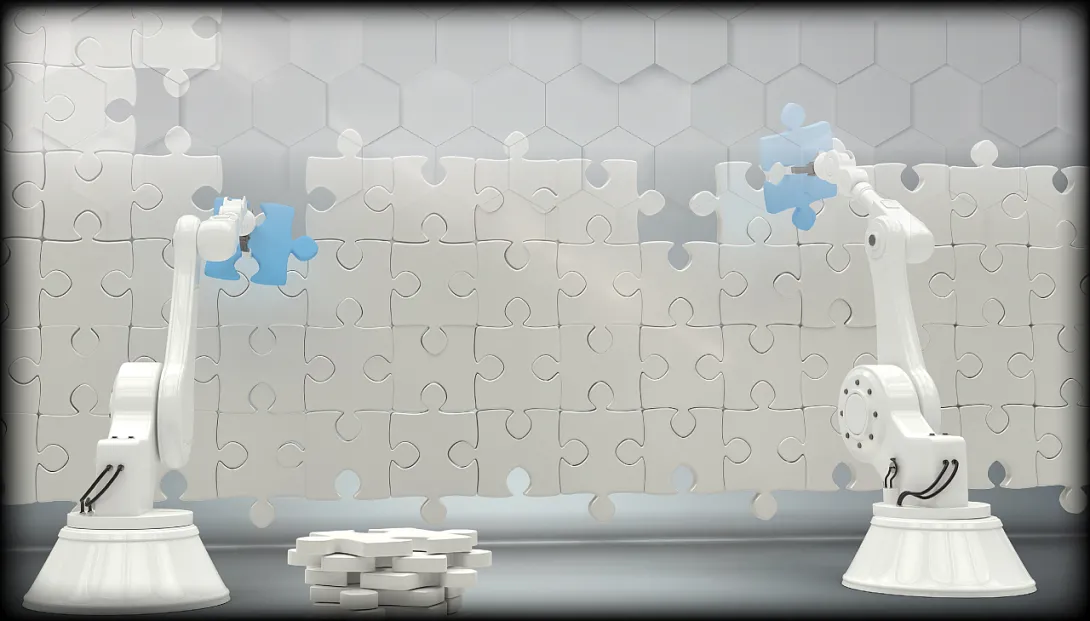
Industrial Robots sloving a puzzle
The Institute for Robotics and Intelligent Machines (IRIM) launched a new initiatives program, starting with several winning proposals, with corresponding initiative leads that will broaden the scope of IRIM’s research beyond its traditional core strengths. A major goal is to stimulate collaboration across areas not typically considered as technical robotics, such as policy, education, and the humanities, as well as open new inter-university and inter-agency collaboration routes. In addition to guiding their specific initiatives, these leads will serve as an informal internal advisory body for IRIM. Initiative leads will be announced annually, with existing initiative leaders considered for renewal based on their progress in achieving community building and research goals. We hope that initiative leads will act as the “faculty face” of IRIM and communicate IRIM’s vision and activities to audiences both within and outside of Georgia Tech.
Meet 2024 IRIM Initiative Leads
Stephen Balakirsky; Regents' Researcher, Georgia Tech Research Institute & Panagiotis Tsiotras; David & Andrew Lewis Endowed Chair, Daniel Guggenheim School of Aerospace Engineering | Proximity Operations for Autonomous Servicing
Why It Matters: Proximity operations in space refer to the intricate and precise maneuvers and activities that spacecraft or satellites perform when they are in close proximity to each other, such as docking, rendezvous, or station-keeping. These operations are essential for a variety of space missions, including crewed spaceflights, satellite servicing, space exploration, and maintaining satellite constellations. While this is a very broad field, this initiative will concentrate on robotic servicing and associated challenges. In this context, robotic servicing is composed of proximity operations that are used for servicing and repairing satellites in space. In robotic servicing, robotic arms and tools perform maintenance tasks such as refueling, replacing components, or providing operation enhancements to extend a satellite's operational life or increase a satellite’s capabilities.
Our Approach: By forming an initiative in this important area, IRIM will open opportunities within the rapidly evolving space community. This will allow us to create proposals for organizations ranging from NASA and the Defense Advanced Research Projects Agency to the U.S. Air Force and U.S. Space Force. This will also position us to become national leaders in this area. While several universities have a robust robotics program and quite a few have a strong space engineering program, there are only a handful of academic units with the breadth of expertise to tackle this problem. Also, even fewer universities have the benefit of an experienced applied research partner, such as the Georgia Tech Research Institute (GTRI), to undertake large-scale demonstrations. Georgia Tech, having world-renowned programs in aerospace engineering and robotics, is uniquely positioned to be a leader in this field. In addition, creating a workshop in proximity operations for autonomous servicing will allow the GTRI and Georgia Tech space robotics communities to come together and better understand strengths and opportunities for improvement in our abilities.
Matthew Gombolay; Assistant Professor, Interactive Computing | Human-Robot Society in 2125: IRIM Leading the Way
Why It Matters: The coming robot “apocalypse” and foundation models captured the zeitgeist in 2023 with “ChatGPT” becoming a topic at the dinner table and the probability occurrence of various scenarios of AI driven technological doom being a hotly debated topic on social media. Futuristic visions of ubiquitous embodied Artificial Intelligence (AI) and robotics have become tangible. The proliferation and effectiveness of first-person view drones in the Russo-Ukrainian War, autonomous taxi services along with their failures, and inexpensive robots (e.g., Tesla’s Optimus and Unitree’s G1) have made it seem like children alive today may have robots embedded in their everyday lives. Yet, there is a lack of trust in the public leadership bringing us into this future to ensure that robots are developed and deployed with beneficence.
Our Approach: This proposal seeks to assemble a team of bright, savvy operators across academia, government, media, nonprofits, industry, and community stakeholders to develop a roadmap for how we can be the most trusted voice to guide the public in the next 100 years of innovation in robotics here at the IRIM. We propose to carry out specific activities that include conducting the activities necessary to develop a roadmap about Robots in 2125: Altruistic and Integrated Human-Robot Society. We also aim to build partnerships to promulgate these outcomes across Georgia Tech’s campus and internationally.
Gregory Sawicki; Joseph Anderer Faculty Fellow, School of Mechanical Engineering & Aaron Young; Associate Professor, Mechanical Engineering | Wearable Robotic Augmentation for Human Resilience
Why It Matters: The field of robotics continues to evolve beyond rigid, precision-controlled machines for amplifying production on manufacturing assembly lines toward soft, wearable systems that can mediate the interface between human users and their natural and built environments. Recent advances in materials science have made it possible to construct flexible garments with embedded sensors and actuators (e.g., exosuits). In parallel, computers continue to get smaller and more powerful, and state-of-the art machine learning algorithms can extract useful information from more extensive volumes of input data in real time. Now is the time to embed lean, powerful, sensorimotor elements alongside high-speed and efficient data processing systems in a continuous wearable device.
Our Approach: The mission of the Wearable Robotic Augmentation for Human Resilience (WeRoAHR) initiative is to merge modern advances in sensing, actuation, and computing technology to imagine and create adaptive, wearable augmentation technology that can improve human resilience and longevity across the physiological spectrum — from behavioral to cellular scales. The near-term effort (~2-3 years) will draw on Georgia Tech’s existing ecosystem of basic scientists and engineers to develop WeRoAHR systems that will focus on key targets of opportunity to increase human resilience (e.g., improved balance, dexterity, and stamina). These initial efforts will establish seeds for growth intended to help launch larger-scale, center-level efforts (>5 years).
Panagiotis Tsiotras; David & Andrew Lewis Endowed Chair, Daniel Guggenheim School of Aerospace Engineering & Sam Coogan; Demetrius T. Paris Junior Professor, School of Electrical and Computer Engineering | Initiative on Reliable, Safe, and Secure Autonomous Robotics
Why It Matters: The design and operation of reliable systems is primarily an integration issue that involves not only each component (software, hardware) being safe and reliable but also the whole system being reliable (including the human operator). The necessity for reliable autonomous systems (including AI agents) is more pronounced for “safety-critical” applications, where the result of a wrong decision can be catastrophic. This is quite a different landscape from many other autonomous decision systems (e.g., recommender systems) where a wrong or imprecise decision is inconsequential.
Our Approach: This new initiative will investigate the development of protocols, techniques, methodologies, theories, and practices for designing, building, and operating safe and reliable AI and autonomous engineering systems and contribute toward promoting a culture of safety and accountability grounded in rigorous objective metrics and methodologies for AI/autonomous and intelligent machines designers and operators, to allow the widespread adoption of such systems in safety-critical areas with confidence. The proposed new initiative aims to establish Tech as the leader in the design of autonomous, reliable engineering robotic systems and investigate the opportunity for a federally funded or industry-funded research center (National Science Foundation (NSF) Science and Technology Centers/Engineering Research Centers) in this area.
Colin Usher; Robotics Systems and Technology Branch Head, GTRI | Opportunities for Agricultural Robotics and New Collaborations
Why It Matters: The concepts for how robotics might be incorporated more broadly in agriculture vary widely, ranging from large-scale systems to teams of small systems operating in farms, enabling new possibilities. In addition, there are several application areas in agriculture, ranging from planting, weeding, crop scouting, and general growing through harvesting. Georgia Tech is not a land-grant university, making our ability to capture some of the opportunities in agricultural research more challenging. By partnering with a land-grant university such as the University of Georgia (UGA), we can leverage this relationship to go after these opportunities that, historically, were not available.
Our Approach: We plan to build collaborations first by leveraging relationships we have already formed within GTRI, Georgia Tech, and UGA. We will achieve this through a significant level of networking, supported by workshops and/or seminars with which to recruit faculty and form a roadmap for research within the respective universities. Our goal is to identify and pursue multiple opportunities for robotics-related research in both row-crop and animal-based agriculture. We believe that we have a strong opportunity, starting with formalizing a program with the partners we have worked with before, with the potential to improve and grow the research area by incorporating new faculty and staff with a unified vision of ubiquitous robotics systems in agriculture. We plan to achieve this through scheduled visits with interested faculty, attendance at relevant conferences, and ultimately hosting a workshop to formalize and define a research roadmap.
Ye Zhao; Assistant Professor, School of Mechanical Engineering | Safe, Social, & Scalable Human-Robot Teaming: Interaction, Synergy, & Augmentation
Why It Matters: Collaborative robots in unstructured environments such as construction and warehouse sites show great promise in working with humans on repetitive and dangerous tasks to improve efficiency and productivity. However, pre-programmed and nonflexible interaction behaviors of existing robots lower the naturalness and flexibility of the collaboration process. Therefore, it is crucial to improve physical interaction behaviors of the collaborative human-robot teaming.
Our Approach: This proposal will advance the understanding of the bi-directional influence and interaction of human-robot teaming for complex physical activities in dynamic environments by developing new methods to predict worker intention via multi-modal wearable sensing, reasoning about complex human-robot-workspace interaction, and adaptively planning the robot’s motion considering both human teaming dynamics and physiological and cognitive states. More importantly, our team plans to prioritize efforts to (i) broaden the scope of IRIM’s autonomy research by incorporating psychology, cognitive, and manufacturing research not typically considered as technical robotics research areas; (ii) initiate new IRIM education, training, and outreach programs through collaboration with team members from various Georgia Tech educational and outreach programs (including Project ENGAGES, VIP, and CEISMC) as well as the AUCC (World’s largest consortia of African American private institutions of higher education) which comprises Clark Atlanta University, Morehouse College, & Spelman College; and (iii) aim for large governmental grants such as DOD MURI, NSF NRT, and NSF Future of Work programs.
-Christa M. Ernst
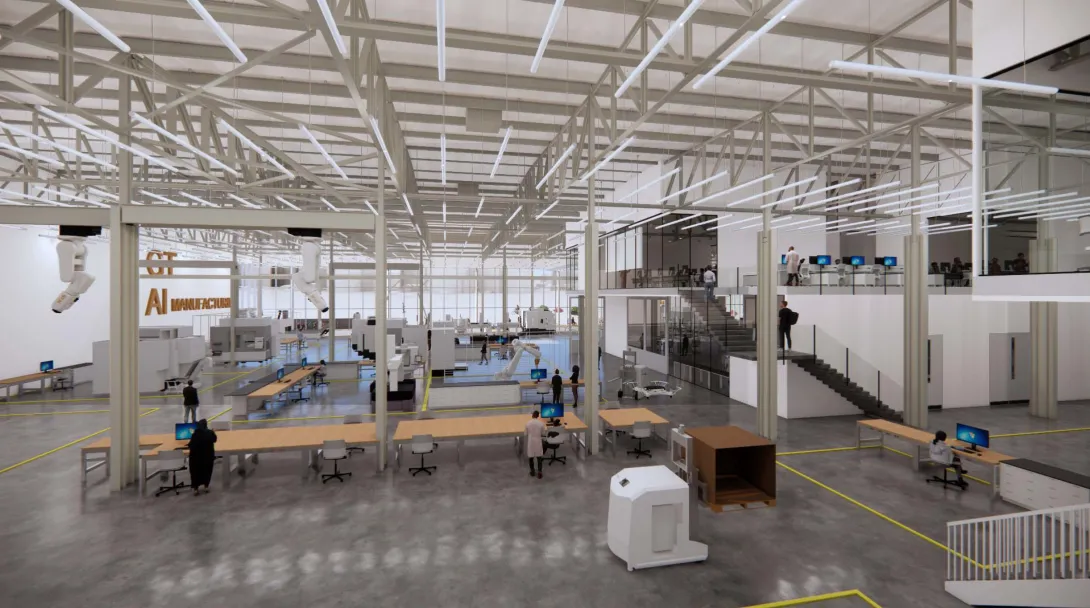
An early rendering of the main expanded research area at the Advanced Manufacturing Pilot Facility (Credit: Lord Aeck Sargent).
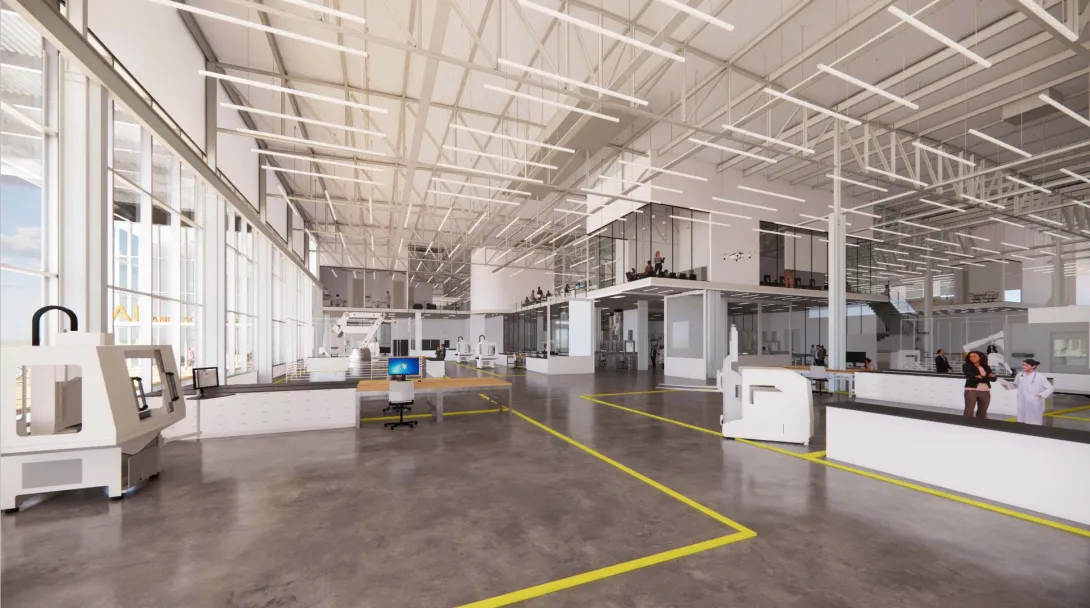
An early rendering of the main expanded research area at the Advanced Manufacturing Pilot Facility (Credit: Lord Aeck Sargent).
When it comes to manufacturing innovation, the “valley of death” — the gap between the lab and the industry floor where even the best discoveries often get lost — looms large.
“An individual faculty’s lab focuses on showing the innovation or the new science that they discovered,” said Aaron Stebner, professor and Eugene C. Gwaltney Jr. Chair in Manufacturing in the George W. Woodruff School of Mechanical Engineering. “At that point, the business case hasn't been made for the technology yet — there's no testing on an industrial system to know if it breaks or if it scales up. A lot of innovation and scientific discovery dies there.”
The Georgia Tech Manufacturing Institute (GTMI) launched the Advanced Manufacturing Pilot Facility (AMPF) in 2017 to help bridge that gap.
Now, GTMI is breaking ground on an extensive expansion to bring new capabilities in automation, artificial intelligence, and data management to the facility.
“This will be the first facility of this size that's being intentionally designed to enable AI to perform research and development in materials and manufacturing at the same time,” said Stebner, “setting up GTMI as not just a leader in Georgia, but a leader in automation and AI in manufacturing across the country.”
AMPF: A Catalyst for Collaboration
Located just north of Georgia Tech’s main campus, APMF is a 20,000-square-foot facility serving as a teaching laboratory, technology test bed, and workforce development space for manufacturing innovations.
“The pilot facility,” says Stebner, “is meant to be a place where stakeholders in academic research, government, industry, and workforce development can come together and develop both the workforce that is needed for future technologies, as well as mature, de-risk, and develop business cases for new technologies — proving them out to the point where it makes sense for industry to pick them up.”
In addition to serving as the flagship facility for GTMI research and the state’s Georgia AIM (Artificial Intelligence in Manufacturing) project, the AMPF is a user facility accessible to Georgia Tech’s industry partners as well as the Institute’s faculty, staff, and students.
“We have all kinds of great capabilities and technologies, plus staff that can train students, postdocs, and faculty on how to use them,” said Stebner, who also serves as co-director of the GTMI-affiliated Georgia AIM project. “It creates a unique asset for Georgia Tech faculty, staff, and students.”
Bringing AI and Automation to the Forefront
The renovation of APMF is a key component of the $65 million grant, awarded to Georgia Tech by the U.S. Department of Commerce’s Economic Development Administration in 2022, which gave rise to the Georgia AIM project. With over $23 million in support from Georgia AIM, the improved facility will feature new workforce training programs, personnel, and equipment.
Set to complete in Spring 2026, the Institute’s investment of $16 million supports construction that will roughly triple the size of the facility — and work to address a major roadblock for incorporating AI and automation into manufacturing practices: data.
“There’s a lot of work going on across the world in using machine learning in engineering problems, including manufacturing, but it's limited in scale-up and commercial adoption,” explained Stebner.
Machine learning algorithms have the potential to make manufacturing more efficient, but they need a lot of reliable, repeatable data about the processes and materials involved to be effective. Collecting that data manually is monotonous, costly, and time-consuming.
“The idea is to automate those functions that we need to enable AI and machine learning” in manufacturing, says Stebner. “Let it be a facility where you can imagine new things and push new boundaries and not just be stuck in demonstrating concepts over and over again.”
To make that possible, the expanded facility will couple AI and data management with robotic automation.
“We're going to be able to demonstrate automation from the very beginning of our process all the way through the entire ecosystem of manufacturing,” said Steven Sheffield, GTMI’s senior assistant director of research operations.
“This expansion — no one else has done anything like it,” added Steven Ferguson, principal research scientist with GTMI and managing director of Georgia AIM. “We will have the leading facility for demonstrating what a hyperconnected and AI-driven manufacturing enterprise looks like. We’re setting the stage for Georgia Tech to continue to lead in the manufacturing space for the next decade and beyond.”
News Contact
Audra Davidson
Research Communications Program Manager
Georgia Tech Manufacturing Institute
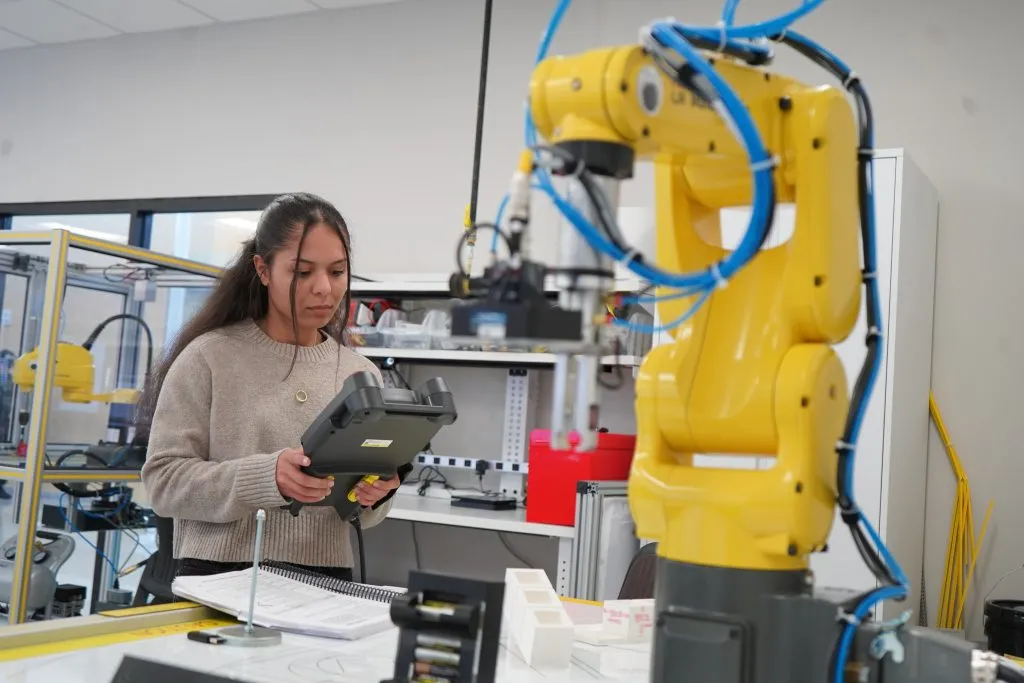
Naiya Salinas is one of a half-dozen students enrolled in the new AI Enhanced Robotic Manufacturing program at the Georgia Veterans Education Career Transition Resource (VECTR) Center, which is setting a new standard for technology-focused careers.
Naiya Salinas and her instructor, Deryk Stoops, looked back and forth between the large screen on the wall and a hand-held monitor.
Tracing between the lines of code, Salinas made a discovery: A character was missing.
The lesson was an important, real-world example of the problem-solving skills required when working in robotics. Salinas is one of a half-dozen students enrolled in the new AI Enhanced Robotic Manufacturing program at the Georgia Veterans Education Career Transition Resource (VECTR) Center, which is setting a new standard for technology-focused careers.
The set-up of the lab was intentional, said Stoops, who designed the course modules and worked with local industry to determine their manufacturing needs. Then, with funding from the Georgia Tech Manufacturing Institute's (GTMI) Georgia Artificial Intelligence in Manufacturing (Georgia AIM) project, Stoops worked with administrators at Central Georgia Technical College to purchase robotics and other cutting-edge manufacturing tools.
As a result, the VECTR Center’s AI-Enhanced Robotic Manufacturing Studio trains veterans in industry-standard robotics, manufacturing modules, cameras, and network systems. This equipment gives students experience in a variety of robotics-based manufacturing applications. Graduates can also finish the 17-credit course with two certifications that carry some weight in the manufacturing world.
“After getting the Georgia AIM grant, we pulled together a roundtable with industry. And then we did site visits to see how they pulled AI and robotics into the space,” said Stoops. “All the equipment in here is the direct result of industry feedback.”
Statewide Strategic Effort
Funded by a $65 million grant from the federal Economic Development Administration, Georgia AIM is a network of projects across the state born out of GTMI and led by Georgia Tech’s Enterprise Innovation Institute. These projects work to connect the manufacturing community with smart technologies and a ready workforce. Central Georgia received around $4 million as part of the initiative to advance innovation, workforce development and STEM education in support of local manufacturing and Robins Air Force Base.
Georgia AIM pulls together a host of regional partners all working toward a common goal of increasing STEM education, access to technology and enhancing AI among local manufacturers. This partnership includes Fort Valley State University, the Middle Georgia Innovation Project led by the Development Authority of Houston County, Central Georgia Technical College, which administers the VECTR Center, and the 21st Century Partnership.
“This grant will help us turn our vision for both the Middle Georgia Innovation Project and the Middle Georgia STEM Alliance, along with our partners, into reality, advancing this region and supporting the future of Robins AFB,” said Brig. Gen. John Kubinec, USAF (ret.), president and chief executive officer of the 21st Century Partnership.
Georgia AIM funding for Central Georgia Technical College and Fort Valley State focused on enhancing technology and purchasing new components to assist in education. At Fort Valley State, a mobile lab will launch later this year to take AI-enhanced technologies to underserved parts of the state, while Central Georgia Tech invested in an AI-enhanced robotics manufacturing lab at the VECTR Center.
“This funding will help bring emerging technology throughout our service area and beyond, to our students, economy, and Robins Air Force Base,” said Dr. Ivan Allen, president of Central Georgia Technical College. “Thanks to the power of this partnership, our faculty and students will have the opportunity to work directly with modern manufacturing technology, giving our students the experience and education needed to transition from the classroom to the workforce in an in-demand industry.”
New Gateway for Vets
The VECTR Center’s AI-Enhanced Robotics Manufacturing Studio includes FANUC robotic systems, Rockwell Automation programmable logic controllers, Cognex AI-enabled machine vision systems, smart sensor networks, and a MiR autonomous mobile robot.
The studio graduated its first cohort of students in February and celebrated its ribbon-cutting ceremony on April 17 with a host of local officials and dignitaries. It was also an opportunity to celebrate the students, who are transitioning from a military career to civilian life.
The new technologies at the VECTR Center lab are opening new doors to a growing, cutting-edge field.
“From being in this class, you really start to see how the world is going toward AI. Not just Chat GPT, but everything — the world is going toward AI for sure now,” said Jordan Leonard, who worked in logistics and as a vehicle mechanic in the U.S. Army. Now, he’s upskilling into robotics and looking forward to using his new skills in maintenance. “What I want to do is go to school for instrumentation and electrical technician. But since a lot of industrial plants are trying to get more robots, for me this will be a step up from my coworkers by knowing these things.”
News Contact
Kristen Morales
Marketing Strategist
Georgia AIM (Artificial Intelligence in Manufacturing)