
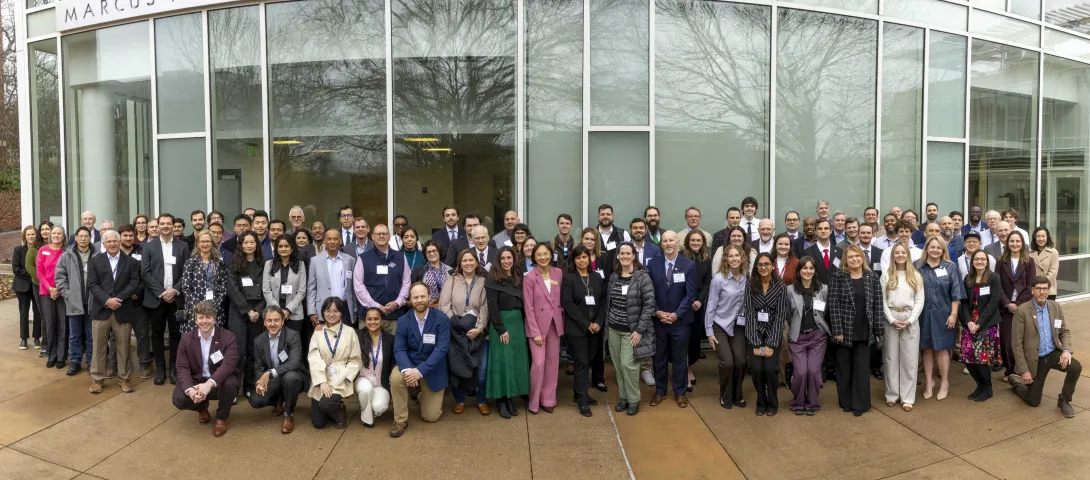
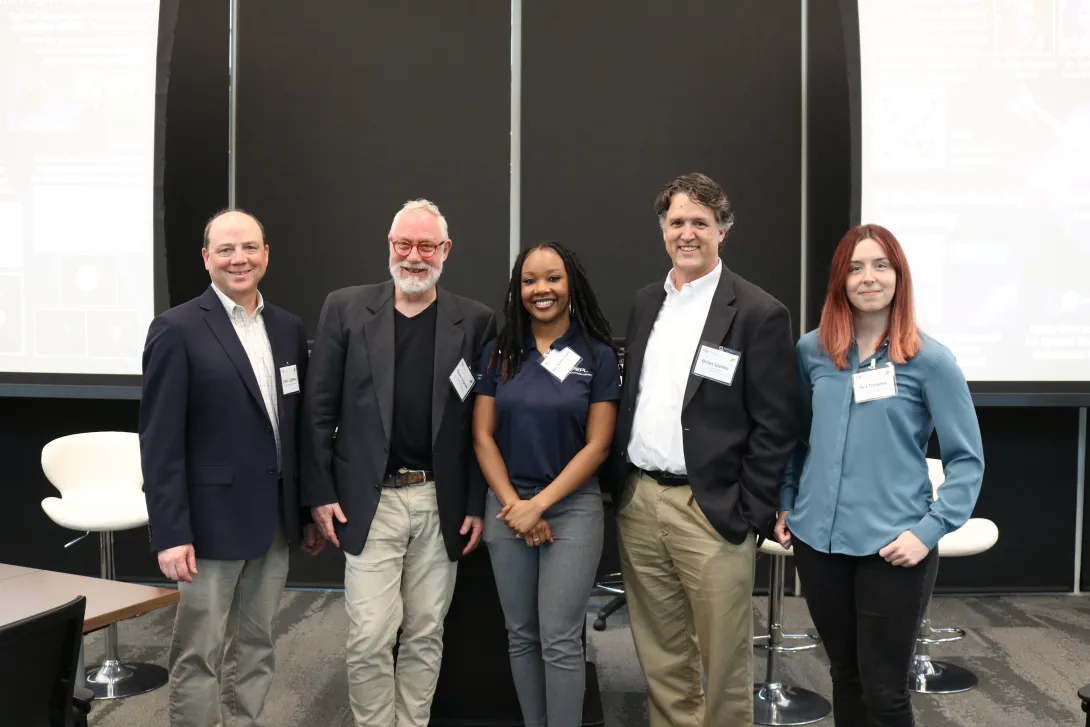
Group photo of the attendees of the GEMs-4 symposium.
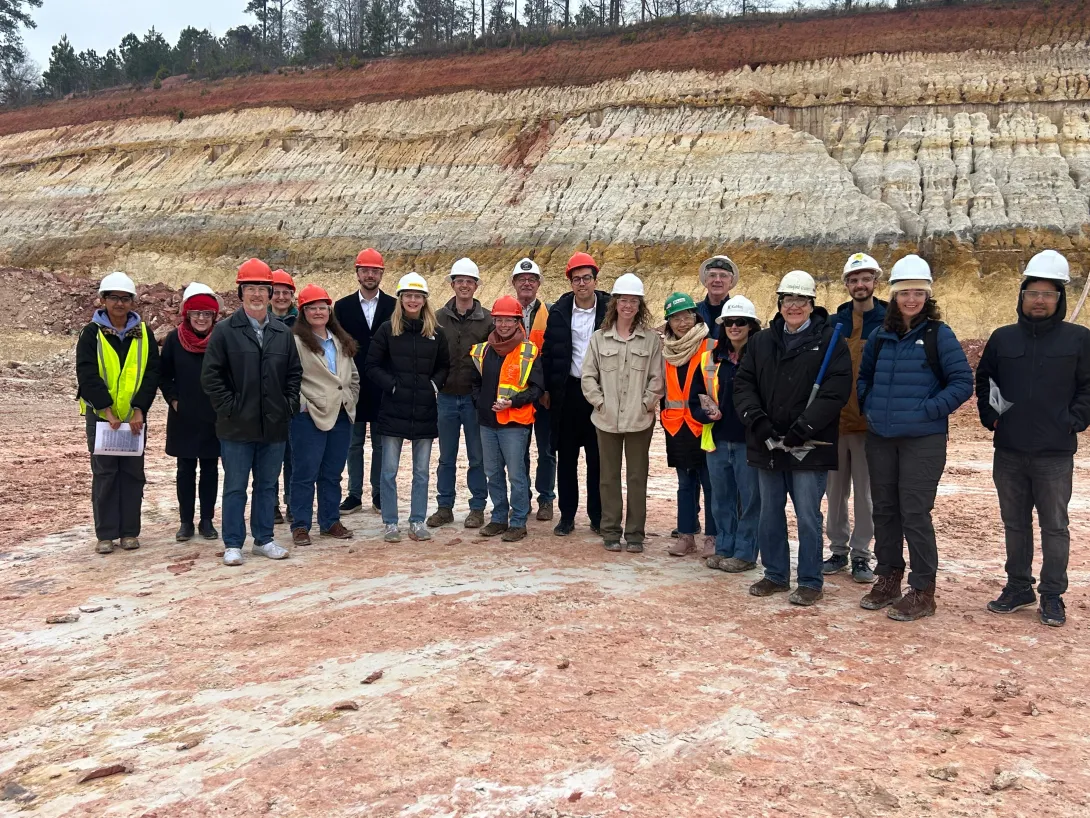
Day 2 of the symposium included a visit to a Georgia mining operation.
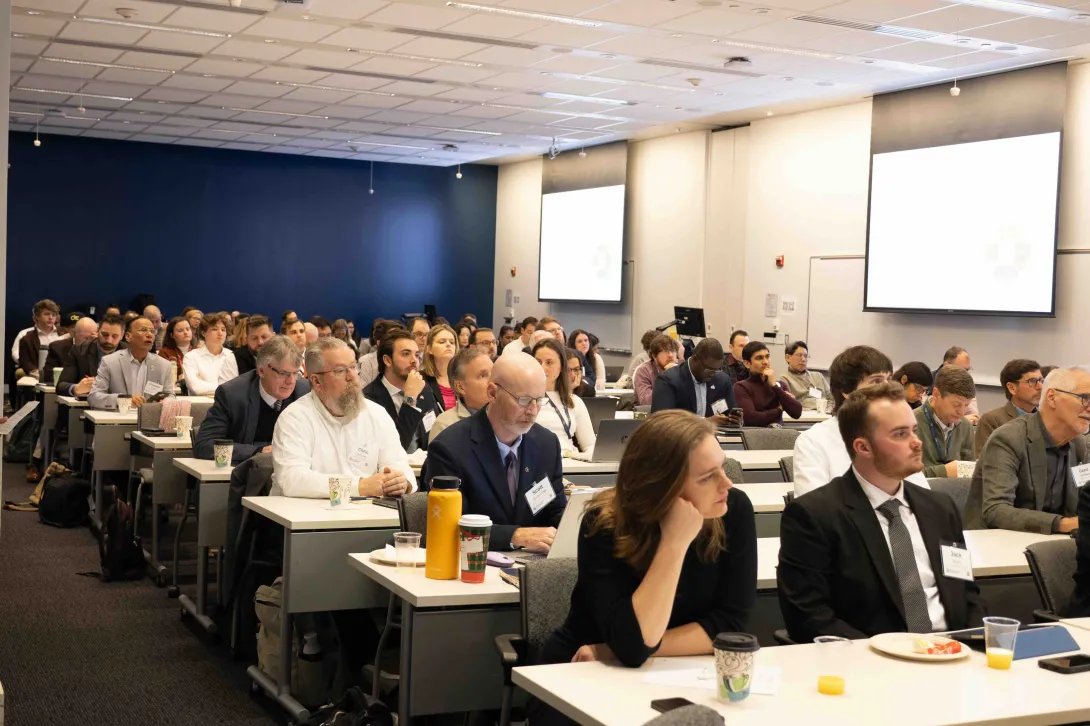
Attendees at the GEMs-4 workshop
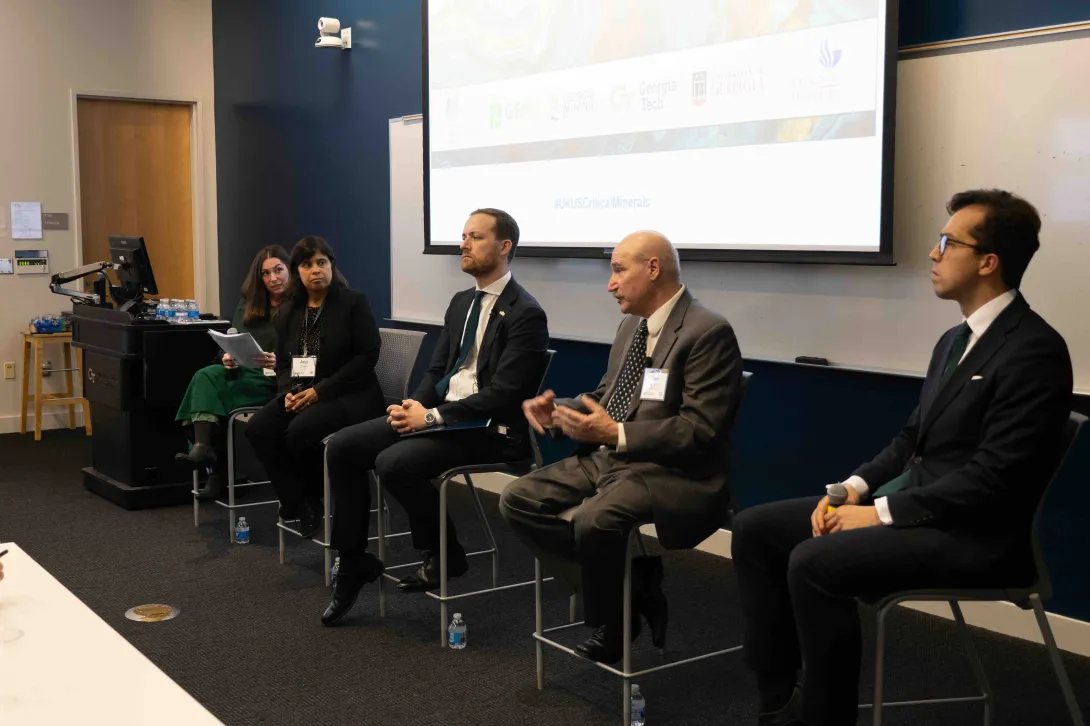
Critical Mineral Significance and Resources Panel at the GEMs-4 symposium
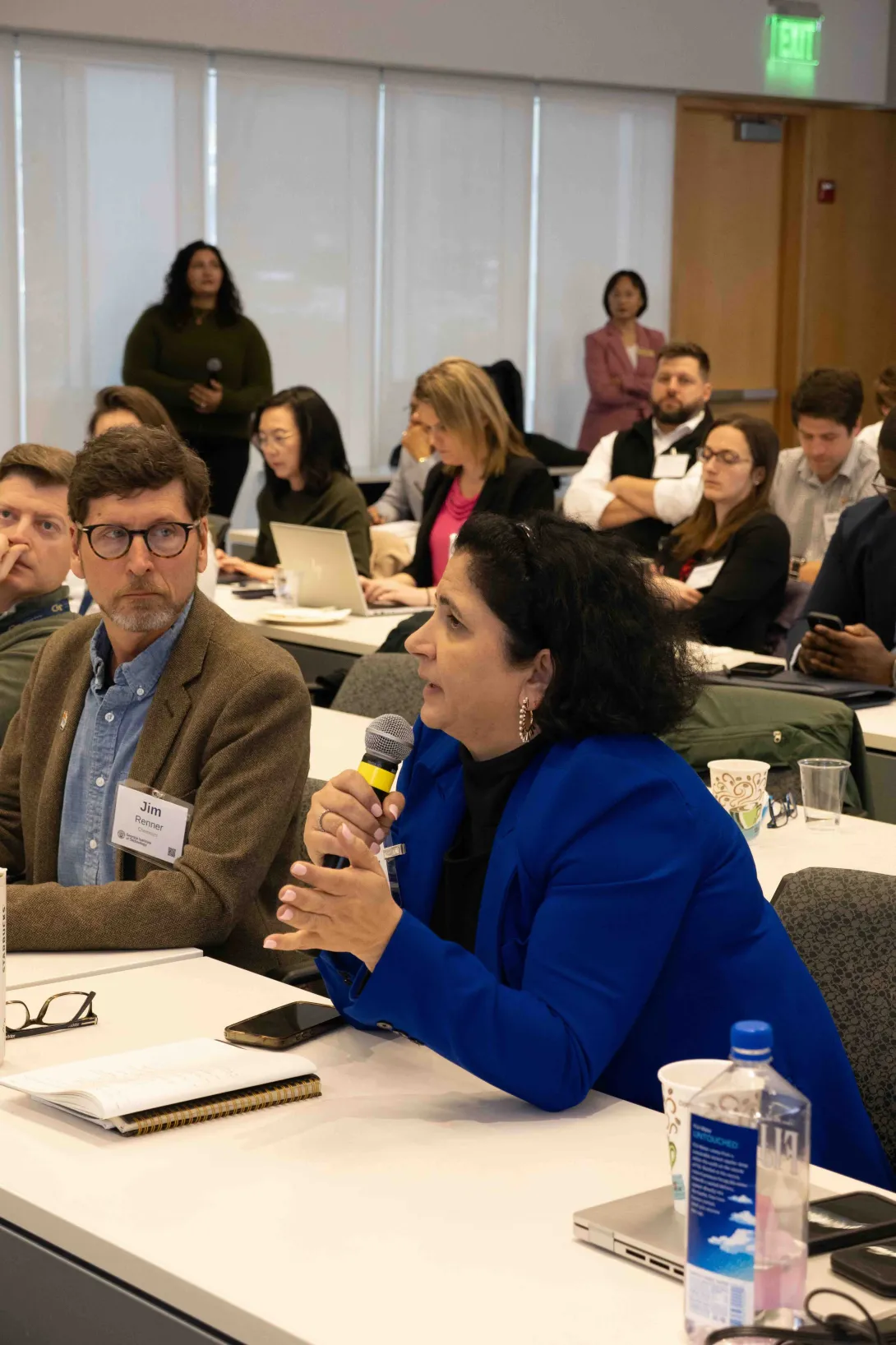
Attendee asking a question to the panel at the GEMS-4 Symposium
In February, the Georgia Institute of Technology, together with the University of Georgia, Georgia State University, the Georgia Mining Association, and the British Consulate‑General Atlanta, hosted the fourth Growing Partnerships for Essential Minerals (GEMs‑4) workshop in Atlanta. The workshop built on a growing transatlantic partnership dedicated to advancing innovation across the critical minerals value chain.
The two‑day event took place Feb. 4 – 5, coinciding with the Critical Minerals Ministerial hosted by U.S. Secretary of State Marco Rubio in Washington, D.C., on Feb. 4, which brought together more than 50 nations to strengthen and diversify global critical mineral supply chains. During this ministerial, U.K. Minister Seema Malhotra and U.S. Under Secretary of State Jacob Helberg signed a Critical Minerals Memorandum of Understanding, strengthening bilateral cooperation between the United States and the United Kingdom on critical mineral supply chains.
These broad efforts are supported by White House Executive Order 14363, which defines the Genesis Mission and aims to accelerate scientific discovery through AI. The order identifies critical minerals supply chain resilience as a national security imperative.
In Atlanta, these themes were brought to life in real time. The GEMs-4 workshop brought together researchers, policymakers, national labs, industry leaders, and workforce organizations from both the U.S. and the U.K. to address shared challenges in technology translation, permitting, investment, and talent development.
The state of Georgia’s integrated ecosystem, linking research universities, legacy industries, technical colleges, national labs, and public‑private partnerships, served as a case study. Presenters highlighted how existing industrial assets in the Southeast are being incorporated into emerging clean energy and critical minerals supply chains, offering a model for other regions seeking to build capabilities around extraction, processing, and manufacturing.
A U.K. member of Parliament representing Cornwall, where the U.K. has lithium reserves and deep critical mineral expertise, joined the convening, as well as representatives from the U.K. Critical Mineral Association, Camborne School of Mines, and the University of Kent. Together, they explored opportunities and challenges, from a fundamental science to a commercialization perspective grounded in real-world experience.
The alignment between the ministerial in Washington and the expertise present in Atlanta demonstrated the value of state-level engagement and how national agreements translate into practical collaboration on the ground.
“The Southeast has the research depth, industrial footprint, and collaborative spirit needed to lead in critical minerals innovation,” said Yuanzhi Tang, Georgia Power Professor in the School of Earth and Atmospheric Sciences, executive director of the Strategic Energy Institute, and founding director of the Center for Critical Mineral Solutions at Georgia Tech. “GEMs‑4 showed what’s possible when universities, industry, and government partners align around shared priorities.”
Day one featured strategic dialogue on critical mineral resources, innovation pathways, and partnership models. A recurring theme was the co-production of critical minerals alongside major mineral commodities. “Many critical minerals are produced as byproducts of larger mining operations, making it essential to integrate recovery strategies into existing mineral industries rather than developing entirely new extraction systems,” noted Crawford Elliott, professor of geosciences at Georgia State University.
Day two transitioned to field‑based learning, led by Paul Schroeder, professor of geology at the University of Georgia. Participants visited active operations to better understand how regional industrial strengths can support national and international supply chain goals. Schroeder said, “Connecting people to the long-standing mineral extraction economy at the mining and plant sites, where the work gets done with an amazingly skilled workforce, underscores the unique role of Georgia’s place‑based capacity in advancing national and transatlantic supply chain goals.”
Organizers emphasized that resilient supply chains rely on regional capabilities built over time through university collaboration, industry partnerships, and community engagement. With three years of inter‑university coordination now underpinning the GEMS platform, the 2026 workshop demonstrated how the Southeast is contributing actionable models for U.S.-U.K. cooperation.
“Ecosystem-building at this scale requires participation from every part of the value chain, and we are encouraged by the model GEMs presents,” said Rachel Galloway, Consul General at British Consulate General Atlanta. “The collaboration across universities, industry, and government is exactly what enables long‑term impact on both sides of the Atlantic.”
Through focused dialogue and partnership-building, the symposium strengthened transatlantic collaboration, highlighted regional strengths, and accelerated innovation and translation across the critical minerals value chain, from resource characterization and processing to recycling, manufacturing, and deployment.
For more information about the GEMS initiative, visit: https://gems.research.gatech.edu/.
News Contact
Priya Devarajan
Georgia Tech
British Consulate-Atlanta
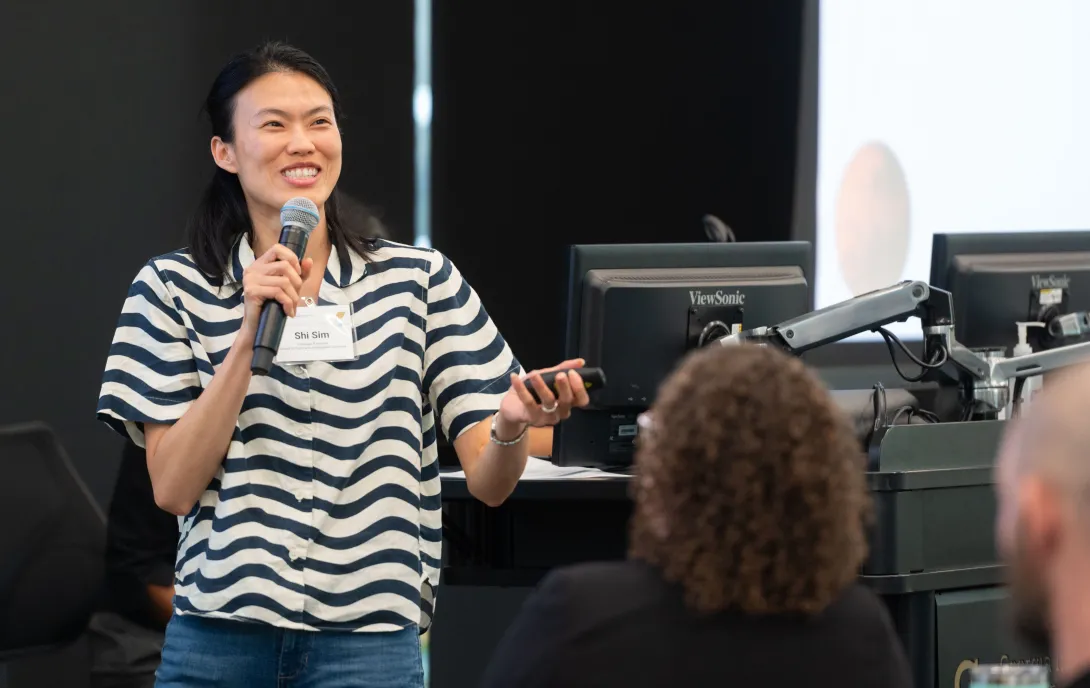
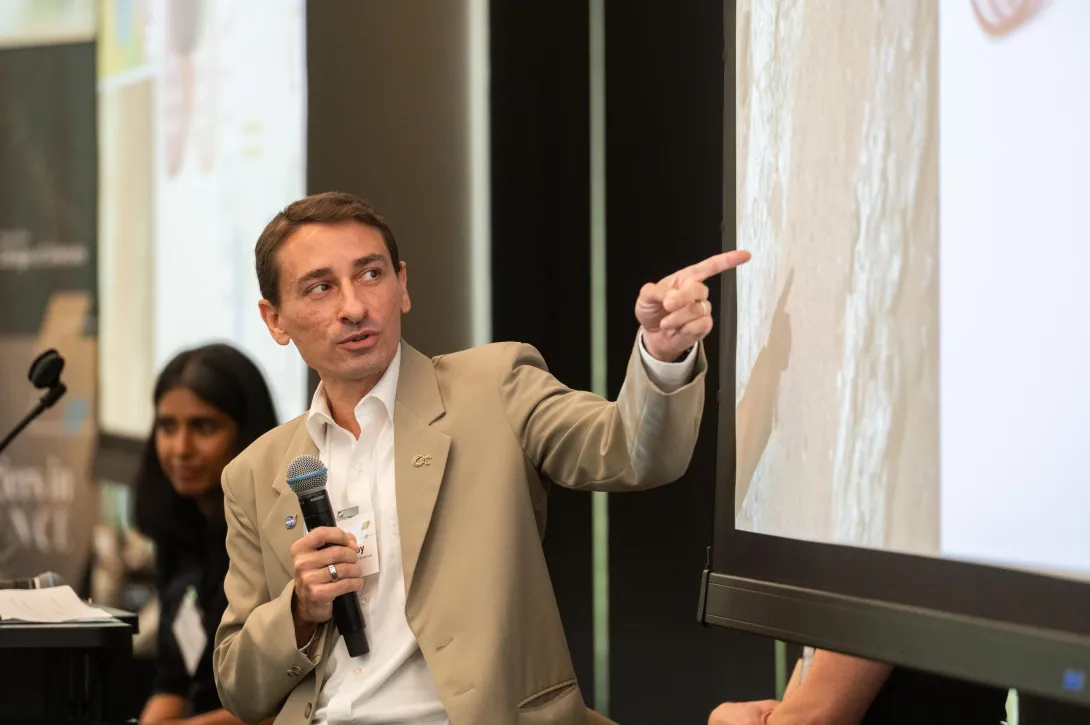
One day after the historic Artemis II launch, the College of Sciences welcomed more than 150 researchers, students, and community members to its signature Frontiers in Science conference. Held on April 2, the full-day event focused on space research guiding discovery and innovation.
As during previous editions, this year’s conference featured more than two dozen scientists, engineers, policy experts, and thought leaders from Georgia Tech and beyond, illustrating how collaboration across fields – from science and engineering to public policy and international affairs – helps to advance strategic research priorities.
“Frontiers is about discovery and connections across disciplines and generations,” says Susan Lozier, dean of the College of Sciences and Betsy Middleton and John Clark Sutherland Chair. “This edition provided an inspiring glimpse into the future of space exploration and the many ways Georgia Tech is contributing to research and missions seeking answers to what lies beyond our planet.”
Commitment to Space
Space research is a key institutional priority at Georgia Tech, which is home to numerous academic and research programs in planetary sciences, robotics, mission design, space policy, and other areas.
The recently established Space Research Institute (SRI) serves as the central hub connecting the broad range of space-related research across campus. Led by Jud Ready, who also serves as principal research engineer at the Georgia Tech Research Institute, SRI has expanded support for space research and commercialization through initiatives such as the CreationsVC Space Fellows Program and Centers, Programs, and Initiatives seed grant program.
SRI’s efforts are in line with Georgia Tech’s long-standing contribution to space exploration. Hundreds of Yellow Jacket alumni work in the space sector, including several graduates who are playing key roles in the Artemis program. To date, more than a dozen Georgia Tech alumni have traveled to space.
Exploring the Final Frontier
The conference featured a series of panels and discussions led by faculty and researchers from the Colleges of Sciences and Engineering as well as the Ivan Allen College of Liberal Arts.
Sessions explored how researchers are studying the processes and conditions that support planetary habitability, seeking to answer one of humanity’s greatest questions: Does life exist beyond Earth? Speakers also examined how analog fieldwork in Earth’s extreme environments can inform space exploration, and how space research, in turn, can deepen our understanding of our own world.
Additional conversations centered on building better space missions through improved understanding of team and individual resilience, data collection, navigation, and the development of advanced technologies like the robots developed through the NASA LASSIE Project.
Frontiers also highlighted Georgia Tech’s commitment to preparing the next generation of space scientists, engineers, and leaders. Student training and engagement were recurring themes throughout the day, with speakers emphasizing opportunities for student-led and student-run missions and research. A panel of Georgia Tech alumni shared their own STEM career journeys, challenging the idea of “one right path” to success — and acknowledging the resources and opportunities available at the Institute.
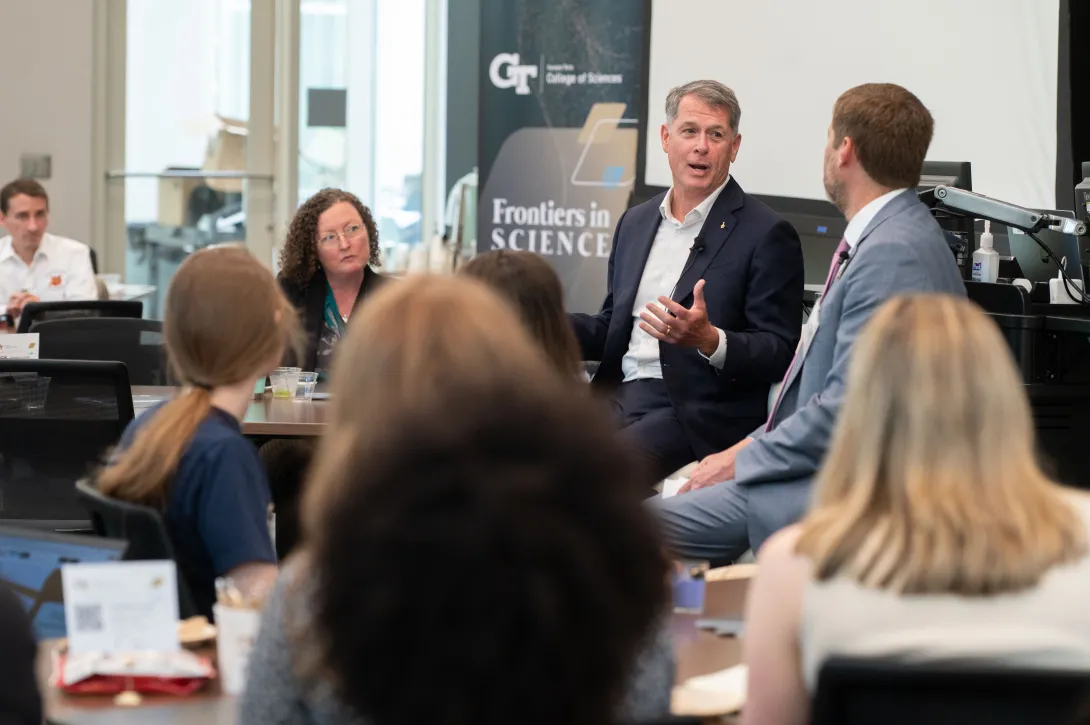
A highlight of the conference was a fireside chat with Atlanta-native, retired U.S. Army Colonel and NASA Astronaut R. Shane Kimbrough (M.S. Operations Research 1998). Kimbrough, who spent a total of 388 days in space and performed nine spacewalks across three missions, reflected on his career and the evolution of spaceflight. He emphasized the expanding role of public-private and international partnerships in advancing ambitious goals, such as creating a permanent human outpost on the Moon.
Policy and Public
The conference also explored how policy influences space discovery and innovation, with discussions touching on such issues as space security, access, governance, sustainability — and the influence of technology and science fiction on public perception and policy.
Panelists described current policy frameworks governing outer space as struggling to keep pace with rapidly advancing technologies and expanding activities. According to these experts, increasing tensions among commercial, research, and recreational uses of space call for greater coordination among private and government entities to balance competing priorities while maximizing opportunities for innovation and exploration.
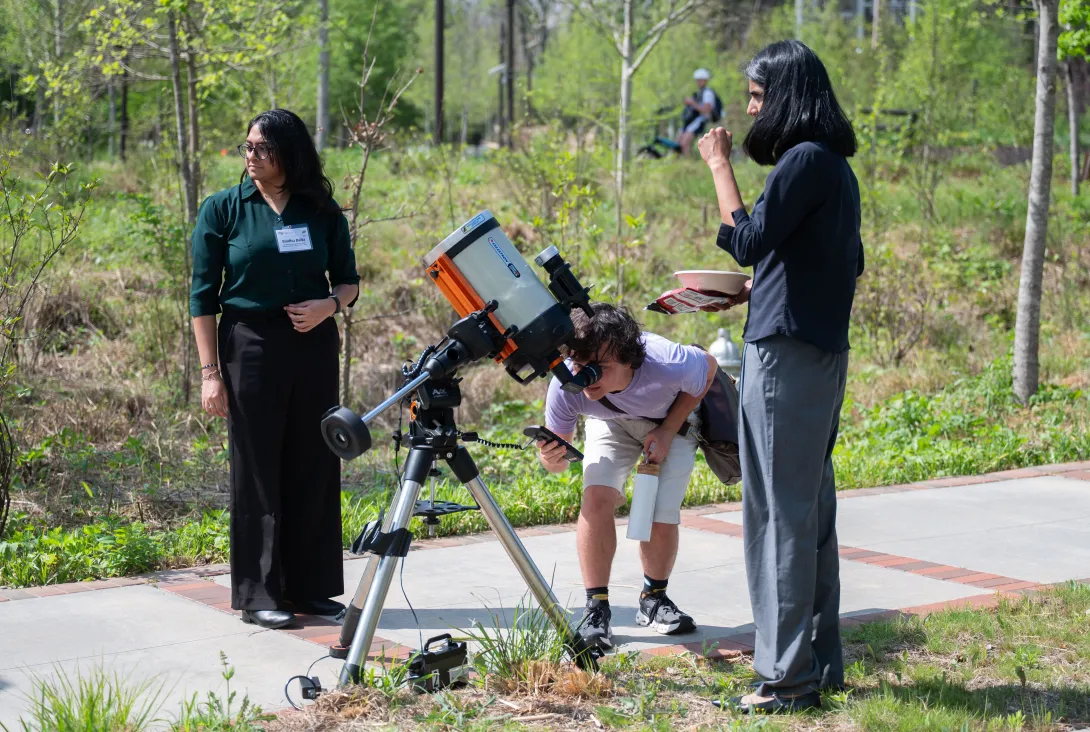
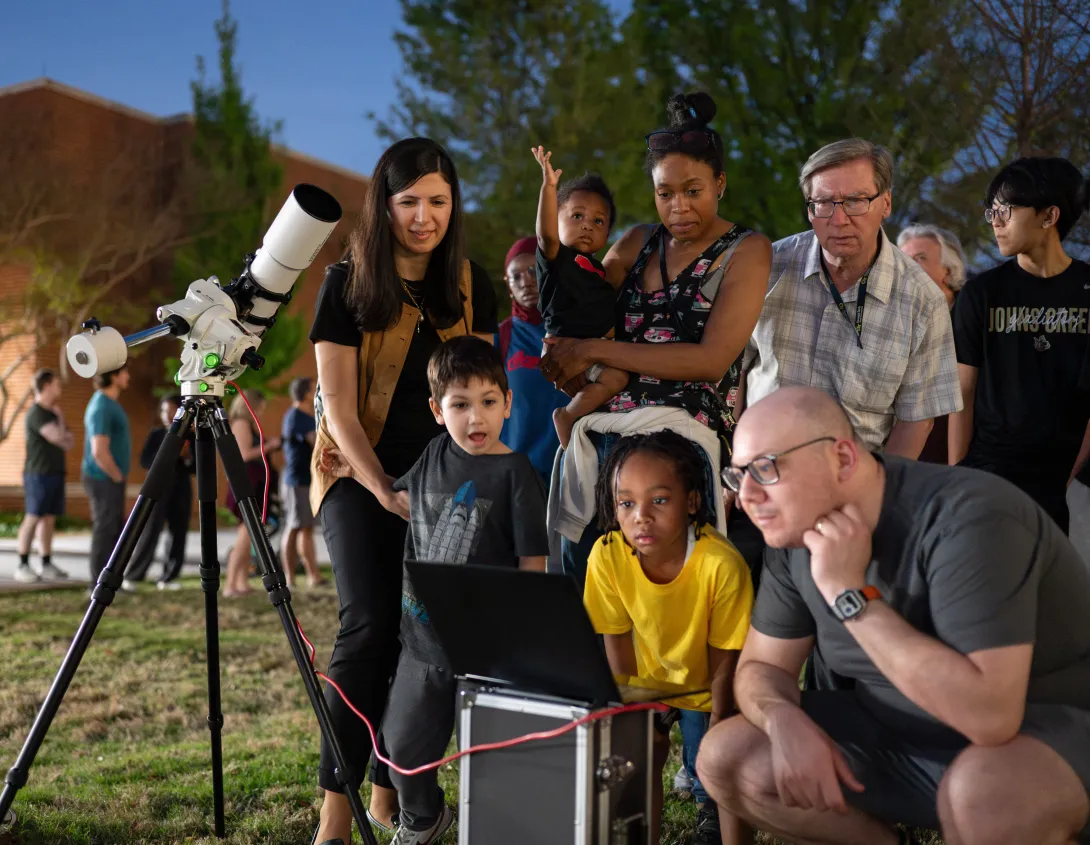
The conference was punctuated by a networking lunch connecting attendees with Atlanta’s public astronomy community – including partners at several universities and the Georgia Tech Astronomy Club, which set up telescopes for attendees to safely observe the sun. Later that evening, the Georgia Tech Observatory hosted its Public Night, welcoming the broader Atlanta community to campus for telescope views of Jupiter, the Orion Nebula, and other celestial bodies.
The Observatory Night was a fitting conclusion to a full day focused on Georgia Tech’s commitment and contributions to inspiring future generations of space explorers through research, education, and outreach.
Experience the Frontiers conference in pictures on the College of Sciences’ Flickr account.
News Contact
Writer: Lindsay C. Vidal

A composite graphic of the mind featuring an overlay of a thank you note from Turing Award winner Donald Knuth following a virtual Q&A at Georgia Tech.
Although it’s often unintentional, faculty can seem intimidating. So, reaching out to a professor with questions can be quite a challenge for some students. For others, not so much.
Zachary Axel is a great example. Reaching well beyond Georgia Tech faculty, he started sending “cold call” emails in 2023 to A.M. Turing Award winners and other computing luminaries.
The emails shared Axel’s vision for a virtual platform that would enable Georgia Tech students and faculty to connect with some of the most distinguished minds in computing.
The first to accept was Moshe Vardi, a distinguished professor of computer science at Rice University and recipient of the 2020 AAAI Allen Newell Award and several other ACM awards. Vardi’s January 2024 presentation was a hit and served as a template for what grew to become the Turing Mind Series at Georgia Tech.
Three years and nearly two dozen emails later, the series is wrapping up later this month, hosting its 22nd event and its 15th Turing Award winner.
Registration is open for the final session of the Turing Mind Series on March 30, featuring 2019 Turing Laureate Patrick Hanrahan, widely renowned for his enduring contributions to 3D computer graphics.
“There are approximately 70-75 living Turing Award winners. I am proud to say that we have hosted roughly 20% of them for the Turing Minds Series,” said Axel, a former Online Master of Science in Computer Science (OMSCS) student.
“Fifteen felt like the right number to end on. We set out to connect Georgia Tech students and researchers with Turing Laureates, and we did exactly that. Mission accomplished."
As one might guess, Turing Award winners don’t receive a lot of unsolicited emails from students. Vinton Cerf, a 2004 Turing Award winner, says people typically hesitate to engage without some form of endorsement or introduction.
“What is notable about Zachary’s initiative is that he undertook to ‘cold call,’ well, ‘cold email,’ Turing Award recipients to ask them to participate in the program,” said Cerf, who, along with fellow 2004 Turing Laureate Robert Kahn, was instrumental in the pioneering development of fundamental internet communication protocols.
“It is a measure of his confidence and optimism that he succeeded in persuading Turing awardees to engage in the speaking program. Zachary did not hesitate and, in some ways, that may be why he was so successful,” said Cerf.
Axel credits GT Computing Dean Emeritus Zvi Galil with encouraging him and offering guidance along the way.
“Zach is amazing, and he has a lot of chutzpah,” said Galil. “The Turing Minds Series is a remarkable achievement and has become the premier global speaker platform for computer science luminaries.”
Axel thinks he was successful early on for two reasons: he kept it simple, and he used his Georgia Tech email address. He emailed the first five Turing Laureates from the perspective of a student hungry for knowledge.
“I simply asked the Laureates I reached if they would give 30 minutes of their time to virtually present to me and my GT classmates,” said Axel.
He says he would thoroughly research each winner so he could reference a presentation, paper, or another specific aspect of their work in his email. “I did my homework. I made it very easy for them to say yes.”
Axel’s request emails also offered the Turing Laureates –and the Nobel Prize Laureates who were also invited– the option of sharing a presentation or participating in a Q&A. It was this decision to offer a Q&A format that led to one of the most significant moments of the Turing Mind Series for Axel.
“That's how we got legendary 1974 Turing Laureate Donald Knuth. Known for being extremely selective in accepting speaking invitations, he specifically stated that the offer to do a Q&A format was the reason he accepted,” said Axel.
“I also don't think it hurt that the email was coming from an @gatech.edu address, as the Georgia Tech name offered us significant credibility.”
Knuth, widely regarded as the “father of algorithm analysis,” and renowned for his foundational work, The Art of Computer Programming, joined the Turing Minds Series in October 2025 as its 12th guest.
“Thanks so much to you and Parsa for honoring me with an invitation to speak in the online ‘Turing Minds’ series at Georgia Tech,” Knuth said in a note written to Axel.
“It was lots of fun for me this morning to try to answer the excellent questions posed by so many of the viewers.”
Parsa Khazaeepoul is also a former OMSCS student and the co-founder of the series. Axel says that Khazaeepoul’s technical expertise led to the success of the series’ virtual platform.
“Parsa built the series website and managed all of the challenges of hosting and scaling a platform that has impacted to date 4,000+ students and faculty from Georgia Tech and throughout the world.”
The Turing Minds Series at Georgia Tech hosted its first speaker in January 2024. The final installment is scheduled for March 30 at 1 p.m.
But this isn’t the end of the series. Live video recordings of each of the soon-to-be 15 events in the series are available at https://www.turing.rsvp/.
Beyond the website, Axel says the Turing Minds Series is partnering with the ACM, the creators and distributors of the A.M. Turing Award. The goal is to integrate the series into the ACM ecosystem, where it will be accessible to the ACM’s 110,000 student and professional members in more than 170 countries.
"We had a lot of people reach out to us to thank us for what we were doing. Knowing that students left these conversations seeing what's possible in computer science, that meant everything to us," said Axel.
News Contact
Ben Snedeker, Senior Communications Mgr.
Georgia Tech College of Computing
albert.snedeker@cc.gatech.edu
Georgia Tech Energy Day returns this year on March 19 with an expanded focus and a new collaborative momentum. Cohosted by the Georgia Tech Institute for Matter and Systems (IMS) and the Strategic Energy Institute, (SEI) with plenary session support from the Energy Policy and Innovation Center, Energy Day 2026 convenes leaders from academia, industry, government, and students to address the challenges associated with meeting the rapidly growing electricity demand driven by artificial intelligence (AI) and high-performance computing.
Set in the heart of Tech Square on the Georgia Tech campus, this year’s event explores how energy systems, materials, technologies, supply chains, and policy must evolve in response to AI’s accelerating impact. As digital infrastructure expands and computation intensifies, the need for reliable, resilient, and sustainable power has never been more urgent.
“Energy Day reflects Georgia Tech’s strength in connecting world-class research in materials and components with the infrastructure and partnerships needed to translate discovery into scalable energy technologies that serve industry, society, and the future economy,” said Eric Vogel, executive director of the IMS and the Hightower Professor in Materials Science and Engineering.
Energy Day 2026 also marks an important milestone with the introduction of its first group of corporate sponsors: GE Vernova, Southern Company, Georgia Power, ExxonMobil, Southwire Spark, Gems Setra, and Tektronix. Their support reflects a shared commitment to advancing energy solutions.
“Tektronix is excited to be part of Energy Day because advancing the future of energy starts with precise measurement and trusted insights,” said Christopher Bohn, president of Tektronix. “From power electronics and high voltage systems to grid scale renewables and AI driven control technologies, the breakthroughs discussed here directly align with the innovations we support through our products and solutions. Collaborating with Georgia Tech allows us to engage early with emerging research and the next generation of engineers—critical collaborators in building a cleaner, smarter, and more resilient energy ecosystem.”
The keynote address will be delivered by Vanessa Z. Chan, a nationally recognized leader at the intersection of innovation, commercialization, and emerging technologies. Chan will provide insights on accelerating technological discovery, emphasizing how AI is transforming energy and materials design. She will discuss how commercialization strategies must rapidly evolve across multidisciplinary energy domains from grid modernization to advanced batteries and clean manufacturing.
Building on the themes introduced in the keynote, the program transitions into a fireside chat with Georgia Tech EVPR Tim Lieuwen featuring Amit Kulkarni and Jim Walsh. Kulkarni is vice president of Product Management and Strategy for the Gas Power business within GE Vernova, where he oversees the world’s largest portfolio of power generation equipment. Walsh, vice president of GE Vernova’s Consulting Services, leads teams providing innovative solutions across the full spectrum of power generation, delivery, and utilization.
Next comes a policy-focused panel that will explore the surge in power demand driven by AI, how the United States is addressing today’s most urgent energy challenges, and the long-term implications of today’s decisions for a sustainable energy future. Bringing together leading voices in U.S. environmental and energy policy, the panel features Joe Aldy of Harvard University and former special assistant to the president for Energy and Environment; Al McGartland of New York University’s Institute for Policy Integrity and former Environmental Protection Agency lead economist and director of the National Center for Environmental Economics; and Kevin Rennert, fellow and director of the Comprehensive Climate Strategies Program at Resources for the Future and former staff member on the U.S. Senate Committee on Energy and Natural Resources.
The second panel focuses on critical materials — the foundation of advanced energy systems and digital technologies. As AI, data centers, and advanced energy technologies drive demand for critical materials, securing them now requires integration and coordination across the entire value chain. Panelists include Rachel Galloway, British consul general in Atlanta; Vijay Murugesan, head of Materials Intelligence and Digital Innovation at Amazon; Colin Spellmeyer, executive strategic sourcing leader at GE Vernova; Charles Sims, Tennessee Valley Authority Distinguished Professor of Energy and Environmental Policy at the University of Tennessee; and Nortey Yeboah, principal engineer at Southern Company. Together, they will offer perspectives on the policy and economic frameworks shaping the energy supply chain, from developing raw resources to manufacturing the technologies essential to future energy systems.
In the afternoon, participants can dive deeper into specialized topics through three focused technical tracks.
- “Meeting the Demand for Power” will examine how emerging technologies, advanced nuclear systems, and renewable integration can work together to deliver reliable, resilient electricity.
- “Data Center Infrastructure and Resources” will explore innovations in thermal management technologies, energy-efficient computing, and the broader resource impacts of expanding digital infrastructure.
- “Grid Technologies and Markets” will highlight strategies for strengthening grid capacity, incorporating demand-side management, and optimizing carbon performance as energy systems evolve.
“Meeting the rapidly rising electricity demand driven by AI requires bold ideas, coordinated action, and research that moves at the speed of innovation,” said Yuanzhi Tang, executive director of the SEI. “Energy Day 2026 brings together the people and expertise needed to shape resilient, sustainable energy systems for the future. At Georgia Tech, we see this event as a catalyst for new partnerships, new solutions, and a shared commitment to strengthening the nation’s energy foundation.”
Energy Day 2026 is designed for researchers advancing emerging energy technologies, policymakers navigating shifting regulatory and geopolitical landscapes, industry professionals seeking insight into emerging tools and supply chains, and students preparing to enter one of the most consequential sectors of the decade. It also welcomes anyone interested in AI, sustainability, electrification, and critical materials.
Join us to explore the future of energy. To learn more and register, visit: Energy Day 2026.
News Contact
Priya Devarajan | Communications Program Manager
Written by: Shweta Ram and Seungho Lee
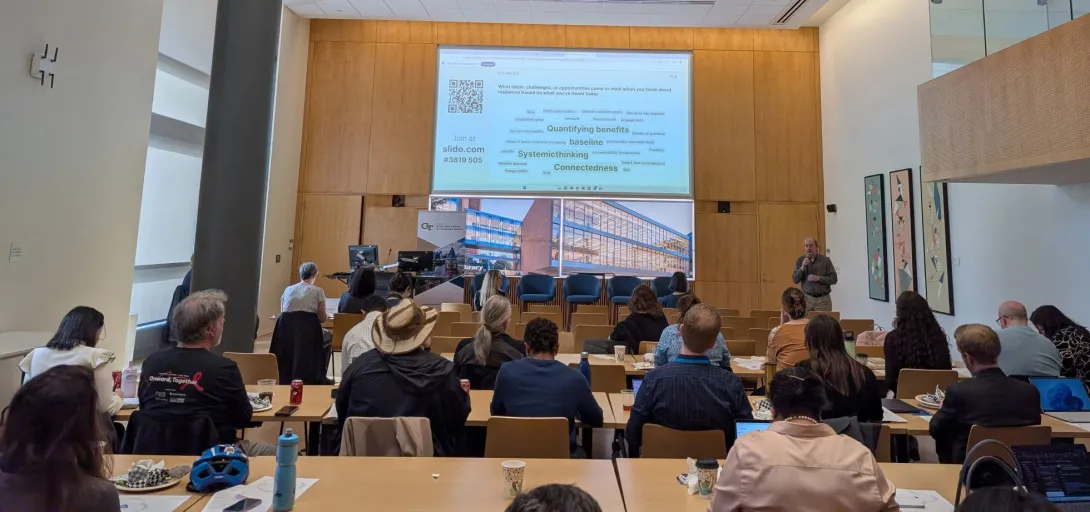
What does it mean to design systems that endure even after major disruptions? This question framed the 2026 Brook Byers Institute for Sustainable Systems (BBISS) Sustainability Showcase, where conversations over two days spanned the Georgia coast, wildfire modeling, AI data centers, infrastructure, community engagement, and the joy of working for a more sustainable and resilient world. Across disciplines and scales, a unifying theme emerged: resilience is not a single solution. It is a systems-level challenge requiring integration across science and technology, policy, communities, and human experience.
From Coastlines to Communities
The showcase opened with a keynote from President Emeritus G. Wayne Clough on wildlife management and resiliency along Georgia’s coast. The conversation that followed between Clough and BBISS Executive Director Beril Toktay highlighted the interconnection between public policy, wilderness conservation, community leadership, and scientific research. The session highlighted not only the urgency of protecting fragile ecosystems, but also that resilience works best when it is community-focused and community-driven.
Subsequent panels continued this systemic perspective. Sessions on community engagement, biotechnology-derived, climate-resilient plants, the flood resilience of Georgia coastal communities, wildfire prediction and prevention, and infrastructure resilience analytics all emphasized that resilience depends on the synthesis of many disciplines.
Across sessions, researchers emphasized that infrastructure resilience must include governance frameworks informed by good science, community engagement based on trust, and sustained collaboration that seeks to constantly improve the science, policy, and stakeholder relationships. The researchers demonstrated that they understand their role to be greater than merely modeling risk, but as collaborators who translate research into practical solutions that communities can adopt, maintain, and trust.
AI Data Centers: A New Resilience Frontier
Day two shifted attention to data centers, which are emerging as a critical resilience frontier. As artificial intelligence systems scale rapidly, so does the infrastructure that powers them, as well as the growing realization that digital systems are physical systems. Conversations examined the feedback loops that play a significant role in determining environmental impacts, such as chip architecture, AI workloads, data center sustainability, appropriate AI usage, and who makes the decisions on data center infrastructure development.
One of the most fascinating sessions came from Alexandria Smith, assistant professor in the School of Music at Georgia Tech. She presented an artistic yet algorithmic composition that sonified data from AI data centers. Through translating kilowatt-hour usage and interconnection data into immersive soundscapes, she reframed data centers not as static input-output machines, but as adaptive, living systems. Drawing inspiration from Physarum polycephalum, a slime mold without a brain or nervous system known for its innate problem-solving abilities, she invites the listener to imagine infrastructure that senses, adapts, and self-optimizes.
Campus as a Living Laboratory
In her session, Professor Jennifer Chirico, associate vice president of Sustainability, highlighted Georgia Tech’s 2024 Climate Action Plan, focusing on building energy efficiency, renewable integration, materials management, and mobility transitions. The plan frames the Georgia Tech campus as a test bed for resilience strategies — an ecosystem where research, operations, and policy intersect. Chirico highlighted several examples where the alignment between research and implementation was essential in moving projects from modeling to pilot projects to sustained institutional change.
Finding Joy in Climate Action
Rebecca Watts Hull, Matthew Realff, and Christie Stewart led an interactive discussion inspired by Ayana Elizabeth Johnson’s framework for accelerating long-term climate action. Participants were asked three simple questions: What are you good at? What work needs doing? What brings you joy? Sustainability and climate research are fields often defined by serious urgency, crisis narratives, and burnout. This session offered a personal framework for resilience where emotional sustainability, professional fulfillment, and joy matter just as much as the motivation to drive a mission ever forward.
Building a Shared Vision
The Sustainability Showcase concluded with a facilitated visioning session led by Kristin Janacek, associate director for Interdisciplinary Research Impact, and Beril Toktay. In small groups, leaders, researchers, and community members worked to define what resilience looks like for them.
After the conversations, several themes emerged:
- Resilience must move from research to practical and community-based solutions to sustained action.
- Networks create opportunity but require long-term stewardship to endure.
- Choosing the right metrics to measure resilience will galvanize efforts to strengthen it.
- Community capacity is at least as important as built infrastructure.
Over two days, it became clear that Georgia Tech is not approaching resilience as a narrow technical problem. It is approaching it as a systems challenge — one that spans coastlines, campuses, disciplines, data centers, the Appalachian Mountains, data models, the arts, and human relationships. Designing systems that endure requires more than innovation. It requires collaboration, stewardship, and a shared commitment to long-term impact. The conversations launched at this year’s BBISS Sustainability Showcase laid the foundation for continued coordination and ambitious action in the months ahead.
News Contact
Brent Verrill, Research Communications Program Manager, BBISS
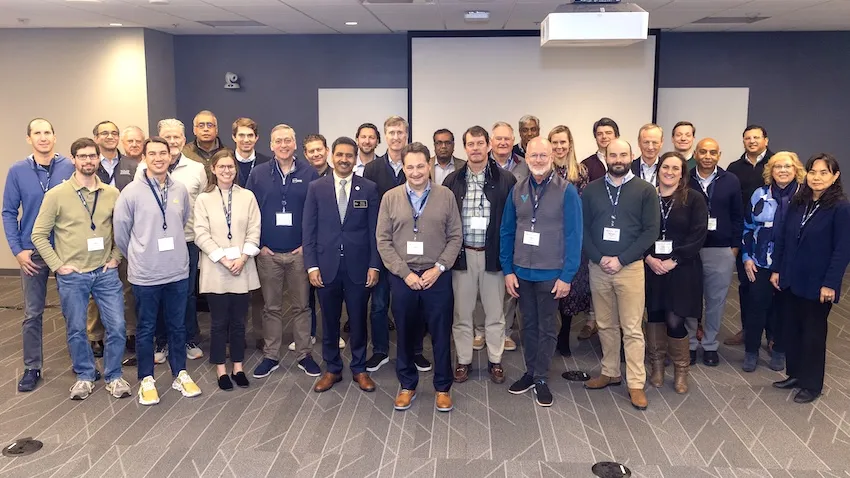
Top executives from Atlanta's venture capital community participated in the College of Computing's first VC summit, held on Jan. 21. Photo by Terence Rushin/GT Computing
The College of Computing is forging new relationships with Atlanta’s venture capital community to advance entrepreneurial opportunities for students.
Nearly two dozen venture capital (VC) leaders based in Atlanta and the Southeast participated in a half-day summit at the College on Jan. 21.
Co-hosts Dean of Computing Vivek Sarkar and Noro-Moseley Partners General Partner Alan Taetle organized the invitation-only summit. Their goals were to:
- Showcase the College’s research strengths and entrepreneurial culture
- Deepen connections between academic innovation and startups
- Explore opportunities for collaboration, commercialization, and startup growth
The summit’s guest list included founders, partners, and leaders from VC firms. Many of these firms focus on early-stage startups in SaaS, fintech, cybersecurity, and other emerging technology markets.
Research With Commercial Impact
Sarkar outlined the College of Computing’s academic mission and research priorities during his opening remarks. He emphasized the College’s role in advancing innovation in cybersecurity, artificial intelligence (AI), and other emerging research areas.
“One of the College’s strategic pillars is what I call ‘X to the power of Computing’,” Sarkar said. “Look at any discipline or industry X to see where they're innovating and where their advances are being made, and that’s where Computing meets that discipline.”
Along with remarks from the dean, the summit featured presentations highlighting Georgia Tech’s entrepreneurial ecosystem and College-led research initiatives with strong commercialization potential.
Expanding Support for Student Founders
Jen Whitlow leads Community Partnerships at Fusen, a global platform for student founders created by Atlanta philanthropist Christopher W. Klaus. She described Klaus’s support for student entrepreneurship, including GT Computing’s annual Klaus Startup Challenge. In 2025, Klaus awarded five winning teams $150,000 each to cover startup costs.
Whitlow also updated guests on Klaus’s commitment, announced in May 2025, to covering the incorporation costs for any graduating student who aspires to launch a startup.
“More than 600 graduates from last year’s Spring and Fall Commencements have accepted the gift, and more than 225 recent graduates have completed their incorporation to date,” Whitlow said. She added that a second cohort of Fall 2025 graduates is being processed over the next few weeks.
Offering an enterprise-level view, CREATE-X Rahul Saxena presented recent updates to commercialization at Georgia Tech and efforts to streamline entrepreneurial processes.
Saxena emphasized the launch of Velocity Startups, an accelerator that provides the resources and infrastructure student startups need to bring their innovations to market.
Building the Pipeline From Research to Startup
Following these updates, GT Computing faculty delivered lightning-round presentations highlighting the College’s research strengths in AI, cybersecurity, and high-performance computing.
“The tighter the local investing community is with Georgia Tech, the better off both are,” said Taetle, who has been a member of the College’s Advisory Board for more than 20 years.
“It’s critical in this super-competitive world that we do everything that we can to support this fantastic university.”
Taetle added that the summit was part of a broader effort to strengthen the College’s entrepreneurial pipeline.
“There are some really big ideas here, which could turn into really big companies,” he said. “We’ve made some great strides on the commercialization front, but we still have that opportunity and challenge in front of us.”
The afternoon concluded with a discussion of next steps and engagement opportunities, led by Sarkar and Jason Zwang, GT Computing’s senior director of development. The discussion focused on research partnership opportunities, startup formation, and student involvement.
Zwang emphasized the importance of investing in Atlanta’s innovation ecosystem, citing the city’s strong fundamentals and pro-growth climate for entrepreneurship.
“This gives us a unique opportunity to start working more closely with the local VC community, and it’s also great for our students,” Zwang said.
Sarkar agreed, saying, “There’s no downside for students to get involved in a startup. It might take off and be a bonanza. If not, the experience makes you a more competitive hire because of the breadth of experience you gain at a startup.”
To foster these opportunities for students, Zwang said that a key priority is to establish earlier, more intentional connections among students, startups, and investors.
“This is a pivotal moment,” he said. “We can determine how to connect students with the VC and startup community earlier and ensure these investors remain involved with the College.”
College leaders said the summit underscored Computing’s commitment to fostering an entrepreneurial culture and to building lasting relationships that can help accelerate the real-world impact of its research beyond the Institute.
“Georgia Tech is a force multiplier for entrepreneurship,” said Sarkar. “We’re here to change the world. We want to inspire a culture of bold, big entrepreneurial thinking, and look forward to the next steps that will follow this VC summit.”
News Contact
Ben Snedeker, Senior Communications Manager
Georgia Tech College of Computing
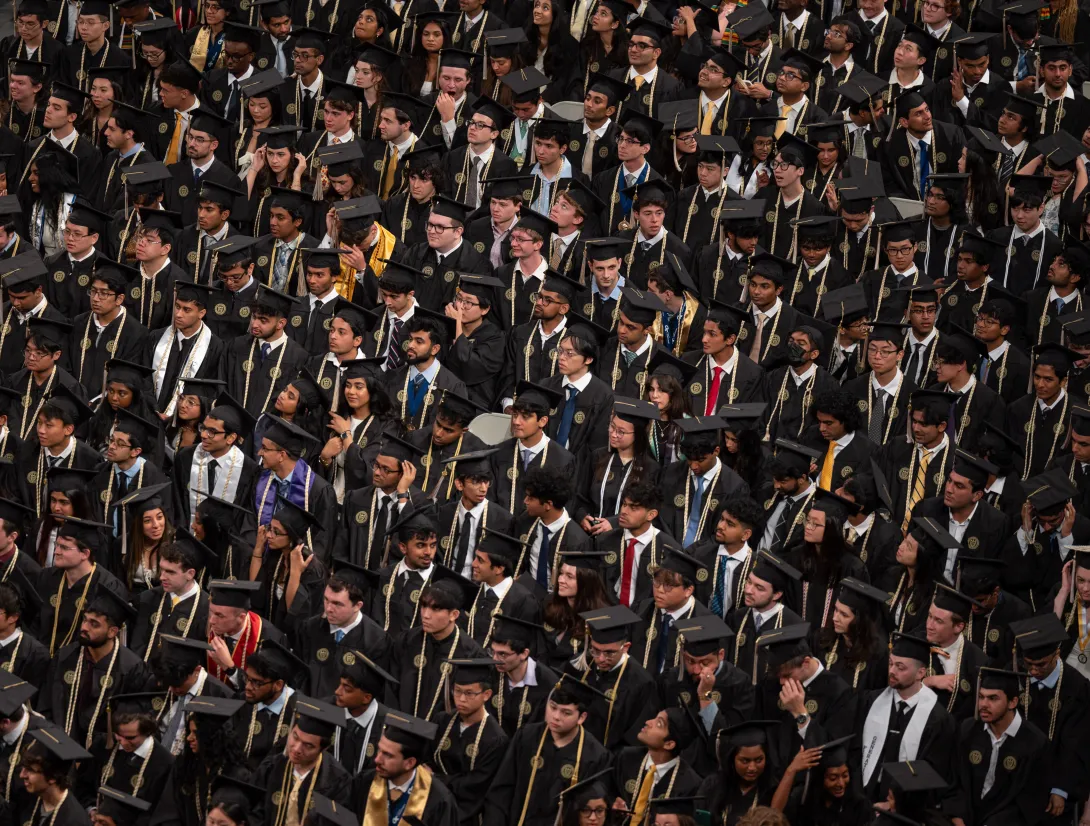
When Georgia Tech alumnus Christopher W. Klaus announced he would personally cover the incorporation costs for graduating Tech students who sought to launch a startup, he wanted the gift to ignite their entrepreneurial spirit and elevate Atlanta's startup culture.
For hundreds of aspiring entrepreneurs, including Raghav Balasubramaniam, founder and CEO of Overcast, and Shreyas Mavanoor, co-founder of Cortexa Labs, the gift helped turn ideas into action.
"The incorporation gift genuinely shaped the future of my company," said Balasubramaniam, who graduated in the spring with a master’s in computer science. "It allowed me to formalize Overcast at a time when it was just an idea on paper, and that legitimacy changed our trajectory for the better. The network that comes with this opportunity played an equally important role, giving me the space, mentorship, and push I needed to learn quickly, refine the product, and accelerate the company in a matter of months."
Now, Klaus’ offer, which includes access to GT Spark — a curated, community-driven experience with workshops, hands-on support, and mentorship from experienced founders and operators — will be extended to this semester's Georgia Tech graduates.
Mavanoor, who graduated with a master’s degree in cybersecurity, and his co-founder viewed the gift as a "chance to supercharge" their startup's ability to engage with customers and potential investors, as well as a commitment to creating a collaborative and vibrant startup culture in Atlanta.
A Boston Consulting Group study found that increasing the number of local startups and graduate retention are key components of the city's goal to become a top-five U.S. tech hub.
"This type of support for graduates signals that they're serious about fostering a strong startup ecosystem within the Atlanta area and retaining the talent that graduates from Tech," Mavanoor said.
As the leader of Fusen, a startup accelerator that connects students with founders, mentors, investors, and early-stage funding to launch new ventures, Klaus remains a driving force behind Atlanta’s technology sector growth. His philanthropic support helped establish CREATE-X, Tech’s flagship entrepreneurship program, which celebrated its 10th anniversary in 2024 and has launched more than 500 student startups. This gift is made in memory of Klaus' son, Will, a fellow Yellow Jacket who was passionate about technology, startups, and helping others get started.
"Take the leap," Balasubramaniam advises this semester’s graduates who will benefit from Klaus’ philanthropy. "Incorporating provides a legitimate structure to what would otherwise just be a whiteboard idea. The earlier you start, the more time you have to iterate, make mistakes, and discover what the company should become. The risk may seem large at first, but the upside of starting now outweighs it.”
Mavanoor offered similar advice, telling graduates not to let uncertainty stop them from taking advantage of joining the GT Spark community.
“Make use of it, because if not now, then when? I wouldn't worry about trying to solve every problem before incorporating because there is so much to learn when starting a business, and this is a great advantage to join this professional network that can help you along the way," he said.
The priority deadline to apply for the gift is Dec. 19, and the final deadline is Jan. 13, 2026. For more information on the application, click here.
News Contact
Steven Gagliano – Institute Communications
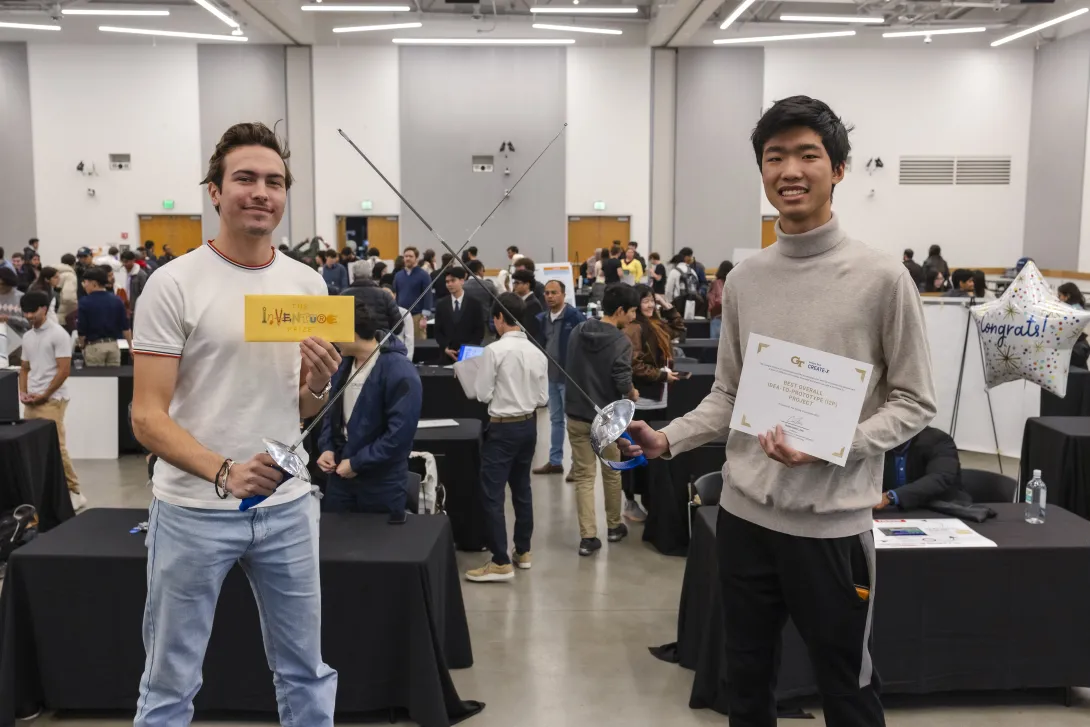
Founders of Allez Go: Adam Kulikowski and Jason Mo
Cricket powder-based protein brownies. A visualization system for fencing blades. A personalized AI application for analyzing blood work. All I2P Showcase prototypes. See what Georgia Tech students have been developing this semester at the Fall 2025 Idea to Prototype (I2P) Showcase on Tuesday, Dec. 2, at 5 p.m. in the Marcus Nanotechnology Building. This year, attendees will have even more original inventions to view, with over 60 teams displaying prototypes.
The event marks the culmination of the semester-long I2P course, where undergraduate students develop functional prototypes aimed at solving real-world problems. Prototypes this semester include a smart military drone, a gentler device for cervical cancer screening, a rotating espresso station, tools to keep AI safe, compact data centers, systems that simulate cyberattacks to help companies strengthen their defenses, and many more.
The showcase is free and open to students, faculty, staff, and members of the local community.
Winning teams will receive prizes and a “golden ticket” into CREATE-X’s Startup Launch, a summer accelerator that provides optional seed funding, accounting and legal service credits, mentorship, and more to help students turn their prototypes into viable startups.
This is a free event, and refreshments will be provided. Register for the Fall 2025 I2P Showcase today!
News Contact
Breanna Durham
Marketing Strategist
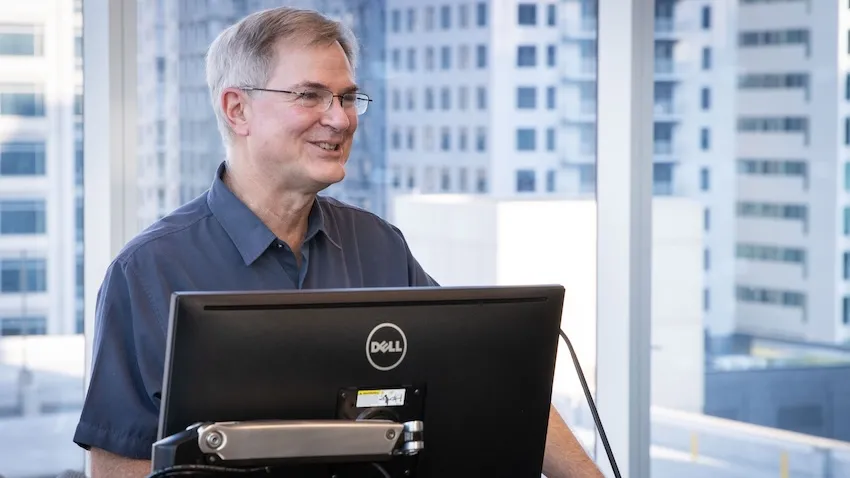
One word comes up more often than others when describing John Stasko — kindness.
Stasko achieved a great deal during his 36 years as a professor at Georgia Tech and made significant contributions to data visualization research and innovations. He is a Fellow of the ACM and IEEE and received the IEEE Visualization and Graphics Technical Community Lifetime Achievement Award.
In all those years, none of his students or colleagues could recall a moment when he didn’t demonstrate kindness.
“He supported me in fleshing out my ideas into a Ph.D. dissertation,” said Dean Jerding (CS Ph.D. 1997), one of Stasko’s former students. “He was always calm and communicated any criticism in a very positive way. He never said I had a dumb idea. He was always encouraging, and he redirected you with his input.”
The School of Interactive Computing bid farewell to Stasko on Thursday, following his official retirement in July.
During the event, Shaowen Bardzell, School of IC chair and professor, announced the establishment of the John Stasko Award for Teaching Excellence in Stasko’s honor. Bardzell said the award will be given each year to as many as “two faculty members in the School of Interactive Computing whose teaching and mentoring channel John’s passion and care for our students.”
“You can be effective while being nice, and you can be heard while being quiet and thoughtful,” said Keith Edwards, a professor in the School of IC who was one of Stasko’s first students. “He’s the same even-keeled, thoughtful person as he was when I first knew him. He’s very generous. If it hadn’t been for John, I think there’s a chance I would’ve fallen through the cracks when I was looking for an advisor at Georgia Tech. I’m very fortunate he took me on.”
New College, New Blood
Stasko came to Georgia Tech in 1989 fresh off completing his Ph.D. in computer science at Brown University. That was a year before the establishment of the College of Computing at Georgia Tech. The computer science program was administered by the School of Information and Computer Science, which was housed in the College of Sciences.
“It was exciting because we were igniting computer science at Georgia Tech, and there were a lot of young faculty like me who were brand new, right out of college,” Stasko said. “There was this spirit of working together and wanting to make something great here.”
Stasko said when the College of Computing was established in 1990, Georgia Tech ranked outside the top 20 of U.S. News and World Report’s computer science program rankings.
Many new faculty members like Stasko were interested in data visualization, computer graphics, and human-computer interaction. Georgia Tech quickly bolstered its computer science reputation by positioning itself at the forefront of those emerging fields with the creation of the Graphics, Visualization, and Usability (GVU) Center.
“A lot of the top five to 10 schools like Stanford, MIT, and Berkeley were very strong in the traditional subareas of computer science,” Stasko said. “I think it helped us to develop a strength in HCI, graphics and visualization. We were one of the earliest to embrace those, so it made it easier for us to shine. U.S. News and World Report had a new sub-ranking called Graphics and HCI, and we were ranked No. 1 very early on. That really helped us.”
Growing as a Mentor
Stasko credits Jim Foley, the first director of GVU, who now has a scholarship named in his honor for outstanding graduate students, as the model for how to conduct oneself as a teacher.
“Jim was the most wonderful mentor I could’ve had,” Stasko said. “He was a famous professor, and everyone in computer science around the country knew him, but he was always so humble, and he would meet all the new junior faculty and want to help us get going. He allowed us to shine.”
Stasko became most well-known for his research, particularly for his invention of Jigsaw in 2007. Jigsaw is a visualization algorithm that can create a visual index of a large document collection.
“It could help an analyst see the story that’s spread across 1,500 different documents about a police case, for example,” he said. “Or maybe they were reviews of a product that you wanted to learn about, or which car or which TV you should buy without having to read 1,500 reviews. We used early machine learning methods to analyze the text and created a suite of different visualizations communicating that analysis.”
In addition to his research, Stasko taught an intro to JavaScript course for 20 years to thousands of Tech students. Though it wasn’t required of him to teach it, he said he enjoyed interacting with incoming first-year students because it “helped keep me feeling young.”
In 2007, Stasko joined the faculty of the newly created School of Interactive Computing. He served as the interim chair of the school from 2021 to 2022, and he was also named Regents’ Professor by the University System of Georgia in 2021.
Leaving a Legacy
Today, the College of Computing has the No. 5 undergraduate and No. 6 graduate computer science program in the U.S. and is the largest college on Georgia Tech’s campus.
“I’m not sure any other CS program in the country has had that kind of jump like we have had over the past 35 years,” Stasko said. “The higher you go, the harder it is to jump even one spot.
“I think we knew that (the College) was going to grow and that was part of the plan. I’m not sure I would’ve envisioned we’d ever be 150 to 200 faculty in the college, but we could all see computer science was going to be a crucial part of society going forward.”
Stasko will continue to be a part of the School of IC as Professor Emeritus. His final student, Alexander Bendeck, finishes his Ph.D. in 2026.
Bendeck will be the 25th student Stasko has advised and graduated over his career. He said he never had the funding to run a large lab, but that allowed him to invest in the students he took under his wing.
“I often found some unconventional Ph.D. students,” Stasko said. “Some of my early students started in very different areas of computer science. I’ve looked for diamonds in the rough.
“I see some of them now with their families and they make me feel old because they have kids who are in college now. But they’ve done well. I think half of my students have gone into academia, and the other half into industry. I’m very proud in all that they’ve achieved, both personally and professionally.”
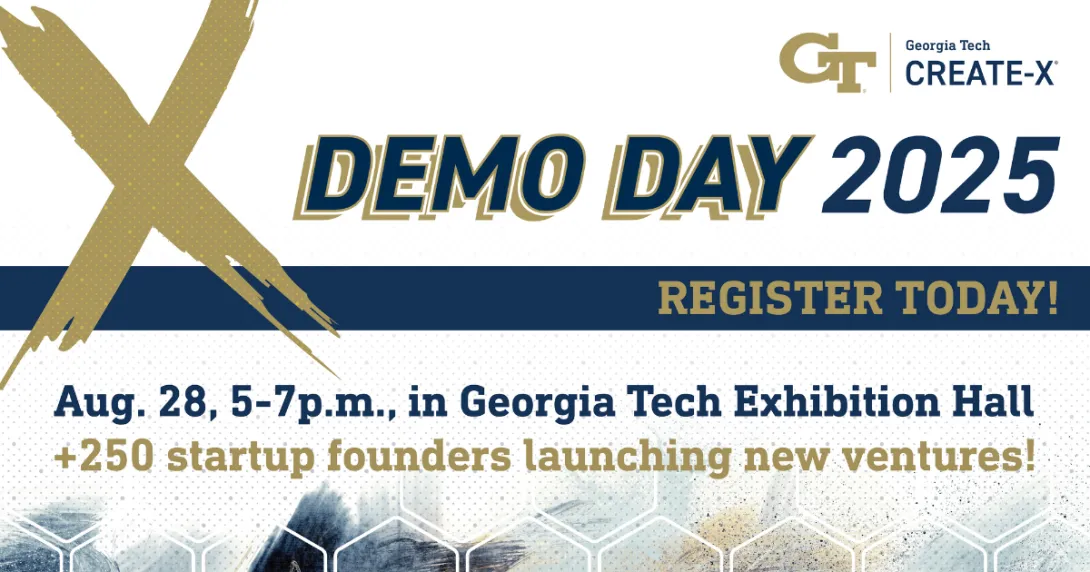
Demo Day 2025, Aug. 28, Exhibition Hall, +250 Startup Founders Launching New Ventures
What does the future look like? On Aug. 28, from 5 – 7 p.m., more than 1,500 attendees will gather at Georgia Tech’s Exhibition Hall to find out at Demo Day, where CREATE-X will showcase over 100 startups coming out of Georgia Tech. Tickets are free but limited — early registration is strongly encouraged.
At Demo Day, founders bring solutions that tackle some of today’s most urgent challenges across industries. Expect to see startups tackling global challenges with bold new solutions, such as: providing mRNA therapies that could transform vaccine access, using ultra-efficient AI chips that run on a fraction of the power, and building innovative inspection tools that are already helping companies like Tesla catch defects in seconds. Demo Day provides attendees an opportunity to gain hands-on experience with new products, meet the founders behind them, and experience the momentum of a startup ecosystem in full swing.
Donnie Beamer, the City of Atlanta’s senior technology advisor, attended the last Demo Day and spoke about moments that impressed him most.
“The founders of NeuroChamp had a headband that reads brainwaves. It makes me call into question what I was doing in college!” Beamer said.
Founders showcasing at Demo Day have spent 12 weeks working on their startups during the CREATE-X accelerator, Startup Launch.
“Every founder in that room will have spent the summer chasing the right problem and building a solution to solve it,” Rahul Saxena, director of CREATE-X, said. “Demo Day is proof that entrepreneurship can be taught and developed, from ideation to customer discovery.”
Beamer said that the program pushes people to be creative.
“Georgia Tech is a safe place to try and fail and innovate, which is invaluable. Instead of just telling students to do X and expecting them to execute on it, CREATE-X allows for creativity and discovery,” Beamer said. “That can be transformative for students, the Institute, and the city of Atlanta.”
Unlike other startup exhibitions, there are no on-stage pitches — just direct connection in a casual, interactive format. Attendees and investors can test the tech out themselves. Past Demo Days have led to venture funding, strategic partnerships, media coverage, and more. It’s an energetic atmosphere with the exchange of ideas, an opening of doors, and a community building the future together.
“There are a few kinds of naysayers; for example, some who think Atlanta doesn’t have much entrepreneurial activity and others who feel isolated from communities like this one,” Beamer said. “Demo Day lets them look behind the curtain and see the vibrant, innovative ecosystem that they can be a part of in our city as we look to become a top-five tech hub in the nation. Georgia Tech is a huge part of that.”
Register for Demo Day today! The future is waiting for you to discover it.
News Contact
Breanna Durham
Marketing Strategist