
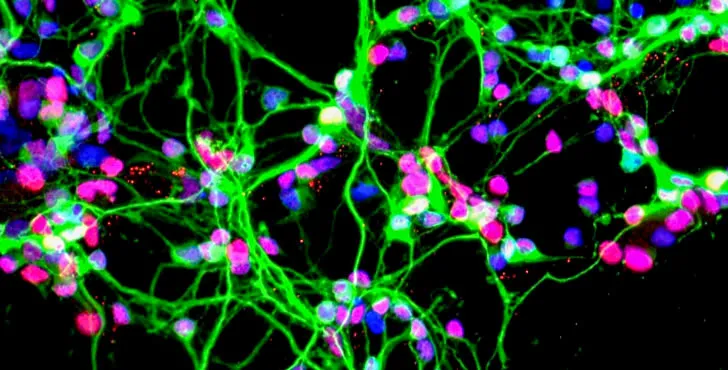
Neurons growing in a culture dish (NASA)
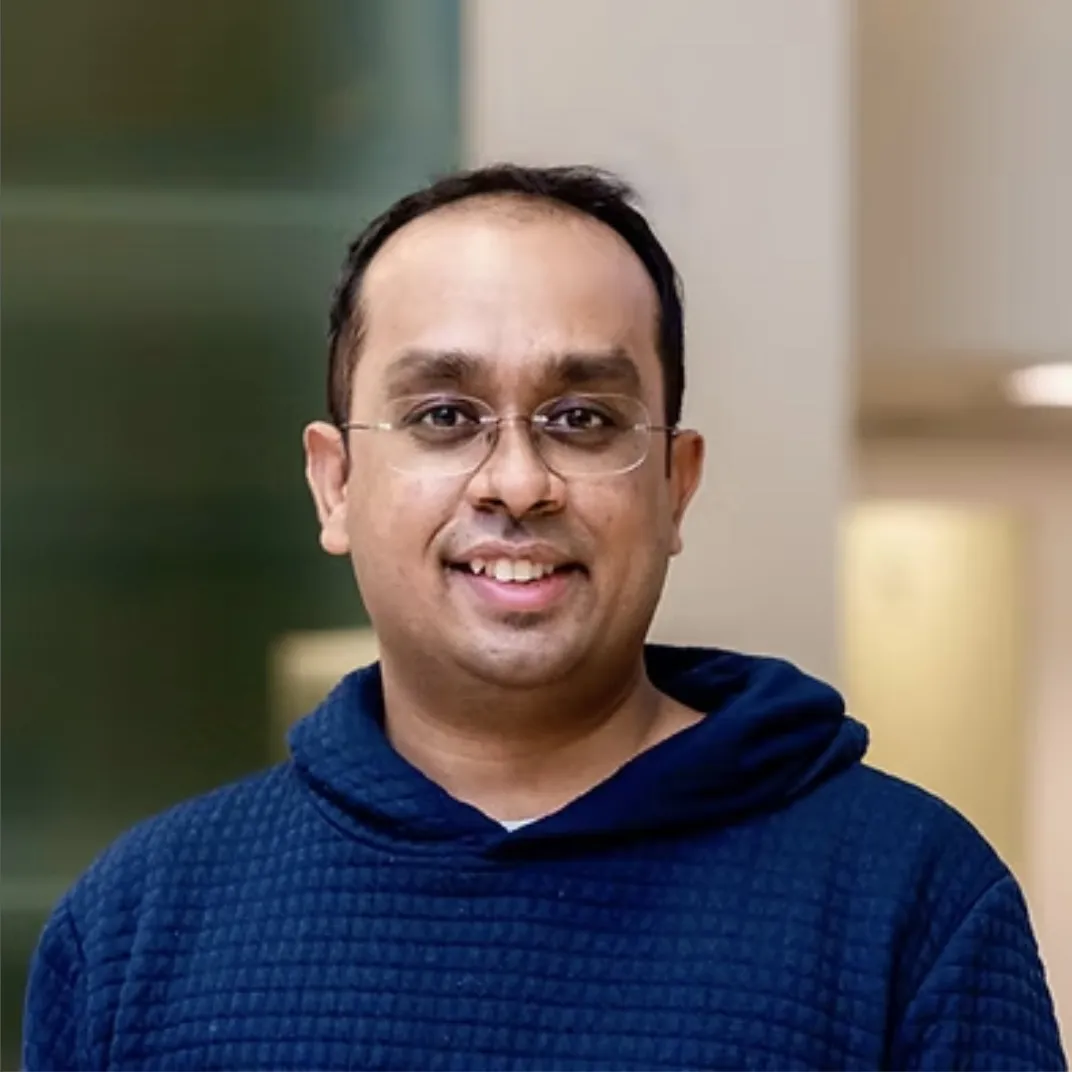
School of Psychology Assistant Professor Apurva Ratan Murty

Graduate Student Mayukh Deb
Researchers at Georgia Tech have taken a critical step forward in creating efficient, useful and brain-like artificial intelligence (AI). The key? A new algorithm that results in neural networks with internal structure more like the human brain.
The study, “TopoNets: High-Performing Vision and Language Models With Brain-Like Topography,” was awarded a spotlight at this year’s International Conference on Learning Representations (ICLR), a distinction given to only 2 percent of papers. The research was led by graduate student Mayukh Deb alongside School of Psychology Assistant Professor Apurva Ratan Murty.
Thirty-two of Tech’s computing, engineering, and science faculty represented the Institute at ICLR 2025, which is globally renowned for sharing cutting-edge research.
“We started with this idea because we saw that AI models are unstructured, while brains are exquisitely organized,” says first-author Deb. “Our models with internal structure showed more than a 20 percent boost in efficiency with almost no performance losses. And this is out-of-the-box — it’s broadly applicable to other models with no extra fine-tuning needed.”
For Murty, the research also underscores the importance of a rapidly growing field of research at the intersection of neuroscience and AI. “There's a major explosion in understanding intelligence right now,” he says. “The neuro-AI approach is exciting because it helps emulate human intelligence in machines, making AI more interpretable.”
“In addition to advancing AI, this type of research also benefits neuroscience because it informs a fundamental question: Why is our brain organized the way it is?,” Deb adds. “Making AI more interpretable helps everyone.”
Brain-inspired blueprints
In the brain, neurons form topographic maps: neurons used for comparable tasks are closer together. The researchers applied this concept to AI by organizing how internal components (like artificial neurons) connect and process information.
This type of organization has been tried in the past but has been challenging, Murty says. “Historically, rules constraining how the AI could structure itself often resulted in lower-performing models. We realized that for this type of biophysical constraint, you simply can’t map everything — you need an algorithmic solution.”
“Our key insight was an algorithmic trick that gives the same structure as brains without enforcing things that models don't respond well to,” he adds. “That breakthrough was what Mayukh (Deb) worked on.”
The algorithm, called TopoLoss, uses a loss function to encourage brain-like organization in artificial neural networks, and it is compatible with many AI systems capable of understanding language and images.
“The resulting training method, TopoNets, is very flexible and broadly applicable,” Murty says. “You can apply it to contemporary models very easily, which is a critical advancement when compared to previous methods.”
Neuro-AI innovations
Murty and Deb plan to continue refining and designing brain-inspired AI systems. “All parts of the brain have some organization — we want to expand into other domains,” Deb says. “On the neuroscience side of things, we want to discover new kinds of organization in brains using these topographic systems.”
Deb also cites possibilities in robotics, especially in situations like space exploration where resources are limited. “Imagine running a model inside a robot with limited power,” he says. “Structured models can help us achieve 80 percent of performance with just 20 percent of energy consumption, saving valuable energy and space. This is still experimental, but it's the direction we are interested in exploring.”
“This success highlights the potential of a new approach, designing systems that benefit both neuroscience and AI — and beyond,” Murty adds. “We can learn so much from the human brain, and this project shows that brain-inspired systems can help current AI be better. We hope our work stimulates this conversation.”
News Contact
Written by Selena Langner
Contact: Jess Hunt-Ralston
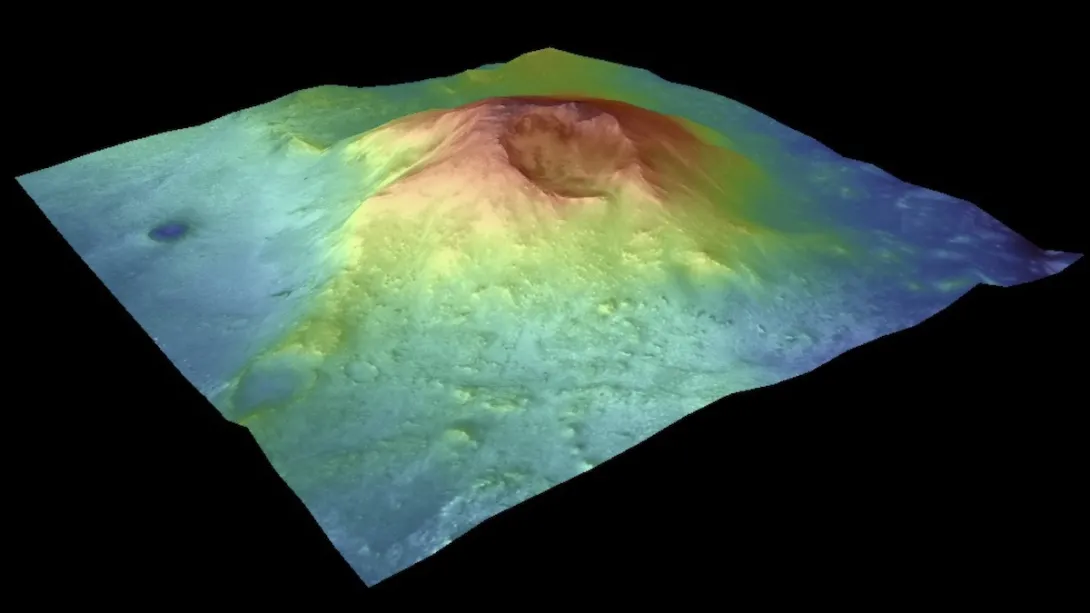
A view of Jezero Mons from the publication. The mountain is ~21 km across.

An image from the publication showing an oblique view from north-northeast of Jezero crater, with topography exaggerated ~3x
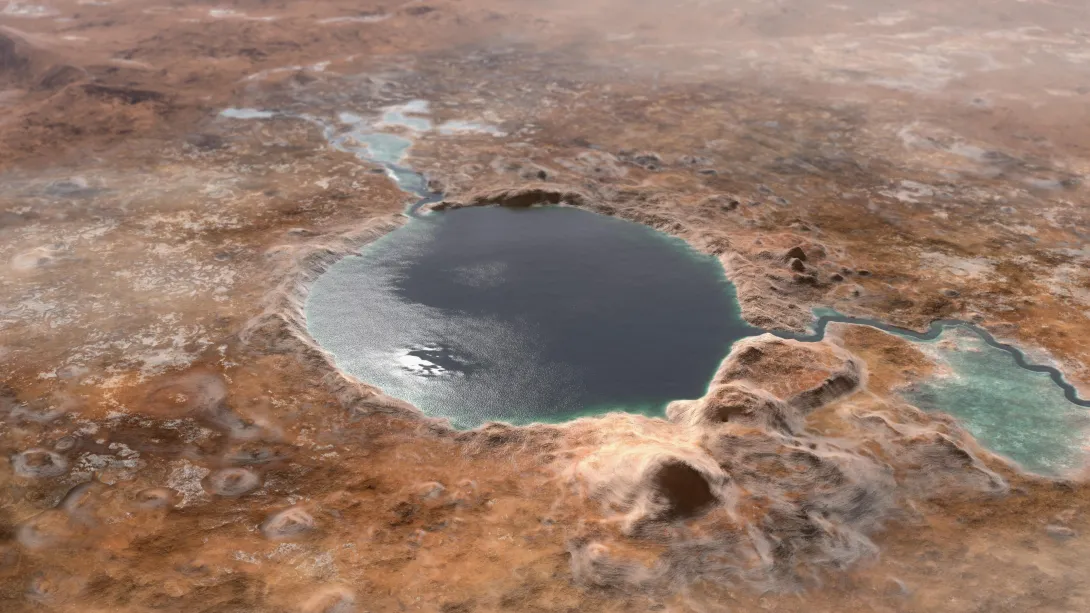
An illustration of Jezero Crater as it may have looked billions of years go on Mars, when it was a lake. Jezero Mons is visible on the front right-side of the crater rim. (Credit: NASA)
Georgia Tech scientists have uncovered evidence that a mountain on the rim of Jezero Crater — where NASA’s Perseverance Rover is currently collecting samples for possible return to Earth — is likely a volcano. Called Jezero Mons, it is nearly half the size of the crater itself and could add critical clues to the habitability and volcanism of Mars, transforming how we understand Mars’ geologic history.
The study, “Evidence for a composite volcano on the rim of Jezero crater on Mars,” was published this May in the Nature-family journal Communications Earth & Environment, and underscores how much we have left to learn about one of the most well-studied regions of Mars.
Lead author Sara C. Cuevas-Quiñones completed the research as an undergraduate during a summer program at Georgia Tech; she is now a graduate student at Brown University. The team also included corresponding author Professor James J. Wray (School of Earth and Atmospheric Sciences), Assistant Professor Frances Rivera-Hernández (School of Earth and Atmospheric Sciences), and Jacob Adler, then a postdoctoral fellow at Georgia Tech and now an assistant research professor at Arizona State University.
“Volcanism on Mars is intriguing for a number of reasons — from the implications it has on habitability, to better constraining the geologic history,” Wray says. “Jezero Crater is one of the best studied sites on Mars. If we are just now identifying a volcano here, imagine how many more could be on Mars. Volcanoes may be even more widespread across Mars than we thought.”
A mountain in the margins
Wray first noticed the mountain in 2007, while considering Jezero Crater as a graduate student.
“I was looking at low-resolution photos of the area and noticed a mountain on the crater’s rim,” he recalls. “To me, it looked like a volcano, but it was difficult to get additional images.” At the time, Jezero Crater was newly discovered, and imaging focused almost entirely on its intriguing water history, which is on the opposite side of the 28-mile-wide crater.
Then, Jezero Crater, due to these lake-like sedimentary deposits, was selected as the landing spot for the 2020 Perseverance Rover — an ongoing NASA mission seeking signs of ancient Martian life and collecting rock samples for possible return to Earth.
However, after landing, some of the first rocks Perseverance encountered were not the sedimentary deposits one might expect from a previously-flooded area — they were volcanic. Wray suspected he might know the origin of these rocks, but to make a case for it, he would need to show that the mountain on the edge of Jezero Crater could indeed be a volcano.
A new researcher — and old data
The opportunity presented itself several months after Perseverance landed when Cuevas-Quiñones applied to a Summer Research Experience for Undergraduates (REU) program hosted by the School of Earth and Atmospheric Sciences to work with Wray.
“A previous study led by Briony Horgan (professor of planetary science at Purdue University) had also suggested that Jezero Mons could be volcanic,” Cuevas-Quiñones says. “I began wondering if there was a way to home in on these suspicions.”
The team partnered with study coauthor Rivera-Hernández, who specializes in characterizing the surface of planets and their habitability. They decided to use datasets gathered from spacecraft orbiting Mars to compare the properties of Jezero Mons to other, known, volcanoes. “We can’t visit Mars and definitively prove that Jezero Mons is a volcano, but we can show that it shares the same properties with existing volcanoes — both here on Earth and Mars,” Wray explains.
“We used data from the Mars Odyssey Orbiter, Mars Reconnaissance Orbiter, ExoMars Trace Gas Orbiter, and Perseverance Rover, all in combination to puzzle this out,” he adds. “I think this shows that these older spacecraft can be extremely valuable long after their initial missions end — these old spacecraft can still make important discoveries and help us answer tricky questions.”
For Cuevas-Quiñones, it also underscores the importance of REU programs and opportunities for undergraduates. “I was an undergraduate student at the time, and this was my first time conducting research,” she says. “It was fascinating to learn how different data sets could be used to decode the origin of a landscape. After Jezero Mons, it became clear to me that I would continue to study Mars and other planetary bodies.”
The search for life — and determining Mars’ age
The discovery makes the crater even more intriguing in the search for past life on Mars. A volcano so close to watery Jezero Crater could add a critical source of heat on an otherwise cold planet, including the potential for hydrothermal activity — energy that life could use to thrive.
This type of system also holds interest for Mars as a whole. “The coalescence of these two types of systems makes Jezero more interesting than ever,” shares Wray. “We have samples of incredible sedimentary rocks that could be from a habitable region alongside igneous rocks with important scientific value.” If returned to Earth, igneous rocks can be radioisotope dated to know their age very precisely. Dating the Jezero Crater samples could be used to calibrate age estimates, providing an unprecedented window into the geologic history of the planet.
The take home message? “Mars is the best place we have to look in our solar system for signs of life, and thanks to the Perseverance Rover collecting samples in Jezero, the United States has samples from the best rocks in the best place on Mars,” Wray says. “If these samples are returned to Earth, we can do incredible, groundbreaking science with them.”
DOI: https://doi.org/10.1038/s43247-025-02329-7
Funding: Cuevas-Quiñones was supported by Georgia Tech’s 2021 Research Experience for Undergraduates program sponsored by NSF and 3M corporation. Wray was supported by NASA funding for Co-Investigators on HiRISE and CaSSIS. CaSSIS is a project of the University of Bern and funded through the Swiss Space Office via ESA’s PRODEX program. The instrument hardware development was also supported by the Italian Space Agency (ASI) (ASI-INAF agreement 2020-17-HH.0), INAF/Astronomical Observatory of Padova, and the Space Research Center (CBK) in Warsaw. Support from SGF (Budapest), the University of Arizona Lunar and Planetary Lab, and NASA are also gratefully acknowledged. Operation support from the UK Space Agency is also acknowledged.
News Contact
Written by Selena Langner
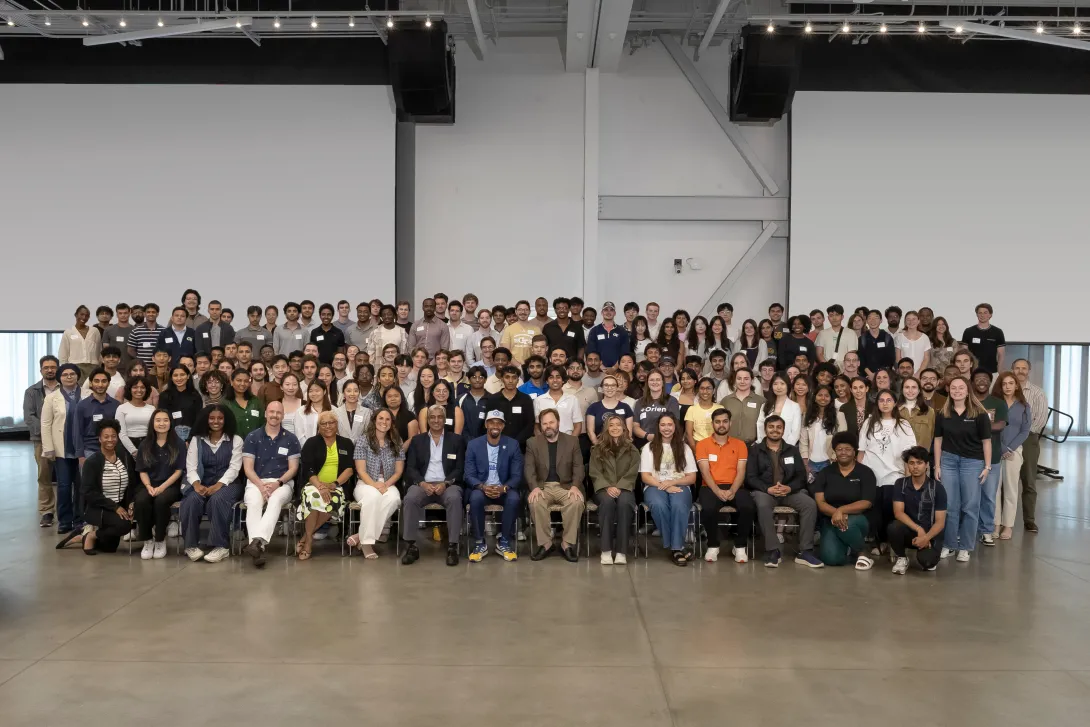
CREATE-X’s 12th cohort of Startup Launch with CREATE-X staff members and Atlanta leadership.
CREATE-X, Georgia Tech’s premier entrepreneurship program, kicked off its 12th Startup Launch cohort this month with a record-breaking 137 student teams and 25 faculty and research teams — totaling 318 founders. The summer-long accelerator, known for turning ideas into real-world ventures, is once again positioning Georgia Tech as a national leader in invention and startup creation.
This year’s cohort spans a wide range of industries, including artificial intelligence, defense, healthcare, gaming, sustainability, media management, agriculture tech, fashion tech, education, and more.
“These founders are in the messy middle and that's a beautiful place to be. There’s a lot of freedom in that,” said Margaret Weniger, director of Startup Launch. “We’re all going to be in this together. It's a safe space to try new things. It’s OK if it doesn't work out because what we want founders to learn is an entrepreneurial mindset and entrepreneurial spirit — something you take with you no matter what you do after this.”
Over the next 12 weeks, teams will validate ideas, build products, and acquire customers with the help of dedicated coaches, a robust founder community, and a network of mentors and alumni.
Raghupathy "Siva" Sivakumar, Georgia Tech’s inaugural vice president of Commercialization and the faculty founder of CREATE-X, spoke about the core of CREATE-X and what it would take for founders to succeed.
“Startup Launch is not about Georgia Tech gaining from your success. We are here just for one reason, which is to make you successful,” he said. “You need to hold yourself accountable. You need to be ambitious in terms of how big a problem you solve. You need to be emphatic that the customer matters. The successful teams are 100% behind what's going to make the lives of customers easier and better.”
In 2014, CREATE-X was co-founded by Sivakumar, Steve McLaughlin(who is now the president of The Cooper Union for the Advancement of Science and Art), and other Georgia Tech faculty, including Ray Vito, Craig Forest, and Ravi Bellamkonda (who is now the executive vice president and provost of The Ohio State University). The program received its initial major philanthropic support from Chris Klaus, a Georgia Tech alumnus and tech entrepreneur, whose gift helped launch the initiative, and , played a key role in building out the program's maker courses. Over the years, CREATE-X has continued to grow, thanks largely to the philanthropic support of alumni and foundations who believe in its mission.
In the last decade, the program has produced over 650 startups, $2.4 billion in portfolio valuation, and had eight founders named to Forbes’ 30 Under 30. Wagner shared stories of past teams who pivoted dramatically — from a glucose-monitoring pillow to a sobriety app now valued at over $350 million, and from a camping gear delivery service to a billion-dollar logistics platform.
“We don’t know which ideas will become the next unicorns,” Weniger said. “But we’re betting on you.”
At the kickoff event, McLaughlin and Klaus were honored for their contributions to Georgia Tech’s entrepreneurial ecosystem. McLaughlin encouraged the founders through the story of CREATE-X.
“From the very beginning, we challenged CREATE-X to be a startup as well. To this day, CREATE-X has raised its own money to do this. It's a reminder of what it takes to make this happen,” he said. “This is the most difficult challenge you have ever taken. I think at the time, we were probably skeptical about whether students could do it. Now we know that you can.”
Georgia Tech President Ángel Cabrera reflected on the impact of McLaughlin, Klaus, and others who saw the vision of Georgia Tech being an entrepreneurial campus.
“Ten years ago, this was a crazy, absurd idea,” he said. “Now, 150 teams are working on their own crazy ideas. Even though sometimes there's this idea of the entrepreneur as a loner, what you learn very quickly is entrepreneurship is a team sport.”
Klaus spoke about people collaborating and helping solve problems together.
“I'm especially inspired by Georgia with its complex history,” he said. “It continues to be a place where peace can be envisioned and pursued. I think this recognition strengthens my commitment to building bridges, resolving conflict, and lifting up voices that seek unity. As you build your businesses, you'll be building collaborations and partnerships, and hopefully make the world a better place.”
As the summer progresses, founders will be guided by CREATE-X’s core values: experiential education, entrepreneurial confidence, and real-world impact. Weniger encouraged teams to “show up uncomfortable” and “leverage every single resource” available.
The journey will culminate at Demo Day, where teams will showcase their startups to investors, industry leaders, and the broader community. The event is free, open to the public, and promises a front-row seat to the next wave of Georgia Tech-born innovation.
Demo Day 2025 will take place on Thursday, Aug. 28, at 5 p.m., in the Exhibition Hall. For more information and to RSVP, visit the CREATE-X Demo Day Eventbrite.
News Contact
Breanna Durham
Marketing Strategist
The College of Sciences is pleased to announce the launch of the AI4Science Center. The center will promote research and collaboration focused on using state-of-the-art artificial intelligence (AI) and machine learning (ML) techniques to address complex scientific challenges.
“AI and ML have the potential to revolutionize scientific discovery, but there is a clear need for foundational research centered on AI/ML methodologies and application to scientific problems,” says Dimitrios Psaltis, professor in the School of Physics.
Psaltis will co-lead the center with Molei Tao, professor in the School of Mathematics, and Audrey Sederberg, assistant professor in the School of Psychology.
The new center will combine expertise and resources from various disciplines to foster the creation of robust, reusable tools and methods that can be used across scientific domains. Specifically, the center will organize seminars and an annual conference in addition to providing seed funding for collaborative projects across units.
Nearly 40 faculty members from the College’s six schools have already agreed to participate in activities proposed by the center; additional faculty involvement is expected from across the Institute.
The center builds upon initiatives such as Tech AI, the Machine Learning Center, and the Institute for Data Engineering and Science, which seek to boost Georgia Tech’s leadership in cutting-edge, AI/ML-powered interdisciplinary research and education.
The College’s seed grant program will sponsor the center for three years, starting in fiscal year 2026. Created in 2024, this program funds new centers that seek to increase the College’s research impact and advance its strategic goal of excellence in research through a focus on novel interdisciplinary areas or discipline-specific topics of high impact. The AI4Science Center is the third initiative to be seeded by this program, following the funding of the Center for Sustainable and Decarbonized Critical Energy Mineral Solutions and the Center for Research and Education in Navigation in 2024.
“The AI4Science Center was selected for its approach, timeliness, organization, and strong support from all six of the College’s schools,” says Laura Cadonati, associate dean for Research and professor in the School of Physics. “Faculty enthusiasm about this initiative reflects the growing importance of AI/ML tools in research today and the desire for more interdisciplinary collaboration in this space at the College and beyond.”
News Contact
Writer: Lindsay C. Vidal

Smoke cloud rising from a brush wildfire burning in San Francisco, California (Source: Adobe Stock)
You’re managing the Texas Panhandle’s power grid. Heavy winds are blowing, and a worn-out utility pole ignites a fire by crashing onto a transmission line. Luckily, the fire department arrives quickly, putting out the fire before it spreads to nearby cities. But the same thing may happen again with gusty conditions predicted for the next 24 hours. Should you shut off miles of power lines to reduce that risk, causing outages for thousands of residents? Should you add batteries to the grid or move some power lines underground to lessen the impact of future fires? That sounds useful, but paying for these upgrades would require raising electricity rates.
Players of the Current Crisis video game are pondering these questions, similar to professional grid managers during the Texas Smokehouse Creek fire in 2024. But the players did not purchase Current Crisis at a run-of-the-mill gaming store. They might have played it at Georgia Tech’s Dataseum, which featured the game in a recent exhibition. Or they might have helped develop it in weekly meetings with Daniel Molzahn, associate professor in the School of Electrical and Computer Engineering and EPIcenter initiative lead.
“Current Crisis started as a computer simulation I programmed in Summer 2020 for a senior-level course I taught that fall,” says Molzahn. “My students had to dispatch crews to maintain or repair a simplified model of the Georgia power grid. In the middle of the Covid-19 pandemic, each dispatch had a risk of infection and quarantine, which meant losing the crew for the rest of that round. The students had a fixed budget to balance two competing goals: operating a power system with minimal outages and keeping the repair crews healthy.”
The class project was popular, and its scope began to grow. Molzahn proposed turning his simulation into a video game in a July 2021 grant application to the National Science Foundation. He received the five-year award that fall and launched his “Vertically Integrated Project” on power grid gaming the following spring. It soon attracted about 35 students per semester, from sophomores to those pursuing graduate degrees in various disciplines. Most students stay for three to four semesters.
Tristan Ziegler joined the VIP as a computational media sophomore in Spring 2022 — and still works on it three years later as a professional programmer. “I found the project by searching for ‘game’ on the VIP website,” says Ziegler, who graduated in 2024. “It offered much more freedom than traditional classes but still allowed me to earn credits and grades, unlike a student organization where you volunteer your time.”
The students quickly discovered the benefits of working toward a shared goal in smaller groups, focused on coding, grid modeling, graphic design, or artistic creativity. Some volunteered to lead initiatives, such as organizing the Dataseum exhibition or the 2025 Seth Bonder summer camps, where they will teach high schoolers the basics of game programming.
Another long-term member of the VIP team is Ryan Piansky, a doctoral student, who studies the resilience of power grids to wildfires. He combines well-known engineering tools — algorithms for finding a mathematically optimal problem solution — with historical wildfire data to evaluate grid management decisions.
“I have examined if policies based on established engineering principles help the people who need the most help, reduce the risk of outages broadly across the whole grid, and optimally allocate limited resources,” explains Piansky, who works in Molzahn's research lab. “To do that, I combine power grid models with realistic wildfire simulations to assess if those policies would likely generate desirable outcomes in a range of plausible scenarios.”
The VIP work on grid modeling has informed Piansky’s research, but the climate models he uses to mimic the spread of wildfires are too complex for a fast-moving video game. That’s why he has helped the students develop simplified versions of these models. Humidity and vegetation, for example, influence both real fires and those popping up in Current Crisis.
Piansky’s research is part of Molzahn’s long-term goal: developing computer tools that help professional grid managers improve the grid’s resilience to natural disasters — from pandemics and wildfires to hurricanes, heat waves and floods.
“We plan to record the choices made by Current Crisis players in crowdsourced datasets that will support our research,” says Molzahn. “By using these datasets to train machine-learning algorithms, we can harness the power of AI to develop better disaster response policies.” (The European Space Agency uses a similar gamification strategy to map moon craters.)
The project’s benefits go well beyond these research contributions. Its educational value includes experience working in multidisciplinary teams of students at different levels and leadership development. Molzahn also hopes the game will help build public acceptance of disruptive actions during real disasters.
“Recognizing the tradeoffs inherent in grid management is important, whether it’s understanding why power shutoffs reduce fire risks or why service restorations are time-consuming,” says Molzahn. “This may also generate broader public support for electricity rate increases and tax allocations to pay for infrastructure hardening.”
Written by: Silke Schmidt
News Contact
Story Written by: Silke Schmidt
Priya Devarajan || Research Communications Program Manager
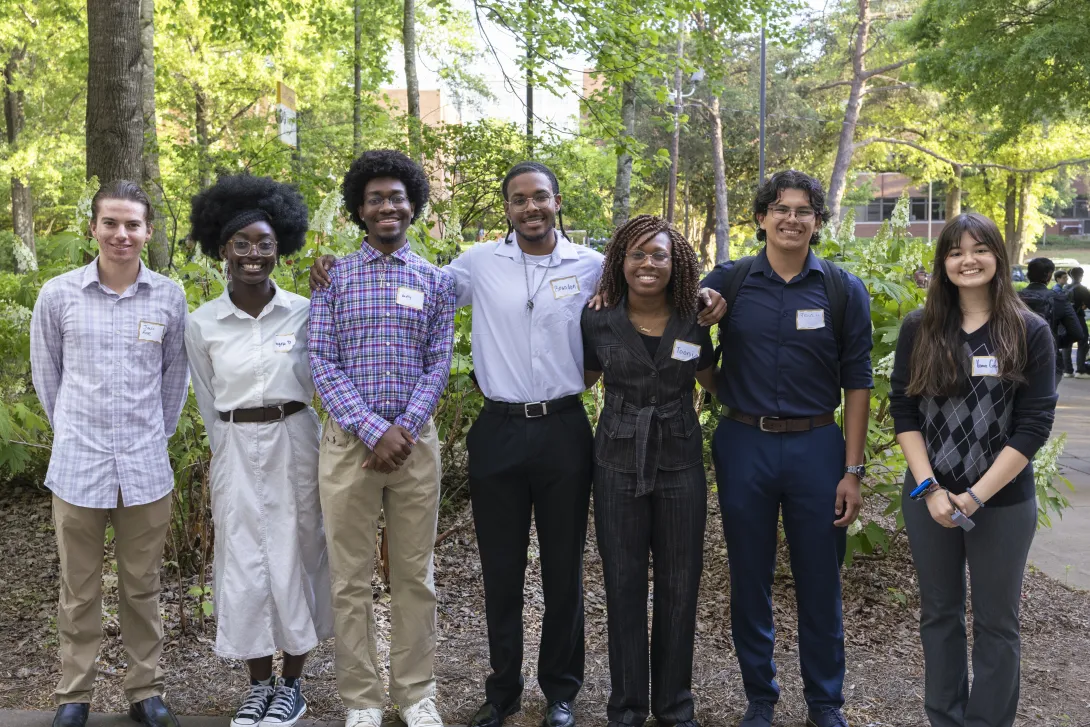
The winners of the 2025 Spring I2P Showcase, from left to right, Jack Rose, Team Carchive; Angela Duodu, Hadley Williams, Brandon Parker, Oluwatooni Alade , and Jesus Sierra Jr., Team Sensible; and Yasmine Green, Team Onyc.
At the Spring 2025 Idea to Prototype (I2P) Showcase, a prototype helping car enthusiasts find niche vehicles and their histories came out on top. Jack Rose, a junior in computer science, took home first place, a golden ticket to CREATE-X’s summer accelerator, Startup Launch, and advancement into the semifinal round of the InVenture Prize, a faculty-led innovation competition for undergraduate students and recent Tech bachelor’s graduates.
Second place was awarded to Team Sensible, made up of juniors Oluwatooni Alade, computer science; Brandon Parker, computer science; Angela Duodu, computer science; Jesus Sierra Jr., computer science; and Hadley Williams, computer engineering. Sensible is a browser extension that rates the sustainability of products users find online and offers alternative products for items that score low.
Third place went to Team Onyc, which includes Yasmine Green, a first-year mechanical engineering student. Onyc replaces the computer mouse with a wearable alternative that allows users to control computer navigation with the movement of their fingertips and fingernails.
Dozens of teams competed at the showcase, which is the culmination of I2P, a CREATE-X course focused on supporting students in creating solutions. The course offers research credit (for undergraduates only), up to $500 in reimbursements for physical material expenses, the opportunity to work collaboratively across majors, and faculty mentorship. It is held in the spring, summer, and fall, and it’s open to undergraduate and graduate students from all majors.
Read our Q&A with the winner and stay tuned for our interviews with the other winning teams.
Team Carchive
Jack Rose, Junior, Computer Science
Why did you pursue your startup?
Rose: I’ve been into cars my whole life. Trying to track cars is my hobby. There are always edge cases, and how are you planning to attack them? Because I spent so much time, especially working with other people, getting this data, and trying to figure this out, I became very adept at understanding the data. The dealers, collectors especially, were trying to understand the whole story, so they would come to me. But the way I had to do it was spreadsheets all over the place, and I was trying to find a solution to keep it all in one spot. I couldn’t find a way to do it, so I said, “Well, I’ll build it.” And then I got into I2P.
What was challenging about building your prototype over the semester?
Rose: This semester, it was mainly trying to come up with the schema and how to physically account for the edge cases. It’s not easy; it took a lot of deep thought, discussions with other people who are into these niche cars, and understanding what details we needed. I’m still trying to add more things and figure it out. It’s not perfect, but it’s enough.
What was your favorite part about I2P?
Rose: Adding features that I was looking for. For example, let’s say I was looking for a car. Filter all the cars over 25 years old and imported to the U.S. — I can easily search my database.
What would you say to students who are interested in entrepreneurship?
Rose: It’s always, “You should have started sooner.” I’ve always thought about it. My biggest advice is to just start doing it, even if it’s a little bit here, a little bit there. If it doesn’t work out, at least you’ve tried.
A photo gallery from the Spring 2025 I2P Showcase can be viewed on the CREATE-X Flickr page.
Students interested in the I2P program can register for the upcoming summer and fall semesters. The deadline for Summer 2025 is May 14, and the deadline for Fall 2025 is May 16.
CREATE-X's next event, Demo Day, will take place on Aug. 28 at Exhibition Hall, where more than 100 startups will be on display. Attendees can experience the newest batch of founders leveraging the latest technology to solve pressing challenges. The event offers an opportunity to network with entrepreneurs, industry leaders, and passionate enthusiasts, and supports the next generation of innovators. Register for Demo Day today and be a part of these founders’ journeys!
News Contact
Breanna Durham
Marketing Strategist
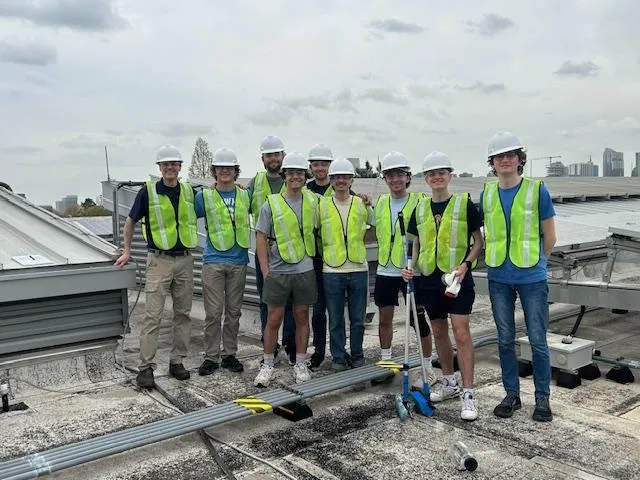
Georgia Tech Beautification Day student volunteers along with Rich Simmons, SEI's director of research and studies, on the rooftop of CNES building with the solar panels in the background
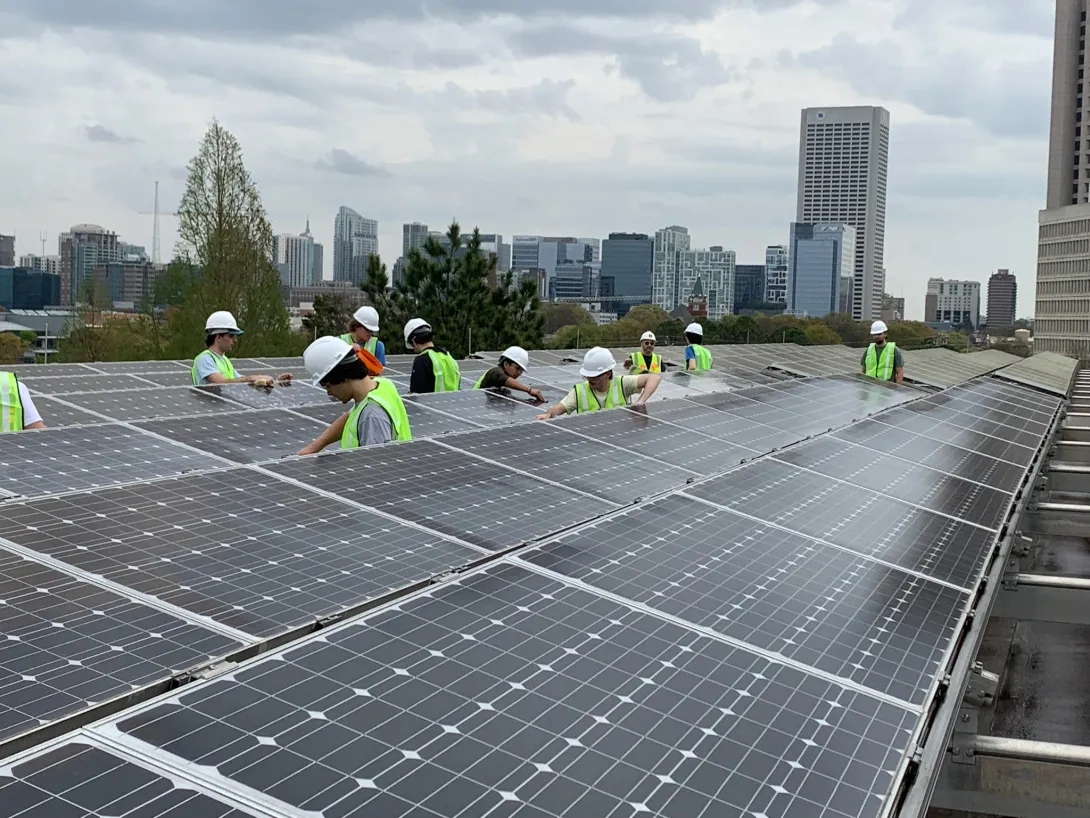
Georgia Tech students busy cleaning the solar PV arrays on the rooftop of the carbon neutral energy solutions building during Georgia Tech Beautification Day
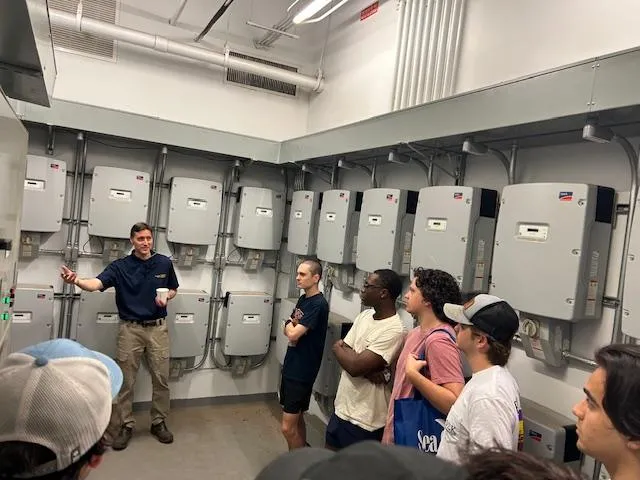
Rich Simmons, providing a tour of the inverter room in the CNES building to the student volunteers
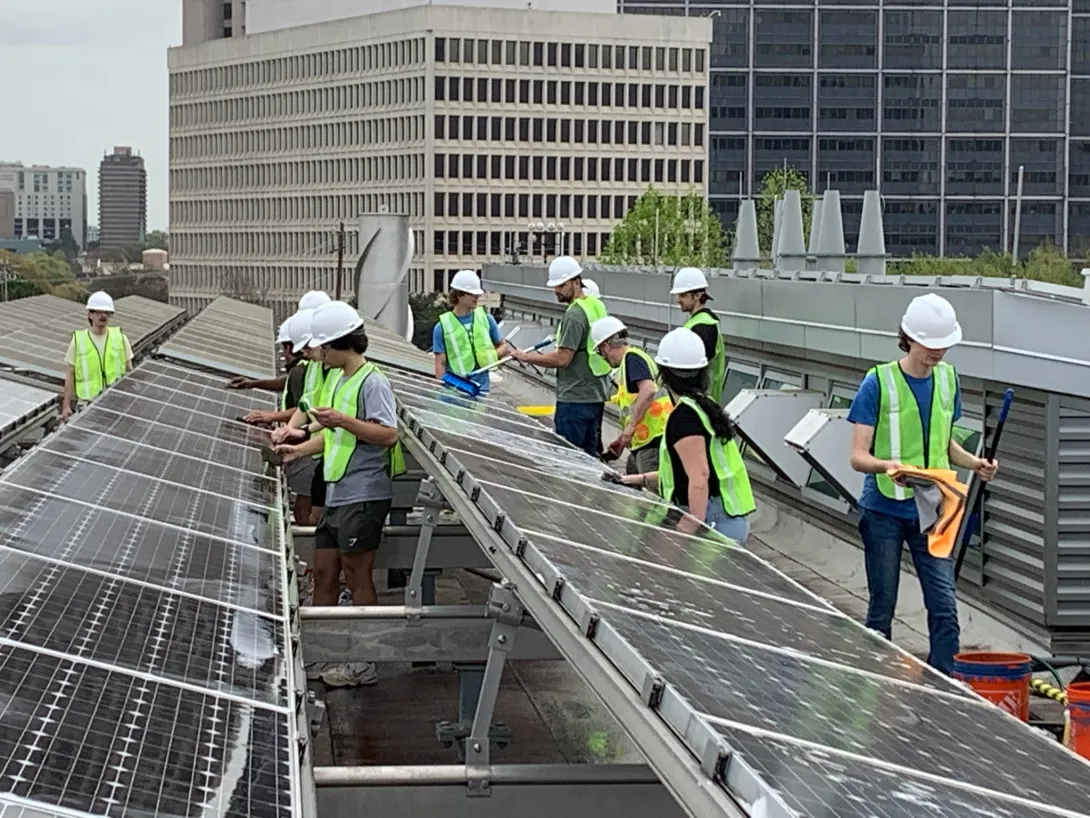
Student volunteers busy at work cleaning the solar panels
On a cloudy spring day in Atlanta, Rich Simmons, director of research and studies at the Georgia Tech Strategic Energy Institute (SEI), led a group of a dozen student volunteers to the roof of the Carbon Neutral Energy Solutions Laboratory (CNES). The students were part of the nearly 300 student volunteers participating in Georgia Tech Beautification Day and visited CNES to clean the building’s rooftop solar array made of photovoltaic (PV) panels. The CNES building entered operation in 2011 and its panels have accumulated grime over the years, impacting their efficiency.
Simmons explained the importance of this project, emphasizing how cleaning the panels restores their efficiency and contributes to ongoing research. "We've used this project to better understand PV efficiency in an urban environment and have instrumented the newly cleaned arrays to continue monitoring. An initial study last year suggested efficiency could increase by 10-20% just from a thorough cleaning. This project is both a handy research tool, an educational conduit, and a means of campus engagement related to sustainability," he shared.
Safety was paramount, and proactive communication between the research, health and safety, and infrastructure and sustainability teams ensured a successful event. Equipped with hard hats, eye protection, and high-visibility safety vests, the students scrubbed the panels with sponges and bristle brushes. The hands-on experience was both educational and rewarding.
After cleaning, Simmons led the group to the inverter room, where the DC electricity generated by the panels is converted into AC so that it can be consumed within the building or exported to the campus grid. He explained that excess solar power can also be stored in the newly installed 150-kWh Stryten battery system or used to charge campus vehicles through the newly installed EV chargers in the building’s parking lot. He demonstrated how magnetic monitoring devices measure the electricity produced by the arrays, allowing for a comparison of the efficiency of panels that were just cleaned, to those that were cleaned last year, and those that have never been cleaned in the 13 years since their installation.
Through initiatives like this, Georgia Tech continues to lead in research and education, inspiring the next generation of innovators and problem-solvers.
This article was written with the assistance of Microsoft Copilot (Apr. 9, 2025) and edited by Georgia Tech EPIcenter's Gilbert X. Gonzalez and Rich Simmons.
News Contact
Priya Devarajan | Research Communications Program Manager
Written by: Gilbert Gonzalez, Rich Simmons, EPIcenter
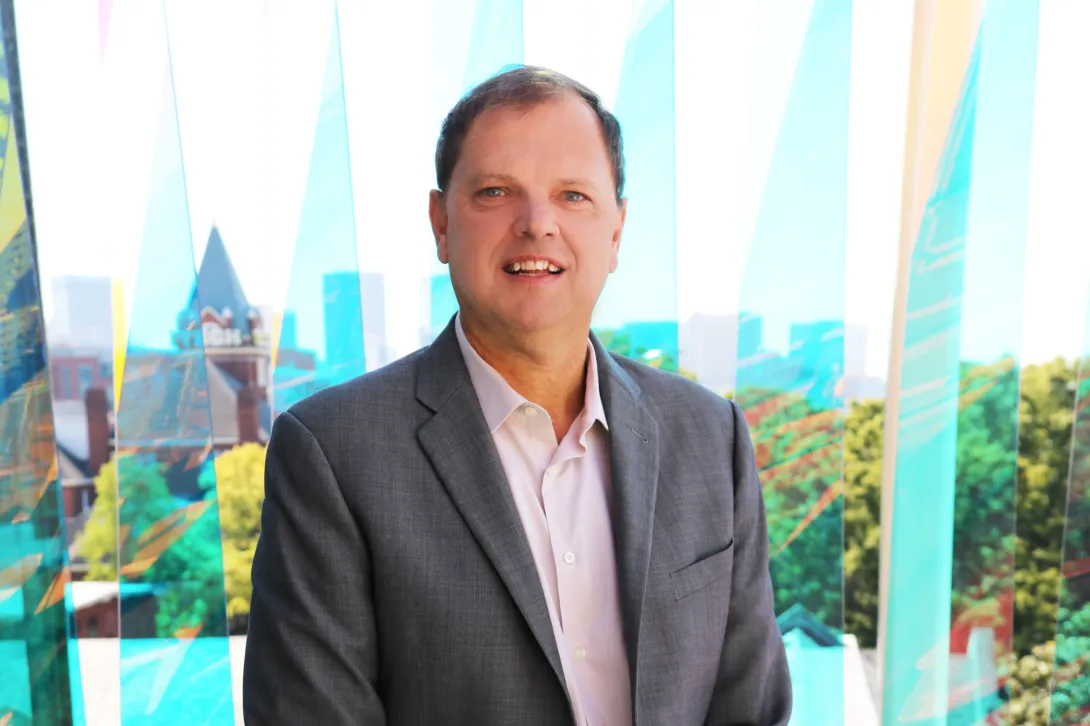
The College of Sciences has named Professor Joel Kostka the inaugural faculty director of Georgia Tech for Georgia's Tomorrow. The new center, announced by the College in December 2024, will drive research aimed at improving life across the state of Georgia.
“Joel is perfectly suited to lead this new initiative, especially since his research for a number of years has focused on Georgia and the vulnerability of both humans and ecosystems to climate change,” says Susan Lozier, dean of the College of Sciences, Betsy Middleton and John Clark Sutherland Chair, and professor in the School of Earth and Atmospheric Sciences. “I look forward to seeing how Science for Georgia’s Tomorrow takes shape and evolves under his thoughtful leadership.”
“I believe that my experience in research administration and in leading multidisciplinary research programs, along with the focus of my research on the vulnerability of Georgia’s communities to climate change, have prepared me well for this role,” says Kostka, who is the Tom and Marie Patton Distinguished Professor and associate chair for Research in the School of Biological Sciences with a joint appointment in the School of Earth and Atmospheric Sciences. “I am excited about the opportunity to lead the center as its inaugural director.”
Kostka’s appointment will begin on May 1, 2025.
Championing science in Georgia
Georgia's Tomorrow was created to foster research related to the health and resilience of Georgia’s people, ecosystems, and communities. Specifically, it will serve to boost research collaboration across the Institute, pave the way for public-private partnerships, and expand opportunities for Georgia students and communities to engage with Institute research.
Among Kostka’s first tasks as faculty director will be the development of the center’s strategic plan and the completion of two dedicated cluster hires from within the College of Sciences’ six schools.
Meet Joel Kostka
Kostka is known for bridging biogeochemistry and microbiology to elucidate the role of microorganisms in ecosystem function. He has emerged as an international leader in ecosystem biogeoscience, providing a quantitative predictive understanding of how ecosystems function as well as determining the mechanisms by which climate change alters ecosystem resilience. He partners with a variety of stakeholders to conduct research on the restoration and adaptive management of coastal ecosystems in Georgia.
Kostka has also served as the PI of a range of multidisciplinary research projects focused on environmental change as well as scientific advisory boards including Georgia Tech’s Strategic Energy Institute, the NSF-funded Plum Island Estuary Long-term Ecological Research program, and the Johnston Center for Coastal Sustainability on Bald Head Island.
Kostka received a B.S. in Biology from Western Illinois University and a Ph.D. in Marine Science from the University of Delaware. Prior to joining Georgia Tech in 2011, he was a professor at the Department of Oceanography and Associate Director of the Institute of Energy Systems, Economics, and Sustainability at Florida State University.
Initial support for Georgia Tech for Georgia’s Tomorrow is generously provided by the College of Sciences Betsy Middleton and John Clark Sutherland Dean's Chair fund. Cluster hire funding has been awarded by Provost Steven W. McLaughlin. The initiative will also seek funding from state, national and international organizations, private foundations, and government agencies to expand impact. Philanthropic support will also be sought in the form of professorships, programmatic support for the center, and seed funding.
Georgia Tech for Georgia's Tomorrow initially launched under the working name Science for Georgia's Tomorrow (Sci4GT).
News Contact
Writer: Lindsay C. Vidal
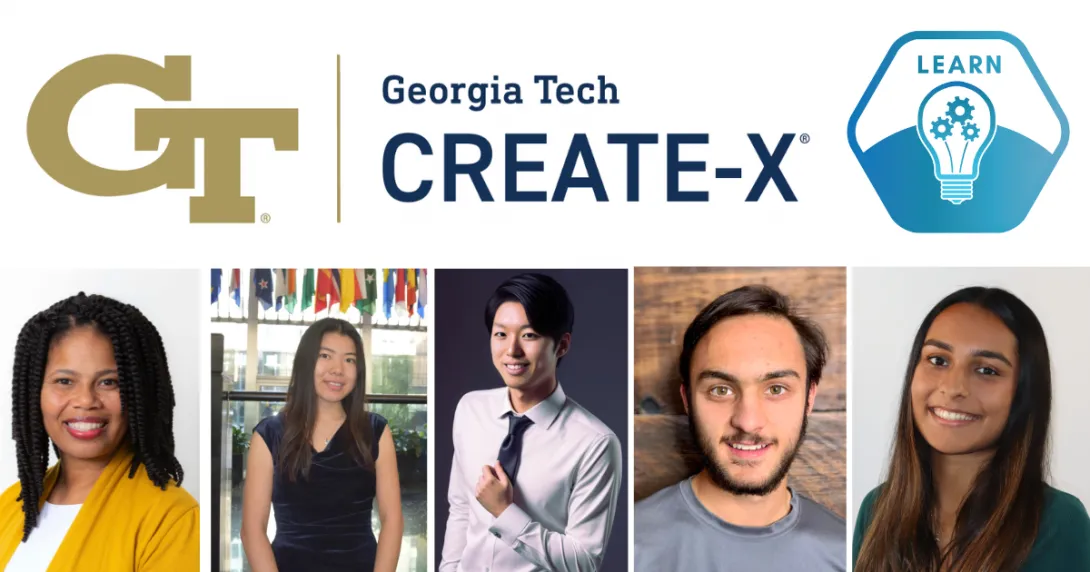
Left to right: Yolanda Payne, Christie Peng, Shinhai Chen, Alex Aridgides, and Varuni Chopra. Four Georgia Tech students from Startup Lab—Alex Aridgides, Shinhai Chen, Varuni Chopra, and Christie Peng—have been selected for the 2025 immersive cohort at South by Southwest (SXSW) in Austin, Texas. This weeklong, all-expenses-paid program allows university-affiliated innovators to refine their innovations, engage in customer discovery, and network with industry leaders.
Four students from Startup Lab have been selected to join the 2025 immersive cohort at South by Southwest (SXSW) in Austin, Texas. Alex Aridgides (mechanical engineering and economics), Shinhai Chen (industrial engineering), Varuni Chopra (industrial engineering), and Christie Peng (computer science) are the first Georgia Tech students to be invited to the program.
The weeklong, all-expenses-paid program offers university-affiliated innovators the chance to refine their innovations, engage in customer discovery, and network with industry leaders and peers at SXSW. The annual festival celebrates technology, film, music, education, and culture. Students participated in a competitive application process, which involved submitting applications, meeting specific evaluation criteria, and being selected by a panel of industry experts, mentors, and SXSW organizers.
Yolanda Payne, the students’ Startup Lab instructor, presented the SXSW opportunity in class.
"My goal is to be their biggest cheerleader,” she explained. “I had great teachers who helped me get to where I am today, and I strive to emulate their support. I’m always willing to guide students toward new opportunities."
She learned about the SXSW immersive cohort from Nakia Melecio, director of the National Science Foundation I-Corps Southeast Hub. The $15 million initiative crosses nine major research universities in the southern U.S. and accelerates the translation of deep tech research into commercial ventures. The hub works closely with entrepreneurial faculty, students, and researchers to equip them with the tools, networks, and support to bring their innovations to market.
Melecio plays a central role in identifying and advancing strategic opportunities for university partners and their entrepreneurial teams. “When the opportunity to participate in SXSW arose, I recognized it as an ideal platform to showcase the talent and innovation coming out of our region.”
Melecio added that Startup Lab is ideal for amplifying NSF I-Corps’ goals because of the course’s proven track record of fostering hands-on learning and commercialization readiness. “Startup Lab helps prepare students not just to think entrepreneurially, but to act on their ideas with confidence and a structured path forward. It was a natural fit for this opportunity.”
Payne says the experience students gained in Startup Lab helped prepare them for the immersive cohort. “The knowledge is being solidified by an experience you’re having in my class and the real world.”
Chopra agrees that Startup Lab teaches essential business development fundamentals and customer discovery principles, skills that are relevant to the SXSW program. She recommends the course to other students and emphasizes the value of combining engineering or technical backgrounds with entrepreneurship skills.
“We take a lot of classes that are directly related to our major, and they're very technical. But when it comes to wanting to start something of your own or even understanding how startups work, it's completely different than the rest of our coursework.”
Startup Lab is a three-credit course that focuses on evidence-based entrepreneurship. This hands-on class covers ideation, teamwork, customer discovery, minimum viable products, the business model canvas, and other topics. Students learn how to launch a startup by integrating in-class lectures with practical, out-of-class activities, including interviewing potential customers and refining their startup ideas based on real-world feedback.
The program provides access to valuable resources, mentorship from seasoned entrepreneurs, and a supportive community to help students develop their startups. Startup Lab and NSF I-Corps are also exploring other industry showcases for student entrepreneurs like SXSW.
Chen chose Startup Lab to pursue his entrepreneurial interests. “I knew that Georgia Tech had a really good startup culture, so I researched what they had to offer, and Startup Lab was the first step." He also noted Payne's impact as an instructor. "The best part is how much she cares about the topic. She has a lot of background knowledge and is passionate.”
Startup Lab is unique because it "de-risks the business model,” Payne says. Many entrepreneurs first build their products and then talk to potential customers. However, Startup Lab students perform customer discovery, sharing their ideas with potential end users, listening to their needs and feedback, and then building the product.
Peng recalls a powerful moment of pitching an idea for an app to streamline MARTA operations. “I had a fun time coming up with this idea. We learned a lot about interviewing, coming up with possible solutions, and refining our idea,” she says. "Being surrounded by so many brilliant individuals at Georgia Tech makes it easy to get idea formation or networking connections you need for your idea to succeed."
Aridgides has ambitious post-program goals, envisioning creating change through entrepreneurship. "I want to start a company to change the world for the better and make a big impact. That's my life goal. I think through a company, I can achieve that."
Payne reminds students that they possess something many adults lack: time to explore different ideas. She also says Startup Lab can help students value and see their ideas in new ways.
“They don't recognize that the product they're working on could be pursued through entrepreneurship or think of themselves as entrepreneurs. And even if they don't pursue it, it helps them in all aspects of life because business and capitalism are part of what we do every day.”
If you’re a student interested in adding entrepreneurship to your course schedule, registration for the summer and fall semesters opens on April 15. In addition to Startup Lab, students also have the opportunity to build a prototype with support through Idea to Prototype and CREATE-X Capstone Design.
News Contact
Contact
Article by Alyson Key
CREATE-X Contact:
Breanna Durham
Marketing Strategist
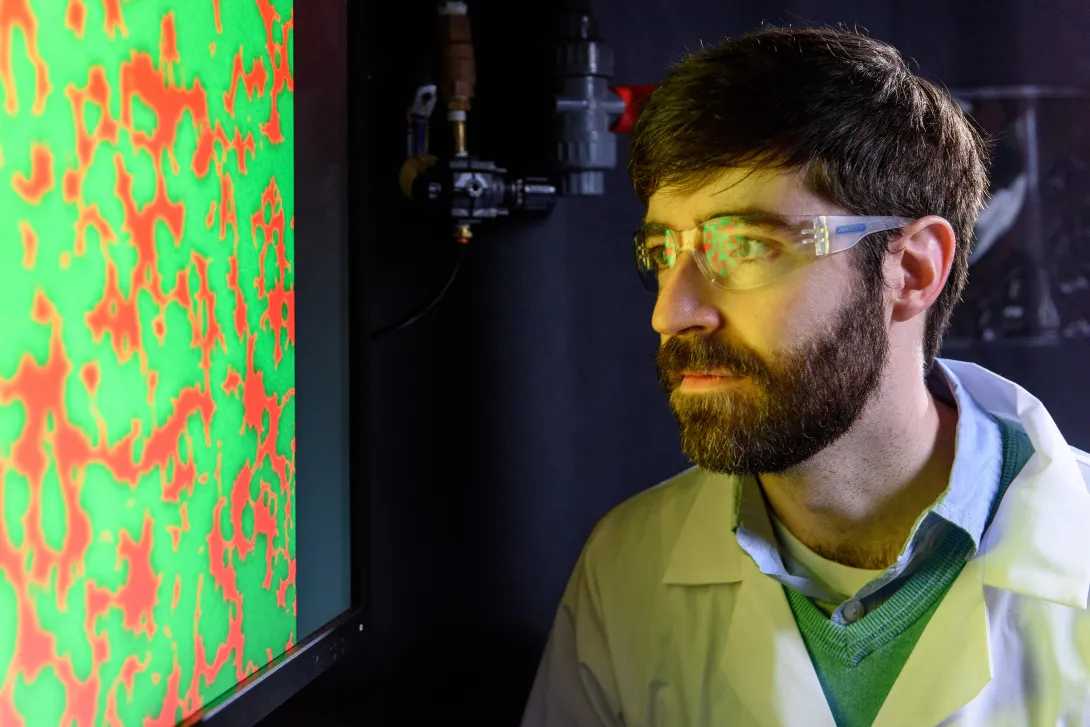
Peter Yunker boils down his advice for researchers wanting to commercialize their lab advances.
“You can’t go it alone,” said Yunker, an associate professor of physics at Georgia Tech.
In January, Yunker co-founded the biotechnology startup TopoDx LLC, with David Weiss, an Emory University School of Medicine researcher and director of the Emory Antibiotic Resistance Center, and Yogi Patel, a Georgia Tech alumnus with a background in business development and bioengineering.
“Researchers often think that they have a good commercialization idea to help people, but that alone does not guarantee success,” said Yunker. “Look for partners with complementary skills who understand aspects of the commercialization process that you don’t. Find mentors with business and scientific backgrounds in the specific industry you want to enter.”
TopoDx has developed a microbial test to identify antibiotic resistance and susceptibility rapidly and accurately. Current tests produce a result in three to five days. TopoDx’s approach can gain a result within four hours. Every hour counts in treating serious infections. Delays in accurate treatment can increase antibiotic resistance, which is a global challenge, causing up to 1 million deaths a year.
The company’s testing method was inspired by a fundamental biophysics project in Yunker’s lab. His team was interested in understanding how bacterial colonies behave. They tested white-light interferometry, a technology that can measure bacterial colonies down to the nanometer level.
“White-light interferometry allowed us to identify changes in the topography of a colony that indicated larger changes in the volume of cells in the entire colony,” said Yunker. “We thought this might have practical applications.”
The next step was giving research talks at meetings and looking for collaborators. “I wanted to find someone with expertise on the bacteriology side, and I was very fortunate to meet David Weiss,” Yunker said, noting his proficiency in heteroresistance, a phenomenon where a small subset of a bacterial colony resists an antibiotic.
“If you have just one antibiotic-resistant cell in a hundred cells, it can cause treatments to fail,” said Yunker.
The two collaborators hoped to commercialize their technology, identifying heteroresistance in microbial samples. However, they needed guidance in creating a business model. They consulted Harold Solomon, an entrepreneur with Georgia Tech VentureLab and a principal in the Quadrant-i program, a specialized program helping Georgia Tech faculty and students commercialize research.
Solomon became a key mentor. He guided them away from an ill-advised partnership and instead introduced them to Yogi Patel, who became a co-founder and the company CEO.
This new collaboration provided the team with an important lesson — one that Yunker passes along to other researchers looking to commercialize their discoveries. “Seek expertise outside your field, be humble about your knowledge limitations, and view collaboration as a strategic partnership,” he says.
When Patel came on board, he conducted extensive interviews with more than 15 clinical professionals.
“You need to interview end users or purchasers of whatever solution you want to build,” said Patel. “Ask them if the problem you think you may have solved is a problem with scale, with a market need.”
Clinicians, Patel learned, did not see heteroresistance as a significant issue. Instead, the slow pace of antibiotic testing was identified as a major problem. Faster testing could allow clinicians to prescribe targeted drugs more quickly and accurately, reducing unnecessary antibiotic use and the risk of multi-resistant infections.
With this survey information, Patel asked Yunker and Weiss to rethink how their technology could be commercialized.
“A company must solve a real-world problem,” said Patel. “I recommended that we switch from heteroresistance to solving slow antibiotic testing. We could keep heteroresistance as something we can still do as a second or third priority.”
TopoDx’s new technology can measure, with single-nanometer accuracy, how bacterial colonies are responding to antibiotics in real time. This method could revolutionize how antibiotics are tested and prescribed. Testing would be conducted on a countertop device about the size of a large microwave. The co-founders envision the device as eventually being used by urgent care facilities and hospitals.
“We want to make microbial testing susceptibility accessible anywhere and everywhere,” said Patel.
Adam Krueger, once a Ph.D. student in Yunker's lab, has continued to refine the technology. Now a post-doctoral researcher, Krueger joined TopoDx in a technical leadership role to expand the technology’s capabilities for microbiological diagnostics.
“We will keep pushing the envelope forward scientifically while we try to commercialize the accomplishments that we have already made,” Yunker said. “We hope that some fundamental studies we are doing now out of scientific curiosity could lead to further commercial applications.”
Georgia Tech faculty members and graduate students, join the Quadrant-i Startup Launch Program to commercialize your research this summer: Over 12 weeks, you'll receive comprehensive support including guidance from experienced mentors, a $10,000 commercialization grant, and $150,000 worth of in-kind services. Showcase your innovation at Demo Day, where you'll have the opportunity to present to over 1,500 attendees, including industry leaders and investors. Apply today! Applications close April 11.
News Contact
Written By John H. Tibbetts
Internal Contact:
Breanna Durham
Marketing Strategist