
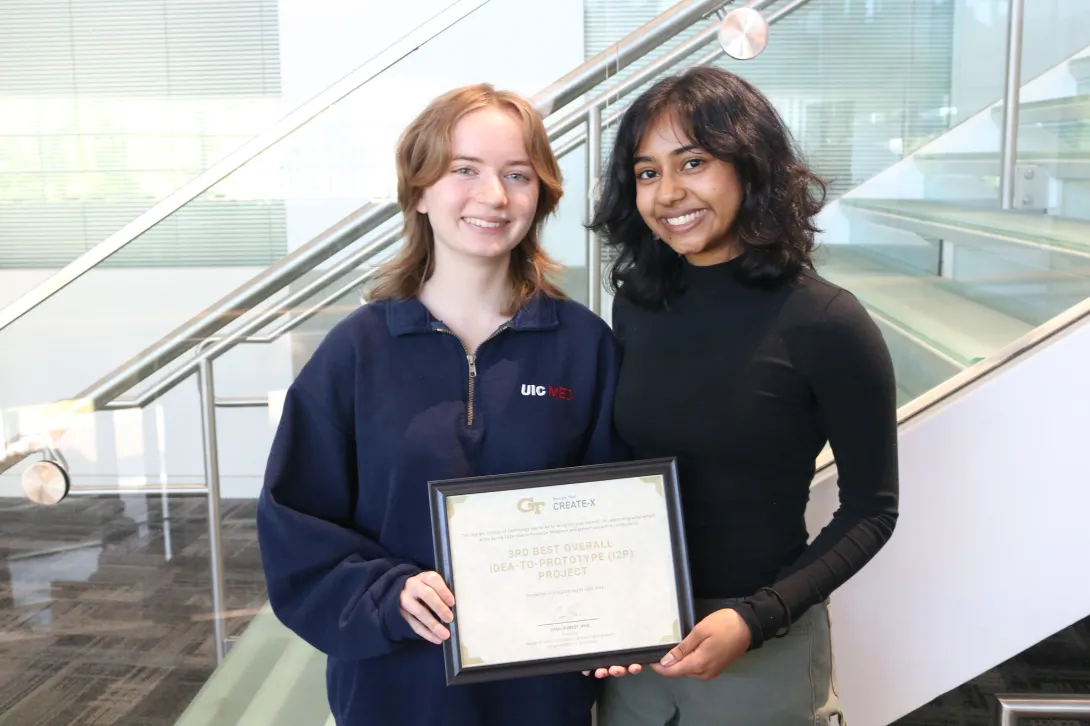
Electrosuit, a startup by Aubrey Hall and Sherya Chakraborty, secured third place in the Spring 2024 I2P Showcase, and their product, a garment for at-home electrical stimulation, targets individuals with chronic pain or motor impairments.
CREATE-X is built to help students integrate entrepreneurship into their academic journey through courses, workshops, and a startup accelerator. This spring, a new set of students displayed their solutions to real-world problems at the I2P Showcase. It’s our privilege to shine a light on and celebrate those journeys. Today’s spotlight focuses on the spring I2P Showcase third-place winners.
Electrosuit
Aubrey Hall, a first-year biomedical student, and Sherya Chakraborty, a first-year computer science major, founded a startup to produce a garment that eases the use of at-home, prescribed electrical stimulation for people with chronic pain, stroke, and motor impairments.
What made you interested in building this solution?
“I did research at Northwestern for a couple of years before this, and some of the patients I worked with had severe stroke and spasticity in their arms,” Chakraborty said. “I found out that when they tried using at-home prescribed electrical stimulation, they had trouble setting it off themselves. So, we created a garment to ease pressure on that.”
What part of the course was most helpful to you?
“One of our mentors, Sun Mi Park, was the first person to patent printable wires on fabric, and that gave us some inspiration to make our garment even more compact, easier to use, and integrate some interesting ideas that we wouldn’t have been able to without our mentors. So, our mentors are honestly the best part of the program,” Chakraborty said.
“For me, you don’t get a lot of chances to apply these engineering courses outside of the classroom,” said Hall. “This course is a really interesting way to get firsthand experience building a prototype and really understand the engineering process.”
What’s so special about CREATE-X?
“I think these student projects are the future, and a lot of these projects make it out of college and become actual companies. Giving students that possibility to make a change just from a simple idea and fueling that with funding so we don’t have to take risks out of our own pockets is a, really big deal,” Chakraborty said.
“It’s helpful to have that safety net, knowing that you have your mentors to back you, and also the people of the program to back you. It brings a lot of security and opportunity to try different things out and not have to be so fearful of failure. Even if you fail a million times, you can get back up and try again,” Hall said.
What’s the best insight you’ve gained from doing this?
“I think one big misconception is that entrepreneurship has a lot to do with finance and business and just lucrative ideas, but it’s pretty important to understand that you can solve a seemingly everyday problem,” said Chakraborty. “If it affects you or your friends, it’s still worth trying to find a way to solve it, especially backed up with money and mentors from CREATE-X. What’s the harm in trying something out?”
“Don’t try to make it feel like it’s an all-or-nothing project,” Hall said. “You’re allowed to live your life as a college student but also pursue these interesting ideas and figure out if you enjoy entrepreneurship. It shouldn’t be this daunting task where if you don’t put everything in, you’re going to fail.”
“It’s also important to keep an open mind. We might come in with an idea and a very specific way of executing that idea, but we found out through talking with mentors, and with other students and people who gave us advice, that sometimes the idea you come in with is not going to be the same thing you end up with,” Chakraborty said.
Next Steps
“We’ve only done four or five prototypes so far,” she noted. “We want to do at least 12 of those prototypes and keep working with our mentors, keep making connections at Emory, and just constantly getting more and more feedback about our prototypes until we get to a state where we’re satisfied, and we can demo our product and work with physical therapists across Atlanta.”
If you’re a student interested in building your own product for college credit, apply for I2P. And join us for Demo Day, Aug. 29, at 5 p.m., in the Georgia Tech Exhibition Hall to see new CREATE-X founders launch products in a variety of industries. Tickets are free but limited. Register today to secure your spot.
News Contact
Breanna Durham
Marketing Strategist
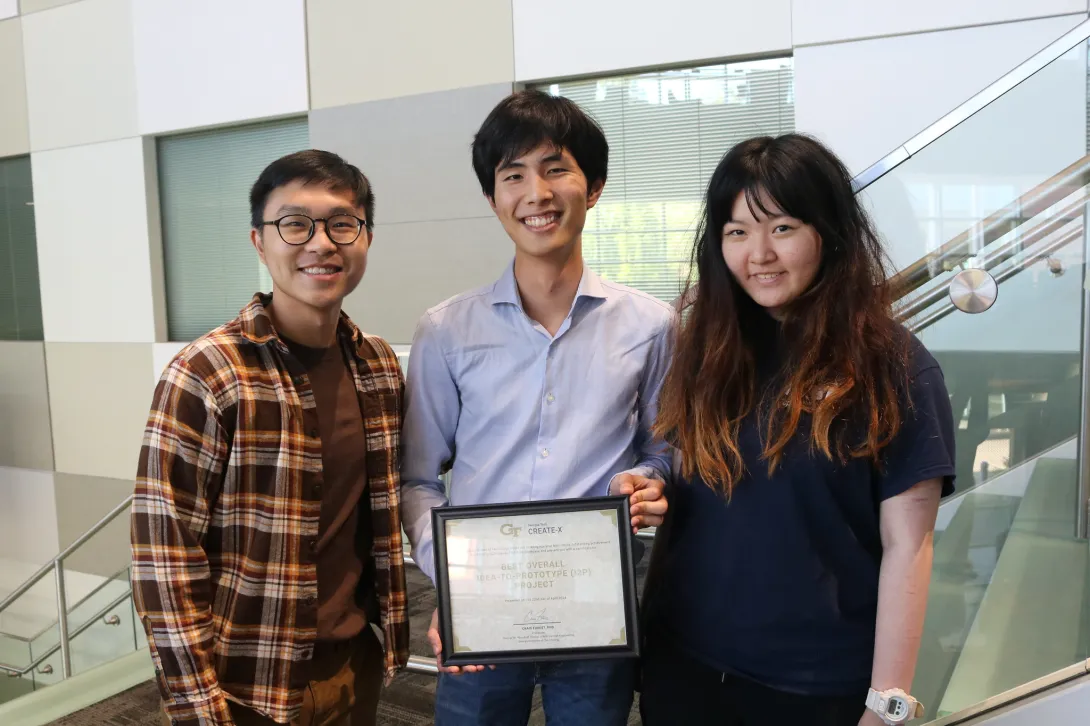
Founded by first-year computer science majors Marianna Cao, James Gao, and Jaeheon Shim, founders of Dolfin Solutions, win at I2P Spring 2024 Showcase
During the school year and the summer, Georgia Tech students can incorporate entrepreneurship into their college experience through courses, workshops, special events, and even a startup accelerator. CREATE-X invites you to delve into the journeys of our top achievers, this time focusing on the Spring 2024 I2P Showcase first-place winners:
Dolfin Solutions
Marianna Cao, James Gao, and Jaeheon Shim, first-year computer science majors, are the founders of Dolfin Solutions, a personal financial management platform that promises a unified solution to budgeting, transaction management, and expense tracking, among other personal finance tasks.
What challenges did you have in I2P, and how did you work through them?
“We were really lucky to get an excellent mentor, Aaron Hillegass. He has a lot of experience in the industry as a startup founder himself, and he gave us a lot of help, both technical as well as business, throughout the process. That helped us make better decisions,” Gao said.
“I think the biggest challenge was, I had done projects in the past by myself, writing the full stack, but working together, communicating the requirements, and integrating everyone's different code at the end was a little bit of a logistical struggle,” Shim said. “But we managed to figure it out.”
What advice do you have for students interested in I2P or entrepreneurship in general?
“Go for it. It's a three-credit course, so it counts toward your junior capstone as well. You get $500. Now is the perfect time to start because you don't have much to lose. If you're doing I2P and your company fails, you still have four years of college; you can still pursue a traditional path. It's a little risk but a lot to gain,” Shim said.
“Even if you pivot or change your idea, it's important to believe in what you started,” said Cao. “If you don't believe in your app, then nobody else does. Right now, you have all of the friends, mentors, professors, and the right resources, and money is not an issue. It's a good opportunity for you to work on it on the side, and maybe it could turn into something.”
What’s Next?
“We’re going to build for the iOS and Android platforms, and then we're going to deploy hopefully by the end of summer,” Shim said.
If you’re a student interested in building your own product for college credit, apply for I2P. And join us for Demo Day, Aug. 29, at 5 p.m., in the Georgia Tech Exhibition Hall to see new CREATE-X founders launch products in a variety of industries. Tickets are free but limited. Register today to secure your spot.
News Contact
Breanna Durham
Marketing Strategist
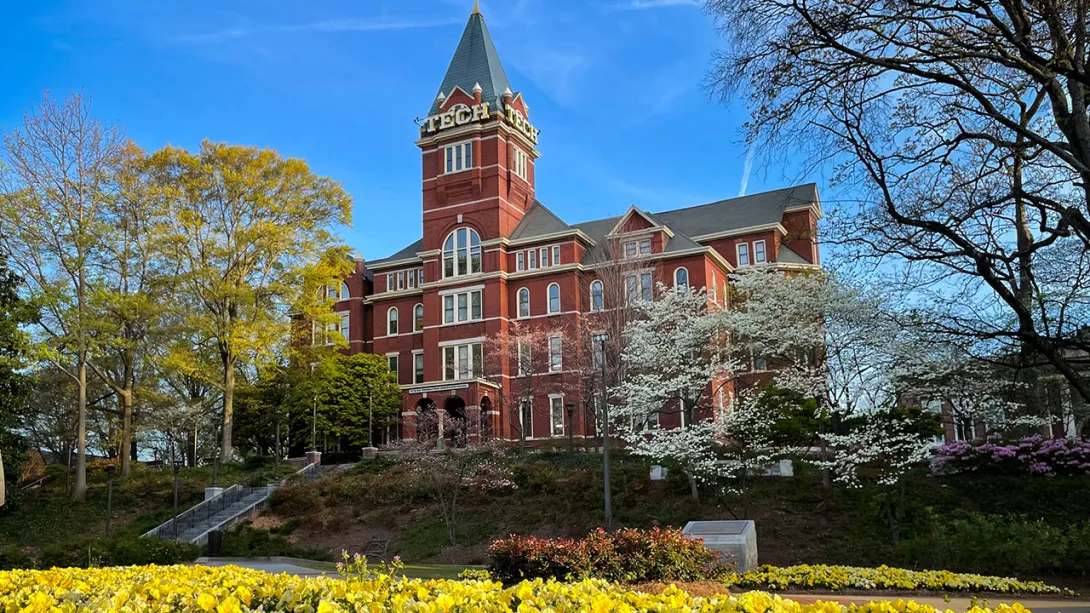
Students in the Pulp and Paper Certification Program at Georgia Tech had real-world experiences outside the classroom this spring. Over 30 students taking the Emerging Technologies in the Manufacture of Forest Bioproducts course (CHBE/ME 4730/8803) took field trips to Greif’s Austell location and GranBio’s Thomaston facility in Georgia. The course is taught by Chris Luettgen, professor of the practice and initiative lead for the process efficiency & intensification of pulp paper packaging & tissue manufacturing initiative at Georgia Tech's Renewable Bioproducts Institute.
At the Sweetwater Mill, one of Greif’s three paper mills in Austell, students saw the pressure cylinder machine, a pre-coater that smoothens the board for printability, and a curtain coater that makes value-added products such as one-sided chipboard packaging for retail displays. The mill runs 100% recycled fiber into stock cores, gypsum board liners, and chipboard packaging. The tour included converting the machine roll (called a parent roll) into smaller rolls that will be further converted at downstream customers’ locations.
At the GranBio’s facility in Thomaston, Tech students were able to see a biorefinery at work where a wide variety of lignocellulosic feedstocks, including wood chips, were getting converted into multiple bioproducts. They had a firsthand look at the SEW (sulfur dioxide, ethanol, and water) process, which was quite different from the traditional kraft pulping process. It creates a highly acidic mush, with a high pH, instead of fiber, which could then be used to make biofuels and other value-added products. In addition, they were able to discuss the recent DOE award to scale their process to a 100 ton/day biomass to Sustainable Aviation Fuel (SAF). The company explained that they were still in site selection and would be hiring engineers in the near future.
About the Pulp and Paper Certification
The College of Engineering at Georgia Tech offers a certificate program in pulp and paper. The certificate consists of 12 credit hours focused on forest bioproduct topics, including lecture- and laboratory-based courses. Since its inception in 1990, more than 100 students have completed their certification.
The foundational course in the program introduces students to the history of pulp and paper manufacturing from its origins and covers the forest bioeconomy, wood structure, chemistry, and fiber morphology, and goes through the unit operations utilized to transform lignocellulosic feedstocks into value-added products, including chemical and mechanical pulping, recycled fiber operations, chemical recovery, bleaching, stock preparation, and papermaking.
The emerging technologies course focuses on the future of bioproducts industries. Case studies on the use of biomass in the production of value-added products are covered. Included are fluff pulp and dissolving pulps, alternative fibers, specialty papers, packaging, and printed electronics, biorefining technologies, nanocellulose and bio composites, and renewable polymers.
The pulp and paper laboratory course introduces students to pulping operations, bleaching, hand sheet formation, pulp and paper physical properties, and recycled fiber. The final course allows students to pursue research on special problems under supervision from an RBI-affiliated faculty.
Students in the program can demonstrate their proficiency in pulp and paper science and engineering and are in high demand for their expertise.
News Contact
Priya Devarajan || RBI Communications Program Manager
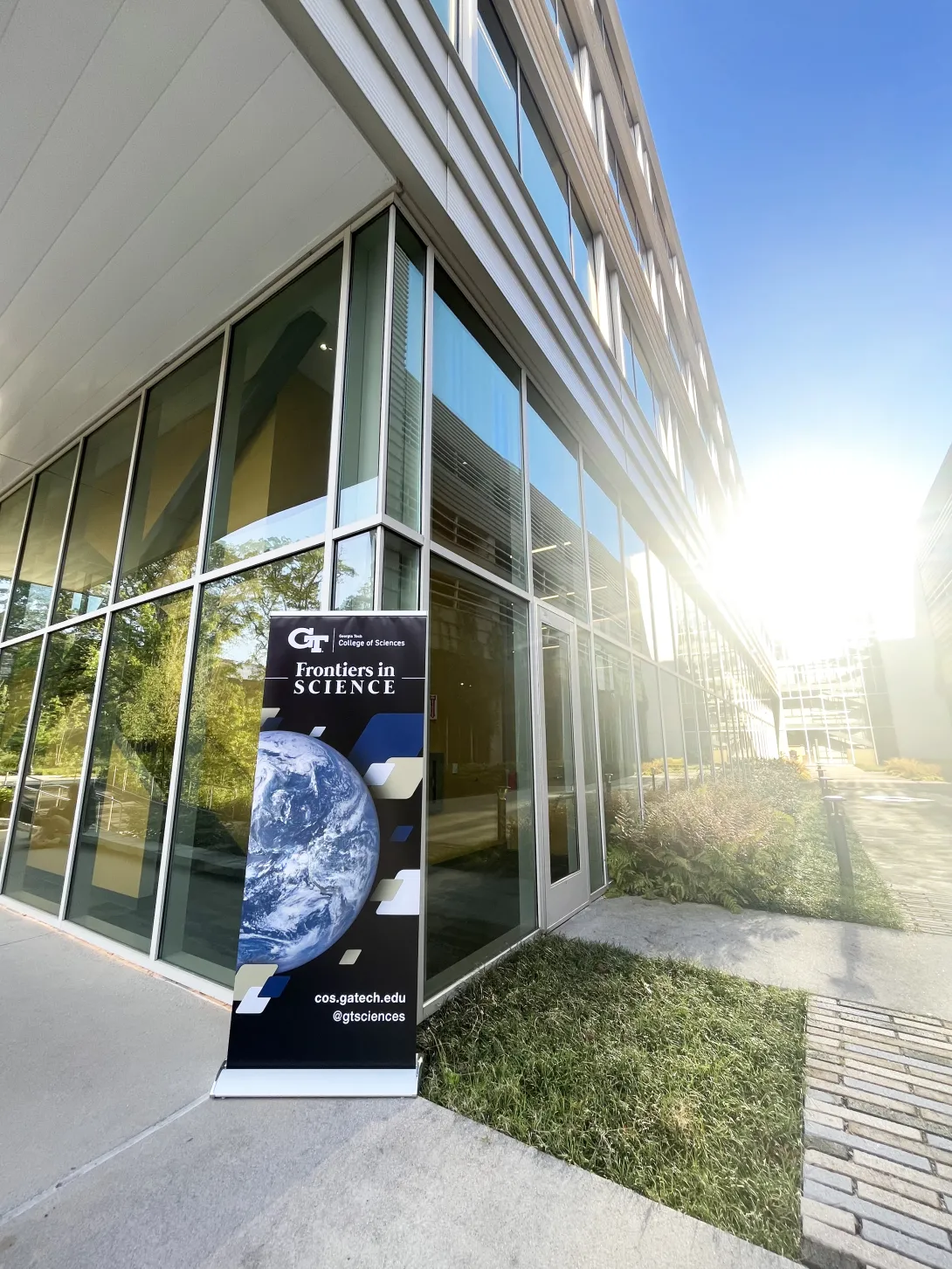
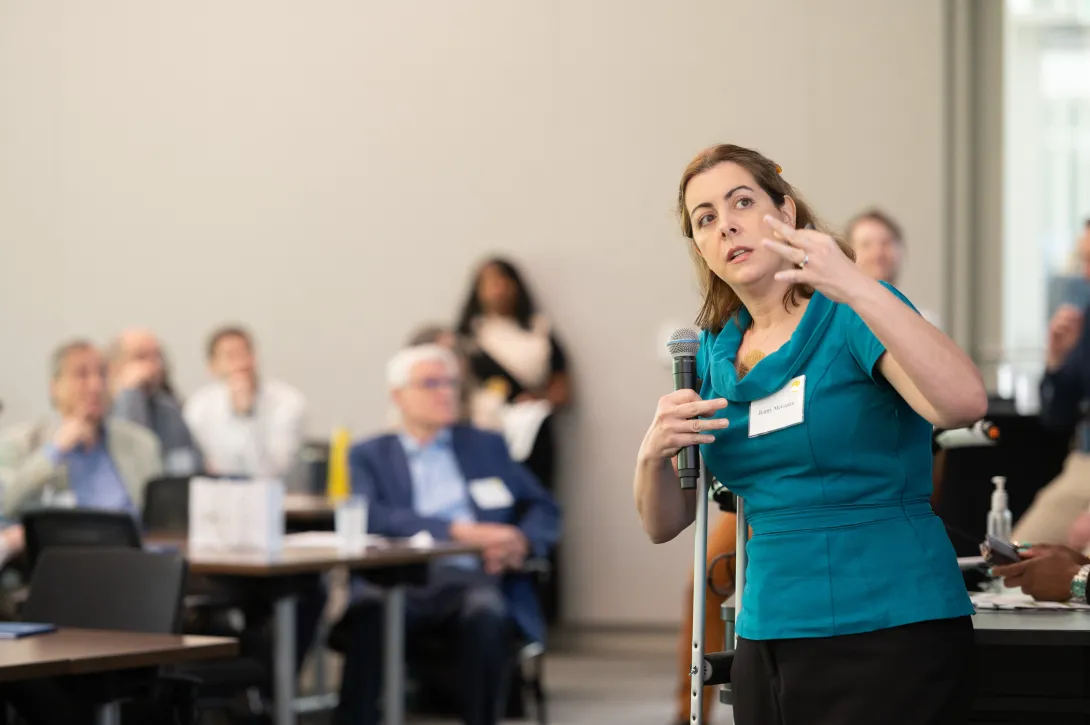
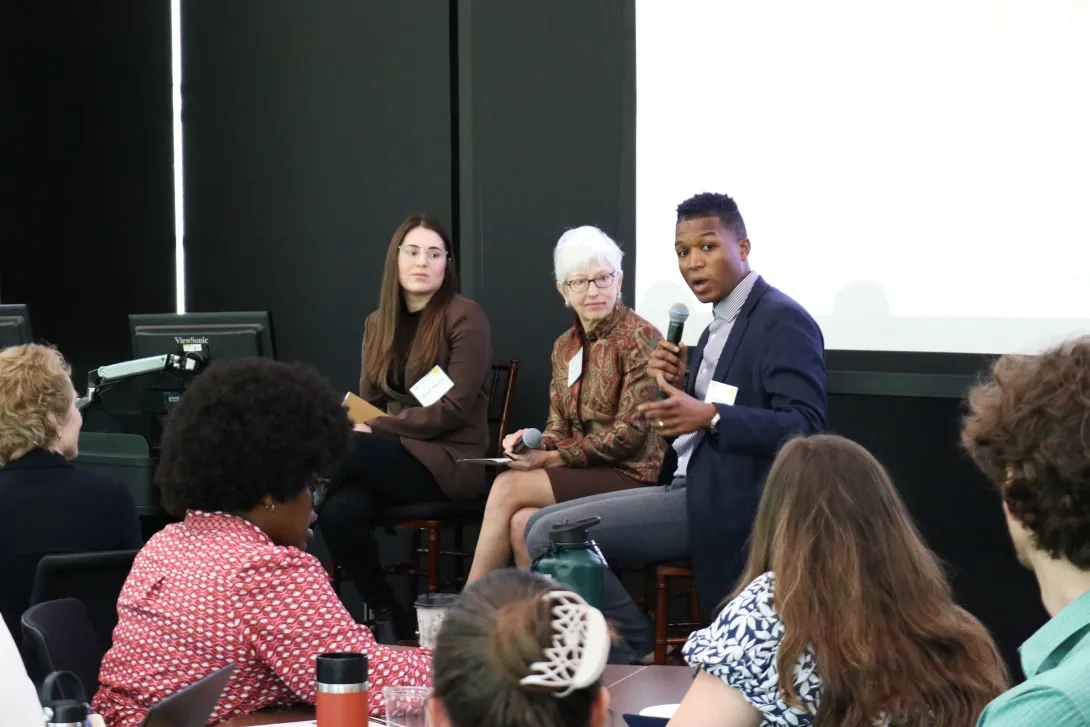
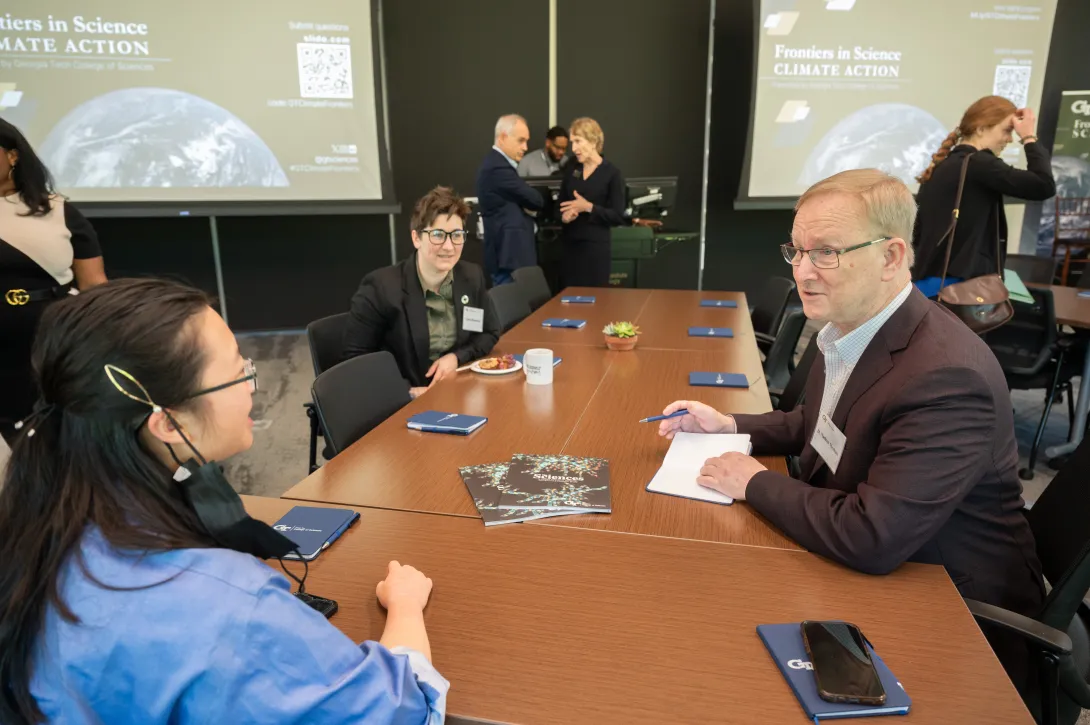
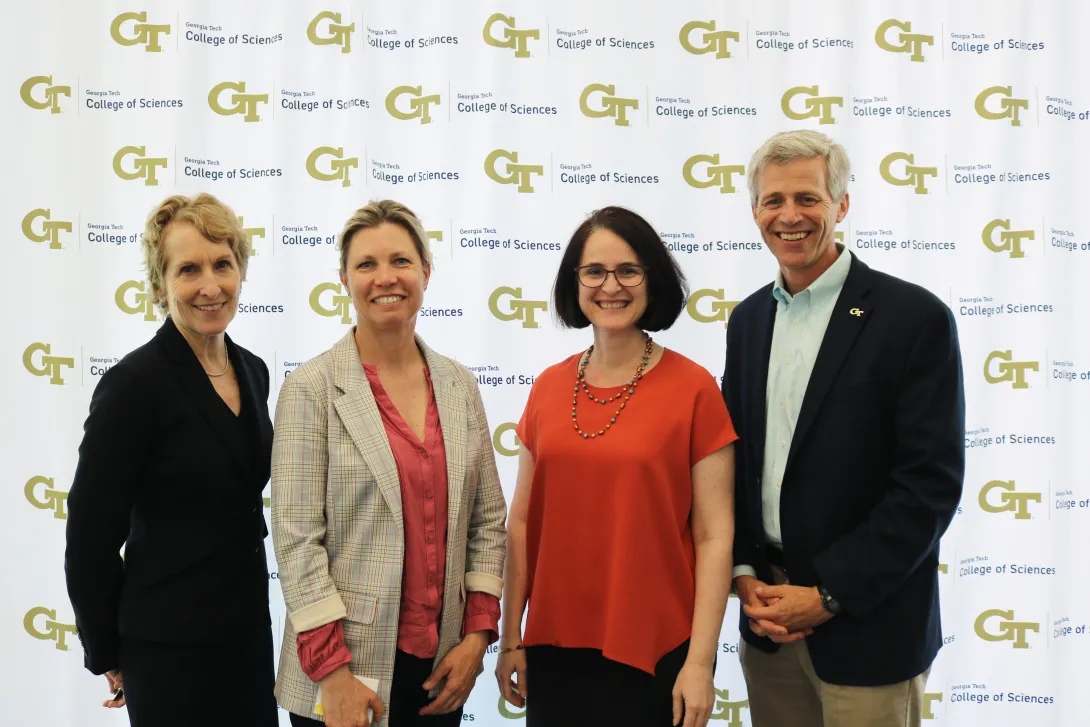
This Earth Month more than 100 campus and community stakeholders gathered near the Georgia Tech EcoCommons for the 2024 Frontiers in Science: Climate Action Conference and Symposium.
On April 18, the College of Sciences hosted more than 20 speakers and panelists from across the Institute and Atlanta community presenting groundbreaking research and discussing innovations and ideas in climate change, challenges, and solutions.
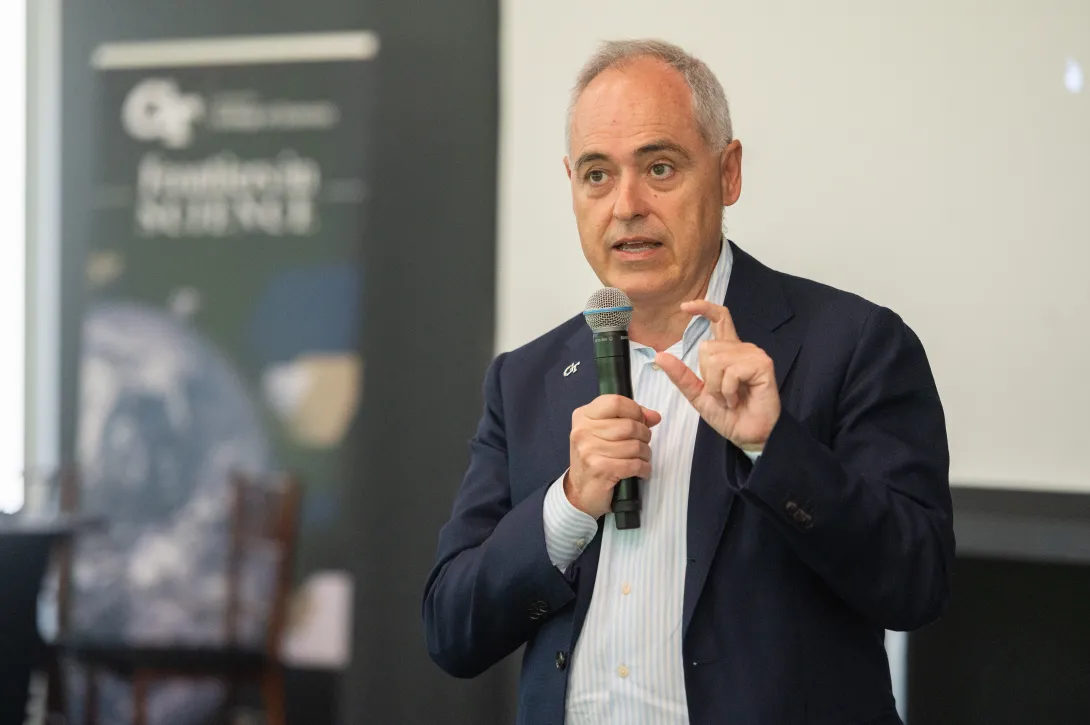
Georgia Tech President Ángel Cabrera (M.S. PSY 1993, Ph.D. PSY 1995) kicked off the morning sessions by highlighting the Institute’s new Climate Action Plan, which outlines the pathway to achieve net-zero emissions by 2050. Cabrera’s remarks focused on Georgia Tech’s role on the frontlines of research and education informing how we respond to climate challenges — and noted that the Institute’s work must extend beyond our laboratories and classrooms.
“It is essential that we not only do the science, but that we also tell that science to the world,” Cabrera says.
Interdisciplinary inquiry
This year, Frontiers in Science featured an array of climate research and initiatives led by the College of Sciences, fellow colleges across Georgia Tech, and the wider Atlanta community.
Following a three-year hiatus of the Frontiers series, the 2024 edition re-envisioned the signature annual event as a research conference and symposium to convene campus experts — and to incubate seed grant proposals to support the work of early career faculty.
Frontiers previously hosted Nobel laureates and invited thought leaders for individual talks across the College’s six schools, and celebrated milestones like the International Year of the Periodic Table of the Chemical Elements.
“This year, we wanted to showcase what we are doing right here in the College of Sciences and throughout the Institute,” says Susan Lozier, dean of the College of Sciences, Betsy Middleton and John Clark Sutherland Chair and professor in the School of Earth and Atmospheric Sciences. “Our faculty are at the forefront of broadening our knowledgebase and uncovering solutions in areas critical to the planet and our well-being. We wanted to uplift that work and see what sort of connections could be made.”
Connections and collaboration were key themes of the day as faculty, staff, students, and alumni participants representing all six Georgia Tech colleges shared research results and ongoing work and discussed collaborative ideas for horizons ahead.
“Scientists alone cannot [create accurate models],” noted Annalisa Bracco, professor in the School of Earth and Atmospheric Sciences and associate chair for Research, who shared her own research alongside Lozier, who presented a version of her 2024 TED Talk on ocean overturning. “Engineers alone cannot do it. We need social scientists, policy makers, communicators.”
The importance of an interdisciplinary approach was reinforced by the Strategic Energy Institute at Georgia Tech (SEI) and Brook Byers Institute for Sustainable Systems (BBISS), which announced an interdisciplinary seed grant funding opportunity for assistant professors with ideas for new climate solutions.
Frontiers in focus
Across three themed sessions, faculty and leadership from the Colleges of Sciences, Engineering, and Design spearheaded talks on the ocean and cryosphere, biodiversity, carbon cycling, coastal wetlands, biofuels production, and beyond.
Panels on climate challenges across community, technological, and policy initiatives were hosted by Georgia Tech Vice President for Interdisciplinary Research and Professor in the School of Biological Sciences and the School of Chemistry and Biochemistry Julia Kubanek.
Following a networking lunch with climate table topics, Georgia Tech Executive Vice President for Research and Professor in the School of Electrical and Computer Engineering Chaouki T. Abdallah (M.S. ECE 1982, Ph.D. ECE 1988) kicked off the afternoon sessions — which also announced the scholarship recipients of a student video competition and featured videos with a pair of alumnae working in meteorology, climate research, and policy.
Afternoon highlights also included discussions on the Georgia Tech Climate Action Plan and Sustainability Next initiative, led by Jennifer Chirico (B.S. MGMT 1997, Ph.D. PUBP 2011), associate vice president of Sustainability for Georgia Tech Infrastructure and Sustainability, and Jennifer Leavey (B.S. CHEM 1995), assistant dean for Faculty Mentoring in the College of Sciences and interim assistant director for Interdisciplinary Education in the Brook Byers Institute for Sustainable Systems.
Although many of the presentations provided a stern outlook of the state of our ecosystems, the conference concluded with a sense of hope. This optimism was grounded in the range of opportunities that exist to address climate challenges — thanks, in part, to the body of knowledge and solutions being tested and explored by Georgia Tech researchers.
At the end of the day, Katie Griffin, a first year undergraduate student in Environmental Science, read Amanda Gorman’s poem Earthrise and provided this reminder:
All of us bring light to exciting solutions never tried before
For it is our hope that implores us, at our uncompromising core,
To keep rising up for an earth more than worth fighting for.
Experience the event in pictures with the College of Sciences’ Flickr account, and discover the highlights through the day’s live tweets on College of Sciences’ X account.
News Contact
By: Lindsay Vidal
Jess Hunt-Ralston
Director of Communications
College of Sciences at Georgia Tech
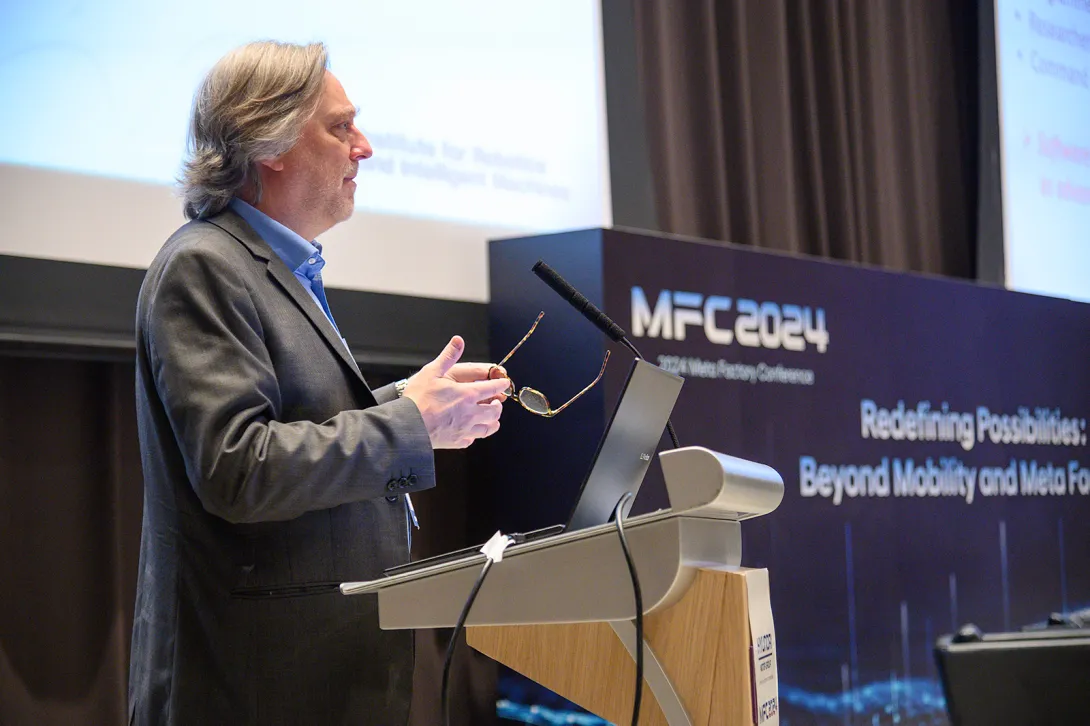
IRIM Director Seth Hutchinson at Hyundai Meta Factory Conference Delivering Keynote
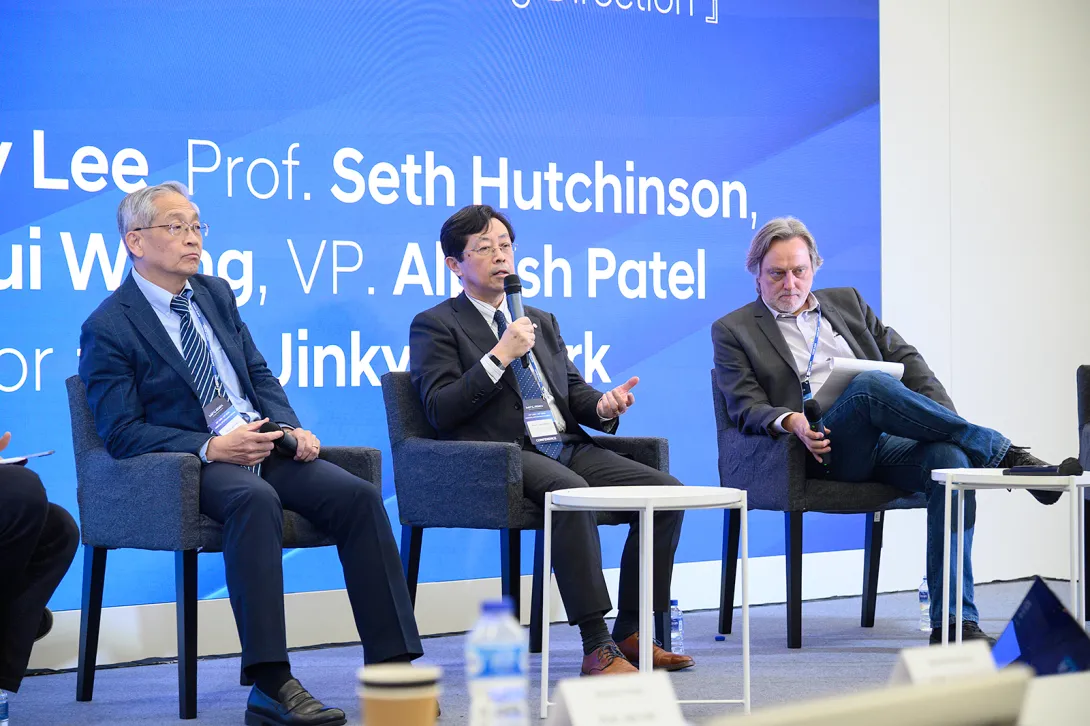
IRIM Director Seth Hutchinson at Hyundai Meta Factory Conference on Panel Discussion
Hyundai Motor Group Innovation Center Singapore hosted the Meta-Factory Conference Jan. 23 – 24. It brought together academic leaders, industry experts, and manufacturing companies to discuss technology and the next generation of integrated manufacturing facilities.
Seth Hutchinson, executive director of the Institute for Robotics and Intelligent Machines at Georgia Tech, delivered a keynote lecture on “The Impacts of Today’s Robotics Innovation on the Relationship Between Robots and Their Human Co-Workers in Manufacturing Applications” — an overview of current state-of-the-art robotic technologies and future research trends for developing robotics aimed at interactions with human workers in manufacturing.
In addition to the keynote, Hutchinson also participated in the Hyundai Motor Group's Smart Factory Executive Technology Advisory Committee (E-TAC) panel on comprehensive future manufacturing directions and toured the new Hyundai Meta-Factory to observe how digital-twin technology is being applied in their human-robot collaborative manufacturing environment.
Hutchinson is a professor in the School of Interactive Computing. He received his Ph.D. from Purdue University in 1988, and in 1990 joined the University of Illinois Urbana-Champaign, where he was professor of electrical and computer engineering until 2017 and is currently professor emeritus. He has served on the Hyundai Motor Group's Smart Factory E-TAC since 2022.
Hyundai Motor Group Innovation Center Singapore is Hyundai Motor Group’s open innovation hub to support research and development of human-centered smart manufacturing processes using advanced technologies such as artificial intelligence, the Internet of Things, and robotics.
- Christa M. Ernst
Related Links
- Hyundai Newsroom Article: Link
- Event Link: https://mfc2024.com/
- Keynote Speakers: https://mfc2024.com/keynotes/
News Contact
Christa M. Ernst - Research Communications Program Manager
christa.ernst@research.gatech.edu
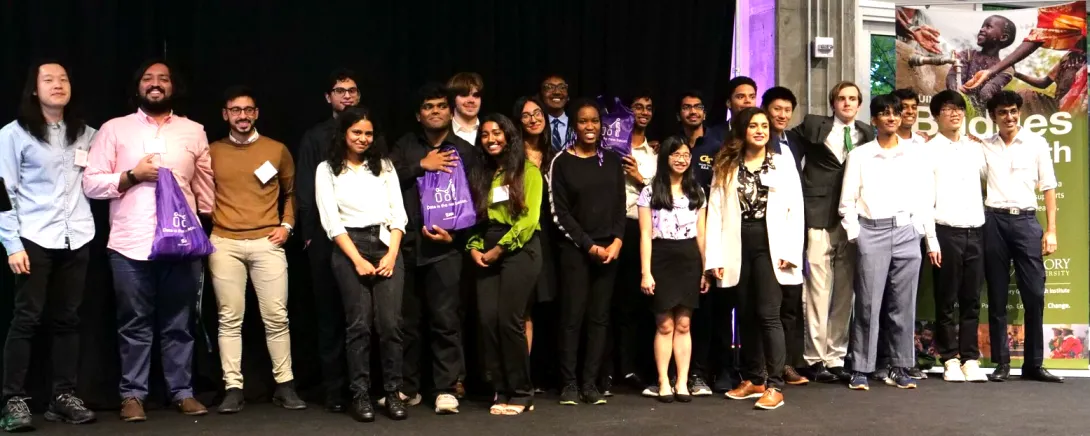
Students tackled climate change in the Fall 2023 Emory Global Health Institute (EGHI) /Georgia Institute of Technology (GT) Global Health Hackathon, Nov. 11, at Tech Square ATL Social. Competing for cash prizes and a spot in GT Startup Launch, first place went to Team iManhole. The team created an integrated system that gathers real-time data from manholes and uses machine learning algorithms to predict flooding to manage traffic and evacuation routes.
“The effects of climate change are felt in every country with the brunt and burden of an unmanaged climate crises threatening to set back global health progress by eroding decades of poverty eradication and health equity efforts worldwide,” said Dr. Rebecca Martin, EGHI director of Emory Global Health Institute. “Students are an important partner in our work as a global community to mitigate the impacts of climate change on health, safety, and security.”
The EGHI/GT Global Health Hackathon is a partner event between EGHI and CREATE-X. It provides multidisciplinary student teams from Emory University and the Georgia Institute of Technology an opportunity to create technology-based product solutions for global health problems. The target for this fall’s event was creating solutions that address urban flooding, urban heat, or global sea level rise in densely populated, low-resource urban settings. Prizes included $4,000 and a golden ticket into CREATE-X Startup Launch for first place winners, $3,000 for second place winners, $2,000 for third place winners, and $500 each for two honorable mention winners.
“This hackathon continues to be a wonderful partnership between our two institutions that gives these talented students the platform and support to put forward solutions to the most pressing issues we face today,” Rahul Saxena, director of CREATE-X, said. “Each hackathon, I’m increasingly impressed with their ingenuity and their dedication to build something of impact.”
Check out the event program on the EGHI website and see photos from the event on the CREATE-X Flickr account. The full list of the winners of this year’s event includes:
1st Place: iManhole
An integrated system that gathers real-time data from manholes and uses machine learning algorithms to predict flooding to manage traffic and evacuation routes
Team Members: Imran Shah, Leonardo Molinari, and Jiaqi Yang
2nd Place: Canopy
A climate-tech software platform for democratizing climate analytics using machine learning for urban development planning.
Team Members: Deesha Panchal, Kruthik Ravikanti, Vaibhav Mishra, Nicholas Swanson, Jennifer Samuel, and Vaishnavi Sanjeev
3rd Place: Floodwise
A package of effective simulations and an informed chatbot that help facilitate wise decisions during floods.
Team Members: Ansh Gupta, Dimi Deju, Mukund Chidambaram, and Sahit Mamidipaka
Honorable Mention
Conquering Heat Islands
Process and hardware that uses excess solar power to mine crypto
Team Members: Rida Akbar, DJ Louis, Edward Zheng, Dmitri Kalinin, and Jade Bondy
Real-Time Computational Modeling of Urban Flooding and Evacuation in Local Atlanta Communities
Integrated system to gather real-time data from manholes and use machine learning algorithms to predict flooding and optimize traffic/evacuation.
Team Members: Imran Shah, Leonardo Molinari, and Jiaqi Yang
News Contact
Breanna Durham
Marketing Strategist
breanna.durham@gatech.edu
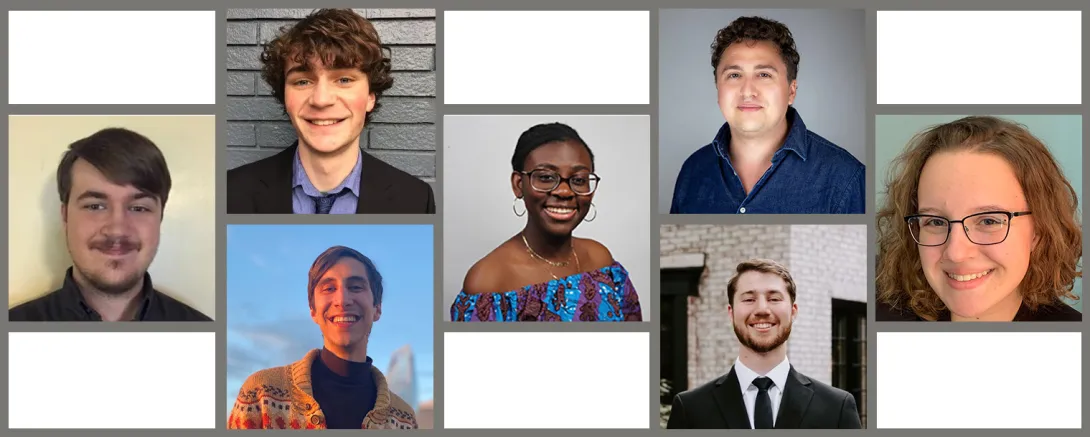
Photo collage of Jordan Hale, Jake Churchill, Henry Kantrow, Betina Arkhurst, Andrew Hill, Jacob Tjards, Emily Marshall
The Strategic Energy Institute (SEI) of Georgia Tech is excited to announce that Bettina Arkhurst is the 2023 recipient of the James G. Campbell Fellowship Award. Arkhurst’s commitment to academics, research, and community service has been recognized by the award committee. She is a Ph.D. candidate advised by Katherine Fu, professor in the George W. Woodruff School of Mechanical Engineering.
Arkhurst holds a bachelor’s degree in mechanical engineering from Massachusetts Institute of Technology and a master’s degree in mechanical engineering from Georgia Tech. Her research seeks to understand how concepts of energy justice can be applied to renewable energy technology design to better consider marginalized and vulnerable populations. She strives to create frameworks and tools for mechanical engineers to apply as they design energy technologies for all communities.
As an energy equity intern at the National Renewable Energy Laboratory, Arkhurst has worked with colleagues to better understand the role of researchers and engineers in the pursuit of a more just clean energy transition. She is also a leader in the Woodruff School’s graduate student mental health committee, which seeks to improve the culture around graduate student mental health and well-being. Additionally, Arkhurst is working with the Georgia Tech Center for Sustainable Communities Research and Education (SCoRE) to develop a course on community engagement and engineering that will launch in Spring 2024.
The Energy, Policy, and Innovation Center (EPICenter) and the Strategic Energy Institute are proud to announce the 2023 Spark Award recipients: Jake Churchill, Jordan R. Hale, Andrew G. Hill, Henry J. Kantrow, Emily Marshall, and Jacob W Tjards. The award honors outstanding leadership in advancing student engagement in energy research.
Churchill is a master’s student in mechanical engineering advised by Akanksha Menon, assistant professor in the Woodruff School. Working with Menon in the Water-Energy Research Lab, his research focuses on coupling reverse osmosis desalination with renewable energy and storage technologies to provide clean, sustainable, and affordable water in the face of growing global water stress. Churchill has led the Georgia Tech Energy Club’s Solar District Cup team for three years, guiding students interested in solar energy careers. He has also been involved with several SEI initiatives, including EPICenter’s high school summer camp, Energy Unplugged. He is currently facilitating a student-led study to quantify the benefits of cleaning photovoltaic panels using the rooftop array at the Carbon Neutral Energy Solutions Lab.
Hale is pursuing a Ph.D. in chemistry, specializing in theoretical and computational chemistry under Joshua Kretchmer, assistant professor in the School of Chemistry and Biochemistry. His current research focus is utilizing various quantum dynamics formalisms and unique computational techniques to identify the microscopic mechanisms of electron transport in perovskite solar cells. Hale has mentored high school students, teaching them the fundamentals of computational chemistry and various programming skills. Additionally, he has been actively engaged with undergraduate students from other universities both in and out of Georgia through the Summer Theoretical and Computational Chemistry workshop.
Hill is a Ph.D. candidate in the Soper Lab in the School of Chemistry and Biochemistry. His research is focused on the activation of strong chemical bonds using Earth-abundant metals for energy conversion and storage. He has taken an active leadership role on campus, in part through service as the president of the Georgia Tech Chemistry Graduate Student Forum.
Marshall is a second-year graduate student working for Alan Doolittle, professor in the School of Electrical and Computer Engineering. She uses specialized molecular beam epitaxy techniques to grow high-quality III-nitride materials for next-generation power, radio frequency, and optoelectronic devices. Her current research focuses on improving the fundamental understanding of the scandium catalytic effect to optimize the growth of scandium aluminum nitride, a material that shows great promise for applications in future power grids. In addition to her research, Marshall is committed to teaching, having volunteered for five semesters serving her fellow students as a peer instructor at the Hive Makerspace and currently training junior members of her lab to grow semiconductors via molecular beam epitaxy. After earning her master’s and Ph.D., she hopes to continue teaching, mentoring, and connecting others across the world in an effort to bring about a brighter future.
Kantrow is a Ph.D. candidate in the School of Chemical and Biomolecular Engineering, co-advised by Natalie Stingelin and Carlos Silva. His research seeks to understand the photo physics of semiconducting polymers operating in dynamic dielectric environments and to provide material design guidelines for solar fuel technologies. He is an active student leader in the Center for Soft Photo-Electrochemical Systems, where he also serves on the energy justice committee. He served as the secretary of the Association for Chemical Engineering Graduate Students (AChEGS) in 2022 and continues to mentor first-year graduate students in AChEGS and through the Pride Peers Program at Georgia Tech.
Tjards is a graduate research assistant at Georgia Tech’s Sustainable Thermal Systems Laboratory. He graduated with a bachelor’s degree in mechanical engineering from Georgia Tech in 2021 before beginning his Ph.D. program, where he is studying energy systems. Tjards’ research is focused on modeling new manufacturing processes of drywall and aluminum to reduce water consumption during production. Additionally, he is working on a new technique for water purification. While in school, he has been a teaching assistant and instructor for the undergraduate mechanical engineering course on energy systems analysis and design (ME 4315). In his free time, Tjards enjoys Formula 1 racing, Georgia Tech baseball games, and woodworking.
News Contact
Priya Devarajan | Research Communications Program Manager, SEI
The Renewable Bioproducts Institute (RBI) at Georgia Tech benefits from a substantial endowment that is invested to advance the evolving science and technology needs of the bioproducts industry and emerging bioeconomy through graduate research. The endowment over the years has supported more than 1,500 engineers and scientists and a leading body of scientific research. RBI has released the Request For Proposals (RFP) for the annual year 2024-25 fellowships. Proposals are due on Feb. 1, 2024. The RFP document describing the application process and several important changes for this year can be found at 2024-25 RFP Proposals.
The principal mission of RBI is to incubate and develop interdisciplinary teams of researchers that can establish thought leadership through new bioproduct research directions. Our focus is on pre-competitive, use-inspired research with a technical, economic, or policy focus. All supported work needs to address an aspect of bioproducts and the developing bioeconomy. The RBI Fellowship supports this mission by promoting two objectives:
(1) Helping teams of faculty to establish new concepts, publish early results, and develop competitive federal, industry, or foundation proposals in the future.
(2) Training a diverse group of graduate-level professionals who can support the evolving bioproducts R&D workforce.
***NEW PROGRAM CHANGES***
- Along with Graduate Research Assistant (GRA) stipend and tuition support, RBI will provide $1,000 of materials and supplies funding or a $1,000 credit toward the use of RBI’s analytical facilities.
- The fellowship was formerly called the PSE (Paper Science and Engineering Fellowship). It has been renamed as the RBI Fellowship.
- The fellowship minor requirement has been changed from 12 hours to nine hours. The minor will consist of two core courses and one elective, described here. For students outside of the College of Sciences or College of Engineering, an alternative set of courses can be considered.
- Awards can support GRAs from any school within Georgia Tech and can be advised by teams consisting of faculty from any Georgia Tech school, although the relevance of the disciplines included must be clear.
News Contact
Priya Devarajan || RBI Communications Program Manager

Earth (Credit NASA/Joshua Stevens)
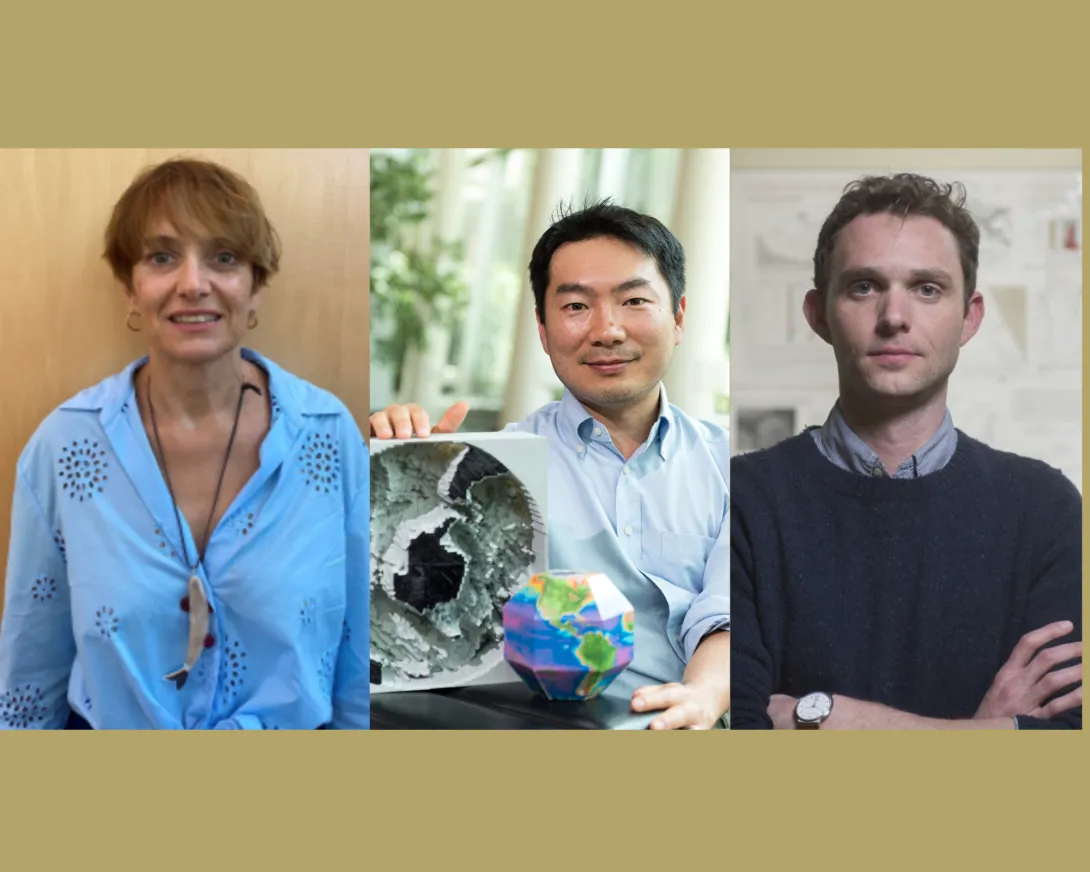
(From left) Annalisa Bracco, Taka Ito, Chris Reinhard
Three Georgia Tech School of Earth and Atmospheric Sciences researchers — Professor and Associate Chair Annalisa Bracco, Professor Taka Ito, and Georgia Power Chair and Associate Professor Chris Reinhard — will join colleagues from Princeton, Texas A&M, and Yale University for an $8 million Department of Energy (DOE) grant that will build an “end-to-end framework” for studying the impact of carbon dioxide removal efforts for land, rivers, and seas.
The proposal is one of 29 DOE Energy Earthshot Initiatives projects recently granted funding, and among several led by and involving Georgia Tech investigators across the Sciences and Engineering.
Overall, DOE is investing $264 million to develop solutions for the scientific challenges underlying the Energy Earthshot goals. The 29 projects also include establishing 11 Energy Earthshot Research Centers led by DOE National Laboratories.
The Energy Earthshots connect the Department of Energy's basic science and energy technology offices to accelerate breakthroughs towards more abundant, affordable, and reliable clean energy solutions — seeking to revolutionize many sectors across the U.S., and relying on fundamental science and innovative technology to be successful.
Carbon Dioxide Removal
The School of Earth and Atmospheric Sciences project, “Carbon Dioxide Removal and High-Performance Computing: Planetary Boundaries of Earth Shots,” is part of the agency’s Science Foundations for the Energy Earthshots program. Its goal is to create a publicly-accessible computer modeling system that will track progress in two key carbon dioxide removal (CDR) processes: enhanced earth weathering, and global ocean alkalinization.
In enhanced earth weathering, carbon dioxide is converted into bicarbonate by spreading minerals like basalt on land, which traps rainwater containing CO2. That gets washed out by rivers into oceans, where it is trapped on the ocean floor. If used at scale, these nature-based climate solutions could remove atmospheric carbon dioxide and alleviate ocean acidification.
The research team notes that there is currently “no end-to-end framework to assess the impacts of enhanced weathering or ocean alkalinity enhancement — which are likely to be pursued at the same time.”
“The proposal is for a three-year effort, but our hope is that the foundation we lay down in that time will represent a major step forward in our ability to track carbon from land to sea,” says Reinhard, the Georgia Power Chair who is a co-investigator on the grant.
“Like many folks interested in better understanding how climate interventions might impact the Earth system across scales, we are in some ways building the plane in midair,” he adds. “We need to develop and validate the individual pieces of the system — soils, rivers, the coastal ocean — but also wire them up and prove from observations on the ground how a fully integrated model works.”
That will involve the use of several existing computer models, along with Georgia Tech’s PACE supercomputers, Professor Ito explains. “We will use these models as a tool to better understand how the added alkalinity, carbon and weathering byproducts from the soils and rivers will eventually affect the cycling of nutrients, alkalinity, carbon and associated ecological processes in the ocean,” Ito adds. “After the model passes the quality check and we have confidence in our output, we can start to ask many questions about assessment of different carbon sequestration approaches or downstream impacts on ecosystem processes.”
Professor Bracco, whose recent research has focused on rising ocean heat levels, says CDR is needed just to keep ocean systems from warming about 2 degrees centigrade (Celsius).
“Ninety percent of the excess heat caused by greenhouse gas emissions is in the oceans,” Bracco shares, “and even if we stop emitting all together tomorrow, that change we imprinted will continue to impact the climate system for many hundreds of years to come. So in terms of ocean heat, CDRs will help in not making the problem worse, but we will not see an immediate cooling effect on ocean temperatures. Stabilizing them, however, would be very important.”
Bracco and co-investigators will study the soil-river-ocean enhanced weathering pipeline “because it’s definitely cheaper and closer to scale-up.” Reverse weathering can also happen on the ocean floor, with new clays chemically formed from ocean and marine sediments, and CO2 is included in that process. “The cost, however, is higher at the moment. Anything that has to be done in the ocean requires ships and oil to begin,” she adds.
Reinhard hopes any tools developed for the DOE project would be used by farmers and other land managers to make informed decisions on how and when to manage their soil, while giving them data on the downstream impacts of those practices.
“One of our key goals will also be to combine our data from our model pipeline with historical observational data from the Mississippi watershed and the Gulf of Mexico,” Reinhard says. “This will give us some powerful new insights into the impacts large-scale agriculture in the U.S. has had over the last half-century, and will hopefully allow us to accurately predict how business-as-usual practices and modified approaches will play out across scales.”
News Contact
Writer: Renay San Miguel
Communications Officer II/Science Writer
College of Sciences
404-894-5209
Editor: Jess Hunt-Ralston
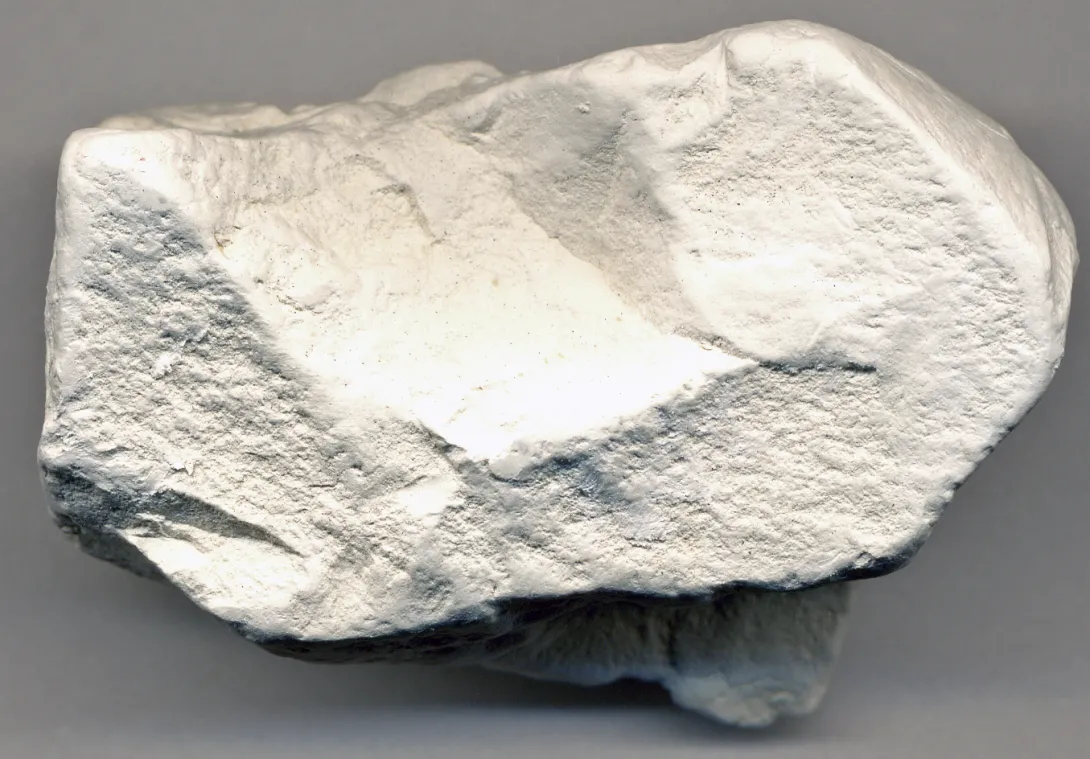
Kaolinite from Twiggs Co., GA

Yuanzhi Tang
Yuanzhi Tang has received a National Science Foundation grant to see if areas along the middle and coastal plains of Georgia that produce a highly sought-after clay are also home to large amounts of rare earth elements (REEs) needed for a wide range of industries, including rapidly evolving clean energy efforts.
Tang is an associate professor in the School of Earth and Atmospheric Sciences at Georgia Tech. She is joined by Crawford Elliott, associate professor at Georgia State University, on their proposal, “The occurrences of the rare earth elements in highly weathered sedimentary rocks, Georgia kaolins,” funded by the NSF Division of Earth Sciences.
All about REEs
REEs such as cerium, terbium, neodymium, and yttrium, are critical minerals used in many industrial technology components such as semiconductors, permanent magnets, and rechargeable batteries (smart phones, computers), phosphors (flat screen TVs, light-emitting diodes), and catalysts (fuel combustion, auto emissions controls, water purification). They impact a wide range of industries such as health care, transportation, power generation (including wind turbines), petroleum refining, and consumer electronics.
“With the increasing global demand for green and sustainable technologies, REE demand is projected to increase rapidly in the U.S. and globally,” Tang says. “Yet currently the domestic REE production is very low, and the U.S. relies heavily on imports. The combination of growing demand and high dependence on international supplies has prompted the U.S. to explore new resources and develop environmentally friendly extraction and processing technologies.”
Georgia geology
Kaolin is a white, aluminosilicate clay mineral used in making paper, plastics, rubber, paints, and many other products. More than $1 billion worth of kaolin is mined from Georgia’s kaolin deposits every year, more than any other state.
Tang and Elliott say considerable amounts of the REEs have been found in the waste residues generated from Georgia kaolin mining.
“These occurrences have high REE contents and might add significantly to domestic resources,” Tang says. “By understanding the geological and geochemical processes controlling the occurrence and distribution of REEs in these weathered environments, we might be able to provide fundamental information for the identification of REE resources, and the design of efficient and green extraction technologies.”
“The new work with Dr. Tang has the potential to advance our fundamental understanding of the occurrences, mineralogical speciation, and distribution of the REEs in bauxite and kaolin ore,” Elliott says. “I am thrilled to be working with Dr. Tang on this project.”
Laterite thinking
The Department of Energy notes the 17 rare earth elements are found in highly weathered environments, such as the laterites, a type of soil and rock located in eastern and southeastern China, which currently comprises around 80 percent of the world’s REE reserves. To promote domestic production of REEs, the NSF sought proposals to explore natural unconventional element resources located in highly weathered sedimentary/regolith (loose rocky material covering bedrock) settings in the U.S. Georgia’s kaolin deposits and mines extend in the state from southwest to northeast, paralleling the state’s ‘fall line’ that separates the Piedmont Plateau from the coastal plains.
With the NSF grant, Tang and Elliott will find out more about the geochemical factors and processes controlling REE mobility, distribution, and fractionation (enrichment of light REE versus heavy REE) in these environments, which can provide the foundation to identify domestic resources, and for the rational design of extraction technologies.
Community connections
The proposed work will also integrate research with education, combining student training with undergraduate education and research, as well as K-12 and community outreach emphasizing the participation of underrepresented groups in geological sciences.
The grant relates to Tang’s work at two Georgia Tech interdisciplinary research institutes dedicated to sustainability, energy, and climate: the Strategic Energy Institute and the Brook Byers Institute for Sustainable Systems (BBISS), where she is a co-lead with Hailong Chen, an associate professor in the School of Materials Science and Engineering. Tang and Chen’s BBISS project is “Sustainable Resources for Clean Energy.” Tang also serves as an SEI/BBISS initiative lead on sustainable resources.
“The state of Georgia has already been experiencing rapid and exciting developments in the clean energy industry,” Tang says. “We hope to bridge an important link in this space. We hope to help identify and explore regional critical resources for clean energy development by both understanding the geological/geochemical fundamentals, and developing sustainable extraction technologies.”
Georgia Tech is also investing in the community outreach and social aspects of energy research, not just in science and engineering, Tang adds. “Collaboration with Georgia State University also gives exciting opportunities for the engagement with underrepresented student groups, especially in geological sciences, which will serve in the long term for workforce development.”
News Contact
Writer: Renay San Miguel
Communications Officer II/Science Writer
College of Sciences
404-894-5209
Editor: Jess Hunt-Ralston