
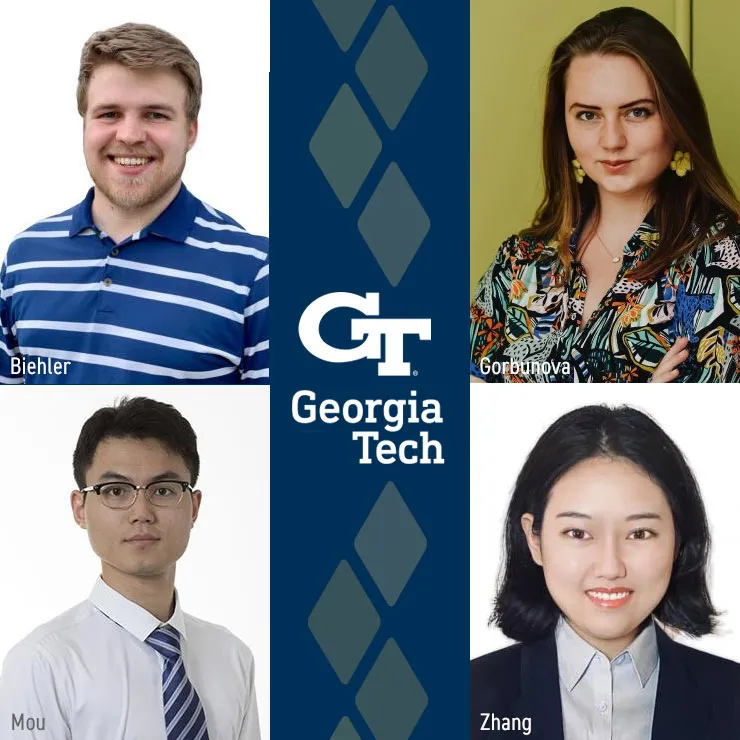
Graduate students, under the guidance of SCL affiliated faculty member Jianjun Shi, have recently received well-deserved recognition for their accomplishments. The students' research interests revolve around the use of machine learning and data analytics in relation to advanced manufacturing.
Michael Biehler (advisor: Professor Jianjun Shi)
- Mary G. and Joseph Natrella Scholarship, American Statistical Association (ASA) (2023)
- Best Student Paper Award (Winner) Quality Control and Reliability Engineering (QCRE) Division, IISE (2023)
- For the paper: M. Biehler, D. Lin , J. Shi (2023): “DETONATE: Nonlinear Dynamic Evolution Modeling of Time-dependent 3-dimensional Point Cloud Profiles” IISE Transactions
- Best Student Paper Award (Finalist) Data Analytics and Information Systems (DAIS) Division, IISE (2023)
- For the paper: M. Biehler, A. Kulkarni, J. Li, J. Shi (2023+): “MULTI-MODAL: MULTI-fidelity, multi-modality 3D shape modeler:” submitted to IEEE Transactions on Automation Science and Engineering
- Phillip J. and Delores A. Scott Graduate Student Health and Wellness Award, H. Milton Stewart School of Industrial and Systems Engineering, Georgia Tech (2023)
- IHE-LeaD Fellow, Burroughs Wellcome Fund, Interdisciplinary and Health and Environment Leadership Development (2022-2023)
Alina Gorbunova (advisors: Professor Jianjun Shi and Professor Kamran Paynabar)
- NSF Graduate Research Fellowship (2023)
Shancong Mou (advisor: Professor Jianjun Shi)
- Best Track Paper Award (Winner), Quality Control and Reliability Engineering (QCRE) Division, IISE (2023)
- For the paper: Mou, S., Gu, X., Cao, M., Bai, H., Huang, P., Shan, J., Shi, J.*, 2023 “RGI: Robust GAN-Inversion for Generic Pixel-wise Anomaly Detection and Mask-free Image Inpainting”, The International Conference on Learning Representations (ICLR 2023).
- John S.W. Fargher Jr. Scholarship, IISE (2023)
- Angela P. and Reed J. Baker Research Excellence Award, School of ISyE, Georgia Institute of Technology (2023)
Zihan Zhang (advisors: Professor Jianjun Shi and Professor Kamran Paynabar)
- Aerospace and Test Measurement Division Scholarship, ISA (2023)
- ISA Scholarship, ISA (2023)
- Gilbreth Memorial Scholarship, IISE (2023)
- NCORE Student Scholar, National Conference on Race and Ethnicity in Higher Education (2023)

Earth (Credit NASA/Joshua Stevens)
Georgia Tech’s newest interdisciplinary degree program, the Environmental Science B.S. degree (ENVS), developed jointly by faculty of the School of Earth and Atmospheric Sciences and the School of Biological Sciences, has launched and is now enrolling students.
The ENVS degree will provide a strong foundation in the basic sciences, requiring core content in mathematics, physics, chemistry, biology, earth sciences, and environmental policy. Flexible electives in upper-level coursework will allow students to customize their program of study to their interest and career goals.
A launch event for the degree program will take place at the Kendeda Building on the afternoon of Friday, August 25, 2023.
“The new degree will prepare students to be future leaders who are well-versed on how the Earth's systems can be influenced by human activity and contribute to human well-being,” says Greg Huey, professor and chair of the School of Earth and Atmospheric Sciences. “Graduates will be positioned to be leaders in industry, academia, education, and communication to create innovative solutions to the most significant environmental challenges of our time.”
Two faculty members in the School of Earth and Atmospheric Sciences (EAS) and a faculty member in the School of Biological Sciences will serve as inaugural leadership: Jennifer Glass, associate professor, is program director; Samantha Wilson, academic professional, is director of Undergraduate Studies; and Linda Green, senior academic professional in the School of Biological Sciences, is director of Experiential Learning.
The foundational science classes in this new degree will be complemented by courses in Public Policy and City Planning, including Geographical Information Systems (GIS) and Environmental Policy and Politics, before opening up and providing students with flexibility in course options to better fit their career paths and interests.
“Past EAS students have been interested in careers related to environmental consulting, environmental law, and continuing their studies in graduate school,” Wilson says. “The variety of environmental career paths was the driver behind allowing students to diversify their options within the degree.”
“This degree will give Georgia Tech students a unique opportunity to customize their environmental science program of study to their interests and career goals in science, policy, public service, non-profit, government, industry, academia, or beyond,” adds Glass. “We are committed to building an academic community in ENVS that values student leadership, ethics, justice, accessibility, and belonging.”
Hands-on learning opportunities will include field station experiences and field trip excursions, study abroad programs, and internships, Green says. “This major sustains the Institute’s strategic plan to lead by example, champion innovation, and connect globally — particularly in an area so critical as addressing Earth’s environmental issues.”
Glass added that the Schools of Chemistry, Biological Sciences, and Earth and Atmospheric Sciences are currently revamping several classes to meet United Nations Sustainable Development Goals (SDGs). Students will advance to be global leaders of environmental solutions that draw upon the U.N. Sustainable Development Goals and incorporate awareness of cultural relevance.
“We can’t wait for August to celebrate the ENVS launch with our incoming and current students,” Glass says.
More information on the Environment Science (ENVS) degree:
General information: jennifer.glass@eas.gatech.edu
Curriculum and enrollment: samantha.wilson@eas.gatech.edu
Co-curricular initiatives: linda.green@gatech.edu
Learn more: Three new EAS undergraduate degrees
Beginning Summer 2023, prospective and current Georgia Tech students will have three new Bachelor of Science degrees to choose from in the School of Earth and Atmospheric Sciences. The expanded undergraduate offerings target a wider range of job and research opportunities — from academia to analytics, NASA to NOAA, meteorology to marine science, climate and earth science, to policy, law, consulting, sustainability, and beyond.
The Board of Regents of the University System of Georgia has approved two new specific degrees within the School: Atmospheric and Ocean Sciences (AOS) and Solid Earth and Planetary Sciences (SEP). Regents also approved Environmental Science (ENVS) as an interdisciplinary College of Sciences degree between the School of Earth and Atmospheric Sciences and the School of Biological Sciences. The existing Earth and Atmospheric Sciences B.S. degree will sunset in two years for new students. Learn more.
News Contact
Writer: Renay San Miguel
Communications Officer II/Science Writer
College of Sciences
404-894-5209
Editor: Jess Hunt-Ralston

James X Zhong Manis
James X. Zhong Manis, who is pursuing his Ph.D. in Physical Chemistry at Georgia Tech, will get a chance to conduct his thesis research at a Department of Energy national laboratory at Stanford University, thanks to his selection to the DOE Office of Science Graduate Student Research (SCGSR) program.
The goal of the SCGSR program is to prepare graduate students for science, technology, engineering, or mathematics (STEM) careers critically important to the DOE Office of Science mission. The agency provides graduate thesis research opportunities through extended residency at DOE national laboratories.
“I am so excited and feel extremely lucky to have this opportunity to continue my research with DOE help,” Manis said. “I am thankful for everyone’s help to get me where I am, especially my principal investigator Thomas Orlando, our lab senior research scientist Brant Jones, my collaborating DOE scientist Thorsten Weber, and also everyone else in my research group. I am so thrilled to be working with world class scientists on cutting edge equipment.”
Manis is one of 87 awardees from 58 different universities who will conduct research at 16 DOE national laboratories. The research projects proposed by the new awardees are aligned with the priority mission areas of the DOE Office of Science that have a high need for workforce development.
“The SCGSR program provides a way for graduate students to enrich their scientific research by engaging with researchers at DOE National Labs, learning from world class scientists, and using state-of-the-art equipment and facilities,” notes Asmeret Asefaw Berhe, Director of the DOE Office of Science. “In addition, they get valuable opportunities to network and observe firsthand what it’s like to have a scientific career. I can’t wait to see what these young researchers do in the future. I know they will meet upcoming scientific challenges in new and innovative ways.”
Manis, who also earned a Bachelor of Science degree from the Wallace H. Coulter Department of Biomedical Engineering in 2018, will join the DOE’s Gas Phase Chemical Physics program at the Stanford Linear Accelerator Center (SLAC) at Stanford University. The Center supports research on fundamental gas-phase chemical processes important in energy applications.
SCGSR awardees work on research projects of significant importance to the Office of Science mission that address critical energy, environmental, and nuclear challenges at national and international scales. Projects in this new cohort span eight different DOE Office of Science research programs.
Manis’ project falls into the Basic Energy Sciences category. “I am interested in understanding the low energy electron interaction with biomolecules, which is a potential way of causing DNA damage,” he said. “The research I will conduct at the SLAC National Accelerator Laboratory is to first help in commissioning the DREAM (Dynamic REAction Microscope) end station in the TMO (time-resolved atomic, molecular and optical science) instrument hub.
“I have never visited SLAC before, but I am extremely excited to work there,” Manis added. “It’s going to be a change of pace collaborating with another group of scientists, and I can’t wait to start.”
News Contact
Writer: Renay San Miguel
Communications Officer II/Science Writer
College of Sciences
404-894-5209
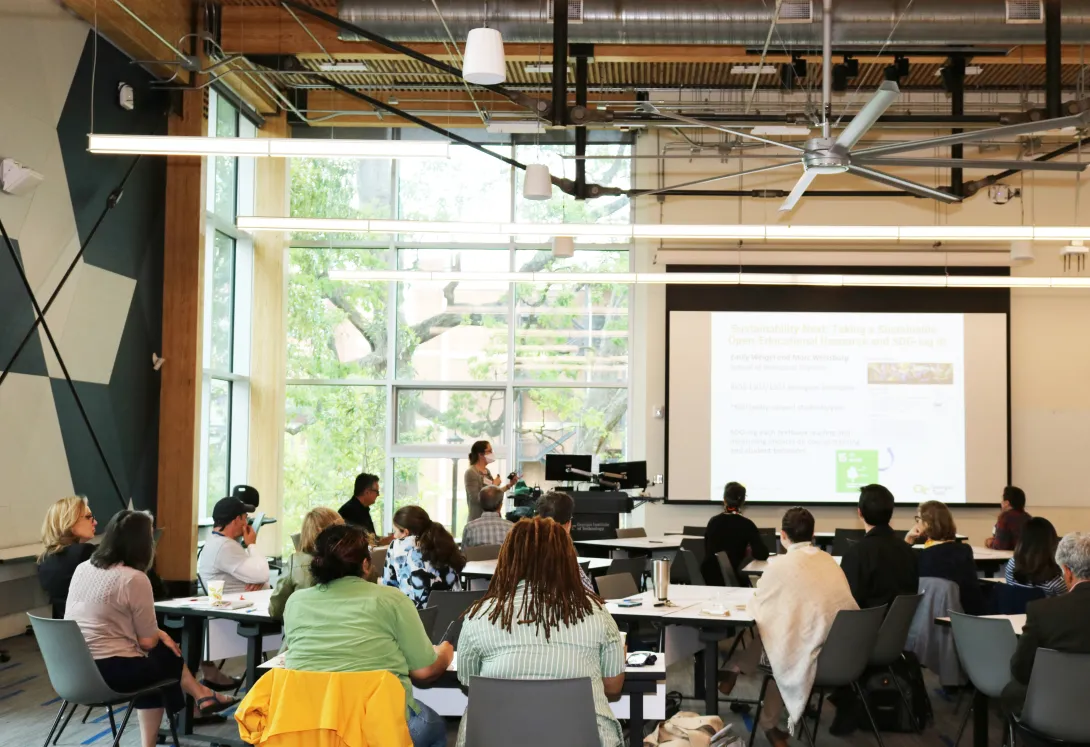
Georgia Tech researchers give presentations on their Undergraduate Sustainability Education Innovation Grants during a recent "Jamboree" in the Kendeda Building. (Photo Jess Hunt-Ralston)

Six proposals from the College of Sciences will redesign existing courses and begin new ones to help students contribute to a sustainable world have been approved for Undergraduate Sustainability Education Innovation Grants. The proposals tie into the United Nations’ 17 Sustainable Development Goals (UN SDGs).
A total of 21 projects from all six Georgia Tech colleges will reach an estimated 22,500 students. The collaborative effort is focused on a key goal of the Institute’s Sustainability Next Task Force: to produce graduates who are committed to making a positive difference in their communities, their organizations, and the world.
“The overall goal is that all of our students understand the societal context for their work, as well as the scientific, environmental, economic, and social aspects of sustainability,” says Jennifer Leavey, assistant dean for Faculty Mentoring for the College of Sciences and co-chair of Sustainability Next.
Leavey and Rebecca Watts-Hull, assistant director of Faculty Development for Sustainability Education in the Center for Teaching and Learning, served as liaisons for the Undergraduate Sustainability Education Committee, which judged the proposals.
Leavey also coordinates College of Sciences educational programs related to science and sustainability, including the Georgia Tech Urban Honey Bee Project and the Living Building Science Vertically Integrated Project Team.
Leavey said the UN SDGs — which ask world citizens and their governments to consider ambitious solutions to longstanding problems such as hunger, poverty, climate damage, inequality, and lack of quality healthcare — are clear and compelling. “These are things we want for a better world,” she shared. “Every field has some connection to them. And it's just a very easy framework to get behind and understand. I would love it if all Georgia Tech graduates could leave feeling well versed in that understanding, and how their work connects to it.”
The Sustainable Education Committee chose projects that impacted the greatest number of students, including classes that are required for all Georgia Tech undergraduates.
Learn more about the College of Sciences’ six selected proposals:
Laboratory-Based Project on the Chemistry of Alternative Energy Sources
- CHEM 1211L, Chemical Principles I, Laboratory
- Deborah Santos, academic professional, School of Chemistry and Biochemistry
- 1000+ students impacted (majority first-year)
- “I hope that the students would have a better understanding of why they hear about these technologies as possible alternatives, and what obstacles there are to actual widespread implementation,” Santos said. “Maybe students will consider how they might play a role in overcoming those obstacles.”
Sustainability Next: Taking a Sustainable Open-Educational Resource And SDG-ing It
- Bios 1107/1207, Biological Principles
- Emily Weigel, senior academic professional, and Marc Weissburg, professor, School of Biological Sciences
- Approximately 650 early career students per year
- “I will take the textbook and each day link it to an SDG, so that when they come into class, we'll talk about the topics in the context of SDGs,” Weigel said. “By being a little bit more explicit about it, it's our goal that when they go from this intro course to later courses in their curriculum, they're primed to think about SDGs, and then they recognize the connections that are there.”
Georgia Climate Project
- EAS 4813 — This is a new course within the School of Earth and Atmospheric Sciences’ new interdisciplinary Environmental Science (ENVS) undergraduate degree program with the School of Biological Sciences, and part of a partnership with the Georgia Climate Project, a state-wide consortium of universities, colleges and partners working to improve understanding of climate impacts and solutions in Georgia.
- Zachary Handlos, senior academic professional, School of Earth and Atmospheric Sciences
- 10-20 students impacted per year
- “This course would provide students an opportunity to participate in hands-on learning within the context of ‘real-world’ sustainability-related projects in partnership with the Georgia Climate Project, complementing topics and coursework covered in Samantha Wilson’s EAS 4803: EAS & Policy course,” Handlos said. “Work includes participation in climate change, sustainability, and climate equity and justice research, as well as the creation and dissemination of tools and resources.”
Urban Atlanta’s Water and Atmospheric Signatures
- EAS 1600: Introduction to Environmental Science (EAS Majors) Laboratory: Urban Atlanta Atmospheric Measurements, combined with another Lab course, Urban Water Quality Measurements and Microbial Ecology Exploration using Proctor Creek Watershed
- Jennifer Glass, associate professor, and Shelby Ellis, lecturer, School of Earth and Atmospheric Sciences
- 20-40 students per year, EAS majors only
- “Through field trips, students will investigate current climate change-induced conditions in urban Atlanta, with students collecting real time weather and watershed data-measurements to learn more about SDGs surrounding urban sustainable cities and clean water,” Ellis said. “In this reconfigured learning environment, we hope to foster student momentum on becoming educational leaders in their local community on climate justice, while gaining an understanding that there are attainable climate actions that can be taken now to combat climate change.” ”
Developing and Enhancing Experiential Learning in a New EAS Course
- EAS 4803: EAS & Policy, offered in new Environmental Science (ENVS), Solid Earth & Planetary Science (SEP), and Atmospheric and Oceanic Science (AOS) undergraduate degree programs in College of Sciences
- Samantha Wilson, academic professional, School of Earth and Atmospheric Sciences
- 25 students during spring semesters in even-numbered years
- “The course is designed to introduce students to the scientific background of topics such as water, hydrocarbons, air, and earthquakes before discussing related policies and persistent issues,” Wilson said. “Through discussions on each topic that involve science and policy, students can work towards understanding why current policies exist the way they do and how they can be improved.” The course will also involve guest speakers, and is meant to be taken before Handlos’ EAS 4813 course.
Course Redesign to Implement Project-Based Learning for Social Change
- APPH 1040, Foundations of Health
- Teresa Snow, senior academic professional, School of Biological Sciences
- Approximately 200 students per year
- “It is my hope that working towards solutions to complex societal health issues will create a sense of empowerment for our students that counteracts feelings of helplessness,” Snow said. “A cross-disciplinary approach, which is the focus of this project, will provide a better understanding of the process of large-scale social change, a critical requirement for achieving the third SDG, which is to ensure healthy lives and promote well-being for all ages. Breaking down the social barriers to good health will benefit everyone.”
On April 27, the Undergraduate Sustainability Education Committee hosted a Jamboree, which featured faculty from each Georgia Tech college that won grants — making brief presentations, and engaging in networking discussions.
“For the College of Sciences, it's really exciting to see the connection between different disciplines,” Leavey said. “We’ve been doing work on climate and the environment for a long time, but to see the connection with sustainability work at other colleges at Georgia Tech is very gratifying.”
News Contact
Writer: Renay San Miguel
Communications Officer II/Science Writer
College of Sciences
404-894-5209
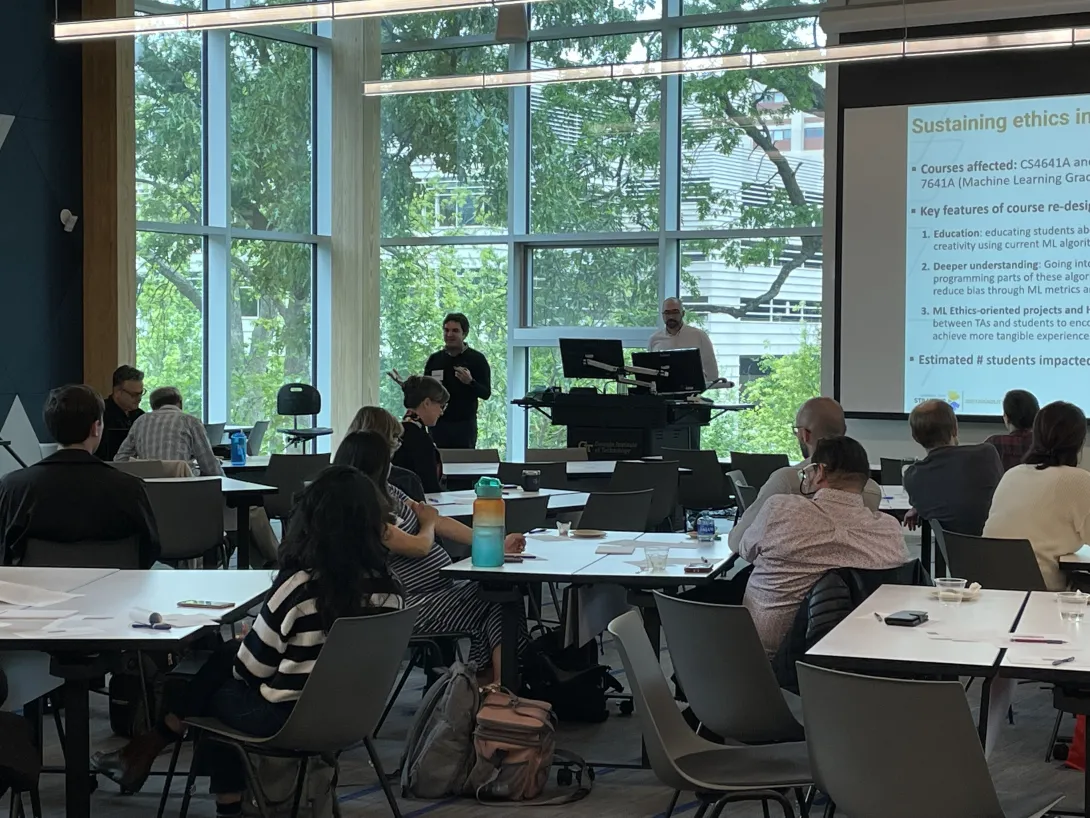
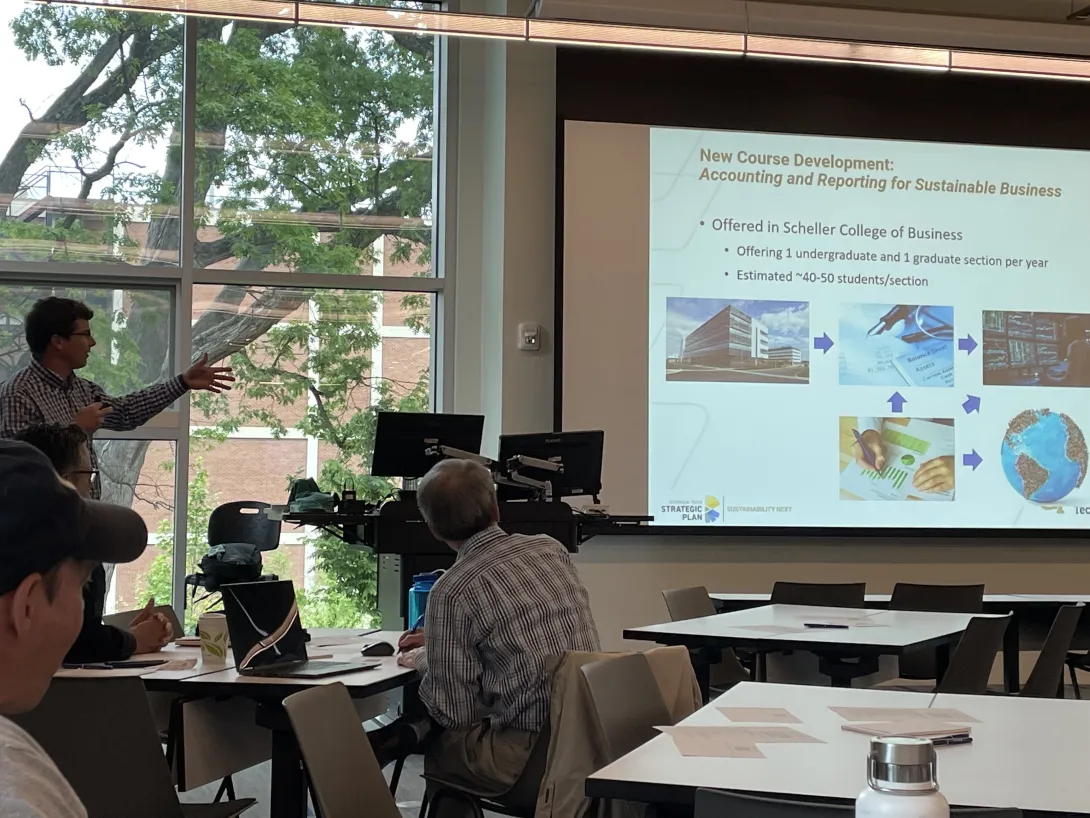
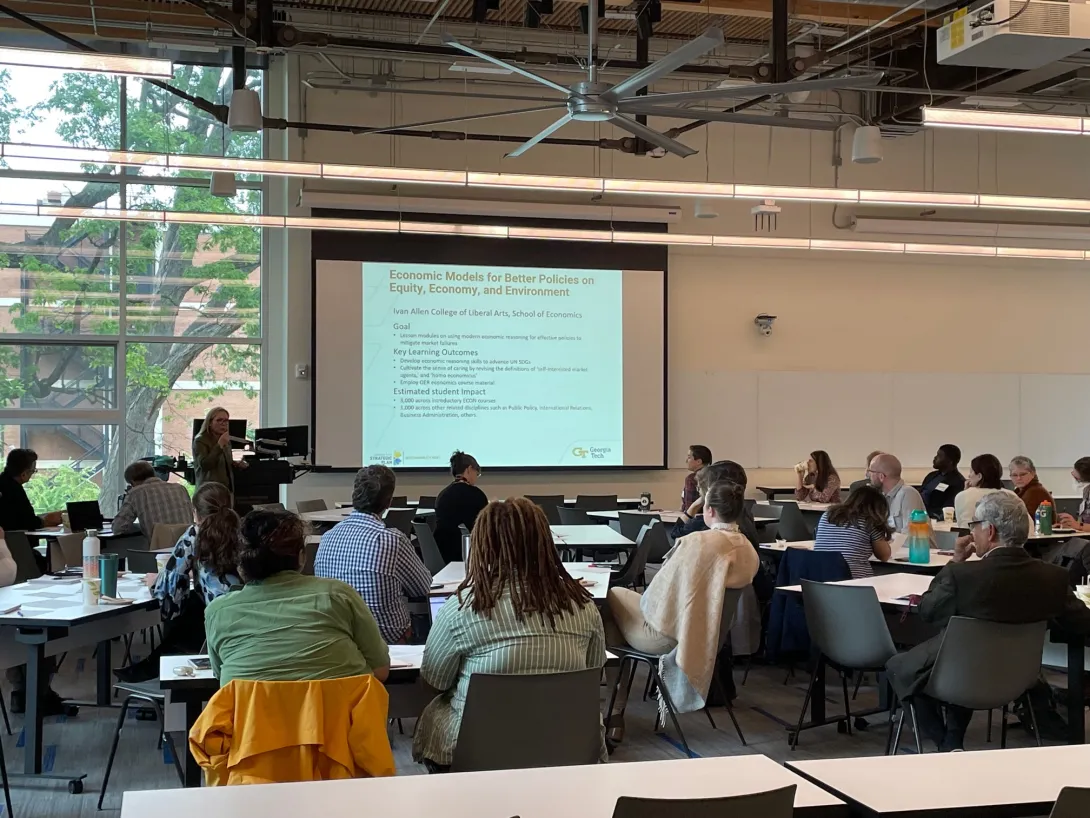
One of the Institute Strategic Plan (ISP) goals is to connect globally and amplify impact by contributing “to global collaborative efforts that advance the U.N. Sustainable Development Goals (SDGs) through our education, research, and service.” In response, Sustainability Next developed a plan to expand SDG concept and skill integration across the undergraduate curriculum. In support of the plan, 21 projects representing all six colleges and 15 schools were presented at the Undergraduate Sustainability Education Jamboree, held on April 26 in the Kendeda Building auditorium. With many winning projects featuring high enrollment and core courses, this first round of sustainability education “seed grants” will significantly expand the reach of Georgia Tech’s sustainability-across-the-curriculum initiatives.
“Our Strategic Plan commitment to bring the United Nations Sustainable Development Goals (SDGs) into our teaching is part of our vision for transformative teaching and learning more broadly,” explains Larry Jacobs, Senior Vice Provost for Education and Learning. “Helping students identify connections between disciplinary concepts and skills and complex societal challenges enhances learning and supports Georgia Tech’s mission to equip students to improve the human condition.”
The Jamboree featured lightning presentations from the award winners, as well as presentations about related initiatives at Georgia Tech to help instructors, students, and staff better understand the landscape of sustainability education innovation on campus. Instructors engaged in course design or re-design through the awards will have opportunities to collaborate with and learn from their peers through a Community of Practice on Transformative Teaching with the SDGs and a SoTL (Scholarship of Teaching and Learning) research group. Many began identifying potential collaborators at the event, as they heard from other award winners. “The afternoon of lightning presentations by fellow faculty was exhilarating,” Sabir Khan, Associate Professor, Schools of Industrial Design and Architecture, shared. “I came away impressed and excited at the range of projects and have already invited a few instructors to join my class in the fall to discuss their approaches to tackling the UN SDGs."
Presenter Kate Williams, Interim Director, Transformative Teaching and Learning, Faculty Initiatives, shared connections between the Sustainability Innovation Awards and Georgia Tech’s Transformative Teaching and Learning (TTL) strategic initiative. “The success of the first round of Sustainability Education Innovation Grants demonstrates our faculty's commitment to creating innovative experiential learning opportunities for students,” Dr. Williams noted.
For more information about future award opportunities or the communities of practice described above, please contact Jennifer Leavey (Assistant Dean for Faculty Mentoring, College of Sciences) or Rebecca Watts Hull (Assistant Director, Faculty Development for Sustainability Education Initiatives, Center for Teaching and Learning).
Review all 21 awarded Undergraduate Sustainability Education Innovation projects.

Beginning Summer 2023, prospective and current Georgia Tech students will have three new Bachelor of Science degrees to choose from in the School of Earth and Atmospheric Sciences. The expanded undergraduate offerings target a wider range of job and research opportunities — from academia to analytics, NASA to NOAA, meteorology to marine science, climate and earth science, to policy, law, consulting, sustainability, and beyond.
The Board of Regents of the University System of Georgia has approved two new specific degrees within the School: Atmospheric and Oceanic Sciences (AOS) and Solid Earth and Planetary Sciences (SEP). Regents also approved Environmental Science (ENVS) as an interdisciplinary College of Sciences degree between the School of Earth and Atmospheric Sciences and the School of Biological Sciences. The existing Earth and Atmospheric Sciences B.S. degree will sunset in two years for new students.
“We are really excited to be able to offer this new interdisciplinary undergraduate degree program in Environmental Science,” said Jean Lynch-Stieglitz, ADVANCE Professor in Earth and Atmospheric Sciences (EAS). “While it was developed jointly between the Schools of Earth and Atmospheric Sciences and Biological Sciences, it brings together Georgia Tech’s broad expertise and course offerings related to the Earth’s environment from across the Institute.”
“We are excited to see these new programs develop,” added Andrew Newman, professor and the School’s undergraduate coordinator, “as these degrees highlight the quantitative and computational skills of Georgia Tech students, and align better with their interests in global understanding of problems related to environmental impact and sustainability, natural hazards and landscape development, as well as planetary evolution, habitability, and exploration.”
“Students looking for specific types of programs will also be more understanding of what their program offers,” Newman said. “Under our current degree, a student interested in ocean science, planetary science, and environmental chemistry all would be looking at the same degree that doesn’t define their interests. Now, having programs with those interests in their name, and described well on the upcoming webpage, will greatly increase their interest in our program.”
The Evolution of EAS at Georgia Tech
Newman also shared that, in Fall 2021, the School surveyed current EAS undergraduate students and recent alumni for feedback and thoughts on the potential degrees. Responses from the community highlighted that the plan for transitioning the existing major could not only help new students hone their academic and career plans, but also help them communicate beyond EAS about their chosen major.
“These degrees make it more clear what the student is studying,” shared one student. “Before, people would ask what my major ‘even is’ and what kinds of jobs I could get with it. I think the new majors make it more clear.”
“Finally, Planetary Science!” said another student. “This degree would go well with a Physics or AE (Aerospace Engineering) certificate or dual degree.”
All about the new Georgia Tech EAS degrees
The expanded undergraduate degree offerings are designed to continue Georgia Tech’s reputation for academic rigor — and also reflect trends in student interests, as well as current and forecasted needs in the job marketplace.
“A key aspect of the new Environmental Science degree program will be its flexibility,” said Lynch-Stieglitz. “Students will be able to focus their study to support their interests and career goals whether those be in conservation, climate change, or environmental health. We’ve also left space in their program to encourage participation in especially impactful experiences such as study abroad and research projects. Georgia Tech students are fantastic — well prepared, diverse, smart, hard-working, and passionate. This flexible approach will allow them to become the broadly educated leaders who will envision the solutions to environmental problems that are so urgently needed.”
More on the new undergraduate degrees and what they will require:
B.S. Atmospheric and Oceanic Sciences (AOS) Degree
AOS uses the current Meteorology track as its foundation and will include aspects of Atmospheric Sciences, Oceanography and Climate Sciences.
EAS will continue to offer courses needed for American Meteorological Society (AMS) certifications as well as those required for eligibility for National Weather Service meteorology jobs.
Some courses will be reduced and others added (e.g. the existing course Physics of Weather will now be formally required instead of Earth Processes; the National Weather Service Practical Internship course in partnership with NWS Peachtree City will continue).
The AOS degree is designed to take advantage of Atlanta as a “hotspot” for major meteorological organizations including The Weather Channel, CNN, local stations in a top 10 TV market, and the National Weather Service (NWS) Peachtree City, Georgia office. The degree also builds on Georgia Tech’s existing expertise in Atmospheric Chemistry, Oceanography, Climate Dynamics, Paleoclimatology and Paleoceanography, and meteorological research.
AOS degree recipients looking for jobs or graduate research can target the energy sector, insurance risk modeling, broadcast meteorology, consulting, data analytics, aviation, military, and K-12 education, among other positions.
B.S. Environmental Science (ENVS) Degree
ENVS was developed by a joint committee involving EAS and the School of Biological Sciences.
ENVS requires core content in mathematics, physics, chemistry, biology, Earth sciences, and public policy.
Upper level coursework allows students to customize their program of study based on interest.
Students will complete a capstone research project that integrates the knowledge they have gained through the program.
This degree takes advantage of Georgia Tech’s expertise in Environmental Chemistry, climate science, marine science, Aquatic Chemical Ecology, microbial dynamics, and Environmental Policy. Newman added that there is a critical emerging market need for scientists with expertise in the Earth’s environmental systems.
The ENVS degree will provide a strong base for students pursuing graduate programs and careers in environmental policy, environmental law, medicine, and other master’s and Ph.D. programs in environmentally related disciplines.
B.S. Solid Earth and Planetary Sciences (SEP) Degree
SEP builds on the existing Earth Science track to include Planetary Sciences.
There is an opportunity to reduce some courses.
Some courses will now be required (e.g. Physics II, Physics of Planets, Introduction to Geophysics).
According to an SEP prospectus, “the degree will support Georgia Tech’s mission to develop leaders who advance technology and improve the human condition, through developing holistically minded students that can put human development in context of the environment for which we live, including resource availability, hazards that affect sustainability, and our exploratory nature to understand our place on the planet and solar system.”
Career and graduate opportunities include energy sector positions, NASA, NOAA, U.S. Geological Survey, environmental remediation, hazard assessment and data analytics.
Learn more, contact EAS Undergraduate Advising, and apply:
News Contact
Writer: Renay San Miguel
Communications Officer II/Science Writer
College of Sciences
404-894-5209
EAS Undergraduate Program Contacts:
eas.gatech.edu/undergraduate
Editor and Media Contact:
Jess Hunt-Ralston
Director of Communications
College of Sciences at Georgia Tech
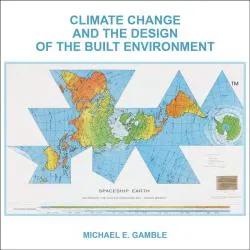
A new eBook, "Climate Change and the Design of the Built Environment," written by Michael Gamble, Academic and Research Council Chair at the Kendeda Building for Innovative Sustainable Design and associate professor in the College of Design at Georgia Tech is now available!
Written as a series of dialogues with leaders from various disciplines, the book positions design as an essential component of entrepreneurial approaches which explore the sociocultural and eco-political dimensions of climate change. Economist, Architects, Planners, Sociologist, Lawyers, Policy Makers, Landscape Architects, and MBA’s contribute to a spirited discussion around climate change and design.
Global climate change has already resulted in a wide range of impacts across every region of the country. Many sectors of the economy are expected to grow related to climate and health in the coming decades. The design and retrofit of buildings, infrastructure and cities will be a major part of future efforts.
All interviews are Kendeda Building based on Georgia Tech’s Atlanta campus with experts participating from around the world.
News Contact
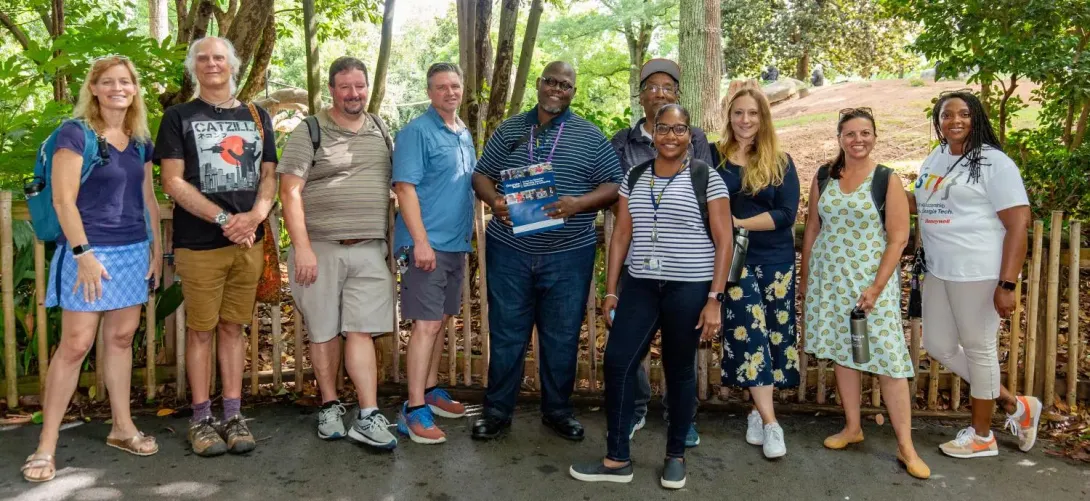
For decades, engineers and scientists have looked to nature for inspiration. One of the most famous examples is Swiss electrical engineer George de Mestral. In 1955, he invented the hook and loop fastener (which he later named Velcro) after studying burdock burrs that kept sticking to his clothes during a hunting trip. For the birth of flight, the Wright brothers studied how birds change the angle of their wings to roll right or left while in the air. They would use the example to refine their control systems in the world’s first successful motor-operated airplane.
A number of Georgia Tech researchers are also focused on biologically inspired design, ranging from the study of how honey bees transport pollen pellets to how small, snakelike lizards move.
With the assistance of a $3 million National Science Foundation grant, Georgia Tech’s Center for Education Integrating Science, Mathematics, and Computing (CEISMC) and the Center for Biologically Inspired Design (CBID) are partnering on a three year research project that introduces biologically inspired design to high school students throughout metro Atlanta.
Read the Full Story at the College of Engineering Website
News Contact
Candler Hobbs, Communications Officer, College of Engineering
The American Society of Mechanical Engineers (ASME) has honored Georgia Tech aerospace engineering professor George Kardomateas with the Spirit of St. Louis Medal for exemplary work in the progress of aeronautics and astronautics. He is in great company as Daniel Guggenheim, Neil A. Armstrong, John E. Northrup, John W. Young (AE 1952), George W. Lewis, Charles S. Draper, Robert G. Lowey, Michael Collins, and the late Dewey Hodges have also received this premier medal. ASME will present Kardomateas with the medal at the International Mechanical Engineering Congress & Exposition in Columbus, Ohio, October 30-November 3, 2022.
Kardomateas has spent over thirty years improving aircrafts from a structural standpoint. More specifically he investigates ways to ensure that aerospace structures retain their structural integrity. He focuses on the special part of mechanics called fracture mechanics, which studies the conditions for the initiation and propagation of cracks and debonds. “Fracture mechanics and damage tolerance have been very successful in that, nowadays, airplanes don’t usually come down because of structural failure,” explained Kardomateas.
He credits his lifelong scientific triumphs to his education in the United States and Greece, his collaboration with past and present colleagues at Georgia Tech, and the academic system in America. “The environment at Georgia Tech fosters collaboration and innovation. The higher education system provides opportunities through the collegial network in scientific forums where ideas can be exchanged with those inside and outside of your institution.” Former AE School professors, including the late Bob Carlson, and George Simitses, inspired him as colleagues and also acted as mentors to him.
Kardomateas earned a diploma from the National Technical University of Athens in Greece and both his master’s and doctoral degrees from the Massachusetts Institute of Technology. In 1989, he joined the School of Aerospace Engineering's faculty at the Georgia Tech. He has authored three books, An Introduction to Fatigue in Metals and Composites, Structural and Failure Mechanics of Sandwich Composites, and Mechanics of Failure Mechanisms in Structures. He is also the editor of six volumes on the topic of failure mechanics of composite and sandwich structures, an associate editor of the Handbook of Damage Mechanics: Nano to Macro Scale for Materials and Structures, as well as the author of about 200 papers published in refereed journals or as parts of books.
In addition to his work at Georgia Tech, he has served the discipline in several capacities. The ASME Fellow has operated as an Associate Editor of the Journal of Applied Mechanics, and the AIAA Journal, as a Contributing Editor of the International Journal of Non-Linear Mechanics and as a guest editor of the International Journal of Solids and Structures and the Journal of Mechanics of Materials and Structures. In addition, he has served as the technical chair of the 2014 ASME Congress, general chair of the 2015 ASME Congress, and the steering committee chair of the 2017 ASME Congress. He was the elected chairman of the Applied Mechanics Division Composites Committee and the program representative of the Aerospace Division Structures and Materials Committee. Kardomateas has also served in many other panels and committees including as the Chair of the Daniel Guggenheim Medal Award Board, and on the Organizing Committee of the sixth, seventh, tenth and eleventh Institute for Advanced Composites Manufacturing’s International Conferences on Sandwich Structures; he has also served on external evaluation committees for many academic programs.
Currently, the medal winner is working on his next book that focuses on the fracture and fatigue of metallic and composite aerospace structures, which will include his latest research advances in the field.
News Contact
Monique Waddell
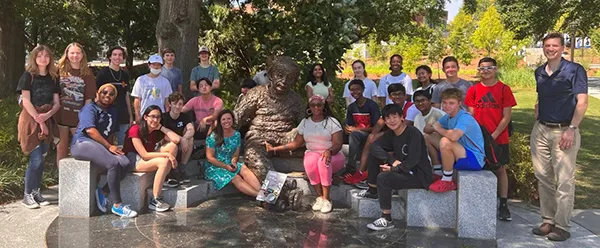
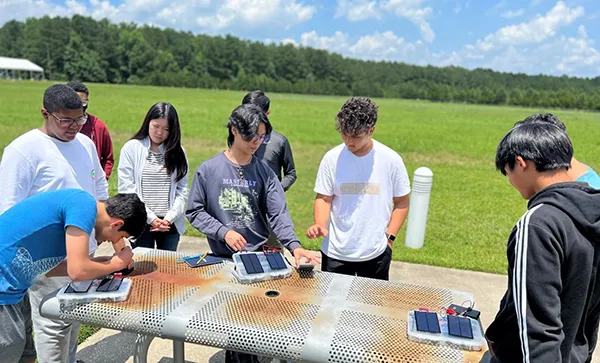
The Summer of 2022 is off to an energetic start! The Energy, Policy, and Innovation Center (EPICenter) hosted two week-long cohorts of "Energy Unplugged," an energy-themed STEAM camp for 35 high school students. Dr. Rich Simmons and Strategic Energy Institute fellow Azell Francis engaged with collaborators from around the state, and led the campers in hands-on interactive demonstrations and experiments involving solar panels, batteries, catapults, water rockets, and remote-control cars. The first camp was held on the Georgia Tech Savannah campus, and the second on the Georgia Tech main campus in Atlanta. Both camps covered both renewable and non-renewable energy sources, energy production and delivery, environmental impacts, and global electricity access. Campers gained insights into how a STEAM-oriented education can be a path that leads to an exciting and successful career in energy.
During the week of June 13 - 17, 2022, GT Savannah was host to a very engaged group of campers. Launching right into activities, the students built and tested catapults, integrating important physics and math concepts into hands-on fun. Next up was the water rocket design challenge, where they showcased their creativity to achieve maximum height and distance. The City of Savannah’s Office of Sustainability displayed their electric vehicle, and shared perspectives on local sustainability initiatives. A highlight of both summer camps was field trip day! The campers visited Georgia Power’s Plant McIntosh, which is a combined cycle gas turbine plant, and the Gulfstream Aerospace Corporation, where the G6 and G7 aircraft are assembled. The week ended too soon, but not before the camp students raced to the finish line driving a re-engineered remote-control electric car, and in true Georgia Tech fashion, hearing the steam engine whistle blow.
Simmons and Francis brought the Energy Unplugged fun to GT Atlanta during the week of June 21 – 24, 2022. The Kendeda Building for Innovative Sustainable Design served as an ideal instructional backdrop for the camp. The Living Building, as it is often called, is certified to generate more energy than it consumes, collect, capture, and process more water than it consumes, and, to the greatest extent possible, be regenerative, rather than consumptive. Hands-on learning remained a key pillar of the camp, conducting experiments with micro-grids and solar panels. The group also had the opportunity to visit Georgia Power’s Morgan Falls Hydroelectric Plant which began commercial operations in 1904, and GE Power’s Monitoring and Diagnostics Center, where more than 500 GW of gas turbine power plants are monitored. The week wrapped up with “shark-tank” style team presentations where campers took an entrepreneurial approach to delivering basic energy services to off-grid communities in the developing world.
Energy Unplugged is administered by Georgia Tech Summer P.E.A.K.S. (Program for Enrichment and Accelerated Knowledge in STEAM) at CEISMC (the Center for Education Integrating Science, Mathematics, and Computing). CEISMC serves as the primary connection point between Georgia Tech faculty and students and the preK-12 STEAM education community, reducing the barriers between kids and higher education. Annually, CEISMC programs impact more than 39,000 students, 1,700 teachers, 200 schools in over 75 school districts throughout the state of Georgia.
News Contact
Brent Verrill, Research Communications Program Manager, SEI