
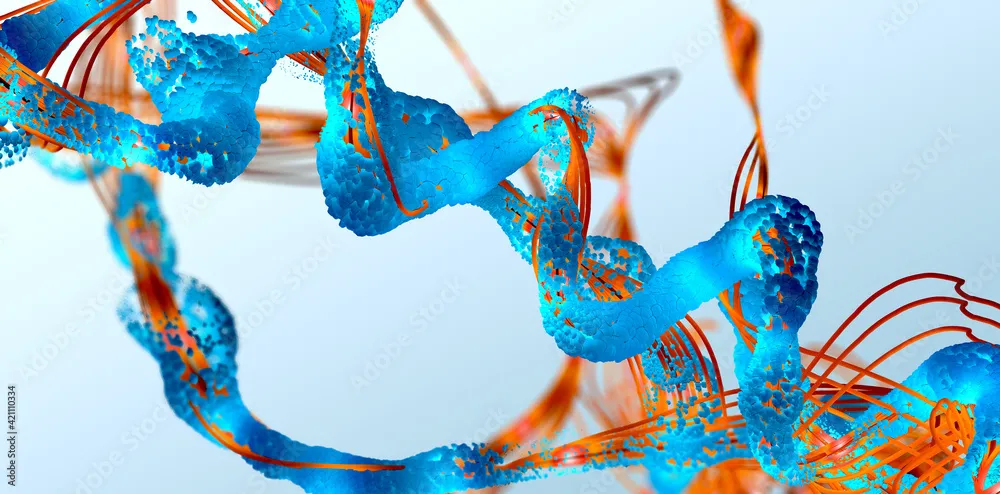
An illustration of a chain of amino acids forming a protein (Credit: Adobe Stock)
The building blocks of proteins, amino acids are essential for all living things. Twenty different amino acids build the thousands of proteins that carry out biological tasks. While some are made naturally in our bodies, others are absorbed through the food we eat.
Amino acids also play a critical role commercially where they are manufactured and added to pharmaceuticals, dietary supplements, cosmetics, animal feeds, and industrial chemicals — an energy-intensive process leading to greenhouse gas emissions, resource consumption, and pollution.
A landmark new system developed at Georgia Tech could lead to an alternative: a commercially scalable, environmentally sustainable method for amino acid production that is carbon negative, using more carbon than it emits.
The breakthrough builds on a method that the team pioneered in 2024 and solves a key issue – increasing efficiency to an unprecedented 97% and reducing the bioprocess cost by over 40%. It’s the highest reported conversion of CO2 equivalents into amino acids using any synthetic biology system to date.
Published in the journal ACS Synthetic Biology, the study, “Cell-Free-Based Thermophilic Biocatalyst for the Synthesis of Amino Acids From One-Carbon Feedstocks,” was led by Bioengineering Ph.D. student Ray Westenberg and Professor Pamela Peralta-Yahya, who holds joint appointments in the School of Chemistry and Biochemistry and School of Chemical and Biomolecular Engineering. The team also included Shaafique Chowdhury (Ph.D. ChBE 25) and Kimberly Wennerholm (ChBE 23); alongside University of Washington collaborators Ryan Cardiff, then a Ph.D. student and now a Chain Reaction Innovations Fellow at Argonne National Laboratory, and Charles W. H. Matthaei Endowed Professor in Chemical Engineering James M. Carothers; in addition to Pacific Northwest National Laboratory Synthetic Biology Team Leader Alexander S. Beliaev.
"This work shifts the narrative from simply reducing carbon emissions to actually consuming them to create value,” says Peralta-Yahya. “We are taking low-cost carbon sources and building essential ingredients in a truly carbon-negative process that is efficient, effective, and scalable.”
Heat-Loving Organisms
The work builds on the cell-free technology the team used in their earlier study. “Previously, we discovered that a system that uses the machinery of cells, without using actual living cells, could be used to create amino acids from carbon dioxide,” Peralta-Yahya explains. “But to create a commercially viable system, we needed to increase the system’s efficiency and reduce the cost.”
The team discovered that bits of leftover cells were consuming starting materials, and — like a machine with unnecessary gears or parts — this limited the system’s efficiency. To optimize their “machine,” the team would need to remove the extra background machinery.
"Leftover cell parts were using key resources without helping produce the amino acids we were looking for,” says Peralta-Yahya. “We knew that heating the system could be one way to purify it because heat can denature these components.”
The challenge was in how to protect the essential system components from the high temperatures, she adds. “We wondered if introducing enzymes produced by a heat-loving bacterium, Moorella thermoacetica, might protect our system, while still allowing us to denature and remove that inefficient background machinery.”
The results were astounding: after introducing the enzymes, heating and “cleaning” the system, and letting it cool to room temperature, synthesis of the amino acids serine and glycine leaped to 97% yield — nearly three times that of the team’s previous system.
Scaling for Sustainability
To make the system viable for large-scale use, the team also needed to reduce costs. “One of the most costly components in this system is the cofactor tetrahydrofolate (THF),” Peralta-Yahya shares. “Reducing the amount of THF needed to start the process was one way to make the system more inexpensive and ultimately more commercially viable.”
By linking reaction steps so waste from one step fueled the next, the team devised a method to recycle THF within the system that reduces the amount of THF needed by five-fold — lowering bioprocessing costs by 42%.
“This decrease in cost and increase in yield is a critical step forward in creating a method with real potential for use in industry and manufacturing,” Peralta-Yahya says. “This system could pave the way for moving this carbon-negative technology out of the lab and onto the continuous, industrial scale."
Funding: The Advanced Research Project Agency-Energy (ARPA-E); U.S. Department of Energy; and the U.S. Department of Energy, Office of Science, Biological and Environmental Research Program.
News Contact
Written by:
Selena Langner
College of Sciences
Georgia Institute of Technology
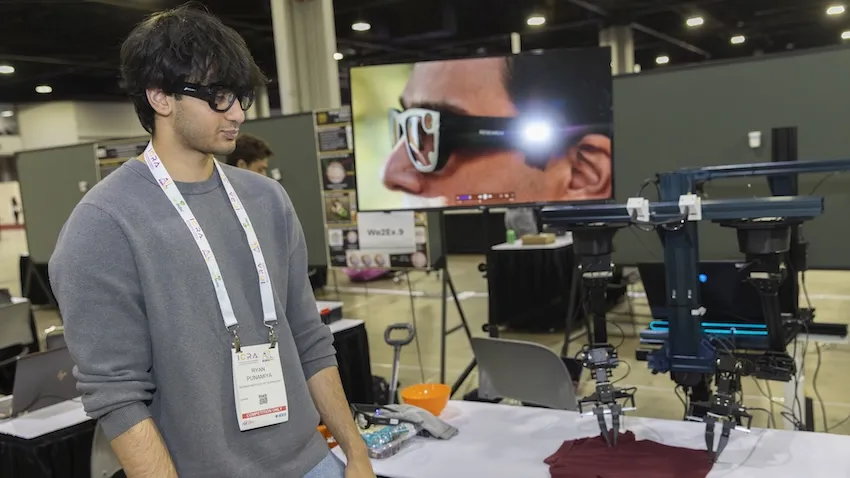
Two Georgia Tech undergraduates are being recognized for their contributions to computing research.
Ryan Punamiya (CS 2025) and Summer Abramson, a third-year computational media student, have been honored by the Computing Research Association (CRA) through its 2025–2026 Outstanding Undergraduate Researcher Award (URA) program.
Punamiya was named a runner-up for the prestigious award, while Abramson received an honorable mention among hundreds of applicants from universities across North America.
The CRA Outstanding Undergraduate Researcher Award program recognized eight awardees in 2026, along with eight runners-up, nine finalists, and over 200 honorable mentions from thousands of applications.
Advancing Robotics Research
Punamiya knew early on that he didn’t want to wait until starting his Ph.D. to do meaningful and impactful robotics research.
Punamiya joined the Robot Learning and Reasoning Lab (RL2) directed by Assistant Professor Danfei Xu. While there, he contributed to the lab’s Meta-sponsored EgoMimic project, which trains robots to perform human tasks using recordings captured by Meta’s Project Aria research glasses.
Punamiya is also the first author of a paper accepted to the 2025 Conference on Neural Information Processing Systems (NeurIPS), one of the world’s most prestigious artificial intelligence (AI) and machine learning conferences.
“Ryan is the strongest undergraduate I've worked with,” Xu said, “including students who went on to Stanford, Berkeley, and leadership roles in major tech companies. He’s already operating at the level of a strong third-year Ph.D. student.”
Punamiya said it was a challenge to balance his undergraduate coursework with his research in Xu’s lab.
“You get out how much you put in,” he said. “I built my class schedule to give myself as much time to do research as possible. It also boils down to having the right research mentors.
“(Xu) never saw me as an undergrad who’s just there to do grunt work. I was fortunate he saw my curiosity and cultivated me as a researcher. That’s really how you get more undergrads motivated to research — giving them the chance to be independent and explore ideas of their own.”
Punamiya said his work in Xu’s lab has already helped him identify the research areas he wants to focus on as he considers his next steps. He will continue developing generalized training models for robots using human data so they can perform tasks instantly upon deployment.
"The amount of data needed to train a robot is difficult to obtain even for top industry companies," he said. "We have embodied robot data available in billions of humans. With the advent of extended reality devices, we can get a scalable source of diverse interactions within environments."
Punamiya graduated in December and recently started an internship at Nvidia. He mentioned he has been accepted into several Ph.D. programs, including Georgia Tech, and he is choosing where to continue his research.
“It’s the first time my research has been acknowledged externally by the robotics community,” he said. “It’s good to know the problem I’m working on is important, and that motivates me. Robotics is an exciting field. We are doing things now that two years ago were difficult to do.”
Researching Inclusion in Computing Education
Abramson conducts research in the People-Agents Research for Computing Education (PARCE) Laboratory under the mentorship of Pedro Guillermo Feijóo-García, a faculty member in the School of Computing Instruction. He and the Associate Dean for Undergraduate Education, Olufisayo Omojokun, nominated her for the award.
Her work focuses on the intersection of computing education and human-AI interaction, where she’s been exploring ways to create more equitable technology.
“This is such a huge milestone, and I couldn't be prouder of Summer,” Feijóo-García said. “Mentoring her for almost two years has been an amazing experience.”
Abramson has received the Georgia Tech President’s Undergraduate Research Award (PURA) twice, which supports her research exploring how user-centered design curricula can help address attrition among women in computing.
“I’ve had the amazing opportunity to pursue research at the intersection of student identity, community belonging, and how we can build tools that support our diverse student population,” Abramson said.
“Dr. Pedro and I have a goal to build community through a human-first approach, and I could not be more grateful for his support and guidance in my own journey. The CRA highlights the best of what the computing discipline has to offer, and I am incredibly honored for our work to be recognized.”
Abramson will spend the summer researching how user-centered design curricula can help promote confidence, belonging, and retention for women in computing.
Nominees for the PURA program were recognized for contributing to multiple research projects, authoring or coauthoring papers, presenting at conferences, developing widely used software artifacts, and supporting their communities as teaching assistants, tutors, and mentors.
School of Computing Instruction Communications Officer Emily Smith contributed to this story.
Main Photo: Ryan Punamiya works with a robot during the 2025 International Conference on Robotics and Automation in Atlanta. Photo by Terence Rushin/College of Computing.

Taken aboard Apollo 8 by Bill Anders, this iconic picture shows Earth peeking out from beyond the lunar surface as the first crewed spacecraft circumnavigated the Moon, with astronauts Anders, Frank Borman, and Jim Lovell aboard. (Credit: NASA)

Advik Vira
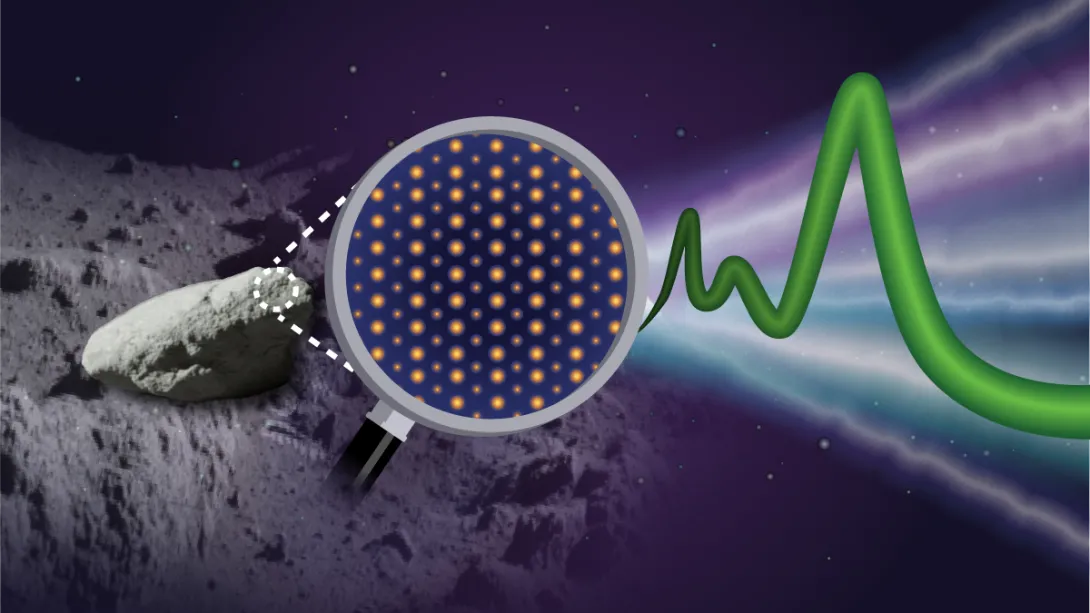
An illustration of the Apollo rock 75035 on the Moon, an atomic image of the sample, and its spectral signature. (Credit: August Davis)

An optical image of the chip from the lunar rock the team investigated.
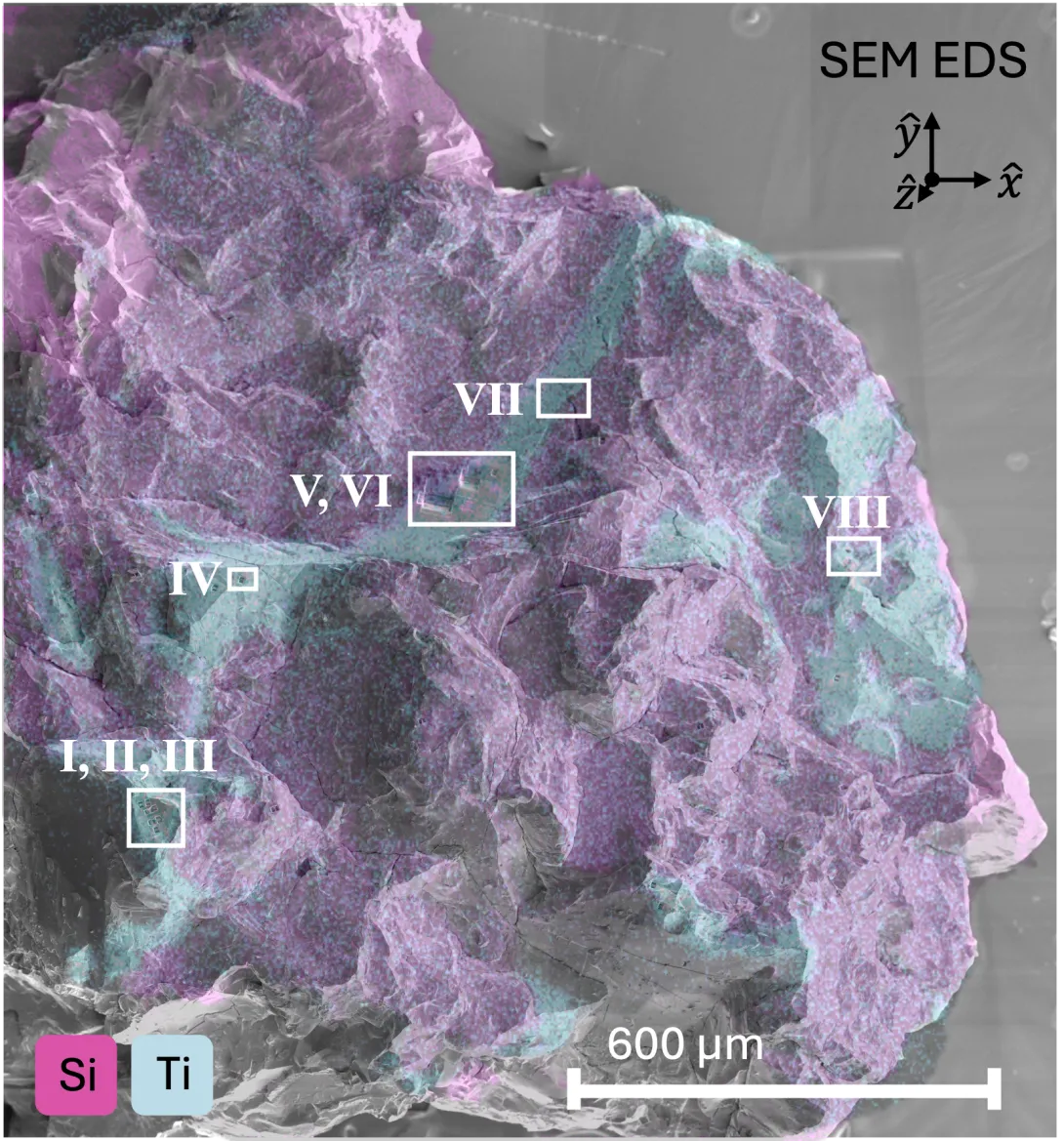
An image of the chip from the sample, imaged using scanning electron microscopy. Titanium is shown in light blue, and white boxes show areas where samples were extracted to analyze the ilmenite crystal.
A chemical signature hidden in a 3.8‑billion‑year‑old lunar rock is offering new insights into the availability of oxygen within the young Moon.
Published today in the journal Nature Communications, the paper “Trivalent Titanium in High-Titanium Lunar Ilmenite” confirms titanium in a reduced, trivalent state in a black, metal-rich lunar mineral called ilmenite. It’s a state only possible in low-oxygen environments, conditions researchers refer to as “reducing.”
“Models have suggested that these reducing conditions may have varied at different locations and times across the surface of the Moon,” says lead author Advik Vira, a graduate student in the School of Physics who recently earned his doctoral degree. “We hope our microscopy technique can be a valuable step in mapping and understanding the Moon’s 4.5-billion-year history.”
The team anticipates that their technique could be used on many of the lunar samples collected more than 50 years ago by the Apollo missions in addition to the Apollo Next Generation Samples — a group of lunar samples that have been stored under pristine conditions — and new samples from the planned Artemis missions, with Artemis II slated for launch this spring. The technique might also be applicable to samples collected from the far side of the Moon and returned in 2024 by the Chang’e-6 mission.
“The Moon holds clues not only to its own past, but also to the earliest eras of Earth’s evolution — history that has long since been erased from our planet,” Vira says. “This study is a step toward understanding the history of both and a reminder that there is still so much left to learn from the lunar rocks we’ve brought back to Earth.”
The School of Physics research team included corresponding authors Vira and Professor Phillip First; in addition to graduate student Roshan Trivedi; undergraduate students Gabriella Dotson, Keyes Eames, Dean Kim, and Emma Livernois; and Professor Zhigang Jiang, along with Institute for Matter and Systems Materials Characterization Facility Senior Research Scientist Mengkun Tian; School of Chemistry and Biochemistry Senior Research Scientist Brant Jones and Thom Orlando, Regents' Professor in the School of Chemistry and Biochemistry with a joint appointment in the School of Physics.
The Georgia Tech team was joined by Addis Energy Senior Geochemist Katherine Burgess; Macalester College Assistant Professor of Geology Emily First; along with Lawrence Berkeley National Laboratory Research Scientist Harrison Lisabeth, Senior Scientist Nobumichi Tamura, and Postdoctoral Fellow Tyler Farr, who recently earned a Ph.D. from Georgia Tech’s George W. Woodruff School of Mechanical Engineering.
CLEVER research
The investigation began with a dark gray rock called a lunar basalt. Formed when ancient magma erupted on the Moon’s surface, minerals crystallized as it cooled — preserving key information in their structures. Billions of years later, the rock was brought to Earth by the 1972 Apollo 17 mission, where a small piece is now stored at Georgia Tech’s Center for Lunar Environment and Volatile Exploration Research (CLEVER), a NASA Solar System Exploration Research Virtual Institute (SSERVI) center led by Orlando.
As a NASA virtual institute, CLEVER supports researchers exploring lunar conditions and developing tools for the upcoming crewed Artemis missions, and provided the lunar samples for this research. The SSERVI also plays a critical role in training the next generation of planetary researchers: both Vira and Farr earned their Ph.D.s while on the CLEVER team.
“At CLEVER, we are very interested in understanding the impacts of space weathering,” Vira says. “We implemented modern sample preparation and advanced microscopy techniques to image samples at the atomic level, and were curious to apply it more broadly to the collection of Apollo rocks in the Orlando Lab. This sample caught our attention.”
“When we imaged an ilmenite crystal from the lunar basalt, what struck us first was how uniform and perfect the crystal structure was,” he recalls. “We found no defects from space weathering and instead saw an undamaged, pristine crystal — undisturbed for 3.8 billion years.”
To investigate further, the team analyzed small chips of the rock with Burgess, a member of the RISE2 SSERVI team and then a geologist at the U.S. Naval Research Laboratory. Using state-of-the-art electron microscopy and spectroscopy techniques, Vira determined the oxidation state of the elements in the ilmenite present.
In spectroscopy measurements, each element leaves a distinct ‘signature,’ Vira explains. “When we brought our results back to Georgia Tech’s Materials Characterization Facility, Mengkun (Tian) noticed something unusual: the signature showed titanium might be present in the trivalent state.”
The presence of trivalent titanium had long been suspected in this lunar mineral. The team was intrigued.
A new window into old rocks
With funding from Georgia Tech’s Center for Space Technology and Research (CSTAR), Vira returned to the U.S. Naval Research Laboratory to analyze additional samples. The results confirmed that more titanium was present than the mineral’s formula (FeTiO₃) predicts — indicating a portion of the titanium present was trivalent.
“That led me to place our measurements in terms of the broader geological context,” Vira shares. Working with First, Vira explored how ilmenite with trivalent titanium could help reconstruct the nature of ancient magmas from the Moon, especially the chemical availability of oxygen.
“Because its location on the Moon was noted during the Apollo mission, we know exactly where this rock is from, and we can determine how old the rock is,” he explains. “When coupled with our trivalent titanium measurements, we can use that information to estimate the reducing conditions for this specific region at the specific time our rock formed.”
If the upcoming Artemis missions return samples suitable for the team’s technique, these rocks could provide a new window into ancient lunar geology. The research also highlights that many lunar samples already on Earth could be reexamined to look for trivalent titanium.
“There is still so much to learn from the lunar samples we have already brought to Earth,” Vira says. “It’s a testament to the long-term value of each sample return mission. As technology continues to advance, this type of work will continue to give us critical insights into our planet and our place in the universe for years to come.”
DOI: 10.1038/s41467-026-69770-w
Funding: This work was directly supported by the NASA SSERVI under CLEVER. Researchers were also supported by the NASA RISE2 SSERVI and the Heising-Simons Foundation. Funding for collaborations between the U.S. Naval Research Laboratory and Georgia Tech for the investigation of lunar minerals was provided by the Georgia Tech Center for Space Technology and Research. Sample preparation was performed at the Georgia Tech Institute for Matter and Systems, which is supported by the National Science Foundation. This work utilized the resources of the Advanced Light Source, a user facility supported by the U.S. Department of Energy, Office of Science, Office of Basic Energy Sciences, and was supported in part by previous breakthroughs obtained through the Laboratory Direct.
News Contact
Written by:
Selena Langner
College of Sciences
Georgia Institute of Technology
Georgia Tech Energy Day returns this year on March 19 with an expanded focus and a new collaborative momentum. Cohosted by the Georgia Tech Institute for Matter and Systems (IMS) and the Strategic Energy Institute, (SEI) with plenary session support from the Energy Policy and Innovation Center, Energy Day 2026 convenes leaders from academia, industry, government, and students to address the challenges associated with meeting the rapidly growing electricity demand driven by artificial intelligence (AI) and high-performance computing.
Set in the heart of Tech Square on the Georgia Tech campus, this year’s event explores how energy systems, materials, technologies, supply chains, and policy must evolve in response to AI’s accelerating impact. As digital infrastructure expands and computation intensifies, the need for reliable, resilient, and sustainable power has never been more urgent.
“Energy Day reflects Georgia Tech’s strength in connecting world-class research in materials and components with the infrastructure and partnerships needed to translate discovery into scalable energy technologies that serve industry, society, and the future economy,” said Eric Vogel, executive director of the IMS and the Hightower Professor in Materials Science and Engineering.
Energy Day 2026 also marks an important milestone with the introduction of its first group of corporate sponsors: GE Vernova, Southern Company, Georgia Power, ExxonMobil, Southwire Spark, Gems Setra, and Tektronix. Their support reflects a shared commitment to advancing energy solutions.
“Tektronix is excited to be part of Energy Day because advancing the future of energy starts with precise measurement and trusted insights,” said Christopher Bohn, president of Tektronix. “From power electronics and high voltage systems to grid scale renewables and AI driven control technologies, the breakthroughs discussed here directly align with the innovations we support through our products and solutions. Collaborating with Georgia Tech allows us to engage early with emerging research and the next generation of engineers—critical collaborators in building a cleaner, smarter, and more resilient energy ecosystem.”
The keynote address will be delivered by Vanessa Z. Chan, a nationally recognized leader at the intersection of innovation, commercialization, and emerging technologies. Chan will provide insights on accelerating technological discovery, emphasizing how AI is transforming energy and materials design. She will discuss how commercialization strategies must rapidly evolve across multidisciplinary energy domains from grid modernization to advanced batteries and clean manufacturing.
Building on the themes introduced in the keynote, the program transitions into a fireside chat with Georgia Tech EVPR Tim Lieuwen featuring Amit Kulkarni and Jim Walsh. Kulkarni is vice president of Product Management and Strategy for the Gas Power business within GE Vernova, where he oversees the world’s largest portfolio of power generation equipment. Walsh, vice president of GE Vernova’s Consulting Services, leads teams providing innovative solutions across the full spectrum of power generation, delivery, and utilization.
Next comes a policy-focused panel that will explore the surge in power demand driven by AI, how the United States is addressing today’s most urgent energy challenges, and the long-term implications of today’s decisions for a sustainable energy future. Bringing together leading voices in U.S. environmental and energy policy, the panel features Joe Aldy of Harvard University and former special assistant to the president for Energy and Environment; Al McGartland of New York University’s Institute for Policy Integrity and former Environmental Protection Agency lead economist and director of the National Center for Environmental Economics; and Kevin Rennert, fellow and director of the Comprehensive Climate Strategies Program at Resources for the Future and former staff member on the U.S. Senate Committee on Energy and Natural Resources.
The second panel focuses on critical materials — the foundation of advanced energy systems and digital technologies. As AI, data centers, and advanced energy technologies drive demand for critical materials, securing them now requires integration and coordination across the entire value chain. Panelists include Rachel Galloway, British consul general in Atlanta; Vijay Murugesan, head of Materials Intelligence and Digital Innovation at Amazon; Colin Spellmeyer, executive strategic sourcing leader at GE Vernova; Charles Sims, Tennessee Valley Authority Distinguished Professor of Energy and Environmental Policy at the University of Tennessee; and Nortey Yeboah, principal engineer at Southern Company. Together, they will offer perspectives on the policy and economic frameworks shaping the energy supply chain, from developing raw resources to manufacturing the technologies essential to future energy systems.
In the afternoon, participants can dive deeper into specialized topics through three focused technical tracks.
- “Meeting the Demand for Power” will examine how emerging technologies, advanced nuclear systems, and renewable integration can work together to deliver reliable, resilient electricity.
- “Data Center Infrastructure and Resources” will explore innovations in thermal management technologies, energy-efficient computing, and the broader resource impacts of expanding digital infrastructure.
- “Grid Technologies and Markets” will highlight strategies for strengthening grid capacity, incorporating demand-side management, and optimizing carbon performance as energy systems evolve.
“Meeting the rapidly rising electricity demand driven by AI requires bold ideas, coordinated action, and research that moves at the speed of innovation,” said Yuanzhi Tang, executive director of the SEI. “Energy Day 2026 brings together the people and expertise needed to shape resilient, sustainable energy systems for the future. At Georgia Tech, we see this event as a catalyst for new partnerships, new solutions, and a shared commitment to strengthening the nation’s energy foundation.”
Energy Day 2026 is designed for researchers advancing emerging energy technologies, policymakers navigating shifting regulatory and geopolitical landscapes, industry professionals seeking insight into emerging tools and supply chains, and students preparing to enter one of the most consequential sectors of the decade. It also welcomes anyone interested in AI, sustainability, electrification, and critical materials.
Join us to explore the future of energy. To learn more and register, visit: Energy Day 2026.
News Contact
Priya Devarajan | Communications Program Manager
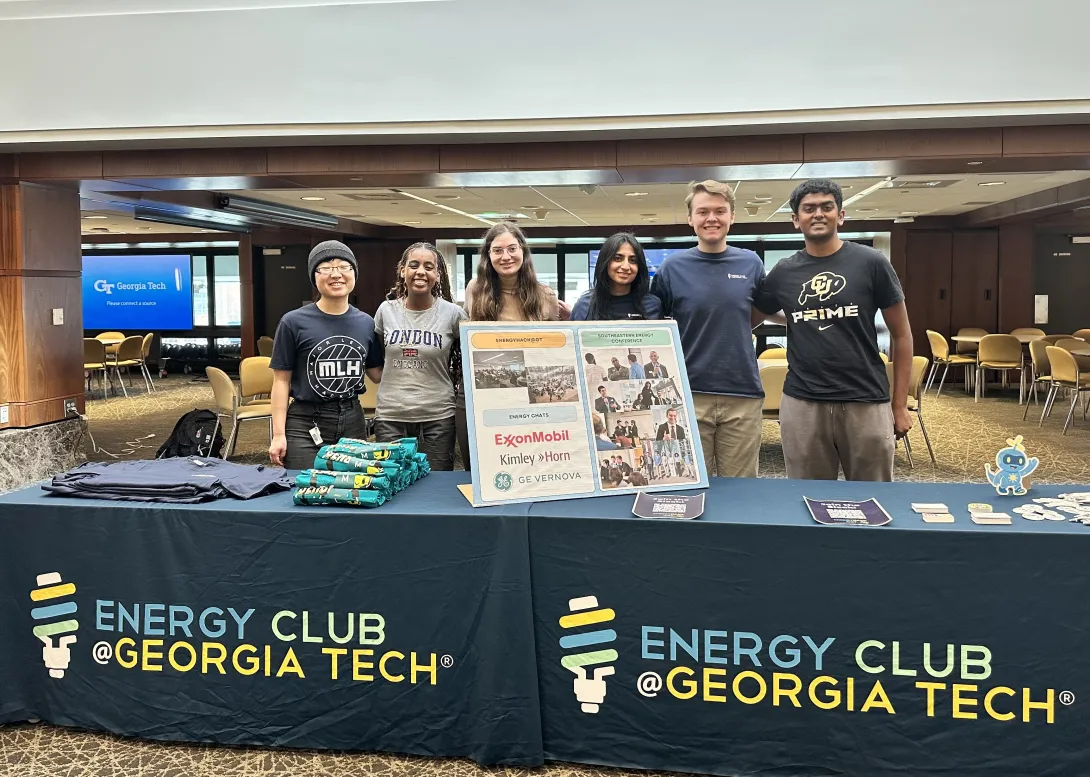
Energy Club Team
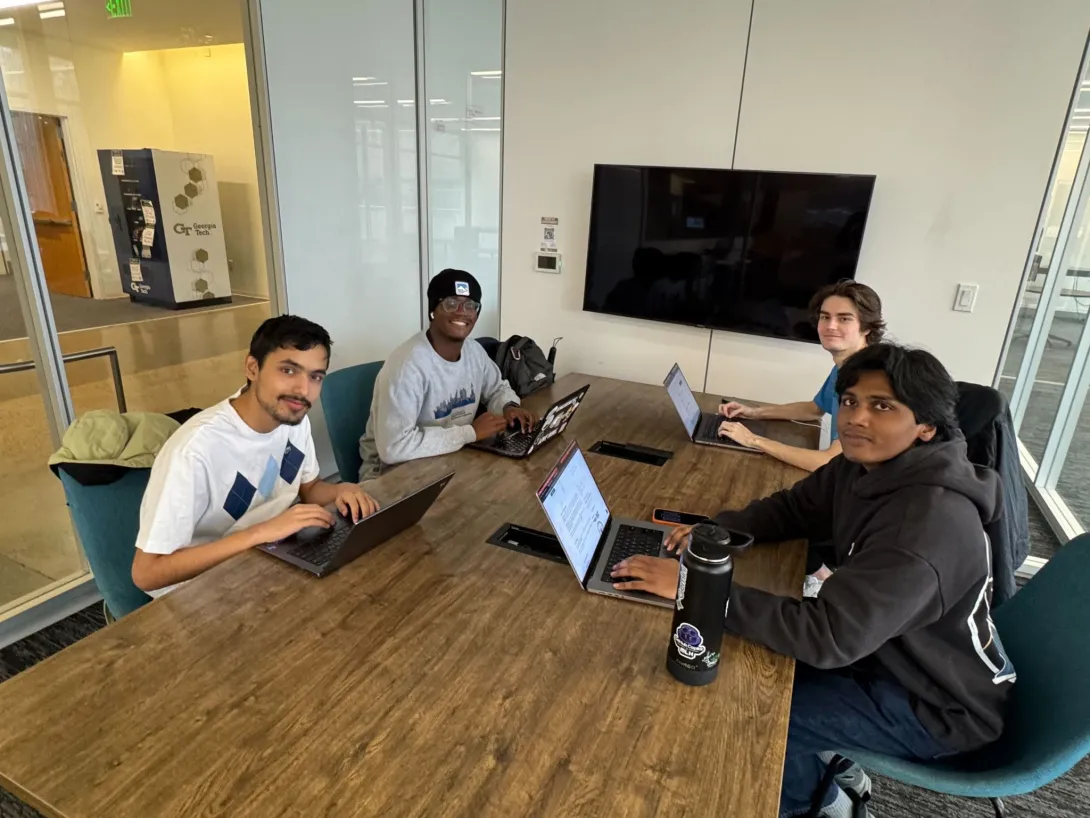
EnergyHack@GT 2026 Winning Team
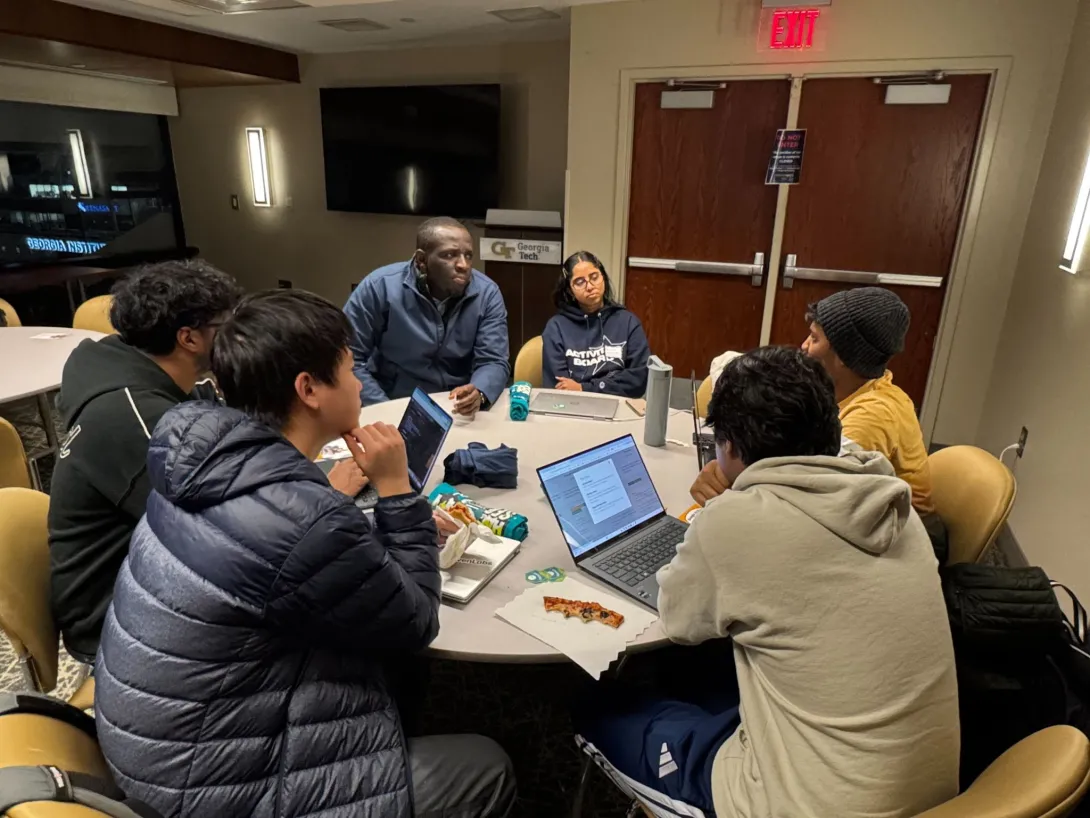
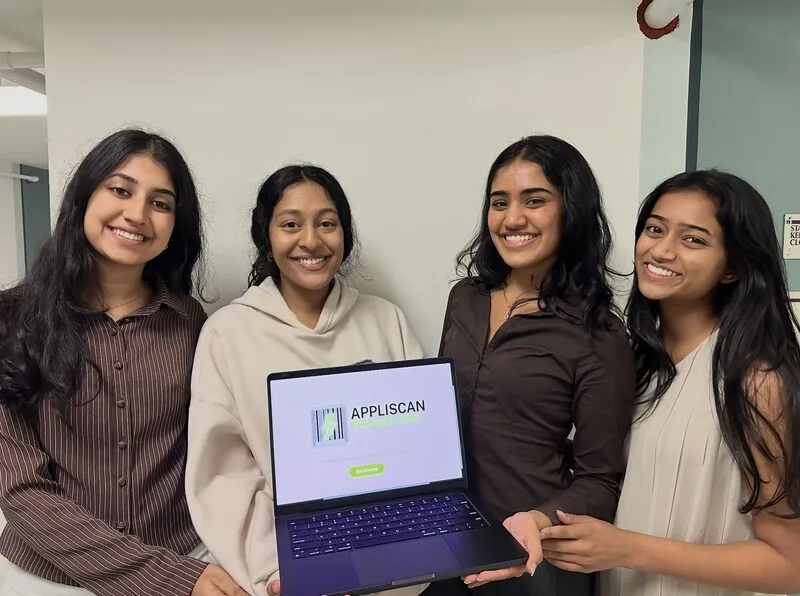
EnergyHack@GT, Georgia Tech’s second annual student-run energy and sustainability hackathon, took place over the weekend of Jan. 23 – 25, 2026. Organized by the Energy Club at Georgia Tech, the hackathon’s mission was to unite passionate students, tackle critical challenges in the energy industry, and foster innovation and collaboration.
Over the course of 36 hours, participants collaborated in teams to brainstorm, design, and prototype projects that promote sustainable practices based on diverse problem statements, addressing this year’s tracks: renewables; electrification & mobility; and smart grid. These themes targeted urgent issues, from balancing renewable energy supply and demand to safeguarding infrastructure against cyber threats and reducing greenhouse gas emissions. Despite the arrival of a winter storm and the hackathon shifting to a fully virtual format, students persevered and produced top-tier projects, which were evaluated by a panel of judges.
The event kicked off with an engaging opening ceremony featuring inspiring keynote speeches that set the tone for the hackathon’s ambitious objectives. Ann Dunkin, Distinguished External Fellow at Georgia Tech’s Strategic Energy Institute (SEI), served as the first of these keynotes, presenting her experiences as chief information officer for the U.S. Department of Energy. She gave participants, whether newcomers or veterans in the energy space, diverse problems to tackle, ranging from cybersecurity risks in substations to climate concerns in the age of artificial intelligence. Dunkin emphasized that no matter the challenge, a strong team can always develop innovative solutions.
“I was impressed by the quality and completeness of the solutions that the students created over about 40 hours,” said Dunkin. "Students created real solutions that meet market needs, and they conveyed an incredible amount of information in the three minutes they had to present their solutions.”
Despite the switch to a virtual format, participants could still talk to mentors throughout the event. These mentors included a Google lead, startup CEOs, Ph.D. researchers, and other professionals with decades of experience in the energy industry. Mentors provided feedback on participants’ ideas and guided them to think more deeply about the problems they chose. The various workshops also provided participants with a chance to dig deep into specific topics.
Michael Levy, U.S. utilities lead at global consulting firm Baringa, presented his workshop on using data and modeling to shape utility decisions, policy, and regulatory strategy. GE Vernova representatives presented “The Energy of Change,” an interactive workshop featuring climate simulations and team challenges to explore the trade-offs between cost, grid capacity, and carbon impact in the real world. Major League Hacking provided guides on GitHub Copilot and Google AI Studio. The final workshop, “Org Efficiency in Early Startups,” was led by Hunter Harris from the technology incubator complex Atlanta Tech Village. Harris taught participants what to prioritize in an early startup, including how to build a management structure and find the right strategy for attracting customers.
Troy Rice, vice president and general manager of Florida Power and Light under NextEra Energy, gave a keynote speech on utility business models and how to set yourself apart in a large industry. Rice discussed his experience, which began as a Tech graduate from the H. Milton Stewart School of Industrial and Systems Engineering. After learning about NextEra’s business model, he eventually created and taught an internal class called “How NextEra Makes Money.” Rice used this story to explain the importance of becoming an expert in knowledge that others in your company overlook. He also discussed the future of energy generation, emphasizing the growth of renewable energy in utility portfolios and often-overlooked potential career opportunities.
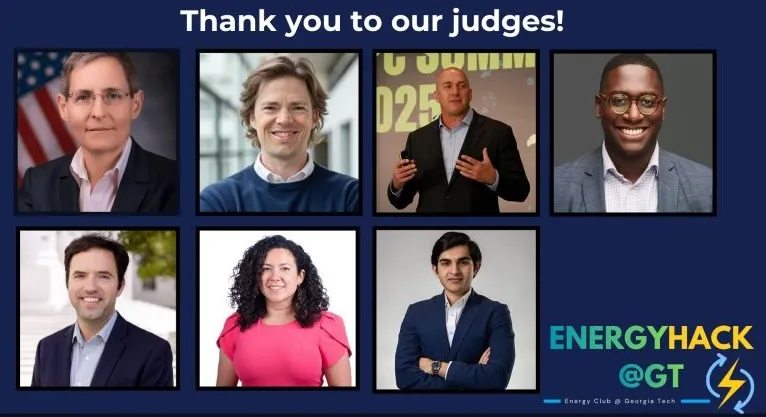
The energy and creativity culminated in the Project Expo, where 22 innovative solutions were showcased. Representatives from the Strategic Energy Institute, Microsoft, NextEra Energy, GE Vernova, and Georgia Tech professors judged projects, offering insights and feedback.
The closing ceremony celebrated the participants’ achievements and the event highlights, featuring Emily Morris, founder and CEO of Emrgy, as the final keynote speaker. Morris shared insights from her experience as a technology startup founder in the energy sector, discussing the unique challenges of navigating a risk-averse industry. She encouraged aspiring entrepreneurs to start by envisioning their future press release to clarify their end goal and avoid getting lost in immediate challenges. Morris emphasized the importance of leveraging your network, whether your Georgia Tech connections or hometown community, regardless of whether you pursue academia, industry, or the startup world.
With more than 110 registered participants, 22 project submissions, and leaders from some of the biggest energy and tech companies, EnergyHack@GT served as a platform for innovation and learning, showcasing the potential of student-led initiatives in shaping the future of energy and sustainability. Awards were presented to the top three projects for their creativity and impact, with the winning teams receiving cash prizes provided by the startup Tractian:
- Best Overall Hack: AppliScan
- Second Place: TeraWatt
- Third Place: WattsUp
Take a look at all the projects submitted: https://energyhack-gt-26.devpost.com/project-gallery
Written by Georgia Tech students: Braden Queen, Orit Endalk, Radhika Sharma
News Contact
Priya Devarajan || SEI Communications Program Manager
Written by Georgia Tech students: Braden Queen, Orit Endalk, Radhika Sharma
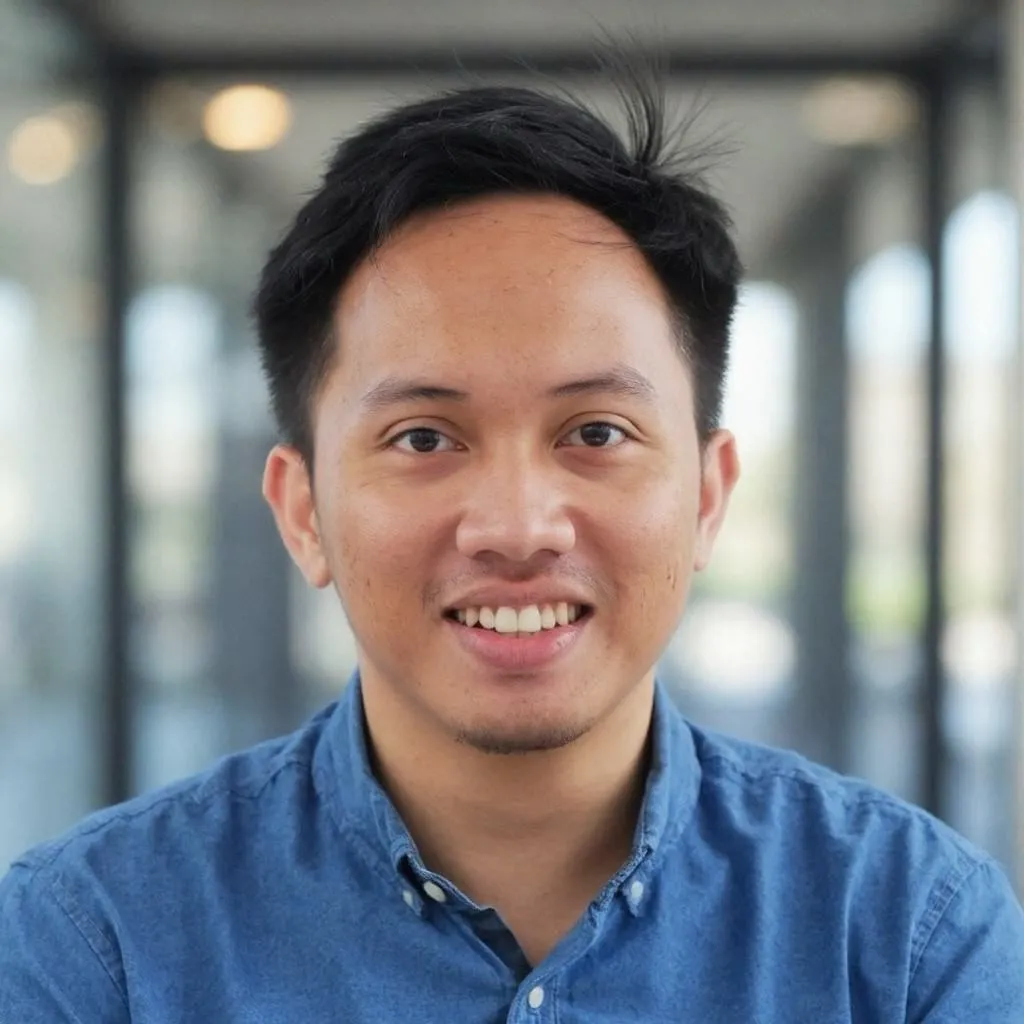
Afi Ramadhani, Ph.D. student at the School of Economics and EPIcenter Student Affiliate
Afi Ramadhani, a graduate student in economics and a student affiliate of Georgia Tech’s Energy Policy Innovation Center, has won a prize for the best research paper from the School of Economics. The research developed in the paper was supported by EPIcenter’s Graduate Student Summer Research Program.
The prize recognizes outstanding student research produced within the School and highlights the value of EPIcenter’s sustained research support and professional development for graduate students.
Ramadhani’s award-winning paper, titled “Battery Storage and Natural Gas Generator Market Power,” was developed during his participation in EPIcenter’s Summer Research Program for graduate and doctoral students pursuing energy policy research at Georgia Tech. Through the program, he received research mentoring and communications coaching that strengthened his work.
“This award reflects what can happen when students have the time, mentorship, and support to fully develop their ideas,” said Laura Taylor, director of EPIcenter. “Our Summer Research Program is designed to help graduate students advance rigorous energy policy research while also building the skills needed to communicate that work effectively.”
Supporting Graduate Research in Energy Policy
The program supports graduate students whose work contributes to energy policy and innovation. Student affiliates receive funding, mentorship, and access to EPIcenter’s research and communications resources, helping them build their academic profiles and translate complex research for broader audiences.
In addition, they gain valuable opportunities to present their work, participate in EPIcenter programs and events, share their research through EPIcenter’s communications platforms, and build their skills through tailored collaboration and training with EPIcenter staff.
During the summer, Ramadhani worked closely with EPIcenter staff and mentors. The program’s stipend allowed him to spend those months fully focused on his research, rather than taking on teaching or other responsibilities.
"Participating in the program really made my summer productive. I got a lot of good feedback on how to shape the idea into a paper," he said.
Advancing Emerging Scholars
Ramadhani’s recognition reflects EPIcenter’s broader commitment to supporting graduate students whose research addresses critical energy and policy challenges. By pairing research support with mentorship and communications training, the center helps students develop work that earns recognition well beyond the program itself.
News Contact
Priya Devarajan || SEI Communications Program Manager
While not as highlight-reel worthy as the Winter Olympics and the World Cup, experts expect high-performance computing (HPC) to have an even bigger impact on daily life in 2026.
Georgia Tech researchers say HPC and artificial intelligence (AI) advances this year are poised to improve how people power their homes, design safer buildings, and travel through cities.
According to Qi Tang, scientists will take progressive steps toward cleaner, sustainable energy through nuclear fusion in 2026.
“I am very hopeful about the role of advanced computing and AI in making fusion a clean energy source,” said Tang, an assistant professor in the School of Computational Science and Engineering (CSE).
“Fusion systems involve many interconnected processes happening across different scales. Modern simulations, combined with data-driven methods, allow us to bring these pieces together into a unified picture.”
Tang’s research connects HPC and machine learning with fusion energy and plasma physics. This year, Tang is continuing work on large-scale nuclear fusion models.
Only a few experimental fusion reactors exist worldwide compared to more than 400 nuclear fission reactors. Tang’s work supports a broader effort to turn fusion from a promising idea into a practical energy source.
Nuclear fusion occurs in plasma, the fourth state of matter, where gas is heated to millions of degrees. In this extreme state, electrons are stripped from atoms, creating a hot soup of fast-moving ions and free electrons. In plasma, hydrogen atoms overcome their natural electrical repulsion, collide, and fuse together. This releases energy that can power cities and homes.
Computers interpret extreme temperatures, densities, pressures, and plasma particle motion as massive datasets. Tang works to assimilate these data types from computer models and real-world experiments.
To do this, he and other researchers rely on machine learning approaches to analyze data across models and experiments more quickly and to produce more accurate predictions. Over time, this will allow scientists to test and improve fusion reactor designs toward commercial use.
Beyond energy and nuclear engineering, Umar Khayaz sees broader impacts for HPC in 2026.
“HPC is the need of the day in every field of engineering sciences, physics, biology, and economics,” said Khayaz, a CSE Ph.D. student in the School of Civil and Environmental Engineering.
“HPC is important enough to say that we need to employ resources to also solve social problems.”
Khayaz studies dynamic fracture and phase-field modeling. These areas explore how materials break under sudden, rapid loads.
Like nuclear fusion, Khayaz says dynamic fracture problems are complex and data-intensive. In 2026, he expects to see more computing resources and computational capabilities devoted to understanding these problems and other emerging civil engineering challenges.
CSE Ph.D. student Yiqiao (Ahren) Jin sees a similar relationship between infrastructure and self-driving vehicles. He believes AI will innovate this area in 2026.
At Georgia Tech, Jin develops efficient multimodal AI systems. An autonomous vehicle is a multimodal system that uses camera video, laser sensors, language instructions, and other inputs to navigate city streets under changing scenarios like traffic and weather patterns.
Jin says multimodal research will move beyond performance benchmarks this year. This shift will lead to computer systems that can reason despite uncertainty and explain their decisions. In result, engineers will redefine how they evaluate and deploy autonomous systems in safety-critical settings.
“Many foundational problems in perception, multimodal reasoning, and agent coordination are being actively addressed in 2026. These advances enable a transition from isolated autonomous systems to safer, coordinated autonomous vehicle fleets,” Jin said.
“As these systems scale, they have the potential to fundamentally improve transportation safety and efficiency.”
News Contact
Bryant Wine, Communications Officer
bryant.wine@cc.gatech.edu

Students visited Lachung and Chungthang in Sikkim, India. Upstream in the Teesta Valley, students examined how steep terrain and river confinement amplify flood forces and how failures can cascade across an entire corridor of infrastructure.

Downstream in the town Dikchu in Sikkim, India, the class focused on community-scale consequences: damaged buildings, disrupted access, and long recovery timelines.

Rangpo in Sikkim, India offered a view of recovery in motion such as materials staged for rebuilding near bridges and roads that keep commerce and emergency response moving.

In Kathmandu Valley, Nepal, the course broadened from hazard impacts to cultural context, exploring how heritage, governance, and everyday use of public space shape resilience.
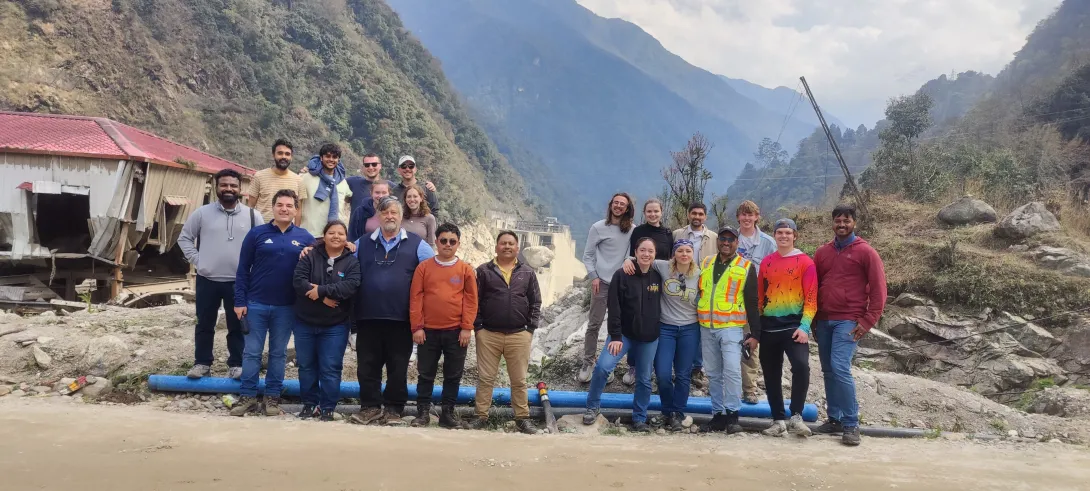
School of Civil and Environmental Engineering students captured 360 media, using Filio, to study disaster sites in India and Nepal. Photos provided by Roozbahani.
An AI-powered tool is changing how researchers study disasters and how students learn from them.
In the International Disaster Reconnaissance (IDR) course, students now use Filio, a platform built by School of Computing Instruction Senior Lecturer Max Mahdi Roozbahani, to capture immersive 360° media, photos, and video that transform real disaster sites in India and Nepal into living digital classrooms.
Offered by the School of Civil and Environmental Engineering and taught by IDR director and Regents’ Professor David Frost, the course pairs traditional fieldwork with Roozbahani’s expertise in immersive technology and data-driven learning, transforming on-the-ground observations into reusable, interactive educational resources.
How Computing Can Capture Data
Disasters are not only physical events; they are also information events, Roozbahani says. Effective response and long-term resilience depend on the ability to observe, record, and communicate critical data under pressure. Georgia Tech’s IDR course pairs structured on-campus preparation with international field experiences, enabling students to study the cascading effects of major disasters, including how local building practices, governance, and culture shape damage and recovery.
“When students step into a disaster zone, they learn quickly that resilience is a systems problem: physical, social, and informational. Our job in computing is to help them capture and reason about that system responsibly,” Roozbahani said.
Learning from the 2025 Himalayas Expedition
During spring break last year, the cohort traveled along the Teesta River corridor in Sikkim, India. The region is shaped by steep terrain, fast-moving water, and critical infrastructure in narrow valleys.
The visit followed the October 2023 glacial lake outburst flood from South Lhonak Lake, which destroyed the Teesta III hydropower dam and impacted downstream towns, including Dikchu and Rangpo. Field stops across India included Lachung, Chungthang, Dikchu, Rangpo, Gangtok, and New Delhi.
Students explored both upstream and downstream consequences.
Upstream, the team examined how steep terrain and river confinement amplify flood forces, creating cascading risks for infrastructure. Using Filio’s interactive 360° media, students captured conditions in Lachung and Chungthang, allowing viewers to explore the landscape through a 360° photo and 360° video that reveal how topography and river dynamics intensify disaster impacts.
They studied community-scale effects downstream, including damaged buildings, disrupted access, and prolonged recovery timelines.
Rangpo offered a glimpse of recovery in motion, with materials staged for rebuilding bridges and roads essential to commerce and emergency response.
Using Immersive Media as a Learning Tool
Students documented their field experience using Filio, an AI-powered visual reporting platform developed by Roozbahani through Georgia Tech’s CREATE-X ecosystem. Filio captures high-resolution photos, video, and 360° immersive media, preserving both the facts and the context of disaster sites; what the site felt like, what was lost, and what communities prioritized in recovery.
“A 360° capture lets students return months later and ask better questions. That second look is where learning accelerates,” Roozbahani said.
Supported by alumni and faculty mentors, including Tech alumnus Chris Klaus and Georgia Tech mentor Bill Higginbotham, the platform is evolving into a reusable educational library for future courses on immersive technology, responsible AI, and global resilience.
Kathmandu: The Context of Culture
The course concluded in Kathmandu, Nepal, where students examined how heritage, governance, and the everyday use of public space shape resilience.
Through Filio’s immersive documentation — including a 360° photo and 360° video from Kathmandu — the focus broadened from hazard impacts to cultural context, highlighting how recovery is not only about rebuilding structures, but also about preserving identity, memory, and community.
Looking Ahead: A Growing Resource for All Students
Frost and Roozbahani envision the IDR immersive media library as a reusable resource for students even when they cannot travel, supporting future courses on immersive technology, responsible AI, and global resilience. Spring 2026 cohorts will continue to build on this foundation by documenting, analyzing, and sharing insights that can improve education and real-world disaster response.
News Contact
Emily Smith
College of Computing
Georgia Tech
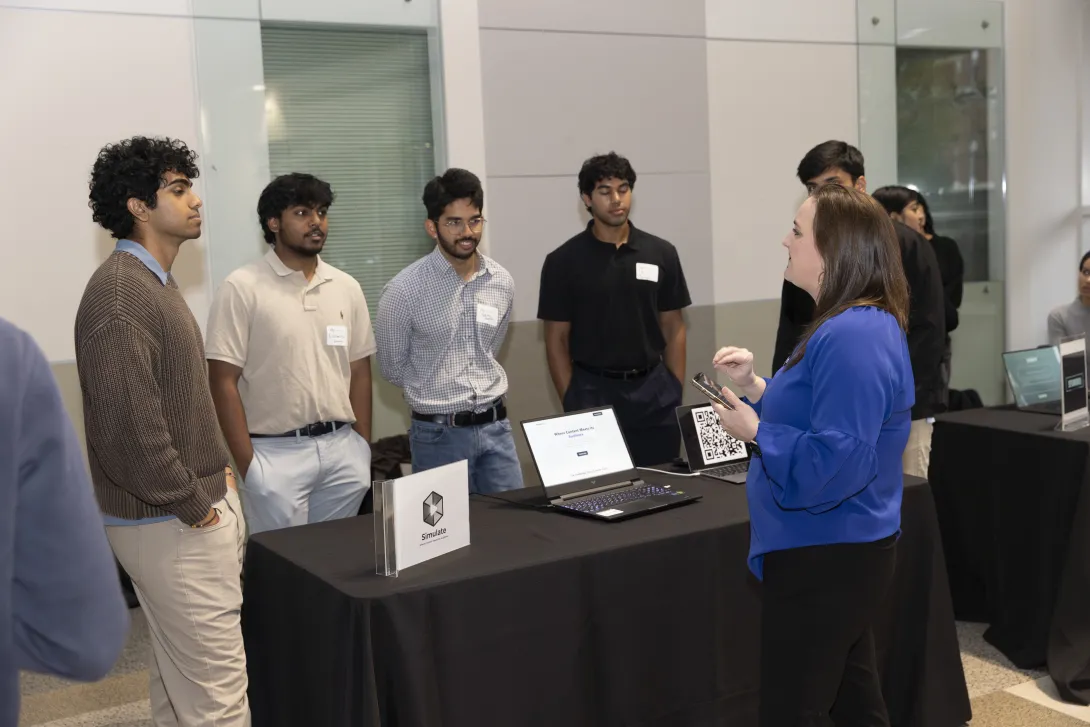
SCI's Jennifer Whitlow speaks with a team presenting at the new entrepreneur section of Junior Design Capstone. Photos by Terence Rushin/ College of Computing.
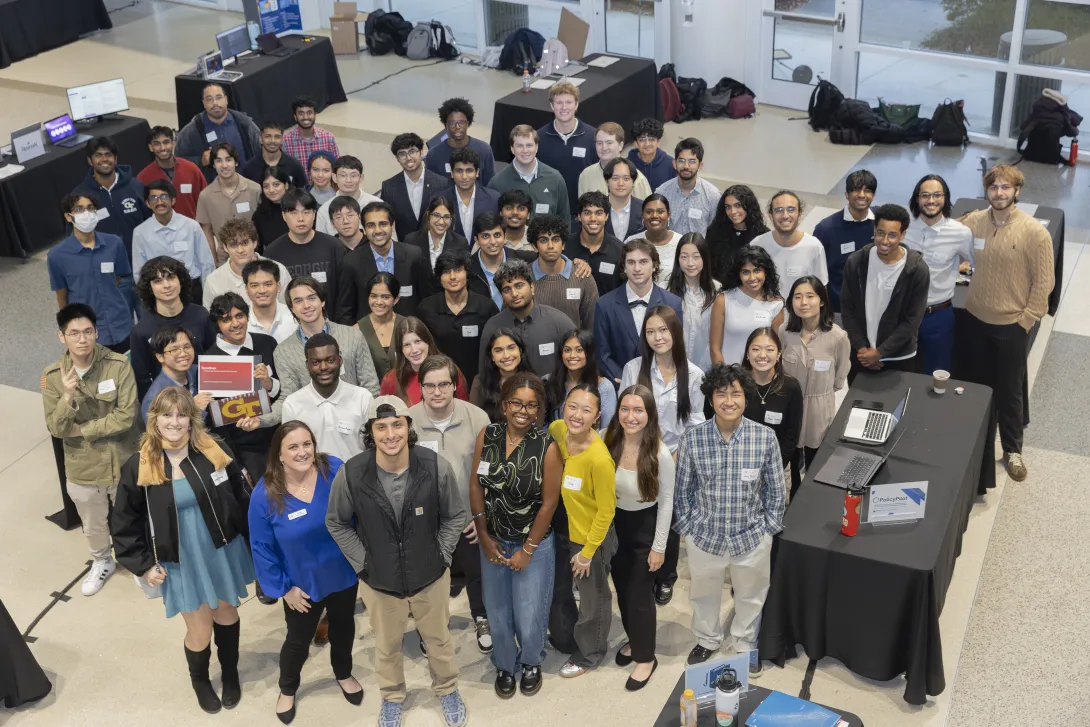
Students present at the expo
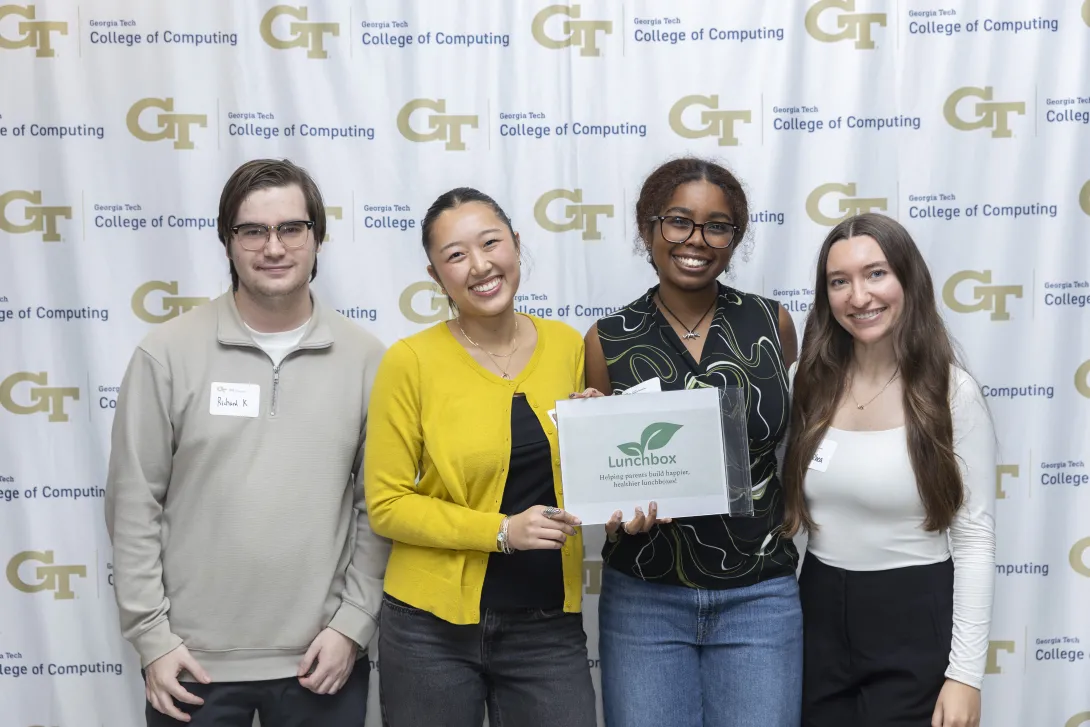
Team Lunchbox created a prototype to help parents of neurodivergent children with safe foods. Photo by Terence Rushin/ College of Computing.
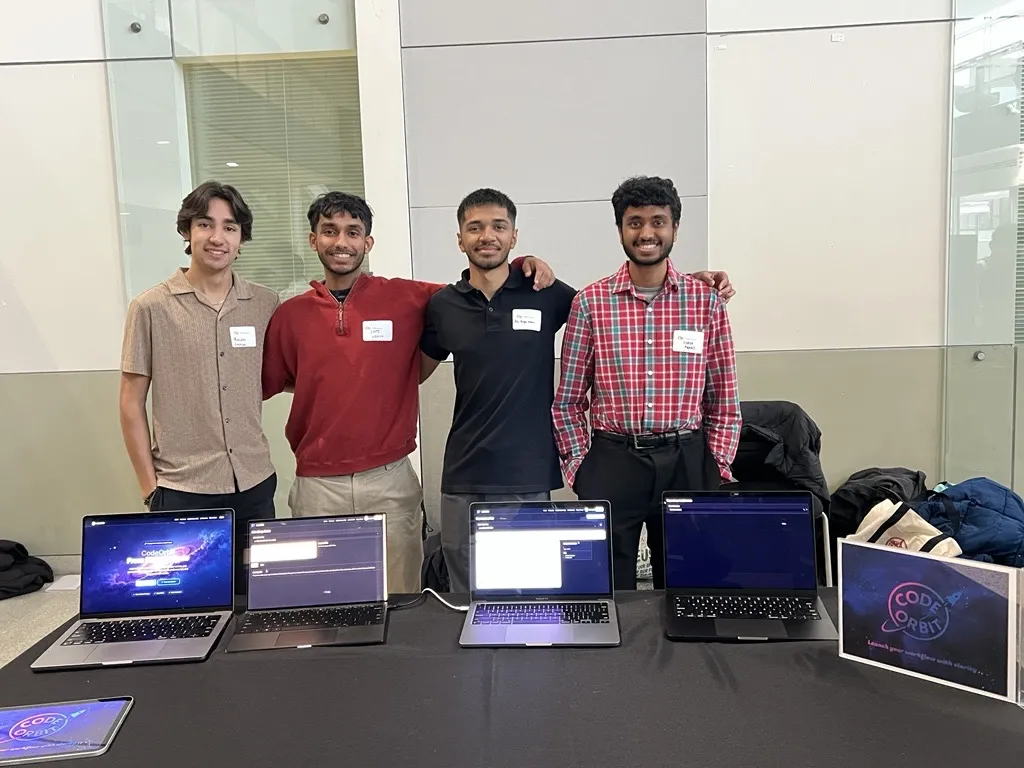
Team CodeOrbit took first place at the Expo. Photo by Jennifer Whitlow.
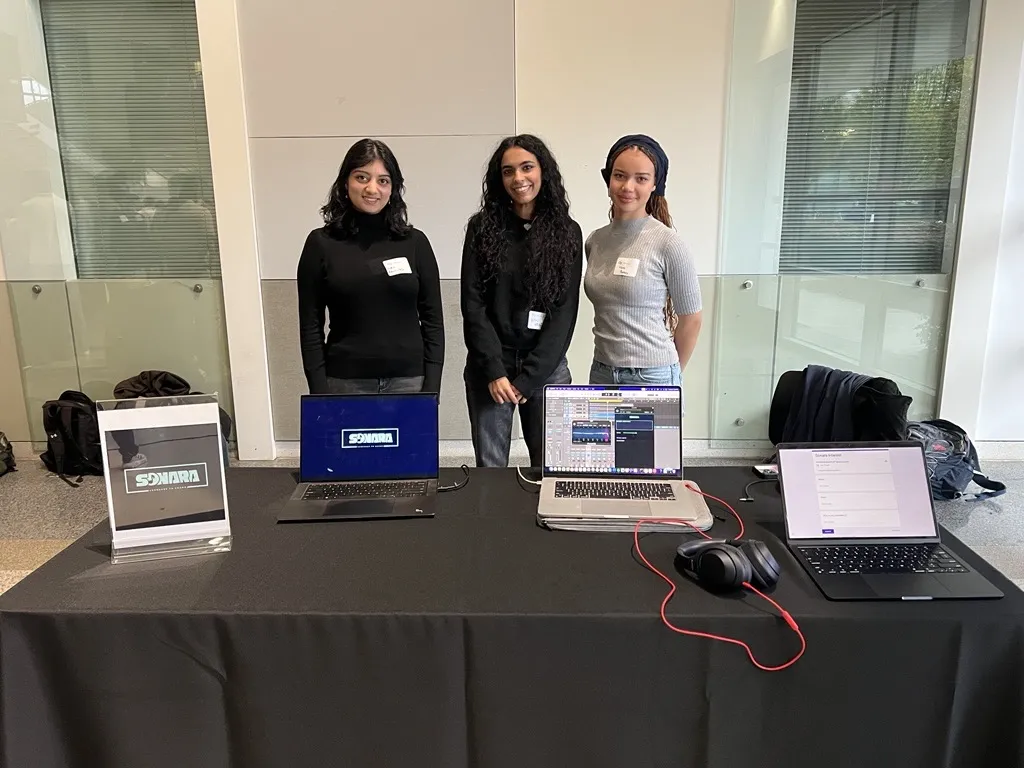
Team Sonara took second place at the Expo. Photo by Jennifer Whitlow.
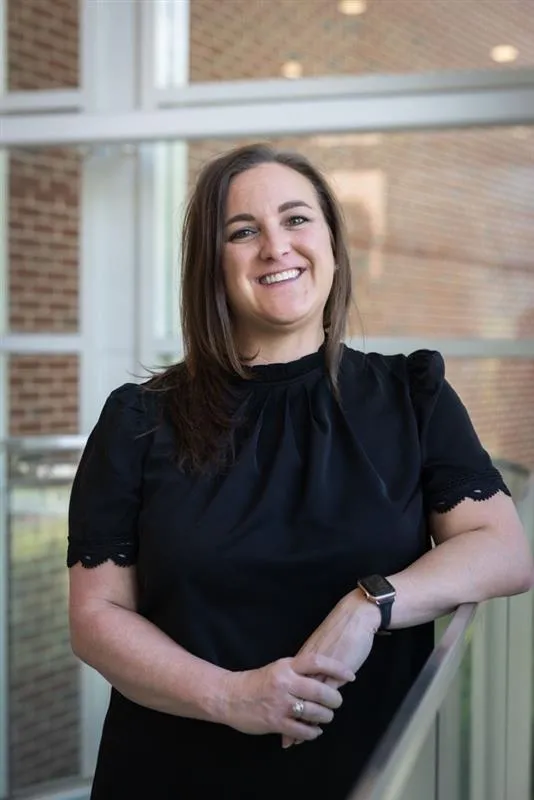
Whitlow, who has years of experience working with startups, leads the new section of Junior Design Capstone. Photo by Kevin Beasley/ College of Computing.
From zero to working prototype in just four months, students in the College of Computing’s new entrepreneurial Junior Design Capstone tackle real-world problems with guidance from startup mentors.
Led by School of Computing Instruction faculty member and Georgia Tech alumna Jennifer Whitlow, the course gives students a founder’s perspective on building technology that meets real user needs.
A Startup Approach to Junior Design
Unlike the traditional CS Junior Design course where teams work with sponsors, students in the entrepreneurial track act as their own clients. They begin the semester with no predetermined problem and follow a structured process, which is anchored by deliverables that reflect professional expectations.
“Students come in with nothing,” Whitlow said. “They identify a problem, conduct customer discovery, realize which assumptions were wrong, refine their direction, figure out what to build and then build it. And they own it 100 percent.”
Customer-discovery interviews ensure every idea is grounded in real user needs, and the semester culminates in a fully functioning prototype paired with a written justification of the decisions behind it. This combination of development and reflection gives students a framework that mirrors startup practices.
Expert Alumni Coached and AI-Driven Development
To further simulate a startup environment, Whitlow recruited alumni coaches with startup or executive experience. Coaches were paired with teams based on their areas of expertise, advising anywhere from one to four groups. The roster includes a former chief technology officer and longtime startup advisor, along with alumni startup founders.
Students also incorporate AI tools into development, accelerating early prototype work while still making critical decisions themselves.
“AI can accelerate the early stages,” Whitlow said. “But students have to understand their design well enough to guide it. AI doesn’t replace their decision-making.”
Top Teams Earn CREATE-X Acceptance
Sixteen teams completed the entrepreneurial capstone this fall.
The top two scoring projects earned automatic acceptance into CREATE-X Launch, Georgia Tech’s startup accelerator:
- CodeOrbit
- Sonara
These teams showcase the program’s ability to quickly bring student ideas to a level that’s ready for real-world startup incubation.
Putting the Process into Action: Lunchbox
One team that exemplifies how the capstone’s structure supports innovation is LunchBox. Created by computational media major Abigail Rhea and her teammates, LunchBox helps parents and caregivers of neurodivergent children navigate limited safe-food options.
The idea evolved after early customer discovery revealed that the original concept had too much competition, so the team narrowed its focus.
“During research, one of our teammates came across a testimonial from the mother of an autistic child,” Rhea said. “It spoke to all of us and helped us shift toward a truly underserved demographic.”
The team conducted more than 20 interviews with caregivers and special education teachers, reshaping its approach. “We realized families didn’t need another daily task,” Rhea said. “They needed personalized guidance that runs in the background. Everything we built came directly from those conversations.”
The team's biggest technical challenge was engineering a dynamic, emotionally supportive roadmap for food-exposure therapy. While AI accelerated development of SwiftUI code, all core decisions remained human-driven.
At the Capstone Expo, attendees connected strongly with the project. “So many people told us how applicable LunchBox is to their lives,” Rhea said. “Most joined the waitlist. We couldn’t be more excited for what’s next.”
Looking Ahead
Whitlow sees the pilot already fulfilling its purpose: giving students the tools and confidence to turn ideas into real ventures. Teams can continue work by applying to CREATE-X programs or building on their prototypes after the semester.
“This course shows students they can create something real,” Whitlow said. “That’s the goal: empowering them to innovate.”
A Startup Approach to Junior DA Startup Approach to Junior DesiUnlike the traditional CS Junior Design course where teams work with sponsors, students in the entrepreneurial track act as their own clients. They begin the semester with no predetermined problem and follow a structured process, which is anchored by deliverables that reflect professional expectatio
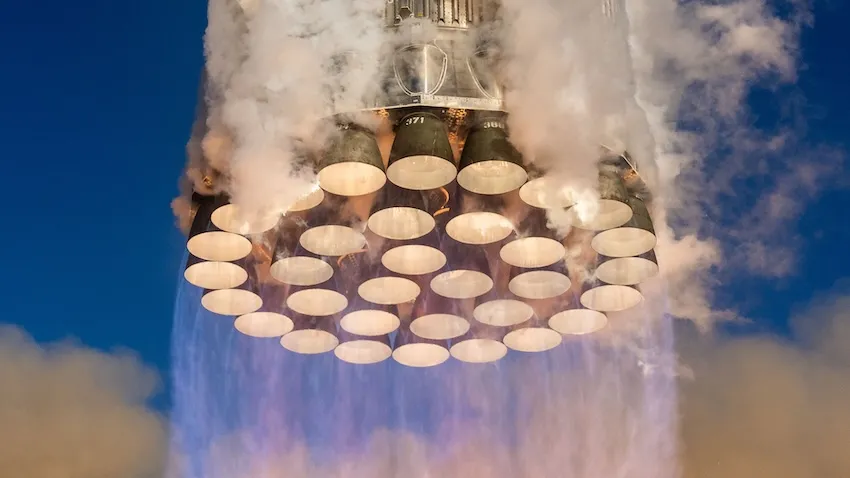
Spaceflight is becoming safer, more frequent, and more sustainable thanks to the largest computational fluid flow simulation ever ran on Earth.
Inspired by SpaceX’s Super Heavy booster, a team led by Georgia Tech’s Spencer Bryngelson and New York University’s Florian Schäfer modeled the turbulent interactions of a 33-engine rocket. Their experiment set new records, running the largest ever fluid dynamics simulation by a factor of 20 and the fastest by over a factor of four.
The team ran its custom software on the world’s two fastest supercomputers, as well as the eighth fastest, to construct such a massive model.
Applications from the simulation reach beyond rocket science. The same computing methods can model fluid mechanics in aerospace, medicine, energy, and other fields. At the same time, the work advances understanding of the current limits and future potential of computing.
The team finished as runners-up for the 2025 Gordon Bell Prize for its impactful, multi-domain research. Referred to as the Nobel Prize of supercomputing, the award was presented at the world’s top conference for high-performance computing (HPC) research.
“Fluid dynamics problems of this style, with shocks, turbulence, different interacting fluids, and so on, are a scientific mainstay that marshals our largest supercomputers,” said Bryngelson, an assistant professor with the School of Computational Science and Engineering (CSE).
“Larger and faster simulations that enable solutions to long-standing scientific problems, like the rocket propulsion problem, are always needed. With our work, perhaps we took a big dent out of that issue.”
The Super Heavy booster reflects the space industry’s move toward reusable multi-engine first-stage rockets that are easier to transport and more economical overall.
However, this shift creates research and testing challenges for new designs.
Each of Super Heavy’s 33 thrusters expels propellant at ten times the speed of sound. As individual engines reach extreme temperatures, pressures, and densities, their combined interactions with the airframe make such violent physics even more unpredictable.
Frequent physical experiments would be expensive and risky, so scientists rely on computer models to supplement the engineering process.
Bryngelson’s flagship Multicomponent Flow Code (MFC) software anchored the experiment. MFC is an open-source computer program that simulates fluid dynamic models. Bryngelson’s lab has been modifying MFC since 2022 to run on more powerful computers and solve larger problems.
In computing terms, this MFC-enhanced model simulated fluid flow resolution at 200 trillion grid points and one quadrillion degrees of freedom. These metrics exceeded previous record-setting benchmarks that tallied 10 trillion and 30 trillion grid points.
This means MFC simulations provide greater detail and capture smaller-scale features than previous approaches. The rocket simulation also ran four times faster and achieved 5.7 times the energy efficiency of comparable methods.
Integrating information geometric regularization (IGR) into MFC played a key role in attaining these results. This new approach improved the simulation’s computational efficiency and overcame the challenge of shock dynamics.
In fluid mechanics, shock waves occur when objects move faster than the speed of sound. Along with hampering the performance of airframes and propulsion systems, shocks have historically been difficult to simulate.
Computational scientists have used empirical models based on artificial viscosity to account for shocks. Although these approaches mimic the physical effects of shock waves at the microscopic scale, they struggle to effectively capture the large-scale features of the flow.
Information geometry uses curved spaces to study concepts of statistics and information. IGR uses these tools to modify the underlying geometry in fluid dynamics equations. When traveling in the modified geometry, fluid in the model preserves the shocks in a more natural way.
“When regularizing shocks to much larger scales relevant in these numerical simulations, conventional methods smear out important fine-scale details,” said Schäfer, an assistant professor at NYU’s Courant Institute of Mathematical Sciences.
“IGR introduces ideas from abstract math to CFD that allow creating modified paths that approach the singularity without ever reaching it. In the resulting fluid flow, shocks never become too spiky in simulations, but the fine-scale details do not smear out either.”
Simulating a model this large required the Georgia Tech researchers to run MFC on El Capitan and Frontier, the world's two fastest supercomputers.
The systems are two of four exascale machines in existence. This means they can solve at least one quintillion (“1” followed by 18 zeros) calculations per second. If a person completed a simple math calculation every second, it would take that person about 30 billion years to reach one quintillion operations.
Frontier is housed at Oak Ridge National Laboratory and debuted as the world’s first exascale supercomputer in 2022. El Capitan surpassed Frontier when Lawrence Livermore National Laboratory launched it in 2024.
To prepare MFC for performance on these machines, Bryngelson’s lab followed a methodical approach spanning years of hardware acquisition and software engineering.
In 2022, Bryngelson attained an AMD MI210 GPU accelerator. Optimizing MFC on the component played a critical step toward preparing the software for exascale machines.
AMD hardware underpins both El Capitan and Frontier. The MI300A GPU powers El Capitan while Frontier uses the MI250X GPU.
After configuring MFC on the MI210 GPU, Bryngelson’s lab ran the software on Frontier for the first time during a 2023 hackathon. This confirmed the code was ready for full-scale deployment on exascale supercomputers based on AMD hardware.
In addition to El Capitan and Frontier, the simulation ran on Alps, the world’s eight-fastest supercomputer based at the Swiss National Supercomputing Centre. It is the largest available system that features the NVIDIA GH200 Grace Hopper Superchip.
Like with AMD GPUs, Bryngelson acquired four GH200s in 2024 and began configuring MFC to the latest hardware innovation powering New Age supercomputers. Later that year, the Jülich Research Centre accepted Bryngelson’s group into an early access program to test JUPITER, a developing supercomputer based on the NVIDIA superchip.
The group earned a certificate for scaling efficiency and node performance on the way toward validating that their code worked on the GH200. The early access project proved successful for JUPITER, which launched in 2025 as Europe’s fastest supercomputer and fourth fastest in the world.
“Getting the level of hands-on experience with world-leading supercomputers and computing resources at Georgia Tech through this project has been a fantastic opportunity for a grad student,” said CSE Ph.D. student Ben Wilfong.
“To leverage these machines, I learned more advanced programming techniques that I’m glad to have in my tool belt for future projects. I also enjoyed the opportunity to work closely with and learn from industry experts from NVIDIA, AMD, and HPE/Cray.”
El Capitan, Frontier, JUPITER, and Alps maintained their rankings at the 2025 International Conference for High Performance Computing Networking, Storage and Analysis (SC25). Of note, the TOP500 announced at SC25 that JUPITER surpassed the exaflop threshold.
The SC Conference Series is one of two venues where the TOP500 announces updated supercomputer rankings every June and November. The TOP500 ranks and details the 500 most powerful supercomputers in the world.
The SC Conference Series serves as the venue where the Association for Computing Machinery (ACM) presents the Gordon Bell Prize. The annual award recognizes achievement in HPC research and application. The Tech-led team was among eight finalists for this year’s award.
Along with Bryngelson, Georgia Tech members included Ph.D. students Anand Radhakrishnan and Wilfong, postdoctoral researcher Daniel Vickers, alumnus Henry Le Berre (CS 2025), and undergraduate student Tanush Prathi.
Schäfer’s partnership with the group stems from his previous role as an assistant professor at Georgia Tech from 2021 to 2025.
Collaborators on the project included Nikolaos Tselepidis and Benedikt Dorschner from NVIDIA, Reuben Budiardja from ORNL, Brian Cornille from AMD, and Stephen Abbot from HPE. All were co-authors of the paper and named finalists for the Gordon Bell Prize.
“I’m elated that we have been nominated for such a prestigious award. It wouldn't have been possible without the combined and diligent efforts of our team,” Radhakrishnan said.
“I’m looking forward to presenting our work at SC25 and connecting with other researchers and fellow finalists while showcasing seminal work in the field of computing.”
News Contact
Bryant Wine, Communications Officer
bryant.wine@cc.gatech.edu