
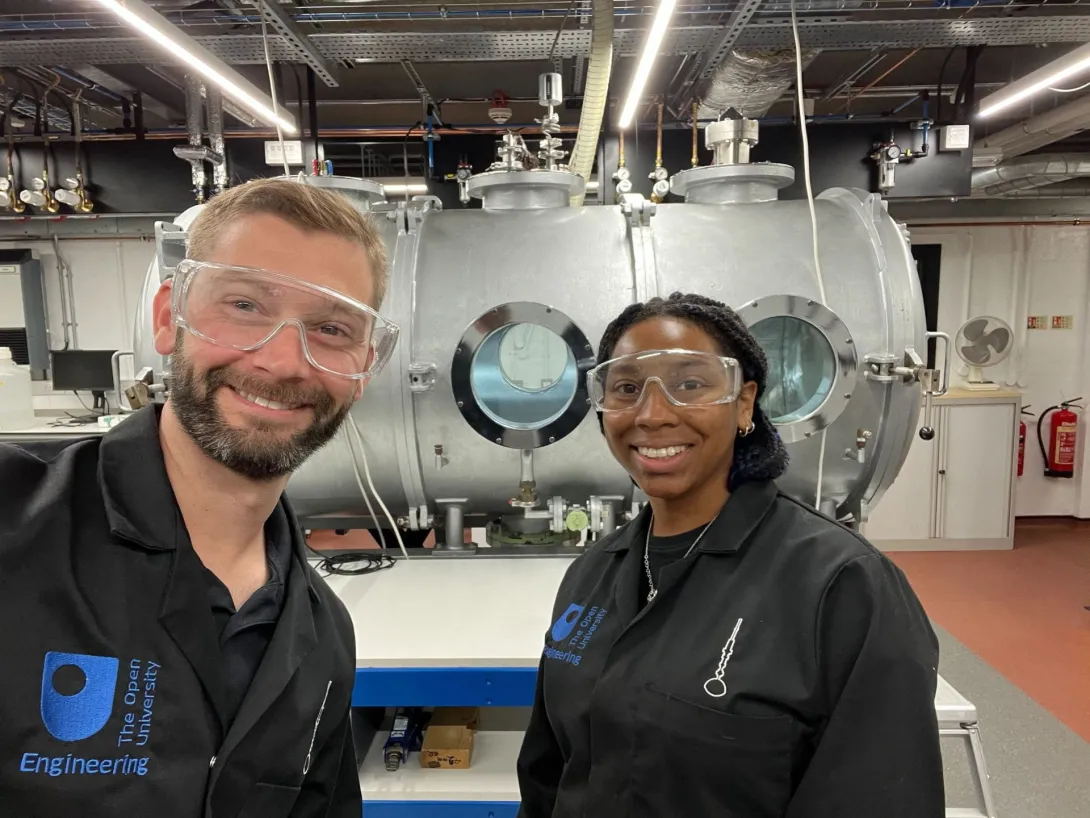
Jacob Adler (left) and Sharissa Thompson (right) conducting research.
This research is shared jointly with the Arizona State University newsroom.
The surface and atmosphere of Mars have seen many changes over its 4.5-billion-year history. While the planet's current atmosphere is very thin (about 0.6% of Earth's), it was once thick enough to sustain liquid water.
According to new research published in Communications Earth & Environment, these atmospheric changes could play a key role in how we interpret sediment deposits on the planet.
“We found that the changing pressure resulting from atmospheric changes would have produced sediment-rich water flows with varying shapes over time,” says co-author and Georgia Tech Assistant Professor Frances Rivera-Hernández, adding that since Mars’ present-day atmosphere is very thin, the associated low pressures would produce behaviors not seen on Earth.
“Earth’s thicker atmosphere means that there are higher pressures on our planet, which produce very different behaviors,” she explains. “This means that Earth analogs may not be reliable for interpreting some Martian sedimentary landscapes.”
“At low present-day pressures, Mars mud would boil and levitate if the surface temperature was warm, or freeze and flow more like lava if the temperature was cold,” adds study lead Jacob Adler, who began working on the project while a postdoctoral researcher in Rivera-Hernández’s PLANETAS Lab at Georgia Tech, and continued the study in his current role as an assistant research professor in Arizona State University's School of Earth and Space Exploration.
The team also included Georgia Tech Ph.D. student and current PLANETAS Lab member Sharissa Thompson, along with researchers from the Open University and Czech Academy of Sciences.
“This study adds a critical layer of nuance to analogue research,” says Rivera-Hernández. “By comparing our lab results to real Martian landforms, we can better reconstruct Mars’ past climate — leading to increasingly successful research in the future.”
Making Martian mud
In order to recreate past conditions on the red planet, the team conducted over 70 experiments in a Mars simulation chamber, testing how flowing water-sediment mixtures would be affected by the varying pressures and temperatures throughout the planet’s history.
Thompson, who specializes in understanding these types of mixtures, played a key role in interpreting the results. “As part of my Ph.D. work at Georgia Tech, I uncover how and why flow shapes evolve as pressure changes, which helped us understand how these flows could have shifted with changing pressures on Mars over time,” she says. “I’m thrilled to have contributed to the innovative flow experiments this study conducted.”
The experiments revealed that at higher atmospheric pressures, water and mud would have similar flow physics (rheology) as on Earth, indicating that some of the oldest sedimentary features on the surface should appear similar to Earth environments. In these scenarios, surface conditions may also have been more habitable for life.
On the other hand, as Mars started to lose most of its atmosphere, the dominant physics in sediment flow experiments changed to freezing and boiling. The team found that at the lower pressures Mars has experienced after the Noachian, the rheology and deposit shapes (morphology) were not at all Earth-like.
“When we mapped out where on Mars, we would expect this different behavior, we found that this opposite behavior could happen at the same time at different locations on the planet,” Adler shares. “The small-scale climate variations across Mars’ topography are enough to see these opposing effects.”
Decoding Mars' past
The research suggests that studying the specific shapes of features like sediment flows, debris flows and mudflows could help scientists better estimate climate conditions. It also highlights how laboratory experiments are a critical part of planetary science activities, as they can help scientists better interpret remote sensing and modeling results.
"By finding matching morphologies of what we see on Mars and what we see in these lab experiments, we might be able to better time-stamp the paleoclimate record,” Adler explains.
"We’ve sent rover missions to Mars largely because we find compelling remote sensing evidence of deposits formed by water or mud that could indicate a habitable environment,” he adds. “We are often eager to compare what we find to Earth analogs, but these are not always suitable for comparison. This study shows there is still much we can learn about Mars by conducting experiments under Mars conditions.”
Funding: NASA
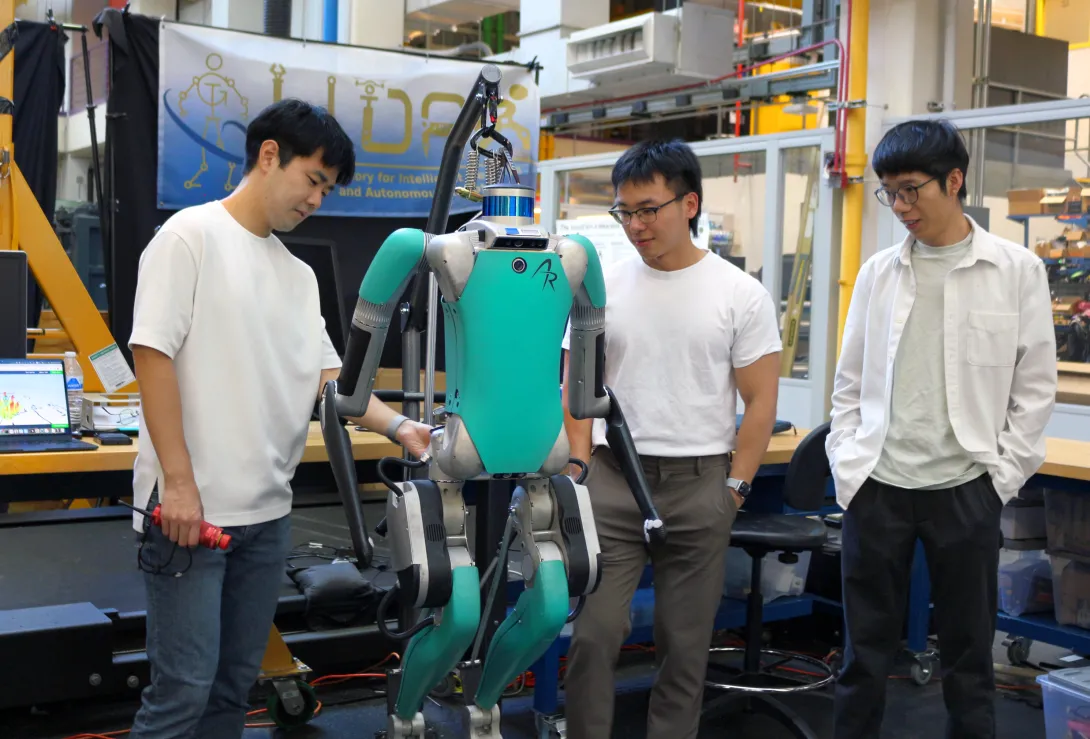
Members of the LIDAR Lab involved with the research with the DIGIT robot used in the trainings.
Viral videos abound with humanoid robots performing amazing feats of acrobatics and dance but finding videos of a humanoid robot performing a common household task or traversing a new multi-terrain environment easily, and without human control, are much rarer. This is because training humanoid robots to perform these seemingly simple functions involves the need for simulation training data that lack the complex dynamics and degrees of freedom of motion that are inherent in humanoid robots.
To achieve better training outcomes with faster deployment results, Fukang Liu and Feiyang Wu, graduate students under Professor Ye Zhao from the Woodruff School of Mechanical Engineering and faculty member of the Institute for Robotics and Intelligent Machines, have published a duo of papers in IEEE Robotics and Automation Letters. This is a collaborative work with three other IRIM affiliated faculties, Profs. Danfei Xu, Yue Chen, and Sehoon Ha, as well as Prof. Anqi Wu from School of Computational Science and Engineering.
To develop more reliable motion learning for humanoid robots and enable humanoid robots to perform complex whole-body movements in the real world, Fukang led a team and developed Opt2Skill, a hybrid robot learning framework that combines model-based trajectory optimization with reinforcement learning. Their framework integrates dynamics and contacts into the trajectory planning process and generates high-quality, dynamically feasible datasets, which result in more reliable motion learning for humanoid robots and improved position tracking and task success rates. This approach shows a promising way to augment the performance and generalization of humanoid RL policies using dynamically feasible motion datasets. Incorporating torque data also improved motion stability and force tracking in contact-rich scenarios, demonstrating that torque information plays a key role in learning physically consistent and contact-rich humanoid behaviors.
While other datasets, such as inverse kinematics or human demonstrations, are valuable, they don’t always capture the dynamics needed for reliable whole-body humanoid control.” said by Fukang Liu. “With our Opt2Skill framework, we combine trajectory optimization with reinforcement learning to generate and leverage high-quality, dynamically feasible motion data. This integrated approach gives robots a richer and more physically grounded training process, enabling them to learn these complex tasks more reliably and safely for real-world deployment. - Fukang Liu
In another line of humanoid research, Feiyang established a one-stage training framework that allows humanoid robots to learn locomotion more efficiently and with greater environmental adaptability. Their framework, Learn-to-Teach (L2T), unlike traditional two-stage “teacher-student” approaches, which first train an expert in simulation and then retrain a limited-perception student, teaches both simultaneously, sharing knowledge and experiences in real time. The result of this two-way training is a 50% reduction in training data and time, while maintaining or surpassing state-of-the-art performance in humanoid locomotion. The lightweight policy learned through this process enables the lab’s humanoid robot to traverse more than a dozen real-world terrains—grass, gravel, sand, stairs, and slopes—without retraining or depth sensors.
By training an expert and a deployable controller together, we can turn rich simulation feedback into a lightweight policy that runs on real hardware, letting our humanoid adapt to uneven, unstructured terrain with far less data and hand-tuning than traditional methods. - Feiyang Wu
By the application of these training processes, the team hopes to speed the development of deployable humanoid robots for home use, manufacturing, defense, and search and rescue assistance in dangerous environments. These methods also support advances in embodied intelligence, enabling robots to learn richer, more context-aware behaviors.Additionally, the training data process can be applied to research to improve the functionality and adaptability of human assistive devices for medical and therapeutic uses.
As humanoid robots move from controlled labs into messy, unpredictable real-world environments, the key is developing embodied intelligence—the ability for robots to sense, adapt, and act through their physical bodies,” said Professor Ye Zhao. “The innovations from our students push us closer to robots that can learn robust skills, navigate diverse terrains, and ultimately operate safely and reliably alongside people. - Prof. Ye Zhao
Author - Christa M. Ernst
Citations
Liu F, Gu Z, Cai Y, Zhou Z, Jung H, Jang J, Zhao S, Ha S, Chen Y, Xu D, Zhao Y. Opt2skill: Imitating dynamically-feasible whole-body trajectories for versatile humanoid loco-manipulation. IEEE Robotics and Automation Letters. 2025 Oct 13.
Wu F, Nal X, Jang J, Zhu W, Gu Z, Wu A, Zhao Y. Learn to teach: Sample-efficient privileged learning for humanoid locomotion over real-world uneven terrain. IEEE Robotics and Automation Letters. 2025 Jul 23.
News Contact
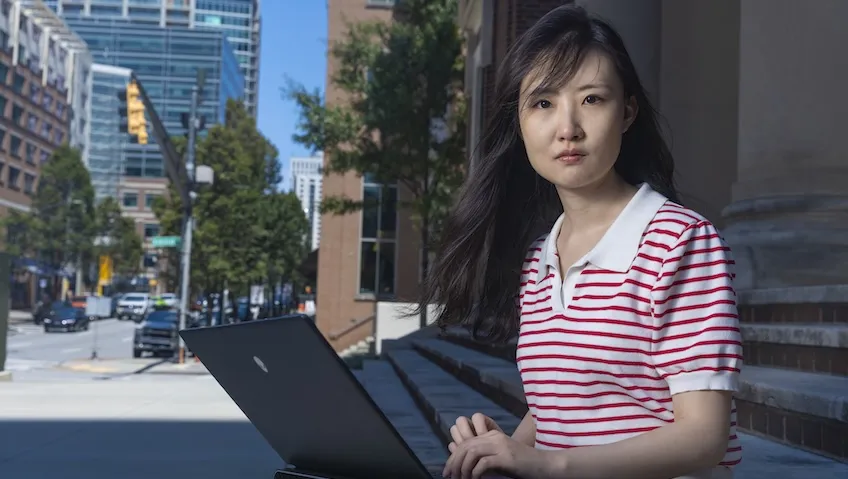
311 chatbots make it easier for people to report issues to their local government without long wait times on the phone. However, a new study finds that the technology might inhibit civic engagement.
311 systems allow residents to report potholes, broken fire hydrants, and other municipal issues. In recent years, the use of artificial intelligence (AI) to provide 311 services to community residents has boomed across city and state governments. This includes an artificial virtual assistant (AVA) developed by third-party vendors for the City of Atlanta in 2023.
Through survey data, researchers from Tech’s School of Interactive Computing found that many residents are generally positive about 311 chatbots. In addition to eliminating long wait times over the phone, they also offer residents quick answers to permit applications, waste collection, and other frequently asked questions.
However, the study, which was conducted in Atlanta, indicates that 311 chatbots could be causing residents to feel isolated from public officials and less aware of what’s happening in their community.
Jieyu Zhou, a Ph.D. student in the School of IC, said it doesn’t have to be that way.
Uniting Communities
Zhou and her advisor, Assistant Professor Christopher MacLellan, published a paper at the 2025 ACM Designing Interactive Systems (DIS) Conference that focuses on improving public service chatbot design and amplifying their civic impact. They collaborated with Professor Carl DiSalvo, Associate Professor Lynn Dombrowski, and graduate students Rui Shen and Yue You.
Zhou said 311 chatbots have the potential to be agents that drive community organization and improve quality of life.
“Current chatbots risk isolating users in their own experience,” Zhou said. “In the 311 system, people tend to report their own individual issues but lose a sense of what is happening in their broader community.
“People are very positive about these tools, but I think there’s an opportunity as we envision what civic chatbots could be. It’s important for us to emphasize that social element — engaging people within the community and connecting them with government representatives, community organizers, and other community members.”
Zhou and MacLellan said 311 chatbots can leave users wondering if others in their communities share their concerns.
“If people are at a town hall meeting, they can get a sense of whether the problems they are experiencing are shared by others,” Zhou said. “We can’t do that with a chatbot. It’s like an isolated room, and we’re trying to open the doors and the windows.”
Adding a Human Touch
In their paper, the researchers note that one of the biggest criticisms of 311 chatbots is they can’t replace interpersonal interaction.
Unlike chatbots, people working in local government offices are likely to:
- Have direct knowledge of issues
- Provide appropriate referrals
- Empathize with the resident’s concerns
MacLellan said residents are likely to grow frustrated with a chatbot when reporting issues that require this level of contextual knowledge.
One person in the researchers’ survey noted that the chatbot they used didn’t understand that their report was about a sidewalk issue, not a street issue.
“Explaining such a situation to a human representative is straightforward,” MacLellan said. “However, when the issue being raised does not fall within any of the categories the chatbot is built to address, it often misinterprets the query and offers information that isn’t helpful.”
The researchers offer some design suggestions that can help chatbots foster community engagement and improve community well-being:
- Escalation. Regarding the sidewalk report, the chatbot did not offer a way to escalate the query to a human who could resolve it. Zhou said that this is a feature that chatbots should have but often lack.
- Transparency. Chatbots could provide details about recent and frequently reported community issues. They should inform users early in the call process about known problems to help avoid an overload of user complaints.
- Education. Chatbots can keep users updated about what’s happening in their communities.
- Collective action. Chatbots can help communities organize and gather ideas to address challenges and solve problems.
“Government agencies may focus mainly on fixing individual issues,” Zhou said, “But recognizing community-level patterns can inspire collective creativity. For example, one participant suggested that if many people report a broken swing at a playground, it could spark an initiative to design a new playground together—going far beyond just fixing it.”
These are just a few examples of things, the researchers argue, that 311 services were originally designed to achieve.
“Communities were already collaborating on identifying and reporting issues,” Zhou said. “These chatbots should reflect the original intentions and collaboration practices of the communities they serve.
“Our research suggests we can increase the positive impact of civic chatbots by including social aspects within the design of the system, connecting people, and building a community view.”
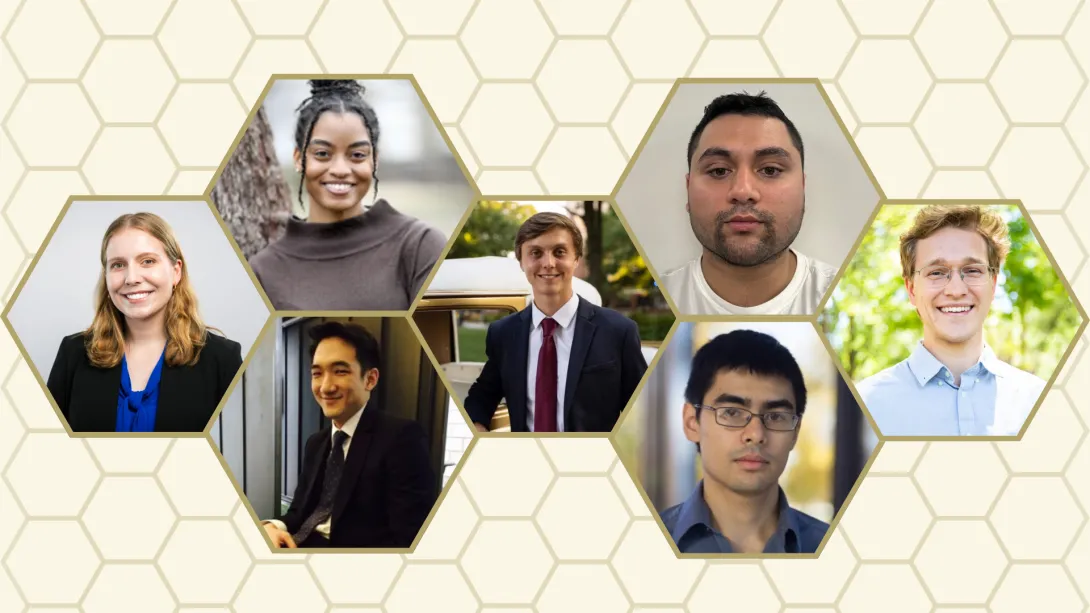
From the Left: Anna Raymaker, Talia Thomas, John Kim, Kristian Lockyear, Daksh Adhikari, Alex Magalhaes, and Douglas Lars Nelson.
The Strategic Energy Institute and the Energy, Policy, and Innovation Center at the Georgia Institute of Technology have announced the recipients of this year’s James G. Campbell Fellowship and Spark Awards.
Kristian Lockyear, a doctoral student in the Sustainable Systems Thermal Lab, received the Campbell Fellowship, which recognizes a Georgia Tech graduate student conducting outstanding research in renewable energy systems. Candidates are nominated by their advisors for exceptional academic achievement in the field.
Lockyear’s research, advised by Professor Srinivas Garimella in the George W. Woodruff School of Mechanical Engineering, centers on developing a biomass-powered adsorption cooling system to address food supply shortages in the cold chain and enable vaccine delivery to remote regions. He also holds a bachelor’s degree in chemical and biomolecular engineering from Georgia Tech and is committed to advancing sustainable cooling technologies that improve access in developing areas and promote global energy equity.
The Spark Award honors Georgia Tech graduate students who have demonstrated exceptional leadership in advancing student engagement with energy research, along with a strong record of service and broader impact. This year’s recipients are Daksh Adhikari, John Kim, Douglas Lars Nelson, Alex Magalhaes, Anna Raymaker, and Talia Thomas. “This year saw one of the largest pools of applications for the annual awards,” said Jordann Britt, SEI’s program coordinator, who led the selection process. “Awardees were thoughtfully chosen based on research excellence, a strong record of service, and projects demonstrating broader impact on advancing renewable energy. Through these scholarships, we hope to encourage and support students as they grow into future leaders in the energy industry.”
Daksh Adhikari is a second-year doctoral student in mechanical engineering working in the MiNDS Lab. His research focuses on increasing the adoption of two-phase thermal management techniques in artificial intelligence data centers to reduce water consumption. Adhikari is developing machine learning-based control systems to manage the unstable regions inherent in two-phase cooling processes. Outside of the lab, he enjoys playing guitar and exploring scientific topics related to space.
John Kim is a doctoral candidate in public policy, advised by Professor Daniel Matisoff. His research examines the distributional effects of environmental and energy infrastructure challenges, with a focus on grid resilience, public safety, and environmental justice. Kim’s broader research agenda includes analyzing inequities in power grid restoration, the economic impacts of EPA Superfund cleanups, and the socioeconomic drivers of electric vehicle adoption.
Douglas Lars Nelson is a fifth-year doctoral candidate at the School of Materials Science and Engineering, advised by Professor Matthew McDowell. His research uses advanced characterization techniques to quantify degradation in next-generation battery materials, contributing to the development of safer, high-energy batteries. Nelson earned his undergraduate degree in materials science and engineering from Clemson University.
Alex Magalhaes is a master’s student in computational science and engineering, advised by Professor Qi Tang. His research centers on developing scalable, high-fidelity numerical algorithms to simulate plasma confinement and equilibrium in nuclear fusion reactors. Magalhaes holds a bachelor’s degree in physics from Wesleyan University and previously worked as a data scientist at Quantiphi. He plans to pursue a doctorate in computational plasma physics. In his free time, he enjoys rock climbing, which he’s done at Yosemite and Grand Teton National Park.
Anna Raymaker is a doctoral student in the School of Electrical and Computer Engineering, advised by Professor Saman Zonouz. Her research focuses on securing critical infrastructure by identifying and mitigating cyber risks in systems, such as maritime networks and distributed energy resources. Raymaker leads a U.S. Department of Energy-aligned initiative to locate exposed solar inverters worldwide and assess their impact on operational power grids. She currently serves as president of the Graduate Student Association for the School of Cybersecurity and Privacy.
Talia Thomas is a doctoral candidate in mechanical engineering working in the McDowell Lab. Her research focuses on sustainable carbon materials for next-generation lithium- and sodium-ion batteries by using biomass precursors such as lignin and cellulose to develop high-performance anodes. Thomas also integrates life cycle and techno-economic assessments to evaluate scalability and environmental impact. She is an active leader in the graduate community, organizing initiatives that promote inclusion and student engagement. Before graduate school, she worked as a maintenance engineer at Dow and as a chemistry research associate at Zymergen.
Written by: Katie Strickland.
News Contact
Priya Devarajan || SEI Communications Program Manager
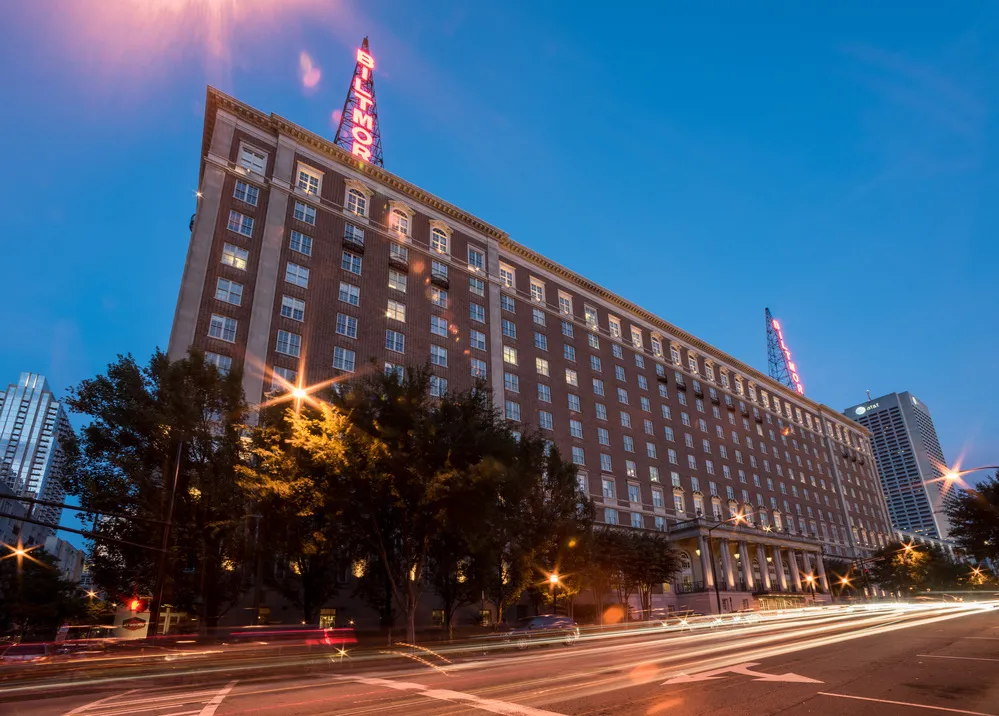
The historic Biltmore will house co-working space for Velocity Startups.
Today, Velocity Startups joins Georgia Tech’s comprehensive commercialization ecosystem, solidifying the Institute’s role as a national leader and premier hub for research commercialization and startup growth. Velocity Startups serves as a bridge between early-stage startup founders who are focused on scaling their businesses and readying themselves for late-stage accelerators such as the Advanced Technology Development Center (ATDC), Engage, Fusen, and Atlanta Tech Village within the City of Atlanta.
To support emergent startups, the early-stage accelerator will establish a collaborative facility at The Biltmore in Atlanta’s Tech Square, the national innovation district and dedicated area in the city that fosters community growth and meaningful innovation at the heart of the city’s tech scene.
“Atlanta is where innovation becomes opportunity, and Velocity Startups will make that journey even faster,” said Donnie Beamer, senior technology advisor in the Atlanta Mayor’s Office of Technology and Innovation. “By connecting entrepreneurs to the critical resources they need to scale, we are fueling more startups, creating more jobs, and driving economic growth. Ultimately, this will secure Atlanta’s place as a top global destination for innovation, investment, and entrepreneurial success.”
As an early-stage accelerator, Velocity Startups provides resources — including mentorship support, space, tools, networks, and infrastructure — to Georgia Tech students, faculty, researchers, and the greater Atlanta community, bridging the gap from spinoff to viable startup. At Georgia Tech, many startups that complete the CREATE-X Startup Launch program and present at the Demo Day event will gain access to Velocity Startups. The accelerator will also offer strategic programming, funding, and access to Georgia Tech’s research resources and serve as a coordinating entity for Metro Atlanta’s entrepreneurial ecosystem, engaging more than 50 colleges and advocating for policies that support startup success.
“Velocity Startups represents a pivotal step in bringing together the resources, expertise, and entrepreneurial spirit within our ecosystems as we look to further establish Atlanta as a top national tech hub. By uniting these elements, Velocity Startups will help startups scale from their first customer to long-term growth,” said Raghupathy “Siva” Sivakumar, vice president of commercialization and chief commercialization officer at Georgia Tech and president of Georgia Advanced Technology Ventures. “This accelerator enables the communities at Georgia Tech and beyond to translate groundbreaking research into high-impact ventures.”
Velocity Startups is a subsidiary of Georgia Advanced Technology Ventures and will operate in partnership with the City of Atlanta. A national search is currently underway for a director to lead the accelerator.
For additional information about Velocity Startups, visit commercialization.gatech.edu/velocity.
News Contact
Georgia Parmelee
Director of Communications
Office of Commercialization
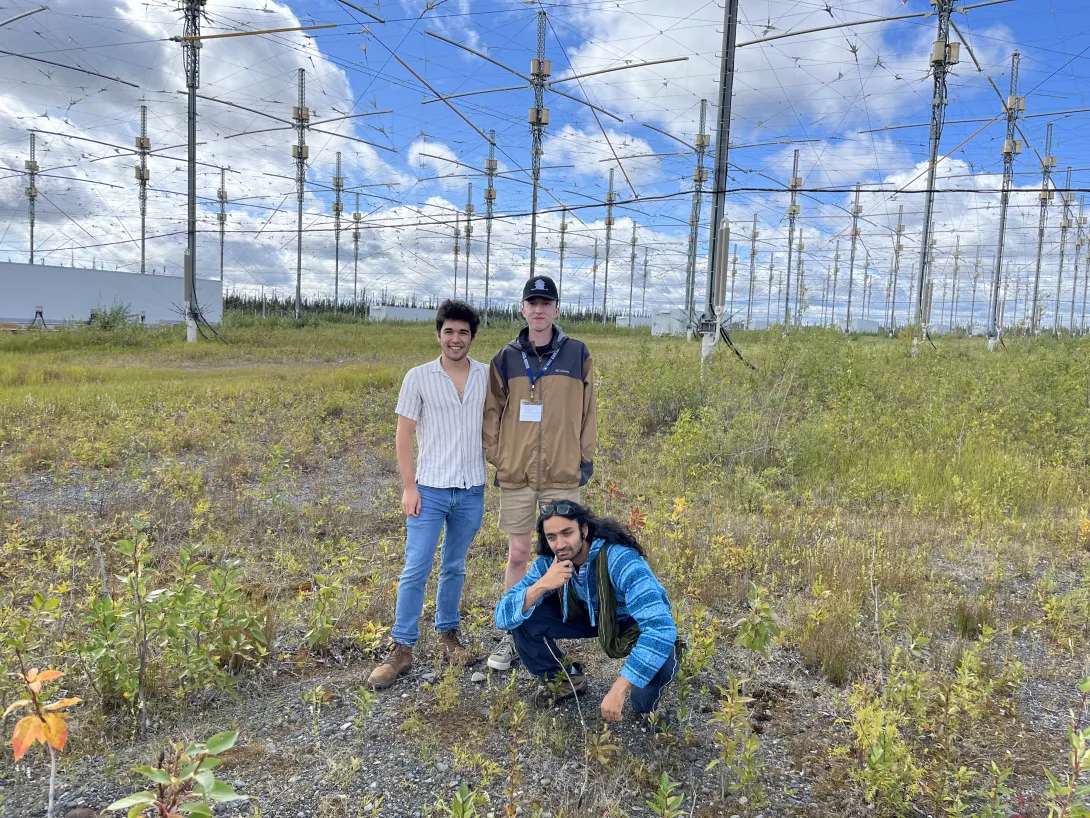
Home to some of the best geophysical research facilities in the country, Alaska is a premier destination for scientific exploration. It’s become a popular destination for Georgia Tech students and researchers, especially those in Professor Morris Cohen’s Low Frequency Radio Lab.
School of Electrical and Computer Engineering (ECE) Ph.D. students Gus Richter, Malhar Tamhane, and Felipe Sandoval are the latest to make the trip to the “Last Frontier” as they work to push the boundaries of atmospheric research. The trio participated in the 2025 Polar Aeronomy and Radio Science (PARS) summer school program held in August at the University of Alaska Fairbanks and the High-frequency Active Auroral Research Program (HAARP).
Read the full story on the School of Electrical and Computer Engineering's website.
News Contact
Zachary Winiecki
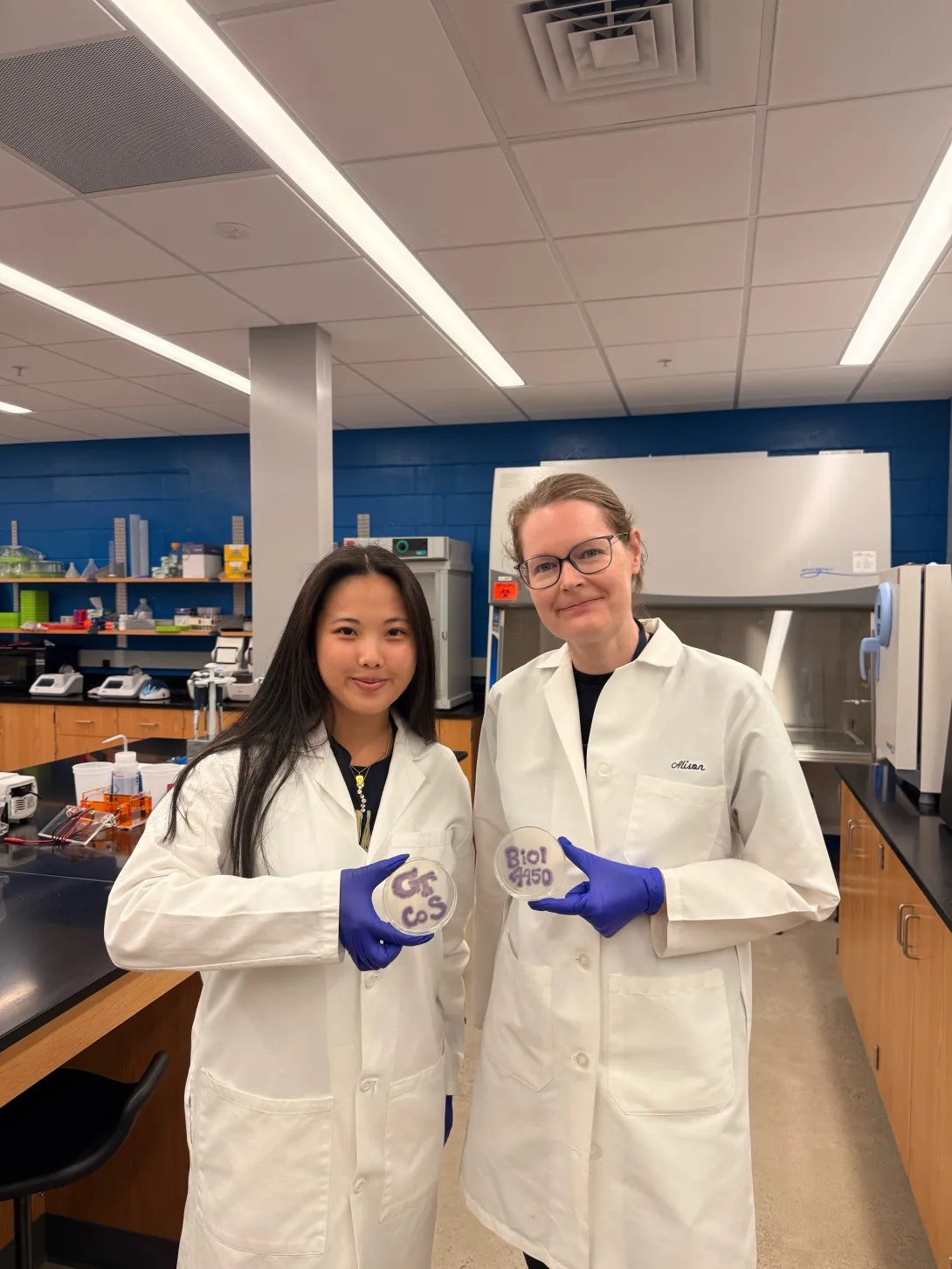
Grace Tang (Left) and Alison Onstine (Right) holding bacteria plates that spell "BIOL 4590" (Credit: Tang and Onstine)
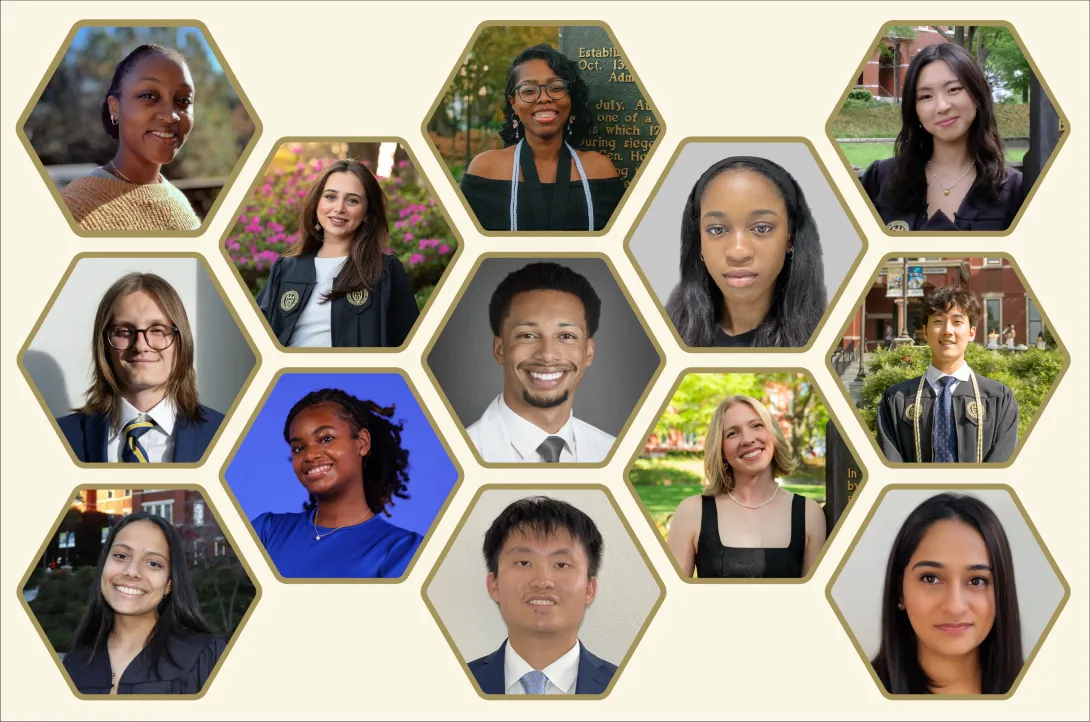
A collection of the undergraduate students who co-authored the paper. (Credit: Tang and Onstine)
This fall, 20 Georgia Tech students published a peer-reviewed scientific paper — the culmination of work done during a semester-long laboratory course. During the semester, students analyzed genomes sequenced from marine samples collected in Key West, Florida — doing hands-on original bioinformatics research on par with graduate students and working with bioinformatics tools to explore drug discovery potential.
The course, BIOS 4590, is a research project lab for senior biology majors that provides an opportunity for professors to share their expertise with students in a hands-on environment. In his class, Associate Professor Vinayak (Vinny) Agarwal, who holds joint appointments in the School of Chemistry and Biochemistry and School of Biological Sciences, aimed to introduce undergraduates to advanced bioinformatics tools through applied research using new-to-science raw data.
The resulting paper, “Phylogenomic Identification of a Highly Conserved Copper-Binding RiPP Biosynthetic Gene Cluster in Marine Microbulbifer Bacteria,” which was recently published in ACS Chemical Biology, involves the historically understudied genus of Microbulbifer, a type of bacteria often associated with sponges and corals. These microbial communities are rich sources of natural products, small biological molecules often associated with medicine and drug discovery.
"This class, and the resulting research, is a testament to the transformative power of hands-on learning,” says Susan Lozier, dean of the College of Sciences, Betsy Middleton and John Clark Sutherland Chair, and professor in the School of Earth and Atmospheric Sciences. “The success of this course — and the students’ remarkable achievement — reflects Georgia Tech's commitment to fostering curiosity, collaboration, and scientific rigor and to empowering the next generation of scientists and leaders."
Funded by Agarwal’s 2023 National Science Foundation CAREER grant and Camille and Henry Dreyfus Foundation Teacher-Scholar award, the class also received support from leadership in the College of Sciences, School of Biological Sciences, and School Chemistry and Biochemistry. The study’s lead author, graduate student Yifan (Grace) Tang, served as the class teaching assistant, and was funded in part by a Biochemistry and Biophysics Graduate Assistance in Areas of National Need fellowship.
“The students in this class are working on important, novel work — this cohort worked with real genomic data that had never been sequenced before,” she says. “Typically, researchers might work with one or two genome sequences, but we provided students with 42 — this might be the first time anyone has looked at Microbulbifer at such a wide scope.”
From classroom to publication
To prepare for the class, Tang worked alongside Laboratory Manager Alison Onstine, who manages the School of Biological Sciences teaching laboratory spaces, to sequence the Key West bacterial genomes.
“Our work in the Agarwal Lab is in natural product discovery. We focus on finding new pharmaceutical drugs through marine bacteria — but with a bioinformatics spin,” Tang explains. “We wanted to bring this type of experience to undergraduates, so we gave fully sequenced genomes to students and asked them to look for potential properties.”
Throughout the class, students learned different techniques for analyzing bacterial genome sequences and extracting data with various tools — gaining both lab and computational skills through hands-on experiences, live demos, and troubleshooting sessions.
“The highlight was showing students just how much we can learn about a bacterial genus, especially one that hasn’t been studied at this scale before,” Tang shares. “This is a growing field, so there are so many opportunities for students to make meaningful contributions while learning new skills.”
Empowering future students
For many students, it was their first time using these types of tools, but Agarwal says that it’s something they'll likely encounter in both industry and research. He sees this type of research experience as especially helpful for seniors, who are often deciding between entering the workforce or continuing their education.
“Bioinformatics is increasingly important for analyzing big data. Students need the ability to manipulate and understand data using computational tools, and this class plays an important role in familiarizing them with this process,” he shares. “Our goal is to demystify research and give students the confidence and tools for both graduate school and for the workforce after graduation.”
The class will be offered for a third time in Fall 2026. While the exact course of research hasn’t yet been decided, “we always aim for something new that can produce publication-quality research — students don’t repeat past year’s work,” Agarwal says. This recent cohort of students built on the success of 18 undergraduates who took the class in 2023, who also published a paper. “This course truly underscores Georgia Tech’s commitment to pioneering meaningful undergraduate experiences — no other peer institution I know of is exposing undergraduates to bioinformatics at this level.”
Funding: NSF CAREER and the Dreyfus Foundation
News Contact
Written by Selena Langner
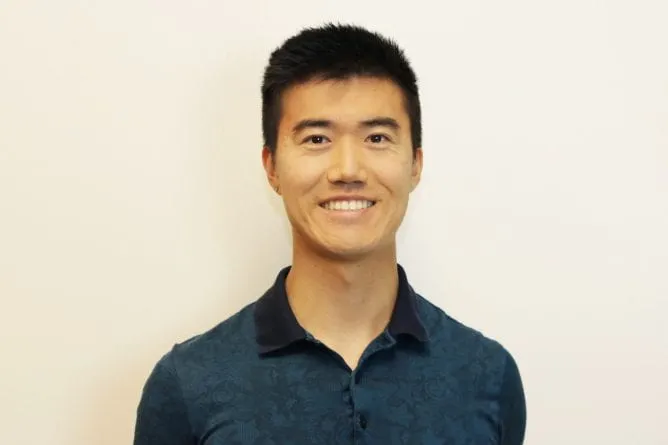
Jaden Wang
Georgia Tech’s Jaden Wang (Zhuochen Wang) has been awarded a NASA Space Technology Graduate Research Opportunity (NSTGRO). The grant supports graduate students who “show significant potential to contribute to NASA’s goal of creating innovative new space technologies for our nation’s science, exploration, and economic future.”
Wang, who is a Ph.D. student in the School of Mathematics and a master’s student in the Daniel Guggenheim School of Aerospace Engineering, will focus on developing mathematically-backed landing solutions for spacecraft.
“I first became interested in powered descent problems during my Fall 2024 internship with NASA’s Human Landing System at Marshall Space Flight Center,” he says. “With my mathematical background in optimization and topology, and my passion for space exploration, I saw this research topic as a perfect fit when my co-advisor Dr. Panagiotis Tsiotras suggested it.”
Wang is co-advised by School of Mathematics Professor and Hubbard Research Fellow John Etnyre alongside Panagiotis Tsiotras, who holds the David and Andrew Lewis Endowed Chair in the Daniel Guggenheim School of Aerospace Engineering and is also associate director at the Institute for Robotics and Intelligent Machines.
In addition to his Georgia Tech advisors, Wang will collaborate with a NASA Subject Matter Expert, who will connect him with the larger technical community. He will perform part of the research as a visiting technologist at multiple NASA centers, giving him the opportunity to work with leading engineers and scientists and share his research results directly with the NASA community.
From abstractions to space exploration
“NASA’s upcoming missions to the Moon, Mars, and beyond need technology that allows spacecraft to land precisely at their intended sites,” says Wang. “My research will focus on the last stage of landing, called powered descent. This stage powers up engines, which guide the spacecraft into a safe landing using a pre-designed trajectory that autopilot follows.”
This means that researchers need to figure out the correct thrust, direction, and timing to reach a landing spot — all while navigating a landing that uses as little fuel as possible.
“A common approach is to treat this as an optimization problem: minimizing fuel consumption with rigid-body physics as constraints to determine the best thrust profile,” Wang explains. “This can work well, but it has drawbacks. It assumes that there is no uncertainty in the system (for example, that the thrust of the engines is applied perfectly) and it simplifies the motion of the spacecraft by treating it as though it’s traveling through flat space instead of on a true curved geometry. Both shortcuts introduce errors — our research aims to address these gaps.”
To improve landing precision, Wang will develop a curved-space geometric mathematical model, which takes into account the curved-space geometry of spacecraft motion rather than assuming flat space. To find a fuel-efficient landing trajectory, Wang will develop the model around optimal covariance steering, a stochastic control problem that both minimizes fuel costs while keeping the uncertainty of the spacecraft's exact landing spot within a safe amount.
It’s a problem that leverages his experience in theoretical math and his background in aerospace engineering. “I’m incredibly honored that NASA finds this research exciting and is supporting my pursuit of it,” he says. “There are so many fascinating engineering problems that could benefit from deeper theoretical scrutiny, especially using abstract machineries not typically covered in an engineering curriculum. I hope this inspires more theoretical researchers and graduate students to explore bridging these gaps.”
News Contact
Written by Selena Langner
The Strategic Energy Institute and the Energy Policy and Innovation Center at Georgia Tech are pleased to announce that applications are now open for two graduate student fellowships this fall.
The James G. Campbell Fellowship is designed to support Georgia Tech graduate students conducting research in the field of renewable energy and provides a $1,500 award.
The annual SPARK award is given to current Georgia Tech graduate students who have demonstrated outstanding leadership in advancing student engagement with energy research and with evidence of broader impacts and service or leadership. The number of SPARK awards is variable, depending on funding.
To be eligible, student applicants must be U.S. citizens or permanent residents and currently writing a thesis or dissertation focused on renewable energy.
The application deadline is Sept. 4, 2025.
Applicants must submit the following materials to the Energy Comments Mailbox of the Strategic Energy Institute:
- A brief cover letter (one to two paragraphs) explaining their motivation for studying their academic discipline and what they hope to accomplish in the field.
- Their full name, GTID number, anticipated graduation date, and field of research.
- A current resume.
- In addition, a one-page letter of nomination from a faculty member must be submitted separately to the same mailbox. Graduate students are strongly encouraged to begin the process of securing this nomination letter as early as possible.
These fellowships offer a valuable opportunity to gain recognition and support for work in renewable energy. All eligible graduate students are encouraged to apply and take the next step in advancing their academic and professional goals.
News Contact
Priya Devarajan || SEI Communications Program Manager
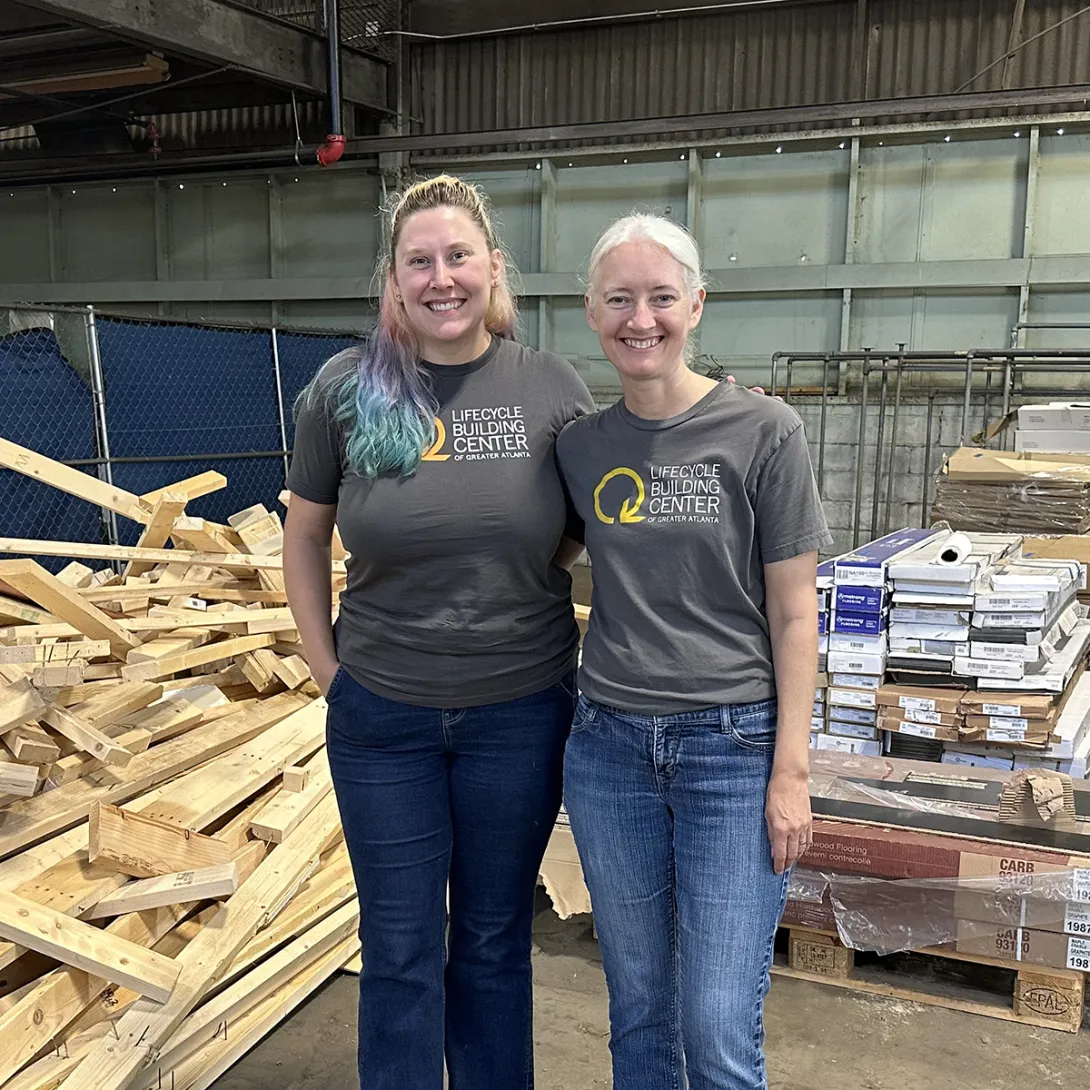
Georgia Tech intern Morgan Hale and Lifecyle Building Center Executive Director Shannon Goodman
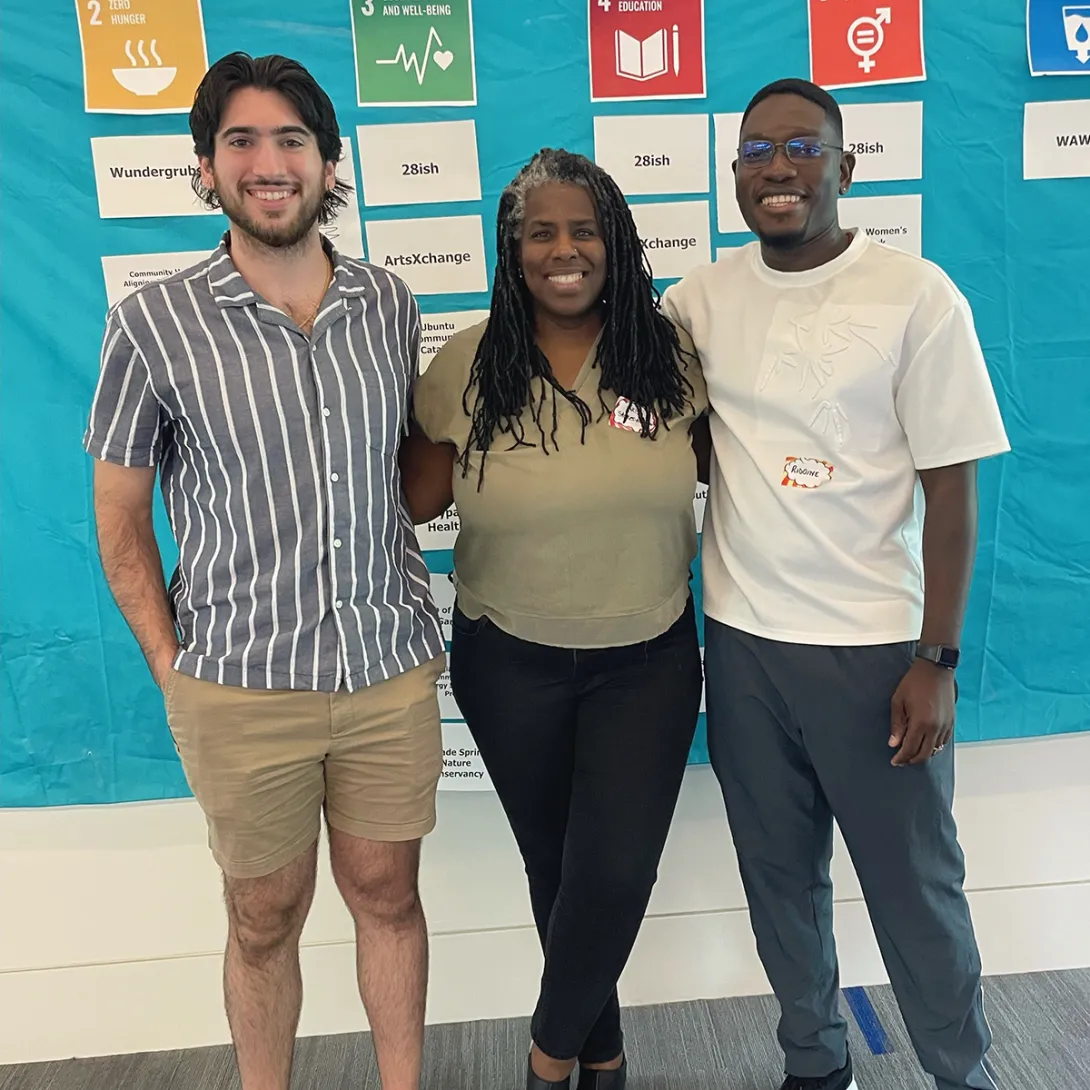
Left to right: Nathanael Sancinito, Akissi Stokes-Nelson, and Ridoine Idrissou at the SCoRE internship closing session.
Every summer for the last eight years, Georgia Tech students, from engineering and computer science to sustainable energy and environmental management, have lent their talents and creative energy to metro Atlanta sustainability-oriented organizations to increase their capacity in the community.
The Sustainable Communities Summer Internship Program in the Center for Sustainable Communities Research and Education (SCoRE) taps students from across the Institute, who gain real-world experience in both sustainability and community engagement, while participating partners scale their operations and deepen their relationship with Georgia Tech.
“It is a nontraditional internship, but it is so effective,” says Kristina Chatfield, director of business administration for the Brook Byers Institute for Sustainable Systems (BBISS), who manages the operational components of the program.
Impact on Atlanta’s Sustainability Community
Now in its eighth summer, the program has placed more than 200 students with over 60 Atlanta community organizations. Many return year after year, like WunderGrubs, an Atlanta-based insect farm that wants to bring a sustainable, nutritious form of protein to communities.
“I can’t overstate the value that Georgia Tech students bring to our company every summer through the SCoRE internship program,” says CEO and co-founder Akissi Stokes-Nelson, explaining that WunderGrubs’ mission is rooted in food equity and social impact. “We’re constantly innovating to support smallholder farmers, develop educational programs, and expand our reach both locally and globally. The SCoRE interns have been instrumental in helping us realize this vision.”
Stokes-Nelson says they add immediate capacity to WunderGrubs’ small team, bringing fresh perspectives and technical expertise — whether it’s developing new curricula for STEAM summer camps, introducing technology like Internet of Things (IoT) sensors and Arduino controllers, or helping the company build and scale its modular “grub shed” farming systems. She credits them with enabling her to reframe her business, pilot new programs, and even expand internationally, citing a recent partnership in Rwanda.
“What sets the Georgia Tech interns apart is their maturity, technical skill, and genuine passion for social impact. They’re not just here to learn — they’re here to contribute, innovate, and help us grow,” she says.
“The program is unique in its focus on both student development and organizational impact, particularly for underrepresented and first-generation students,” says Ruthie Yow, associate director of SCoRE, who leads partner engagement and student learning.
Georgia Tech covers all costs, including stipends for the full 12 weeks. Students take part in a seminar one evening a week to learn about grassroots sustainability innovation. They can also earn an internship course credit.
Connecting With Students in STEM
Intern Ridoine Idrissou, a computer science undergraduate at Tech, supported WunderGrubs’ “Tech Avengers” STEM summer camp. “We taught kids about cybersecurity, IoT, how to be safe online, and they learned about mealworms. They got rid of almost one ton of trash,” recalls Idrissou, who also developed IoT kits for the company’s farm sheds. “It’s not all about coding,” adds the Togo, West Africa, native. “It’s about connecting to the environment. It’s given me a whole different type of experience than I normally have as a computer science major.”
Idrissou, who has spent his last three summers interning, credits the program with giving him a chance when nobody else would. “My internship experience makes me appreciate the field I’m in, and it gives me a good idea of how to be mindful, when building software or other products, of the well-being of other people.” He plans to pursue a career in cybersecurity and system administration after he graduates next spring.
This positive internship experience isn’t the only one. Another organization benefiting from Georgia Tech’s talented students is the Lifecycle Building Center (LBC) in Atlanta.
Shannon Goodman, a Georgia Tech architecture program alumna, serves as executive director of the LBC. She considers her interns foundational to her nonprofit, which reduces waste in the built environment by salvaging materials like lumber, cabinets, flooring, and appliances, and making them available to the community, nonprofits, and for reuse in new projects. The organization runs a 70,000 square-foot warehouse and provides free materials and services to nonprofits across Atlanta.
“Our interns have been the connective tissue that helps all the different resource-constrained CEOs and community-based organizations build strong, trusted relationships with each other and lay the groundwork for our training program,” Goodman says.
Assessing the Lifecycle of Salvaged Building Materials
Morgan Hale interned at LBC while completing her graduate degree in sustainable energy and environmental management. “This internship program bridges sustainability with all the academic pathways at Georgia Tech. It does a great job of engaging students and educating them on ways to take what they're learning from school and map that into a career in sustainability,” says Hale, whose capstone project focused on the lifecycle assessment of salvaged building materials. “This internship perfectly aligned with my academic and career interests in sustainability and policy,” she adds. “And the extra workshops and networking opportunities are invaluable.”
For Goodman, education remains a key part of her team’s role. “Our job at the end of the day is helping people understand all the different types of opportunities that get lost when we just throw materials away. I don't know how we would do it without our interns. Through her capstone project, Morgan developed tools and procedures for calculating the embodied carbon and GHG emissions of the materials we salvage to create Environmental Product Declarations, or EPDs, for reclaimed materials, which don’t currently exist in the U.S. EPDs allow us to prove exactly how much better salvaged materials perform compared to new products, and will enable the material reuse industry to scale in the U.S. at a rate never seen before.”
LBC’s connection to Georgia Tech doesn’t stop with the internship program, however. “We have had countless professors from different departments of Georgia Tech bring their students here to learn about what we do, engage with us, and get materials from us,” says Goodman, noting that back in 2022, Georgia Tech was instrumental in helping her assemble community organizations like the West Atlanta Watershed Alliance and many others to form the ReBuildATL Coalition. Today, the coalition includes more than 40 nonprofits, academic institutions, industry partners, and local government agencies that empower Westside Atlanta neighborhoods.
Learn More
The Sustainable Communities Summer Internship Program is a partnership between SCoRE and the Office of Community-Based Learning. It is co-sponsored by the Brook Byers Institute for Sustainable Systems, the Strategic Energy Institute, the Renewable Bioproducts Institute, the Office of Commercialization, and the Sustainability Next initiative.
To learn more about the program, including how to contribute financially to the program or to become a participating partner, visit https://scre.research.gatech.edu/sustainable-communities-summer-internship-program.
By Anne Wainscott-Sargent
News Contact
Brent Verrill, Research Program Communications Manager, BBISS