
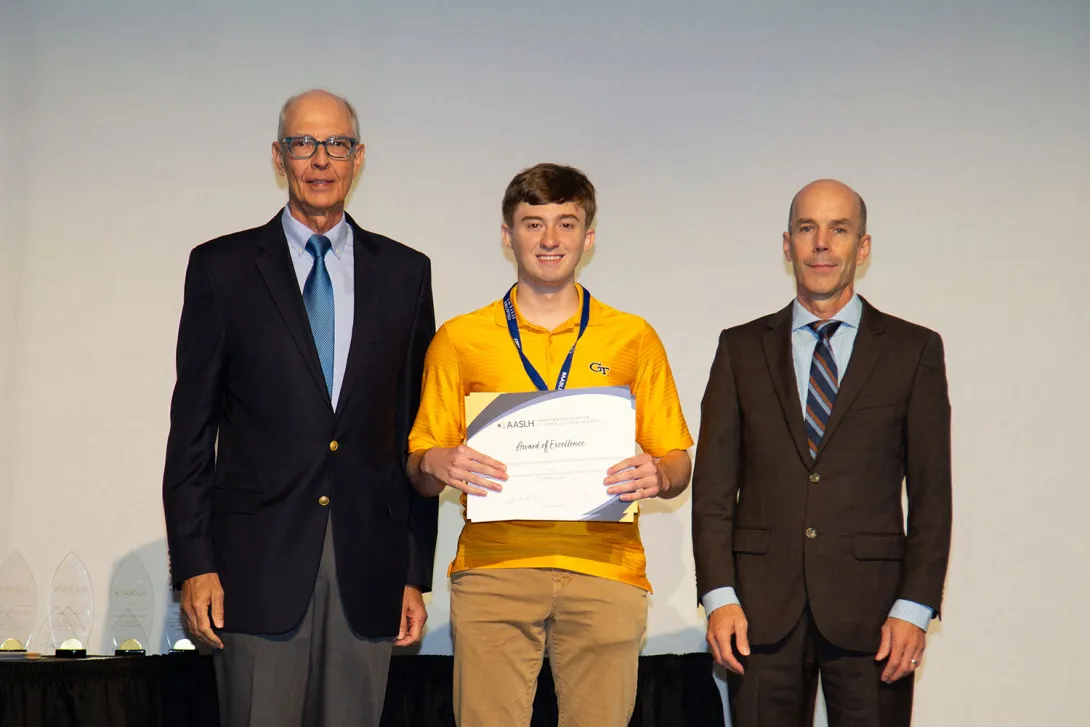
Georgia Tech student Bruce Minix accepts Award of Excellence from the American Association of State & Local History in September 2023.
Georgia Tech students played a pivotal role in the award-winning Coffee County Memory Project, an oral history initiative that preserves the stories of school desegregation in rural Georgia.
Launched in 2016, the project was supported by the Institute’s Sustainable Communities Summer Internship Program, run by the Center for Serve-Learn-Sustain (now the Center for Sustainable Communities Research and Education), in which students work full time with community partners across Atlanta and Georgia.
Beginning in 2017, trusted advisers contributed to the success of this work, including Vernon E. Jordan Jr., Christopher Lawton, Ann McCleary and G. Wayne Clough. Clough, who served as Georgia Tech’s president from 1994 to 2008, long advocated for public service, community-engaged research, and interdisciplinary teaching and learning.
In 2019, Georgia Tech students and participating interns Brice Minix and Nabil Patel combed through decades of local newspapers, digitized school board records, and conducted interviews with community members who lived in Coffee County during desegregation. In 2020, Kara Vaughan Adams and Bennett Bush transcribed countless interviews. Samina Patel’s contributions in 2020 and 2021 included graphic and web design.
All their work laid the foundation for two virtual museum exhibits: emergingVOICES of Coffee County and Overcoming Segregation: A Journey Through Coffee County’s Forgotten Stories. The latter received the 2023 Award of Excellence from the American Association of State and Local History. Further recognition came this year when the project earned the 2025 Georgia Association of Museums’ Special Project Award for the PLAYBACK & FASTFORWARD seminar series.
T. Cat Ford, Project Director said, “The Serve-Learn-Sustain interns we partnered with from Georgia Tech were all graduates of Coffee High School. Their efforts turbo-charged our work—not only because they worked tirelessly but also because, as they preserved their own history, they offered valuable insights into their lived experience of this legacy.
Click here to learn more about SCoRE’s Sustainable Communities Internship Program.
News Contact
Jennifer Martin, Assistant Director of Research Communications Services
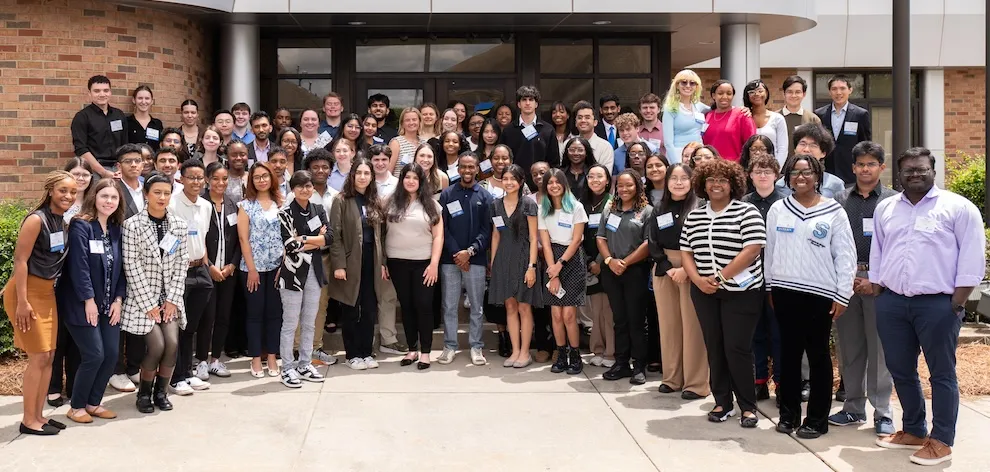
The PIN Summer Interns at the opening ceremony
The Partnership for Inclusive Innovation launched the sixth annual PIN Summer Intern (PSI) program in May with an event at Fort Valley State University’s location in Warner Robins, Georgia. The program is shaping up to be the biggest yet.
This summer, 103 students are working on 51 projects across 27 communities in Georgia, Alabama, Virginia, and Texas. Selected from nearly 700 applicants — a 73% increase over last year — these students are tackling real-world challenges ranging from AI applications in North Georgia to Native American initiatives in Whigham, Georgia, and Bracketville, Texas.
By pairing students from different years, majors and institutions, the PSI program gives the next generation of innovators hands-on experience addressing complex challenges while delivering practical solutions to communities across the region.
A collaboration with the Southeast Crescent Regional Commission (SCRC) has funded 17 projects in several counties in Middle and South Georgia and is a large part of the program’s expansion this year. The opportunity to make an impact across a broad swath of Georgia is part of why the SCRC was interested in working with PIN, said SCRC Executive Director Christopher McKinney.
News Contact
Karen Kirkpatrick (karen.kirkpatrick@innovate.gatech.edu)
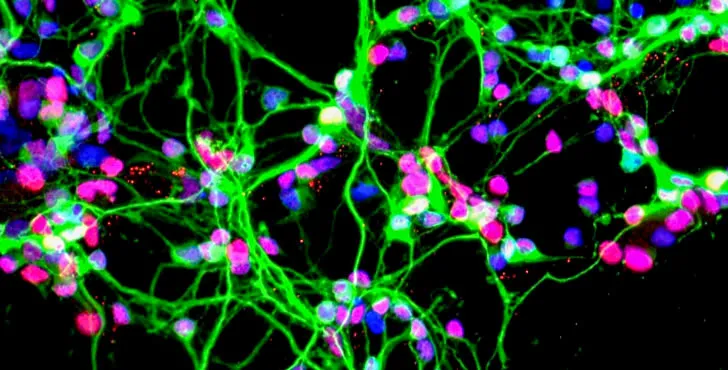
Neurons growing in a culture dish (NASA)
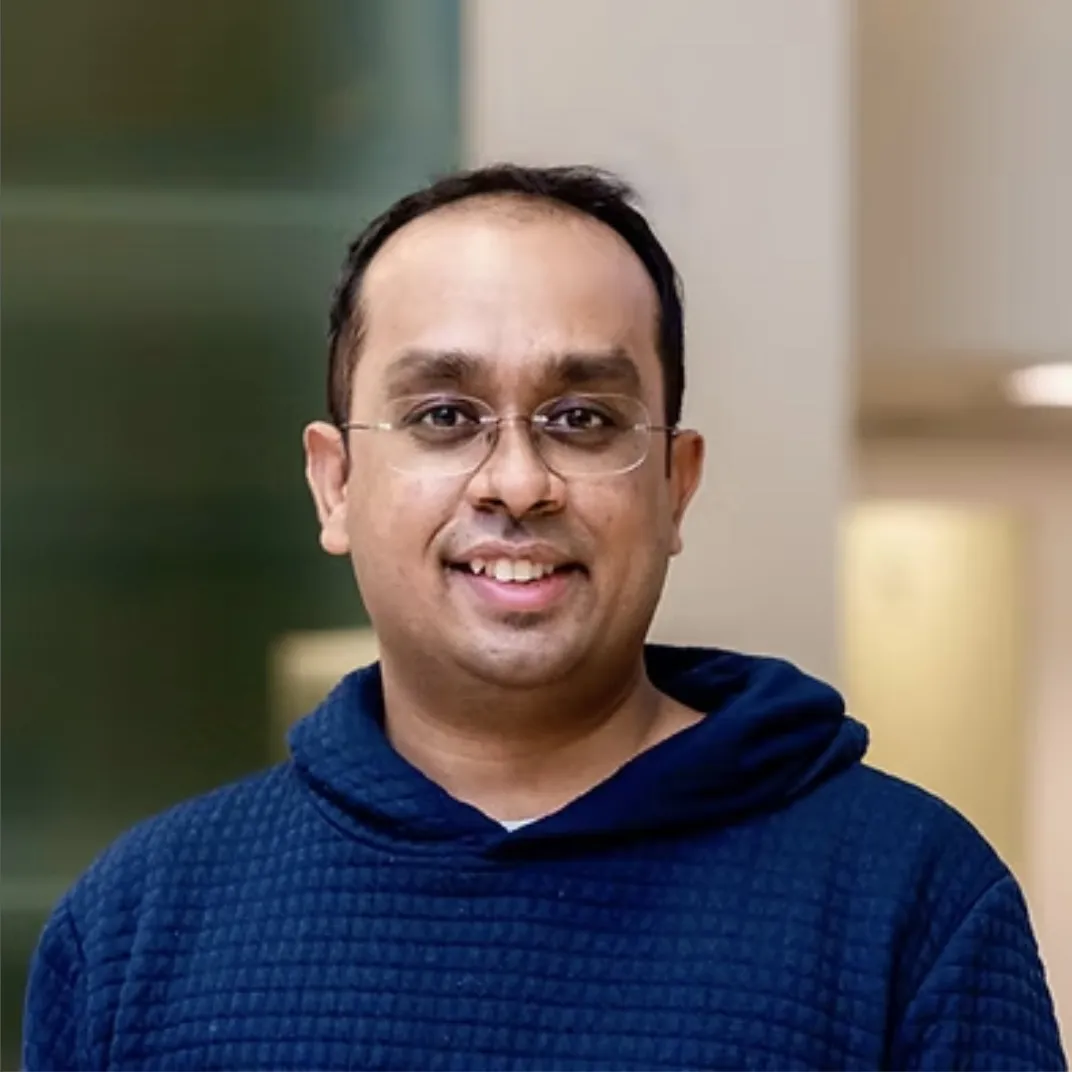
School of Psychology Assistant Professor Apurva Ratan Murty

Graduate Student Mayukh Deb
Researchers at Georgia Tech have taken a critical step forward in creating efficient, useful and brain-like artificial intelligence (AI). The key? A new algorithm that results in neural networks with internal structure more like the human brain.
The study, “TopoNets: High-Performing Vision and Language Models With Brain-Like Topography,” was awarded a spotlight at this year’s International Conference on Learning Representations (ICLR), a distinction given to only 2 percent of papers. The research was led by graduate student Mayukh Deb alongside School of Psychology Assistant Professor Apurva Ratan Murty.
Thirty-two of Tech’s computing, engineering, and science faculty represented the Institute at ICLR 2025, which is globally renowned for sharing cutting-edge research.
“We started with this idea because we saw that AI models are unstructured, while brains are exquisitely organized,” says first-author Deb. “Our models with internal structure showed more than a 20 percent boost in efficiency with almost no performance losses. And this is out-of-the-box — it’s broadly applicable to other models with no extra fine-tuning needed.”
For Murty, the research also underscores the importance of a rapidly growing field of research at the intersection of neuroscience and AI. “There's a major explosion in understanding intelligence right now,” he says. “The neuro-AI approach is exciting because it helps emulate human intelligence in machines, making AI more interpretable.”
“In addition to advancing AI, this type of research also benefits neuroscience because it informs a fundamental question: Why is our brain organized the way it is?,” Deb adds. “Making AI more interpretable helps everyone.”
Brain-inspired blueprints
In the brain, neurons form topographic maps: neurons used for comparable tasks are closer together. The researchers applied this concept to AI by organizing how internal components (like artificial neurons) connect and process information.
This type of organization has been tried in the past but has been challenging, Murty says. “Historically, rules constraining how the AI could structure itself often resulted in lower-performing models. We realized that for this type of biophysical constraint, you simply can’t map everything — you need an algorithmic solution.”
“Our key insight was an algorithmic trick that gives the same structure as brains without enforcing things that models don't respond well to,” he adds. “That breakthrough was what Mayukh (Deb) worked on.”
The algorithm, called TopoLoss, uses a loss function to encourage brain-like organization in artificial neural networks, and it is compatible with many AI systems capable of understanding language and images.
“The resulting training method, TopoNets, is very flexible and broadly applicable,” Murty says. “You can apply it to contemporary models very easily, which is a critical advancement when compared to previous methods.”
Neuro-AI innovations
Murty and Deb plan to continue refining and designing brain-inspired AI systems. “All parts of the brain have some organization — we want to expand into other domains,” Deb says. “On the neuroscience side of things, we want to discover new kinds of organization in brains using these topographic systems.”
Deb also cites possibilities in robotics, especially in situations like space exploration where resources are limited. “Imagine running a model inside a robot with limited power,” he says. “Structured models can help us achieve 80 percent of performance with just 20 percent of energy consumption, saving valuable energy and space. This is still experimental, but it's the direction we are interested in exploring.”
“This success highlights the potential of a new approach, designing systems that benefit both neuroscience and AI — and beyond,” Murty adds. “We can learn so much from the human brain, and this project shows that brain-inspired systems can help current AI be better. We hope our work stimulates this conversation.”
News Contact
Written by Selena Langner
Contact: Jess Hunt-Ralston
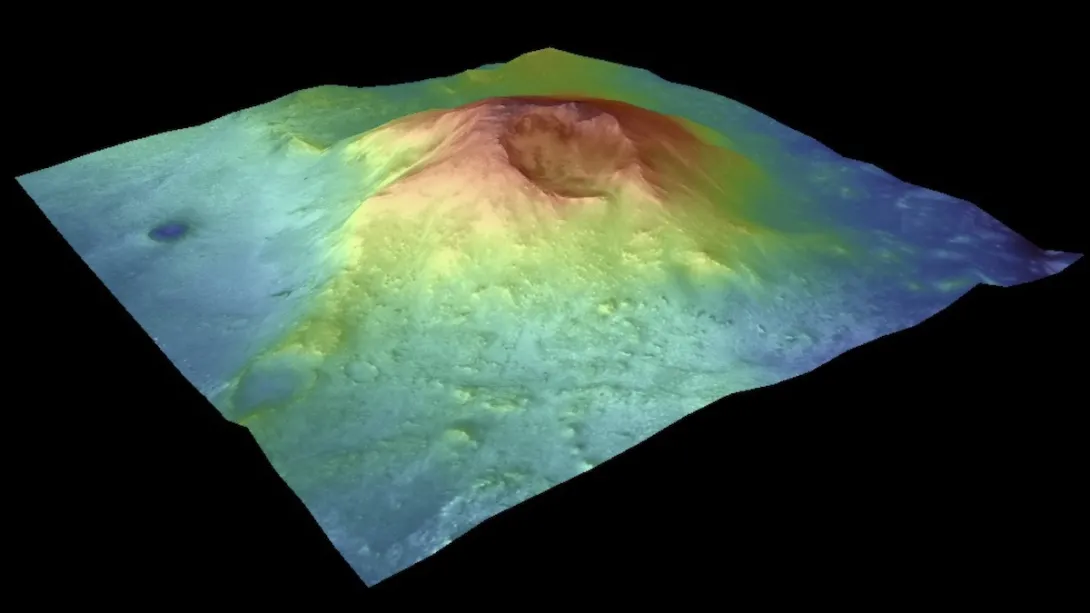
A view of Jezero Mons from the publication. The mountain is ~21 km across.

An image from the publication showing an oblique view from north-northeast of Jezero crater, with topography exaggerated ~3x
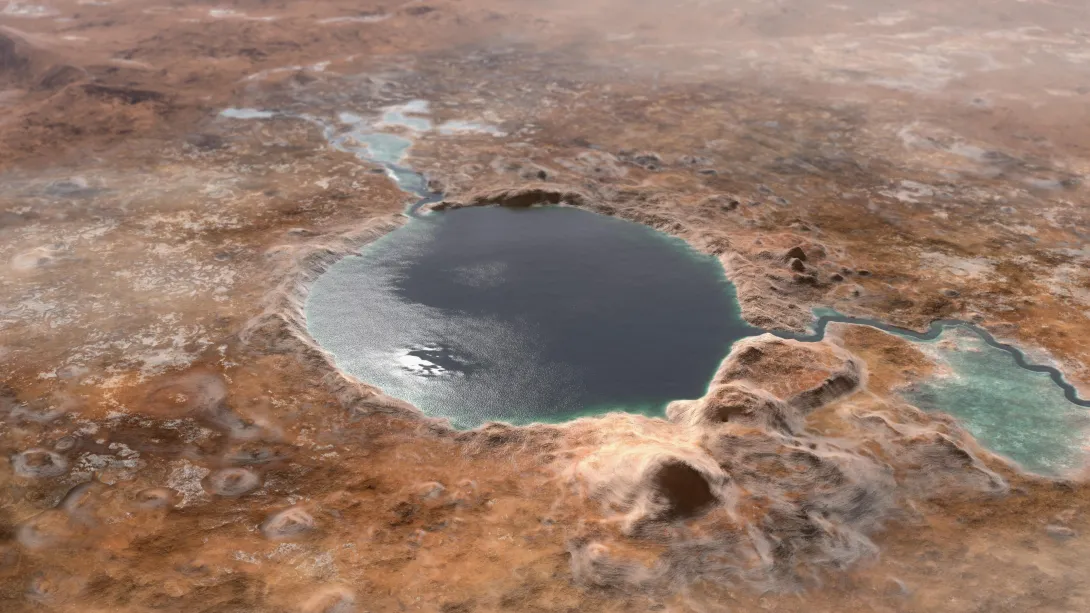
An illustration of Jezero Crater as it may have looked billions of years go on Mars, when it was a lake. Jezero Mons is visible on the front right-side of the crater rim. (Credit: NASA)
Georgia Tech scientists have uncovered evidence that a mountain on the rim of Jezero Crater — where NASA’s Perseverance Rover is currently collecting samples for possible return to Earth — is likely a volcano. Called Jezero Mons, it is nearly half the size of the crater itself and could add critical clues to the habitability and volcanism of Mars, transforming how we understand Mars’ geologic history.
The study, “Evidence for a composite volcano on the rim of Jezero crater on Mars,” was published this May in the Nature-family journal Communications Earth & Environment, and underscores how much we have left to learn about one of the most well-studied regions of Mars.
Lead author Sara C. Cuevas-Quiñones completed the research as an undergraduate during a summer program at Georgia Tech; she is now a graduate student at Brown University. The team also included corresponding author Professor James J. Wray (School of Earth and Atmospheric Sciences), Assistant Professor Frances Rivera-Hernández (School of Earth and Atmospheric Sciences), and Jacob Adler, then a postdoctoral fellow at Georgia Tech and now an assistant research professor at Arizona State University.
“Volcanism on Mars is intriguing for a number of reasons — from the implications it has on habitability, to better constraining the geologic history,” Wray says. “Jezero Crater is one of the best studied sites on Mars. If we are just now identifying a volcano here, imagine how many more could be on Mars. Volcanoes may be even more widespread across Mars than we thought.”
A mountain in the margins
Wray first noticed the mountain in 2007, while considering Jezero Crater as a graduate student.
“I was looking at low-resolution photos of the area and noticed a mountain on the crater’s rim,” he recalls. “To me, it looked like a volcano, but it was difficult to get additional images.” At the time, Jezero Crater was newly discovered, and imaging focused almost entirely on its intriguing water history, which is on the opposite side of the 28-mile-wide crater.
Then, Jezero Crater, due to these lake-like sedimentary deposits, was selected as the landing spot for the 2020 Perseverance Rover — an ongoing NASA mission seeking signs of ancient Martian life and collecting rock samples for possible return to Earth.
However, after landing, some of the first rocks Perseverance encountered were not the sedimentary deposits one might expect from a previously-flooded area — they were volcanic. Wray suspected he might know the origin of these rocks, but to make a case for it, he would need to show that the mountain on the edge of Jezero Crater could indeed be a volcano.
A new researcher — and old data
The opportunity presented itself several months after Perseverance landed when Cuevas-Quiñones applied to a Summer Research Experience for Undergraduates (REU) program hosted by the School of Earth and Atmospheric Sciences to work with Wray.
“A previous study led by Briony Horgan (professor of planetary science at Purdue University) had also suggested that Jezero Mons could be volcanic,” Cuevas-Quiñones says. “I began wondering if there was a way to home in on these suspicions.”
The team partnered with study coauthor Rivera-Hernández, who specializes in characterizing the surface of planets and their habitability. They decided to use datasets gathered from spacecraft orbiting Mars to compare the properties of Jezero Mons to other, known, volcanoes. “We can’t visit Mars and definitively prove that Jezero Mons is a volcano, but we can show that it shares the same properties with existing volcanoes — both here on Earth and Mars,” Wray explains.
“We used data from the Mars Odyssey Orbiter, Mars Reconnaissance Orbiter, ExoMars Trace Gas Orbiter, and Perseverance Rover, all in combination to puzzle this out,” he adds. “I think this shows that these older spacecraft can be extremely valuable long after their initial missions end — these old spacecraft can still make important discoveries and help us answer tricky questions.”
For Cuevas-Quiñones, it also underscores the importance of REU programs and opportunities for undergraduates. “I was an undergraduate student at the time, and this was my first time conducting research,” she says. “It was fascinating to learn how different data sets could be used to decode the origin of a landscape. After Jezero Mons, it became clear to me that I would continue to study Mars and other planetary bodies.”
The search for life — and determining Mars’ age
The discovery makes the crater even more intriguing in the search for past life on Mars. A volcano so close to watery Jezero Crater could add a critical source of heat on an otherwise cold planet, including the potential for hydrothermal activity — energy that life could use to thrive.
This type of system also holds interest for Mars as a whole. “The coalescence of these two types of systems makes Jezero more interesting than ever,” shares Wray. “We have samples of incredible sedimentary rocks that could be from a habitable region alongside igneous rocks with important scientific value.” If returned to Earth, igneous rocks can be radioisotope dated to know their age very precisely. Dating the Jezero Crater samples could be used to calibrate age estimates, providing an unprecedented window into the geologic history of the planet.
The take home message? “Mars is the best place we have to look in our solar system for signs of life, and thanks to the Perseverance Rover collecting samples in Jezero, the United States has samples from the best rocks in the best place on Mars,” Wray says. “If these samples are returned to Earth, we can do incredible, groundbreaking science with them.”
DOI: https://doi.org/10.1038/s43247-025-02329-7
Funding: Cuevas-Quiñones was supported by Georgia Tech’s 2021 Research Experience for Undergraduates program sponsored by NSF and 3M corporation. Wray was supported by NASA funding for Co-Investigators on HiRISE and CaSSIS. CaSSIS is a project of the University of Bern and funded through the Swiss Space Office via ESA’s PRODEX program. The instrument hardware development was also supported by the Italian Space Agency (ASI) (ASI-INAF agreement 2020-17-HH.0), INAF/Astronomical Observatory of Padova, and the Space Research Center (CBK) in Warsaw. Support from SGF (Budapest), the University of Arizona Lunar and Planetary Lab, and NASA are also gratefully acknowledged. Operation support from the UK Space Agency is also acknowledged.
News Contact
Written by Selena Langner
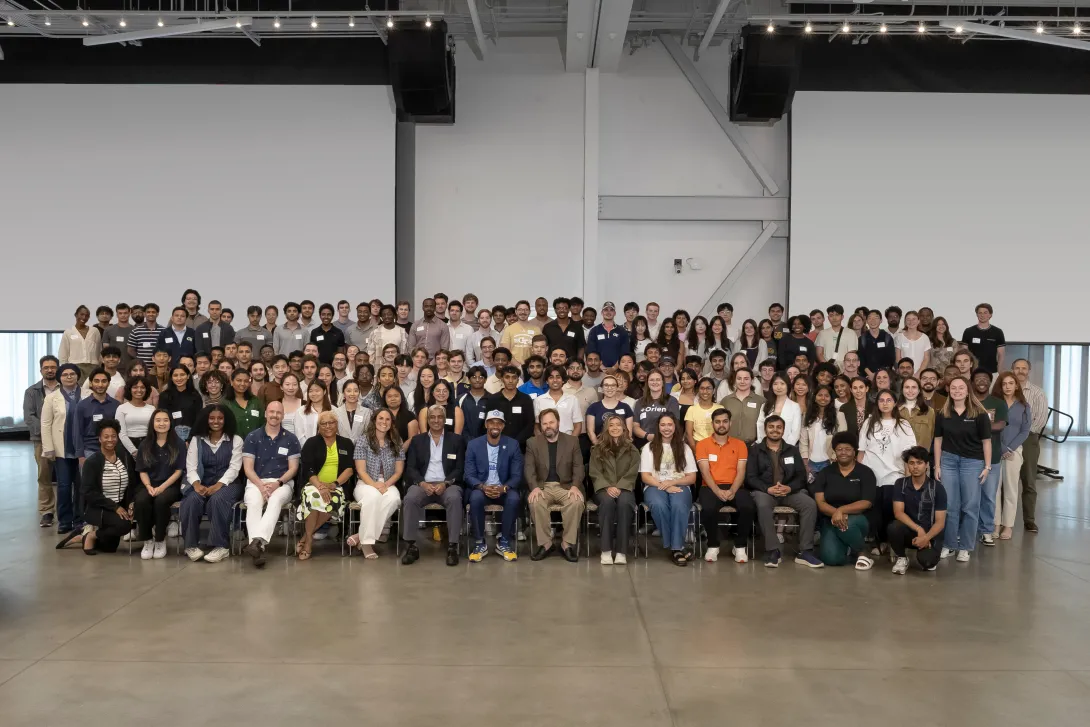
CREATE-X’s 12th cohort of Startup Launch with CREATE-X staff members and Atlanta leadership.
CREATE-X, Georgia Tech’s premier entrepreneurship program, kicked off its 12th Startup Launch cohort this month with a record-breaking 137 student teams and 25 faculty and research teams — totaling 318 founders. The summer-long accelerator, known for turning ideas into real-world ventures, is once again positioning Georgia Tech as a national leader in invention and startup creation.
This year’s cohort spans a wide range of industries, including artificial intelligence, defense, healthcare, gaming, sustainability, media management, agriculture tech, fashion tech, education, and more.
“These founders are in the messy middle and that's a beautiful place to be. There’s a lot of freedom in that,” said Margaret Weniger, director of Startup Launch. “We’re all going to be in this together. It's a safe space to try new things. It’s OK if it doesn't work out because what we want founders to learn is an entrepreneurial mindset and entrepreneurial spirit — something you take with you no matter what you do after this.”
Over the next 12 weeks, teams will validate ideas, build products, and acquire customers with the help of dedicated coaches, a robust founder community, and a network of mentors and alumni.
Raghupathy "Siva" Sivakumar, Georgia Tech’s inaugural vice president of Commercialization and the faculty founder of CREATE-X, spoke about the core of CREATE-X and what it would take for founders to succeed.
“Startup Launch is not about Georgia Tech gaining from your success. We are here just for one reason, which is to make you successful,” he said. “You need to hold yourself accountable. You need to be ambitious in terms of how big a problem you solve. You need to be emphatic that the customer matters. The successful teams are 100% behind what's going to make the lives of customers easier and better.”
In 2014, CREATE-X was co-founded by Sivakumar, Steve McLaughlin(who is now the president of The Cooper Union for the Advancement of Science and Art), and other Georgia Tech faculty, including Ray Vito, Craig Forest, and Ravi Bellamkonda (who is now the executive vice president and provost of The Ohio State University). The program received its initial major philanthropic support from Chris Klaus, a Georgia Tech alumnus and tech entrepreneur, whose gift helped launch the initiative, and , played a key role in building out the program's maker courses. Over the years, CREATE-X has continued to grow, thanks largely to the philanthropic support of alumni and foundations who believe in its mission.
In the last decade, the program has produced over 650 startups, $2.4 billion in portfolio valuation, and had eight founders named to Forbes’ 30 Under 30. Wagner shared stories of past teams who pivoted dramatically — from a glucose-monitoring pillow to a sobriety app now valued at over $350 million, and from a camping gear delivery service to a billion-dollar logistics platform.
“We don’t know which ideas will become the next unicorns,” Weniger said. “But we’re betting on you.”
At the kickoff event, McLaughlin and Klaus were honored for their contributions to Georgia Tech’s entrepreneurial ecosystem. McLaughlin encouraged the founders through the story of CREATE-X.
“From the very beginning, we challenged CREATE-X to be a startup as well. To this day, CREATE-X has raised its own money to do this. It's a reminder of what it takes to make this happen,” he said. “This is the most difficult challenge you have ever taken. I think at the time, we were probably skeptical about whether students could do it. Now we know that you can.”
Georgia Tech President Ángel Cabrera reflected on the impact of McLaughlin, Klaus, and others who saw the vision of Georgia Tech being an entrepreneurial campus.
“Ten years ago, this was a crazy, absurd idea,” he said. “Now, 150 teams are working on their own crazy ideas. Even though sometimes there's this idea of the entrepreneur as a loner, what you learn very quickly is entrepreneurship is a team sport.”
Klaus spoke about people collaborating and helping solve problems together.
“I'm especially inspired by Georgia with its complex history,” he said. “It continues to be a place where peace can be envisioned and pursued. I think this recognition strengthens my commitment to building bridges, resolving conflict, and lifting up voices that seek unity. As you build your businesses, you'll be building collaborations and partnerships, and hopefully make the world a better place.”
As the summer progresses, founders will be guided by CREATE-X’s core values: experiential education, entrepreneurial confidence, and real-world impact. Weniger encouraged teams to “show up uncomfortable” and “leverage every single resource” available.
The journey will culminate at Demo Day, where teams will showcase their startups to investors, industry leaders, and the broader community. The event is free, open to the public, and promises a front-row seat to the next wave of Georgia Tech-born innovation.
Demo Day 2025 will take place on Thursday, Aug. 28, at 5 p.m., in the Exhibition Hall. For more information and to RSVP, visit the CREATE-X Demo Day Eventbrite.
News Contact
Breanna Durham
Marketing Strategist

Smoke cloud rising from a brush wildfire burning in San Francisco, California (Source: Adobe Stock)
You’re managing the Texas Panhandle’s power grid. Heavy winds are blowing, and a worn-out utility pole ignites a fire by crashing onto a transmission line. Luckily, the fire department arrives quickly, putting out the fire before it spreads to nearby cities. But the same thing may happen again with gusty conditions predicted for the next 24 hours. Should you shut off miles of power lines to reduce that risk, causing outages for thousands of residents? Should you add batteries to the grid or move some power lines underground to lessen the impact of future fires? That sounds useful, but paying for these upgrades would require raising electricity rates.
Players of the Current Crisis video game are pondering these questions, similar to professional grid managers during the Texas Smokehouse Creek fire in 2024. But the players did not purchase Current Crisis at a run-of-the-mill gaming store. They might have played it at Georgia Tech’s Dataseum, which featured the game in a recent exhibition. Or they might have helped develop it in weekly meetings with Daniel Molzahn, associate professor in the School of Electrical and Computer Engineering and EPIcenter initiative lead.
“Current Crisis started as a computer simulation I programmed in Summer 2020 for a senior-level course I taught that fall,” says Molzahn. “My students had to dispatch crews to maintain or repair a simplified model of the Georgia power grid. In the middle of the Covid-19 pandemic, each dispatch had a risk of infection and quarantine, which meant losing the crew for the rest of that round. The students had a fixed budget to balance two competing goals: operating a power system with minimal outages and keeping the repair crews healthy.”
The class project was popular, and its scope began to grow. Molzahn proposed turning his simulation into a video game in a July 2021 grant application to the National Science Foundation. He received the five-year award that fall and launched his “Vertically Integrated Project” on power grid gaming the following spring. It soon attracted about 35 students per semester, from sophomores to those pursuing graduate degrees in various disciplines. Most students stay for three to four semesters.
Tristan Ziegler joined the VIP as a computational media sophomore in Spring 2022 — and still works on it three years later as a professional programmer. “I found the project by searching for ‘game’ on the VIP website,” says Ziegler, who graduated in 2024. “It offered much more freedom than traditional classes but still allowed me to earn credits and grades, unlike a student organization where you volunteer your time.”
The students quickly discovered the benefits of working toward a shared goal in smaller groups, focused on coding, grid modeling, graphic design, or artistic creativity. Some volunteered to lead initiatives, such as organizing the Dataseum exhibition or the 2025 Seth Bonder summer camps, where they will teach high schoolers the basics of game programming.
Another long-term member of the VIP team is Ryan Piansky, a doctoral student, who studies the resilience of power grids to wildfires. He combines well-known engineering tools — algorithms for finding a mathematically optimal problem solution — with historical wildfire data to evaluate grid management decisions.
“I have examined if policies based on established engineering principles help the people who need the most help, reduce the risk of outages broadly across the whole grid, and optimally allocate limited resources,” explains Piansky, who works in Molzahn's research lab. “To do that, I combine power grid models with realistic wildfire simulations to assess if those policies would likely generate desirable outcomes in a range of plausible scenarios.”
The VIP work on grid modeling has informed Piansky’s research, but the climate models he uses to mimic the spread of wildfires are too complex for a fast-moving video game. That’s why he has helped the students develop simplified versions of these models. Humidity and vegetation, for example, influence both real fires and those popping up in Current Crisis.
Piansky’s research is part of Molzahn’s long-term goal: developing computer tools that help professional grid managers improve the grid’s resilience to natural disasters — from pandemics and wildfires to hurricanes, heat waves and floods.
“We plan to record the choices made by Current Crisis players in crowdsourced datasets that will support our research,” says Molzahn. “By using these datasets to train machine-learning algorithms, we can harness the power of AI to develop better disaster response policies.” (The European Space Agency uses a similar gamification strategy to map moon craters.)
The project’s benefits go well beyond these research contributions. Its educational value includes experience working in multidisciplinary teams of students at different levels and leadership development. Molzahn also hopes the game will help build public acceptance of disruptive actions during real disasters.
“Recognizing the tradeoffs inherent in grid management is important, whether it’s understanding why power shutoffs reduce fire risks or why service restorations are time-consuming,” says Molzahn. “This may also generate broader public support for electricity rate increases and tax allocations to pay for infrastructure hardening.”
Written by: Silke Schmidt
News Contact
Story Written by: Silke Schmidt
Priya Devarajan || Research Communications Program Manager
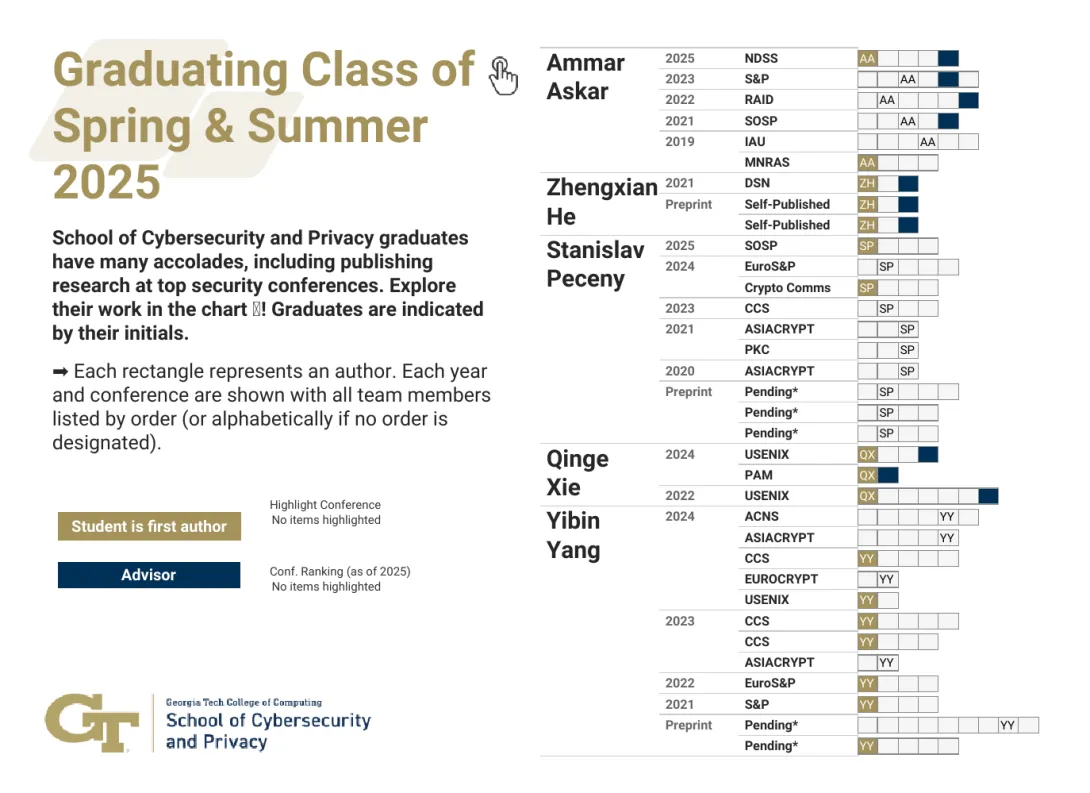
The School of Cybersecurity and Privacy at Georgia Tech is proud to recognize the accomplishments of five doctoral students who finished their doctoral programs in Spring 2025. These scholars have advanced critical research in software security, cryptography, and privacy, collectively publishing 34 papers, most of which appear in top-tier venues.
Ammar Askar developed new tools for software security in multi-language systems, including a concolic execution engine powered by large language models. He highlighted DEFCON 2021, which he attended with the Systems Software and Security Lab (SSLab), as a favorite memory.
Zhengxian He persevered through the pandemic to lead a major project with an industry partner, achieving strong research outcomes. He will be joining Amazon and fondly remembers watching sunsets from the CODA building.
Stanislav Peceny focused on secure multiparty computation (MPC), designing high-performance cryptographic protocols that improve efficiency by up to 1000x. He’s known for his creativity in both research and life, naming avocado trees after famous mathematicians and enjoying research discussions on the CODA rooftop.
Qinge Xie impressed faculty with her adaptability across multiple domains. Her advisor praised her independence and technical range, noting her ability to pivot seamlessly between complex research challenges.
Yibin Yang contributed to the advancement of zero-knowledge proofs and MPC, building toolchains that are faster and more usable than existing systems. His work earned a Distinguished Paper Award at ACM CCS 2023, and he also served as an RSAC Security Scholar. Yang enjoyed teaching and engaging with younger students, especially through events like Math Kangaroo.
Faculty mentors included Regents’ Entrepreneur Mustaque Ahamad, Professors Taesoo Kim and Vladimir Kolesnikov, and Assistant Professor Frank Li, who played vital roles in guiding the graduates’ research journeys.
Learn more about the graduates and their mentors on the 2025 Ph.D. graduate microsite.
News Contact
JP Popham, Communications Officer II
College of Computing | School of Cybersecurity and Privacy
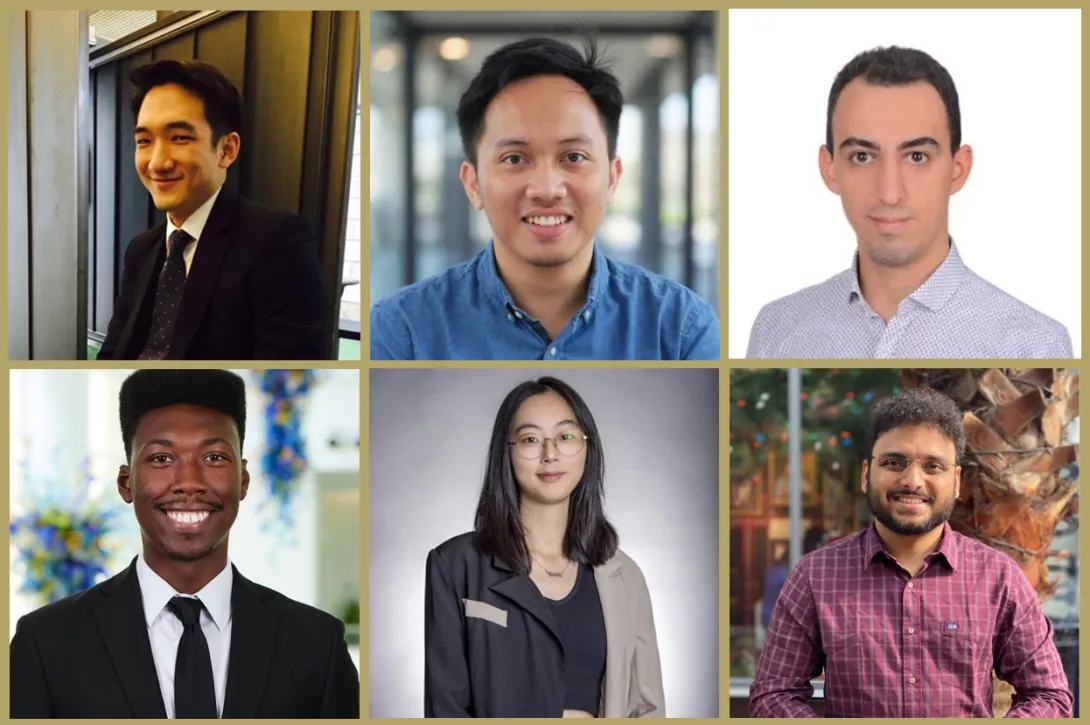
Top (Left to Right): John Kim, Maghfira “Afi” Ramadhani, Mehmet “Akif” Aglar
Bottom (Left to Right): La’Darius Thomas, Yifan Liu, Niraj Palsule
The Energy Policy and Innovation Center (EPIcenter) at Georgia Tech has announced the selection of six students for its inaugural Summer Research Program. The doctoral candidates, pursuing degrees in electrical and computer engineering, economics, computer science, and public policy, will be on campus working full-time on their dissertation research throughout the summer semester and present their findings in a final showcase.
EPIcenter will provide a full stipend and tuition for the 2025 summer semester to support the students.
“I look forward to hosting a fantastic cohort of early-career energy scholars this summer,” said Laura Taylor, EPIcenter’s director. “The summer research program will not only help the students advance their research while engaging in interdisciplinary dialogue but also offers professional development opportunities to position them for a strong start to their careers.”
The students will work with EPIcenter staff and be provided with on-campus workshops on written and oral communications. Biweekly meetings over the summer will offer the students an opportunity to share their work, progress, and ideas with each other and the EPIcenter faculty affiliates. In addition, the students will have the opportunity to engage with programs and distinguished guests of the center.
For students interested in presenting their research at a conference, EPIcenter also will provide travel grants of up to $600 pursuant to having their paper/presentation posted on the EPIcenter website.
"I applied to the Summer Research Program because its structure and community aligned perfectly with my summer plan on dissertation work in energy policy,” said Yifan Liu. “I aim to finalize key dissertation chapters and engage closely with peers and mentors to prepare me for the job market."
The program offers students an opportunity to promote their work through the EPIcenter communication channels including the website, news feeds, blogs, and the SEI newsletter.
“I am very excited to spend my summer at EPIcenter exploring how battery storage entry affects competition in the electricity market,” said Maghfira “Afi” Ramadhani, one of the student affiliates selected for the summer research program. “Specifically, I look at how the rollout of battery storage in the Texas electricity market impacts renewable curtailment, fossil-fuel generator markup, and generator entry and exit.”
With a variety of backgrounds and perspectives on energy, each of the students in the summer program brings something unique to EPIcenter.
La’Darius Thomas: “My project explores the potential of peer-to-peer energy trading systems in promoting decentralized, sustainable energy solutions. I aim to contribute to the development of energy models that empower individuals and communities to directly participate in electricity markets.”
Niraj Palsule: “I intend to gain interdisciplinary insights interfacing energy transition technology and policy developments by participating in the EPIcenter Summer Research Program.”
John Kim: “I believe the EPIcenter Summer Research Program will deepen my investigation of how environmental hazards disproportionately affect vulnerable communities through research on power outage impacts and lead contamination. This summer, I hope to refine my analysis and complete research on the socioeconomic dimensions of power reliability and environmental resilience.”
Mehmet “Akif” Aglar: "I applied to the EPIcenter Summer Research Program because it offers the chance to work alongside and learn from a community of highly qualified researchers across various fields. I believe the opportunity to present my work, receive feedback, and benefit from the structure the program provides will be invaluable for advancing my research."
About EPICenter
The mission of the Energy Policy and Innovation Center is to conduct rigorous studies and deliver high impact insights that address critical regional, national, and global energy issues from a Southeastern U.S. perspective. EPICenter is pioneering a holistic approach that calls upon multidisciplinary expertise to engage the public on the issues that emerge as the energy transformation unfolds. The center operates within Georgia Tech’s Strategic Energy Institute.
News Contact
Priya Devarajan || SEI Communications Program Manager
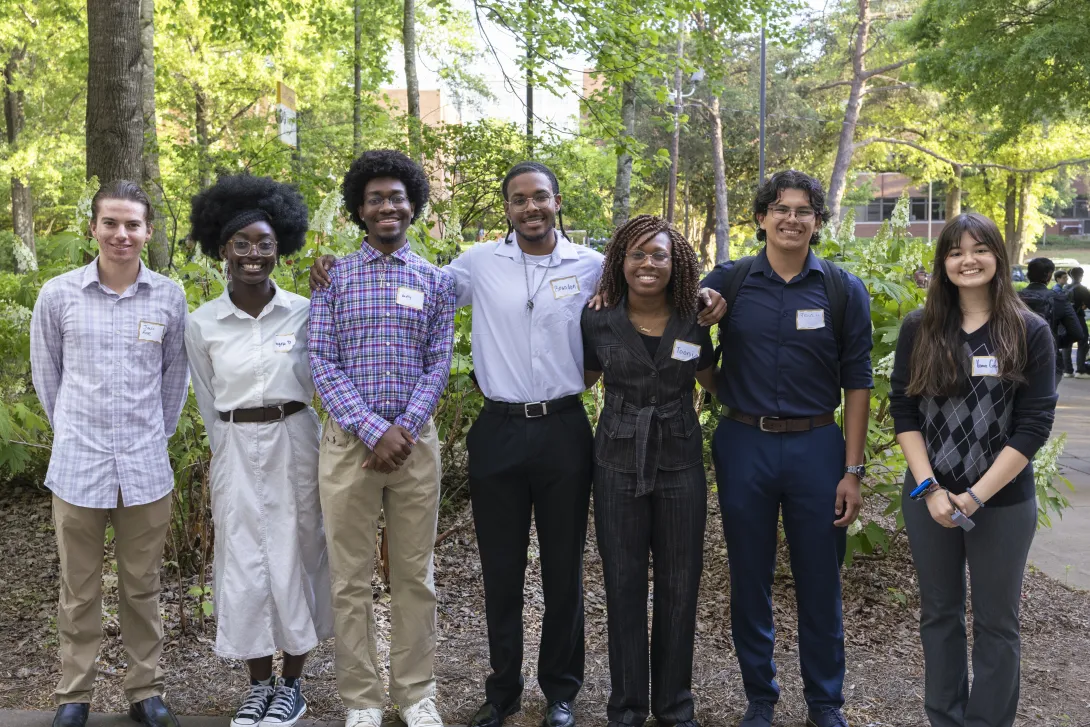
The winners of the 2025 Spring I2P Showcase, from left to right, Jack Rose, Team Carchive; Angela Duodu, Hadley Williams, Brandon Parker, Oluwatooni Alade , and Jesus Sierra Jr., Team Sensible; and Yasmine Green, Team Onyc.
At the Spring 2025 Idea to Prototype (I2P) Showcase, a prototype helping car enthusiasts find niche vehicles and their histories came out on top. Jack Rose, a junior in computer science, took home first place, a golden ticket to CREATE-X’s summer accelerator, Startup Launch, and advancement into the semifinal round of the InVenture Prize, a faculty-led innovation competition for undergraduate students and recent Tech bachelor’s graduates.
Second place was awarded to Team Sensible, made up of juniors Oluwatooni Alade, computer science; Brandon Parker, computer science; Angela Duodu, computer science; Jesus Sierra Jr., computer science; and Hadley Williams, computer engineering. Sensible is a browser extension that rates the sustainability of products users find online and offers alternative products for items that score low.
Third place went to Team Onyc, which includes Yasmine Green, a first-year mechanical engineering student. Onyc replaces the computer mouse with a wearable alternative that allows users to control computer navigation with the movement of their fingertips and fingernails.
Dozens of teams competed at the showcase, which is the culmination of I2P, a CREATE-X course focused on supporting students in creating solutions. The course offers research credit (for undergraduates only), up to $500 in reimbursements for physical material expenses, the opportunity to work collaboratively across majors, and faculty mentorship. It is held in the spring, summer, and fall, and it’s open to undergraduate and graduate students from all majors.
Read our Q&A with the winner and stay tuned for our interviews with the other winning teams.
Team Carchive
Jack Rose, Junior, Computer Science
Why did you pursue your startup?
Rose: I’ve been into cars my whole life. Trying to track cars is my hobby. There are always edge cases, and how are you planning to attack them? Because I spent so much time, especially working with other people, getting this data, and trying to figure this out, I became very adept at understanding the data. The dealers, collectors especially, were trying to understand the whole story, so they would come to me. But the way I had to do it was spreadsheets all over the place, and I was trying to find a solution to keep it all in one spot. I couldn’t find a way to do it, so I said, “Well, I’ll build it.” And then I got into I2P.
What was challenging about building your prototype over the semester?
Rose: This semester, it was mainly trying to come up with the schema and how to physically account for the edge cases. It’s not easy; it took a lot of deep thought, discussions with other people who are into these niche cars, and understanding what details we needed. I’m still trying to add more things and figure it out. It’s not perfect, but it’s enough.
What was your favorite part about I2P?
Rose: Adding features that I was looking for. For example, let’s say I was looking for a car. Filter all the cars over 25 years old and imported to the U.S. — I can easily search my database.
What would you say to students who are interested in entrepreneurship?
Rose: It’s always, “You should have started sooner.” I’ve always thought about it. My biggest advice is to just start doing it, even if it’s a little bit here, a little bit there. If it doesn’t work out, at least you’ve tried.
A photo gallery from the Spring 2025 I2P Showcase can be viewed on the CREATE-X Flickr page.
Students interested in the I2P program can register for the upcoming summer and fall semesters. The deadline for Summer 2025 is May 14, and the deadline for Fall 2025 is May 16.
CREATE-X's next event, Demo Day, will take place on Aug. 28 at Exhibition Hall, where more than 100 startups will be on display. Attendees can experience the newest batch of founders leveraging the latest technology to solve pressing challenges. The event offers an opportunity to network with entrepreneurs, industry leaders, and passionate enthusiasts, and supports the next generation of innovators. Register for Demo Day today and be a part of these founders’ journeys!
News Contact
Breanna Durham
Marketing Strategist
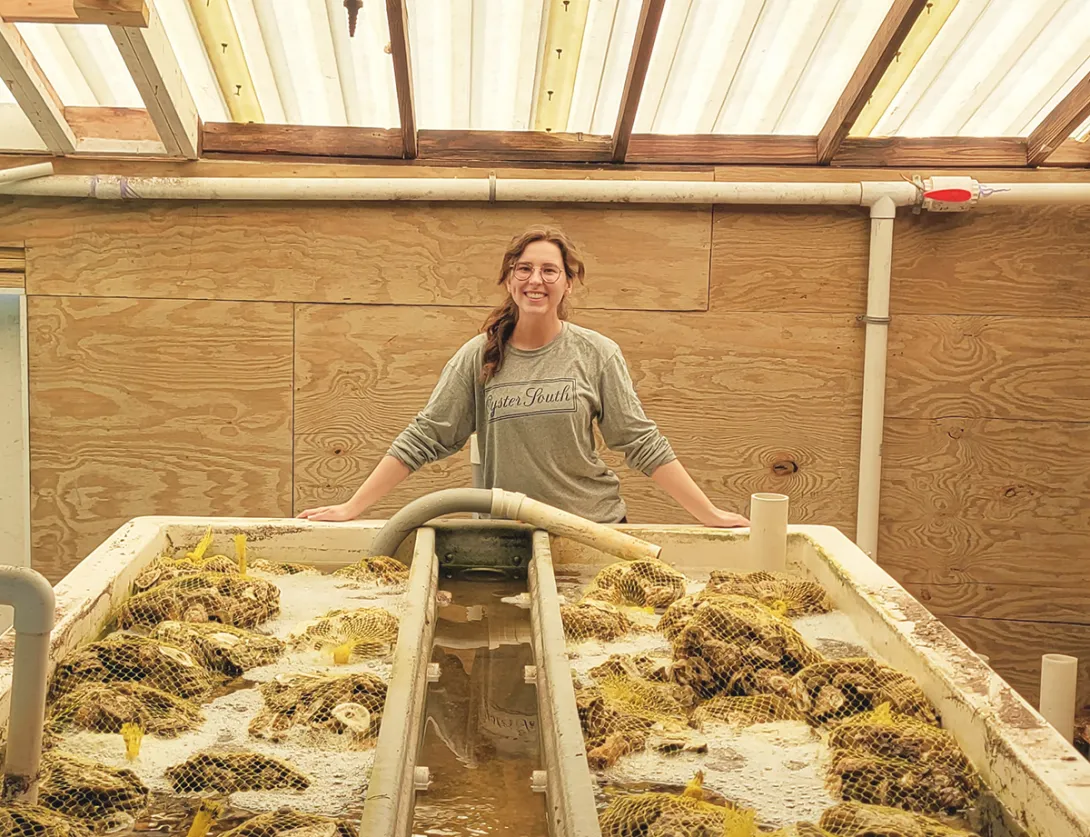
Sarah Roney oversees nursery troughs in the UGA Shellfish Research Lab filled with young oysters growing on shells recycled from restaurants all over Georgia.
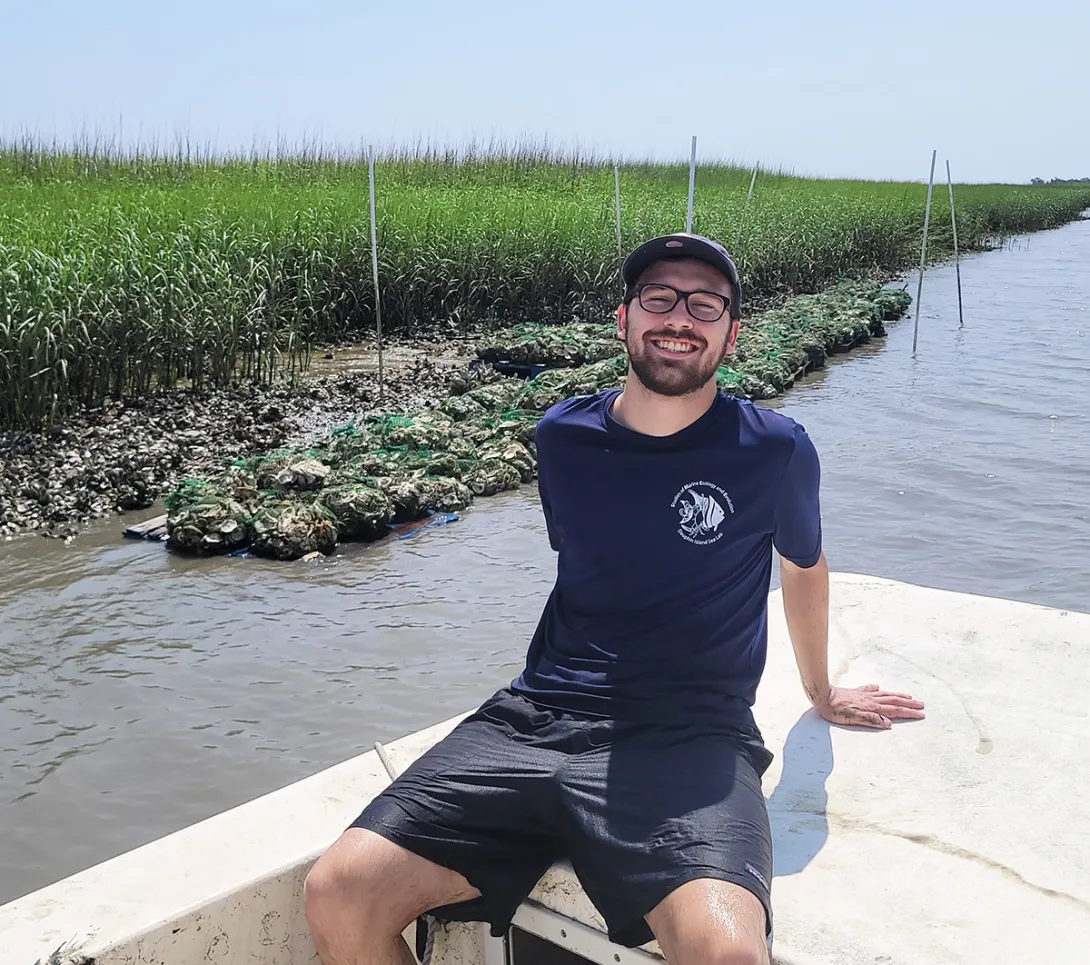
Tanner Lee (Georgia Tech, BS Biology '23) helped construct the oyster reef he observes from a boat as part of an undergraduate research project.
Sarah Roney studies oysters — and coastline restoration, wave energy, erosion, blue crabs, and predator chemical cues. A Ph.D. candidate in Georgia Tech’s Ocean Science and Engineering program and a Brook Byers Graduate Fellow, Roney has spent the past four years studying how strategically placing oyster reefs along Georgia’s coast could yield significant benefits.
Georgia’s coastal ecology is being degraded by several threats. Erosion caused by a combination of traffic from water vessels, sea-level rise, increased storm intensity and frequency, and property development, are negatively impacting both coastal living systems and the state’s economy. Tourism, agriculture, recreation, fisheries, property development, and trade (through the Port of Savannah) all rely on healthy coastlines.
Roney’s interest in coastal ecology and oysters drew her to focus her doctoral thesis on this problem. She divided her project into two parts. The first involved understanding how much oyster reefs reduce the erosion caused by wave energy (ship wake) from water traffic. The second part demonstrated a method for making young oysters resistant to predation — increasing their survival rates and that of the reef colonies they call home. Roney focused her research on two major waterways in the Savannah area. The Intracoastal Waterway and the South Channel of the Savannah River, which leads to the Port of Savannah, are both subject to heavy ship and boat traffic. According to Roney’s collaborators at Georgia Tech, 65% of the wave energy lashing the South Channel’s shores is generated by cargo vessels navigating to and from the Port of Savannah. Because traffic along the Intracoastal Waterway is subject to very few speed restrictions, there is plenty of erosive wave energy there also, even though the vessels are almost exclusively small.
Roney chose one site in each waterway to place her reef structures. Mesh bags of oyster shells were seeded with young oysters by personnel working at a University of Georgia Shellfish Research Lab. Roney created her reef structures by placing these bags in a row 15 to 20 meters long and a meter wide. Once established, Roney found that constructed reefs dissipate 40% of the wave energy before it reaches the marsh edge. “This is an experimental pilot study, so the reefs are on the smaller side,” Roney explained. “Reefs as large as 100 meters long may be necessary to protect certain areas — which sounds like a big investment. But because these are living shorelines, they are self-sustaining, and will keep growing and building on themselves.”
Establishing oyster reefs can be challenging, however, because predators feast on young oysters. Blue crabs are among the most voracious. The second part of Roney’s research was to develop a method that improves adolescent oysters’ chances of surviving to adulthood — when they infrequently succumb to predation. Roney and her collaborators at Georgia Tech identified two compounds found in blue crab urine, called trigonelline and homarine, that induce young oysters to devote more energy toward growing their shells, which become 25-60% stronger than normal. Roney found that after four to eight weeks of exposure to these compounds in hatchery conditions, their overall survival rate improved by 30% once placed in a reef. Her method not only helps constructed reefs to become established, but can also help existing oyster reefs become more resilient by slowing, or reversing, their decline.
While coastal restoration projects are not new in Georgia, the techniques Roney developed are relatively novel. Conventional shoreline restoration projects involve excavation, placing gravel beds, and extensive plantings, mostly with sea grasses. Roney has shown that using living shoreline strategies are less intensive and less expensive to establish and are also effective in reducing wave energy in waterways vulnerable to erosion. Perhaps most significantly, these techniques also restore the foundational functions of the ecosystems in which they are placed. The reefs become nurseries, incubating fish, bird, plant, and crustacean species.
Roney engaged several partners over the four years of her project, many in the communities along Georgia’s coast. Over 35 coastal residents, business owners, citizen scientists, and students volunteered their time and resources to help Roney’s project succeed. Roney said, “I think the most rewarding part of the project has been seeing how many people are truly invested in our coastal resources and want oyster reefs to thrive.”
This project isn’t likely to end once Roney earns her PhD. For living shoreline restoration practices to catch on, several other problems require investigation. Roney wants to devise a way to slowly release predator cue compounds into the water near oyster reefs, so baby oysters won’t need to spend as much time in a hatchery before being placed in the wild. Perfecting such a time-release mechanism could also help rejuvenate naturally occurring oyster reefs under threat from erosion and predation.
Roney also wants to try combining constructed oyster reefs with oyster farms, integrating one of the most sustainable ways that protein can be raised with living shoreline restoration. “As the mariculture industry in Georgia grows, there will be lots of opportunities to investigate the possible intersections between the ecological benefits, engineering benefits, and cultural benefits of oyster farming,” Roney said. “Food might be a continuous byproduct of shoreline restoration projects.”
Roney’s research shows that economic development and preserving, or even regenerating, diverse and productive coastal habitats for future generations don’t have to be mutually exclusive propositions.
Roney’s thesis advisor is Marc Weissburg, Brook Byers Professor in the School of Biological Sciences. Kevin Haas, professor in the School of Civil and Environmental Engineering, helped Roney map and measure the hydrodynamic forces in her study zones. The Coastal Resources Division of the Georgia Department of Natural Resources, the National Parks Service, and the University of Georgia Marine Extension and Georgia Sea Grant program provided access, permitting, funding, and resources.
News Contact
Brent Verrill, Research Communications Program Manager, BBISS