
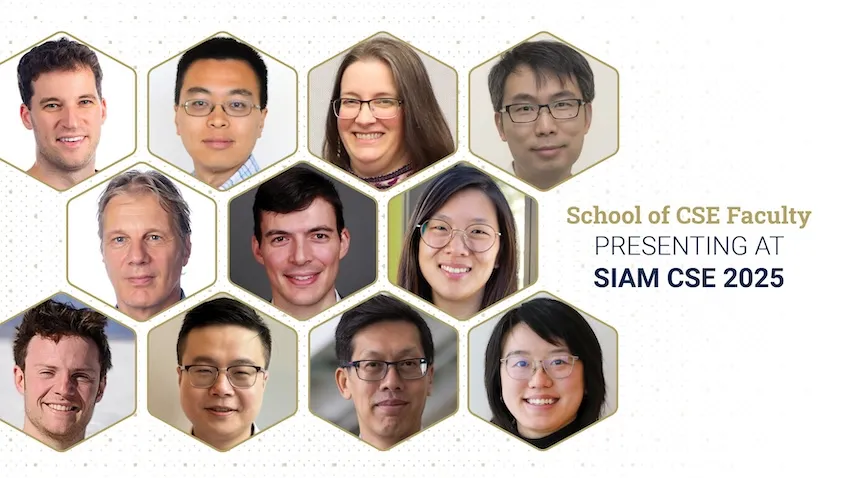
Many communities rely on insights from computer-based models and simulations. This week, a nest of Georgia Tech experts are swarming an international conference to present their latest advancements in these tools, which offer solutions to pressing challenges in science and engineering.
Students and faculty from the School of Computational Science and Engineering (CSE) are leading the Georgia Tech contingent at the SIAM Conference on Computational Science and Engineering (CSE25). The Society of Industrial and Applied Mathematics (SIAM) organizes CSE25, occurring March 3-7 in Fort Worth, Texas.
At CSE25, the School of CSE researchers are presenting papers that apply computing approaches to varying fields, including:
- Experiment designs to accelerate the discovery of material properties
- Machine learning approaches to model and predict weather forecasting and coastal flooding
- Virtual models that replicate subsurface geological formations used to store captured carbon dioxide
- Optimizing systems for imaging and optical chemistry
- Plasma physics during nuclear fusion reactions
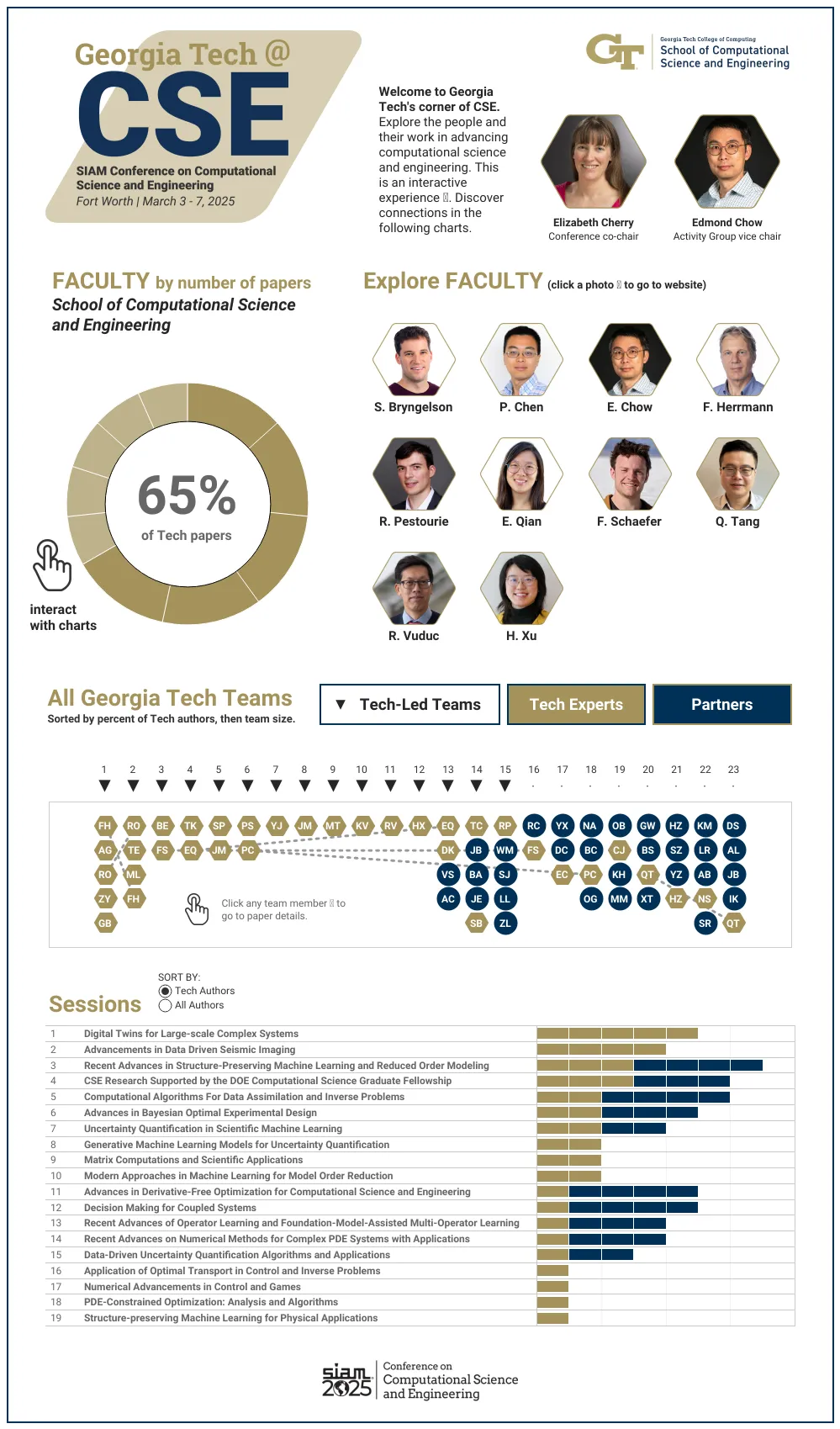
[Related: GT CSE at SIAM CSE25 Interactive Graphic]
“In CSE, researchers from different disciplines work together to develop new computational methods that we could not have developed alone,” said School of CSE Professor Edmond Chow.
“These methods enable new science and engineering to be performed using computation.”
CSE is a discipline dedicated to advancing computational techniques to study and analyze scientific and engineering systems. CSE complements theory and experimentation as modes of scientific discovery.
Held every other year, CSE25 is the primary conference for the SIAM Activity Group on Computational Science and Engineering (SIAG CSE). School of CSE faculty serve in key roles in leading the group and preparing for the conference.
In December, SIAG CSE members elected Chow to a two-year term as the group’s vice chair. This election comes after Chow completed a term as the SIAG CSE program director.
School of CSE Associate Professor Elizabeth Cherry has co-chaired the CSE25 organizing committee since the last conference in 2023. Later that year, SIAM members reelected Cherry to a second, three-year term as a council member at large.
At Georgia Tech, Chow serves as the associate chair of the School of CSE. Cherry, who recently became the associate dean for graduate education of the College of Computing, continues as the director of CSE programs.
“With our strong emphasis on developing and applying computational tools and techniques to solve real-world problems, researchers in the School of CSE are well positioned to serve as leaders in computational science and engineering both within Georgia Tech and in the broader professional community,” Cherry said.
Georgia Tech’s School of CSE was first organized as a division in 2005, becoming one of the world’s first academic departments devoted to the discipline. The division reorganized as a school in 2010 after establishing the flagship CSE Ph.D. and M.S. programs, hiring nine faculty members, and attaining substantial research funding.
Ten School of CSE faculty members are presenting research at CSE25, representing one-third of the School’s faculty body. Of the 23 accepted papers written by Georgia Tech researchers, 15 originate from School of CSE authors.
The list of School of CSE researchers, paper titles, and abstracts includes:
Bayesian Optimal Design Accelerates Discovery of Material Properties from Bubble Dynamics
Postdoctoral Fellow Tianyi Chu, Joseph Beckett, Bachir Abeid, and Jonathan Estrada (University of Michigan), Assistant Professor Spencer Bryngelson
[Abstract]
Latent-EnSF: A Latent Ensemble Score Filter for High-Dimensional Data Assimilation with Sparse Observation Data
Ph.D. student Phillip Si, Assistant Professor Peng Chen
[Abstract]
A Goal-Oriented Quadratic Latent Dynamic Network Surrogate Model for Parameterized Systems
Yuhang Li, Stefan Henneking, Omar Ghattas (University of Texas at Austin), Assistant Professor Peng Chen
[Abstract]
Posterior Covariance Structures in Gaussian Processes
Yuanzhe Xi (Emory University), Difeng Cai (Southern Methodist University), Professor Edmond Chow
[Abstract]
Robust Digital Twin for Geological Carbon Storage
Professor Felix Herrmann, Ph.D. student Abhinav Gahlot, alumnus Rafael Orozco (Ph.D. CSE-CSE 2024), alumnus Ziyi (Francis) Yin (Ph.D. CSE-CSE 2024), and Ph.D. candidate Grant Bruer
[Abstract]
Industry-Scale Uncertainty-Aware Full Waveform Inference with Generative Models
Rafael Orozco, Ph.D. student Tuna Erdinc, alumnus Mathias Louboutin (Ph.D. CS-CSE 2020), and Professor Felix Herrmann
[Abstract]
Optimizing Coupled Systems: Insights from Co-Design Imaging and Optical Chemistry
Assistant Professor Raphaël Pestourie, Wenchao Ma and Steven Johnson (MIT), Lu Lu (Yale University), Zin Lin (Virginia Tech)
[Abstract]
Multifidelity Linear Regression for Scientific Machine Learning from Scarce Data
Assistant Professor Elizabeth Qian, Ph.D. student Dayoung Kang, Vignesh Sella, Anirban Chaudhuri and Anirban Chaudhuri (University of Texas at Austin)
[Abstract]
LyapInf: Data-Driven Estimation of Stability Guarantees for Nonlinear Dynamical Systems
Ph.D. candidate Tomoki Koike and Assistant Professor Elizabeth Qian
[Abstract]
The Information Geometric Regularization of the Euler Equation
Alumnus Ruijia Cao (B.S. CS 2024), Assistant Professor Florian Schäfer
[Abstract]
Maximum Likelihood Discretization of the Transport Equation
Ph.D. student Brook Eyob, Assistant Professor Florian Schäfer
[Abstract]
Intelligent Attractors for Singularly Perturbed Dynamical Systems
Daniel A. Serino (Los Alamos National Laboratory), Allen Alvarez Loya (University of Colorado Boulder), Joshua W. Burby, Ioannis G. Kevrekidis (Johns Hopkins University), Assistant Professor Qi Tang (Session Co-Organizer)
[Abstract]
Accurate Discretizations and Efficient AMG Solvers for Extremely Anisotropic Diffusion Via Hyperbolic Operators
Golo Wimmer, Ben Southworth, Xianzhu Tang (LANL), Assistant Professor Qi Tang
[Abstract]
Randomized Linear Algebra for Problems in Graph Analytics
Professor Rich Vuduc
[Abstract]
Improving Spgemm Performance Through Reordering and Cluster-Wise Computation
Assistant Professor Helen Xu
[Abstract]
News Contact
Bryant Wine, Communications Officer
bryant.wine@cc.gatech.edu
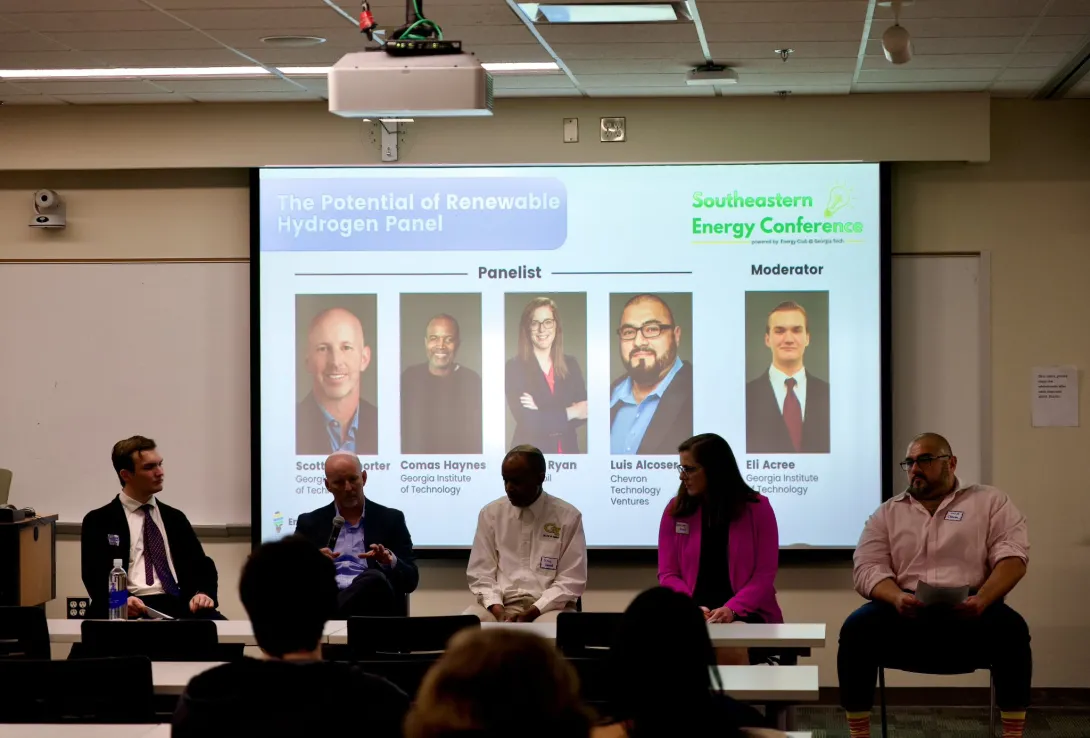
Energy Club's 11th Southeastern Energy Conference Panel on The Potential of Renewable Hydrogen featured Eli Acree, Chemical & Biomolecular Engineering Undergraduate, Georgia Tech (Moderator), Panelists Scott McWhorter, Federal Opportunities and Strategy, Georgia Tech Strategic Energy Institute, and Board Chairman, Southeast Hydrogen Energy Alliance, Comas Haynes, Hydrogen Initiative Lead, Georgia Tech Strategic Energy Institute, Hayley Ryan, Field Engineering Manager, ExxonMobil, Luis Alcoser, GM Future Energy, Chevron Technology Ventures
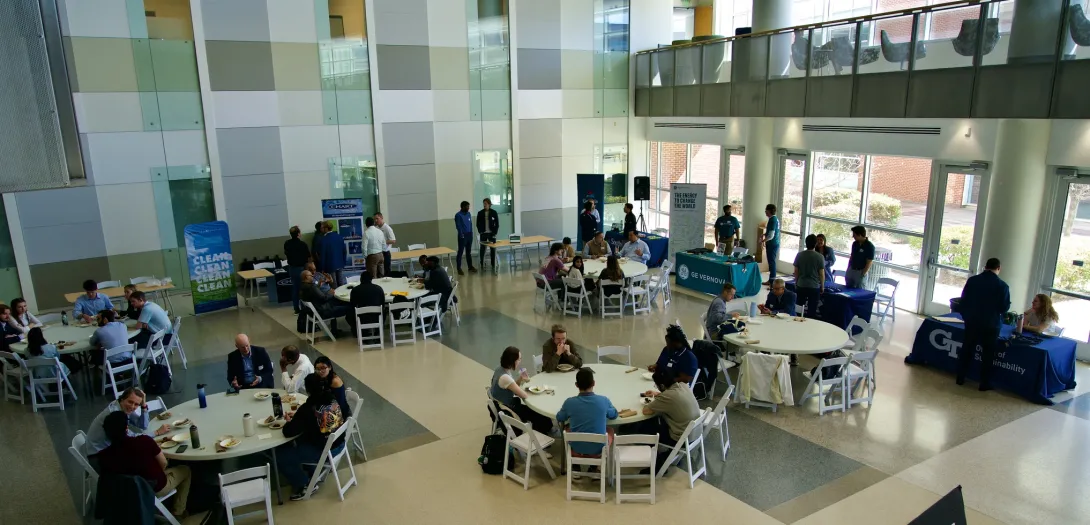
Industry Showcase at the 2025 Southeastern Energy Conference, organized by the student-led Energy Club at Georgia Tech
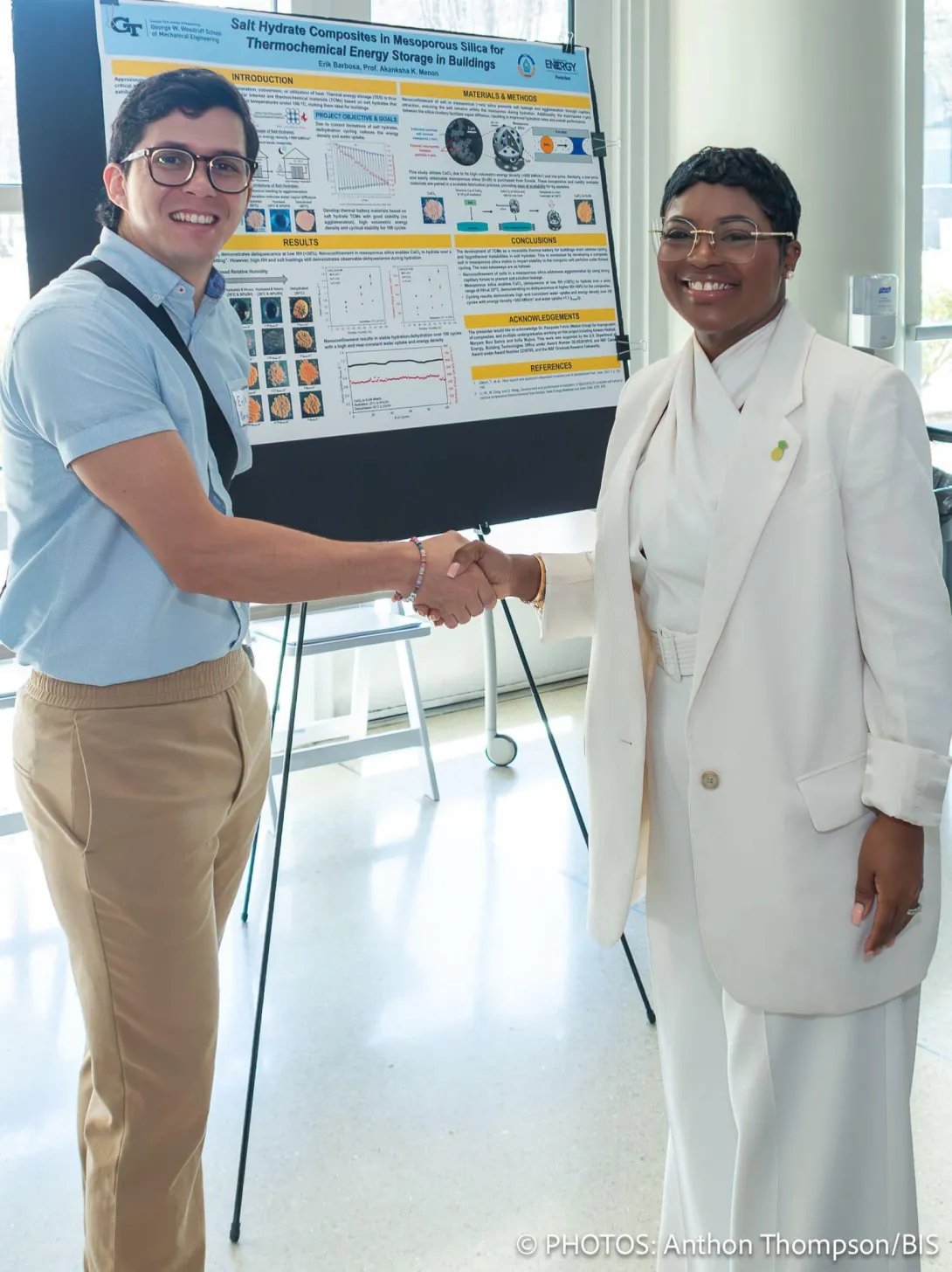
Georgia Tech Student with Hon. Jobeth Lillian Coleby-Davis, Minister of Energy and Transport, Government of The Bahamas during the Student Poster Competition at the 2025 Southeastern Energy Conference.
The 2025 Southeastern Energy Conference, Georgia Tech’s annual student-led energy and sustainability conference, took place from Feb. 28 to March 1, 2025. Organized by the Energy Club at Georgia Tech, the conference welcomed over 100 attendees, including industry leaders, policymakers, researchers, and students, fostering dynamic discussions on the future of energy. The theme for this year’s conference, "Going Global: Energy’s Place on the World Stage," highlighted the international nature of energy challenges and solutions, emphasizing collaboration across borders.
The event kicked off with a keynote address from Hon. John Tien, who provided thought-provoking insights into the evolving energy landscape. Following the keynote, the first panel of the day, "The Ukraine Energy War: Lessons in Energy Security," featured expert analysis from Anna Mikulsa of the IDA Science and Technology Policy Institute and Gabriel Collins of Rice University’s Baker Institute. The session was moderated by Georgia Tech student Grant Espy. This was followed by a discussion on the role of nuclear energy globally, where Seth Grae, president and CEO of Lightbridge Corporation, and CJ Fong, vice president of Regulatory Affairs at Blue Energy, shared their perspectives, moderated by Anna Schafer, a student at Georgia Tech.
Throughout the day, attendees had the opportunity to engage with representatives from 10 local and regional energy companies through the Industry Showcase. Companies such as GE Vernova, Georgia Power, Kimley-Horn, and the Georgia Cleantech Innovation Hub were present, providing valuable networking and career development opportunities for students and professionals alike. The day concluded with an engaging panel on "The Potential of Clean Hydrogen," featuring insights from industry leaders including Comas Haynes of Georgia Tech's Strategic Energy Institute, Hayley Ryan of ExxonMobil, Luis Alcoser of Chevron Technology Ventures, and Scott McWhorter of the Southeast Hydrogen Energy Alliance, moderated by Eli Acree, a student at Georgia Tech.
The second day of the conference opened with a keynote speech from Tim Lieuwen, executive vice president for Research at Georgia Tech, who laid out what a carbon-neutral future could truly look like in energy. The "Cybersecurity for Energy Systems" panel brought together Seymour E. Goodman of Georgia Tech, Jake Braun of the University of Chicago, Juan Villarreal of Villarreal Energy, and Forrest Shriver of Sentinel Devices to discuss the challenges and solutions in securing energy infrastructure. Following that, the "Applications of Solar Microgrids" panel moderated by John Blankenhorn, a Ph.D. candidate at Georgia Tech, featured expert perspectives from Letian Dou of Purdue University, Ben Ollis of Oak Ridge National Laboratory, and Raymond Hill of Emory University’s Goizueta Business School.
One of the standout moments of the conference was the Student Symposium, where seven student researchers had the opportunity to present their work, competing for $500 in prize money. Projects explored topics ranging from photocatalysts to heat-driven desalination to thermal batteries for buildings.
The final panel of the event, "Scaled Sustainable Development," moderated by Conference Chair Sam Woolsey, a student at Georgia Tech, featured Jonathan Elkind of Columbia University’s Center on Global Energy Policy, Miguel Granier of the Cox Cleantech Accelerator, and Hon. Jobeth Lillian Coleby-Davis, Minister of Energy & Transport for the Government of the Bahamas.
Faculty Advisor Dan Molzahn also praised the conference, stating, "I've been incredibly impressed by the student organizers in pulling together such a remarkable and well-executed event. Given all the change occurring in the world today around energy, the students' foresight to focus on this topic by bringing in a broad range of experts was a huge benefit to the Georgia Tech community."
Reflecting on the success of the event, Sam Woolsey shared, "I was honored to serve as Energy Club's 2025 Conference Chair and to see the conference so positively received. It was a pleasure to see the ways this year's conference encouraged Georgia Tech engineers to get out of their comfort zone and discuss the policy and international affairs of energy."
The 11th annual Southeastern Energy Conference set a high standard for future student-led initiatives in energy and sustainability at Georgia Tech, fostering meaningful discussions and connections that will continue shaping the field. With a diverse lineup of experts, engaging panels, and invaluable networking opportunities, this event demonstrated Georgia Tech’s leadership in fostering innovative discussions on global energy challenges. The Energy Club extends its heartfelt thanks to all speakers, panelists, industry representatives, and attendees for making this conference a success. Stay tuned for future events and continued conversations on the evolving energy landscape!
Written by: Energy Conference Committee Members: Braden Queen, Eli Acree, Sam Woolsey, Anna Schafer, Grant Espy, John Blankenhorn
News Contact
News Contact: Priya Devarajan || SEI Communications Program Manager
Written by: Energy Conference Committee Members: Braden Queen, Eli Acree, Sam Woolsey, Anna Schafer, Grant Espy, John Blankenhorn
Successful test results of a new machine learning (ML) technique developed at Georgia Tech could help communities prepare for extreme weather and coastal flooding. The approach could also be applied to other models that predict how natural systems impact society.
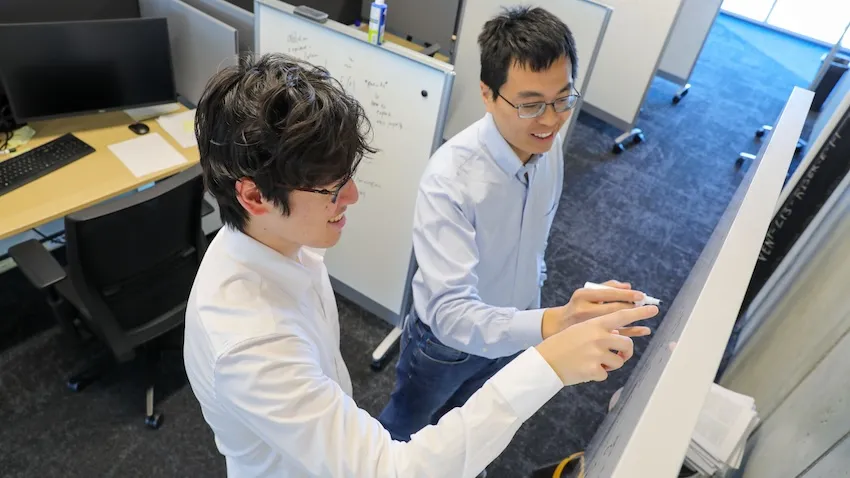
Ph.D. student Phillip Si and Assistant Professor Peng Chen developed Latent-EnSF, a technique that improves how ML models assimilate data to make predictions.
In experiments predicting medium-range weather forecasting and shallow water wave propagation, Latent-EnSF demonstrated higher accuracy, faster convergence, and greater efficiency than existing methods for sparse data assimilation.
“We are currently involved in an NSF-funded project aimed at providing real-time information on extreme flooding events in Pinellas County, Florida,” said Si, who studies computational science and engineering (CSE).
“We're actively working on integrating Latent-EnSF into the system, which will facilitate accurate and synchronized modeling of natural disasters. This initiative aims to enhance community preparedness and safety measures in response to flooding risks.”
Latent-EnSF outperformed three comparable models in assimilation speed, accuracy, and efficiency in shallow water wave propagation experiments. These tests show models can make better and faster predictions of coastal flood waves, tides, and tsunamis.
In experiments on medium-range weather forecasting, Latent-EnSF surpassed the same three control models in accuracy, convergence, and time. Additionally, this test demonstrated Latent-EnSF's scalability compared to other methods.
These promising results support using ML models to simulate climate, weather, and other complex systems.
Traditionally, such studies require employment of large, energy-intensive supercomputers. However, advances like Latent-EnSF are making smaller, more efficient ML models feasible for these purposes.
The Georgia Tech team mentioned this comparison in its paper. It takes hours for the European Center for Medium-Range Weather Forecasts computer to run its simulations. Conversely, the ML model FourCastNet calculated the same forecast in seconds.
“Resolution, complexity, and data-diversity will continue to increase into the future,” said Chen, an assistant professor in the School of CSE.
“To keep pace with this trend, we believe that ML models and ML-based data assimilation methods will become indispensable for studying large-scale complex systems.”
Data assimilation is the process by which models continuously ingest new, real-world data to update predictions. This data is often sparse, meaning it is limited, incomplete, or unevenly distributed over time.
Latent-EnSF builds on the Ensemble Filter Scores (EnSF) model developed by Florida State University and Oak Ridge National Laboratory researchers.
EnSF’s strength is that it assimilates data with many features and unpredictable relationships between data points. However, integrating sparse data leads to lost information and knowledge gaps in the model. Also, such large models may stop learning entirely from small amounts of sparse data.
The Georgia Tech researchers employ two variational autoencoders (VAEs) in Latent-EnSF to help ML models integrate and use real-world data. The VAEs encode sparse data and predictive models together in the same space to assimilate data more accurately and efficiently.
Integrating models with new methods, like Latent-EnSF, accelerates data assimilation. Producing accurate predictions more quickly during real-world crises could save lives and property for communities.
To share Latent-EnSF to the broader research community, Chen and Si presented their paper at the SIAM Conference on Computational Science and Engineering (CSE25). The Society of Industrial and Applied Mathematics (SIAM) organized CSE25, held March 3-7 in Fort Worth, Texas.
Chen was one of ten School of CSE faculty members who presented research at CSE25, representing one-third of the School’s faculty body. Latent-EnSF was one of 15 papers by School of CSE authors and one of 23 Georgia Tech papers presented at the conference.
The pair will also present Latent-EnSF at the upcoming International Conference on Learning Representations (ICLR 2025). Occurring April 24-28 in Singapore, ICLR is one of the world’s most prestigious conferences dedicated to artificial intelligence research.
“We hope to bring attention to experts and domain scientists the exciting area of ML-based data assimilation by presenting our paper,” Chen said. “Our work offers a new solution to address some of the key shortcomings in the area for broader applications.”
News Contact
Bryant Wine, Communications Officer
bryant.wine@cc.gatech.edu
Many communities rely on insights from computer-based models and simulations. This week, a nest of Georgia Tech experts are swarming an international conference to present their latest advancements in these tools, which offer solutions to pressing challenges in science and engineering.
Students and faculty from the School of Computational Science and Engineering (CSE) are leading the Georgia Tech contingent at the SIAM Conference on Computational Science and Engineering (CSE25). The Society of Industrial and Applied Mathematics (SIAM) organizes CSE25, occurring March 3-7 in Fort Worth, Texas.
At CSE25, the School of CSE researchers are presenting papers that apply computing approaches to varying fields, including:
- Experiment designs to accelerate the discovery of material properties
- Machine learning approaches to model and predict weather forecasting and coastal flooding
- Virtual models that replicate subsurface geological formations used to store captured carbon dioxide
- Optimizing systems for imaging and optical chemistry
- Plasma physics during nuclear fusion reactions
[Related: GT CSE at SIAM CSE25 Interactive Graphic]
“In CSE, researchers from different disciplines work together to develop new computational methods that we could not have developed alone,” said School of CSE Professor Edmond Chow.
“These methods enable new science and engineering to be performed using computation.”
CSE is a discipline dedicated to advancing computational techniques to study and analyze scientific and engineering systems. CSE complements theory and experimentation as modes of scientific discovery.
Held every other year, CSE25 is the primary conference for the SIAM Activity Group on Computational Science and Engineering (SIAG CSE). School of CSE faculty serve in key roles in leading the group and preparing for the conference.
In December, SIAG CSE members elected Chow to a two-year term as the group’s vice chair. This election comes after Chow completed a term as the SIAG CSE program director.
School of CSE Associate Professor Elizabeth Cherry has co-chaired the CSE25 organizing committee since the last conference in 2023. Later that year, SIAM members reelected Cherry to a second, three-year term as a council member at large.
At Georgia Tech, Chow serves as the associate chair of the School of CSE. Cherry, who recently became the associate dean for graduate education of the College of Computing, continues as the director of CSE programs.
“With our strong emphasis on developing and applying computational tools and techniques to solve real-world problems, researchers in the School of CSE are well positioned to serve as leaders in computational science and engineering both within Georgia Tech and in the broader professional community,” Cherry said.
Georgia Tech’s School of CSE was first organized as a division in 2005, becoming one of the world’s first academic departments devoted to the discipline. The division reorganized as a school in 2010 after establishing the flagship CSE Ph.D. and M.S. programs, hiring nine faculty members, and attaining substantial research funding.
Ten School of CSE faculty members are presenting research at CSE25, representing one-third of the School’s faculty body. Of the 23 accepted papers written by Georgia Tech researchers, 15 originate from School of CSE authors.
The list of School of CSE researchers, paper titles, and abstracts includes:
Bayesian Optimal Design Accelerates Discovery of Material Properties from Bubble Dynamics
Postdoctoral Fellow Tianyi Chu, Joseph Beckett, Bachir Abeid, and Jonathan Estrada (University of Michigan), Assistant Professor Spencer Bryngelson
[Abstract]
Latent-EnSF: A Latent Ensemble Score Filter for High-Dimensional Data Assimilation with Sparse Observation Data
Ph.D. student Phillip Si, Assistant Professor Peng Chen
[Abstract]
A Goal-Oriented Quadratic Latent Dynamic Network Surrogate Model for Parameterized Systems
Yuhang Li, Stefan Henneking, Omar Ghattas (University of Texas at Austin), Assistant Professor Peng Chen
[Abstract]
Posterior Covariance Structures in Gaussian Processes
Yuanzhe Xi (Emory University), Difeng Cai (Southern Methodist University), Professor Edmond Chow
[Abstract]
Robust Digital Twin for Geological Carbon Storage
Professor Felix Herrmann, Ph.D. student Abhinav Gahlot, alumnus Rafael Orozco (Ph.D. CSE-CSE 2024), alumnus Ziyi (Francis) Yin (Ph.D. CSE-CSE 2024), and Ph.D. candidate Grant Bruer
[Abstract]
Industry-Scale Uncertainty-Aware Full Waveform Inference with Generative Models
Rafael Orozco, Ph.D. student Tuna Erdinc, alumnus Mathias Louboutin (Ph.D. CS-CSE 2020), and Professor Felix Herrmann
[Abstract]
Optimizing Coupled Systems: Insights from Co-Design Imaging and Optical Chemistry
Assistant Professor Raphaël Pestourie, Wenchao Ma and Steven Johnson (MIT), Lu Lu (Yale University), Zin Lin (Virginia Tech)
[Abstract]
Multifidelity Linear Regression for Scientific Machine Learning from Scarce Data
Assistant Professor Elizabeth Qian, Ph.D. student Dayoung Kang, Vignesh Sella, Anirban Chaudhuri and Anirban Chaudhuri (University of Texas at Austin)
[Abstract]
LyapInf: Data-Driven Estimation of Stability Guarantees for Nonlinear Dynamical Systems
Ph.D. candidate Tomoki Koike and Assistant Professor Elizabeth Qian
[Abstract]
The Information Geometric Regularization of the Euler Equation
Alumnus Ruijia Cao (B.S. CS 2024), Assistant Professor Florian Schäfer
[Abstract]
Maximum Likelihood Discretization of the Transport Equation
Ph.D. student Brook Eyob, Assistant Professor Florian Schäfer
[Abstract]
Intelligent Attractors for Singularly Perturbed Dynamical Systems
Daniel A. Serino (Los Alamos National Laboratory), Allen Alvarez Loya (University of Colorado Boulder), Joshua W. Burby, Ioannis G. Kevrekidis (Johns Hopkins University), Assistant Professor Qi Tang (Session Co-Organizer)
[Abstract]
Accurate Discretizations and Efficient AMG Solvers for Extremely Anisotropic Diffusion Via Hyperbolic Operators
Golo Wimmer, Ben Southworth, Xianzhu Tang (LANL), Assistant Professor Qi Tang
[Abstract]
Randomized Linear Algebra for Problems in Graph Analytics
Professor Rich Vuduc
[Abstract]
Improving Spgemm Performance Through Reordering and Cluster-Wise Computation
Assistant Professor Helen Xu
[Abstract]
News Contact
Bryant Wine, Communications Officer
bryant.wine@cc.gatech.edu
Cybersecurity researchers have discovered new vulnerabilities that could provide criminals with wireless access to the computer systems in automobiles, aircraft, factories, and other cyber-physical systems.
The computers used in vehicles and other cyber-physical systems rely on a specialized internal network to communicate commands between electronics. Because it took place internally, it was traditionally assumed that attackers could only influence this network through physical access.
In collaboration with Hyundai, researchers from Georgia Tech’s Cyber-Physical Systems Security Research Lab (CPSec) observed that threat models used to evaluate the security of these technologies were outdated.
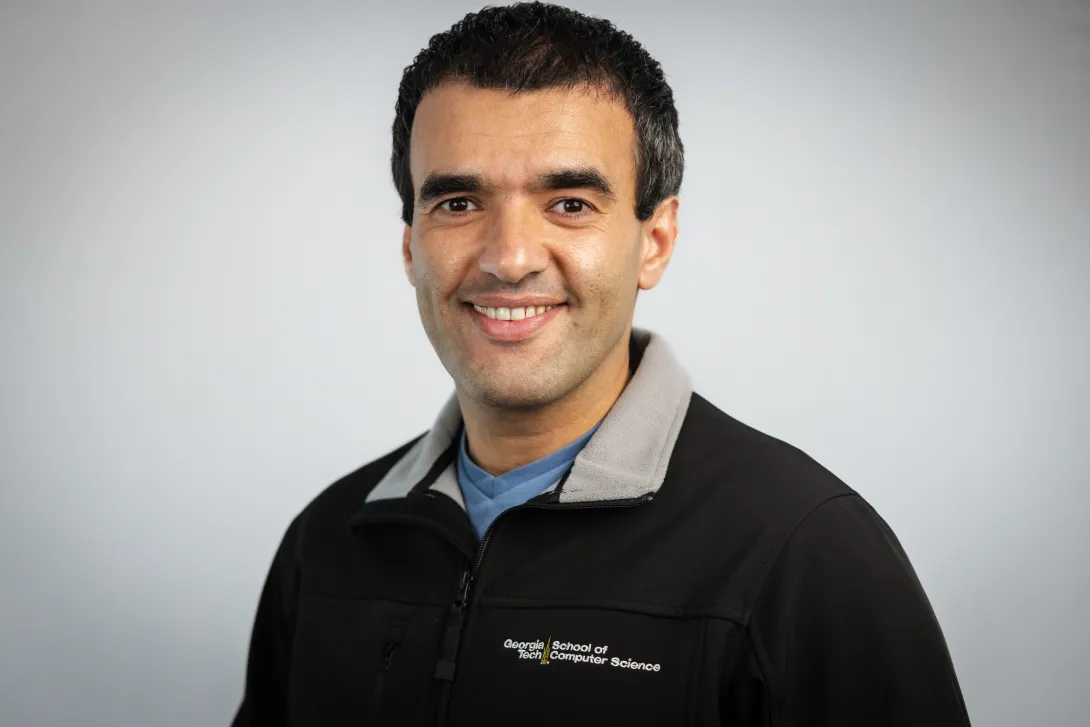
The team, led by Ph.D. student Zhaozhou Tang, found that vehicle technology advancements allowed attackers to launch new attacks, improve existing attacks, and circumvent current defense systems.
For example, Tang’s findings included the possibility for attackers to remotely compromise the computers used in cars and aircraft through Wi-Fi, cellular, Bluetooth, and other wireless channels.
“Our job was to thoroughly review existing information and find ways to protect against these attacks,” he said. “We found new threats and proposed a defense system that can protect against the new and old attacks.”
In response to their findings, the team developed ERACAN, the first comprehensive defense system against this new generation of attackers. Designed to detect new and old attacks, ERACAN can deploy defenses when necessary.
The system also classifies the attacks it reacts to, providing security experts with the tools for detailed analysis. It has a detection rate of 100% for all attacks launched by conventional methods and detects enhanced threat models 99.7% of the time.
The project received a distinguished paper award at the 2024 ACM Conference on Computer and Communications Security (CCS 24) held in Salt Lake City. Tang presented the paper at the October conference.
“This was Zhaozhou’s first paper in his Ph.D. program, and he deserves recognition for his groundbreaking work on automotive cybersecurity,” said Saman Zonouz, associate professor in the School of Cybersecurity and Privacy and the School of Electrical and Computer Engineering.
The U.S. Department of Homeland Security has designated the transportation sector as one of the nation’s 16 critical infrastructure sectors. Ensuring its security is vital to national security and public safety.
“Modern vehicles, which rely heavily on controller area networks for essential operations, are integral components of this infrastructure,” said Zonouz. “With the increasing sophistication of cyberthreats, safeguarding these systems has become critical to ensuring the resilience and security of transportation networks.”
This paper introduced to the scientific community the first comprehensive defense system to address advanced threats targeting vehicular controller area networks.
The CPSec team is putting the technology it has developed into practice in collaboration with Hyundai America Technical Center, Inc., which sponsors the work. Tang hopes ERACAN’s success will raise awareness of these new threats in the research community and industry.
“It will help them build future defenses,” he said. “We have demonstrated the best practice to defend against these attacks.”
Tang received his bachelor’s degree at Georgia Tech, where he first performed security-related work for the automobile industry. While working with Zonouz on his master’s degree, he decided to change course and pursue research initiatives like vehicle security in a Ph.D. program.
“It is interesting how it came full circle,” he said. “I will continue on this path of automobile security throughout my Ph.D.”
ERACAN: Defending Against an Emerging CAN Threat Model, was written by Zhaozhou Tang, Khaled Serag from the Qatar Computing Research Institute, Saman Zonouz, Berkay Celik and Dongyan Xu from Purdue University, and Raheem Beyah, professor and dean of the College of Engineering. The CPSec Lab is a collaboration between the School of Cybersecurity and Privacy and the School of Electrical and Computer Engineering.
News Contact
John Popham
Communications Officer II
School of Cybersecurity and Privacy
- Written by Mandy Luong, BBISS Communications Student Assistant -
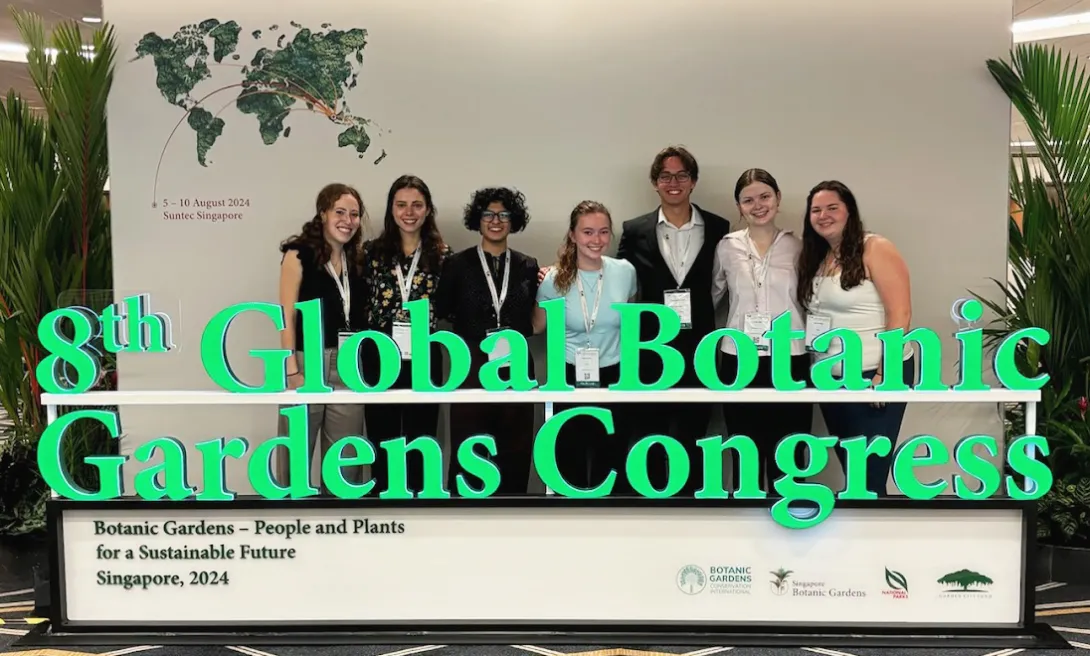
Georgia Tech’s Students Organizing for Sustainability (SOS) recently traveled across the world to Singapore for the 8th Global Botanic Garden Congress. They presented their research on the evaluation of various plants in student living accommodations. The independent research project was initially funded through the Micro Research Grants for Regenerative Built Environments sponsored by The Kendeda Building Advisory Board and the Brook Byers Institute for Sustainable Systems. This feat is uncommon among Georgia Tech student organizations but can serve as a case study for future SOS trips as well as other clubs.
The team found out about the conference by researching various conferences related to urban agriculture initiatives around the world. They specifically sought out conferences that could give them an international experience in a city deemed cutting-edge for urban green spaces, and that would allow them to talk about their research project. After being accepted into the Global Botanic Garden Congress, they needed to find funding to support their travel.
SOS members applied for numerous grants that are available to students around campus, including the School of Civil and Environmental Engineering's International Travel Funding through the Global Engineering Leadership Minor, the President’s Undergraduate Research Travel Award, and the Student Government Association (SGA) Conference Fund. In total, they were able to obtain multiple research and travel grants for over $16,000 to cover the travel expenses of seven members. The students are confident that, had more people been available, they could have received more funding to cover the additional travel expenses.
“There are a lot of opportunities on campus to get funding for a project, travel, or attend conferences, but students just need to know where to look,” says Elaina Render, fourth-year civil and environmental engineering major and SOS project lead for the UrbanAg group.
The group’s itinerary consisted of attending all four days of the conference, the last of which coincided with Singapore’s National Day. At the conference, students presented their research findings to an international audience and made personal connections. They talked with people from across the globe, including botanic garden representatives from Naples, Chicago, and San Diego. Making these connections has introduced them to opportunities for more interactive trips, such as visiting the Naples Botanical Garden to learn about beach plant management. They also hope to attend the 9th Global Botanical Garden Congress in Chicago next year.
“The conference is a great resource for students as they approach graduation because you can network for next career steps, find possible research advisors for graduate school, and be exposed to a range of career possibilities,” says Nicole Allen, fourth-year biomedical engineering major and SOS’s vice president of Finance.
In addition to the conference, they were able to explore the city of Singapore. On their first day, they toured Gardens by the Bay, where they saw famous attractions like the Golden Bay and the Flower Dome. The following day, they visited Singapore University of Technology and Design and met Greenprint, a student group similar to SOS, and talked with students and faculty about their campus sustainability initiatives. On the third day, they traveled to the Sungei Buloh Wetland Reserve, a beautiful mangrove forest. Allen notes that on a hike along the coastal trail, they decided to take a bus across the bridge to Malaysia and have brunch. On the last day of the conference, they visited Singapore’s Botanic Garden, which also houses the National Orchid Garden.
The SOS students report many successes from this experience, both personal and related to their SOS activities. Younger members of SOS, Rachel Bohl and Nikita Takalkar, both second-years, were able to attend the conference. This has inspired younger members to get more involved with on-campus sustainability initiatives. In particular, Takalkar is starting a new SOS project to decrease medical waste at Stamps Health Services. They have also seen an increase in attendance at their meetings and many questions about their trip. They hope the conference will serve as a model for future trips where students can promote their research, network, learn about what new research is happening in the world, and bring this knowledge back to Georgia Tech to inspire their own projects on campus.
“We hope that our project and trip to Singapore can serve as an inspiration to other students and campus organizations. It's possible to start an independent research project and get funding to present at international conferences,” says Render.
Allen adds, “We are implementing some of the ideas our trip inspired as new, student-led sustainability initiatives here at Georgia Tech.”
News Contact
Brent Verrill, Research Communications Program Manager, BBISS

Eight Georgia Tech researchers were honored with the ACM Distinguished Paper Award for their groundbreaking contributions to cybersecurity at the recent ACM Conference on Computer and Communications Security (CCS).
Three papers were recognized for addressing critical challenges in the field, spanning areas such as automotive cybersecurity, password security, and cryptographic testing.
“These three projects underscore Georgia Tech's leadership in advancing cybersecurity solutions that have real-world impact, from protecting critical infrastructure to ensuring the security of future computing systems and improving everyday digital practices,” said School of Cybersecurity and Privacy (SCP) Chair Michael Bailey.
One of the papers, ERACAN: Defending Against an Emerging CAN Threat Model, was co-authored by Ph.D. student Zhaozhou Tang, Associate Professor Saman Zonouz, and College of Engineering Dean and Professor Raheem Beyah. This research focuses on securing the controller area network (CAN), a vital system used in modern vehicles that is increasingly targeted by cyber threats.
"This project is led by our Ph.D. student Zhaozhou Tang with the Cyber-Physical Systems Security (CPSec) Lab," said Zonouz. "Impressively, this was Zhaozhou's first paper in his Ph.D., and he deserves special recognition for this groundbreaking work on automotive cybersecurity."
The work introduces a comprehensive defense system to counter advanced threats to vehicular CAN networks, and the team is collaborating with the Hyundai America Technical Center to implement the research. The CPSec Lab is a collaborative effort between SCP and the School of Electrical and Computer Engineering (ECE).
In another paper, Testing Side-Channel Security of Cryptographic Implementations Against Future Microarchitectures, Assistant Professor Daniel Genkin collaborated with international researchers to define security threats in new computing technology.
"We appreciate ACM for recognizing our work," said Genkin. “Tools for early-stage testing of CPUs for emerging side-channel threats are crucial to ensuring the security of the next generation of computing devices.”
The third paper, Unmasking the Security and Usability of Password Masking, was authored by graduate students Yuqi Hu, Suood Al Roomi, Sena Sahin, and Frank Li, SCP and ECE assistant professor. This study investigated the effectiveness and provided recommendations for implementing password masking and the practice of hiding characters as they are typed and offered.
"Password masking is a widely deployed security mechanism that hasn't been extensively investigated in prior works," said Li.
The assistant professor credited the collaborative efforts of his students, particularly Yuqi Hu, for leading the project.
The ACM Conference on Computer and Communications Security (CCS) is the flagship annual conference of the Special Interest Group on Security, Audit and Control (SIGSAC) of the Association for Computing Machinery (ACM). The conference was held from Oct. 14-18 in Salt Lake City.
News Contact
John Popham
Communications Officer II
College of Computing | School of Cybersecurity and Privacy
A new algorithm tested on NASA’s Perseverance Rover on Mars may lead to better forecasting of hurricanes, wildfires, and other extreme weather events that impact millions globally.
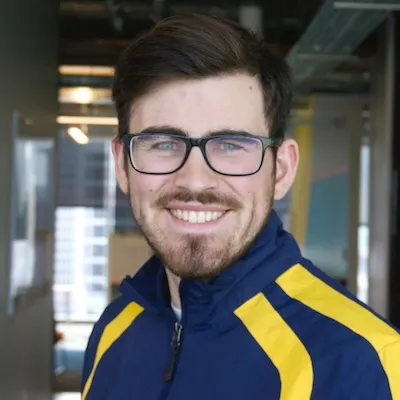
Georgia Tech Ph.D. student Austin P. Wright is first author of a paper that introduces Nested Fusion. The new algorithm improves scientists’ ability to search for past signs of life on the Martian surface.
In addition to supporting NASA’s Mars 2020 mission, scientists from other fields working with large, overlapping datasets can use Nested Fusion’s methods toward their studies.
Wright presented Nested Fusion at the 2024 International Conference on Knowledge Discovery and Data Mining (KDD 2024) where it was a runner-up for the best paper award. KDD is widely considered the world's most prestigious conference for knowledge discovery and data mining research.
“Nested Fusion is really useful for researchers in many different domains, not just NASA scientists,” said Wright. “The method visualizes complex datasets that can be difficult to get an overall view of during the initial exploratory stages of analysis.”
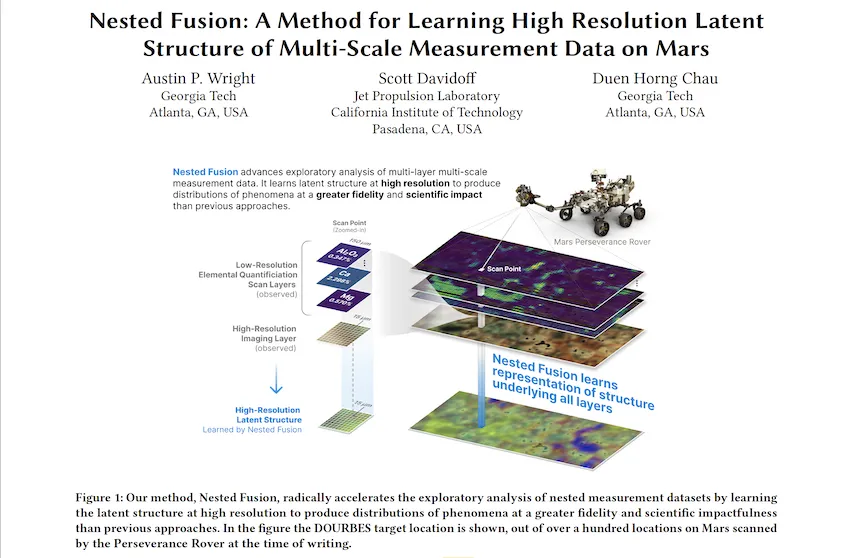
Nested Fusion combines datasets with different resolutions to produce a single, high-resolution visual distribution. Using this method, NASA scientists can more easily analyze multiple datasets from various sources at the same time. This can lead to faster studies of Mars’ surface composition to find clues of previous life.
The algorithm demonstrates how data science impacts traditional scientific fields like chemistry, biology, and geology.
Even further, Wright is developing Nested Fusion applications to model shifting climate patterns, plant and animal life, and other concepts in the earth sciences. The same method can combine overlapping datasets from satellite imagery, biomarkers, and climate data.
“Users have extended Nested Fusion and similar algorithms toward earth science contexts, which we have received very positive feedback,” said Wright, who studies machine learning (ML) at Georgia Tech.
“Cross-correlational analysis takes a long time to do and is not done in the initial stages of research when patterns appear and form new hypotheses. Nested Fusion enables people to discover these patterns much earlier.”
Wright is the data science and ML lead for PIXLISE, the software that NASA JPL scientists use to study data from the Mars Perseverance Rover.
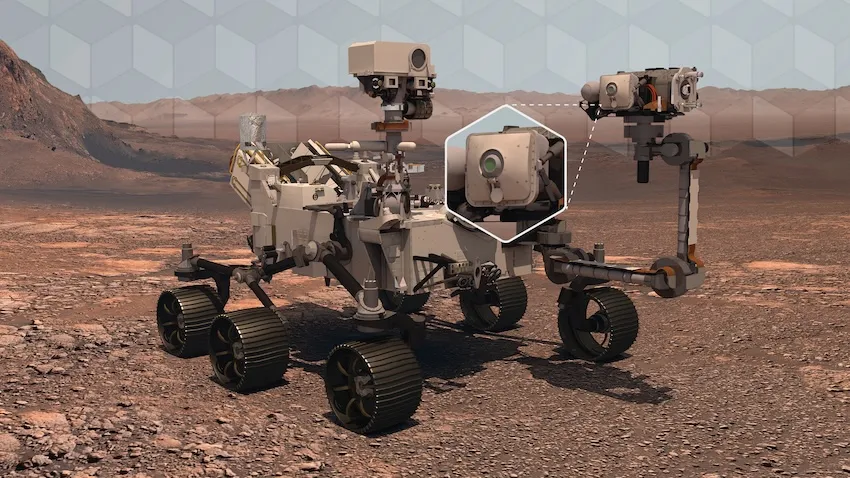
Perseverance uses its Planetary Instrument for X-ray Lithochemistry (PIXL) to collect data on mineral composition of Mars’ surface. PIXL’s two main tools that accomplish this are its X-ray Fluorescence (XRF) Spectrometer and Multi-Context Camera (MCC).
When PIXL scans a target area, it creates two co-aligned datasets from the components. XRF collects a sample's fine-scale elemental composition. MCC produces images of a sample to gather visual and physical details like size and shape.
A single XRF spectrum corresponds to approximately 100 MCC imaging pixels for every scan point. Each tool’s unique resolution makes mapping between overlapping data layers challenging. However, Wright and his collaborators designed Nested Fusion to overcome this hurdle.
In addition to progressing data science, Nested Fusion improves NASA scientists' workflow. Using the method, a single scientist can form an initial estimate of a sample’s mineral composition in a matter of hours. Before Nested Fusion, the same task required days of collaboration between teams of experts on each different instrument.
“I think one of the biggest lessons I have taken from this work is that it is valuable to always ground my ML and data science problems in actual, concrete use cases of our collaborators,” Wright said.
“I learn from collaborators what parts of data analysis are important to them and the challenges they face. By understanding these issues, we can discover new ways of formalizing and framing problems in data science.”
Wright presented Nested Fusion at KDD 2024, held Aug. 25-29 in Barcelona, Spain. KDD is an official special interest group of the Association for Computing Machinery. The conference is one of the world’s leading forums for knowledge discovery and data mining research.
Nested Fusion won runner-up for the best paper in the applied data science track, which comprised of over 150 papers. Hundreds of other papers were presented at the conference’s research track, workshops, and tutorials.
Wright’s mentors, Scott Davidoff and Polo Chau, co-authored the Nested Fusion paper. Davidoff is a principal research scientist at the NASA Jet Propulsion Laboratory. Chau is a professor at the Georgia Tech School of Computational Science and Engineering (CSE).
“I was extremely happy that this work was recognized with the best paper runner-up award,” Wright said. “This kind of applied work can sometimes be hard to find the right academic home, so finding communities that appreciate this work is very encouraging.”
News Contact
Bryant Wine, Communications Officer
bryant.wine@cc.gatech.edu
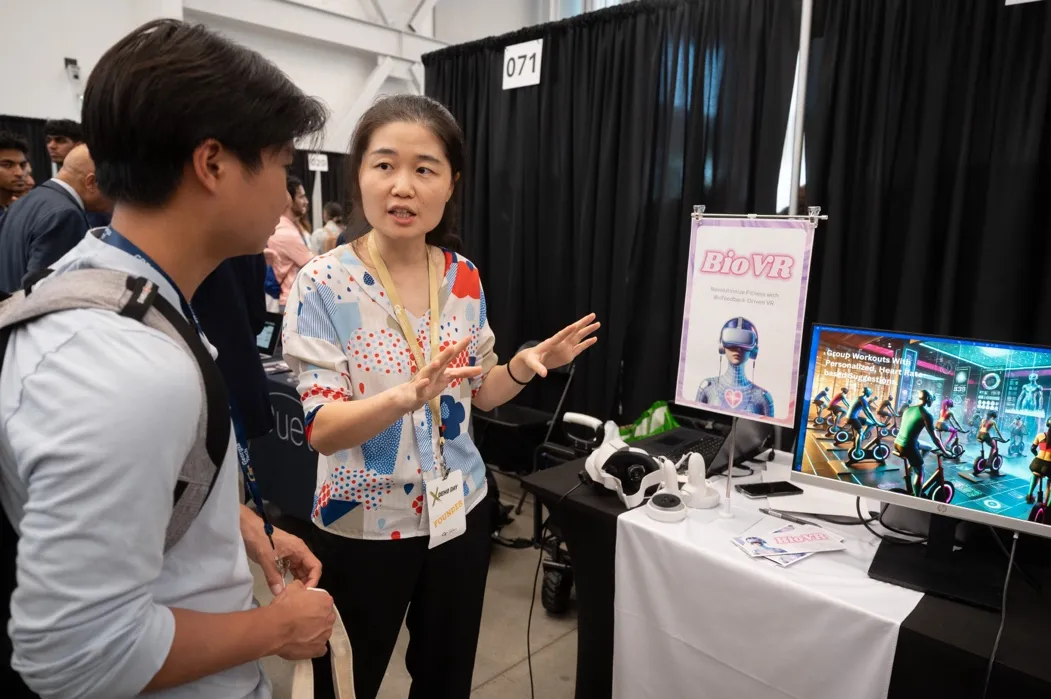
Digital media Ph.D. candidate Yuchen Zhao’s startup aims to revolutionize fitness with VR and biofeedback integration in her startup, BioVR.
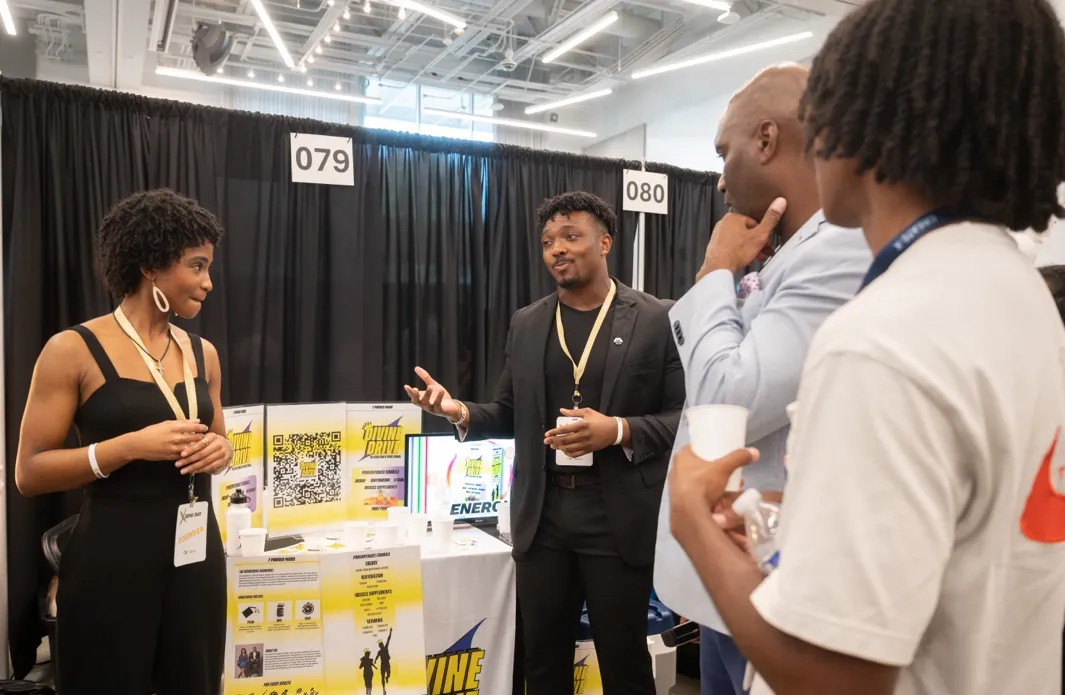
Business administration major Ty Christian Thompson and biomedical engineering major Sydney Brown developed their startup, DivineDrive, to maximize hydration and energy while minimizing the risk of injury due to dehydration.
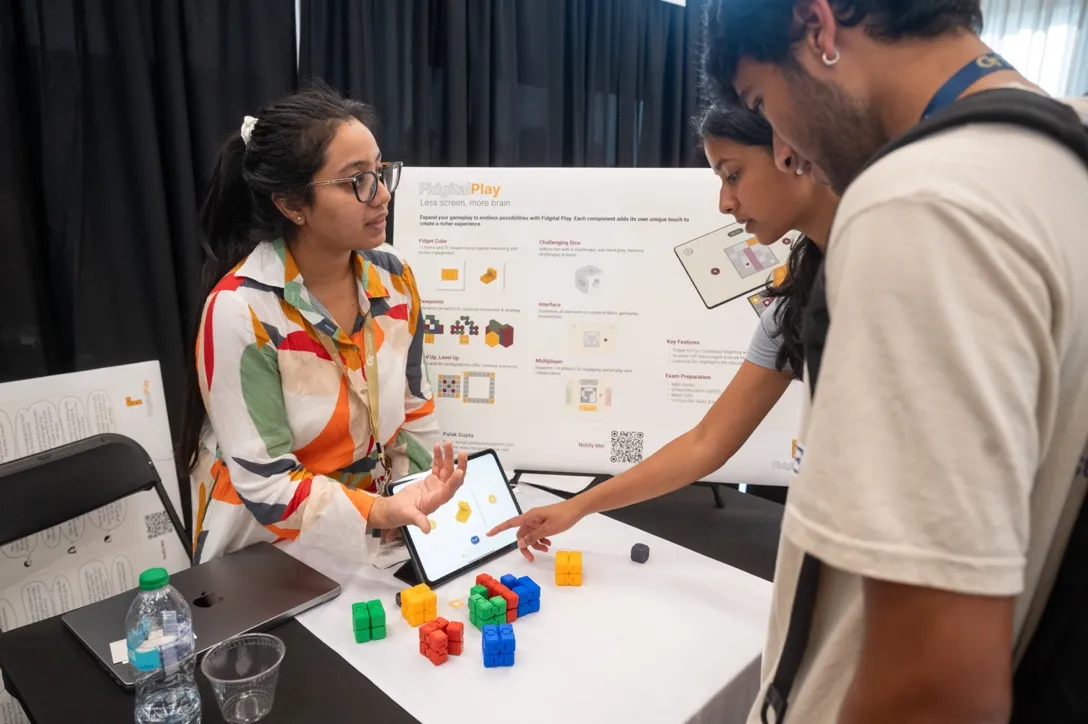
To tackle the issue of too much screen time for kids, Georgia Tech School of Industrial Design research assistant Palak Gupta created Fidgital-Play, a mobile app that reimagines play.
Georgia Tech structural mechanics and materials alumna Katy Bradford and co-founder Jonathan Valz created their Cassette panels to reduce labor needs and construction timelines.
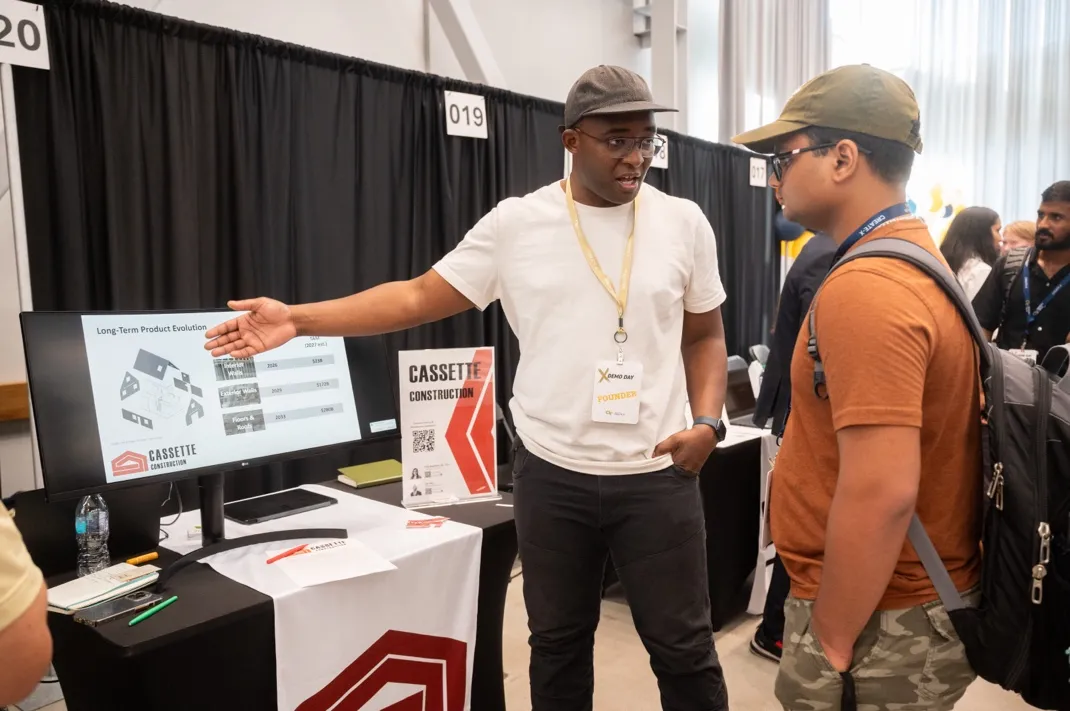
Katy Bradford
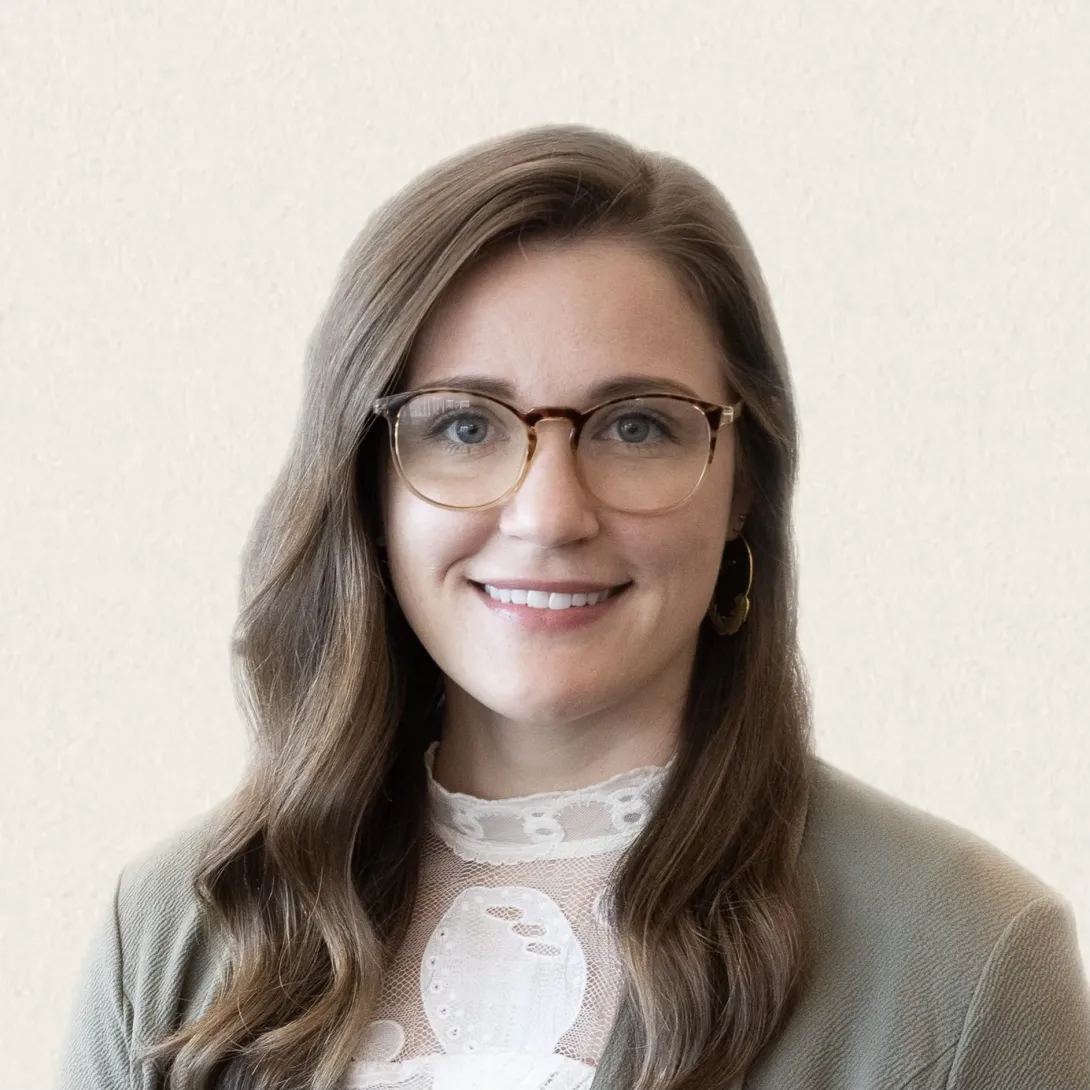
Tackling the problem of expensive testing for hospital-acquired infections, Danae Rammos, biomedical engineering major, founded Qualitic Biotechnology LLC, which produces a rapid C. difficile bacterial screening device.
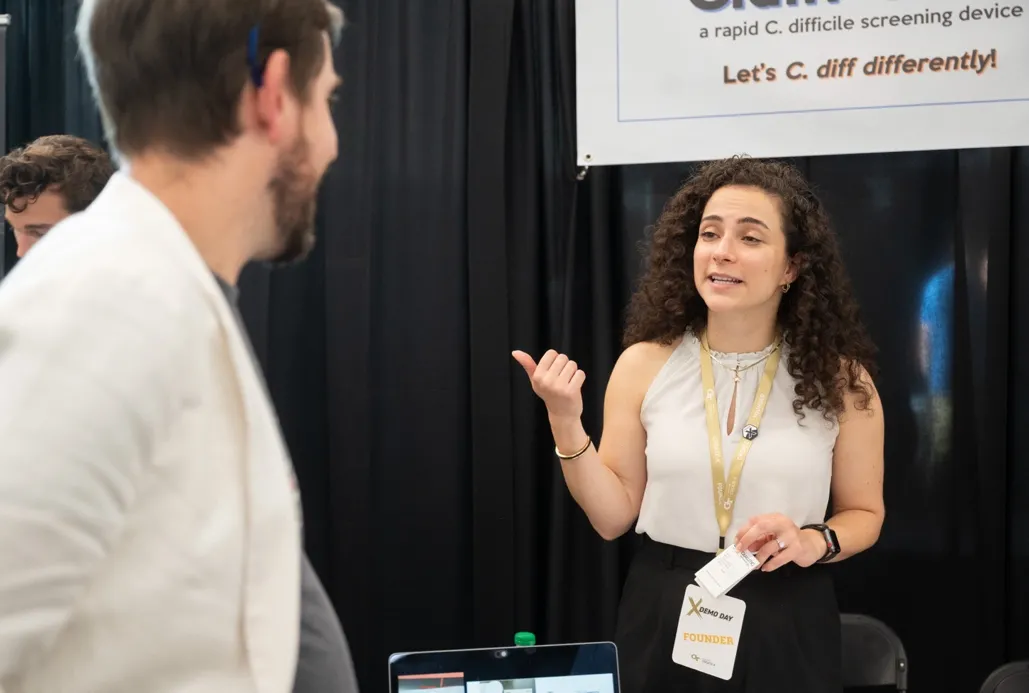
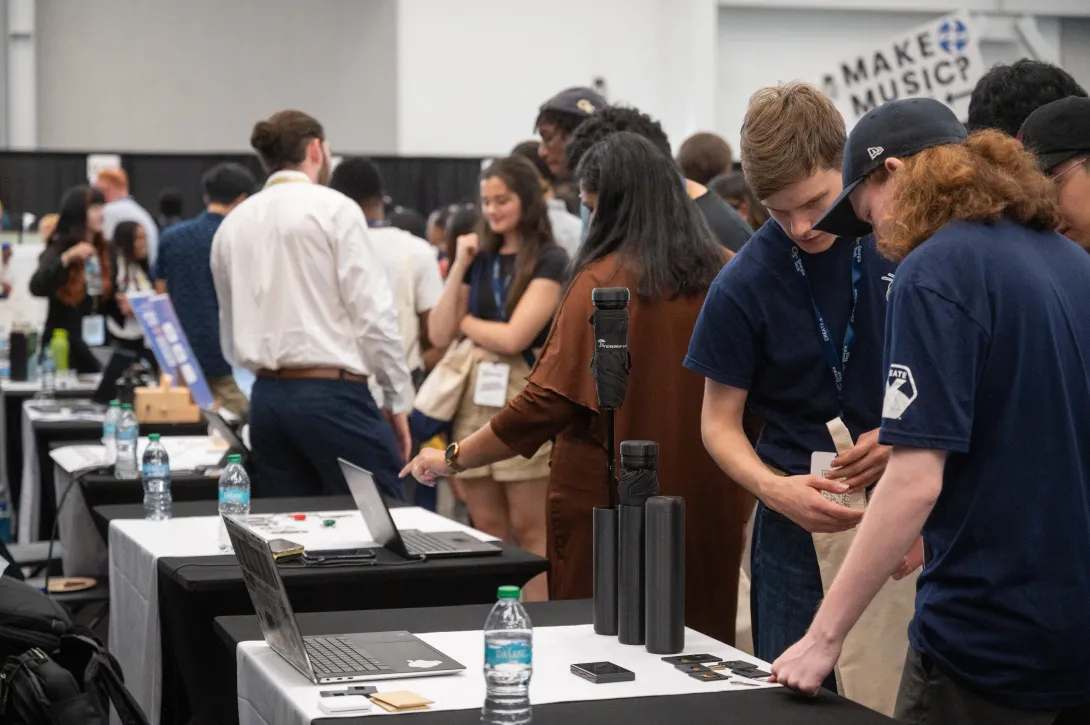
Kicking off a new decade of startup production at Georgia Tech, CREATE-X hosted its 11th Demo Day, showcasing 100 startups created by Georgia Tech students, faculty, researchers, and alumni over 12 weeks this summer. More than 1,500 attendees, including Georgia government and business leaders, viewed new solutions ranging from fashion to healthcare in a bustling Exhibition Hall on Aug. 29.
The event traditionally begins shortly after the semester starts, giving the entrepreneurially curious a preview of what’s to come if they join the program’s accelerator during the next application cycle.
Demo Day is the culmination of the 12-week summer accelerator, Startup Launch, where founders receive mentorship, $5,000 in optional funding, and $150,000 in services to help build their businesses. Teams can be interdisciplinary, made up of co-founders even outside of Georgia Tech, and solopreneurs, ready to solve real-world problems.
Each year, Startup Launch has grown, from an initial cohort of eight startups to over 100 this year. The Office of Commercialization, the home of CREATE-X, plans to keep expanding opportunities for the Georgia Tech community to grow their entrepreneurial skills.
Counting courses, events, programming, and partnerships, CREATE-X has had more than 32,000 participants. The ultimate goal and mission of the program is to instill entrepreneurial confidence in all Tech students. Rahul Saxena, director of the program, spoke about how far the Institute has come in the last decade.
“I’ve been plugged into Georgia Tech for over 10 years. In the past, when you said Georgia Tech and entrepreneurship in the same sentence, they’d laugh, believe it or not,” he said. “Fast-forward, we’re one of the top entrepreneurial schools in the country. Our first four cohorts value over $100 million, with one of them being a unicorn, and our last four cohorts are well on their way. We want our students to have as many shots at gold as possible before they graduate. And even if they decide on a traditional career pathway, we believe they’ll be ahead with this entrepreneurial mindset, which is something lacking in corporate.”
This year, CREATE-X reached over 560 startup teams launched. Founders represented 38 academic majors, and their total startup portfolio valuation exceeds $2 billion.
CREATE-X opened its Startup Launch application for its next cohort on Aug. 30. For those interested, the priority deadline is Nov. 17. Early applicants have a higher chance at acceptance and the opportunity for more feedback. So, send in your applications to Startup Launch and become the next founder at Georgia Tech.
Missed out on Demo Day? Check out the CREATE-X Flickr page to see photos from the event and the Demo Day page to see other teams. For more opportunities to engage, visit the CREATE-X Engage page for upcoming events.
Spotlight on Startups
Some of the standout startups from this year’s Demo Day include:
News Contact
Breanna Durham
Marketing Strategist
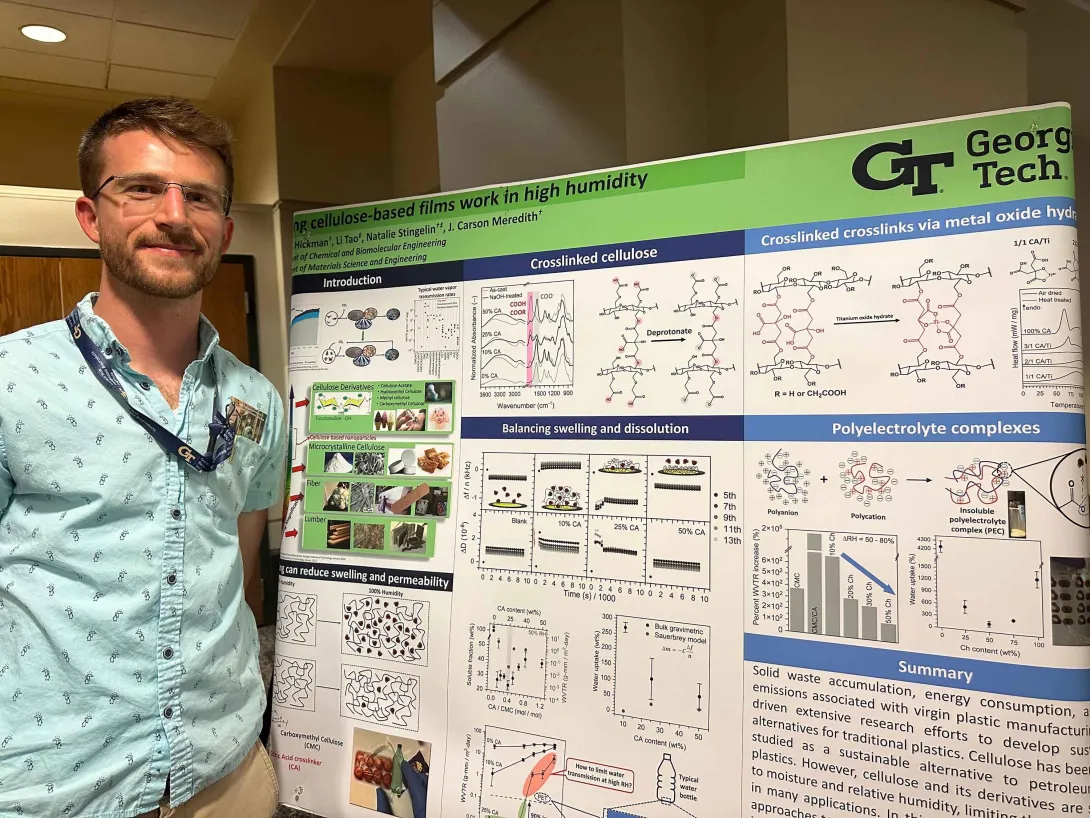
Tanner Hickman at the 2023 RBI Spring Workshop
This is part two of the student experiences series. Tanner Hickman, fourth-year Ph.D. candidate in chemical and biomolecular engineering shares his experience from the 2023 RBI Spring Workshop on "Innovations in Packaging and Circular Economy."
Tell us about yourself.
I am Tanner Hickman and I completed my bachelor’s degree in chemical and biomolecular engineering at the University of South Alabama. Here at Georgia Tech, I am a fourth-year Ph.D. candidate in chemical and biomolecular engineering, advised by Carson Meredith and Natalie Stingelin. My research focuses on exploring different ways to control the properties of natural polymers to make them useful for new applications.
How was your experience at the RBI workshop?
The RBI workshop provided incredibly valuable insights. I gained a comprehensive understanding of the persistent challenges within sustainable packaging, as well as the ongoing research endeavors aimed at tackling them. A key lesson I extracted from the workshop underscores the imperative of a circular economy within the packaging sector. However, it's crucial to note that our focus shouldn't solely revolve around product research; we must also direct attention toward addressing social concerns and broader issues.
What was your main takeaway from the poster session?
One of the best parts of RBI workshops is the opportunities to talk with people from different technical backgrounds, and poster sessions are one of the best ways to get the exchange of ideas flowing. I talked with several people from industry, who all had valuable advice on what it takes to bring benchtop research to application on a larger scale. At the same time, discussions with other researchers in academia are vital for brainstorming new projects, forming collaborations, etc.
What more would you like to see in future events at the Renewable Bioproducts Institute?
I would like to see a workshop that incorporates more interactive elements (in addition to the poster session) to engage participants. For instance, roundtable discussions or panel sessions where experts and attendees can openly exchange ideas and insights could enhance the learning experience.
News Contact
Priya Devarajan || RBI Communications Program Manager