
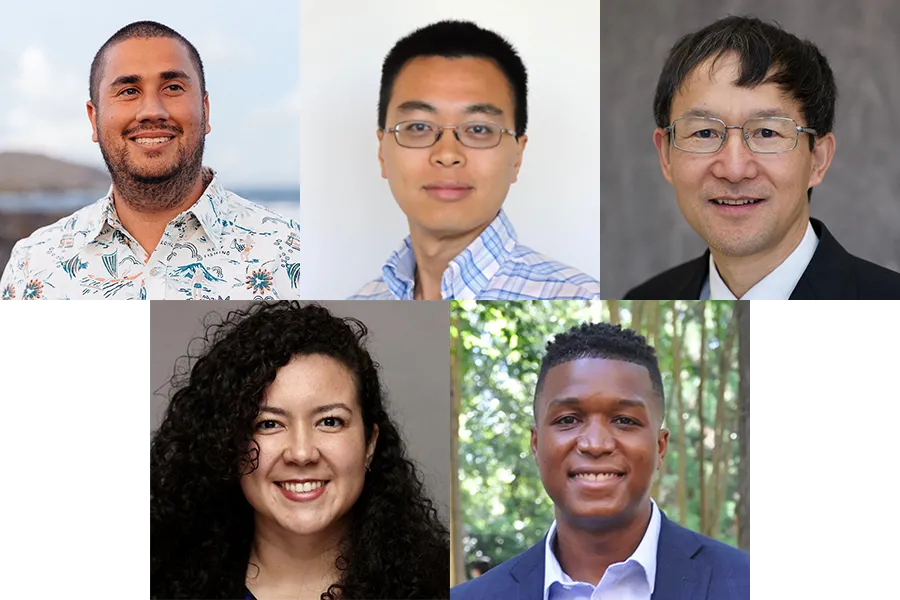
Montage of five portraits, L to R, T to B: Josiah Hester, Peng Chen, Yongsheng Chen, Rosemarie Santa González, and Joe Bozeman.
- Written by Benjamin Wright -
As Georgia Tech establishes itself as a national leader in AI research and education, some researchers on campus are putting AI to work to help meet sustainability goals in a range of areas including climate change adaptation and mitigation, urban farming, food distribution, and life cycle assessments while also focusing on ways to make sure AI is used ethically.
Josiah Hester, interim associate director for Community-Engaged Research in the Brook Byers Institute for Sustainable Systems (BBISS) and associate professor in the School of Interactive Computing, sees these projects as wins from both a research standpoint and for the local, national, and global communities they could affect.
“These faculty exemplify Georgia Tech's commitment to serving and partnering with communities in our research,” he says. “Sustainability is one of the most pressing issues of our time. AI gives us new tools to build more resilient communities, but the complexities and nuances in applying this emerging suite of technologies can only be solved by community members and researchers working closely together to bridge the gap. This approach to AI for sustainability strengthens the bonds between our university and our communities and makes lasting impacts due to community buy-in.”
Flood Monitoring and Carbon Storage
Peng Chen, assistant professor in the School of Computational Science and Engineering in the College of Computing, focuses on computational mathematics, data science, scientific machine learning, and parallel computing. Chen is combining these areas of expertise to develop algorithms to assist in practical applications such as flood monitoring and carbon dioxide capture and storage.
He is currently working on a National Science Foundation (NSF) project with colleagues in Georgia Tech’s School of City and Regional Planning and from the University of South Florida to develop flood models in the St. Petersburg, Florida area. As a low-lying state with more than 8,400 miles of coastline, Florida is one of the states most at risk from sea level rise and flooding caused by extreme weather events sparked by climate change.
Chen’s novel approach to flood monitoring takes existing high-resolution hydrological and hydrographical mapping and uses machine learning to incorporate real-time updates from social media users and existing traffic cameras to run rapid, low-cost simulations using deep neural networks. Current flood monitoring software is resource and time-intensive. Chen’s goal is to produce live modeling that can be used to warn residents and allocate emergency response resources as conditions change. That information would be available to the general public through a portal his team is working on.
“This project focuses on one particular community in Florida,” Chen says, “but we hope this methodology will be transferable to other locations and situations affected by climate change.”
In addition to the flood-monitoring project in Florida, Chen and his colleagues are developing new methods to improve the reliability and cost-effectiveness of storing carbon dioxide in underground rock formations. The process is plagued with uncertainty about the porosity of the bedrock, the optimal distribution of monitoring wells, and the rate at which carbon dioxide can be injected without over-pressurizing the bedrock, leading to collapse. The new simulations are fast, inexpensive, and minimize the risk of failure, which also decreases the cost of construction.
“Traditional high-fidelity simulation using supercomputers takes hours and lots of resources,” says Chen. “Now we can run these simulations in under one minute using AI models without sacrificing accuracy. Even when you factor in AI training costs, this is a huge savings in time and financial resources.”
Flood monitoring and carbon capture are passion projects for Chen, who sees an opportunity to use artificial intelligence to increase the pace and decrease the cost of problem-solving.
“I’m very excited about the possibility of solving grand challenges in the sustainability area with AI and machine learning models,” he says. “Engineering problems are full of uncertainty, but by using this technology, we can characterize the uncertainty in new ways and propagate it throughout our predictions to optimize designs and maximize performance.”
Urban Farming and Optimization
Yongsheng Chen works at the intersection of food, energy, and water. As the Bonnie W. and Charles W. Moorman Professor in the School of Civil and Environmental Engineering and director of the Nutrients, Energy, and Water Center for Agriculture Technology, Chen is focused on making urban agriculture technologically feasible, financially viable, and, most importantly, sustainable. To do that he’s leveraging AI to speed up the design process and optimize farming and harvesting operations.
Chen’s closed-loop hydroponic system uses anaerobically treated wastewater for fertilization and irrigation by extracting and repurposing nutrients as fertilizer before filtering the water through polymeric membranes with nano-scale pores. Advancing filtration and purification processes depends on finding the right membrane materials to selectively separate contaminants, including antibiotics and per- and polyfluoroalkyl substances (PFAS). Chen and his team are using AI and machine learning to guide membrane material selection and fabrication to make contaminant separation as efficient as possible. Similarly, AI and machine learning are assisting in developing carbon capture materials such as ionic liquids that can retain carbon dioxide generated during wastewater treatment and redirect it to hydroponics systems, boosting food productivity.
“A fundamental angle of our research is that we do not see municipal wastewater as waste,” explains Chen. “It is a resource we can treat and recover components from to supply irrigation, fertilizer, and biogas, all while reducing the amount of energy used in conventional wastewater treatment methods.”
In addition to aiding in materials development, which reduces design time and production costs, Chen is using machine learning to optimize the growing cycle of produce, maximizing nutritional value. His USDA-funded vertical farm uses autonomous robots to measure critical cultivation parameters and take pictures without destroying plants. This data helps determine optimum environmental conditions, fertilizer supply, and harvest timing, resulting in a faster-growing, optimally nutritious plant with less fertilizer waste and lower emissions.
Chen’s work has received considerable federal funding. As the Urban Resilience and Sustainability Thrust Leader within the NSF-funded AI Institute for Advances in Optimization (AI4OPT), he has received additional funding to foster international collaboration in digital agriculture with colleagues across the United States and in Japan, Australia, and India.
Optimizing Food Distribution
At the other end of the agricultural spectrum is postdoc Rosemarie Santa González in the H. Milton Stewart School of Industrial and Systems Engineering, who is conducting her research under the supervision of Professor Chelsea White and Professor Pascal Van Hentenryck, the director of Georgia Tech’s AI Hub as well as the director of AI4OPT.
Santa González is working with the Wisconsin Food Hub Cooperative to help traditional farmers get their products into the hands of consumers as efficiently as possible to reduce hunger and food waste. Preventing food waste is a priority for both the EPA and USDA. Current estimates are that 30 to 40% of the food produced in the United States ends up in landfills, which is a waste of resources on both the production end in the form of land, water, and chemical use, as well as a waste of resources when it comes to disposing of it, not to mention the impact of the greenhouses gases when wasted food decays.
To tackle this problem, Santa González and the Wisconsin Food Hub are helping small-scale farmers access refrigeration facilities and distribution chains. As part of her research, she is helping to develop AI tools that can optimize the logistics of the small-scale farmer supply chain while also making local consumers in underserved areas aware of what’s available so food doesn’t end up in landfills.
“This solution has to be accessible,” she says. “Not just in the sense that the food is accessible, but that the tools we are providing to them are accessible. The end users have to understand the tools and be able to use them. It has to be sustainable as a resource.”
Making AI accessible to people in the community is a core goal of the NSF’s AI Institute for Intelligent Cyberinfrastructure with Computational Learning in the Environment (ICICLE), one of the partners involved with the project.
“A large segment of the population we are working with, which includes historically marginalized communities, has a negative reaction to AI. They think of machines taking over, or data being stolen. Our goal is to democratize AI in these decision-support tools as we work toward the UN Sustainable Development Goal of Zero Hunger. There is so much power in these tools to solve complex problems that have very real results. More people will be fed and less food will spoil before it gets to people’s homes.”
Santa González hopes the tools they are building can be packaged and customized for food co-ops everywhere.
AI and Ethics
Like Santa González, Joe Bozeman III is also focused on the ethical and sustainable deployment of AI and machine learning, especially among marginalized communities. The assistant professor in the School of Civil and Environmental Engineering is an industrial ecologist committed to fostering ethical climate change adaptation and mitigation strategies. His SEEEL Lab works to make sure researchers understand the consequences of decisions before they move from academic concepts to policy decisions, particularly those that rely on data sets involving people and communities.
“With the administration of big data, there is a human tendency to assume that more data means everything is being captured, but that's not necessarily true,” he cautions. “More data could mean we're just capturing more of the data that already exists, while new research shows that we’re not including information from marginalized communities that have historically not been brought into the decision-making process. That includes underrepresented minorities, rural populations, people with disabilities, and neurodivergent people who may not interface with data collection tools.”
Bozeman is concerned that overlooking marginalized communities in data sets will result in decisions that at best ignore them and at worst cause them direct harm.
“Our lab doesn't wait for the negative harms to occur before we start talking about them,” explains Bozeman, who holds a courtesy appointment in the School of Public Policy. “Our lab forecasts what those harms will be so decision-makers and engineers can develop technologies that consider these things.”
He focuses on urbanization, the food-energy-water nexus, and the circular economy. He has found that much of the research in those areas is conducted in a vacuum without consideration for human engagement and the impact it could have when implemented.
Bozeman is lobbying for built-in tools and safeguards to mitigate the potential for harm from researchers using AI without appropriate consideration. He already sees a disconnect between the academic world and the public. Bridging that trust gap will require ethical uses of AI.
“We have to start rigorously including their voices in our decision-making to begin gaining trust with the public again. And with that trust, we can all start moving toward sustainable development. If we don't do that, I don't care how good our engineering solutions are, we're going to miss the boat entirely on bringing along the majority of the population.”
BBISS Support
Moving forward, Hester is excited about the impact the Brooks Byers Institute for Sustainable Systems can have on AI and sustainability research through a variety of support mechanisms.
“BBISS continues to invest in faculty development and training in community-driven research strategies, including the Community Engagement Faculty Fellows Program (with the Center for Sustainable Communities Research and Education), while empowering multidisciplinary teams to work together to solve grand engineering challenges with AI by supporting the AI+Climate Faculty Interest Group, as well as partnering with and providing administrative support for community-driven research projects.”
News Contact
Brent Verrill, Research Communications Program Manager, BBISS
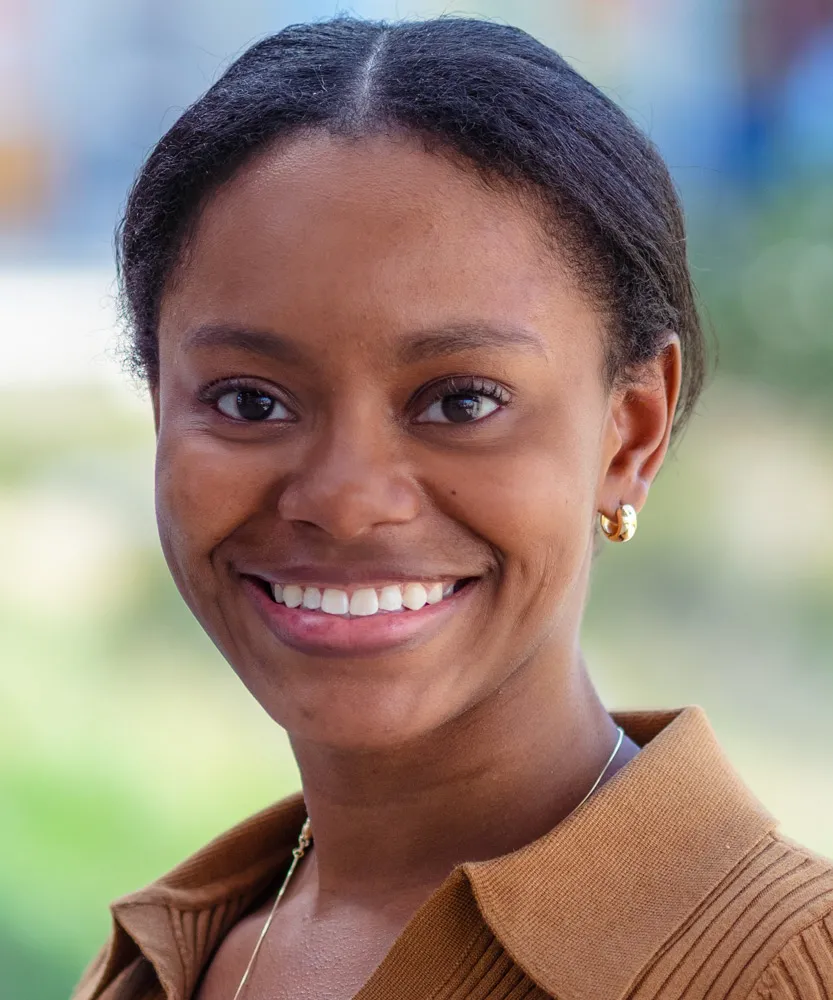
Using what she learned from her PIN fellowship, Iesha Baldwin now serves as the inaugural sustainability coordinator for Spelman College.
Whether it’s typing an email or guiding travel from one destination to the next, artificial intelligence (AI) already plays a role in simplifying daily tasks.
But what if it could also help people live more efficiently — that is, more sustainably, with less waste?
It’s a concept that often runs through the mind of Iesha Baldwin, the inaugural Georgia AIM Fellow with the Partnership for Inclusive Innovation (PIN) at the Georgia Institute of Technology’s Enterprise Innovation Institute. Born out of the Georgia Tech Manufacturing Institute, the Georgia AIM (Artificial Intelligence in Manufacturing) project works with PIN fellows to advance the project's mission of equitably developing and deploying talent and innovation in AI for manufacturing throughout the state of Georgia.
When she accepted the PIN Fellowship for 2023, she saw an opportunity to learn more about the nexus of artificial intelligence, manufacturing, waste, and education. With a background in environmental studies and science, Baldwin studied methods for waste reduction, environmental protection, and science education.
“I took an interest in AI technology because I wanted to learn how it can be harnessed to solve the waste problem and create better science education opportunities for K-12 and higher education students,” said Baldwin.
This type of unique problem-solving is what defines the PIN Fellowship programs. Every year, a cohort of recent college graduates is selected, and each is paired with an industry that aligns with their expertise and career goals — specifically, cleantech, AI manufacturing, supply chain and logistics, and cybersecurity/information technology. Fellowships are one year, with fellows spending six months with a private company and then six months with a public organization.
Through the experience, fellows expand their professional network and drive connections between the public and private sectors. They also use the opportunity to work on special projects that involve using new technologies in their area of interest.
With a focus on artificial intelligence in manufacturing, Baldwin led an inventory management project at the Georgia manufacturer Freudenberg-NOK, where the objective was to create an inventory management system that reduced manufacturing downtime and, as a result, increased efficiency, and reduced waste.
She also worked in several capacities at Georgia Tech: supporting K-12 outreach programs at the Advanced Manufacturing Pilot Facility, assisting with energy research at the Marcus Nanotechnology Research Center, and auditing the infamous mechanical engineering course ME2110 to improve her design thinking and engineering skills.
“Learning about artificial intelligence is a process, and the knowledge gained was worth the academic adventure,” she said. “Because of the wonderful support at Georgia Tech, Freudenberg NOK, PIN, and Georgia AIM, I feel confident about connecting environmental sustainability and technology in a way that makes communities more resilient and sustainable.”
Since leaving the PIN Fellowship, Baldwin connected her love for education, science, and environmental sustainability through her new role as the inaugural sustainability coordinator for Spelman College, her alma mater. In this role, she is responsible for supporting campus sustainability initiatives.
News Contact
Kristen Morales
Marketing Strategist
Georgia Artificial Intelligence in Manufacturing
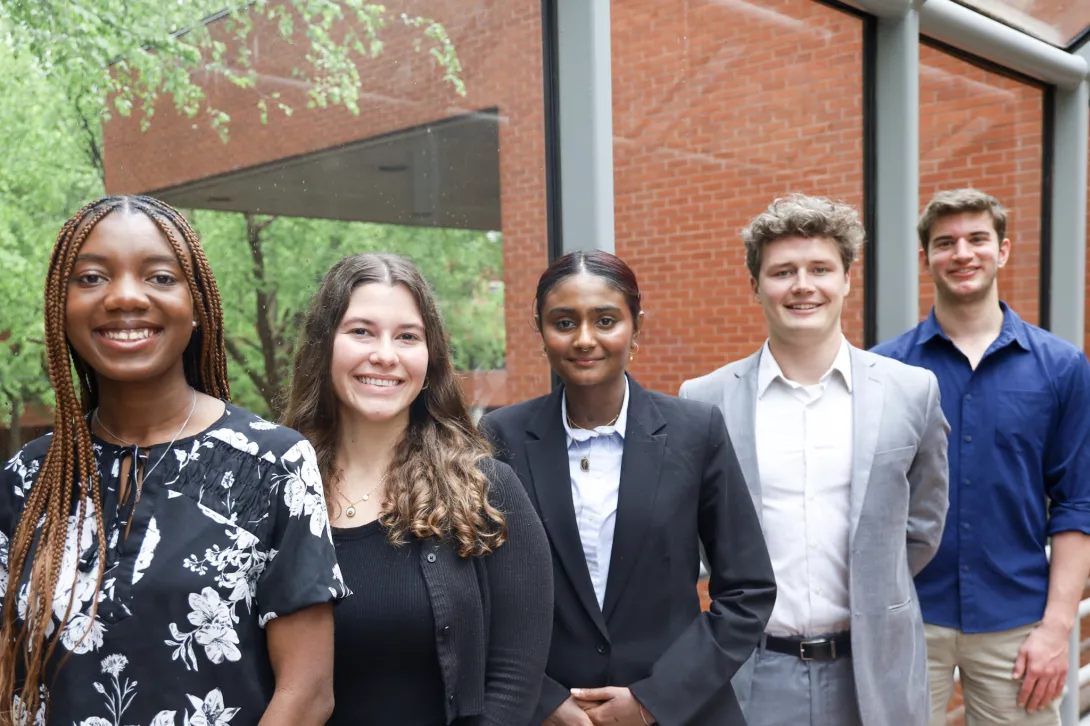
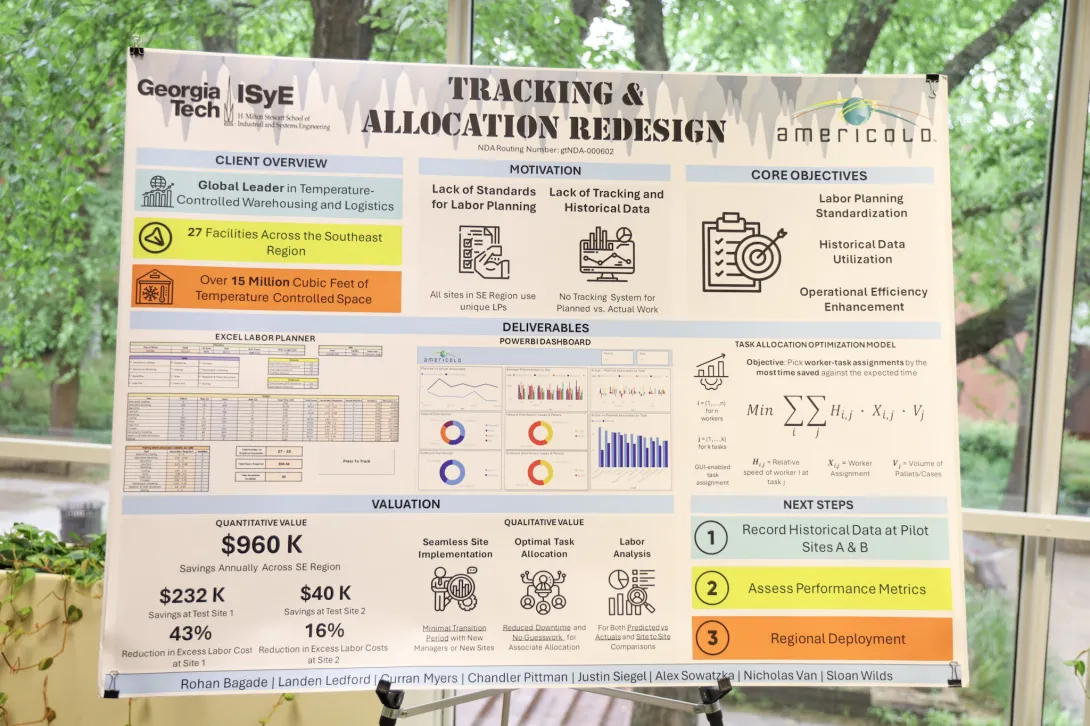
With a network of twenty-seven sites across the United States, Americold Logistics, was presented with a critical operational snag that threatened their level of efficiency: disparate labor planning systems.
This inconsistency meant potential bottlenecking and inefficiencies across the supply chain.
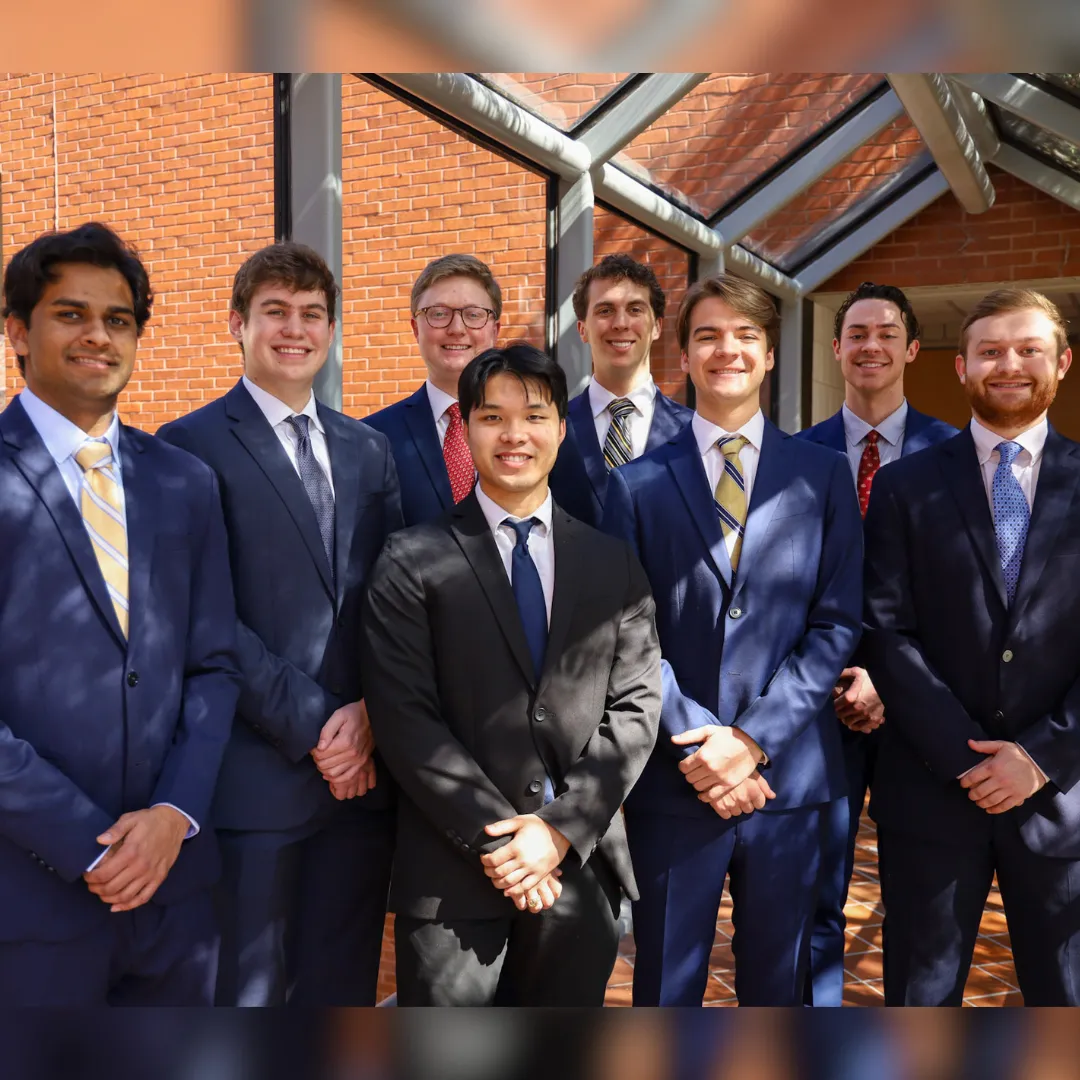
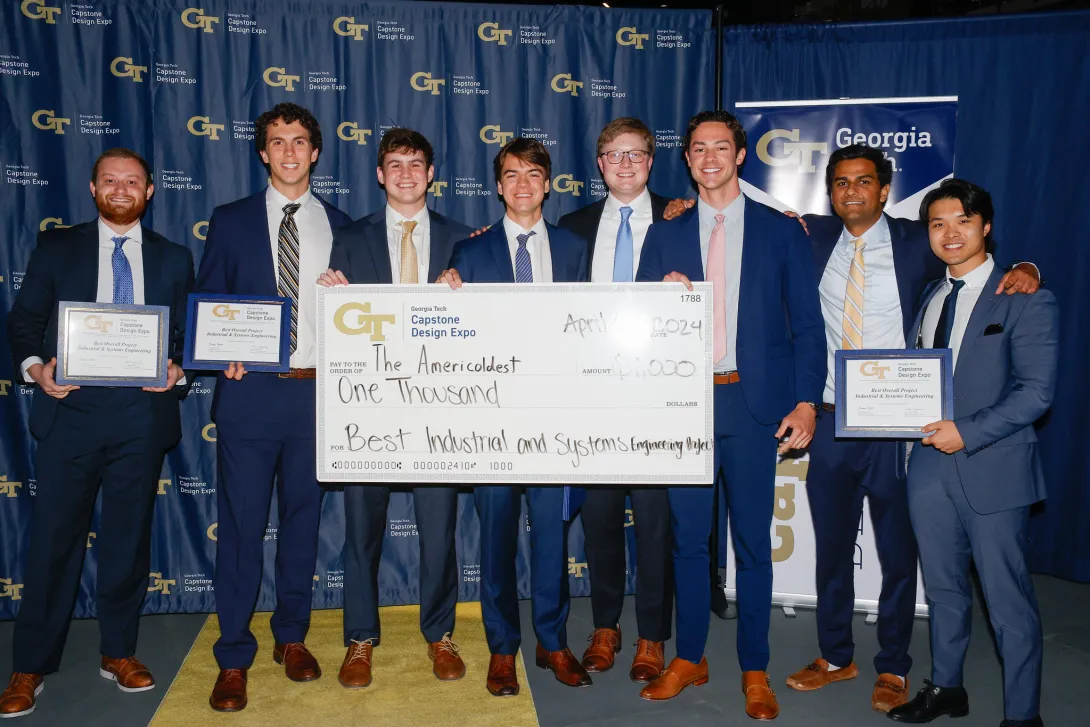
Enter in Senior Design team, The Americoldest, and their project “Tracking & Allocation Redesign,” who was selected as the Best of ISyE Team at the 2024 Capstone Design Expo.
Armed with their technical prowess and problem-solving acumen, they set their sights on streamlining labor planning across sites, optimizing resource allocation and maximizing productivity.
“Our solution was to design a sophisticated model that monitors historical data alongside real-time labor metrics, subsequently channeled into an optimization algorithm. This algorithm minimizes labor hours per shift, empowering the organization to execute data-informed decision-making,” stated undergraduate student, Landon Ledford.
Guided by their client sponsor Will Byrd and faculty advisor Dr. Xin Chen, this project is being deployed across all sites and implemented internationally starting with Dublin, Ireland.
Team Name: The Americoldest
Project Title: Tracking & Allocation Redesign
Team Members:
Rohan Bagade
Landen Ledford
Curran Myers
Chandler Pittman
Justin Siegel
Alex Sowatzka
Nicholas Van
Sloan Wilds
Collectively, they were awarded $1,500 and bragging rights as the best ISyE team for the spring semester.
Out of 204 teams from various schools and colleges across Georgia Tech, 24 teams comprised of 177 students represented the H. Milton Stewart School of Industrial and Systems Engineering (ISyE) during the 2024 Capstone Design Expo.
Capstone Design Expo at Georgia Tech is the ultimate test for undergraduate students.
Working in teams, they learn the ins-and-outs of engineering design, from ideation to solutions.
They tackle real-world challenges proposed by industry leaders or pursue their own entrepreneurial ventures to create solutions for unsolved problems.
As Director of Professional Practice, Dr. Dima Nazzal plays a pivotal role in shaping the trajectory of ISyE’s Senior Design course.
Supporting Nazzal in this endeavor is their dedicated Academic Program Manager, Daniela Estrada. Together, they form a dynamic team committed to ensuring that students receive comprehensive support and resources, empowering them to thrive from project inception to execution.
Honorable Mention: Pop-up Spaces
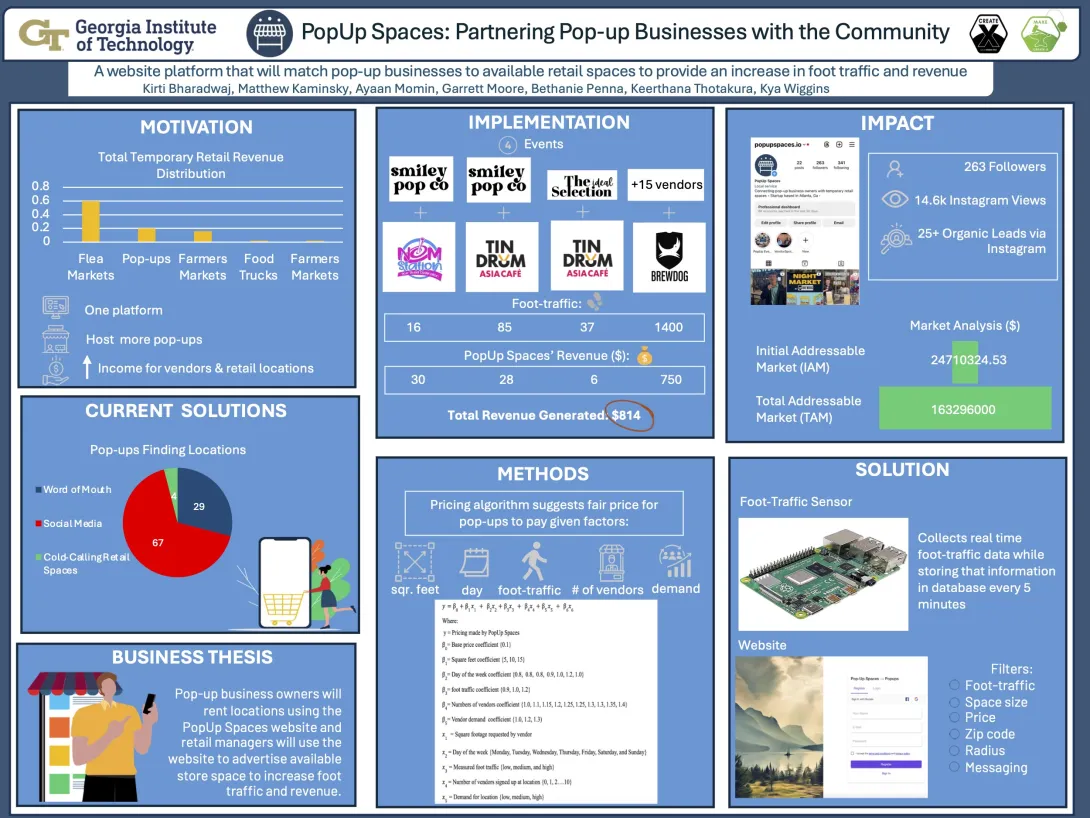
In the US, over 42,000 pop-up businesses struggle to find suitable locations and events, while retail businesses seek to boost foot-traffic and revenue.
Senior Design team, PopUp Spaces, developed a platform aimed at bridging the gap by connecting pop-up businesses with available retail spaces.
Selected for Honorable Mention, PopUp Spaces offers distinct features through popupspaces.io such as foot-traffic measurement and customizable square footage, fostering a symbiotic relationship between the two markets.
Project Title: Pop-up Spaces
Team Members:
Kirti Bharadwaj (IE)
Matthew Kaminsky (IE)
Ayaan Momin (CompE)
Garret Moore (IE)
Bethanie Penna (IE)
Keerthana Thotakura (CS)
Kya Wiggins (IE)
Faculty Advisor: Dr. Xin Chen
Congratulations to all participating teams for their outstanding presentations, showcasing. Each project showcased ingenuity and innovation, offering viable solutions poised to make tangible impacts in the ever-evolving landscape of industrial engineering.
Read more about the expo here.
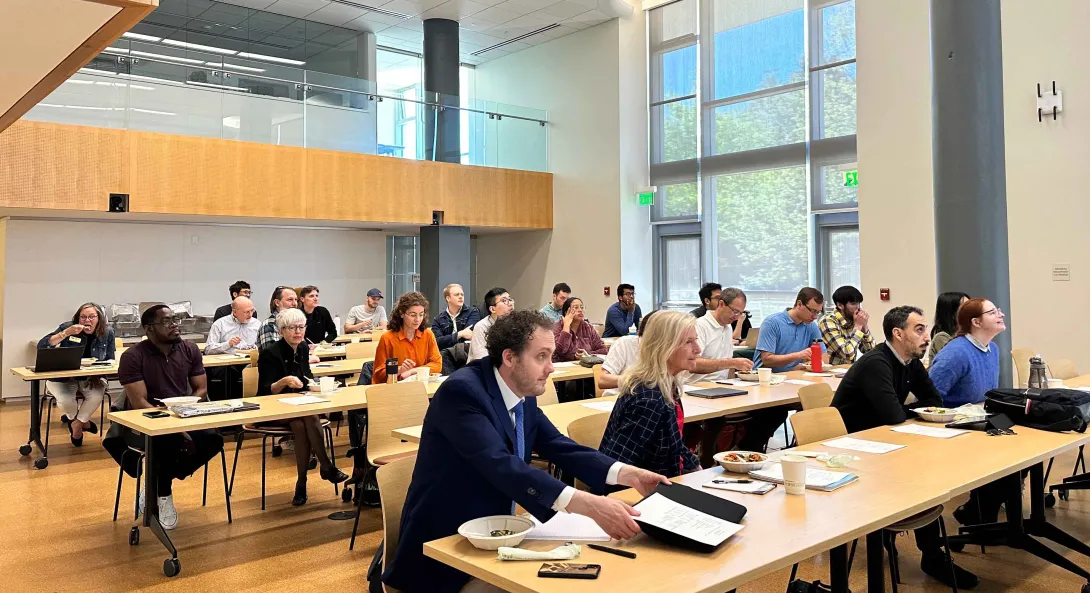
Audience at the EPICenter Lightning Talks (Round 2) held at the Georgia Tech Library
On April 12, the Energy, Policy, and Innovation Center (EPICenter) hosted its second round of the “Friday Lightning Talk Series” at the Scholars Event Network space in the Price Gilbert Library.
Eight multidisciplinary participants from Georgia Tech, including postdoctoral students, graduate students, research faculty, and research associates from public policy, economics, electrical and computer engineering, industrial and systems engineering, and EPICenter, presented an overview of an energy-related research project during the session.
Laura Taylor, chair of the School of Economics and interim director of EPICenter, introduced the organization’s new faculty affiliate program through which affiliates, their students, and postdocs present and share research ideas and receive feedback from the audience.
Topics covered during the session included understanding the social costs of natural gas deregulation, managing EV charging during emergencies, exploring whether daylight saving time saves energy, the green energy workforce, the effects of community solar on household energy use, the Atlanta Energyshed project, clean hydrogen production in Georgia, and household responses to grid emergencies.
The interactive session was well attended with over 25 attendees asking thought-provoking questions and providing suggestions on future areas to explore.
The first round was held on March 1 and was such a success that this second round had a full slate of presenters and a full house of audience members. The agendas for both lightning round talks are available below, along with links to presentation slides.
A unit of the Strategic Energy Institute of Georgia Tech, EPICenter’s mission is to conduct rigorous research and deliver high-impact insights that address the energy needs of the southeastern U.S., while keeping a national and global perspective. EPICenter calls upon broad, multidisciplinary expertise to engage the public and create solutions for critical emerging issues as our nation’s energy transformation unfolds.
News Contact
Priya Devarajan || SEI Communications Program Manager
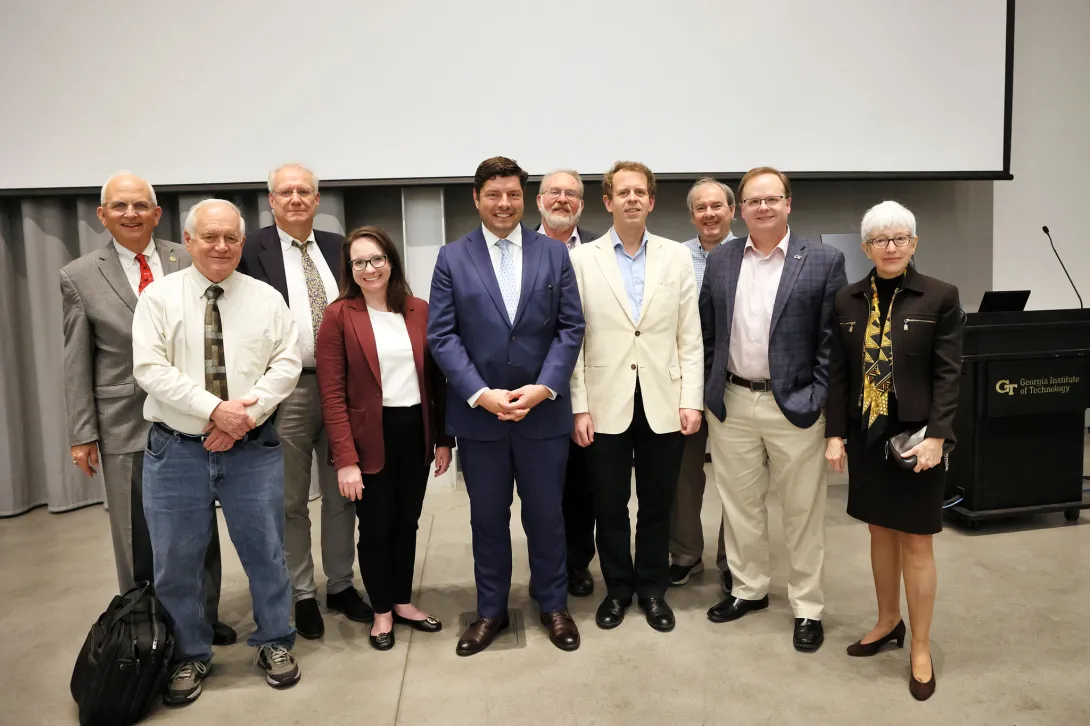
From Left to Right: Gary Black, Bo Arduengo, and Andy Bommarius (RBI Strategic Initiative Lead) from the ReWOOD Initiative, Larissa Fenn from RYAM, Andreas Villegas, President of the Georgia Forrest Association and Keynote Speaker, Chris Luettgen RBI Strategic Initiative Lead & Professor of the Practice, Carsten Sievers, RBI Strategic Initiative Lead, Matthew Realff RBI Strategic Initiative Lead, Carson Meredith RBI Executive Director, and Valerie Thomas RBI Strategic Initiative Lead.
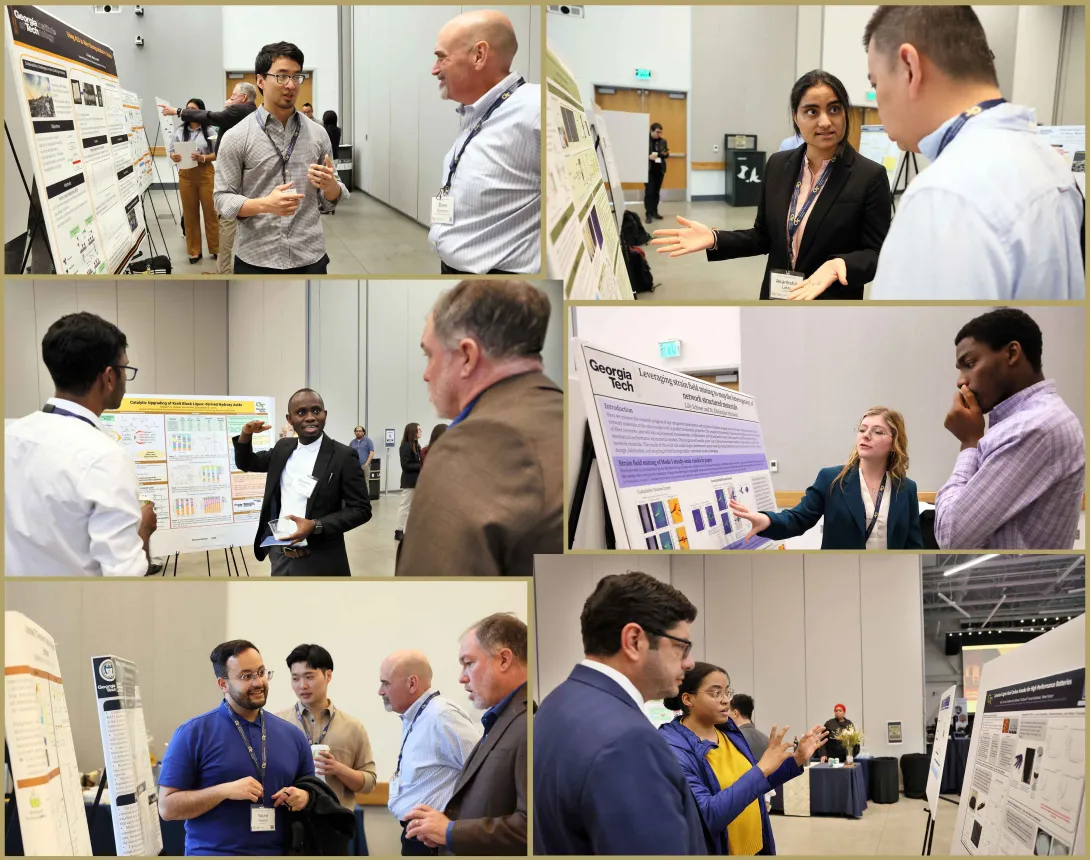
RBI Fellows Discussing Their Research with the 2024 RBI Spring Workshop Participants
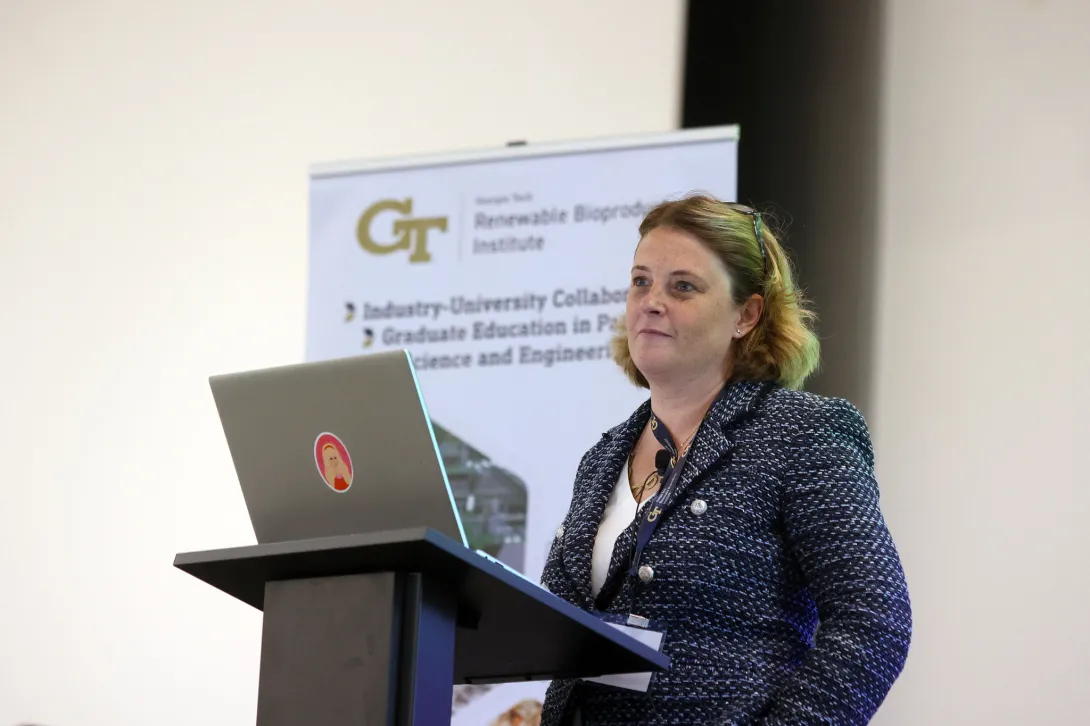
Kim Nelson, CTO of GranBio and Georgia Tech Alumnus at the 2024 RBI Spring Workshop
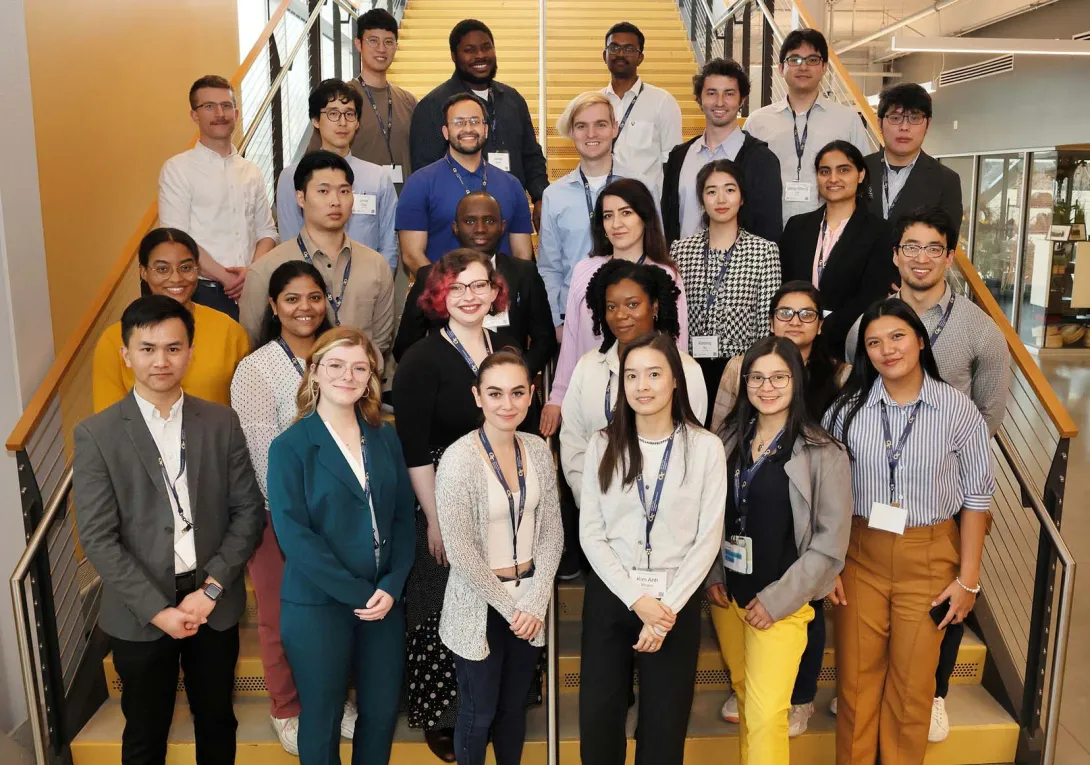
2024 RBI Student Fellows at the Workshop
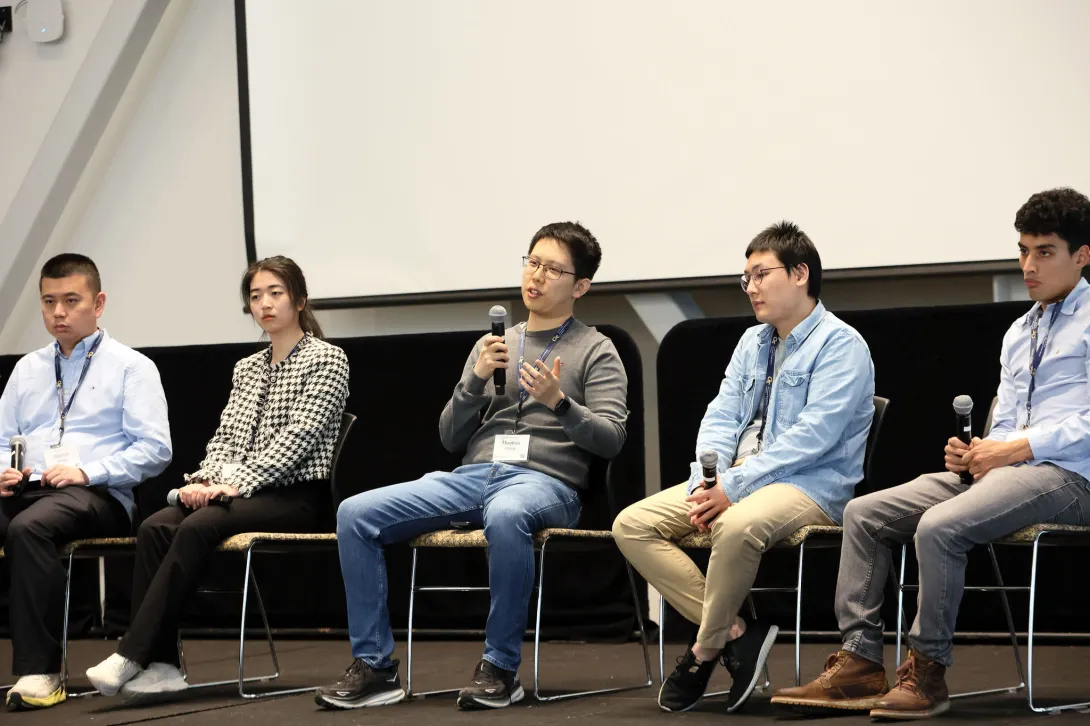
Student Panel at the RBI Spring Workshop
With the nation’s goals to net zero well underway and the world moving toward sustainable production methods, biorefineries play a crucial role in our transition to a greener future. These multifaceted facilities convert biomass into biofuels, biochemicals, and bioproducts; foster a circular economy; and reduce reliance on fossil fuels while promoting environmentally friendly industrial practices.
The Renewable Bioproducts Institute (RBI) at Georgia Tech recently hosted a workshop on the Emerging Bioeconomy and the Future of Biorefining. The event cultivated new partnerships as more than 75 attendees from academia, national laboratories, and industry shared and learned about the cutting-edge developments in the emerging field.
Carson Meredith, executive director of RBI, said, “The workshop provided an immersive experience for the attendees with access to knowledge, opportunities to network, and a platform for collaboration to positively impact their understanding and involvement in this rapidly evolving field. I saw a lot of human connections being made, a lot of people shaking hands, and having conversations off to the side. That’s exactly why we hold such workshops — to exchange ideas within the Institute as well as between researchers in universities, industry, and national labs.”
The program started with a keynote by B. Frank Gupton, professor of chemical and life science engineering at Virginia Commonwealth University, on creating resilient national supply chains for essential medicines and the need for waste reduction through process chemistry improvements to reduce the carbon footprint in the pharmaceutical industry.
Various presentations from RBI’s research faculty demonstrated the depth of research in the field of bioeconomy and biorefineries. Topics included integrated biorefining processes by multicomponent separations and catalytic conversion, lignin-derived phenol as the new platform of biorefineries, catalytic conversion of organic acids, data-driven biorefinery process control, hot topics in lifecycle assessment, and more.
A highlight of the annual workshop was the student poster session that showcased the diversity of research happening in the renewable bioproducts field. Over 25 RBI Fellows, spanning chemical and biomolecular engineering, mechanical engineering, materials science and engineering, civil and environmental engineering, and chemistry and biochemistry presented their research to a highly engaged audience.
Andreas Villegas, president of the Georgia Forestry Association and the dinner keynote speaker, addressed the need for educating the community about working forests and their potential to create carbon-neutral products and reduce greenhouse gas emissions. Working forests in the state of Georgia are managed with a growth-over-harvest-rate of 50% and are a natural solution to the major challenges in sustainable forests and communities.
Blake Simmons, keynote speaker from the Lawrence Berkeley National Laboratory, discussed the importance of intellectual property models and licensing technology models that will allow companies to access new processes emerging in the field.
Mi Li, assistant professor of biorefinery and sustainable materials from the University of Tennessee, presented his research on the modification of plant cell walls, while Bronson P. Bollock, professor of forest biometrics and quantitative timber management at the University of Georgia, presented the current issues and factors in the quantification of forest biomass feedstocks.
Kim Nelson, the chief technology officer of GranBio, addressed the opportunities and challenges in meeting the global demand for sustainable aviation fuel (SAF) and low-carbon bioproducts. Nelson presented GranBio’s patented AVAP technology that uses woody biomass to produce SAF, renewable diesel, electricity, and other byproducts like BioPlus nanocellulose for tires in the process.
“At this moment, there is a tremendous federal, state, and industrial focus on developing the U.S. bioeconomy,” Meredith said. “RBI's vision is that pulp producers and users of wood extractives and byproducts have an opportunity to develop higher margin products from woody biomass residues, including plastics, pharmaceuticals, and fuels, without disrupting current paper and lumber markets. Traditional petrochemical producers of these products have an opportunity to substitute more carbon-neutral sources as feedstocks. Our workshop sought a conversation around the opportunities and challenges from feedstock to the marketplace.
News Contact
Priya Devarajan || RBI Communications Program Manager
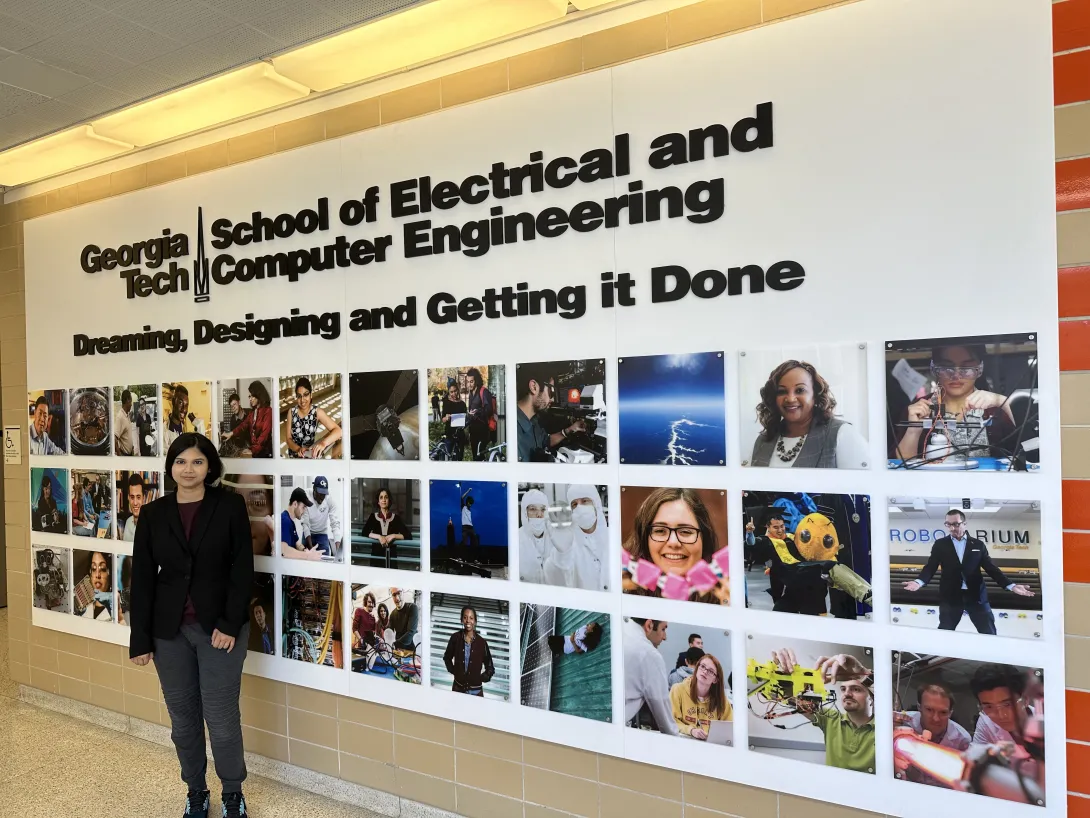
Georgia Institute of Technology School of Electrical and Computer Engineering Ph.D. candidate Fabia Farlin Athena received the prestigious Stanford Energy Postdoctoral Fellowship, becoming Georgia Tech’s first recipient of the distinction.
With climate change becoming one of the a defining issue of the 21st century, the transition to a low-carbon energy system will solve about three-fourths of the problem, according to the fellowship’s website. At the same time, the new energy system needs to be affordable, reliable, and available to the average person.
The three-year fellowship sponsored in Stanford’s Precourt Institute of Energy and Doerr School of Sustainability aims to identify, develop, and connect the next generation of energy leaders — from science and engineering to policy and economics — to translate theoretical climate change solutions into tangible realities.
At Stanford, Athena, who is advised by Eric M. Vogel in the School of Materials Science and Engineering, will work on emerging materials and devices for energy-efficient sustainable computing. She will be working with H.-S. Philip Wong, professor of electrical engineering, and Alberto Salleo, professor of materials science and engineering.
After being selected as a finalist, she presented her current Ph.D. research on adaptive oxide devices for energy-efficient computing, as well as her proposed research to the fellowship’s advisory board.
“It was an amazing experience to go through the selection process of writing the proposal and finally getting interviewed by the honorable advisory board,” Athena said. “It was humbling to get the opportunity to discuss my research with a person I have always looked up to in Professor Steven Chu, a Nobel Laureate in Physics and former U.S. Secretary of Energy!”
Athena is just one of 10 fellows selected globally this year. The fellowship provides her the opportunity to explore new and profound postdoctoral research that is distinct from her Ph.D. work.
“I am deeply grateful to my advisor Prof. Eric M. Vogel for his constant kind support throughout my Ph.D. and for believing in me,” Athena said. “He has been a pillar of constant support throughout my journey. I am also grateful to Prof. Samuel Graham for his kind constant support, including for this fellowship. I am thankful to my respected P.I.s at Stanford, Professor H.-S. Philip Wong, and Professor Alberto Salleo for their support of my proposal. I am also grateful to my respected mentors Prof. Suman Datta, Prof. William Alan Doolittle, Dr. Takashi Ando, and Dr. Vijay Narayanan for their kind support, advice, and opportunities. Finally, I would like to thank Georgia Tech ECE for providing the platform for learning, exploration, and collaboration.”
Before her time at Georgia Tech, Athena received her undergraduate degree in materials science and engineering from the Bangladesh University of Engineering and Technology. She then spent two semesters at Purdue University as a graduate researcher, where she collaborated with the Idaho National Lab on nuclear materials for next-generation energy.
Athena’s research has been recognized with the Georgia Tech ECE Ph.D. Fellowship, 2022 Cadence Diversity in Technology Scholarship, 2023 EECS Rising Stars, 2023 Colonel Oscar P. Cleaver Award for the most outstanding Ph.D. dissertation proposal in Georgia Tech ECE, 2023 MRS Graduate Student Award, and IBM Ph.D. Fellowship from 2022-2024.
News Contact
Zachary Winiecki
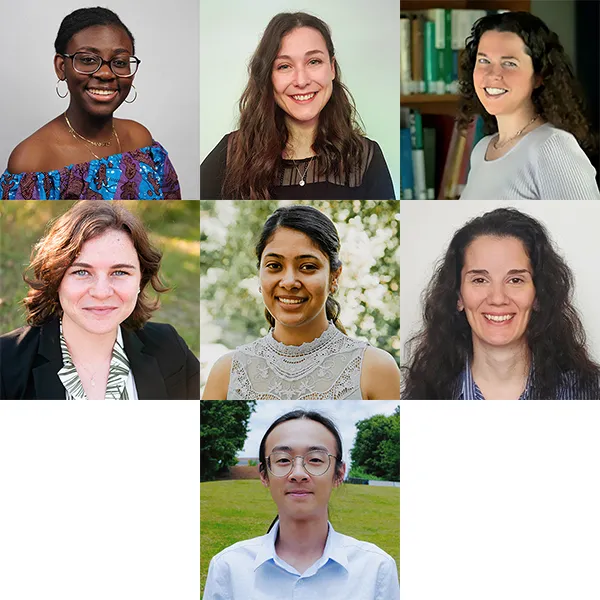
The first cohort of the Brook Byers Institute for Sustainable Systems (BBISS) Graduate Fellows published an article in the open-access, peer-reviewed journal, Elementa: Science of the Anthropocene. The seven Ph.D. students reflected on their two years of working, studying, and training together as an interdisciplinary sustainability research team. In the article, they give their insights into how they benefited from this approach and what steps might be taken to improve graduate level, sustainability-related programs. Further, their paper offers researchers and educators a rare perspective into interdisciplinary research and education from the standpoint of students who are still pursuing their degrees and actively engaged in research for their chosen disciplines.
Citation: McSorley, M, Arkhurst, BK, Hall, M, Zha, Y, Spyrou, IM, Duchesneau, K, Ringania, U, Chang, M. 2023. For graduate students to become leaders in sustainability, we must transcend disciplinary boundaries. Elementa: Science of the Anthropocene 11(1). DOI: https://doi.org/10.1525/elementa.2023.00012
For more information about the Brook Byers Institute for Sustainable Systems Graduate Fellows program, please visit this webpage.
News Contact
Brent Verrill, Research Communications Program Manager, BBISS
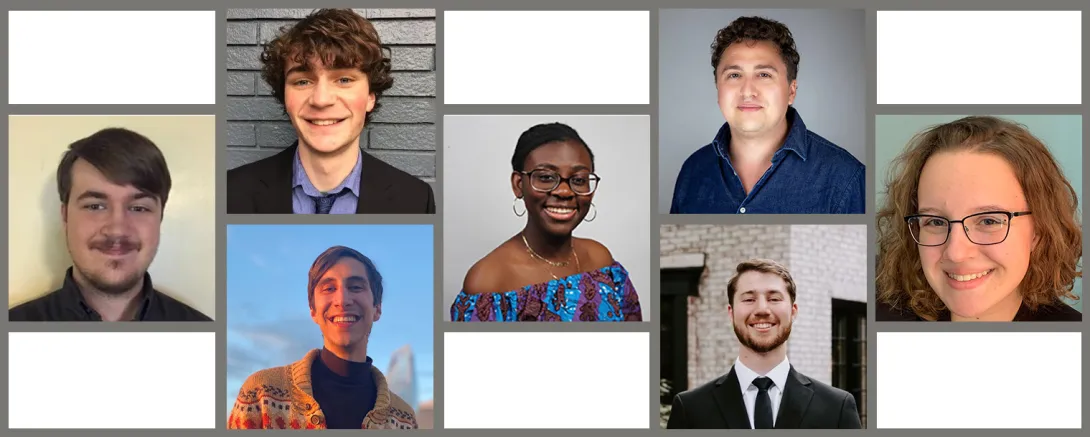
Photo collage of Jordan Hale, Jake Churchill, Henry Kantrow, Betina Arkhurst, Andrew Hill, Jacob Tjards, Emily Marshall
The Strategic Energy Institute (SEI) of Georgia Tech is excited to announce that Bettina Arkhurst is the 2023 recipient of the James G. Campbell Fellowship Award. Arkhurst’s commitment to academics, research, and community service has been recognized by the award committee. She is a Ph.D. candidate advised by Katherine Fu, professor in the George W. Woodruff School of Mechanical Engineering.
Arkhurst holds a bachelor’s degree in mechanical engineering from Massachusetts Institute of Technology and a master’s degree in mechanical engineering from Georgia Tech. Her research seeks to understand how concepts of energy justice can be applied to renewable energy technology design to better consider marginalized and vulnerable populations. She strives to create frameworks and tools for mechanical engineers to apply as they design energy technologies for all communities.
As an energy equity intern at the National Renewable Energy Laboratory, Arkhurst has worked with colleagues to better understand the role of researchers and engineers in the pursuit of a more just clean energy transition. She is also a leader in the Woodruff School’s graduate student mental health committee, which seeks to improve the culture around graduate student mental health and well-being. Additionally, Arkhurst is working with the Georgia Tech Center for Sustainable Communities Research and Education (SCoRE) to develop a course on community engagement and engineering that will launch in Spring 2024.
The Energy, Policy, and Innovation Center (EPICenter) and the Strategic Energy Institute are proud to announce the 2023 Spark Award recipients: Jake Churchill, Jordan R. Hale, Andrew G. Hill, Henry J. Kantrow, Emily Marshall, and Jacob W Tjards. The award honors outstanding leadership in advancing student engagement in energy research.
Churchill is a master’s student in mechanical engineering advised by Akanksha Menon, assistant professor in the Woodruff School. Working with Menon in the Water-Energy Research Lab, his research focuses on coupling reverse osmosis desalination with renewable energy and storage technologies to provide clean, sustainable, and affordable water in the face of growing global water stress. Churchill has led the Georgia Tech Energy Club’s Solar District Cup team for three years, guiding students interested in solar energy careers. He has also been involved with several SEI initiatives, including EPICenter’s high school summer camp, Energy Unplugged. He is currently facilitating a student-led study to quantify the benefits of cleaning photovoltaic panels using the rooftop array at the Carbon Neutral Energy Solutions Lab.
Hale is pursuing a Ph.D. in chemistry, specializing in theoretical and computational chemistry under Joshua Kretchmer, assistant professor in the School of Chemistry and Biochemistry. His current research focus is utilizing various quantum dynamics formalisms and unique computational techniques to identify the microscopic mechanisms of electron transport in perovskite solar cells. Hale has mentored high school students, teaching them the fundamentals of computational chemistry and various programming skills. Additionally, he has been actively engaged with undergraduate students from other universities both in and out of Georgia through the Summer Theoretical and Computational Chemistry workshop.
Hill is a Ph.D. candidate in the Soper Lab in the School of Chemistry and Biochemistry. His research is focused on the activation of strong chemical bonds using Earth-abundant metals for energy conversion and storage. He has taken an active leadership role on campus, in part through service as the president of the Georgia Tech Chemistry Graduate Student Forum.
Marshall is a second-year graduate student working for Alan Doolittle, professor in the School of Electrical and Computer Engineering. She uses specialized molecular beam epitaxy techniques to grow high-quality III-nitride materials for next-generation power, radio frequency, and optoelectronic devices. Her current research focuses on improving the fundamental understanding of the scandium catalytic effect to optimize the growth of scandium aluminum nitride, a material that shows great promise for applications in future power grids. In addition to her research, Marshall is committed to teaching, having volunteered for five semesters serving her fellow students as a peer instructor at the Hive Makerspace and currently training junior members of her lab to grow semiconductors via molecular beam epitaxy. After earning her master’s and Ph.D., she hopes to continue teaching, mentoring, and connecting others across the world in an effort to bring about a brighter future.
Kantrow is a Ph.D. candidate in the School of Chemical and Biomolecular Engineering, co-advised by Natalie Stingelin and Carlos Silva. His research seeks to understand the photo physics of semiconducting polymers operating in dynamic dielectric environments and to provide material design guidelines for solar fuel technologies. He is an active student leader in the Center for Soft Photo-Electrochemical Systems, where he also serves on the energy justice committee. He served as the secretary of the Association for Chemical Engineering Graduate Students (AChEGS) in 2022 and continues to mentor first-year graduate students in AChEGS and through the Pride Peers Program at Georgia Tech.
Tjards is a graduate research assistant at Georgia Tech’s Sustainable Thermal Systems Laboratory. He graduated with a bachelor’s degree in mechanical engineering from Georgia Tech in 2021 before beginning his Ph.D. program, where he is studying energy systems. Tjards’ research is focused on modeling new manufacturing processes of drywall and aluminum to reduce water consumption during production. Additionally, he is working on a new technique for water purification. While in school, he has been a teaching assistant and instructor for the undergraduate mechanical engineering course on energy systems analysis and design (ME 4315). In his free time, Tjards enjoys Formula 1 racing, Georgia Tech baseball games, and woodworking.
News Contact
Priya Devarajan | Research Communications Program Manager, SEI
The Renewable Bioproducts Institute (RBI) at Georgia Tech benefits from a substantial endowment that is invested to advance the evolving science and technology needs of the bioproducts industry and emerging bioeconomy through graduate research. The endowment over the years has supported more than 1,500 engineers and scientists and a leading body of scientific research. RBI has released the Request For Proposals (RFP) for the annual year 2024-25 fellowships. Proposals are due on Feb. 1, 2024. The RFP document describing the application process and several important changes for this year can be found at 2024-25 RFP Proposals.
The principal mission of RBI is to incubate and develop interdisciplinary teams of researchers that can establish thought leadership through new bioproduct research directions. Our focus is on pre-competitive, use-inspired research with a technical, economic, or policy focus. All supported work needs to address an aspect of bioproducts and the developing bioeconomy. The RBI Fellowship supports this mission by promoting two objectives:
(1) Helping teams of faculty to establish new concepts, publish early results, and develop competitive federal, industry, or foundation proposals in the future.
(2) Training a diverse group of graduate-level professionals who can support the evolving bioproducts R&D workforce.
***NEW PROGRAM CHANGES***
- Along with Graduate Research Assistant (GRA) stipend and tuition support, RBI will provide $1,000 of materials and supplies funding or a $1,000 credit toward the use of RBI’s analytical facilities.
- The fellowship was formerly called the PSE (Paper Science and Engineering Fellowship). It has been renamed as the RBI Fellowship.
- The fellowship minor requirement has been changed from 12 hours to nine hours. The minor will consist of two core courses and one elective, described here. For students outside of the College of Sciences or College of Engineering, an alternative set of courses can be considered.
- Awards can support GRAs from any school within Georgia Tech and can be advised by teams consisting of faculty from any Georgia Tech school, although the relevance of the disciplines included must be clear.
News Contact
Priya Devarajan || RBI Communications Program Manager
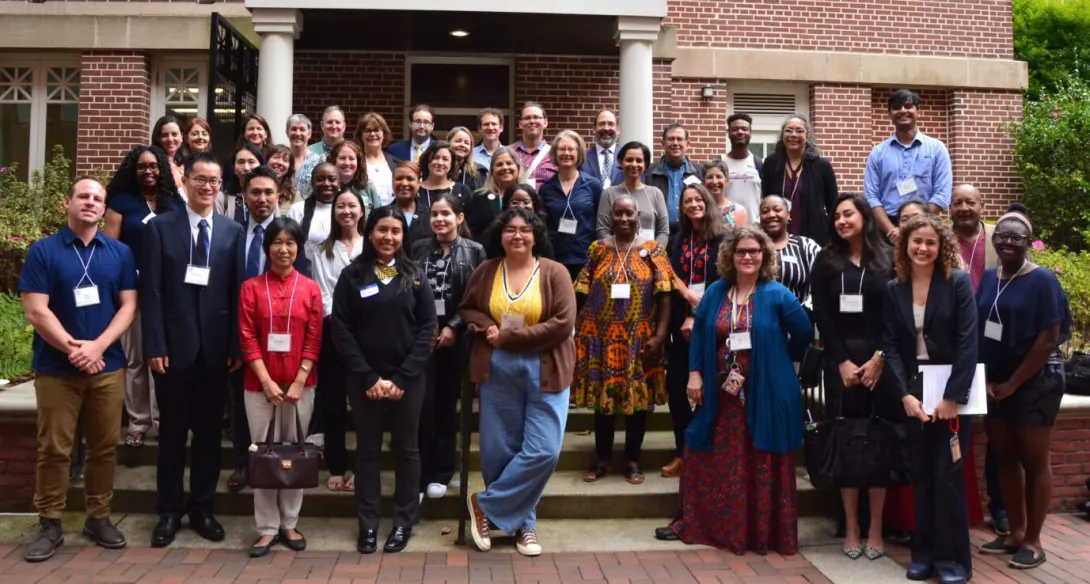
A group of attendees to the RCE Americas meeting in Atlanta pose for a group photo outside a red brick Georgia Tech building.
The Georgia Tech campus recently served as host to the 2023 RCE Americas Regional Meeting. From September 26 – 29, students, academics, and working professionals from around the Americas gathered to share their diverse perspectives and experiences, and delved into the discourse of sustainability. Participants attended panel sessions, presentations, site visits, and workshops (one of which was student led) over the three-day meeting, offering their unique viewpoints on how sustainability plays a role in their work and academic careers.
RCE Greater Atlanta was acknowledged by the United Nations University (UNU) on December 18, 2017, as a Regional Centre of Expertise on Education for Sustainable Development. RCE Greater Atlanta is one of over 190 RCEs recognized worldwide as part of the UNU RCE network. RCEs support multi-stakeholder implementation of the U.N. Sustainable Development Goals (SDGs) at the regional level, through education and training.
RCE Greater Atlanta is committed to leveraging educational resources for regional implementation of the SDGs, with a focus on equity and justice, building on Atlanta’s history as the home of the Civil Rights Movement. RCE Greater Atlanta members, representing all sectors of community, business, government, and civil society, contribute to the creation of an inclusive and collaborative community that advances SDG knowledge and action, and nurtures strong youth leadership by harnessing higher education capacity and knowledge for regional benefit.
Among the speakers were Keisuke Midori, section chief from the Ministry of the Environment of Japan; Jenny Hirsch, senior director of the Georgia Tech Center for Sustainable Communities Research and Education, representing RCE Greater Atlanta; and Georgia Tech President Ángel Cabrera. Several of the speakers traveled or participated virtually from around the United States, as well as from places as far-flung as Mexico, Puerto Rico, Canada, Peru, and Columbia. Atlanta was also well represented with participants and speakers from many area colleges and universities including Morehouse School of Medicine, Kennesaw State University, and Georgia Gwinnett College. A wide range of topics were presented such as “Youth Initiatives at Assateague Island,” “Energy Equity: Advancing SDG 7 Affordable and Clean Energy Through Community-University Partnerships,” and “Young Leaders of the Earth Charter at RCE Bogota.”
Several Georgia Tech students were in attendance and have offered their perspectives on the event. Lakshya Sharma, a master’s student in Human Computer Interaction and the student coordination manager for RCE Greater Atlanta, says, “The conference provided people coming from a wide variety of backgrounds an opportunity to present views, opinions, and talk about differences. I was given the responsibility to lead one of these sessions, where we discussed how important local community action is and how these actions can be made more efficient, inclusive, and effective. Participating in these discussions gave me a fresh perspective on things and made me explore new ways to solve problems, which I can now implement as a professional.”
Perrin Brady, who is studying History, Technology, and Society at Georgia Tech and serving as a student engagement coordinator for RCE Greater Atlanta, said, “I was able to raise questions to the room that I struggle with as a young person, like how to navigate possible conflict between requiring fast climate solutions and needing equitable/sustainable solutions that take time and consideration. People's answers gave me hope for future impacts I could make.”
Julie Chen, another student engagement coordinator, who is studying architecture at Georgia Tech, said, “The range of presentations remains an inspiration, as I was able to witness different RCEs actively involved in unique projects to further the UN SDGs. It was especially heartening to see young students taking the initiative. The RCE Americas Network is a great platform to share these efforts.”
The event was sponsored by Oak Ridge Associated Universities; Kennesaw State University’s Global Education Community Engagement and Outreach; Goethe Zentrum; and several Georgia Tech organizations, namely the Brook Byers Institute for Sustainable Systems, the Renewable Bioproducts Institute, the Strategic Energy Institute, the Atlanta Global Studies Center, and the Ray C. Anderson Center for Sustainable Business with the Drawdown Georgia Business Compact.
The RCE Americas Meeting is an annual event. For more information, see the following links:
Meeting Resources: https://drive.google.com/drive/folders/1K8XeWuCEXq66TEVZuQQm3X3EzfXQ3zVB?usp=sharing
Presentation Recordings: https://www.youtube.com/channel/UCpof6N7frRLybc0UW8dhX4A
News Contact
Kristina Chatfield, Program and Portfolio Manager, Center for Sustainable Communities Research and Education