
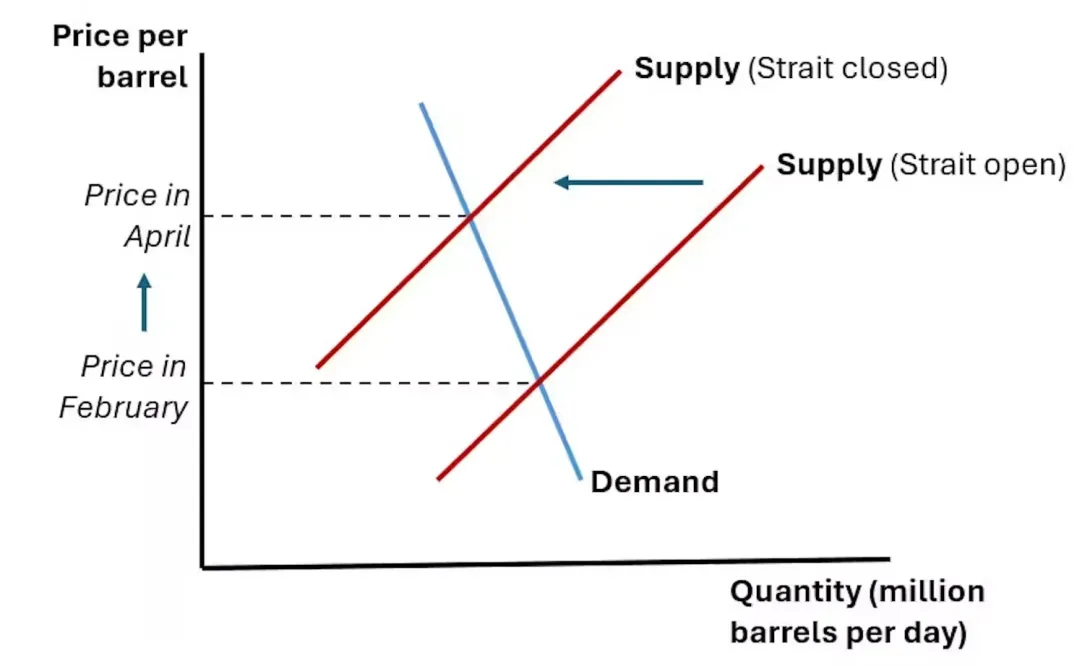
In general, when supply of a product is reduced, prices rise. As a result, even when demand remains stable, the quantity consumers buy decreases because of higher prices. Matthew E. Oliver and Tibor Besedeš, CC BY-NC-ND
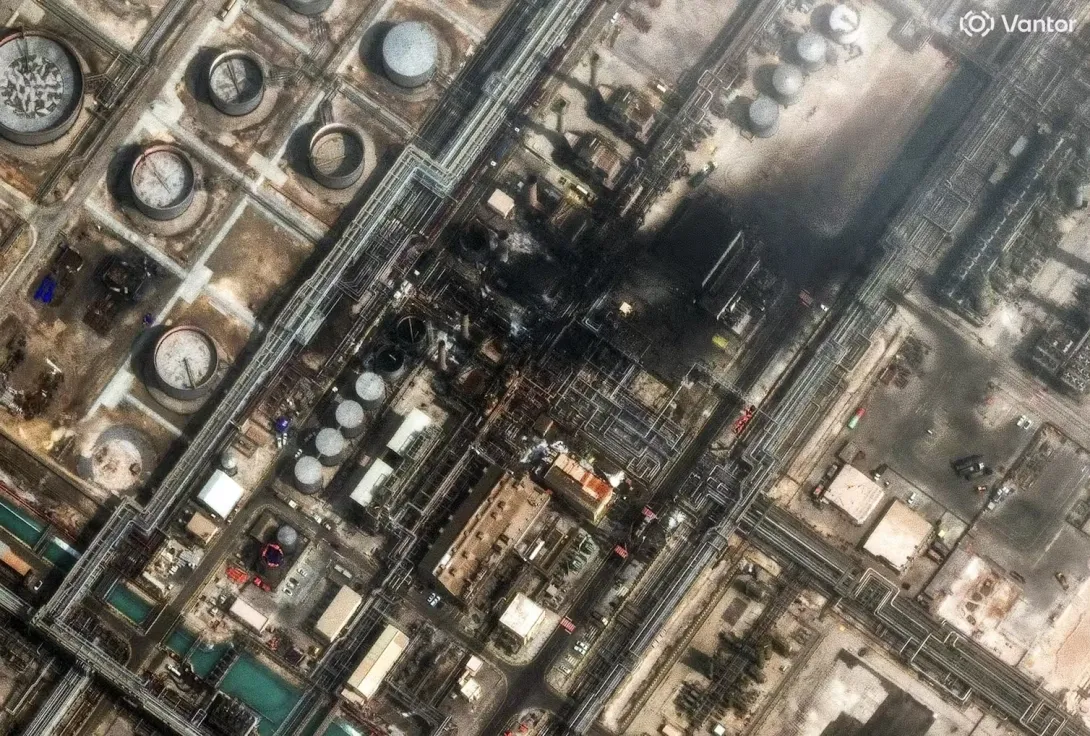
A satellite photo shows damage from the war at Saudi Arabia’s Ras Tanura oil refinery, which must be repaired before full operations can resume. Satellite image (c) 2026 Vantor via Getty Images

Drilling rigs in the North Sea are still operating and shipping oil. AP Photo/James Brooks
The market for oil is global, which is why events like the war in Iran affect oil prices – and prices of the wide range of products made from oil – literally everywhere. Federal data shows that the price at the primary crude oil hub in the U.S. was US$66 a barrel in late February 2026 – before the U.S. and Israel attacked Iran – and $101 a barrel on April 13. Similar price increases have reverberated around the globe.
As an energy economist and an international trade economist, we field a lot of questions during such episodes, because when oil prices go up, manufacturers, businesses and ultimately consumers pay more.
Some basic economics
Crude oil may be the most important commodity in the global economic system.
It’s a literal fuel for the industrial economy. It powers the engines that drive transportation and paves the roads vehicles drive on. It’s a source for plastics from which the world’s products get made and packaged, and a key ingredient at some point in almost every supply chain. Even fertilizers that boost the food supply are made from it. In short, it is difficult to imagine modern life without oil and its derivatives.
And when its supply changes, its price changes. Economists explain this using a fundamental model of our field: the supply-demand diagram. When there’s less of something to go around, competition among consumers who want it and companies that need it can drive the price up.
Sometimes this process can play out over time, allowing people to adjust their purchasing or activities to dampen price shocks. But when a significant source of the world’s oil is effectively blocked without much advance notice, such as when the the U.S. and Israeli attacks on Iran closed the Strait of Hormuz, prices can rise sharply in a short period of time.
A natural question many people ask when oil prices spike is: Where does all that additional money go, and who benefits from it?
Some people have written entire books dissecting all the places that money goes when it leaves consumers’ pockets. But ultimately, the bulk of the money heads in the direction of the source of the oil itself – the oil companies.
What they do with the money varies widely, depending on where in the world an oil company is operating and who owns it. What also matters is the business environment – the set of laws and regulations – in which the company operates.
Middle East faces danger
Oil producers in the Middle East face significant new risk because of the war in Iran, including threats to production, processing locations and shipping routes. These risks raise their costs for insurance, security and transportation.
But production costs in the region are relatively low, so higher global oil prices typically still translate into strong profits.
For a major exporter such as Saudi Arabia, the government owns and controls nearly all oil production, so high prices generally benefit the government’s finances and investments, even during a war. In Saudi Arabia, oil revenue has historically been used to fund public spending.
West Texas gets a windfall
The Permian Basin, the largest oil field in the U.S., is a long way from the Persian Gulf. When global oil prices rise because of the war in Iran, oil companies operating in West Texas effectively get a windfall gain: Prices rise more quickly than costs, at least in the short run.
The immediate effect is more income from higher prices. The money largely goes to company owners – meaning shareholders – through dividends, debt reduction, company-backed purchases of its own stock, and reinvestment in drilling and production. Over time, companies may decide to spend some of that windfall on building more production capacity or pipelines to get more oil and gas to market.
North Sea boosts government revenue
In the North Sea, between the island of Great Britain and Scandinavia, a mix of multinational and government-owned companies produce most of the oil.
In the U.K., private shareholders are the primary beneficiaries of higher profits from increased oil prices, though an additional tax on oil and gas companies’ profits means the government also collects a significant share of the money, which it uses to help pay public expenses.
In Norway, oil revenues flow into the Government Pension Fund Global, the world’s largest sovereign wealth fund, valued at over $2 trillion. Laws govern how much, and for what purposes, money can be withdrawn from the fund, supporting public spending and preserving wealth for future generations. This is a similar model to Alaska’s state-owned program, funded by oil revenue, that pays for government services and sends an annual dividend to every permanent resident.
Russian oligarchs get rich
Russian oil is subject to stringent economic sanctions imposed by major industrial countries as a response to the Russian invasion and occupation of parts of Ukraine. While the U.S. cannot control how much Russia charges for its oil, it can control services needed to move Russian oil around the world. Under current price sanctions, Western shipping, insurance and financing can be used to ship and sell Russian crude oil only if the price is below $60 per barrel.
Russia’s oil industry is dominated by government-controlled companies whose leaders maintain close ties to President Vladimir Putin. The dealings of those shadowy figures are often shrouded in secrecy, but it is likely that they and Putin’s military-industrial complex – not the Russian people – are the main beneficiaries of high oil prices.
What this means for you
Everyday U.S. consumers may not like the idea of their hard-earned cash going into the already deep pockets of any of these groups. But in the short run, there’s not much to do but pay the price. For the long run, however, people around the world are already thinking and talking about, and opting for, sources of energy that don’t depend on fossil fuels.
This article is republished from The Conversation under a Creative Commons license. Read the original article.
News Contact
Authors
Matthew E. Oliver
Associate Professor of Economics, Georgia Institute of Technology
Tibor Besedeš
Professor of Economics, Georgia Institute of Technology
Media Contact
Shelley Wunder-Smith
shelley.wunder-smith@research.gatech.edu

Gas prices were well over $4 a gallon on April 28, 2026, in Brooklyn, N.Y. Spencer Platt/Getty Images
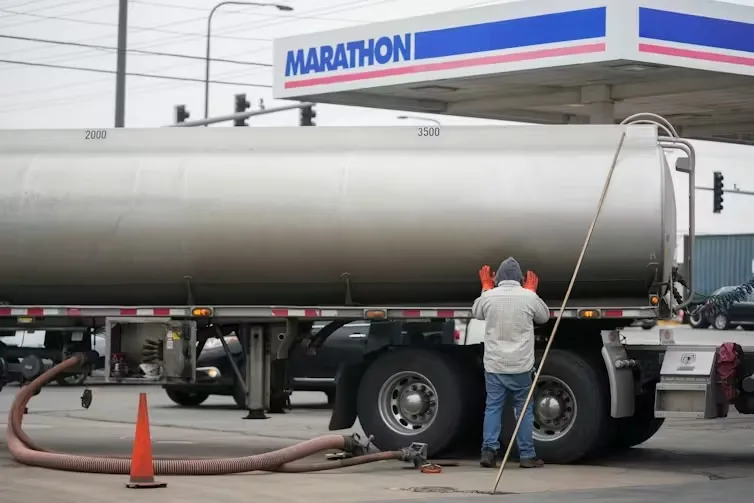
A tanker truck delivers fuel to a gas station. AP Photo/Erin Hooley

Suspending the Jones Act allows foreign-based oil tankers to sail between U.S. ports. AP Photo/Eric Gay
The U.S. Energy Information Administration expects nationwide retail gasoline prices to average near US$4.30 a gallon for April 2026 – the highest monthly average of the year. The political response has been familiar. Georgia has suspended its state gas tax, other states are weighing their own tax holidays, and the White House has issued a temporary waiver of a law known as the Jones Act in hopes of moving more domestic fuel to East Coast ports.
As an energy economist, I am often asked about what contributes to gas prices and what different policies can do to affect them.
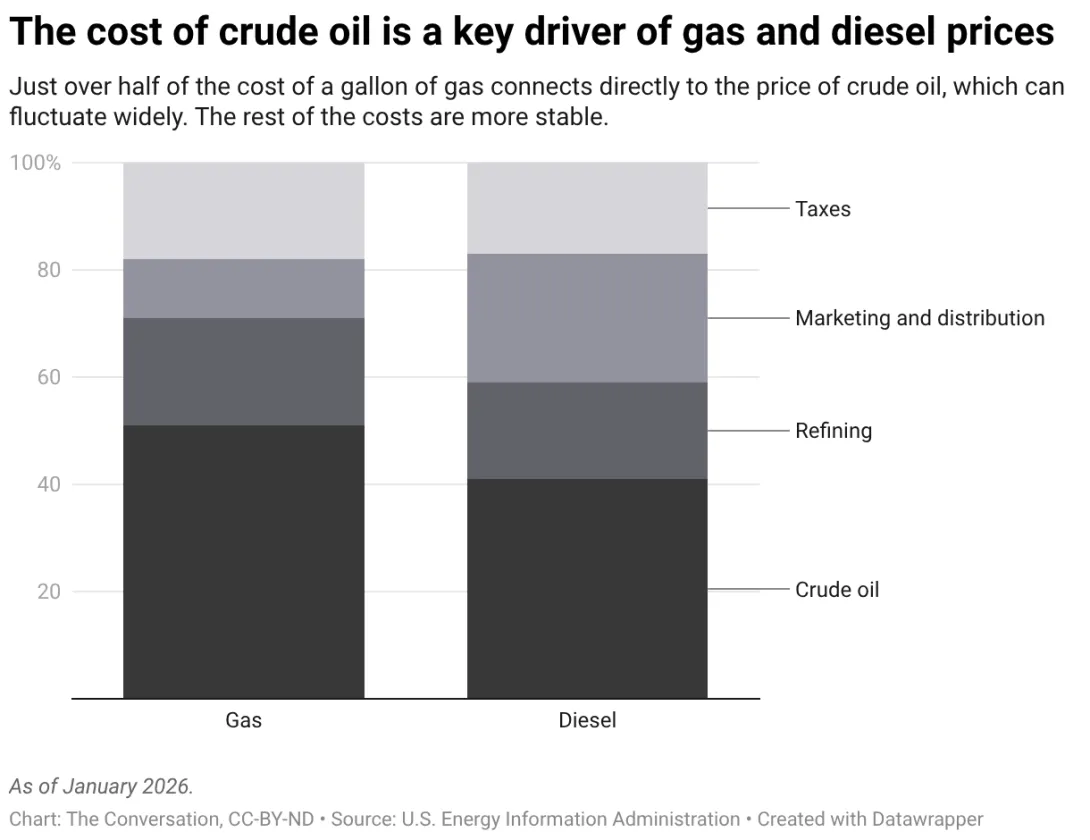
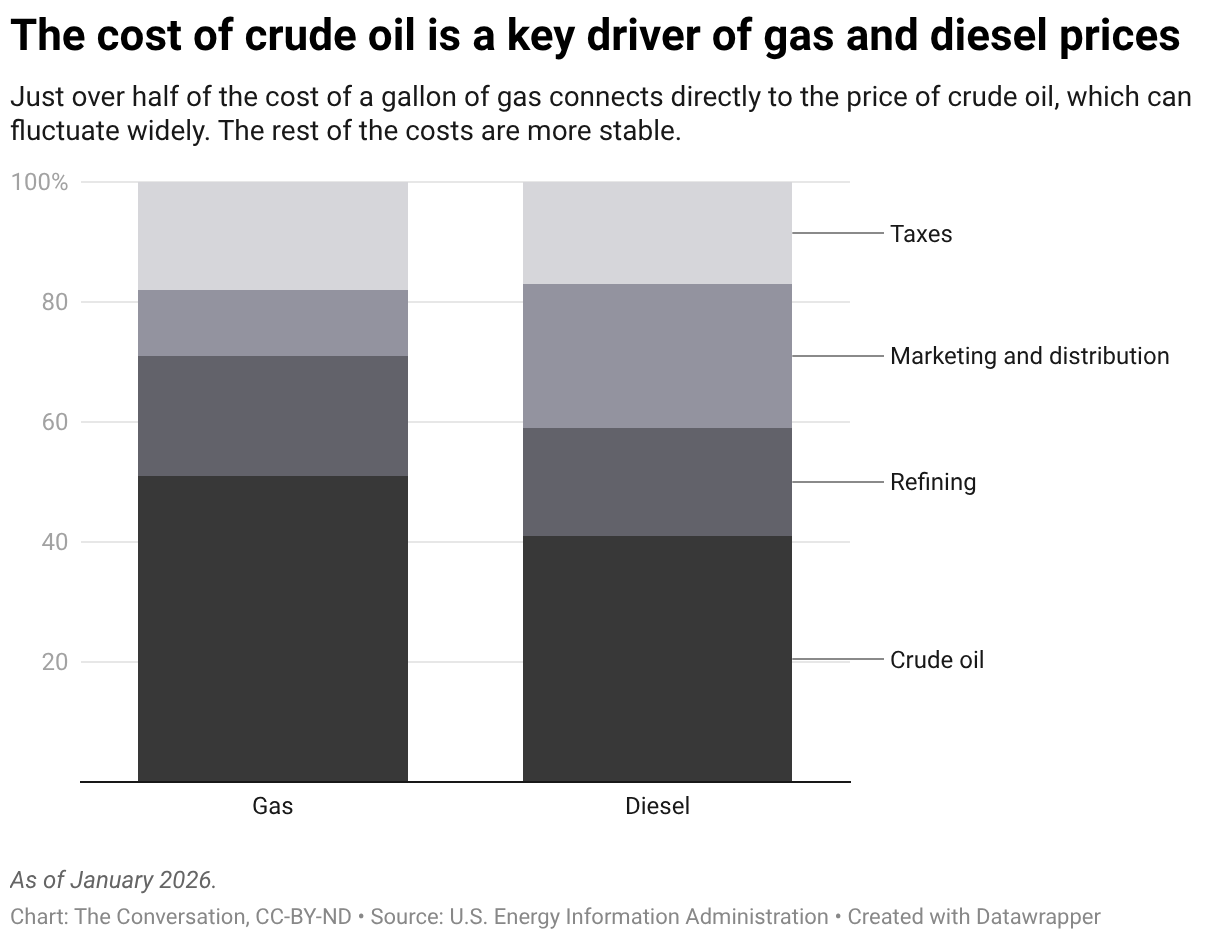
The price of a retail gallon of gas is the sum of four things: the cost of crude oil, refining, distribution and marketing, and taxes.
In nationwide figures from January 2026, crude oil accounted for about 51% of the pump price, refining roughly 20%, distribution and marketing about 11% and taxes about 18%. That mix shifts with conditions: When crude oil prices spike, that can drive more than 60% of the price; when the price drops, taxes and logistics are larger shares of the cost.
Crude oil is the biggest ingredient
Because the price of crude oil is the largest element, most of the price at the pump is derived from the global oil market.
Usually, big swings in crude prices come mainly from shifts in global demand and expectations – not from supply disruptions, according to widely cited research in 2009 by the economist Lutz Kilian.
But what is happening in early 2026 with the war in Iran is one of the exceptions: a classic supply shock. Severe disruptions to shipping through the Strait of Hormuz and attacks on Middle East oil infrastructure have taken millions of barrels a day off the global market.
Most drivers generally can’t quickly reduce how much they drive or how much gas they use when prices rise, so gasoline demand doesn’t change much in the short run. That means a jump in crude costs tends to result in people paying more rather than driving less.
Refining, regulations and the California puzzle
Refining turns crude into gasoline at industrial scale. The U.S. doesn’t have a single gasoline market, though. Roughly a quarter of U.S. gasoline is a cleaner-burning blend of petroleum-derived chemicals called “reformulated gasoline,” which is required in urban areas across 17 states and the District of Columbia to reduce smog.
California uses an even stricter formulation that few out-of-state refineries make. California is also geographically isolated: No pipelines bring gasoline in from other U.S. refining regions.
California’s gasoline prices have long run above the national average, explained in part by higher state taxes and stricter environmental rules. But since a refinery fire in Torrance, California, in 2015 reduced production capacity, the state’s prices have been about 20 to 30 cents a gallon higher than what those factors would indicate.
Energy economist and University of California, Berkeley, professor Severin Borenstein has called this the “mystery gasoline surcharge” and attributes it to the fact that there isn’t as much competition between refineries or gas stations in California as in other states. California’s own Division of Petroleum Market Oversight says the surcharge cost the state’s drivers about $59 billion from 2015 to 2024. It’s not exactly clear who is getting that money, but it could be gas stations themselves or refineries, through complex contracts with gas stations.
Getting the gas into your car
The distribution and marketing category covers the costs of everything involved in getting the gasoline from the refinery gate to your tank.
Gasoline moves by pipeline, ship, rail and truck to wholesale terminals, and then by local delivery truck to service stations.
At the retailer’s end, the key factors are station rent and labor, the cost to buy gasoline in bulk to be able to sell it, credit card fees of as much as 6 to 10 cents a gallon at current prices, and franchise fees paid to the national brand, such as Sunoco or ExxonMobil, for permission to put their branding on the gas station.
Most gas station operators net only a few cents per gallon on fuel itself – which is why many gas stations are really convenience stores with pumps out front. Borenstein and some of his collaborators have also documented that retail gas prices rise quickly when wholesale costs climb but fall slowly when wholesale costs drop.
The question of gas tax holidays
The federal government charges a tax on fuel, of 18.4 cents a gallon for gasoline and 24.3 cents a gallon for diesel. States charge their own taxes, ranging from 70.9 cents a gallon for gas in California to 8.95 cents in Alaska.
When gas prices rise, many politicians start talking about temporarily suspending their state’s gas tax. That does reduce prices, but not as much as politicians – or consumers – might hope. Research on past gas tax holidays has found that consumers get about 79% of the reduction in gas taxes. That means oil companies and fuel retailers keep about one-fifth of the tax cut for themselves rather than passing that savings to the public.
Gas tax holidays also reduce funding for what the taxes are designed to pay for, typically roads and bridges. That pushes road and bridge upkeep costs onto future drivers and general taxpayers.
There is an additional problem, too: Taxes on gasoline are supposed to charge drivers for some of the costs their driving imposes on everyone else – carbon emissions, local air pollution, congestion and crashes. But Borenstein has found that U.S. fuel tax levels are already far below the true cost to society. Removing the tax on drivers effectively raises the costs for everyone else.
The Jones Act: A small number that adds up
The 1920 Jones Act is a federal law that requires cargo moving between U.S. ports to travel on vessels built and registered in the U.S., owned by U.S. citizens, and crewed primarily by U.S. citizens and permanent residents. Of the world’s 7,500 oil tankers, only 54 meet this requirement. Only 43 of these can transport refined fuels such as gasoline.
So, despite significant refining capacity on the Gulf Coast, some U.S. gasoline is exported overseas even as the Northeast imports fuel, in part reflecting the relatively high cost of moving fuel between U.S. ports.
Economists Ryan Kellogg and Rich Sweeney estimate that the law raises East Coast gasoline prices by about a penny and a half per gallon on average, costing drivers roughly $770 million a year. In light of the war’s effect on gas prices, the Trump administration has temporarily suspended the Jones Act requirements – an action more commonly taken when hurricanes knock out Gulf Coast refineries and pipeline networks.
What moves the number
The result of all these factors is that the price that drivers see at the pump mostly reflects the global price of crude, plus a stack of domestic costs, only some of which are inefficient.
Tax holidays give a partial, short-lived rebate. Jones Act waivers trim pennies, though permanent repeal may cause more fundamental changes, such as reduced rail and truck transport of all goods, which could lower costs, emissions and infrastructure damage associated with cargo transportation. Harmonizing fuel blends across states and seasons may lower prices somewhat, but likely at the expense of increased emissions.
Ultimately, the best protection against oil price shocks is a more efficient gas-burning vehicle, or one that doesn’t burn gasoline at all. In the meantime, the best I can offer as an economist is clarity about what that $4.30 actually buys.
This article is republished from The Conversation under a Creative Commons license. Read the original article.
News Contact
Author:
Assistant Professor of Economics, Georgia Institute of Technology
Media Contact:

EPIcenter ACCELERATE Program Recipients: Top (Left to Right) - Clio Andris, Marilyn Brown, Dylan Brewer, Gaurav Doshi, Michelle Graff; Bottom (Left to Right) - Tony Harding, Brian An, Matt Oliver, Micah Ziegler, Constance Crozier
The Energy Policy and Innovation Center (EPIcenter) at Georgia Tech has awarded funding to a new cohort of faculty through its ACCELERATE program, an initiative designed to strengthen Georgia Tech’s thought leadership and real‑world impact in energy policy, decision‑making, and innovation across the Southeast.
Eight faculty members received funding for projects that advance Georgia Tech energy research by generating early insights, expanding shared research tools, and exploring solutions related to energy policy, grid reliability, clean energy incentives, and industry‑driven innovation shaping Georgia’s energy future.
By supporting timely, policy-relevant research and engagement that connect Georgia Tech expertise with pressing regional energy challenges, the ACCELERATE program encourages collaboration across the Institute and with external partners, supports graduate student involvement, and amplifies research outputs that inform policy, regulatory, and market decisions.
“ACCELERATE is designed to help early- and mid-career faculty move quickly on ideas that can shape energy policy and practice,” said Laura Taylor, director of EPIcenter. “By supporting both early‑stage collaboration and more developed policy research, the program enables Georgia Tech researchers to engage decision‑makers and stakeholders when it matters most.”
Proposals considered for funding were grounded in policy and behavioral research, including studies that examined how past or potential policies and regulations worked, and analyses of current market and behavioral outcomes that revealed management, policy, or regulatory gaps and opportunities.
Funded projects span a range of disciplines and policy‑focused topics aligned with EPIcenter’s mission, with a strong emphasis on challenges facing Georgia and the Southeast. Collectively, the awards support research development, data creation, stakeholder engagement, and public-facing thought leadership intended to inform energy policy and implementation.
"As electricity demand grows, it is increasingly important to understand how industrial processes could use energy flexibly to enable efficient use of renewable resources like solar and wind,” said Micah Ziegler, assistant professor in the School of Chemical and Biomolecular Engineering and the Jimmy and Rosalynn Carter School of Public Policy. “Support from the EPIcenter ACCELERATE program enables us to ask fundamental questions about how to design flexible systems and supply chains."
Awards ranged from $5,000 to $75,000. Projects that received ACCELERATE funding include:
Measuring the Alignment Between Legislators’ Energy Bill Votes and Their District Characteristics in the Georgia House of Representatives
Faculty Researcher: Clio Andris, Associate Professor, School of City and Regional Planning and School of Interactive Computing
Strengthening Georgia Tech’s National Energy Modeling of Priority Research Areas
Faculty Researcher: Marilyn Brown, Regents' Professor and Brook Byers Professor of Sustainable Systems, Jimmy and Rosalynn Carter School of Public Policy
Protecting Consumers From Price Volatility: Evidence and Policy Lessons From Georgia's Natural Gas Market
Faculty Researcher: Dylan Brewer, Assistant Professor, School of Economics
Can Place-Based Incentives Accelerate the Energy Transition?
Faculty Researcher: Gaurav Doshi, Assistant Professor, School of Economics
The Revolving Door in Utility Regulation
Faculty Researcher: Michelle Graff, Assistant Professor, Jimmy and Rosalynn Carter School of Public Policy
How Do Data Centers Affect Tradeoffs Between Reliability and Decarbonization?
Faculty Researchers: Tony Harding, Assistant Professor, Jimmy and Rosalynn Carter School of Public Policy, and Brian An, Assistant Professor, Jimmy and Rosalynn Carter School of Public Policy
Calculating the Emissions Cost of the Solar Rebound for the United States
Faculty Researcher: Matt Oliver, Associate Professor, School of Economics
Evaluating Long-Duration Flexibility of Industrial Demand in Electric Power Systems
Faculty Researchers: Micah Ziegler, assistant professor, School of Chemical and Biomolecular Engineering and the Jimmy and Rosalynn Carter School of Public Policy, and Constance Crozier, Assistant Professor, H. Milton Stewart School of Industrial and Systems Engineering
ACCELERATE is an annual program open to all Georgia Tech faculty, focusing on policy‑ and decision‑relevant research that advances energy affordability, reliability, resilience, and decarbonization in the region.
More information about EPIcenter’s research areas and programs is available at epicenter.energy.gatech.edu.
News Contact
Priya Devarajan || SEI Communications Program Manager
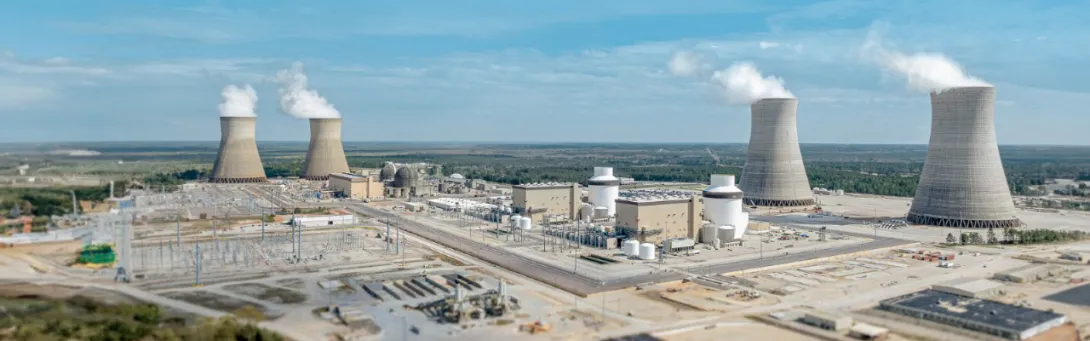
Primarily driven by the rapid construction of data centers nationwide amid the artificial intelligence boom, total electricity usage in the United States is projected to grow by 32% by 2030, according to the Connected Grid Initiative.
Nuclear power currently supplies roughly 20% of U.S. electricity, but because of its reliability compared to wind and solar power and its potential to reduce carbon emissions, the industry is positioned to expand its role in reshaping the future of energy. When Southern Company officially connected Units 3 and 4 at the Alvin W. Vogtle Electric Generating Plant to the grid, Georgia became home to the country’s largest nuclear power facility and to the first nuclear units built in the U.S. in more than 30 years.
With Georgia Tech alumni playing critical roles at the plant, students entering the field, and faculty conducting innovative research, the Institute’s influence can be felt throughout the industry.
News Contact

A recent review published in Energy Research & Social Science by EPIcenter public policy affiliates – Ryan Anthony, Brian An, Marilyn A. Brown, Michelle Graff, and Daniel C. Matisoff – examines five decades of low-income weatherization program evaluations. The researchers systematically analyzed 17 retrospective, outcome-focused evaluations to identify how assessment methods have shifted from early pre-post energy comparisons to more rigorous causal inference research designs. While the literature consistently finds low-income home retrofit programs, such as the Weatherization Assistance Program (WAP), reduce energy burdens, many earlier evaluations are limited by research designs, including selection-biased control groups and minimal community engagement in the evaluation process.
To address these limitations, the authors recommend that future evaluations prioritize the construction of appropriate control groups or adopt quasi-experimental approaches, such as propensity score matching, to better isolate causal impacts. They also highlight the value of modern difference-in-difference estimators for strengthening causal identification. In addition, the review emphasizes the importance of leveraging available and emerging technologies, such as smart meters, thermostats, and sensors, to provide timely, precise data for evaluating both energy consumption and savings as well as non-energy impacts, like health and safety.
News Contact
Gil Gonzalez, Energy Policy and Innovation Center

A new study by Georgia Institute of Technology researchers examines whether electrified supply chains can provide a new source of long‑duration demand flexibility for the electric grid, helping integrate variable renewable energy such as wind and solar.
The paper, authored by EPIcenter faculty affiliate Constance Crozier (School of Industrial and Systems Engineering, Georgia Institute of Technology), EPIcenter student affiliate Rina Davila Severiano (School of Industrial and Systems Engineering, Georgia Institute of Technology) and Mark O’Malley explores how electrifying both industrial manufacturing and freight transportation could allow electricity demand to shift over days or even weeks — far longer than the hours‑long flexibility commonly associated with electric vehicle charging or battery storage.
Using a case study of the cement industry along the U.S. East Coast, the authors model a fully electrified supply chain spanning 20 cities, two manufacturing hubs, electric truck fleets and warehouse storage. Their analysis shows that, by adjusting manufacturing schedules and inventory levels, electrified supply chains could shift tens of gigawatt‑hours of electricity demand to better align with renewable availability, particularly wind power, whose output varies over longer timescales. They find that this flexibility can emerge under relatively modest carbon price signals — below $50 per ton of CO₂ — well before grid‑scale battery storage becomes economically viable.
News Contact
Priya Devarajan | SEI Communications Program Manager
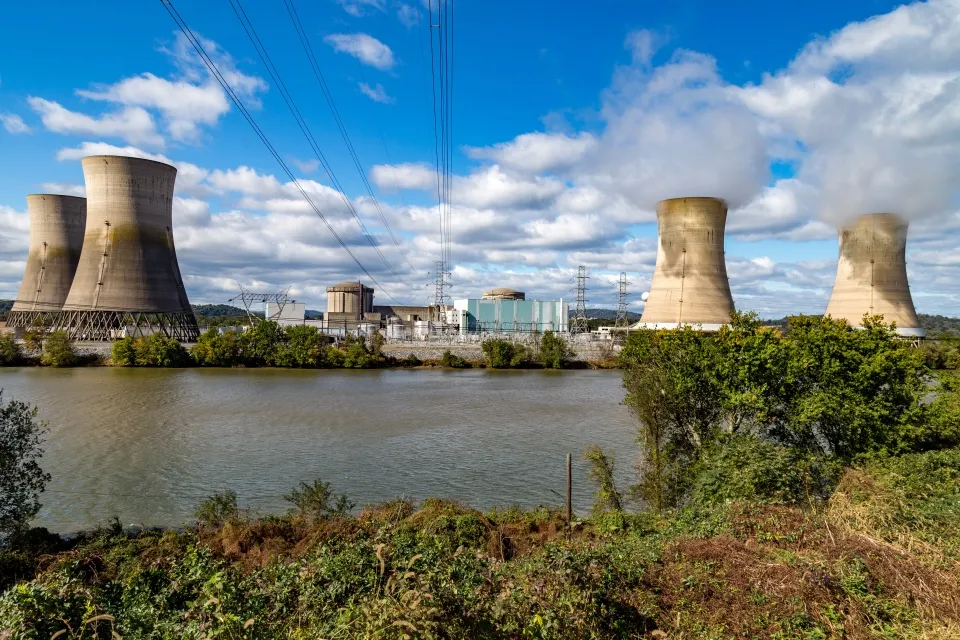
The demand for electricity to power AI data centers is skyrocketing, placing immense pressure on traditional energy sources.
“If we continue pursuing clean energy for AI and data centers, we will need to triple the energy supply for data centers by 2030,” says Woodruff Professor Anna Erickson, a nuclear engineering expert from Georgia Tech. Nuclear power, with its high energy density and continuous operation, is well-suited to provide the steady base load of electricity required.
According to Erickson, the recent headlines of the restarting of Pennsylvania’s Three Mile Island Unit 1 reactor (TMI-1) could play a crucial role in meeting these demands sustainably.
This decision, supported by a 20-year agreement with Microsoft, aims to provide carbon-free energy to meet the escalating power demands of AI data centers. The company’s goal to be carbon negative by 2030 aligns with the broader push for sustainable energy solutions.
According to the United States Energy Information Administration, as of Aug. 1, 2023, the United States has 93 operating commercial nuclear reactors across 54 nuclear power plants in 28 states. The most recent reactor to begin commercial operation is Unit 4 at the Alvin W. Vogtle Electric Generating Plant in Georgia, which started on April 29, 2024.
The commercial start of Unit 4 completes the 11-year expansion project at Plant Vogtle.
News Contact
Siobhan Rodriguez - sar30@gatech.edu

Walton County, Georgia, didn’t ask to become a test case for the artificial intelligence (AI) infrastructure boom. Meta, the company behind Facebook, Instagram, and WhatsApp, made the decision for them.
In 2018, the company broke ground in Social Circle, a small town an hour east of Atlanta with about 5,000 residents, to build one of its largest U.S. data centers. It opened in 2020.
Local officials called it a win. Shane Short, president and CEO of the Development Authority of Walton County, said the plant generates about $10 million annually in property tax revenue and has led to road improvements and expanded broadband.
Electric vehicle maker Rivian followed Meta’s lead and began construction on a plant near Social Circle in September 2025, adding to the area’s rapid industrial growth.
But for residents, the shift from a largely rural, agricultural economy to an energy-intensive industrial one has put new pressure on power and water systems.
“They’re seeing higher water and power bills, worse air quality, and very few jobs in return for this, while large corporations get tax benefits,” said Ahmed Saeed, an assistant professor in Georgia Tech’s School of Computer Science, describing why residents in some communities push back on new data center development.
Saeed and Josiah Hester, associate professor of interactive computing and computer science and director of the Center for Advancing Responsible AI, have spent the past year studying the energy, water, and financial demands associated with these facilities, and how those costs are distributed.
Betting on Demand
AI data centers run on specialized chips that use large amounts of electricity. That power generates heat, which requires energy- and water-intensive cooling.
The state is adding capacity based on expected demand, not current use.
Last year, the Georgia Public Service Commission approved an estimated $16 billion expansion for Georgia Power to support that growth. It is expected to produce about 10 gigawatts of electricity at a given time. That’s enough energy to power about 7.5 million homes for a year.
If that demand materializes, the electricity is used. If it doesn’t, the cost still has to be paid.
Grid Stability
“Those workloads can put a very large demand on the grid all at once, and then remove it just as quickly,” Saeed said. “That sudden change is difficult for the system to handle.”
That volatility is a separate issue.
Even if data center operators pay for the infrastructure they use, large swings in demand can still strain grid operations, especially during peak periods or extreme weather.
What Comes Next
Back in Walton County, the Meta facility is already attracting additional data centers.
Each new site adds power and water infrastructure designed to operate for decades.
The servers inside need to be upgraded every few years.
Saeed and Hester said if Georgia wants to remain an AI and cloud hub, the state needs to set the terms and companies need to meet them.
That starts with disclosure — how much power data centers draw from the grid, how that demand spikes, and how much water they use. It includes clear expectations for how those facilities respond when the grid is under stress, and protections for the communities where they’re built.
The researchers maintain that “build it and hope” is not a strategy.
News Contact
Michelle Azriel
Sr. Writer-Editor
Research Communications
mazriel3@gatech.edu
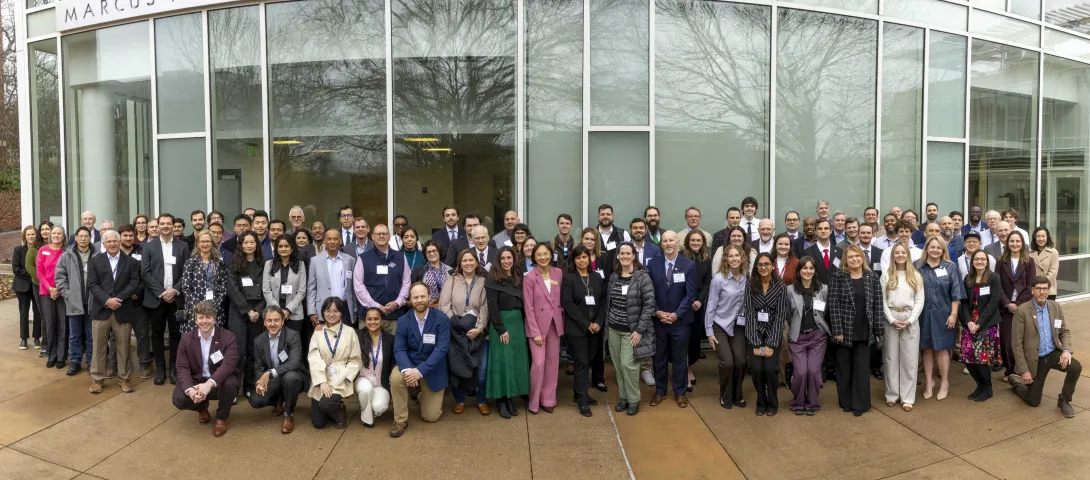
Group photo of the attendees of the GEMs-4 symposium.
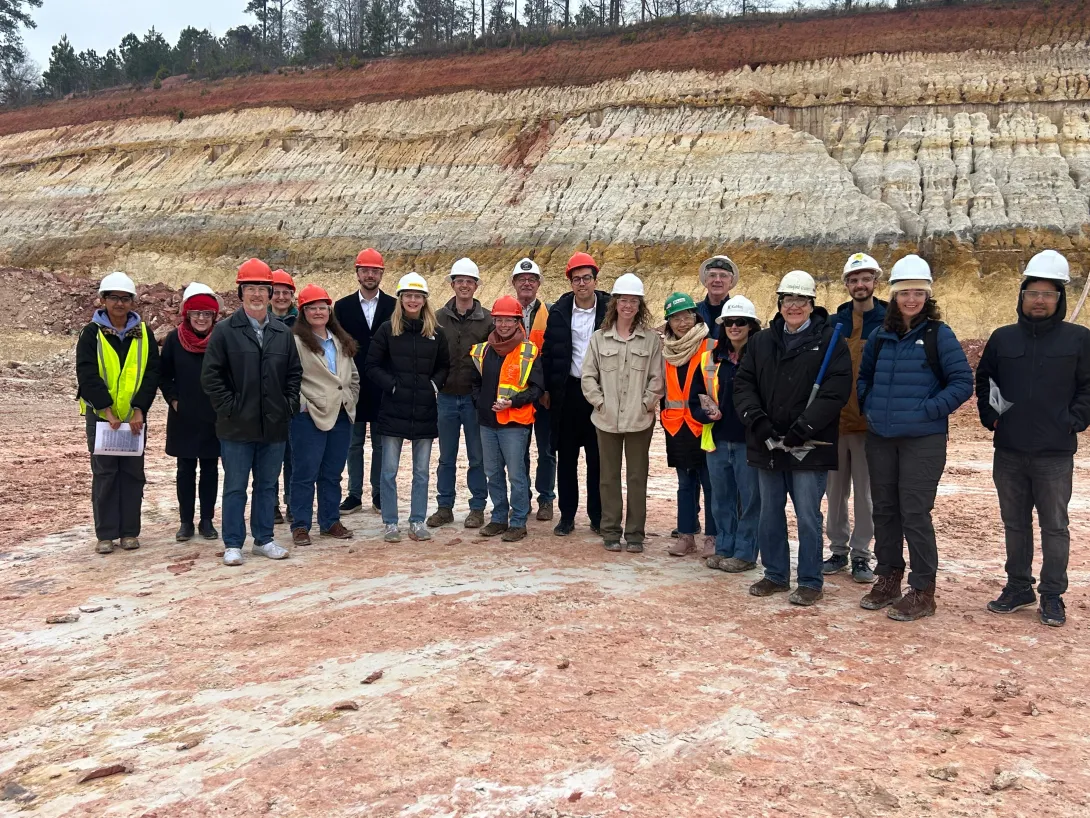
Day 2 of the symposium included a visit to a Georgia mining operation.

Attendees at the GEMs-4 workshop

Critical Mineral Significance and Resources Panel at the GEMs-4 symposium

Attendee asking a question to the panel at the GEMS-4 Symposium
In February, the Georgia Institute of Technology, together with the University of Georgia, Georgia State University, the Georgia Mining Association, and the British Consulate‑General Atlanta, hosted the fourth Growing Partnerships for Essential Minerals (GEMs‑4) workshop in Atlanta. The workshop built on a growing transatlantic partnership dedicated to advancing innovation across the critical minerals value chain.
The two‑day event took place Feb. 4 – 5, coinciding with the Critical Minerals Ministerial hosted by U.S. Secretary of State Marco Rubio in Washington, D.C., on Feb. 4, which brought together more than 50 nations to strengthen and diversify global critical mineral supply chains. During this ministerial, U.K. Minister Seema Malhotra and U.S. Under Secretary of State Jacob Helberg signed a Critical Minerals Memorandum of Understanding, strengthening bilateral cooperation between the United States and the United Kingdom on critical mineral supply chains.
These broad efforts are supported by White House Executive Order 14363, which defines the Genesis Mission and aims to accelerate scientific discovery through AI. The order identifies critical minerals supply chain resilience as a national security imperative.
In Atlanta, these themes were brought to life in real time. The GEMs-4 workshop brought together researchers, policymakers, national labs, industry leaders, and workforce organizations from both the U.S. and the U.K. to address shared challenges in technology translation, permitting, investment, and talent development.
The state of Georgia’s integrated ecosystem, linking research universities, legacy industries, technical colleges, national labs, and public‑private partnerships, served as a case study. Presenters highlighted how existing industrial assets in the Southeast are being incorporated into emerging clean energy and critical minerals supply chains, offering a model for other regions seeking to build capabilities around extraction, processing, and manufacturing.
A U.K. member of Parliament representing Cornwall, where the U.K. has lithium reserves and deep critical mineral expertise, joined the convening, as well as representatives from the U.K. Critical Mineral Association, Camborne School of Mines, and the University of Kent. Together, they explored opportunities and challenges, from a fundamental science to a commercialization perspective grounded in real-world experience.
The alignment between the ministerial in Washington and the expertise present in Atlanta demonstrated the value of state-level engagement and how national agreements translate into practical collaboration on the ground.
“The Southeast has the research depth, industrial footprint, and collaborative spirit needed to lead in critical minerals innovation,” said Yuanzhi Tang, Georgia Power Professor in the School of Earth and Atmospheric Sciences, executive director of the Strategic Energy Institute, and founding director of the Center for Critical Mineral Solutions at Georgia Tech. “GEMs‑4 showed what’s possible when universities, industry, and government partners align around shared priorities.”
Day one featured strategic dialogue on critical mineral resources, innovation pathways, and partnership models. A recurring theme was the co-production of critical minerals alongside major mineral commodities. “Many critical minerals are produced as byproducts of larger mining operations, making it essential to integrate recovery strategies into existing mineral industries rather than developing entirely new extraction systems,” noted Crawford Elliott, professor of geosciences at Georgia State University.
Day two transitioned to field‑based learning, led by Paul Schroeder, professor of geology at the University of Georgia. Participants visited active operations to better understand how regional industrial strengths can support national and international supply chain goals. Schroeder said, “Connecting people to the long-standing mineral extraction economy at the mining and plant sites, where the work gets done with an amazingly skilled workforce, underscores the unique role of Georgia’s place‑based capacity in advancing national and transatlantic supply chain goals.”
Organizers emphasized that resilient supply chains rely on regional capabilities built over time through university collaboration, industry partnerships, and community engagement. With three years of inter‑university coordination now underpinning the GEMS platform, the 2026 workshop demonstrated how the Southeast is contributing actionable models for U.S.-U.K. cooperation.
“Ecosystem-building at this scale requires participation from every part of the value chain, and we are encouraged by the model GEMs presents,” said Rachel Galloway, Consul General at British Consulate General Atlanta. “The collaboration across universities, industry, and government is exactly what enables long‑term impact on both sides of the Atlantic.”
Through focused dialogue and partnership-building, the symposium strengthened transatlantic collaboration, highlighted regional strengths, and accelerated innovation and translation across the critical minerals value chain, from resource characterization and processing to recycling, manufacturing, and deployment.
For more information about the GEMS initiative, visit: https://gems.research.gatech.edu/.
News Contact
Priya Devarajan
Georgia Tech
British Consulate-Atlanta

Lamarr.AI Co-founder and CEO Tarek Rakha
Savannah is built on history and hospitality, which makes the collaboration between Lamarr.AI — a company named after a historic inventor and actress — and the city a match made for the big screen.
Some of Savannah’s many old buildings are expensive to heat and cool, especially in Georgia’s humid summers. They develop leaks. They need routine maintenance. But how does a building owner know where to begin with renovations or repairs? Enter Lamarr.AI, one of the first companies supported by the Partnership for Innovation’s (PIN) new Community Investment program.
“The Community Investment program is matching up faculty-led, faculty-spinoff startup companies that have technology that could be relevant to a community, a government, or to the civic space,” said Katie O’Connor, PIN’s community investment manager. “The company’s product is something that can help a community in a smart cities kind of way.”
Lamarr.AI fits the bill to a T. Its technology and the company grew out of research at Georgia Tech. Lamarr.AI’s technology uses drones, imaging, and artificial intelligence (AI) to assess a building’s envelope and determine the best ways to make these structures more energy efficient.
“The technology is like giving a building an MRI using drones, infrared and regular images, and our own AI,” said Tarek Rakha, Lamarr.AI’s co-founder and CEO. The drones, he explained, detect missing insulation, water intrusion, air escaping, and physical damage. AI and machine learning translate that information into 3-D models that map the defects.
News Contact
Karen Kirkpatrick | EI2