

A new study by EPIcenter affiliate Jamal Mamkhezri examines how public preferences for solar‑energy policy have shifted over a six‑year period in New Mexico, offering one of the first long‑term repeated cross‑section analyses of willingness to pay (WTP) for renewable‑energy attributes. Using identical discrete choice experiment (DCE) tasks from surveys conducted in 2017 and 2023, Professor Mamkhezri evaluates how households value increases in Renewable Portfolio Standards (RPS), changes in rooftop versus utility‑scale solar shares, monthly credit‑banking rules, water usage in electricity generation, and smart‑meter information delivery options.
Across more than 1,100 combined respondents, the study uncovers selective temporal stability in energy preferences. Some attributes—such as support for higher RPS targets, reductions in water use, and preferences for online smart‑meter information—remain relatively stable over time. In contrast, others shift considerably: WTP for increasing the rooftop solar share declines by more than 40%, while WTP to protect monthly credit banking rises more than 200%, reflecting heightened awareness of net‑metering debates and rapid growth in rooftop solar adoption.
Importantly, the study reveals that environmental attitudes, measured through New Ecological Paradigm (NEP) scores, once strongly predicted preferences for rooftop solar and smart‑meter technologies in 2017, but these relationships fade or even reverse by 2023—signaling a shift as these technologies transition from niche, identity‑driven goods to mainstream infrastructure. Meanwhile, environmental attitudes continue to robustly shape preferences for RPS increases and water‑use reductions in both survey waves.
News Contact
Gil Gonzalez, EPIcenter.
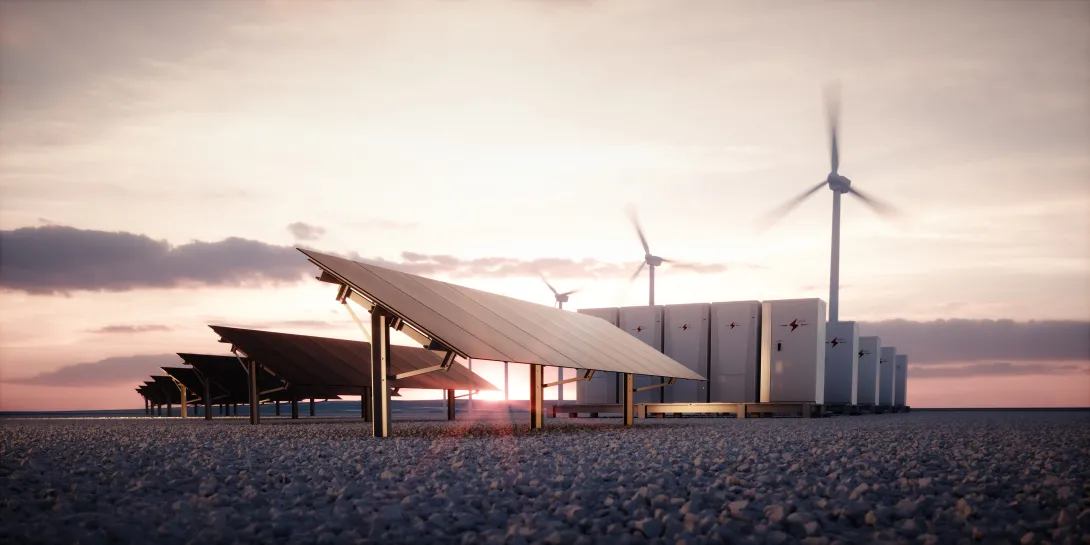
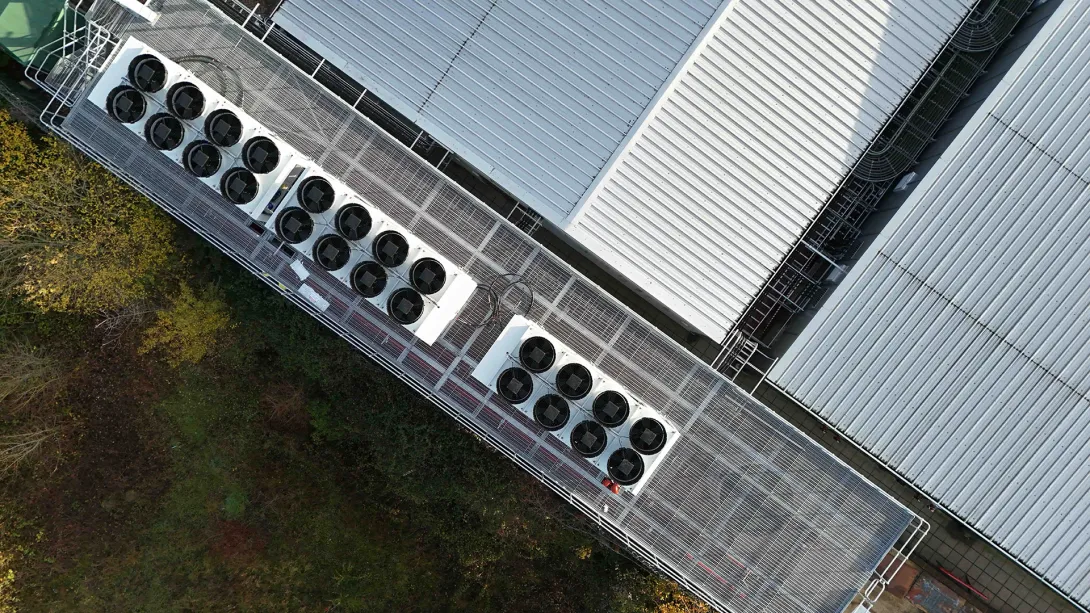
A recent review by EPIcenter faculty affiliate Constance Crozier (School of Industrial and Systems Engineering, Georgia Institute of Technology) and Matthew Liska (School of Physics, Georgia Institute of Technology) explores the growing role of data centers in providing flexibility, the ability to shift or reduce electricity use in response to grid conditions, to the electric grid as renewable energy penetration and AI-driven computing demand surge. The authors highlight that data centers, particularly those supporting high-performance computing and AI workloads, are projected to consume nearly 10% of U.S. electricity by the end of the decade, presenting both challenges and opportunities for grid stability.
The paper examines various strategies for enhancing the flexibility of data center energy use. One approach is to use backup power systems, such as uninterruptible power supplies, to support the grid during emergencies. Another method involves rerouting computing jobs to different data centers in other locations to balance energy demand. The authors also discuss implementing smart scheduling techniques that shift workloads to off-peak hours, reducing strain on the grid. Additionally, they highlight adjusting processor speeds by lowering CPU (central processing unit) and GPU (graphics processing unit) clock rates to limit power consumption when needed. Finally, the paper suggests pre-cooling data center equipment to limit the energy required for cooling during peak demand periods. Notably, experimental evidence shows that underclocking GPUs can cut power consumption by 40% with only a 22% performance loss, suggesting technical feasibility for demand-response interventions.
Despite these technical options, the authors find that real-world cost considerations and reliability concerns limit widespread adoption. Data center operators generally do not change their behavior in response to electricity prices, as job revenue far outweighs energy costs under normal conditions. For example, a GPU rented at $2 per hour consumes only $0.04 worth of electricity at average prices, making curtailment unattractive except during extreme price spikes. Surveys indicate that operators are reluctant to compromise reliability or deploy backup systems for ancillary services. Consequently, price-based incentives alone are unlikely to drive meaningful flexibility.
Read more on the EPIcenter Webpage
Listen to a podcast on the research here
News Contact
Gilbert Gonzalez, EPIcenter
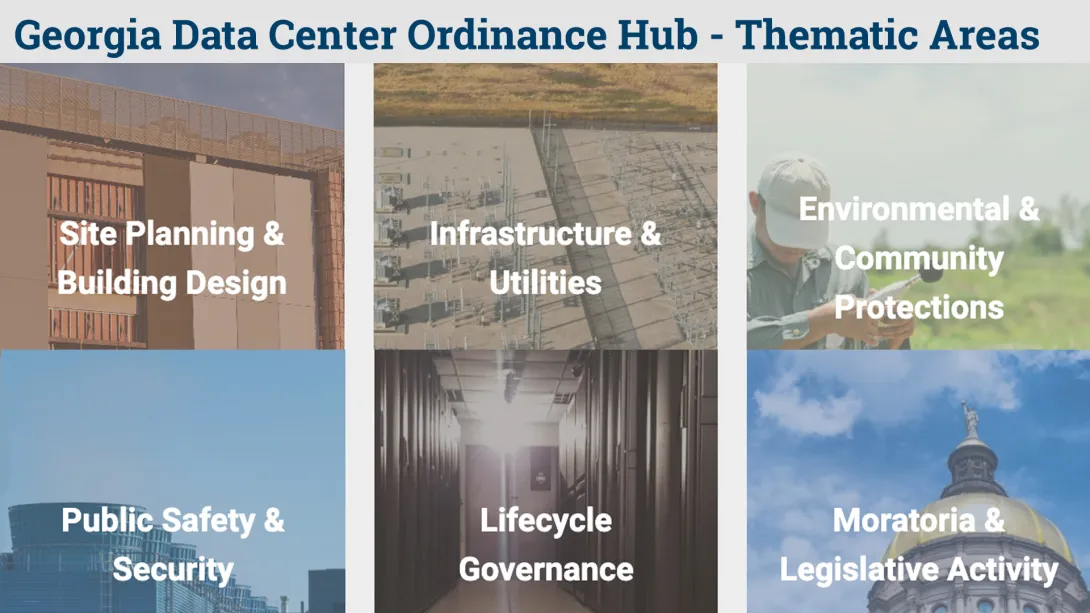
Thematic Areas covered by EPIcenter's Datacenter Ordinance Hub
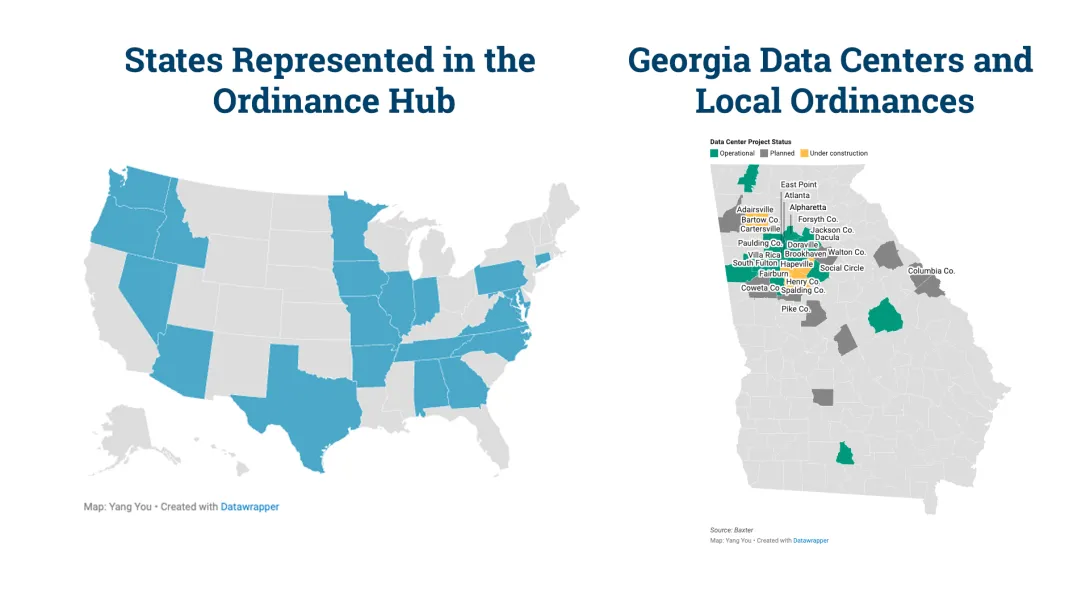
The Energy Policy and Innovation Center (EPIcenter) at Georgia Tech has launched an interactive tool to help communities navigate the dynamic land-use and policy landscape surrounding data center development: the Georgia Data Center Ordinance Hub.
As new data centers continue to be built and proposed in Georgia, counties and municipalities across the state are considering how to guide this growth. EPIcenter’s data center dashboard provides policymakers, planners, researchers, and community stakeholders with a centralized resource to better understand how data center regulations are being developed and applied across Georgia and the U.S.
“Our Data Center Hub provides Georgia communities with a one-stop shop to understand how their neighbors are managing land-use regulations for data centers,” said Laura Taylor, director of EPIcenter. “It brings together clear, accessible information to help jurisdictions plan when data center growth occurs in their area.”
The dashboard is organized around five thematic areas commonly addressed in data center land-use regulations: Site Planning and Building Design, Infrastructure and Utilities, Environmental and Community Protections, Public Safety and Security, and Lifecycle Governance. Within each theme, users can explore specific regulatory topics and access the relevant ordinances enacted by Georgia communities.
To build the dashboard, EPIcenter researchers conducted a comprehensive review of municipal codes across the state.
“We reviewed municipal codes for about 180 cities and counties across Georgia and identified ordinances that specifically address data center development,” said Yang You, EPIcenter’s research associate who developed the project. “In total, we found 19 data center-specific topics that ordinances tend to cover. We analyzed ordinances across jurisdictions and organized their ordinance provisions into topics such as building placement, setbacks, infrastructure, and environmental considerations to make it easier to compare how different jurisdictions regulate data centers.”
You added that the dashboard also incorporates examples from outside of Georgia. By gathering ordinances from other states and pairing them with Georgia-specific examples, EPIcenter aims to provide a clear framework to help communities efficiently address data center land-use regulation.
The Georgia Data Center Ordinance Hub is available through the Energy Policy and Innovation Center website.
News Contact
Priya Devarajan || SEI Communications Program Manager
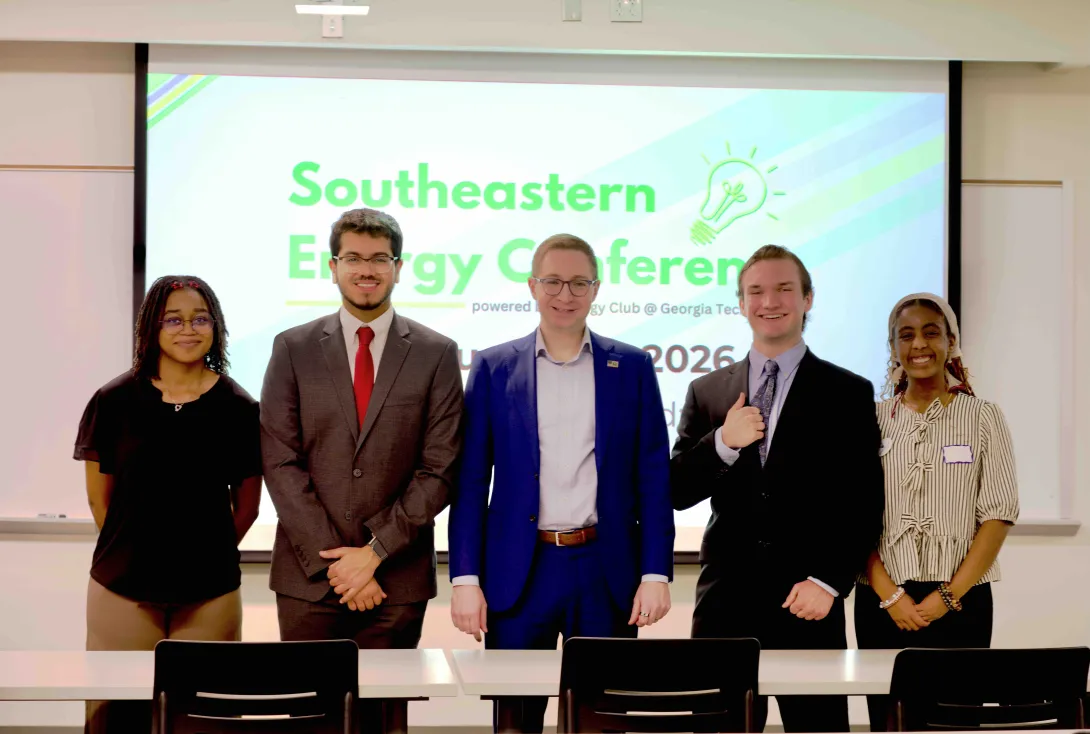
Georgia Tech Energy Club student members with Alex Fitzsimmons (middle), Under Secretary of Energy (Acting) at U.S. Department of Energy
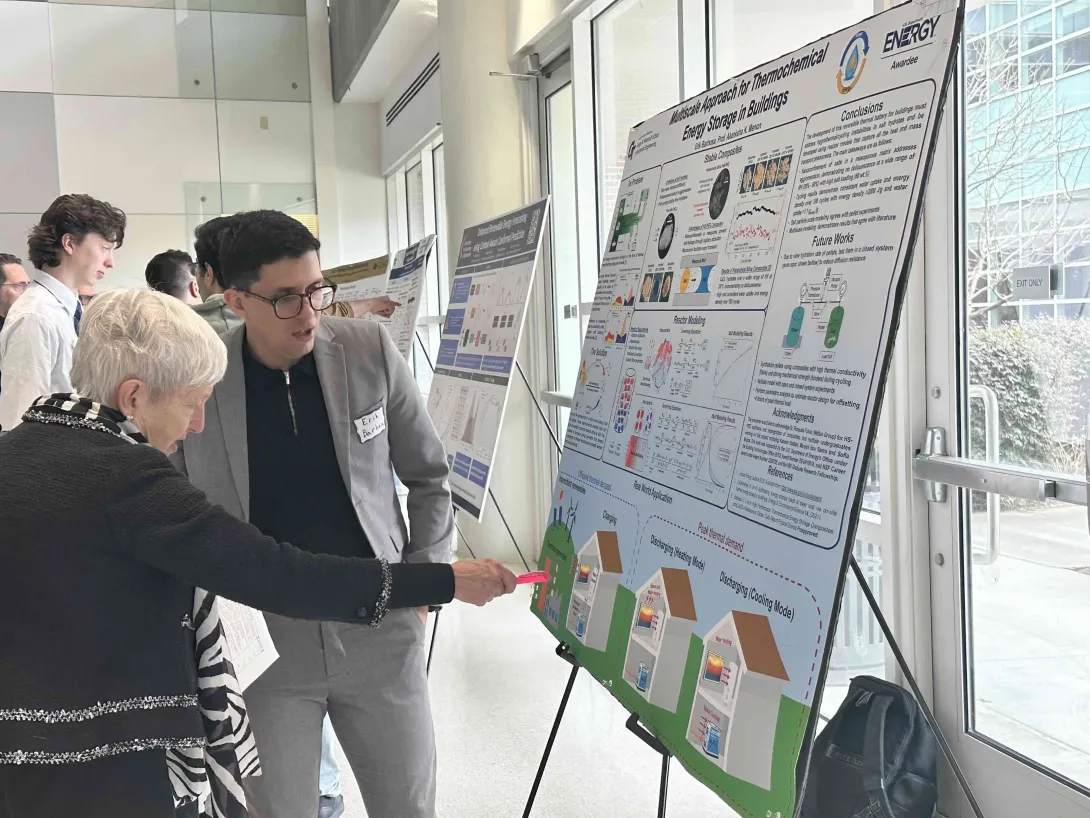
Poster Session at the 2026 Southeastern Energy Conference
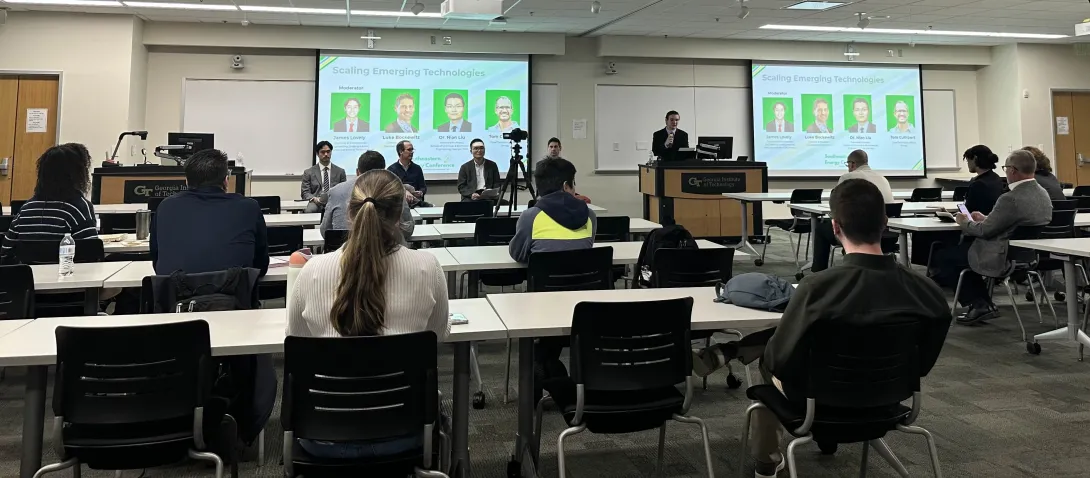
Panel Discussion at the Georgia Tech Energy Club's Southeastern Energy Conference 2026.
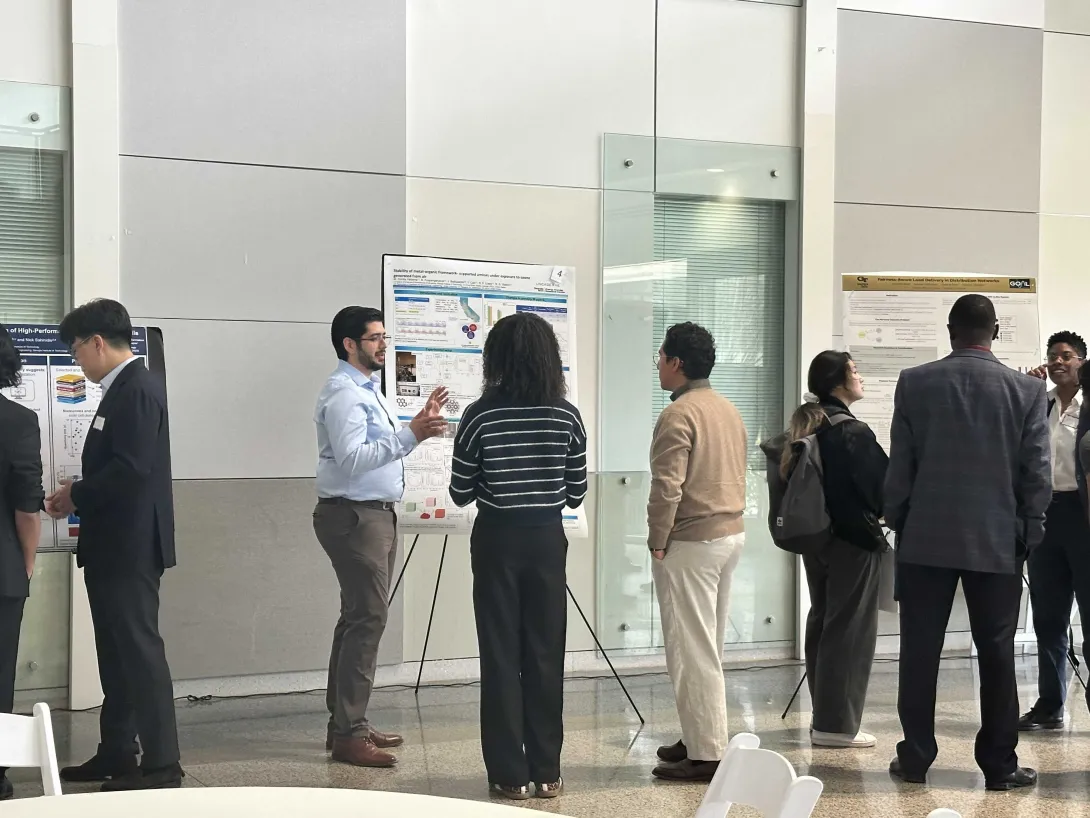
Poster Session at the 2026 Southeastern Energy Conference
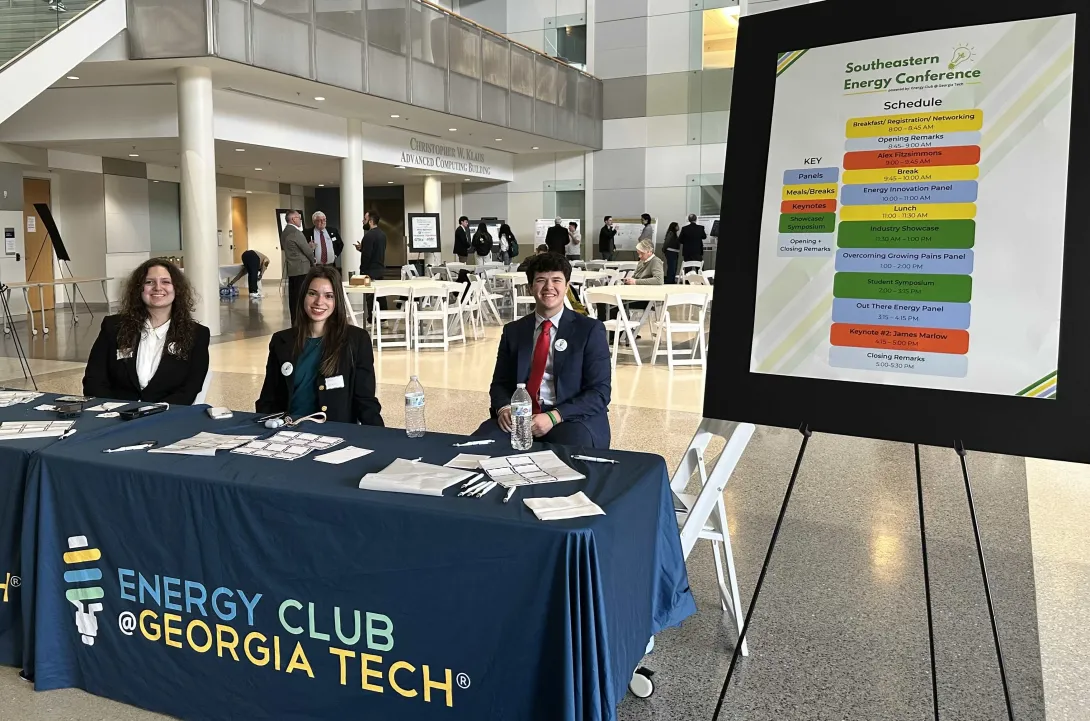
Energy Club Team at the Southeastern Energy Conference
The 2026 Southeastern Energy Conference, Georgia Tech’s annual student-led energy and sustainability conference, took place on Feb. 18. Organized by the Energy Club at Georgia Tech, the conference welcomed more than 150 attendees, including industry leaders, policymakers, researchers, and students, featuring dynamic discussions on the future of energy. The theme, "Future Focused: Advancing the Energy of Tomorrow," highlighted the industry’s commitment to innovation, sustainability, and collaboration as participants explored emerging technologies, evolving policies, and strategies shaping the energy landscape of tomorrow.
The event kicked off with a keynote address from Alex Fitzsimmons, acting undersecretary of the Office of Cybersecurity, Energy Security, and Emergency Response (CESER) at the U.S. Department of Energy. He shared insights into the administration’s work at the intersection of cybersecurity and the rapidly evolving U.S. energy sector. The first panel of the day, “Energy Innovation,” explored leaders’ perspectives on organizational innovation within the industry. With Tech undergraduate Neil Ghosh moderating the panel, Roderick Jackson, Jamie Barber, and Mark Tozzi discussed emerging energy technologies and their potential impact on the industry.
Later, the Industry Showcase featured representatives from energy companies such as GE Vernova, Cherry Street Energy, Orion, GTA, Kimley Horn, and E4E Solutions, providing valuable networking and career development opportunities for students and professionals. A panel on “Overcoming Growing Pains” followed, with Josh Stallings, vice president of Power Delivery Strategy and Support at Georgia Power; Daniel Molzahn, associate professor in the School of Electrical and Computer Engineering (ECE); and Lisa Berry, GE Vernova’s technical director for Decarbonization and Data Centers for the Americas region. The discussion was moderated by Radhika Sharma, co-president of the Energy Club and a graduate student in ECE, and focused on current challenges facing the rapidly growing energy industry.
One of the standout moments of the conference was the Student Symposium, where 16 student researchers presented their work while competing for $1,000 in prize money sponsored by Cobb EMC. Projects ranged from residential demand management optimization studies to the challenges and viability of hydrogen combustion engines. Erik Barbosa earned first place for his research on a multiscale approach to thermochemical energy storage within buildings. Daksh Adhikari received second place for examining the mitigation of flow boiling instabilities with active flow control, and William Schertzer placed third for work using machine learning and neural networks to model anion exchange membrane degradation.
The final event of the day, “Scaling Emergent Energy Technologies,” focused on growing the newest energy technologies within the industry. Moderated by Georgia Tech undergraduate James Lovely, the panel included Luke Bockewitz, director of business development at Kinetics; Nian Liu, associate professor and Robert G. Miller Faculty Fellow in the School of Chemical and Biomolecular Engineering; and Thomas Cuthbert, chief technology officer at Emrgy. The conference closed with a keynote speech from James Marlow, president and CEO of Southface Institute, who provided a framework for thinking through innovation and tactical advice for aspiring energy innovators and leaders.
"The level of organization and vision demonstrated by the students was outstanding,” Molzahn said. “By focusing on the evolving energy landscape and inviting experts from across the field, they created an event that sparked important conversations for our campus.”
“It was an honor to serve as the Energy Club’s 2026 conference chair and work alongside the strong energy community at Georgia Tech,” said Jonathan Acree. “Meaningful innovation in energy depends on collaboration, and it was truly encouraging to see such an interdisciplinary group of talented students, researchers, and industry leaders come together around the shared goal of advancing our energy future.”
The conference also highlighted Georgia Tech’s role as a hub for forward-thinking dialogue on global energy challenges — and the importance of collaboration and innovation in shaping the evolving energy landscape and fostering the next generation of leaders in the field.
Written by Georgia Tech students: Braden Queen, Orit Endalk, Eli Acree, Radhika Sharma
News Contact
Priya Devarajan || Communications Program Manager, Strategic Energy Institute

AdobeStock_480044761
Carbon dioxide continues to push global temperatures toward dangerous thresholds that affect everything from public health to economies. To mitigate these effects, researchers are looking into carbon removal methods such as direct air capture machines that can chemically bind with carbon or simple ecological strategies like adding trees to unwooded areas. These approaches could potentially supplement the decarbonization of transport, industry, and the energy system.
But as carbon removal grows, so does a core problem: The carbon removal industry is largely unregulated, particularly for more novel technologies without long-standing norms around reporting and verification. In today’s “voluntary carbon market,” a private company can claim it removed a certain amount of carbon, list that amount for sale, and allow another company to buy it to offset its emissions — with little independent oversight or transparency.
A new Nature NPJ Climate Action article argues that this system isn’t enough to meet global climate goals, and could even end up causing harm. In the paper, Chris Reinhard, Georgia Power Chair and associate professor in Georgia Tech’s School of Earth and Atmospheric Sciences, and Noah Planavsky of the Yale Center for Natural Carbon Capture call for a fundamental shift: Carbon removal should be quantifiable, economically viable, and pursued in ways that create benefits for local communities — and greater transparency in carbon removal practice is necessary.
“We argue that it’s important to understand and quantify carbon removal practices that can benefit local communities, like better crop yields, and that this understanding is really only possible if these practices are pursued transparently,” Reinhard said. “The data used to quantify carbon removal and how much it costs need to be transparent — the surest route toward learning what works and building public trust in carbon removal as a solution.”
Transparency Trouble
Reinhard and Planavsky bring a unique technical and policy perspective to the issue. As geochemists, they study how Earth’s chemical composition and geological processes control the carbon cycle. Reinhard also co-founded a carbon removal startup he has since divested from. That insider experience and academic background helped them see the disconnect between what’s technologically possible and what market logic culturally or commercially incentivizes.
Today’s carbon removal startups often guard their methods and data as proprietary intellectual property. Without regulatory requirements or pressure from corporate carbon buyers, these startups have little reason to disclose carbon accounting practices, cost structures, or actual long-term impacts. The researchers argue that policy guidance and advocacy are needed to shift the industry toward meaningful openness.
“Our expertise is most firmly grounded in the technical dimensions of these carbon removal processes,” Reinhard said, “but we saw an opportunity here to push for better policy and start this dialogue about what transparency really means, in part to foster more public debate about what carbon removal ought to be doing for society.”
Community Beyond Carbon
The authors also stress that carbon removal should deliver benefits beyond atmospheric cleanup that communities can see and advocate for. For example, liming, or adding limestone to soil, can remove carbon while also improving crop yields and reducing erosion. Coastal ecosystem restoration can sequester carbon while strengthening shorelines and supporting fisheries. Georgia Tech’s own direct air capture work builds community engagement into the process to ensure that carbon removal is equitable.
Reinhard and Planavsky say the next best step for the carbon removal industry is to identify which removal pathways offer the clearest benefits, what they cost, and where transparency gaps are most damaging. This foundation will help create policies that make carbon removal reliable, verifiable, and community-centered.
Without oversight, they argue, carbon removal risks remaining a niche, market-defined practice — when the climate challenge demands a trusted, scalable, and democratically governed solution.
CITATION: Reinhard, C.T., Planavsky, N.J. The importance of radical transparency for responsible carbon dioxide removal. npj Clim. Action 5, 7 (2026). https://doi.org/10.1038/s44168-025-00324-4
News Contact
Tess Malone
Senior Research Writer/Editor
Georgia Tech

Georgia Tech Energy Day returns this year on March 19 with an expanded focus and a new collaborative momentum. Cohosted by the Georgia Tech Institute for Matter and Systems (IMS) and the Strategic Energy Institute, (SEI) with plenary session support from the Energy Policy and Innovation Center, Energy Day 2026 convenes leaders from academia, industry, government, and students to address the challenges associated with meeting the rapidly growing electricity demand driven by artificial intelligence (AI) and high-performance computing.
Set in the heart of Tech Square on the Georgia Tech campus, this year’s event explores how energy systems, materials, technologies, supply chains, and policy must evolve in response to AI’s accelerating impact. As digital infrastructure expands and computation intensifies, the need for reliable, resilient, and sustainable power has never been more urgent.
“Energy Day reflects Georgia Tech’s strength in connecting world-class research in materials and components with the infrastructure and partnerships needed to translate discovery into scalable energy technologies that serve industry, society, and the future economy,” said Eric Vogel, executive director of the IMS and the Hightower Professor in Materials Science and Engineering.
Energy Day 2026 also marks an important milestone with the introduction of its first group of corporate sponsors: GE Vernova, Southern Company, Georgia Power, ExxonMobil, Southwire Spark, Gems Setra, and Tektronix. Their support reflects a shared commitment to advancing energy solutions.
“Tektronix is excited to be part of Energy Day because advancing the future of energy starts with precise measurement and trusted insights,” said Christopher Bohn, president of Tektronix. “From power electronics and high voltage systems to grid scale renewables and AI driven control technologies, the breakthroughs discussed here directly align with the innovations we support through our products and solutions. Collaborating with Georgia Tech allows us to engage early with emerging research and the next generation of engineers—critical collaborators in building a cleaner, smarter, and more resilient energy ecosystem.”
The keynote address will be delivered by Vanessa Z. Chan, a nationally recognized leader at the intersection of innovation, commercialization, and emerging technologies. Chan will provide insights on accelerating technological discovery, emphasizing how AI is transforming energy and materials design. She will discuss how commercialization strategies must rapidly evolve across multidisciplinary energy domains from grid modernization to advanced batteries and clean manufacturing.
Building on the themes introduced in the keynote, the program transitions into a fireside chat with Georgia Tech EVPR Tim Lieuwen featuring Amit Kulkarni and Jim Walsh. Kulkarni is vice president of Product Management and Strategy for the Gas Power business within GE Vernova, where he oversees the world’s largest portfolio of power generation equipment. Walsh, vice president of GE Vernova’s Consulting Services, leads teams providing innovative solutions across the full spectrum of power generation, delivery, and utilization.
Next comes a policy-focused panel that will explore the surge in power demand driven by AI, how the United States is addressing today’s most urgent energy challenges, and the long-term implications of today’s decisions for a sustainable energy future. Bringing together leading voices in U.S. environmental and energy policy, the panel features Joe Aldy of Harvard University and former special assistant to the president for Energy and Environment; Al McGartland of New York University’s Institute for Policy Integrity and former Environmental Protection Agency lead economist and director of the National Center for Environmental Economics; and Kevin Rennert, fellow and director of the Comprehensive Climate Strategies Program at Resources for the Future and former staff member on the U.S. Senate Committee on Energy and Natural Resources.
The second panel focuses on critical materials — the foundation of advanced energy systems and digital technologies. As AI, data centers, and advanced energy technologies drive demand for critical materials, securing them now requires integration and coordination across the entire value chain. Panelists include Rachel Galloway, British consul general in Atlanta; Vijay Murugesan, head of Materials Intelligence and Digital Innovation at Amazon; Colin Spellmeyer, executive strategic sourcing leader at GE Vernova; Charles Sims, Tennessee Valley Authority Distinguished Professor of Energy and Environmental Policy at the University of Tennessee; and Nortey Yeboah, principal engineer at Southern Company. Together, they will offer perspectives on the policy and economic frameworks shaping the energy supply chain, from developing raw resources to manufacturing the technologies essential to future energy systems.
In the afternoon, participants can dive deeper into specialized topics through three focused technical tracks.
- “Meeting the Demand for Power” will examine how emerging technologies, advanced nuclear systems, and renewable integration can work together to deliver reliable, resilient electricity.
- “Data Center Infrastructure and Resources” will explore innovations in thermal management technologies, energy-efficient computing, and the broader resource impacts of expanding digital infrastructure.
- “Grid Technologies and Markets” will highlight strategies for strengthening grid capacity, incorporating demand-side management, and optimizing carbon performance as energy systems evolve.
“Meeting the rapidly rising electricity demand driven by AI requires bold ideas, coordinated action, and research that moves at the speed of innovation,” said Yuanzhi Tang, executive director of the SEI. “Energy Day 2026 brings together the people and expertise needed to shape resilient, sustainable energy systems for the future. At Georgia Tech, we see this event as a catalyst for new partnerships, new solutions, and a shared commitment to strengthening the nation’s energy foundation.”
Energy Day 2026 is designed for researchers advancing emerging energy technologies, policymakers navigating shifting regulatory and geopolitical landscapes, industry professionals seeking insight into emerging tools and supply chains, and students preparing to enter one of the most consequential sectors of the decade. It also welcomes anyone interested in AI, sustainability, electrification, and critical materials.
Join us to explore the future of energy. To learn more and register, visit: Energy Day 2026.
News Contact
Priya Devarajan | Communications Program Manager

A recent study by EPIcenter affiliates Brian An and John Kim and researchers at Georgia Tech, Iowa State University, and Clemson University examines how utility-level characteristics—such as ownership structure, electricity pricing, and incentive programs—shape residential electricity consumption in the Southeastern U.S. Using data from 105 electric utilities in Georgia and North Carolina, the authors analyze how governance models (investor-owned, municipal, cooperative), demographic factors, and program offerings interact to influence household energy use.
The study finds that higher electricity rates and greater shares of college-educated residents are associated with lower household consumption, while larger homes, electric heating, and higher incomes drive usage upward. Notably, electric vehicle (EV) incentive programs correlate with increased household electricity demand—even after controlling for public charging infrastructure—suggesting these programs effectively promote EV adoption and at-home charging. In contrast, energy efficiency (EE) and renewable energy (RE) programs show no clear relationship with consumption in multivariate models.
Read Full Story and listen to a related podcast on the EPIcenter Newspage
News Contact
Priya Devarajan | SEI Communications Program Manager

A recent study by EPIcenter faculty affiliates Joe F. Bozeman III (School of Civil and Environmental Engineering, Georgia Institute of Technology) and Daniel C. Matisoff (Carter School of Public Policy, Georgia Institute of Technology), along with John D. Kim (Carter School of Public Policy, Georgia Institute of Technology) and co-authors Sanya Carley, David M. Konisky, Jeremy J. Michalek, and Destenie Nock, examines U.S. household electric vehicle (EV) ownership and adoption intent beyond upfront costs, focusing on charging access, travel behavior, housing, and demographics. The study utilizes a nationally representative survey of 2,870 households to examine how these factors shape both current EV ownership rates and consumers’ intentions to purchase or lease an EV in the future.
The study finds that EV ownership remains relatively low among households with “median” characteristics — approximately 1% of household vehicles are electric — but increases substantially when households report access to community charging infrastructure. In contrast, single‑vehicle households and households located in states without Tesla dealerships exhibit significantly lower EV ownership rates. When examining adoption intent, the authors find that access to community and workplace charging, trust in the federal government, more liberal political ideology, younger age, and urban residence are consistently associated with higher stated interest in EV adoption. Notably, single‑vehicle households express significantly greater intent to adopt one in the future, despite being less likely to own an EV today. The analysis also reveals that public transit users show elevated EV adoption intent at earlier stages of consideration, suggesting potential complementarities between transit use and personal vehicle electrification.
Read Full Story and listen to a related podcast on the EPIcenter Newspage
News Contact
Priya Devarajan | SEI Communications Program Manager

The Georgia Institute of Technology’s Vertical Lift Research Center of Excellence (VLRCOE) and RMS Aerospace have entered into a strategic partnership to develop an AI-enabled unmanned aerial vehicle (UAV) for the U.S. Army and federal government.
RMS is an engineering firm highly specialized in aerial and maritime combat systems, with offices in Texas and Georgia. This partnership combines VLRCOE’s strengths in rotorcraft aeromechanics and advanced configurations with RMS’ operational defense and applied systems engineering expertise to address a critical need for the U.S. Army.
The military has phased out or retired other drone vehicles, including the MQ-1 Gray Eagle, RQ-7 Shadow, and OH-58 Kiowa Warrior. Deploying a new AI-powered UAV can take over the intelligence, surveillance, and reconnaissance missions typically flown by those older UAVs.
News Contact
Kelsey Gulledge || AE Communications Manager
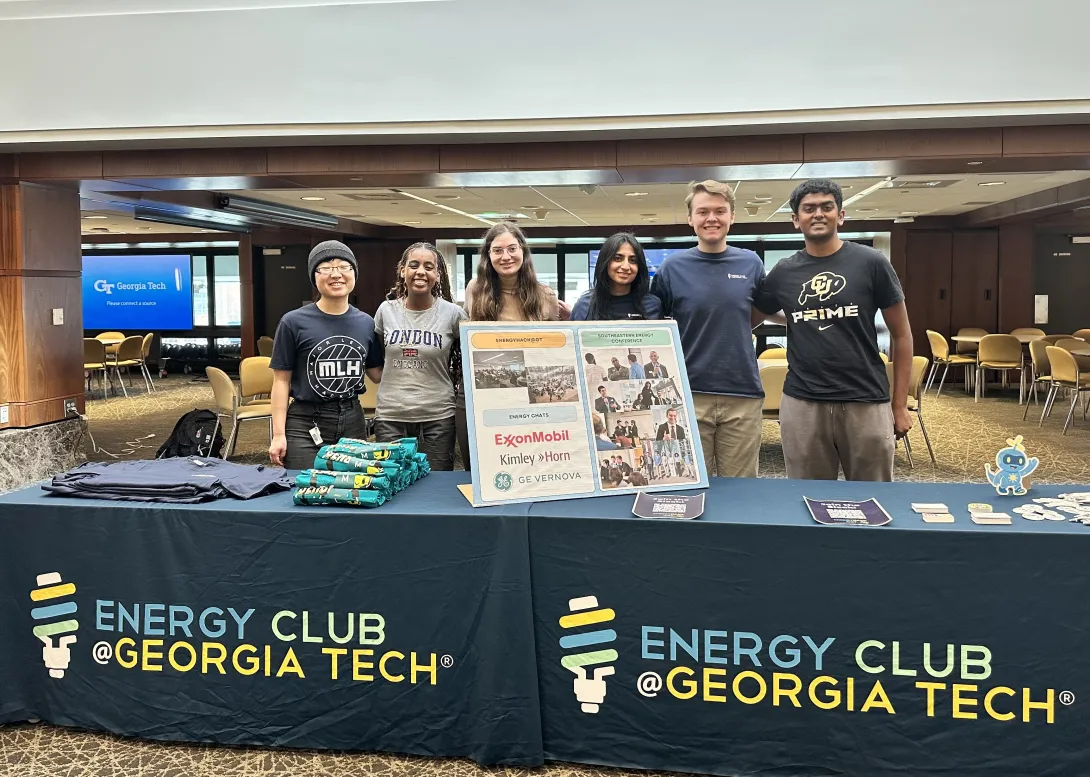
Energy Club Team
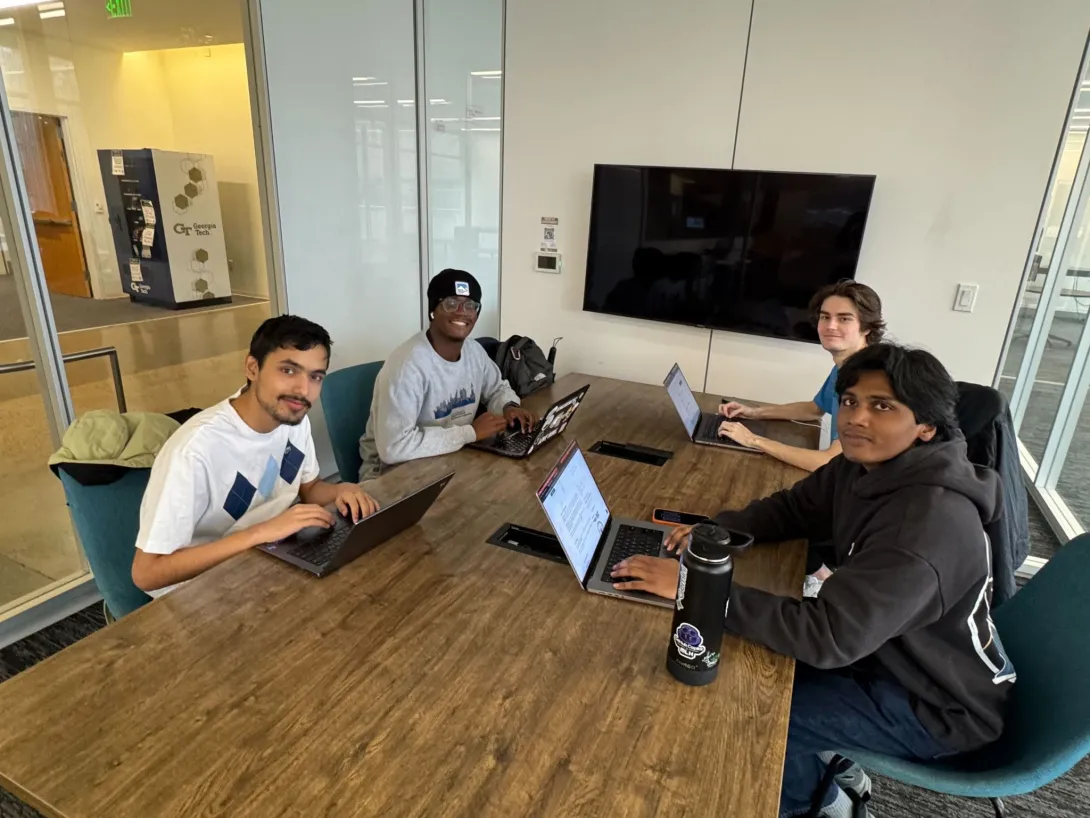
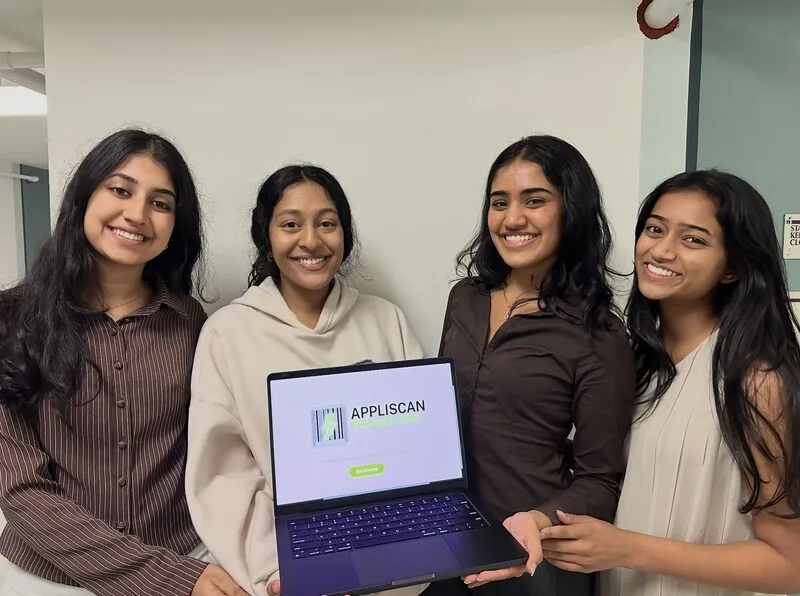
EnergyHack@GT 2026 Winning Team
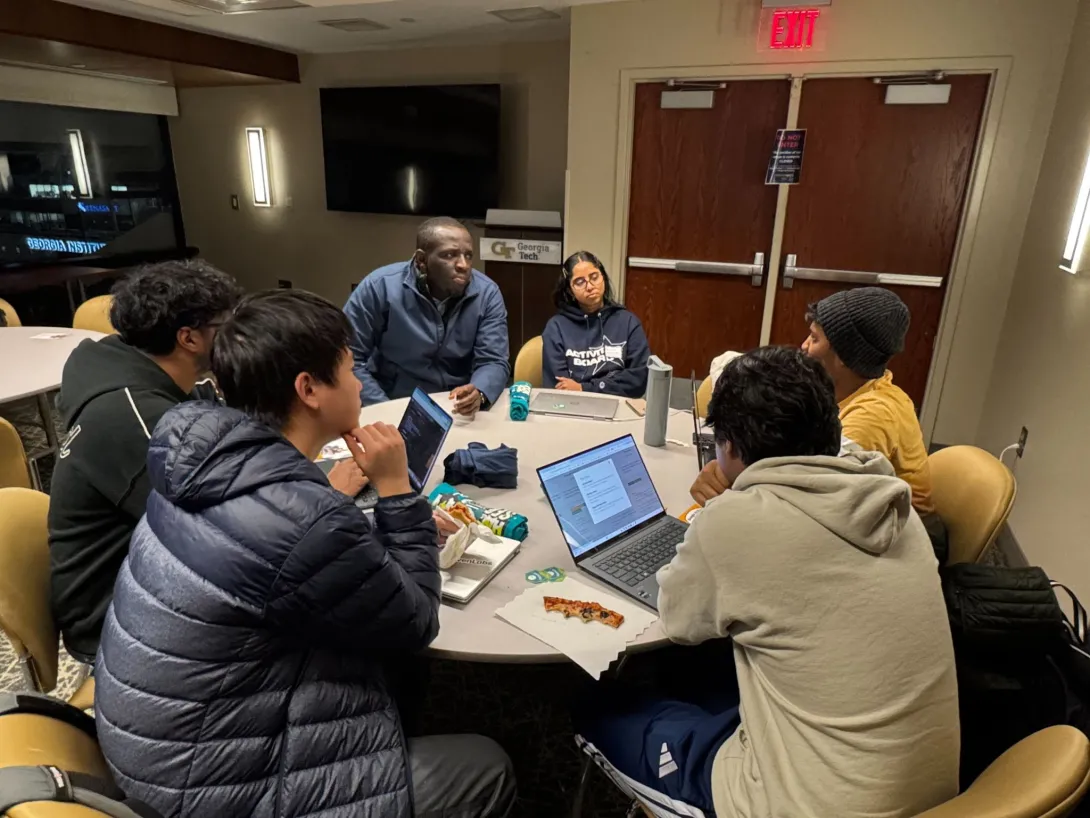
EnergyHack@GT, Georgia Tech’s second annual student-run energy and sustainability hackathon, took place over the weekend of Jan. 23 – 25, 2026. Organized by the Energy Club at Georgia Tech, the hackathon’s mission was to unite passionate students, tackle critical challenges in the energy industry, and foster innovation and collaboration.
Over the course of 36 hours, participants collaborated in teams to brainstorm, design, and prototype projects that promote sustainable practices based on diverse problem statements, addressing this year’s tracks: renewables; electrification & mobility; and smart grid. These themes targeted urgent issues, from balancing renewable energy supply and demand to safeguarding infrastructure against cyber threats and reducing greenhouse gas emissions. Despite the arrival of a winter storm and the hackathon shifting to a fully virtual format, students persevered and produced top-tier projects, which were evaluated by a panel of judges.
The event kicked off with an engaging opening ceremony featuring inspiring keynote speeches that set the tone for the hackathon’s ambitious objectives. Ann Dunkin, Distinguished External Fellow at Georgia Tech’s Strategic Energy Institute (SEI), served as the first of these keynotes, presenting her experiences as chief information officer for the U.S. Department of Energy. She gave participants, whether newcomers or veterans in the energy space, diverse problems to tackle, ranging from cybersecurity risks in substations to climate concerns in the age of artificial intelligence. Dunkin emphasized that no matter the challenge, a strong team can always develop innovative solutions.
“I was impressed by the quality and completeness of the solutions that the students created over about 40 hours,” said Dunkin. "Students created real solutions that meet market needs, and they conveyed an incredible amount of information in the three minutes they had to present their solutions.”
Despite the switch to a virtual format, participants could still talk to mentors throughout the event. These mentors included a Google lead, startup CEOs, Ph.D. researchers, and other professionals with decades of experience in the energy industry. Mentors provided feedback on participants’ ideas and guided them to think more deeply about the problems they chose. The various workshops also provided participants with a chance to dig deep into specific topics.
Michael Levy, U.S. utilities lead at global consulting firm Baringa, presented his workshop on using data and modeling to shape utility decisions, policy, and regulatory strategy. GE Vernova representatives presented “The Energy of Change,” an interactive workshop featuring climate simulations and team challenges to explore the trade-offs between cost, grid capacity, and carbon impact in the real world. Major League Hacking provided guides on GitHub Copilot and Google AI Studio. The final workshop, “Org Efficiency in Early Startups,” was led by Hunter Harris from the technology incubator complex Atlanta Tech Village. Harris taught participants what to prioritize in an early startup, including how to build a management structure and find the right strategy for attracting customers.
Troy Rice, vice president and general manager of Florida Power and Light under NextEra Energy, gave a keynote speech on utility business models and how to set yourself apart in a large industry. Rice discussed his experience, which began as a Tech graduate from the H. Milton Stewart School of Industrial and Systems Engineering. After learning about NextEra’s business model, he eventually created and taught an internal class called “How NextEra Makes Money.” Rice used this story to explain the importance of becoming an expert in knowledge that others in your company overlook. He also discussed the future of energy generation, emphasizing the growth of renewable energy in utility portfolios and often-overlooked potential career opportunities.
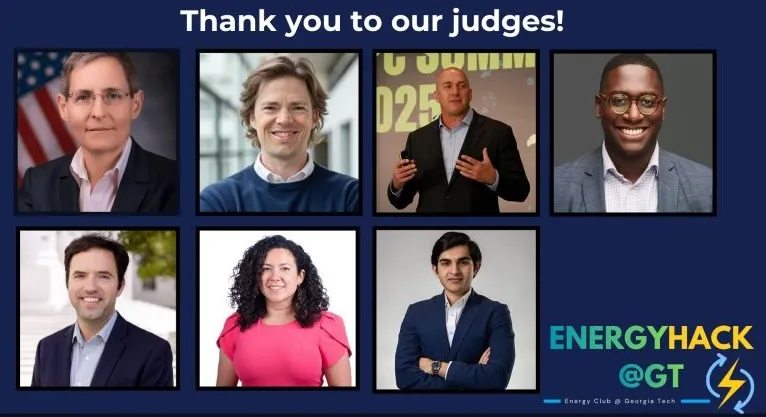
The energy and creativity culminated in the Project Expo, where 22 innovative solutions were showcased. Representatives from the Strategic Energy Institute, Microsoft, NextEra Energy, GE Vernova, and Georgia Tech professors judged projects, offering insights and feedback.
The closing ceremony celebrated the participants’ achievements and the event highlights, featuring Emily Morris, founder and CEO of Emrgy, as the final keynote speaker. Morris shared insights from her experience as a technology startup founder in the energy sector, discussing the unique challenges of navigating a risk-averse industry. She encouraged aspiring entrepreneurs to start by envisioning their future press release to clarify their end goal and avoid getting lost in immediate challenges. Morris emphasized the importance of leveraging your network, whether your Georgia Tech connections or hometown community, regardless of whether you pursue academia, industry, or the startup world.
With more than 110 registered participants, 22 project submissions, and leaders from some of the biggest energy and tech companies, EnergyHack@GT served as a platform for innovation and learning, showcasing the potential of student-led initiatives in shaping the future of energy and sustainability. Awards were presented to the top three projects for their creativity and impact, with the winning teams receiving cash prizes provided by the startup Tractian:
- Best Overall Hack: AppliScan
- Second Place: TeraWatt
- Third Place: WattsUp
Take a look at all the projects submitted: https://energyhack-gt-26.devpost.com/project-gallery
Written by Georgia Tech students: Braden Queen, Orit Endalk, Radhika Sharma
News Contact
Priya Devarajan || SEI Communications Program Manager
Written by Georgia Tech students: Braden Queen, Orit Endalk, Radhika Sharma