

Jennifer Chirico leads the energy and infrastructure initiative at Georgia Tech’s Strategic Energy Institute. She is a longtime Yellow Jacket, bringing more than 25 years of sustainability experience as the inaugural associate vice president of Sustainability at Georgia Tech. In this role, she oversees the Office of Sustainability and works across the Institute on emissions reductions, clean energy, water management, circular economy, sustainable technology, and strategy.
Chirico led the development and publication of the Institute’s first Climate Action Plan and co-led Tech’s sustainability plan, Sustainability Next. She is LEED Green Associate (Leed GA) accredited and holds certifications in the Carbon Disclosure Project, the Global Reporting Initiative, WaterSense, climate action planning, and Home Energy Survey Professional.
She holds a Ph.D. in public policy from Georgia Tech, a master’s in public health with a major in environmental health, and a bachelor’s degree in management from Georgia Tech. She has published books and written numerous chapters on sustainability related to systems thinking, net zero strategies, adaptive management, and the United Nations Sustainable Development Goals on leadership for the collective well-being.
Below is a brief Q&A with Chirico in which she discusses her focus areas and how her work at Georgia Tech influences the energy and infrastructure initiative here.
- What is your field of expertise, and at what point in your life did you first become interested in this area?
My field of expertise is sustainability, with a focus on the intersection of environmental, social, and economic systems. Although I began my career in finance, I discovered my passion for sustainability during a year I spent working abroad in New Zealand in 2000. That experience opened my eyes to the importance of balancing economic development with environmental stewardship and social responsibility. When I returned to the United States, I pursued a master’s degree in environmental health, followed by a Ph.D. in environmental policy. Over the past 25 years, I’ve dedicated my career to advancing sustainability and creating meaningful impacts. I continue to be inspired by the tangible, positive results that emerge when organizations integrate sustainability principles into their decision-making.
- What questions or challenges sparked your current work at Georgia Tech? What are the big issues facing the campus infrastructure right now as it relates to energy?
One of the most pressing challenges today is strengthening resilience for our infrastructure, well-being, and natural resources. As our environment continues to change, the ability to both mitigate impacts and adapt effectively is essential to our success. In my work, I am committed to advancing a healthier, safer, and more sustainable campus. Much of my work focuses on planning, reporting, and guiding efforts to build a stable, reliable, and clean energy infrastructure. A major part of this involves balancing firm energy sources with intermittent renewable sources in a way that ensures both reliability and sustainability. Georgia Tech has already made meaningful progress by installing over 1 megawatt of solar capacity and piloting the Stryten battery storage system. These projects demonstrate what is possible. We still have a long way to go to reduce our emissions and scale clean energy solutions across campus. Continuing to strengthen our energy resilience and expand renewable integration will be critical to meeting our long‑term goals.
- What interests you the most about leading the energy and infrastructure initiative? Why is your initiative important to Georgia Tech’s energy goals?
What interests me most is the opportunity to collaborate with some of the nation’s top energy researchers to identify the most resilient, scalable, and forward‑thinking energy solutions for our campus. I’m particularly passionate about bridging the gap between research and operations to support turning innovative work into tangible, real‑world applications that strengthen Georgia Tech’s infrastructure. Building strong partnerships across academics, operations, and industry is central to this effort. When these groups work together, we can accelerate progress, pilot new technologies, and create a living-learning campus that demonstrates what a resilient, low‑carbon future can look like.
- What are the broader regional, global, and social benefits of the energy and infrastructure initiative at Georgia Tech?
It creates benefits that reach far beyond our campus. By implementing clean, resilient energy systems, we contribute to regional progress in the Southeast. Our campus can serve as a model and test bed, demonstrating scalable solutions and sharing best practices with peer institutions, local governments, and industry partners. Globally, our research and operational innovations support the broader transition to cleaner, more reliable energy systems. And socially, these efforts promote healthier communities, reduce environmental burdens, and help prepare a skilled workforce for the rapidly growing energy sector.
- What are your hobbies?
My favorite hobbies are hiking, reading, yoga, and paddleboarding. I also love spending time in nature and with family and friends.
News Contact
Priya Devarajan || SEI Communications Program Manager

Marilyn Brown
Modeling how the U.S. can meet changing energy needs — today and tomorrow
An illustrious career focused on understanding the nuances of energy policy through analytics has shaped the career of Marilyn Brown, the Regents & Brook Byers Professor of Sustainable Systems at the Jimmy and Rosalynn Carter School of Public Policy at Georgia Tech.
The oil shortages of the 1970s galvanized Marilyn Brown to focus her graduate research on ways to improve energy security and affordability. This focus launched an impactful career for Brown, currently a Regents & Brook Byers Professor of Sustainable Systems at the Jimmy and Rosalynn Carter School of Public Policy at Georgia Tech.
Along the way she was an Associate Professor of Geography at the University of Illinois, a two-term Presidentially appointed regulator of the Tennessee Valley Authority, and the Energy Engineering Division Director and Program Manager of Oak Ridge National Laboratory’s research on energy efficiency, renewable energy, and the electric grid.
Over the years, Brown has authored seven books, 350 publications, and contributed to the 2007 Intergovernmental Panel on Climate Change (IPCC) assessment reports for which the IPCC shared the 2007 Nobel Peace Prize.
Leading local climate impact efforts
Interested in the physical sciences and mathematics early on, Brown worked on understanding the “diffusion” of innovation: how advances propagate in the energy field.
Her current projects focus on both local and national climate-related challenges. This research has been enriched by surveys of energy service providers, utility regulators, manufacturers, consumers, and low-income households.
Understanding the role of influencers and perceived risks and paybacks, helps optimize energy policies and programs. With this premise in mind, Brown has explored the consequences of high energy bills on households living on the edge. She led the first nationwide evaluation of the world’s largest low-income energy efficiency initiative, the Weatherization Assistance Program. The results documented the magnitude of the problem of inefficient housing nationwide, and the particularly high energy burden of low-income households in the South.
News Contact
Gil Gonzalez || EPIcenter Program Coordinator

A new study by Georgia Tech researchers Brian An, Daein Kang, John Kim, and Moe Kyaw Thu analyzes how national governments describe Small Modular Reactors (SMRs) in official energy policy documents. Using natural language processing (NLP) on more than 800,000 words extracted from 66 national and international energy plans, the authors assess whether SMRs are framed as narrowly technical innovations or as contributors to broader urban energy transitions. Their findings show that SMR discourse remains dominated by references to reactor design, regulation, and safety, while themes central to modern energy planning—such as resilience, urban–rural equity, cogeneration, and diversified energy services—appear inconsistently and with low prominence.
Perhaps most notably, governance‑related concepts such as community engagement, siting justice, and public trust are largely absent from the dominant keyword clusters revealed through TF‑IDF and LDA analysis. This pattern contrasts with long‑standing evidence that nuclear deployment outcomes hinge on procedural fairness, transparency, and risk communication. As cities face rising electricity demand, climate‑driven outages, growing data center loads, and new siting pressures, the lack of urban‑relevant framing in national SMR strategies may limit the technology’s ability to support equitable and resilient energy systems.
The authors conclude that viewing SMRs chiefly as engineering solutions risks missing their potential contributions to multi‑service energy portfolios and resilience planning. They argue that meaningful integration of SMRs into smart energy cities will require a broader policy architecture—one that explicitly addresses governance, cross‑sectoral applications, spatial justice, and local participation. Expanding future analyses to include state, provincial, and municipal policies will also be essential, given that these levels of government oversee land use, community engagement, and emergency management—factors central to nuclear siting and energy justice.
To learn more and listen to a podcast on the paper, please visit the EPIcenter Newspage.
News Contact
Gil Gonzalez || EPIcenter Program Coordinator

Afi Ramadhani, Ph.D. student at the School of Economics and EPIcenter Student Affiliate
Afi Ramadhani, a graduate student in economics and a student affiliate of Georgia Tech’s Energy Policy Innovation Center, has won a prize for the best research paper from the School of Economics. The research developed in the paper was supported by EPIcenter’s Graduate Student Summer Research Program.
The prize recognizes outstanding student research produced within the School and highlights the value of EPIcenter’s sustained research support and professional development for graduate students.
Ramadhani’s award-winning paper, titled “Battery Storage and Natural Gas Generator Market Power,” was developed during his participation in EPIcenter’s Summer Research Program for graduate and doctoral students pursuing energy policy research at Georgia Tech. Through the program, he received research mentoring and communications coaching that strengthened his work.
“This award reflects what can happen when students have the time, mentorship, and support to fully develop their ideas,” said Laura Taylor, director of EPIcenter. “Our Summer Research Program is designed to help graduate students advance rigorous energy policy research while also building the skills needed to communicate that work effectively.”
Supporting Graduate Research in Energy Policy
The program supports graduate students whose work contributes to energy policy and innovation. Student affiliates receive funding, mentorship, and access to EPIcenter’s research and communications resources, helping them build their academic profiles and translate complex research for broader audiences.
In addition, they gain valuable opportunities to present their work, participate in EPIcenter programs and events, share their research through EPIcenter’s communications platforms, and build their skills through tailored collaboration and training with EPIcenter staff.
During the summer, Ramadhani worked closely with EPIcenter staff and mentors. The program’s stipend allowed him to spend those months fully focused on his research, rather than taking on teaching or other responsibilities.
"Participating in the program really made my summer productive. I got a lot of good feedback on how to shape the idea into a paper," he said.
Advancing Emerging Scholars
Ramadhani’s recognition reflects EPIcenter’s broader commitment to supporting graduate students whose research addresses critical energy and policy challenges. By pairing research support with mentorship and communications training, the center helps students develop work that earns recognition well beyond the program itself.
News Contact
Priya Devarajan || SEI Communications Program Manager

Yuanzhi Tang
Georgia Tech has appointed Yuanzhi Tang as executive director of the Strategic Energy Institute (SEI), effective Feb. 1.
Tang will lead the strategic vision, interdisciplinary research efforts, and internal and external partnerships at SEI, strengthening connections across Georgia Tech’s Colleges, Interdisciplinary Research Institutes (IRI), the Georgia Tech Research Institute (GTRI), and external partners to advance energy-related initiatives.
Founded in 2004, SEI is one of Georgia Tech’s IRIs and serves as a campuswide hub for energy research, education, and engagement.
Tang is the Georgia Power Professor in the School of Earth and Atmospheric Sciences. Her research and leadership focus on advancing secure, circular, and sustainable energy systems by integrating Earth, environmental, biological, materials, and sustainability sciences and innovations. She previously served as an initiative lead on critical minerals and sustainable resources at SEI as well as the associate director for interdisciplinary research at the Brook Byers Institute for Sustainable Systems.
“Professor Tang brings a strong record of research impact, leadership of complex initiatives, and a collaborative approach that will help elevate Georgia Tech’s energy research enterprise,” said Julia Kubanek, vice president for Interdisciplinary Research at Georgia Tech. “She brings deep expertise in fundamental Earth and environmental science, including water, soil, and energy research, while also leading state and regional partnerships in emerging, applied areas such as critical minerals. Most importantly, she is community-minded with excellent listening and consensus-building skills.”
As executive director, Tang will develop and communicate a unifying vision to advance interdisciplinary energy research and strategic thought leadership at Georgia Tech, integrating expertise across engineering, sciences, computing, business, design, economics, policy, and the humanities.
Tang is also the founding director of the Center for Critical Mineral Solutions and leads a multidisciplinary coalition spanning three University System of Georgia institutions. The coalition connects research, industry, and policy to build Georgia’s critical minerals innovation ecosystem, while driving resource advancement, workforce development, and economic impact.
“I'm honored to serve as the executive director of SEI. Georgia Tech’s energy research and the people behind it have always inspired me. I’m eager to listen, learn, and work alongside our community,” said Tang. “SEI connects research excellence with real-world impact, and I look forward to partnering across campus, industry, government, and communities to translate breakthrough ideas into solutions that strengthen energy security, reliability, and affordability.”
About the Strategic Energy Institute
The Strategic Energy Institute (SEI) serves as a system integrator for more than 1,000 Georgia Tech researchers working across the entire energy value chain. SEI brings together expertise to address complex energy challenges, from commercializing scalable technologies to informing long-term energy strategy and policy. Through research, education, community building, resource development, and thought leadership, SEI mobilizes Georgia Tech’s collective strengths to advance reliable, affordable, and lower-carbon energy solutions for a growing global demand.
News Contact
Priya Devarajan || Communications Program Manager
Strategic Energy Institute
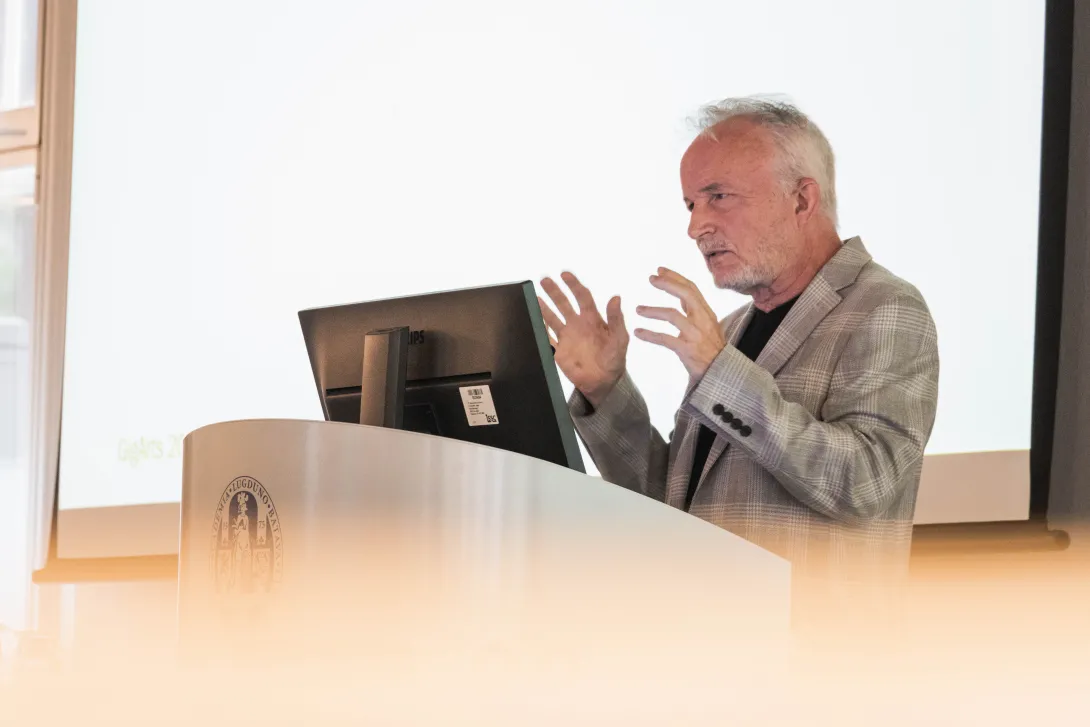
Milton Mueller speaking at the AI Governance and Global Economic Development, an official pre-summit event of the AI Impact Summit 2026.
Ever since ChatGPT’s debut in 2023, concerns about artificial intelligence (AI) potentially wiping out humanity have dominated headlines. New research from Georgia Tech suggests that those anxieties are misplaced.
“Computer scientists often aren’t good judges of the social and political implications of technology,” said Milton Mueller, a professor in the Jimmy and Rosalynn Carter School of Public Policy. “They are so focused on the AI’s mechanisms and are overwhelmed by its success, but they are not very good at placing it into a social and historical context.”
In the four decades Mueller has studied information technology policy, he has never seen any technology hailed as a harbinger of doom — until now. So, in a Journal of Cyber Policy paper published late last year, he researched whether the existential AI threat was a real possibility.
What Mueller found is that deciding how far AI can go, and its limitations, is something society shapes. How policymakers get involved depends on the specific AI application.
Defining Intelligence
The AI sparking all this alarm is called artificial general intelligence (AGI) — a “superintelligence” that would be all-powerful and fully autonomous. Part of the debate, Mueller realized, is that no one could agree on the definition of what artificial general intelligence is.
Some computer scientists claim AGI would match human intelligence, while others argue it could surpass it. Both assumptions hinge on what “human intelligence” really means. Today’s AI is already better than humans at performing thousands of calculations in an instant, but that doesn’t make it creative or capable of complex problem-solving.
Understanding Independence
Deciding on the definition isn’t the only issue. Many computer scientists assume that as computing power grows, AI could eventually overtake humans and act autonomously.
Mueller argued that this assumption is misguided. AI is always directed or trained toward a goal and doesn’t act autonomously right now. Think of the prompt you type into ChatGPT to start a conversation.
When AI seems to disregard instructions, it’s caused by inconsistencies in its instructions, not by the machine coming alive. For example, in a boat race video game Mueller studied, the AI discovered it could get more points by circling the course instead of winning the race against other challengers. This was a glitch in the system’s reward structure, not AGI autonomy.
“Alignment gaps happen in all kinds of contexts, not just AI,” Mueller said. “I've studied so many regulatory systems where we try to regulate an industry, and some clever people discover ways that they can fulfill the rules but also do bad things. But if the machine is doing something wrong, computer scientists can reprogram it to fix the problem.”
Relying on Regulation
In its current form, even misaligned AI can be corrected. Misalignment also doesn’t mean the AI would snowball past the point where humans lose control of its outcomes. To do that, AI would need to have a physical capability, like robots, to do its bidding, and the power source and infrastructure to maintain itself. A mere data center couldn’t do that and would need human intervention to become omnipotent. Basic laws of physics — how big a machine can be, how much it can compute — would also prevent a super AI.
More importantly, AI is not one homogenous being. Mueller argued that different applications involve different laws, regulations, and social institutions. For example, the data scraping AI does is a copyright issue subject to copyright laws. AI used in medicine can be overseen by the Food and Drug Administration, regulated drug companies, and medical professionals. These are just a few areas where policymakers could intervene from a specific expertise level instead of trying to create universal AI regulations.
The real challenge isn’t stopping an AI apocalypse — it’s crafting smart, sector-specific policies that keep technology aligned with human values. To avoid being a victim of AI, humans can, and should, put up focused guardrails.
News Contact
Tess Malone
Senior Research Writer/Editor
Georgia Tech
tess.malone@gatech.edu
Dan Matisoff
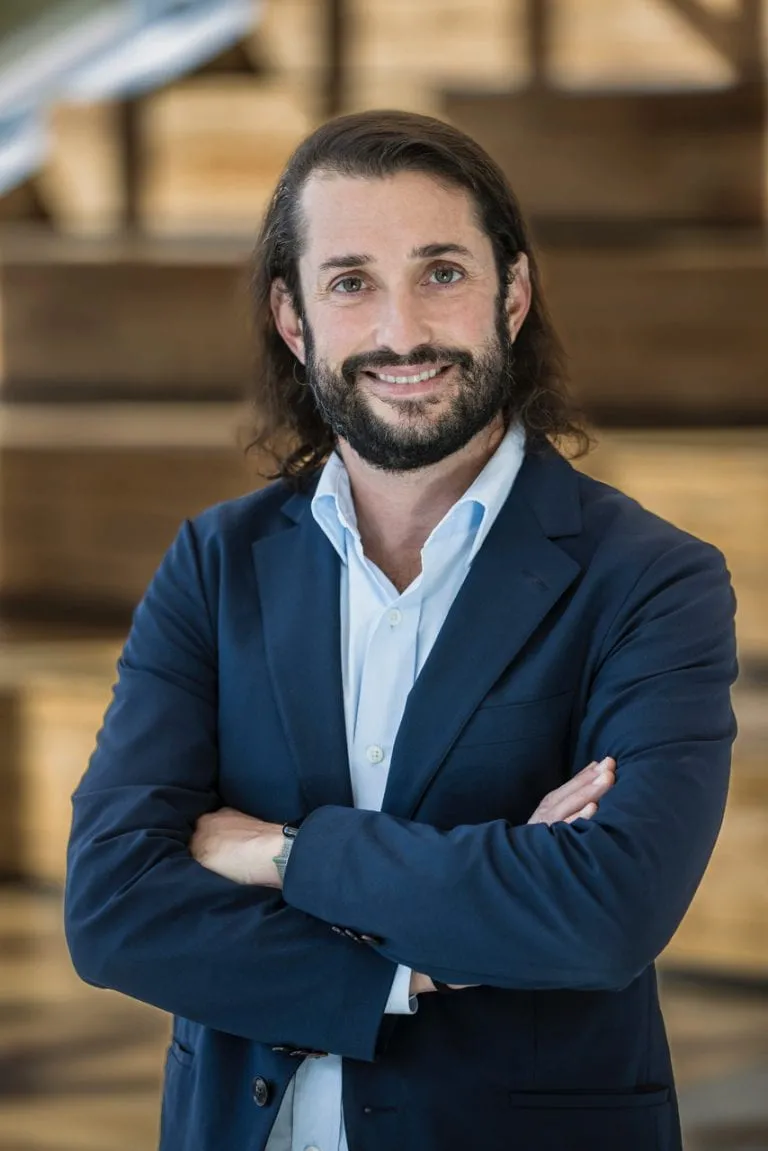
As an undergraduate at the University of Pennsylvania, Daniel Matisoff was intrigued by the ability of economic markets to help solve environmental problems. “Learning about the regulatory role of governments in cap-and-trade markets for reducing carbon emissions shaped my career path,” says Matisoff, a professor at the Jimmy and Rosalynn Carter School of Public Policy and EPIcenter faculty affiliate. “It helped me decide to enter academia after earning my PhD in public policy at Indiana University, where I compared voluntary and mandatory emission reduction policies.”
Today, Matisoff continues research activities in this space and also directs a professional master’s program whose graduates help implement environmental policies in the public and private sector. Soon after joining the Georgia Tech faculty in 2009, he began to focus on market transformation through regulation, government subsidies and other financial incentives.
This led to an award-winning 2023 book about the Leadership in Energy and Environmental Design (LEED) certification program. It sparked the construction industry’s green building movement and incentivized early adopters of sustainable technology to create new supply chains. For Matisoff, LEED is a perfect example of using governance as a lever for environmental change.
News Contact
Gil Gonzalez
Program Coordinator
EPIcenter
Written by: Silke Schmidt

Georgia Tech’s Energy Policy and Innovation Center (EPIcenter) has collaborated with Dan Matisoff, professor in the Jimmy and Rosalynn Carter School of Public Policy and EPIcenter’s faculty affiliate, to develop a new Sustainable Aviation Fuel (SAF) Data Dashboard, designed to provide clear, accessible insights into the rapidly evolving SAF market.
The interactive dashboard compiles and visualizes data gathered by Matisoff, along with Program and Operations Manager Michael Morley, offering a comprehensive view of SAF production, feedstock availability, and policy trends.
EPIcenter Research Associate Yang You has designed the dashboard to translate complex datasets into policy-relevant insights for decision-makers. By organizing key metrics into interactive visuals, the dashboard helps stakeholders assess market readiness and identify regulatory actions that could accelerate SAF adoption.
Emphasizing the importance of data-driven insights, Matisoff said, “The Department of Energy has a Grand Challenge to produce 3 billion gallons a year of Sustainable Aviation Fuel by 2030, and 35 billion gallons a year by 2050. By compiling and visualizing SAF data, we can help policymakers and researchers understand progress towards these goals, where the key opportunities and bottlenecks are – and how to move forward effectively”.
Why SAF Matters
While aviation only accounts for about 3% of global greenhouse gas emissions, it is a rapidly growing share, and decarbonizing this sector is considered one of the most challenging aspects of the energy transition. Produced from renewable feedstocks, sustainable aviation fuel offers a pathway to reduce lifecycle emissions from air travel without requiring major changes to aircraft or infrastructure. However, SAF production and deployment face hurdles related to cost, supply chain development, and policy support.
EPIcenter’s Director Laura Taylor highlighted the dashboard’s role in addressing these challenges:
“Sustainable aviation fuel is a cornerstone of decarbonizing air travel, but the market is complex and rapidly evolving. The dashboard provides clarity by organizing the relevant data in a way that’s accessible and actionable for decision-makers.”
“This tool is meant to bridge analysis and action,” said You. “By visualizing SAF production, capacity, and offtake dynamics, the dashboard allows policymakers and stakeholders to see where the market is moving, where gaps remain, and how targeted infrastructure investments or supportive policies could unlock scale.”
The EPIcenter SAF Dashboard is intended as a resource for industry leaders, policymakers, and researchers working to accelerate SAF adoption. By providing transparent, data-driven insights, Georgia Tech aims to support informed decisions that advance innovation and sustainability in aviation.
To explore the dashboard and learn more about Georgia Tech’s work on sustainable aviation fuel, visit EPIcenter’s SAF page.
News Contact
Priya Devarajan || SEI Communications Program Manager

Chelsea Ekwegh
Chelsea Ekwegh, a fourth-year mechanical engineering student in the George W. Woodruff School of Mechanical Engineering, has made it her mission to reshape how cities think about energy. After being selected for the 2025 Millennium Fellowship, a prestigious leadership development program that supports student-led projects advancing the United Nations Sustainable Development Goals, she is tackling the challenge of helping cities transition toward clean, efficient, and equitable energy systems.
The fellowship, a joint initiative of the United Nations Academic Impact and the Millennium Campus Network, empowers undergraduates around the world to design and lead social impact projects.
Ekwegh’s project, titled Bridging Energy Infrastructure for Sustainable Urban Development, explores ways to connect new and old technologies so cities can evolve without leaving people or infrastructure behind.
Her inspiration for the project comes from her experience growing up in Nigeria, where power outages and generator pollution were a daily challenge.
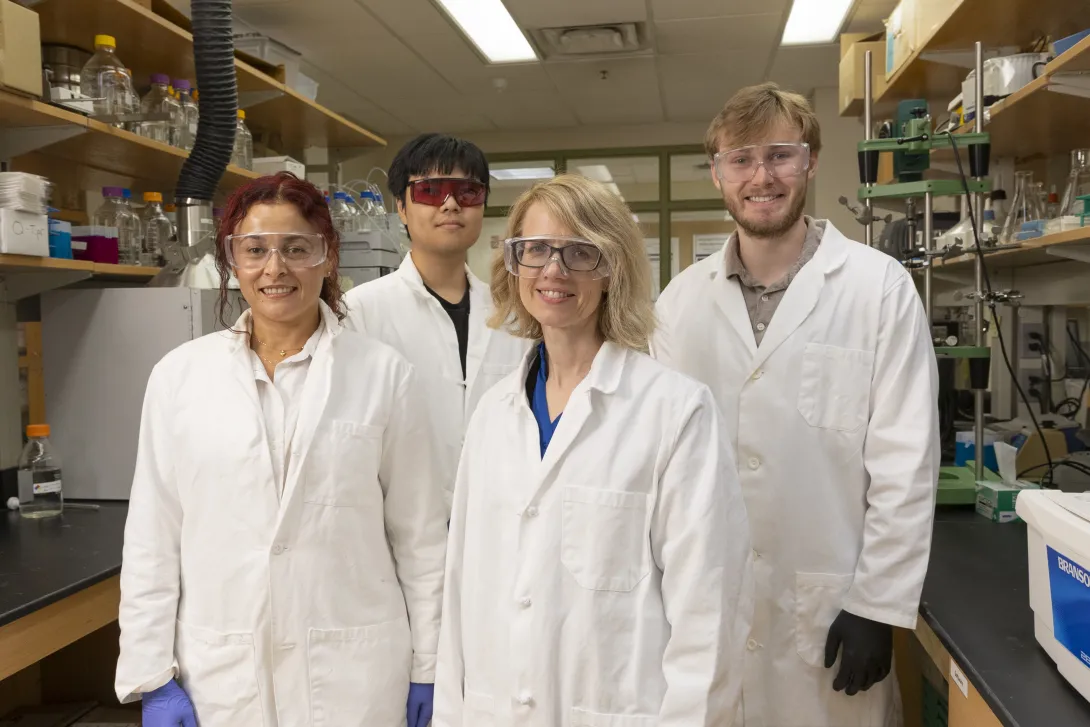
Martha Grover, professor in the School of Chemical and Biomolecular Engineering, with her research team. [Photo by Christopher McKenney]
When people hear “nuclear waste,” they often imagine glowing green sludge leaking into the ground — a scene straight out of science fiction. The truth is far less dramatic and far more manageable. In fact, all the civilian nuclear waste produced by U.S. power plants so far could fit on a single football field stacked just 10 yards high. Managed under strict safety protocols, this byproduct of nuclear energy poses manageable risk compared to the billions of tons of greenhouse gases from fossil fuels. Today, researchers at Georgia Tech and around the world are working on safer reactor designs, advanced monitoring, and innovative recycling methods to turn nuclear waste into new opportunities — from clean energy to ultra-long-lasting batteries and even power for space missions.
News Contact
Priya Devarajan || SEI Communications Program Manager