
Jan. 22, 2025
Researchers launch a a lightweight, balloon-borne instrument to collect data. "To keep advancing, we need scientists who can determine what data we need, collect that data, and solve problems," Bracco says. (NOAA)

Researchers launch a a lightweight, balloon-borne instrument to collect data. "To keep advancing, we need scientists who can determine what data we need, collect that data, and solve problems," Bracco says. (NOAA)

Exponential growth in big data and computing power is transforming climate science, where machine learning is playing a critical role in mapping the physics of our changing climate.

 “What is happening within the field is revolutionary,” says School of Earth and Atmospheric Sciences Associate Chair and Professor Annalisa Bracco, adding that because many climate-related processes — from ocean currents to melting glaciers and weather patterns — can be described with physical equations, these advancements have the potential to help us understand and predict climate in critically important ways. 

Bracco is the lead author of a new review paper providing a comprehensive look at the intersection of AI and climate physics.

The result of an international collaboration between Georgia Tech’s Bracco, Julien Brajard (Nansen Environmental and Remote Sensing Center), Henk A. Dijkstra (Utrecht University), Pedram Hassanzadeh (University of Chicago), Christian Lessig (European Centre for Medium-Range Weather Forecasts), and Claire Monteleoni (University of Colorado Boulder), the paper, ‘Machine learning for the physics of climate,’ was recently published in Nature Reviews Physics

“One of our team’s goals was to help people think deeply on how climate science and AI intersect,” Bracco shares. “Machine learning is allowing us to study the physics of climate in a way that was previously impossible. Coupled with increasing amounts of data and observations, we can now investigate climate at scales and resolutions we’ve never been able to before.”

Connecting hidden dots

The team showed that ML is driving change in three key areas: accounting for missing observational data, creating more robust climate models, and enhancing predictions, especially in weather forecasting. However, the research also underscores the limits of AI — and how researchers can work to fill those gaps.

“Machine learning has been fantastic in allowing us to expand the time and the spatial scales for which we have measurements,” says Bracco, explaining that ML could help fill in missing data points — creating a more robust record for researchers to reference. However, like patching a hole in a shirt, this works best when the rest of the material is intact.

“Machine learning can extrapolate from past conditions when observations are abundant, but it can’t yet predict future trends or collect the data we need,” Bracco adds. “To keep advancing, we need scientists who can determine what data we need, collect that data, and solve problems.”

Modeling climate, predicting weather

Machine learning is often used when improving climate models that can simulate changing systems like our atmosphere, oceans, land, biochemistry, and ice. “These models are limited because of our computing power, and are run on a three-dimensional grid,” Bracco explains: below the grid resolution, researchers need to approximate complex physics with simpler equations that computers can solve quickly, a process called ‘parameterization’.

Machine learning is changing that, offering new ways to improve parameterizations, she says. “We can run a model at extremely high resolutions for a short time, so that we don’t need to parameterize as many physical processes — using machine learning to derive the equations that best approximate what is happening at small scales,” she explains. “Then we can use those equations in a coarser model that we can run for hundreds of years.”

While a full climate model based solely on machine learning may remain out of reach, the team found that ML is advancing our ability to accurately predict weather systems and some climate phenomena like El Niño. 

Previously, weather prediction was based on knowing the starting conditions — like temperature, humidity, and barometric pressure — and running a model based on physics equations to predict what might happen next. Now, machine learning is giving researchers the opportunity to learn from the past. “We can use information on what has happened when there were similar starting conditions in previous situations to predict the future without solving the underlying governing equations,” Bracco says. “And all while using orders-of-magnitude less computing resources.”

The human connection

Bracco emphasizes that while AI and ML play a critical role in accelerating research, humans are at the core of progress. “I think the in-person collaboration that led to this paper is, in itself, a testament to the importance of human interaction,” she says, recalling that the research was the result of a workshop organized at the Kavli Institute for Theoretical Physics — one of the team’s first in-person discussions after the Covid-19 pandemic.

“Machine learning is a fantastic tool — but it's not the solution to everything,” she adds. “There is also a real need for human researchers collecting high-quality data, and for interdisciplinary collaboration across fields. I see this as a big challenge, but a great opportunity for computer scientists and physicists, mathematicians, biologists, and chemists to work together.”


Funding: National Science Foundation, European Research Council, Office of Naval Research, US Department of Energy, European Space Agency, Choose France Chair in AI.

DOIhttps://doi.org/10.1038/s42254-024-00776-3


News Contact

News Contact

Written by Selena Langner

Dec. 09, 2024
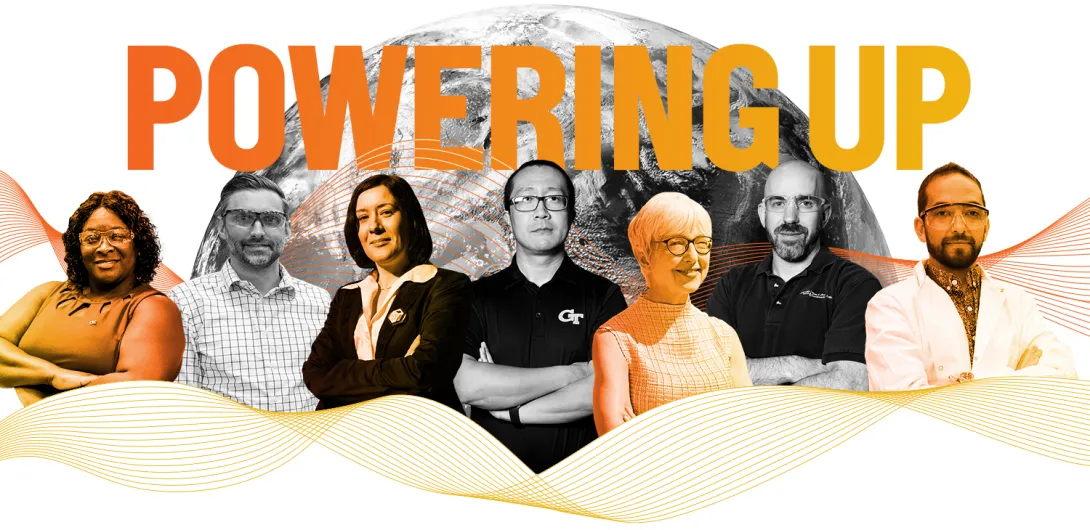
Image with GT researchers Tequila Harris, Matt McDowell, Anna Erickson, Wenting Sun, Valerie Thomas, Adam Steinberg, and Juan-Pablo Correa-Baena

Image with GT researchers Tequila Harris, Matt McDowell, Anna Erickson, Wenting Sun, Valerie Thomas, Adam Steinberg, and Juan-Pablo Correa-Baena

For 20 years, Georgia Tech’s Strategic Energy Institute (SEI) has brought together campus researchers who collectively develop better ways to meet the energy needs of today and tomorrow. 

These days, that amounts to more than 1,000 people. Georgia Tech faculty are creating advanced communications and information systems, sensing and control approaches, and transmission and energy storage technologies that will make the nation’s power distribution systems more efficient and cost-effective. Their research also focuses on integrating renewable energy sources and electric vehicles.

“As the nation’s largest technologically focused university, Georgia Tech is playing an integral role in developing solutions that enable more equitable, lower cost, and cleaner generation, storage, distribution, and utilization of energy,” said Tim Lieuwen, Georgia Tech’s interim executive vice president for research. Lieuwen knows SEI better than anyone: he had been its executive director since 2012 until stepping in this summer as interim leader of Tech’s entire research enterprise. 

“Georgia Tech researchers are not just helping to create cleaner, more efficient fuel options or mitigate the environmental impact of conventional energy supplies. They also are creating better performing, more economically viable energy options,” he said.

The work at SEI and across Georgia Tech has helped make the state of Georgia one of the nation’s leaders in clean energy, battery technology, and energy sustainability. It’s attracting numerous companies to invest in research and development in the state, including Hyundai, SK Battery America, and solar panel maker Qcells.

Read Full Article on the College of Engineering Webpage

News Contact

News Contact

Jason Maderer (maderer@gatech.edu) 
Director of Communications, College of Engineering

Jan. 09, 2025
 The global ocean’s surface temperature was still well above average going into 2025. Meaghan Skinner Photography/Moment via Getty Images

The global ocean’s surface temperature was still well above average going into 2025. Meaghan Skinner Photography/Moment via Getty Images

The oceans are heating up as the planet warms.

This past year, 2024, was the warmest ever measured for the global ocean, following a record-breaking 2023. In fact, every decade since 1984, when satellite recordkeeping of ocean temperatures started, has been warmer than the previous one.

A warmer ocean means increased evaporation, which in turn results in heavier rains in some areas and droughts in others. It can power hurricanes and downpours. It can also harm the health of coastal marine areas and sea life – coral reefs suffered their most extensive bleaching event on record in 2024, with damage in many parts of the world.

Warming ocean water also affects temperatures on land by changing weather patterns. The EU’s Copernicus Climate Change Service announced on Jan. 10 that data showed 2024 had also broken the record for the warmest year globally, with global temperatures about 2.9 degrees Fahrenheit (1.6 Celsius) above pre-industrial times. That would mark the first full calendar year with average warming above 1.5 C, a level countries had agreed to try to avoid passing long-term.

Climate change, by and large, takes the blame. Greenhouse gases released into the atmosphere trap heat, and about 90% of the excess heat caused by emissions from burning fossil fuels and other human activities is absorbed by the ocean.

But while it’s clear that the ocean has been warming for quite some time, its temperatures over the past two years have been far above the previous decades. That leaves two mysteries for scientists.

It’s Not Just El Niño

The cyclic climate pattern of the El Niño Southern Oscillation can explain part of the warmth over the past two years.

During El Niño periods, warm waters that usually accumulate in the western equatorial Pacific Ocean move eastward toward the coastlines of Peru and Chile, leaving the Earth slightly warmer overall. The latest El Niño began in 2023 and caused global average temperatures to rise well into early 2024.

But the oceans have been even warmer than scientists expected. For example, global temperatures in 2023-2024 followed a similar growth and decline pattern across the seasons as the previous El Niño event, in 2015-2016, but they were about 0.36 degrees Fahrenheit (0.2 Celsius) higher at all times in 2023-2024.

Scientists are puzzled and left with two problems to solve. They must figure out whether something else contributed to the unexpected warming and whether the past two years have been a sign of a sudden acceleration in global warming.

The Role of Aerosols

An intriguing idea, tested using climate models, is that a swift reduction in aerosols over the past decade may be one of the culprits.

Aerosols are solid and liquid particles emitted by human and natural sources into the atmosphere. Some of them have been shown to partially counteract the impact of greenhouse gases by reflecting solar radiation back into space. However, they also are responsible for poor air quality and air pollution.

Many of these particles with cooling properties are generated in the process of burning fossil fuels. For example, sulfur aerosols are emitted by ship engines and power plants. In 2020, the shipping industry implemented a nearly 80% cut in sulfur emissions, and many companies shifted to low-sulfur fuels. But the larger impact has come from power plants reducing their emissions, including a big shift in this direction in China. So, while technologies have cut these harmful emissions, that means a brake slowing the pace of warming is weakened.

Is This a Warming Surge?

The second puzzle is whether the planet is seeing a warming surge or not.

Temperatures are clearly rising, but the past two years have not been warm enough to support the notion that we may be seeing an acceleration in the rate of global warming.

Analysis of four temperature datasets covering the 1850-2023 period has shown that the rate of warming has not shown a significant change since around the 1970s. The same authors, however, noted that only a rate increase of at least 55% – about half a degree Celsius and nearly a full degree Fahrenheit over one year – would make the warming acceleration detectable in a statistical sense.

From a statistical standpoint, then, scientists cannot exclude the possibility that the 2023-2024 record ocean warming resulted simply from the “usual” warming trend that humans have set the planet on for the past 50 years. A very strong El Niño contributed some natural variability.

From a practical standpoint, however, the extraordinary impacts the planet has witnessed – including extreme weather, heat waves, wildfires, coral bleaching and ecosystem destruction – point to a need to swiftly reduce carbon dioxide emissions to limit ocean warming, regardless of whether this is a continuation of an ongoing trend or an acceleration.

This article has been updated with Copernicus Climate Change Service’s global 2024 temperature data.The Conversation


This article is republished from The Conversation under a Creative Commons license. Read the original article.

News Contact

News Contact
Author:

Annalisa Bracco, Professor of Ocean and Climate Dynamics, Georgia Institute of Technology

Media Contact:

Shelley Wunder-Smith
shelley.wunder-smith@research.gatech.edu

Jan. 22, 2025
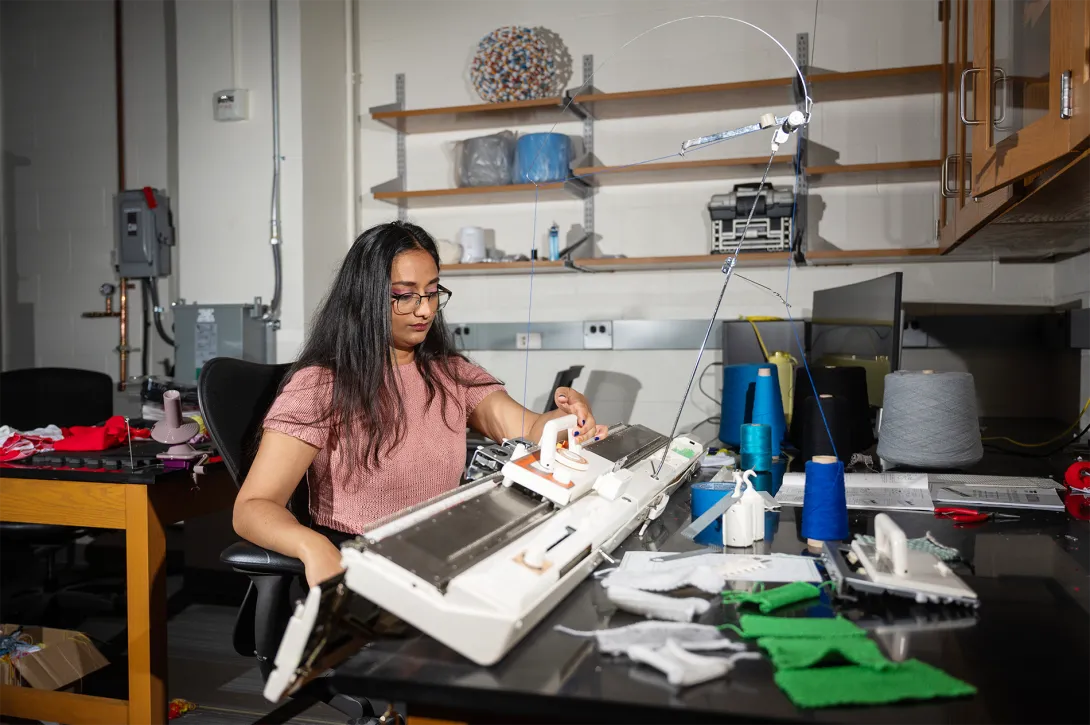
A female student operating a knitting machine in a research lab at Georgia Tech.

Krishma Singal operates a knitting machine to create fabric samples for a study.

From the physics of knitting to highlighting how batteries work, Georgia Tech photographers captured the impact and breadth of the Institute’s research enterprise. See our best shots and discover unseen gems in this collection.

Read more »

Dec. 01, 2024
Portrait of Marta Hatzell

Portrait of Marta Hatzell

Associate Professor Marta Hatzell has been appointed interim deputy director of the Georgia Tech Strategic Energy Institute (SEI).

Hatzell currently leads the industrial decarbonization and clean catalysis initiative at SEI and holds joint appointments in the George W. Woodruff School of Mechanical Engineering and the School of Chemical and Biomolecular Engineering. Most recently, she led the Materials for Carbon-Neutral Fuel Production track at this year’s Energy Materials Day, which attracted over 400 participants from academia and industry. 

“Marta has been an outstanding addition to SEI’s initiative lead program, where her contributions have already made a significant impact. I am excited to see her further engage with the Georgia Tech energy community in this role,” said Christine Conwell, SEI interim executive director.

Hatzell’s research group focuses on exploring sustainable catalysis and separations to enable clean energy, water, and food production. She serves as the site principal investigator and research thrust leader for CASFER, the National Science Foundation Engineering Research Center (NSF-ERC) with funding of $26 million for advancing sustainable fertilizer production. She is also a principal investigator in the Department of Energy’s $100 million National Alliance for Water Innovation project. 

Hatzell is the recipient of the NSF Early CAREER Award for her work on distributed solar fertilizers and received the Gordon and Betty Moore Inventor fellowship to work on a low-cost, photocatalytic air-breathing system that converts air into liquid, ammonia-based fertilizer. She also received the 2020 Sloan Research Fellowship in Chemistry and the American Chemical Society’s (ACS) Sustainable Chemistry Lectureship Award in 2024. Hatzell serves as a senior editor of the ACS Energy Letters journal.

Before her role at Georgia Tech, she was a postdoctoral researcher in the Department of Materials Science and Engineering at the University of Illinois Urbana-Champaign. She holds a Ph.D. in mechanical engineering from Penn State University. 

“I’m looking forward to working with the SEI staff and faculty to continue to grow Georgia Tech’s impact on the rapidly changing energy sector,” says Hatzell.  

News Contact

News Contact

Priya Devarajan || SEI Communications Program Manager

Jan. 07, 2025
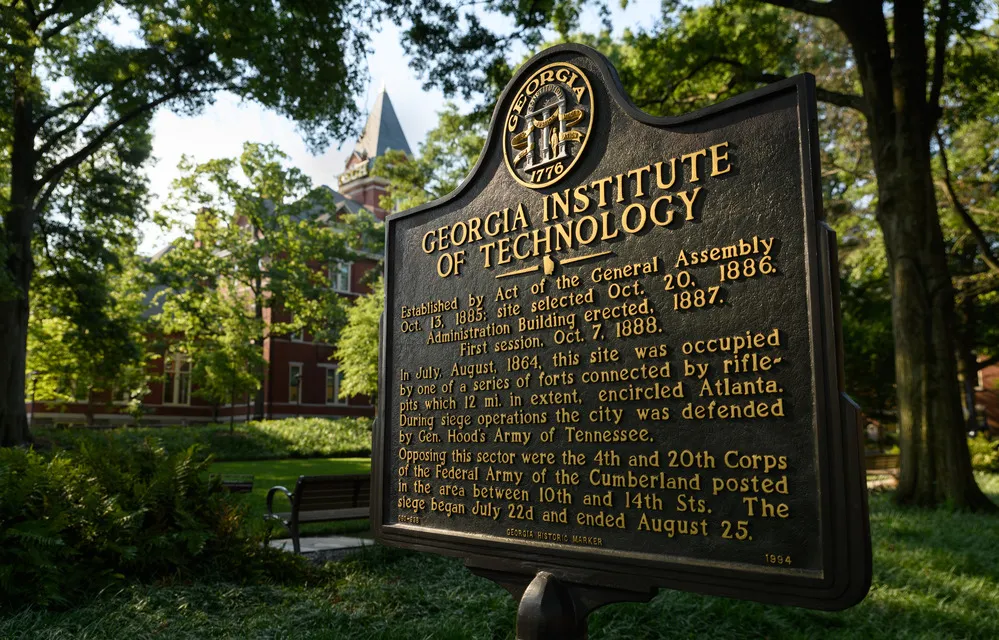
Historical sign depicting information about Tech Tower

Georgia Tech’s Executive Vice President for Research search committee has selected three finalists. Each candidate will visit campus and present a seminar sharing their broad vision for the Institute's research enterprise. The seminars are open to all faculty, students, and staff across the campus community. Interested individuals can attend in person or register to participate via Zoom (pre-registration is required).    

Read more »

Dec. 05, 2024
Matthew McDowell, Associate Professor, Woodruff School of Mechanical Engineering and SEI Initiative Lead for Energy Storage

Matthew McDowell, Associate Professor, Woodruff School of Mechanical Engineering and Strategic Energy Institute Initiative Lead for Energy Storage

Associate Professor Matthew McDowell has been selected as the next Associate Chair for Research in the George W. Woodruff School of Mechanical Engineering. He will step into the role on January 1, 2025.

The Associate Chair for Research is responsible for working with the Woodruff School’s faculty to develop a strategic research plan for future growth and investments in the School, as well as identifying new research opportunities, helping to foster strategic relationships with government, industry, and foundations, and synergizing research efforts with other units in the College of Engineering and across the Institute.

“I am thrilled to be chosen for this role, and I look forward to working with the faculty, students, researchers, and staff of the Woodruff School to enhance and support our world-class research program,” said McDowell.

McDowell joined Georgia Tech in the fall of 2015 as an assistant professor with a joint appointment in the Woodruff School and the School of Materials Science and Engineering (MSE). He was named Carter N. Paden, Jr. Distinguished Chair earlier this year and serves as co-director of the Georgia Tech Advanced Battery Center (GTABC). Through this center, McDowell and Professor Gleb Yushin (MSE) are building community at the Institute, enhancing research and educational relationships with industry partners, and creating a new battery manufacturing facility on Georgia Tech’s campus.

“I am excited to work with Matt in advancing the research priorities and goals of the Woodruff School,” said Devesh Ranjan, Eugene C. Gwaltney Jr. School Chair and professor. “Through his exceptional leadership of the Georgia Tech Advanced Battery Center, Matt has demonstrated a deep commitment to excellence in scholarship and to fostering partnerships that drive innovative, collaborative research across the Institute. I am confident in the positive transformation he will bring to our program in this new role.”

Read More on the ME Newspage


News Contact

News Contact
Dec. 17, 2024
Portrait of Johney Green, SEI EAB Member

Johney Green

Johney Green Jr., M.S. ME 1993, Ph.D. ME 2000, has been chosen to serve as the new laboratory director for Savannah River National Laboratory (SRNL). A proud Yellow Jacket, Green received both his master’s and doctoral degrees in mechanical engineering from Georgia Tech and currently serves on the Strategic Energy Institute’s (SEI) External Advisory Board. He also served on the board of the George W. Woodruff School of Mechanical Engineering from 2017 to 2022.

“SRNL has truly found an exceptional leader in Johney. His vision and dedication are inspiring, and I am genuinely excited to see the remarkable contributions he will make in advancing SRNL,” said Christine Conwell, SEI interim executive director. “We look forward to his continued partnership with SEI and the positive impact he will bring to the energy community in 2025 and beyond.”

The Battelle Savannah River Alliance (SRNL’s parent organization) selected Green for this role, describing him as “a dynamic leader who brings deep, wide-ranging scientific expertise to this new position.” 

With an annual operating budget of about $400 million, SRNL is a multiprogram national lab leading research and development for the Department of Energy’s (DOE) Offices of Environmental Management and Legacy Management and the National Nuclear Security Administration’s weapons and nonproliferation programs. 

Green currently serves as associate laboratory director for mechanical and thermal engineering sciences at the National Renewable Energy Laboratory (NREL). In this position, he oversees a diverse portfolio of research programs including transportation, buildings, wind, water, geothermal, advanced manufacturing, concentrating solar power, and Arctic research. His leadership impacts a workforce of about 750 and involves managing a budget of more than $300 million.

At NREL, Green transformed the lab’s wind site into the innovative Flatirons Campus and transitioned the campus from a single-program wind research site to a multiprogram research campus that serves as the foundational experimental platform for the DOE’s Advanced Research on Integrated Energy Systems (ARIES) initiative.

"We are immensely proud to call Johney a Woodruff School alumnus. His achievements and service to Tech through advisory board engagement inspires us, and we are excited to see him step into this prestigious role at SRNL. We look forward to deepening our collaboration with him as he continues to make a powerful impact,” said Devesh Ranjan, Eugene C. Gwaltney, Jr. School Chair and professor in the Woodruff School.

Prior to his role at NREL, Green held several key leadership roles at Oak Ridge National Laboratory (ORNL). As director of the Energy and Transportation Science Division and group leader for fuels, engines, and emissions research, he managed a broad science and technology portfolio and user facilities that made significant science and engineering advances in building technologies; sustainable industrial and manufacturing processes; fuels, engines, emissions, and transportation analysis; and vehicle systems integration. While Green was the division director, ORNL developed the Additive Manufacturing Integrated Energy (AMIE) demonstration project, a model of innovative vehicle-to-grid integration technologies and next-generation manufacturing processes.

Early in his career, Green conducted combustion research to stabilize gasoline engine operation under extreme conditions. During the course of that research, he joined a team working with Ford Motor Co., seeking ways to simultaneously extend exhaust gas recirculation limits in diesel engines and reduce nitrogen oxide and particulate matter emissions. He continued this collaboration as a visiting scientist at Ford's Scientific Research Laboratory, conducting modeling and experimental research for advanced diesel engines designed for light-duty vehicles. On assignment to the DOE’s Vehicle Technologies Office, Green also served as technical coordinator for the 21st Century Truck Partnership. He also contributed to a dozen of ORNL's 150-plus top scientific discoveries.

Green was the recipient of a National GEM Consortium Master’s Fellowhip sponsored by Georgia Tech and ORNL, and he served as the National GEM Consortium chairperson from 2022-2024. He is a Fellow of the American Association for the Advancement of Science and an SAE International Fellow. He has received several awards during his career and holds two U.S. patents in combustion science. 

News Contact

News Contact

Priya Devarajan || SEI Communications Program Manager

Dec. 02, 2024
Portrait of Tequila Harris

Portrait of Tequila Harris

Tequila A.L. Harris, a professor in the George W. Woodruff School of Mechanical Engineering at Georgia Tech, leads energy and manufacturing initiatives at the Strategic Energy Institute. Her research explores the connectivity between the functionality of nano- to macro-level films, components, and systems based on their manufacture or design and their life expectancy, elucidating mechanisms by which performance or durability can be predicted. She uses both simulations and experimentation to better understand this connectivity.

By addressing complex, fundamental problems, Harris aims to make an impact on many industries, in particular energy (e.g., polymer electrolyte membrane fuel cells), flexible electronics (e.g., organic electronics), and clean energy (e.g., water), among others. 

Harris has experience in developing systematic design and manufacturing methodologies for complex systems that directly involve material characterization, tooling design and analysis, computational and analytical modeling, experimentation, and system design and optimization. Currently, her research projects focus on investigating the fundamental science associated with fluid transport, materials processing, and design issues for energy/electronic/environmental systems. Below is a brief Q&A with Harris, where she discusses her research and how it influences the energy and manufacturing initiatives at Georgia Tech.

  • What is your field of expertise and at what point in your life did you first become interested in this area?

In graduate school, I aimed to become a roboticist but shifted my focus after realizing I was not passionate about coding. This led me to explore manufacturing, particularly scaled manufacturing processes that transform fluids into thin films for applications in energy systems. Subsequently, my expertise is in coating science and technology and manufacturing system development. 

  • What questions or challenges sparked your current energy research? What are the big issues facing your research area right now?

We often ask how we can process materials more cost-effectively and create complex architectures that surpass current capabilities. In energy systems, particularly with fuel cells, reducing the number of manufacturing steps is crucial, as each additional step increases costs and complexity. As researchers, we focus on understanding the implications of minimizing these steps and how they affect the properties and performance of the final devices. My group studies these relationships to find innovative manufacturing solutions. A major challenge in the manufacture of materials lies in scaling efficiently while maintaining performance and keeping costs low enough for commercial adoption. This is a pressing issue, especially for enabling technologies such as batteries, fuel cells, and flexible electronics needed for electric vehicles, where the production volumes are on the order of billions per year. 

  • What interests you the most in leading the research initiative on energy and manufacturing? Why is your initiative important to the development of Georgia Tech’s energy research strategy?

What interests me most is the inherent possibility of advancing energy technologies holistically, from materials sourcing and materials production to public policy. More specifically, my interests are in understanding how we can scale the manufacture of burgeoning technologies for a variety of areas (energy, food, pharmaceuticals, packaging, and flexible electronics, among others) while reducing cost and increasing production yield. In this regard, we aim to incorporate artificial intelligence and machine learning in addition to considering limitations surrounding the production lifecycle. The challenges that exist to meet these goals cannot be done in a silo but rather as part of interdisciplinary teams who converge on specific problems. Georgia Tech is uniquely positioned to make significant impacts in the energy and manufacturing ecosystem, thanks to our robust infrastructure and expertise. With many manufacturers relocating to Georgia, particularly in the "energy belt" for EVs, batteries, and recycling facilities, Georgia Tech can serve as a crucial partner in advancing these industries and their technologies.

  • What are the broader global and social benefits of the research you and your team conduct on energy and manufacturing?

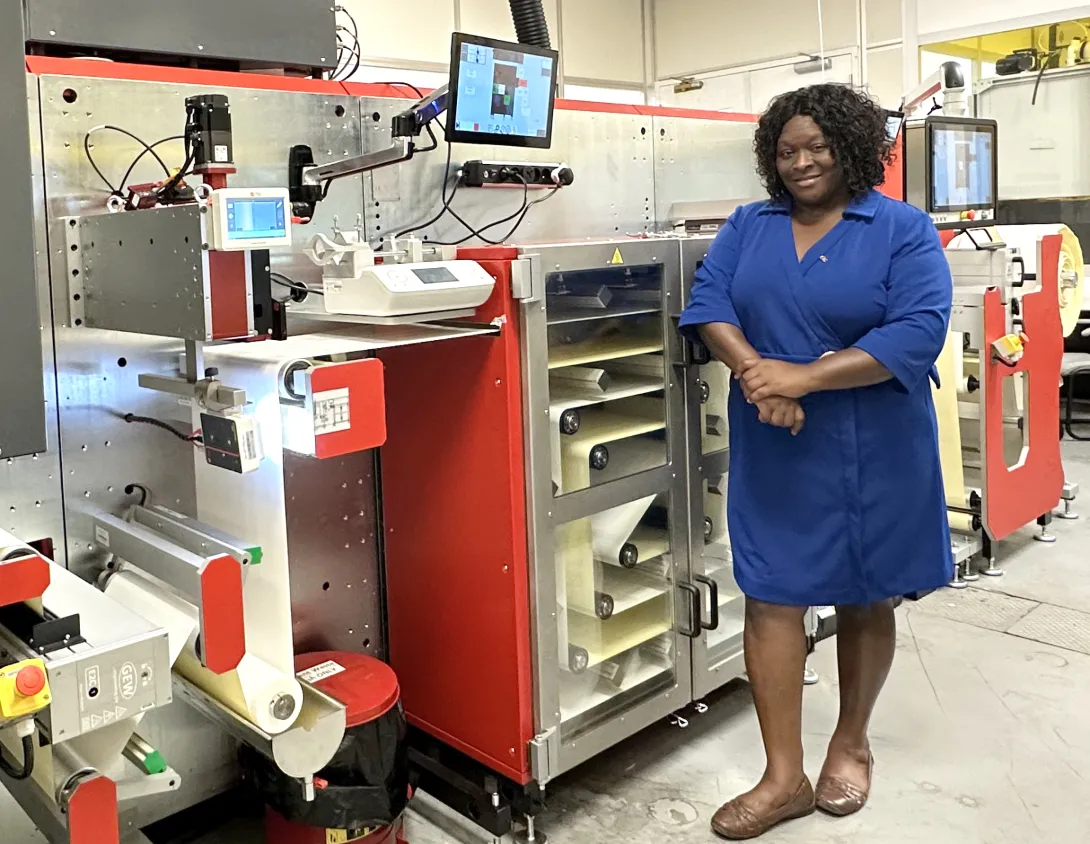
The global impact of advancing manufacturing technologies is significant for processing at relevant economy of scales. To meet such demands, we cannot always rely on existing manufacturing know-how.  The Harris group holds the intellectual property on innovative processes that allow for the faster fabrication of individual or multiple materials, and that exhibit higher yields and improved performance than existing methods. Improvements in manufacturing systems often result in reduced waste, which is beneficial to the overall materials development ecosystem. Another global and societal benefit is workforce development. The students on my team are well-trained in the manufacture of materials using tools that are amenable to the most advanced and scalable manufacturing platform, roll-to-roll manufacturing, with integrated coating and printing tools. This unique skill set equips our students to thrive and become leaders in their careers.

  • What are your plans for engaging a wider Georgia Tech faculty pool with the broader energy community?

By leveraging the new modular pilot-scale roll-to-roll manufacturing facility that integrates slot die coating, gravure/flexography printing, and inkjet printing, I plan to continue reaching out to faculty and industrial partners to find avenues for us to collaborate on a variety of interdisciplinary projects. The goal is to create groups that can help us advance materials development more rapidly by working as a collective from the beginning, versus considering scalable manufacturing pathways as an afterthought. By bringing interdisciplinary groups (chemists, materials scientists, engineers, etc.) together early, we can more efficiently and effectively overcome traditional delays in getting materials to market or, worse, the inability to push materials to market (which is commonly known as the valley of death). This can only be achieved by dismantling barriers that hinder early collaboration. This new facility aims to foster collaborative work among stakeholders, promoting the integrated development and characterization of various materials systems and technologies, and ultimately leading to more efficient manufacturing practices.

  • What are your hobbies? 

I enjoy cooking and exploring my creativity in this space by combining national and international ingredients to make interesting and often delicious fusion cuisines. I also enjoy roller skating, cycling, and watching movies with my family and friends. 

  • Who has influenced you the most?

From a professional standpoint, my research team influences me the most. After I present them with a problem, they are encouraged and expected to think beyond our initial starting point.  This ability to freely think and conceive of novel solutions sparks many new ideas on which to build future ideas. The best cases have kept me up at night, inspiring me to think about how to approach new problems and funding opportunities. I carry their experiences and challenges with me. Their influence on me is profound and is fundamentally why I am a professor.

News Contact

News Contact

Priya Devarajan || SEI Communications Program Manager

Nov. 22, 2024
Department of Energy’s (DOE’s) Office of Science Under Secretary Geri Richmond with Georgia Tech Researchers

Department of Energy’s (DOE’s) Office of Science Under Secretary Geri Richmond with Georgia Tech Researchers

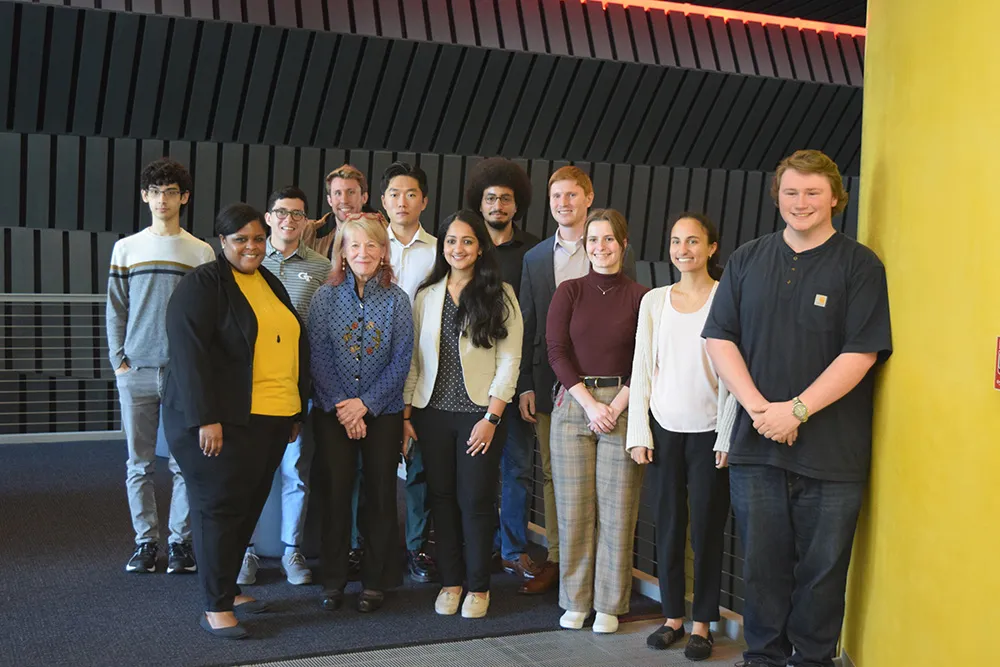
As head of the Department of Energy’s (DOE’s) Office of Science, the nation’s largest federal sponsor of physical sciences research, Under Secretary Geri Richmond understands the vital role of higher education in advancing U.S. science and innovation. On Monday, Nov. 18, she visited Georgia Tech with Chief of Staff in the Office of the Under Secretary for Science and Innovation Ariel Marshall, Ph.D. Chem 14, to meet with students and faculty and discuss future opportunities for collaboration.  

During the visit, Richmond and Marshall toured Dr. Thomas Orlando’s electron and photo induced chemistry on surfaces lab; the Invention Studio; Dr. Akanksha Menon’s water-energy research lab; and the AI Maker Space.  

Richmond also joined the Women+ in Chemistry student group for a roundtable discussion. An advocate for underrepresented groups in STEM fields, Richmond is the founding director of the Committee on the Advancement of Women Chemists (COACh). COACh is a grassroots organization dedicated to ensuring equal opportunities for all in science. 

Georgia Tech’s longstanding partnership with the DOE is centered on research and technology development aimed at advancing energy systems and promoting sustainability. The Institute plays a key role in the DOE’s national initiatives, contributing to transformative work in energy efficiency, renewable energy, nuclear power, and environmental sustainability. Through joint research programs, grants, and initiatives, Georgia Tech continues to drive innovation and push the boundaries of energy solutions for a sustainable future.  

Subscribe to go-sei