
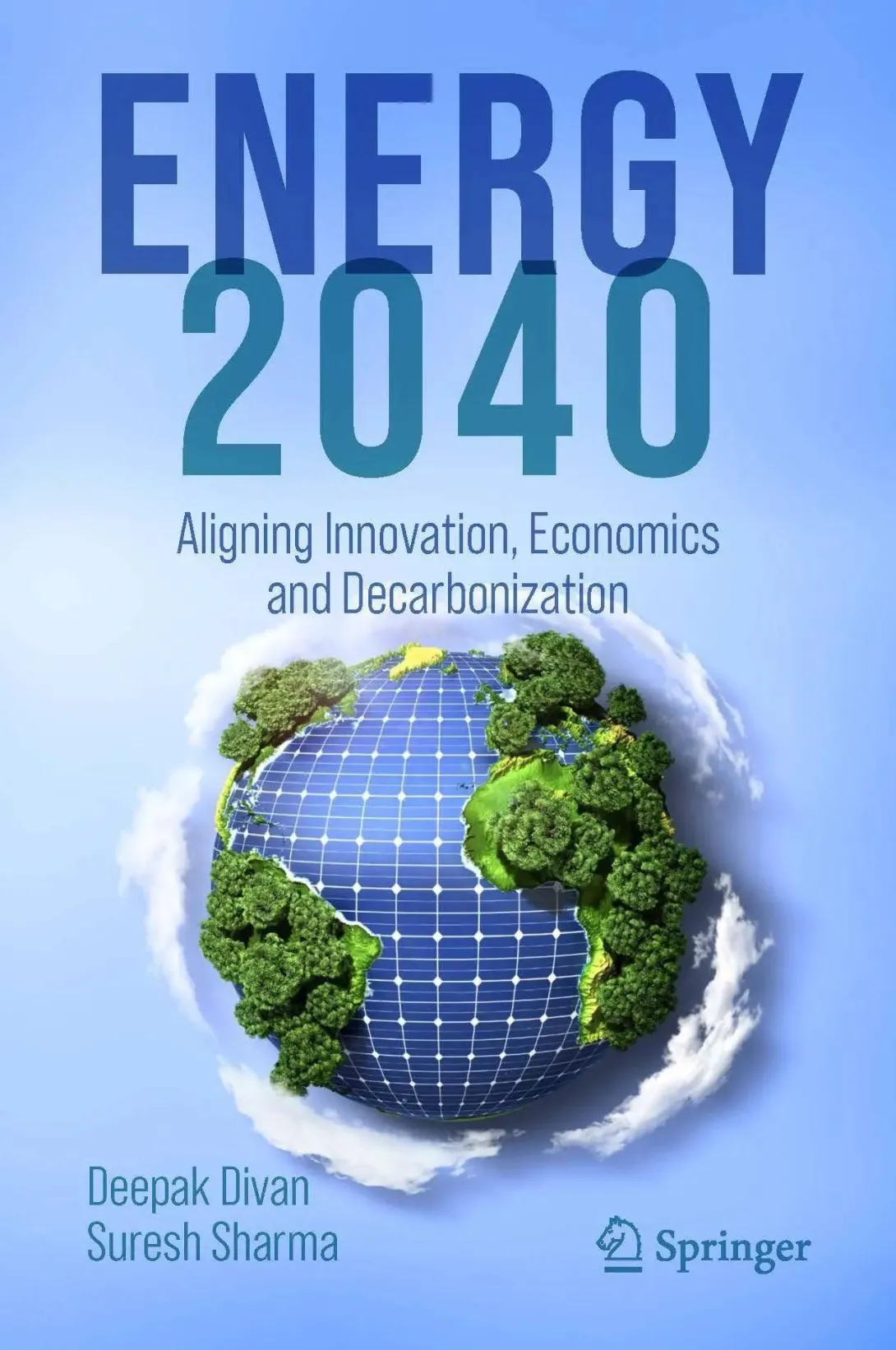
ENERGY 2040: Aligning Innovation, Economics and Decarbonization" was published by Springer in April 2024.
Deepakraj Divan and Suresh Sharma experts in energy technologies and entrepreneurship, shed light on the challenges and opportunities in bringing disruptive technologies to market in their new book “ENERGY 2040: Aligning Innovation, Economics and Decarbonization”.
In an insightful interview, Divan, a Georgia Research Alliance Eminent Scholar and director of the Center for Distributed Energy (CDE) in the School of Electrical and Computer Engineering, and Sharma, an entrepreneur in residence at CDE, trace the historical roots of the current energy landscape, highlighting missed opportunities and gaps in understanding, and emphasizing the energy transition as a paradigm shift to offer insights into how to navigate it effectively.
News Contact

Martha Grover
School of Chemical and Biomolecular Engineering (ChBE) faculty member Martha Grover has been named the College’s Thomas A. Fanning Chair in Equity Centered Engineering. Grover was selected for her efforts to educate engineers who approach their work with an intent to close societal gaps of wealth, power, and privilege by ensuring equitable access to opportunity.
The endowed position was established via the Southern Company Foundation by Southern Company, which has been regularly recognized for its efforts to promote an organizational culture that ensures representation of all groups. Fanning recently retired as chairman, president, and CEO.
Grover is a systems engineer whose work addresses the complexity of molecular organization and how it can solve complicated grand challenges. For instance, she has worked with the Department of Energy for 10 years to create processes for separation and immobilization of millions of gallons of liquid nuclear waste at the Hanford Site in Washington and the Savannah River Site in South Carolina. She’s developed real-time process monitoring of nuclear waste slurries to increase throughput and enhance safety.
Grover’s research also focuses on the origins of life and understanding the essential role of diversity and cooperation. Her other work includes modeling and engineering the self-assembly of atoms and small molecules to create larger scale structures and complex functionality.
News Contact
Jason Maderer (maderer@gatech.edu)
College of Engineering, Georgia Tech

Dan Molzahn
Dan Molzahn, assistant professor in the school of electrical and computer engineering and SEI initiative lead for the Energy Club received the outstanding teacher award from the College of Engineering (COE) as a part of its third annual Faculty awards. COE honored eight faculty members for their excellence in research, service, teaching, inventorship, and commercialization.
In addition to his research on energy systems, Molzahn has a goal of educating the next generation of electric power engineers. For instance, he leads a 30-student Vertically Integrated Projects (VIP) team that develops video game simulations of power grids operating during extreme events. A first iteration of the game currently is installed at the Georgia Tech Dataseum in the Price Gilbert Library and plans are underway to incorporate a version into next year’s Seth Bonder high school summer camps.
News Contact
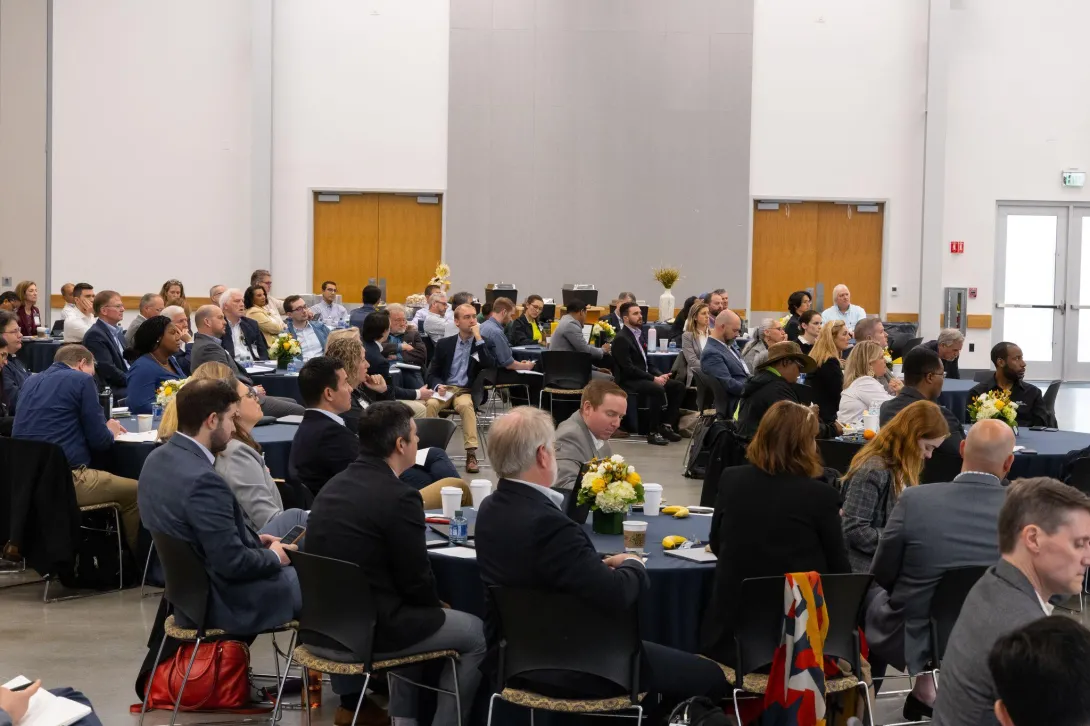
Attendees at the Georgia Beneficial Electrification Leadership Summit
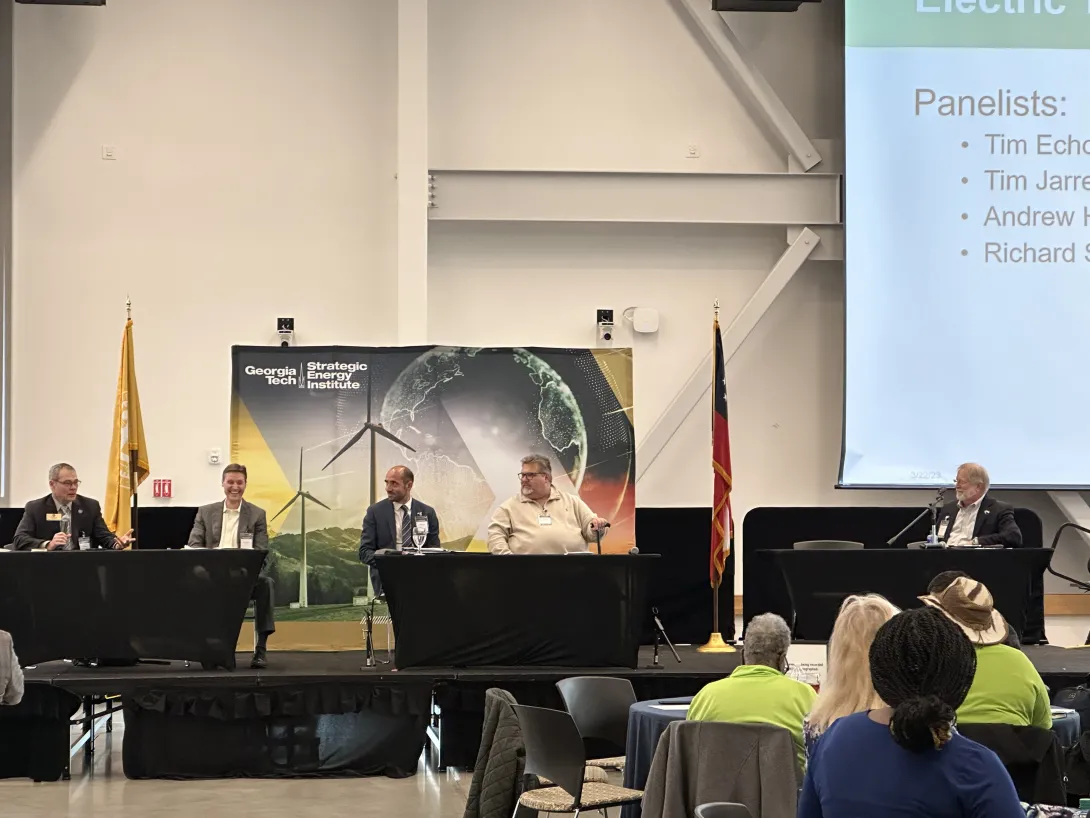
Panelists at the GA Electrification Leadership Summit
The Energy Policy Innovation Center (EPICenter), along with the Beneficial Electrification League and Wells Fargo, hosted the Georgia Electrification Leadership Summit on the Georgia Tech campus. More than 140 people from the energy industry participated in the highly engaged event that included discussions on innovations and challenges in electrification in the transportation, residential, and industrial sectors. Additionally, the event addressed the economic development that the recent federal funding in the energy area is expected to bring to the state of Georgia.
The event began with a virtual welcome address by Georgia U.S. Sen. Jon Ossoff, followed by an introduction by Joe Hagerman, the director of EPIcenter, that operates within the Strategic Energy Institute at Georgia Tech. EPICenter was created to provide an unbiased and interdisciplinary framework for stimulating innovation in energy policy and technology for the Southeast region. Keith Dennis, founder and CEO of the Beneficial Electrification League, engaged the audience with his presentation on the benefits of electrification, followed by key energy industry leaders from the state of Georgia discussing their viewpoints on electrification opportunities in their industry. The morning keynote by Bentina Terry, senior vice president of Customer Strategy and Solutions at Georgia Power, brought focus on the everyday customer. Terry said they can be swayed with energy solutions only if the solutions providers advocate the benefits through the lens of the consumer.
The stakeholder dialogue on electric transportation included Georgia Public Service Commissioner Tim Echols, who emphasized that the state of Georgia needs to focus on expanding the state’s transportation infrastructure to meet the rising EVs on Georgia roads and the urgent need for electrification in transportation. Richard Simmons, director of Research and Studies at the Strategic Energy Institute, also brought home the fact that transportation sector has caught on to the benefits of electrification more than any other sector in the country. GDOT team member in the discussion revealed the timeline of the National Electric Vehicle Infrastructure (NEVI) program that has $135 million in funds apportioned to the state of Georgia.
On electrification in residential homes, panelists including Anita Moreno, Michelle Moore and Andrea Pinabell shared different perspectives and examples of the huge impact electrification has in residential homes, especially in low and moderate income and rural communities of Georgia.
The team from the Georgia Environmental Finance Authority, an entity that funds environmental infrastructure projects in the state, discussed the historical funding coming through the Infrastructure Investment and Jobs Act (Bipartisan Infrastructure Law) and Inflation Reduction Act. With more than $300 million coming through the Georgia State Energy Office and most of the funding residential focused, the team discussed the challenges and consumer expectations and how they ensure projects that get funded save money and lead to client satisfaction.
Stakeholder dialogue on electrification of commercial technology included Chandra Farley, the chief sustainability officer of the City of Atlanta, who discussed decarbonization of public buildings, training the workforce, and electrification of the public fleet, while advancing the city’s goal to achieve 100% clean energy by 2035. Panelists also discussed heat pumps as a cost-effective method of supplying low-temperature heat for industrial processes and the advantages of industrial heat pumps over combustion technologies for electrification and energy efficiency.
“At EPICenter, we leverage Georgia Tech’s expertise and innovation to help inform energy policy and technology for the Southeast,” said Hagerman. “The GA Electrification Leadership Summit is another example of how we have brought together diverse stakeholders to foster collaboration and dialogue on Georgia’s energy future. EPICenter will continue to support electrification, energy access, and deep community engagement. Georgia Tech and EPICenter can play an outsized role in helping the Southeast achieve a vibrant, clean, and competitive energy future for all Georgians.”
News Contact
Priya Devarajan || SEI Communications Manager
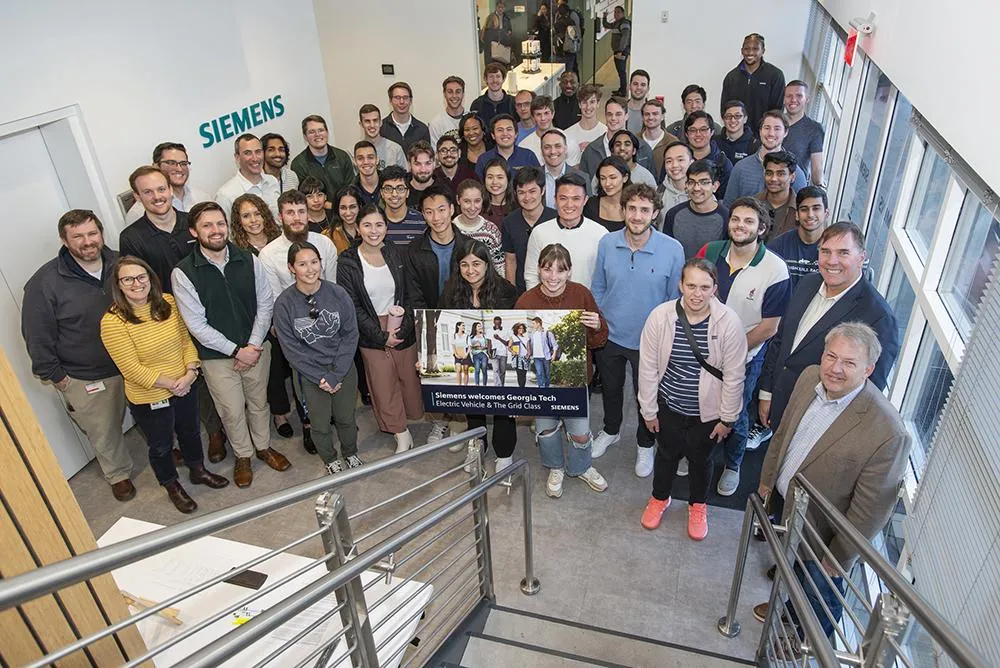
Woodruff School Partners with Siemens to launch new course
Over 9% of global passenger vehicle sales last year were electric vehicles (EVs) according to Bloomberg New Energy Finance. EV sales are surging due to a combination of policy support, improvements in battery technology, more charging infrastructure, and new compelling vehicles from automakers.
To address the rapid growth in the EV industry, the George W. Woodruff School of Mechanical Engineering has partnered with Siemens to offer a new course, Electric Vehicles & the Grid. The course launched in the spring semester and is providing a transformative learning experience to Georgia Tech students while preparing them to charge into the future.
With a focus on innovation and sustainability, Electric Vehicles & the Grid teaches engineering principles of electric transportation and the energy infrastructure. The class also covers the emerging technologies of batteries, renewables, and connectivity that will allow further optimization of the products with the grid.
Although EV courses are taught across the nation, the class's additional focus on the grid is a component that is missing from courses taught at other institutions.
Read Full Story on the George W. Woodruff School of Mechanical Engineering Website
EVPR Institute Research Awards Banner
At Georgia Tech, the research enterprise covers activities from basic research to commercialization and societal use. Each year, the Executive Vice President for Research (EVPR) presents awards to recognize the achievements of faculty and staff as partners, mentors, and outstanding researchers across the many facets of the enterprise.
“Congratulations to all the exceptional nominees and to the individuals who were selected to receive this year's Institute Research Awards,” said Chaouki Abdallah, executive vice president for Research at Georgia Tech. “These outstanding researchers were nominated by their peers for their diligent research efforts, and we are proud to acknowledge them for their commitment to advance science and technology and to improve the human condition.”
Awardees were selected in nine areas, from achievements in innovation to engagement and outreach. Two of the awards were given to groups of researchers who are making an impact collectively. This year, more than 150 researchers were nominated for these prestigious awards.
- Outstanding Achievement in Advancing Diversity, Equity, and Inclusion:Iris Tien, CEE, SEI
- Outstanding Achievement in Early Career Research:Marta Hatzell, ME, IMat, SEI
- Outstanding Achievement in Research Enterprise Enhancement:Robert Knotts, Federal Relations
- Outstanding Achievement in Research Innovation:Younan Xia, SoCB, IEN, Imat, IBB
- Outstanding Doctoral Thesis Advisor:John Reynolds, SoCB, IMat, RBI
- Outstanding Faculty Research Author:Wilbur Lam, BME, IEN, IBB
- Outstanding Achievement in Research Engagement and Outreach:Pascal Van Hentenryck, ISyE, IDEaS, SEI
- Outstanding Achievement in Research Program Development: The Spaceflight Project Group at GT: Glen Lightsey, AE, IRIM; Jud Ready, GTRI, IEN, IMat, SEI; Christopher Valenta, GTRI; Christopher Carr, AE; Brian Gunter, AE, BBISS, IRIM; Sterling Peet, AE; Ian Harrison, GTRI
- Outstanding Achievement in Research Program Impact:Partnership for Inclusive Innovation: Debra Lam, IDEaS, IPaT, SEI; Clarence Anthony Jr., Kayla Burns, Cody Cocchi, Jamal Lewis, Polly Sattler, all from EI2
Awardees will be recognized at the Faculty and Staff Honors Luncheon on Friday, April 21.
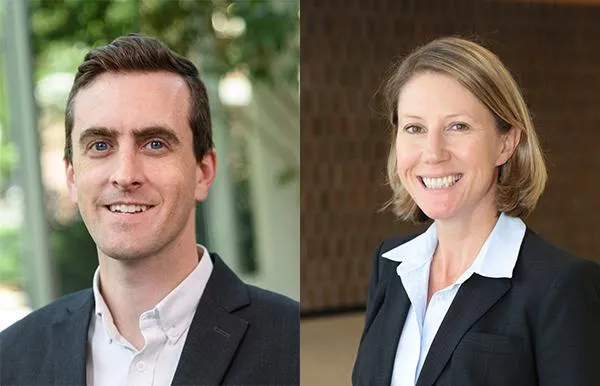
Ryan Lively and Krista Walton, School of Chemical and Biomolecular Engineering
Georgia Tech’s School of Chemical and Biomolecular Engineering has been renewed by the U.S. Department of Energy (DOE) for a third round of funding ($13.2 million over four years) for its Energy Frontier Research Center (EFRC) to study materials used in clean energy technologies.
News Contact
Brad Dixon, braddixon@gatech.edu

Graphic of a circuit board with a set of interconnects leading to a cloud
The Cloud Hub, a key initiative of the Institute for Data Engineering and Science (IDEaS) at Georgia Tech, recently concluded a successful Call for Proposals focused on advancing the field of Generative Artificial Intelligence (GenAI). This initiative, made possible by a generous gift funding from Microsoft, aims to push the boundaries of GenAI research by supporting projects that explore both foundational aspects and innovative applications of this cutting-edge technology.
Call for Proposals: A Gateway to Innovation
Launched in early 2024, the Call for Proposals invited researchers from across Georgia Tech to submit their innovative ideas on GenAI. The scope was broad, encouraging proposals that spanned foundational research, system advancements, and novel applications in various disciplines, including arts, sciences, business, and engineering. A special emphasis was placed on projects that addressed responsible and ethical AI use.
The response from the Georgia Tech research community was overwhelming, with 76 proposals submitted by teams eager to explore this transformative technology. After a rigorous selection process, eight projects were selected for support. Each awarded team will also benefit from access to Microsoft’s Azure cloud resources..
Recognizing Microsoft’s Generous Contribution
This successful initiative was made possible through the generous support of Microsoft, whose contribution of research resources has empowered Georgia Tech researchers to explore new frontiers in GenAI. By providing access to Azure’s advanced tools and services, Microsoft has played a pivotal role in accelerating GenAI research at Georgia Tech, enabling researchers to tackle some of the most pressing challenges and opportunities in this rapidly evolving field.
Looking Ahead: Pioneering the Future of GenAI
The awarded projects, set to commence in Fall 2024, represent a diverse array of research directions, from improving the capabilities of large language models to innovative applications in data management and interdisciplinary collaborations. These projects are expected to make significant contributions to the body of knowledge in GenAI and are poised to have a lasting impact on the industry and beyond.
IDEaS and the Cloud Hub are committed to supporting these teams as they embark on their research journeys. The outcomes of these projects will be shared through publications and highlighted on the Cloud Hub web portal, ensuring visibility for the groundbreaking work enabled by this initiative.
Congratulations to the Fall 2024 Winners
- Annalisa Bracco | EAS "Modeling the Dispersal and Connectivity of Marine Larvae with GenAI Agents" [proposal co-funded with support from the Brook Byers Institute for Sustainable Systems]
- Yunan Luo | CSE “Designing New and Diverse Proteins with Generative AI”
- Kartik Goyal | IC “Generative AI for Greco-Roman Architectural Reconstruction: From Partial Unstructured Archaeological Descriptions to Structured Architectural Plans”
- Victor Fung | CSE “Intelligent LLM Agents for Materials Design and Automated Experimentation”
- Noura Howell | LMC “Applying Generative AI for STEM Education: Supporting AI literacy and community engagement with marginalized youth”
- Neha Kumar | IC “Towards Responsible Integration of Generative AI in Creative Game Development”
- Maureen Linden | Design “Best Practices in Generative AI Used in the Creation of Accessible Alternative Formats for People with Disabilities”
- Surya Kalidindi | ME & MSE “Accelerating Materials Development Through Generative AI Based Dimensionality Expansion Techniques”
- Tuo Zhao | ISyE “Adaptive and Robust Alignment of LLMs with Complex Rewards”
News Contact
Christa M. Ernst - Research Communications Program Manager
christa.ernst@research.gatech.edu
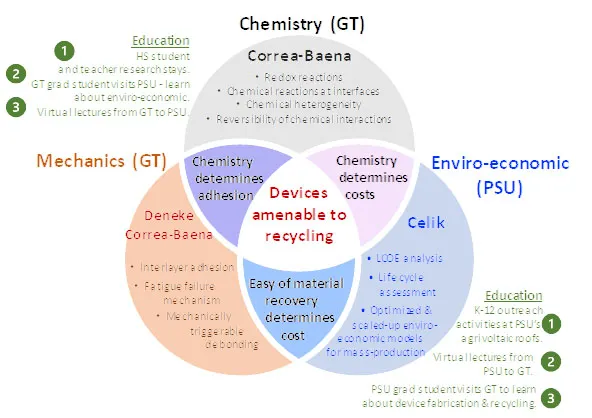
Solar cells recycling project - role of Juan Pablo Correa-Baena and his team
We have a problem with our current solar cells. They were built with very little thought towards end-of-life. Current solar panels tend to last twenty to thirty years. As those solar panels start to age, we are left with the challenge to think about how to recycle them. When the National Science Foundation (NSF) put out an interdisciplinary challenge for clean energy, Dr. Correa-Baena, Dr. Naomi Deneke, and Dr. Ilke Celik partnered to write a proposal to tackle recycling of perovskite solar cells.
Read Full Story on the MSE website.
News Contact
Caitlin Anderson
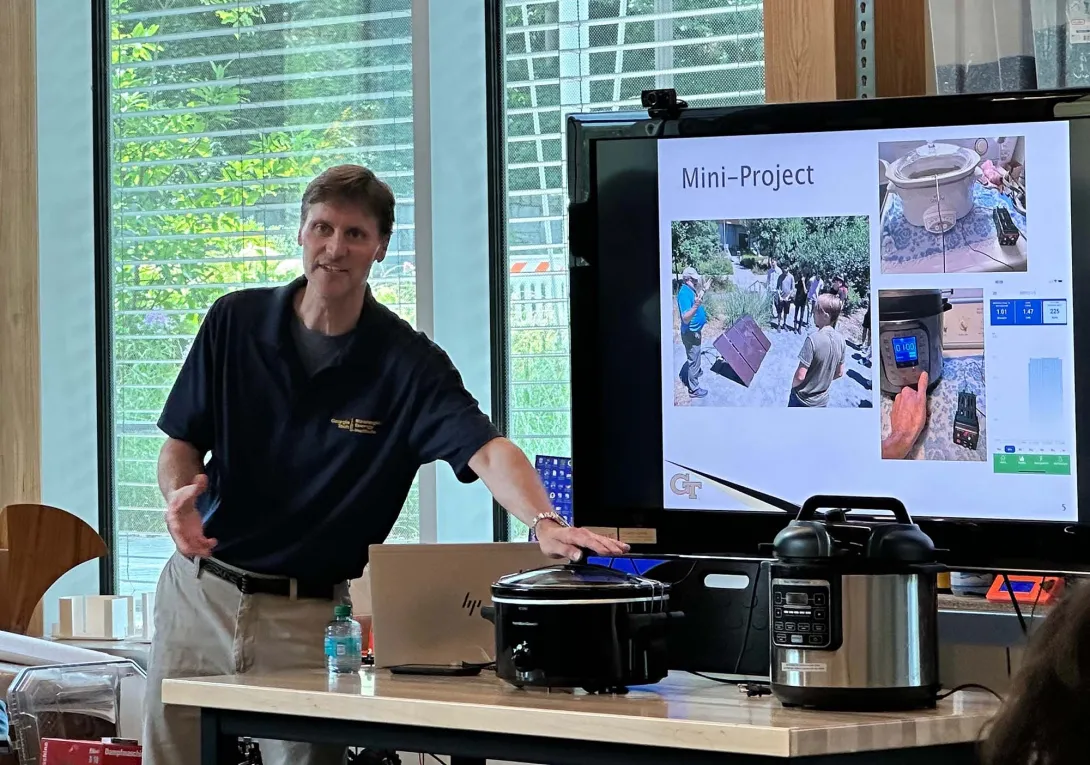
Rich Simmons explaining the mini-project before the final student presentations
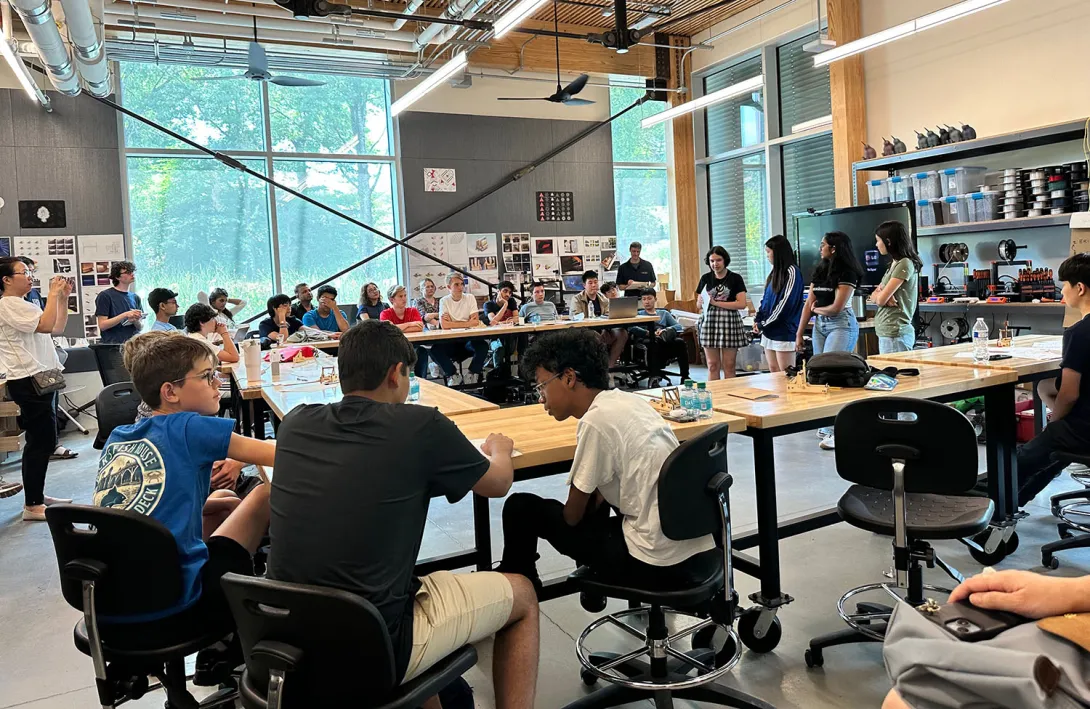
One of the students group presenting their mini-project on the final day of the camp
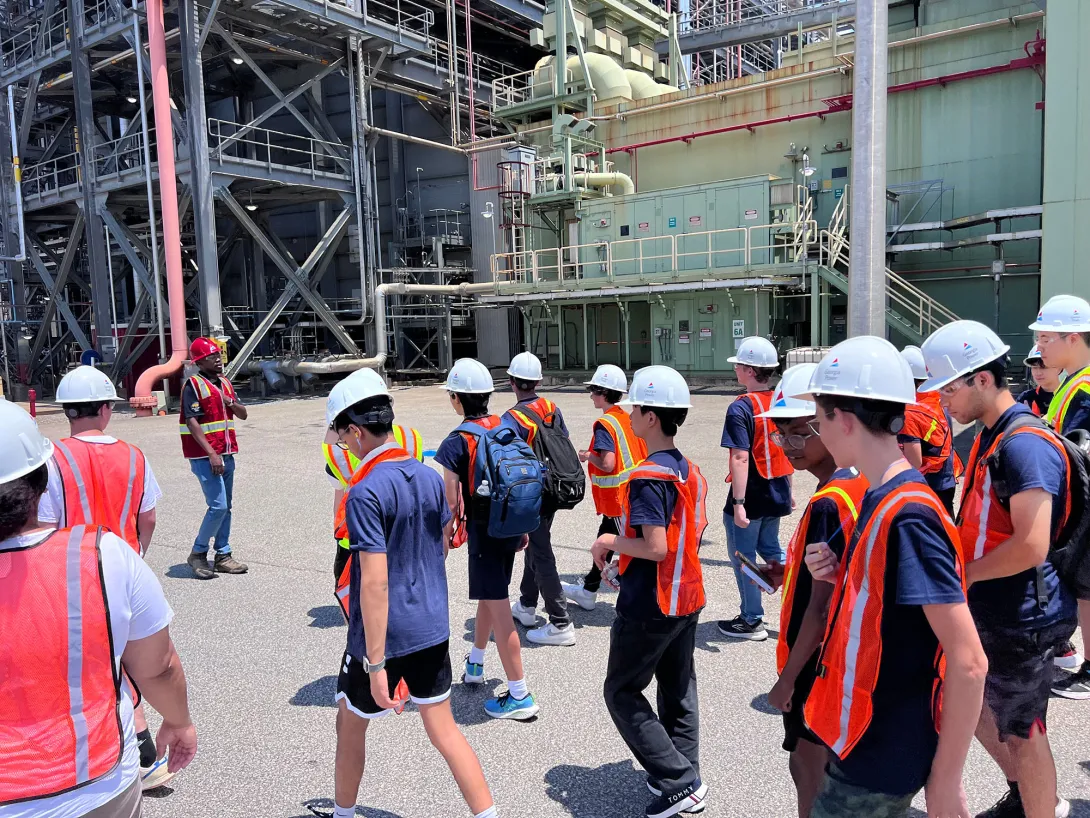
Camp participants touring the McDonough Power Plant
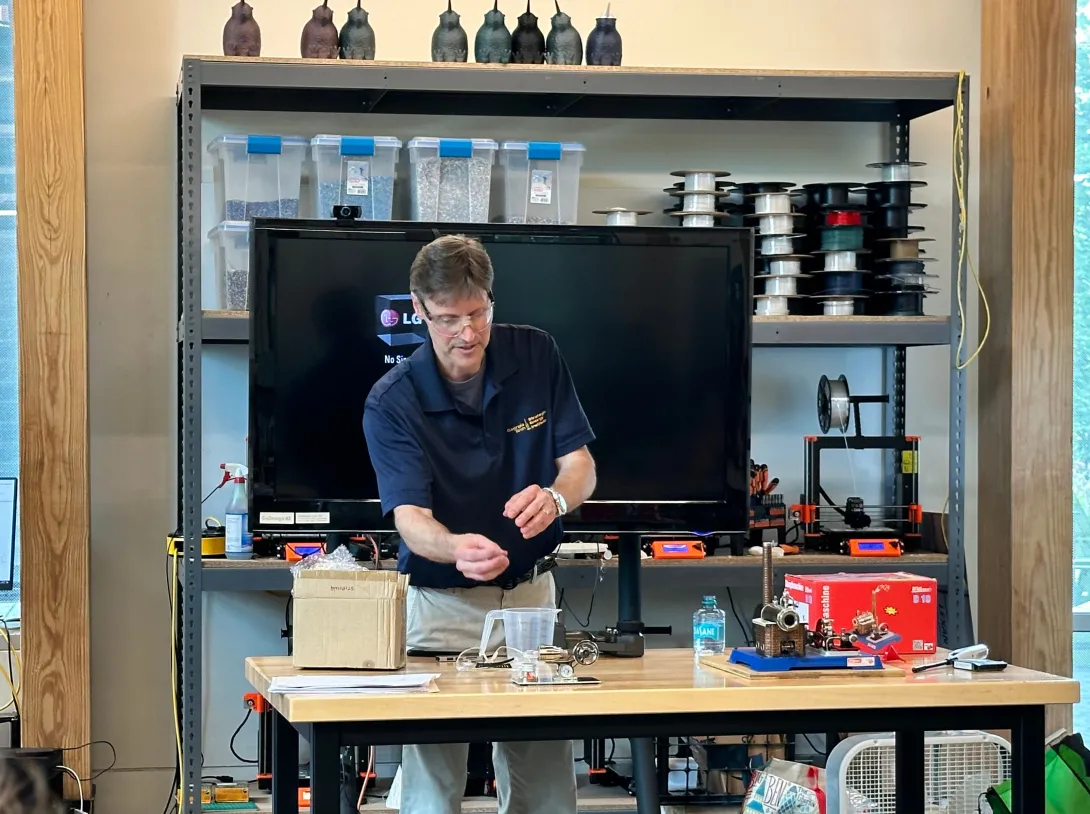
Rich Simmons demonstrating an experiment at the Energy Unplugged summer camp
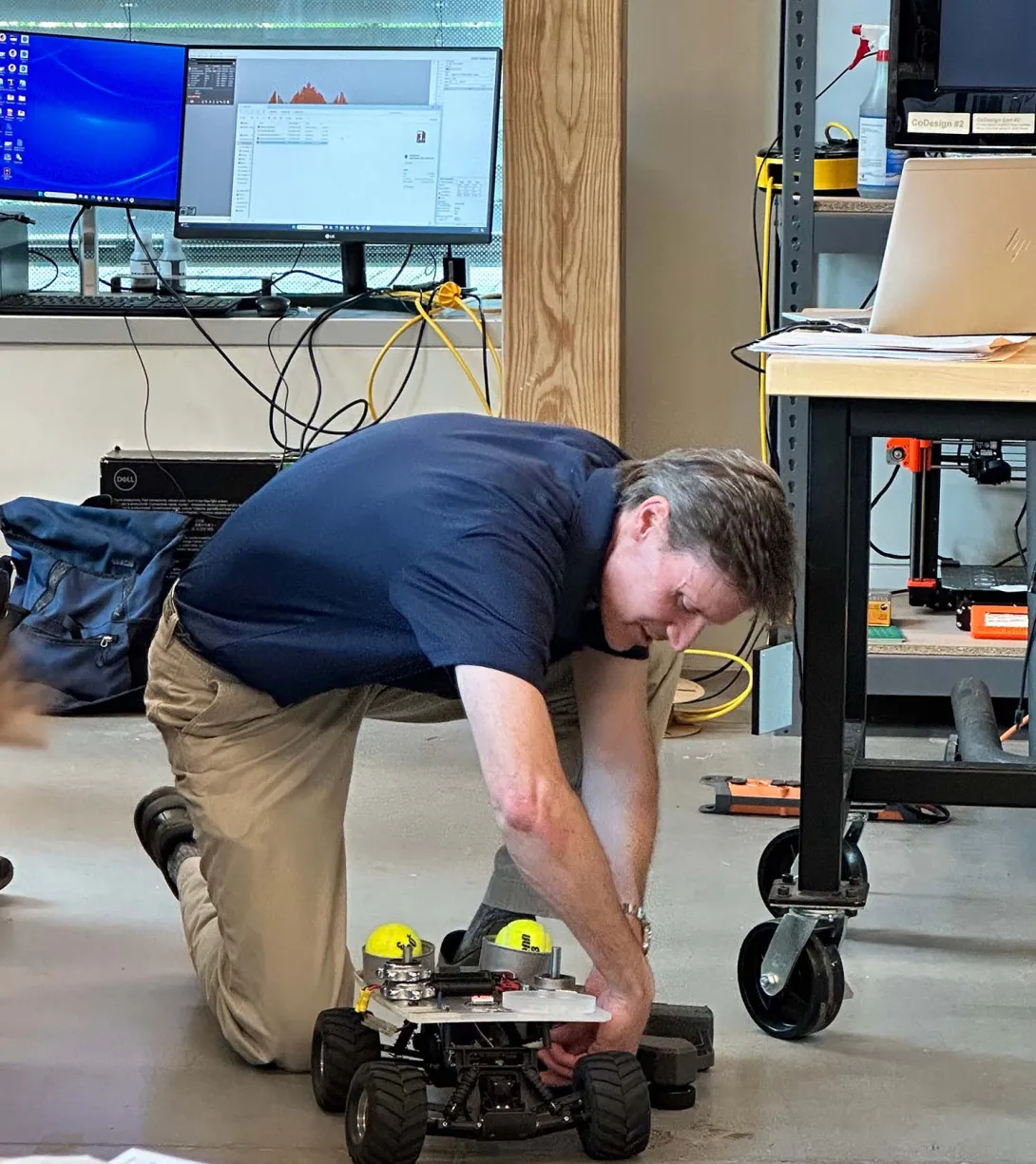
Rich Simmons showcasing the RC car demo to parents during the final day presentation
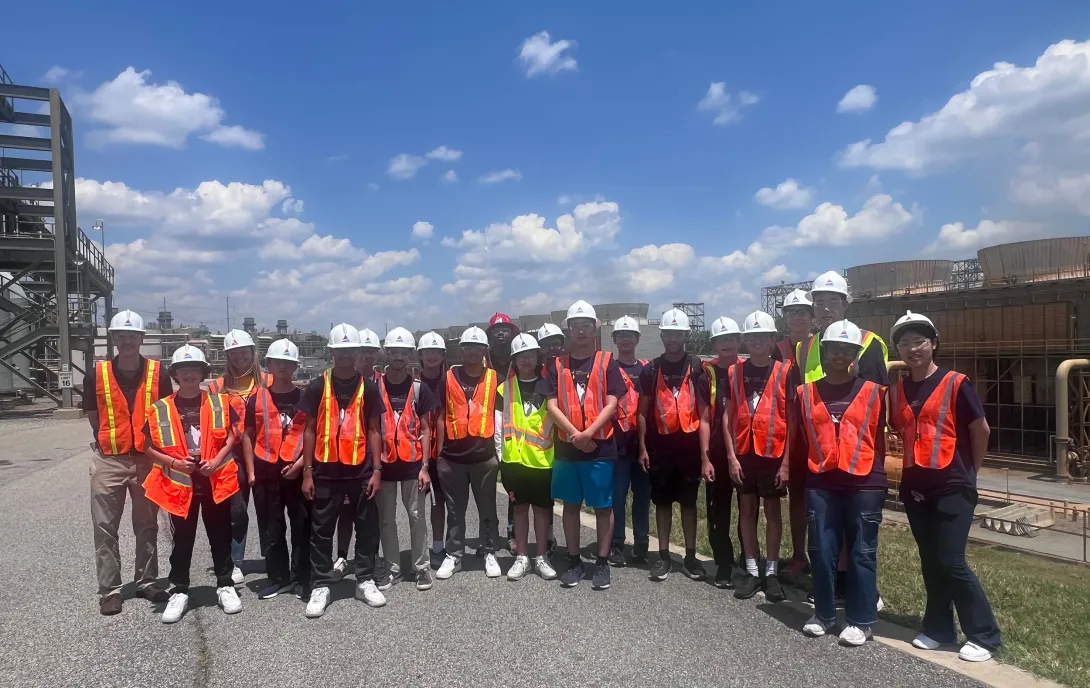
Camp participants during their off-site visit to a power plant in the Atlanta Metro Area
The Energy, Policy, and Innovation Center (EPICenter) hosted the 2024 cohort of Energy Unplugged, a Science, Technology, Engineering, Art, and Math (STEAM) summer program for high school students. The weeklong camp was held at Georgia Tech’s Atlanta and Savannah campuses this summer and has earned a reputation as one of the most sought-after high-school-level summer camps hosted by Georgia Tech.
Rich Simmons, director of Research and Studies at the Strategic Energy Institute, has been the driving force behind the camp since its inception in 2019. Simmons, a faculty instructor in the George W. Woodruff School of Mechanical Engineering at Georgia Tech, brings his award-winning teaching expertise to high school students, ensuring that each session of Energy Unplugged is both educational and engaging. The program covered a range of timely topics, from basic energy principles such as conservation laws, electric circuits, and battery storage to more complex subjects like environmental impacts, data analytics, and decision-making. In addition, students were immersed in hands-on activities, interactive demonstrations, and power plant site visits.
During the first two days, students formed teams to construct catapults and mousetrap cars, discussed the underlying physics involving energy conversion, and then launched projectiles and vehicles to test their predictions. In one of the camp’s most popular activities, students raced remote-controlled cars around an obstacle course to learn about the importance of balancing multiple objectives, such as energy use, elapsed time, safety, and cargo capacity. The week culminated in a small-group mini-project, where campers applied the skills they had acquired to solve a real-world challenge — to optimize a cooking process using solar energy. Given specific parameters on energy generation, storage, and meal demand, the students determined the best approach to convert solar energy for cooking and storage to meet a daily lunch and dinner schedule for a food truck business. The program concluded with the campers presenting their preferred designs to an audience of parents, faculty, and staff, adding public speaking and technical presentation skills to their summer experiences.
Every year, students highlight the energy field trips to power plants, data centers, robotics labs, and makerspaces as some of their favorite aspects of the camp. A student poll during the final presentations used words like fun, informative, interesting, magical, epic, exciting, educational, and fantastical to describe the camping experience. The camp introduced the students to STEM-related careers and the many undergraduate programs that could provide a pathway for them.
Energy Unplugged provides a portal for Georgia Tech graduate student interns such as Jake Churchill and staff members such as Jordann Shields to engage students with energy concepts, activities, career paths, and information about attending Georgia Tech.
Energy Unplugged is administered by Georgia Tech Summer P.E.A.K.S. (Program for Enrichment and Accelerated Knowledge in STEAM) at CEISMC (the Center for Education Integrating Science, Mathematics, and Computing), the primary connection point between Tech faculty and students and the K-12 STEAM education community. Annually, CEISMC programs are accessible to more than 39,000 students; 1,700 teachers; and 200 schools in over 75 school districts throughout Georgia.
As part of the Strategic Energy Institute, EPICenter taps into regional and national expertise within academia, businesses, non-governmental organizations, and research facilities to provide an unbiased and interdisciplinary framework for driving innovation in energy policy and technology in the Southeast.
News Contact
Priya Devarajan || SEI Communications Program Manager