
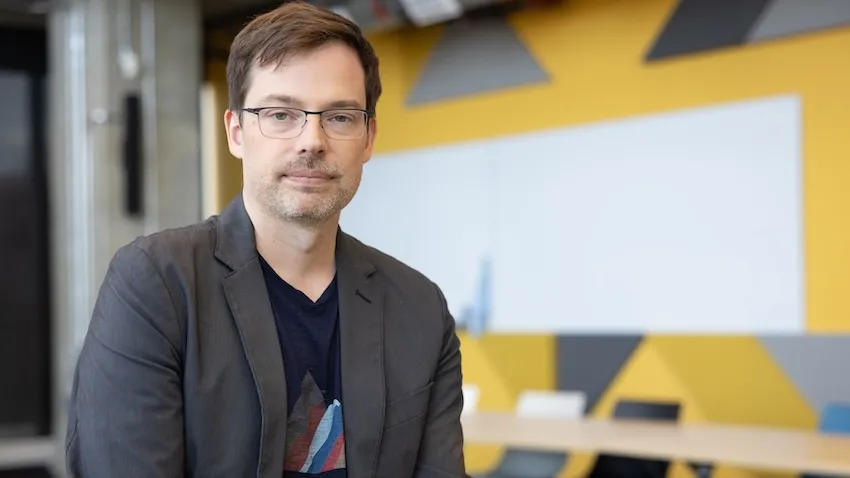
A Georgia Tech School of Interactive Computing professor and his Ph.D. student have been named to the 2026 list of Microsoft Research Fellows and Fellowship Advisors.
Associate Professor Alan Ritter and Ph.D. student Ethan Mendes were awarded fellowships for their work on creating artificial intelligence (AI) agents that function as teammates.
Mendes was named a fellow, while Ritter will serve as his fellowship advisor.
The Microsoft Research Fellowship is open to faculty, students, and postdocs. Ritter said that if Microsoft sees alignment in a project, it gives recipients the opportunity to work even closer with their collaborators by inviting them to join as additional fellows.
That turned out to be the case with Mendes after Ritter listed him as a collaborator in his fellowship proposal.
“I’m delighted to serve as Ethan Mendes’ fellowship advisor,” Ritter said. “He is an exceptionally strong researcher, and I’m excited to see his work recognized through the Microsoft Research Fellowship.”
Through the fellowship, Ritter and Mendes will design AI systems that better support collaboration and decision-making within organizations.
“The goal is to move beyond AI as a tool for a single user and instead study how AI can help groups make more informed, transparent, and coordinated decisions,” Ritter said. “We will focus on methods that bring together information from many different sources, help people reason under uncertainty, and generate analyses that support collective problem-solving in complex work settings.”
Professor Named to Sustainability Cohort
The Purple Mai’a Foundation has selected Associate Professor Josiah Hester to join its Eahou Global Immersion Cohort.
The Purple Mai’a Foundation is a technology education nonprofit headquartered in Aiea, Hawaii, that teaches coding and computer science to Native Hawaiian students.
The 29 members of the Eahou Global Immersion Cohort from 15 countries are leaders from indigenous communities recognized for their contributions to sustainability.
Hester is a Native Hawaiian whose research centers on sustainable and battery-free technology.
The cohort will gather on O’ahu May 1-3 for Eahou Fest, where they will share stories and solutions from research around the world.
“I’m honored to be selected for the Eahou Global Immersion Cohort and to learn alongside such an inspiring group of resilience leaders who come from around the globe,” Hester said.
“Participants are selected for their significant leadership over the past decade and their ability to bring what they learn back to their communities and integrate it into ongoing work and partnerships. I’m excited to connect these experiences with my work and bring these lessons back into research and teaching at Georgia Tech.”
Jill Watson Creator Receives AAAI Lecture Award
Professor Ashok Goel received one of the most distinguished awards from the Association for the Advancement of Artificial Intelligence (AAAI).
Goel was selected as the 20th recipient of the AAAI Robert S. Engel Memorial Lecture Award. Established in 2003, the award is given to those who have demonstrated excellence in AI scholarship, outstanding applications of AI, and extraordinary service to AAAI and the AI community.
Goel received the award in January during the AAAI Conference on Artificial Intelligence in Singapore. According to the awards program, Goel was recognized for contributions to biologically inspired design, case-based reasoning, and application of AI in virtual teaching.
Goel is the inventor of Jill Watson, one of the first AI virtual teaching assistants used in higher education classrooms.
AAAI is also the publisher of AI Magazine, which Goel served as editor-in-chief from 2016 to 2021.
“I am both honored and humbled to receive AAAI's Robert Engelmore Award,” Goel said. “Bob was a long-time editor of AAAI's AI Magazine, and many years after he retired, I became the editor of the magazine. This makes the Engelmore Award special to me.”
Generative artificial intelligence (AI) is best known for creating images and text. Now, it is helping industries make better planning decisions.
Georgia Tech researchers have created a new AI model for decision-focused learning (DFL), called Diffusion-DFL. Recent tests showed it makes more accurate decisions than current approaches.
Along with optimizing industrial output, Diffusion-DFL lowers costs and reduces risk. Experiments also showed it performs across different fields.
Diffusion-DFL doesn’t just surpass current methods; it also predicts more accurately as problem sizes grow. The model requires less computing power despite these high-performance marks, making it more accessible to smaller enterprises.
Diffusion-DFL runs on diffusion models, the same technology that powers DALL-E and other AI image generators. It is the first DFL framework based on diffusion models.
“Anyone who makes high-stakes decisions under uncertainty, including supply chain managers, energy operators, and financial planners, benefits from Diffusion-DFL,” said Zihao Zhao, a Georgia Tech Ph.D. student who led the project.
“Instead of optimizing around a single forecast, the model evaluates many possible scenarios, so decisions account for real-world risk and become more robust.”
To test Diffusion-DFL, the team ran experiments based on real-world settings, including:
- Factory manufacturing to meet product demand
- Power grid scheduling to meet energy demand
- Stock market portfolio optimization
In each case, Diffusion-DFL made more accurate decisions than current methods. It also performed better as problems became larger and more complex. These results confirm the model’s ability to make important decisions in real-world scenarios with noisy data and uncertainty.
The experiments also show that Diffusion-DFL is practical, not just accurate. Training diffusion models is expensive, so the team developed a way to reduce memory use. This cut training costs by more than 99.7%. As a result, Diffusion-DFL can reach more researchers and practitioners.
“Our score-function estimator cuts GPU memory from over 60 gigabytes to 0.13 with almost no loss in decision quality, reducing the requirement for massive computing resources,” Zhao said. “I hope this expands Diffusion-DFL into other domains, like healthcare, where decisions must be made quickly under complex uncertainty."
Beyond decision-making applications, Diffusion-DFL marks a shift in DFL techniques and in the broader use of generative AI models.
In supply chain management, planners estimate future demand before deciding how much product to stock. In this DFL problem, engineers align ML models with predetermined decision objectives, like minimizing risk or reducing costs.
One flaw of DFL methods is that they optimize around a single, deterministic prediction in an uncertain future.
Diffusion-DFL takes a different approach. Instead of making a single guess, it determines a range of possible outcomes. This leads to decisions based on many likely scenarios, rather than on a single assumed future.
To do this, the framework uses diffusion models. These generative AI models create high-quality data from images, text, and audio.
The forward diffusion process involves adding noise to data until it becomes pure noise. Models trained via forward diffusion can reverse diffusion. This means they can start with noisy data and then produce meaningful insights from training examples.
Real-world data is often noisy and uncertain. Traditional DFL methods struggle in these conditions, but diffusion models are designed to handle them.
Because of this, Diffusion-DFL can explore many possible outcomes and choose better actions. Like image-generation AI, the model works well with complex data from different sources. This enables its use across different industries.
“Diffusion models have achieved significant success in generative AI and image synthesis, but our work shows their potential extends far beyond that,” said Kai Wang, an assistant professor in the School of Computational Science and Engineering (CSE).
“What makes Diffusion-DFL unique is that the specific downstream application guides how the model learns to handle uncertainty.
“Whether we are scheduling energy for power grids, balancing risk in financial portfolios, or developing early warning systems in healthcare, we can explicitly train these highly expressive models to navigate the unique complexities of each domain.”
Zhao and Wang collaborated with Caltech Ph.D. candidate Christopher Yeh and Harvard University postdoctoral fellow Lingkai Kong on Diffusion-DFL. Kong earned his Ph.D. in CSE from Georgia Tech in 2024.
Wang will present Diffusion-DFL on behalf of the group at the upcoming International Conference on Learning Representations (ICLR 2026). Occurring April 23-27 in Rio de Janeiro, ICLR is one of the world’s most prestigious conferences dedicated to artificial intelligence research.
“ICLR is the perfect stage for Diffusion-DFL because it brings together the exact community that needs to see the bridge between generative modeling and high-stakes decision-making for real-world applications,” Wang said.
“Presenting Diffusion-DFL allows us to challenge the traditional training framework of diffusion models. It’s about sparking a broader conversation on how we can align the training objectives of generative AI directly with actual, downstream decision-making needs.”
News Contact
Bryant Wine, Communications Officer
bryant.wine@cc.gatech.edu
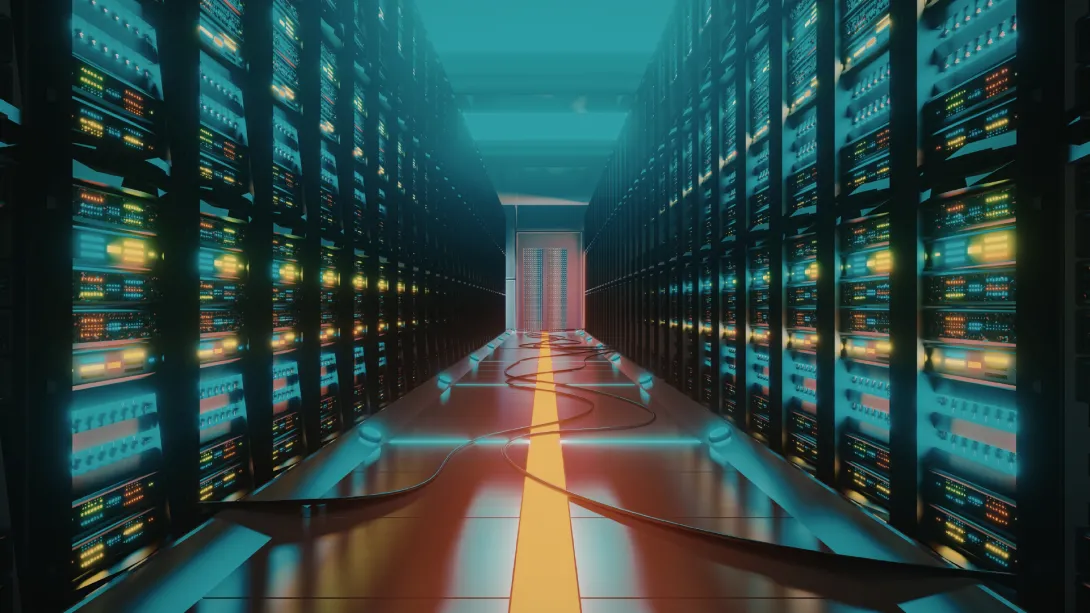
Walton County, Georgia, didn’t ask to become a test case for the artificial intelligence (AI) infrastructure boom. Meta, the company behind Facebook, Instagram, and WhatsApp, made the decision for them.
In 2018, the company broke ground in Social Circle, a small town an hour east of Atlanta with about 5,000 residents, to build one of its largest U.S. data centers. It opened in 2020.
Local officials called it a win. Shane Short, president and CEO of the Development Authority of Walton County, said the plant generates about $10 million annually in property tax revenue and has led to road improvements and expanded broadband.
Electric vehicle maker Rivian followed Meta’s lead and began construction on a plant near Social Circle in September 2025, adding to the area’s rapid industrial growth.
But for residents, the shift from a largely rural, agricultural economy to an energy-intensive industrial one has put new pressure on power and water systems.
“They’re seeing higher water and power bills, worse air quality, and very few jobs in return for this, while large corporations get tax benefits,” said Ahmed Saeed, an assistant professor in Georgia Tech’s School of Computer Science, describing why residents in some communities push back on new data center development.
Saeed and Josiah Hester, associate professor of interactive computing and computer science and director of the Center for Advancing Responsible AI, have spent the past year studying the energy, water, and financial demands associated with these facilities, and how those costs are distributed.
Betting on Demand
AI data centers run on specialized chips that use large amounts of electricity. That power generates heat, which requires energy- and water-intensive cooling.
The state is adding capacity based on expected demand, not current use.
Last year, the Georgia Public Service Commission approved an estimated $16 billion expansion for Georgia Power to support that growth. It is expected to produce about 10 gigawatts of electricity at a given time. That’s enough energy to power about 7.5 million homes for a year.
If that demand materializes, the electricity is used. If it doesn’t, the cost still has to be paid.
Grid Stability
“Those workloads can put a very large demand on the grid all at once, and then remove it just as quickly,” Saeed said. “That sudden change is difficult for the system to handle.”
That volatility is a separate issue.
Even if data center operators pay for the infrastructure they use, large swings in demand can still strain grid operations, especially during peak periods or extreme weather.
What Comes Next
Back in Walton County, the Meta facility is already attracting additional data centers.
Each new site adds power and water infrastructure designed to operate for decades.
The servers inside need to be upgraded every few years.
Saeed and Hester said if Georgia wants to remain an AI and cloud hub, the state needs to set the terms and companies need to meet them.
That starts with disclosure — how much power data centers draw from the grid, how that demand spikes, and how much water they use. It includes clear expectations for how those facilities respond when the grid is under stress, and protections for the communities where they’re built.
The researchers maintain that “build it and hope” is not a strategy.
News Contact
Michelle Azriel
Sr. Writer-Editor
Research Communications
mazriel3@gatech.edu
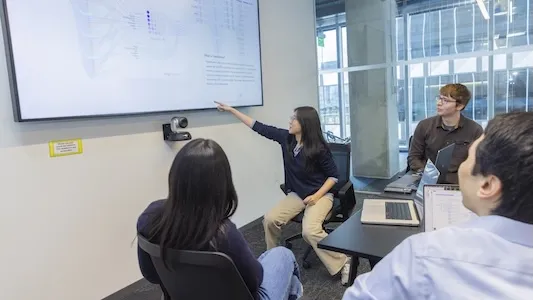
While people use search engines, chatbots, and generative artificial intelligence tools every day, most don’t know how they work. This sets unrealistic expectations for AI and leads to misuse. It also slows progress toward building new AI applications.
Georgia Tech researchers are making AI easier to understand through their work on Transformer Explainer. The free, online tool shows non-experts how ChatGPT, Claude, and other large language models (LLMs) process language.
Transformer Explainer is easy to use and runs on any web browser. It quickly went viral after its debut, reaching 150,000 users in its first three months. More than 563,000 people worldwide have used the tool so far.
Global interest in Transformer Explainer continues when the team presents the tool at the 2026 Conference on Human Factors in Computing Systems (CHI 2026). CHI, the world’s most prestigious conference on human-computer interaction, will take place in Barcelona, April 13-17.
“There are moments when LLMs can seem almost like a person with their own will and personality, and that misperception has real consequences. For example, there have been cases where teenagers have made poor decisions based on conversations with LLMs,” said Ph.D. student Aeree Cho.
“Understanding that an LLM is fundamentally a model that predicts the probability distribution of the next token helps users avoid taking its outputs as absolute. What you put in shapes what comes out, and that understanding helps people engage with AI more carefully and critically.”
A transformer is a neural network architecture that changes data input sequence into an output. Text, audio, and images are forms of processed data, which is why transformers are common in generative AI models. They do this by learning context and tracking mathematical relationships between sequence components.
Transformer Explainer demystifies how transformers work. The platform uses visualization and interaction to show, step by step, how text flows through a model and produces predictions.
Using this approach, Transformer Explainer impacts the AI landscape in four main ways:
- It counters hype and misconceptions surrounding AI by showing how transformers work.
- It improves AI literacy among users by removing technical barriers and lowering the entry for learning about AI.
- It expands AI education by helping instructors teach AI mechanisms without extensive setup or computing resources.
- It influences future development of AI tools and educational techniques by providing a blueprint for interpretable AI systems.
“When I first learned about transformers, I felt overwhelmed. A transformer model has many parts, each with its own complex math. Existing resources typically present all this information at once, making it difficult to see how everything fits together,” said Grace Kim, a dual B.S./M.S. computer science student.
“By leveraging interactive visualization, we use levels of abstraction to first show the big picture of the entire model. Then users click into individual parts to reveal the underlying details and math. This way, Transformer Explainer makes learning far less intimidating.”
Many users don’t know what transformers are or how they work. The Georgia Tech team found that people often misunderstand AI. Some label AI with human-like characteristics, such as creativity. Others even describe it as working like magic.
Furthermore, barriers make it hard for students interested in transformers to start learning. Tutorials tend to be too technical and overwhelm beginners with math and code. While visualization tools exist, these often target more advanced AI experts.
Transformer Explainer overcomes these obstacles through its interactive, user-focused platform. It runs a familiar GPT model directly in any web browser, requiring no installation or special hardware.
Users can enter their own text and watch the model predict the next word in real time. Sankey-style diagrams show how information moves through embeddings, attention heads, and transformer blocks.
The platform also lets users switch between high-level concepts and detailed math. By adjusting temperature settings, users can see how randomness affects predictions. This reveals how probabilities drive AI outputs, rather than creativity.
“Millions of people around the world interact with transformer-driven AI. We believe that it is crucial to bridge the gap between day-to-day user experience and the models' technical reality, ensuring these tools are not misinterpreted as human-like or seen as sentient,” said Ph.D. student Alex Karpekov.
“Explaining the architecture helps users recognize that language generated by models is a product of computation, leading to a more grounded engagement with the technology.”
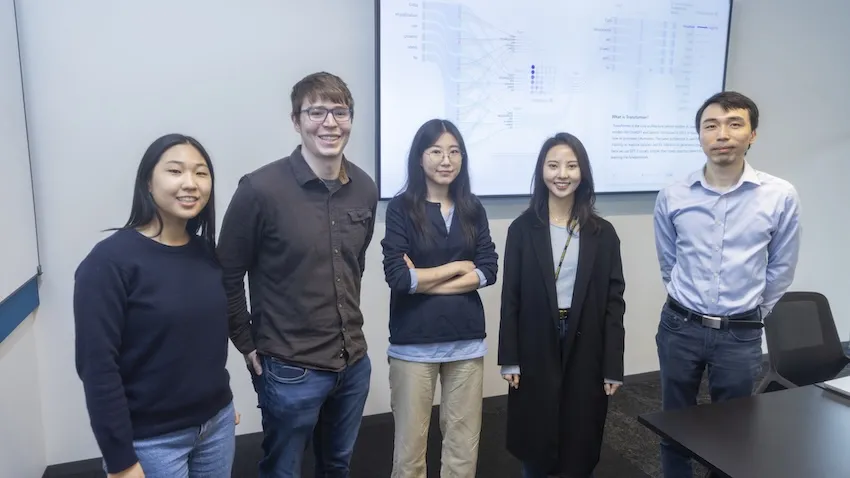
Cho, Karpekov, and Kim led the development of Transformer Explainer. Ph.D. students Alec Helbling, Seongmin Lee, Ben Hoover, and alumni Zijie (Jay) Wang (Ph.D. ML-CSE 2024) and Minsuk Kahng (Ph.D. CS-CSE 2019) assisted on the project.
Professor Polo Chau supervised the group and their work. His lab focuses on data science, human-centered AI, and visualization for social good.
Acceptance at CHI 2026 stems from the team winning the best poster award at the 2024 IEEE Visualization Conference. This recognition from one of the top venues in visualization research highlights Transformer Explainer’s effectiveness in teaching how transformers work.
“Transformer Explainer has reached over half a million learners worldwide,” said Chau, a faculty member in the School of Computational Science and Engineering.
“I'm thrilled to see it extend Georgia Tech's mission of expanding access to higher education, now to anyone with a web browser.”
News Contact
Bryant Wine, Communications Officer
bryant.wine@cc.gatech.edu
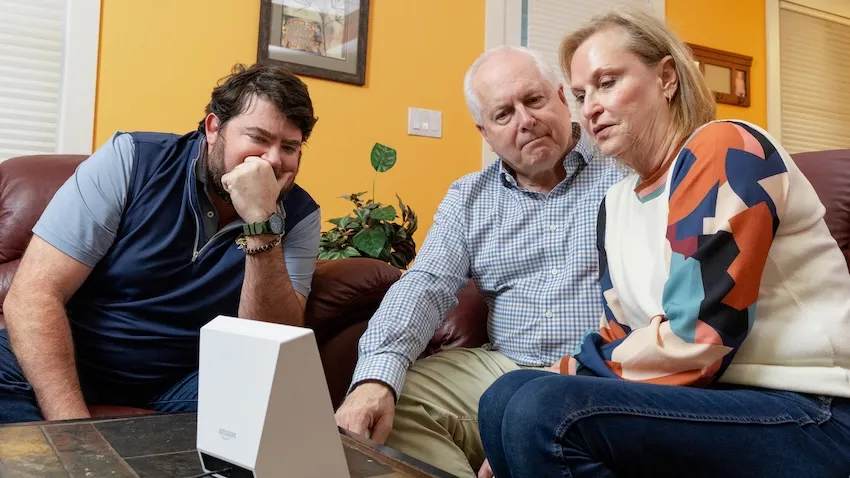
Voice-activated, conversational artificial intelligence (AI) agents must provide clear explanations for their suggestions, or older adults aren’t likely to trust them.
That’s one of the main findings from a study by AI Caring on what older adults expect from explainable AI (XAI).
AI Caring is one of three AI Institutions led by Georgia Tech and funded by the National Science Foundation (NSF). The institution supports AI research that benefits older adults and their caregivers.
Niharika Mathur, a Ph.D. candidate in the School of Interactive Computing, was the lead author of a paper based on the study. The paper will be presented in April at the 2026 ACM Conference on Human Factors in Computing Systems (CHI) in Barcelona.
Mathur worked with the Cognitive Empowerment Program at Emory University to interview 23 older adults who live alone and use voice-activated AI assistants like Amazon’s Alexa and Google Home.
Many of them told her they feel excluded from the design of these products.
“The assumption is that all people want interactions the same way and across all kinds of situations, but that isn’t true,” Mathur said. “How older people use AI and what they want from it are different from what younger people prefer.”
One example she gave is that young people tend to be informal when talking with AI. Older people, on the other hand, talk to the agent like they would a person.
“If Older adults are talking to their family members about Alexa, they usually refer to Alexa as ‘she’ instead of ‘it,’” Mathur said. “They tend to humanize these systems a lot more than young people.”
Good Explanations
The study evaluated AI explanations that drew information from four sources of data:
- User history (past conversations with the agent)
- Environmental data (indoor temperature or the weather forecast)
- Activity data (how much time a user spends in different areas of the home)
- Internal reasoning (mathematical probabilities and likely outcomes)
Mathur said older users trust the agent more when it bases its explanations on data from the first three sources. However, internal reasoning creates skepticism.
Internal reasoning means the AI doesn’t have enough data from the other sources to give an explanation. It provides a percentage to reflect its confidence based on what it knows.
“The overwhelming response was negative toward confidence scores,” Mathur said. “If the AI says it’s 92% confident, older adults want to know what that’s based on.”
This is another example that Mathur said points to generational preferences.
“There’s a lot of explainable AI research that shows younger people like to see numbers in explanations, and they also tend to rely too much on explanations that contain numerical confidence. Older adults are the opposite. It makes them trust it less.”
Knowing the Context
Mathur said that AI agents interacting with older adults should serve a dual purpose. They should provide users with companionship and support independence while reducing the caretaking burden often placed on family members.
Some studies have shown that engineers have tended to favor caretakers in the design of these tools. They prioritize daily tasks and routines, leaving some older adults to feel like they are merely a box to be checked.
She discovered that in urgent situations, older users prefer the AI to be straightforward, while in casual settings, they desire more conversation.
“How people interact with technological systems is grounded in what the stakes of the situation are,” she said. “If it had anything to do with their immediate sense of safety, they did not want conversational elaboration. They want the AI to be very direct and factual.”
Not Just Checking Boxes
Mathur said AI agents that interact with older adults are ideally constructed with a dual purpose. They should provide companionship and autonomy for the users while alleviating the burden of caretaking that is often placed on their family members.
Some studies have shown that engineers have strayed toward favoring caretakers in the design of these tools. They prioritize daily tasks and routines, leaving some older adults to feel like they are a box to be checked.
“They’re not being thought of as consumers,” Mathur said. “A lot of products are being made for them but not with them.”
She also said psychological well-being is one of the most important outcomes these tools should produce.
Showing older adults that they are listened to can significantly help in gaining their trust. Some interviewees told Mathur they want agents who are deliberate about understanding their preferences and don’t dismiss their questions.
Meeting these needs reduces the likelihood of protesting and creating conflict with family members.
“It highlights just how important well-designed explanations are,” she said. “We must go beyond a transparency checklist.”
News Contact
Nathan Deen
College of Computing
Georgia Tech
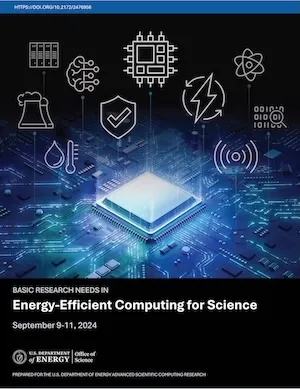
Georgia Tech researchers applied their expertise to a national research program that will shape the future of computing. Their work may yield more energy-efficient computers and better predictions for environmental challenges like carbon storage, tsunamis, wildfires, and sustainable energy.
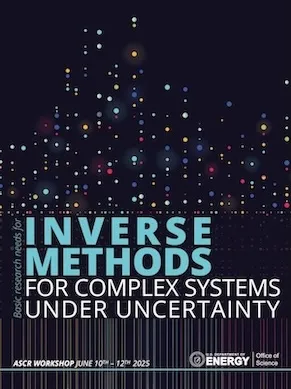
The Department of Energy Office of Science recently released two reports through its Advanced Scientific Computing Research (ASCR) program. The reports were produced by workshops that brought together researchers from universities, national labs, government, and industry to set priorities for scientific computing.
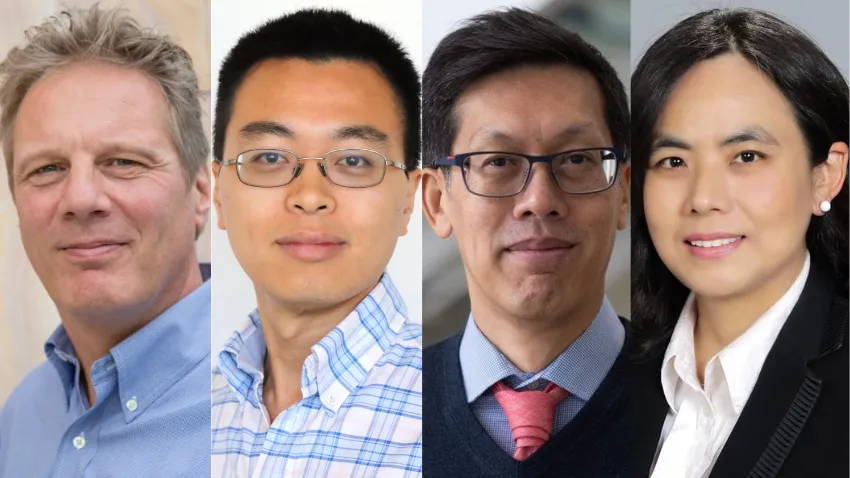
Professor Felix Herrmann served on the organizing committee for the Workshop on Inverse Methods for Complex Systems under Uncertainty. Assistant Professor Peng Chen joined Herrmann as a workshop participant, contributing expertise in data science and machine learning.
Inverse methods work backward from outcomes to find their causes. Scientists use these tools to study complex systems, like designing new materials with targeted properties and using past wildfires to map vulnerable areas and behavior of future fires.
The ASCR report highlighted Herrmann’s work on seismic exploration and monitoring through digital twins. Founded on inverse methods, digital twins upgrade from static models to virtual systems that accurately mirror their physical counterparts.
Digital twins integrate real-time data sources, including fluid flows, monitoring and control systems, risk assessments, and human decisions. These models also account for uncertainty and address data gaps or limitations.
The DOE organized the workshop to support the growing role of inverse modeling. The group identified four priority research directions (PRDs) to guide future work. The PRDs are:
- PRD 1: Discovering, exploiting, and preserving structure
- PRD 2: Identifying and overcoming model limitations
- PRD 3: Integrating disparate multimodal and/or dynamic data
- PRD 4: Solving goal-oriented inverse problems for downstream tasks
“A digital twin is a system you can control, like to optimize operations or to minimize risk,” said Herrmann, who holds joint appointments in the Schools of Earth and Atmospheric Sciences, Electrical and Computer Engineering, and Computational Science and Engineering.
“Digital twins give you a principled way to consider uncertainties, which there are a lot in subsurface monitoring. If you inject carbon dioxide too fast, you will will increase the pressure and may fracture the rock. If you inject too slow, then the process may become too costly. Digital twins help us make balanced decisions under uncertainty.”
Supercomputers, algorithms, and artificial intelligence now power modern science. However, these tools consume enormous amounts of energy. This raises concerns about how to sustain computing and scientific research as we know them in the decades ahead.
Professors Rich Vuduc and Hyesoon Kim co-authored the report from the Workshop on Energy-Efficient Computing for Science. At the three-day ASCR workshop, participants identified five key research directions:
- PRD 1: Co-design energy-efficient hardware devices and architectures for important workloads
- PRD 2: Define the algorithmic foundations of energy-efficient scientific computing
- PRD 3: Reconceptualize software ecosystems for energy efficiency
- PRD 4: Enable energy-efficient data management for data centers, instruments, and users
- PRD 5: Develop integrated, scalable energy measurement and modeling capabilities for next-generation computing systems
“I’m cautiously optimistic about the future of energy-efficient computing. The ASCR report says, from a technological point of view, there are things we can do,” said Vuduc.
“The report lays out paths for how we might design better apps, hardware systems, and algorithms that will use less energy. This is recognition that we should think about how architectures and software work together to drive down energy usage for systems.”
News Contact
Bryant Wine, Communications Officer
bryant.wine@cc.gatech.edu
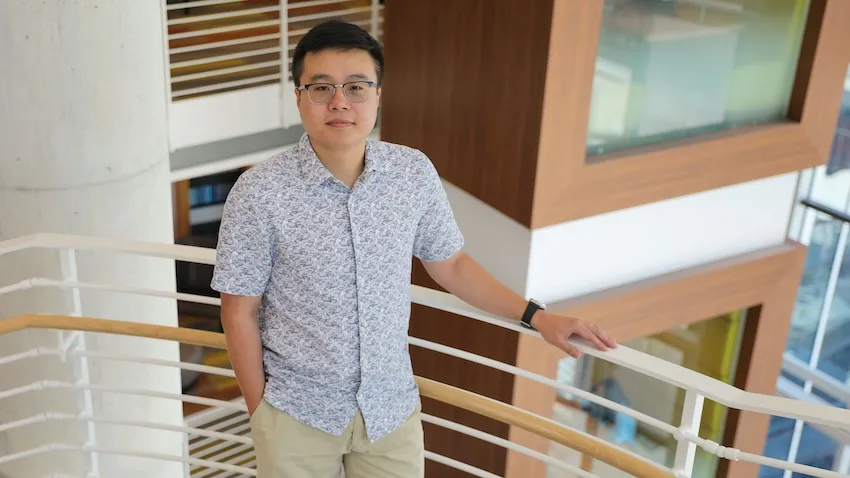
The future of clean energy depends on algorithms as much as it does atoms.
Georgia Tech’s Qi Tang is building machine learning (ML) models to accelerate nuclear fusion research, making it more affordable and more accurate. Backed by a grant from the U.S. Department of Energy (DOE), Tang’s work brings clean, sustainable energy closer to reality.
Tang has received an Early Career Research Program (ECRP) award from the DOE Office of Science. The grant supports Tang with $875,000 disbursed over five years to craft ML and data processing tools that help scientists analyze massive datasets from nuclear experiments and simulations.
Tang is the first faculty member from Georgia Tech’s College of Computing and School of Computational Science and Engineering (CSE) to receive the ECRP. He is the seventh Georgia Tech researcher to earn the award and the only GT awardee among this year’s 99 recipients.
More than a milestone, the award reflects a shift in how nuclear research is done. Today, progress depends on computing and data science as much as on physics and engineering.
“I am honored and excited to receive the ECRP award through DOE’s Advanced Scientific Computing Research program, an organization I care about deeply,” said Tang, an assistant professor in the School of CSE.
“I am grateful to my former colleagues at Los Alamos National Laboratory and collaborators at other national laboratories, including Lawrence Livermore, Sandia, and Argonne. I am also thankful for my Ph.D. students at Georgia Tech, whose dedication and creativity make this award possible.”
A problem in nuclear research is that fusion simulations are challenging to understand and use. These simulations generate enormous datasets that are too large to store, move, and analyze efficiently.
In his ECRP proposal to DOE, Tang introduced new ML methods to improve the analysis and storage of particle data.
Tang’s approach balances shrinking data so it is easier to store and transfer while preserving the most important scientific features. His multiscale ML models are informed by physics, so the reduced data still reflects how fusion systems really behave.
With Tang’s research, scientists can run larger, more realistic fusion models and analyze results more quickly. This accelerates progress toward practical fusion energy.
“In contrast to generic black-box-type compression tools, we aim at preserving the intrinsic structures of the particle dataset during the data reduction processes,” Tang said.
“Taking this approach, we can meet our goal of achieving high-fidelity preservation of critical physics with minimum loss of information.”
Computing is essential in modern research because of the amount of data produced and captured from experiments and simulations. In the era of exascale supercomputers, data movement is a greater bottleneck than actual computation.
DOE operates three of the world’s four exascale supercomputers. These machines can calculate one quintillion (a billion billion) operations per second.
The exascale era began in 2022 with the launch of Frontier at Oak Ridge National Laboratory. Aurora followed in 2023 at Argonne National Laboratory. El Capitan arrived in 2024 at Lawrence Livermore National Laboratory.
With Tang’s data reduction approaches, all of DOE’s supercomputers spend more time on science and less time waiting for data transfers.
“Qi’s work in computational plasma physics and nuclear fusion modeling has been groundbreaking,” said Haesun Park, Regents’ Professor and Chair of the School of CSE.
“We are proud of Qi and what this award means for him, Georgia Tech, and the Department of Energy toward leveraging computation to solve challenges in science and engineering, such as sustainable energy."
Previous Georgia Tech recipients of DOE Early Career Research Program awards include:
Itamar Kimchi, assistant professor, School of Physics
Sourabh Saha, assistant professor, George W. Woodruff School of Mechanical Engineering
Wenjing Lao, associate professor, School of Mathematics
Ryan Lively, Thomas C. DeLoach Professor, School of Chemical & Biomolecular Engineering
Josh Kacher, associate professor, School of Materials Science and Engineering
Devesh Ranjan, Eugene C. Gwaltney Jr. School Chair and professor, Woodruff School of Mechanical Engineering
News Contact
Bryant Wine, Communications Officer
bryant.wine@cc.gatech.edu
While not as highlight-reel worthy as the Winter Olympics and the World Cup, experts expect high-performance computing (HPC) to have an even bigger impact on daily life in 2026.
Georgia Tech researchers say HPC and artificial intelligence (AI) advances this year are poised to improve how people power their homes, design safer buildings, and travel through cities.
According to Qi Tang, scientists will take progressive steps toward cleaner, sustainable energy through nuclear fusion in 2026.
“I am very hopeful about the role of advanced computing and AI in making fusion a clean energy source,” said Tang, an assistant professor in the School of Computational Science and Engineering (CSE).
“Fusion systems involve many interconnected processes happening across different scales. Modern simulations, combined with data-driven methods, allow us to bring these pieces together into a unified picture.”
Tang’s research connects HPC and machine learning with fusion energy and plasma physics. This year, Tang is continuing work on large-scale nuclear fusion models.
Only a few experimental fusion reactors exist worldwide compared to more than 400 nuclear fission reactors. Tang’s work supports a broader effort to turn fusion from a promising idea into a practical energy source.
Nuclear fusion occurs in plasma, the fourth state of matter, where gas is heated to millions of degrees. In this extreme state, electrons are stripped from atoms, creating a hot soup of fast-moving ions and free electrons. In plasma, hydrogen atoms overcome their natural electrical repulsion, collide, and fuse together. This releases energy that can power cities and homes.
Computers interpret extreme temperatures, densities, pressures, and plasma particle motion as massive datasets. Tang works to assimilate these data types from computer models and real-world experiments.
To do this, he and other researchers rely on machine learning approaches to analyze data across models and experiments more quickly and to produce more accurate predictions. Over time, this will allow scientists to test and improve fusion reactor designs toward commercial use.
Beyond energy and nuclear engineering, Umar Khayaz sees broader impacts for HPC in 2026.
“HPC is the need of the day in every field of engineering sciences, physics, biology, and economics,” said Khayaz, a CSE Ph.D. student in the School of Civil and Environmental Engineering.
“HPC is important enough to say that we need to employ resources to also solve social problems.”
Khayaz studies dynamic fracture and phase-field modeling. These areas explore how materials break under sudden, rapid loads.
Like nuclear fusion, Khayaz says dynamic fracture problems are complex and data-intensive. In 2026, he expects to see more computing resources and computational capabilities devoted to understanding these problems and other emerging civil engineering challenges.
CSE Ph.D. student Yiqiao (Ahren) Jin sees a similar relationship between infrastructure and self-driving vehicles. He believes AI will innovate this area in 2026.
At Georgia Tech, Jin develops efficient multimodal AI systems. An autonomous vehicle is a multimodal system that uses camera video, laser sensors, language instructions, and other inputs to navigate city streets under changing scenarios like traffic and weather patterns.
Jin says multimodal research will move beyond performance benchmarks this year. This shift will lead to computer systems that can reason despite uncertainty and explain their decisions. In result, engineers will redefine how they evaluate and deploy autonomous systems in safety-critical settings.
“Many foundational problems in perception, multimodal reasoning, and agent coordination are being actively addressed in 2026. These advances enable a transition from isolated autonomous systems to safer, coordinated autonomous vehicle fleets,” Jin said.
“As these systems scale, they have the potential to fundamentally improve transportation safety and efficiency.”
News Contact
Bryant Wine, Communications Officer
bryant.wine@cc.gatech.edu
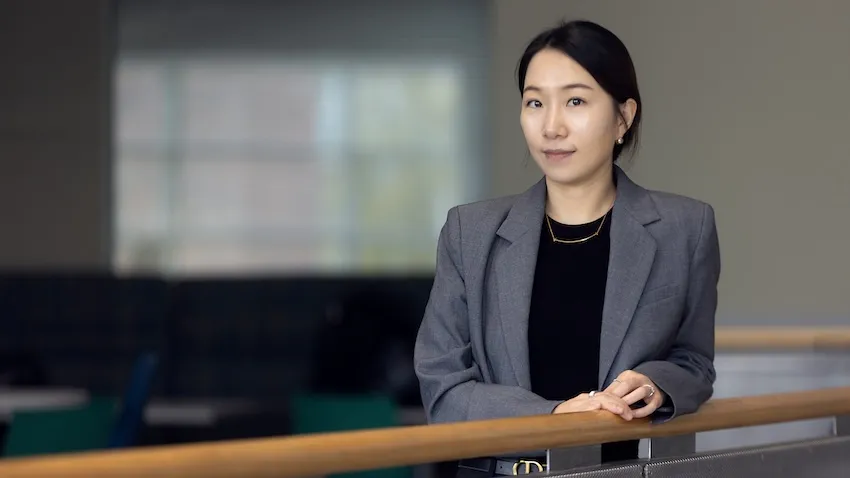
People with autism seeking employment may soon have access to a new AI-based job-coaching tool thanks to a six-figure grant from the National Science Foundation (NSF).
Jennifer Kim and Mark Riedl recently received a $500,000 NSF grant to develop large language models (LLMs) that provide strength-based job coaching for autistic job seekers.
The two Georgia Tech researchers work with Heather Dicks, a career development advisor in Georgia Tech’s EXCEL program, and other nonprofit organizations to provide job-seeking resources to autistic people.
Dicks said the average job search for people with autism can take three to six months in a good economy. It can take up to 18 months in a bad one. However, the new LLMs from Georgia Tech could help to reduce stress and fast-track these job seekers into employment.
Kim is an assistant professor who specializes in human-computer interaction technology that benefits neurodivergent people. Riedl is a professor and an expert in the development of artificial intelligence (AI) and machine learning technologies.
The team’s goal is to identify job-search pain points and understand how job coaches create better employment prospects for their autistic clients.
“Large-language models have an opportunity to support this kind of work if we can have more data about each different individual strength,” Kim said.
“We want to know what worked for them in specific settings at work, what didn’t work, and what kind of accommodations can better help them. That includes how they should prepare for interviews, how they can better represent their skills, how they can address accommodations they need, and how to write a cover letter. It’s a broad range.”
Dicks has advocated for neurodivergent people and helped them find employment for 20 years. She worked at the Center for the Visually Impaired in Atlanta before coming to Georgia Tech in 2017.
She said most nonprofits that support neurodivergent people offer career development programs and many contract job coaches, but limited coach availability often leads to long waitlists. However, LLMs could fill this availability gap to address the immediate needs of job seekers who may not have access to a job coach.
“These organizations often run at a slow pace, and there’s high turnover,” Dicks said. “An AI tool could get the job seeker quicker support. Maybe they don’t even need to wait on the government system.
“If they’re on a waitlist, it can help the user put together a resume and practice general interview questions. When the job coach is ready to work with them, they’re able to hit the ground running.”
Nailing the Interview
Dicks said the job interview is one of the biggest challenges for people with autism.
“They have trouble picking up on visual and nonverbal cues — the tone of the interview, figuring out the nuances that a question is hinting at,” she said. “They’re not giving the warm and fuzzy vibes that allow them to connect on a personal level.”
That’s why Kim wants the models to reflect a strength-based coaching approach. Strength-based coaching is particularly effective for individuals with autism. Many possess traits that employers value. These include:
- Close attention to detail
- Strong technical proficiency
- Unique problem-solving perspectives
“The issue is that they don’t know how these strengths can be applied in the workplace,” Kim said. “Once they understand this, they can communicate with employers about their strengths and the accommodations employers should provide to the job seeker so they can successfully apply their skills at work.”
Handling Rejection
Still, Kim understands that candidates will need to handle rejection to make it through the search process. She envisions LLMs that help them refocus their energy and regain their confidence after being turned down.
“When you get a lot of rejection emails, it’s easy to feel you’re not good enough,” she said. “Being constantly reminded about your strengths and their prior successes can get them through the stressful job-seeking process.”
Dicks said the models should also be able to provide feedback so that candidates don’t repeat mistakes.
“It can tell them what would’ve been a better answer or a better way to say it,” Dicks said. “It can also encourage them with reminders that you get 100 noes before you get a yes.”
You’re Hired, Now What?
Dicks said the role of a job coach doesn’t end the moment a client is hired. Government-contracted job coaches may work with their clients for up to 90 days after they start a new job to support their transition.
However, she said, sometimes that isn’t enough. Many companies have probationary periods exceeding three months. Autistic individuals may struggle with on-the-job training or communicating what accommodations they need from their new employer.
These are just a few gaps an AI tool can fill for these individuals after they’re hired.
“I could see these models evolving to being supportive at those critical junctures of the probationary period being over or the one-year job review or the annual evaluation that everyone dreads,” she said.
Dicks has an average caseload of 15 students, whom she assists in landing jobs and internships through the EXCEL program.
EXCEL provides a mentorship program for students with intellectual and developmental disabilities from the time they set foot on campus through graduation and beyond.
For more information and to apply, visit EXCEL’s website.

Illustration of an AI tutor assisting a student.
It’s 1:47 a.m. in a Georgia Tech dorm room. A bleary-eyed student is staring down a homework problem that refuses to make sense. The professor is asleep. Classmates aren’t texting back. Even the caffeine has lost its jolt.
It’s the kind of late-night dead end that pushed the instructors of one particularly tough class to build their own backup: a custom artificial intelligence (AI) tutor created specifically for that course.
They call it the SMART Tutor, short for Scaffolded, Modular, Accessible, Relevant, and Targeted. It guides students through each problem step by step, checks their reasoning, references class notes, and flags mistakes. Instead of handing over solutions, it shows students how to work through them.
That distinction matters most to Ying Zhang, senior associate chair in the School of Electrical and Computer Engineering, who created the tool.
“Unlike ChatGPT, the tutor doesn’t just give answers,” Zhang said. “We want to teach students how to approach the problem, think critically, and become self-regulated learners.”
Born From One Infamously Tough Class
The idea for the SMART Tutor came from a course that had challenged students for years: Circuit Analysis (ECE 2040). It’s a foundational class for electrical engineering undergraduates and historically one of the most difficult in the curriculum.
Zhang saw the same pattern semester after semester. Students often needed help at the exact moment it wasn’t available.
“Many students study late into the evening,” she said. “They cannot really attend office hours during the day because of either class or work schedules. So, basically, when students work at night on their homework and get stuck, they have no one to go for help.”
Students were working late into the night; support wasn’t. Zhang and her colleagues set out to change that.
Office Hours, Upgraded
Their solution: The SMART Tutor which relies solely on course materials, NOT the open internet. When students upload their completed work, the tutor checks the calculations, the reasoning, and whether the solution holds up in practice, not just on paper. It also provides constructive feedback and shares insights with instructors, helping them identify common misconceptions and adjust in-class instruction.
Students select a homework problem and watch the system break it down step by step. It also answers broader conceptual questions using lectures and notes.
“The students, the SMART Tutor, and the instructor work as a team to help students learn,” Zhang said.
Student-Tested, Professor-Approved
During a semester-long pilot with 50 students, Zhang did not require anyone to use the tutor. But nearly everyone did.
“Most students felt the AI tutor helped them learn more effectively and at their own pace,” she said. “They valued the immediate feedback and the chance to learn from mistakes in real time.”
Nidhi Krishna, a computer engineering major, used the tutor as a sounding board when she got stuck.
“What helped most was being able to show my work and ask, ‘Where did I go wrong?’” Krishna said.
She approached it like she would a teaching assistant, working through problems independently and asking for guidance rather than solutions. Students also valued something else: help that showed up at the right moment.
Teaching Students to Think
What stood out to Zhang wasn’t improved grades. It was what the tutor revealed about how students learn.
By analyzing interaction data, she saw two patterns: students who asked questions to understand, and those who used the system to confirm answers. The difference revealed a deeper gap in learning strategies.
“Some students, especially those who need help most, lack strong learning skills,” Zhang said. “Students with lower academic preparation were more likely to ask guess-and-check questions instead of seeking deeper explanations.”
That insight is already shaping the next version of the tutor.
The SMART Tutor is now part of a broader vision called NEAT: Next-Generation Engineering Education with AI Tutoring. Zhang plans to expand the NEAT framework across Georgia Tech’s College of Engineering and eventually to partner institutions.
One factor fueling that growth is affordability. The system costs about $300 per semester for a class of 50 students, a price Zhang believes most programs can absorb. The academic return, she said, far outweighs the cost.
Always Awake, Always Ready
There will always be a 1:47 a.m. somewhere on campus.
When everything stops making sense, students won’t have to give up or wait for the next day’s office hours. The SMART Tutor won’t solve the problem for them, but it will remind them they can solve it themselves.
After midnight, that may be far more useful than another cup of coffee.
News Contact
Michelle Azriel, Sr. Writer Editor