

Andre Calmon, associate professor of operations management
Supply chain management is poised to enter a new era. The Harvard Business Review has published a groundbreaking article co-authored by Andre Calmon, associate professor of operations management, alongside Flavio Calmon, Harvard University; Carol Long, Harvard University; and David Simchi-Levi, Massachusetts Institute of Technology. “The Age of Autonomous Supply Chains Has Arrived” explores how generative AI is transforming supply chain management from automated systems to truly autonomous operations.
Based on data collected at the Scheller College of Business, Calmon’s research demonstrates how AI models like Llama 4 Maverick 17B—equipped with optimized prompts, data-sharing rules, and guardrails—can outperform human teams in managing complex supply chains. Using the classic MIT Beer Distribution Game as a testbed, the authors benchmarked AI agents against more than 100 Georgia Tech students. The results were striking: AI-driven systems reduced total supply chain costs by up to 67% compared to human performance.
Traditional automated systems rely on rigid, human-designed rules. Calmon and his co-authors employed autonomous agents that learn, adapt, and coordinate across functions in real time. The study highlights four critical factors for success: selecting capable reasoning models, implementing guardrails to prevent costly errors, curating data through orchestration, and refining prompts for optimal performance.
“This breakthrough positions the Scheller College of Business as a thought leader at the intersection of AI and supply chain innovation,” said Calmon. “World-class supply chain management is becoming a plug-and-play capability. Businesses that understand how to guide generative AI agents with the right data and policies will gain a decisive competitive edge.”
The implications extend beyond cost savings. By delegating operational decisions to autonomous systems, human managers can focus on strategic priorities such as network design and supplier relationships. In an era of global volatility, this research emphasizes how future supply chain success depends on the strategic use of AI-driven technology.
News Contact
Kristin Lowe (She/Her)
Content Strategist
Georgia Institute of Technology | Scheller College of Business
kristin.lowe@scheller.gatech.edu
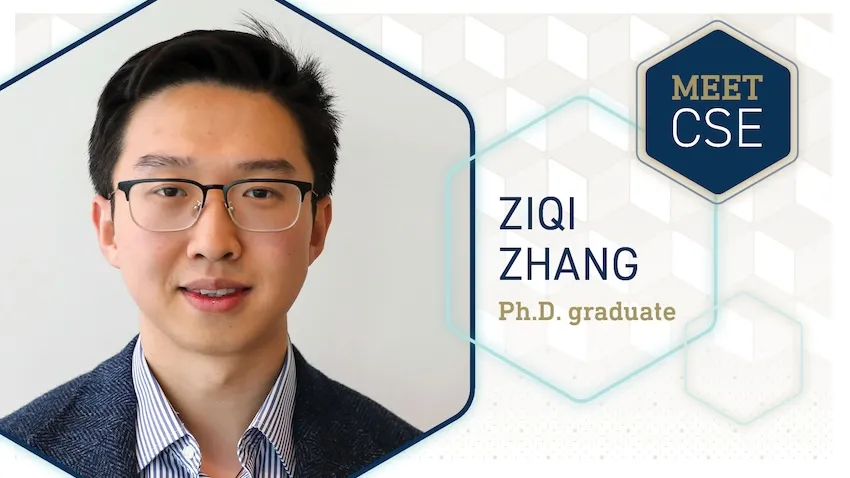
Ph.D. student Ziqi Zhang has built a career blending machine learning with single-cell biology. His work helps scientists study cellular mechanisms that advance disease research and drug development.
Though decorated with awards and appearances in leading journals, Zhang will achieve his greatest accomplishment tonight at McCamish Pavilion. He will join the Class of 2025 in walking across the stage, receiving diplomas, and graduating from Georgia Tech.
Before he “gets out” of Georgia Tech, we interviewed Zhang to learn more about his Ph.D. journey and where his degree will take him next.
Graduate: Ziqi Zhang
Research Interests: Machine learning, foundational models, cellular mechanisms, single-cell gene sequencing, gene regulatory networks
Education: Ph.D. in Computational Science and Engineering
Faculty Advisor: School of CSE J.Z. Liang Early-Career Associate Professor Xiuwei Zhang
What persuaded you to study at Georgia Tech?
I chose Georgia Tech because it is one of the top engineering institutions in the United States, known for its strength in machine learning and data science. The university offers exceptional research resources and the opportunity to work with leading scholars in my field. Georgia Tech also has very good research infrastructure. The Coda Building is one of the most well-designed and productive research environments I have experienced. Having access to such a space has been a genuine privilege.
How has working on your CSE degree helped you so far in your career?
Working toward my CSE degree has been instrumental in my career development. As an interdisciplinary program, CSE has equipped me with strong computational skills while also deepening my understanding of key application domains. This breadth of training has opened more opportunities during my job and internship searches. In addition, CSE community events, such as HotCSE, the weekly coffee hour, and faculty recruiting activities, have helped me strengthen my scientific communication skills, which are essential for my long-term career growth.
What research project from Georgia Tech are you most proud of?
My favorite research project was scMoMaT, a matrix tri-factorization algorithm for single-cell data integration. I invested a significant amount of time and effort into this work, iterating on the model many times. I’m very proud that it ultimately evolved into a clean, robust, and elegant algorithm.
What advice would you give someone interested in graduate school?
It is important to find an advisor who is supportive and genuinely invested in your career development. A Ph.D. is not an easy journey, and you will inevitably encounter challenges along the way. Having an advisor who can provide thoughtful guidance and dedicated mentorship is one of the most crucial factors in helping you navigate those difficulties.
What is your most favorite memory from Georgia Tech?
CSE’s new student campus visit day every year was one of my favorite times of the year. It was always fun to meet new people, have good food, and enjoy the beautiful view from the Coda rooftop.
What are your plans after graduation?
I plan to keep working in academia after graduation. I’m on the job hunt, currently applying for positions and preparing for interviews.
News Contact
Bryant Wine, Communications Officer
bryant.wine@cc.gatech.edu

Proteins, including antibodies, hemoglobin, and insulin, power nearly every vital aspect of life. Breakthroughs in protein research are producing vaccines, resilient crops, bioenergy sources, and other innovative technologies.
Despite their importance, most of what scientists know about proteins only comes from a small sample size. This stands in the way of fully understanding how most proteins work and unlocking their full potential.
Georgia Tech’s Yunan Luo believes artificial intelligence (AI) could fill this knowledge gap. The National Science Foundation agrees. Luo is the recipient of an NSF Faculty Early Career Development (CAREER) award.
“So much of biology depends on knowing what proteins do, but decades of research have concentrated on a relatively small set of well-studied proteins. This imbalance in scientific attention leads to a distorted view of the biological landscape that quietly shapes our data and our algorithms,” Luo said.
“My group’s goal is to build machine learning (ML) models that actively close this gap by generating trustworthy function predictions for the many proteins that remain understudied.”
[Related: Yunan Luo to use AI for Protein Design and Discovery with Support of $1.8 Million NIH Grant]
In his proposal to NSF, Luo coined this rich-get-richer effect “annotation inequality.”
One problem of annotation inequality is that it slows progress in disease prognosis, drug discovery, and other critical biomedical areas. It is challenging to innovate the few proteins that scientists already know so much about.
A cascading effect of annotation inequality is that it diminishes the effectiveness of studying proteins with AI.
AI methods learn from existing experimental data. Datasets skewed toward well-known proteins propagate and become entrenched in models. Over time, this makes it harder for computers to research understudied proteins.
“Protein annotation inequality creates an effect analogous to a vast library where 95% of patrons only read the top 5% popular books, leaving the rest of the collection to gather dust,” Luo said.
“This has resulted in knowledge disparities across proteins in current literature and databases, biasing our understanding of protein functions.”
The NSF CAREER award will fund Luo with over $770,000 for the next five years to tackle head-on the problem of protein annotation inequality.
Luo will use the grant to build an accurate, unbiased protein function prediction framework at scale. His project aims to:
- Reveal how annotation inequality affects protein function prediction systems
- Create ML techniques suited for biological data, which is often noisy, incomplete, and imbalanced
- Integrate data and ML models into a scalable framework to accelerate discoveries involving understudied proteins
More enduring than the ML framework, Luo will leverage the NSF award to support educational and outreach programs. His goal is to groom the next generation of researchers to study other challenges in computational biology, not just the annotation inequality problem.
Luo teaches graduate and undergraduate courses focused on computational biology and ML. Problems and methods developed through the CAREER project can be used as course material in his classes.
Luo also championed collaboration with Georgia Tech’s Center for Education Integrating Science, Mathematics, and Computing (CEISMC) in his proposal.
Through this partnership, local high school teachers and students would gain access to his data and models. This promotes deeper learning of biology and data science through hands-on experience with real-world tools.
Luo sees reaching students and the community as a way of paying forward the support he received from Georgia Tech colleagues.
“I am incredibly grateful for this recognition from the NSF,” said Luo, an assistant professor in the School of Computational Science and Engineering (CSE).
“This would not have been possible without my students and collaborators, whose hard work laid the groundwork for this proposal.”
Luo praised CSE faculty members B. Aditya Prakash, Xiuwei Zhang, and Chao Zhang for their guidance. All three study machine learning and computational bioscience, two of CSE’s five core research areas.
Luo also thanked Haesun Park for her support and recommendation for the CAREER award. Park is a Regents’ Professor and the chair of the School of CSE.
News Contact
Bryant Wine, Communications Officer
bryant.wine@cc.gatech.edu
People seeking mental health support are increasingly turning to large language models (LLMs) for advice.
However, most popular AI-powered chatbots are not trained to recognize when someone is in crisis. LLMs also cannot determine when to refer someone to a human specialist.
New Georgia Tech research projects that address these issues may soon provide people seeking mental health support with safer experiences.
Google has awarded research grants to three faculty members from the School of Interactive Computing to study artificial intelligence (AI), trust, safety, and security. The grants were among dozens awarded by the company to researchers across the country.
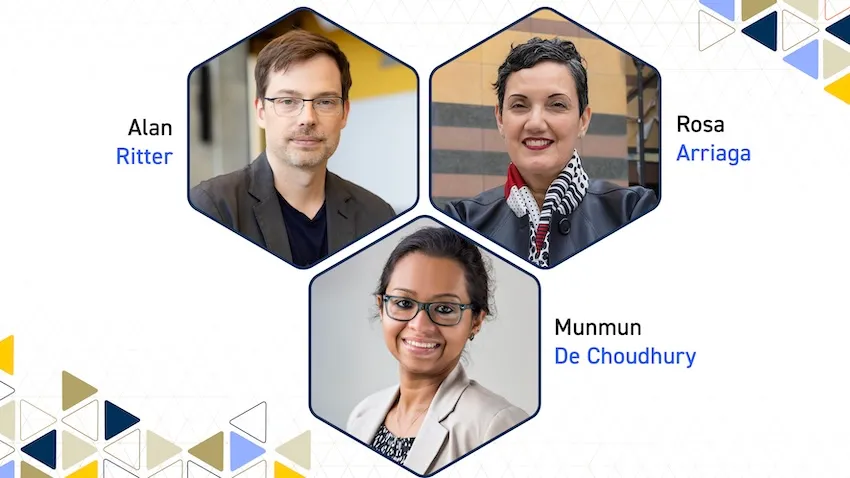
Professor Munmun De Choudhury, Associate Professor Rosa Arriaga, and Associate Professor Alan Ritter are among the recipients of the 2025 Google Academic Research Awards.
Their projects will explore questions like:
- What harms could occur if people consult LLMs for mental health advice?
- Which groups are most at risk of receiving harmful guidance?
- When should an LLM stop responding and refer someone to a human professional?
De Choudhury and Arriaga will examine how LLMs might harm people seeking mental health care.
De Choudhury’s work focuses on spotting when chatbot conversations go wrong and lead users toward self-harm. She is also studying design changes that could prevent these situations.
Her project, Exiting Harmful Reliance: Identifying Crises & Care Escalation Needs, is in partnership with Angel Hsing-Chi Hwang from the University of Southern California. Together, they will review real and synthetic chat transcripts with clinicians to find language patterns that signal risk.
“A chatbot will always give a response and keep talking to you for however long you want,” De Choudhury said. “That may not be a good thing for someone in crisis. We need to know when the right response is to stop and suggest talking to a human.”
Understanding Risks for Low-Income Users
Arriaga’s project, Dull, Dirty, Dangerous: Investigating Trust of Digital Resources Among Low-SES Mental Health Care Seekers, looks at how LLMs affect people with low socioeconomic status (SES).
Dull, dirty, and dangerous is a phrase used to describe work that is well-suited for robot automation because they are repetitive, physically taxing, or hazardous for humans. Arriaga said she adapted these terms for her research to create a taxonomy of the harms AI can cause to people seeking mental health care.
Arriaga also wants to label the trust factors that chatbots have that attract low-SES users to seek their advice, and how these may differ for adults and adolescents across contexts.
“We know one of the reasons some users go to LLMs is because they aren’t insured and can’t afford a therapist,” she said. “LLMs are available 24-7. Maybe it doesn’t start as a trust issue. Maybe it starts with availability.
“Some of these human-AI conversations that result in harmful mental health advice didn’t begin on the topic of mental health. In one case, the person started going to the machine for help with homework.
“Then this relationship evolved into personal matters. Should we constrain the system to limit itself to helping someone with their homework and not wander off that subject into mental health matters?”
Managing Privacy Risks for Social Media
Ritter will use the Google award to advance research on social media privacy tools, including interactive AI agents that help people make more informed decisions about what they share online.
His project, AI Tools to Help Users Make Informed Decisions About Online Information Sharing, focuses on reducing privacy risks in both text and images by identifying when posts reveal more than users intend.
“We’ve been developing methods to assess risks in text, and now we’re extending that work to images,” Ritter said. “People post photos without realizing how easily they can be geolocated by advanced AI systems. A casual selfie near home might contain subtle cues about where you live, like a street sign, that reveal private details.”
The project aims to create AI agents that review content within user posts, flag elements that pose risk, and suggest safer alternatives. Ritter said he wants people to maintain control over their privacy without limiting freedom of expression.
Ritter will deploy advanced reasoning models capable of probabilistic privacy estimation. These systems can infer how identifiable a piece of text might be or how likely an image is to reveal a user’s location.
For images, Ritter and his collaborators will use models that identify geolocatable features, allowing users to edit or hide them before posting.
For more on Ritter’s research, read how an LLM he co-developed protects the privacy of users on social media.

311 chatbots make it easier for people to report issues to their local government without long wait times on the phone. However, a new study finds that the technology might inhibit civic engagement.
311 systems allow residents to report potholes, broken fire hydrants, and other municipal issues. In recent years, the use of artificial intelligence (AI) to provide 311 services to community residents has boomed across city and state governments. This includes an artificial virtual assistant (AVA) developed by third-party vendors for the City of Atlanta in 2023.
Through survey data, researchers from Tech’s School of Interactive Computing found that many residents are generally positive about 311 chatbots. In addition to eliminating long wait times over the phone, they also offer residents quick answers to permit applications, waste collection, and other frequently asked questions.
However, the study, which was conducted in Atlanta, indicates that 311 chatbots could be causing residents to feel isolated from public officials and less aware of what’s happening in their community.
Jieyu Zhou, a Ph.D. student in the School of IC, said it doesn’t have to be that way.
Uniting Communities
Zhou and her advisor, Assistant Professor Christopher MacLellan, published a paper at the 2025 ACM Designing Interactive Systems (DIS) Conference that focuses on improving public service chatbot design and amplifying their civic impact. They collaborated with Professor Carl DiSalvo, Associate Professor Lynn Dombrowski, and graduate students Rui Shen and Yue You.
Zhou said 311 chatbots have the potential to be agents that drive community organization and improve quality of life.
“Current chatbots risk isolating users in their own experience,” Zhou said. “In the 311 system, people tend to report their own individual issues but lose a sense of what is happening in their broader community.
“People are very positive about these tools, but I think there’s an opportunity as we envision what civic chatbots could be. It’s important for us to emphasize that social element — engaging people within the community and connecting them with government representatives, community organizers, and other community members.”
Zhou and MacLellan said 311 chatbots can leave users wondering if others in their communities share their concerns.
“If people are at a town hall meeting, they can get a sense of whether the problems they are experiencing are shared by others,” Zhou said. “We can’t do that with a chatbot. It’s like an isolated room, and we’re trying to open the doors and the windows.”
Adding a Human Touch
In their paper, the researchers note that one of the biggest criticisms of 311 chatbots is they can’t replace interpersonal interaction.
Unlike chatbots, people working in local government offices are likely to:
- Have direct knowledge of issues
- Provide appropriate referrals
- Empathize with the resident’s concerns
MacLellan said residents are likely to grow frustrated with a chatbot when reporting issues that require this level of contextual knowledge.
One person in the researchers’ survey noted that the chatbot they used didn’t understand that their report was about a sidewalk issue, not a street issue.
“Explaining such a situation to a human representative is straightforward,” MacLellan said. “However, when the issue being raised does not fall within any of the categories the chatbot is built to address, it often misinterprets the query and offers information that isn’t helpful.”
The researchers offer some design suggestions that can help chatbots foster community engagement and improve community well-being:
- Escalation. Regarding the sidewalk report, the chatbot did not offer a way to escalate the query to a human who could resolve it. Zhou said that this is a feature that chatbots should have but often lack.
- Transparency. Chatbots could provide details about recent and frequently reported community issues. They should inform users early in the call process about known problems to help avoid an overload of user complaints.
- Education. Chatbots can keep users updated about what’s happening in their communities.
- Collective action. Chatbots can help communities organize and gather ideas to address challenges and solve problems.
“Government agencies may focus mainly on fixing individual issues,” Zhou said, “But recognizing community-level patterns can inspire collective creativity. For example, one participant suggested that if many people report a broken swing at a playground, it could spark an initiative to design a new playground together—going far beyond just fixing it.”
These are just a few examples of things, the researchers argue, that 311 services were originally designed to achieve.
“Communities were already collaborating on identifying and reporting issues,” Zhou said. “These chatbots should reflect the original intentions and collaboration practices of the communities they serve.
“Our research suggests we can increase the positive impact of civic chatbots by including social aspects within the design of the system, connecting people, and building a community view.”

One of the top conferences for AI and computer games is recognizing a School of Interactive Computing professor with its first-ever test-of-time award.
At its event this week in Alberta, Canada, the AAAI Conference on Artificial Intelligence and Interactive Digital Entertainment (AIIDE) is honoring Professor Mark Riedl. The award also honors University of Utah Professor and Division of Games Chair Michael Young, Riedl’s Ph.D. advisor.
Riedl studied under Young at North Carolina State University.
Their 2005 paper, From Linear Story Generation to Branching Story Graphs, highlighted the challenges of using AI to create interactive gaming narratives in which user actions influence the story’s progression.
In 2005, computer game systems that supported linear, non-branching games were widely used. Riedl introduced an innovative mathematical formula for interactive stories ranging from choose-your-own-adventure novels to modern computer games.
“We didn’t use the term ‘generative AI’ back then, but I was working on AI for the generation of creative artifacts,” Riedl said. “This was before we had practical deep learning or large language models.
“One of the reasons this paper is still relevant 20 years later is that it didn’t just present a technology, it attempted to provide a framework for solving a grand challenge in AI.”
That challenge is still ongoing, Riedl said. Game designers continue to struggle with balancing story coherence against the amount of narrative control afforded to users.
“When users exercise a high degree of control within the environment, it is likely that their actions will change the state of the world in ways that may interfere with the causal dependencies between actions as intended within a storyline,” Riedl and Young wrote in the paper.
“Narrative mediation makes linear narratives interactive. The question is: Is the expressive power of narrative mediation at least as powerful as the story graph representation?”
AIIDE is being held this week at the University of Alberta in Edmonton, Alberta. Riedl will receive the award on Wednesday.
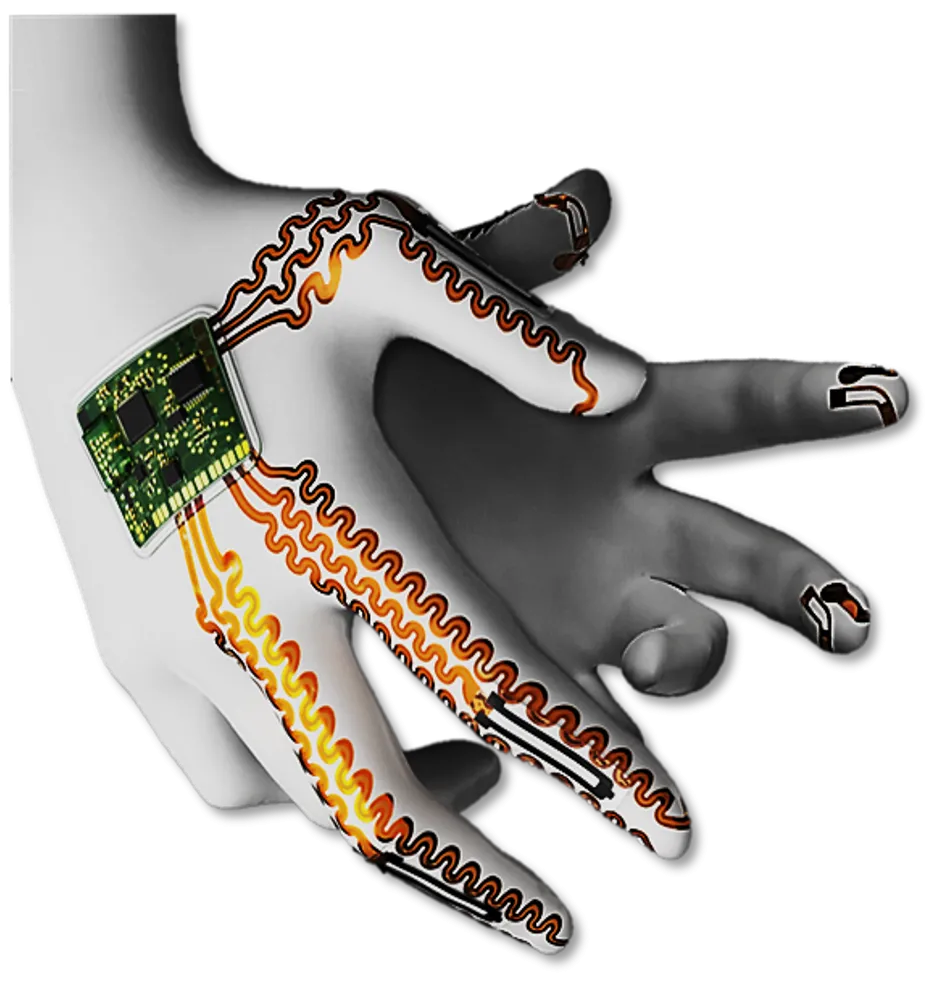
A mock-up of an AI-powered glove with muscles made from lifelike materials paired with intelligent control systems. The technology learns from the body and adapts in real time, creating motion that feels natural, responsive, and safe enough to support recovery.
Pop culture has often depicted robots as cold, metallic, and menacing, built for domination, not compassion. But at Georgia Tech, the future of robotics is softer, smarter, and designed to help.
“When people think of robots, they usually imagine something like The Terminator or RoboCop: big, rigid, and made of metal,” said Hong Yeo, the G.P. “Bud” Peterson and Valerie H. Peterson Professor in the George W. Woodruff School of Mechanical Engineering. “But what we’re developing is the opposite. These artificial muscles are soft, flexible, and responsive — more like human tissue than machine.”
Yeo’s latest study, published in Materials Horizons, explores AI-powered muscles made from lifelike materials paired with intelligent control systems. The technology learns from the body and adapts in real time, creating motion that feels natural, responsive, and safe enough to support recovery.
Muscles That Think, Materials That Feel
Traditional robotics relies on steel, wires, and motors, but rarely captures the nuances of human motion. Yeo’s research takes a different approach. He uses hierarchically structured fibers, which are flexible materials built in layers, much like muscle and tendon. They can sense, adapt, and even “remember” how they’ve moved before.
Yeo trains machine learning algorithms to adjust those pliable materials in real time with the right amount of force or flexibility for each task.
“These muscles don’t only respond to commands,” Yeo said. “They learn from experience. They can adapt and self-correct, which makes motion smoother and more natural.”
The result of that research is deeply human. For someone recovering from a stroke or limb loss, each deliberate movement rebuilds not just strength — it rebuilds confidence, independence, and a sense of self.
A Glove That Gives Freedom Back
One of the first real-world applications is a prosthetic glove powered by artificial muscles (published in ACS Nano, 2025), a device that behaves more like a helping hand than a mechanical tool. Traditional prosthetics rely on rigid motors and preset motions, but Yeo’s design mirrors the natural give-and-take of real muscle.
Inside the glove, thin layers of stretchable fibers and sensors contract, twist, and flex in sync with the wearer’s intent. The glove can fine-tune grip strength, reduce tremors, and respond instantly to the user’s movements, bringing dexterity back to everyday life.
That kind of precision matters most in the smallest tasks: fastening a button, lifting a glass, holding a child’s hand.
“These aren’t just movements,” Yeo said. “They’re freedoms.”
For Yeo, the idea of restoring freedom through movement has driven his research from the very beginning.
A Mission Rooted in Loss
Yeo's work is deeply personal. His path to biomedical engineering began with loss — the sudden death of his father while Yeo was still in college. That moment reshaped his sense of purpose, redirecting his focus from machines that move to technologies that heal.
“Initially, I was thinking about designing cars,” he said. “But after my father’s death, I kind of woke up. Maybe I could do something that helps save someone’s life.”
That purpose continues to guide his lab’s work today, building technologies that help people recover what they’ve lost.
Achieving that vision, however, means tackling some of engineering’s toughest challenges.
Soft Machines, Hard Problems
Creating lifelike muscles isn’t easy. They need to be soft but strong, responsive but safe. And they must avoid triggering the body’s immune system. That means building materials that can survive inside the body — and learn to belong there.
“We always think about not only function, but adaptability,” Yeo said. “If it’s going to be part of someone’s body, it has to work with them, not against them.”
His team calibrates these synthetic fibers like precision instruments — tested, adjusted, and re-tuned until they operate in sync with the body’s natural movements. Over time, they develop a kind of “muscle memory,” adapting fluidly to changing conditions. That dynamic adaptability, Yeo explained, is what separates a machine from a prosthetic that truly feels alive.
From Collaboration to Innovation
Solving problems this complex requires more than one discipline. It takes an entire ecosystem of collaboration. Yeo’s lab brings together experts in mechanical engineering, materials science, medicine, and computer science to design smarter, safer devices.
“You can’t solve this kind of problem in isolation,” he said. “We need all of it — polymers, artificial intelligence, biomechanics — working together.”
That collaborative model is supported by the National Science Foundation (NSF), the National Institutes of Health, and Georgia Tech’s Institute for Matter and Systems. In 2023, Yeo received a $3 million NSF grant to train the next generation of engineers building smart medical technology.
His team now works closely with healthcare providers and industry partners to bring these devices out of the lab and into patients’ lives.
The Future You Can Feel
The future of robotics, according to Yeo, won’t be defined by power or complexity but by feel.
“If it feels foreign, people won’t use it,” he said. “But if it feels like part of you, that’s when it can truly change lives.”
It’s the opposite of The Terminator, where machines replace us. Yeo is designing these machines to help us reclaim ourselves.
News Contact
Michelle Azriel Writer/Editor, Research Communications

An Adobe Stock AI-generated image of Socrates, sculpted in marble, looking contemplatively at a laptop.
CS Professor Santosh Vempala is a co-author of a recent research study that explores the role current training and evaluation protocols play in causing LLMs to hallucinate. Photo by Terence Rushin/College of Computing
Although developed by some of the brightest minds of the 21st century, AI-powered large language models (LLMs) could learn something from one of the greatest minds of the 1st century BCE.
Socrates, widely regarded as the founder of Western philosophy, declared, "I know that I know nothing." This simple statement highlights the wisdom of acknowledging the limits of one's own knowledge.
A simple statement, yes, but like some people, LLMs struggle with saying “I don’t know.” In fact, LLMs often can't admit that they don't know something because of the way they are trained, according to a research team that includes a Georgia Tech computer science (CS) professor.
Pre-training LLMs involves them learning to predict the next word correctly by training on massive datasets of text, images, or other data. Models are evaluated and adjusted based on their performance against standard benchmarks, which are "rewarded" for preferred outputs or answers.
Current evaluation protocols, however, penalize non-responses the same as incorrect answers and do not include an "I don't know" option.
According to CS Professor Santosh Vempala, these pre- and post-training shortcomings are what lead LLMs to provide seemingly plausible but false responses known as hallucinations.
Vempala is a co-author of Why Language Models Hallucinate, a research study from OpenAI and Georgia Tech, released in September. He says that there is a direct correlation between an LLM's hallucination rate and its misclassification rate regarding the validity of a given response.
"This means that if the model can't tell fact from fiction, it will hallucinate," Vempala said.
"The problem persists in modern post-training methods for alignment, which are based on evaluation benchmarks that penalize 'I don't know' as much as wrong answers."
Because of the penalties for knowing that it knows nothing – to paraphrase Socrates – guessing is a more rewarding option for current LLMs than admitting uncertainty or ignorance.
The research incorporates and builds on prior work from Vempala and Adam Kalai, an OpenAI researcher and lead author of the current paper. Their earlier work found that LLM hallucinations are mathematically unavoidable for arbitrary facts, given current training methodologies.
"We've been talking about this for about two years. One corollary of our paper is that, for arbitrary facts, despite being trained only on valid data, the hallucination rate is determined by the fraction of missing facts in the training data," said Vempala, Frederick Storey II Chair of Computing and professor in the School of CS.
To illustrate this point, imagine you have a huge Pokémon card collection. Pikachu is so familiar that you can confidently describe its moves and abilities. However, accurately remembering facts about Pikachu Libre, an extremely rare card, would likely be more difficult.
“More to the point, if your collection has a large fraction of unique cards, then it is likely that you are still missing a large fraction of the overall set of cards. This is known as the Good-Turing estimate,” Vempala said.
[OpenAI Blog: Why Language Models Hallucinate]
According to Kalai and Vempala, the same is true for LLMs based on current training protocols.
“Think about country capitals,” Kalai said. “They all appear many times in the training data, so language models don’t tend to hallucinate on those.
“On the other hand, think about the birthdays of people’s pets. When those are mentioned in the training data, it may just be once.
“So, pre-trained language models will hallucinate on those. However, post-training can and should teach the model not to guess randomly on facts like those.”
Vempala thinks tinkering with pre-training methods could be risky because, overall, they work well and deliver accurate results. However, he and his co-authors offered suggestions for reducing the occurrence of hallucinations with changes to the evaluation and post-training process.
Among the team's recommended changes is that more value be placed on the accuracy of an LLM's responses rather than on how comprehensive their responses are. The team also suggests implementing what it refers to as “behavioral calibration.”
Using this methodology, LLMs would only answer if their confidence level exceeds target thresholds. These thresholds would be tuned for different user domains and prompts. They would also appropriately reduce penalties for “I don’t know” responses, along with appropriate expressions of uncertainty and wrong answers.
Vempala believes that implementing some of these modifications could result in LLMs that are trained to be more cautious and truthful. This shift could lead to more intelligent systems in the future that can handle nuanced, real-world conversations more effectively.
"We hope our recommendations will lead to more trustworthy AI," said Vempala. "However, implementing these modifications to how LLMs are currently evaluated will require acceptance and support from AI companies and users."
News Contact
Ben Snedeker, Comms. Mgr. II
Georgia Tech College of Computing
albert.snedeker@cc.gatech.edu
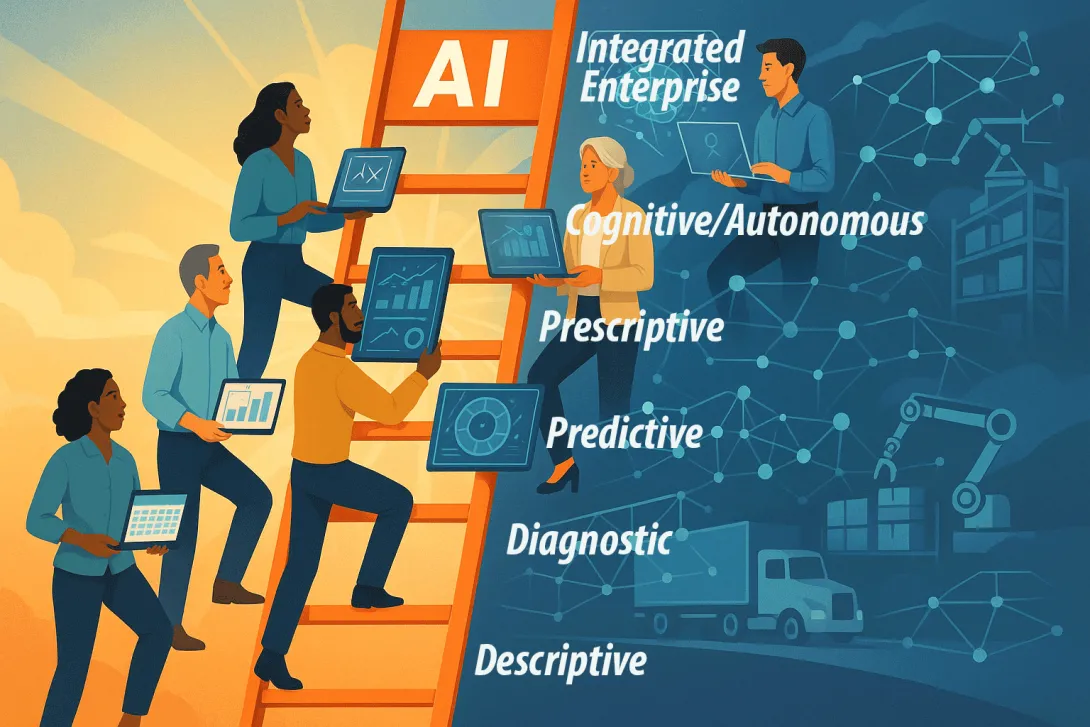
In this special episode, guest host Brian Kennedy sits down with Chris Gaffney to explore how supply chain professionals can take control of their careers by embracing artificial intelligence. Chris introduces the “AI Maturity Ladder,” a step-by-step roadmap that helps individuals and teams evolve from foundational tools like Excel to advanced capabilities like predictive analytics, machine learning, and AI agents.
Chris Gaffney
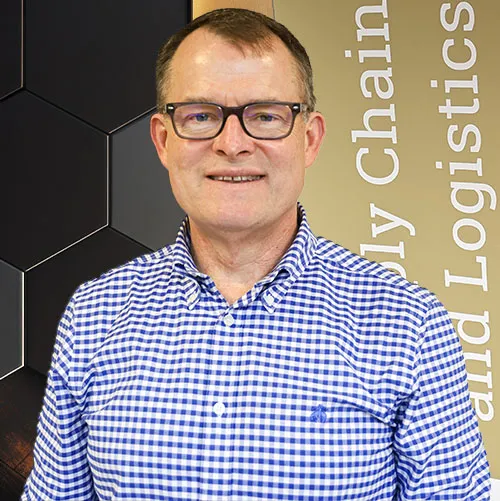
By Chris Gaffney, Managing Director, Georgia Tech Supply Chain and Logistics Institute | Supply Chain Advisor | Former Executive at Frito-Lay, AJC International, and Coca-Cola
Introduction
Artificial intelligence has entrenched itself in almost every aspect of the professional world. From copywriting tools to search engine optimization and image generation, professionals and laypeople alike use this new technology to streamline daily activities. But, before AI, there was high-level analytics and machine learning in supply chain. Analysts across the supply chain used machine learning to interpret high volumes of data and turn it into predictive algorithms for inventory planning, demand planning, and more. Now, AI is generating these analytics at a much faster, real-time pace.
This shift raises important questions. What does this mean for technology professionals in the supply chain world who once made a living doing these jobs? And what can we expect for aspiring supply chain pros or mid-career professionals who want to increase their value to the team in an age of accelerated technological advances?
The fact of the matter is that AI is now everybody’s job. Standing still will ensure that you get left behind by your peers or the talent pipeline from colleges and universities. The question then becomes, how can I upskill and use what I already know to add value to my role and ensure that my AI competencies allow me to compete in today’s supply chain workforce?
We’ll look at the ladder as a series of increasing levels of complexity and AI activity—what we’ll call ‘maturity levels’: descriptive, diagnostic, predictive, prescriptive, cognitive/autonomous, and integrated enterprise.
Some things to bear in mind as we progress through this topic:
- Everybody is somewhere on the ladder, so everyone has the opportunity to climb the ladder.
- Analytics are no longer just for specialists. AI allows analytics to be an access point to the ladder. You no longer have to rely on someone else higher up on the ladder, and it’s in your best interest to climb higher, regardless of your job description.
- There are lots of resources freely available to allow you to climb the ladder. But in most companies, you can find a mentor who is further along on a ladder, and perhaps they can help you up-skill your operational knowledge and help you advance your capabilities to ascend the ladder.
We’re here to discuss to what degree you should so you can optimize your career opportunities and not be left behind.
How Did We Get Here?
In the field of supply chain we’ve always been ahead of the curve when it comes to these types of innovations. Before AI, we were using machine learning and predictive analytics to enhance our understanding of real-time supply issues. We worked a lot on optimizations at Coke and started utilizing machine learning tactics almost 10 years ago. While I wasn’t the hands-on user of the technology, I took it upon myself to try and understand exactly what was happening and how it was working.
That was a large corporate machine–one of the biggest brands in the world–utilizing the latest in predictive analytics technology. And now we have a democratization of this technology being spread across industries. You no longer need to be part of such a high-powered team to make use of these tools.
We have now entered into an era where artificial intelligence has become omnipresent across almost every supply chain practice and industry, or any other career discipline. The key is understanding best practices is making use of AI in your field, and how you can add value and incorporate it into your everyday work-life.
Descriptive Level: From Rearview Mirror to Forward Thinking Decisions
“If you have some proficiency in Excel, then you’re on the ladder.” - Chris Gaffney
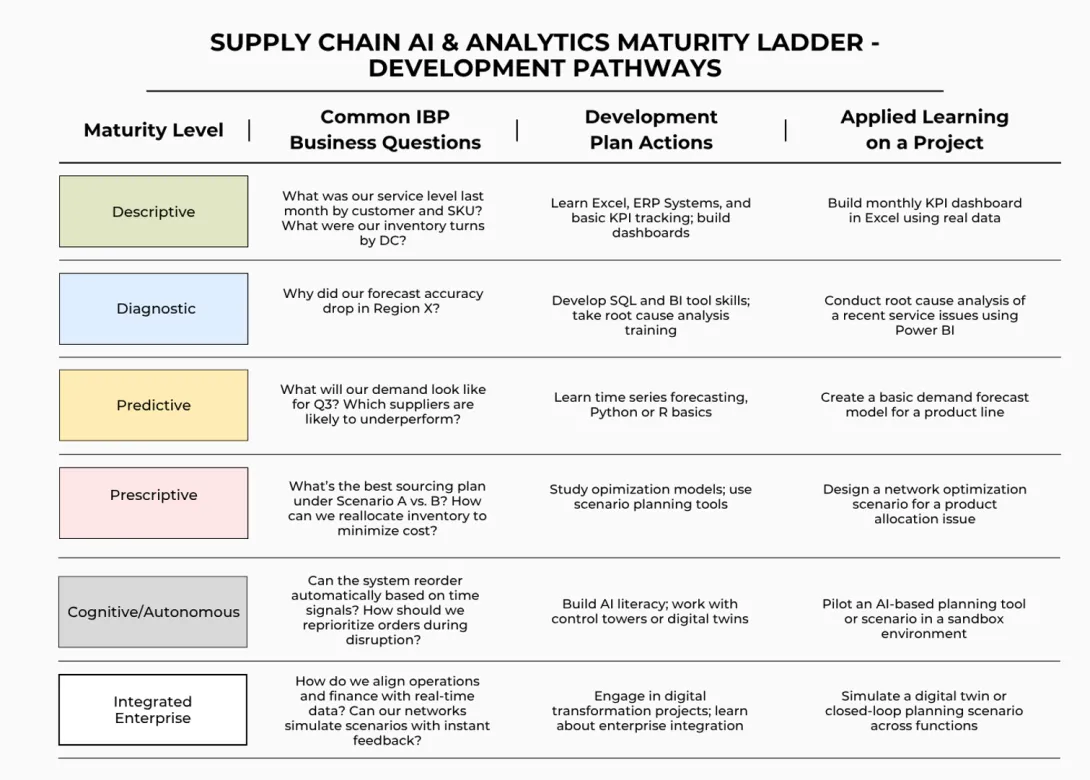
The lowest rung on the AI ladder is the descriptive level. Excel knowledge and experience resides here and can be the access point for most people. This level helps us describe what is happening with numbers and data. Reporting dashboards can be crafted here, and we can run trend analysis using basic inference to see what is happening and where to make adjustments, if necessary.
Excel tells us what did happen - not what could happen. These are important functions, to be sure. However, they only look behind us. They tell us what and why. Today’s supply chain landscape requires tools that allow us to make decisions based on what could happen in the future. We don’t have the power to make proactive decisions or to navigate uncertainty and factor in variables of change.
Our competitive edge is sharpened by having the capability to shape the future, not just explain the past. In order to do so, we need to move up into predictive and prescriptive AI territory.
Up until very recently, this descriptive capability was enough. Analysts, planners, and buyers were all able to produce data that helped others to understand what was happening. The data then required synthesis and analysis. The whys and so whats were human functions performed by different team members and used to measure the efficacy of various inputs and outputs throughout the supply chain. As one moves up the chain of command, so to speak, the ability to interpret the data and findings becomes even more important. However, the numbers crunching and analytics were more siloed.
And now, everyone has access to AI’s ability to synthesize and analyze raw data. But very few “off-the-shelf tools” can answer the why, let alone the ‘what should we do about it’ questions. Planners and managers need to upskill and ensure that they are up to speed on the capabilities and deficiencies of these platforms and insert themselves and their skillsets to close those gaps.
Roles at this level:
- Transportation analysts
- Warehouse supervisors reviewing daily throughput metrics
- Demand planners tracking forecast accuracy from the last quarter
Working in hindsight by monitoring and measuring data is important, albeit limiting. This looking backward in the world of supply chain decision making at a time when forward thinking is essential for future proofing your supply chain organization. Staying here too long limits your ability to prevent problems before they escalate.
What to do next?
- Learn Power BI or Tableau for interactive dashboards
- Get comfortable using large data sets from your ERP or WMS
- Start asking, “why” and “so what”
Diagnostic Level - Information into Insight
“This is where you start to become more valuable because now you can help the team avoid repeat issues.”
So you’ve now measured what happened. The next logical question is why? Here’s where many companies fall short by relying on only internal historical data. The real learning happens when you bring in external variables like weather, economy, labor, or competitive actions. Diagnostics help uncover root causes and patterns across time and systems. What does this mean for you and the AI ladder?
This could mean combining two different datasets using SQL to pull deeper reports or identifying correlations between variables. You need to be able to get inside of your supply chain to see what’s really going on, much like a physician will draw blood or perform various scans to get a more vivid and comprehensive picture of what’s happening.
Examples from the field:
- A demand planner diagnosing why forecasts were consistently off by adding external factors outside your control.
- A transportation analyst finding route disruptions correlated with labor strikes and weather trends - kinda like WAZE.
What you can do
- Add layers of internal and external factors
- Use Power BI or Excel to show the impacts of external events
- Start to track leading indicators, not just lagging ones.
Predictive - Seeing What’s Coming
“Most of the tools we have heavily leverage your own history. But your ability to sell a product next year is different because you don’t control everything.”
Predictive analytics enables supply chain professionals to see trends, forecast disruptions and plan proactively.
As we mentioned earlier, most forecasting tools rely too much on internal history. Predictive power comes from adding things like economic trends, labor availability, weather, etc., to your forecasting models.
My first exposure to the broader umbrella of machine learning, falling under AI, was while working at Coke. Every night, our machines processed enormous volumes of data to track how much of each type—across countless product combinations—was being used. This data was being used to predict when the fountain machines would fail so that we could prepare a replacement without losing time or operational capacity. Basically, this meant we could allocate maintenance resources proactively instead of reactively.
This machine learning doesn’t have to be intimidating. In fact, machine learning was the #1 skill in supply chain job postings in 2024. Python and machine learning are much more accessible tools than they once were, and many professionals are teaching themselves the basics using online resources that are much more prevalent than they once were. Again, the democratization of AI tools means everyone can level up a lot faster.
Roles Seeing This Shift
- Demand planners and sourcing managers are combining historical sales information with things like inflation, trade wars, and taste evolutions.
- Transportation teams are integrating weather trends and traffic data to reroute loads
What Can You Do:
- Learn the basics of Python’s forecasting libraries
- Pull in a single external variable, like weather or labor availability, into your demand forecast.
- Track model accuracy over time to see where it succeeds and, most importantly, fails.
Prescriptive: Deciding What to Do About It
"We don’t want analytics experts. We want people who are applied analytics or applied AI experts.”
It’s not just identifying the risk. The key is choosing a more effective path forward. And this requires modeling scenarios in a way that lets you take action rather than just be an observer.
A lot of companies stop at prediction. The ones that get ahead of the pack are those that are able to simulate outcomes and use this logic in daily decisions. Just remember that context is everything. Those with very impressive technical skills can sometimes miss the mark because they didn’t understand the business. There are also supply chain planners with moderate technical skills who can make major contributions because they knew what mattered and where to apply it.
The supply chain AI ladder is crucial, but only as effective as the depth of the supply chain knowledge base.
Cognitive and Integrated is When AI Starts to Work With You
This is the very top of the ladder or the tip of the AI ladder iceberg, if you will. This is the realm of AI agents that are learning and acting in an intelligent and sometimes autonomous manner. The cognitive tier blends into the integrated enterprise, where systems and data are connected. Warehouses talk to the forecast, which communicates with sourcing, which can adjust production. This is kind of futuristic, but based on how AI has evolved, it will likely be ubiquitous within a couple of years.
How to Apply Cognitive and Integrated AI:
- Learn how to build a basic GenAI or logic-based agent using online tutorials or sandbox tools
- Make sure the AI Agent’s work is sound before turning it loose on our business. The human element is still crucial in these cases.
Role of Leadership in Deploying the Supply Chain AI Ladder
“This can’t be a black box to you.”
Leaders need to know just enough about AI to advocate for it. If you’ve hired the right people, then you trust them to do the job that you hired them to do. If they’re telling you that AI tools will help them do their jobs better, then listen to them. Find out what your team needs and get them to explain to you how AI can unlock more benefits for your business.
Encourage them to pursue professional development courses and to experiment in a safe environment until they feel confident integrating the tools into regular operation.
Conclusion: Don’t Stand Still and Be Left Behind
The supply chain AI ladder is real, and it’s climbable. You are not too late to get on board and begin using AI to increase your personal value at your company. It doesn’t matter how old you are - whether you’re an entry-level professional with an MBA, a mid-career professional, or a seasoned C-suite executive. There is a place on the ladder for you.
The most valuable assets that employees can bring to bear right now in this tech immersion context. Those who have been in the workforce for a few years are able to mix their experiential knowledge with the tools and assets available through AI to translate technology into real-world wins for your supply chain teams. Your value increases significantly if you pair your knowledge with proactive learning tools.
Take the time to self-assess and figure out where you are on the ladder.
Don’t try to jump too high up on the level. Take it one rung at a time. Then reassess.
Commit to the 70/20/10 rule. 70% on-the-job learning, 20% learning from peers and mentors, and 10% formal training.
Apply what you’ve learned and stay curious. Just don’t get complacent. This is not the time to rest on your laurels because someone who is hungry for knowledge will be on your heels.
This content was developed in collaboration with SCM Talent Group, a supply chain recruiting and executive search firm.

The idea of people experiencing their favorite mobile apps as immersive 3D environments took a step closer to reality with a new Google-funded research iniative at Georgia Tech.
A new approach proposed by Tech researcher Yalong Yang uses generative artificial intelligence (GenAI) technologies to convert almost any mobile or web-based app into a 3D environment.
That includes application software programs from Microsoft and Adobe as well as any social media (Tiktok), entertainment (Spotify), banking (PayPal), or food service app (Uber Eats) and everything in between.
Yang aims to make the 3D environments compatible with augmented and virtual reality (AR/VR) headsets and smart glasses. He believes his research could be a breakthrough in spatial computing and change how humans interact with their favorite apps and computer systems in general.
“We’ll be able to turn around and see things we want, and we can grab them and put them together,” said Yang, an assistant professor in the School of Interactive Computing. “We’ll no longer use a mouse to scroll or the keyboard to type, but we can do more things like physical navigation.”
Yang’s proposal recently earned him recognition as a 2025 Google Research Scholar. Along with converting popular social apps, his platform will be able to instantly render Photoshop, MS Office, and other workplace applications in 3D for AR/VR devices.
“We have so many applications installed in our machines to complete all the various types of work we do,” he said. “We use Photoshop for photo editing, Premiere Pro for video editing, Word for writing documents. We want to create an AR/VR ecosystem that has all these things available in one interface with all apps working cohesively to support multitasking.”
Filling The Gap With AI
Just as Google’s Veo and Open AI’s Sora use generative-AI to create video clips, Yang believes it can be used to create interactive, immersive environments for any Android or Apple app.
“A critical gap in AR/VR is that we do not have all those existing applications, and redesigning all those apps will take forever,” he said. “It’s urgent that we have a complete ecosystem in VR to enable us to do the work we need to do. Instead of recreating everything from scratch, we need a way to convert these applications into immersive formats.”
The Google Play Store boasts 3.5 million apps for Android devices, while the Apple Store includes 1.8 million apps for iOS users.
Meanwhile, there are fewer than 10,000 apps available on the latest Meta Quest 3 headset, leaving a gap of millions of apps that will need 3D conversion.
“We envision a one-click app, and the (Android Package Kit) file output will be a Meta APK that you can install on your MetaQuest 3,” he said.
Yang said major tech companies like Apple have the resources to redesign their apps into 3D formats. However, small- to mid-sized companies that have created apps either do not have that ability or would take years to do so.
That’s where generative-AI can help. Yang plans to use it to convert source code from web-based and mobile apps into WebXR.
WebXR is a set of application programming interfaces (APIs) that enables developers to create AR/VR experiences within web browsers.
“We start with web-based content,” he said. “A lot of things are already based on the web, so we want to convert that user interface into Web XR.”
Building New Worlds
The process for converting mobile apps would be similar.
“Android uses an XML description file to define its user-interface (UI) elements. It’s very much like HTML on a web page. We believe we can use that as our input and map the elements to their desired location in a 3D environment. AI is great at translating one language to another — JavaScript to C-sharp, for example — so that can help us in this process.”
If generative-AI can create environments, the next step would be to create a seamless user experience.
“In a normal desktop or mobile application, we can only see one thing at a time, and it’s the same for a lot of VR headsets with one application occupying everything. To live in a multi-task environment, we can’t just focus on one thing because we need to keep switching our tasks, so how do we break all the elements down and let them float around and create a spatial view of them surrounding the user?”
Along with Assistant Professor Cindy Xiong, Yang is one of two researchers in the School of IC to be named a 2025 Google Research Scholar.
Four researchers from the College of Competing have received the award. The other two are Ryan Shandler from the School of Cybersecurity and Privacy and Victor Fung from the School of Computational Science and Engineering.