
Chris Gaffney
By Chris Gaffney, Managing Director, Georgia Tech Supply Chain and Logistics Institute | Supply Chain Advisor | Former Executive at Frito-Lay, AJC International, and Coca-Cola
A Personal Wake-Up Call
I’ve always considered myself a reasonably strong critical thinker—someone who asks good questions, challenges assumptions, and doesn’t adopt a viewpoint just because it’s popular. But a recent experience humbled me. I took an open-source critical thinking test and didn’t do nearly as well as I expected.
This led me down a deeper path of inquiry. I was already concerned about how two decades of social media have shaped the way we consume and respond to information—short, sensational content delivered by algorithm. And now, with the rapid rise of generative AI, I worry we may be trading our thinking for speed and scale.
I use AI tools daily, and I advocate for their use—especially in supply chain applications. But I’ve also come to believe this: if we’re not careful, we risk outsourcing the very thinking that makes us human and effective decision-makers.
Why Critical Thinking Matters More Than Ever—Especially in Supply Chain
Critical thinking isn’t just a defense mechanism—it’s a differentiator. In a world where AI can generate answers instantly, the professionals who ask the right questions will stand out.
Supply chain professionals operate in environments where second and third-order consequences matter. We are called on to make decisions under uncertainty, weigh risks, balance competing priorities, and understand interdependencies.
Judgment—tempered by experience, structured analysis, and humility—is the edge. Tools can help you scale, but they cannot replace the human responsibility to challenge, reflect, and adjust.
What Is Critical Thinking?
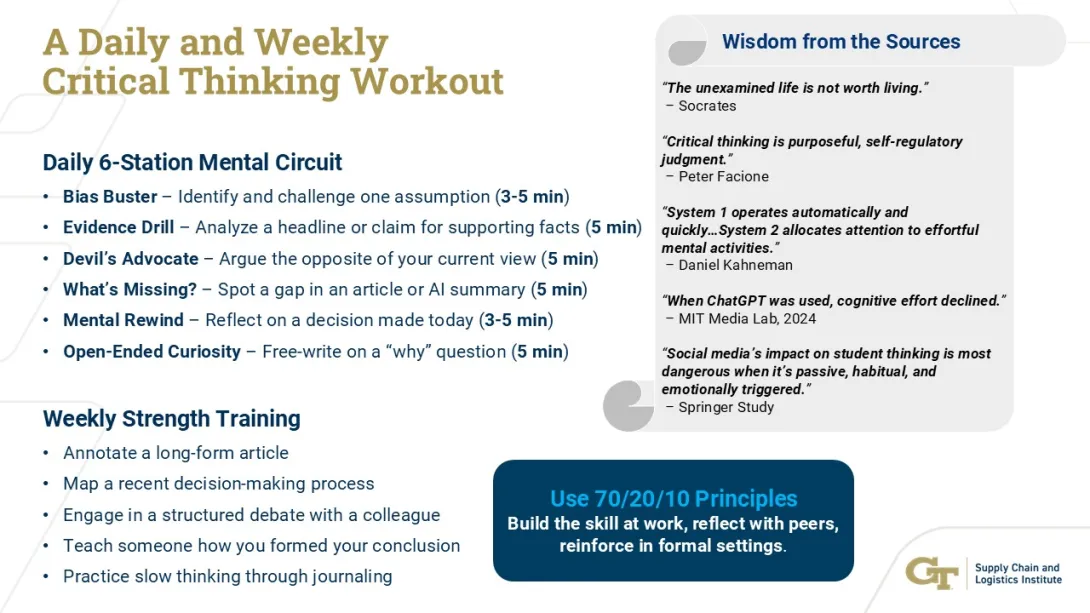
Critical thinking is the ability to think clearly and rationally about what to do or believe. It involves:
- Questioning assumptions
- Evaluating evidence
- Recognizing biases (ours and others’)
- Drawing reasoned conclusions
- Reflecting on one’s own thought process
Said simply, it’s self-awareness of your thinking style—how you form your views, test them, and revise them when new evidence emerges.
It requires effort. It requires slowing down. It requires, at times, being wrong.
Facione, in his Delphi Report, defines it as "purposeful, self-regulatory judgment."
Kahneman reminds us that our brains are wired for shortcuts—“System 1” thinking is fast and efficient but often error-prone. True critical thinking requires “System 2” effort: slow, reflective, and disciplined.
Are We Losing It?
There’s growing evidence we are.
Social media echo chambers reduce exposure to opposing views. Short-form content conditions us to expect fast answers. And according to the MIT Media Lab (Kosmyna et al., 2024), students using ChatGPT retained less, showed reduced cognitive effort, and had lower originality.
“When ChatGPT was used, cognitive effort declined.”
And yet—this is not a moment for despair. It’s a call to discipline. Because critical thinking, practiced intentionally, can become a personal and professional superpower.
Applying Critical Thinking in Supply Chain Decisions
Supply chain professionals face complexity daily—inventory tradeoffs, supplier uncertainty, resource constraints, policy risk. Many of these decisions can’t be answered by tools alone—they require judgment. Critical thinking lives in that judgment.
Whether you're building a forecast, evaluating a supplier, responding to a disruption, or modeling risk exposure, structured thinking provides a path. The steps are familiar:
- Define the problem clearly
- Clarify what information is available—and what’s missing
- Analyze root causes or future implications
- Generate multiple options
- Establish decision criteria
- Choose a path—and test it before launch
- Monitor and adjust as feedback arrives
This process resembles A3 thinking or supply chain analytics. But what makes it powerful is doing it intentionally—even under pressure.
The best professionals I’ve worked with practice it on small decisions as well as large ones. They don’t confuse speed with clarity.
Practicing Critical Thinking When Using Generative AI
AI tools are powerful—but without deliberate use, they can dull our thinking. Here's how to make AI work with your brain—not instead of it:
- Document your assumptions before prompting
- Journal your intent: What are you trying to decide or explore?
- Ask AI to provide counterarguments or alternative views as well as sources for you to research and draw your own conclusions
- Look for what’s missing or oversimplified
- Summarize AI output in your own words
- Track and reflect on how AI influenced your decisions
Treat AI like a research assistant—not a strategist. Use it to extend your reach, not replace your reasoning.
Final Thought and Your Next Steps
Critical thinking is no longer optional. Not in business. Not in education. Not in leadership.
It is a skill. A discipline. And a mindset that pays dividends over a lifetime.
If you’ve read this far, take this challenge seriously:
- Write out how you form your opinions—on paper.
- Practice structured thinking on small problems weekly.
- Use AI with intention—never outsource your judgment.
- Teach someone else how you reached a conclusion.
- Be humble. Ask yourself: what if I’m wrong?
- Keep a thinking journal for 30 days.
The goal isn’t to be right all the time. It’s to be reflective, rigorous, open to challenge, and consistent over time. That’s what the world needs more of. That’s the edge AI can’t replicate.
So think before you automate.
And never stop questioning.
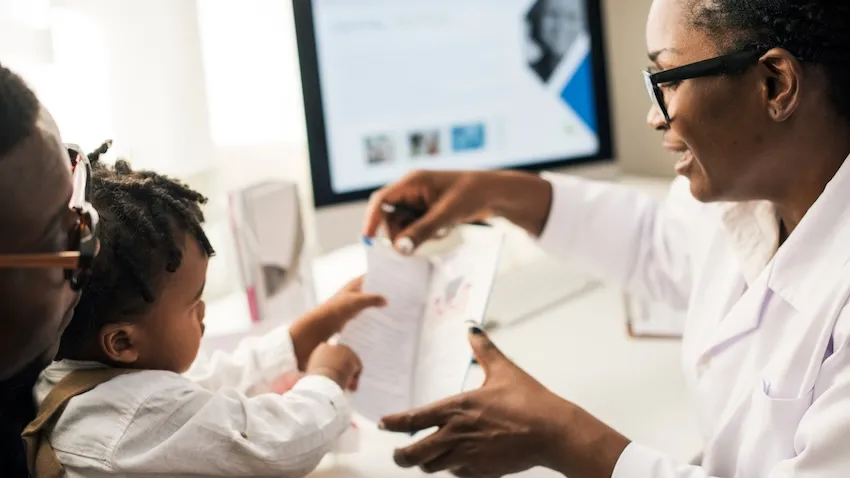
A groundbreaking new medical dataset is poised to revolutionize healthcare in Africa by improving chatbots’ understanding of the continent’s most pressing medical issues and increasing their awareness of accessible treatment options.
AfriMed-QA, developed by researchers from Georgia Tech and Google, could reduce the burden on African healthcare systems.
The researchers said people in need of medical care file into overcrowded clinics and hospitals and face excruciatingly long waits with no guarantee of admission or quality treatment. There aren’t enough trained healthcare professionals available to meet the demand.
Some healthcare question-answer chatbots have been introduced to treat those in need. However, the researchers said there’s no transparent or standardized way to test or verify their effectiveness and safety.
The dataset will enable technologists and researchers to develop more robust and accessible healthcare chatbots tailored to the unique experiences and challenges of Africa.
One such new tool is Google’s MedGemma, a large-language model (LLM) designed to process medical text and images. AfriMed-QA was used for training and evaluation purposes.
AfriMed-QA stands as the most extensive dataset that evaluates LLM capabilities across various facets of African healthcare. It contains 15,000 question-answer pairs culled from over 60 medical schools across 16 countries and covering numerous medical specialties, disease conditions, and geographical challenges.
Tobi Olatunji and Charles Nimo co-developed AfriMed-QA and co-authored a paper about the dataset that will be presented at the Association for Computational Linguistics (ACL) conference next week in Vienna.
Olatunji is a graduate of Georgia Tech’s Online Master of Science in Computer Science (OMSCS) program and holds a Doctor of Medicine from the College of Medicine at the University of Ibadan in Nigeria. Nimo is a Ph.D. student in Tech’s School of Interactive Computing, where he is advised by School of IC professors Michael Best and Irfan Essa.
Focus on Africa
Nimo, Olatunji, and their collaborators created AfriMed-QA as a response to MedQA, a large-scale question-answer dataset that tests the medical proficiency of all major LLMs. That includes Google’s Gemini, OpenAI’s ChatGPT, and Anthropic’s Claude, among others.
However, because MedQA is trained solely on the U.S. Medical License Exams, Nimo said it is not adequate to serve patients in underdeveloped African countries nor the Global South at-large.
“AfriMed-QA has the contextualized and localized understanding of African medical institutions that you don’t get from Med-QA,” Nimo said. “There are specific diseases and local challenges in our dataset that you wouldn't find in any U.S.-based dataset.”
Olatunji said one problem African users may encounter using LLMs trained on MedQA is that they may advise unfeasible treatments or unaffordable prescription drugs.
“You consider the types of drugs, diagnostics, procedures, or therapies that exist in the U.S. that are quite advanced. These treatments are much more accessible, for example in the US, and Europe,” Olatunji said. “But in Africa, they’re too expensive and many times unavailable. They may cost over $100,000, and many people have no health insurance. Why recommend such treatments to someone who can’t obtain them?”
Another problem may be that the LLM doesn’t take a medical condition seriously if it isn’t predominant in the U.S.
“We tested many of these models, for example, on how they would manage sickle-cell disease signs and symptoms, and they focused on other “more likely” causes and did not rank or consider sickle cell high enough as a possible cause,” he said. “They, for example, don’t consider sickle-cell as important as anemia and cancer because sickle-cell is less prevalent in the U.S.”
In addition to sickle-cell disease, Olatunji said some of the healthcare issues facing Africa that can be improved through AfriMed-QA include:
- HIV treatment and prevention
- Poor maternal healthcare
- Widespread malaria cases
- Physician shortage
- Clinician productivity and operational efficiency
Google Partnership
Mercy Asiedu, senior author of the AfriMed-QA paper and research scientist at Google Research, has dedicated her career to improving healthcare in Africa. Her work began as a Ph.D. student at Duke University, where she invented the Callascope, a groundbreaking non-invasive tool for gynecological examinations
With her current focus on democratizing healthcare through artificial intelligence (AI), Asiedu, who is from Ghana, helped create a research consortium to develop the dataset. The consortium consists of Georgia Tech, Google, Intron, Bio-RAMP Research Labs, the University of Cape Coast, the Federation of African Medical Students Association, and Sisonkebiotik.
Sisonkebiotik is an organization of researchers that drives healthcare initiatives to advance data science, machine learning, and AI in Africa.
Olatunji leads the Bio-RAMP Research Lab, a community of healthcare and AI researchers, and he is the founder and CEO of Intron, which develops natural-language processing technologies for African communities.
In May, Google released MedGemma, which uses both the MedQA and Afri-MedQA datasets to form a more globally accessible healthcare chatbot. MedGemma has several versions, including 4-billion and 27-billion parameter models, which support multimodal inputs that combine images and text.
“We are proud the latest medical-focused LLM from Google, MedGemma, leverages AfriMed-QA and improves performance in African contexts,” Asiedu said.
“We started by asking how we could reduce the burden on Africa’s healthcare systems. If we can get these large-language models to be as good as experts and make them more localized with geo-contextualization, then there’s the potential to task-shift to that.”
The project is supported by the Gates Foundation and PATH, a nonprofit that improves healthcare in developing countries.
Chris Gaffney
By Chris Gaffney, Managing Director, Georgia Tech Supply Chain and Logistics Institute | Supply Chain Advisor | Former Executive at Frito-Lay, AJC International, and Coca-Cola
Every few weeks these days, a new AI breakthrough makes headlines. Models get sharper and more capable. Language tools get more fluent. Claims of agent breakthroughs and embedded autonomy in tools are everywhere.
And each time, the question resurfaces: What’s left for people to do as this wave progresses?
It’s a fair question. But from what I’ve seen throughout my career—from managing logistics in a Frito-Lay regional DC to transportation and distribution operations at AJC International and Coca-Cola, and now through executive education, consulting, and applied research at Georgia Tech—I believe we’re asking the wrong question.
Instead of asking what AI can do, we should be asking: Where is the human edge—and how do we keep it sharp?
1. Collaboration Across Boundaries Still Wins the Day
Whether in manufacturing, logistics, commercial and customer teams, or strategy, success still hinges on people working together—often across silos, systems, or supply chains. At Coca-Cola, some of the most impactful progress we made didn’t come from technology upgrades. It came from aligning teams that didn’t naturally collaborate—finance with planning, supply chain with sales, bottlers with company.
From what I see in my advisory work and interviews with supply chain leaders, that hasn’t changed. AI can improve visibility. It can suggest decisions. But it doesn’t build consensus, resolve conflicts, or create shared understanding. That’s human work—and it often makes the difference between potential and progress.
2. When the Plan Breaks, People Step Up
During my time in global logistics at AJC International, unexpected events were the norm: shipping delays, capacity shortages, regulatory changes. AI may help flag risks, but when the plan breaks, it’s still people who step in, prioritize under pressure, and find creative solutions.
This same theme came up in a recent SCM Talent podcast conversation. When I asked a senior supply chain leader what traits define her most effective team members, she didn’t hesitate:
“A drive for results. Problem solving. The ability to work in teams. And the ability to influence others.”
Those aren’t going out of style. They’re still what carries teams forward when the data model breaks or the shipment gets stuck.
The professionals I see excelling—especially in moments of disruption—aren’t just technical experts. They’re problem solvers who own the outcome and stay focused when others get stuck.
Drive, persistence, and adaptability aren’t things you automate. They’re human qualities that remain essential.
3. Hands-On Context Isn’t a Field Trip—It’s a Foundation
At Frito-Lay, I worked in a regional distribution center and breakbulk operation managing warehouse activities and dispatching drivers. Later, I spent a full year as an operations manager at one of our plants, where I led drivers and worked with plant warehouse teams and schedulers to ensure load readiness and on-time dispatch to local DCs.
Those weren’t just jobs—they were formative experiences. They taught me how decisions affect execution in the real world, and how the rhythm of operations shapes everything else in the supply chain.
That’s why I firmly believe professionals—especially early in their careers—should spend 3 to 5 years in front-line roles. No AI tool can replicate the kind of intuition you build by seeing how things work, where they break, and how people respond in real time. That foundation lasts an entire career.
4. Communication and Leadership Will Always Matter
In every role I’ve had—from the plant floor to corporate teams to Georgia Tech—I’ve seen that clear communication and authentic leadership are force multipliers. They carry more weight now, not less.
AI might help with drafting, summarizing, or visualizing, but it doesn’t earn trust. It doesn’t mentor a new team member or guide a group through a difficult change. That takes listening, emotional intelligence, and personal credibility.
Those leading change in today’s organizations—whether rolling out a new system or rebuilding after disruption—are the ones who can communicate with clarity and lead with steadiness. That’s not something AI can learn.
5. The Edge Is Where Humans Live
There’s a space at the boundary of every operation—the “edge”—where plans meet real-world variability. And that’s where humans remain essential.
Whether it’s spotting an issue before it escalates, reading between the lines of a conversation, or connecting seemingly unrelated problems across functions, that kind of judgment is rooted in experience. It can’t be downloaded or inferred from data alone.
In my work at Georgia Tech, across executive education, consulting, and applied research, I regularly see the difference it makes when decision-makers bring not just technical knowledge, but lived context from the field. That human edge is where resilience is built—and where strategy becomes reality.
6. Humans and AI: Better Together
To be clear: this isn’t about rejecting AI. The smartest teams I work with aren’t afraid of it—they’re learning how to use it. AI tools can improve productivity, identify trends, and help people make better decisions. But they need to be paired with human insight.
AI suggests. People choose. AI speeds up planning. People keep it grounded. The professionals who combine digital fluency with interpersonal skill, operational awareness, and strategic judgment? Those are the ones who will lead in the next era.
So What Should You Do?
If you want to build a career that endures—and evolves—with AI, here are seven things I recommend:
- Invest in the front line. Not just a tour. Spend 3–5 years in a real operations or customer-facing role. It will shape how you lead for decades.
- Build bridges. Learn how sales thinks. Understand finance’s constraints. Connect systems, teams, and people.
- Volunteer when the extra project comes up. These stretch roles are often tied to strategic initiatives and senior leadership. Saying yes can accelerate learning and visibility—especially when others hesitate.
- Take roles at the intersections—not the cul-de-sacs. Look for positions that connect functions, partners, or ecosystems. Exposure to diverse perspectives sharpens insight and multiplies your value.
- Sharpen your communication. Speak with intent. Write with clarity. Listen deeply. These skills amplify everything else.
- Evolve with AI—or fall behind. You don’t need to code, but you do need to understand how AI is changing your domain. Through continuing education, hands-on learning, or professional development, stay curious and current.
- Never stop learning. At Georgia Tech, I see firsthand how ongoing learning—through executive education, research engagement, or new assignments—helps professionals lead through change. Keep asking: what haven’t I seen yet? Who could I learn from?
Final Thoughts
The future of work isn’t about humans vs. machines. It’s about people who can lead, decide, and connect—with AI as their force multiplier.
We may automate tasks. But judgment, trust, and empathy? Those are human domains. And in times of uncertainty, it’s the people who can navigate complexity, rally teams, and adapt with integrity who make the difference.
So yes, learn the tools. Embrace the change. But never underestimate the power of experience, context, and connection.
That’s your edge. And that’s not going anywhere.

An Adobe Stock image of a woman using a wheelchair and wearing a grey business suit meets with work colleagues.
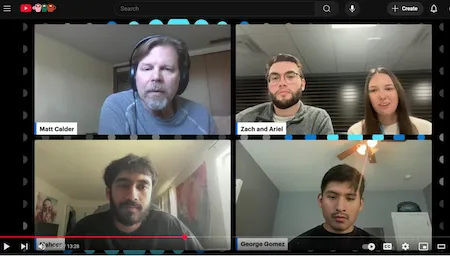
A team of Georgia Tech graduate students is using artificial intelligence (AI) to help people with disabilities find their dream jobs.
Searching for the right job is stressful for most, but it can be overwhelming for people with disabilities. However, using an innovative approach, the student entrepreneurs created a customizable AI-powered "job coach" that connects people with accessible employment opportunities.
OMSCS students George Gomez, Ariel Magyar, Zachary Patrignani, and Maheer Sayeed created Interstellar Jobs as their entry for the March 2025 Microsoft Azure Innovation Challenge. The team beat over 70 international entries to secure first place and $10,000.
Interstellar Jobs uses information about job seekers' disabilities, job preferences, and other personal details to provide detailed coaching tips for specific jobs. The tips let job seekers know if they're a good fit for the position, what challenges they can expect, and what they can do to manage these challenges successfully.
The challenge, co-sponsored by TechBridge, required teams to create a functional proof of concept within a tight timeframe using AI, analytics, networking, and other Microsoft Azure Web Services.
Selecting which services to use was the starting point for most teams. In fact, Sayeed says most of the competition tried to use as many Azure services as possible for their projects.
"We didn't do that. We kept it simple," said Sayeed.
"Our mindset going into the challenge was that we'd find the problem first, and then we would look at the services we would use."
Their entrepreneurial approach led the team to develop Interstellar Jobs using just three Azure services. As an example of their approach, the team faced the challenge of addressing specific disabilities in relation to thousands of job listings.
Developers usually depend on drop-down menus when presenting an extensive list of options. However, this method might not cover all disabilities or could use outdated or overly broad language. It also wouldn't account for people with multiple or nuanced disabilities that don't fit neatly into a single category.
The Interstellar Jobs team opted for a blank field for users to list their disabilities.
"We kept it very open-ended for our users," said Sayeed.
The team used OpenAI Service to 'clean' entries on the backend, regardless of what users wrote in the blank field. This method ensures that users can always get a structured and actionable response from Interstellar Jobs.
"As a user, not having to pick from a drop-down menu just feels good," said Matt Calder, senior product marketing manager at Microsoft.
Calder hosts Microsoft DevRadio and recently interviewed the Interstellar Jobs team. "I like how your approach changes how people interact with the whole system. If you make something really usable, it's going to be accessible as well," said Calder.
Despite its success, the team has no immediate plans to expand Interstellar Jobs. Each member balances a full-time job and their studies in Georgia Tech's Online Master of Science in Computer Science (OMSCS) program.
"We gained so much about cloud development and Azure Web Services from the experience," said Sayeed. "We also learned the value of AI in these applications."
News Contact
Ben Snedeker, Communications Manager II
Georgia Tech College of Computing
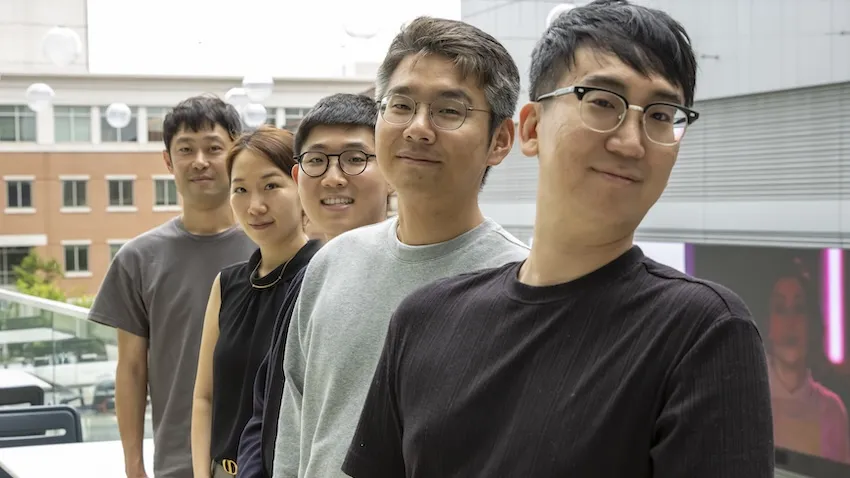
School of Interactive Computing Assistant Professor Sehoon Ha, Neuromeka researchers Joonho Lee and Yunho Kim, School of IC Assistant Professor Jennifer Kim, and Electronics and Telecommunications Research Institute researcher Dongyeop Kang, are collaborating to develop a medical assistant robot to support doctors and nurses in Korea. Photo by Nathan Deen/College of Computing.
Overwhelmed doctors and nurses struggling to provide adequate patient care in South Korea are getting support from Georgia Tech and Korean-based researchers through an AI-powered robotic medical assistant.
Top South Korean research institutes have enlisted Georgia Tech researchers Sehoon Ha and Jennifer G. Kim to develop artificial intelligence (AI) to help the humanoid assistant navigate hospitals and interact with doctors, nurses, and patients.
Ha and Kim will partner with Neuromeka, a South Korean robotics company, on a five-year, 10 billion won (about $7.2 million US) grant from the South Korean government. Georgia Tech will receive about $1.8 million of the grant.
Ha and Kim, assistant professors in the School of Interactive Computing, will lead Tech’s efforts and also work with researchers from the Korea Advanced Institute of Science and Technology and the Electronics and Telecommunications Research Institute.
Neuromeka has built industrial robots since its founding in 2013 and recently decided to expand into humanoid service robots.
Lee, the group leader of the humanoid medical assistant project, said he fielded partnership requests from many academic researchers. Ha and Kim stood out as an ideal match because of their robotics, AI, and human-computer interaction expertise.
For Ha, the project is an opportunity to test navigation and control algorithms he’s developed through research that earned him the National Science Foundation CAREER Award. Ha combines computer simulation and real-world training data to make robots more deployable in high-stress, chaotic environments.
“Dr. Ha has everything we want to put into our system, including his navigation policies,” Lee said. “He works with robots and AI, and there weren’t many candidates in that space. We needed a collaborator who can create the software and has experience running it on robots.”
Ha said he is already considering how his algorithms could scale beyond hospitals and become a universal means of robot navigation in unstructured real-world environments.
“For now, we’re focusing on a customized navigation model for Korean environments, but there are ways to transfer the data set to different environments, such as the U.S. or European healthcare systems,” Ha said.
“The final product can be deployed to other systems and industries. It can help industrial workers at factories, retail stores, any place where workers can get overwhelmed by a high volume of tasks.”
Kim will focus on making the robot’s design and interaction features more human. She’ll develop a large-language model (LLM) AI system to communicate with patients, nurses, and doctors. She’ll also develop an app that will allow users to input their commands and queries.
“This project is not just about controlling robots, which is why Dr. Kim’s expertise in human-computer interaction design through natural language was essential.,” Lee said.
Kim is interviewing stakeholders from three South Korean hospitals to identify service and care pain points. The issues she’s identified so far relate to doctor-patient communication, a lack of emotional support for patients, and an excessive number of small tasks that consume nurses’ time.
“Our goal is to develop this robot in a very human-centered way,” she said. “One way is to give patients a way to communicate about the quality of their care and how the robot can support their emotional well-being.
“We found that patients often hesitate to ask busy nurses for small things like getting a cup of water. We believe this is an area a robot can support.”
The robot’s hardware will be built in Korea, while Ha and Kim will develop the software in the U.S.
Jong-hoon Park, CEO of Neuromeka, said in a press release the goal is to have a commercialized product as soon as possible.
“Through this project, we will solve problems that existing collaborative robots could not,” Park said. “We expect the medical AI humanoid robot technology being developed will contribute to reducing the daily work burden of medical and healthcare workers in the field.”
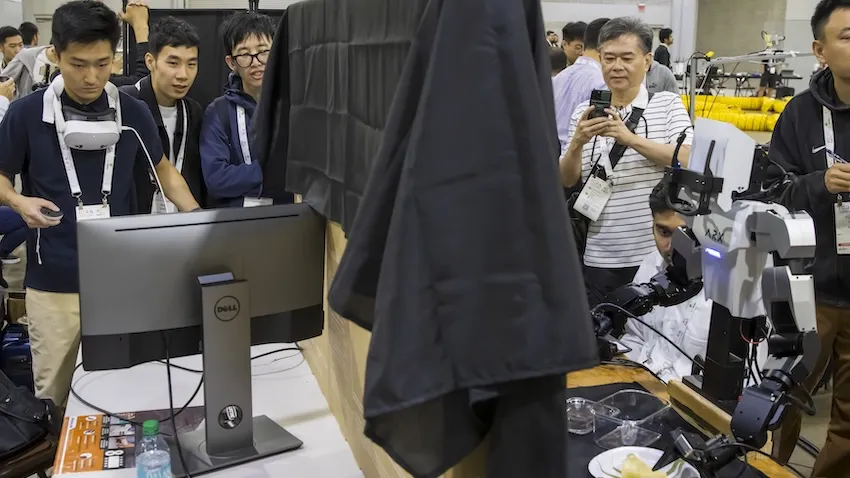
An algorithmic breakthrough from School of Interactive Computing researchers that earned a Meta partnershipdrew more attention at the IEEE International Conference on Robotics and Automation (ICRA).
Meta announced in February its partnership with the labs of professors Danfei Xu and Judy Hoffman on a novel computer vision-based algorithm called EgoMimic. It enables robots to learn new skills by imitating human tasks from first-person video footage captured by Meta’s Aria smart glasses.
Xu’s Robot Learning and Reasoning Lab (RL2) displayed EgoMimic in action at ICRA May 19-23 at the World Congress Center in Atlanta.
Lawrence Zhu, Pranav Kuppili, and Patcharapong “Elmo” Aphiwetsa — students from Xu’s lab — used Egomimic to compete in a robot teleoperation contest at ICRA. The team finished second in the event titled What Bimanual Teleoperation and Learning from Demonstration Can Do Today, earning a $10,000 cash prize.
Teams were challenged to perform tasks by remotely controlling a robot gripper. The robot had to fold a tablecloth, open a vacuum-sealed container, place an object into the container, and then reseal it in succession without any errors.
Teams completed the tasks as many times as possible in 30 minutes, earning points for each successful attempt.
The competition also offered different challenge levels that increased the points awarded. Teams could directly operate the robot with a full workstation view and receive one point for each task completion. Or, as the RL2 team chose, teams could opt for the second challenge level.
The second level required an operator to control the task with no view of the workstation except for what was provided to through a video feed. The RL2 team completed the task seven times and received double points for the challenge level.
The third challenge level required teams to operate remotely from another location. At this level, teams could earn four times the number of points for each successful task completed. The fourth level challenged teams to deploy an algorithm for task performance and awarded eight points for each completion.
Using two of Meta’s Quest wireless controllers, Zhu controlled the robot under the direction of Aphiwetsa, while Kuppili monitored the coding from his laptop.
“It’s physically difficult to teleoperate for half an hour,” Zhu said. “My hands were shaking from holding the controllers in the air for that long.”
Being in constant communication with Aphiwetsa helped him stay focused throughout the contest.
“I helped him strategize the teleoperation and noticed he could skip some of the steps in the folding,” Aphiwetsa said. “There were many ways to do it, so I just told him what he could fix and how to do it faster.”
Zhu said he and his team had intended to tackle the fourth challenge level with the EgoMimic algorithm. However, due to unexpected time constraints, they decided to switch to the second level the day before the competition due to unexpected time constraints.
“I think we realized the day before the competition training the robot on our model would take a huge amount of time,” Zhu said. “We decided to go for the teleoperation and started practicing.”
He said the team wants to tackle the highest challenge level and use a training model for next year’s ICRA competition in Vienna, Austria.
ICRA is the world’s largest robotics conference, and Atlanta hosted the event for the third time in its history, drawing a record-breaking attendance of over 7,000.

Instead of relying on traditional methods like cognitive tests and image scans, this new approach leverages data science and algorithms.
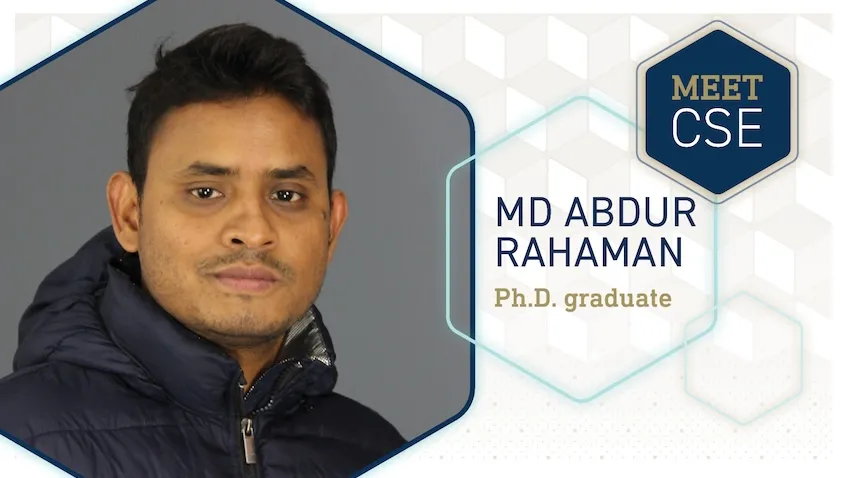
Ph.D. candidate Md Abdur Rahaman’s dissertation studies brain data to understand how changes in brain activity shape behavior.

A Georgia Tech doctoral student’s dissertation could help physicians diagnose neuropsychiatric disorders, including schizophrenia, autism, and Alzheimer’s disease. The new approach leverages data science and algorithms instead of relying on traditional methods like cognitive tests and image scans.
Ph.D. candidate Md Abdur Rahaman’s dissertation studies brain data to understand how changes in brain activity shape behavior.
Computational tools Rahaman developed for his dissertation look for informative patterns between the brain and behavior. Successful tests of his algorithms show promise to help doctors diagnose mental health disorders and design individualized treatment plans for patients.
“I've always been fascinated by the human brain and how it defines who we are,” Rahaman said.
“The fact that so many people silently suffer from neuropsychiatric disorders, while our understanding of the brain remains limited, inspired me to develop tools that bring greater clarity to this complexity and offer hope through more compassionate, data-driven care.”
Rahaman’s dissertation introduces a framework focusing on granular factoring. This computing technique stratifies brain data into smaller, localized subgroups, making it easier for computers and researchers to study data and find meaningful patterns.
Granular factoring overcomes the challenges of size and heterogeneity in neurological data science. Brain data is obtained from neuroimaging, genomics, behavioral datasets, and other sources. The large size of each source makes it a challenge to study them individually, let alone analyze them simultaneously, to find hidden inferences.
Rahaman’s research allows researchers and physicians to move past one-size-fits-all approaches. Instead of manually reviewing tests and scans, algorithms look for patterns and biomarkers in the subgroups that otherwise go undetected, especially ones that indicate neuropsychiatric disorders.
“My dissertation advances the frontiers of computational neuroscience by introducing scalable and interpretable models that navigate brain heterogeneity to reveal how neural dynamics shape behavior,” Rahaman said.
“By uncovering subgroup-specific patterns, this work opens new directions for understanding brain function and enables more precise, personalized approaches to mental health care.”
Rahaman defended his dissertation on April 14, the final step in completing his Ph.D. in computational science and engineering. He will graduate on May 1 at Georgia Tech’s Ph.D. Commencement.
After walking across the stage at McCamish Pavilion, Rahaman’s next step in his career is to go to Amazon, where he will work in the generative artificial intelligence (AI) field.
Graduating from Georgia Tech is the summit of an educational trek spanning over a decade. Rahaman hails from Bangladesh where he graduated from Chittagong University of Engineering and Technology in 2013. He attained his master’s from the University of New Mexico in 2019 before starting at Georgia Tech.
“Munna is an amazingly creative researcher,” said Vince Calhoun, Rahman’s advisor. Calhoun is the founding director of the Translational Research in Neuroimaging and Data Science Center (TReNDS).
TReNDS is a tri-institutional center spanning Georgia Tech, Georgia State University, and Emory University that develops analytic approaches and neuroinformatic tools. The center aims to translate the approaches into biomarkers that address areas of brain health and disease.
“His work is moving the needle in our ability to leverage multiple sources of complex biological data to improve understanding of neuropsychiatric disorders that have a huge impact on an individual’s livelihood,” said Calhoun.
News Contact
Bryant Wine, Communications Officer
bryant.wine@cc.gatech.edu

Men and women in California put their lives on the line when battling wildfires every year, but there is a future where machines powered by artificial intelligence are on the front lines, not firefighters.
However, this new generation of self-thinking robots would need security protocols to ensure they aren’t susceptible to hackers. To integrate such robots into society, they must come with assurances that they will behave safely around humans.
It begs the question: can you guarantee the safety of something that doesn’t exist yet? It’s something Assistant Professor Glen Chou hopes to accomplish by developing algorithms that will enable autonomous systems to learn and adapt while acting with safety and security assurances.
He plans to launch research initiatives, in collaboration with the School of Cybersecurity and Privacy and the Daniel Guggenheim School of Aerospace Engineering, to secure this new technological frontier as it develops.
“To operate in uncertain real-world environments, robots and other autonomous systems need to leverage and adapt a complex network of perception and control algorithms to turn sensor data into actions,” he said. “To obtain realistic assurances, we must do a joint safety and security analysis on these sensors and algorithms simultaneously, rather than one at a time.”
This end-to-end method would proactively look for flaws in the robot’s systems rather than wait for them to be exploited. This would lead to intrinsically robust robotic systems that can recover from failures.
Chou said this research will be useful in other domains, including advanced space exploration. If a space rover is sent to one of Saturn’s moons, for example, it needs to be able to act and think independently of scientists on Earth.
Aside from fighting fires and exploring space, this technology could perform maintenance in nuclear reactors, automatically maintain the power grid, and make autonomous surgery safer. It could also bring assistive robots into the home, enabling higher standards of care.
This is a challenging domain where safety, security, and privacy concerns are paramount due to frequent, close contact with humans.
This will start in the newly established Trustworthy Robotics Lab at Georgia Tech, which Chou directs. He and his Ph.D. students will design principled algorithms that enable general-purpose robots and autonomous systems to operate capably, safely, and securely with humans while remaining resilient to real-world failures and uncertainty.
Chou earned dual bachelor’s degrees in electrical engineering and computer sciences as well as mechanical engineering from University of California Berkeley in 2017, a master’s and Ph.D. in electrical and computer engineering from the University of Michigan in 2019 and 2022, respectively. He was a postdoc at MIT Computer Science & Artificial Intelligence Laboratory prior to joining Georgia Tech in November 2024. He is a recipient of the National Defense Science and Engineering Graduate fellowship program, NSF Graduate Research fellowships, and was named a Robotics: Science and Systems Pioneer in 2022.
News Contact
John (JP) Popham
Communications Officer II
College of Computing | School of Cybersecurity and Privacy

The U.S. Department of Energy (DOE) has awarded Georgia Tech researchers a $4.6 million grant to develop improved cybersecurity protection for renewable energy technologies.
Associate Professor Saman Zonouz will lead the project and leverage the latest artificial technology (AI) to create Phorensics. The new tool will anticipate cyberattacks on critical infrastructure and provide analysts with an accurate reading of what vulnerabilities were exploited.
“This grant enables us to tackle one of the crucial challenges facing national security today: our critical infrastructure resilience and post-incident diagnostics to restore normal operations in a timely manner,” said Zonouz.
“Together with our amazing team, we will focus on cyber-physical data recovery and post-mortem forensics analysis after cybersecurity incidents in emerging renewable energy systems.”
As the integration of renewable energy technology into national power grids increases, so does their vulnerability to cyberattacks. These threats put energy infrastructure at risk and pose a significant danger to public safety and economic stability. The AI behind Phorensics will allow analysts and technicians to scale security efforts to keep up with a growing power grid that is becoming more complex.
This effort is part of the Security of Engineering Systems (SES) initiative at Georgia Tech’s School of Cybersecurity and Privacy (SCP). SES has three pillars: research, education, and testbeds, with multiple ongoing large, sponsored efforts.
“We had a successful hiring season for SES last year and will continue filling several open tenure-track faculty positions this upcoming cycle,” said Zonouz.
“With top-notch cybersecurity and engineering schools at Georgia Tech, we have begun the SES journey with a dedicated passion to pursue building real-world solutions to protect our critical infrastructures, national security, and public safety.”
Zonouz is the director of the Cyber-Physical Systems Security Laboratory (CPSec) and is jointly appointed by Georgia Tech’s School of Cybersecurity and Privacy (SCP) and the School of Electrical and Computer Engineering (ECE).
The three Georgia Tech researchers joining him on this project are Brendan Saltaformaggio, associate professor in SCP and ECE; Taesoo Kim, jointly appointed professor in SCP and the School of Computer Science; and Animesh Chhotaray, research scientist in SCP.
Katherine Davis, associate professor at the Texas A&M University Department of Electrical and Computer Engineering, has partnered with the team to develop Phorensics. The team will also collaborate with the NREL National Lab, and industry partners for technology transfer and commercialization initiatives.
The Energy Department defines renewable energy as energy from unlimited, naturally replenished resources, such as the sun, tides, and wind. Renewable energy can be used for electricity generation, space and water heating and cooling, and transportation.
News Contact
John Popham
Communications Officer II
College of Computing | School of Cybersecurity and Privacy
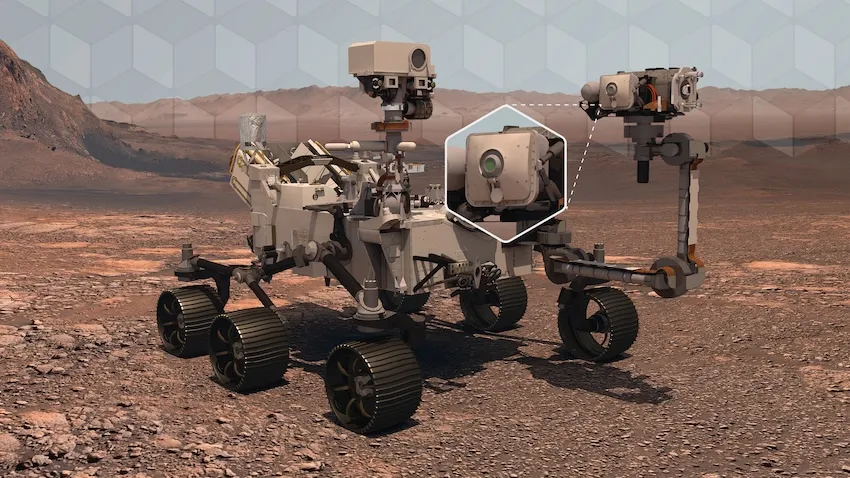

A new algorithm tested on NASA’s Perseverance Rover on Mars may lead to better forecasting of hurricanes, wildfires, and other extreme weather events that impact millions globally.
Georgia Tech Ph.D. student Austin P. Wright is first author of a paper that introduces Nested Fusion. The new algorithm improves scientists’ ability to search for past signs of life on the Martian surface.
In addition to supporting NASA’s Mars 2020 mission, scientists from other fields working with large, overlapping datasets can use Nested Fusion’s methods toward their studies.
Wright presented Nested Fusion at the 2024 International Conference on Knowledge Discovery and Data Mining (KDD 2024) where it was a runner-up for the best paper award. KDD is widely considered the world's most prestigious conference for knowledge discovery and data mining research.
“Nested Fusion is really useful for researchers in many different domains, not just NASA scientists,” said Wright. “The method visualizes complex datasets that can be difficult to get an overall view of during the initial exploratory stages of analysis.”
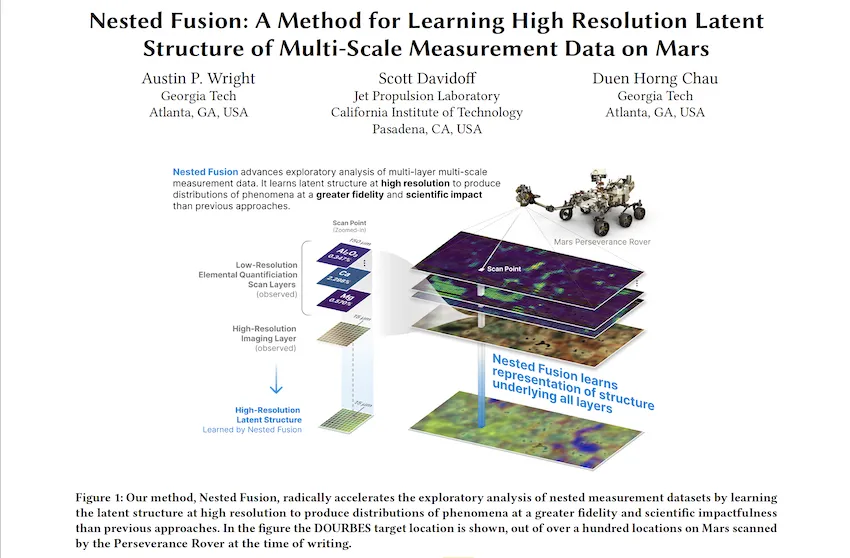
Nested Fusion combines datasets with different resolutions to produce a single, high-resolution visual distribution. Using this method, NASA scientists can more easily analyze multiple datasets from various sources at the same time. This can lead to faster studies of Mars’ surface composition to find clues of previous life.
The algorithm demonstrates how data science impacts traditional scientific fields like chemistry, biology, and geology.
Even further, Wright is developing Nested Fusion applications to model shifting climate patterns, plant and animal life, and other concepts in the earth sciences. The same method can combine overlapping datasets from satellite imagery, biomarkers, and climate data.
“Users have extended Nested Fusion and similar algorithms toward earth science contexts, which we have received very positive feedback,” said Wright, who studies machine learning (ML) at Georgia Tech.
“Cross-correlational analysis takes a long time to do and is not done in the initial stages of research when patterns appear and form new hypotheses. Nested Fusion enables people to discover these patterns much earlier.”
Wright is the data science and ML lead for PIXLISE, the software that NASA JPL scientists use to study data from the Mars Perseverance Rover.
Perseverance uses its Planetary Instrument for X-ray Lithochemistry (PIXL) to collect data on mineral composition of Mars’ surface. PIXL’s two main tools that accomplish this are its X-ray Fluorescence (XRF) Spectrometer and Multi-Context Camera (MCC).
When PIXL scans a target area, it creates two co-aligned datasets from the components. XRF collects a sample's fine-scale elemental composition. MCC produces images of a sample to gather visual and physical details like size and shape.
A single XRF spectrum corresponds to approximately 100 MCC imaging pixels for every scan point. Each tool’s unique resolution makes mapping between overlapping data layers challenging. However, Wright and his collaborators designed Nested Fusion to overcome this hurdle.
In addition to progressing data science, Nested Fusion improves NASA scientists' workflow. Using the method, a single scientist can form an initial estimate of a sample’s mineral composition in a matter of hours. Before Nested Fusion, the same task required days of collaboration between teams of experts on each different instrument.
“I think one of the biggest lessons I have taken from this work is that it is valuable to always ground my ML and data science problems in actual, concrete use cases of our collaborators,” Wright said.
“I learn from collaborators what parts of data analysis are important to them and the challenges they face. By understanding these issues, we can discover new ways of formalizing and framing problems in data science.”
Wright presented Nested Fusion at KDD 2024, held Aug. 25-29 in Barcelona, Spain. KDD is an official special interest group of the Association for Computing Machinery. The conference is one of the world’s leading forums for knowledge discovery and data mining research.
Nested Fusion won runner-up for the best paper in the applied data science track, which comprised of over 150 papers. Hundreds of other papers were presented at the conference’s research track, workshops, and tutorials.
Wright’s mentors, Scott Davidoff and Polo Chau, co-authored the Nested Fusion paper. Davidoff is a principal research scientist at the NASA Jet Propulsion Laboratory. Chau is a professor at the Georgia Tech School of Computational Science and Engineering (CSE).
“I was extremely happy that this work was recognized with the best paper runner-up award,” Wright said. “This kind of applied work can sometimes be hard to find the right academic home, so finding communities that appreciate this work is very encouraging.”
News Contact
Bryant Wine, Communications Officer
bryant.wine@cc.gatech.edu