
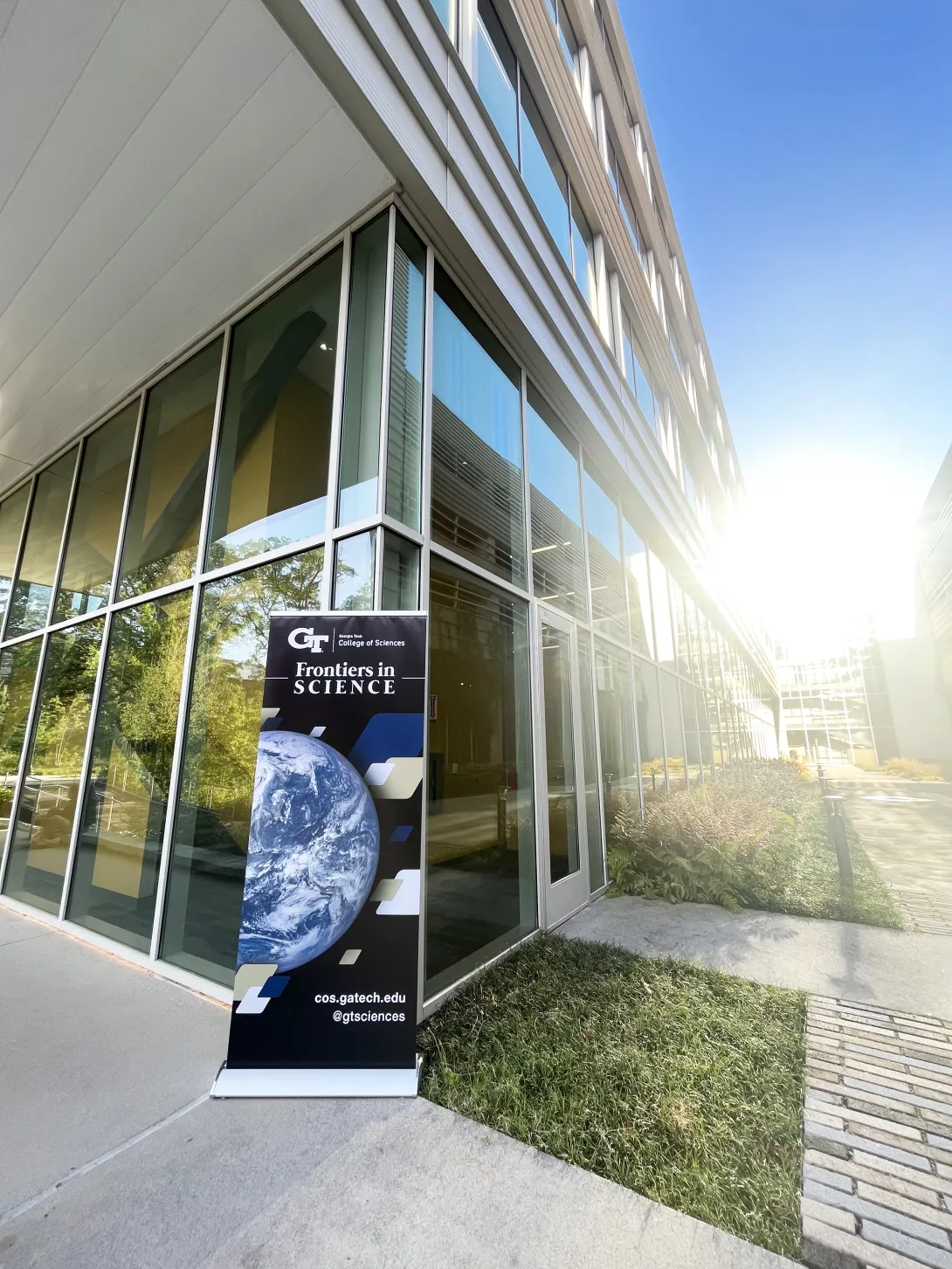
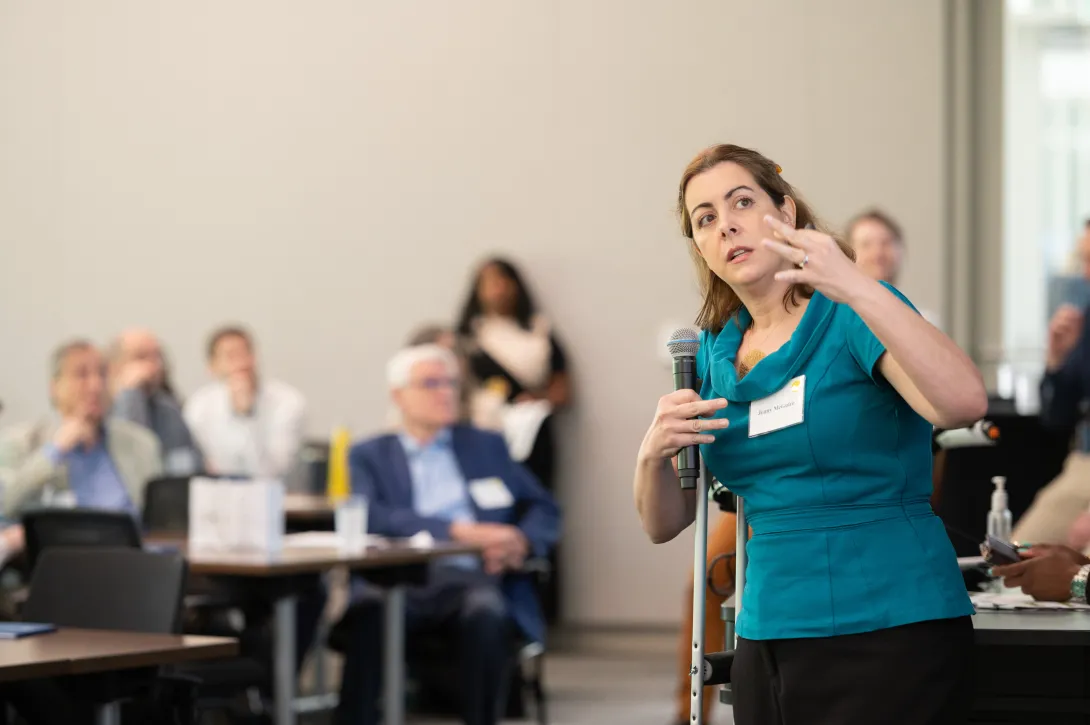
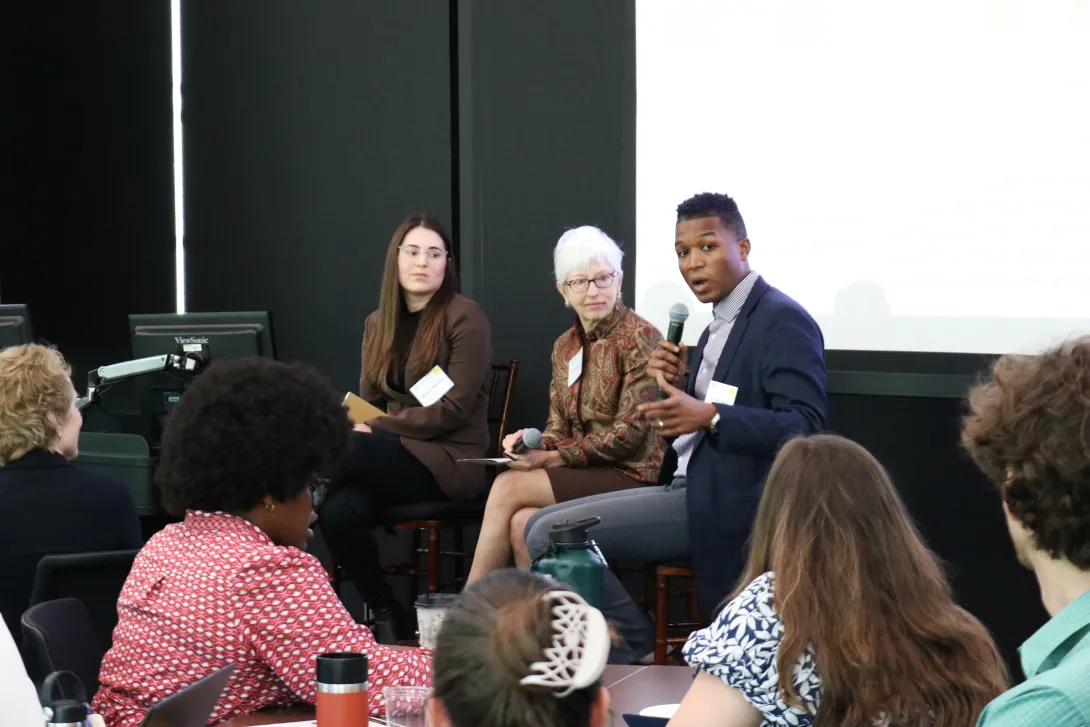
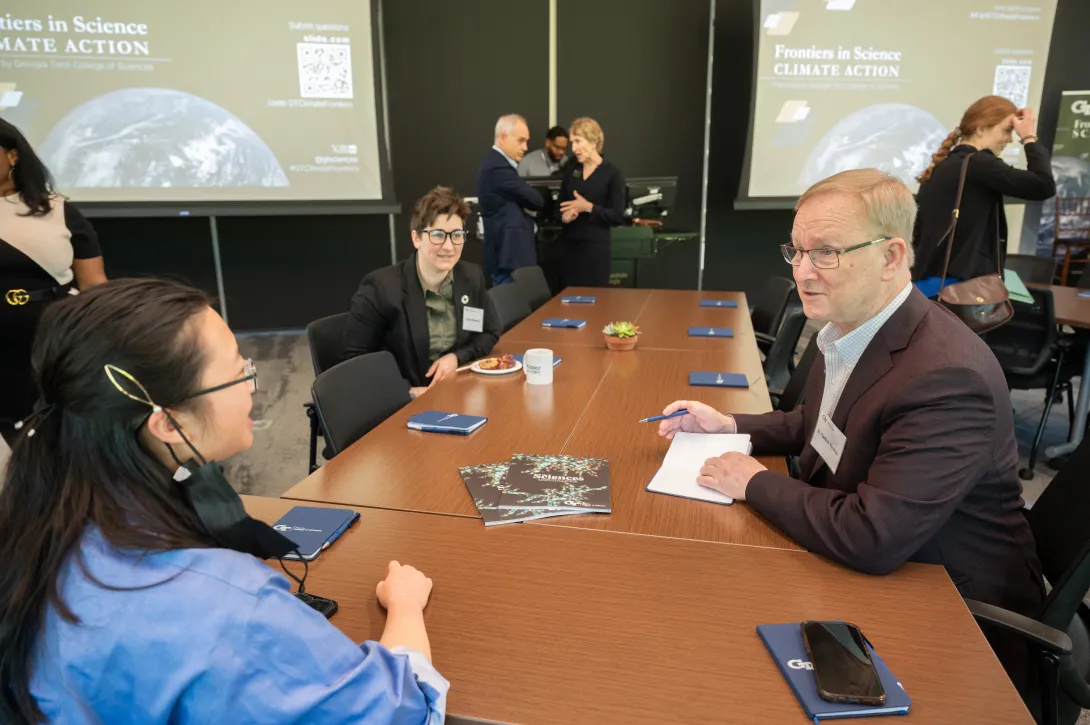
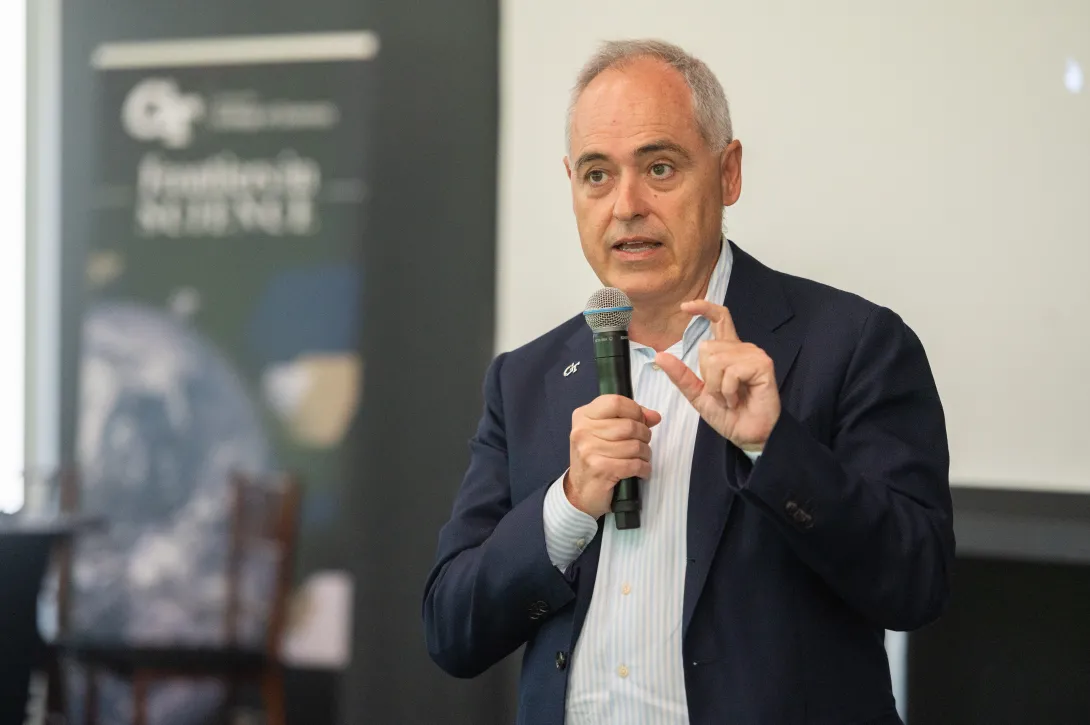
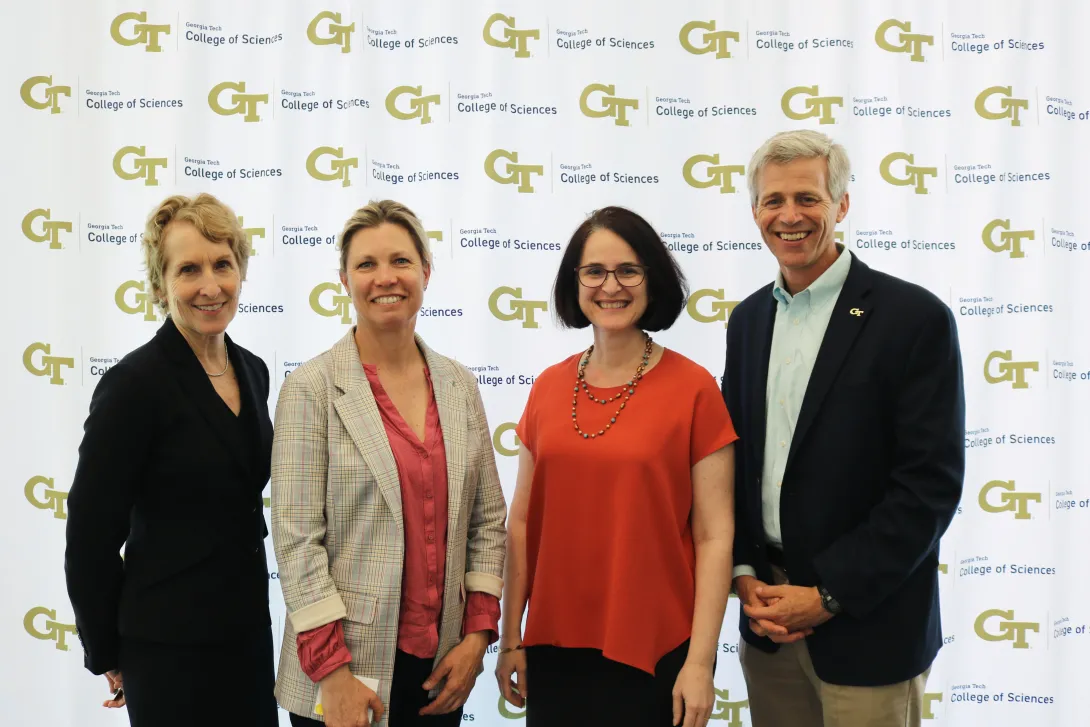
This Earth Month more than 100 campus and community stakeholders gathered near the Georgia Tech EcoCommons for the 2024 Frontiers in Science: Climate Action Conference and Symposium.
On April 18, the College of Sciences hosted more than 20 speakers and panelists from across the Institute and Atlanta community presenting groundbreaking research and discussing innovations and ideas in climate change, challenges, and solutions.
Georgia Tech President Ángel Cabrera (M.S. PSY 1993, Ph.D. PSY 1995) kicked off the morning sessions by highlighting the Institute’s new Climate Action Plan, which outlines the pathway to achieve net-zero emissions by 2050. Cabrera’s remarks focused on Georgia Tech’s role on the frontlines of research and education informing how we respond to climate challenges — and noted that the Institute’s work must extend beyond our laboratories and classrooms.
“It is essential that we not only do the science, but that we also tell that science to the world,” Cabrera says.
Interdisciplinary inquiry
This year, Frontiers in Science featured an array of climate research and initiatives led by the College of Sciences, fellow colleges across Georgia Tech, and the wider Atlanta community.
Following a three-year hiatus of the Frontiers series, the 2024 edition re-envisioned the signature annual event as a research conference and symposium to convene campus experts — and to incubate seed grant proposals to support the work of early career faculty.
Frontiers previously hosted Nobel laureates and invited thought leaders for individual talks across the College’s six schools, and celebrated milestones like the International Year of the Periodic Table of the Chemical Elements.
“This year, we wanted to showcase what we are doing right here in the College of Sciences and throughout the Institute,” says Susan Lozier, dean of the College of Sciences, Betsy Middleton and John Clark Sutherland Chair and professor in the School of Earth and Atmospheric Sciences. “Our faculty are at the forefront of broadening our knowledgebase and uncovering solutions in areas critical to the planet and our well-being. We wanted to uplift that work and see what sort of connections could be made.”
Connections and collaboration were key themes of the day as faculty, staff, students, and alumni participants representing all six Georgia Tech colleges shared research results and ongoing work and discussed collaborative ideas for horizons ahead.
“Scientists alone cannot [create accurate models],” noted Annalisa Bracco, professor in the School of Earth and Atmospheric Sciences and associate chair for Research, who shared her own research alongside Lozier, who presented a version of her 2024 TED Talk on ocean overturning. “Engineers alone cannot do it. We need social scientists, policy makers, communicators.”
The importance of an interdisciplinary approach was reinforced by the Strategic Energy Institute at Georgia Tech (SEI) and Brook Byers Institute for Sustainable Systems (BBISS), which announced an interdisciplinary seed grant funding opportunity for assistant professors with ideas for new climate solutions.
Frontiers in focus
Across three themed sessions, faculty and leadership from the Colleges of Sciences, Engineering, and Design spearheaded talks on the ocean and cryosphere, biodiversity, carbon cycling, coastal wetlands, biofuels production, and beyond.
Panels on climate challenges across community, technological, and policy initiatives were hosted by Georgia Tech Vice President for Interdisciplinary Research and Professor in the School of Biological Sciences and the School of Chemistry and Biochemistry Julia Kubanek.
Following a networking lunch with climate table topics, Georgia Tech Executive Vice President for Research and Professor in the School of Electrical and Computer Engineering Chaouki T. Abdallah (M.S. ECE 1982, Ph.D. ECE 1988) kicked off the afternoon sessions — which also announced the scholarship recipients of a student video competition and featured videos with a pair of alumnae working in meteorology, climate research, and policy.
Afternoon highlights also included discussions on the Georgia Tech Climate Action Plan and Sustainability Next initiative, led by Jennifer Chirico (B.S. MGMT 1997, Ph.D. PUBP 2011), associate vice president of Sustainability for Georgia Tech Infrastructure and Sustainability, and Jennifer Leavey (B.S. CHEM 1995), assistant dean for Faculty Mentoring in the College of Sciences and interim assistant director for Interdisciplinary Education in the Brook Byers Institute for Sustainable Systems.
Although many of the presentations provided a stern outlook of the state of our ecosystems, the conference concluded with a sense of hope. This optimism was grounded in the range of opportunities that exist to address climate challenges — thanks, in part, to the body of knowledge and solutions being tested and explored by Georgia Tech researchers.
At the end of the day, Katie Griffin, a first year undergraduate student in Environmental Science, read Amanda Gorman’s poem Earthrise and provided this reminder:
All of us bring light to exciting solutions never tried before
For it is our hope that implores us, at our uncompromising core,
To keep rising up for an earth more than worth fighting for.
Experience the event in pictures with the College of Sciences’ Flickr account, and discover the highlights through the day’s live tweets on College of Sciences’ X account.
News Contact
By: Lindsay Vidal
Jess Hunt-Ralston
Director of Communications
College of Sciences at Georgia Tech
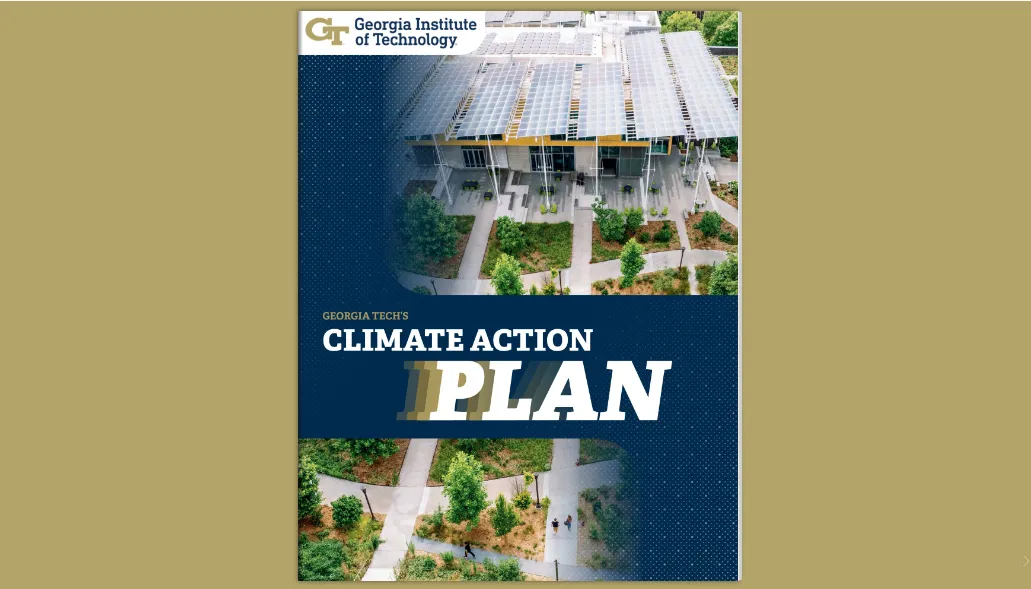
Cover of the Georgia Tech Climate Action Plan.
Georgia Tech unveiled its first Climate Action Plan (CAP), an actionable road map for halving Institute emissions by 2030 and reaching net-zero emissions by 2050. It provides strategies for mitigation, adaptation, climate education, and research, while finding ethical, cost-effective solutions.
The CAP is a deliverable of Sustainability Next, Georgia Tech’s 10-year strategic sustainability plan, and it is aligned with the United Nations Sustainable Development Goals, the Institute’s strategic plan, and the Comprehensive Campus Plan.
“As one of the world’s leading research universities, Georgia Tech has the opportunity, and the obligation, to create and share solutions that can help curb climate change and mitigate its harmful impact on our planet and our lives,” said President Ángel Cabrera. “Our Climate Action Plan is bold and ambitious, aiming for 100% clean ground transportation by 2030 and 100% clean energy by 2050. These goals are not easy, but they reflect the seriousness of the challenges before us.”
The CAP was led by Georgia Tech’s Office of Sustainability, with engagement across the campus community. The CAP Advisory Task Force, comprising experts and Institute leadership, helped guide the effort. Nine working groups in key focus areas developed climate action strategies, and additional stakeholder outreach with students, staff, faculty, and the Atlanta community took place at workshops, events, town halls, and webinars.
The plan’s nine focus areas and guiding principles are:
- Community, Ethics, and Accessibility: We seek to ensure that fair and just climate policies and strategies are in place at Georgia Tech and that they prioritize affordable climate change solutions that support our internal and external community.
- Building Energy: We are committed to reaching net-zero emissions by 2050.
- Renewable Energy and Offsets: We prioritize clean energy technologies to eliminate emissions.
- Mobility: We optimize campus mobility through a variety of transportation modes that are accessible, affordable, and low- to no-emissions, considering environmental and human health impacts when determining and implementing transit and land use actions.
- Materials Management: We support a thriving circular economy that focuses on upstream systems for achieving zero waste, ensures sustainable procurement, and supports our local community.
- Water Management: We adapt our water infrastructure to be resilient to the impacts of climate change.
- Education: We prepare all students, regardless of discipline, to address climate-related challenges in their personal and professional lives.
- Research: We expand support for faculty, staff, and students to advance innovative research and projects to address climate-related issues.
- Carbon Sequestration: We leverage the natural and physical resources of our campus to sequester and store carbon dioxide from the atmosphere.
The plan has 30 strategies for reaching net-zero emissions by 2050 and advancing climate research and education. The most ambitious strategies include:
- Transition to electrification of combustion-based heating systems.
- Increase energy efficiency in building operations.
- Increase on-site renewable energy production, and procure energy generated from renewable and zero-emissions sources.
- Transition the campus vehicle fleet to zero-emissions vehicles and increase sustainable and affordable commuting options.
- Implement blackwater reuse systems and increase water efficiency and conversation.
- Become a Zero Waste campus.
- Prioritize climate education across Georgia Tech’s curriculum.
- Identify and shape future climate research opportunities in which Georgia Tech aspires to lead.
“Georgia Tech is committed to sustainability and the environmental stewardship of our campus community,” said Jennifer Chirico, associate vice president of Sustainability and chair of the CAP Advisory Task Force. “The CAP was developed in partnership with leadership and with our own experts from within Georgia Tech. As we move toward implementation, it will require a whole-community approach, and we will continue to work together to reach our goal of net-zero emissions by 2050.”
To read or download the full plan, visit the Office of Sustainability’s webpage here. If you are interested in participating in an implementation committee, please fill out the form on the CAP website.
News Contact
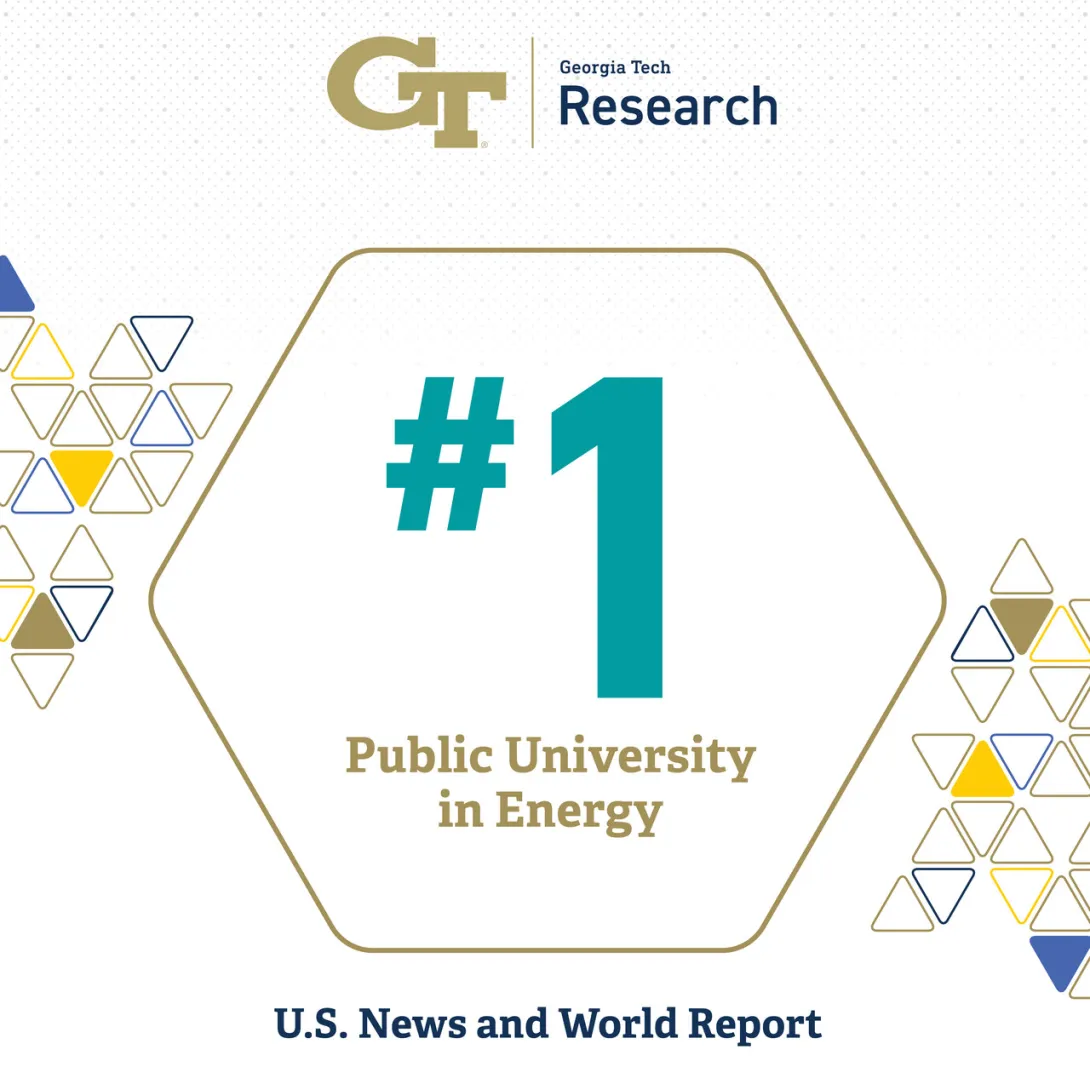
U.S. News & World Report has ranked the Georgia Institute of Technology as the top public university and No. 3 nationally in energy and fuels research. This is the first year the category has been included in the annual rankings, and Georgia Tech’s dominance reflects the dynamic research and expertise of the Institute.
“I’m thrilled to see Georgia Tech recognized for our leading-edge approach to creating sustainable energy solutions,” said Executive Vice President for Research Chaouki Abdallah. “This achievement reflects the unwavering commitment of our faculty and researchers to conducting groundbreaking research, transformative innovation, and our dedication and focus through our Strategic Energy Institute (SEI) to addressing the world's most pressing energy challenges.”
SEI integrates energy research across Georgia Tech and is one of 10 Interdisciplinary Research Institutes. Headed by Executive Director Tim Lieuwen, Regents’ Professor and David S. Lewis Jr. Chair, SEI helps connect and integrate the large Georgia Tech energy community for engagement with industry, government, communities, and nonprofits.
“Georgia Tech has over 1,000 researchers working on the clean energy transition across every school, college, and unit,” said Lieuwen. “I’m pleased to see the scale of our impact recognized by this ranking but also energized by the real-world impact that we are having on cleaner air, lower cost energy, and a healthier planet.”
U.S. News & World Report ranks 47 subject areas by tabulating academic research performance such as publications and citations, and indicators for regional and global reputation. Georgia Tech was evaluated out of 319 universities, and continues its strong standing in the rankings, claiming the No. 33 spot overall in the nation and No. 10 among public schools.
News Contact
Tess Malone, Senior Research Writer/Editor
tess.malone@gatech.edu

Earth (Credit NASA/Joshua Stevens)
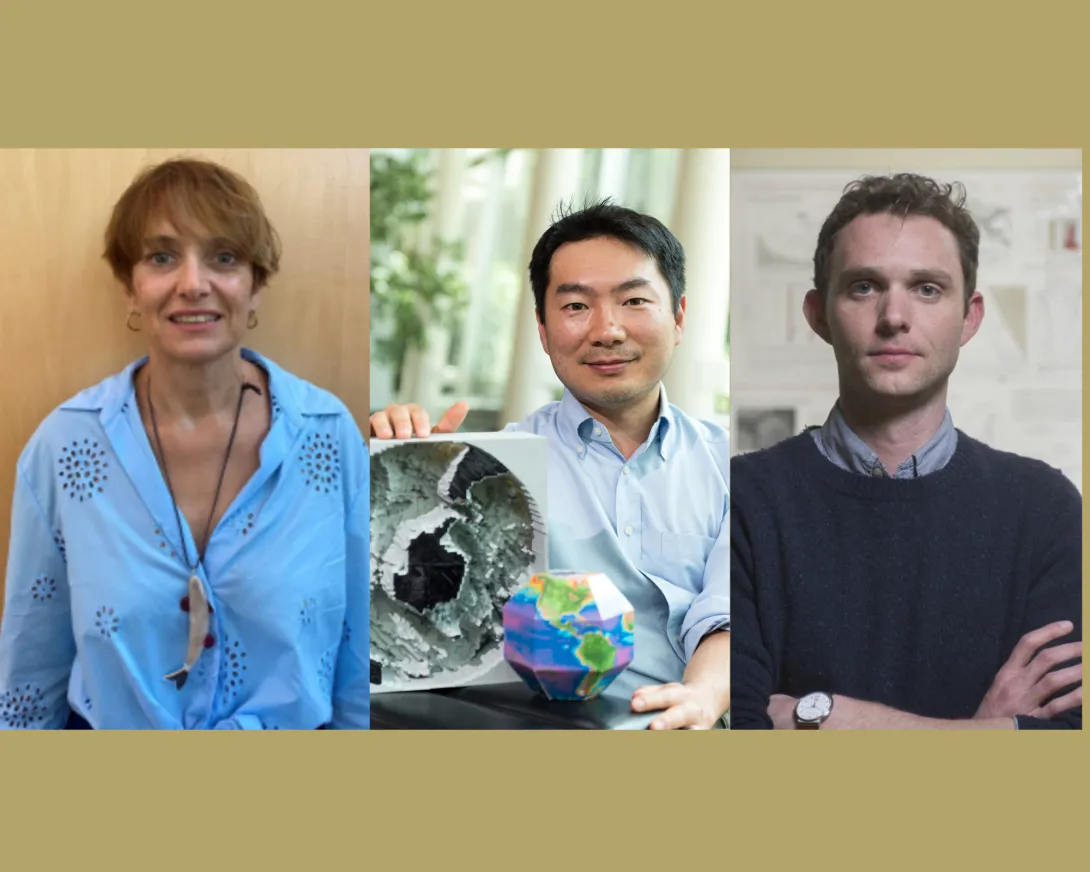
(From left) Annalisa Bracco, Taka Ito, Chris Reinhard
Three Georgia Tech School of Earth and Atmospheric Sciences researchers — Professor and Associate Chair Annalisa Bracco, Professor Taka Ito, and Georgia Power Chair and Associate Professor Chris Reinhard — will join colleagues from Princeton, Texas A&M, and Yale University for an $8 million Department of Energy (DOE) grant that will build an “end-to-end framework” for studying the impact of carbon dioxide removal efforts for land, rivers, and seas.
The proposal is one of 29 DOE Energy Earthshot Initiatives projects recently granted funding, and among several led by and involving Georgia Tech investigators across the Sciences and Engineering.
Overall, DOE is investing $264 million to develop solutions for the scientific challenges underlying the Energy Earthshot goals. The 29 projects also include establishing 11 Energy Earthshot Research Centers led by DOE National Laboratories.
The Energy Earthshots connect the Department of Energy's basic science and energy technology offices to accelerate breakthroughs towards more abundant, affordable, and reliable clean energy solutions — seeking to revolutionize many sectors across the U.S., and relying on fundamental science and innovative technology to be successful.
Carbon Dioxide Removal
The School of Earth and Atmospheric Sciences project, “Carbon Dioxide Removal and High-Performance Computing: Planetary Boundaries of Earth Shots,” is part of the agency’s Science Foundations for the Energy Earthshots program. Its goal is to create a publicly-accessible computer modeling system that will track progress in two key carbon dioxide removal (CDR) processes: enhanced earth weathering, and global ocean alkalinization.
In enhanced earth weathering, carbon dioxide is converted into bicarbonate by spreading minerals like basalt on land, which traps rainwater containing CO2. That gets washed out by rivers into oceans, where it is trapped on the ocean floor. If used at scale, these nature-based climate solutions could remove atmospheric carbon dioxide and alleviate ocean acidification.
The research team notes that there is currently “no end-to-end framework to assess the impacts of enhanced weathering or ocean alkalinity enhancement — which are likely to be pursued at the same time.”
“The proposal is for a three-year effort, but our hope is that the foundation we lay down in that time will represent a major step forward in our ability to track carbon from land to sea,” says Reinhard, the Georgia Power Chair who is a co-investigator on the grant.
“Like many folks interested in better understanding how climate interventions might impact the Earth system across scales, we are in some ways building the plane in midair,” he adds. “We need to develop and validate the individual pieces of the system — soils, rivers, the coastal ocean — but also wire them up and prove from observations on the ground how a fully integrated model works.”
That will involve the use of several existing computer models, along with Georgia Tech’s PACE supercomputers, Professor Ito explains. “We will use these models as a tool to better understand how the added alkalinity, carbon and weathering byproducts from the soils and rivers will eventually affect the cycling of nutrients, alkalinity, carbon and associated ecological processes in the ocean,” Ito adds. “After the model passes the quality check and we have confidence in our output, we can start to ask many questions about assessment of different carbon sequestration approaches or downstream impacts on ecosystem processes.”
Professor Bracco, whose recent research has focused on rising ocean heat levels, says CDR is needed just to keep ocean systems from warming about 2 degrees centigrade (Celsius).
“Ninety percent of the excess heat caused by greenhouse gas emissions is in the oceans,” Bracco shares, “and even if we stop emitting all together tomorrow, that change we imprinted will continue to impact the climate system for many hundreds of years to come. So in terms of ocean heat, CDRs will help in not making the problem worse, but we will not see an immediate cooling effect on ocean temperatures. Stabilizing them, however, would be very important.”
Bracco and co-investigators will study the soil-river-ocean enhanced weathering pipeline “because it’s definitely cheaper and closer to scale-up.” Reverse weathering can also happen on the ocean floor, with new clays chemically formed from ocean and marine sediments, and CO2 is included in that process. “The cost, however, is higher at the moment. Anything that has to be done in the ocean requires ships and oil to begin,” she adds.
Reinhard hopes any tools developed for the DOE project would be used by farmers and other land managers to make informed decisions on how and when to manage their soil, while giving them data on the downstream impacts of those practices.
“One of our key goals will also be to combine our data from our model pipeline with historical observational data from the Mississippi watershed and the Gulf of Mexico,” Reinhard says. “This will give us some powerful new insights into the impacts large-scale agriculture in the U.S. has had over the last half-century, and will hopefully allow us to accurately predict how business-as-usual practices and modified approaches will play out across scales.”
News Contact
Writer: Renay San Miguel
Communications Officer II/Science Writer
College of Sciences
404-894-5209
Editor: Jess Hunt-Ralston
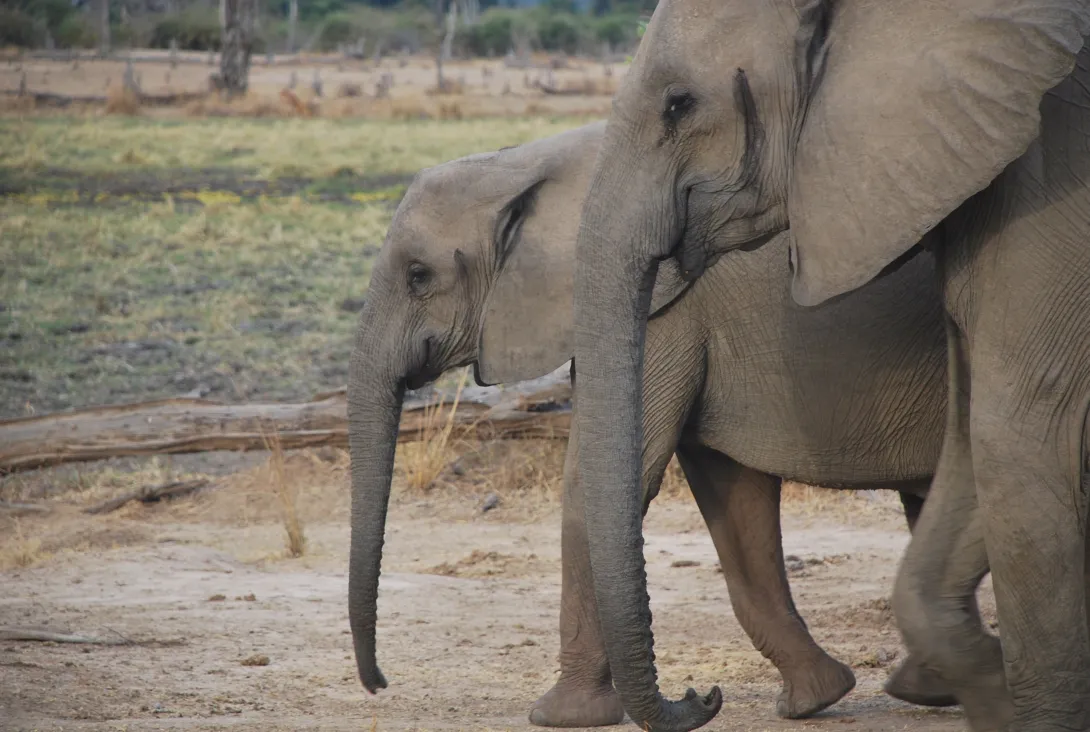
While most species have gone extinct, eastern Africa is home to vibrant natural communities of mammalian megafauna, including elephants, zebras, hippopotamuses, antelope, giraffes, and many others. (Photo: Jess Hunt-Ralston)

Zebra skull at a wildlife education center in eastern Africa. In places or times with less precipitation, mammal communities overall will have more robust, rugged, resistant teeth. (Photo: Jess Hunt-Ralston)
Associate Professor Jenny McGuire

Daniel Lauer, Ph.D. student in Quantitative Biosciences at Georgia Tech.
Large-bodied mammals play crucial roles in ecosystems. They create habitats, serve as prey, help plants thrive, and even influence how wildfires burn. But now, fewer than half of the large mammal species that were alive 50,000 years ago exist today, and those that remain are threatened with extinction from intensifying climate change and human activities.
While mammal extinctions are well-documented, very little research has explored the impact those losses had on the nuanced ways in which mammal communities interact with their environments. Researchers at the Georgia Institute of Technology are using a novel methodology to investigate how mammals’ ability to function in their environments has been threatened in the past, and what challenges they can expect to face in the future.
Jenny McGuire, associate professor in the School of Biological Sciences and leader of the Spatial Ecology and Paleontology Lab, and Daniel Lauer, a graduate student, looked millions of years into the past, observing how and why eastern African herbivores’ relationships with their environments changed across space and time in the face of biodiversity loss. They used a novel approach to build models that show how specific mammal traits — like body mass and tooth shape — evolved with their changing environments over time, revealing the factors that caused the biodiversity losses and how the losses affected the functioning of mammal communities. Their method offers a new strategy for investigating the implications of changing ecologies and prioritizing conservation efforts toward helping mammal communities flourish in the future.
Their research paper was published in the journal Nature Communications.
Combing the Data
The researchers began by diving into a collection of data from 186 sites across eastern Africa. The data contained records of over 200 extinct and 48 modern herbivore species (including the African elephant, giraffe, and hippopotamus), showing where and when each species lived at a given point in time over the past 7.4 million years. The data showed that mammal biodiversity in eastern Africa began to decline around 5 million years ago. It also revealed that aspects of biodiversity decline happened at multiple points, and that extinctions coincided with environmental changes and the emergence of early humans. But McGuire and Lauer wanted to know more.
“We wondered what we would find if we investigated how the mammals’ physical traits changed as their environments changed over time, rather than just looking at patterns in their biodiversity,” Lauer said. “This is important because if a mammal species possesses traits that are well-suited to its environment, it’s better able to contribute to the functioning of that environment. But if that is not the case, environments may not function as well as they could.”
To paint a fuller picture, they needed to examine biodiversity from a different perspective. This required a fresh approach, which led them to adapting a methodology known as ecometrics.
Ecometrics is an approach that looks at the relationships between the environmental conditions where animal communities are found — such as weather and vegetation — and the animal’s functional traits, which are traits that affect its biological performance. The team chose to focus on three traits: body mass, tooth height, and loph count (the number of ridges on molars).
Each of these traits exhibits a relationship based on the degree to which an environment is dominated by grasses versus woody plants. For example, if a species has a taller tooth, it can more durably consume the abrasive grassy vegetation of grasslands. With a shorter tooth, a species is instead suited to consume softer, woody vegetation, like shrubs.
For each of the three traits, they built a model of trait-environment relationships. They used trait data to estimate what the surrounding vegetation was like in each mammal community over time, specifically the percentage of trees and shrubs versus grassland.
“Using our models, we were able to use information about the traits occurring within mammal communities to estimate how the surrounding vegetation looked,” Lauer said. “Because these communities existed at different points in time, this enabled us to observe how consistent the mammals’ relationships with their environments remained through time.”
Analyzing Disruptions
Using their ecometric framework, the researchers uncovered a key difference between the mammal biodiversity declines that occurred before approximately 1.7 million years ago and those that occurred after. While biodiversity began declining around 5 million years ago, trait-environment relationships remained consistent despite that loss.
Their analysis demonstrated that earlier biodiversity losses were a result of species adapting to grassland environments or tracking their preferred environments across geographies. In short, those biodiversity losses didn't necessarily have any sort of negative impact on the ability of mammal communities to function properly in their environments.
But later, around 1.7 million years ago, when climates became more arid and variable and tree cover declined to below 35%, a major shift occurred. Rapid losses in the number and variety of species occurred, along with a significant disruption in trait-environment relationships. The researchers’ findings suggest that, unlike prior biodiversity losses, those occurring over the past 1.7 million years likely threatened the ability for many mammal species to function well in local environmental conditions.
“Our findings fascinated us, because we were able to differentiate between the different biodiversity losses that were happening and their implications,” Lauer said. “This work reinforces the idea that not all biodiversity losses are the same.”
Protecting the Vulnerable
Their findings have important implications for the types of environmental and climatic changes that could affect mammals going forward. In the past, when changes were gradual and wildlife were able to move freely on the landscape, they could readily adapt to these environmental conditions.
Now, fragmentation of wildlife habitats by fences, roadways, and cities has the potential to limit the ability of wildlife to adapt to the rapid environmental changes occurring today. That is exacerbated by both the fast pace and increasing variability of today’s climate, which puts animals at risk of losing their ability to function properly in their local environments.
Moving forward, the team’s analysis can shed light on which mammal communities should be prioritized for future conservation efforts. The study demonstrates that among all the communities that are experiencing biodiversity losses, priority should be given to those most at-risk — the communities for whom future biodiversity losses will profoundly affect their ability to function properly.
“By examining the past, we can get a remarkably clear understanding of how animals have responded to prior environmental changes,” McGuire said. “We plan to work with conservation practitioners to use our findings to develop well-informed strategies for conserving the most at-risk mammal communities.”
***
Co-authors include A. Michelle Lawing (Texas A&M University), Rachel A. Short (South Dakota State University), Fredrick K. Manthi (National Museums of Kenya), Johannes Müller (Leibniz Institute for Evolution and Biodiversity Science), and Jason J. Head (University of Cambridge).
Citation: Lauer, D.A., Lawing, A.M., Short, R.A. et al. Disruption of trait-environment relationships in African megafauna occurred in the middle Pleistocene. Nat Commun 14, 4016 (2023).
DOI: https://doi.org/10.1038/s41467-023-39480-8
Funding: This work was completed as part of a collaborative initiative from NSFDEB-NERC, with funding from NSF 2124836 to A.M.L., F.K.M., and J.M.; NSF 2124770 to J.L.M.; and NERC NE/W007576/1 to J.J.H. R.A.S. was supported by the NSF Postdoctoral Research Fellowships in Biology Program under grant DBI 2010680 and the USDA NIFA Hatch project SD00H787-23 (7004129 and 7004187). J.L.M. was also funded through NSF-CAREER and NSF 1945013.
News Contact
Catherine Barzler, Senior Research Writer/Editor
Institute Communications

The sparkling shoreline along Deception Pass State Park in Oak Harbor, Washington (Photo: Jess Hunt-Ralston)
This story was first published in the Georgia Tech Research Newsroom. Read the full feature here.
The entire ocean is connected. Species like coral can be similar in entirely different parts of the ocean because those waters share characteristics like salinity, temperature, and nutrients. But how did this shared DNA travel in the first place? Currents connect ecosystems, and understanding their flow could help to rebuild other ecosystems. That’s the focus of the research from School of Earth and Atmospheric Sciences Professor Annalisa Bracco.
“Corals spread through larvae, which are transported by ocean currents. This is something that naturally happens and is, in the case of corals, definitely quite beneficial,” Bracco said. “If the coral gets bleached and dies, other coral DNA can come in the form of larvae and recolonize the territory.”
Bracco’s research is about more than just following these currents. She also determines how they could be used to rejuvenate weakened or destroyed ecosystems. Marine protected areas in the Gulf of Mexico could be expanded to deliver more flora and fauna larvae to repopulate stressed or damaged areas.
“We need to preserve ecosystems that are diverse, but also well connected, so they can transfer that diversity if something happens in another place,” Bracco said. Read more.
Modeling the Future of Glaciers and Ice Sheets
Retreating glaciers and the animals who live on them have become highly visible symbols of climate change. They are also a key to predicting its future. Alex Robel, an assistant professor in the School of Earth and Atmospheric Sciences, uses computational modeling to better understand how ice reacts to climate change and how, in turn, that causes global sea level to rise. His research group creates equations to explain how ice not only responds to climate change, but also how it flows, fractures, and melts.
“Unlike other fields, we don't have the standard set of equations that describe how ice sheets and glaciers work,” Robel said. “We use high-performance computing to simulate real glaciers on Antarctica and Greenland and try to understand how they have changed in the past and predict how they will change in the future.”
Not all ice is created the same. While sea ice freezes over a few feet of the top of the ocean in wintertime, glaciers are formed by the accumulation and compression of snow on land over long periods of time to depths of hundreds, even thousands, of feet. When enough accumulates, ice can start to flow like honey under its own weight and then is considered an ice sheet.
Developing these equations must account for how glaciers and ice sheets are exposed to the volatile climate system — and measuring conditions at the bottom of a glacier is no easy task. The field comes with a lot of inherent uncertainty that Robel’s group must plan for. Read more.
News Contact
Writer and Media Contact:
Tess Malone | tess.malone@gatech.edu
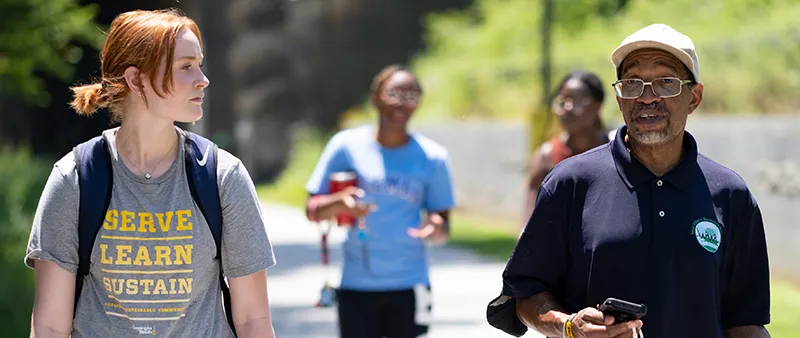
A student wearing a "Serve-Learn-Sustain" tee shirt walks along a campus walkway with a Georgia Tech faculty member. Photo Credit Ben Gray, AJC.
The Vice President for Interdisciplinary Research (VPIR) and the Office of Undergraduate Education (OUE) are excited to announce an institutionalization plan for Serve-Learn-Sustain (SLS) that will advance two of Georgia Tech’s Institute Strategic Plan (ISP) initiatives - Sustainability Next and Transformative Teaching and Learning (TTL) - and strengthen our service learning, community engagement, and sustainability ecosystems at Georgia Tech. Established as Georgia Tech’s last Quality Enhancement Plan (QEP), SLS launched in 2016 as a unit in OUE and concluded its official QEP work in 2021. Its work on the QEP earned Georgia Tech a commendation from the Southern Association of Colleges and Schools Commission on Colleges and established a strong foundation to build on moving forward.
Effective July 1, 2023, the current SLS team will establish a new center, the Center for Sustainable Communities Research and Education (CSCRE), under the VPIR. The Brook Byers Institute for Sustainable Systems (BBISS), which is serving as a hub for coordinating Georgia Tech’s Sustainability Next Strategic Plan initiative, will serve as the administrative home for the new center.
CSCRE will collaborate with the sustainability cluster of the Interdisciplinary Research Institutes (IRIs), including BBISS, the Strategic Energy Institute (SEI), and the Renewable Bioproducts Institute (RBI), as well as Infrastructure and Sustainability, another key Sustainability Next hub, to enhance Georgia Tech’s competitiveness in applying for grants that require meaningful community partnerships as a key component of their research and education plans. It will also continue to support sustainable communities education, in close collaboration with the Center for Teaching and Learning (CTL), OUE, and Education and Learning, to assure the continuity of SLS’s signature programs.
Established as Georgia Tech’s last QEP, Serve-Learn-Sustain launched in 2016 as a unit in OUE and concluded its official QEP work in 2021. Georgia Tech earned a commendation from the Southern Association of Colleges and Schools Commission on Colleges in 2021 for the “exceptional execution” of the 2016 QEP, citing, among other things, that the program “inspired a closer dialogue among faculty regarding research and instructional practices, and thus serves as a model of how a QEP can transform an academic culture.”
To continue advancing and scaling undergraduate service learning and community engagement as a high-impact practice, OUE will establish a new service learning team, as a priority that supports the Transformative Teaching and Learning ISP initiative. Institutionalizing the service-learning functions of SLS within OUE and aligning it with other high impact practices - such as undergraduate research, student innovation programs, first-year seminars, co-op and internships, and learning communities - will position these programs to work collectively in support of the development of Georgia Tech’s next QEP, which will begin in 2025.
Thank you to the SLS staff and to everyone who has collaborated with and supported the work that SLS has spearheaded to make Georgia Tech a better place for our students, our faculty and staff, and our surrounding communities. We look forward to continuing to advance this work, together.
News Contact
Brent Verrill, Research Communications Program Manager, BBISS
Earth (Credit NASA/Joshua Stevens)
Georgia Tech’s newest interdisciplinary degree program, the Environmental Science B.S. degree (ENVS), developed jointly by faculty of the School of Earth and Atmospheric Sciences and the School of Biological Sciences, has launched and is now enrolling students.
The ENVS degree will provide a strong foundation in the basic sciences, requiring core content in mathematics, physics, chemistry, biology, earth sciences, and environmental policy. Flexible electives in upper-level coursework will allow students to customize their program of study to their interest and career goals.
A launch event for the degree program will take place at the Kendeda Building on the afternoon of Friday, August 25, 2023.
“The new degree will prepare students to be future leaders who are well-versed on how the Earth's systems can be influenced by human activity and contribute to human well-being,” says Greg Huey, professor and chair of the School of Earth and Atmospheric Sciences. “Graduates will be positioned to be leaders in industry, academia, education, and communication to create innovative solutions to the most significant environmental challenges of our time.”
Two faculty members in the School of Earth and Atmospheric Sciences (EAS) and a faculty member in the School of Biological Sciences will serve as inaugural leadership: Jennifer Glass, associate professor, is program director; Samantha Wilson, academic professional, is director of Undergraduate Studies; and Linda Green, senior academic professional in the School of Biological Sciences, is director of Experiential Learning.
The foundational science classes in this new degree will be complemented by courses in Public Policy and City Planning, including Geographical Information Systems (GIS) and Environmental Policy and Politics, before opening up and providing students with flexibility in course options to better fit their career paths and interests.
“Past EAS students have been interested in careers related to environmental consulting, environmental law, and continuing their studies in graduate school,” Wilson says. “The variety of environmental career paths was the driver behind allowing students to diversify their options within the degree.”
“This degree will give Georgia Tech students a unique opportunity to customize their environmental science program of study to their interests and career goals in science, policy, public service, non-profit, government, industry, academia, or beyond,” adds Glass. “We are committed to building an academic community in ENVS that values student leadership, ethics, justice, accessibility, and belonging.”
Hands-on learning opportunities will include field station experiences and field trip excursions, study abroad programs, and internships, Green says. “This major sustains the Institute’s strategic plan to lead by example, champion innovation, and connect globally — particularly in an area so critical as addressing Earth’s environmental issues.”
Glass added that the Schools of Chemistry, Biological Sciences, and Earth and Atmospheric Sciences are currently revamping several classes to meet United Nations Sustainable Development Goals (SDGs). Students will advance to be global leaders of environmental solutions that draw upon the U.N. Sustainable Development Goals and incorporate awareness of cultural relevance.
“We can’t wait for August to celebrate the ENVS launch with our incoming and current students,” Glass says.
More information on the Environment Science (ENVS) degree:
General information: jennifer.glass@eas.gatech.edu
Curriculum and enrollment: samantha.wilson@eas.gatech.edu
Co-curricular initiatives: linda.green@gatech.edu
Learn more: Three new EAS undergraduate degrees
Beginning Summer 2023, prospective and current Georgia Tech students will have three new Bachelor of Science degrees to choose from in the School of Earth and Atmospheric Sciences. The expanded undergraduate offerings target a wider range of job and research opportunities — from academia to analytics, NASA to NOAA, meteorology to marine science, climate and earth science, to policy, law, consulting, sustainability, and beyond.
The Board of Regents of the University System of Georgia has approved two new specific degrees within the School: Atmospheric and Ocean Sciences (AOS) and Solid Earth and Planetary Sciences (SEP). Regents also approved Environmental Science (ENVS) as an interdisciplinary College of Sciences degree between the School of Earth and Atmospheric Sciences and the School of Biological Sciences. The existing Earth and Atmospheric Sciences B.S. degree will sunset in two years for new students. Learn more.
News Contact
Writer: Renay San Miguel
Communications Officer II/Science Writer
College of Sciences
404-894-5209
Editor: Jess Hunt-Ralston
One of the primary drivers of climate change is excess greenhouse gases like carbon dioxide in the atmosphere. Mitigating climate change in the coming century will require both decarbonization — electrifying the power grid or reducing fossil fuel-guzzling transportation — and removing already existing carbon dioxide from the atmosphere, a process called carbon dioxide removal.
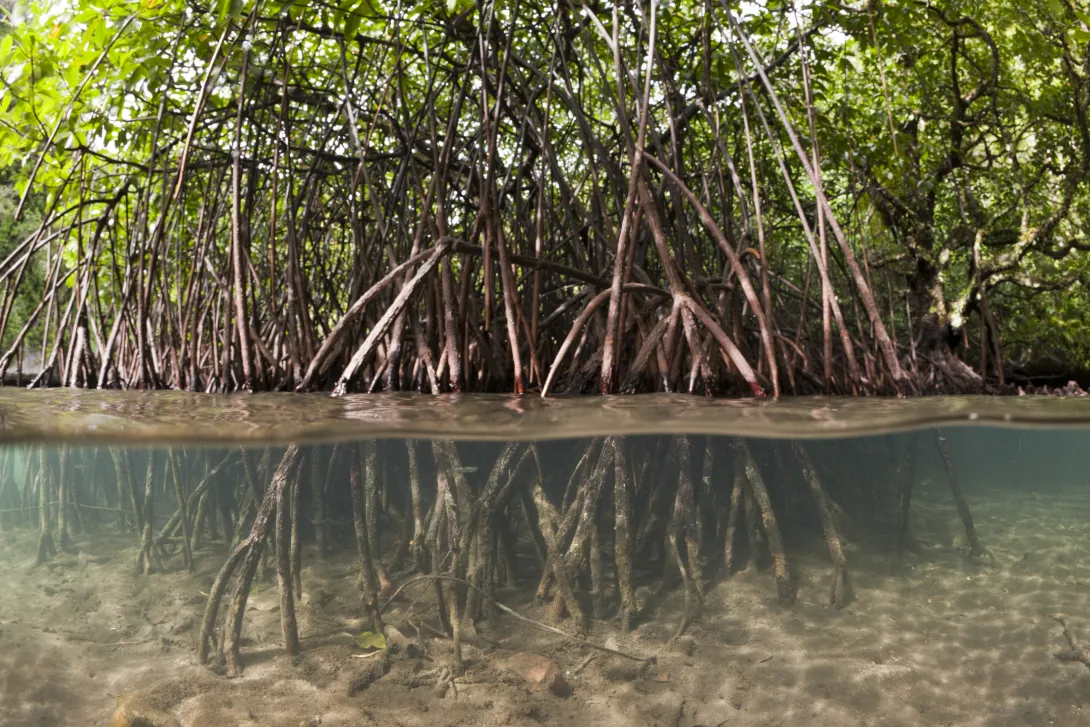
Researchers at the Georgia Institute of Technology and Yale University are proposing a novel pathway through which coastal ecosystem restoration can permanently capture carbon dioxide from the atmosphere. Seagrass and mangroves — known as blue carbon ecosystems — naturally capture carbon through photosynthesis, which converts carbon dioxide into living tissue.
“Mangroves and seagrasses extract carbon dioxide from the atmosphere all day long and turn it into biomass,” said Chris Reinhard, an associate professor in the School of Earth and Atmospheric Sciences (EAS). “Some of this biomass can get buried in sediments, and if it stays there, then you’ve basically just removed carbon dioxide from the atmosphere.”
Restoring these ecosystems could potentially benefit local flora and fauna and help to energize coastal economies. But Reinhard and colleagues now suggest that restoring them could also remove additional carbon through a novel pathway while combating increasing acidity in the ocean.
In May, they presented their research in “Ocean Alkalinity Enhancement Through Restoration of Blue Carbon Ecosystems” in Nature Sustainability.
Carbon 101
There are two major types of carbon that cycle through the Earth system: organic carbon and inorganic carbon. Organic carbon is contained in living matter, such as algae, plants, animals, and even humans. This form of carbon can remove carbon dioxide from the atmosphere temporarily, but if it becomes buried in sediments at the seafloor, it can lead to permanent carbon dioxide removal. Inorganic carbon can also be found in many forms, including rocks and minerals, but is present as a significant dissolved component of ocean water. Roughly 30% of the carbon emitted by human activities since the industrial revolution is now stored as dissolved inorganic carbon in the ocean. Although carbon dioxide stored as organic carbon can be disrupted, effectively redistributing carbon dioxide back into the atmosphere, carbon dioxide removal by inorganic carbon is potentially much more durable.
“Even if you change the way a coastal ecosystem restoration project is operating, potentially remobilizing previously stored organic carbon, inorganic carbon capture is largely a one-way street,” said Mojtaba Fakhraee, lead author of the study and former postdoctoral researcher in EAS. “So even if a massive ecosystem disruption in the future undoes organic carbon storage, the inorganic carbon that has been captured will still be in the ocean permanently.”
Capturing Carbon, Counteracting Acidity
Coastal ecosystems naturally remove carbon from the atmosphere and provide a range of environmental and economic benefits to coastal communities, but many human interventions have caused extensive degradation or destruction of natural coastal environments. Planting more mangroves and seagrasses, maintaining them, and protecting the overall ecosystem can restore their functioning and lead to additional carbon removal from the atmosphere. Reinvigorating coastal ecosystems as a technique for mitigating carbon emissions is not a new idea, but past research has focused on carbon removal through organic carbon burial and has not explored the potential for carbon removal through the formation of inorganic carbon.
Another major result of human fossil fuel use beyond climate change is ocean acidification from carbon dioxide in the atmosphere dissolving in the water and driving down the pH of the ocean, which can have severe, negative impacts on many organisms like corals. Storing carbon dioxide as inorganic carbon in the ocean could help mitigate this, because the chemical processes that lead to carbon capture as inorganic carbon involves alkalinizing ocean waters.
“The basic idea here is that you are shifting the acid-base balance of the ocean to drive conversion of carbon dioxide in the atmosphere to inorganic carbon in the ocean,” Reinhard said. “This means that the process can help to partially offset the negative ecological consequences of ocean acidification.”
Modeling Carbon Capture
To explore how effective restoring coastal ecosystems could be for inorganic carbon capture, the researchers built a numerical model to represent the chemistry and physics of sedimentary systems — the complex mixture of solid particles, living organisms, and seawater that accumulates at the seafloor. A key advance of the model is that it specifically tracks the potential benefits of restored mangrove or seagrass ecosystems and their impacts on organic and inorganic carbon cycling. It also calculates the effects of other greenhouse gases, such as methane, that can sometimes be created in the process of restoring mangrove and seagrass ecosystems.
“This model comes up with representations for the rates of carbon transformation in the sediment based on how much mangrove is growing above the sediment,” said Noah Planavsky, senior author on the study and professor of Earth and planetary sciences at Yale. “We found that across an extremely large range of scenarios, restoration of blue carbon ecosystems leads to durable carbon dioxide removal as dissolved inorganic carbon.”
The team hopes this research could provide an impetus to protect current coastal ecosystems and economically incentivize restoration of degraded ecosystems, potentially as a new form of carbon offset.
“Companies that are trying to offset their own emissions could potentially purchase carbon removal through funding restoration of coastal ecosystems,” Reinhard said. “This could help rebuild these ecosystems and all of the environmental benefits they provide, while leading to durable carbon dioxide removal from the atmosphere.”
CITATION: Fakhraee, M., Planavsky, N.J. & Reinhard, C.T. Ocean alkalinity enhancement through restoration of blue carbon ecosystems. Nat Sustain (2023). https://doi.org/10.1038/s41893-023-01128-2
News Contact
Tess Malone, Senior Research Writer/Editor

Georgia emissions fell 5% from 2017 to 2021, according to the Drawdown Georgia research team led by Regents' Professor Marilyn Brown.
Overall greenhouse gas emissions in Georgia fell by 5% between 2017 and 2021, mostly due to the increased use of natural gas and solar for electricity generation, according to the research team behind the Drawdown Georgia climate initiative. Emissions from agriculture and the average individual carbon footprint also shrank.
The decline in emissions comes against a 10% expansion in the state’s economy, showing the potential for reducing emissions while pursuing economic growth, according to the team.
However, the team’s data also show a stark increase in transportation-related emissions, which now exceed pre-pandemic levels and has become the state’s largest source of climate pollution, according to Marilyn Brown, Regents’ Professor and Brook Byers Professor of Sustainable Systems in the School of Public Policy and the principal investigator on the Drawdown Georgia research team.
“While not all of the numbers are trending in the right direction, these data clearly show significant improvements in many sectors of our economy and also highlight where we have the greatest opportunities, namely transportation,” Brown said.
Track Greenhouse Gas Emissions in Your County
The report shows that while emissions from the electricity sector declined more than 15% between 2017 and 2021, transportation sources including cars and trucks put out 4% more climate-warming emissions in 2021 than five years earlier. Emissions from diesel vehicles spiked 16.1%, likely due to increased demand for delivery services driven by online shopping.
Emissions from Georgia’s agricultural and food sector fell by 7.1% during the study period while the average individual carbon footprint of Georgians declined from 22,092 pounds to 20,253 pounds.
“Based on the collaborations we’re a part of, we’re confident this is only the beginning of Georgia’s carbon reduction trend,” John Lanier, executive director of the Ray C. Anderson Foundation, said in a news release on the findings.
The foundation is a primary funder of Drawdown Georgia.
Brown leads the research team, which spans several Georgia colleges and universities. She is an internationally known climate policy researcher who has dedicated most of her career to helping solve the climate crisis.
The analysis is based on data from the first-of-its-kind Drawdown Georgia Emissions Tracker, which aggregates information from federal Energy Department, Transportation Department, and Environmental Protection Agency reports. The tracker was produced by a team of scientists led by William Drummond in the School of City and Regional Planning.
For a more detailed analysis of the findings, visit the Drawdown Georgia blog.
News Contact
Michael Pearson
Ivan Allen College of Liberal Arts