
Young people in Atlanta and Boston will be able to lead efforts to improve their communities through new civic technologies supported by Georgia Tech, Northeastern University, and Massachusetts Institute of Technology researchers.
With the help of a $1.25 million grant from the National Science Foundation, the three institutions seek to increase youth input into policymaking and encourage youth-led community organizing.
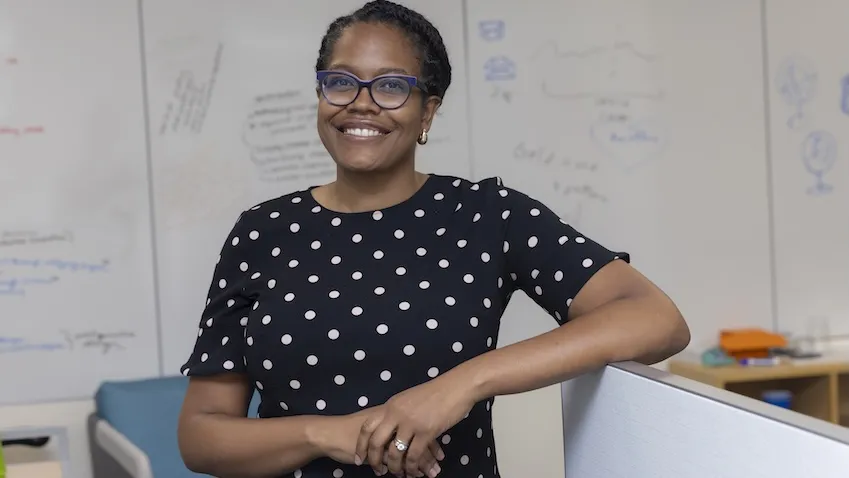
Youth-designed civic technologies are an effective way to engage youth with their communities, said Andrea Parker, an associate professor in Georgia Tech’s School of Interactive Computing.
Examples of civic technologies are public data initiatives, citizen science projects, public issue reporting platforms, and digital voting platforms. Parker said the perspectives of young people are often neglected in the design of such technologies.
“We don’t know much about what community issues are important to youth because we haven’t asked them,” she said. “What is their vision for community well-being, and what do they want to address through civic technology?”
Parker is the lead principal investigator (PI) on the project that will engage youth from low socio-economic communities in Atlanta and Boston. She said the youth will decide what technologies will be created, but they could include a mobile app or a publicly accessible platform.
“We’re interested in studying how technologies can help youth become more civically engaged in their communities and build social connection, trust, and belonging amongst neighbors,” she said.
“Youth in lower-income neighborhoods face increased threats to their mental health. Socially cohesive communities can counteract those barriers and are essential for youth well-being.”
Parker added that impoverished communities often have less social cohesion compare to wealthier areas. Higher-income neighborhoods often have more access to resources that support social cohesion and civic engagement.
Backed by Data
Brooke Foucault Welles, co-PI, professor, and interim dean at Northeastern’s College of Media, Arts and Design, said she’s interested in seeing which issues the youths from both Atlanta and Boston will address through their design process. Studying and working with youth across these geographic settings will help the team identify how civic technology can best support youth in varied neighborhood contexts.
The project will also advance data literacy among young people as they collect and study data to support the new technologies. Welles said data-centered advocacy increases young people’s chances of being heard by elder community members.
“Empowering young people to use data when they’re making their arguments about what matters to them and to their communities is the point of this project,” she said. “It makes their arguments more compelling if they can present data to the adult members of their communities about what’s going on.”
The project’s reach could expand beyond Atlanta and Boston.
Once the technologies are designed, the researchers will package them and make them publicly available as a toolkit.
If successful, the project could drive a movement toward more collective organizing to ensure the youth perspective gets factored into community decision-making.
“They’re a vital part of our communities, and they’re the ones for whom our decisions have the biggest impact,” Welles said. “These are the times when they’re forming their own civic identities, so engaging them in civic life has long ripple effects. We create more active and thoughtful citizens when we engage young people with civic life.”
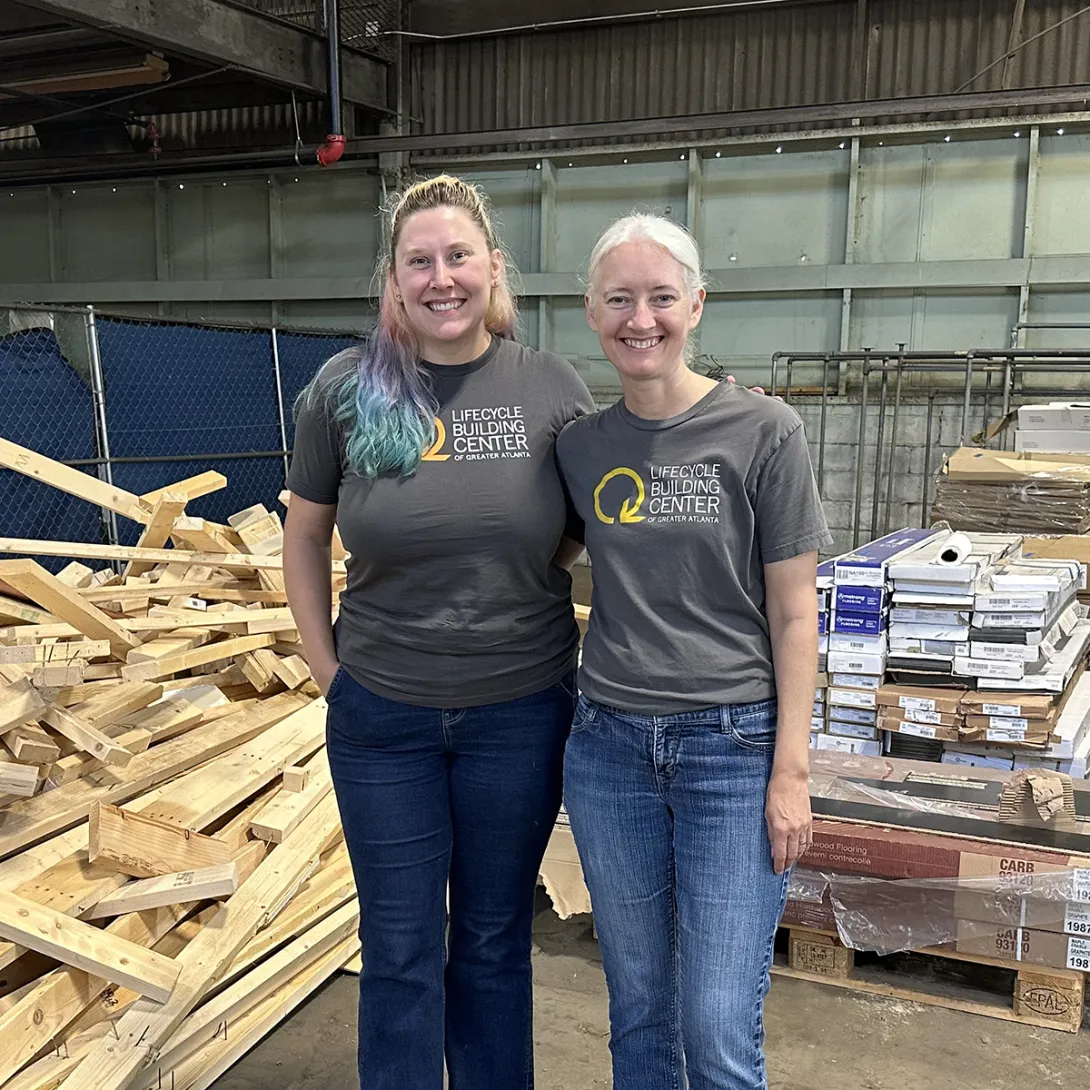
Georgia Tech intern Morgan Hale and Lifecyle Building Center Executive Director Shannon Goodman
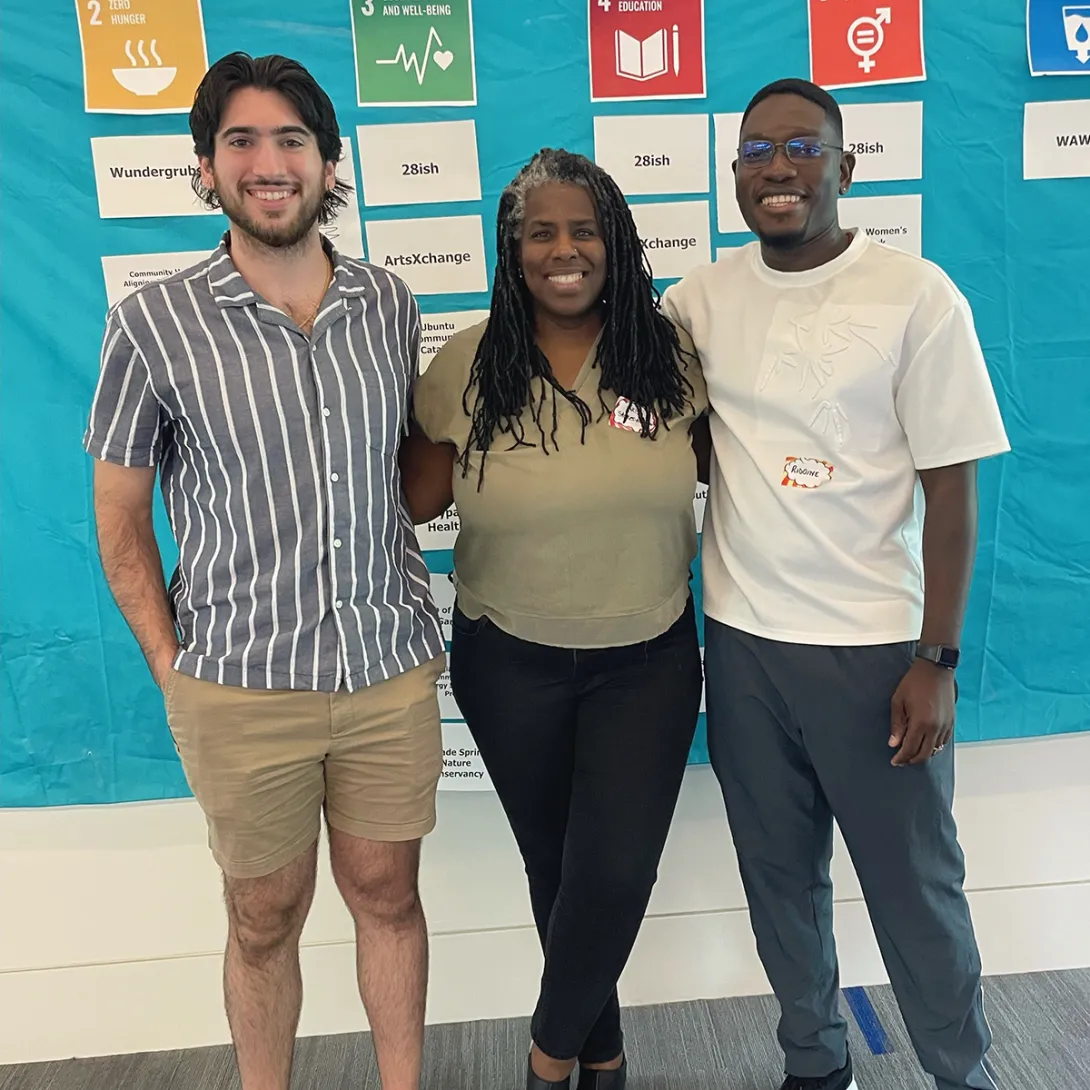
Left to right: Nathanael Sancinito, Akissi Stokes-Nelson, and Ridoine Idrissou at the SCoRE internship closing session.
Every summer for the last eight years, Georgia Tech students, from engineering and computer science to sustainable energy and environmental management, have lent their talents and creative energy to metro Atlanta sustainability-oriented organizations to increase their capacity in the community.
The Sustainable Communities Summer Internship Program in the Center for Sustainable Communities Research and Education (SCoRE) taps students from across the Institute, who gain real-world experience in both sustainability and community engagement, while participating partners scale their operations and deepen their relationship with Georgia Tech.
“It is a nontraditional internship, but it is so effective,” says Kristina Chatfield, director of business administration for the Brook Byers Institute for Sustainable Systems (BBISS), who manages the operational components of the program.
Impact on Atlanta’s Sustainability Community
Now in its eighth summer, the program has placed more than 200 students with over 60 Atlanta community organizations. Many return year after year, like WunderGrubs, an Atlanta-based insect farm that wants to bring a sustainable, nutritious form of protein to communities.
“I can’t overstate the value that Georgia Tech students bring to our company every summer through the SCoRE internship program,” says CEO and co-founder Akissi Stokes-Nelson, explaining that WunderGrubs’ mission is rooted in food equity and social impact. “We’re constantly innovating to support smallholder farmers, develop educational programs, and expand our reach both locally and globally. The SCoRE interns have been instrumental in helping us realize this vision.”
Stokes-Nelson says they add immediate capacity to WunderGrubs’ small team, bringing fresh perspectives and technical expertise — whether it’s developing new curricula for STEAM summer camps, introducing technology like Internet of Things (IoT) sensors and Arduino controllers, or helping the company build and scale its modular “grub shed” farming systems. She credits them with enabling her to reframe her business, pilot new programs, and even expand internationally, citing a recent partnership in Rwanda.
“What sets the Georgia Tech interns apart is their maturity, technical skill, and genuine passion for social impact. They’re not just here to learn — they’re here to contribute, innovate, and help us grow,” she says.
“The program is unique in its focus on both student development and organizational impact, particularly for underrepresented and first-generation students,” says Ruthie Yow, associate director of SCoRE, who leads partner engagement and student learning.
Georgia Tech covers all costs, including stipends for the full 12 weeks. Students take part in a seminar one evening a week to learn about grassroots sustainability innovation. They can also earn an internship course credit.
Connecting With Students in STEM
Intern Ridoine Idrissou, a computer science undergraduate at Tech, supported WunderGrubs’ “Tech Avengers” STEM summer camp. “We taught kids about cybersecurity, IoT, how to be safe online, and they learned about mealworms. They got rid of almost one ton of trash,” recalls Idrissou, who also developed IoT kits for the company’s farm sheds. “It’s not all about coding,” adds the Togo, West Africa, native. “It’s about connecting to the environment. It’s given me a whole different type of experience than I normally have as a computer science major.”
Idrissou, who has spent his last three summers interning, credits the program with giving him a chance when nobody else would. “My internship experience makes me appreciate the field I’m in, and it gives me a good idea of how to be mindful, when building software or other products, of the well-being of other people.” He plans to pursue a career in cybersecurity and system administration after he graduates next spring.
This positive internship experience isn’t the only one. Another organization benefiting from Georgia Tech’s talented students is the Lifecycle Building Center (LBC) in Atlanta.
Shannon Goodman, a Georgia Tech architecture program alumna, serves as executive director of the LBC. She considers her interns foundational to her nonprofit, which reduces waste in the built environment by salvaging materials like lumber, cabinets, flooring, and appliances, and making them available to the community, nonprofits, and for reuse in new projects. The organization runs a 70,000 square-foot warehouse and provides free materials and services to nonprofits across Atlanta.
“Our interns have been the connective tissue that helps all the different resource-constrained CEOs and community-based organizations build strong, trusted relationships with each other and lay the groundwork for our training program,” Goodman says.
Assessing the Lifecycle of Salvaged Building Materials
Morgan Hale interned at LBC while completing her graduate degree in sustainable energy and environmental management. “This internship program bridges sustainability with all the academic pathways at Georgia Tech. It does a great job of engaging students and educating them on ways to take what they're learning from school and map that into a career in sustainability,” says Hale, whose capstone project focused on the lifecycle assessment of salvaged building materials. “This internship perfectly aligned with my academic and career interests in sustainability and policy,” she adds. “And the extra workshops and networking opportunities are invaluable.”
For Goodman, education remains a key part of her team’s role. “Our job at the end of the day is helping people understand all the different types of opportunities that get lost when we just throw materials away. I don't know how we would do it without our interns. Through her capstone project, Morgan developed tools and procedures for calculating the embodied carbon and GHG emissions of the materials we salvage to create Environmental Product Declarations, or EPDs, for reclaimed materials, which don’t currently exist in the U.S. EPDs allow us to prove exactly how much better salvaged materials perform compared to new products, and will enable the material reuse industry to scale in the U.S. at a rate never seen before.”
LBC’s connection to Georgia Tech doesn’t stop with the internship program, however. “We have had countless professors from different departments of Georgia Tech bring their students here to learn about what we do, engage with us, and get materials from us,” says Goodman, noting that back in 2022, Georgia Tech was instrumental in helping her assemble community organizations like the West Atlanta Watershed Alliance and many others to form the ReBuildATL Coalition. Today, the coalition includes more than 40 nonprofits, academic institutions, industry partners, and local government agencies that empower Westside Atlanta neighborhoods.
Learn More
The Sustainable Communities Summer Internship Program is a partnership between SCoRE and the Office of Community-Based Learning. It is co-sponsored by the Brook Byers Institute for Sustainable Systems, the Strategic Energy Institute, the Renewable Bioproducts Institute, the Office of Commercialization, and the Sustainability Next initiative.
To learn more about the program, including how to contribute financially to the program or to become a participating partner, visit https://scre.research.gatech.edu/sustainable-communities-summer-internship-program.
By Anne Wainscott-Sargent
News Contact
Brent Verrill, Research Program Communications Manager, BBISS
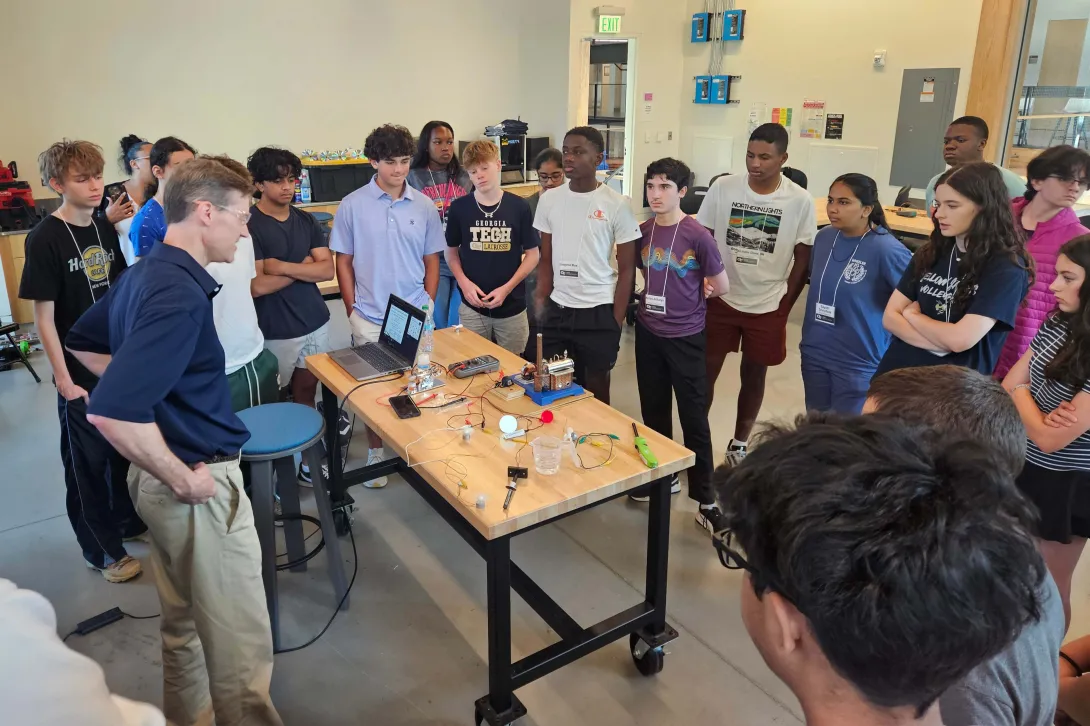
Rich Simmons and the Energy Unplugged participants during the final day presentations
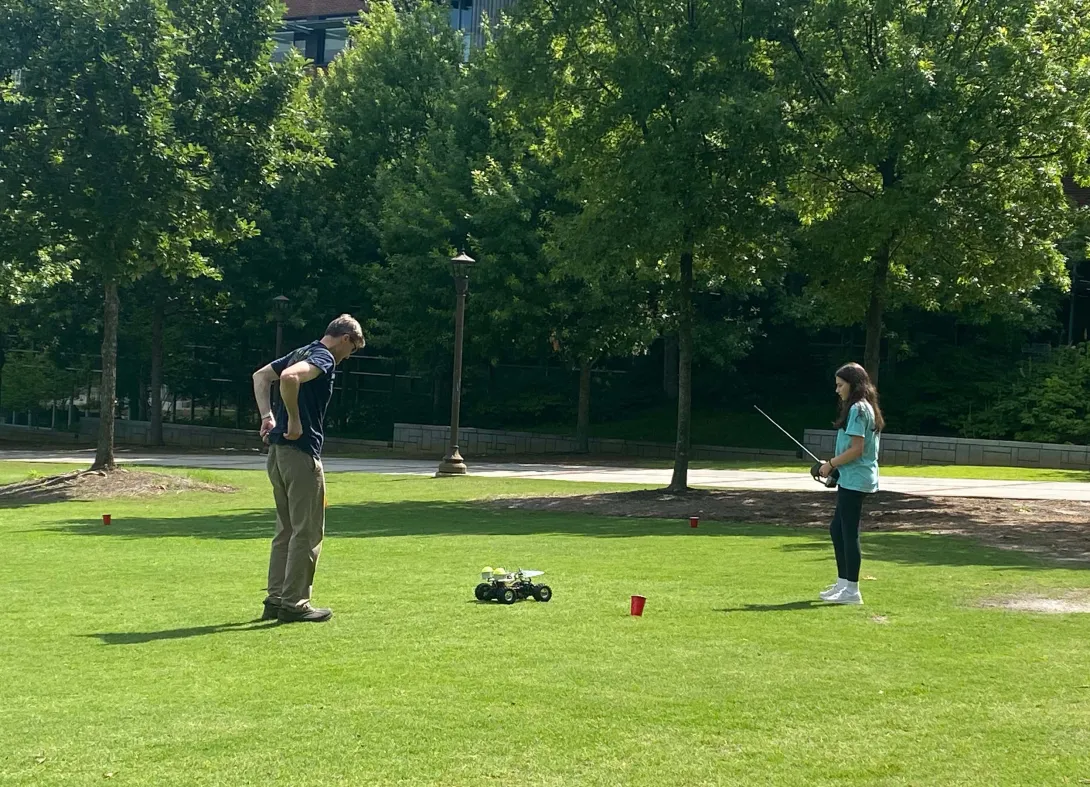
Energy Unplugged camper testing a remote car at Georgia Tech Green
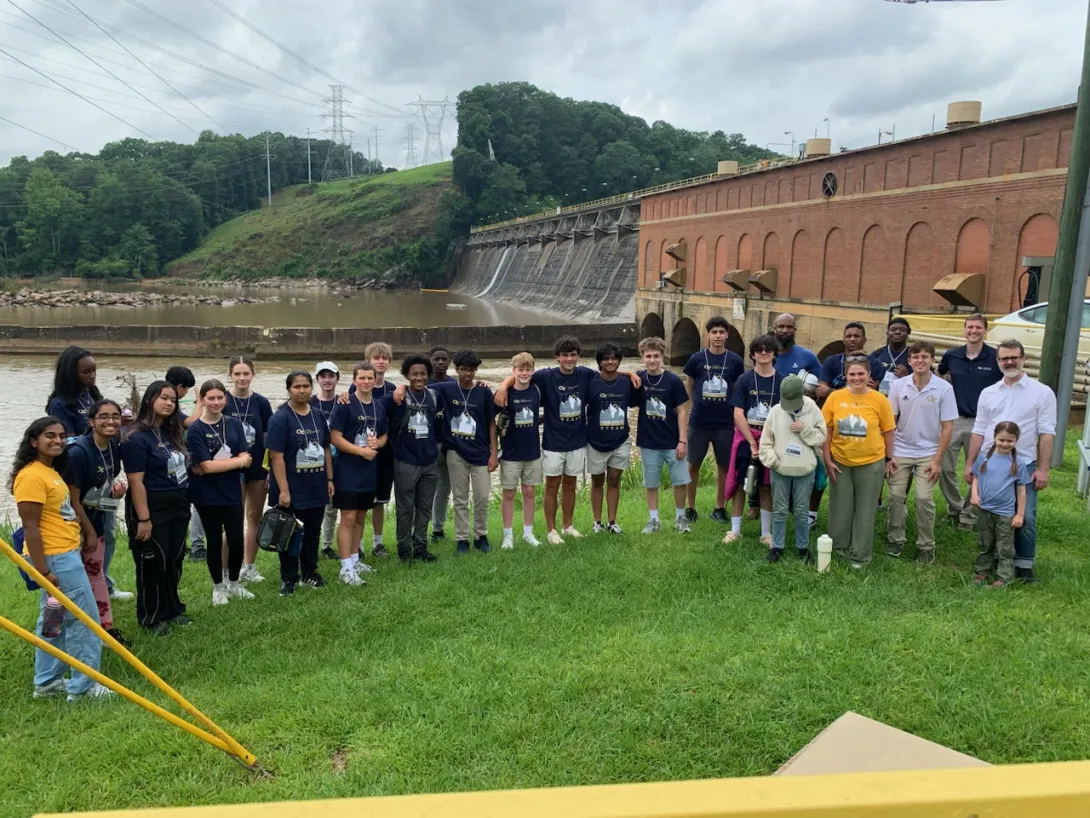
Energy Unplugged camp visit to the Morgan Falls hydroelectric plant
This summer, the Strategic Energy Institute (SEI) and the Energy Policy and Innovation Center (EPIcenter) hosted Energy Unplugged, an education and outreach program focused on science, technology, engineering, art, and mathematics (STEAM). The annual summer camp is organized through the Center for Education Integrating Science, Mathematics, and Computing (CEISMC), a unit of the College of Lifetime Learning at Georgia Tech. As one of Tech’s most sought-after programs for high school students, the weeklong summer camp continues to spark interest in energy innovation and develop foundational skills in science.
“Energy Unplugged introduces high school students to Georgia Tech’s vibrant innovation ecosystem, engaging young minds in shaping a more forward-thinking energy future,” said Christine Conwell, interim executive director of SEI.
Rich Simmons, SEI’s director of Research and Studies and a George W. Woodruff School of Mechanical Engineering faculty instructor, has led the camp’s curriculum since 2019. Under his leadership, students engage in applied learning experiences that introduce energy efficiency principles, foster creative thinking, and encourage real-world decision-making.
“Energy Unplugged features interactive activities and field trips which provide students tangible exposure to working energy facilities and STEM careers,” Simmons said. “As an integral part of our education and outreach efforts, the camp continues to inspire the next generation to think critically about energy and its impact on their communities and the world.”
“Collaborating with SEI on Energy Unplugged allows us to amplify CEISMC’s mission of expanding access to high-quality STEM experiences,” said Sirocus Barnes, director of Expanded Learning Programs at CEISMC. “By connecting students with real-world energy challenges and Georgia Tech’s research ecosystem, we’re helping them envision themselves as future innovators and problem-solvers.”
The week began with a hands-on workshop where students constructed mousetrap-powered cars, applying core physics concepts and the mechanics of energy conversion. In another activity, students raced remote-controlled cars to highlight the importance of swift decision-making while accounting for external variables. These experiments offered students a dynamic understanding of the relationship between energy and physics. Camp participants also explored electricity use in everyday life by experimenting with solar charging setups, learning how devices like cellphones can be powered through solar energy.
One participant, a rising high school senior, noted the program's differentiation from the typical classroom model: “We had a lot of experiences that aren’t typically offered in high school, which gave me a greater understanding of physics.”
The camp also featured site visits, including a tour of The Kendeda Building for Innovative Sustainable Design — the first building in the Southeast to meet the standards of the Living Building Challenge. Students explored the building’s facilities, including its rooftop garden and photovoltaic canopy. Additional field trips included tours of Oglethorpe’s Georgia System Operations plant and the Morgan Falls hydroelectric power plant, which offered students firsthand exposure to how energy is generated and managed across the state.
To conclude the week, students collaborated in teams on a mini design challenge: devising a sustainable taco business. They were tasked with cooking beans efficiently using either a slow cooker or a pressure cooker and learning how to balance time, energy use, and customer satisfaction. This final project reinforced lessons in energy trade-offs and problem-solving. Teams presented their findings to an audience of parents, faculty, and staff — a memorable opportunity that allowed them to develop public speaking and technical presentation skills as well.
“The presentation on the last day of camp encourages students to use their creativity in different ways to form new solutions and ideas,” said Jake Churchill, graduate student and former camp counselor, “which provides great exposure to an open-minded, nonlinear approach to engineering — and a great teacher, Rich Simmons.”
Contributed by: Katie Strickland
News Contact
Priya Devarajan || SEI Communications Program Manager
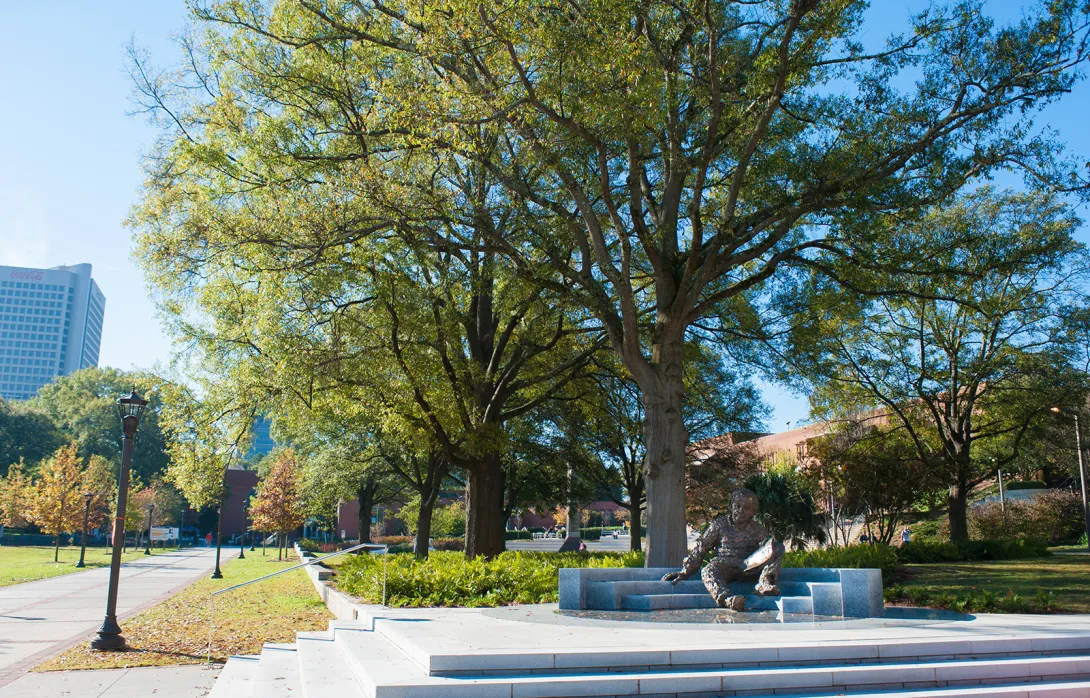
For more than 15 years, Georgia Tech has provided the City of Atlanta with the foundational data and insight that shape how the city tracks, understands, and plans for changes in its tree canopy. The latest cycle of this research — delivered through the Center for Urban Resilience and Analytics (CURA) — continues that legacy by offering a high-resolution, citywide canopy assessment using satellite imagery and field validation.
The assessment, funded by the city’s Tree Recompense Fund, uses advanced remote sensing tools such as WorldView-2 satellite data and a random forest classification model to categorize land into three land cover types. These include tree canopy, non-tree vegetation (grass, shrubs, and low lying vegetation) and non-vegetation (water, pervious surface). The methodology delivers a detailed spatial picture of land cover across the city.
“This is simply a tool in their planning arsenal,” said Anthony Giarrusso, who has led every canopy study since 2008. “Before they did any of this work in 2008, everything was anecdotal. It was reactionary.”
The new study is not advocacy — it’s information. Giarrusso emphasized that while researchers stay neutral in the politics of urban growth and conservation, their work equips city leaders with science-based knowledge to make more effective zoning and planning decisions.
In addition to mapping existing conditions, the Georgia Tech team developed the Potential Planting Index (PPI), a scalable tool that identifies where tree planting is physically possible based on current land cover. The tool quantifies the difference between tree canopy and non-tree vegetation, indicating zones with restoration potential.
Another key insight is the challenge of interpreting canopy change without understanding land use patterns. “It gives you a false sense of stability if you don’t understand the underlying land use,” said Giarrusso. “You might see canopy regrowth on paper, but that land could be cleared again tomorrow.” He explained that this false signal is particularly common in stalled development sites: “We saw a lot of properties where trees had regrown after initial clearing, but it was temporary and monoculture, low quality canopy. Several of those areas were cleared again for construction later.”
Giarrusso pointed to these “loss-gain-loss” cycles as one of the more misleading aspects of tree canopy analysis without strong land use context. “Some of them were pipe farms — land cleared for development with infrastructure like water and sewer lines installed, but then construction never happened. So trees grow back, and you get a canopy gain that doesn’t last and is nowhere near the quality of the trees originally cleared.”
He stressed that policymakers need to consider the permanence of canopy when using the data. “If it’s just going to be cleared again in two years, it’s not really a gain. That’s why long-term tracking and land use analysis together are so important.”
The city has incorporated these tools into broader planning efforts, including zoning reform and tree ordinance revisions. The research supports recommendations such as restricting full lot clearing in certain zoning categories and adjusting setback or lot coverage limits to better preserve existing canopy.
Giarrusso underscored the urgency of protecting larger, intact forested tracts. “If you can see it from space and it’s still forest — save it,” he said. “Once it’s cleared, you don’t get it back.”
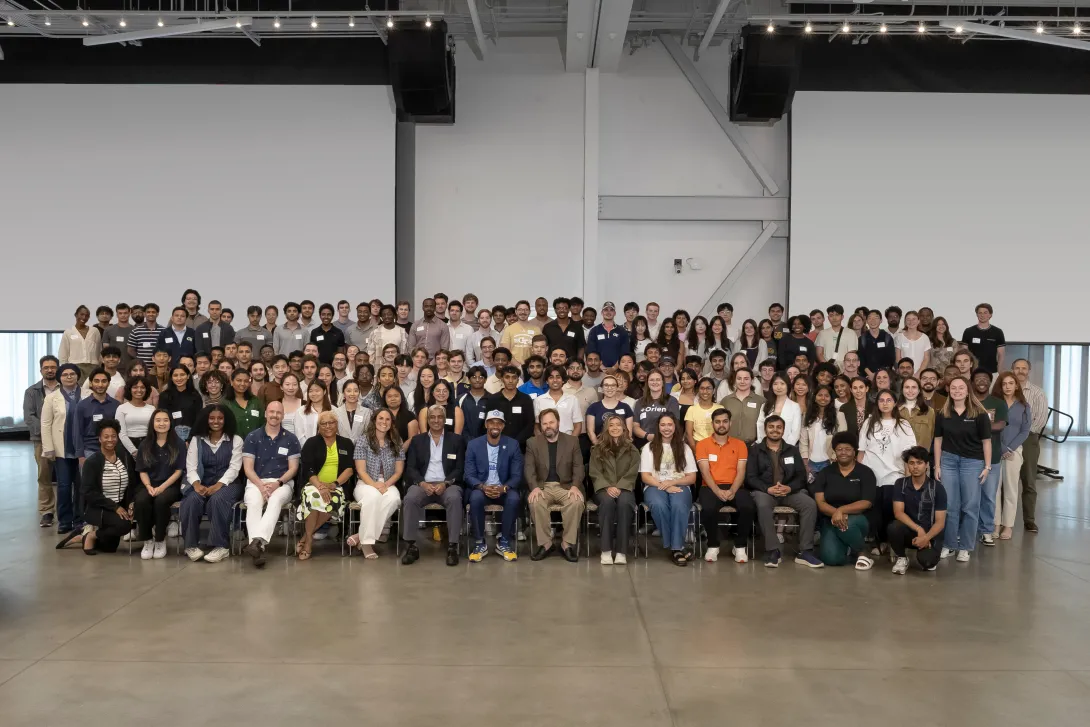
CREATE-X’s 12th cohort of Startup Launch with CREATE-X staff members and Atlanta leadership.
CREATE-X, Georgia Tech’s premier entrepreneurship program, kicked off its 12th Startup Launch cohort this month with a record-breaking 137 student teams and 25 faculty and research teams — totaling 318 founders. The summer-long accelerator, known for turning ideas into real-world ventures, is once again positioning Georgia Tech as a national leader in invention and startup creation.
This year’s cohort spans a wide range of industries, including artificial intelligence, defense, healthcare, gaming, sustainability, media management, agriculture tech, fashion tech, education, and more.
“These founders are in the messy middle and that's a beautiful place to be. There’s a lot of freedom in that,” said Margaret Weniger, director of Startup Launch. “We’re all going to be in this together. It's a safe space to try new things. It’s OK if it doesn't work out because what we want founders to learn is an entrepreneurial mindset and entrepreneurial spirit — something you take with you no matter what you do after this.”
Over the next 12 weeks, teams will validate ideas, build products, and acquire customers with the help of dedicated coaches, a robust founder community, and a network of mentors and alumni.
Raghupathy "Siva" Sivakumar, Georgia Tech’s inaugural vice president of Commercialization and the faculty founder of CREATE-X, spoke about the core of CREATE-X and what it would take for founders to succeed.
“Startup Launch is not about Georgia Tech gaining from your success. We are here just for one reason, which is to make you successful,” he said. “You need to hold yourself accountable. You need to be ambitious in terms of how big a problem you solve. You need to be emphatic that the customer matters. The successful teams are 100% behind what's going to make the lives of customers easier and better.”
In 2014, CREATE-X was co-founded by Sivakumar, Steve McLaughlin(who is now the president of The Cooper Union for the Advancement of Science and Art), and other Georgia Tech faculty, including Ray Vito, Craig Forest, and Ravi Bellamkonda (who is now the executive vice president and provost of The Ohio State University). The program received its initial major philanthropic support from Chris Klaus, a Georgia Tech alumnus and tech entrepreneur, whose gift helped launch the initiative, and , played a key role in building out the program's maker courses. Over the years, CREATE-X has continued to grow, thanks largely to the philanthropic support of alumni and foundations who believe in its mission.
In the last decade, the program has produced over 650 startups, $2.4 billion in portfolio valuation, and had eight founders named to Forbes’ 30 Under 30. Wagner shared stories of past teams who pivoted dramatically — from a glucose-monitoring pillow to a sobriety app now valued at over $350 million, and from a camping gear delivery service to a billion-dollar logistics platform.
“We don’t know which ideas will become the next unicorns,” Weniger said. “But we’re betting on you.”
At the kickoff event, McLaughlin and Klaus were honored for their contributions to Georgia Tech’s entrepreneurial ecosystem. McLaughlin encouraged the founders through the story of CREATE-X.
“From the very beginning, we challenged CREATE-X to be a startup as well. To this day, CREATE-X has raised its own money to do this. It's a reminder of what it takes to make this happen,” he said. “This is the most difficult challenge you have ever taken. I think at the time, we were probably skeptical about whether students could do it. Now we know that you can.”
Georgia Tech President Ángel Cabrera reflected on the impact of McLaughlin, Klaus, and others who saw the vision of Georgia Tech being an entrepreneurial campus.
“Ten years ago, this was a crazy, absurd idea,” he said. “Now, 150 teams are working on their own crazy ideas. Even though sometimes there's this idea of the entrepreneur as a loner, what you learn very quickly is entrepreneurship is a team sport.”
Klaus spoke about people collaborating and helping solve problems together.
“I'm especially inspired by Georgia with its complex history,” he said. “It continues to be a place where peace can be envisioned and pursued. I think this recognition strengthens my commitment to building bridges, resolving conflict, and lifting up voices that seek unity. As you build your businesses, you'll be building collaborations and partnerships, and hopefully make the world a better place.”
As the summer progresses, founders will be guided by CREATE-X’s core values: experiential education, entrepreneurial confidence, and real-world impact. Weniger encouraged teams to “show up uncomfortable” and “leverage every single resource” available.
The journey will culminate at Demo Day, where teams will showcase their startups to investors, industry leaders, and the broader community. The event is free, open to the public, and promises a front-row seat to the next wave of Georgia Tech-born innovation.
Demo Day 2025 will take place on Thursday, Aug. 28, at 5 p.m., in the Exhibition Hall. For more information and to RSVP, visit the CREATE-X Demo Day Eventbrite.
News Contact
Breanna Durham
Marketing Strategist
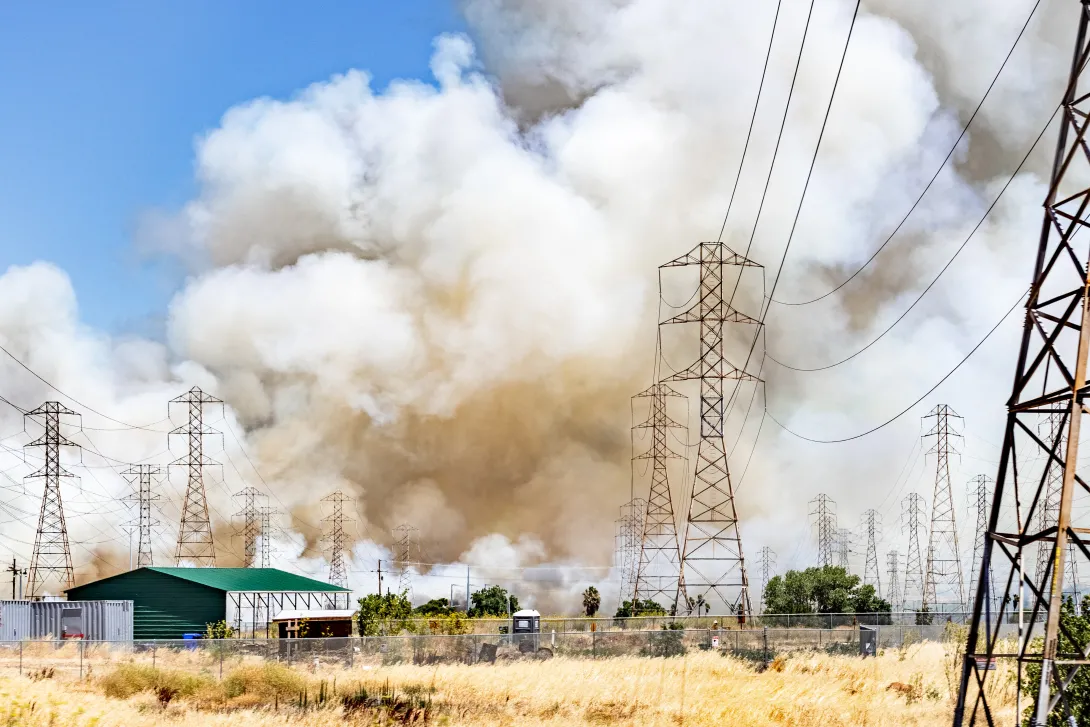
Smoke cloud rising from a brush wildfire burning in San Francisco, California (Source: Adobe Stock)
You’re managing the Texas Panhandle’s power grid. Heavy winds are blowing, and a worn-out utility pole ignites a fire by crashing onto a transmission line. Luckily, the fire department arrives quickly, putting out the fire before it spreads to nearby cities. But the same thing may happen again with gusty conditions predicted for the next 24 hours. Should you shut off miles of power lines to reduce that risk, causing outages for thousands of residents? Should you add batteries to the grid or move some power lines underground to lessen the impact of future fires? That sounds useful, but paying for these upgrades would require raising electricity rates.
Players of the Current Crisis video game are pondering these questions, similar to professional grid managers during the Texas Smokehouse Creek fire in 2024. But the players did not purchase Current Crisis at a run-of-the-mill gaming store. They might have played it at Georgia Tech’s Dataseum, which featured the game in a recent exhibition. Or they might have helped develop it in weekly meetings with Daniel Molzahn, associate professor in the School of Electrical and Computer Engineering and EPIcenter initiative lead.
“Current Crisis started as a computer simulation I programmed in Summer 2020 for a senior-level course I taught that fall,” says Molzahn. “My students had to dispatch crews to maintain or repair a simplified model of the Georgia power grid. In the middle of the Covid-19 pandemic, each dispatch had a risk of infection and quarantine, which meant losing the crew for the rest of that round. The students had a fixed budget to balance two competing goals: operating a power system with minimal outages and keeping the repair crews healthy.”
The class project was popular, and its scope began to grow. Molzahn proposed turning his simulation into a video game in a July 2021 grant application to the National Science Foundation. He received the five-year award that fall and launched his “Vertically Integrated Project” on power grid gaming the following spring. It soon attracted about 35 students per semester, from sophomores to those pursuing graduate degrees in various disciplines. Most students stay for three to four semesters.
Tristan Ziegler joined the VIP as a computational media sophomore in Spring 2022 — and still works on it three years later as a professional programmer. “I found the project by searching for ‘game’ on the VIP website,” says Ziegler, who graduated in 2024. “It offered much more freedom than traditional classes but still allowed me to earn credits and grades, unlike a student organization where you volunteer your time.”
The students quickly discovered the benefits of working toward a shared goal in smaller groups, focused on coding, grid modeling, graphic design, or artistic creativity. Some volunteered to lead initiatives, such as organizing the Dataseum exhibition or the 2025 Seth Bonder summer camps, where they will teach high schoolers the basics of game programming.
Another long-term member of the VIP team is Ryan Piansky, a doctoral student, who studies the resilience of power grids to wildfires. He combines well-known engineering tools — algorithms for finding a mathematically optimal problem solution — with historical wildfire data to evaluate grid management decisions.
“I have examined if policies based on established engineering principles help the people who need the most help, reduce the risk of outages broadly across the whole grid, and optimally allocate limited resources,” explains Piansky, who works in Molzahn's research lab. “To do that, I combine power grid models with realistic wildfire simulations to assess if those policies would likely generate desirable outcomes in a range of plausible scenarios.”
The VIP work on grid modeling has informed Piansky’s research, but the climate models he uses to mimic the spread of wildfires are too complex for a fast-moving video game. That’s why he has helped the students develop simplified versions of these models. Humidity and vegetation, for example, influence both real fires and those popping up in Current Crisis.
Piansky’s research is part of Molzahn’s long-term goal: developing computer tools that help professional grid managers improve the grid’s resilience to natural disasters — from pandemics and wildfires to hurricanes, heat waves and floods.
“We plan to record the choices made by Current Crisis players in crowdsourced datasets that will support our research,” says Molzahn. “By using these datasets to train machine-learning algorithms, we can harness the power of AI to develop better disaster response policies.” (The European Space Agency uses a similar gamification strategy to map moon craters.)
The project’s benefits go well beyond these research contributions. Its educational value includes experience working in multidisciplinary teams of students at different levels and leadership development. Molzahn also hopes the game will help build public acceptance of disruptive actions during real disasters.
“Recognizing the tradeoffs inherent in grid management is important, whether it’s understanding why power shutoffs reduce fire risks or why service restorations are time-consuming,” says Molzahn. “This may also generate broader public support for electricity rate increases and tax allocations to pay for infrastructure hardening.”
Written by: Silke Schmidt
News Contact
Story Written by: Silke Schmidt
Priya Devarajan || Research Communications Program Manager
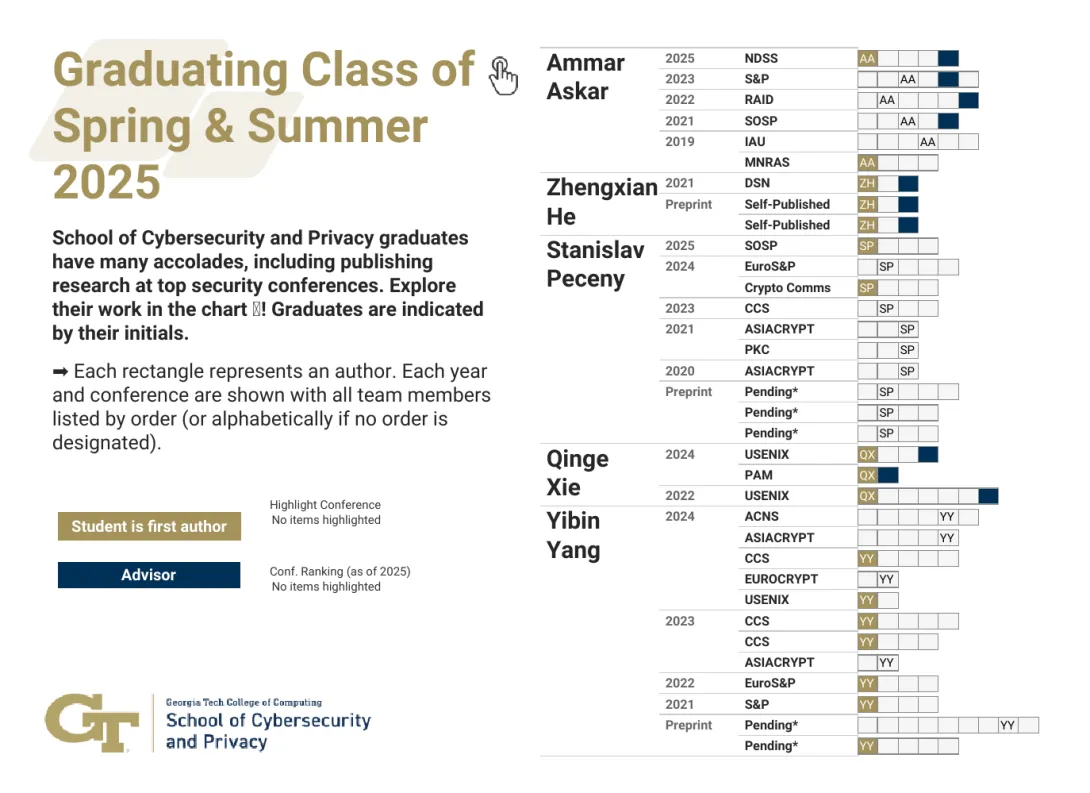
The School of Cybersecurity and Privacy at Georgia Tech is proud to recognize the accomplishments of five doctoral students who finished their doctoral programs in Spring 2025. These scholars have advanced critical research in software security, cryptography, and privacy, collectively publishing 34 papers, most of which appear in top-tier venues.
Ammar Askar developed new tools for software security in multi-language systems, including a concolic execution engine powered by large language models. He highlighted DEFCON 2021, which he attended with the Systems Software and Security Lab (SSLab), as a favorite memory.
Zhengxian He persevered through the pandemic to lead a major project with an industry partner, achieving strong research outcomes. He will be joining Amazon and fondly remembers watching sunsets from the CODA building.
Stanislav Peceny focused on secure multiparty computation (MPC), designing high-performance cryptographic protocols that improve efficiency by up to 1000x. He’s known for his creativity in both research and life, naming avocado trees after famous mathematicians and enjoying research discussions on the CODA rooftop.
Qinge Xie impressed faculty with her adaptability across multiple domains. Her advisor praised her independence and technical range, noting her ability to pivot seamlessly between complex research challenges.
Yibin Yang contributed to the advancement of zero-knowledge proofs and MPC, building toolchains that are faster and more usable than existing systems. His work earned a Distinguished Paper Award at ACM CCS 2023, and he also served as an RSAC Security Scholar. Yang enjoyed teaching and engaging with younger students, especially through events like Math Kangaroo.
Faculty mentors included Regents’ Entrepreneur Mustaque Ahamad, Professors Taesoo Kim and Vladimir Kolesnikov, and Assistant Professor Frank Li, who played vital roles in guiding the graduates’ research journeys.
Learn more about the graduates and their mentors on the 2025 Ph.D. graduate microsite.
News Contact
JP Popham, Communications Officer II
College of Computing | School of Cybersecurity and Privacy
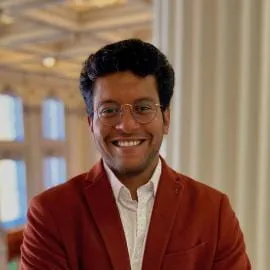
Gaurav Doshi, Assistant Professor in Applied Economics, Georgia Tech School of Economics
Gaurav Doshi, assistant professor in applied economics and a faculty affiliate of the Georgia Tech Energy Policy and Innovation Center researches, among other topics, ways to make the benefits of large electrification projects more transparent.
It’s a chicken and egg situation: Should renewable energy projects launch first hoping that transmission lines to pipe generated power to distant places will follow on their heels? Or should the transmission lines be stood up first as a way to attract investments in renewable energy projects? Which comes before the other? It’s a question that has intrigued Gaurav Doshi, assistant professor at the School of Economics at Georgia Tech, for a while now. His award-winning paper about this research explores the downstream effects of building power lines.
After a bachelor’s and master’s degree in applied economics from the Indian Institute of Technology at Kanpur, Doshi earned his doctorate in the same field from the University of Wisconsin at Madison in 2023. He explored questions about environmental economics as part of his doctoral work.
“Once I started researching energy markets in the U.S., I kept getting deeper and coming up with new questions,” Doshi says. Among the many his work explores: What are the effects of infrastructure policies and how can they help decarbonization efforts? What are some of the unintended consequences policy makers need to think about?
One of his current research projects has roots in his doctoral work. It explores how to quantify the benefits of difficult-to-quantify environmental infrastructure projects. Case in point: Decarbonization will likely lead to more electrification from renewable energy resources and will need power lines to transport this energy to places of demand. The costs for such infrastructure are pretty transparent as part of government project funding. But the benefits are less so, Doshi points out. To develop effective policy, both the costs and benefits need clear visibility. “Otherwise the question arises ‘why should we spend billions of dollars of taxpayer money if we don’t know the benefits?’”
News Contact
Written by: Poornima Apte
Contact: Priya Devarajan || SEI Communications Program Manager
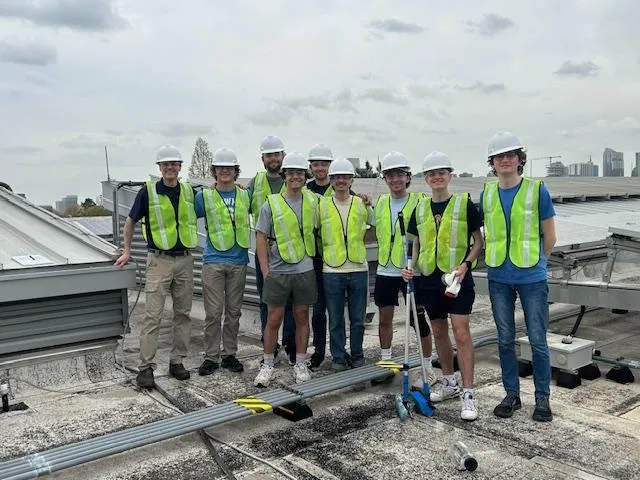
Georgia Tech Beautification Day student volunteers along with Rich Simmons, SEI's director of research and studies, on the rooftop of CNES building with the solar panels in the background
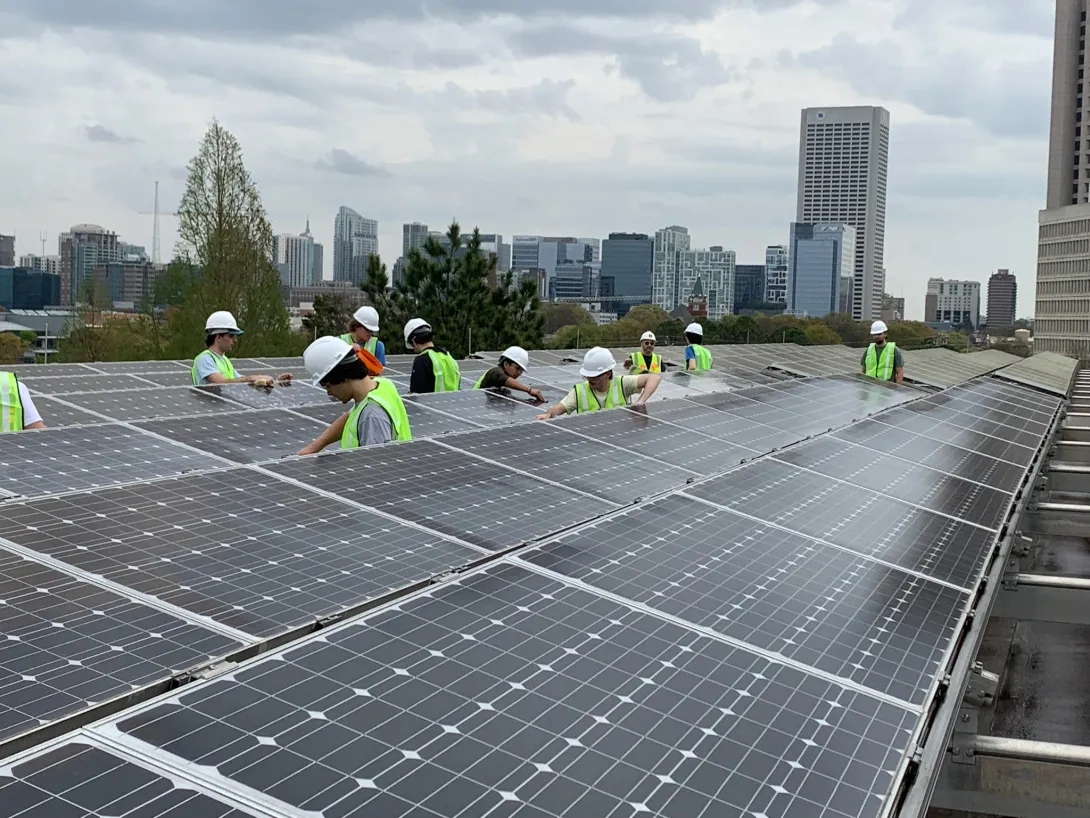
Georgia Tech students busy cleaning the solar PV arrays on the rooftop of the carbon neutral energy solutions building during Georgia Tech Beautification Day
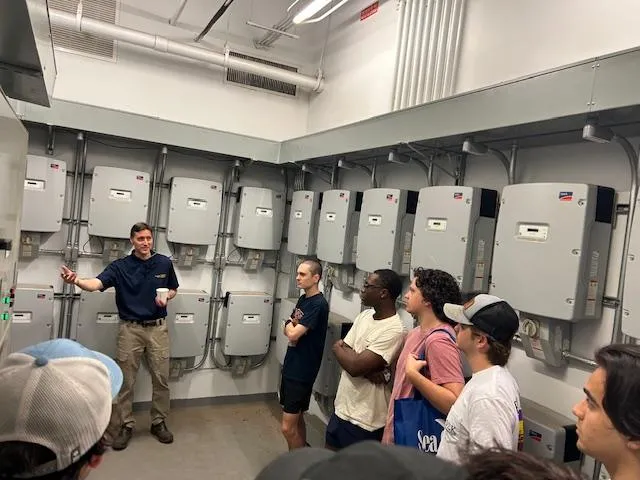
Rich Simmons, providing a tour of the inverter room in the CNES building to the student volunteers
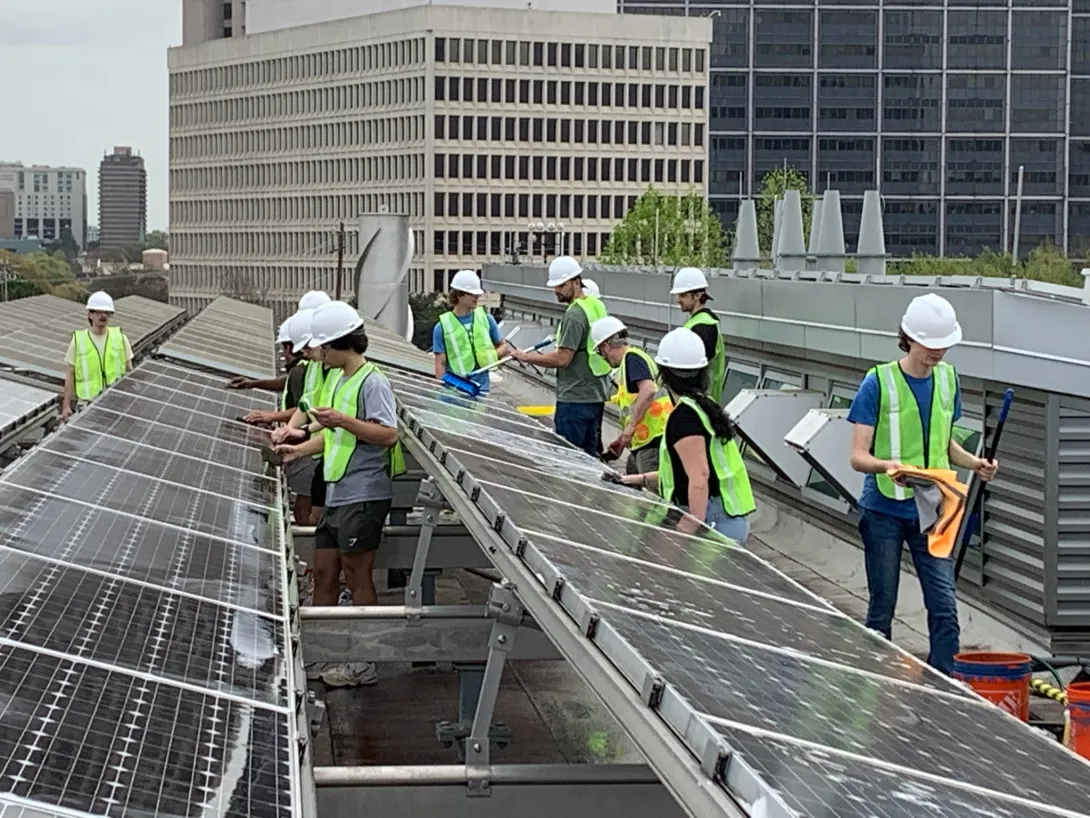
Student volunteers busy at work cleaning the solar panels
On a cloudy spring day in Atlanta, Rich Simmons, director of research and studies at the Georgia Tech Strategic Energy Institute (SEI), led a group of a dozen student volunteers to the roof of the Carbon Neutral Energy Solutions Laboratory (CNES). The students were part of the nearly 300 student volunteers participating in Georgia Tech Beautification Day and visited CNES to clean the building’s rooftop solar array made of photovoltaic (PV) panels. The CNES building entered operation in 2011 and its panels have accumulated grime over the years, impacting their efficiency.
Simmons explained the importance of this project, emphasizing how cleaning the panels restores their efficiency and contributes to ongoing research. "We've used this project to better understand PV efficiency in an urban environment and have instrumented the newly cleaned arrays to continue monitoring. An initial study last year suggested efficiency could increase by 10-20% just from a thorough cleaning. This project is both a handy research tool, an educational conduit, and a means of campus engagement related to sustainability," he shared.
Safety was paramount, and proactive communication between the research, health and safety, and infrastructure and sustainability teams ensured a successful event. Equipped with hard hats, eye protection, and high-visibility safety vests, the students scrubbed the panels with sponges and bristle brushes. The hands-on experience was both educational and rewarding.
After cleaning, Simmons led the group to the inverter room, where the DC electricity generated by the panels is converted into AC so that it can be consumed within the building or exported to the campus grid. He explained that excess solar power can also be stored in the newly installed 150-kWh Stryten battery system or used to charge campus vehicles through the newly installed EV chargers in the building’s parking lot. He demonstrated how magnetic monitoring devices measure the electricity produced by the arrays, allowing for a comparison of the efficiency of panels that were just cleaned, to those that were cleaned last year, and those that have never been cleaned in the 13 years since their installation.
Through initiatives like this, Georgia Tech continues to lead in research and education, inspiring the next generation of innovators and problem-solvers.
This article was written with the assistance of Microsoft Copilot (Apr. 9, 2025) and edited by Georgia Tech EPIcenter's Gilbert X. Gonzalez and Rich Simmons.
News Contact
Priya Devarajan | Research Communications Program Manager
Written by: Gilbert Gonzalez, Rich Simmons, EPIcenter
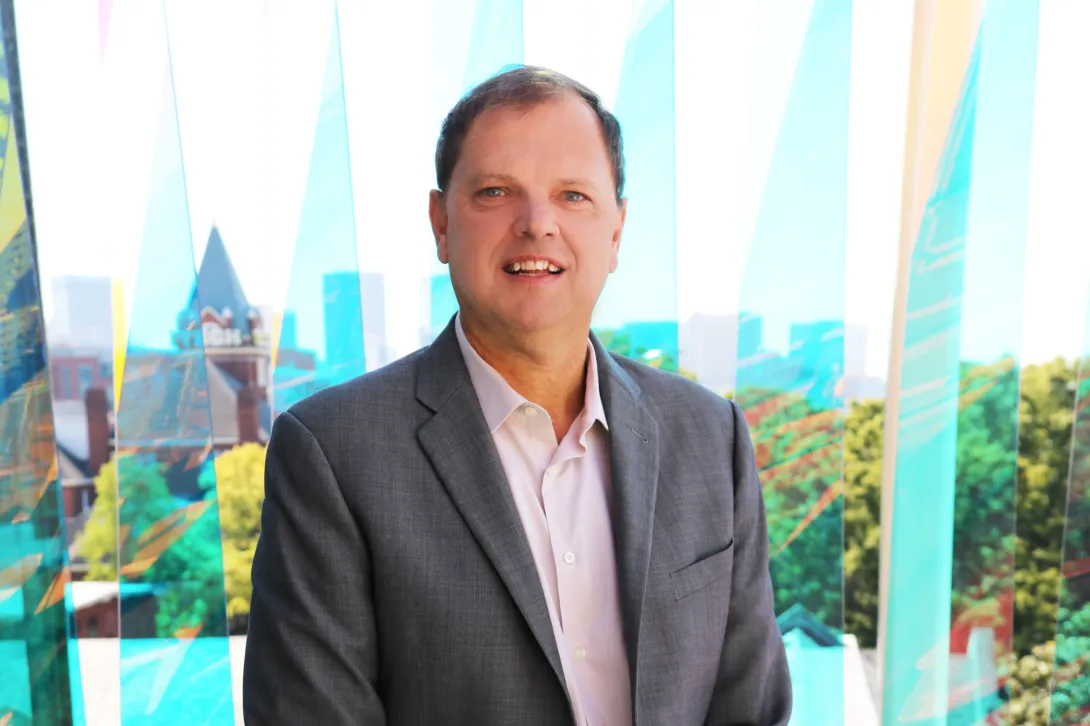
The College of Sciences has named Professor Joel Kostka the inaugural faculty director of Georgia Tech for Georgia's Tomorrow. The new center, announced by the College in December 2024, will drive research aimed at improving life across the state of Georgia.
“Joel is perfectly suited to lead this new initiative, especially since his research for a number of years has focused on Georgia and the vulnerability of both humans and ecosystems to climate change,” says Susan Lozier, dean of the College of Sciences, Betsy Middleton and John Clark Sutherland Chair, and professor in the School of Earth and Atmospheric Sciences. “I look forward to seeing how Science for Georgia’s Tomorrow takes shape and evolves under his thoughtful leadership.”
“I believe that my experience in research administration and in leading multidisciplinary research programs, along with the focus of my research on the vulnerability of Georgia’s communities to climate change, have prepared me well for this role,” says Kostka, who is the Tom and Marie Patton Distinguished Professor and associate chair for Research in the School of Biological Sciences with a joint appointment in the School of Earth and Atmospheric Sciences. “I am excited about the opportunity to lead the center as its inaugural director.”
Kostka’s appointment will begin on May 1, 2025.
Championing science in Georgia
Georgia's Tomorrow was created to foster research related to the health and resilience of Georgia’s people, ecosystems, and communities. Specifically, it will serve to boost research collaboration across the Institute, pave the way for public-private partnerships, and expand opportunities for Georgia students and communities to engage with Institute research.
Among Kostka’s first tasks as faculty director will be the development of the center’s strategic plan and the completion of two dedicated cluster hires from within the College of Sciences’ six schools.
Meet Joel Kostka
Kostka is known for bridging biogeochemistry and microbiology to elucidate the role of microorganisms in ecosystem function. He has emerged as an international leader in ecosystem biogeoscience, providing a quantitative predictive understanding of how ecosystems function as well as determining the mechanisms by which climate change alters ecosystem resilience. He partners with a variety of stakeholders to conduct research on the restoration and adaptive management of coastal ecosystems in Georgia.
Kostka has also served as the PI of a range of multidisciplinary research projects focused on environmental change as well as scientific advisory boards including Georgia Tech’s Strategic Energy Institute, the NSF-funded Plum Island Estuary Long-term Ecological Research program, and the Johnston Center for Coastal Sustainability on Bald Head Island.
Kostka received a B.S. in Biology from Western Illinois University and a Ph.D. in Marine Science from the University of Delaware. Prior to joining Georgia Tech in 2011, he was a professor at the Department of Oceanography and Associate Director of the Institute of Energy Systems, Economics, and Sustainability at Florida State University.
Initial support for Georgia Tech for Georgia’s Tomorrow is generously provided by the College of Sciences Betsy Middleton and John Clark Sutherland Dean's Chair fund. Cluster hire funding has been awarded by Provost Steven W. McLaughlin. The initiative will also seek funding from state, national and international organizations, private foundations, and government agencies to expand impact. Philanthropic support will also be sought in the form of professorships, programmatic support for the center, and seed funding.
Georgia Tech for Georgia's Tomorrow initially launched under the working name Science for Georgia's Tomorrow (Sci4GT).
News Contact
Writer: Lindsay C. Vidal