
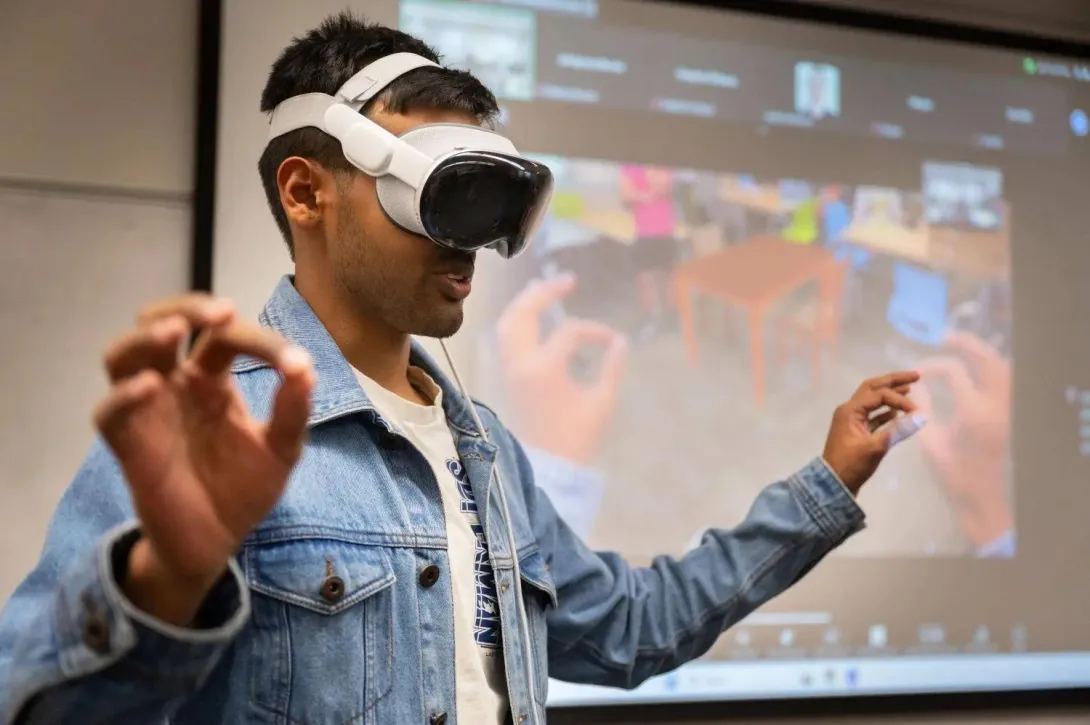
Georgia Tech student Yash Rajgure using an Apple Vision Pro headset device to demo his team's project in ECE 6001 Technology Entrepreneurship: Teaming, Ideation, and Entrepreneurship. Photo: Allison Carter, Georgia Tech
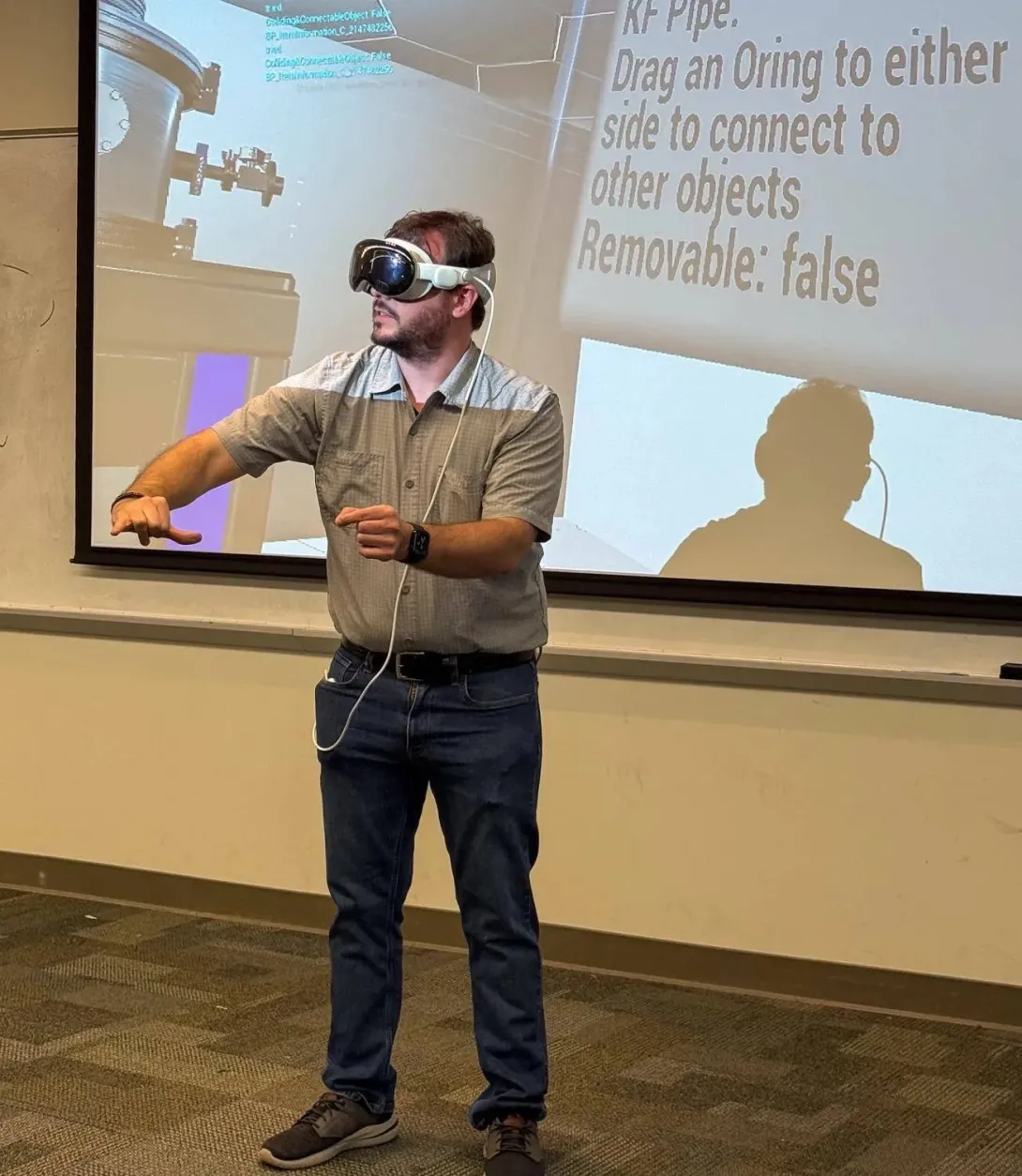
Gallmon showing how Apple Vision Pro can be utilized to train students and workers on sensitive and expensive technical equipment, in this case a cleanroom vacuum system.
Learning electrical and computer engineering has always come with a unique challenge: many of its foundational concepts — electric fields, magnetic forces, semiconductor behavior — are invisible to the naked eye and difficult to visualize.
To make these invisible principles tangible, students in the School of Electrical and Computer Engineering have long used specialized tools and software. Circuit simulators model voltage and current, electromagnetic tools visualize fields, and semiconductor design platforms reveal transistor behavior. These tools turn abstract theory into interactive experiences that prepare students for real-world engineering challenges.
Now, Apple Vision Pro is joining this ecosystem.
The technology introduces spatial computing to learning environments, blending digital content with the physical world.
At the Institute for Matter and Systems, infrastructure lead Alex Gallmon, is collaborating with students and industry partners to create immersive digital twins—virtual models that replicate real-world systems—of semiconductor cleanroom equipment.
“These machines are complex and costly, with parts that can run tens of thousands of dollars,” he said. “Even minor mistakes during operation can lead to expensive damage or downtime.”
Gallmon's team built a virtual replica of a cleanroom vacuum training system. The project serves as a prototype for a workforce development program aimed at high school and college students interested in careers in the semiconductor or vacuum technology fields.
Read the full story from the School of Electrical and Computer Engineering
News Contact
Dan Watson | School of Electrical and Computer Engineering
People with autism seeking employment may soon have access to a new AI-based job-coaching tool thanks to a six-figure grant from the National Science Foundation (NSF).
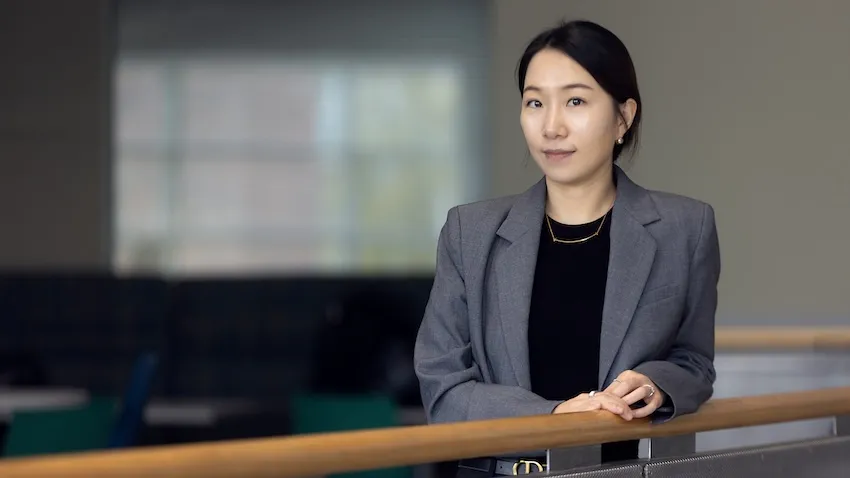
Jennifer Kim and Mark Riedl recently received a $500,000 NSF grant to develop large language models (LLMs) that provide strength-based job coaching for autistic job seekers.
The two Georgia Tech researchers work with Heather Dicks, a career development advisor in Georgia Tech’s EXCEL program, and other nonprofit organizations to provide job-seeking resources to autistic people.
Dicks said the average job search for people with autism can take three to six months in a good economy. It can take up to 18 months in a bad one. However, the new LLMs from Georgia Tech could help to reduce stress and fast-track these job seekers into employment.
Kim is an assistant professor who specializes in human-computer interaction technology that benefits neurodivergent people. Riedl is a professor and an expert in the development of artificial intelligence (AI) and machine learning technologies.
The team’s goal is to identify job-search pain points and understand how job coaches create better employment prospects for their autistic clients.
“Large-language models have an opportunity to support this kind of work if we can have more data about each different individual strength,” Kim said.
“We want to know what worked for them in specific settings at work, what didn’t work, and what kind of accommodations can better help them. That includes how they should prepare for interviews, how they can better represent their skills, how they can address accommodations they need, and how to write a cover letter. It’s a broad range.”
Dicks has advocated for neurodivergent people and helped them find employment for 20 years. She worked at the Center for the Visually Impaired in Atlanta before coming to Georgia Tech in 2017.
She said most nonprofits that support neurodivergent people offer career development programs and many contract job coaches, but limited coach availability often leads to long waitlists. However, LLMs could fill this availability gap to address the immediate needs of job seekers who may not have access to a job coach.
“These organizations often run at a slow pace, and there’s high turnover,” Dicks said. “An AI tool could get the job seeker quicker support. Maybe they don’t even need to wait on the government system.
“If they’re on a waitlist, it can help the user put together a resume and practice general interview questions. When the job coach is ready to work with them, they’re able to hit the ground running.”
Nailing the Interview
Dicks said the job interview is one of the biggest challenges for people with autism.
“They have trouble picking up on visual and nonverbal cues — the tone of the interview, figuring out the nuances that a question is hinting at,” she said. “They’re not giving the warm and fuzzy vibes that allow them to connect on a personal level.”
That’s why Kim wants the models to reflect a strength-based coaching approach. Strength-based coaching is particularly effective for individuals with autism. Many possess traits that employers value. These include:
- Close attention to detail
- Strong technical proficiency
- Unique problem-solving perspectives
“The issue is that they don’t know how these strengths can be applied in the workplace,” Kim said. “Once they understand this, they can communicate with employers about their strengths and the accommodations employers should provide to the job seeker so they can successfully apply their skills at work.”
Handling Rejection
Still, Kim understands that candidates will need to handle rejection to make it through the search process. She envisions LLMs that help them refocus their energy and regain their confidence after being turned down.
“When you get a lot of rejection emails, it’s easy to feel you’re not good enough,” she said. “Being constantly reminded about your strengths and their prior successes can get them through the stressful job-seeking process.”
Dicks said the models should also be able to provide feedback so that candidates don’t repeat mistakes.
“It can tell them what would’ve been a better answer or a better way to say it,” Dicks said. “It can also encourage them with reminders that you get 100 noes before you get a yes.”
You’re Hired, Now What?
Dicks said the role of a job coach doesn’t end the moment a client is hired. Government-contracted job coaches may work with their clients for up to 90 days after they start a new job to support their transition.
However, she said, sometimes that isn’t enough. Many companies have probationary periods exceeding three months. Autistic individuals may struggle with on-the-job training or communicating what accommodations they need from their new employer.
These are just a few gaps an AI tool can fill for these individuals after they’re hired.
“I could see these models evolving to being supportive at those critical junctures of the probationary period being over or the one-year job review or the annual evaluation that everyone dreads,” she said.
Dicks has an average caseload of 15 students, whom she assists in landing jobs and internships through the EXCEL program.
EXCEL provides a mentorship program for students with intellectual and developmental disabilities from the time they set foot on campus through graduation and beyond.
For more information and to apply, visit EXCEL’s website.
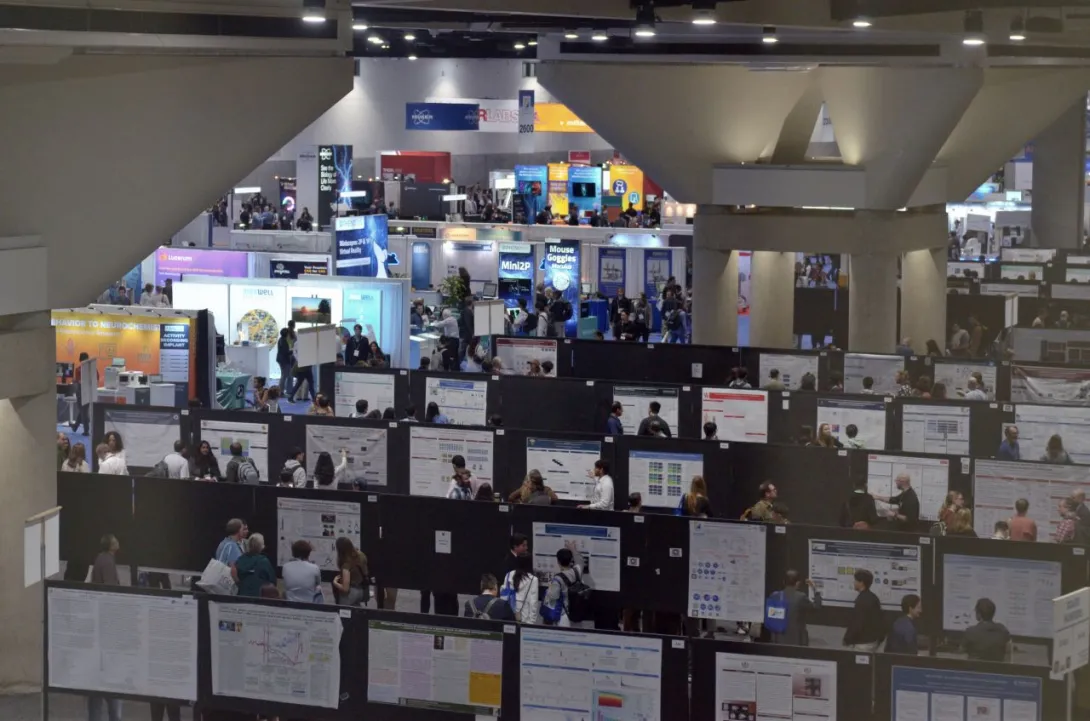
Affectionally called "DragonCon for neuroscience," the annual Society for Neuroscience meeting is one of the largest academic conferences in the world.
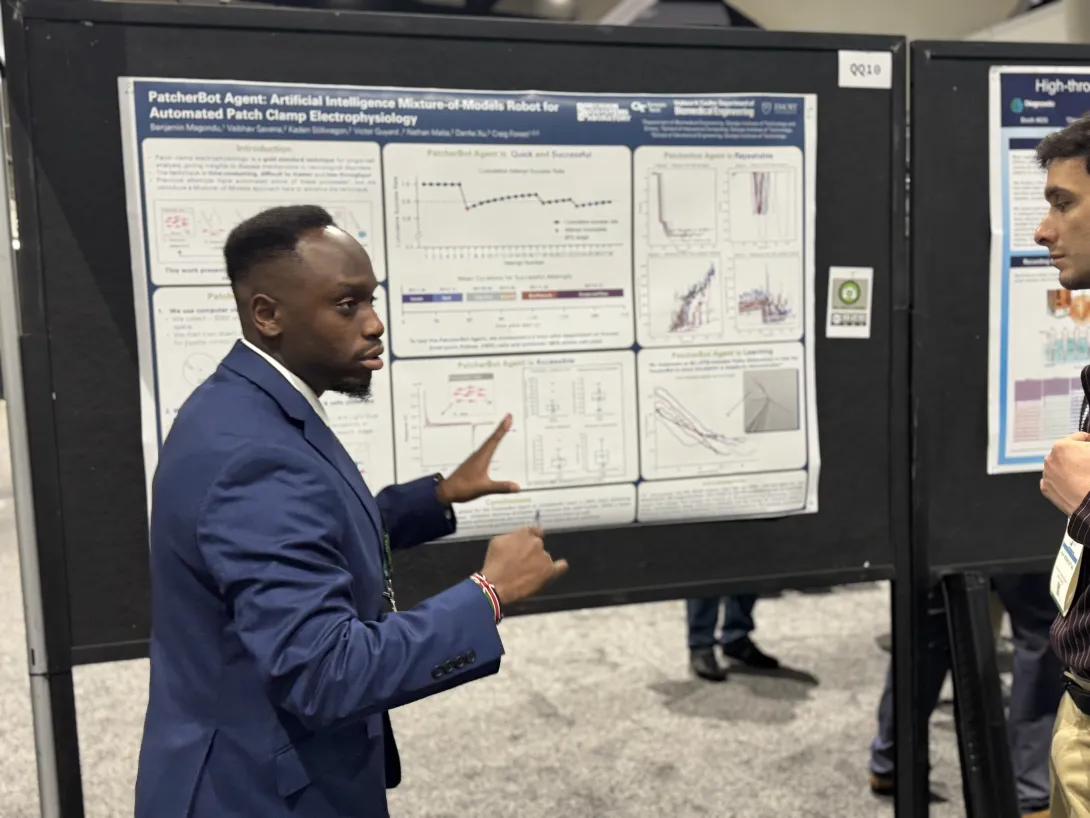
Benjamin Magondu, a graduate student in biomedical engineering, presented at SfN for the first time this year.
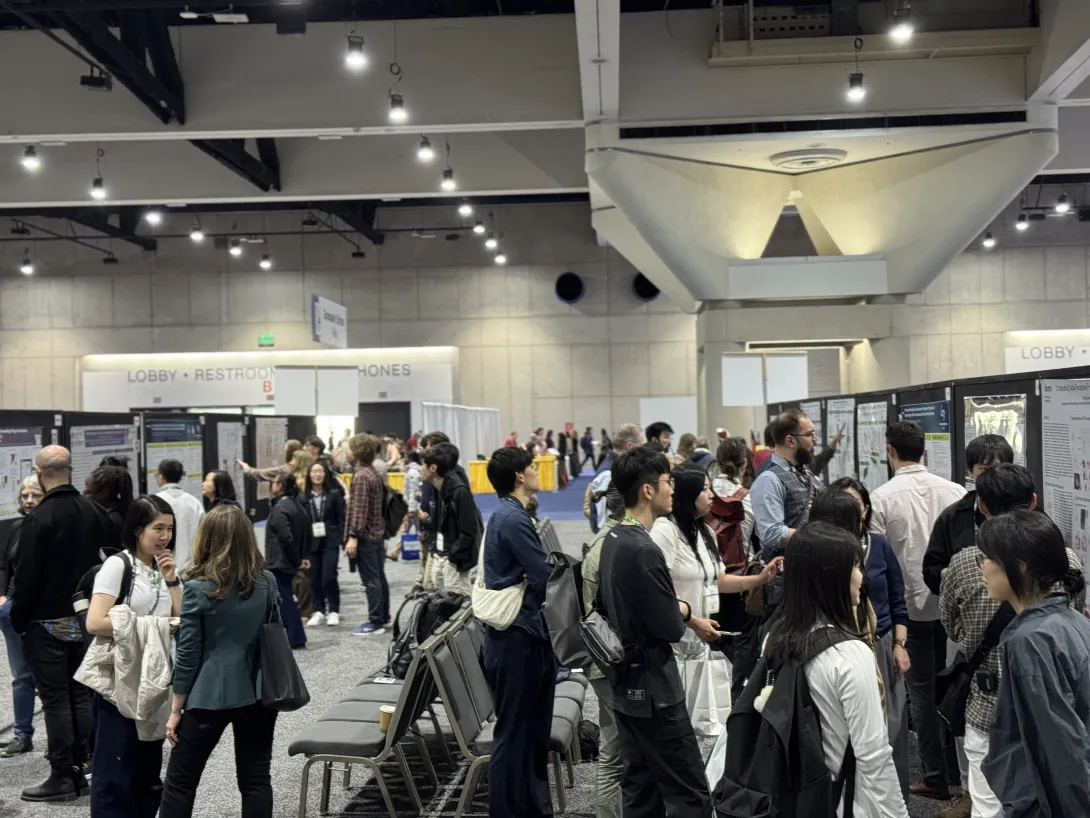
With hundreds of presentations happening simultaneously, the poster floor can be overwhelming at SfN — but for many, that's part of the draw.
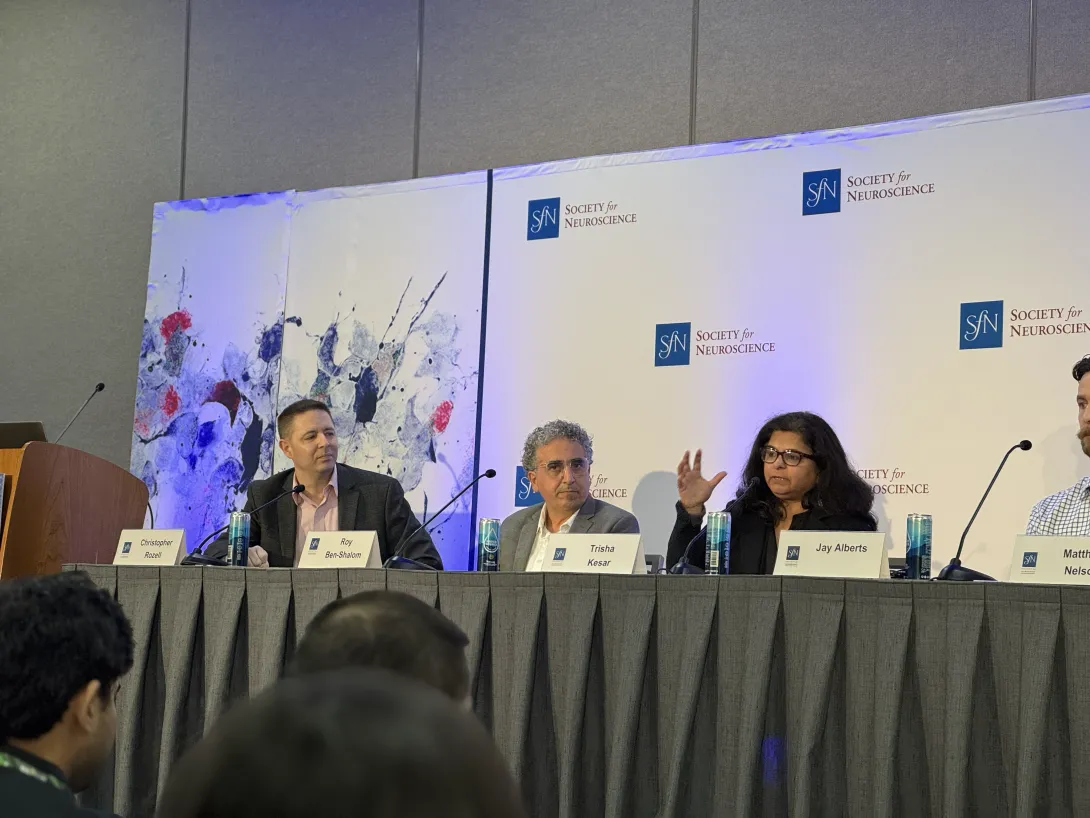
Trisha Kesar answers a question during the SfN press conference on AI in neuroscience, moderated by Chris Rozell.
Imagine stepping into a space the size of multiple football fields — only instead of turf and goalposts, it’s filled with science. Every inch is alive with posters, equipment demos, and researchers sharing the latest breakthroughs.
Welcome to the Society for Neuroscience (SfN) Conference, one of the largest scientific gatherings in the world, drawing more than 30,000 attendees to San Diego in November. According to Annabelle Singer, it is the place to be for neuroscientists. “If you want to know what is going on now in neuroscience, it is being talked about at SfN.”
Singer is a McCamish Foundation Early Career Professor in the Wallace H. Coulter Department of Biomedical Engineering (BME) at Georgia Tech and Emory University. A frequent SfN attendee, she describes the meeting as “Dragon Con for neuroscience, with thousands of talks and posters going on simultaneously.”
This year, Georgia Tech didn’t just show up — it made a statement with more than 60 presentations, a major outreach award, and a spotlight press conference.
“Seeing Georgia Tech and INNS represented so strongly at SfN is exciting,” says Chris Rozell, executive director of Tech’s Institute for Neuroscience, Neurotechnology, and Society (INNS). “It reflects the incredible breadth of neuroscience and neurotechnology research happening across our campus and how our work is shaping conversations at the highest level.”
Inside ‘Neuroscience Dragon Con’
Many conferences center around structured lectures, but at SfN, posters are the heart. You might find a senior researcher presenting groundbreaking findings right next to a first-time attendee sharing early results. This diversity is what makes the experience so valuable, says Singer. “Trainees get to talk directly with the scientist doing the work to get their questions answered, from wondering about future implications to clarifying technical details.”
The scale of SfN can feel overwhelming, but for many, that’s part of the excitement. “There are so many different posters from so many different fields. It’s a lot to absorb, but it’s all very interesting,” said Benjamin Magondu, a biomedical engineering Ph.D. student presenting for the first time. “I’ve definitely learned at least 47 things by just walking 10 feet.”
For students like Magondu, the experience is critical, says Biological Sciences Assistant Professor Farzaneh Najafi. “SfN has such a big scope, all the way from molecular to cognitive and computational systems. Especially for those deciding which direction of neuroscience they want to go into, it’s invaluable.”
That breadth also fosters connections across disciplines. “Conferences are usually pretty niche,” noted Tina Franklin, a research scientist in BME. “You have your own field that you’re really good at, but it’s difficult to venture out and find new people who can help you figure out what comes next. This conference brings people from all different fields together with the common interest of neuroscience and brain research.”
Leading the Charge
Georgia Tech’s impact went beyond the conference floor. Ming-fai Fong, an assistant professor in BME, received the prestigious Next Generation Award, one of SfN’s education and outreach awards. The honor recognizes members who make outstanding contributions to public communication and education about neuroscience.
“I’m certainly very grateful to the Society for Neuroscience for recognizing these types of contributions,” says Fong, who was recognized for her work supporting blind and visually impaired youth in Atlanta. “Rewarding outreach efforts reinforces my core belief that scientists and engineers can make an immediate impact on communities we care about through outreach. It’s a great parallel avenue to making a positive impact through research.”
Building on this recognition, Georgia Tech was in the spotlight during one of SfN’s selective press conferences — a session on artificial intelligence in neuroscience moderated by Rozell, who is also the Julian T. Hightower Chair in the School of Electrical and Computer Engineering.
During the SfN press event, Trisha Kesar, an associate professor in BME and adjunct faculty in the School of Biological Sciences, presented her research using AI to improve gait rehabilitation. Her work was among just 40 abstracts selected from more than 10,000 submissions for this honor, and one of five abstracts selected for the AI in neuroscience press conference. The project is a collaboration with Hyeok Kwon, a Georgia Tech computer science alumnus and an assistant professor in BME.
“It’s exciting to see Georgia Tech and Atlanta emerging as hubs for neuroscience innovation,” said Kesar. “Being part of a press conference on AI in neuroscience shows how much our community is contributing to the future of brain research, and how collaboration across institutions can accelerate progress.”
News Contact
Writer and media contact:
Audra Davidson
Research Communications Manager
Institute for Neuroscience, Neurotechnology, and Society (INNS)
Presenter Dashboard:
Created by Joshua Preston, Communications Manager, College of Computing
Data collection by Audra Davidson, Hunter Ashcraft
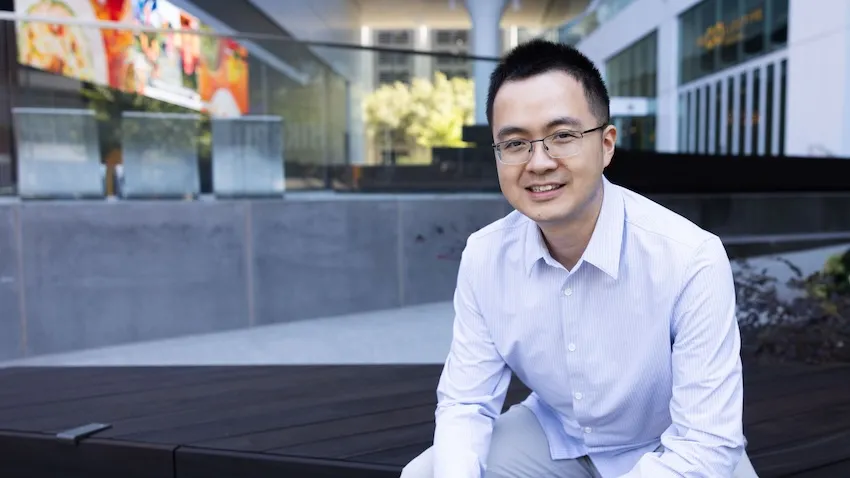
Proteins, including antibodies, hemoglobin, and insulin, power nearly every vital aspect of life. Breakthroughs in protein research are producing vaccines, resilient crops, bioenergy sources, and other innovative technologies.
Despite their importance, most of what scientists know about proteins only comes from a small sample size. This stands in the way of fully understanding how most proteins work and unlocking their full potential.
Georgia Tech’s Yunan Luo believes artificial intelligence (AI) could fill this knowledge gap. The National Science Foundation agrees. Luo is the recipient of an NSF Faculty Early Career Development (CAREER) award.
“So much of biology depends on knowing what proteins do, but decades of research have concentrated on a relatively small set of well-studied proteins. This imbalance in scientific attention leads to a distorted view of the biological landscape that quietly shapes our data and our algorithms,” Luo said.
“My group’s goal is to build machine learning (ML) models that actively close this gap by generating trustworthy function predictions for the many proteins that remain understudied.”
[Related: Yunan Luo to use AI for Protein Design and Discovery with Support of $1.8 Million NIH Grant]
In his proposal to NSF, Luo coined this rich-get-richer effect “annotation inequality.”
One problem of annotation inequality is that it slows progress in disease prognosis, drug discovery, and other critical biomedical areas. It is challenging to innovate the few proteins that scientists already know so much about.
A cascading effect of annotation inequality is that it diminishes the effectiveness of studying proteins with AI.
AI methods learn from existing experimental data. Datasets skewed toward well-known proteins propagate and become entrenched in models. Over time, this makes it harder for computers to research understudied proteins.
“Protein annotation inequality creates an effect analogous to a vast library where 95% of patrons only read the top 5% popular books, leaving the rest of the collection to gather dust,” Luo said.
“This has resulted in knowledge disparities across proteins in current literature and databases, biasing our understanding of protein functions.”
The NSF CAREER award will fund Luo with over $770,000 for the next five years to tackle head-on the problem of protein annotation inequality.
Luo will use the grant to build an accurate, unbiased protein function prediction framework at scale. His project aims to:
- Reveal how annotation inequality affects protein function prediction systems
- Create ML techniques suited for biological data, which is often noisy, incomplete, and imbalanced
- Integrate data and ML models into a scalable framework to accelerate discoveries involving understudied proteins
More enduring than the ML framework, Luo will leverage the NSF award to support educational and outreach programs. His goal is to groom the next generation of researchers to study other challenges in computational biology, not just the annotation inequality problem.
Luo teaches graduate and undergraduate courses focused on computational biology and ML. Problems and methods developed through the CAREER project can be used as course material in his classes.
Luo also championed collaboration with Georgia Tech’s Center for Education Integrating Science, Mathematics, and Computing (CEISMC) in his proposal.
Through this partnership, local high school teachers and students would gain access to his data and models. This promotes deeper learning of biology and data science through hands-on experience with real-world tools.
Luo sees reaching students and the community as a way of paying forward the support he received from Georgia Tech colleagues.
“I am incredibly grateful for this recognition from the NSF,” said Luo, an assistant professor in the School of Computational Science and Engineering (CSE).
“This would not have been possible without my students and collaborators, whose hard work laid the groundwork for this proposal.”
Luo praised CSE faculty members B. Aditya Prakash, Xiuwei Zhang, and Chao Zhang for their guidance. All three study machine learning and computational bioscience, two of CSE’s five core research areas.
Luo also thanked Haesun Park for her support and recommendation for the CAREER award. Park is a Regents’ Professor and the chair of the School of CSE.
News Contact
Bryant Wine, Communications Officer
bryant.wine@cc.gatech.edu
A software update was missed for the program running your local hospital’s X-ray machines. A hacker now controls all the machines and is demanding $500,000 in cryptocurrency be sent to an anonymous wallet; otherwise, he will shut down the entire radiology department.
This scenario becomes more likely for hospitals of all sizes as medical technology advances, adding more devices to constantly growing networks.
With the help of a contract award for up to $12 million from the Advanced Research Projects Agency for Health (ARPA-H) UPGRADE program, a team of researchers led by the School of Cybersecurity and Privacy at Georgia Tech will begin developing an advanced cybersecurity platform to help hospitals proactively identify and fix vulnerabilities in their software, devices, and networks.
“This is a new area of security research,” said Associate Professor Brendan Saltaformaggio. “We not only have to worry about the cybersecurity aspect, but the physical security as well. Our research must be very accurate to make sure patients are safe from cyberthreats.”
Starting next month, the team of researchers on the Hospital-Integrated Vulnerability Identification and Proactive Remediation (H-VIPER) project will begin developing a system they are calling the Whole-Hospital Simulation (WHS).
The system maps out the online network for hospitals of all sizes and enables IT teams to test their cyber capabilities before going live. The system can also identify threats, such as missed software updates, and alert the IT department.
“Hospitals have thousands of devices connected to their networks, including medical devices,” said Saltaformaggio. “A hospital like Children’s has a huge attack surface. A smaller hospital might have different challenges, but possible entry points are still there.”
The team has already interviewed IT teams at Children’s Healthcare of Atlanta and Hamilton Health Care System. Their findings have provided them with a better understanding of how to scale the WHS system to meet each hospital’s specific needs.
“Hospitals IT processes are notoriously sensitive to disruption, because essentially any kind of down time for rebooting a system or lack of availability can create chaos in the clinical environment,” said Stoddard Manikin, chief information security officer for Children’s Healthcare of Atlanta.
“Our goal is to create very smooth processes and workflow for our patient facing staff and providers to deliver the best care possible. This research opportunity gives us a chance to develop news ways where we can look at these sensitive medical devices and things on the IT network in a healthcare environment and potentially remediate vulnerabilities without taking them out of service.”
Saltaformaggio and his colleagues found that, regardless of size, security remains retroactive and not proactive. By leveraging their diverse expertise, the research team will ensure that the H-VIPER project addresses vulnerabilities at every layer of hospital technology, from the network to the hardware.
The School of Cybersecurity and Privacy will lead this initiative, with faculty from the H-VIPER project also representing the College of Computing, the College of Engineering, the School of Electrical and Computer Engineering, the School of Computer Science, and the Georgia Tech Research Institute, along with support from their Ph.D. students and postdoctoral researchers.
Around 30 Georgia Tech researchers will partner with Emory University, Children’s Healthcare of Atlanta, Hamilton Health Care System, Tufts University, Iowa State University, and Narf Industries.
Georgia Tech faculty working on the project are:
- Associate Professor Brendan Saltaformaggio
- Regents’ Professor Wenke Lee
- Professor Taesoo Kim
- Professor Fabian Monrose
- Assistant Professor Frank Li
- Associate Professor Saman Zonouz
- Associate Professor Daniel Genkin
- Research Professor Sukarno Mertoguno
- Senior Research Scientist Trevor Lewis
News Contact
John Popham Communications Officer II | School of Cybersecurity and Privacy
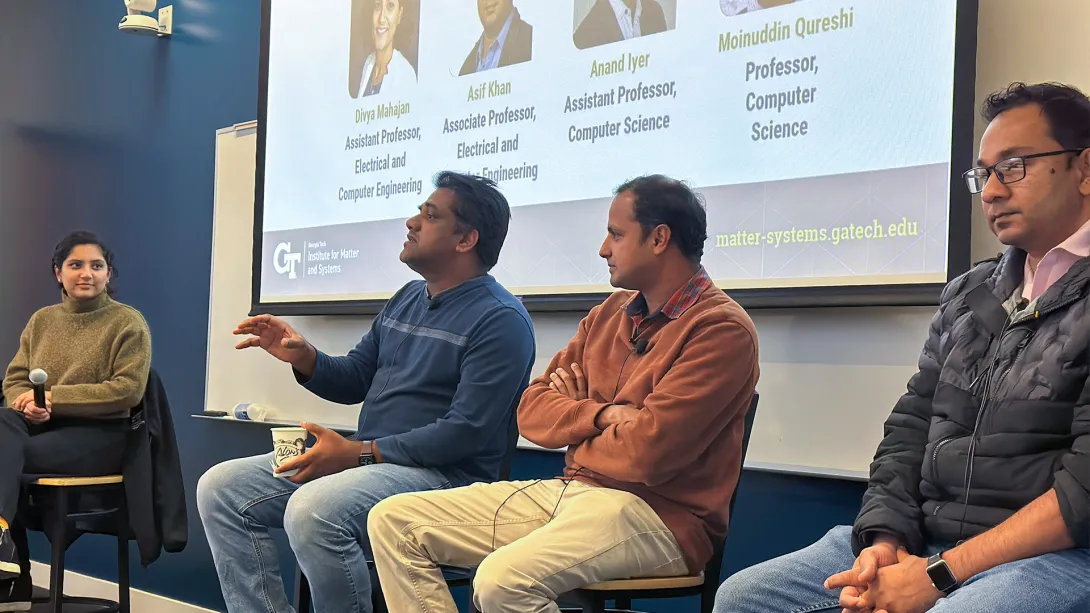
The Institute for Matter and Systems (IMS) hosted the inaugural Boundaries and Breakthroughs panel on Nov. 11, setting the stage for a new era of interdisciplinary dialogue at Georgia Tech. The event, held in the Marcus Nanotechnology building, brought together experts in electrical engineering, computer architecture, and computer systems design to tackle one of today’s pressing challenges: artificial intelligence (AI) scalability and sustainable high-performance computing.
As one of Georgia Tech’s 11 interdisciplinary research institutes, IMS is designed to break down silos between traditional academic units. By operating core user facilities and fostering collaborative research, IMS creates a unique ecosystem where device-level innovation meets systems-level design. This event personified that mission by connecting researchers who typically work on different ends of the stack.
“We’re looking for opportunities to bring people together to have discussions that are both informative and potentially create a little bit of friction in the best possible way around trending topics in science and engineering,” said Mike Filler, IMS deputy director, during opening remarks.
The panel was moderated by Divya Mahajan, assistant professor in the School of Electrical and Computer Engineering, and featured Moinuddin Qureshi, professor of computer science; Anand Iyer, assistant professor of computer science; and Asif Khan, associate professor in electrical and computer engineering.
The discussion explored the dynamics between compute abundance and energy constraints. As AI models scale up, power consumption has become a societal issue, driving up energy demands and even influencing political conversations. The panelists agreed that the bottleneck isn’t compute — a computer’s ability to process and execute tasks — but data movement. Moving data uses 100 to 1,000 times more energy than computation, making memory systems the critical frontier.
The conversation highlighted how breakthroughs in compute must occur at every layer — from individual devices to full computer systems. At the device level, Khan mentioned emerging memory technologies and “beyond CMOS” approaches such as embedding compute within memory and exploring bio-inspired architectures.
From a computer architecture level, Qureshi advocated rethinking interfaces and creating designs optimized for the future of computing. AI needs regular patterns to work optimally, and current patterns are not set up for that.
“If you want efficiency, design systems that make sense for AI,” Qureshi said. “Develop new interfaces, develop new modules, architectures, and organization that make for a specific pattern.”
At the systems level, Iyer stressed practical strategies like near-memory compute and energy-aware scheduling while acknowledging the need for co-design between hardware and software.
“Now in terms of brains or bio-inspired computing, my conjecture is that there is currently no hardware that is capable of doing it,” Khan said. He also noted that right now, there is no computer or algorithm that has the scale of computing comparable to human brain power.
The panelists didn’t shy away from provocative ideas — such as whether graphic processing units are the final solution for AI and whether matrix multiplication alone can lead to artificial general intelligence. While opinions varied, all agreed that organizations like IMS are key to bringing together diverse expertise to tackle these questions collaboratively.
The Boundaries and Breakthroughs series continues in January with a panel on bioelectronics and medical technologies, reinforcing IMS’s commitment to fostering dialogue that spans the full spectrum of innovation.
News Contact
Amelia Neumeister | Research Communications Program Manager
The Institute for Matter and Systems
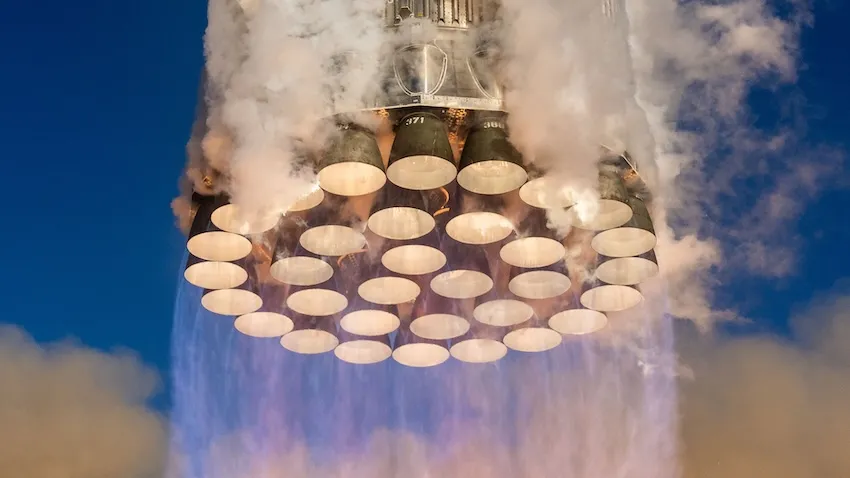
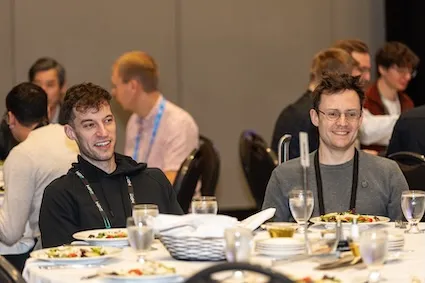
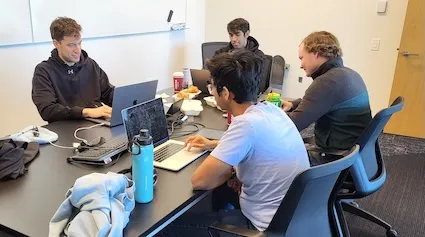
Spaceflight is becoming safer, more frequent, and more sustainable thanks to the largest computational fluid flow simulation ever ran on Earth.
Inspired by SpaceX’s Super Heavy booster, a team led by Georgia Tech’s Spencer Bryngelson and New York University’s Florian Schäfer modeled the turbulent interactions of a 33-engine rocket. Their experiment set new records, running the largest ever fluid dynamics simulation by a factor of 20 and the fastest by over a factor of four.
The team ran its custom software on the world’s two fastest supercomputers, as well as the eighth fastest, to construct such a massive model.
Applications from the simulation reach beyond rocket science. The same computing methods can model fluid mechanics in aerospace, medicine, energy, and other fields. At the same time, the work advances understanding of the current limits and future potential of computing.
The team finished as runners-up for the 2025 Gordon Bell Prize for its impactful, multi-domain research. Referred to as the Nobel Prize of supercomputing, the award was presented at the world’s top conference for high-performance computing (HPC) research.
“Fluid dynamics problems of this style, with shocks, turbulence, different interacting fluids, and so on, are a scientific mainstay that marshals our largest supercomputers,” said Bryngelson, an assistant professor with the School of Computational Science and Engineering (CSE).
“Larger and faster simulations that enable solutions to long-standing scientific problems, like the rocket propulsion problem, are always needed. With our work, perhaps we took a big dent out of that issue.”
The Super Heavy booster reflects the space industry’s move toward reusable multi-engine first-stage rockets that are easier to transport and more economical overall.
However, this shift creates research and testing challenges for new designs.
Each of Super Heavy’s 33 thrusters expels propellant at ten times the speed of sound. As individual engines reach extreme temperatures, pressures, and densities, their combined interactions with the airframe make such violent physics even more unpredictable.
Frequent physical experiments would be expensive and risky, so scientists rely on computer models to supplement the engineering process.
Bryngelson’s flagship Multicomponent Flow Code (MFC) software anchored the experiment. MFC is an open-source computer program that simulates fluid dynamic models. Bryngelson’s lab has been modifying MFC since 2022 to run on more powerful computers and solve larger problems.
In computing terms, this MFC-enhanced model simulated fluid flow resolution at 200 trillion grid points and one quadrillion degrees of freedom. These metrics exceeded previous record-setting benchmarks that tallied 10 trillion and 30 trillion grid points.
This means MFC simulations provide greater detail and capture smaller-scale features than previous approaches. The rocket simulation also ran four times faster and achieved 5.7 times the energy efficiency of comparable methods.
Integrating information geometric regularization (IGR) into MFC played a key role in attaining these results. This new approach improved the simulation’s computational efficiency and overcame the challenge of shock dynamics.
In fluid mechanics, shock waves occur when objects move faster than the speed of sound. Along with hampering the performance of airframes and propulsion systems, shocks have historically been difficult to simulate.
Computational scientists have used empirical models based on artificial viscosity to account for shocks. Although these approaches mimic the physical effects of shock waves at the microscopic scale, they struggle to effectively capture the large-scale features of the flow.
Information geometry uses curved spaces to study concepts of statistics and information. IGR uses these tools to modify the underlying geometry in fluid dynamics equations. When traveling in the modified geometry, fluid in the model preserves the shocks in a more natural way.
“When regularizing shocks to much larger scales relevant in these numerical simulations, conventional methods smear out important fine-scale details,” said Schäfer, an assistant professor at NYU’s Courant Institute of Mathematical Sciences.
“IGR introduces ideas from abstract math to CFD that allow creating modified paths that approach the singularity without ever reaching it. In the resulting fluid flow, shocks never become too spiky in simulations, but the fine-scale details do not smear out either.”
Simulating a model this large required the Georgia Tech researchers to run MFC on El Capitan and Frontier, the world's two fastest supercomputers.
The systems are two of four exascale machines in existence. This means they can solve at least one quintillion (“1” followed by 18 zeros) calculations per second. If a person completed a simple math calculation every second, it would take that person about 30 billion years to reach one quintillion operations.
Frontier is housed at Oak Ridge National Laboratory and debuted as the world’s first exascale supercomputer in 2022. El Capitan surpassed Frontier when Lawrence Livermore National Laboratory launched it in 2024.
To prepare MFC for performance on these machines, Bryngelson’s lab followed a methodical approach spanning years of hardware acquisition and software engineering.
In 2022, Bryngelson attained an AMD MI210 GPU accelerator. Optimizing MFC on the component played a critical step toward preparing the software for exascale machines.
AMD hardware underpins both El Capitan and Frontier. The MI300A GPU powers El Capitan while Frontier uses the MI250X GPU.
After configuring MFC on the MI210 GPU, Bryngelson’s lab ran the software on Frontier for the first time during a 2023 hackathon. This confirmed the code was ready for full-scale deployment on exascale supercomputers based on AMD hardware.
In addition to El Capitan and Frontier, the simulation ran on Alps, the world’s eight-fastest supercomputer based at the Swiss National Supercomputing Centre. It is the largest available system that features the NVIDIA GH200 Grace Hopper Superchip.
Like with AMD GPUs, Bryngelson acquired four GH200s in 2024 and began configuring MFC to the latest hardware innovation powering New Age supercomputers. Later that year, the Jülich Research Centre accepted Bryngelson’s group into an early access program to test JUPITER, a developing supercomputer based on the NVIDIA superchip.
The group earned a certificate for scaling efficiency and node performance on the way toward validating that their code worked on the GH200. The early access project proved successful for JUPITER, which launched in 2025 as Europe’s fastest supercomputer and fourth fastest in the world.
“Getting the level of hands-on experience with world-leading supercomputers and computing resources at Georgia Tech through this project has been a fantastic opportunity for a grad student,” said CSE Ph.D. student Ben Wilfong.
“To leverage these machines, I learned more advanced programming techniques that I’m glad to have in my tool belt for future projects. I also enjoyed the opportunity to work closely with and learn from industry experts from NVIDIA, AMD, and HPE/Cray.”
El Capitan, Frontier, JUPITER, and Alps maintained their rankings at the 2025 International Conference for High Performance Computing Networking, Storage and Analysis (SC25). Of note, the TOP500 announced at SC25 that JUPITER surpassed the exaflop threshold.
The SC Conference Series is one of two venues where the TOP500 announces updated supercomputer rankings every June and November. The TOP500 ranks and details the 500 most powerful supercomputers in the world.
The SC Conference Series serves as the venue where the Association for Computing Machinery (ACM) presents the Gordon Bell Prize. The annual award recognizes achievement in HPC research and application. The Tech-led team was among eight finalists for this year’s award.
Along with Bryngelson, Georgia Tech members included Ph.D. students Anand Radhakrishnan and Wilfong, postdoctoral researcher Daniel Vickers, alumnus Henry Le Berre (CS 2025), and undergraduate student Tanush Prathi.
Schäfer’s partnership with the group stems from his previous role as an assistant professor at Georgia Tech from 2021 to 2025.
Collaborators on the project included Nikolaos Tselepidis and Benedikt Dorschner from NVIDIA, Reuben Budiardja from ORNL, Brian Cornille from AMD, and Stephen Abbot from HPE. All were co-authors of the paper and named finalists for the Gordon Bell Prize.
“I’m elated that we have been nominated for such a prestigious award. It wouldn't have been possible without the combined and diligent efforts of our team,” Radhakrishnan said.
“I’m looking forward to presenting our work at SC25 and connecting with other researchers and fellow finalists while showcasing seminal work in the field of computing.”
News Contact
Bryant Wine, Communications Officer
bryant.wine@cc.gatech.edu
People seeking mental health support are increasingly turning to large language models (LLMs) for advice.
However, most popular AI-powered chatbots are not trained to recognize when someone is in crisis. LLMs also cannot determine when to refer someone to a human specialist.
New Georgia Tech research projects that address these issues may soon provide people seeking mental health support with safer experiences.
Google has awarded research grants to three faculty members from the School of Interactive Computing to study artificial intelligence (AI), trust, safety, and security. The grants were among dozens awarded by the company to researchers across the country.
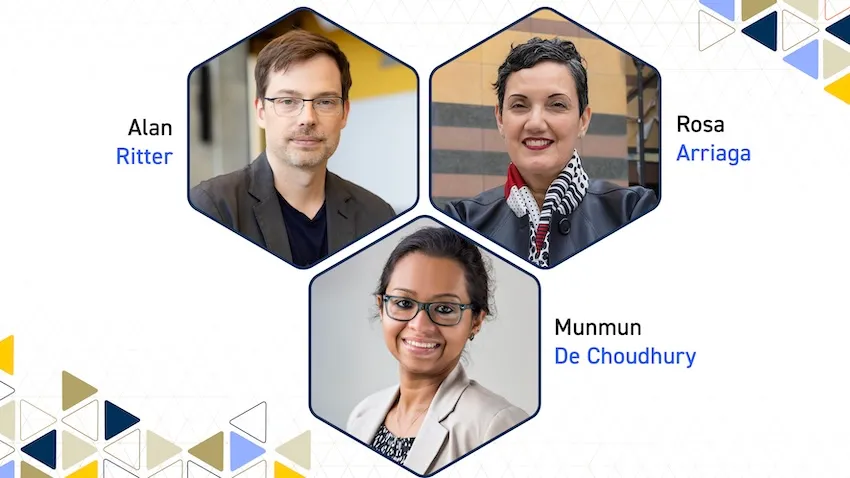
Professor Munmun De Choudhury, Associate Professor Rosa Arriaga, and Associate Professor Alan Ritter are among the recipients of the 2025 Google Academic Research Awards.
Their projects will explore questions like:
- What harms could occur if people consult LLMs for mental health advice?
- Which groups are most at risk of receiving harmful guidance?
- When should an LLM stop responding and refer someone to a human professional?
De Choudhury and Arriaga will examine how LLMs might harm people seeking mental health care.
De Choudhury’s work focuses on spotting when chatbot conversations go wrong and lead users toward self-harm. She is also studying design changes that could prevent these situations.
Her project, Exiting Harmful Reliance: Identifying Crises & Care Escalation Needs, is in partnership with Angel Hsing-Chi Hwang from the University of Southern California. Together, they will review real and synthetic chat transcripts with clinicians to find language patterns that signal risk.
“A chatbot will always give a response and keep talking to you for however long you want,” De Choudhury said. “That may not be a good thing for someone in crisis. We need to know when the right response is to stop and suggest talking to a human.”
Understanding Risks for Low-Income Users
Arriaga’s project, Dull, Dirty, Dangerous: Investigating Trust of Digital Resources Among Low-SES Mental Health Care Seekers, looks at how LLMs affect people with low socioeconomic status (SES).
Dull, dirty, and dangerous is a phrase used to describe work that is well-suited for robot automation because they are repetitive, physically taxing, or hazardous for humans. Arriaga said she adapted these terms for her research to create a taxonomy of the harms AI can cause to people seeking mental health care.
Arriaga also wants to label the trust factors that chatbots have that attract low-SES users to seek their advice, and how these may differ for adults and adolescents across contexts.
“We know one of the reasons some users go to LLMs is because they aren’t insured and can’t afford a therapist,” she said. “LLMs are available 24-7. Maybe it doesn’t start as a trust issue. Maybe it starts with availability.
“Some of these human-AI conversations that result in harmful mental health advice didn’t begin on the topic of mental health. In one case, the person started going to the machine for help with homework.
“Then this relationship evolved into personal matters. Should we constrain the system to limit itself to helping someone with their homework and not wander off that subject into mental health matters?”
Managing Privacy Risks for Social Media
Ritter will use the Google award to advance research on social media privacy tools, including interactive AI agents that help people make more informed decisions about what they share online.
His project, AI Tools to Help Users Make Informed Decisions About Online Information Sharing, focuses on reducing privacy risks in both text and images by identifying when posts reveal more than users intend.
“We’ve been developing methods to assess risks in text, and now we’re extending that work to images,” Ritter said. “People post photos without realizing how easily they can be geolocated by advanced AI systems. A casual selfie near home might contain subtle cues about where you live, like a street sign, that reveal private details.”
The project aims to create AI agents that review content within user posts, flag elements that pose risk, and suggest safer alternatives. Ritter said he wants people to maintain control over their privacy without limiting freedom of expression.
Ritter will deploy advanced reasoning models capable of probabilistic privacy estimation. These systems can infer how identifiable a piece of text might be or how likely an image is to reveal a user’s location.
For images, Ritter and his collaborators will use models that identify geolocatable features, allowing users to edit or hide them before posting.
For more on Ritter’s research, read how an LLM he co-developed protects the privacy of users on social media.
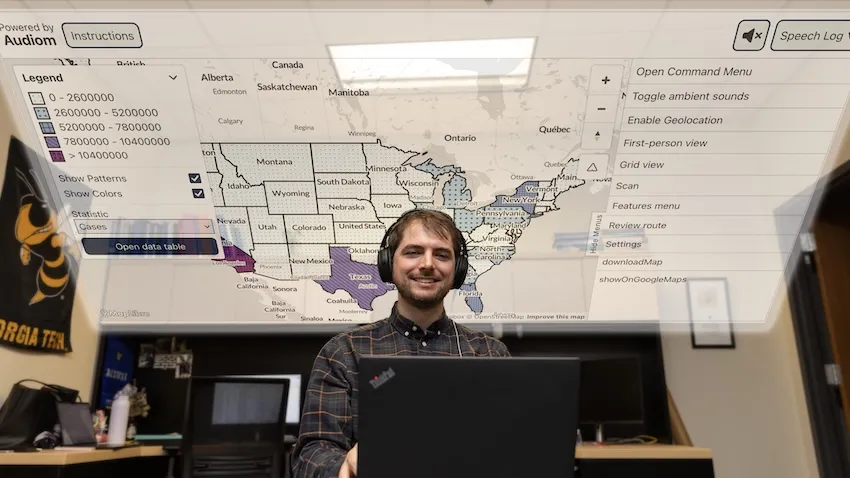
“Map region. Graphic clickable. Blank.”
That’s usually the only information Brandon Biggs receives from digital maps.
Biggs is a human-centered computing Ph.D. student in Georgia Tech’s School of Interactive Computing. He is almost totally blind due to Leber’s Congenital Amaurosis (LCA), a rare degenerative eye disorder affecting about one in 40,000 people.
Based on his experience, Biggs argues that most digital maps aren’t accessible to people who are blind. Even worse, he said, the needs of the blind are usually overlooked.
“When I started research on maps, I had never viewed a weather, campus, or building map, so I didn’t realize the amount of information maps contain,” Biggs said. “How do you represent shapes, orientation, and layout through audio and translate that into a geographic map?”
To answer these questions, Biggs founded XRNavigation, a company focused on developing accessible digital tools. Its flagship product, Audiom, is a cross-sensory map that people can see and hear through text.
“Sighted people view about 300 maps per year, while blind people view fewer than one,” he said. “Blind people don’t view maps; it’s not part of their lives.
“I want to ensure that for blind users, digital maps are no longer just ‘blank.’ They receive the information they need to know to navigate in this world and become more autonomous.”
Organizations that need to include accessible maps in their digital spaces can integrate Audiom into their website or app.
Georgia Tech recently became one such organization and used Audiom to introduce the first fully accessible digital campus map.
Professor Bruce Walker advises Biggs in Walker’s Sonification Lab, which designs auditory displays for technologies.
“Brandon has the perfect and unique blend of technical skills, research savvy, innovativeness, lived experience, and never-stop attitude to tackle this problem while impacting and improving many lives,” Walker said.
Defining Accessibility
Biggs said most maps limit accessibility features to turn-by-turn directions, tables, or other kinds of alternative text that disregard spatial information. The ability to communicate spatial information distinguishes Audiom.
“According to Web Content Accessibility Guidelines (WCAG), all non-text content — like maps — must include a text alternative with an equivalent purpose,” Biggs said. “But what does ‘equivalent purpose’ mean for geographic maps?
“We argue that every single map, regardless of what it’s showing, communicates general spatialized information and relationships.”
Audiom also prioritizes the information that’s most important to blind users, including sidewalks and buildings.
“There’s a lot of information blind people just don’t get on maps but desperately need,” he said. “They couldn’t care less about the roads. They might need the road name, but they really need the sidewalks.
“If a blind person made a map, they might not even add the roads. And then they would add in the location of doorways, a critical detail that sighted people completely leave out.”
Biggs’s work is already gaining national recognition. XRNavigation was recently one of three companies selected by the Global Accessibility Awareness Day (GAAD) Foundation for a 2025 Gaady Award, which honors work being done to make digital technologies more accessible.
Past and present winners of Gaady Awards range from tech startups to major brands like T-Mobile.
Biggs will accept the award during a banquet on Thursday in San Francisco.
311 chatbots make it easier for people to report issues to their local government without long wait times on the phone. However, a new study finds that the technology might inhibit civic engagement.
311 systems allow residents to report potholes, broken fire hydrants, and other municipal issues. In recent years, the use of artificial intelligence (AI) to provide 311 services to community residents has boomed across city and state governments. This includes an artificial virtual assistant (AVA) developed by third-party vendors for the City of Atlanta in 2023.
Through survey data, researchers from Tech’s School of Interactive Computing found that many residents are generally positive about 311 chatbots. In addition to eliminating long wait times over the phone, they also offer residents quick answers to permit applications, waste collection, and other frequently asked questions.
However, the study, which was conducted in Atlanta, indicates that 311 chatbots could be causing residents to feel isolated from public officials and less aware of what’s happening in their community.
Jieyu Zhou, a Ph.D. student in the School of IC, said it doesn’t have to be that way.
Uniting Communities
Zhou and her advisor, Assistant Professor Christopher MacLellan, published a paper at the 2025 ACM Designing Interactive Systems (DIS) Conference that focuses on improving public service chatbot design and amplifying their civic impact. They collaborated with Professor Carl DiSalvo, Associate Professor Lynn Dombrowski, and graduate students Rui Shen and Yue You.
Zhou said 311 chatbots have the potential to be agents that drive community organization and improve quality of life.
“Current chatbots risk isolating users in their own experience,” Zhou said. “In the 311 system, people tend to report their own individual issues but lose a sense of what is happening in their broader community.
“People are very positive about these tools, but I think there’s an opportunity as we envision what civic chatbots could be. It’s important for us to emphasize that social element — engaging people within the community and connecting them with government representatives, community organizers, and other community members.”
Zhou and MacLellan said 311 chatbots can leave users wondering if others in their communities share their concerns.
“If people are at a town hall meeting, they can get a sense of whether the problems they are experiencing are shared by others,” Zhou said. “We can’t do that with a chatbot. It’s like an isolated room, and we’re trying to open the doors and the windows.”
Adding a Human Touch
In their paper, the researchers note that one of the biggest criticisms of 311 chatbots is they can’t replace interpersonal interaction.
Unlike chatbots, people working in local government offices are likely to:
- Have direct knowledge of issues
- Provide appropriate referrals
- Empathize with the resident’s concerns
MacLellan said residents are likely to grow frustrated with a chatbot when reporting issues that require this level of contextual knowledge.
One person in the researchers’ survey noted that the chatbot they used didn’t understand that their report was about a sidewalk issue, not a street issue.
“Explaining such a situation to a human representative is straightforward,” MacLellan said. “However, when the issue being raised does not fall within any of the categories the chatbot is built to address, it often misinterprets the query and offers information that isn’t helpful.”
The researchers offer some design suggestions that can help chatbots foster community engagement and improve community well-being:
- Escalation. Regarding the sidewalk report, the chatbot did not offer a way to escalate the query to a human who could resolve it. Zhou said that this is a feature that chatbots should have but often lack.
- Transparency. Chatbots could provide details about recent and frequently reported community issues. They should inform users early in the call process about known problems to help avoid an overload of user complaints.
- Education. Chatbots can keep users updated about what’s happening in their communities.
- Collective action. Chatbots can help communities organize and gather ideas to address challenges and solve problems.
“Government agencies may focus mainly on fixing individual issues,” Zhou said, “But recognizing community-level patterns can inspire collective creativity. For example, one participant suggested that if many people report a broken swing at a playground, it could spark an initiative to design a new playground together—going far beyond just fixing it.”
These are just a few examples of things, the researchers argue, that 311 services were originally designed to achieve.
“Communities were already collaborating on identifying and reporting issues,” Zhou said. “These chatbots should reflect the original intentions and collaboration practices of the communities they serve.
“Our research suggests we can increase the positive impact of civic chatbots by including social aspects within the design of the system, connecting people, and building a community view.”