
The United States has prepared for decades to defend itself from every conceivable military conflict on its shores, but it turns out psychological warfare, not missiles, might pose the greatest threat to national security.
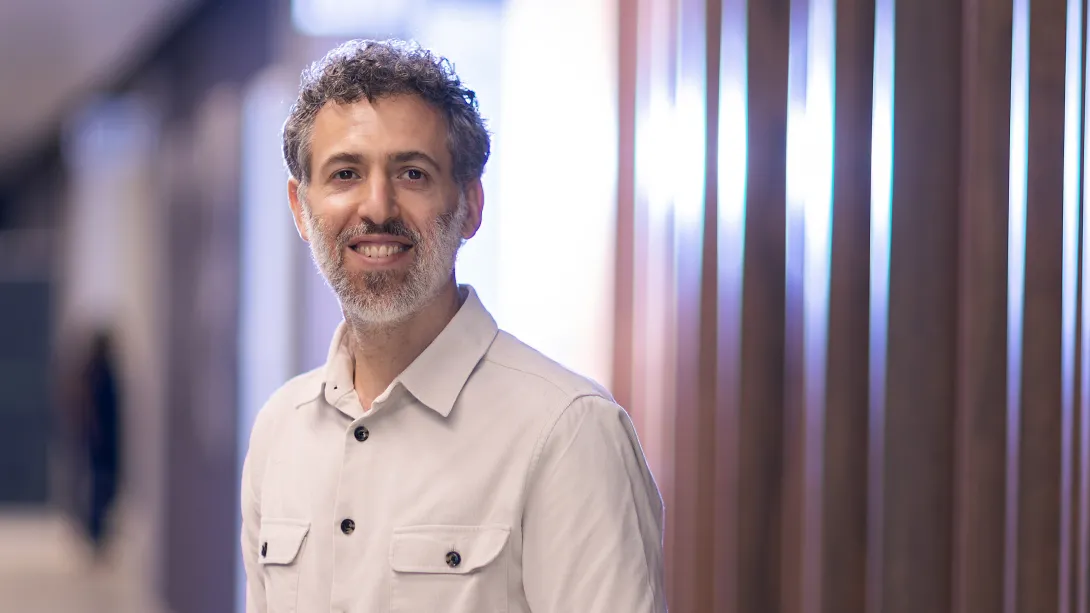
This is a challenge Assistant Professor Ryan Shandler will spend the next two years exploring as a recipient of the Young Faculty Award from the Defense Advanced Research Projects Agency (DARPA).
DARPA uses this award to recognize up-and-coming early-career faculty it hopes to continue working with in the future.
Currently, DARPA is concerned with cyberattacks from foreign countries aimed at provoking social unrest and eroding public trust in democratic institutions. In a study released last year by Microsoft, it was estimated that 600 million cyberattacks were launched everyday by criminals and nation-state actors from July 2023 to July 2024.
Tools built by cybersecurity engineers help mitigate the attacks made by criminals and in some cases even help track down stolen money. However, nation-state actors don’t launch cyberattacks to score a payday.
Instead, they attack things like power plants or voting precincts as a show of strength. Exposing these vulnerabilities shows how unsafe life could be, and these actors want nothing more than to cause total panic.
So now instead looking only to hardware and software for the solution to this problem, DARPA is investing in the human dimension of cybersecurity.
This area has long been a focus of Shandler’s research, making him uniquely qualified to confront this previously overlooked vulnerability. His past experiments have already shown how cyberattacks generate severe public anxiety and prompt calls for physical military retaliation.
For this new project, he will track a controlled population of several thousand people by exposing them to simulated cyberattacks. At no point will the participants be made to think the attacks are real. Shandler and his team will then interview the participants to gauge how their experience impacted their perception of security.
“We are looking to see which groups are more susceptible to this kind of cumulative threat. Once we model the risk, the next step will be building countermeasures to defend against it,” he said.
However, creating a defense system that promotes societal resilience will be as challenging as it is revolutionary.
"I'm fortunate to be conducting this research in an interdisciplinary unit like the School of Cybersecurity and Privacy. Tackling a challenge of this scale requires computer scientists and social scientists working side by side,” Shandler said.
“Alone, neither field stands a chance—but together, we stand a real chance of success."
Shandler is jointly appointed with the School of Cybersecurity and Privacy and the Sam Nunn School of International Affairs.
News Contact
John Popham Communications Officer II | School of Cybersecurity and Privacy
A new educational initiative is set to teach Atlanta high school students how to create electronics, wearable devices, and other technologies that are built on paper and craft materials.
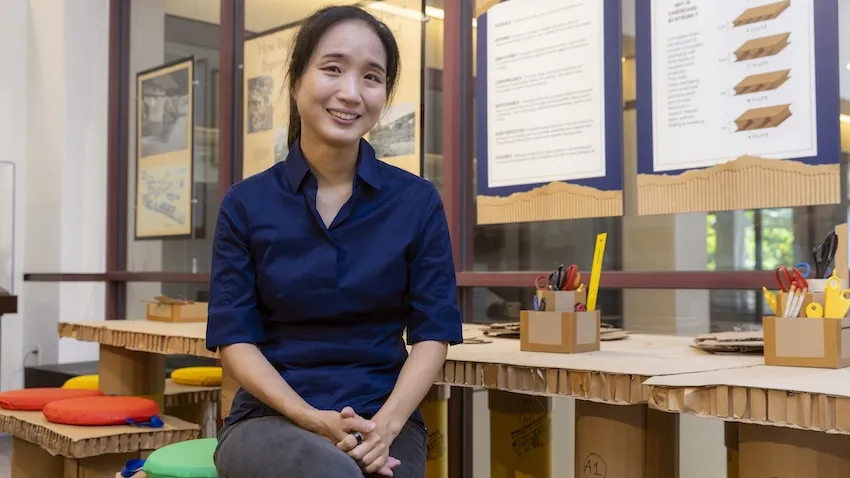
Workshops hosted by the Robert C. Williams Museum of Papermaking and led by Georgia Tech Assistant Professor HyunJoo Oh will introduce about 60 students from Atlanta Public Schools to paper-based electronics through hands-on workshops.
The Williams Museum will open an exhibit titled “The Future of Paper” that displays designs created in the workshop alongside visionary examples of paper-based technologies from Georgia Tech researchers.
The exhibit, funded by the National Science Foundation, is slated to open to the public in 2027.
Oh is a researcher with joint appointments in the School of Interactive Computing and the School of Industrial Design.She leads the Computational Design and Craft (CoDe Craft) Group at Georgia Tech, where her team integrates everyday craft materials with computing to support creative exploration.
Oh believes paper could be widely used to support prototyping printed circuit boards (PCBs) as a sustainable alternative to silicon. While silicon is the most prominent material used by technology companies to build computer chips, it isn’t biodegradable. And it can be harmful to the environment and contribute to e-waste.
Paper, however, provides an eco-friendly platform for printing conductive traces and mounting small electronic components. With the expansion of printed electronic tools and techniques, paper and similar materials have become more popular among technologists who develop sensing technologies and wearable devices.
“It’s widely available and accessible,” Oh said. “I can’t think of anything more affordable and approachable that young makers and the broader maker community can use for circuits than paper.
“Printed electronics traditionally required expensive equipment, but with recent innovation in materials science, conductive materials such as conductive pens and paint available in local arts and crafts stores can be used to build circuits on paper. We can also print circuits using a regular office inkjet printer with silver ink.”
Shared Vision
Shortly after arriving at Georgia Tech in 2019, Oh knew she had to develop a project that would let her partner with the Williams Museum.
“I was captivated by the museum’s space and its celebration of paper,” she said. “I wanted a collaboration that would integrate technology in a way that complemented and respected the museum’s existing beauty.”
Museum director Virginia Howell said the project was a perfect match for the museum, which has documented the history of papermaking since it was founded in 1939 by the Massachusetts Institute of Technology. Georgia Tech became the new home of the museum in 2003.
With more than 100,000 objects in its collection — some dating back as far as 2,000 years ago — the museum is unique, Howell said. Most papermaking museums are typically located at an historic mill, but the Williams Museum covers the history of papermaking.
Howell said that before she met Oh, she had been looking for an exhibit that would display the possible future of papermaking.
“We do the past of paper fantastically well, and we do the present of paper well through our changing exhibitions,” Howell said. “The future of paper is something we haven’t spent a lot of time interpreting.”
Crafting the Future
Oh and Howell agree that young people will shape that future. Oh said paper is commonly linked to art in the education sphere. As the material’s use in technology increases, however, it can funnel the interests of students toward engineering and computing.
Incorporating paper and craft materials can invite more students to explore engineering and computing concepts. After all, a circuit board created on paper isn’t so different from one built on a silicon PCB, Oh said.
“This approach can excite the kind of students who usually feel disconnected from electronics and computing,” she said. “It gives those who only see themselves as creative or artistic a way to enjoy technology and resonate with it.
“Usually when I work with young students, especially girls, if I start with something technical, their interest wanes. But when I present those same ideas through art using familiar materials like paper, they become more engaged and confident. That’s when they start to flourish.”
Oh and Howell will hold three rounds of 10-week workshops for the students — spring 2026, fall 2026, and spring 2027. The best designs from those workshops will be displayed in the exhibit.
“They’ll feel more comfortable with computing and engineering as an introductory experience,” Howell said. “When they successfully build on it and realize they did this on a sheet of paper, it’s exciting to think what they’ll do when they get more sophisticated tools and access.”
The general theme of the journal is the development and solution of problems that are adequately motivated to deal with important aspects of the design and/or analysis of transportation systems.
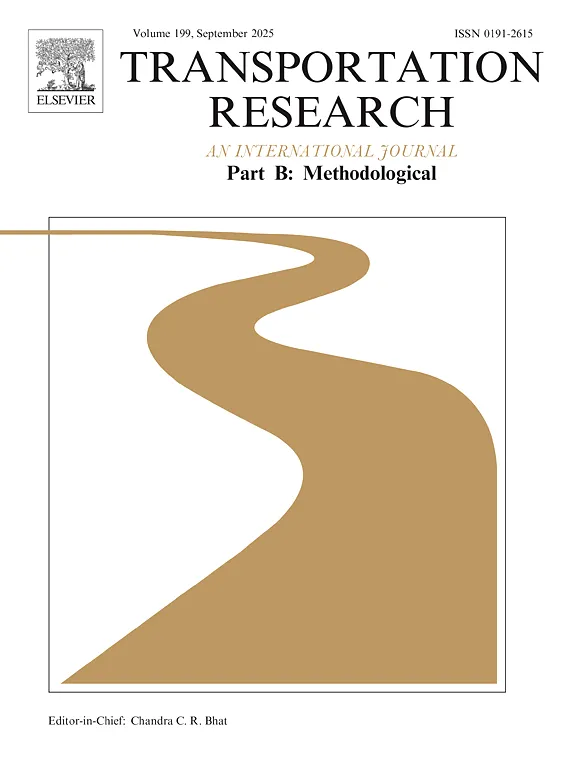
Srinivas Peeta, the Frederick R. Dickerson Chair in Transportation Systems at Georgia Tech’s School of Civil and Environmental Engineering, has been appointed Co-Editor-in-Chief of Transportation Research Part B: Methodological. This prestigious journal focuses on the mathematical and analytical foundations of transportation systems, addressing critical challenges in areas such as traffic flow, network design, control and scheduling, optimization, queuing theory, logistics, and behavioral modeling.
Transportation Research Part B complements other journals in the series—Part A (Policy and Practice), Part C (Emerging Technologies), and Part D (Transport and Environment)—forming a comprehensive suite of publications that collectively represent the forefront of transportation science. The journal serves a diverse and specialized audience, including operations researchers, logisticians, economists, econometricians, mathematical modelers, transportation engineers, geographers, and planners.
Professor Peeta brings decades of experience to this role. His research spans dynamic traffic assignment, congestion mitigation, and the development of resilient transportation networks. His association with Transportation Research Part B began in the early 1990s as a reviewer, and he has since published approximately 25 papers in the journal. Since 2019, he has served as an Associate Editor, playing a key role in managing the editorial process and upholding the journal’s high standards.
Please join us in congratulating Professor Peeta for this well-earned recognition. We are confident he will continue to guide Transportation Research Part B with excellence and vision, shaping the future of transportation research.
News Contact
info@scl.gatech.edu
A new educational initiative is set to teach Atlanta high school students how to create electronics, wearable devices, and other technologies that are built on paper and craft materials.
Workshops hosted by the Robert C. Williams Museum of Papermaking and led by Georgia Tech Assistant Professor HyunJoo Oh will introduce about 60 students from Atlanta Public Schools to paper-based electronics through hands-on workshops.
The Williams Museum will open an exhibit titled “The Future of Paper” that displays designs created in the workshop alongside visionary examples of paper-based technologies from Georgia Tech researchers.
The exhibit, funded by the National Science Foundation, is slated to open to the public in 2027.
Oh is a researcher with joint appointments in the School of Interactive Computing and the School of Industrial Design.She leads the Computational Design and Craft (CoDe Craft) Group at Georgia Tech, where her team integrates everyday craft materials with computing to support creative exploration.
Oh believes paper could be widely used to support prototyping printed circuit boards (PCBs) as a sustainable alternative to silicon. While silicon is the most prominent material used by technology companies to build computer chips, it isn’t biodegradable. And it can be harmful to the environment and contribute to e-waste.
Paper, however, provides an eco-friendly platform for printing conductive traces and mounting small electronic components. With the expansion of printed electronic tools and techniques, paper and similar materials have become more popular among technologists who develop sensing technologies and wearable devices.
“It’s widely available and accessible,” Oh said. “I can’t think of anything more affordable and approachable that young makers and the broader maker community can use for circuits than paper.
“Printed electronics traditionally required expensive equipment, but with recent innovation in materials science, conductive materials such as conductive pens and paint available in local arts and crafts stores can be used to build circuits on paper. We can also print circuits using a regular office inkjet printer with silver ink.”
Shared Vision
Shortly after arriving at Georgia Tech in 2019, Oh knew she had to develop a project that would let her partner with the Williams Museum.
“I was captivated by the museum’s space and its celebration of paper,” she said. “I wanted a collaboration that would integrate technology in a way that complemented and respected the museum’s existing beauty.”
Museum director Virginia Howell said the project was a perfect match for the museum, which has documented the history of papermaking since it was founded in 1939 by the Massachusetts Institute of Technology. Georgia Tech became the new home of the museum in 2003.
With more than 100,000 objects in its collection — some dating back as far as 2,000 years ago — the museum is unique, Howell said. Most papermaking museums are typically located at an historic mill, but the Williams Museum covers the history of papermaking.
Howell said that before she met Oh, she had been looking for an exhibit that would display the possible future of papermaking.
“We do the past of paper fantastically well, and we do the present of paper well through our changing exhibitions,” Howell said. “The future of paper is something we haven’t spent a lot of time interpreting.”
Crafting the Future
Oh and Howell agree that young people will shape that future. Oh said paper is commonly linked to art in the education sphere. As the material’s use in technology increases, however, it can funnel the interests of students toward engineering and computing.
Incorporating paper and craft materials can invite more students to explore engineering and computing concepts. After all, a circuit board created on paper isn’t so different from one built on a silicon PCB, Oh said.
“This approach can excite the kind of students who usually feel disconnected from electronics and computing,” she said. “It gives those who only see themselves as creative or artistic a way to enjoy technology and resonate with it.
“Usually when I work with young students, especially girls, if I start with something technical, their interest wanes. But when I present those same ideas through art using familiar materials like paper, they become more engaged and confident. That’s when they start to flourish.”
Oh and Howell will hold three rounds of 10-week workshops for the students — spring 2026, fall 2026, and spring 2027. The best designs from those workshops will be displayed in the exhibit.
“They’ll feel more comfortable with computing and engineering as an introductory experience,” Howell said. “When they successfully build on it and realize they did this on a sheet of paper, it’s exciting to think what they’ll do when they get more sophisticated tools and access.”
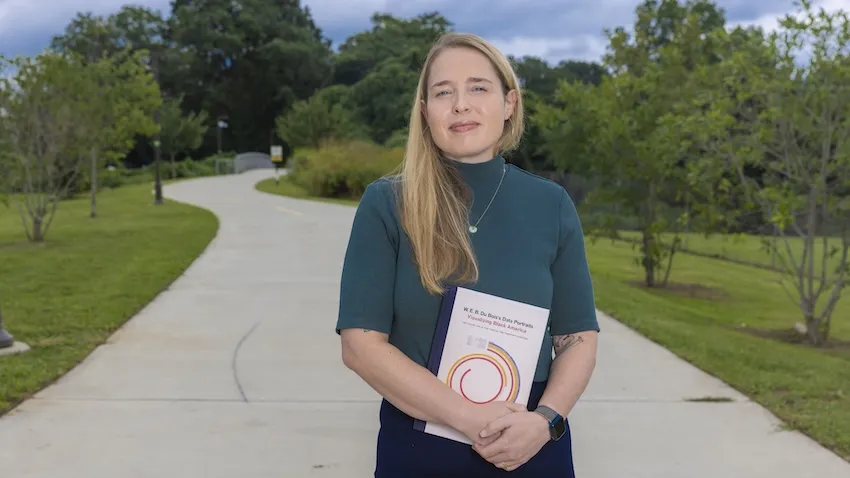
Research Scientist Amanda Meng
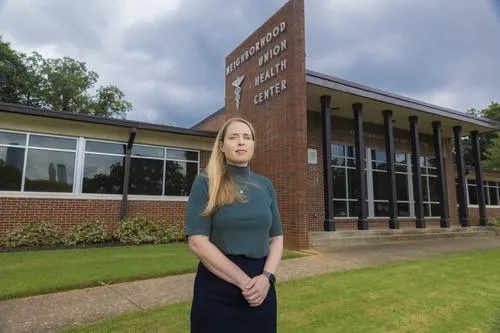
Amanda Meng
As technology becomes increasingly intertwined with all aspects of society, more researchers are interested in how to use these tools to advance social equity.
One of these researchers is Amanda Meng, senior research scientist in the School of Computer Science (SCS). The overarching theme in Meng’s work is the relationship between power and data and how different social groups can make use of data to shift power.
As the only social scientist in SCS, Meng sees her role as an “important and potentially powerful interdisciplinary connection.”
Connecting Social Justice with Data
Although focused on political and social change, Meng’s work has always had links to technology.
After completing her undergraduate education at Georgia Tech, Meng joined the Peace Corps, where she served in the Dominican Republic. She spent two years there working to improve computer literacy in schools and create community computer labs.
Meng said her time in the Peace Corps made her interested in how communities advocated for themselves. She explored this idea further while completing her Ph.D. from the Georgia Tech Sam Nunn School of International Affairs.
With her Ph.D. in hand, Meng was hired as a research scientist in SCS, working under Professor Ellen Zegura and School of Interactive Computing Professor Carl DiSalvo on civic data projects based in Atlanta.
This experience made her curious about the interaction between data literacy and civic literacy.
“We live in such a data-fied society that a lot of advocacy work often does involve data because to make your claims legitimate, policy makers want to see and understand the data,” she said.
Following a brief stint in the private sector as a data consultant, Meng returned to SCS, this time as a research scientist working on IODA (Internet Outage Detection and Analysis) with Associate Professor Alberto Dainotti. IODA is a research project and online platform that provides real-time measurements on global internet connectivity.
In her contribution to the IODA project, Meng aims to improve the usability of IODA, particularly by users affected by government-ordered shutdowns, by developing IODA users’ internet measurement literacy. Currently, IODA provides the most granular, near-real-time data on Internet infrastructure connectivity. Meng uses this data to collaborate with global advocacy groups to publish reports detailing IODA’s measurements alongside its sociopolitical context. Meng said the eventual goal of her work with IODA is for others to know how to use the platform to monitor for events and advocate against shutdowns.
“The platform is really only as successful as its userbase is at understanding, making use, and acting on its data,” Meng said.
In the past year, Meng was awarded her first grant as principal investigator. The grant uses Aggie, an open-source tool developed at Tech that aggregates content from the internet.
Previously, Aggie has been used to monitor elections on social media. Meng said she wants to explore using it to monitor internet shutdowns or censorship events. She is currently conducting a pilot study to test the system, which will determine whether Aggie offers a more collaborative and coordinated way to monitor connectivity across measurement and social media data.
The Role of a Research Scientist
As a research scientist, almost all of Meng’s work is oriented toward research. This includes working on proposals and existing grants, as well as advising students.
“We love to involve students in our research,” she said. “We aren’t just here to do research. We are here to involve students in research so they can learn and develop domain skills and research skills.”
Since 2024, Meng has served on the School Advisory Committee in SCS. She says it’s important to have research faculty in service roles, as they have a different set of needs in their position.
“Through the funding we can apply for, the research we do, and the work we do with students, we are an important multiplier for the work that the School wants to cultivate,” Meng said.
Community Driven
Even as a Ph.D. student, Meng said she wanted to contribute to local community groups. An important value she learned in the Peace Corps was to be an active participant in the community she lived in.
Meng started getting involved in a housing justice project in Atlanta’s Westside neighborhood that was collecting data related to their mission. They soon discovered that some residents’ data was more accurate than official records because they lived there.
“We also learned it’s not all about impacting legislation,” Meng said. “It’s about mobilizing resources within the community, and the fact that data could be used to do that was an important finding, and it’s something that I want to continue to draw out with data and AI.”
Meng has continued to work with the group from that project and wants to continue ethnographic research into how data and AI are used to create change.
“AI could have the ability to consolidate power in the hands of those who develop closed-source models," Meng said. "It’s important to study the entities that are developing AI as much as we study the communities that might make use of or be most minoritized by AI."
News Contact
Morgan Usry, School of Computer Science Communications Officer
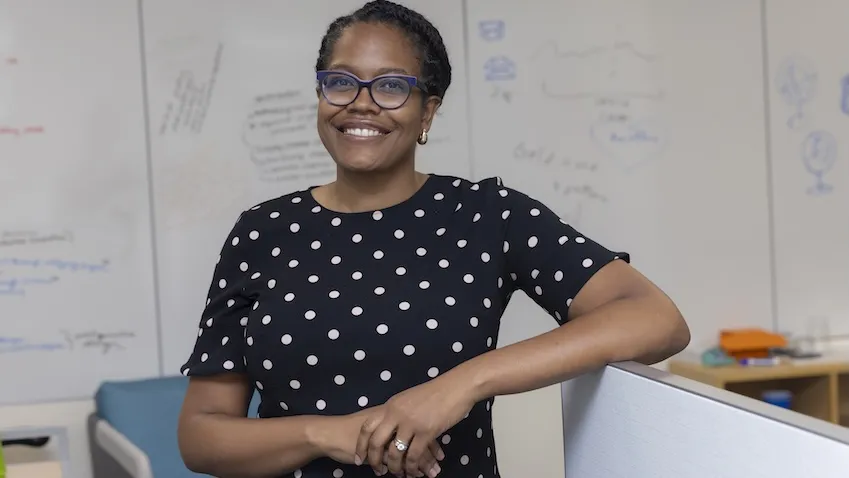
Young people in Atlanta and Boston will be able to lead efforts to improve their communities through new civic technologies supported by Georgia Tech, Northeastern University, and Massachusetts Institute of Technology researchers.
With the help of a $1.25 million grant from the National Science Foundation, the three institutions seek to increase youth input into policymaking and encourage youth-led community organizing.
Youth-designed civic technologies are an effective way to engage youth with their communities, said Andrea Parker, an associate professor in Georgia Tech’s School of Interactive Computing.
Examples of civic technologies are public data initiatives, citizen science projects, public issue reporting platforms, and digital voting platforms. Parker said the perspectives of young people are often neglected in the design of such technologies.
“We don’t know much about what community issues are important to youth because we haven’t asked them,” she said. “What is their vision for community well-being, and what do they want to address through civic technology?”
Parker is the lead principal investigator (PI) on the project that will engage youth from low socio-economic communities in Atlanta and Boston. She said the youth will decide what technologies will be created, but they could include a mobile app or a publicly accessible platform.
“We’re interested in studying how technologies can help youth become more civically engaged in their communities and build social connection, trust, and belonging amongst neighbors,” she said.
“Youth in lower-income neighborhoods face increased threats to their mental health. Socially cohesive communities can counteract those barriers and are essential for youth well-being.”
Parker added that impoverished communities often have less social cohesion compare to wealthier areas. Higher-income neighborhoods often have more access to resources that support social cohesion and civic engagement.
Backed by Data
Brooke Foucault Welles, co-PI, professor, and interim dean at Northeastern’s College of Media, Arts and Design, said she’s interested in seeing which issues the youths from both Atlanta and Boston will address through their design process. Studying and working with youth across these geographic settings will help the team identify how civic technology can best support youth in varied neighborhood contexts.
The project will also advance data literacy among young people as they collect and study data to support the new technologies. Welles said data-centered advocacy increases young people’s chances of being heard by elder community members.
“Empowering young people to use data when they’re making their arguments about what matters to them and to their communities is the point of this project,” she said. “It makes their arguments more compelling if they can present data to the adult members of their communities about what’s going on.”
The project’s reach could expand beyond Atlanta and Boston.
Once the technologies are designed, the researchers will package them and make them publicly available as a toolkit.
If successful, the project could drive a movement toward more collective organizing to ensure the youth perspective gets factored into community decision-making.
“They’re a vital part of our communities, and they’re the ones for whom our decisions have the biggest impact,” Welles said. “These are the times when they’re forming their own civic identities, so engaging them in civic life has long ripple effects. We create more active and thoughtful citizens when we engage young people with civic life.”
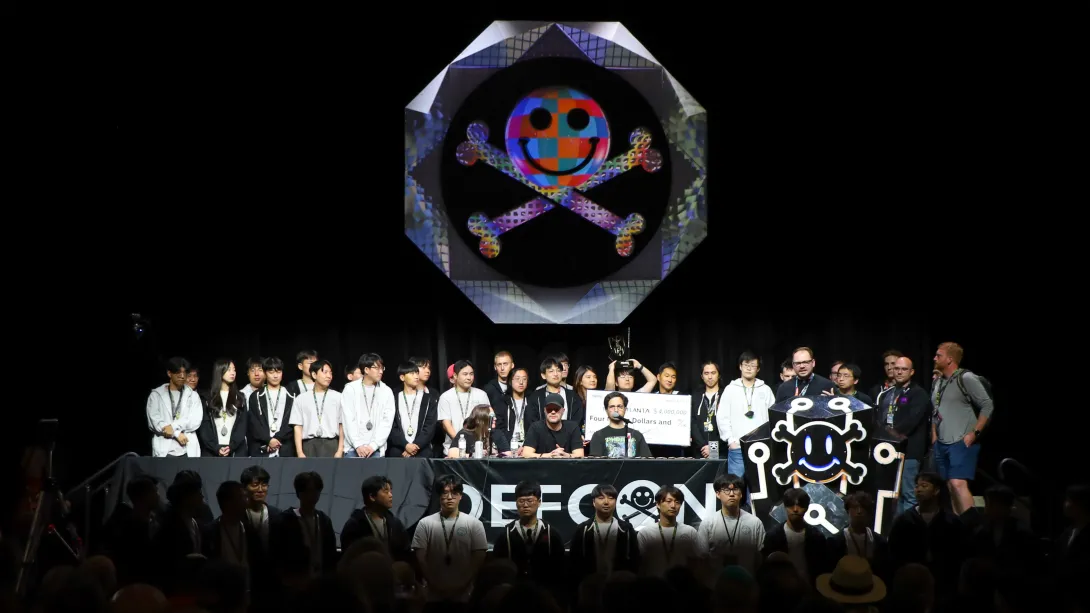
Team Atlanta, a group of Georgia Tech students, faculty, and alumni, achieved international fame on Friday when they won DARPA’s AI Cyber Challenge (AIxCC) and its $4 million grand prize.
AIxCC was a two-year long competition to create an artificial intelligence (AI) enabled cyber reasoning system capable of autonomously finding and patching vulnerabilities.
“This is a once in a generation competition organized by DARPA about how to utilize recent advancements in AI to use in security related tasks,” said Georgia Tech Professor Taesoo Kim.
“As hackers we started this competition as AI skeptics, but now we truly believe in the potential of adopting large language models (LLM) when solving security problems."
The Atlantis system was Team Atlanta’s submission. Atlantis is a fuzzer- or an automated software that finds vulnerabilities or bugs- and enhanced it with several different types of LLMs.
While developing the system, Team Atlanta reported the heat put out by the GPU rack was hot enough to roast marshmallows.
The team was comprised of hackers, engineers, and cybersecurity researchers. The Georgia Tech alumni on the team also represented their employers which include KAIST, POSTECH, and Samsung Research. Kim is also the vice president of Samsung Research.
News Contact
John Popham
Communications Officer II at the School of Cybersecurity and Privacy
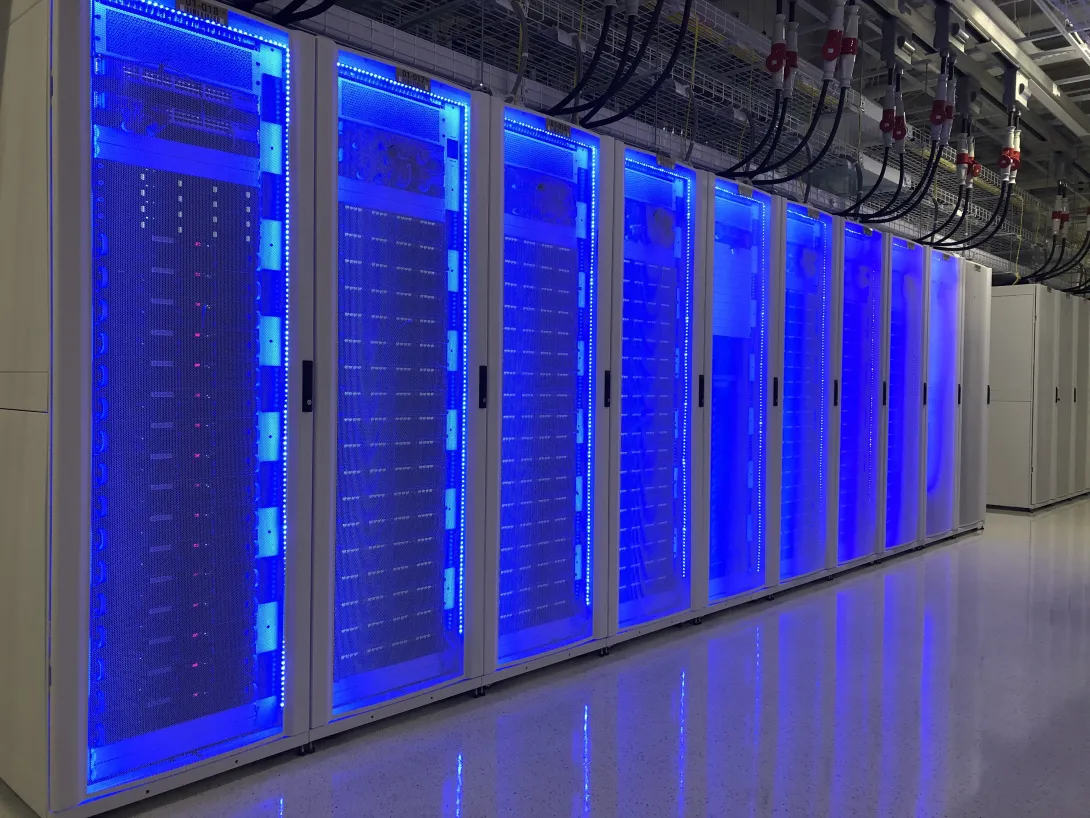
Georgia Tech is also a host to the PACE Hive Gateway supercomputer (above). Nexus will use AI to accelerate scientific breakthroughs.
The National Science Foundation (NSF) has awarded Georgia Tech and its partners $20 million to build a powerful new supercomputer that will use artificial intelligence (AI) to accelerate scientific breakthroughs.
Called Nexus, the system will be one of the most advanced AI-focused research tools in the U.S. Nexus will help scientists tackle urgent challenges such as developing new medicines, advancing clean energy, understanding how the brain works, and driving manufacturing innovations.
“Georgia Tech is proud to be one of the nation’s leading sources of the AI talent and technologies that are powering a revolution in our economy,” said Ángel Cabrera, president of Georgia Tech. “It’s fitting we’ve been selected to host this new supercomputer, which will support a new wave of AI-centered innovation across the nation. We’re grateful to the NSF, and we are excited to get to work.”
Designed from the ground up for AI, Nexus will give researchers across the country access to advanced computing tools through a simple, user-friendly interface. It will support work in many fields, including climate science, health, aerospace, and robotics.
“The Nexus system's novel approach combining support for persistent scientific services with more traditional high-performance computing will enable new science and AI workflows that will accelerate the time to scientific discovery,” said Katie Antypas, National Science Foundation director of the Office of Advanced Cyberinfrastructure. “We look forward to adding Nexus to NSF's portfolio of advanced computing capabilities for the research community.”
Nexus Supercomputer — In Simple Terms
- Built for the future of science: Nexus is designed to power the most demanding AI research — from curing diseases, to understanding how the brain works, to engineering quantum materials.
- Blazing fast: Nexus can crank out over 400 quadrillion operations per second — the equivalent of everyone in the world continuously performing 50 million calculations every second.
- Massive brain plus memory: Nexus combines the power of AI and high-performance computing with 330 trillion bytes of memory to handle complex problems and giant datasets.
- Storage: Nexus will feature 10 quadrillion bytes of flash storage, equivalent to about 10 billion reams of paper. Stacked, that’s a column reaching 500,000 km high — enough to stretch from Earth to the moon and a third of the way back.
- Supercharged connections: Nexus will have lightning-fast connections to move data almost instantaneously, so researchers do not waste time waiting.
- Open to U.S. researchers: Scientists from any U.S. institution can apply to use Nexus.
Why Now?
AI is rapidly changing how science is investigated. Researchers use AI to analyze massive datasets, model complex systems, and test ideas faster than ever before. But these tools require powerful computing resources that — until now — have been inaccessible to many institutions.
This is where Nexus comes in. It will make state-of-the-art AI infrastructure available to scientists all across the country, not just those at top tech hubs.
“This supercomputer will help level the playing field,” said Suresh Marru, principal investigator of the Nexus project and director of Georgia Tech’s new Center for AI in Science and Engineering (ARTISAN). “It’s designed to make powerful AI tools easier to use and available to more researchers in more places.”
Srinivas Aluru, Regents’ Professor and senior associate dean in the College of Computing, said, “With Nexus, Georgia Tech joins the league of academic supercomputing centers. This is the culmination of years of planning, including building the state-of-the-art CODA data center and Nexus’ precursor supercomputer project, HIVE."
Like Nexus, HIVE was supported by NSF funding. Both Nexus and HIVE are supported by a partnership between Georgia Tech’s research and information technology units.
A National Collaboration
Georgia Tech is building Nexus in partnership with the National Center for Supercomputing Applications at the University of Illinois Urbana-Champaign, which runs several of the country’s top academic supercomputers. The two institutions will link their systems through a new high-speed network, creating a national research infrastructure.
“Nexus is more than a supercomputer — it’s a symbol of what’s possible when leading institutions work together to advance science,” said Charles Isbell, chancellor of the University of Illinois and former dean of Georgia Tech’s College of Computing. “I'm proud that my two academic homes have partnered on this project that will move science, and society, forward.”
What’s Next
Georgia Tech will begin building Nexus this year, with its expected completion in spring 2026. Once Nexus is finished, researchers can apply for access through an NSF review process. Georgia Tech will manage the system, provide support, and reserve up to 10% of its capacity for its own campus research.
“This is a big step for Georgia Tech and for the scientific community,” said Vivek Sarkar, the John P. Imlay Dean of Computing. “Nexus will help researchers make faster progress on today’s toughest problems — and open the door to discoveries we haven’t even imagined yet.”
News Contact
Siobhan Rodriguez
Senior Media Relations Representative
Institute Communications
Georgia Tech is also a host to the PACE Hive Gateway supercomputer (above). Nexus will use AI to accelerate scientific breakthroughs.
The National Science Foundation (NSF) has awarded Georgia Tech and its partners $20 million to build a powerful new supercomputer that will use artificial intelligence (AI) to accelerate scientific breakthroughs.
Called Nexus, the system will be one of the most advanced AI-focused research tools in the U.S. Nexus will help scientists tackle urgent challenges such as developing new medicines, advancing clean energy, understanding how the brain works, and driving manufacturing innovations.
“Georgia Tech is proud to be one of the nation’s leading sources of the AI talent and technologies that are powering a revolution in our economy,” said Ángel Cabrera, president of Georgia Tech. “It’s fitting we’ve been selected to host this new supercomputer, which will support a new wave of AI-centered innovation across the nation. We’re grateful to the NSF, and we are excited to get to work.”
Designed from the ground up for AI, Nexus will give researchers across the country access to advanced computing tools through a simple, user-friendly interface. It will support work in many fields, including climate science, health, aerospace, and robotics.
“The Nexus system's novel approach combining support for persistent scientific services with more traditional high-performance computing will enable new science and AI workflows that will accelerate the time to scientific discovery,” said Katie Antypas, National Science Foundation director of the Office of Advanced Cyberinfrastructure. “We look forward to adding Nexus to NSF's portfolio of advanced computing capabilities for the research community.”
Nexus Supercomputer — In Simple Terms
- Built for the future of science: Nexus is designed to power the most demanding AI research — from curing diseases, to understanding how the brain works, to engineering quantum materials.
- Blazing fast: Nexus can crank out over 400 quadrillion operations per second — the equivalent of everyone in the world continuously performing 50 million calculations every second.
- Massive brain plus memory: Nexus combines the power of AI and high-performance computing with 330 trillion bytes of memory to handle complex problems and giant datasets.
- Storage: Nexus will feature 10 quadrillion bytes of flash storage, equivalent to about 10 billion reams of paper. Stacked, that’s a column reaching 500,000 km high — enough to stretch from Earth to the moon and a third of the way back.
- Supercharged connections: Nexus will have lightning-fast connections to move data almost instantaneously, so researchers do not waste time waiting.
- Open to U.S. researchers: Scientists from any U.S. institution can apply to use Nexus.
Why Now?
AI is rapidly changing how science is investigated. Researchers use AI to analyze massive datasets, model complex systems, and test ideas faster than ever before. But these tools require powerful computing resources that — until now — have been inaccessible to many institutions.
This is where Nexus comes in. It will make state-of-the-art AI infrastructure available to scientists all across the country, not just those at top tech hubs.
“This supercomputer will help level the playing field,” said Suresh Marru, principal investigator of the Nexus project and director of Georgia Tech’s new Center for AI in Science and Engineering (ARTISAN). “It’s designed to make powerful AI tools easier to use and available to more researchers in more places.”
Srinivas Aluru, Regents’ Professor and senior associate dean in the College of Computing, said, “With Nexus, Georgia Tech joins the league of academic supercomputing centers. This is the culmination of years of planning, including building the state-of-the-art CODA data center and Nexus’ precursor supercomputer project, HIVE."
Like Nexus, HIVE was supported by NSF funding. Both Nexus and HIVE are supported by a partnership between Georgia Tech’s research and information technology units.
A National Collaboration
Georgia Tech is building Nexus in partnership with the National Center for Supercomputing Applications at the University of Illinois Urbana-Champaign, which runs several of the country’s top academic supercomputers. The two institutions will link their systems through a new high-speed network, creating a national research infrastructure.
“Nexus is more than a supercomputer — it’s a symbol of what’s possible when leading institutions work together to advance science,” said Charles Isbell, chancellor of the University of Illinois and former dean of Georgia Tech’s College of Computing. “I'm proud that my two academic homes have partnered on this project that will move science, and society, forward.”
What’s Next
Georgia Tech will begin building Nexus this year, with its expected completion in spring 2026. Once Nexus is finished, researchers can apply for access through an NSF review process. Georgia Tech will manage the system, provide support, and reserve up to 10% of its capacity for its own campus research.
“This is a big step for Georgia Tech and for the scientific community,” said Vivek Sarkar, the John P. Imlay Dean of Computing. “Nexus will help researchers make faster progress on today’s toughest problems — and open the door to discoveries we haven’t even imagined yet.”
News Contact
Siobhan Rodriguez
Senior Media Relations Representative
Institute Communications
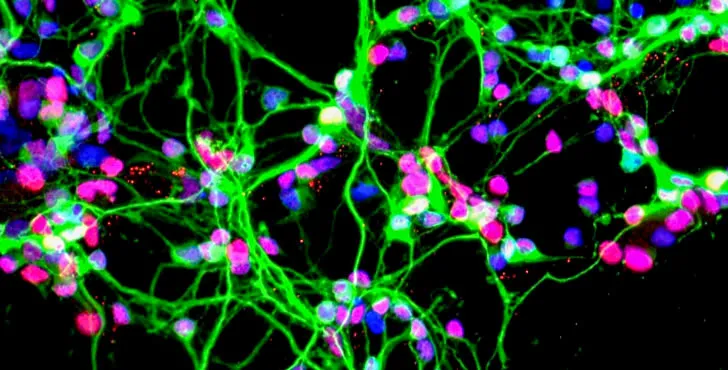
Neurons growing in a culture dish (NASA)
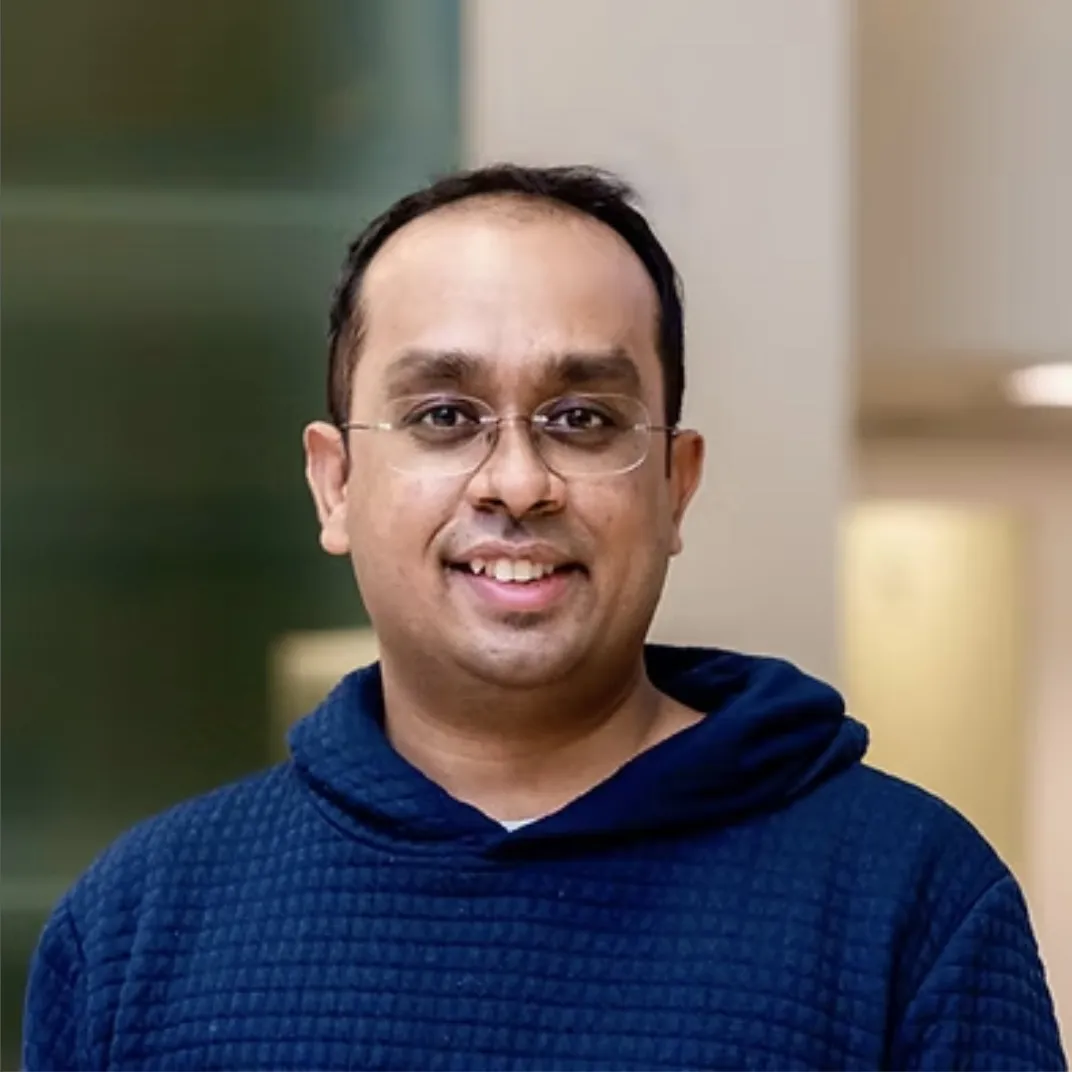
School of Psychology Assistant Professor Apurva Ratan Murty

Graduate Student Mayukh Deb
Researchers at Georgia Tech have taken a critical step forward in creating efficient, useful and brain-like artificial intelligence (AI). The key? A new algorithm that results in neural networks with internal structure more like the human brain.
The study, “TopoNets: High-Performing Vision and Language Models With Brain-Like Topography,” was awarded a spotlight at this year’s International Conference on Learning Representations (ICLR), a distinction given to only 2 percent of papers. The research was led by graduate student Mayukh Deb alongside School of Psychology Assistant Professor Apurva Ratan Murty.
Thirty-two of Tech’s computing, engineering, and science faculty represented the Institute at ICLR 2025, which is globally renowned for sharing cutting-edge research.
“We started with this idea because we saw that AI models are unstructured, while brains are exquisitely organized,” says first-author Deb. “Our models with internal structure showed more than a 20 percent boost in efficiency with almost no performance losses. And this is out-of-the-box — it’s broadly applicable to other models with no extra fine-tuning needed.”
For Murty, the research also underscores the importance of a rapidly growing field of research at the intersection of neuroscience and AI. “There's a major explosion in understanding intelligence right now,” he says. “The neuro-AI approach is exciting because it helps emulate human intelligence in machines, making AI more interpretable.”
“In addition to advancing AI, this type of research also benefits neuroscience because it informs a fundamental question: Why is our brain organized the way it is?,” Deb adds. “Making AI more interpretable helps everyone.”
Brain-inspired blueprints
In the brain, neurons form topographic maps: neurons used for comparable tasks are closer together. The researchers applied this concept to AI by organizing how internal components (like artificial neurons) connect and process information.
This type of organization has been tried in the past but has been challenging, Murty says. “Historically, rules constraining how the AI could structure itself often resulted in lower-performing models. We realized that for this type of biophysical constraint, you simply can’t map everything — you need an algorithmic solution.”
“Our key insight was an algorithmic trick that gives the same structure as brains without enforcing things that models don't respond well to,” he adds. “That breakthrough was what Mayukh (Deb) worked on.”
The algorithm, called TopoLoss, uses a loss function to encourage brain-like organization in artificial neural networks, and it is compatible with many AI systems capable of understanding language and images.
“The resulting training method, TopoNets, is very flexible and broadly applicable,” Murty says. “You can apply it to contemporary models very easily, which is a critical advancement when compared to previous methods.”
Neuro-AI innovations
Murty and Deb plan to continue refining and designing brain-inspired AI systems. “All parts of the brain have some organization — we want to expand into other domains,” Deb says. “On the neuroscience side of things, we want to discover new kinds of organization in brains using these topographic systems.”
Deb also cites possibilities in robotics, especially in situations like space exploration where resources are limited. “Imagine running a model inside a robot with limited power,” he says. “Structured models can help us achieve 80 percent of performance with just 20 percent of energy consumption, saving valuable energy and space. This is still experimental, but it's the direction we are interested in exploring.”
“This success highlights the potential of a new approach, designing systems that benefit both neuroscience and AI — and beyond,” Murty adds. “We can learn so much from the human brain, and this project shows that brain-inspired systems can help current AI be better. We hope our work stimulates this conversation.”
News Contact
Written by Selena Langner
Contact: Jess Hunt-Ralston