

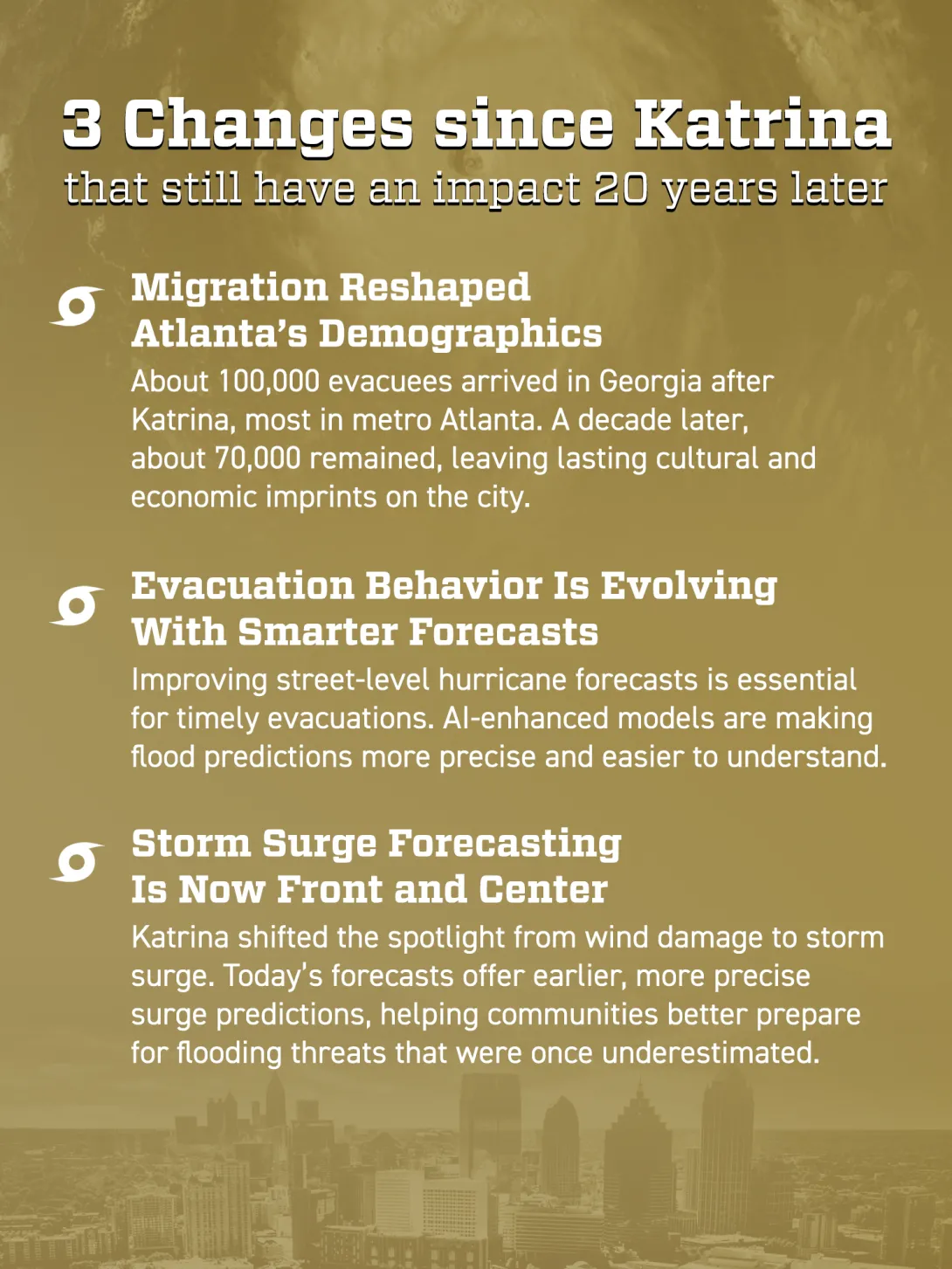
When Hurricane Katrina struck in 2005, it wasn’t just another storm — it was one of the deadliest hurricanes in U.S. history. Entire neighborhoods disappeared, families were scattered, and lives were split into “before” and “after.” Nearly 20 years later, the haunting images of submerged rooftops and boat rescues remain vivid.
The Surge That Shattered New Orleans
On Aug. 29, 2005, early reports claimed New Orleans had “dodged the bullet.” But offshore winds funneled water into the city’s canals, triggering multiple catastrophic levee failures. The Lower Ninth Ward, where most fatalities occurred, was devastated as many residents, misled by comparisons to Hurricane Camille, chose not to evacuate.
“Katrina’s storm surge was exceptional,” says Hermann Fritz, a civil engineering professor at Georgia Tech. “In some areas, we saw water levels over 27 feet — that’s like a three-story building.”
While much attention focused on New Orleans’ levee failures, Fritz points out that the surge’s sheer height and energy would have overwhelmed even more robust defenses in some areas. “Katrina showed us that nature can produce forces beyond our engineering designs,” he says.
A Disaster of Inequality
The storm didn’t strike evenly; it exposed and deepened existing social and economic inequalities. “The disaster hit lower-income Black neighborhoods hardest,” says Allen Hyde, associate professor of history and sociology. He notes how years of segregation, disinvestment, and discriminatory housing policies left these communities uniquely vulnerable. Hyde continues, “Many homes were in low-lying, flood-prone areas, and residents often lacked access to reliable transportation, making evacuation difficult or impossible.”
Georgia’s Changing Landscape: Migration and Impact
Katrina displaced hundreds of thousands and claimed a staggering toll of more than 1,800 lives. Georgia quickly absorbed many evacuees, reshaping its demographics and infrastructure. “Hurricane Katrina led to one of the largest displacements of people due to a natural disaster,” says Shatakshee Dhongde, a professor of economics. “It changed the demographics of Georgia in measurable ways, from school enrollment to the labor market.”
The U.S. Census Bureau tracked this migration, noting spikes in Louisiana-born residents in metro Atlanta. Local school districts enrolled hundreds of new students almost overnight, while housing markets saw increased demand from families looking for permanent homes. The arrival of so many displaced residents didn’t just strain schools and housing — it reshaped the state’s economy. Dhongde notes that evacuees often brought new skills, business ideas, and networks. At the same time, the state and local governments faced the financial burden of expanding social services, healthcare, and housing assistance.
Dhongde adds, “The impact of a disaster doesn’t stop at the water’s edge. It travels with people, and those effects can last for years.” While the influx strained services, it also enriched Georgia’s cultural and economic fabric.
Hyde notes, “Gentrification made many neighborhoods unaffordable for former residents,” and adds that many Black evacuees didn’t return to New Orleans due to economic barriers and post-Katrina gentrification. Cultural communities scattered across cities like Atlanta, Houston, and Baton Rouge.
Lessons the Levees Still Teach
For Fritz, Katrina remains a wake-up call for coastal preparedness. “We can’t stop hurricanes,” he says, “but we can improve how we design and maintain our defenses, and how we evacuate people before it’s too late.” He warns that climate change, with its potential to intensify storms, makes those improvements even more urgent.
Dhongde sees a parallel need for social and economic planning. “Disaster preparedness isn’t just about sandbags and levees,” she says. “It’s also about ensuring the communities receiving evacuees have the resources and support systems to integrate them successfully.”
Finally, Hyde stresses the importance of engaging youth and communities in preparedness efforts. “Youth advocacy programs, like those we’re piloting in Georgia, empower young people in marginalized neighborhoods with knowledge and agency to build long-term resilience. Disaster planning must be a community effort, inclusive and forward-looking.”
News Contact
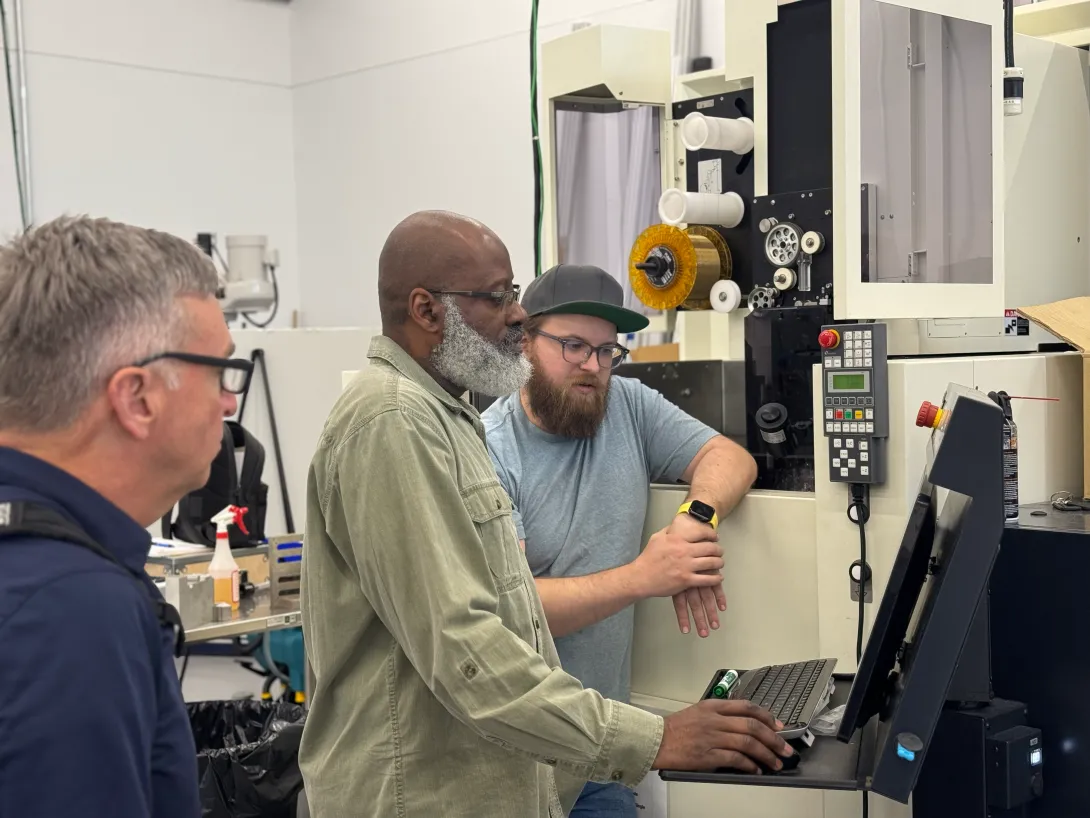
As part of the partnership, Southern Regional Technical College Instructor Marvin Bannister (center) received hands-on training on advanced machining equipment to prepare for teaching Georgia’s next generation of manufacturers. Photo: Audra Davidson.
Thomasville, Georgia, is a hub of training and talent for local manufacturers. But Mason Miller could tell there was something missing.
“We didn't have any training for advanced manufacturing in our area,” said Miller, vice president of Academic Affairs at Southern Regional Technical College (SRTC), which offers education and training programs in technical and manufacturing fields. “Companies had to go out and recruit people from Michigan to run their machines. That's when we said, ‘We don’t want that to happen — we need to be doing that right here.’”
That’s where the Georgia Tech Manufacturing Institute (GTMI) stepped in. Working with partner program Georgia Artificial Intelligence in Manufacturing (Georgia AIM), GTMI helped connect SRTC with the resources and expertise needed to develop a robust training program tailored to the needs of local manufacturers.
Miller said at first, he was skeptical. “When GTMI said they wanted to be partners, I thought, ‘OK, this is another situation where we're going to talk for a minute, everybody says things and then goes away — and that’s it,’” said Miller. “That's not how it's been at all.”
Rather, it’s been a true partnership driven by SRTC, with curriculum focused on automation and robotics developed by the Technical College System of Georgia and GTMI. The curriculum is also shaped by local industry input to directly address workforce gaps in the region’s manufacturing sector.
“As a state institution, we're here to serve you,” said Steven Sheffield, senior assistant director of Research Operations at GTMI and a point person of the partnership. “Tell us the problem, and we will work hard to try to solve it with you.”
Filling the Workforce Gap
Miller was committed to giving SRTC students the advanced manufacturing skills needed to stand out in the workforce. Yet the evolving manufacturing landscape and the needs of local manufacturers revealed gaps in SRTC’s curriculum, particularly in AI, automation, and robotics.
With GTMI and Georgia AIM researchers contributing key expertise to the expanded smart manufacturing curriculum, Miller noted the partnership is “opening our eyes to what we can do with AI. We're going to start integrating that into our programs.”
Beyond AI and robotics, SRTC leadership identified a crucial gap in their program: training in precision machining, a skill that local manufacturers like Check-Mate Industries sorely needed.
“If we want to attract new business and industry to Georgia, we need to be able to show them we can provide a skilled workforce,” said Miller.
To address this missing piece, GTMI and Georgia AIM helped procure funding to acquire and refurbish precision-machining equipment from longtime partner Makino. Georgia AIM also supported the renovation and outfitting of two SRTC lab spaces with additional updated equipment.
Last fall, SRTC launched its new Precision Manufacturing & Engineering and Manufacturing Engineering Technology programs, with instructors trained by GTMI faculty in precision manufacturing. The new program at SRTC is one example of the ways GTMI experts are working with communities across the state to expand access to training and new technology.
“Not a lot of technical colleges have this type of machinery,” said Marvin Bannister, SRTC precision machining and manufacturing program chair. Instructors like Bannister received specialized training at GTMI’s Advanced Manufacturing Pilot Facility to ensure they felt confident teaching students how to operate the machinery. “Not only is it something else to add to my skill set, but the most important thing is that I'll be able to train other students who desire to learn on a machine like this.”
Because of SRTC’s expanded offerings, the technical college has strengthened partnerships and developed new internship programs with local manufacturers. “We all want the same thing,” said Miller, “which is to grow industry partnerships and to create a talent pipeline for our state.”
GTMI and Georgia AIM also support STEM programs with Thomasville area schools and internship programs for K-12 teachers with local manufacturers such as Check-Mate. These efforts deepen the connections between students and manufacturers, opening doors to future careers in the sector.
“We’re here to connect the dots and enable these types of partnerships,” says Steven Ferguson, a principal research scientist with GTMI and co-director of Georgia AIM. “When teams and their networks come together to solve a challenge for just one manufacturer, the impact can reach across an entire region.”
News Contact
Audra Davidson
Research Communications Program Manager
Georgia Tech Manufacturing Institute
Critical Materials 101, a video series breaking down the building blocks of our clean energy future courtesy of the U.S. Department of Energy.
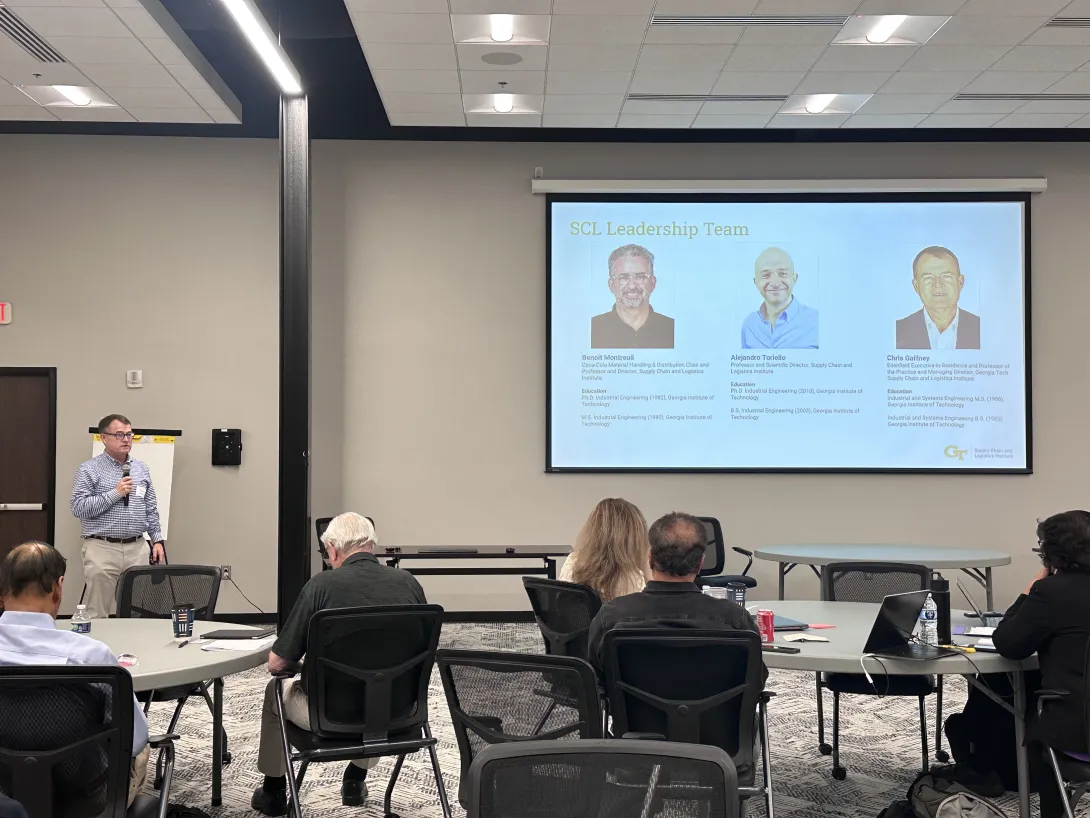
Last month, I had the opportunity to represent Georgia Tech SCL at the joint GEMs-GRACE workshop in Macon, hosted by partners from Georgia Tech, the Georgia Mining Association, and the Middle Georgia Regional Commission. The event brought together 70 participants from 36 organizations across economic development, academia, national labs, non-profits, and industry—underscoring the importance and growing momentum around critical mineral development in our region.
The agenda featured a strong lineup of speakers covering use-inspired R&D, workforce development, translation and commercialization, and ecosystem sustainability. Highlights included insights from leaders at the Strategic Energy Institute, Georgia Cleantech Innovation Hub, Savannah River National Lab, Southern Company, and others. I contributed a perspective on the critical role of supply chain design in optimizing the development of any new critical mineral supply chain—ensuring we design networks from the start that are scalable, resilient, and efficient.
Perhaps the most valuable elements of the day were the breakout sessions and informal networking, where participants explored how we can collectively advance resource development with greater speed, innovation, and shared benefit. The level of engagement and openness to collaboration was impressive.
We’re now turning our attention to shaping a full proposal to support this initiative, and I’m encouraged by the alignment and energy coming out of this session. Many thanks to Dr. Yuanzhi Tang and the organizing team for bringing this community together in such a purposeful way.
Chris Gaffney
Managing Director, Georgia Tech Supply Chain and Logistics Institute
News Contact
info@scl.gatech.edu
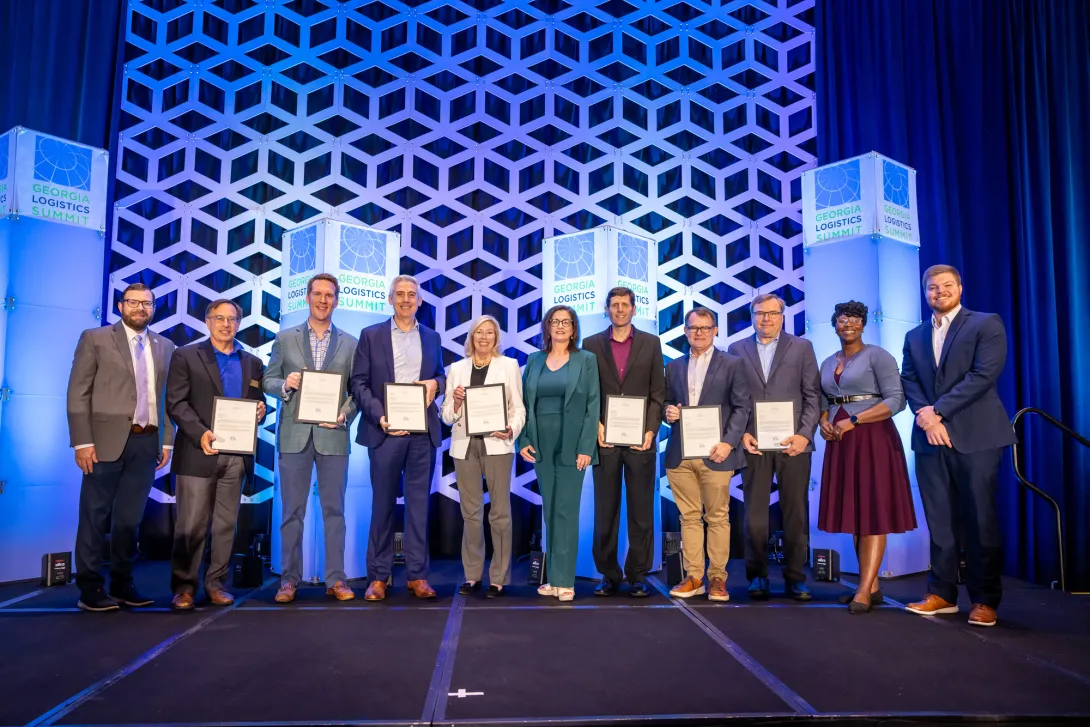
Members of the Georgia Center of Innovation – Logistics Advisory Board gathered at the 2025 Georgia Logistics Summit, where each received a personal note of recognition from Governor Brian Kemp for three years of dedicated service. Their collective efforts have advanced freight and logistics across Georgia—strengthening collaboration between industry, government, and academia to drive the state’s economic growth.
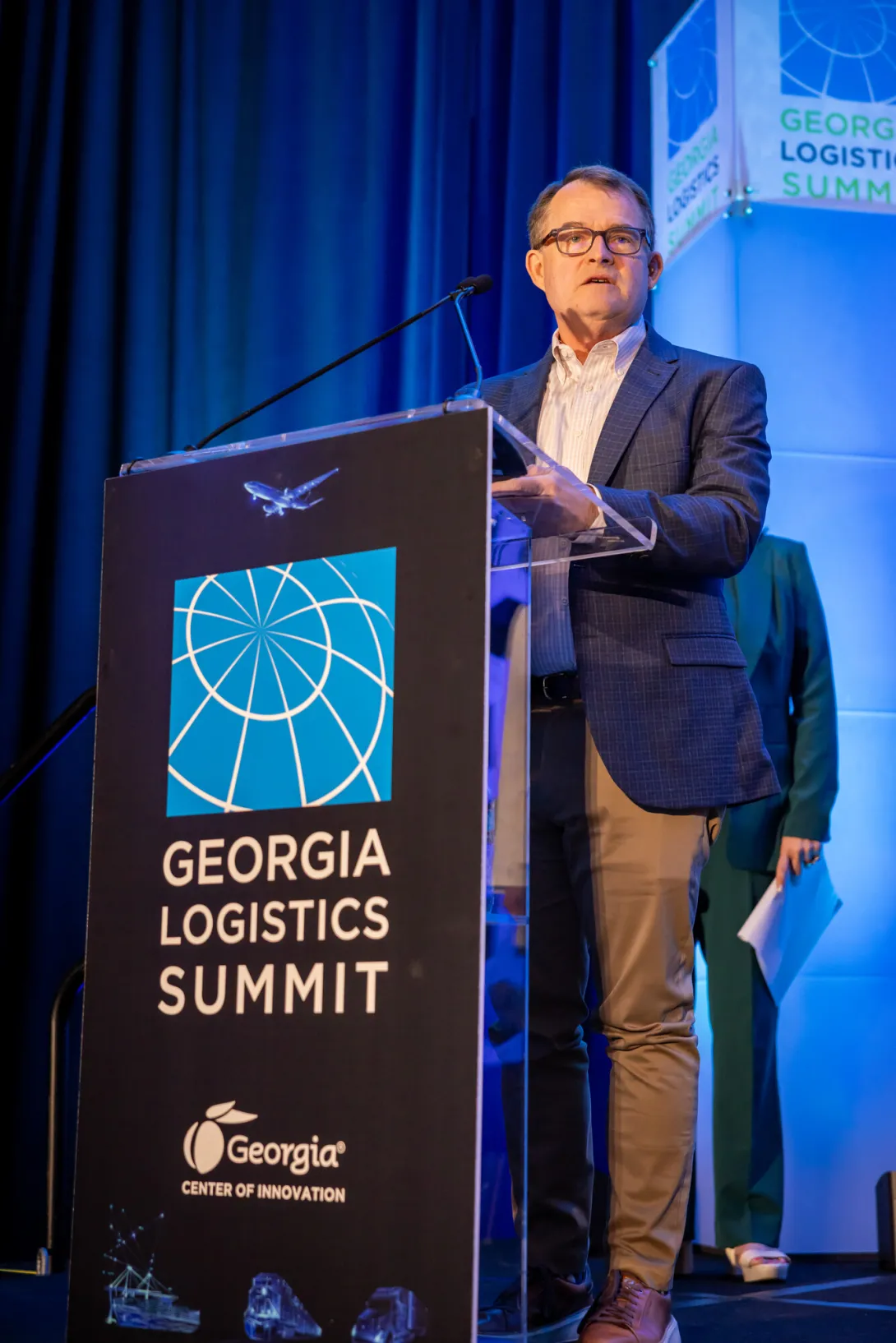
Chris Gaffney of Georgia Tech’s Supply Chain and Logistics Institute addresses the Georgia Logistics Summit, reflecting on the power of public-private collaboration. “It’s that bridge between dialogue and execution that makes this group so valuable. Together, we’re building the capabilities that help Georgia’s communities and businesses grow, thrive, and lead.”

Pascal Van Hentenryck participated in a panel discussion of how AI and digital technologies are reshaping supply chains, including future predictions and real-world examples of their impact on logistics.
The Georgia Center of Innovation, a strategic arm of the Georgia Department of Economic Development (GDEcD), hosted hundreds of attendees at the 2025 Georgia Logistics Summit, where experts offered insights on the intersection of technology and logistics, updates on infrastructure investments, and how the state is preparing the future workforce to support growth. Established in 2009 as the first state-led event of its kind, the Georgia Logistics Summit is one of the Southeast’s key logistics and supply chain events, connecting industry professionals for networking and knowledge-sharing.
The economic impact of Georgia’s transportation and logistics industry was $107 billion in 2023, according to an economic impact study by the University of Georgia’s Selig Center for Economic Growth. These industries supported more than 578,000 Georgia jobs, or one in nine jobs in the state. From 2010 to 2023, transportation and logistics jobs in Georgia grew by 68%, outpacing the national growth rate of 52%. Additionally, in 2023 and 2024 alone, new logistics and distribution sector investments, including cold storage and ecommerce fulfillment centers, totaled $3.8 billion and created over 9,000 new jobs.
“Georgia’s unmatched global connectivity is one of the driving forces behind our economic success. Decades of strategic investment in our logistics and supply chain infrastructure – from our ports and rail lines to our highways and air cargo capabilities – have led to record-breaking economic investments and trade,” said Georgia Department of Economic Development Commissioner Pat Wilson. “The Logistics Summit brings together private sector, government, and education leaders to learn from experts, exchange best practices, and explore opportunities in the rapidly evolving logistics landscape to maximize opportunities. Events like this strengthen collaboration and spark new ideas that keep Georgia businesses competitive on a global scale.”
Georgia Department of Transportation Commissioner Russell R. McMurry highlighted Georgia’s strategic investments and how the Georgia Department of Transportation (GDOT) is leveraging technology to improve freight flow. He cited the leadership of Governor Brian P. Kemp and support from the General Assembly to allocate $1 billion to the newly created Georgia Freight Program over the past two years. Additional investments in transportation infrastructure are advancing the timing for key planned transportation projects that will maintain and improve Georgia’s interstate highway system, roads, and bridges. Georgia’s multimodal transportation network carried nearly half a billion tons of freight in 2019, valued at $673 trillion. Projections show that freight volume is expected to nearly double to 900 million in tonnage and freight value to more than double today’s value by 2050. Working with partners that include the Center of Innovation and the Georgia Institute of Technology, GDOT is focusing on enhancing safety and efficiency, including projects to add 50% more truck parking and installing fiber internet on Georgia interstates.
Georgia Ports Authority Vice President of Operations Susan Gardner provided updates on strategic investments to expand capacity at the ports, and how Georgia Ports Authority (GPA) is leveraging live data to improve safety, track vessel productivity and containers, and eliminate congestion. Gardner emphasized building a technological culture and prioritizing hiring creative employees, as well as harnessing data insights to boost efficiency. GPA is investing in $4.5 billion in improvements over the next decade as part of its port master plan to expand cargo handling capabilities and support future supply chain requirements.
This year’s feature panel, “AI and Beyond: Embracing Digital Transformation in Logistics,” included leadership from The Home Depot, Havertys Furniture, and TOTO USA, as well as research perspectives from the Georgia Institute of Technology. Panelists highlighted the ways digital technologies are reshaping supply chains, including a three- to five-year outlook for the industry, and provided insights attendees can use to shape their strategies to move more efficiently as AI and automation transform the industry.
“Digital technologies are reshaping supply chains in various ways, and Georgia is working to stay ahead of the curve,” said Center of Innovation Executive Director David Nuckolls. “The Center of Innovation and our specialized logistics team work alongside this dynamic industry, helping to position businesses for growth. The annual Georgia Logistics Summit is a powerful opportunity to build connections and equip businesses with crucial knowledge and resources.”
Educating the needed talent was the focus of the event’s final panel, with University System of Georgia Chancellor Sonny Perdue and Technical College System of Georgia Commissioner Greg Dozier providing updates on how the state’s post-secondary institutions are developing a globally competitive workforce. Discussion focused on how these institutions are ensuring the skills they are teaching match the jobs logistics companies are looking for, including creative problem-solving and effective use of new AI and automation tools. The breadth of Georgia’s technical college programs was also discussed, including the High Demand Career Initiatives program and a pilot program called “Dual Achievement” that enrolls students who withdrew from high school in a technical college program, enabling them to earn a high school diploma alongside a technical college certificate, diploma, or degree. Panelists focused on the importance of helping students get where they want to go faster, upskilling the existing workforce, and how connections between industry leaders and educators can help foster greater outcomes.
The Center of Innovation’s Logistics Industry Advisory Board also recognized the winners of the inaugural Future Innovators in Supply Chain competition. The competition invited college students to create videos about supply chain careers, reflecting the Center’s commitment to developing future logistics leaders. Led by professor Parisa Pooyan, student team “The Masters of Logistinomics” from Kennesaw State University won first prize and a $3,000 grant for the university. Eli Hampton, Angeline Harris, Joe Johnson, and Dana Pazhouhesh created the winning video, which can be viewed here.
For additional information on the 2025 Georgia Logistics Summit and to stay up-to-date on next year’s plans, visit galogisticssummit.com.
Participants in the 2025 Georgia Logistics Summit also included leaders from S&P Global Market Intelligence, Boost Phase Ventures, and M.D. Livingstone Consulting.
About the Georgia Center of Innovation
Exclusive to Georgia, the Center of Innovation helps Georgia businesses of all types and sizes find inspired solutions to challenges and opportunities. The Center connects new and expanding businesses with a team of experts, external partners, and independent mentors to tap into the technical expertise and guidance they need. By encouraging collaboration across six key industries: Aerospace, AgTech, Energy Technology, Information Technology, Logistics, and Manufacturing, the Center helps Georgia prepare for growth in strategic industry ecosystems.
About GDEcD
The Georgia Department of Economic Development (GDEcD) is the state’s sales and marketing arm. It is Georgia’s lead agency for attracting new business investment, encouraging the expansion of existing industry and small businesses, and locating new markets for Georgia products. As the state’s official destination marketing organization, it drives traveler visitation and promotes the state as a location for film and digital entertainment projects. GDEcD is responsible for planning and mobilizing state resources for economic development, fostering innovation and the arts to drive opportunity from the mountains to the coast.
News Contact
Allie Dean, Communications Manager, Georgia Department of Economic Development | adean@georgia.org

EmCool, a Georgia Tech spinout, is tackling one of tech’s biggest challenges: overheating.Developed by Ph.D. alum Daniel Lorenzini, EmCool’s patented microfluidic cooling system is embedded directly into silicon chips—making it faster, smaller, and more efficient than traditional fans or heat sinks.
What’s the hottest thing in electronics and high-performance computing? In a word, it’s “cool.”
To be more precise, it’s a liquid cooling system developed at Georgia Tech for electronics aimed at solving a long-standing problem: overheating.
Developed by Daniel Lorenzini, a 2019 Tech graduate who earned his Ph.D. in mechanical engineering, the cooling system uses microfluidic channels — tiny, intricate pathways for liquids — that are embedded within the chip packaging.
He worked with VentureLab, a Tech program in the Office of Commercialization, to spin his research into a startup company, EMCOOL, headquartered in Norcross.
“Our solution directly addresses the heat at the source of the silicon chip and therefore makes it faster,” Lorenzini said. “Our design has our system sitting directly on the silicon chips that generate the most heat. Using the fluids in the micro-pin fins, it carries the heat that’s produced away from the chip.”
That cooling solution is directly integrated into the electronic components, making it significantly more efficient than conventional cooling methods, because it enhances the heat dissipation process.
The result is a much lower risk of overheating and reduced power consumption, he said.
Lorenzini, who researched and refined the technology in the lab of Yogendra Joshi at the George W. Woodruff School of Mechanical Engineering, was awarded a patent for the technology in September 2024.
Now, EMCOOL, which has five empoloyees, is actively pursuing venture capital funding to scale its technology and address the escalating thermal management challenges posed by AI processors in modern data centers.
The system uses a cooling block with tiny, pin-like fins on one side and a special thermal interface material on the other. There's also a junction attached to the block, with ports for the fluid to flow in and out. The cooling fluid moves through the micro-pin fins and helps to carry away the heat.
Since the ports are designed to match the shape of the fins, it ensures that the fluid flows efficiently and the heat is dissipated as effectively as possible at chip-scale.
As electronic devices — from high-performance personal computers to data centers used for artificial intelligence processing — become more powerful, they generate more heat. This excess heat can damage components or cause the device to underperform.
Traditional cooling methods, which include fans or heat sinks, often struggle to keep pace with the increasing demands of the newer model electronics. Lorenzini’s microfluidic system addresses the challenge of overheating with his patented, more effective, compact, and integrated cooling solution.
With the guidance of Jonathan Goldman, director of Quadrant-i in Tech’s Office of Commercialization, Lorenzini secured grant funding through the National Science Foundation and the Georgia Research Alliance to further the research and build design prototypes.
“We immediately had the sense there was commercial potential here,” Goldman said. “Thermal management, or getting rid of heat, is a ubiquitous problem in the computer industry, so when we saw what Daniel was doing, we immediately began to engage with him to understand what the commercial potential was.”
Indeed, the initial focus for the technology was the $159 billion global electronic gaming market. Gamers need a lot of computing power, which generates a lot of heat, causing lag.
But beyond gaming systems, the company, which manufactures custom cooling blocks and kits at its Norcross facility, is eyeing more sectors, which also suffer from overheating, Goldman said.
The technology addresses similar overheating electronics challenges in high-performance computing, telecommunications, and energy systems.
“This work propels us forward in pushing the boundaries of what traditional cooling technologies can achieve because by harnessing the power of microfluidics, EMCOOL's systems offer a compact and energy-efficient way to manage heat,” Goldman said. “This has the potential to revolutionize industries reliant on high-performance computing, where heat management is a constant challenge.”
News Contact
Péralte C. Paul
peralte@gatech.edu
404.316.1210
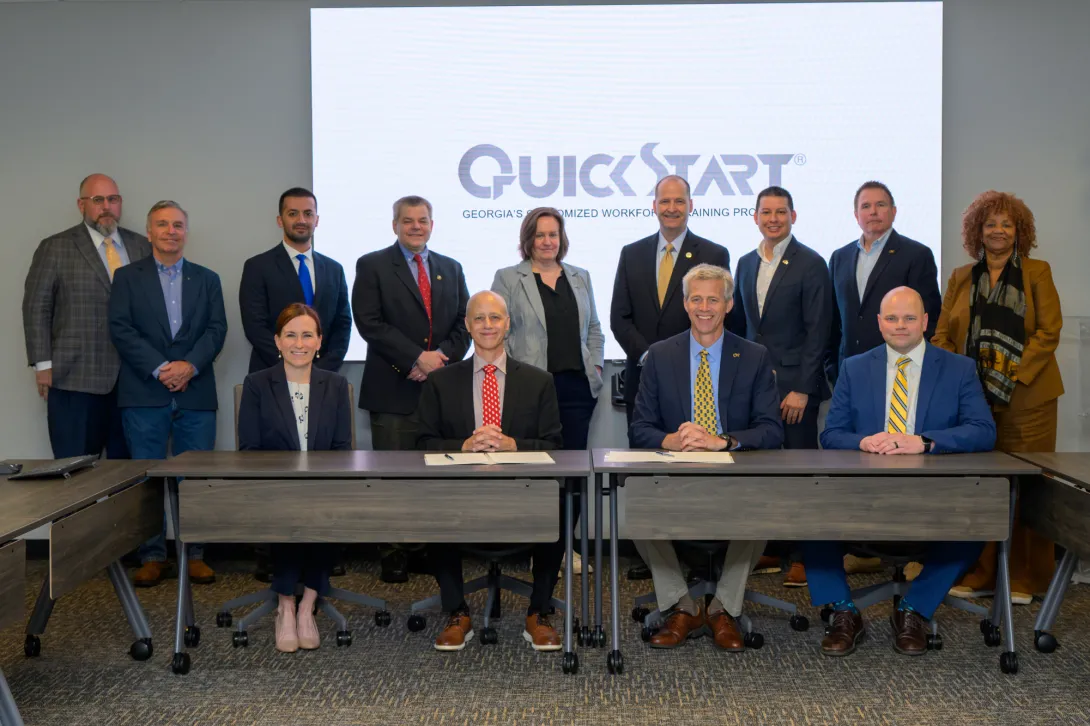
Georgia Quick Start Deputy Commissioner Scott McMurray (center left) and Georgia Tech Executive Vice President for Research Tim Lieuwen (center right) gathered with members of the Georgia Tech Manufacturing Institute, Georgia AIM, and more to officially commemorate the partnership on April 8.
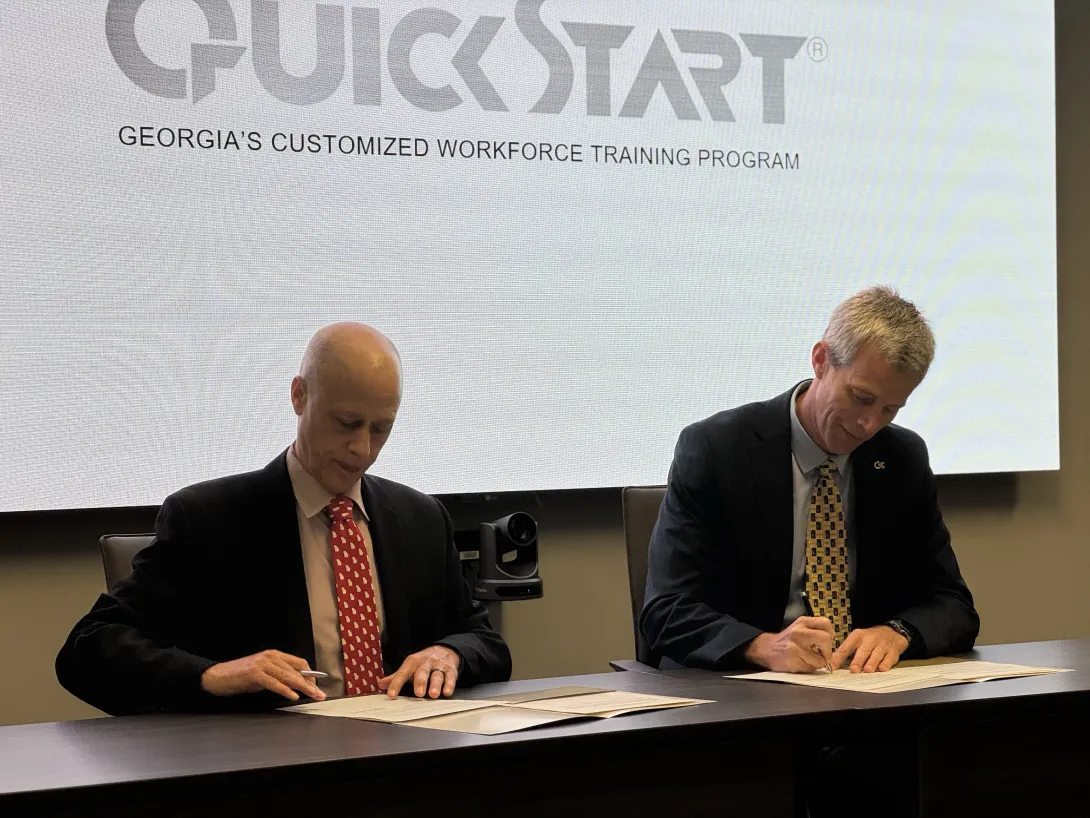
McMurray and Lieuwen signed a Memorandum of Understanding to mark the collaboration.
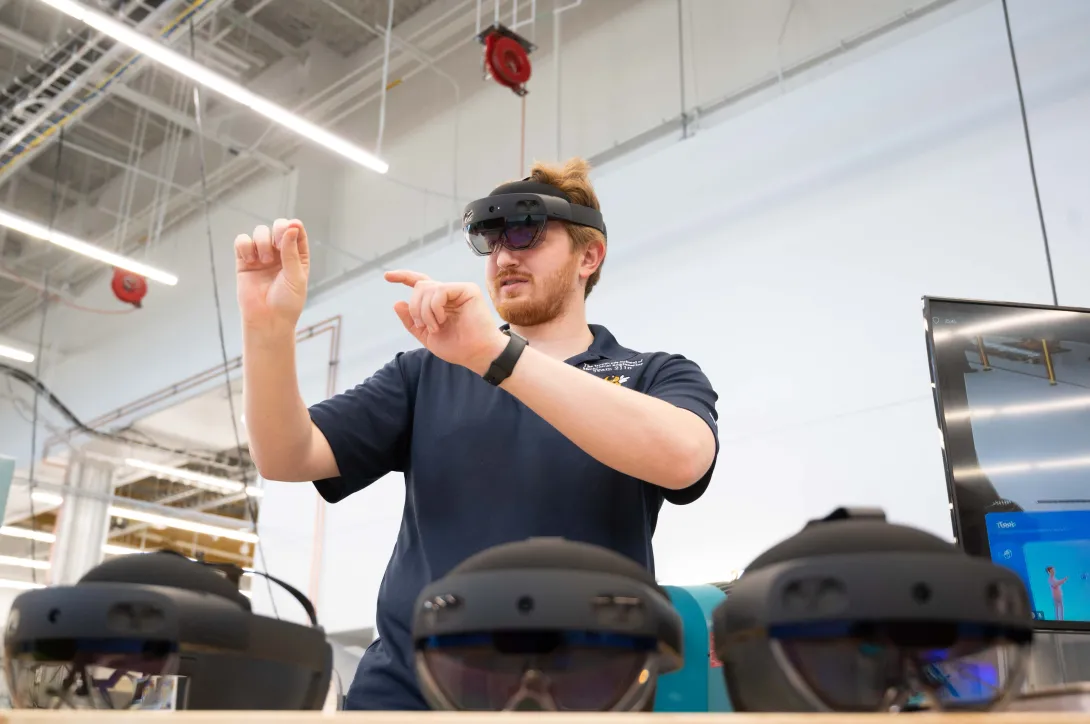
Georgia Tech researchers will work with Georgia Quick Start to develop extended reality training programs for manufacturing workers to make training more consistent and efficient.
In a significant move to bolster Georgia's workforce, Georgia Tech has partnered with Georgia Quick Start to advance manufacturing training and skill development. This collaboration, formalized by the signing of a Memorandum of Understanding on April 8, aims to elevate the quality and efficiency of manufacturing workforce training across the state.
“At Georgia Tech, innovation isn’t just about discovery — it’s about solving real-world challenges,” said Executive Vice President for Research Tim Lieuwen. “Georgia Quick Start ensures that cutting-edge research in advanced manufacturing translates into practical training solutions. Together, we are equipping Georgia’s workforce with the skills needed to drive economic growth and industry advancement.”
As manufacturing technologies and artificial intelligence continue to evolve, U.S. manufacturers increasingly require skilled workers experienced in advanced manufacturing. For decades, Georgia Quick Start, administered by the Technical College System of Georgia, has been addressing this need and has been recognized as the country’s top workforce training program for 15 years.
Now, researchers at Georgia Tech will collaborate with Georgia Quick Start to enhance these efforts by developing Extended Reality (XR) training programs, providing a scalable and experiential solution to meet the growing demand for training.
“We have been so successful for so many years because we stay focused on relevance, flexibility, and responsiveness,” said Scott McMurray, deputy commissioner for Georgia Quick Start. “This partnership is an example of how Quick Start is able to develop and deliver effective training even for companies working on the leading edge of advanced manufacturing technologies.”
Extended Reality, Scaled Training
XR technologies use a combination of virtual and augmented reality to create immersive, interactive experiences. By simulating real-world manufacturing environments and processes, XR has the potential to allow trainees to practice and refine their skills in a controlled, risk-free setting through standardized training experiences. This not only enhances the learning experience but also ensures consistency in training quality across a large workforce.
“Virtual reality scales training by gamifying complex tasks and removing the need for costly or hazardous physical equipment. Augmented reality scales on-the-job training by providing adaptive, context-aware guidance exactly when and where it’s needed, reducing the need for expert supervision,” said manufacturing XR researcher Mohsen Moghaddam, Gary C. Butler Family associate professor in the H. Milton Stewart School of Industrial and Systems Engineering and the George W. Woodruff School of Mechanical Engineering. “Together, they make training more consistent, up-to-date, accessible, and safe, especially for workers who may hesitate to ask for assistance from peers or supervisors out of fear of judgment.”
The collaboration will leverage Moghaddam’s research and the AR/VR training space within the expanded Advanced Manufacturing Pilot Facility, providing a state-of-the-art environment for developing and deploying XR training technologies. Researchers from the Georgia Tech Manufacturing Institute (GTMI) and Georgia AIM(Artificial Intelligence in Manufacturing) will also play pivotal roles in the development of these training programs.
“Partnerships like these highlight the power of the integrated University of Georgia and Technical College System of Georgia’s workforce development ecosystem,” said Thomas Kurfess, Regents’ Professor and GTMI executive director. “Our country not only needs the creation of new jobs but also the skilled workforce to fill them. At Georgia Tech and GTMI, we are serving as an enabler of innovation in that workforce development.”
News Contact
Writer: Audra Davidson
Research Communications Program Manager
Georgia Tech Manufacturing Institute

Matthew Oliver, Associate Professor, School of Economics, Georgia Tech, EPIcenter Faculty Affiliate
Students in Matthew Oliver’s economics of environment and international energy markets classes likely don’t have a clue about his unusual journey to the lectern: “I was bent on being a rock and roll musician from the time I was 16, and so I ended up dropping out of the University of Memphis after just three semesters,” says Oliver, an associate professor in the School of Economics at the Georgia Institute of Technology. “I was on tour for eight years — and I was starting to feel burned out.”
At a crossroads, Oliver decided to end his musical career — a choice he credits with launching him into academia. “I was 28 and wondering what to do with my life, so I reenrolled in college and discovered economics.” With a longtime love of the environment and growing concern for the climate, says Oliver, “I grew fascinated with solar power and other renewables and the new markets emerging around them.”
Today, his work in energy and environmental economics has implications for policies shaping the energy transition, from subsidies for rooftop solar to the expansion of battery storage.
“The current frontier of energy economics is electricity and renewables, and these are areas I am passionate about,” he says.
PVs and amped up electric use
One of Oliver’s core research thrusts is the solar rebound effect (SRE). This phenomenon involves a quirk of human behavior: When people install solar photovoltaic (PV) panels on the roofs of their homes, they often consume more electricity. “The introduction of solar energy does not perfectly displace grid-supplied energy, but instead reduces demand for grid-supplied energy on a less than one-for-one basis, because the household increases its total electricity consumption,” says Oliver. The bottom line: Solar PV systems may not lead to as much carbon emission reduction as anticipated.
News Contact
Written by: Leda Zimmerman
News Contact: Priya Devarajan, SEI Communications Program Manager

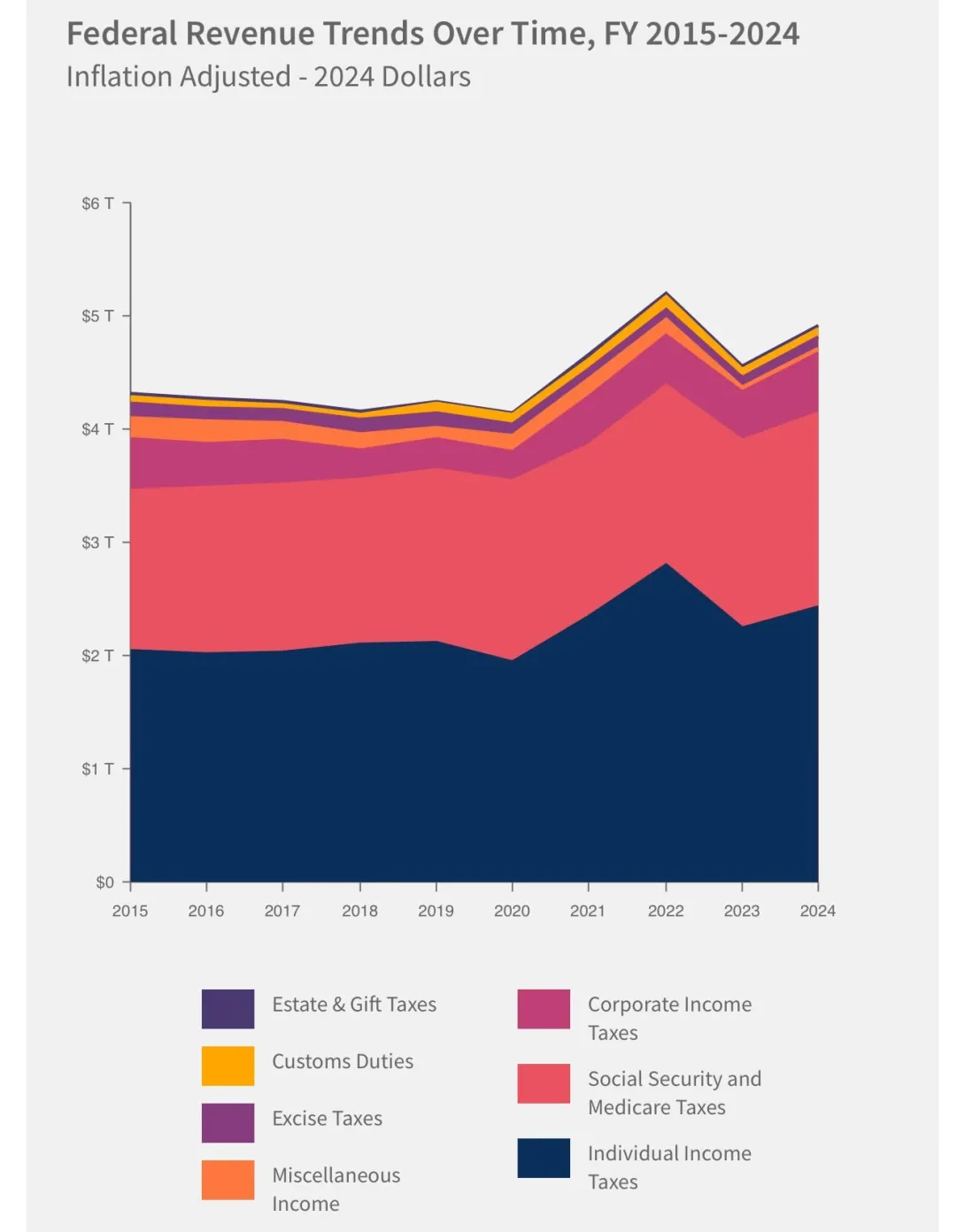
Federal Revenue Trends Over Time 2015-2024

Years ago, I wrote a short and very simplistic post that can help explain why a country (or for that matter, any group of people) can run a trade deficit with another country (or again, any other group of people) and still grow their welfare (economy, wealth, etc.) faster than the other country. You can find it here. The post makes a number of basic points using a simple example. I’ll also repeat here that, these years later, I’m still not an economist and I’m not otherwise an expert on certain aspects of international trade. However, I am someone who thinks quite a bit about supply chains and thus, given the configuration of the modern global economy, I do think about international trade and transportation and the potential impact of various import tariffs on supply chains.
First, here is an update on the scale of international trade and its role within the US economy. I’ll use official trade statistics provided by the US Census Bureau. If we look at the trade of physical goods which is the first thing that most people think about when it comes to trade, the US imported US$3.112 trillion worth of goods in FY2023. That is simply a lot of stuff. Note that imported goods can be finished products that are distributed (eventually) through various retail channels to end consumers. But they can also be various inputs to production: supplies, components, or work-in-progress inventory that feeds US manufacturing enterprises. A very good example along these lines is Canadian heavy crude oil, shipped to US petroleum refineries as the key input to the production of refined petrochemicals like gasoline, jet fuel, and other products. You can read elsewhere why the US currently imports heavy crude from Canada when it (already) produces more crude oil than it consumes each year and is thus (already) a net exporter.
Most US consumers understand that large parts of our economy rely on imported goods. Fewer might think about the sheer scale of the US goods export economy. Looking again at FY2023, the US exported US$2.051 trillion worth of goods (includng some of that aforementioned US-drilled crude oil). Wow, again, that is a lot of stuff. But it is true that the balance of trade here currently favors imports over exports. Since we import more goods value than we export, we ran a goods trade deficit with the rest of the world of US$1.061 trillion in FY2023.
A large part of the US economy today is the provision of services and not goods. There are all sorts of services: food service, financial services, educational services, transportation services, consulting services, and so on. And the US does trade in services as well, both importing services from foreign providers while exporting services to foreign customers. In fact, the US ran a trade surplus in services of US$288 billion which reduced the overall net trade deficit to US$773 billion in FY2023.
Now let’s discuss tariffs for a bit, and let’s consider duties on imported goods. If the US places a 10% tariff on a bundle of goods (perhaps a specific category of goods from a specific set of countries), then importers of those goods must pay a customs duty on the declared goods before they can be moved into the US (so-called customs-clearing). As many have noted already, these importers-of-record are firms doing business in the US (or individuals) that have arranged for the importation. Examples of such importers include retailers like Walmart and producers like Ford and ExxonMobil. Customs duties collected go into the US Treasury, similar to personal income taxes, social security and Medicare taxes, and corporate income taxes. However, the fraction of US government revenue raised by tariffs has been very small for a long period of time. In FY2023, the total collected customs duties by the US Treasury was about US$80 billion. In fact, FY2023 trade was down a bit from FY2022 when total goods imports were US$3.35 trillion and total collected duties were US$112 billion, or an average duty of about 3.3%.
So, how much revenue could be raised by new tariffs? Let’s imagine a strange world where new US import duties did not distort the economy in any way: the same value of goods is assumed to be imported even though both demand for those goods would likely adjust and the purchasing power of each US$ might increase. If the average duty were increased to 10%, the total revenue produced to the US Treasury in FY2023 would have been US$311 billion. How about a 25% average tariff? Well, of course, US$778 billion. For comparison, the US Treasury received US$2.43 trillion in personal and US$530 billion in corporate income taxes in FY2023, an amount nearly equivalent to a universal 100% tariff on the imported goods value basis for all imported goods. The tiny yellow sliver in the figure below shows how little total customs duty revenue has been collected over time and how little changed it has been compared to other revenue sources.
Like any other tax, a tariff can be useful to governments as they seek to design mechanisms to fund (important) government activities while distorting economic activity to favor or disfavor various groups of people, businesses, investors, industries, nations, regions etc. It’s also safe to say that, like any other tax, it can be difficult to determine how economic activity will be specifically distorted by any specific tariffs. In fact, it may be more difficult with tariffs for a few reasons. The first is that unlike a sales tax, a tariff on imported goods occurs upstream of the point-of-sale. Instead, tariffs create increases in supply chain costs for importers, and the impact of tariffs on consumers depends on what happens as a result of these cost increases.
First, it should be noted that some supply chain cost increases cannot be borne at all and can lead to the elimination of some products in the marketplace. Why? A cost increase can lead a producer to decide that a product cannot be profitably produced and marketed, and this is true even if a replacement supply source with a lower (tariff-inclusive) cost of supply can be identified. A retailer may make a similar decision for an imported product. If producers or retailers continue to keep a product in the market, they could decide to lower its quality in some way or to pass on portions of the cost increase directly to its customers. But the supply chain cost persists; perhaps a different supplier could be identified not subject to the tariff, but if that supplier were already providing the same input at the same quality for a lower price they would be used already. Since profitability is likely to be impacted, owners and investors as well as employees of the importer will also likely to be impacted. These interactions are all naturally somewhat complex and the outcome is difficult to predict.
I’ll finish with a thought. If a government wishes to use new tariffs to yield a political outcome beyond simply raising revenue, they will likely need to be designed to produce a significant (and noticeable) distortion to some portion of the economy. If the distortion is mild, no change of behavior seems likely to occur. It seems as if the US is about to attempt some new experimentation with tariffs to both influence the behavior of trade partner nations and to create a significant government revenue source. We will likely get to see firsthand what kind of economic distortion they induce.
News Contact
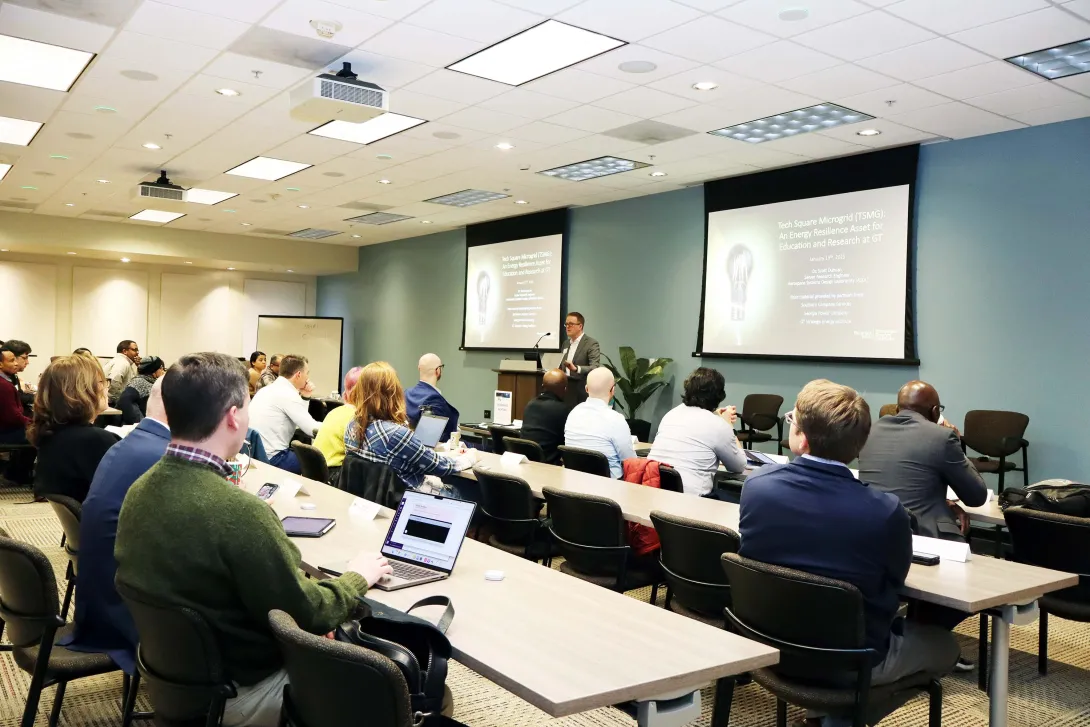
Scott Duncan, Georgia Tech Principal Research Engineer and SEI's Microgrids Initiative Lead provides an overview of the Tech Square Microgrid during the TSMG Workshop.
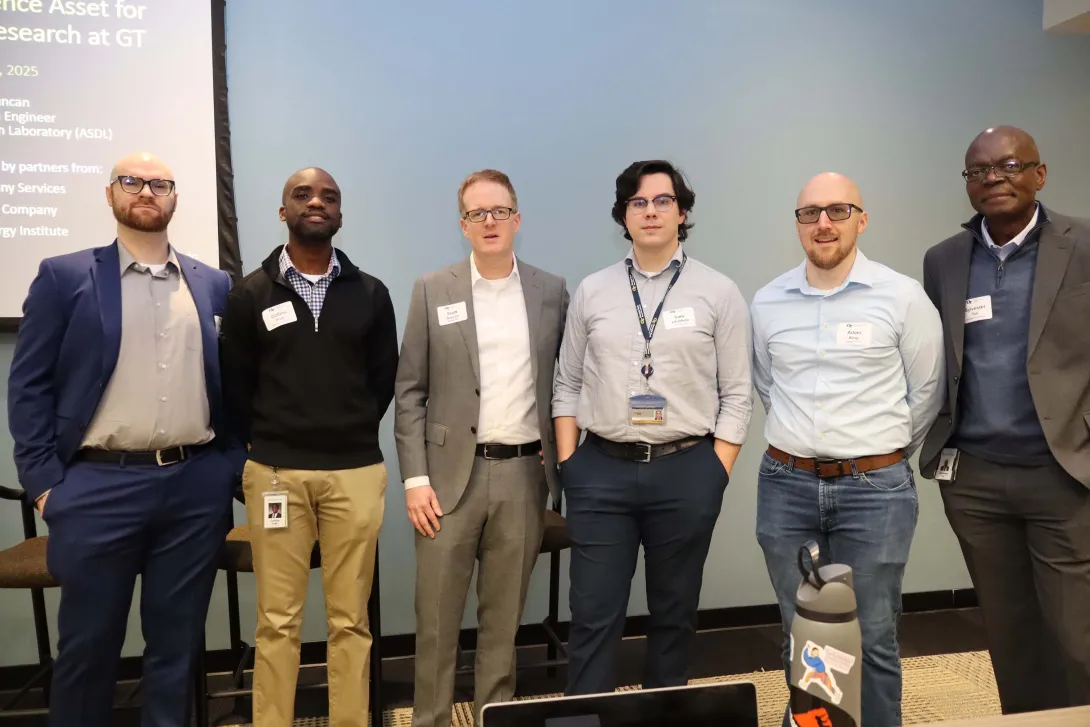
Workshop Speakers and Panelists at the Tech Square Microgrids Workshop
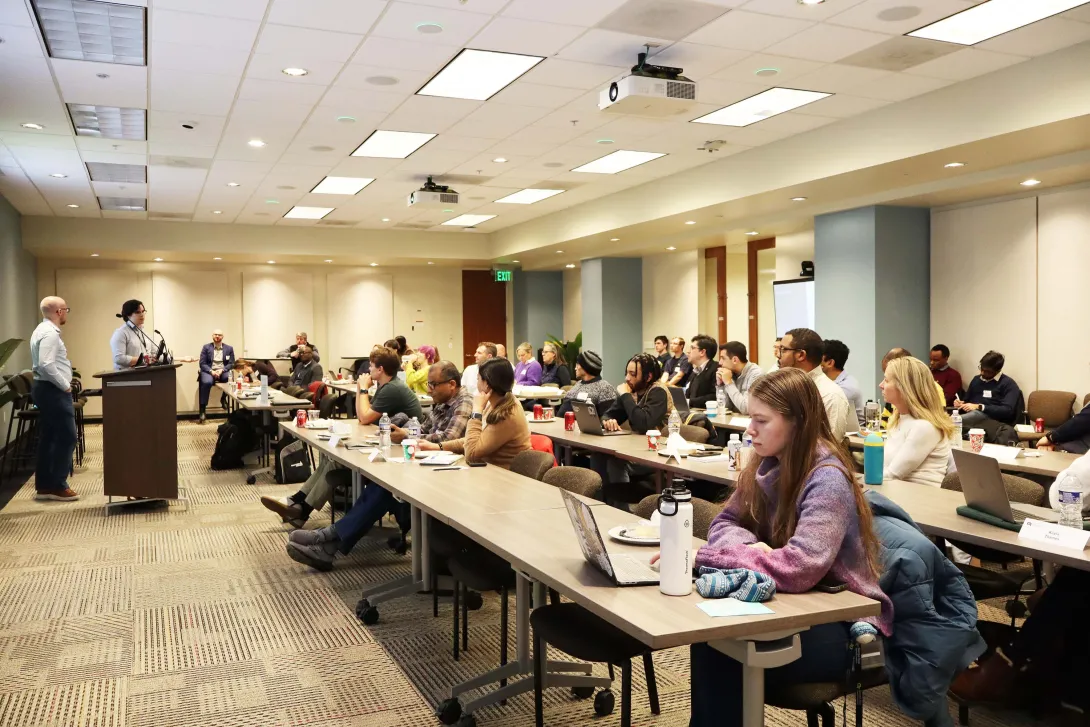
Keynote by GTRI research engineer and SEI’s lead on cybersecurity of critical infrastructure initiative, Sam Litchfield, and Adam King, a GTRI research engineer and Ph.D. student
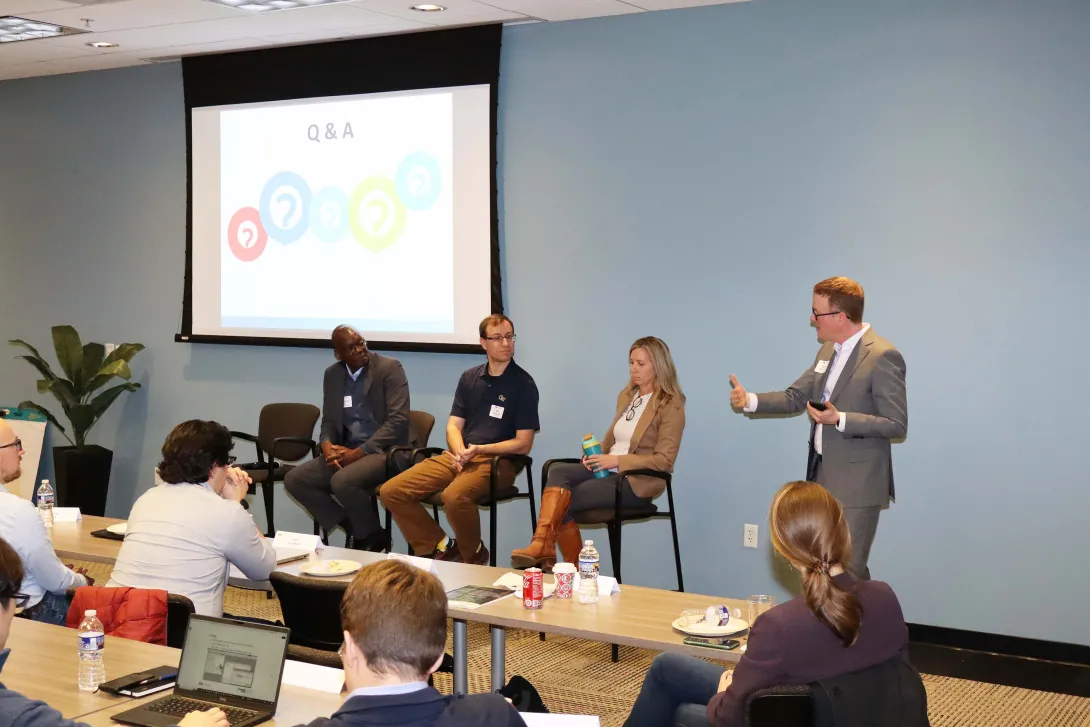
Panel Discussion on Microgrid and Living labs with Georgia Tech's Scott Duncan, Daniel Molzahn, and Jennifer Chirico and Georgia Power's Sylvester Toe.
On Jan. 13, the Georgia Tech Strategic Energy Institute (SEI), Southern Company, and Georgia Power hosted a workshop aimed at imparting new information and sparking innovative ideas around the Tech Square Microgrid (TSMG) and the use of its data in education and research.
Launched in 2021 with a 1.4-megawatt capacity, the microgrid is located on Williams Street, just south of Fifth Street in Tech Square. It is a joint project between Georgia Power and Georgia Tech.
The workshop brought together experts and enthusiasts to discuss the current operations of the TSMG, an essential asset for the energy resilience of Georgia Tech’s High-Performance Computing Center located next to Coda, and to share Georgia Tech studies that use data from the microgrid.
The workshop started with an overview of the microgrid’s current status and capabilities as a resilience resource, provided by Collins Pratt, the TSMG managing engineer from Georgia Power. This was followed by a keynote on TSMG modeling and simulation presented by GTRI research engineer and SEI’s lead on cybersecurity of critical infrastructure initiative, Sam Litchfield, and Adam King, a GTRI research engineer and Ph.D. student. Their insights into the state of the art of microgrid modeling and its role in assessing dependencies between energy grid resources set the stage for the rest of the workshop discussions.
During the panel on “Microgrids and Living Labs,” panelists from academia, Georgia Tech’s Office of Sustainability, and Georgia Power shared their perspectives on microgrid infrastructure and its role in research and education. The discussion emphasized the importance of microgrids as living labs, their potential for wider deployment in distributed energy systems, and the need for skilled graduates in the electrical utility workforce.
To conclude the event, attendees toured the microgrid site across the street. The tour, led by Pratt, provided a firsthand look at the microgrid infrastructure and its operating capabilities.
Reflecting on the significance of the microgrid, SEI’s Interim Executive Director Christine Conwell said, "The data from the microgrid is a vital resource for researchers at Georgia Tech and our metro Atlanta partners. It not only showcases our work in energy resilience but also serves as a living laboratory for developing innovative energy solutions."
Georgia Tech Senior Research Engineer Scott Duncan, who leads the Microgrids initiative at SEI organized the workshop along with Southern Company Principal Research Engineer Andrew Ingram. "The details shared during the workshop have sparked numerous ideas, from an array of perspectives across Georgia Tech, on how we can further utilize the microgrid and the unique data coming from its operations,” said Duncan. “The insights gained today will undoubtedly seed future research and collaborations, pushing the boundaries of what we can achieve in energy resilience."
News Contact
Priya Devarajan || SEI Communications Program Manager

A recent study by Matthew E. Oliver from the Georgia Institute of Technology and his co-authors, Juan Moreno-Cruz from the University of Waterloo and Kenneth Gillingham from Yale University, delves into the solar rebound effect.
The "solar rebound effect" is a phenomenon where households with residential solar photovoltaic (PV) systems end up consuming more electricity in response to greater solar energy generation. This outcome arises because the cost savings from generating their own electricity lead to increased usage. A recent study by Matthew E. Oliver from the Georgia Institute of Technology and his co-authors, Juan Moreno-Cruz from the University of Waterloo and Kenneth Gillingham from Yale University, delves into this effect, providing crucial insights for policymakers and researchers.
The study, titled "Microeconomics of the Solar Rebound under Net Metering," explores how different net metering policies influence the solar rebound effect. Net metering allows households to sell excess electricity generated by their solar panels back to the grid, often at the retail rate. This policy makes solar PV systems more financially attractive but also impacts household behavior.
The authors developed a theoretical framework to understand the solar rebound. They found that under classic net metering, the rebound is primarily an income effect. Households feel wealthier due to the savings on their electricity bills and thus consume more electricity. However, under net billing, where excess electricity is compensated at a lower rate, a substitution effect also comes into play. This means households might change their consumption patterns based on the relative costs of electricity from the grid versus their solar panels.
The study also incorporates behavioral economics concepts like moral licensing and warm glow effects. Moral licensing occurs when people justify increased consumption because they feel they are already doing something good, like generating green energy. Warm glow refers to the positive feelings from contributing to environmental sustainability, which can either increase or decrease consumption depending on the household's values.
One of the key takeaways from the study is the importance of the regulatory environment. Policymakers need to carefully design net metering policies to balance promoting solar adoption while accounting for the possibility that rebound effects may offset the desired outcomes of grid resilience and reduced greenhouse gas emissions. For instance, switching from net metering to net billing might reduce the rebound effect, leading to better environmental outcomes.
The welfare analysis conducted by the authors shows that the solar rebound's impact on social welfare depends on various factors, including the cleanliness of the electricity grid and the external costs of electricity production. In cleaner grids, the rebound might be less detrimental, while in grids reliant on fossil fuels, it could negate some of the environmental benefits of solar adoption.
This research underscores the complexity of energy policy and the need for nuanced approaches that consider both economic and behavioral factors. By understanding the solar rebound effect, stakeholders can make more informed decisions to promote sustainable energy use.
For more detailed insights, you can explore the full study by Matthew E. Oliver and his co-authors. Their work provides a robust foundation for future empirical research and policy development in the field of renewable energy.
This article was written with the assistance of Microsoft Copilot (Jan. 27, 2025) and edited by Georgia Tech EPIcenter's Gilbert X. Gonzalez and Matthew E. Oliver.
News Contact
News Contact: Priya Devarajan || SEI Communications Program Manager
Written by: Gilbert X. Gonzalez, EPIcenter, Matthew Oliver, EPIcenter Faculty Affiliate