

Ioanna Maria Spyrou, a Ph.D. candidate in the School of Economics, uses artificial intelligence (AI) and machine learning to predict food insecurity in Africa.
She hopes the tool she’s developing can help policymakers and community organizations implement more timely and targeted interventions to alleviate hunger on the continent.
Why now?
- Nearly 150 million people in Sub-Saharan Africa lack access to the amount and quality of food they need.
- This is primarily due to armed conflicts and more frequent droughts and natural disasters from climate change.
- Understanding which factors impact food shortages the most can help communities plan ahead, adapt to new weather patterns, and be more resilient.
- Spyrou and her advisor, Professor Shatakshee Dhongde in the School of Economics, are working with data from Sudan, South Sudan, the Democratic Republic of the Congo, and Somalia and hope to eventually expand to include more countries.
What’s new?
Other algorithms incorporate machine learning and AI to predict when and where food shortages will occur.
However, Dhongde and Spyrou’s approach is unique because it uses recent data from 2020 to 2023 and includes additional predictors, such as monthly data on conflict, which can be a powerful driver of food insecurity in Africa. (The Africa Center for Strategic Studies says 82% of people experiencing hunger on the continent live in countries in conflict.). Changing weather patterns also means relying on historical data no longer gives accurate information.
“By identifying which factors contribute most to food insecurity in different regions, we can adapt agricultural systems, try new strategies, and build stronger social networks and support systems,” Spyrou said.
What’s next?
Spyrou and Dhongde are working to determine how accurately they can predict food insecurity in Africa with these inputs, and they are optimistic about the results.
They hope the tool can eventually help policymakers, aid organizations, and communities do more with less.
“AI enables us to analyze these large datasets quickly and accurately and create real-time predictions," Dhongde said. "The ultimate goal is to achieve food security and end a crisis that is getting worse and worse.”
News Contact
Di Minardi
Ivan Allen College of Liberal Arts
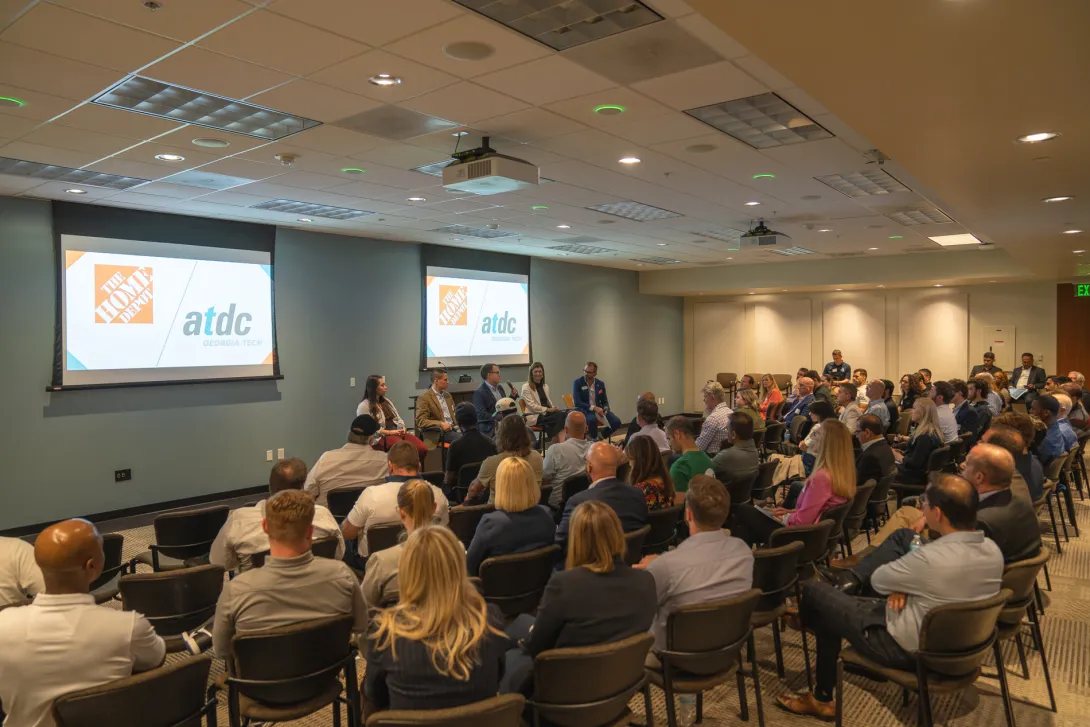
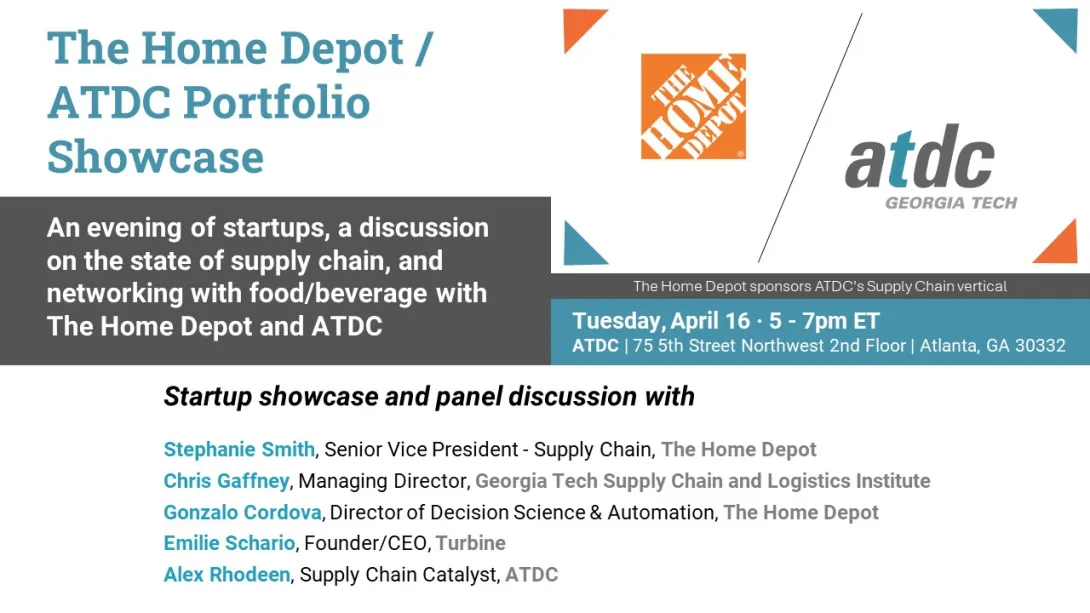
On Tuesday, April 16th, Georgia Tech Supply Chain and Logistics Institute (SCL) Managing Director Chris Gaffney joined SVP Stephanie Smith and Director Gonzalo Cordova from The Home Depot along with Emilie Schario, Founder and CEO of Turbine, and Georgia Tech Advanced Technology Development Center (ATDC) Supply Chain Catalyst Alex Rhodeen for a dynamic panel discussion on the state of Supply Chain, the role of AI, and where we're headed next. As part of the discussion, the panel addressed issues on globalization, geopolitical tensions, sustainability concerns, and the impact of natural disasters on supply chains. The panelists also provided examples of how AI technologies such as machine learning, predictive analytics, and robotic process automation are being used to optimize various aspects of the supply chain, from demand forecasting to inventory management to logistics. The group stressed the role of AI and how it will be pivotal in shaping the future of supply chain management through fostering agility, sustainability, and competitive advantage. In addition to the panel, more than 20 ATDC companies participated in a showcase to present their solutions to the Georgia Tech startup ecosystem.
This event was part of ATDC's Supply Chain vertical, generously supported by The Home Depot. As a key component of this collaboration, Home Depot executives mentor program participants and offer guidance and expertise as they build, test, and bring new products and services to market. The initiative aims to drive innovation and nurture the growth of startups in the supply chain and logistics sector, leveraging the robust expertise and infrastructure available in Georgia. Given the evolving landscape of supply chain and logistics, partnerships with program participants are increasingly vital for early-stage companies, facilitating customer acquisition and business model development. The Supply Chain vertical is the sixth of its kind at ATDC, a globally recognized technology incubator, and follows other targeted programs in health, retail, and financial technologies. Through collaboration with SCL, ATDC fosters the innovation of Georgia-grown supply chain solutions.
ABOUT ATDC
The Advanced Technology Development Center (ATDC), a program of the Georgia Institute of Technology, is the state of Georgia’s technology startup incubator. Founded in 1980 by the Georgia General Assembly which funds it each year, ATDC’s mission is to work with entrepreneurs in Georgia to help them learn, launch, scale, and succeed in the creation of viable, disruptive technology companies. Since its founding, ATDC has grown to become the longest running and one of the most successful university-affiliated incubators in the United States, with its graduate startup companies raising $3 billion in investment financing and generating more than $12 billion in revenue in the state of Georgia. ATDC brings a unique framework that combines its startup curriculum, coaching, connections, and community, as well as direct access to Georgia Tech resources, research expertise, and student talent, to help entrepreneurs learn, launch, scale, and succeed. In this effort, ATDC will offer programming, recruit and evaluate startups, and hire staff to manage the vertical. Learn more at atdc.org.

Omar Asensio is Associate Professor at Georgia Institute of Technology and Climate Fellow, Harvard Business School
With new vehicle models being developed by major brands and a growing supply chain, the electric vehicle (EV) revolution seems well underway. But, as consumer purchases of EVs have slowed, car makers have backtracked on planned EV manufacturing investments. A major roadblock to wider EV adoption remains the lack of a fully realized charging infrastructure. At just under 51,000 public charging stations nationwide, and sizeable gaps between urban and rural areas, this inconsistency is a major driver of buyer hesitance.
How do we understand, at a large scale, ways to make it easier for consumers to have confidence in public infrastructure? That is a major issue holding back electrification for many consumer segments.
- Omar Asensio, Associate Professor at Georgia Institute of Technology and Climate Fellow, Harvard Business School | Director, Data Science & Policy Lab
Omar Asensio, associate professor in the School of Public Policy and director of the Data Science and Policy Lab at the Georgia Institute of Technology, and his team have been working to solve this trust issue using the Microsoft CloudHub partnership resources. Asensio is also currently a visiting fellow with the Institute for the Study of Business in Global Society at the Harvard Business School.
The CloudHub partnership gave the Asensio team access to Microsoft’s Azure OpenAI to sift through vast amounts of data collected from different sources to identify relevant connections. Asensio’s team needed to know if AI could understand purchaser sentiment as negative within a population with an internal lingo outside of the general consumer population. Early results yielded little. The team then used specific example data collected from EV enthusiasts to train the AI for a sentiment classification accuracy that now exceeds that of human experts and data parsed from government-funded surveys.
The use of trained AI promises to expedite industry response to consumer sentiment at a much lower cost than previously possible. “What we’re doing with Azure is a lot more scalable,” Asensio said. “We hit a button, and within five to 10 minutes, we had classified all the U.S. data. Then I had my students look at performance in Europe, with urban and non-urban areas. Most recently, we aggregated evidence of stations across East and Southeast Asia, and we used machine learning to translate the data in 72 detected languages.”
We are excited to see how access to compute and AI models is accelerating research and having an impact on important societal issues. Omar's research sheds new light on the gaps in electric vehicle infrastructure and AI enables them to effectively scale their analysis not only in the U.S. but globally.
- Elizabeth Bruce, Director, Technology for Fundamental Rights, Microsoft
Asensio's pioneering work illustrates the interdisciplinary nature of today’s research environment, from machine learning models predicting problems to assisting in improving EV infrastructure. The team is planning on applying the technique to datasets next, to address access concerns and reduce the number of “charging deserts.” The findings could lead to the creation of policies that help in the adoption of EVs in infrastructure-lacking regions for a true automotive electrification revolution and long-term environmental sustainability in the U.S.
- Christa M. Ernst
Source Paper: Reliability of electric vehicle charging infrastructure: A cross-lingual deep learning approach - ScienceDirect
News Contact
Christa M. Ernst
Research Communications Program Manager
Topic Expertise: Robotics | Data Sciences| Semiconductor Design & Fab
Research @ the Georgia Institute of Technology
christa.ernst@research.gatech.edu

Continued growth will transform metro Atlanta, and the Atlanta Regional Commission (ARC) projects 1.8 million new residents across the 21-county region by 2050.
The increase would bring the regional population to 7.9 million, but to accommodate that growth, Georgia Tech experts say improvements in the housing, transportation, and labor markets must be made.
Housing
The five-county core around Atlanta — Fulton, Gwinnett, Cobb, DeKalb, and Clayton — will account for nearly half of the new residents and continues to grow. Gregory Randolph, an assistant professor in Georgia Tech’s School of City and Regional Planning, says the region must start by reexamining its approach to urbanism as new census data shows Atlanta has become the sixth most-populated metro area in the country.
"For the second half of the 20th century, little of the population growth in metro Atlanta was happening in the City of Atlanta, but that has changed over the past two decades. With the urban core growing, we have an opportunity. to pursue a different kind of urban form that is higher density and more walkable. A lot of the recent growth in Atlanta is adding density without necessarily improving the quality of urbanism.”
He explains that, especially in downtown Atlanta, retrofitting existing properties will play a key role in transforming neighborhoods through the replacement of "lower-value infrastructure," such as surface parking lots, with higher-density housing. In a post-pandemic environment, the conversion of office space to mixed-use properties is emerging as a strategy in urban areas like Atlanta.
A 2023 report identified the need for 391,878 housing units within the five-county core at the current population level. Mike Dobbins, professor of the practice in the School of City and Regional Planning, credits efforts made by the mayor's office and nonprofit organizations such as the Urban Land Institute to increase availability.
"We're living in a situation where housing values are too high because big money investors are bidding up real estate prices throughout the region. Even nationally, it's double the rate of wage increases. The biggest question is how can we bring down housing costs,” he said.
Randolph and Dobbins agree that addressing Atlanta’s housing needs is more complicated than simply adding supply.
“Our priority must be building housing that is affordable to low- and middle-income households, and in a way that promotes mixed-income, walkable neighborhoods with equitable, car-free access to amenities like parks, schools, and community-serving retail,” Randolph said.
Labor
Along with population growth, the region will add an estimated 856,000 jobs, with significant gains in healthcare, technology, and waste management. To maintain a labor force that can fill the jobs of the future, Dobbins stresses that continued investment in K-12 education, especially in traditionally underserved communities, is vital to accommodate new growth and overcome existing challenges of inequity.
Atlanta has the highest income inequality in the nation. According to the Atlanta Wealth Building Initiative, the average white family’s median income is $83,722 compared to $28,105 for Black families and $43,110 for Latino families. That gap widens when examining wealth, which for white households is 46 times higher than that of Black households in Atlanta.
The ARC study notes that "virtually all the net growth will come from racial and ethnic minority groups.” Randolph points to policy as a necessary tool in improving workforce development for current and future residents to support equitable and inclusive growth across the region. He adds that institutions like Georgia Tech can play a role in expanding access to the advanced degrees often needed to fill the jobs created by the city’s emerging status as a technology hub, with an emphasis on ensuring access to these degrees among historically disadvantaged groups in the city.
Transportation
The other 900,000 projected new residents will reside among the remaining 16 counties in the Atlanta region. The ARC predicts the most rapid growth in Forsyth, Barrow, Paulding, Cherokee, Walton, and Coweta, and the need for affordable housing will extend to the surrounding counties, as will the need to travel throughout the region.
Ryan Gravel, the Georgia Tech alumnus and mind behind the Atlanta BeltLine, says transit improvements are needed to ensure each county is connected to Atlanta’s city center.
“We haven't made a substantial new transit investment since 2000,” he said. “Meanwhile, the region has grown substantially since then. We haven't been laying the foundation for that future growth, which means it will come in ways that we don't want: more traffic, more congestion, and more inequities in communities of color.”
Gravel, founder of the consulting firm Sixpitch, rejects adding lanes to existing highways, saying that strategic improvements to MARTA — the rail system constructed in 1979 — will reduce traffic while allowing residents to live outside of the five-county core.
“As the saying goes, the best time to plant a tree is 20 years ago,” he said. “The second-best time is now. We didn’t do it 20 years ago, but we could start now.”
In his 2024 State of the City address, Dickens announced plans to construct a new MARTA rail station on the Southside at the Murphy Crossing redevelopment project site, connecting the system to Beltline for the first time. The mayor revealed preliminary plans to add three infill MARTA stations throughout the city, however, specific locations were not announced.
Plans to add a portion of the light-rail system around the BetlLine are currently under review, with construction on the Streetcar East expansion project — extending Atlanta Streetcar service from downtown Atlanta to Ponce de Leon Avenue — projected to begin construction in 2025 and begin service in 2029. In 2025, the MARTA Rapid Summerhill project will begin service from downtown to Capitol Gateway, Summerhill, Peoplestown, and the BeltLine through dedicated bus lanes with transit signal priority to bypass traffic.
A “Beloved Community”
The Atlanta region’s transformation will not happen overnight, but anchor institutions like Georgia Tech can contribute along the way. Randolph sees current plans to revitalize portions of the city’s Westside as an example of how neighborhoods can be revitalized for current residents while simultaneously building with future growth in mind.
“It’s important that we continue to play a positive role in not just physically developing the Westside but also thinking about how we can strengthen the economy of Westside neighborhoods through our own procurement and purchasing practices. It's an example of how Georgia Tech, as an engine of economic development, can play a positive role in propelling that growth while ensuring that the growth is inclusive.” Randolph said.
The solutions to the ARC’s projected growth will not be cheap or easily attained, but as Gravel points out, it’s an opportunity for Atlanta to honor its past as it marches toward its future, aspiring to Martin Luther King Jr.’s idea of the beloved community.
“The prosperity of the metropolitan region stands on the shoulders of the Civil Rights Movement,” he said. “If that's who we are when we're at our best, then we should use that as a model for how we move forward. How we accommodate that future change should be based on decisions to ensure that this place is a place for everyone.”
News Contact
Steven Gagliano - Institute Communications

Omar Asensio, GT Energy Research Faculty and HBS visiting fellow, Institute for the Study of Business in Global Society
A new study by Associate Professor Omar Isaac Asensio and a team of students in Georgia Tech’s School of Public Policy finds that federal housing policies accelerate energy efficiency participation among low- and moderate-income households — even when those policies don’t directly address energy efficiency.
The research, published in Nature Sustainability, shows how community development block grants from the U.S. Department of Housing and Urban Development (HUD) generated an average of 5% to 11% energy savings in economically burdened households in Albany. The savings equate to the cost of roughly two months of groceries per household per year.
"These housing participants who didn't come in thinking about energy efficiency saved anywhere from $75 to $482 per year in energy bills," Asensio said. "Those are meaningful savings that really impact people. So, we ended up finding very significant hidden social benefits from these policies that were previously unknown."
https://youtu.be/eWqOFj9qRxw
The findings are surprising because HUD grants do not specifically target energy efficiency or sustainability measures in exchange for governmental assistance. Instead, they are given at the discretion of the local government to residents facing housing emergencies such as deteriorating roofs or broken HVAC systems in the hot summer. Because of the high amount of deferred maintenance in these homes, the fixes have a spillover effect of significantly reducing energy use — for example, by adopting more efficient technologies and bringing structures up to building codes — and saving money for people who receive them.
The multidisciplinary research team in Asensio’s Data Science & Policy Lab, including current and former Public Policy students Olga Churkina and Becky D. Rafter and industrial engineering alumna Kira E. O'Hare, also found that the cost-effectiveness of housing-based interventions rivals standalone energy efficiency policies, offering a promising alternative for reaching marginalized communities.
"For decades, we’ve struggled to get meaningful participation with conventional policies in these lower and moderate-income communities, including among renters and people in multi-family homes,” Asensio said. "Using housing block grants as an entry strategy to drive efficiency is an important policy innovation.”
With support from the National Science Foundation, ESRI, Inc., and the Georgia Smart Communities Challenge, Asensio and his co-authors spent nearly four years collecting, cleaning, and combining Albany's previously siloed city data into one community analytics repository. They linked records for 5.9 million utility bills per month from 2004 to 2019, allowing them to see long-run impacts of policy intervention, energy consumption, and payments by household — an uncommonly granular level of data.
"Overall, HUD-funded block grants in Albany reduced electricity use by 4.72 million kilowatt hours over the study period versus the control group," the researchers wrote. "The reduction in non-baseload emissions is equivalent to 3.70 million pounds of coal not being burned or the carbon sequestered by 3,695 acres of forest."
Asensio's research is timely because the Southeast has some of the country's highest energy-burdened households. In the U.S., spending over 6% of net income on energy is considered a burden. In Albany, renters' and homeowners' energy costs can surpass ten or even 20% of household budgets, Asensio said, and many housing applicants are elderly and on fixed incomes.
Unlike conventional energy initiatives that are reliant on self-selection, housing programs can provide a more equitable and localized strategy. That's because "most of the standalone policies for energy efficiency have two main outcomes," Asensio said. "First, the programs generally attract more affluent and informed homeowners, in which case, questions arise as to whether this might be a good use of public funds. Second, when these policies are restricted to certain income eligibility limits, we don't get enough participation from lower-income residents for a long list of reasons. So, reaching low- and moderate-income households has become a fundamental challenge."
In contrast, housing block grants naturally target a broader range of residents with high energy burdens and help circumvent the problem of low participation. Rather than trying to market an energy-saving offer to people who aren't interested or are distrustful of the government, HUD grants have long waiting lists.
"There are thousands and thousands of communities that look very much like Albany within and outside of major metro areas,” Asensio said. "This is a relatively untapped opportunity for driving energy efficiency within households who may not necessarily have an awareness of or interest in energy efficiency measures.”
The paper, “Housing Policies and Energy Efficiency Spillovers in Low and Moderate Income Communities,” was published online in Nature Sustainability on March 18. It is available at https://doi.org/10.1038/s41893-024-01314-w. This work was partially supported by awards from the National Science Foundation (Award No. 1945332), ESRI, Inc., the Georgia Smart Communities Challenge, and the Institute for the Study of Business in Global Society at Harvard Business School.
News Contact
Di Minardi
Ivan Allen College of Liberal Arts
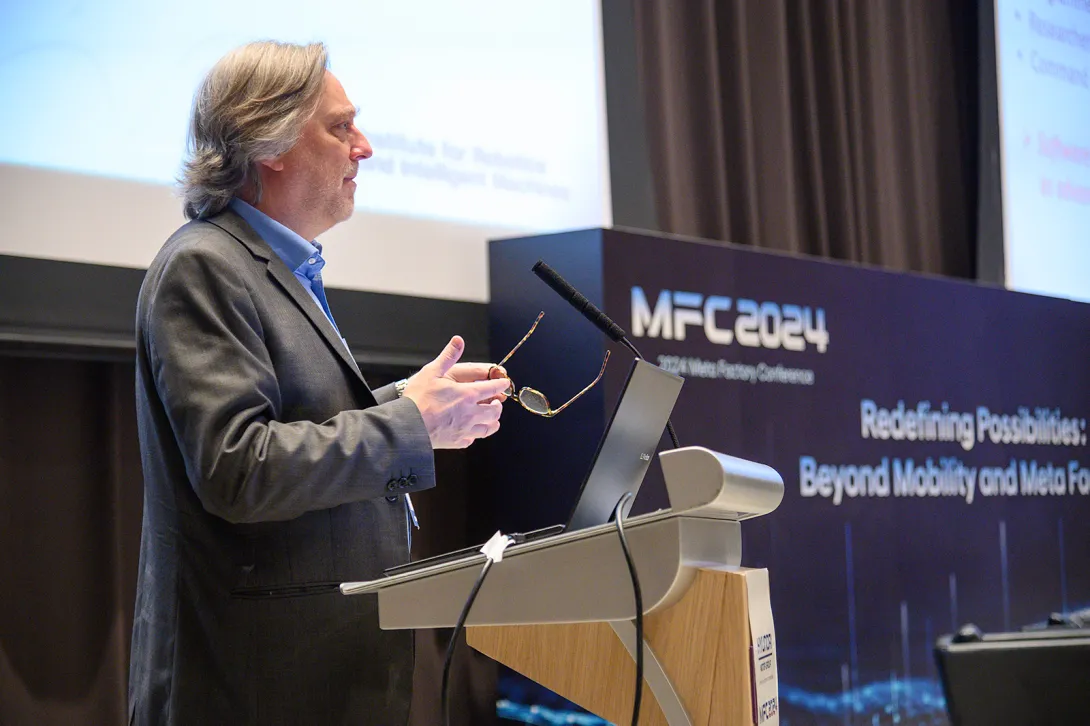
IRIM Director Seth Hutchinson at Hyundai Meta Factory Conference Delivering Keynote
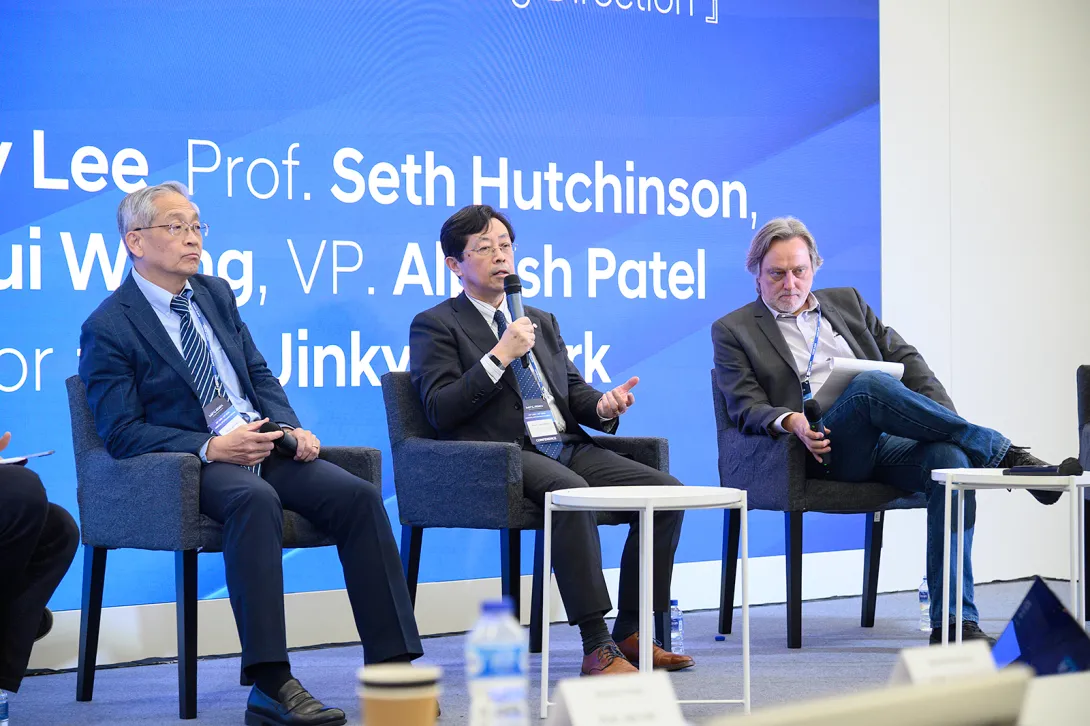
IRIM Director Seth Hutchinson at Hyundai Meta Factory Conference on Panel Discussion
Hyundai Motor Group Innovation Center Singapore hosted the Meta-Factory Conference Jan. 23 – 24. It brought together academic leaders, industry experts, and manufacturing companies to discuss technology and the next generation of integrated manufacturing facilities.
Seth Hutchinson, executive director of the Institute for Robotics and Intelligent Machines at Georgia Tech, delivered a keynote lecture on “The Impacts of Today’s Robotics Innovation on the Relationship Between Robots and Their Human Co-Workers in Manufacturing Applications” — an overview of current state-of-the-art robotic technologies and future research trends for developing robotics aimed at interactions with human workers in manufacturing.
In addition to the keynote, Hutchinson also participated in the Hyundai Motor Group's Smart Factory Executive Technology Advisory Committee (E-TAC) panel on comprehensive future manufacturing directions and toured the new Hyundai Meta-Factory to observe how digital-twin technology is being applied in their human-robot collaborative manufacturing environment.
Hutchinson is a professor in the School of Interactive Computing. He received his Ph.D. from Purdue University in 1988, and in 1990 joined the University of Illinois Urbana-Champaign, where he was professor of electrical and computer engineering until 2017 and is currently professor emeritus. He has served on the Hyundai Motor Group's Smart Factory E-TAC since 2022.
Hyundai Motor Group Innovation Center Singapore is Hyundai Motor Group’s open innovation hub to support research and development of human-centered smart manufacturing processes using advanced technologies such as artificial intelligence, the Internet of Things, and robotics.
- Christa M. Ernst
Related Links
- Hyundai Newsroom Article: Link
- Event Link: https://mfc2024.com/
- Keynote Speakers: https://mfc2024.com/keynotes/
News Contact
Christa M. Ernst - Research Communications Program Manager
christa.ernst@research.gatech.edu
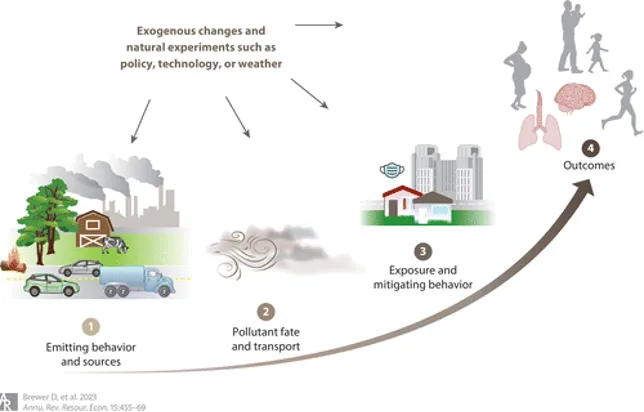
Simple schematic documenting the path of air pollution from emissions to outcomes. This review discusses the challenges of measuring how emissions of pollutants (step 1) disperse through the air (step 2) to become eventual exposures (step 3) and health outcomes (step 4).
Faculty
Dylan Brewer, Daniel Dench, and Laura Taylor
Written by Sharon Murphy
About This Project
The Energy, Policy, and Innovation Center faculty affiliates Dylan Brewer, Daniel Dench, and Interim Director Laura Taylor published an article titled "Advances in Causal Inference at the Intersection of Air Pollution and Health Outcomes." The authors compare the methods used in the epidemiology literature with the causal inference framework used in economics in analyzing the effect of air pollution on health outcomes.
Determining the quality and accuracy of the evidence linking air pollution to human health has been a challenge for research in this area.
Each academic discipline has a unique lens through which they view and solve a problem, which may result in different conclusions being drawn from the same data. While studies that involve randomization across populations can provide evidence and are widely used in medical research, exposures to everyday air pollution cannot be randomized by a researcher.
Many existing studies exploring the health impacts of air pollution rely on establishing correlations between pollutants and health outcomes. However, correlations do not imply causation and can lead to bad policy. In this study, the EPICenter affiliates reviewed methodological contributions made by economists to determine if using statistical methods to the study of the health effects of air pollution can contribute to more robust and reliable findings.
To understand the difficulty researchers face, consider a typical air pollution study that collects health data of residents living near a pollution source, such as a coal-fired power plant. The data would be used to see if there is an increased incidence of adverse health outcomes such as asthma, chronic obstructive pulmonary disease, or cardiopulmonary disease. However, many factors can create a confounding effect on the final results if the researcher doesn’t take them into consideration. For instance, the power plant may have been built in a low-income location, or lower-income households may have moved near the power plant to take advantage of lower rent or property prices. This may conflate the effect of income and air pollution on health.
Simple schematic documenting the path of air pollution from emissions to outcomes. This review discusses the challenges of measuring how emissions of pollutants (step 1) disperse through the air (step 2) to become eventual exposures (step 3) and health outcomes (step 4).
Economists promote the use of natural experiments to overcome confounding factors. Natural experiments mimic familiar laboratory experiments. For instance, in the power plant example, random variation in wind direction would result in some households being randomly more exposed to air pollution, regardless of income. By taking advantage of this randomization, researchers can compare differences in a particular health outcome between those more exposed and less exposed, while overcoming confounding effects such as income, and move one step closer toward improving our understanding of the relationship between air pollution and adverse health outcomes.
The authors conclude by emphasizing the need for creating multidisciplinary teams, including economists, air-quality modelers, and public health and medical researchers. “While one may not think of economists as a natural contributor to this line of research, the analytical framework honed by economists over decades can contribute important expertise to the design of these types of studies,” Taylor concluded, “and result in better evidence for policymakers.”
Read more: https://doi.org/10.1146/annurev-resource-101722-081026
News Contact
Priya Devarajan | SEI Communications Program Manager
Authored by: Sharon Murphy, Strategic Energy Institute
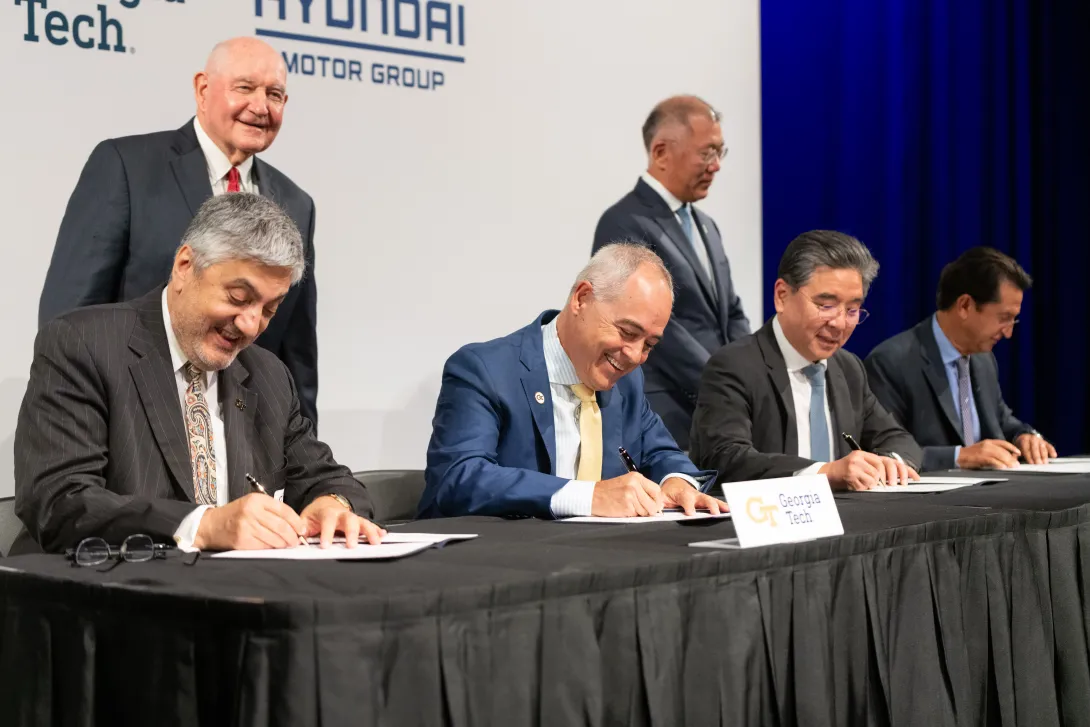
USG Chancellor Sonny Perdue looks on as Georgia Tech President Ángel Cabrera and Executive Vice President for Research Chaouki Abdallah sign the memorandum of understanding with Hyundai officials, signifying the beginning of a transformative partnership.

Georgia Tech President Ángel Cabrera poses for a selfie with Euisun Chung, executive chairman of Hyundai Motor Company.
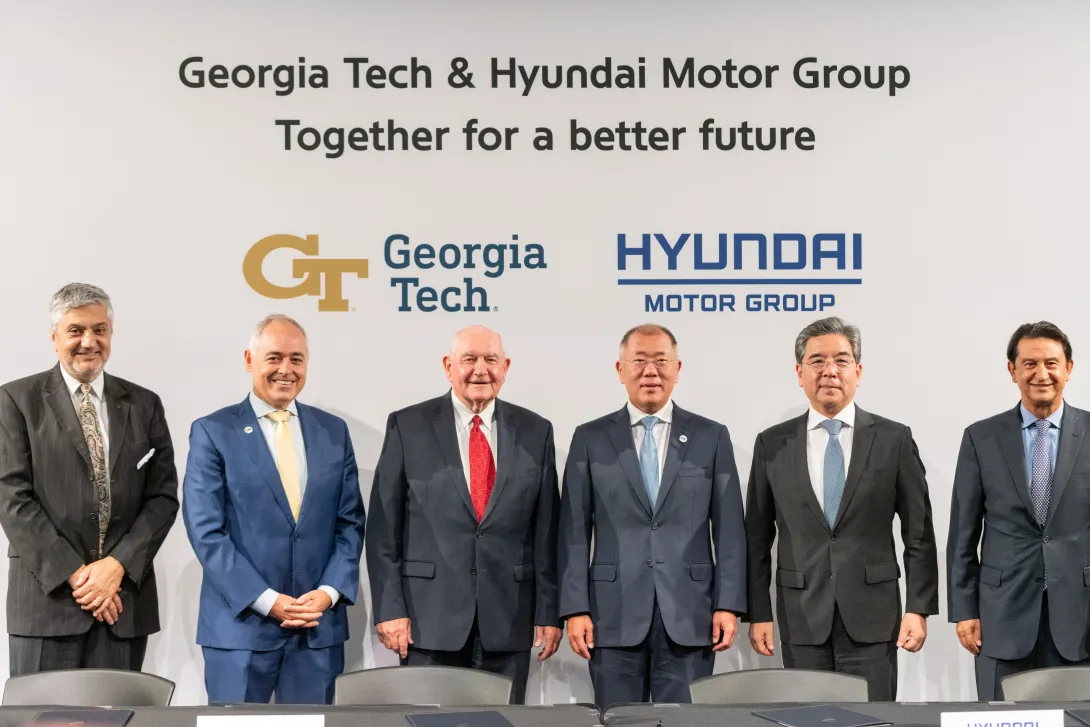
Georgia Tech and Hyundai leaders pose for a photo following the signing of the memorandum of understanding. From left to right: Executive Vice President for Research Chaouki Abdallah, Georgia Tech President Ángel Cabrera, University System of Georgia Chancellor Sonny Perdue, Executive Chairman of Hyundai Motor Company Euisun Chung, President and CEO Jay Chang, President and Global COO José Muñoz.
In front of a standing-room-only crowd inside the John Lewis Student Center's Atlantic Theater, global leaders from the Hyundai Motor Group and Georgia Tech signed a memorandum of understanding, creating a transformative partnership focused on sustainable mobility, the hydrogen economy, and workforce development.
As the automaker continues to construct its Metaplant America site in Bryan County — the cornerstone of Hyundai's $12 billion investment into electric vehicles and battery production across the state of Georgia — today's signing ceremony symbolizes the vision that Hyundai and Georgia Tech share on the road to advancing technology and improving the human condition.
"As a leading public technological research university, we believe we have the opportunity and the responsibility to serve society, and that technology and the science and policy that support it must change our world for the better. These are responsibilities and challenges that we boldly accept. And we know we can't get there alone. On the contrary, we need travel partners, like-minded innovators, and partners with whom we can go farther, and today's partnership with Hyundai is a perfect example of what that means," Georgia Tech President Ángel Cabrera said.
The state of Georgia and the Institute have positioned themselves as leaders in the electrification of the automotive industry. Hyundai is among the top sellers of electric vehicles in the United States as the company aims to produce up to 500,000 vehicles annually at the $7 billion Savannah plant when production begins in 2025. The plant will create 8,500 jobs, and the company's total investments are projected to inject tens of billions of dollars into the state economy while spurring the creation of up to 40,000 jobs.
"It's clear, we are in the right place with the right partners," Jay Chang, president and CEO of Hyundai Motor Company, said. "When our executive chairman first decided on [the site of] the metaplant, one of the first things he said was, 'Make sure we collaborate with Georgia Tech.’ Hyundai and Georgia Tech have a lot in common. We have proud histories. We celebrate excellence, and we have very high standards. What we love about Georgia Tech is the vision to be a leading research university that addresses global challenges and develops exceptional leaders from all backgrounds."
Spearheading new opportunities for students, the partnership will create technical training and leadership development programming for Hyundai employees and initiate engagement activities to stimulate interest in STEM degrees among students.
José Muñoz, president and global COO of Hyundai Motor Company and president and CEO of Hyundai and Genesis Motor North America, says the company quickly realized the potential impact of the newly forged partnership with Georgia Tech.
"Proximity to institutions like Georgia Tech was one of the many reasons Hyundai selected Georgia for our new EV manufacturing facility. Imagine zero-emissions, hydrogen-powered vehicles here on campus, advanced air mobility shuttling people to Hartsfield-Jackson Atlanta International Airport, or riding hands-free and stress-free in autonomous vehicles during rush hour on I-75 and I-85. Together, Georgia Tech and Hyundai have the resources to fundamentally improve how people and goods move," he said.
In pursuit of sustainability, Hyundai has invested heavily in the potential of hydrogen and plans to lean on the Institute's expertise to explore the potential of the alternative fuel source, primarily for commercial vehicles. Hyundai has deployed its hydrogen-powered XCIENT rigs to transport materials in five countries.
University System of Georgia Chancellor Sonny Perdue was on hand for Tuesday’s ceremony. Reflecting on his visits to the company's global headquarters in South Korea prior to the construction of the West Point, Georgia, Kia plant, he praised the company's values and world-class engineering ability.
"This is a relationship built on mutual trust and respect. It's a company, a family atmosphere, and a culture that I respect and admire for the way they do business and honor progress, innovation, and creativity. That is why I am so excited about this partnership between the Hyundai Motor Group and the Georgia Institute of Technology because that will only enhance that," Perdue said.
Owned by Hyundai, Kia recently invested an additional $200 million into its West Point facility to prepare for the production of the all-electric 2024 EV9 SUV. The plant currently manufactures more than 40% of all Kia models sold in the U.S.
The partnership also includes field-naming recognition at Bobby Dodd Stadium, which is now known as Bobby Dodd Stadium at Hyundai Field, and provides student-athletes and teams with the resources needed to compete at the highest levels, both athletically and academically.
News Contact
Steven Gagliano - Communications Officer
Institute Communications
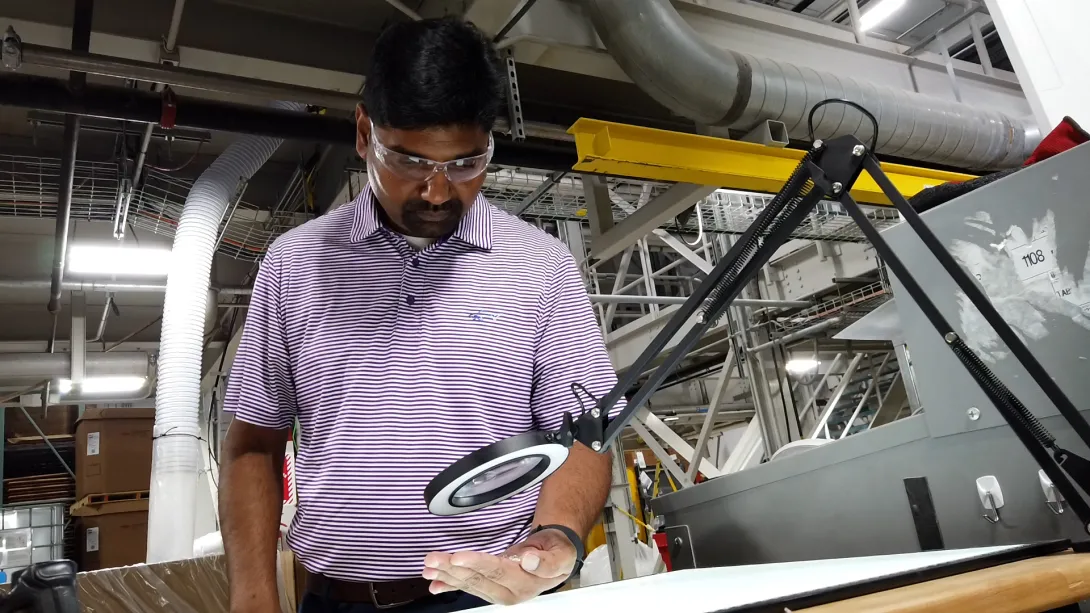
Sean Madhavaraman, a leader at GaMEP, examines work product at Silon in Peachtree City, Georgia
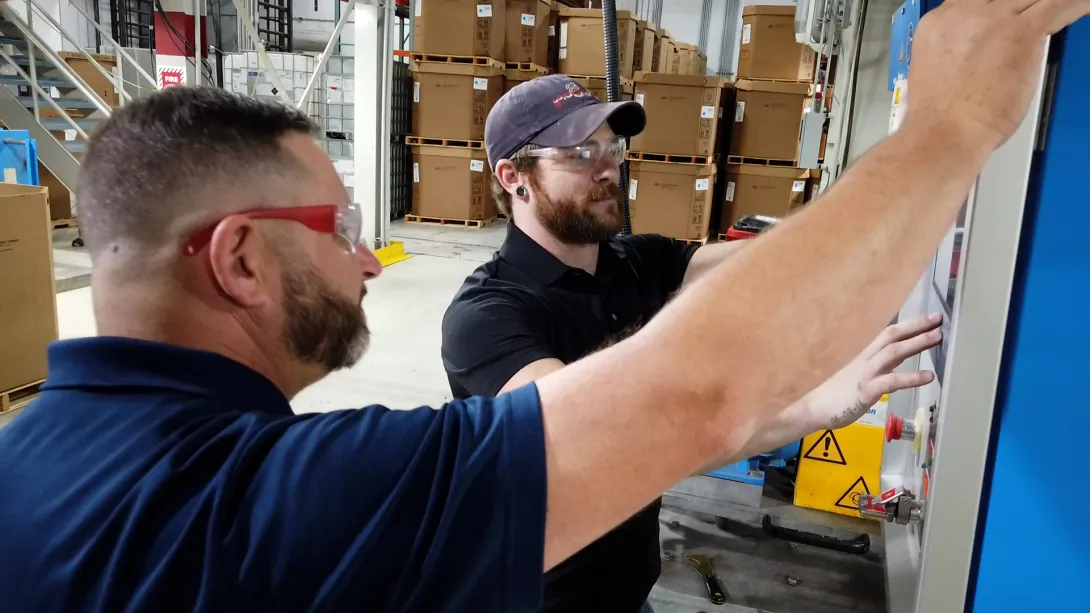
Lead technician, Austin Hicks, taps on a monitoring screen while his co-worker looks on at the manufacturing facility for Silon in Peachtree City, Georgia
“A stitch in time saves nine,” goes the old saying. For a company in Georgia, that adage became very real when damage to a key piece of machinery threatened its operation. The group helping with the stitch in time was the Georgia Manufacturing Extension Partnership (GaMEP), a program of Georgia Tech's Enterprise Innovation Institute that — for more than 60 years — has been helping small- to medium-sized manufacturers in Georgia stay competitive and grow, boosting economic development across the state.
Silon US, a Peachtree City manufacturer that designs and produces engineered compounds used to create a wide range of products — from automotive applications to building materials, such as PEX piping and wire and cable, was experiencing problems with their extrusion line during a time of increasing customer demand. Problems with the drive mechanism on that extrusion line, a piece of equipment critical to the company’s ability to produce, threatened to shut them down. With replacement parts several weeks away, was it safe to continue operating? At what throughput rates? How much collateral damage might be incurred if they continued to operate?
That’s when Silon managers turned to GaMEP for help.
After working through ideas with GaMEP’s manufacturing experts, the team installed wireless condition monitoring sensors that provide continuous, real-time insights on their manufacturing assets’ health. With the sensors, Silon was able to find a sweet spot that not only allowed them to continue operating but also kept them from overexerting the equipment, preventing further damage.
The solution to that problem has now become a routine part of Silon’s process, as company technicians continue to use this sensor technology for early detection of any deviations or anomalies in the machinery’s health, allowing the company’s maintenance team to proactively respond by adjusting scheduled maintenance to avoid costly downtime.
GaMEP’s Sean Madhavaraman says, “Silon is more productive than ever and on track for growth. The strong results in this challenge are a great example of the decades-long focus of GaMEP to educate and train managers and employees in best practices, to develop and implement the latest technology, and to work together with businesses to find solutions.”
Daniel Raubenheimer and Matt Gammon, Silon’s general managers, also lauded GaMEP, saying, “GaMEP’s extensive experience within the manufacturing realm has been a great benefit to our company. The wireless condition monitoring sensors allow us to predict future breakdowns and mitigate a potential catastrophe — allowing us to operate in a safe manner, while saving money, time, and effort.”
News Contact
Blair Meeks
Institute Communications
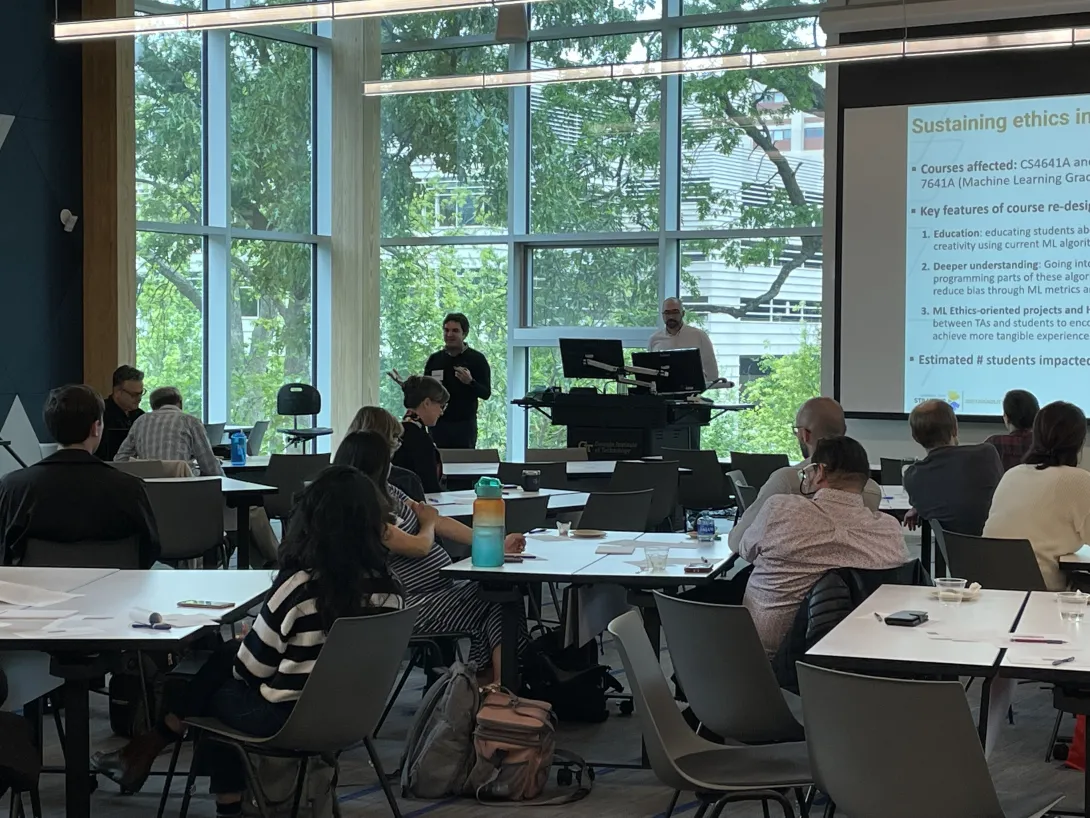
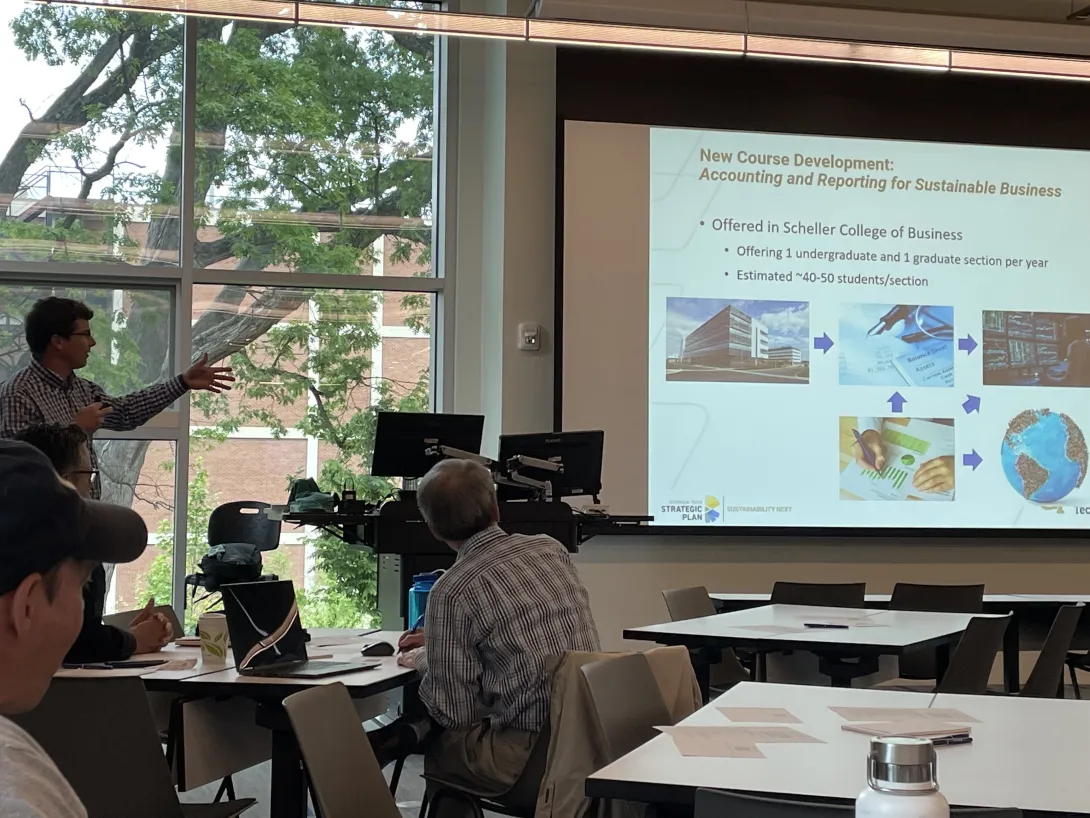
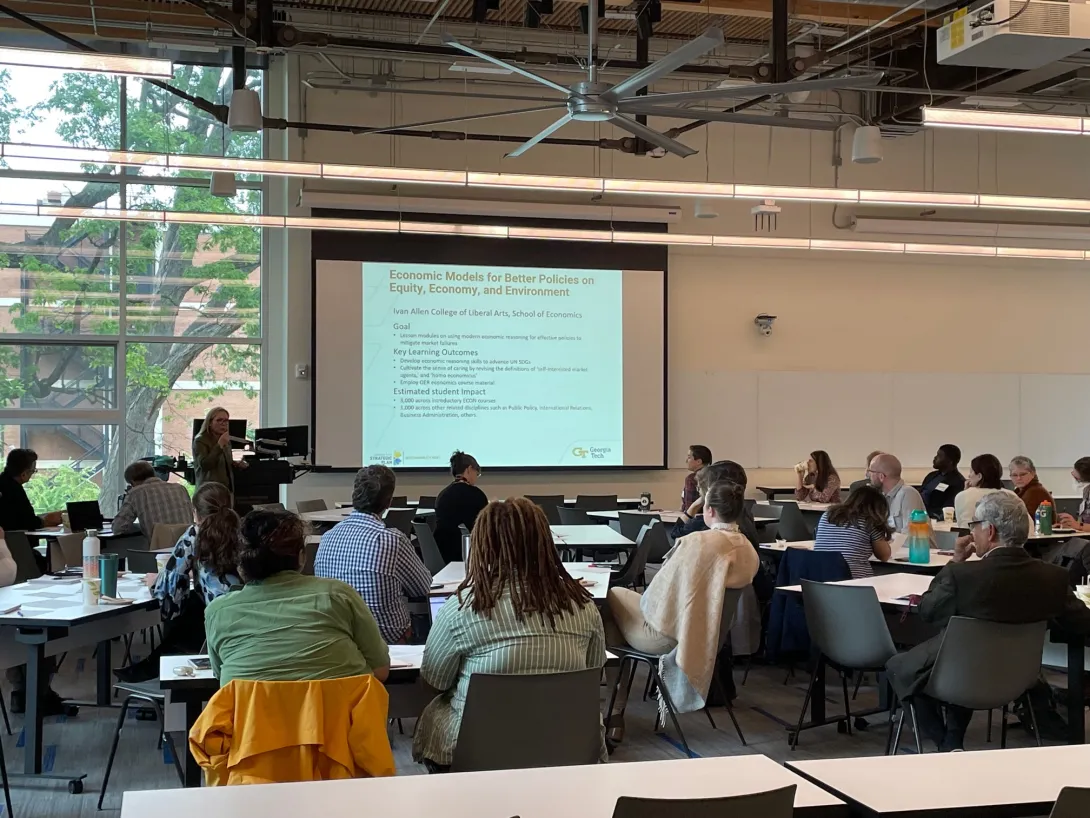
One of the Institute Strategic Plan (ISP) goals is to connect globally and amplify impact by contributing “to global collaborative efforts that advance the U.N. Sustainable Development Goals (SDGs) through our education, research, and service.” In response, Sustainability Next developed a plan to expand SDG concept and skill integration across the undergraduate curriculum. In support of the plan, 21 projects representing all six colleges and 15 schools were presented at the Undergraduate Sustainability Education Jamboree, held on April 26 in the Kendeda Building auditorium. With many winning projects featuring high enrollment and core courses, this first round of sustainability education “seed grants” will significantly expand the reach of Georgia Tech’s sustainability-across-the-curriculum initiatives.
“Our Strategic Plan commitment to bring the United Nations Sustainable Development Goals (SDGs) into our teaching is part of our vision for transformative teaching and learning more broadly,” explains Larry Jacobs, Senior Vice Provost for Education and Learning. “Helping students identify connections between disciplinary concepts and skills and complex societal challenges enhances learning and supports Georgia Tech’s mission to equip students to improve the human condition.”
The Jamboree featured lightning presentations from the award winners, as well as presentations about related initiatives at Georgia Tech to help instructors, students, and staff better understand the landscape of sustainability education innovation on campus. Instructors engaged in course design or re-design through the awards will have opportunities to collaborate with and learn from their peers through a Community of Practice on Transformative Teaching with the SDGs and a SoTL (Scholarship of Teaching and Learning) research group. Many began identifying potential collaborators at the event, as they heard from other award winners. “The afternoon of lightning presentations by fellow faculty was exhilarating,” Sabir Khan, Associate Professor, Schools of Industrial Design and Architecture, shared. “I came away impressed and excited at the range of projects and have already invited a few instructors to join my class in the fall to discuss their approaches to tackling the UN SDGs."
Presenter Kate Williams, Interim Director, Transformative Teaching and Learning, Faculty Initiatives, shared connections between the Sustainability Innovation Awards and Georgia Tech’s Transformative Teaching and Learning (TTL) strategic initiative. “The success of the first round of Sustainability Education Innovation Grants demonstrates our faculty's commitment to creating innovative experiential learning opportunities for students,” Dr. Williams noted.
For more information about future award opportunities or the communities of practice described above, please contact Jennifer Leavey (Assistant Dean for Faculty Mentoring, College of Sciences) or Rebecca Watts Hull (Assistant Director, Faculty Development for Sustainability Education Initiatives, Center for Teaching and Learning).
Review all 21 awarded Undergraduate Sustainability Education Innovation projects.