
Chris Gaffney

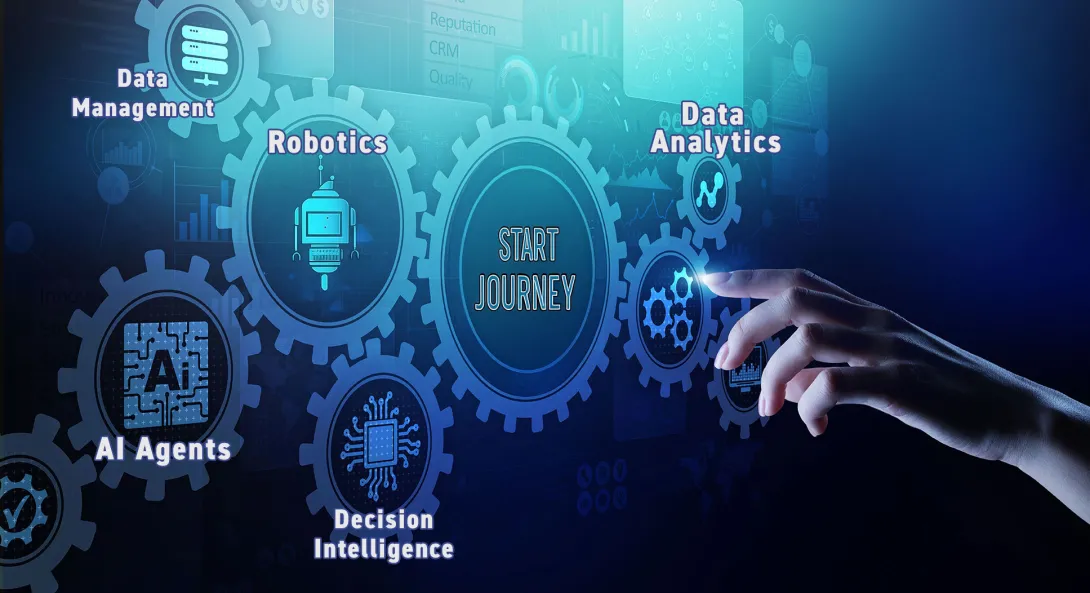
Today's supply chain industry is undergoing a rapid transformation, driven by AI, robotics, and data analytics. These innovations are already delivering measurable efficiency gains, and fast followers – companies that quickly adopt proven technologies – must take action or risk falling behind. Using a "consequence thinking" approach, supply chain professionals and students must ask: What happens if I’m not keeping up with these trends? Those who proactively invest in emerging technologies and their own skills will be better positioned to compete, those who don’t take action in 2025 will struggle with inefficiencies and higher costs. Georgia Tech, a leader in supply chain research and education, is actively exploring these areas, reinforcing that these trends are not just hype but a critical reality.
AI Agents and Decision Intelligence
AI is moving beyond forecasting and analytics into autonomous decision-making. AI agents can rapidly process complex scenarios—such as supply disruptions—and generate optimal responses in real time. This shift reduces reliance on manual problem-solving and enables organizations to respond faster and with greater accuracy. These AI-driven systems also make insights more accessible, allowing non-technical professionals to interact with advanced analytics in natural language.
Georgia Tech’s Supply Chain and Logistics Institute is offering education in Generative AI for supply chain, helping professionals understand and apply these tools effectively. The key takeaway? AI isn’t just for data scientists—it’s becoming essential for all supply chain professionals. Investing in AI literacy and decision intelligence training will be critical to staying relevant in the field.
Physical Automation: AMRs Reshaping Warehouses
Automation in warehouses is no longer experimental—it’s here and delivering results. Autonomous mobile robots (AMRs) are replacing traditional automation solutions, offering greater flexibility and adaptability. Unlike AGVs, which rely on fixed paths, AMRs navigate dynamically using AI and real-time mapping, making them well-suited for evolving warehouse environments.
Companies deploying AMRs report increased throughput, reduced labor costs, and improved safety. These robots optimize workflows, assist human workers, and enable 24/7 operations. Georgia Tech researchers are developing human-collaborative robotics, reinforcing that the future is about augmenting—not replacing—workers. Supply chain professionals should focus on developing skills in automation management and AI-driven operations. Understanding how to integrate these technologies into workflows will be a key differentiator.
Data Management: The Foundation for AI and Automation
AI and automation depend on high-quality, well-integrated data, yet many organizations struggle with fragmented systems and poor data governance. Industry surveys consistently highlight that supply chain leaders cite data silos and quality issues as top barriers to digital transformation. Without a strong data foundation, even the best AI models and automation solutions will fail to deliver their full potential.
Modern supply chain visibility platforms and AI-powered analytics tools are helping companies consolidate data for better decision-making. Georgia Tech researchers are advancing digital twin models that simulate supply chain networks, but these rely on robust data integration. For professionals, this underscores the need to develop data literacy and analytical skills. Those who can navigate, interpret, and leverage data effectively will be indispensable in AI-powered supply chains.
Call to Action: Personal Development and Strategic Planning
Emerging technologies in supply chain—AI, automation, data analytics, and logistics AI—are no longer futuristic concepts. They are delivering tangible benefits now, and the gap between early adopters and laggards is widening. If these innovations are not on your radar, you need to take action.
Where to Start:
- Invest in Personal Development: AI, automation, and data skills are becoming core competencies. Take relevant courses, attend industry events, and seek practical experience.
- Assess Business Applications: Identify where these technologies can solve current challenges and improve efficiency in your supply chain.
- Build Data Competency: Understanding how to structure and leverage data is foundational for AI and automation success.
- Experiment with Emerging Tech: Pilot AI-driven decision tools, AMRs, or logistics optimization models to gain insights into their potential.
The future of supply chain management is being reshaped by these technologies, and those who prepare now will define the next era of supply chain excellence. The question is no longer if these tools will impact the industry—it’s how quickly you can learn to use them to your advantage.
News Contact
info@scl.gatech.edu
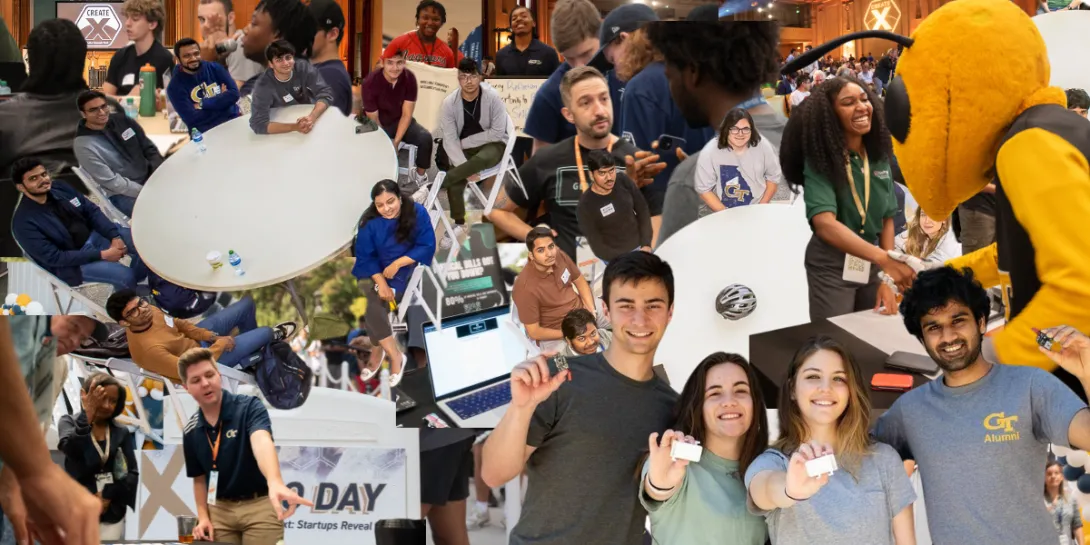
Image of CREATE-X Founders in the Startup Launch program, showing their products, meeting guests of Demo Day, and networking
As CREATE-X enters 2025, the program is more committed than ever to helping students build the future they envision. Through workshops, courses, mentorship, and support, CREATE-X provides a low-risk environment where students can tackle real-world problems and develop solutions.
So far, we have helped launch more than 650 startups by founders from over 38 majors, seen eight founders featured in the Forbes 30 Under 30 Atlanta listing this year, and generated a total portfolio valuation of over $2.4 billion.
Startup Launch, our 12-week summer startup accelerator, continues to be a cornerstone of student entrepreneurship at Georgia Tech, and the program is expanding to accommodate additional teams. Students are encouraged to apply and can even use course projects for their startups. Teams can be in any stage of development and must have at least one Georgia Tech faculty member, alumnus, or current student. Solopreneurs are also accepted. Apply to this summer’s Startup Launch by Monday, March 17.
Benefits of Startup Launch
- Education and Mentorship: Learn from experienced entrepreneurs and business experts.
- Financial Support: Receive $5,000 in optional seed funding and $150,000 of in-kind services like legal counsel and accounting.
- Networking Opportunities: Access a rich entrepreneurial network that will last a lifetime.
- Time in Front of Investors: Participate in Demo Day, Tech’s premier startup showcase, which attracts over 1,500 attendees annually, including investors, business and government leaders, field experts, and potential customers.
- Hands-On Experience: Fully immerse yourself in the startup process and intern for yourself.
- Skill Development: Build skills and confidence that will benefit you in any career path.
Rahul Saxena, director of CREATE-X, encouraged students not to feel like they have to be 100% ready before applying.
“We have seen classroom projects and hackathon teams move on to build very successful startups, even though they weren't originally thinking about it,” he said. “Students should apply for Launch to explore the possibility of it with whatever project they are doing now. You never know what could come of it.”
CREATE-X uses rolling admissions, so apply to Startup Launch today to increase your chances of acceptance. CREATE-X believes in producing quickly, failing fast, and iterating again. The team offers feedback to all applicants and encourages them to submit, even if they’re not entirely sure about their application. A previous info session on Startup Launch and a Startup Launch sample application are available to help students prepare. Attend CREATE-X events to get insights into entrepreneurship, workshop business ideas, find teammates, and prepare your Startup Launch applications. For additional questions, email create-x@groups.gatech.edu.
News Contact
Breanna Durham
Marketing Strategist
Chris Gaffney
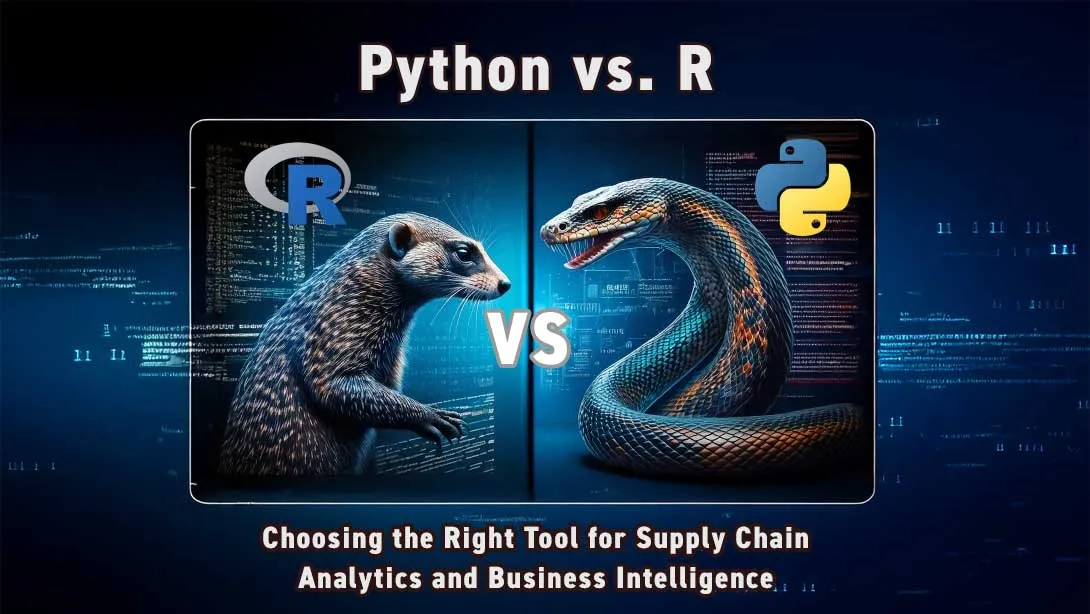
In today's data-driven world, supply chain professionals and business leaders are increasingly required to leverage analytics to drive decision-making. As companies invest in building data capabilities, one critical question emerges: Which programming language is best for supply chain analytics—Python or R?
Both Python and R have strong footholds in the analytics space, each with unique advantages. However, industry trends suggest a growing shift toward Python as the dominant tool for data science, machine learning, and enterprise applications. While R remains valuable in specific statistical and academic contexts, businesses must carefully assess which language aligns best with their analytics goals and workforce development strategies.
This article explores the strengths of each language and provides guidance for industry professionals looking to make informed decisions about which to prioritize for their teams.
Why Python Is Gaining Industry-Wide Adoption
1. Versatility and Scalability for Business Applications
Python has evolved into a comprehensive tool that extends beyond traditional analytics into automation, optimization, artificial intelligence, and supply chain modeling. Its key advantages include:
- Scalability: Python handles large-scale data processing and integrates seamlessly with cloud computing environments.
- Machine Learning and AI: Python’s ecosystem includes powerful machine learning libraries like scikit-learn, TensorFlow, and PyTorch.
- Integration Capabilities: Python works well with databases, APIs, and ERP systems, embedding analytics into operational workflows.
2. Workforce Readiness and Talent Development
From a talent perspective, Python is becoming the preferred programming language for data science and analytics roles. Surveys indicate that Python is used in 67% to 90% of analytics-related jobs, making it a crucial skill for professionals. Employers benefit from:
- A larger talent pool of Python-proficient professionals.
- A lower barrier to entry for new employees learning data analytics.
- The ability to streamline analytics processes across different functions.
3. Industry Adoption in Supply Chain Analytics
Python is widely adopted in logistics, manufacturing, and supply chain optimization due to its ability to handle:
- Demand forecasting and inventory optimization.
- Network modeling and simulation.
- Automation of data pipelines and reporting.
- Predictive maintenance and anomaly detection.
Why R Still Has a Place in Analytics
Despite Python’s widespread adoption, R remains a valuable tool in certain business contexts, particularly in statistical modeling and research applications. R’s strengths include:
- Advanced Statistical Analysis: R was designed for statisticians and remains a leader in econometrics and experimental design.
- Robust Visualization Capabilities: Packages like ggplot2 and Shiny make R a preferred choice for creating high-quality visualizations.
- Adoption in Public Sector and Academic Research: Many government agencies and research institutions continue to rely on R.
Strategic Considerations: Choosing Between Python and R
1. Business Needs and Analytics Maturity
- For companies focused on predictive analytics, automation, and AI, Python is the best choice.
- For organizations conducting deep statistical research or working with legacy R code, maintaining some R capabilities may be necessary.
2. Workforce Training and Skill Development
- Companies investing in analytics training should prioritize Python to align with industry trends.
- If statistical expertise is a core requirement, R may still play a supporting role in niche applications.
3. Tool and System Integration
- Python integrates more seamlessly with enterprise software, making it easier to operationalize analytics.
- R is often more specialized and may require additional effort to connect with business intelligence platforms.
4. Future Trends and Technology Evolution
- Python’s rapid growth suggests it will continue to dominate in analytics and AI.
- While R remains relevant, its role is becoming more specialized.
Final Thoughts: A Pragmatic Approach to Analytics Development
For most organizations, Python represents the future of analytics, offering the broadest capabilities, strongest industry adoption, and easiest integration into enterprise systems. However, R remains useful in specialized statistical applications and legacy environments.
A balanced approach might involve training teams in Python as the primary analytics language while maintaining an awareness of R for niche use cases. The key takeaway for business leaders is not just about choosing a programming language but ensuring their teams develop strong analytical problem-solving skills that transcend specific tools.
By strategically aligning analytics capabilities with business goals, organizations can build a more data-driven, adaptable, and future-ready workforce.
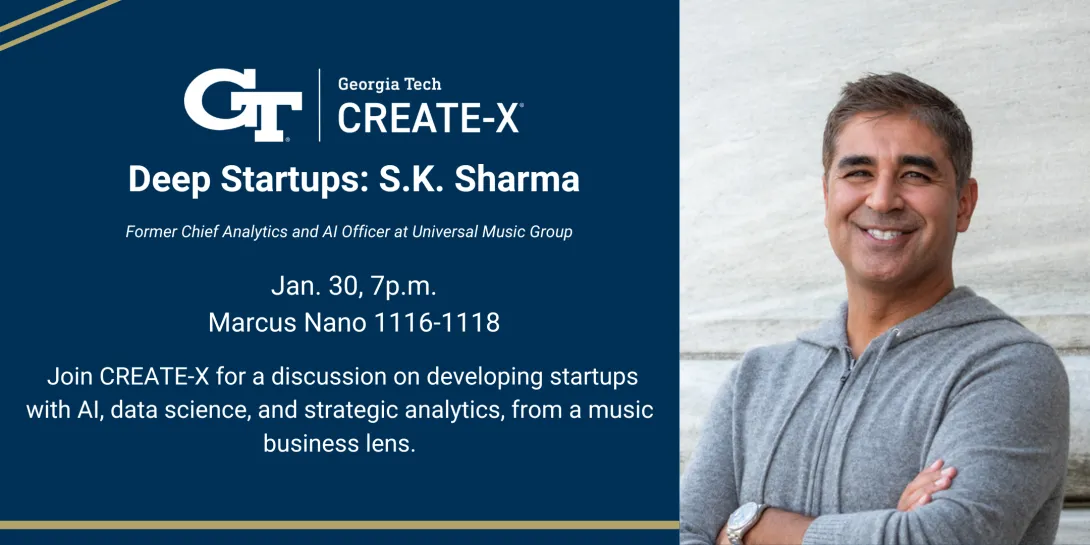
Pictured S.K. Sharma Deep Startups Poster, with headshot and the following: S.K. Sharma, Former Chief Analytics and AI Officer at Universal Music Group, Deep Startups, Jan. 30, 7p.m. Marcus Nano 1116-1118, Join CREATE-X for a discussion on developing startups with AI, data science, and strategic analytics, from a music business lens.
CREATE-X is set to host its next Deep Startups panel event on Thursday, Jan. 30, at 7 p.m. in the Marcus Nanotechnology Building Rooms 1116– 1118. The event will feature S.K. Sharma — former chief analytics and AI officer at Universal Music Group — and an expert in AI, data science, and strategic analytics. During Deep Startups, Sharma will dive into startup development within the context of the music business industry. Seating is limited. Students can register for Deep Startups on Engage. Faculty, staff, and the general public can register for Deep Startups on Eventbrite.
Deep Startups is a series that brings together knowledgeable entrepreneurs and Startup Launch alumni from various business sectors to discuss their experiences forming companies that address significant, contemporary challenges. Attendees spend an informative evening discovering the intersection of technology and entrepreneurship.
From 2016 until recently, S.K. Sharma led a global team of Ph.D. data scientists, engineers, and strategists at Universal Music Group (UMG) to develop innovative and scalable solutions that drive real-time market insights and audience engagement. His leadership has been instrumental in creating differentiated intellectual property and market-leading capabilities in AI, machine learning, and prescriptive analytics, earning him multiple patents in marketing analytics.
Sharma's academic background includes a Ph.D. in chemical physics and physical chemistry from Caltech. His research has been published in numerous peer-reviewed journals, and he has held concurrent roles in academia and industry, including senior research scientist at Caltech's Beckman Institute. His corporate career includes significant positions such as vice president at Lehman Brothers, executive director at UBS, and vice president and partner at Mitchell Madison Group, where he advised global private equity funds and venture capital managers.
In addition to his role at UMG, Sharma is an entrepreneur in residence at UC San Diego's Office of Innovation and Commercialization, where he supports pioneering advancements in science and engineering. He is also an investor at Provisio Medical, a company revolutionizing endovascular procedures with its Sonic Lumen Tomography technology.
Sharma's contributions to the field of AI and analytics have been widely recognized. He was awarded Billboard magazine's 40 Under 40 and has been a commencement speaker at UC San Diego's Jacobs School of Engineering. His work in developing AI-driven marketing technologies has set new standards in the industry, ensuring compliance with global privacy regulations while driving significant improvements in marketing efficiency.
Attendees of Deep Startups will hear practical knowledge and actionable advice on entrepreneurship from Sharma. Each CREATE-X event is an opportunity to network, build ideas, and prepare for the Startup Launch program, which provides $5,000 in optional seed funding, $150,000 in in-kind services, mentorship, entrepreneurial workshops, networking events, and resources to help build and scale startups. Students, faculty, researchers, and alumni interested in developing their own startups are encouraged to apply. The deadline to apply for Startup Launch is March 17, 2025. Spots are limited. Apply now for a higher chance of acceptance and early feedback. If you have any questions about getting started, email us at create-x@groups.gatech.edu.
News Contact
Breanna Durham
Marketing Strategist
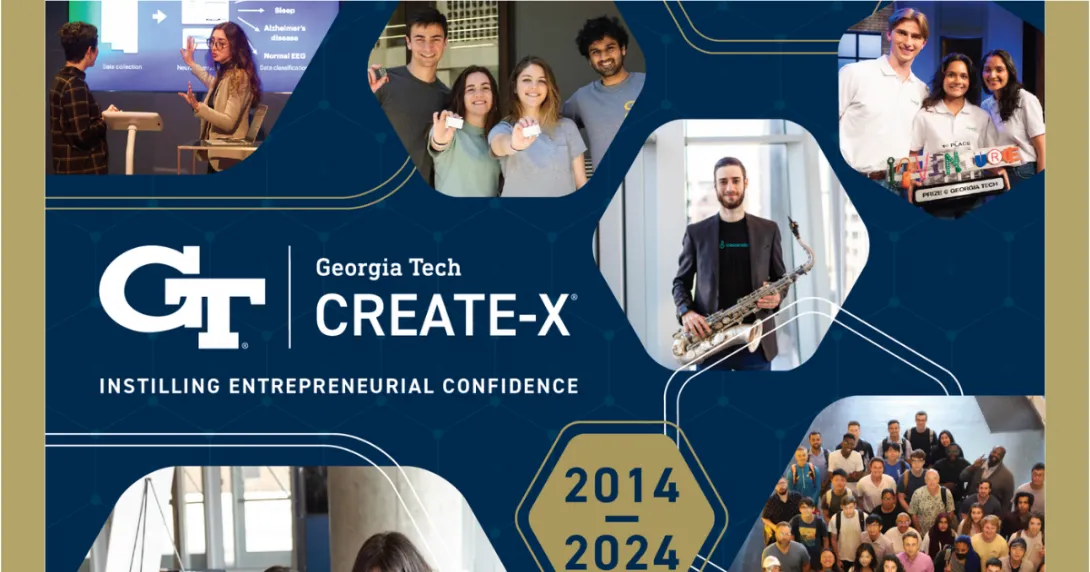
Collage of Startup Launch alumni an CREATE-X participants on the cover of the CREATE-X Decade Report
Founded in 2014, CREATE-X has grown from a visionary concept into a transformative program that has empowered more than 34,000 students to launch more than 560 startups, achieving a total portfolio valuation of over $2 billion. The report, “CREATE-X: A Decade of Success,” reviews the first 10 years of impact and mission.
CREATE-X was established to instill entrepreneurial confidence in Georgia Tech students and provide them with the knowledge, skills, and experiences needed to create their own future. From its humble beginnings with eight teams, the program has expanded to include three distinct branches: Learn, Make, and Launch. These branches cater to the multifaceted needs of entrepreneurial students, offering courses, mentorship, seed funding, and opportunities to develop and launch startups.
Through our value pillars of experiential education, entrepreneurial confidence, and real-world impact, we strive to enable our students to solve the problems they are passionate about solving. And as we look to the future, CREATE-X aims to become the nation’s top startup campus, launching 300 startups each year.
Our commitment to nurturing student innovation and expanding entrepreneurial education remains steadfast. We invite all Georgia Tech students, faculty, alumni, and the public to join us in this exciting journey. Together, we create the future.
Interested in creating your own startup?
Georgia Tech students, faculty, researchers, and alumni interested in developing their own startups are encouraged to apply to CREATE-X’s Startup Launch. The program provides $5,000 in optional seed funding, $150,000 in in-kind services, mentorship, entrepreneurial workshops, networking events, and resources to help build and scale startups. The program culminates in Demo Day, where teams present their startups to potential investors. The deadline to apply for Startup Launch is March 19, 2025. Spots are limited. Apply now for a higher chance of acceptance and early feedback.
For students interested in taking a CREATE-X course, consider exploring Startup Lab, Idea to Prototype, and CREATE-X Capstone Design. These courses can be taken in any order to fit your schedule, and they offer opportunities for funding and other resources. The deadline for applications and registrations for these courses is Jan. 6 for Spring 2025 and May 12 for Summer 2025.
And as always, we invite you to attend our CREATE-X events. CREATE-X hosts workshops and events throughout the year, focusing on brainstorming and receiving feedback on startup ideas, networking and building a team, understanding the legal landscapes of startups, hearing founder insights, and witnessing the latest innovations at Georgia Tech. We hope to see you there.
Interested in supporting CREATE-X?
Faculty members interested in getting involved with CREATE-X can participate as teachers or mentors in various programs such as Startup Lab, CREATE-X Capstone, Idea to Prototype, and Startup Launch. Faculty can also apply for the next cohort of the Jim Pope Fellowship when it opens in the spring. For additional information or inquiries, contact the director of CREATE-X, Rahul Saxena, at rahulsaxena@gatech.edu.
For those interested in donating to or partnering with CREATE-X, your generosity and collaboration is greatly appreciated. Donations to CREATE-X can be made through Georgia Tech’s Give Campus portal. For questions and requests to collaborate, please email create-x@groups.gatech.edu.
CREATE-X appreciates the unwavering support from our community, donors, and partners. Your contributions have been instrumental in shaping the entrepreneurial landscape at Georgia Tech.
To our students, we encourage you to continue being bold, creative, and fearless in your pursuits. CREATE-X is here to support you every step of the way, providing the resources, mentorship, and opportunities you need to turn your ideas into reality.
News Contact
Breanna Durham
Marketing Strategist

The new year provides a natural opportunity to refocus on professional growth. For busy supply chain professionals, development planning can often fall to the bottom of the priority list, especially amidst the daily challenges of managing operations and responding to disruption. Yet, this intentional focus on skill-building is more critical than ever.
As Managing Director of the Supply Chain and Logistics at Georgia Tech, I’ve seen firsthand how development planning can elevate individual careers, strengthen teams, and improve organizational resilience. However, the key to making it work lies in balancing the demands of day-to-day operations with actionable, targeted development efforts.
The Reality of Development Windows
The structure of the working calendar doesn’t make development planning easy. Between the end-of-year holiday season and summer vacation months, supply chain professionals face two primary windows for development:
- Spring (February through May): Coming off the end-of-year slowdown, spring provides the first extended opportunity to focus on growth.
- Fall (Mid-August through Mid-November): After summer, fall offers a second chance to refocus before the holiday rush begins.
For supply chain professionals, these windows represent critical periods to upskill and prepare for the evolving demands of the industry. The spring window is upon us, making now the perfect time to act with urgency and purpose.
The “Why” of Development Planning
In supply chain, the "why" behind development planning is straightforward: the industry is changing faster than ever. New technologies, shifting global trade patterns, and the increasing complexity of operations demand professionals who are both technically skilled and strategically agile.
The supply chain leaders of tomorrow must excel in areas like:
- Data and Analytics: Understanding data and leveraging it for decision-making is no longer optional.
- Automation and Technology: From warehouse robotics to AI-powered forecasting, supply chain professionals need to be tech-savvy to stay relevant.
- Resilience and Risk Management: Building robust supply chains capable of withstanding disruption is now a core competency.
The “What” of Development Planning: Key Focus Areas
Development can be broken into two primary areas:
1. Core Competencies (In-House):
- Communication: Clear, concise, and persuasive communication is critical for collaboration.
- Problem-Solving: Supply chains are inherently complex, and professionals must excel at diagnosing and resolving issues.
- Leadership and Teamwork: Even non-managers need strong leadership and collaboration skills to succeed in today’s cross-functional environments.
Here is a link to one of the best competency guides out there: FYI Resource Center
2. Technical and Operational Skills:
- Advanced Analytics and Visualization: Skills in tools like Power BI, Tableau, or Python are becoming industry standards.
- Supply Chain Systems and Automation: Understanding the functionality and implementation of WMS, TMS, and other critical systems is vital.
- Sustainability and Compliance: Professionals need to navigate increasingly complex sustainability requirements and global regulations.
Beyond these newer technical areas, there remain significant gaps in the application of many core supply chain processes—gaps that cannot be overlooked:
- Production and Inventory Planning: Effective planning processes are critical, yet many organizations struggle to optimize them to balance demand and capacity.
- Warehouse Operations and Optimization: Opportunities remain to improve material flow, labor efficiency, and space utilization in warehouse environments.
- Manufacturing Asset Reliability and Output: Ensuring consistent and reliable equipment performance is essential to maintaining throughput and meeting customer expectations.
- Tradeoff Analysis for Purchasing Decisions: Striking the right balance between low cost, resilience, and sustainability is an increasingly complex challenge, especially in the face of rising customer and consumer pressure for speed and service.
A Quick Action Plan Using the 70/20/10 Model
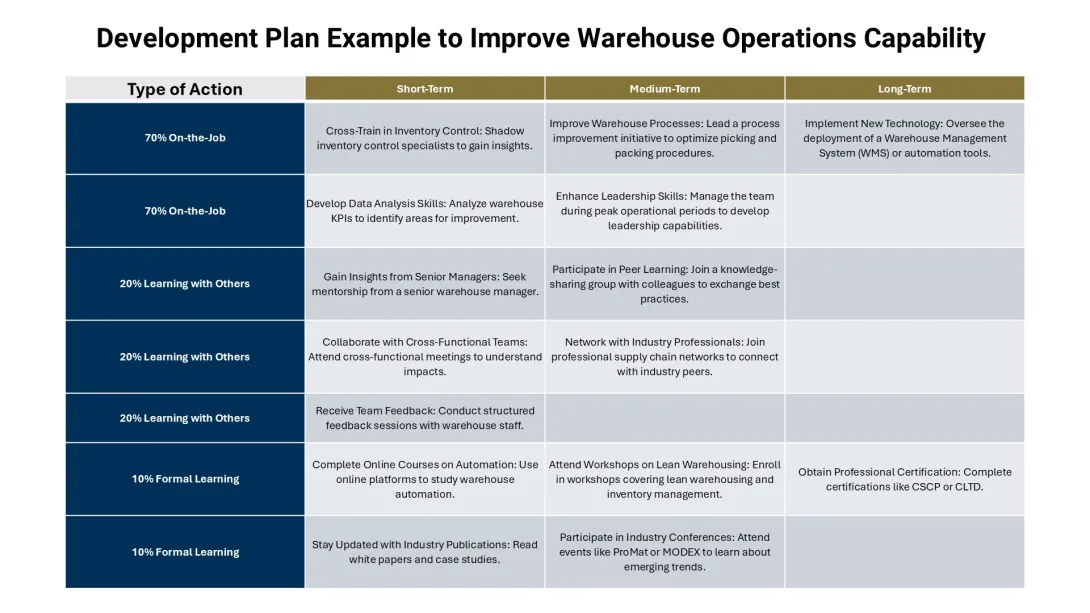
For supply chain professionals with limited time and access to leading practices, the 70/20/10 model offers a practical framework for development:
- 70% Experiential Learning: Apply learning directly in your work.
- 20% Social Learning: Learn from others in your network or organization.
- 10% Formal Learning: Invest in structured learning opportunities.
Please see attached figure 1 for Development Plan Example to improve Warehouse Operations Capability
Here is a link to a free Individual development GPT in Chat GPT: Individual Development Plan Builder
Call to Action: Take 30 Minutes to Plan Today
For busy professionals, the biggest hurdle to development planning is often finding the time. But a well-crafted development plan doesn’t have to take hours. Here's how you can get started in just 30 minutes:
- Reflect on Your Growth Needs (10 Minutes): Where do I need to grow most?
- Set Three Development Goals (10 Minutes): Identify experiential, social, and formal learning goals.
- Identify Next Steps (10 Minutes): Write down one immediate action for each goal.
- Schedule time with Manager to review proposed plan and schedule monthly check-ins
Development as a Competitive Advantage
The pace of change in supply chain operations is relentless, but professionals who make development a priority can turn that challenge into a competitive advantage. By leveraging the 70/20/10 model and focusing on intentional, actionable planning, you can position yourself—and your team—for success.
Don’t let this spring window pass without taking steps toward growth. Whether it’s mastering a new technology, improving core processes, or navigating tradeoff decisions, the time to act is now. If your growth plan includes professional education, consider how the Supply Chain and Logistics Institute and Georgia Tech Professional Education might benefit you!
News Contact
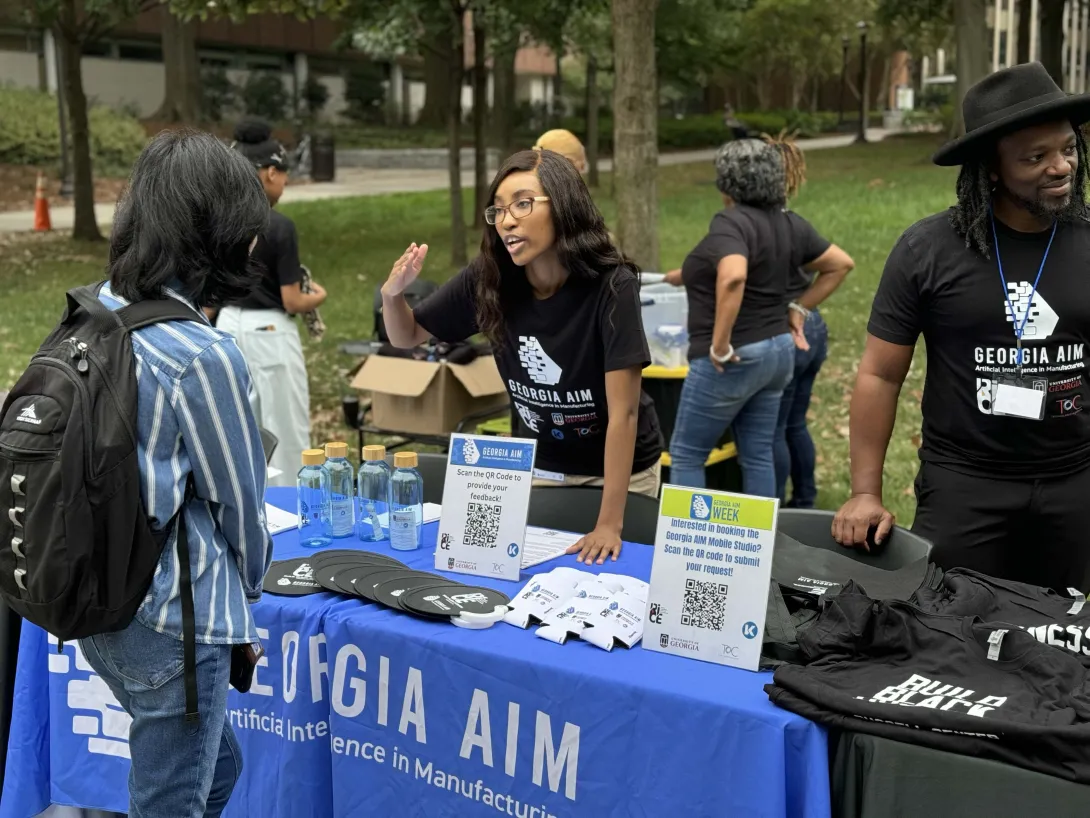
Georgia AIM representatives talk with students on Georgia Tech's campus during the launch event for their new mobile labs.
Gold and white pompoms fluttered while Buzz, the official mascot of the Georgia Institute of Technology, danced to marching band music. But the celebration wasn’t before a football or basketball game — instead, the cheers marked the official launch of Georgia AIM Week, a series of events and a new mobile lab designed to bring technology to all parts of Georgia
Organized by Georgia Artificial Intelligence in Manufacturing (Georgia AIM), Georgia AIM Week kicked off September 30 with a celebration on the Georgia Institute of Technology campus and culminated with another celebration on Friday at the University of Georgia in Athens and aligned with National Manufacturing Day.
In between, the Georgia AIM Mobile Studio made stops at schools and community organizations to showcase a range of technology rooted in AI and smart technology.
“Georgia AIM Week was a statewide opportunity for us to celebrate Manufacturing Day and to launch our Georgia AIM Mobile Studio,” said Donna Ennis, associate vice president, community-based engagement, for Georgia Tech’s Enterprise Innovation Institute and Georgia AIM co-director. “Georgia AIM projects planned events in cities around the state, starting here in Atlanta. Then we headed to Warner Robins, Southwest Georgia, and Athens. We’re excited about the opportunity to bring this technology to our communities and increase access and ideas related to smart technology.”
Georgia AIM is a collaboration across the state to provide the tools and knowledge to empower all communities, particularly those that have been underserved and overlooked in manufacturing. This includes rural communities, women, people of color, and veterans. Georgia AIM projects are located across the state and work within communities to create a diverse AI manufacturing workforce. The federally funded program is a collaborative project administered through Georgia Tech’s Enterprise Innovation Institute and the Georgia Tech Manufacturing Institute.
A cornerstone of Georgia AIM Week was the debut of the Georgia AIM Mobile Studio, a 53-foot custom trailer outfitted with technology that can be used in manufacturing — but also by anyone with an interest in learning about AI and smart technology. Visitors to the mobile studio can experience virtual reality, 3-D printing, drones, robots, sensors, computer vision, and circuits essential to running this new tech.
There’s even a dog — albeit a robotic one — named Nova.
The studio was designed to introduce students to the possibilities of careers in manufacturing and show small businesses some of the cost-effective ways they can incorporate 21st century technology into their manufacturing operations.
“We were awarded about $7.5 million to build this wonderful studio here,” said Kenya Asbill, who works at the Russell Innovation Center for Entrepreneurs (RICE) as the Economic Development Administration project manager for Georgia AIM. “We will be traveling around the state of Georgia to introduce artificial intelligence in manufacturing to our targeted communities, including underserved rural and urban residents.”
Some technology on the Georgia AIM Mobile Studio was designed in consultation with project partners Kitt Labs and Technologists of Color. An additional suite of “technology vignettes” were developed by students at the University of Georgia College of Engineering. RICE and UGA served as project leads for the mobile studio development, and RICE will oversee its deployment across the state in the coming months.
To request a mobile studio visit, please visit the Georgia AIM website.
During Monday’s kickoff, the Georgia Tech cheerleaders and Buzz fired up the crowd before an event that featured remarks by Acting Assistant Secretary of the U.S. EDA Christina Killingsworth; Jay Bailey, president and CEO of RICE; Beshoy Morkos, associate professor of mechanical engineering at the University of Georgia; Aaron Stebner, co-director of Georgia AIM; David Bridges, vice president of Georgia Tech’s Enterprise Innovation Institute; and lightning presentations by Georgia AIM project leads from around the state.
Following the presentations, mobile studio tours were led by Jon Exume, president and executive director, and Mark Lawson, director of technology, for Technologists of Color. The organization works to create a cohesive and thriving community of African Americans in tech.
“I’m particularly excited to witness the launch of the Georgia AIM Mobile Studio. It really will help demystify AI and bring its promise to underserved rural areas across the state,” Killingsworth said. “AI is the defining technology of our generation. It’s transforming the global economy, and it will continue to have tremendous impact on the global workforce. And while AI has the potential to democratize access to information, enhance efficiency, and allow humans to focus on the more complex, creative, and meaningful aspects of work, it also has the power to exacerbate economic disparity. As such, we must work together to embrace the promise of AI while mitigating its risks.”
Other events during Georgia AIM week included the Middle Georgia Innovation Corridor Manufacturing Expo in Warner Robins, West Georgia Manufacturing Day – Student Career Expo in LaGrange, and a visit to Colquitt County High School in Moultrie. The week wrapped on Friday, Oct. 4, at the University of Georgia in Athens with a National Manufacturing Day celebration.
“We’re focused on growing our manufacturing economy,” Ennis said. “We’re also focused on the development and deployment of innovation and talent in the manufacturing industry as it relates to AI and other technologies. Manufacturing is cool. It is a changing industry. We want our students and younger people to understand that this is a career.”
News Contact
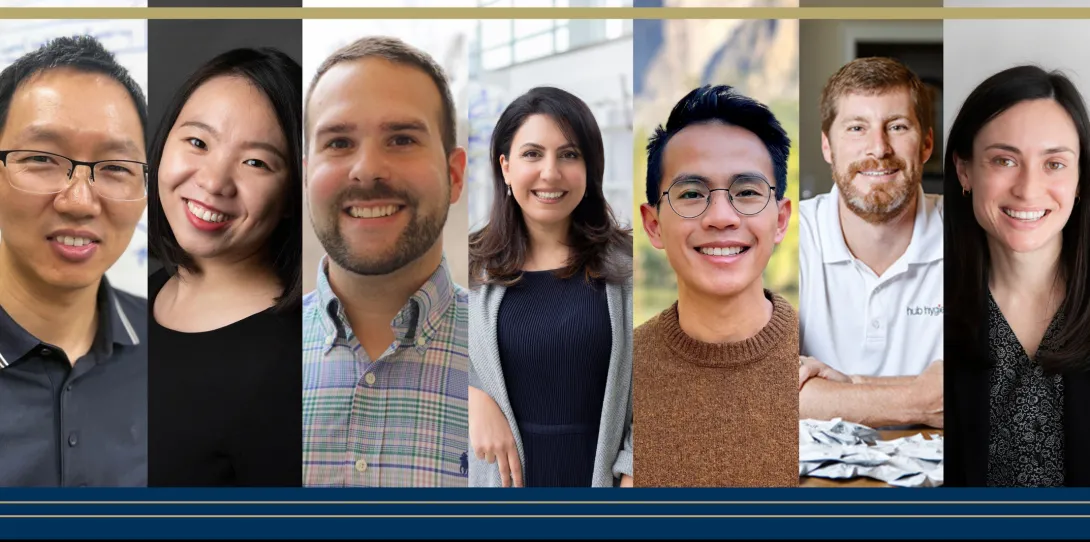
CREATE-X is pleased to announce the next cohort of faculty members selected for the Jim Pope Fellowship for the upcoming academic year. The program provides faculty fellows with funds and education to serve as entrepreneurial instructors, mentors, and advisors to students participating in CREATE-X, Georgia Tech's entrepreneurial learning incubator.
Each fellow receives $15,000 in discretionary funds, which can be used to seek a partial reprieve from teaching for one semester. Fellows also receive mentorship, education on evidence-based entrepreneurship through courses, and opportunities to work with students launching startups.
The new Jim Pope Fellows are:
- Adam McCallum is a translational research advocate for the Wallace H. Coulter Department of Biomedical Engineering at Georgia Tech and Emory University. His work focuses on how metals function in our bodies, utilizing synthetic ligands as chemical tools to explore the biochemistry of metals in biological systems. He collaborates with faculty members, students, and researchers in BME to promote the translation and commercialization of biomedical technologies developed at Georgia Tech and Emory while also encouraging entrepreneurship. Adam earned his Ph.D. in chemistry, with a focus on organic chemistry, from Georgia Tech. He then pursued a postdoctoral fellowship at Emory in Dennis Liotta's lab, where he conducted drug design and discovery research to develop novel therapeutics for various clinical indications.
- Yue Chen is an assistant professor in the Walter H. Coulter Department of Biomedical Engineering at Georgia Tech and Emory University. He also is a member of the Discovery and Developmental Therapeutics Research Program at Winship Cancer Institute. His work addresses building the scientific and technical foundations for various robotic systems and applying them in the medical field. His lab is especially interested in designing, building, modeling, and controlling robots. Among these robots are a commercial robot arm and many custom-made robots, like tube robots, tendon-driven robots, catheters, and soft robots. He received a Ph.D. in mechanical engineering from Vanderbilt University, an M.S. in mechanical engineering from Hong Kong Polytechnic University, and a B.S. in vehicle engineering from Hunan University. This year, he won the National Science Foundation CAREER Award and is developing a continuum robotic system that can efficiently perform procedures like radio frequency ablation while a patient is inside a magnetic resonance imaging scanner.
- Mioy Huynh is an academic professional in the School of Chemistry and Biochemistry who earned his Ph.D. in physical and computational chemistry as an NSF Graduate Research Fellow at the University of Illinois at Urbana-Champaign, where he studied proton-coupled electron transfer reactions. He has taught at Yale University, UCLA, and the Claremont Colleges. Huynh began his professional career in chemistry education as a lecturer and summer instructor at UIUC. After postdoctoral research at Boston University and the University of Wisconsin, he held lecturer positions in general and physical chemistry at Yale, UCLA, and the Claremont Colleges.
- Cici McNamara is an assistant professor in the School of Economics. McNamara studied economics and English for her undergraduate studies, and then graduated from the University of Wisconsin-Madison with a Ph.D. in economics. McNamara’s research interests are in empirical industrial organization. She studies how policies influence the demand and supply of health care and what are the impacts of resulting changes on the market and patient outcomes. She is also a health economist, and her recent work has examined the effects of financial incentives and competition on healthcare market outcomes. Her research on health care consolidation has been integrated into the Vertically Integrated Project, and she was named an AcademyHealth Rising Star in Health Economics in 2023. Among her awards and fellowships, McNamara has also presented her work at numerous conferences and seminars, including the Allied Social Science Associations Annual Meeting, the American Health Economics Conference, and the International Industrial Organization Conference.
- Morvarid Rahmani is an associate professor of operations management in the Scheller College of Business. She received her Ph.D. from the UCLA Anderson School of Management. She also received three master degrees, in industrial engineering, electrical engineering, and economics. Her research focuses on innovation and social sustainability, providing managers with insights to enhance work processes, drive successful innovation, and address social issues. Rahmani recently received the Best Paper Award from the journal Manufacturing & Service Operations Management (M&SOM) for her research on maximizing the social impact of nonprofit organizations on distressed individuals. She has also received the Brady Family Award for Faculty Teaching Excellence at the Scheller College of Business, the CTL/BP Faculty Teaching Excellence Award at Georgia Tech, and CIOS Student Recognition of Excellence in Teaching Award, among other awards. Rahmani is the founding chair of the Technology Innovation and Entrepreneurship (TIE) Special Interest Group (SIG) of the Manufacturing and Service Operations Management (MSOM). She has also served as the Chair of the Technology, Innovation Management and Entrepreneurship (TIMES) Section of INFORMS and as a vice president of the Product Innovation and Technology Management (PITM) College of Production and Operations Management Society (POMS).
- Jud Ready: Ready is a principal research engineer and the deputy director of Innovation Initiatives for the Georgia Tech Institute for Materials. He is also the associate director of External Engagements for the Georgia Tech Institute for Matter and Systems and has been an adjunct professor in the School of Materials Science and Engineering at Georgia Tech for over 20 years. Ready has over 2,200 citations to his three dozen refereed publications and has been invited to over two dozen international conferences. He has 15 patents awarded in the United States, with many others pending. He has also served as an expert witness in criminal and civil cases, provided testimony to the Georgia State House Science and Technology Committee, and served on boards and committees. He has served as PI or co-PI for grants totaling over $20 million from various organizations, including the Army, Navy, Air Force, DARPA, NASA, NSF, NIST, industry, charitable foundations, private citizens, and the state governments of Georgia and Florida. His current research, with an emphasis on aerospace applications, focuses on energy capture, storage, and delivery enabled by nanomaterial design. His research has been included in missions to the International Space Station, low Earth orbit, and heliocentric orbit.
- Fan Zhang is an assistant professor in nuclear and radiological engineering and the George W. Woodruff School of Mechanical Engineering. She received her Ph.D. in nuclear engineering and an M.S. in statistics from the University of Tennessee. Her research focuses on the cybersecurity of nuclear facilities, online monitoring and fault detection using data analytics methods, instrumentation and control, and nuclear systems modeling and simulation. She has developed multiple test beds using both simulators and physical components to investigate various aspects of cybersecurity and process health management. Her research also includes AI/ML, operation optimization, digital twins, predictive maintenance, autonomous controls, robotics, and XR. Zhang is a Georgia Tech College of Engineering Cybersecurity Fellow and has received several prestigious awards. She is the recipient of the 2021 Ted Quinn Early Career Award from the American Nuclear Society for her contributions to instrumentation and control and cybersecurity. In 2022, she was awarded the inaugural Distinguished Early Career Award from the U.S. DOE Office of Nuclear Energy. Additionally, Zhang was recognized as one of UT's 2023 Volunteer 40 Under 40 and is a Grainger Foundation Frontiers of Engineering Alumni.
The Jim Pope Fellowship spans three consecutive semesters. During the fall semester, faculty fellows learn principles of evidence-based entrepreneurship by attending a workshop and shadow teaching one of the CREATE-X courses, Startup Lab, which teaches undergraduates how to examine startup ideas through customer discovery, testing hypotheses, and constructing minimum viable products.
In the spring semester, fellows scope an entrepreneurial project to implement within their home unit, such as creating entrepreneurial assignments within an established course, hosting workshops, or developing a new course that integrates entrepreneurship.
Once the summer semester starts, the cohort works with student startups through CREATE-X Startup Launch, serving as mentors or coaches. After completing the program, fellows spend the next two years leading CREATE-X programs.
Since its creation, the Jim Pope Fellowship has supported 25 fellows, represented 11 Georgia Tech departments, secured $1 million in funding and facilities for makerspaces, and introduced 2,500 students to entrepreneurship.
Faculty members interested in getting involved with CREATE-X can participate as teachers or mentors in various programs such as Startup Lab, CREATE-X Capstone, Idea-to-Prototype, and Startup Launch. Faculty can also apply for the next cohort of the Jim Pope Fellowship when it opens in the spring. For additional information or inquiries, contact the director of CREATE-X, Rahul Saxena, at rahulsaxena@gatech.edu.
News Contact
Breanna Durham
Marketing Strategist
In the dynamic world of supply chain and logistics, talent development has emerged as a critical differentiator for organizations seeking to stay competitive. As businesses navigate the complexities of global supply chains, disruptive technologies, and shifting market demands, having a skilled and adaptable workforce isn’t just an advantage—it’s a necessity. Moreover, investing in talent development isn’t only about building capability; it’s also a proven strategy for attracting and retaining top talent in a competitive job market.
At the Georgia Tech Supply Chain and Logistics Institute (SCL) and Georgia Tech Professional Education (GTPE), we understand the challenges organizations face in developing their teams. Whether you’re managing a workforce with a mix of new hires and seasoned professionals, undergoing a major organizational transformation, or striving to stay ahead, talent development must remain at the forefront of your strategy.
Why Organizations Choose Georgia Tech
Organizations turn to us for talent development solutions for several reasons:
A Balance of New and Experienced Professionals: Managing talent means addressing the needs of both emerging professionals who bring fresh energy and experienced workers who provide deep institutional knowledge. Our programs cater to this balance, offering foundational courses for newcomers and advanced training for seasoned leaders.
A Competitive Edge in Attraction and Retention: Offering world-class development opportunities signals to current and prospective employees that your organization values growth. This commitment is especially critical in today’s job market, where career development ranks high on employees’ priorities.
Practical, Immediately Applicable Training: Adult learners need training that works in tandem with their day-to-day responsibilities. Our modular programs are designed for immediate real-world application, ensuring learning outcomes translate directly into workplace improvements.
Scalable Solutions for All Organizations: For growing companies, introducing structure and formal training is often the next step in their evolution. For larger enterprises, we complement internal training programs with flexible, impactful learning options that align with organizational goals.
What Makes Our Offerings Unique
We deliver training solutions tailored to the realities of today’s supply chain and logistics landscape, setting us apart in the industry. Here’s how:
Flexible Delivery Options: From self-paced courses to live and virtual classes, public programs, and custom corporate training, we offer a variety of formats to meet your needs. For example, our hybrid Engineering the Warehouse course combines online lectures with in-person lab sessions to maximize convenience and impact.
Bite-Sized, Modular Learning: Our modular approach allows professionals to access content in manageable segments, enabling learning alongside work demands. For instance, our series on supply chain analytics is broken into short, focused modules that let learners immediately apply concepts like inventory optimization and demand forecasting.
Innovative and Relevant Content: We stay ahead of the curve by addressing emerging industry trends. Our new course on Generative AI in Supply Chain equips professionals to leverage advanced technologies for process optimization and strategic planning.
Industry-Informed Solutions: Collaboration with industry leaders ensures our content addresses real-world challenges. For example, our program on Supply Chain Risk and Resilience integrates insights from Fortune 500 companies to help businesses mitigate disruptions effectively.
Grounded in Research: Every program is informed by leading academic research and designed to reflect the best practices of adult learning, ensuring your team gains knowledge that is both current and actionable.
Preparing for 2025: A Competitive Advantage
As we approach 2025, talent development remains central to addressing the challenges of the supply chain industry. Large enterprises continue to seek solutions to skill gaps and organizational transformation, while small and mid-sized organizations increasingly recognize the need for formalized training. Georgia Tech’s offerings serve as a vital resource, ensuring professionals stay competitive, skilled, and current in an ever-evolving landscape.
Investing in your workforce today not only ensures your organization’s readiness for tomorrow’s challenges but also signals a commitment to your team’s growth and success. At Georgia Tech, we are proud to partner with companies of all sizes, providing a unique blend of flexibility, innovation, and industry relevance that drives results.
Whether you need a program to supplement your internal training, build a comprehensive development strategy, or prepare your team for the future, we’re here to help. Contact us at info@scl.gatech.edu to learn more about how we can support your talent development needs.
Let’s work together to ensure your supply chain workforce is ready to lead in 2025 and beyond.
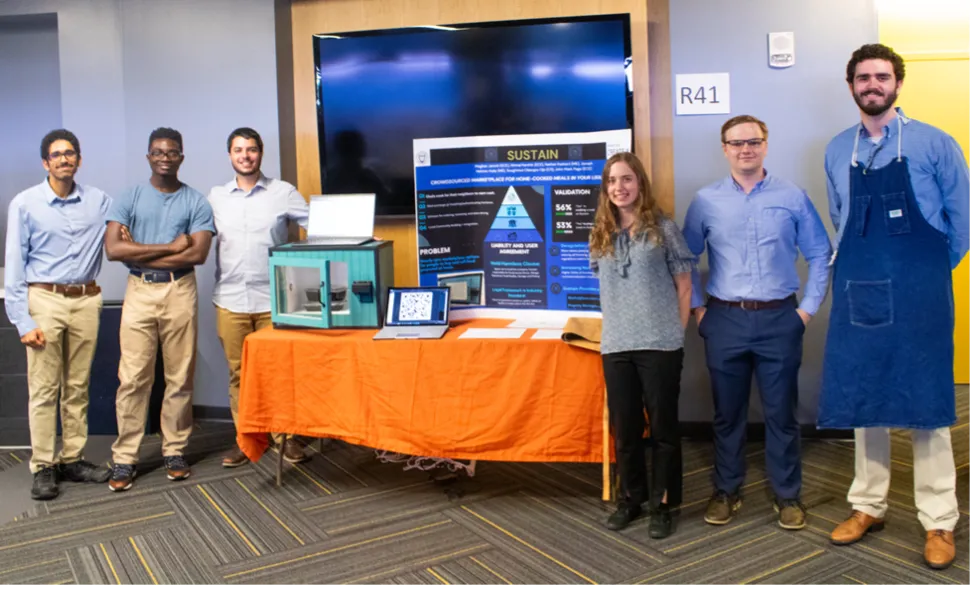
Team Sustain poses with their lock box for home cooked meals at the 2024 Spring Capstone Expo.

Model image of Team Sustain lock box for home cooked meals
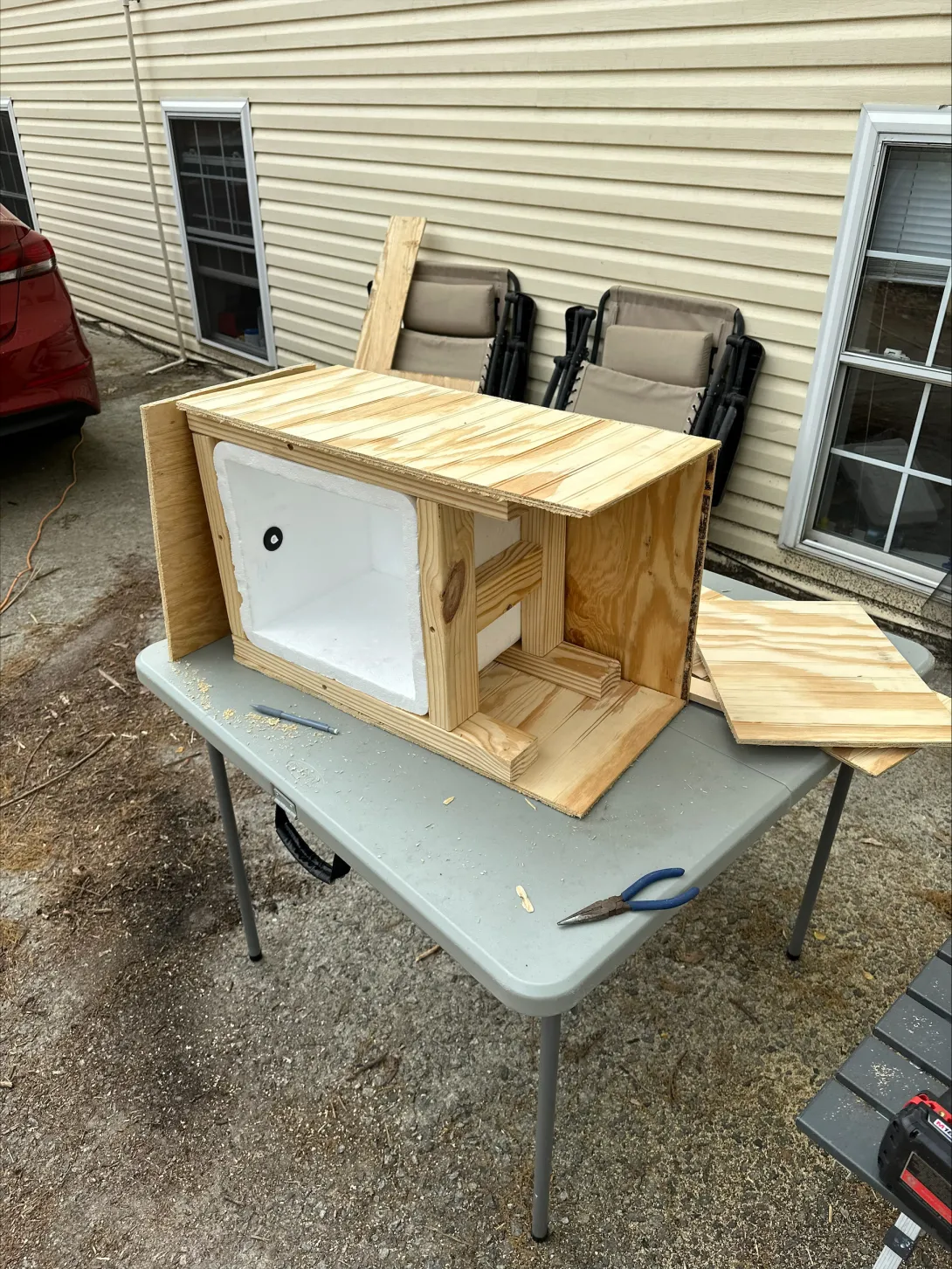
Wooden components make up the initial draft of the lock box for home cooked meals, made by Team Sustain
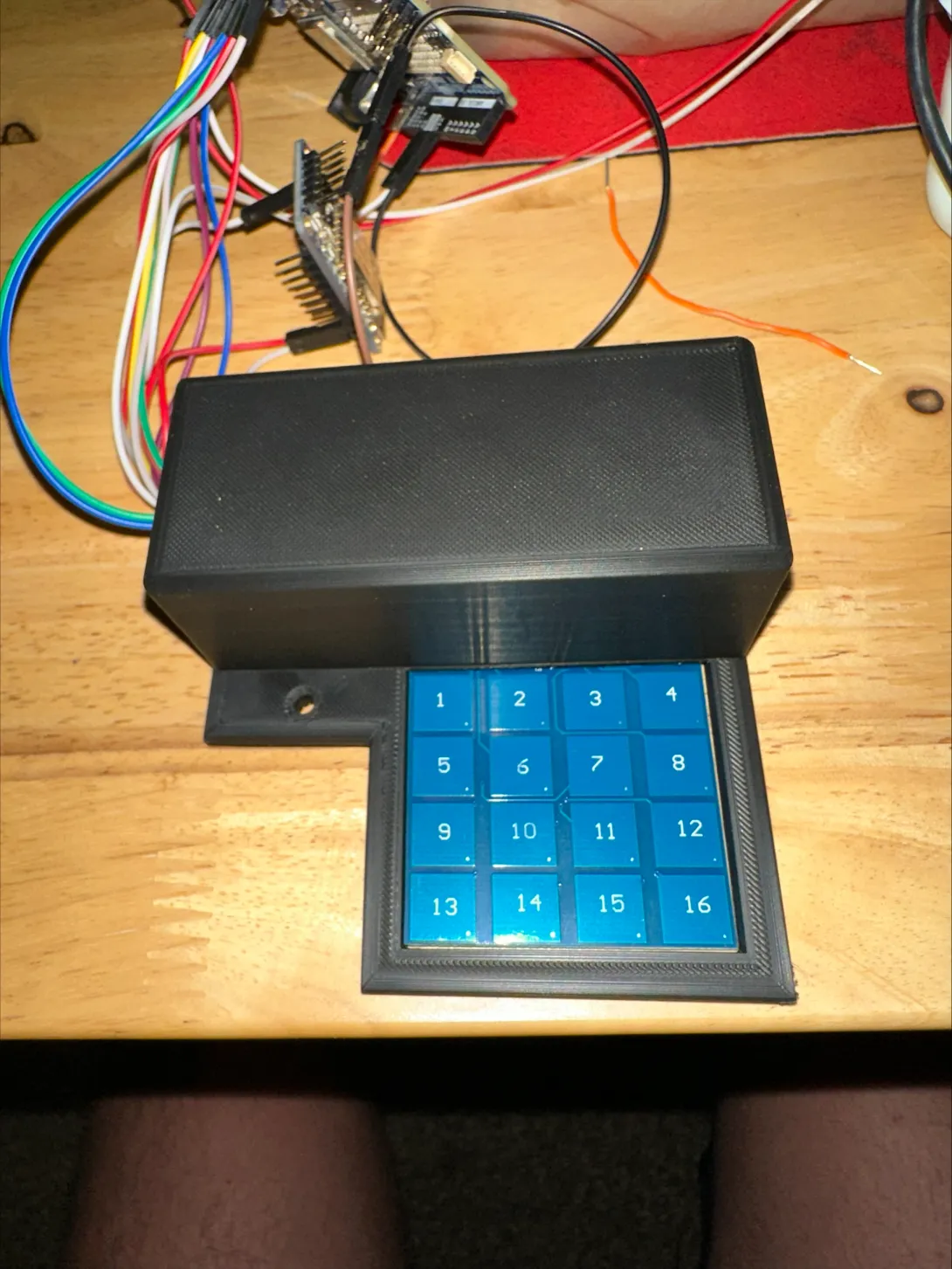
Team Sustain printer with components their lock box for home cooked meals
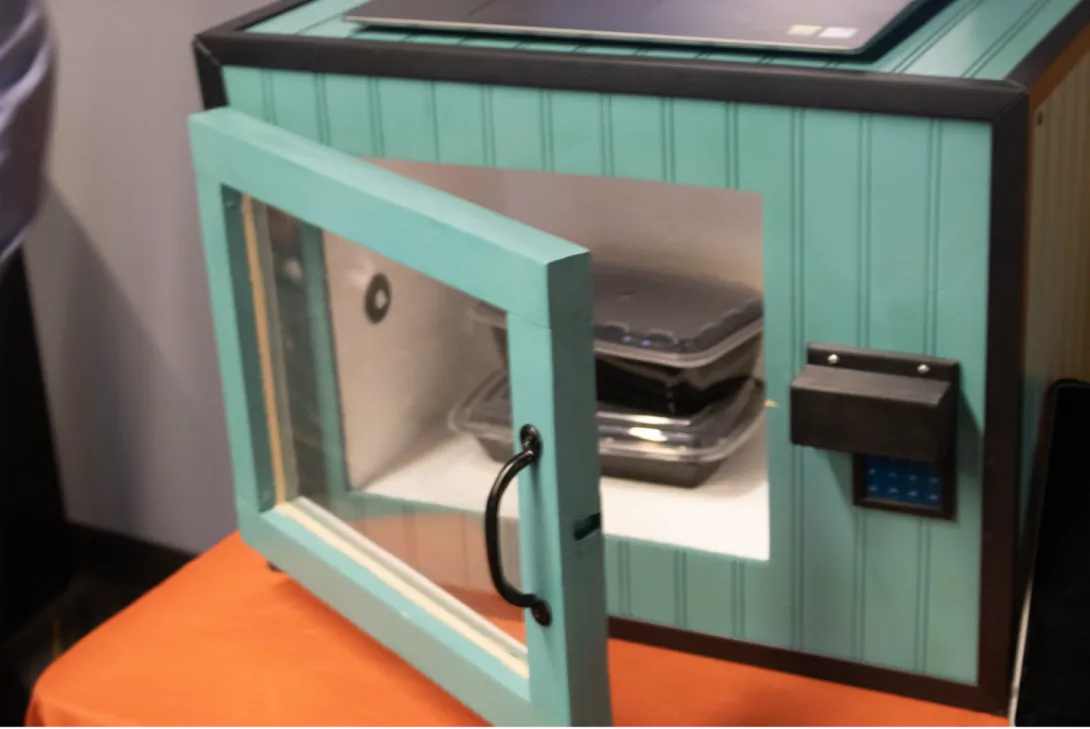
A lock box for home cooked meals is presented at the 2024 Spring Capstone Expo.
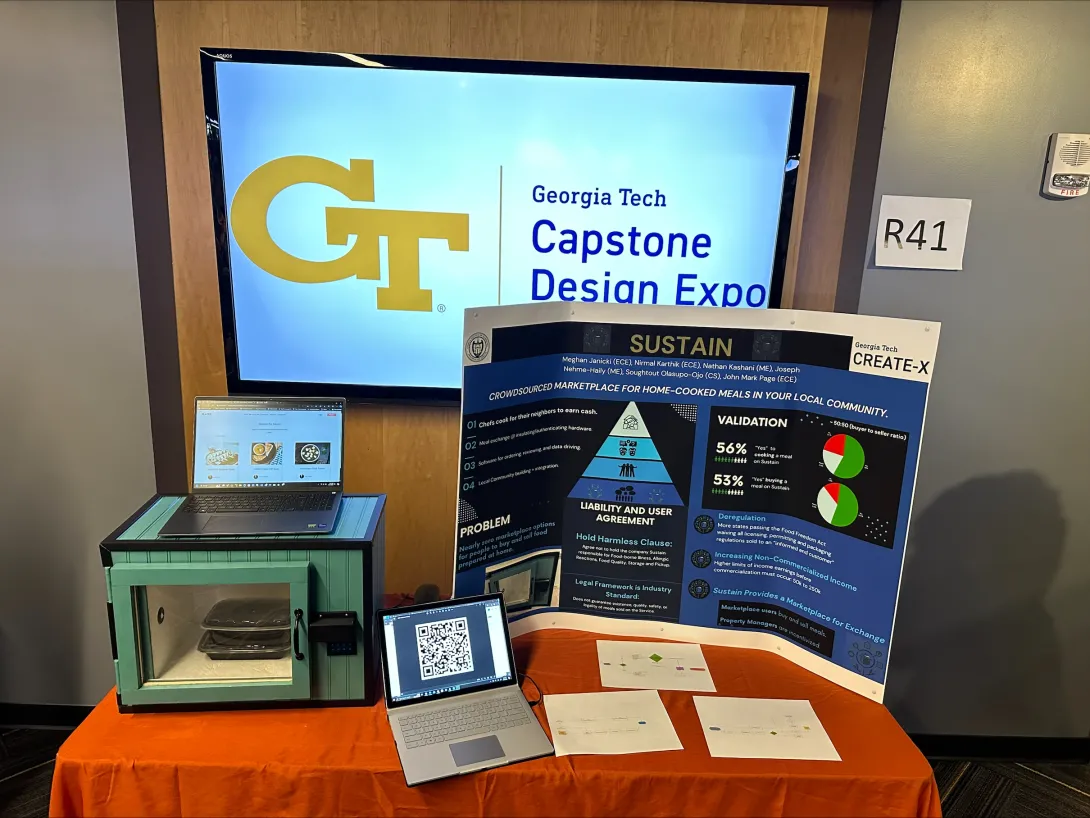
Team Sustain lock box for home cooked meals sits with a tri-fold explainer and a laptop with a QR code at the Spring 2024 Capstone Expo
CREATE-X Capstone Design offers students a unique opportunity to blend their technical skills with entrepreneurial ambitions. In this interdisciplinary program, teams of students identify real-world problems and develop innovative solutions through customer discovery and hands-on experience. Below we spotlight Team Sustain, a group of students who participated in the Spring 2024 Capstone Expo. Their project focused on bringing convenience to home-cooked meals, showcasing the practical application of their engineering and entrepreneurial skills. Read on to learn about their journey, their challenges, and how you can get involved in CREATE-X Capstone Design.
Team Sustain
Sustain offers a way to crowdsource meals and provide home cooks with a cash incentive. The system includes software for ordering, reviewing, and collecting data and hardware for meal exchange.
Nirmal Karthik, electrical and computer engineering
Soughtout Olasupo-Ojo, computer science
Nathan Kashani, mechanical engineering
Meghan Janicki, electrical and computer engineering
Joseph Nehme-Haily, mechanical engineering
John Mark Page, electrical engineering
Why did you all choose this project?
“One of the main things CREATE-X Capstone encourages us to do is customer discovery. Through our discussions, we realized that many people enjoy home-cooked meals but find them inconvenient to prepare. While most things in life are just a click away, home-cooked meals still require a personal touch. CREATE-X challenged us to find a problem and create a solution, so we focused on making home-cooked meals more convenient,” Page said.
Why CREATE-X Capstone?
“After graduation, I wanted to try my hand at entrepreneurship later. I thought CREATE-X was a good way for me to try and learn entrepreneurship skills: how to run a business, what it looks like, the timeline, and so on. Either way, if it went well or badly, I could say with my heart that I have an idea of how to do entrepreneurship,” Olasupo-Ojo said.
“You can go into a big city like Atlanta and actually feel like you can do something to help people. It is a great benefit, as opposed to being in the technical weeds of an engineering project. Mixing them together has been a great experience,” Janicki said.
“CREATE-X empowers students to think independently and explore projects they’re passionate about. We get to drive our projects and businesses, learning skills firsthand rather than just in theory,” Kashani said.
What was your biggest struggle?
“As engineers, we’re classically, especially in school, already given the problem. So, the challenge was figuring out what the problem was, and if our solution really solves the root cause of the problem. We figured out how to find the problem,” Page said.
“Figuring out the idea was our biggest struggle. We delved into markets to find opportunities and ways to help people,” Kashani said.
What has been your favorite part of this experience?
“The team. Make sure you surround yourself with good people, and I think each of us has done that. That’s what I’m proudest about — our team,” Page said.
What advice would you give to someone considering entrepreneurship?
“Develop the skill sets to see problems and be able to think about them. At the beginning of the semester, we were thinking about solar design and building solar design for farms, and now we are in a completely different space. But we’re still applying the same skills and building something up from it that matters. The most important skill is adaptability,” Janicki said.
“Be ready to make mistakes. You won’t get it right the first, second, or even third time. Customer discovery is a continuous process — don’t let setbacks discourage you,” Olasupo-Ojo said.
“Don’t be afraid to get started. If you’re feeling nervous or unsure, there’s only one way to find out, so I’d say go full force into it,” Kashani said.
CREATE-X Capstone Design is open to senior undergraduate students in mechanical engineering, electrical and computer engineering, industrial and systems engineering, and computer science. Course registration is available for the fall and spring semesters, and the current sections are ME4723-X/X01, CS4723-X/X01, ECE4853 X/LX, BME4723-X/X01, and ISYE4106.
CREATE-X also offers other programs like Startup Lab and Idea to Prototype, providing students with a foundational entrepreneurial education. For those interested in launching their own ventures, CREATE-X’s 12-week summer accelerator, Startup Launch, offers mentorship, $5,000 in seed funding, and $150,000 of in-kind services. The priority deadline for the accelerator is Nov. 17. Apply for Startup Launch to maximize your chances of acceptance and receive early feedback.
Making Sustain: The Gallery
News Contact
Breanna Durham
Marketing Strategist