
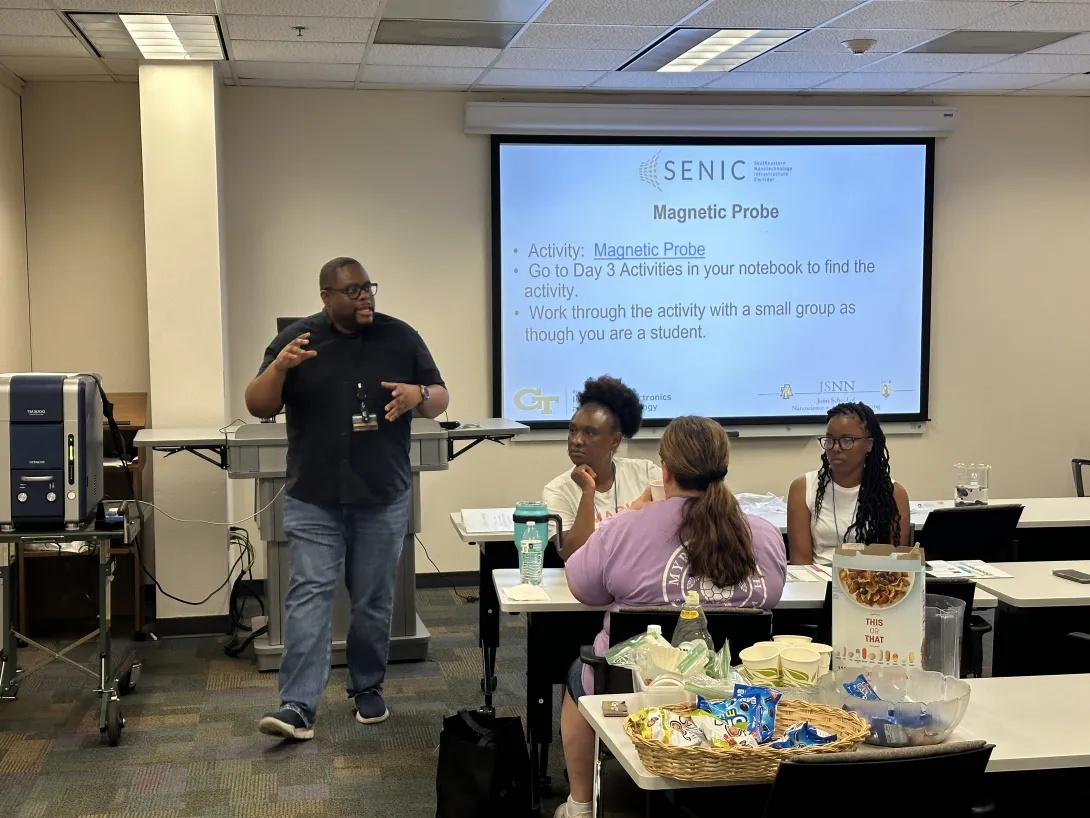
The Institute for Matter and Systems (IMS) has received $700,000 in funding from the National Science Foundation (NSF) for two education and outreach programs.
The awards will support the Research Experience for Undergraduates (REU) and Research Experience for Teachers (RET) programs at Georgia Tech. The REU summer internship program provides undergraduate students from two- and four-year programs the chance to perform cutting-edge research at the forefront of nanoscale science and engineering. The RET program for high school teachers and technical college faculty offers a paid opportunity to experience the excitement of nanotechnology research and to share this experience in their classrooms.
“This NSF funding allows us to be able to do more with the programs,” said Mikkel Thomas, associate director for education and outreach. “These are programs that have existed in the past, but we haven’t had external funding for the last three years. The NSF support allows us to do more — bring more students into the program or increase the RET stipends.”
In addition to the REU and RET programs, IMS offers short courses and workshops focused on professional development, instructional labs for undergraduate and graduate students, a certificate for veterans in microelectronics and nano-manufacturing, and community engagement activities such as the Atlanta Science Festival.
News Contact
Amelia Neumeister | Communications Program Manager
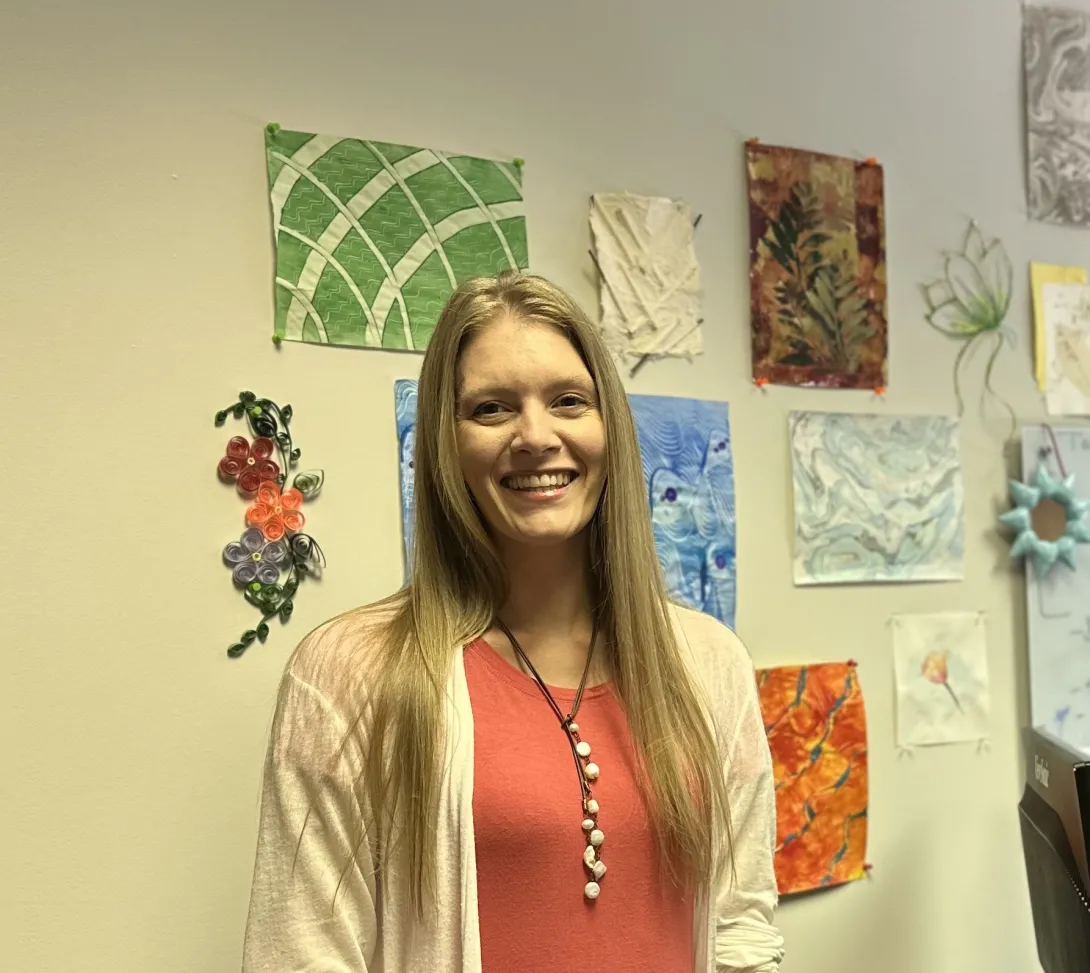
Anna Doll
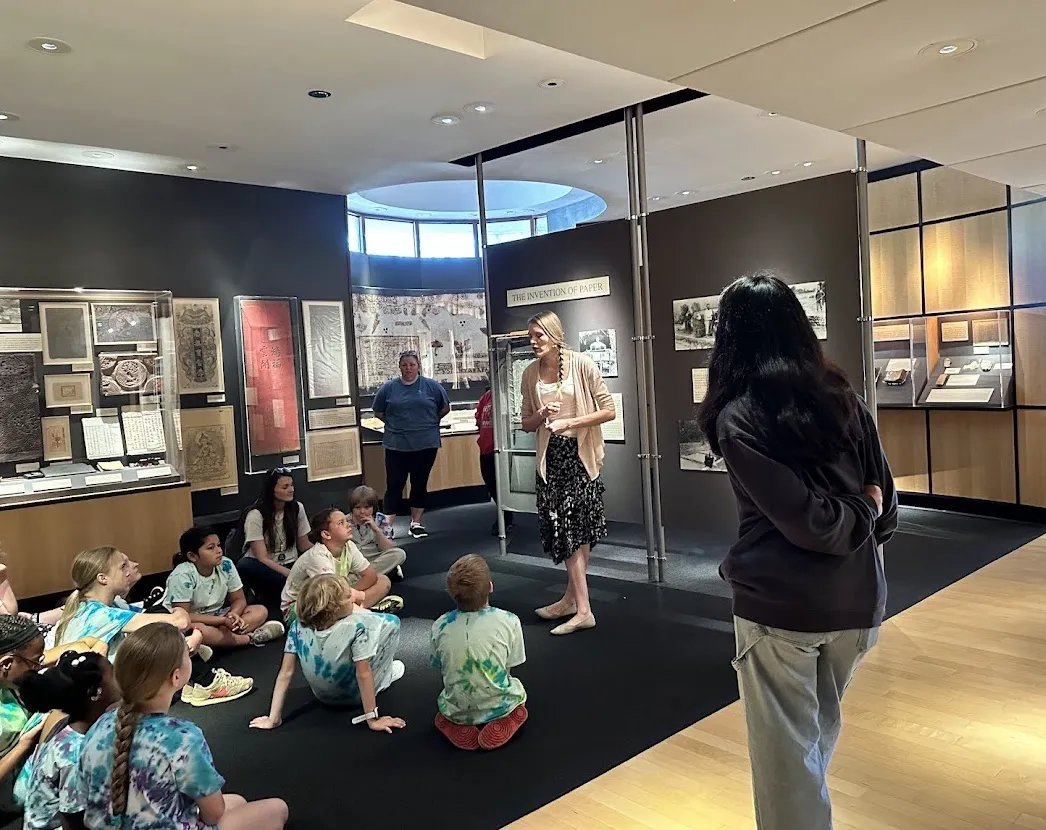
Doll giving a tour of the Robert C. Williams Museum of Papermaking to K-12 Students
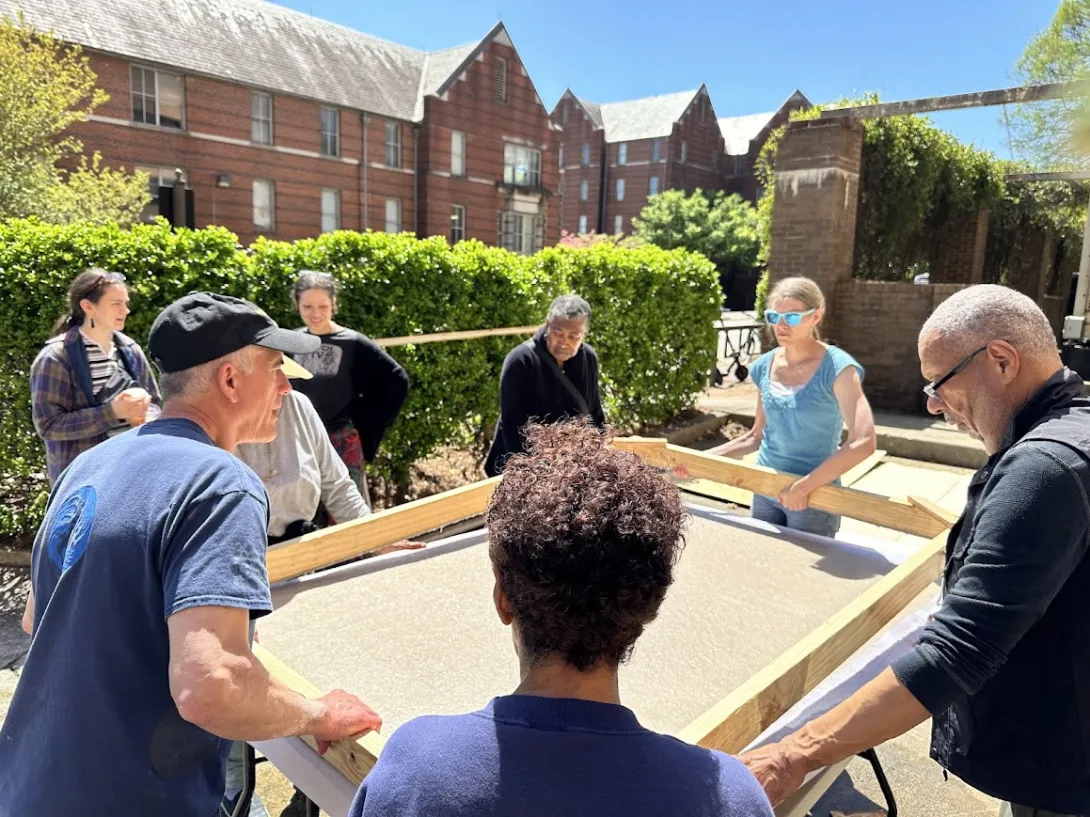
Anna Doll, Tom Balbo and workshop participants during the Big Paper Workshop
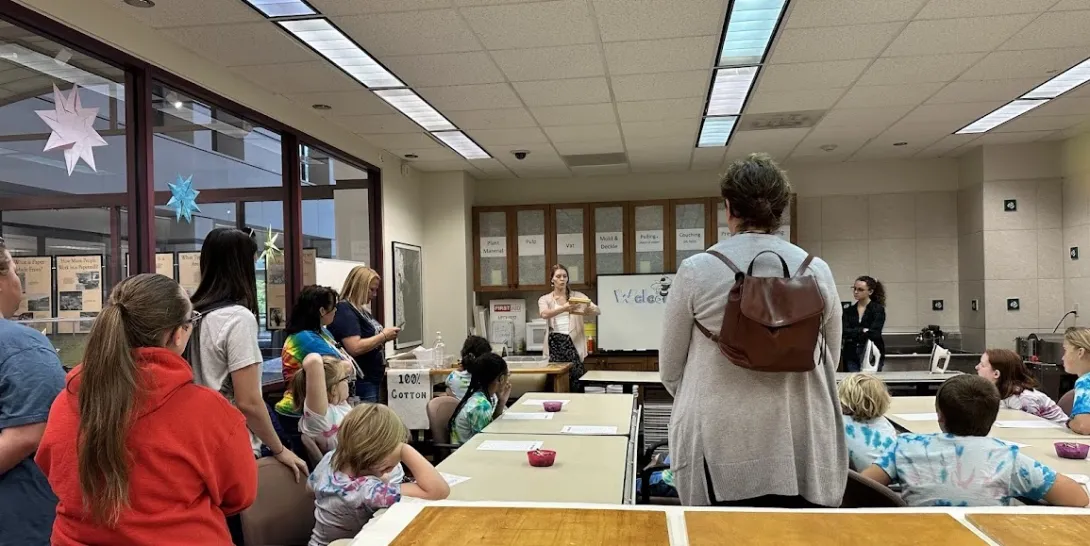
Doll during a paper-making session with K-12 Students
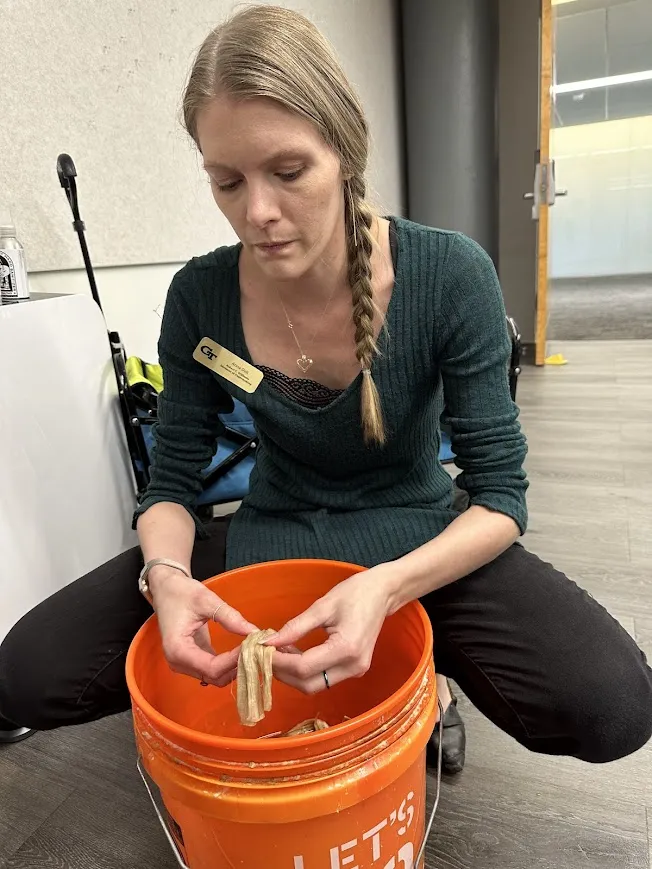
Doll prepping the fiber during Tech's Tactile Thursdays
Anna Doll is the education curator at the Robert C. Williams Museum of Papermaking, located in Georgia Tech’s Renewable Bioproducts Institute. Doll’s day-to-day responsibilities, and the many projects she handles at the museum, bring tremendous value not only to the Georgia Tech community, but also to the papermaking community around the world.
With a degree in art education and a minor in art history, Doll began her career as an elementary school art teacher in Pinellas County, Florida. She then became the director of Museums for the Folk Pottery Museum of Northeast Georgia and the Sautee Nacoochee Cultural Center History Museum and Heritage Site.
In 2019, Doll joined the Robert C. Williams Museum of Papermaking team as its education curator. At the museum, she creates and manages programs that include educational tours, private and public workshops on papermaking, specialized workshops through creative collaborations with artists, collaborations with other campus units for STEAM activities, and community events for kindergarten through senior adult audiences.
"I didn't know a whole lot about papermaking when I first started here," admits Doll, "but I knew how to be an education curator." Her ability to swiftly absorb the history and concept of papermaking and translate it into engaging educational experiences has been instrumental in her success. Below are a few highlights of Doll’s projects.
Museum Tours
Doll’s daily activities include educational tours of the papermaking museum for groups of all ages. The tours range from introducing the papermaking process to elementary and middle school students to sharing the history and heritage of papermaking with adults. In addition, she conducts virtual programs for groups interested in the history of paper and the technological advances of the papermaking process since its invention many centuries ago.
Workshops
Doll is the point of contact for public and private workshop bookings. She also develops the concepts for these sessions, catering to groups with various interests (e.g., Girl Scouts, Boy Scouts, people with disabilities, teachers, artists, college students, and public groups). This spring, Doll’s workshops included Suminagashi, Production Papermaking, Petal Fold Book, Paper Casting, and Magic Box: Jacob’s Ladder.
In addition to conceptualizing and conducting tours and workshops, she designs curricula and other resources involving paper art and science for K-12 teachers to integrate into their art classes.
Big Paper Workshop – Convening Artists, Educators, and Community Members for a Transformative Experience in Papermaking
This spring, Doll and her colleague Jerushia Graham created a communal workshop called “Big Paper.” Offered on multiple days, this project included five college groups from Georgia and Alabama and community groups from metro Atlanta who got to create a large sheet of paper from pulp. Participants beat plant material by hand to prepare the fiber and worked with Tom Balbo, founding director of the Morgan Conservatory, to create a huge 4’x6’ sheet of paper that was mailed back to them once it was dry.
Through her work at the museum, Doll has cultivated relationships with various artists, all of whom collaborate with the museum to conduct workshops and create and showcase art exhibits.
Additional Collaborations Across Campus
Doll partners with other units on campus to create programs. She collaborated with the Georgia Tech Library on a program called “Tech's Tactile Thursdays.” Hosted on the first Thursday of each month, it allows students, faculty, and staff to work on hands-on projects related to paper and provides an opportunity for the largely technology-focused participants to take a break from their routine, relax, and explore their creative side and enhance their well-being.
Doll also has been an active educator at Georgia Tech Science and Engineering Day, which is part of the Atlanta Science Festival. This year, more than 3,000 K-12 students and parents visited Georgia Tech’s campus to engage in hands-on STEAM activities. Representing the museum, Doll worked with families to make prints on a clamshell printing press featuring a custom-designed Buzz image (designed by Doll) on a postcard for the kids to take home. The activity showcased the rich history of the printing press and modern technology with a photopolymer printing plate.
Through these diverse projects and initiatives at the museum, Doll continues to make a difference in the world of papermaking. Looking ahead, she hopes to expand the museum’s educational initiatives as well as the education team and its resources, and she envisions broadening the museum’s reach and impact by offering free programs to schools through grants. She is also working with Georgia Tech faculty and researchers on museum research into the art of nano cellulose and plans to establish a paper and natural dye garden for teaching.
News Contact
Priya Devarajan | RBI Communications Program Manager


When Amy Bonecutter-Leonard was a second-semester undergraduate at the Georgia Institute of Technology, she applied for a work-study job in the cleanroom at the Microelectronics Research Center (MiRC). There, she learned process techniques for making the same type of electronic chips used in cellphones.
With this new knowledge, she could train and help other students with their research. At the time, Bonecutter-Leonard was a chemical engineering major with no plans to go into microelectronics. Working in the cleanroom changed that.
“I fell in love with microelectronics through exposure to the research and development work performed in the cleanroom,” she said.
What started as a student job led to her taking microelectronics classes — and eventually to a career in the field. “My work-study prepared me with hands-on technical skills I would have never learned from just being in a classroom,” she said. Now, Bonecutter-Leonard works as a microelectronics business chief engineer at defense contractor L3Harris Technologies.
Her story is one of many from the Institute for Electronics and Nanotechnology (IEN, the successor to MiRC), which has been training students from kindergarten to graduate school to be leaders in the microelectronics and nanotechnology space. The goal of IEN’s outreach is to make nanotechnology and microelectronics — such as computer chips and sensors — as accessible as any other science. Ultimately, these efforts will build up the U.S. workforce in the field, ensuring the country remains at the forefront of the technology that powers Americans’ everyday lives.
Building the Workforce
Bolstering the number of workers in the microelectronics industry is imperative to keep the U.S. globally competitive. Right now, 40% of the industry's labor force is older than 50, with practitioners aging out of their careers at a pace new talent cannot match. Additionally, heavy educational barriers to entry, including required degrees and specialized training, prevent more people from pursuing careers in the field. Without dedicated efforts, the entire sector — and the nation — will fall behind.
IEN is working to solve this pipeline problem.
“With the national semiconductor workforce aging, it is important now more than ever that we educate the next generation to move into these jobs,” said Michael Filler, IEN’s interim executive director. “IEN is proud to support the semiconductor industry by providing students with the interdisciplinary skills and hands-on technical training essential for success in this fast-paced, global field.”
Georgia Tech is uniquely positioned to lead this charge with its 28,500 square feet of academic cleanroom space, the largest in the Southeast and among the largest in the U.S. From micro-electro-mechanical systems to electronics fabrication, workers have 100 bays in which to conduct leading-edge research. These cleanrooms are also key teaching and training facilities.
IEN invites anyone from around the world, whether affiliated with the Institute or not, to become a core user of the cleanroom facilities. The center also regularly hosts short courses for external partners — academic, industry, and government — in microfabrication and soft lithography for microfluidics. Over the past three years, more than 700 people went through new-user orientation, and 193 enrolled in the short courses.
Teaching the Next Generation
Making nanotechnology — of which microelectronics is an example — educationally accessible begins before college. Each semester, more than 800 K-12 students participate in IEN’s Introduction to Nanotechnology virtual lesson. Associate Director for Education and Outreach Mikkel Thomas begins his presentations by asking a simple question: What do you know about nanotechnology?
“About 99% of the time, they say that’s what makes Ironman’s suit work,” said Thomas. “That means they’ve learned the wrong lesson — that nanotechnology is a futuristic tech and that you have to be as smart as Tony Stark to work in the field.
“But most people interact with nanotechnology multiple times throughout their day, and they have no idea they're doing it.”
Thomas also emphasizes there is a career path for everyone, even if they don’t plan to get a traditional four-year degree. Part of IEN’s workforce development initiative is to build up the entire pipeline from industry and research lab technicians at the certificate level to postdoctoral researchers.
“It’s important for us to reach kids who don’t know what career options are available in nanotechnology,” Thomas said. “We want them to know that whatever they're interested in, there is a pathway for them.”
Sixth- through eighth-grade students sparked by this conversation can attend Chip Camp, a three-day STEM summer camp sponsored by Micron. They begin with a day at IEN to learn about thin films, magic sands, ferrofluids, and measuring their height in nanometers. The rest of the camp features hands-on visits to the Materials Characterization Facility (MCF) and the IEN cleanroom, where they can try on the white “bunny suits” technicians wear in the lab.
To further their reach, IEN’s workforce development team collaborates with teachers to bring nanotechnology into classrooms. During the summer, IEN offers the Research Experience for Teachers, a training program for public school and community college teachers to conduct nanotechnology research and learn how to incorporate it into their lessons. Middle school teachers have similar opportunities through the Nanoscience Summer Institute for Middle School Teachers.
Training the Workforce
When these students get to a university like Georgia Tech, IEN hires them for work-study jobs like the one Bonecutter-Leonard had. The hands-on cleanroom training is also vital to graduate students pursuing advanced degrees.
Katie Young earned her Ph.D. in materials science and engineering at Georgia Tech. Learning her way around the IEN cleanroom was essential for her graduate studies.
“My dissertation research involved synthesizing two-dimensional materials — only a single atom thick — for permeation barriers,” she explained. “I often used the cleanroom’s vacuum systems to synthesize and process 2D materials.” Now a research scientist at the Georgia Tech Research Institute, Young still works in the cleanroom on semiconductor device fabrication, building prototype quantum and biological sensors.
IEN opportunities are not limited to graduate research. Annually, about 150 Georgia Tech undergraduate students take microelectronics packaging and devices classes, with labs taught by IEN staff in the teaching cleanroom. These courses include Integrated Circuit Fabrication (ECE 4452), in which students learn to fabricate circuit elements, and the Science and Engineering of Microelectronic Fabrication (ChBE 4050/6050, open to graduate students as well), for students interested in semiconductor materials and fabrication.
Students don’t need to enroll at Georgia Tech to benefit from training, courses, and other opportunities. IEN’s internship program provides technical college students with training to become microelectronics technicians, either through work in the Biocleanroom or in the MCF.
Empowering Future Innovators
IEN also participates in the National Science Foundation Research Experiences for Undergraduates (REU), which provides opportunities for students from underrepresented groups or who attend schools without similar facilities. While enrolled at another university, John Mark Page was introduced to Georgia Tech’s cleanroom through an REU.
“That was my first exposure to any facility of this kind, and it felt like I was looking at the future. Being in a facility that can fabricate devices at or near the atomic level — it was hard to fathom,” Page said. “I had never thought that participating in microelectronics and nanotechnology as a student, especially as an undergraduate, was something I could do.”
As a result of his REU, Page transferred to Georgia Tech — he will graduate this summer with a bachelor’s degree in electrical engineering. He also completed a second REU at the University of North Carolina at Chapel Hill, worked as a student assistant in the IEN cleanroom, and participated in a Vertically Integrated Project (VIP), Chip Scale Power and Energy.
“I was interested in the VIP because it allowed me to spend more time in the cleanroom, familiarizing myself with semiconductor fabrication methods and training on new fabrication equipment,” Page explained. His experiences inspired him to consider a future career in the semiconductor industry.
“It wasn’t only the 10-week experience of the REU that made a lasting impact on me,” he said. “It was also the relationships formed with the people of IEN. The staff there are exceptional representatives of Georgia Tech, and they make IEN a tremendous asset to the future of microelectronics and nanotechnology in the U.S.”
Biya Haile, an ECE Ph.D. student, had a similarly meaningful REU experience. Haile, whose research focuses on creating micro-electro-mechanical systems-based sensors (MEMS), described the REU as “immersive.”
“The REU project enabled me to study chemical micro-sensor technologies, as well as state-of-the-art additive nano-manufacturing techniques, which has contributed to my research,” he said. “I feel lucky that my academic journey has entailed developing new technologies that use nanoscience to solve big problems.”
While Haile is currently focused more on designing and testing rapid processes for fabricating MEMS-based devices, he still occasionally works in the cleanroom on fabrication. He plans to go into the microelectronics industry after graduating.
The Path Ahead
All of IEN’s training and educational offerings align with IEN’s mission to bolster and diversify the microelectronics workforce, according to George White, senior director of strategic partnerships for the Georgia Tech research enterprise. “IEN has been at the forefront of the CHIPS infrastructure buildout, particularly in the area of education and workforce development,” he noted.
IEN’s efforts impact not just Atlanta but the entire country. Georgia Tech’s leadership in microelectronics research trains the innovators and practitioners of the future everywhere and ensures that America stays at the forefront of leading-edge technology. As demand increases for microelectronics, IEN is moving to meet it.
Effective July 1, 2024, the Institute for Electronics and Nanotechnology and the Institute for Materials will evolve into the Institute for Matter and Systems (IMS). This strategic union aims to foster convergent research at Georgia Tech, focusing on the science, technology, and societal underpinnings of cutting-edge materials and devices. Eric Vogel will be the director of IMS, and Michael Filler will be the deputy director.
News Contact
Media Contact: Tess Malone, Senior Research Writer/Editor tess.malone@gatech.edu
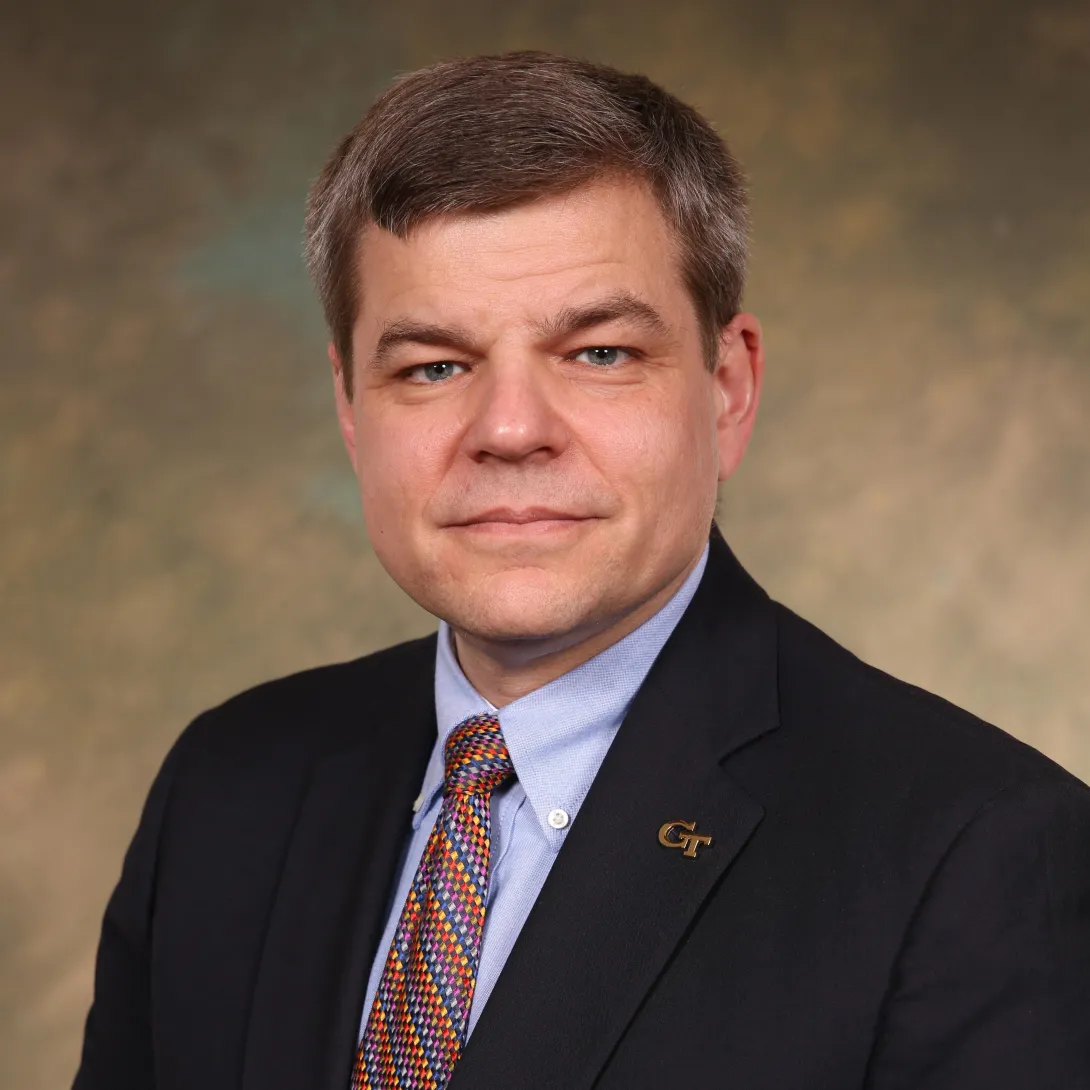
Thomas Kurfess, executive director of the Georgia Tech Manufacturing Institute.
The University System of Georgia (USG) Board of Regents honored 12 Georgia Tech faculty members across campus with Regents’ appointments at its April meeting.
Among those recognized is Georgia Tech Manufacturing Institute (GTMI) Executive Director Thomas Kurfess, who was named Regents' Professor. The highest distinction awarded by the USG, Regents' distinctions recognize faculty members for academic, innovation, and entrepreneurial excellence.
About Kurfess
Thomas Kurfess
Regents’ Professor, George W. Woodruff School of Mechanical Engineering
HUSCO/Ramirez Distinguished Chair in Fluid Power and Motion Control
Kurfess researches advanced manufacturing systems, designing, developing, and optimizing new approaches for complex production systems. He helps lead a $65 million effort to use artificial intelligence in manufacturing and transform Georgia’s industrial economy. The Georgia AI Manufacturing (GA-AIM) Technology Corridor is creating and deploying new AI innovations across all manufacturing sectors while training the necessary talent and workforce.
In addition to his role as executive director of GTMI, Kurfess is the 2023-24 president of the American Society of Mechanical Engineers (ASME).
He served as chief manufacturing officer at Oak Ridge National Laboratory from 2019 to 2021, overseeing strategic planning in advanced manufacturing. Kurfess also previously led the advanced manufacturing team at the White House Office of Science and Technology Policy during the Obama administration from 2012 to 2013.
Kurfess is a member of the National Academy of Engineering and a fellow of the Society of Manufacturing Engineers, ASME, and the American Association for the Advancement of Science.
News Contact
Audra Davidson
Research Communications Program Manager
Institute Communications
The University of Waterloo and the Board of Regents of the University System of Georgia, representing Georgia Institute of Technology (Georgia Tech), have officially entered a Memorandum of Understanding (MOU) to strengthen academic and research ties between the two institutions. The MOU signifies a commitment to fostering collaborative initiatives in research, education, and other areas of mutual interest. Both universities, recognized for their global impact and innovation, are eager to embark on this journey of cooperation.
Charmaine Dean, Vice-President of Research & International, shared, “The University of Waterloo is pleased to embark on a new collaboration with Georgia Tech, featuring faculty and student exchanges, joint research projects, dual degrees, and conferences. Strengthening ties between our institutions through this collaboration creates a dynamic environment for our faculty and students to foster innovation in many areas of mutual excellence.”
“Georgia Tech is excited to see its NSF AI Institute for Advances in Optimization (AI4OPT), under the leadership of Prof. Pascal Van Hentenryck, partner with experts from the Waterloo Artificial Intelligence Institute of the University of Waterloo. I am really looking forward to the impact that this partnership will have in advancing the fundamental knowledge of AI, in further expanding its applications, and in enabling its wider adoption,” noted Prof. Bernard Kippelen, Vice Provost for International Initiatives at Georgia Tech.
This collaboration is poised to elevate the academic and research landscape of both institutions, promoting global engagement and creating opportunities for students and faculty to thrive in an interconnected world.
News Contact
Breon Martin
The Renewable Bioproducts Institute (RBI) at Georgia Tech benefits from a substantial endowment that is invested to advance the evolving science and technology needs of the bioproducts industry and emerging bioeconomy through graduate research. The endowment over the years has supported more than 1,500 engineers and scientists and a leading body of scientific research. RBI has released the Request For Proposals (RFP) for the annual year 2024-25 fellowships. Proposals are due on Feb. 1, 2024. The RFP document describing the application process and several important changes for this year can be found at 2024-25 RFP Proposals.
The principal mission of RBI is to incubate and develop interdisciplinary teams of researchers that can establish thought leadership through new bioproduct research directions. Our focus is on pre-competitive, use-inspired research with a technical, economic, or policy focus. All supported work needs to address an aspect of bioproducts and the developing bioeconomy. The RBI Fellowship supports this mission by promoting two objectives:
(1) Helping teams of faculty to establish new concepts, publish early results, and develop competitive federal, industry, or foundation proposals in the future.
(2) Training a diverse group of graduate-level professionals who can support the evolving bioproducts R&D workforce.
***NEW PROGRAM CHANGES***
- Along with Graduate Research Assistant (GRA) stipend and tuition support, RBI will provide $1,000 of materials and supplies funding or a $1,000 credit toward the use of RBI’s analytical facilities.
- The fellowship was formerly called the PSE (Paper Science and Engineering Fellowship). It has been renamed as the RBI Fellowship.
- The fellowship minor requirement has been changed from 12 hours to nine hours. The minor will consist of two core courses and one elective, described here. For students outside of the College of Sciences or College of Engineering, an alternative set of courses can be considered.
- Awards can support GRAs from any school within Georgia Tech and can be advised by teams consisting of faculty from any Georgia Tech school, although the relevance of the disciplines included must be clear.
News Contact
Priya Devarajan || RBI Communications Program Manager
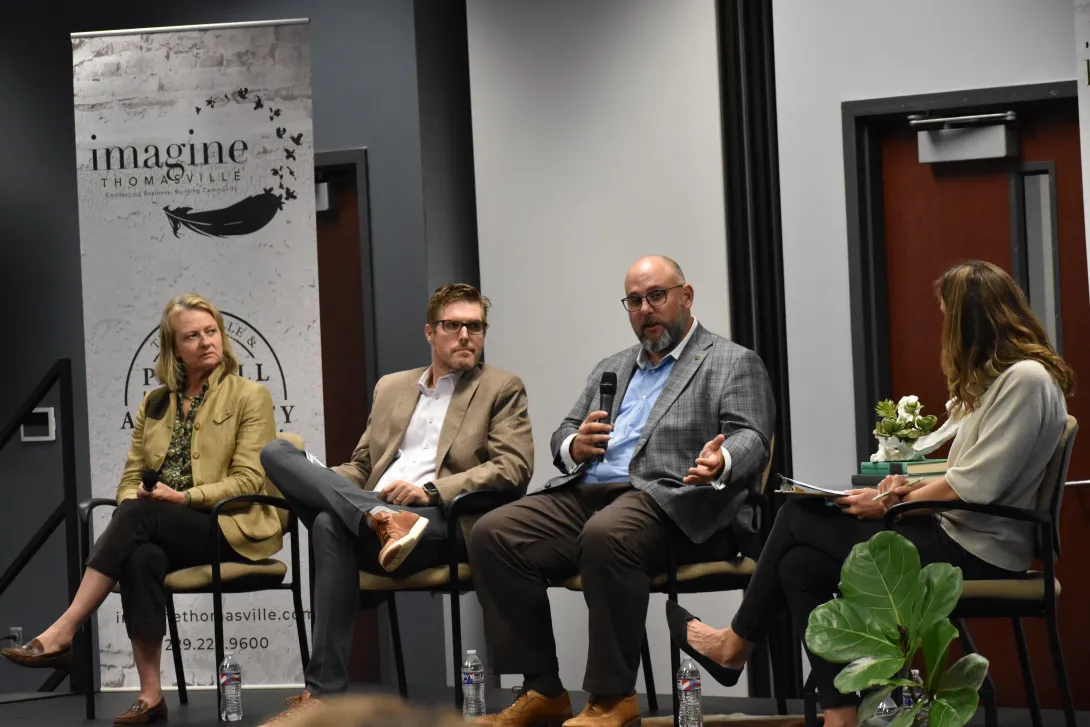
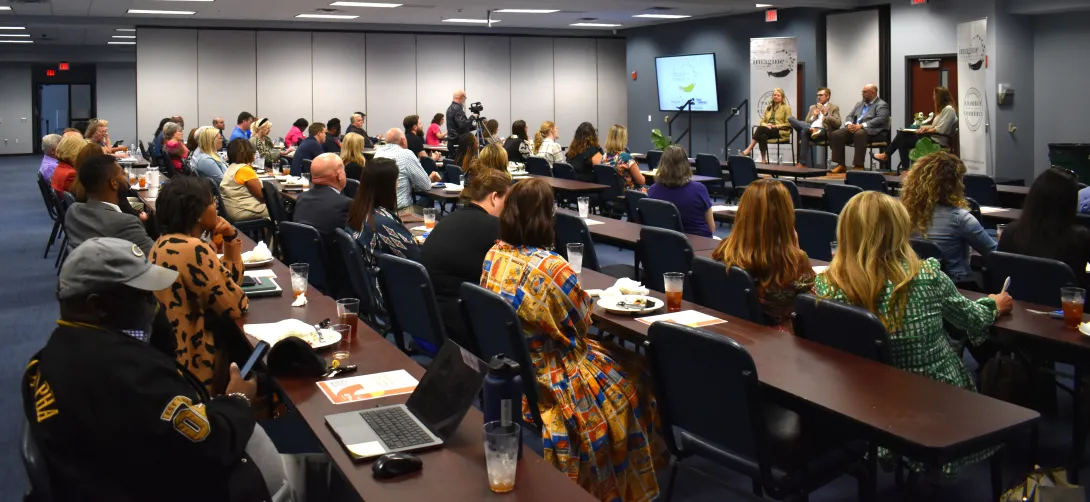
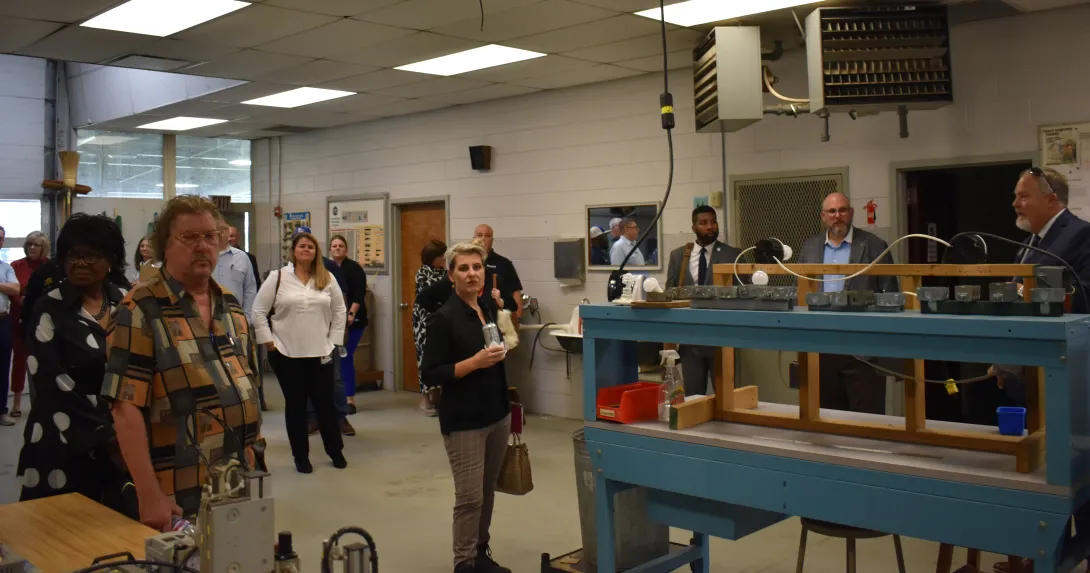
Members of the Georgia Artificial Intelligence in Manufacturing (Georgia AIM) team from the Georgia Institute of Technology met with local partners, manufacturers, and business leaders in Thomasville last week to discuss how investments from the $65 million statewide federal grant can accelerate the transition to automation in manufacturing in South Georgia. The meeting was held at Southern Regional Technical College (SRTC), one of the Georgia AIM partners.
“This grant is an investment in a better and brighter future for communities all across the state including Thomasville,” said Danyelle Larkin, educational outreach manager with the Center for Education Integrating Science, Mathematics, and Computing (CEISMC) at Georgia Tech. “By harnessing the power of AI, we can open up new, better-paying manufacturing jobs while preparing workers and students with the skills they need to succeed in an increasingly high-tech world.”
The meeting highlighted one of the recent developments of the Georgia AIM project: A future lab at Southern Regional Technical College dedicated to manufacturing technology. CEISMC is providing instructional support and curricula, thanks to the program’s expertise in STEM education, while collaborations with other experts at Georgia Tech and the Southwest Georgia community are identifying new technologies and opportunities for jobs in the area.
At the meeting, Aaron Stebner, co-director of Georgia AIM and associate professor of mechanical engineering and materials science and engineering, talked about the potential for AI to revitalize the economy in areas of the country that have struggled for decades.
“The reason a lot of the manufacturers are coming back and growing in the U.S. is because the automation and the AI creates a logistics model that makes it advantageous again to manufacture in the U.S. instead of overseas,” he said. Stebner also talked about how AI is automating many jobs “that humans just don’t want to do anymore and creates more space for the creative jobs that tend to create better internal motivation and higher pay.”
In addition to talking with local manufacturers and touring their facilities, Stebner participated in the Thomasville-Thomas County Chamber Connects panel discussion “Scary Smart: How AI Can Drive Your Business” with Jason Jones, president/CEO of S&L Integrated and Haile McCollum, founder and creative director of Fountaine Maury. The panel was hosted by Katie Chastan of TiskTask, a local workforce development company that is a partner in the Georgia AIM project.
During the meeting, SRTC announced the creation of a new Precision Machining and Manufacturing Lab on its Thomasville campus with an anticipated opening in the fall of 2024. The lab will host two new programs, including Precision Machining & Manufacturing and Manufacturing Engineering Technology. The Georgia AIM grant provided $499,000 in funding for the lab, as well as staffing support.
“A lab for precision manufacturing at Southern Regional Technical College breathes innovation into Thomasville’s existing industry, fueling their growth and ensuring they stay at the cutting edge of technology and competitiveness,” said Shelley Zorn, executive director of the Thomasville Payroll Development Authority.
“The result is a stronger industry base and higher paying jobs for Thomas County citizens and the region,” Zorn said. “It is also a wonderful recruiting tool for new advanced manufacturing partners.”
This could lead to new jobs for the region that reflect the roles that AI automation can create.
“As we heard from the industries gathered at the table, there is a big need for predictive and prescriptive maintenance from our industries,” added Vic Burke, vice president of academic affairs at Southern Regional Technical College. "Our manufacturers are automating more processes, which means fewer low-paying assembly jobs and more higher paying technician jobs.”
--Randy Trammell, CEISMC Communications

In keeping with a strong strategic focus on AI for the 2023-2024 Academic Year, the Institute for Data Engineering and Science (IDEaS) has announced the winners of its 2023 Seed Grants for Thematic Events in AI and Cyberinfrastructure Resource Grants to support research in AI requiring secure, high-performance computing capabilities. Thematic event awards recipients will receive $8K to support their proposed workshop or series and Cyberinfrastructure winners will receive research support consisting of 600,000 CPU hours on the AMD Genoa Server as well as 36,000 hours of NVIDIA DGX H-100 GPU server usage and 172 TB of secure storage.
Congratulations to the award winners listed below!
Thematic Events in AI Awards
Proposed Workshop: “Foundation of scientific AI (Artificial Intelligence) for Optimization of Complex Systems”
Primary PI: Peng Chen, Assistant Professor, School of Computational Science and Engineering
Proposed Series: “Guest Lecture Seminar Series on Generative Art and Music”
Primary PI: Gil Weinberg, Professor, School of Music
Cyber-Infrastructure Resource Awards
Title: Human-in-the-Loop Musical Audio Source Separation
Topics: Music Informatics, Machine Learning
Primary PI: Alexander Lerch, Associate Professor, School of Music
Co-PIs: Karn Watcharasupat, Music Informatics Group | Yiwei Ding, Music Informatics Group | Pavan Seshadri, Music Informatics Group
Title: Towards A Multi-Species, Multi-Region Foundation Model for Neuroscience
Topics: Data-Centric AI, Neuroscience
Primary PI: Eva Dyer, Assistant Professor, Biomedical Engineering
Title: Multi-point Optimization for Building Sustainable Deep Learning Infrastructure
Topics: Energy Efficient Computing, Deep Learning, AI Systems OPtimization
Primary PI: Divya Mahajan, Assistant Professor, School of Electrical and Computer Engineering, School of Computer Science
Title: Neutrons for Precision Tests of the Standard Model
Topics: Nuclear/Particle Physics, Computational Physics
Primary PI: Aaron Jezghani - OIT-PACE
Title: Continual Pretraining for Egocentric Video
Primary PI: : Zsolt Kira, Assistant Professor, School of Interactive Computing
Co-PI: Shaunak Halbe, Ph.D. Student, Machine Learning
Title: Training More Trustworthy LLMs for Scientific Discovery via Debating and Tool Use
Topics: Trustworthy AI, Large-Language Models, Multi-Agent Systems, AI Optimization
Primary PIs: Chao Zhang, School of Computational Science and Engineering & Bo Dai, College of Computing
Title: Scaling up Foundation AI-based Protein Function Prediction with IDEaS Cyberinfrastructure
Topics: AI, Biology
Primary PI: Yunan Luo, Assistant Professor, School of Computational Science and Engineering
- Christa M. Ernst
News Contact
Christa M. Ernst - Research Communications Program Manager
Robotics | Data Engineering | Neuroengineering

The Institute for Data Engineering and Science, in conjunction with several Interdisciplinary Research Institutes (IRIs) at Georgia Tech, have awarded seven teams of researchers from across the Institute a total of $105,000 in seed funding geared to better position Georgia Tech to perform world-class interdisciplinary research in data science and artificial intelligence development and deployment.
The goals of the funded proposals include identifying prominent emerging research directions on the topic of AI, shaping IDEaS future strategy in the initiative area, building an inclusive and active community of Georgia Tech researchers in the field that potentially include external collaborators, and identifying and preparing groundwork for competing in large-scale grant opportunities in AI and its use in other research fields.
Below are the 2023 recipients and the co-sponsoring IRIs:
Proposal Title: "AI for Chemical and Materials Discovery" + “AI in Microscopy Thrust”
PI: Victor Fung, CSE | Vida Jamali, ChBE| Pan Li, ECE | Amirali Aghazadeh Mohandesi, ECE
Award: $20k (co-sponsored by IMat)
Overview: The goal of this initiative is to bring together expertise in machine learning/AI, high-throughput computing, computational chemistry, and experimental materials synthesis and characterization to accelerate material discovery. Computational chemistry and materials simulations are critical for developing new materials and understanding their behavior and performance, as well as aiding in experimental synthesis and characterization. Machine learning and AI play a pivotal role in accelerating material discovery through data-driven surrogate models, as well as high-throughput and automated synthesis and characterization.
Proposal Title: " AI + Quantum Materials”
PI: Zhigang JIang, Physics | Martin Mourigal, Physics
Award: $20k (Co-Sponsored by IMat)
Overview: Zhigang Jiang is currently leading an initiative within IMAT entitled “Quantum responses of topological and magnetic matter” to nurture multi-PI projects. By crosscutting the IMAT initiative with this IDEAS call, we propose to support and feature the applications of AI on predictive and inverse problems in quantum materials. Understanding the limit and capabilities of AI methodologies is a huge barrier of entry for Physics students, because researchers in that field already need heavy training in quantum mechanics, low-temperature physics and chemical synthesis. Our most pressing need is for our AI inclined quantum materials students to find a broader community to engage with and learn. This is the primary problem we aim to solve with this initiative.
PI: Jeffrey Skolnick, Bio Sci | Chao Zhang, CSE
Proposal Title: Harnessing Large Language Models for Targeted and Effective Small Molecule 4 Library Design in Challenging Disease Treatment
Award: $15k (co-sponsored by IBB)
Overview: Our objective is to use large language models (LLMs) in conjunction with AI algorithms to identify effective driver proteins, develop screening algorithms that target appropriate binding sites while avoiding deleterious ones, and consider bioavailability and drug resistance factors. LLMs can rapidly analyze vast amounts of information from literature and bioinformatics tools, generating hypotheses and suggesting molecular modifications. By bridging multiple disciplines such as biology, chemistry, and pharmacology, LLMs can provide valuable insights from diverse sources, assisting researchers in making informed decisions. Our aim is to establish a first-in-class, LLM driven research initiative at Georgia Tech that focuses on designing highly effective small molecule libraries to treat challenging diseases. This initiative will go beyond existing AI approaches to molecule generation, which often only consider simple properties like hydrogen bonding or rely on a limited set of proteins to train the LLM and therefore lack generalizability. As a result, this initiative is expected to consistently produce safe and effective disease-specific molecules.
PI: Yiyi He, School of City & Regional Plan | Jun Rentschler, World Bank
Proposal Title: “AI for Climate Resilient Energy Systems”
Award: $15k (co-sponsored by SEI)
Overview: We are committed to building a team of interdisciplinary & transdisciplinary researchers and practitioners with a shared goal: developing a new framework which model future climatic variations and the interconnected and interdependent energy infrastructure network as complex systems. To achieve this, we will harness the power of cutting-edge climate model outputs, sourced from the Coupled Model Intercomparison Project (CMIP), and integrate approaches from Machine Learning and Deep Learning models. This strategic amalgamation of data and techniques will enable us to gain profound insights into the intricate web of future climate-change-induced extreme weather conditions and their immediate and long-term ramifications on energy infrastructure networks. The seed grant from IDEaS stands as the crucial catalyst for kick-starting this ambitious endeavor. It will empower us to form a collaborative and inclusive community of GT researchers hailing from various domains, including City and Regional Planning, Earth and Atmospheric Science, Computer Science and Electrical Engineering, Civil and Environmental Engineering etc. By drawing upon the wealth of expertise and perspectives from these diverse fields, we aim to foster an environment where innovative ideas and solutions can flourish. In addition to our internal team, we also have plans to collaborate with external partners, including the World Bank, the Stanford Doerr School of Sustainability, and the Berkeley AI Research Initiative, who share our vision of addressing the complex challenges at the intersection of climate and energy infrastructure.
PI: Jian Luo, Civil & Environmental Eng | Yi Deng, EAS
Proposal Title: “Physics-informed Deep Learning for Real-time Forecasting of Urban Flooding”
Award: $15k (co-sponsored by BBISS)
Overview: Our research team envisions a significant trend in the exploration of AI applications for urban flooding hazard forecasting. Georgia Tech possesses a wealth of interdisciplinary expertise, positioning us to make a pioneering contribution to this burgeoning field. We aim to harness the combined strengths of Georgia Tech's experts in civil and environmental engineering, atmospheric and climate science, and data science to chart new territory in this emerging trend. Furthermore, we envision the potential extension of our research efforts towards the development of a real-time hazard forecasting application. This application would incorporate adaptation and mitigation strategies in collaboration with local government agencies, emergency management departments, and researchers in computer engineering and social science studies. Such a holistic approach would address the multifaceted challenges posed by urban flooding. To the best of our knowledge, Georgia Tech currently lacks a dedicated team focused on the fusion of AI and climate/flood research, making this initiative even more pioneering and impactful.
Proposal Title: “AI for Recycling and Circular Economy”
PI: Valerie Thomas, ISyE and PubPoly | Steven Balakirsky, GTRI
Award: $15k (co-sponsored by BBISS)
Overview: Most asset management and recycling use technology that has not changed for decades. The use of bar codes and RFID has provided some benefits, such as for retail returns management. Automated sorting of recyclables using magnets, eddy currents, and laser plastics identification has improved municipal recycling. Yet the overall field has been challenged by not-quite-easy-enough identification of products in use or at end of life. AI approaches, including computer vision, data fusion, and machine learning provide the additional capability to make asset management and product recycling easy enough to be nearly autonomous. Georgia Tech is well suited to lead in the development of this application. With its strength in machine learning, robotics, sustainable business, supply chains and logistics, and technology commercialization, Georgia Tech has the multi-disciplinary capability to make this concept a reality, in research and in commercial application.
Proposal Title: “Data-Driven Platform for Transforming Subjective Assessment into Objective Processes for Artistic Human Performance and Wellness”
PI: Milka Trajkova, Research Scientist/School of Literature, Media, Communication | Brian Magerko, School of Literature, Media, Communication
Award: $15k (co-sponsored by IPaT)
Overview: Artistic human movement at large, stands at the precipice of a data-driven renaissance. By leveraging novel tools, we can usher in a transparent, data-driven, and accessible training environment. The potential ramifications extend beyond dance. As sports analytics have reshaped our understanding of athletic prowess, a similar approach to dance could redefine our comprehension of human movement, with implications spanning healthcare, construction, rehabilitation, and active aging. Georgia Tech, with its prowess in AI, HCI, and biomechanics is primed to lead this exploration. To actualize this vision, we propose the following research questions with ballet as a prime example of one of the most complex types of artistic movements: 1) What kinds of data - real-time kinematic, kinetic, biomechanical, etc. captured through accessible off-the-shelf technologies, are essential for effective AI assessment in ballet education for young adults?; 2) How can we design and develop an end-to-end ML architecture that assesses artistic and technical performance?; 3) What feedback elements (combination of timing, communication mode, feedback nature, polarity, visualization) are most effective for AI- based dance assessment?; and 4) How does AI-assisted feedback enhance physical wellness, artistic performance, and the learning process in young athletes compared to traditional methods?
- Christa M. Ernst
News Contact
Christa M. Ernst | Research Communications Program Manager
Robotics | Data Engineering | Neuroengineering
christa.ernst@research.gatech.edu
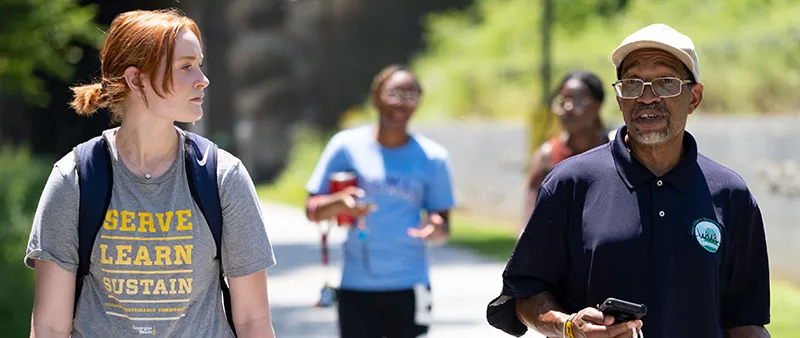
A student wearing a "Serve-Learn-Sustain" tee shirt walks along a campus walkway with a Georgia Tech faculty member. Photo Credit Ben Gray, AJC.
The Vice President for Interdisciplinary Research (VPIR) and the Office of Undergraduate Education (OUE) are excited to announce an institutionalization plan for Serve-Learn-Sustain (SLS) that will advance two of Georgia Tech’s Institute Strategic Plan (ISP) initiatives - Sustainability Next and Transformative Teaching and Learning (TTL) - and strengthen our service learning, community engagement, and sustainability ecosystems at Georgia Tech. Established as Georgia Tech’s last Quality Enhancement Plan (QEP), SLS launched in 2016 as a unit in OUE and concluded its official QEP work in 2021. Its work on the QEP earned Georgia Tech a commendation from the Southern Association of Colleges and Schools Commission on Colleges and established a strong foundation to build on moving forward.
Effective July 1, 2023, the current SLS team will establish a new center, the Center for Sustainable Communities Research and Education (CSCRE), under the VPIR. The Brook Byers Institute for Sustainable Systems (BBISS), which is serving as a hub for coordinating Georgia Tech’s Sustainability Next Strategic Plan initiative, will serve as the administrative home for the new center.
CSCRE will collaborate with the sustainability cluster of the Interdisciplinary Research Institutes (IRIs), including BBISS, the Strategic Energy Institute (SEI), and the Renewable Bioproducts Institute (RBI), as well as Infrastructure and Sustainability, another key Sustainability Next hub, to enhance Georgia Tech’s competitiveness in applying for grants that require meaningful community partnerships as a key component of their research and education plans. It will also continue to support sustainable communities education, in close collaboration with the Center for Teaching and Learning (CTL), OUE, and Education and Learning, to assure the continuity of SLS’s signature programs.
Established as Georgia Tech’s last QEP, Serve-Learn-Sustain launched in 2016 as a unit in OUE and concluded its official QEP work in 2021. Georgia Tech earned a commendation from the Southern Association of Colleges and Schools Commission on Colleges in 2021 for the “exceptional execution” of the 2016 QEP, citing, among other things, that the program “inspired a closer dialogue among faculty regarding research and instructional practices, and thus serves as a model of how a QEP can transform an academic culture.”
To continue advancing and scaling undergraduate service learning and community engagement as a high-impact practice, OUE will establish a new service learning team, as a priority that supports the Transformative Teaching and Learning ISP initiative. Institutionalizing the service-learning functions of SLS within OUE and aligning it with other high impact practices - such as undergraduate research, student innovation programs, first-year seminars, co-op and internships, and learning communities - will position these programs to work collectively in support of the development of Georgia Tech’s next QEP, which will begin in 2025.
Thank you to the SLS staff and to everyone who has collaborated with and supported the work that SLS has spearheaded to make Georgia Tech a better place for our students, our faculty and staff, and our surrounding communities. We look forward to continuing to advance this work, together.
News Contact
Brent Verrill, Research Communications Program Manager, BBISS