
- Written by Mandy Luong, BBISS Communications Student Assistant -
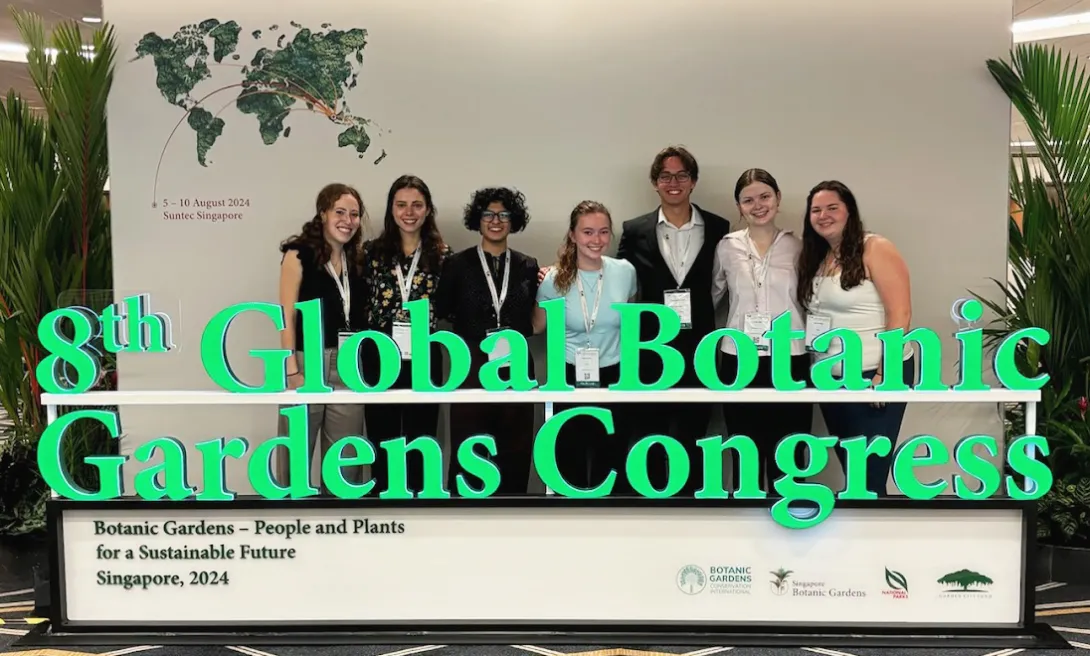
Georgia Tech’s Students Organizing for Sustainability (SOS) recently traveled across the world to Singapore for the 8th Global Botanic Garden Congress. They presented their research on the evaluation of various plants in student living accommodations. The independent research project was initially funded through the Micro Research Grants for Regenerative Built Environments sponsored by The Kendeda Building Advisory Board and the Brook Byers Institute for Sustainable Systems. This feat is uncommon among Georgia Tech student organizations but can serve as a case study for future SOS trips as well as other clubs.
The team found out about the conference by researching various conferences related to urban agriculture initiatives around the world. They specifically sought out conferences that could give them an international experience in a city deemed cutting-edge for urban green spaces, and that would allow them to talk about their research project. After being accepted into the Global Botanic Garden Congress, they needed to find funding to support their travel.
SOS members applied for numerous grants that are available to students around campus, including the School of Civil and Environmental Engineering's International Travel Funding through the Global Engineering Leadership Minor, the President’s Undergraduate Research Travel Award, and the Student Government Association (SGA) Conference Fund. In total, they were able to obtain multiple research and travel grants for over $16,000 to cover the travel expenses of seven members. The students are confident that, had more people been available, they could have received more funding to cover the additional travel expenses.
“There are a lot of opportunities on campus to get funding for a project, travel, or attend conferences, but students just need to know where to look,” says Elaina Render, fourth-year civil and environmental engineering major and SOS project lead for the UrbanAg group.
The group’s itinerary consisted of attending all four days of the conference, the last of which coincided with Singapore’s National Day. At the conference, students presented their research findings to an international audience and made personal connections. They talked with people from across the globe, including botanic garden representatives from Naples, Chicago, and San Diego. Making these connections has introduced them to opportunities for more interactive trips, such as visiting the Naples Botanical Garden to learn about beach plant management. They also hope to attend the 9th Global Botanical Garden Congress in Chicago next year.
“The conference is a great resource for students as they approach graduation because you can network for next career steps, find possible research advisors for graduate school, and be exposed to a range of career possibilities,” says Nicole Allen, fourth-year biomedical engineering major and SOS’s vice president of Finance.
In addition to the conference, they were able to explore the city of Singapore. On their first day, they toured Gardens by the Bay, where they saw famous attractions like the Golden Bay and the Flower Dome. The following day, they visited Singapore University of Technology and Design and met Greenprint, a student group similar to SOS, and talked with students and faculty about their campus sustainability initiatives. On the third day, they traveled to the Sungei Buloh Wetland Reserve, a beautiful mangrove forest. Allen notes that on a hike along the coastal trail, they decided to take a bus across the bridge to Malaysia and have brunch. On the last day of the conference, they visited Singapore’s Botanic Garden, which also houses the National Orchid Garden.
The SOS students report many successes from this experience, both personal and related to their SOS activities. Younger members of SOS, Rachel Bohl and Nikita Takalkar, both second-years, were able to attend the conference. This has inspired younger members to get more involved with on-campus sustainability initiatives. In particular, Takalkar is starting a new SOS project to decrease medical waste at Stamps Health Services. They have also seen an increase in attendance at their meetings and many questions about their trip. They hope the conference will serve as a model for future trips where students can promote their research, network, learn about what new research is happening in the world, and bring this knowledge back to Georgia Tech to inspire their own projects on campus.
“We hope that our project and trip to Singapore can serve as an inspiration to other students and campus organizations. It's possible to start an independent research project and get funding to present at international conferences,” says Render.
Allen adds, “We are implementing some of the ideas our trip inspired as new, student-led sustainability initiatives here at Georgia Tech.”
News Contact
Brent Verrill, Research Communications Program Manager, BBISS

The U.S. Department of Energy (DOE) has awarded Georgia Tech researchers a $4.6 million grant to develop improved cybersecurity protection for renewable energy technologies.
Associate Professor Saman Zonouz will lead the project and leverage the latest artificial technology (AI) to create Phorensics. The new tool will anticipate cyberattacks on critical infrastructure and provide analysts with an accurate reading of what vulnerabilities were exploited.
“This grant enables us to tackle one of the crucial challenges facing national security today: our critical infrastructure resilience and post-incident diagnostics to restore normal operations in a timely manner,” said Zonouz.
“Together with our amazing team, we will focus on cyber-physical data recovery and post-mortem forensics analysis after cybersecurity incidents in emerging renewable energy systems.”
As the integration of renewable energy technology into national power grids increases, so does their vulnerability to cyberattacks. These threats put energy infrastructure at risk and pose a significant danger to public safety and economic stability. The AI behind Phorensics will allow analysts and technicians to scale security efforts to keep up with a growing power grid that is becoming more complex.
This effort is part of the Security of Engineering Systems (SES) initiative at Georgia Tech’s School of Cybersecurity and Privacy (SCP). SES has three pillars: research, education, and testbeds, with multiple ongoing large, sponsored efforts.
“We had a successful hiring season for SES last year and will continue filling several open tenure-track faculty positions this upcoming cycle,” said Zonouz.
“With top-notch cybersecurity and engineering schools at Georgia Tech, we have begun the SES journey with a dedicated passion to pursue building real-world solutions to protect our critical infrastructures, national security, and public safety.”
Zonouz is the director of the Cyber-Physical Systems Security Laboratory (CPSec) and is jointly appointed by Georgia Tech’s School of Cybersecurity and Privacy (SCP) and the School of Electrical and Computer Engineering (ECE).
The three Georgia Tech researchers joining him on this project are Brendan Saltaformaggio, associate professor in SCP and ECE; Taesoo Kim, jointly appointed professor in SCP and the School of Computer Science; and Animesh Chhotaray, research scientist in SCP.
Katherine Davis, associate professor at the Texas A&M University Department of Electrical and Computer Engineering, has partnered with the team to develop Phorensics. The team will also collaborate with the NREL National Lab, and industry partners for technology transfer and commercialization initiatives.
The Energy Department defines renewable energy as energy from unlimited, naturally replenished resources, such as the sun, tides, and wind. Renewable energy can be used for electricity generation, space and water heating and cooling, and transportation.
News Contact
John Popham
Communications Officer II
College of Computing | School of Cybersecurity and Privacy
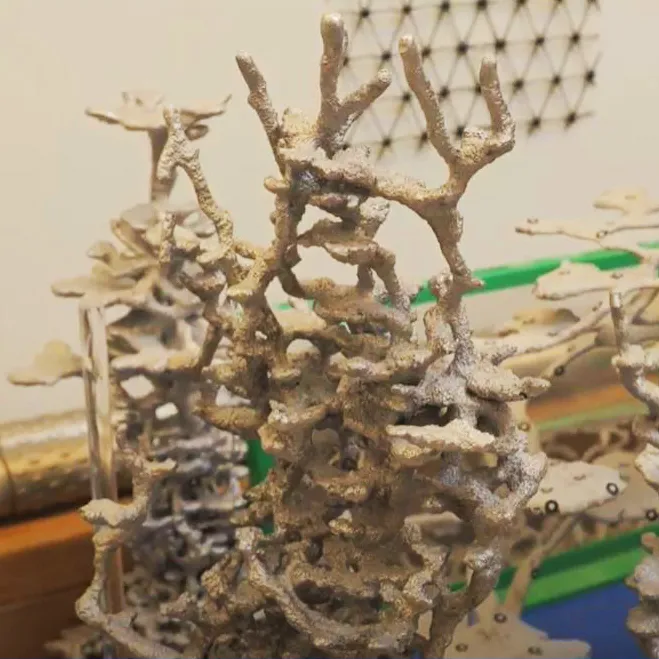
Ant hill cast in molten aluminum to show intricate underground structure of tunnels and chambers, much like the branches of coral.
- Written by Benjamin Wright -
Nature doesn’t waste energy, and nature finds ways to adapt to a changing world. Understanding those two principles led David Frost to his interest in bio-inspired design. Frost, the Elizabeth and Bill Higginbotham Professor in Georgia Tech’s School of Civil and Environmental Engineering, has spent the last dozen years searching for ways to use nature’s efficiency and ingenuity to improve the civil engineering field. His efforts are paying off. In the last year alone, research from his lab has resulted in multiple patent filings, licensing agreements, and product launches — all of which take their inspiration from the biological world.
Many of those research projects have been the subjects of doctoral research by Frost’s students, with support and advisement from Michael Helms, co-director of Georgia Tech’s Center for Biologically Inspired Design (CBID) and the Brook Byers Institute for Sustainable Systems lead for biologically inspired design. The CBID mandate is to encourage researchers to find inspiration in the biological world, where design solutions have been in development for three-and-a-half billion years as life has on Earth has evolved. Building on the concept that nature isn’t wasteful, one of the goals of bio-inspired design is to develop products that are both energy and materially efficient, and therefore more sustainable.
As the subsurface exploration and excavation thrust leader for the National Science Foundation (NSF) Center for Bio-mediated and Bio-inspired Geotechnics (CBBG), Frost focuses on what’s going on below the planet’s surface. His inspiration comes from things like tree roots, earthworms, spider webs, and ant colonies. In fact, ants are what first got him interested in bio-inspired design.
“There are many organism systems that have not been thought of as necessarily the most intelligent systems. But in fact, they are following a set of rules, approaches, or guidelines and are producing things that, in the end, are both energy- and resource-efficient and adaptive,” said Frost. “One of these is ant colonies. We see the hills above ground, but what’s going on below the ground, with the tunnels and chambers, is fascinating.”
Early in his time with CBBG, Frost came across a Florida artist who made metal castings of ant colony structures. Frost acquired some, made more castings of his own, and then built digital models of ant colonies to understand how the structures maintain their strength. He also studied exactly how ants build such complex structures so efficiently.
“They take advantage of capillarity, arching effects, and the strength of spirals,” explained Frost.
Ants dig by carefully and quickly probing each grain of sand or dirt, in the same way a human might test a Jenga piece, before deciding whether it can be safely removed without damaging the tunnel. As a result, ants are extremely energy efficient as they dig, continually removing the least encumbered pieces of material. Based on this information, Frost and his team are exploring ways to improve the effectiveness and energy usage of tunnel-boring machines.
Other bio-inspired projects from Frost’s research that are further along in the development process include building anchors inspired by tree roots, a ground heat-exchange system based on spirals and plant xylem, a geogrid (or stabilization mesh) design based on spiderwebs, a worm-inspired soil probe, and another probe design influenced by a vortex and centipedes that would displace a minimum amount of soil.
“I'm convinced that just about any system in nature we look at will help us think about analogs for things that, as human engineers, we’d like to do — and do better,” said Frost. “The opportunities for inspiration and improvement are endless.”
Take the Root-Inspired Ground Anchor (RIGA), for example. Anchors are an essential element in construction, stabilizing retaining walls and other foundation structures. Traditionally, anchors are straight poles inserted into the ground. Looking at tree roots, Frost wondered if there was a better way. That thought led him to inventing an anchor that can be driven into the ground and then expanded under the surface, similar to the structure of tree roots. The expandable anchor improves load capacity by up to 75% and is about two-thirds as long as a conventional anchor. After years of refinement, the device has been patented, licensed, and is the basis of a startup founded by Ph.D. student John Huntoon.
Frost takes the most pride in the real-world impact of his bio-inspired designs. Since 2023, Georgia Tech has filed, or is in the process of filing, utility patents for five of them. Like the RIGA system, those patents will be available for licensing for commercial use. Companies have already contacted Frost about his heat-exchange and geogrid concepts.
“Civil engineering doesn’t traditionally have a culture of patent-producing research,” noted Frost. “It’s exciting to see these filings and how they can generate energy and enthusiasm for studying natural systems and using what we learn to improve the world. Practical application has always been very important to me.”
Frost is finding that practical application also appeals to the next generation of civil engineers — specifically K-12 students interested in the profession who tour the CBID affiliated labs on campus. The students study nature’s designs and figure out how to apply them, rather than learn traditional construction methods.
“Ants, spiders, and worms are immediately relatable for middle- and high-school students,” Frost said. “They think engineering is all math and science, and that doesn’t sound fun to them. Instead, we show them they can be inspired by anything and then use that to make it about conservation and adaptation and energy minimization. Those are things they are interested in.”
Frost is hopeful that the students of today and tomorrow will continue to take inspiration from nature, enabling humans to adapt to a changing world as effectively as nature has.
News Contact
Brent Verrill, Research Communications Program Manager, BBISS

An Adobe stock conceptual image of a lighted bulb in the dirt illustrating new technology that draws energy from dirt.
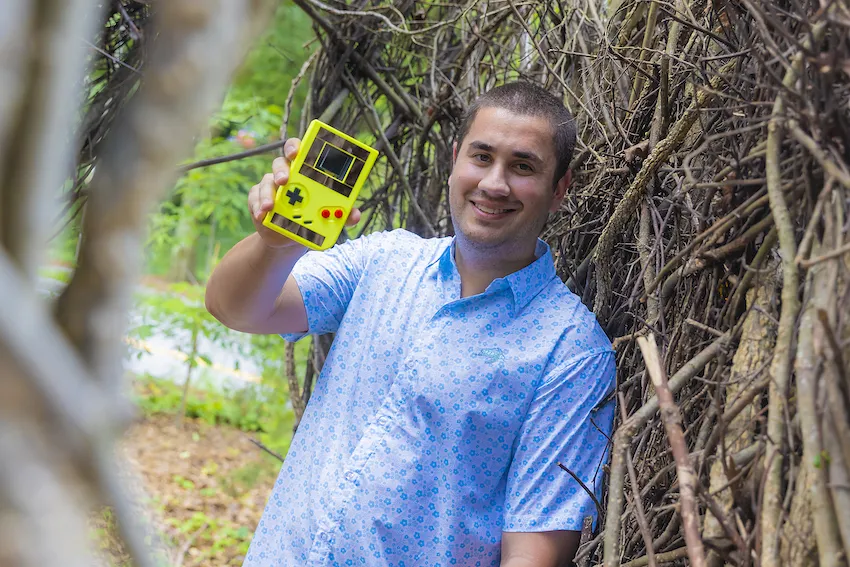
A newly designed soil-powered fuel cell that could provide a sustainable alternative to batteries was recognized as an honorable mention in the annual Fast Company Innovation by Design Awards.
Terracell is roughly the size of a paperback book and uses microbes found in soil to generate energy for low-power applications.
Previous designs for soil microbial fuel cells required water submergence or saturated soil. Terracell can function in soil with a volumetric water content of 42%
Terracell placed in Fast Company’s list of the best sustainability-focused designs of 2024.
Researchers at Northwestern University lead the multi-institution research team that designed Terracell.
Josiah Hester, an associate professor in Georgia Tech's School of Interactive Computing who previously worked at Northwestern, directs the Ka Moamoa Lab, where the project was conceived.
The team includes researchers from Northwestern, Georgia Tech, Stanford, the University of California-San Diego, and the University of California-Santa Cruz.
Their research was published in January in the Proceedings of the Association for Computing Machinery on Interactive, Mobile, Wearable, and Ubiquitous Technologies. The researchers will also present this work at the ACM international joint conference on Pervasive and Ubiquitous Computing (Ubicomp), Oct. 5-9.
According to the Fast Company website, the Innovation by Design Awards recognize “designers and businesses solving the most crucial problems of today and anticipating the pressing issues of tomorrow.” Winners are published in Fast Company Magazine and are honored at the Fast Company Innovation Festival in the fall.
“Terracell could reduce e-waste and extend the useful lifetime of electronics deployed for agriculture, environmental monitoring, and smart cities,” Hester said. “We were honored to be recognized for the design innovation award. It is a testament to the promise of sustainable computing and our hope for a more sustainable world.”
For more information about Terracell, see the story featured on Northwestern Now, or visit the project’s website.
News Contact
Nathan Deen, Communications Officer
Georgia Tech School of Interactive Computing
nathan.deen@cc.gatech.edu
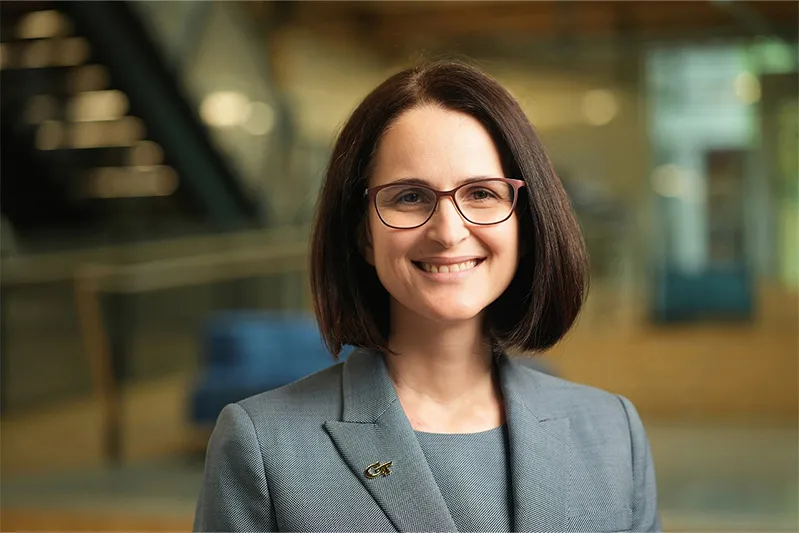
Scheller Business Insights is a dynamic video series that highlights the innovative thought leadership of the esteemed faculty at the Georgia Tech Scheller College of Business. At Scheller, we are committed to exploring ideas that educate and inform others about the profound impact of business on our lives and the world.
In this episode, Beril Toktay, Regents' Professor and faculty director of the Ray C. Anderson Center for Sustainable Business, defines net zero and discusses some ways to alleviate climate change by reducing carbon emissions to the point of net zero emissions.
Globally, most major polluters, such as China, the U.S., India, and the EU, are among over 140 nations with net-zero goals, which encompasses roughly 88 percent of global emissions. Meeting the Paris Agreement's 1.5°C climate threshold requires 45 percent emissions cut by 2030 and net-zero emissions by 2050 (United Nations Climate Action).
Toktay describes ways this can be accomplished in different business sectors. For example, in the energy sectors, this means moving from fossil fuels to renewable technologies, and in the transportation sector, moving to electrification and innovative battery technologies as well as developing the infrastructure to support these initiatives. These efforts help move businesses towards achieving net zero as well as providing cleaner air and water, and better health outcomes to the global population.
Listen as Toktay discusses what net zero means, the importance of getting to net zero, and how businesses can help reduce carbon emissions.
News Contact
Lorrie Burroughs
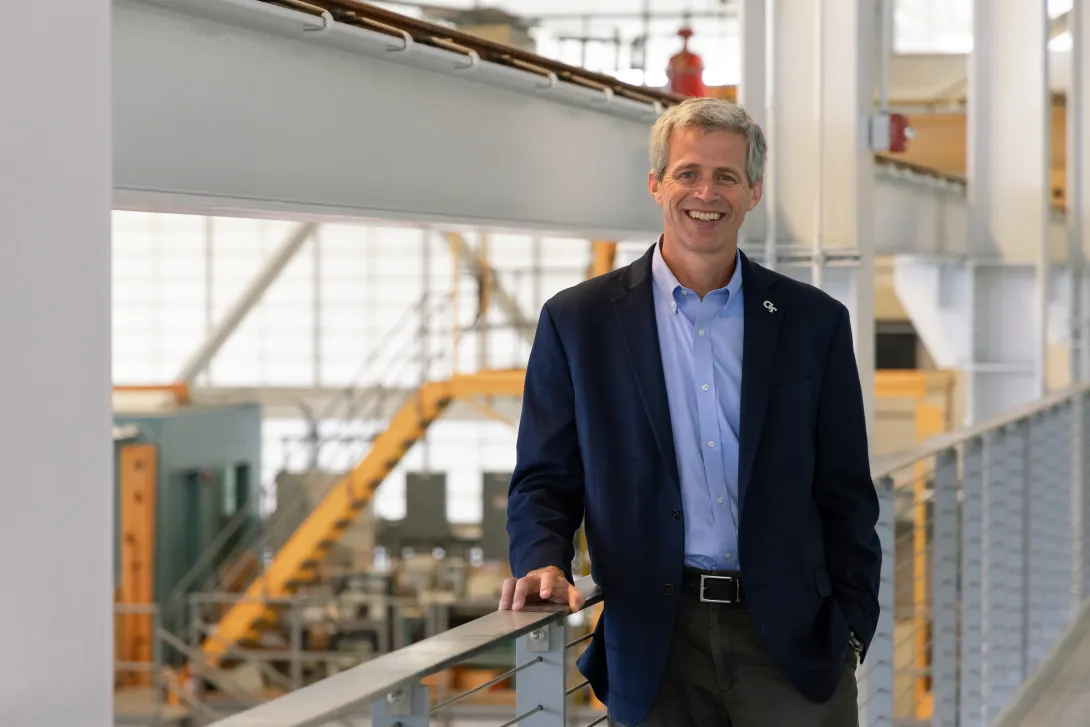
Professor Tim Lieuwen has been elected to the status of International Fellow by the U.K.’s Royal Academy of Engineering. He is one of three other US engineers to receive this prestigious fellowship, which emphasizes enhancing the role of engineering in society and developing an inclusive future through research, education initiatives, and industry collaborations.
Lieuwen is a Regents’ Professor, the David S. Lewis, Jr. Chair in the Daniel Guggenheim School of Aerospace Engineering (AE), a member of the National Academy of Engineering, and a fellow of the American Society of Mechanical Engineers and the American Institute of Aeronautics and Astronautics, among several others. For 12 years, he served as executive director of the Strategic Energy Institute; he is currently serving as Georgia Tech’s interim executive vice president for Research.
“Tim Lieuwen’s groundbreaking research and leadership have been instrumental in advancing the AE School’s mission,” said Mitchell Walker, AE chair. “His work in combustion dynamics, propulsion, and clean energy systems not only enhances our academic reputation but also drives significant, real-world impact, as recognized by the Academy.”
Lieuwen’s research focuses on developing clean combustion technologies for power generation and propulsion. He works closely with industry and government professionals to address energy concerns and set the standard for clean tech manufacturing. The Georgia Tech alumnus will formally be admitted to the Academy at a special ceremony in London on November 27, 2024.
The 2024 class includes 60 Fellows, six International Fellows, and five Honorary Fellows, each of whom has made exceptional contributions to their own field, pioneering new innovations, leading progress in business or academia, providing high-level advice to government, or promoting wider understanding of engineering and technology.

Ice fog over Fairbanks as seen from the University of Alaska Fairbanks. (Debbie Dean)
New research shows that an effort to improve wintertime air quality in Fairbanks, Alaska — particularly in frigid conditions around 40 below zero Fahrenheit — may not be as effective as intended.
Led by a team of University of Alaska Fairbanks and Georgia Tech researchers that includes School of Earth and Atmospheric Sciences Professor Rodney Weber, the researchers' latest findings are published in Science Advances.
In the study, the team leveraged state-of-the-art thermodynamic tools used in global air quality models, with an aim to better understand how reducing the amount of primary sulfate in the atmosphere might affect sub-zero air quality conditions.
The project stems from the 2022 Alaskan Layered Pollution and Chemical Analysis project, or ALPACA, an international project funded by the National Science Foundation, the National Oceanic and Atmospheric Administration and European sources. It is part of an international air quality effort called Pollution in the Arctic: Climate Environment and Societies.
Read the full story in the University of Alaska Fairbanks newsroom.
News Contact
Jess Hunt-Ralston
Director of Communications
College of Sciences
Georgia Institute of Technology
Rod Boyce
University of Alaska Fairbanks
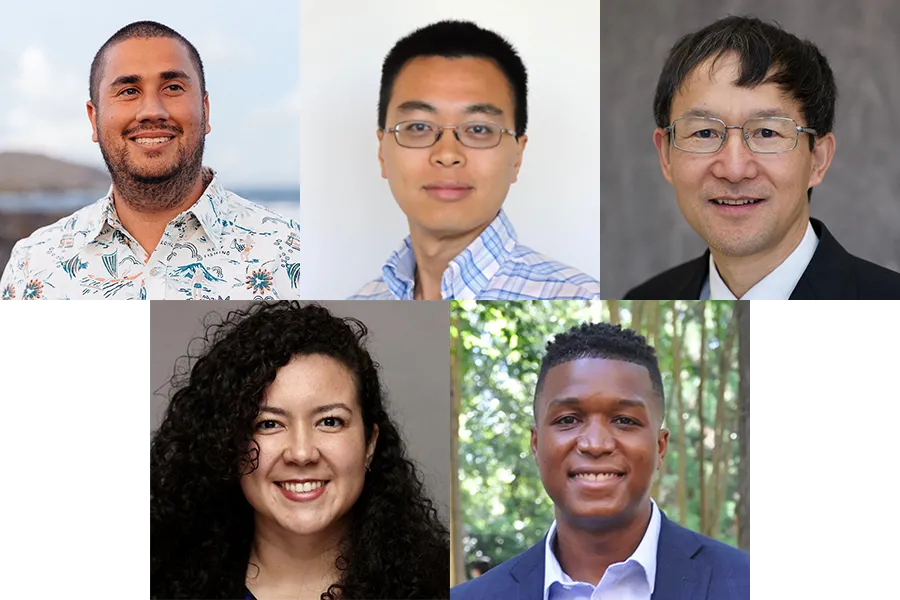
Montage of five portraits, L to R, T to B: Josiah Hester, Peng Chen, Yongsheng Chen, Rosemarie Santa González, and Joe Bozeman.
- Written by Benjamin Wright -
As Georgia Tech establishes itself as a national leader in AI research and education, some researchers on campus are putting AI to work to help meet sustainability goals in a range of areas including climate change adaptation and mitigation, urban farming, food distribution, and life cycle assessments while also focusing on ways to make sure AI is used ethically.
Josiah Hester, interim associate director for Community-Engaged Research in the Brook Byers Institute for Sustainable Systems (BBISS) and associate professor in the School of Interactive Computing, sees these projects as wins from both a research standpoint and for the local, national, and global communities they could affect.
“These faculty exemplify Georgia Tech's commitment to serving and partnering with communities in our research,” he says. “Sustainability is one of the most pressing issues of our time. AI gives us new tools to build more resilient communities, but the complexities and nuances in applying this emerging suite of technologies can only be solved by community members and researchers working closely together to bridge the gap. This approach to AI for sustainability strengthens the bonds between our university and our communities and makes lasting impacts due to community buy-in.”
Flood Monitoring and Carbon Storage
Peng Chen, assistant professor in the School of Computational Science and Engineering in the College of Computing, focuses on computational mathematics, data science, scientific machine learning, and parallel computing. Chen is combining these areas of expertise to develop algorithms to assist in practical applications such as flood monitoring and carbon dioxide capture and storage.
He is currently working on a National Science Foundation (NSF) project with colleagues in Georgia Tech’s School of City and Regional Planning and from the University of South Florida to develop flood models in the St. Petersburg, Florida area. As a low-lying state with more than 8,400 miles of coastline, Florida is one of the states most at risk from sea level rise and flooding caused by extreme weather events sparked by climate change.
Chen’s novel approach to flood monitoring takes existing high-resolution hydrological and hydrographical mapping and uses machine learning to incorporate real-time updates from social media users and existing traffic cameras to run rapid, low-cost simulations using deep neural networks. Current flood monitoring software is resource and time-intensive. Chen’s goal is to produce live modeling that can be used to warn residents and allocate emergency response resources as conditions change. That information would be available to the general public through a portal his team is working on.
“This project focuses on one particular community in Florida,” Chen says, “but we hope this methodology will be transferable to other locations and situations affected by climate change.”
In addition to the flood-monitoring project in Florida, Chen and his colleagues are developing new methods to improve the reliability and cost-effectiveness of storing carbon dioxide in underground rock formations. The process is plagued with uncertainty about the porosity of the bedrock, the optimal distribution of monitoring wells, and the rate at which carbon dioxide can be injected without over-pressurizing the bedrock, leading to collapse. The new simulations are fast, inexpensive, and minimize the risk of failure, which also decreases the cost of construction.
“Traditional high-fidelity simulation using supercomputers takes hours and lots of resources,” says Chen. “Now we can run these simulations in under one minute using AI models without sacrificing accuracy. Even when you factor in AI training costs, this is a huge savings in time and financial resources.”
Flood monitoring and carbon capture are passion projects for Chen, who sees an opportunity to use artificial intelligence to increase the pace and decrease the cost of problem-solving.
“I’m very excited about the possibility of solving grand challenges in the sustainability area with AI and machine learning models,” he says. “Engineering problems are full of uncertainty, but by using this technology, we can characterize the uncertainty in new ways and propagate it throughout our predictions to optimize designs and maximize performance.”
Urban Farming and Optimization
Yongsheng Chen works at the intersection of food, energy, and water. As the Bonnie W. and Charles W. Moorman Professor in the School of Civil and Environmental Engineering and director of the Nutrients, Energy, and Water Center for Agriculture Technology, Chen is focused on making urban agriculture technologically feasible, financially viable, and, most importantly, sustainable. To do that he’s leveraging AI to speed up the design process and optimize farming and harvesting operations.
Chen’s closed-loop hydroponic system uses anaerobically treated wastewater for fertilization and irrigation by extracting and repurposing nutrients as fertilizer before filtering the water through polymeric membranes with nano-scale pores. Advancing filtration and purification processes depends on finding the right membrane materials to selectively separate contaminants, including antibiotics and per- and polyfluoroalkyl substances (PFAS). Chen and his team are using AI and machine learning to guide membrane material selection and fabrication to make contaminant separation as efficient as possible. Similarly, AI and machine learning are assisting in developing carbon capture materials such as ionic liquids that can retain carbon dioxide generated during wastewater treatment and redirect it to hydroponics systems, boosting food productivity.
“A fundamental angle of our research is that we do not see municipal wastewater as waste,” explains Chen. “It is a resource we can treat and recover components from to supply irrigation, fertilizer, and biogas, all while reducing the amount of energy used in conventional wastewater treatment methods.”
In addition to aiding in materials development, which reduces design time and production costs, Chen is using machine learning to optimize the growing cycle of produce, maximizing nutritional value. His USDA-funded vertical farm uses autonomous robots to measure critical cultivation parameters and take pictures without destroying plants. This data helps determine optimum environmental conditions, fertilizer supply, and harvest timing, resulting in a faster-growing, optimally nutritious plant with less fertilizer waste and lower emissions.
Chen’s work has received considerable federal funding. As the Urban Resilience and Sustainability Thrust Leader within the NSF-funded AI Institute for Advances in Optimization (AI4OPT), he has received additional funding to foster international collaboration in digital agriculture with colleagues across the United States and in Japan, Australia, and India.
Optimizing Food Distribution
At the other end of the agricultural spectrum is postdoc Rosemarie Santa González in the H. Milton Stewart School of Industrial and Systems Engineering, who is conducting her research under the supervision of Professor Chelsea White and Professor Pascal Van Hentenryck, the director of Georgia Tech’s AI Hub as well as the director of AI4OPT.
Santa González is working with the Wisconsin Food Hub Cooperative to help traditional farmers get their products into the hands of consumers as efficiently as possible to reduce hunger and food waste. Preventing food waste is a priority for both the EPA and USDA. Current estimates are that 30 to 40% of the food produced in the United States ends up in landfills, which is a waste of resources on both the production end in the form of land, water, and chemical use, as well as a waste of resources when it comes to disposing of it, not to mention the impact of the greenhouses gases when wasted food decays.
To tackle this problem, Santa González and the Wisconsin Food Hub are helping small-scale farmers access refrigeration facilities and distribution chains. As part of her research, she is helping to develop AI tools that can optimize the logistics of the small-scale farmer supply chain while also making local consumers in underserved areas aware of what’s available so food doesn’t end up in landfills.
“This solution has to be accessible,” she says. “Not just in the sense that the food is accessible, but that the tools we are providing to them are accessible. The end users have to understand the tools and be able to use them. It has to be sustainable as a resource.”
Making AI accessible to people in the community is a core goal of the NSF’s AI Institute for Intelligent Cyberinfrastructure with Computational Learning in the Environment (ICICLE), one of the partners involved with the project.
“A large segment of the population we are working with, which includes historically marginalized communities, has a negative reaction to AI. They think of machines taking over, or data being stolen. Our goal is to democratize AI in these decision-support tools as we work toward the UN Sustainable Development Goal of Zero Hunger. There is so much power in these tools to solve complex problems that have very real results. More people will be fed and less food will spoil before it gets to people’s homes.”
Santa González hopes the tools they are building can be packaged and customized for food co-ops everywhere.
AI and Ethics
Like Santa González, Joe Bozeman III is also focused on the ethical and sustainable deployment of AI and machine learning, especially among marginalized communities. The assistant professor in the School of Civil and Environmental Engineering is an industrial ecologist committed to fostering ethical climate change adaptation and mitigation strategies. His SEEEL Lab works to make sure researchers understand the consequences of decisions before they move from academic concepts to policy decisions, particularly those that rely on data sets involving people and communities.
“With the administration of big data, there is a human tendency to assume that more data means everything is being captured, but that's not necessarily true,” he cautions. “More data could mean we're just capturing more of the data that already exists, while new research shows that we’re not including information from marginalized communities that have historically not been brought into the decision-making process. That includes underrepresented minorities, rural populations, people with disabilities, and neurodivergent people who may not interface with data collection tools.”
Bozeman is concerned that overlooking marginalized communities in data sets will result in decisions that at best ignore them and at worst cause them direct harm.
“Our lab doesn't wait for the negative harms to occur before we start talking about them,” explains Bozeman, who holds a courtesy appointment in the School of Public Policy. “Our lab forecasts what those harms will be so decision-makers and engineers can develop technologies that consider these things.”
He focuses on urbanization, the food-energy-water nexus, and the circular economy. He has found that much of the research in those areas is conducted in a vacuum without consideration for human engagement and the impact it could have when implemented.
Bozeman is lobbying for built-in tools and safeguards to mitigate the potential for harm from researchers using AI without appropriate consideration. He already sees a disconnect between the academic world and the public. Bridging that trust gap will require ethical uses of AI.
“We have to start rigorously including their voices in our decision-making to begin gaining trust with the public again. And with that trust, we can all start moving toward sustainable development. If we don't do that, I don't care how good our engineering solutions are, we're going to miss the boat entirely on bringing along the majority of the population.”
BBISS Support
Moving forward, Hester is excited about the impact the Brooks Byers Institute for Sustainable Systems can have on AI and sustainability research through a variety of support mechanisms.
“BBISS continues to invest in faculty development and training in community-driven research strategies, including the Community Engagement Faculty Fellows Program (with the Center for Sustainable Communities Research and Education), while empowering multidisciplinary teams to work together to solve grand engineering challenges with AI by supporting the AI+Climate Faculty Interest Group, as well as partnering with and providing administrative support for community-driven research projects.”
News Contact
Brent Verrill, Research Communications Program Manager, BBISS

- Written by Benjamin Wright -
Yuanzhi Tang knows firsthand how much of an impact BBISS can make through its programs. The associate professor in the School of Earth and Atmospheric Sciences answered a BBISS call for faculty fellowships, and later seed funding for a project related to sustainable resources. That project grew into a collaboration with Georgia Tech’s Strategic Energy Institute; the Center for Critical Mineral Solutions (CCMS), supported by the College of Sciences and co-sponsored by BBISS; SEI; the Institute for Electronics and Nanotechnology (IEN); and the Institute for Materials (IMat and IEN are now combined into the Institute for Matter and Systems). The goal of the center is to develop sustainable solutions for the grand challenges associated with critical metals and materials essential for the clean energy transition.
During her time as a faculty fellow within BBISS, Yuanzhi became familiar with the people in the organization and had the opportunity to evaluate student and faculty fellow applications. When the opportunity arose to take on the role of associate co-director of interdisciplinary research for BBISS, she was happy to accept so she could help others access resources that had shaped her growth as a researcher at Georgia Tech.
“Being part of a community of people who value interdisciplinary research on sustainability-related topics, I benefited from the interactions and engagement with BBISS and I hope to carry that forward, particularly for young faculty. They are often eager to connect but might not know where to begin. BBISS can be a starting point for them.”
With a background in geochemistry and degrees from Peking University, Stony Brook University, and a postdoc at Harvard, Yuanzhi has gained a breadth of experience that has earned her a variety of awards and recognition. As she joins BBISS in a formal role, she has some advice for early-career colleagues.
“Go to seminars, events, and organized activities, as the best ideas often come through communicating and networking with others, and that’s how you discover that your expertise is needed in other fields. Be confident in who you are as a scholar, but also go out and find ways to collaborate. Georgia Tech places value on interdisciplinary research, and this is a unique strength that you should leverage.”
Away from the office, classroom, and lab, Yuanzhi is a wife and mother of two young children. She enjoys cuddle time with the kids and navigating parenthood in an academically driven household. Her husband is also a Georgia Tech professor and together they juggle the challenges of their careers with spending quality time with the children. “We try to keep work minimal on weekends and get out of the house and enjoy what Atlanta has to offer. We love nature and appreciate that we can be close to campus, close to the city, and still have so many green places to be outside.”
As she embarks on her new role with BBISS, Yuanzhi sees parallels between being a parent, professor, and now an administrator.
“The world is changing rapidly with the explosion of information and technology. It’s a struggle to know what to teach my kids and my students. How do we prepare them for five, 10, or even 20 years from now? This feeling of responsibility connects my work and personal life. It’s challenging, but also very exciting to see how we can help them embrace changes.”
News Contact
Brent Verrill, Research Communications Program Manager, BBISS
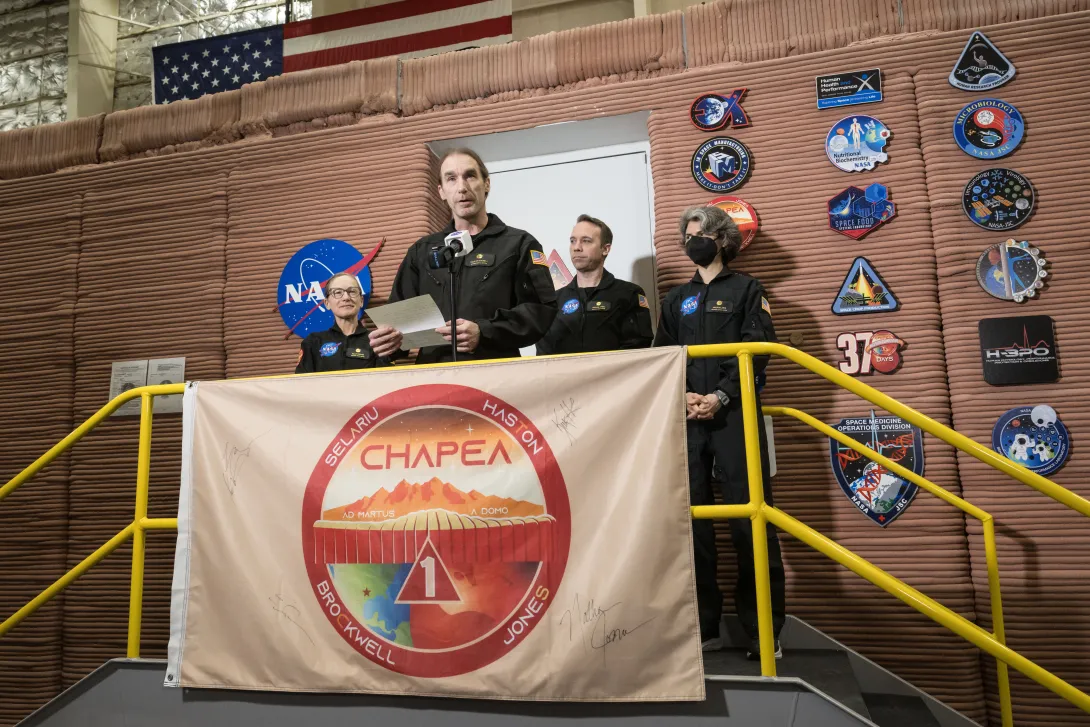
Ross Brockwell exiting the Mars Dune Alpha habitat at NASA's Johnson Space Center in Houston, Texas. Photo credit: NASA/CHAPEA
When the door to the Mars Dune Alpha habitat at NASA's Johnson Space Center in Houston, Texas, closed behind the crew members of the first Crew Health and Performance Exploration Analog (CHAPEA) mission, Georgia Tech graduate Ross Brockwell was transported 152 million simulated miles to the Red Planet.
For the next 378 days, Brockwell, a 1999 civil engineering graduate, and three other crew members participated in the study designed to gain insights into the challenges of deep space exploration and its effects on human health and performance. The crew performed robotic operations, habitat maintenance, agricultural activities, and simulated surface walks in the "sandbox" with the assistance of virtual reality while enduring intentional resource limitations, isolation, and confinement.

A structural engineer by day, he has always dreamed of space travel, and when a fellow Yellow Jacket alerted Brockwell to the application for the CHAPEA mission, he seized the opportunity.
"Sometimes, you get chances in your lifetime, and if I don't get a chance to actually go to Mars, if I can take this chance to help us get there as a planet, I'm honored," he said.
Once inside the 1,700-square-foot habitat, Brockwell's role as the CHAPEA mission's flight engineer focused on infrastructure, building design, and organizational leadership. As much as he learned from his tasks throughout the mission, like anticipating possible failure points and contingency planning, NASA learned even more through physical and cognitive monitoring.
"There was a lot of science, but some of the science was focused on us as the participants — our physiology and our performance — to make the mission as realistic as possible," he said.
Communication is a key element in space travel. Getting a message from Mars back to family and friends or mission control on Earth took 20 minutes on average for the crew inside the habitat, testing their ability to isolate. Without constant communication with the outside world, the crew fostered camaraderie through team activities and celebrated birthdays and holidays together. Brockwell's ingenuity wasn't limited to official tasks; he used a 3D printer to create a bracket for mounting a mini-basketball hoop.
Meals inside the habitat mirrored the shelf-stable food system of the International Space Station. While cultivated crops like tomatoes supplemented their main supply, Brockwell says there is a common misconception about astronaut food.
"I say with all sincerity, it was delicious." His favorite dish was a peanut chicken and wild rice mix, but the crew often got creative by mixing soups and proteins to create new dishes.
Other than the food, the biggest surprise to Brockwell was how quickly the mission was completed.
"I hoped and thought it would be that way, but we proved that a well-comprised crew can have a good time while doing this. There were a lot of clichéd expectations that there would be issues that we just didn't have. I think we demonstrated that a mission like this can be a huge success and an enjoyable, positive experience, not just something to be endured," he said.
Brockwell says that his time at Georgia Tech allowed him to learn the fundamentals of engineering principles and taught him to keep an open mind when exploring how things work. After receiving a master's degree in aeronautics from the California Institute of Technology and completing the CHAPEA mission, he believes systems engineering can aid deep space exploration efforts for the next generation.
"Thinking about the effect of every component on every other component and the emergent properties from complex systems is crucial. I think that systems thinking is going to become increasingly important. Ecology and ecological thinking need to be part of it, especially for aerospace. If you're thinking about deep space exploration, an understanding of ecological principles and closed-loop systems will be key," he said.
At the end of the mission, Brockwell savored the sights and smells of Earth for the first time in over a year, saying that's what he missed the most. But if the opportunity arose to take the 152-million-mile flight to Mars, he'd be on the first ship out.
News Contact
Steven Gagliano - Institute Communications