

Railroads are key components of the nation’s critical infrastructure. Jeremy Epstein poses with rail cars on a siding. (Credit: Sean McNeil, GTRI)
To be based at the Georgia Tech Research Institute (GTRI), Jeremy Epstein will serve as co-director of ICARIS, collaborating with PNNL co-director Danny Herrera to identify and develop ways to confront threats against the nation’s critical infrastructure. He will also serve as an adjunct professor in Georgia Tech’s School of Cybersecurity and Privacy, which is partnering with GTRI.
ICARIS was formed to serve as the leading national resource for delivering the technologies, testbeds, and talent necessary to serve the nation’s critical infrastructure.
“Anyone using a mobile phone or laptop computer, watching television, driving a modern vehicle, traveling on a highway controlled by traffic signals – or using electricity for most any purpose – is subject to cybersecurity and privacy issues,” said Epstein. “Everything is now computer-controlled, and the security opportunities are there for deliberate adversaries at the nation-state level or malicious actors. We have to look at the big picture and not simply solve challenges one at a time.”
News Contact
Media Inquiries

For centuries, innovations in structural materials have prioritized strength and durability — often at a steep environmental price. Today, the construction industry accounts for approximately 10% of global greenhouse gas emissions, with cement, steel, and concrete responsible for more than two-thirds of that total. As the world presses for a sustainable future, scientists are racing to reinvent the very foundations of our built environment.
Paradigm Shift in Construction
Now, researchers at Georgia Tech have developed a novel class of modular, reconfigurable, and sustainable building blocks — a new construction paradigm as well-suited for terrestrial homes as it is for extraterrestrial habitats. Their study, published in Matter, demonstrates that these innovative units, dubbed eco-voxels, can reduce carbon footprints by up to 40% compared to traditional construction materials. These units also maintain the structural performance needed for applications ranging from load-bearing walls to aircraft wings.
“We created sustainable structures using these eco-friendly building blocks, combining our knowledge of structural mechanics and mechanical design with industry-relevant manufacturing practices and environmental assessments,” said Christos Athanasiou, assistant professor at the Daniel Guggenheim School of Aerospace Engineering.
Housing Affordability Solutions
Their work offers a potential solution to the growing housing affordability crisis. As climate-driven disasters such as hurricanes, wildfires, and floods increase, homes are damaged at higher rates, and insurance costs are skyrocketing. This crisis is fueled by rising land prices and restrictive development regulations. Meanwhile, the growing demand for housing places an increasing strain on global resources and the environment. The modularity and circularity of the developed approach can effectively address these issues.
The New Building Blocks
Eco-voxels — short for eco-friendly voxels, the 3D equivalent of pixels — are made from polytrimethylene terephthalate (PTT). PTT is a partially bio-based polymer derived from corn sugar and reinforced with recycled carbon fibers from aerospace waste (scrap material lost during the manufacturing of aerospace components). Eco-voxels can be easily assembled into large, load-bearing structures and then disassembled and reconfigured, all without generating waste. Consequently, they offer a highly adaptable, sustainable approach to construction.
The team tested eco-voxels and found they can handle the pressure that buildings usually face. They also used computer simulations to show that changing the shape of eco-voxels makes them suitable for many different building needs.
The researchers compared the eco-voxel approach to other emerging construction methods like 3D-printed concrete and cross-laminated timber (CLT), finding that eco-voxels offer significant environmental advantages. While traditional and alternative materials are often heavy and carbon-intensive, the eco-voxel wall had the lowest carbon footprint: 30% lower than concrete and 20% lower than CLT.
These results highlight eco-voxels as a promising low-carbon, high-performance solution for sustainable and affordable construction, opening new possibilities for faster, more sustainable building solutions. In addition to residential uses, emergency shelters built with eco-voxels could be used for disaster-relief scenarios, where quick assembly, modularity, and minimal environmental impact are crucial.
“This study exemplifies how advances in structural mechanics, sustainable composite development, and sustainability analysis can yield transformative solutions when coupled. Eco-voxels — our modular, reconfigurable building blocks — provide a scalable, low-carbon alternative that redefines our approach to building in both terrestrial and extraterrestrial environments," said Athanasiou.
Building in Space
Beyond their terrestrial potential, eco-voxels can also offer a promising solution for off-world construction where traditional building methods are unfeasible. Their lightweight, rapid assembly — structures can be erected in less than an hour — and reliance on sustainable or locally sourced materials make them ideal candidates for future Martian or lunar shelters.
“The ability to build these structures quickly is a significant advantage for space construction,” said Athanasiou. “In space, we need lightweight units made from locally sourced materials.”
Perhaps most importantly, the researchers envision a future where the built environment not only minimizes harm but actively contributes to the preservation of planetary health.
This research was led by Georgia Tech, in collaboration with teams from the Massachusetts Institute of Technology, the University of Guelph in Ontario, Canada, and the National University of Singapore.
News Contact
Monique Waddell

In a groundbreaking study published in Nature, researchers from Georgia Tech and Emory University have developed a new model that could enable precise, life-saving medication delivery for blood clot patients. The novel technique uses a 3D microchip
Wilbur Lam, professor at Georgia Tech and Emory University, and a clinician at Children’s Healthcare of Atlanta, led the study. He worked closely with Yongzhi Qiu, an assistant professor in the Department of Pediatrics at Emory University School of Medicine.
The significance of the thromboinflammation-on-a-chip model, is that it mimics clots in a human-like way, allowing them to last for months and resolve naturally. This model helps track blood clots and more effectively test treatments for conditions including sickle cell anemia, strokes, and heart attacks.
News Contact
Amelia Neumeister | Research Communications Program Manager
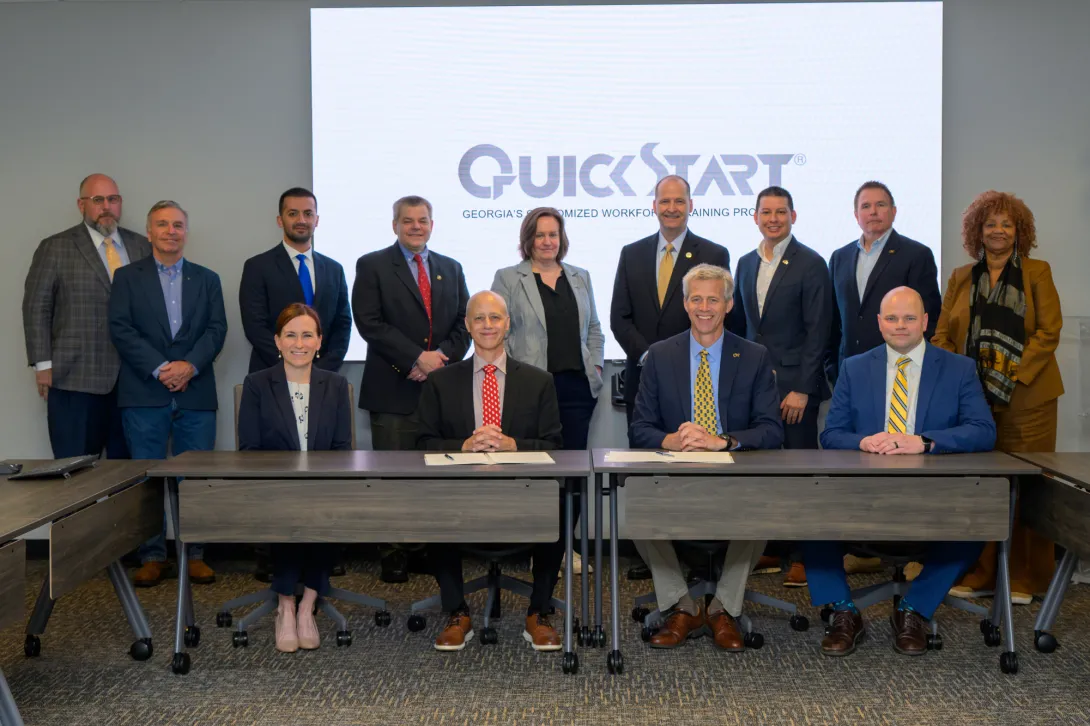
Georgia Quick Start Deputy Commissioner Scott McMurray (center left) and Georgia Tech Executive Vice President for Research Tim Lieuwen (center right) gathered with members of the Georgia Tech Manufacturing Institute, Georgia AIM, and more to officially commemorate the partnership on April 8.
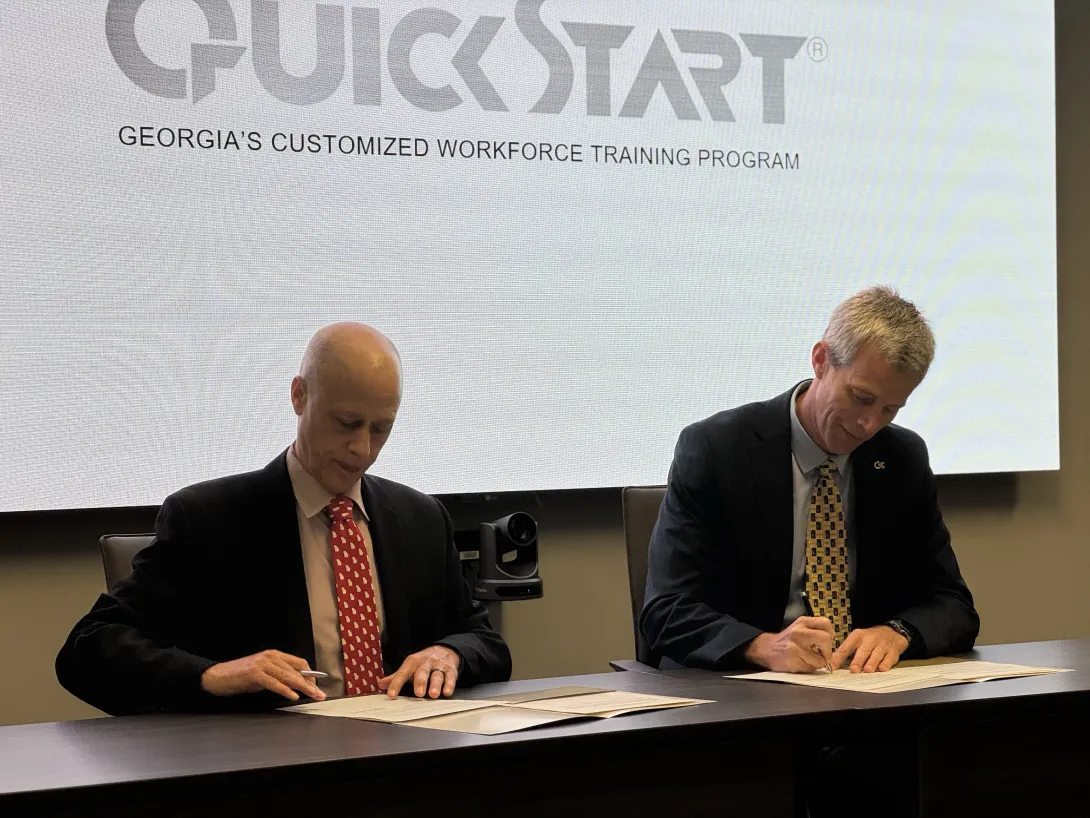
McMurray and Lieuwen signed a Memorandum of Understanding to mark the collaboration.
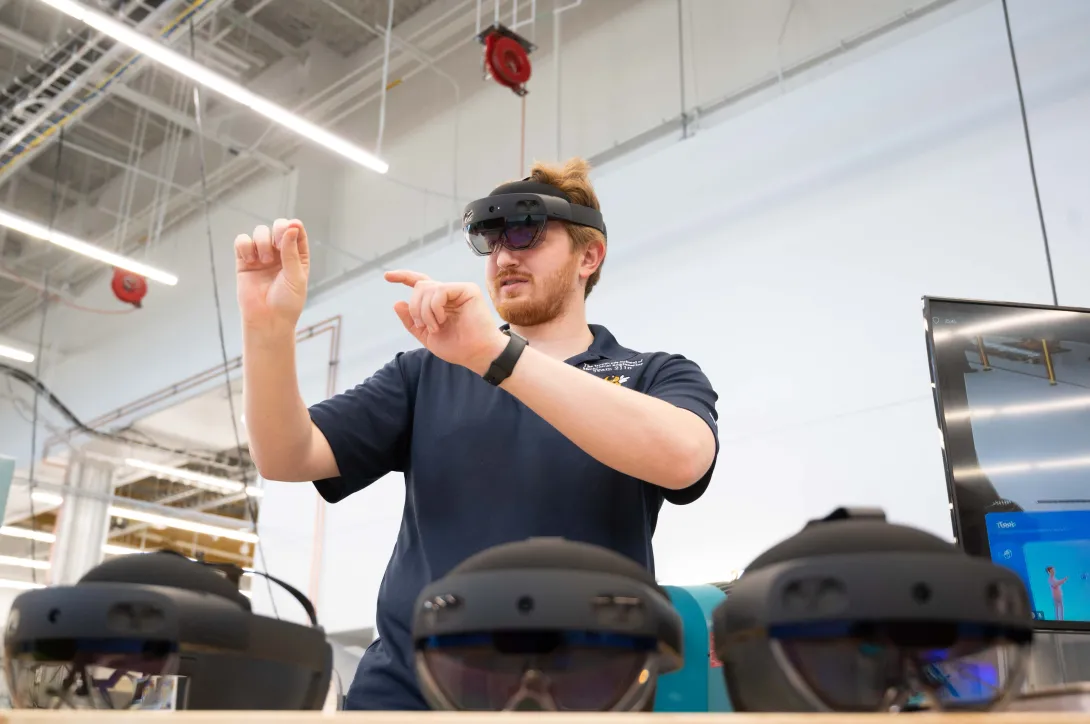
Georgia Tech researchers will work with Georgia Quick Start to develop extended reality training programs for manufacturing workers to make training more consistent and efficient.
In a significant move to bolster Georgia's workforce, Georgia Tech has partnered with Georgia Quick Start to advance manufacturing training and skill development. This collaboration, formalized by the signing of a Memorandum of Understanding on April 8, aims to elevate the quality and efficiency of manufacturing workforce training across the state.
“At Georgia Tech, innovation isn’t just about discovery — it’s about solving real-world challenges,” said Executive Vice President for Research Tim Lieuwen. “Georgia Quick Start ensures that cutting-edge research in advanced manufacturing translates into practical training solutions. Together, we are equipping Georgia’s workforce with the skills needed to drive economic growth and industry advancement.”
As manufacturing technologies and artificial intelligence continue to evolve, U.S. manufacturers increasingly require skilled workers experienced in advanced manufacturing. For decades, Georgia Quick Start, administered by the Technical College System of Georgia, has been addressing this need and has been recognized as the country’s top workforce training program for 15 years.
Now, researchers at Georgia Tech will collaborate with Georgia Quick Start to enhance these efforts by developing Extended Reality (XR) training programs, providing a scalable and experiential solution to meet the growing demand for training.
“We have been so successful for so many years because we stay focused on relevance, flexibility, and responsiveness,” said Scott McMurray, deputy commissioner for Georgia Quick Start. “This partnership is an example of how Quick Start is able to develop and deliver effective training even for companies working on the leading edge of advanced manufacturing technologies.”
Extended Reality, Scaled Training
XR technologies use a combination of virtual and augmented reality to create immersive, interactive experiences. By simulating real-world manufacturing environments and processes, XR has the potential to allow trainees to practice and refine their skills in a controlled, risk-free setting through standardized training experiences. This not only enhances the learning experience but also ensures consistency in training quality across a large workforce.
“Virtual reality scales training by gamifying complex tasks and removing the need for costly or hazardous physical equipment. Augmented reality scales on-the-job training by providing adaptive, context-aware guidance exactly when and where it’s needed, reducing the need for expert supervision,” said manufacturing XR researcher Mohsen Moghaddam, Gary C. Butler Family associate professor in the H. Milton Stewart School of Industrial and Systems Engineering and the George W. Woodruff School of Mechanical Engineering. “Together, they make training more consistent, up-to-date, accessible, and safe, especially for workers who may hesitate to ask for assistance from peers or supervisors out of fear of judgment.”
The collaboration will leverage Moghaddam’s research and the AR/VR training space within the expanded Advanced Manufacturing Pilot Facility, providing a state-of-the-art environment for developing and deploying XR training technologies. Researchers from the Georgia Tech Manufacturing Institute (GTMI) and Georgia AIM(Artificial Intelligence in Manufacturing) will also play pivotal roles in the development of these training programs.
“Partnerships like these highlight the power of the integrated University of Georgia and Technical College System of Georgia’s workforce development ecosystem,” said Thomas Kurfess, Regents’ Professor and GTMI executive director. “Our country not only needs the creation of new jobs but also the skilled workforce to fill them. At Georgia Tech and GTMI, we are serving as an enabler of innovation in that workforce development.”
News Contact
Writer: Audra Davidson
Research Communications Program Manager
Georgia Tech Manufacturing Institute
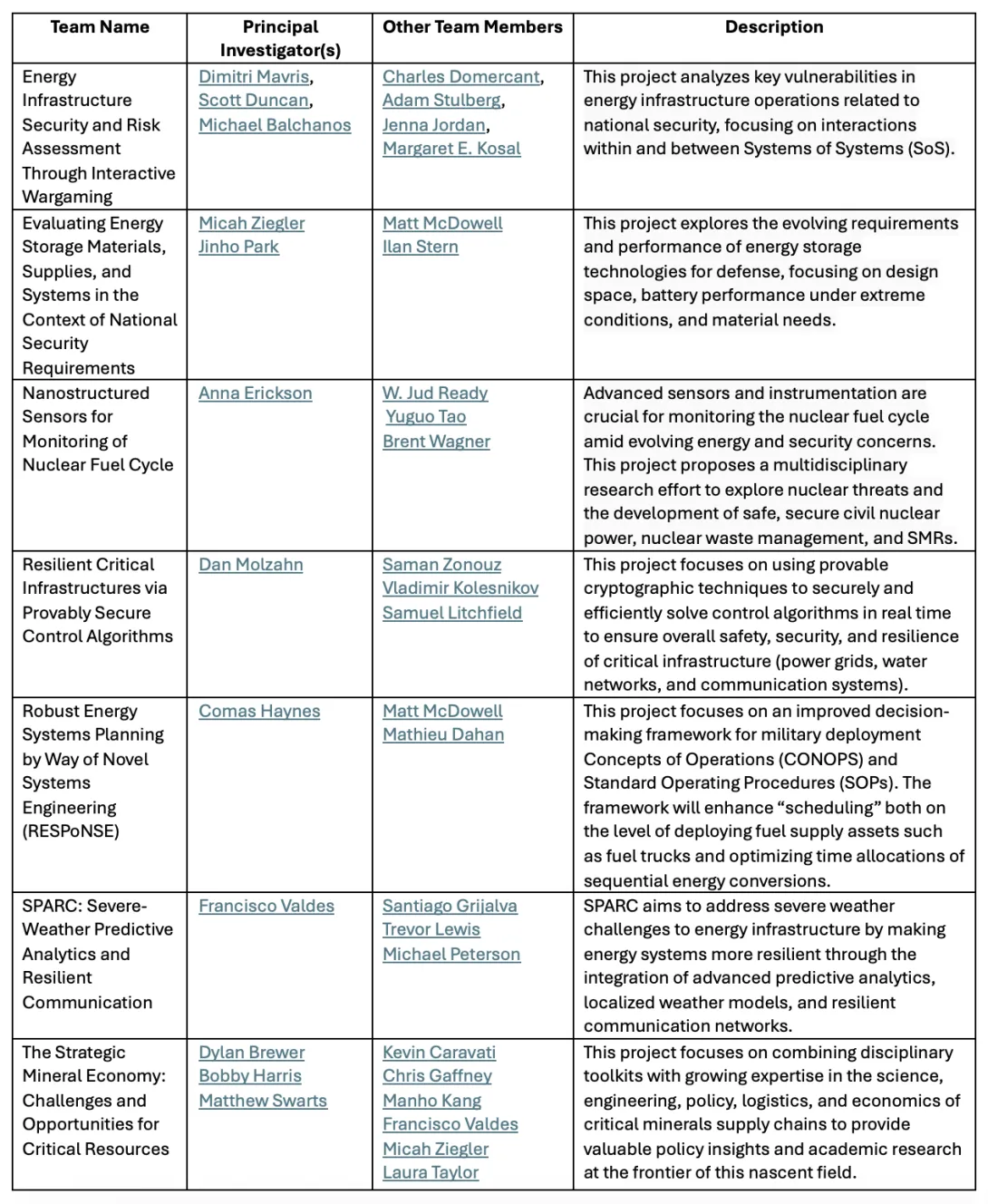
Table 1: Energy and National Security Seed Funding Phase 2 Awardees with their Project Descriptions
In July 2024, the Strategic Energy Institute (SEI), in partnership with the Georgia Tech Research Institute (GTRI), launched the Energy and National Security Initiative through a campuswide workshop. The event attracted over 100 participants from units across Georgia Tech and GTRI. John Tien, SEI distinguished external fellow, professor of the practice, and former deputy secretary for the Department of Homeland Security, along with Tom Fanning, former CEO at Southern Company, kicked off the workshop with a discussion on the role of energy in national security and the opportunities for Georgia Tech to align its research with this critical topic.
The event concluded with the announcement of two rounds of seed funding, offering up to $500,000 annually for three years. The first round, announced in September 2024, provided planning grants to six teams to support their initiatives in the fall.
Recipients of the second phase of seed funding have now been announced. This phase will provide research support in the spring, with an option for additional funding through the 2025-26 academic year.
“This seed funding initiative by SEI and GTRI is a significant step toward advancing national security through innovative energy solutions. We believe this support will empower the funded teams to explore critical intersections between energy infrastructure and security, fostering groundbreaking advancements for a safer energy future,” said Christine Conwell, SEI’s interim executive director.
Seven interdisciplinary projects by team members from Georgia Tech and GTRI have been selected for the second phase, also known as Category B (Table 1).
“The seed grant initiative is supporting energy and national security collaboration among researchers from multiple units across the Georgia Tech campus,” said William H. Robinson, interim chief technology officer and deputy director for Research in GTRI’s Information and Cyber Sciences Directorate. “We are very pleased to see the teamwork of these faculty members as they address important issues facing our nation.”
A follow-up workshop will be held this summer to bring together the awardees of the seed grant program. Additionally, a lunch and learn seminar series is planned in the fall to showcase the research progress of the seed grant program. For updates, visit the Strategic Energy Institute event webpage.
News Contact
Priya Devarajan | SEI Communications Program Manager
John Toon | GTRI Communications
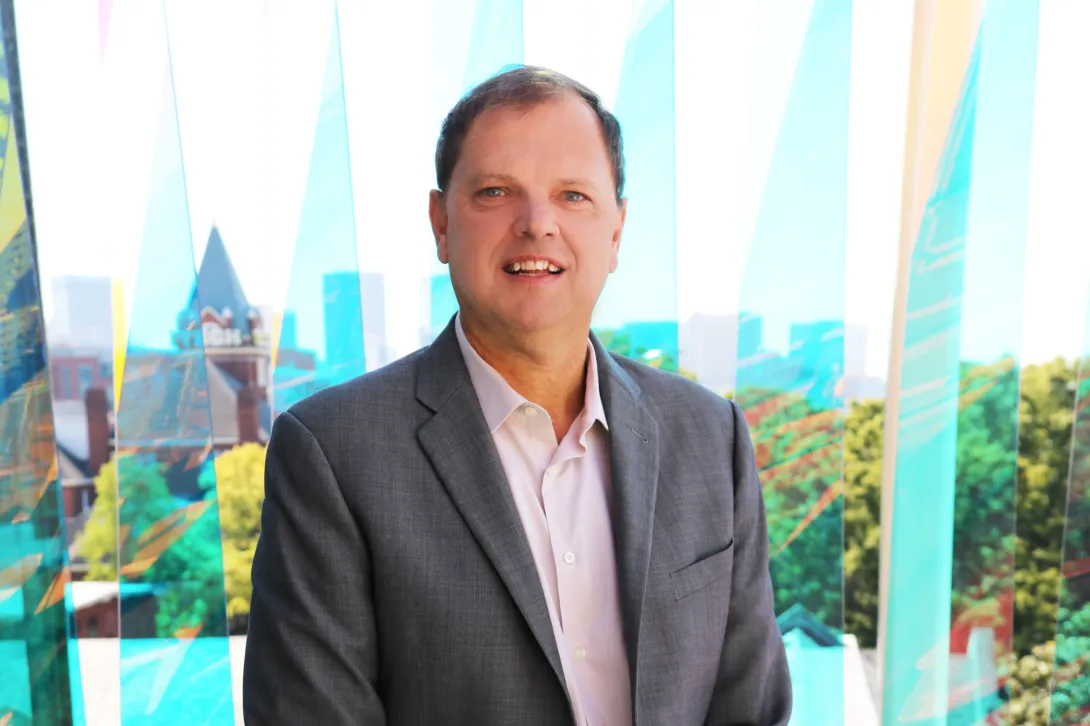
The College of Sciences has named Professor Joel Kostka the inaugural faculty director of Georgia Tech for Georgia's Tomorrow. The new center, announced by the College in December 2024, will drive research aimed at improving life across the state of Georgia.
“Joel is perfectly suited to lead this new initiative, especially since his research for a number of years has focused on Georgia and the vulnerability of both humans and ecosystems to climate change,” says Susan Lozier, dean of the College of Sciences, Betsy Middleton and John Clark Sutherland Chair, and professor in the School of Earth and Atmospheric Sciences. “I look forward to seeing how Science for Georgia’s Tomorrow takes shape and evolves under his thoughtful leadership.”
“I believe that my experience in research administration and in leading multidisciplinary research programs, along with the focus of my research on the vulnerability of Georgia’s communities to climate change, have prepared me well for this role,” says Kostka, who is the Tom and Marie Patton Distinguished Professor and associate chair for Research in the School of Biological Sciences with a joint appointment in the School of Earth and Atmospheric Sciences. “I am excited about the opportunity to lead the center as its inaugural director.”
Kostka’s appointment will begin on May 1, 2025.
Championing science in Georgia
Georgia's Tomorrow was created to foster research related to the health and resilience of Georgia’s people, ecosystems, and communities. Specifically, it will serve to boost research collaboration across the Institute, pave the way for public-private partnerships, and expand opportunities for Georgia students and communities to engage with Institute research.
Among Kostka’s first tasks as faculty director will be the development of the center’s strategic plan and the completion of two dedicated cluster hires from within the College of Sciences’ six schools.
Meet Joel Kostka
Kostka is known for bridging biogeochemistry and microbiology to elucidate the role of microorganisms in ecosystem function. He has emerged as an international leader in ecosystem biogeoscience, providing a quantitative predictive understanding of how ecosystems function as well as determining the mechanisms by which climate change alters ecosystem resilience. He partners with a variety of stakeholders to conduct research on the restoration and adaptive management of coastal ecosystems in Georgia.
Kostka has also served as the PI of a range of multidisciplinary research projects focused on environmental change as well as scientific advisory boards including Georgia Tech’s Strategic Energy Institute, the NSF-funded Plum Island Estuary Long-term Ecological Research program, and the Johnston Center for Coastal Sustainability on Bald Head Island.
Kostka received a B.S. in Biology from Western Illinois University and a Ph.D. in Marine Science from the University of Delaware. Prior to joining Georgia Tech in 2011, he was a professor at the Department of Oceanography and Associate Director of the Institute of Energy Systems, Economics, and Sustainability at Florida State University.
Initial support for Georgia Tech for Georgia’s Tomorrow is generously provided by the College of Sciences Betsy Middleton and John Clark Sutherland Dean's Chair fund. Cluster hire funding has been awarded by Provost Steven W. McLaughlin. The initiative will also seek funding from state, national and international organizations, private foundations, and government agencies to expand impact. Philanthropic support will also be sought in the form of professorships, programmatic support for the center, and seed funding.
Georgia Tech for Georgia's Tomorrow initially launched under the working name Science for Georgia's Tomorrow (Sci4GT).
News Contact
Writer: Lindsay C. Vidal
Kinaxis, a global leader in supply chain orchestration, and the NSF AI Institute for Advances in Optimization (AI4OPT) at Georgia Tech today announced a new co-innovation partnership. This partnership will focus on developing scalable artificial intelligence (AI) and optimization solutions to address the growing complexity of global supply chains. AI4OPT operates under Tech AI, Georgia Tech’s AI hub, bringing together interdisciplinary expertise to advance real-world AI applications.
This particular collaboration builds on a multi-year relationship between Kinaxis and Georgia Tech, strengthening their shared commitment to turn academic innovation into real-world supply chain impact. The collaboration will span joint research, real-world applications, thought leadership, guest lectures, and student internships.
“In collaboration with AI4OPT, Kinaxis is exploring how the fusion of machine learning and optimization may bring a step change in capabilities for the next generation of supply chain management systems,” said Pascal Van Hentenryck, the A. Russell Chandler III Chair and professor at Georgia Tech, and director of AI4OPT and Tech AI at Georgia Tech.
Kinaxis’ AI-infused supply chain orchestration platform, Maestro™, combines proprietary technologies and techniques to deliver real-time transparency, agility, and decision-making across the entire supply chain — from multi-year strategic orchestration to last-mile delivery. As global supply chains face increasing disruptions from tariffs, pandemics, extreme weather, and geopolitical events, the Kinaxis–AI4OPT partnership will focus on developing AI-driven strategies to enhance companies’ responsiveness and resilience.
“At Kinaxis, we recognize the vital role that academic research plays in shaping the future of supply chain orchestration,” said Chief Technology Officer Gelu Ticala. “By partnering with world-class institutions like Georgia Tech, we’re closing the gap between AI innovation and implementation, bringing cutting-edge ideas into practice to solve the industry’s most pressing challenges.”
With more than 40 years of supply chain leadership, Kinaxis supports some of the world’s most complex industries, including high-tech, life sciences, industrial, mobility, consumer products, chemical, and oil and gas. Its customers include Unilever, P&G, Ford, Subaru, Lockheed Martin, Raytheon, Ipsen, and Santen.
About Kinaxis
Kinaxis is a global leader in modern supply chain orchestration, powering complex global supply chains and supporting the people who manage them, in service of humanity. Our powerful, AI-infused supply chain orchestration platform, Maestro™, combines proprietary technologies and techniques that provide full transparency and agility across the entire supply chain — from multi-year strategic planning to last-mile delivery. We are trusted by renowned global brands to provide the agility and predictability needed to navigate today’s volatility and disruption. For more news and information, please visit kinaxis.com or follow us on LinkedIn.
About AI4OPT
The NSF AI Institute for Advances in Optimization (AI4OPT) is one of the 27 National Artificial Intelligence Research Institutes set up by the National Science Foundation to conduct use-inspired research and realize the potential of AI. The AI Institute for Advances in Optimization (AI4OPT) is focused on AI for Engineering and is conducting cutting-edge research at the intersection of learning, optimization, and generative AI to transform decision making at massive scales, driven by applications in supply chains, energy systems, chip design and manufacturing, and sustainable food systems. AI4OPT brings together over 80 faculty and students from Georgia Tech, UC Berkeley, University of Southern California, UC San Diego, Clark Atlanta University, and the University of Texas at Arlington, working together with industrial partners that include Intel, Google, UPS, Ryder, Keysight, Southern Company, and Los Alamos National Laboratory. To learn more, visit ai4opt.org.
About Tech AI
Tech AI is Georgia Tech's hub for artificial intelligence research, education, and responsible deployment. With over $120 million in active AI research funding, including more than $60 million in NSF support for five AI Research Institutes, Tech AI drives innovation through cutting-edge research, industry partnerships, and real-world applications. With over 370 papers published at top AI conferences and workshops, Tech AI is a leader in advancing AI-driven engineering, mobility, and enterprise solutions. Through strategic collaborations, Tech AI bridges the gap between AI research and industry, optimizing supply chains, enhancing cybersecurity, advancing autonomous systems, and transforming healthcare and manufacturing. Committed to workforce development, Tech AI provides AI education across all levels, from K-12 outreach to undergraduate and graduate programs, as well as specialized certifications. These initiatives equip students with hands-on experience, industry exposure, and the technical expertise needed to lead in AI-driven industries. Bringing AI to the world through innovation, collaboration, and partnerships. Visit tech.ai.gatech.edu.
News Contact
Angela Barajas Prendiville | Director of Media Relations
aprendiville@gatech.edu
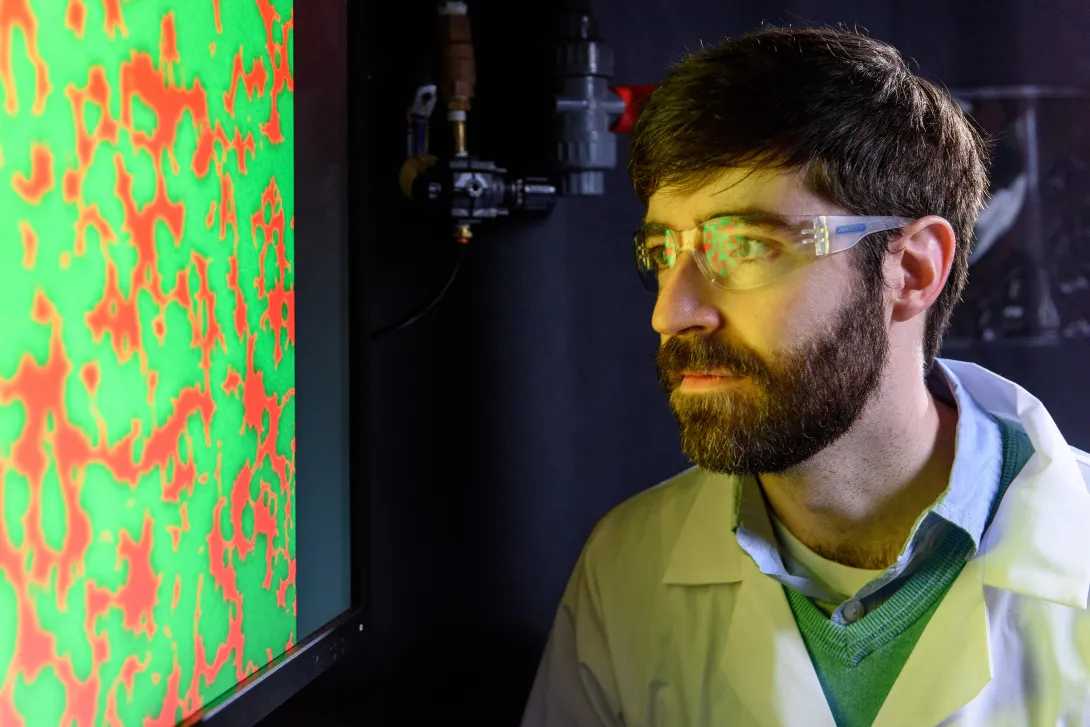
Peter Yunker boils down his advice for researchers wanting to commercialize their lab advances.
“You can’t go it alone,” said Yunker, an associate professor of physics at Georgia Tech.
In January, Yunker co-founded the biotechnology startup TopoDx LLC, with David Weiss, an Emory University School of Medicine researcher and director of the Emory Antibiotic Resistance Center, and Yogi Patel, a Georgia Tech alumnus with a background in business development and bioengineering.
“Researchers often think that they have a good commercialization idea to help people, but that alone does not guarantee success,” said Yunker. “Look for partners with complementary skills who understand aspects of the commercialization process that you don’t. Find mentors with business and scientific backgrounds in the specific industry you want to enter.”
TopoDx has developed a microbial test to identify antibiotic resistance and susceptibility rapidly and accurately. Current tests produce a result in three to five days. TopoDx’s approach can gain a result within four hours. Every hour counts in treating serious infections. Delays in accurate treatment can increase antibiotic resistance, which is a global challenge, causing up to 1 million deaths a year.
The company’s testing method was inspired by a fundamental biophysics project in Yunker’s lab. His team was interested in understanding how bacterial colonies behave. They tested white-light interferometry, a technology that can measure bacterial colonies down to the nanometer level.
“White-light interferometry allowed us to identify changes in the topography of a colony that indicated larger changes in the volume of cells in the entire colony,” said Yunker. “We thought this might have practical applications.”
The next step was giving research talks at meetings and looking for collaborators. “I wanted to find someone with expertise on the bacteriology side, and I was very fortunate to meet David Weiss,” Yunker said, noting his proficiency in heteroresistance, a phenomenon where a small subset of a bacterial colony resists an antibiotic.
“If you have just one antibiotic-resistant cell in a hundred cells, it can cause treatments to fail,” said Yunker.
The two collaborators hoped to commercialize their technology, identifying heteroresistance in microbial samples. However, they needed guidance in creating a business model. They consulted Harold Solomon, an entrepreneur with Georgia Tech VentureLab and a principal in the Quadrant-i program, a specialized program helping Georgia Tech faculty and students commercialize research.
Solomon became a key mentor. He guided them away from an ill-advised partnership and instead introduced them to Yogi Patel, who became a co-founder and the company CEO.
This new collaboration provided the team with an important lesson — one that Yunker passes along to other researchers looking to commercialize their discoveries. “Seek expertise outside your field, be humble about your knowledge limitations, and view collaboration as a strategic partnership,” he says.
When Patel came on board, he conducted extensive interviews with more than 15 clinical professionals.
“You need to interview end users or purchasers of whatever solution you want to build,” said Patel. “Ask them if the problem you think you may have solved is a problem with scale, with a market need.”
Clinicians, Patel learned, did not see heteroresistance as a significant issue. Instead, the slow pace of antibiotic testing was identified as a major problem. Faster testing could allow clinicians to prescribe targeted drugs more quickly and accurately, reducing unnecessary antibiotic use and the risk of multi-resistant infections.
With this survey information, Patel asked Yunker and Weiss to rethink how their technology could be commercialized.
“A company must solve a real-world problem,” said Patel. “I recommended that we switch from heteroresistance to solving slow antibiotic testing. We could keep heteroresistance as something we can still do as a second or third priority.”
TopoDx’s new technology can measure, with single-nanometer accuracy, how bacterial colonies are responding to antibiotics in real time. This method could revolutionize how antibiotics are tested and prescribed. Testing would be conducted on a countertop device about the size of a large microwave. The co-founders envision the device as eventually being used by urgent care facilities and hospitals.
“We want to make microbial testing susceptibility accessible anywhere and everywhere,” said Patel.
Adam Krueger, once a Ph.D. student in Yunker's lab, has continued to refine the technology. Now a post-doctoral researcher, Krueger joined TopoDx in a technical leadership role to expand the technology’s capabilities for microbiological diagnostics.
“We will keep pushing the envelope forward scientifically while we try to commercialize the accomplishments that we have already made,” Yunker said. “We hope that some fundamental studies we are doing now out of scientific curiosity could lead to further commercial applications.”
Georgia Tech faculty members and graduate students, join the Quadrant-i Startup Launch Program to commercialize your research this summer: Over 12 weeks, you'll receive comprehensive support including guidance from experienced mentors, a $10,000 commercialization grant, and $150,000 worth of in-kind services. Showcase your innovation at Demo Day, where you'll have the opportunity to present to over 1,500 attendees, including industry leaders and investors. Apply today! Applications close April 11.
News Contact
Written By John H. Tibbetts
Internal Contact:
Breanna Durham
Marketing Strategist
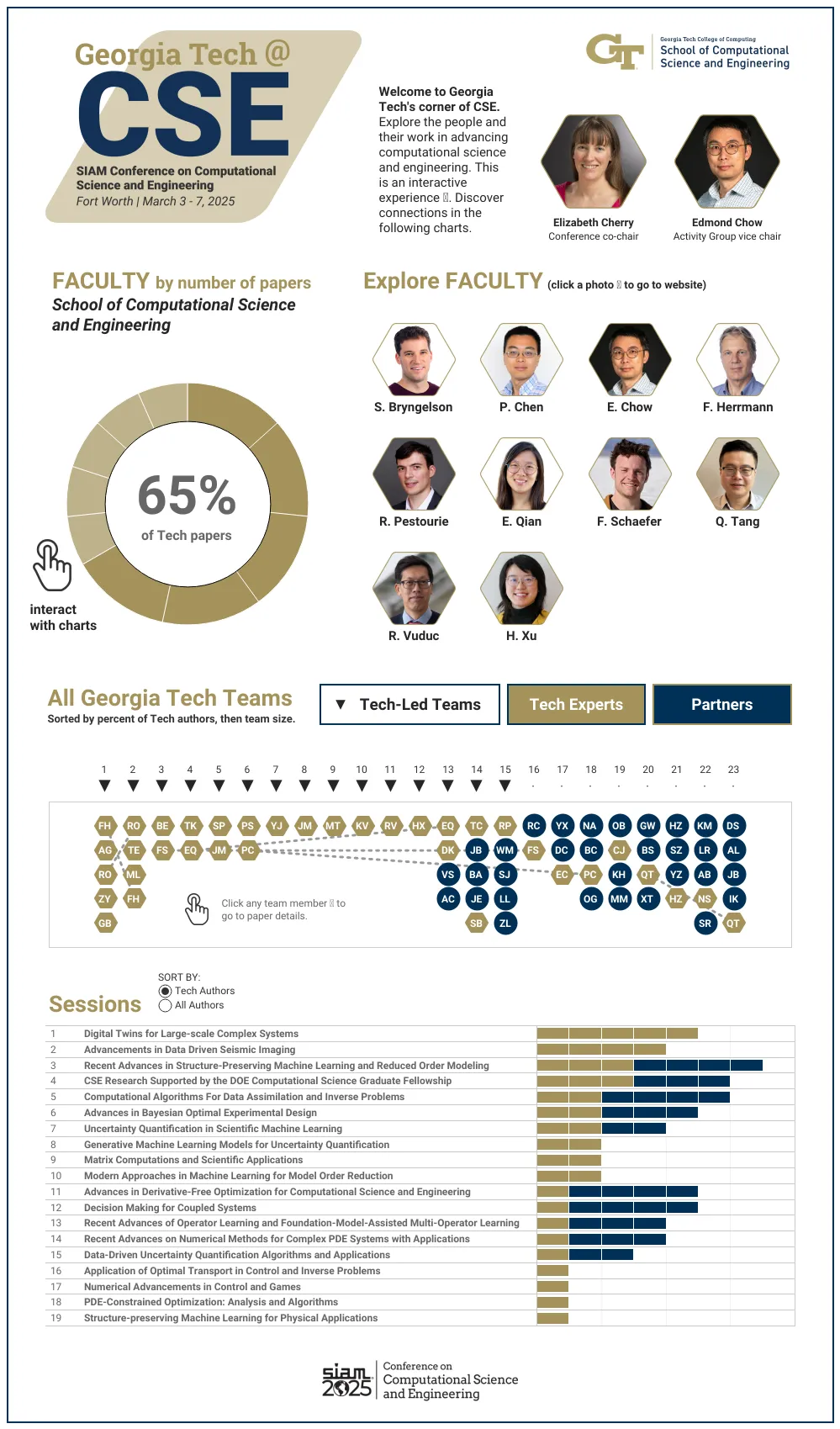
Many communities rely on insights from computer-based models and simulations. This week, a nest of Georgia Tech experts are swarming an international conference to present their latest advancements in these tools, which offer solutions to pressing challenges in science and engineering.
Students and faculty from the School of Computational Science and Engineering (CSE) are leading the Georgia Tech contingent at the SIAM Conference on Computational Science and Engineering (CSE25). The Society of Industrial and Applied Mathematics (SIAM) organizes CSE25, occurring March 3-7 in Fort Worth, Texas.
At CSE25, the School of CSE researchers are presenting papers that apply computing approaches to varying fields, including:
- Experiment designs to accelerate the discovery of material properties
- Machine learning approaches to model and predict weather forecasting and coastal flooding
- Virtual models that replicate subsurface geological formations used to store captured carbon dioxide
- Optimizing systems for imaging and optical chemistry
- Plasma physics during nuclear fusion reactions
[Related: GT CSE at SIAM CSE25 Interactive Graphic]
“In CSE, researchers from different disciplines work together to develop new computational methods that we could not have developed alone,” said School of CSE Professor Edmond Chow.
“These methods enable new science and engineering to be performed using computation.”
CSE is a discipline dedicated to advancing computational techniques to study and analyze scientific and engineering systems. CSE complements theory and experimentation as modes of scientific discovery.
Held every other year, CSE25 is the primary conference for the SIAM Activity Group on Computational Science and Engineering (SIAG CSE). School of CSE faculty serve in key roles in leading the group and preparing for the conference.
In December, SIAG CSE members elected Chow to a two-year term as the group’s vice chair. This election comes after Chow completed a term as the SIAG CSE program director.
School of CSE Associate Professor Elizabeth Cherry has co-chaired the CSE25 organizing committee since the last conference in 2023. Later that year, SIAM members reelected Cherry to a second, three-year term as a council member at large.
At Georgia Tech, Chow serves as the associate chair of the School of CSE. Cherry, who recently became the associate dean for graduate education of the College of Computing, continues as the director of CSE programs.
“With our strong emphasis on developing and applying computational tools and techniques to solve real-world problems, researchers in the School of CSE are well positioned to serve as leaders in computational science and engineering both within Georgia Tech and in the broader professional community,” Cherry said.
Georgia Tech’s School of CSE was first organized as a division in 2005, becoming one of the world’s first academic departments devoted to the discipline. The division reorganized as a school in 2010 after establishing the flagship CSE Ph.D. and M.S. programs, hiring nine faculty members, and attaining substantial research funding.
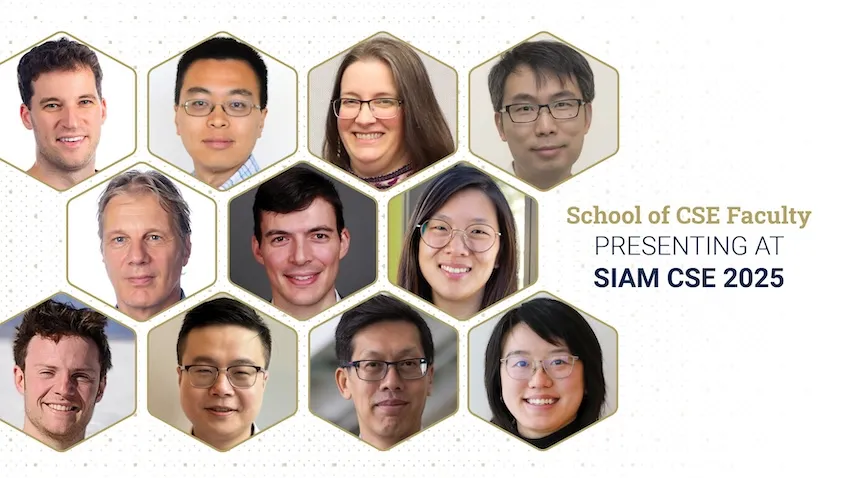
Ten School of CSE faculty members are presenting research at CSE25, representing one-third of the School’s faculty body. Of the 23 accepted papers written by Georgia Tech researchers, 15 originate from School of CSE authors.
The list of School of CSE researchers, paper titles, and abstracts includes:
Bayesian Optimal Design Accelerates Discovery of Material Properties from Bubble Dynamics
Postdoctoral Fellow Tianyi Chu, Joseph Beckett, Bachir Abeid, and Jonathan Estrada (University of Michigan), Assistant Professor Spencer Bryngelson
[Abstract]
Latent-EnSF: A Latent Ensemble Score Filter for High-Dimensional Data Assimilation with Sparse Observation Data
Ph.D. student Phillip Si, Assistant Professor Peng Chen
[Abstract]
A Goal-Oriented Quadratic Latent Dynamic Network Surrogate Model for Parameterized Systems
Yuhang Li, Stefan Henneking, Omar Ghattas (University of Texas at Austin), Assistant Professor Peng Chen
[Abstract]
Posterior Covariance Structures in Gaussian Processes
Yuanzhe Xi (Emory University), Difeng Cai (Southern Methodist University), Professor Edmond Chow
[Abstract]
Robust Digital Twin for Geological Carbon Storage
Professor Felix Herrmann, Ph.D. student Abhinav Gahlot, alumnus Rafael Orozco (Ph.D. CSE-CSE 2024), alumnus Ziyi (Francis) Yin (Ph.D. CSE-CSE 2024), and Ph.D. candidate Grant Bruer
[Abstract]
Industry-Scale Uncertainty-Aware Full Waveform Inference with Generative Models
Rafael Orozco, Ph.D. student Tuna Erdinc, alumnus Mathias Louboutin (Ph.D. CS-CSE 2020), and Professor Felix Herrmann
[Abstract]
Optimizing Coupled Systems: Insights from Co-Design Imaging and Optical Chemistry
Assistant Professor Raphaël Pestourie, Wenchao Ma and Steven Johnson (MIT), Lu Lu (Yale University), Zin Lin (Virginia Tech)
[Abstract]
Multifidelity Linear Regression for Scientific Machine Learning from Scarce Data
Assistant Professor Elizabeth Qian, Ph.D. student Dayoung Kang, Vignesh Sella, Anirban Chaudhuri and Anirban Chaudhuri (University of Texas at Austin)
[Abstract]
LyapInf: Data-Driven Estimation of Stability Guarantees for Nonlinear Dynamical Systems
Ph.D. candidate Tomoki Koike and Assistant Professor Elizabeth Qian
[Abstract]
The Information Geometric Regularization of the Euler Equation
Alumnus Ruijia Cao (B.S. CS 2024), Assistant Professor Florian Schäfer
[Abstract]
Maximum Likelihood Discretization of the Transport Equation
Ph.D. student Brook Eyob, Assistant Professor Florian Schäfer
[Abstract]
Intelligent Attractors for Singularly Perturbed Dynamical Systems
Daniel A. Serino (Los Alamos National Laboratory), Allen Alvarez Loya (University of Colorado Boulder), Joshua W. Burby, Ioannis G. Kevrekidis (Johns Hopkins University), Assistant Professor Qi Tang (Session Co-Organizer)
[Abstract]
Accurate Discretizations and Efficient AMG Solvers for Extremely Anisotropic Diffusion Via Hyperbolic Operators
Golo Wimmer, Ben Southworth, Xianzhu Tang (LANL), Assistant Professor Qi Tang
[Abstract]
Randomized Linear Algebra for Problems in Graph Analytics
Professor Rich Vuduc
[Abstract]
Improving Spgemm Performance Through Reordering and Cluster-Wise Computation
Assistant Professor Helen Xu
[Abstract]
News Contact
Bryant Wine, Communications Officer
bryant.wine@cc.gatech.edu
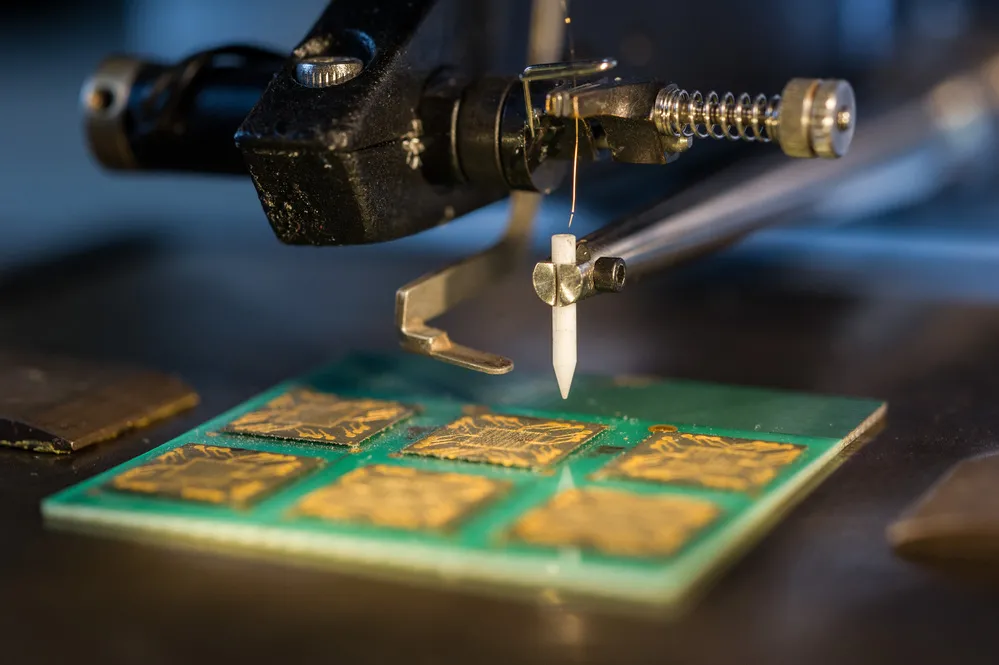
The Georgia Institute of Technology recently joined the National Semiconductor Technology Center (NSTC), a public-private consortium dedicated to supporting and extending U.S. leadership in semiconductor research, design, engineering, and advanced manufacturing. This collaboration aligns with Georgia Tech's commitment to fostering innovation and driving economic growth through cutting-edge research and development.
"Joining the NSTC is a significant milestone for Georgia Tech," said George White, senior director for strategic partnerships. "This partnership will enable us to collaborate with leading experts in the semiconductor field, drive groundbreaking research, and contribute to the advancement of semiconductor technology in the U.S."
The NSTC is operated by Natcast (National Center for the Advancement of Semiconductor Technology) and supported by the Department of Commerce through the CHIPS and Science Act. NSTC brings together key stakeholders from academia, industry, and government to create a robust semiconductor ecosystem. As a member, Georgia Tech will have access to a wide range of benefits, including research grant opportunities, participation in NSTC-led research projects, and access to state-of-the-art facilities and resources.
Georgia Tech's involvement in the NSTC will focus on several key areas, including workforce development, research and development initiatives, and fostering collaboration between academia and industry. By participating in the NSTC, Georgia Tech aims to enhance its research capabilities, support the growth of the semiconductor industry, and contribute to national economic and security goals.
Learn more about CHIPS initiatives at Georgia Tech:
$100M Investment Will Propel Absolics Inc., Georgia Tech’s Advanced Packaging Research
Georgia Tech Joins $840M DoD Project to Develop and Manufacture Next-gen Semiconductor Microsystems
Semiconductor Research Corp. and Georgia Tech Secure $285M SMART USA Institute
News Contact
Amelia Neumeister | Research Communications Program Manager